Slash, the vertical banking platform built by two college dropouts, has raised a $100M Series C backed by Khosla Ventures and Ribbit Capital. The company’s valuation has nearly quadrupled since its May 2025 Series B, the latest leg of a comeback story that began when its core market evaporated overnight.
Slash, the San Francisco-based vertical banking platform, has raised $100 million in a Series C round at a $1.4 billion valuation, backed by Khosla Ventures and Ribbit Capital, Bloomberg reported on Wednesday.
The raise marks a sharp acceleration in the company’s trajectory: less than a year ago, Slash closed its Series B at a $370 million valuation. The new round values the company at nearly four times that figure.
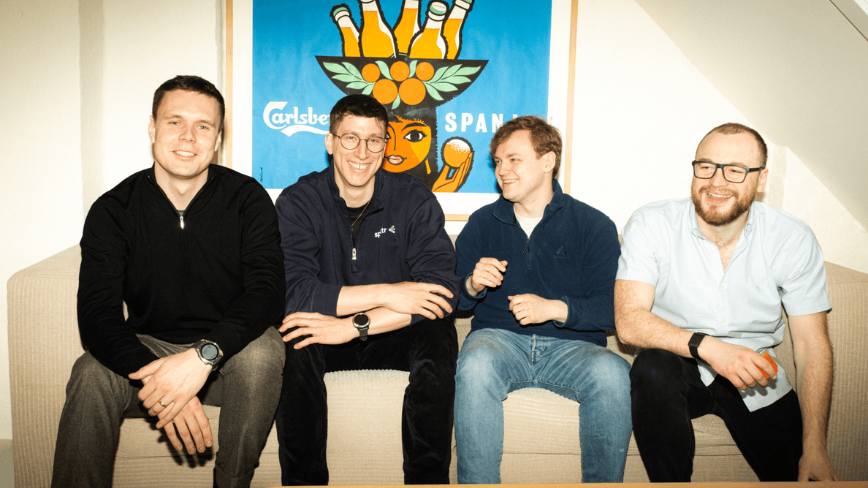
Slash was founded by Victor Cardenas, a Stanford dropout, and Kevin Bai, who left the University of Waterloo, and its origin story is one of the more unusual in recent fintech. The pair initially built banking services for sneaker resellers, a niche that took off quickly.
Then Kanye West made a series of antisemitic public statements in late 2022. Adidas terminated its partnership with the rapper, collapsing the Yeezy market that was the backbone of the sneaker reselling economy.
According to Cardenas, Slash’s revenue fell by 80% almost overnight. The company had raised $19 million and built a team around a market that had suddenly ceased to exist.
Rather than fold, Cardenas and Bai pivoted to a broader thesis: vertical banking for online businesses. Instead of competing horizontally against Ramp, Mercury, and Brex, platforms that serve businesses across all industries, Slash builds tailored financial products for specific sectors.
The first post-pivot target was performance marketing firms, which run digital advertising campaigns on behalf of e-commerce companies.
A key pain point: these firms needed to create distinct accounts within their banking system for each end client to track prepayment and spending separately. Slash built that. By the time of its Series B announcement in May 2025, Cardenas told Fortune that more than 1% of all Facebook ads are bought with a Slash-issued card.
The pivot worked. Slash now serves verticals including web3, e-commerce, agencies, contractors, affiliate marketers, healthcare suppliers, online travel agencies, and wholesalers, alongside a stablecoin payments product and treasury and working capital tools.
The company’s product suite has expanded considerably since the early days of virtual debit cards for teenagers. Current offerings include corporate cards, business banking, stablecoin payments, treasury management, working capital, global USD accounts, invoicing, and a platform layer with multi-entity support, accounting integration, expense management, global payments, an API, analytics, and AI agents.
The platform is built on Column, a chartered bank co-founded by a Plaid executive that was designed from the ground up to serve tech-forward fintech companies, a relationship Cardenas has credited with helping Slash navigate the turbulence that hit the fintech middleware sector when Synapse, a major banking-as-a-service intermediary, collapsed.
Khosla Ventures has a long record of early fintech bets that have paid off at scale, the firm was an early investor in Stripe, Affirm, and Ramp. Ribbit Capital specialises exclusively in financial services and has backed Robinhood, Coinbase, and Credit Karma.
Their joint involvement in this round signals a conviction that Slash’s vertical model, winning in niche after niche rather than fighting for share across a horizontal market, has the structural advantages to compound into something large.
In the Series B announcement, Cardenas articulated the longer-term ambition: “If we continue solving these niche, vertical, specific financial workflows for businesses across different industries, then we can sneakily become one of the largest commercial credit card issuers in the country.”





























































You must be logged in to post a comment Login