Like a lot of us [Liam Kloppers] had a problem with doomscrolling. Unwilling to go cold-turkey because he does find some utility in social media. He tried a number of things before deciding to say “Screw it” and just go full Pavlov on himself with some old-fashioned classical conditioning. Who needs willpower when you have electric shocks to dissuade you?
The key here was finding an electric-shock dog collar that could be controlled via a smartphone application, which meant he could reverse-engineer its Bluetooth protocol and get it linked up to his own software. The initial implementation ties his quick-and-dirty Python control program with a web server living on his laptop, which he’s configured MacroDroid to call on when his personal criterion for ‘doomscrolling’ is met.
With the shock collar wrapped around his leg, [Liam] was ready to test. It turns out dogs are a lot tougher than people, because even when set to a low level, the shock from the device made him toss his phone across the room and had him hesitant to even pick it up again.
Advertisement
Since he couldn’t bring himself to put the shock collar back onto his leg, he’s now thinking of an audible alarm, something we’ve seen work before. If you’re as unhappy with your habits as [Liam], perhaps consider a device like Commodore’s social-media-free phone before resorting to self-electrocution.
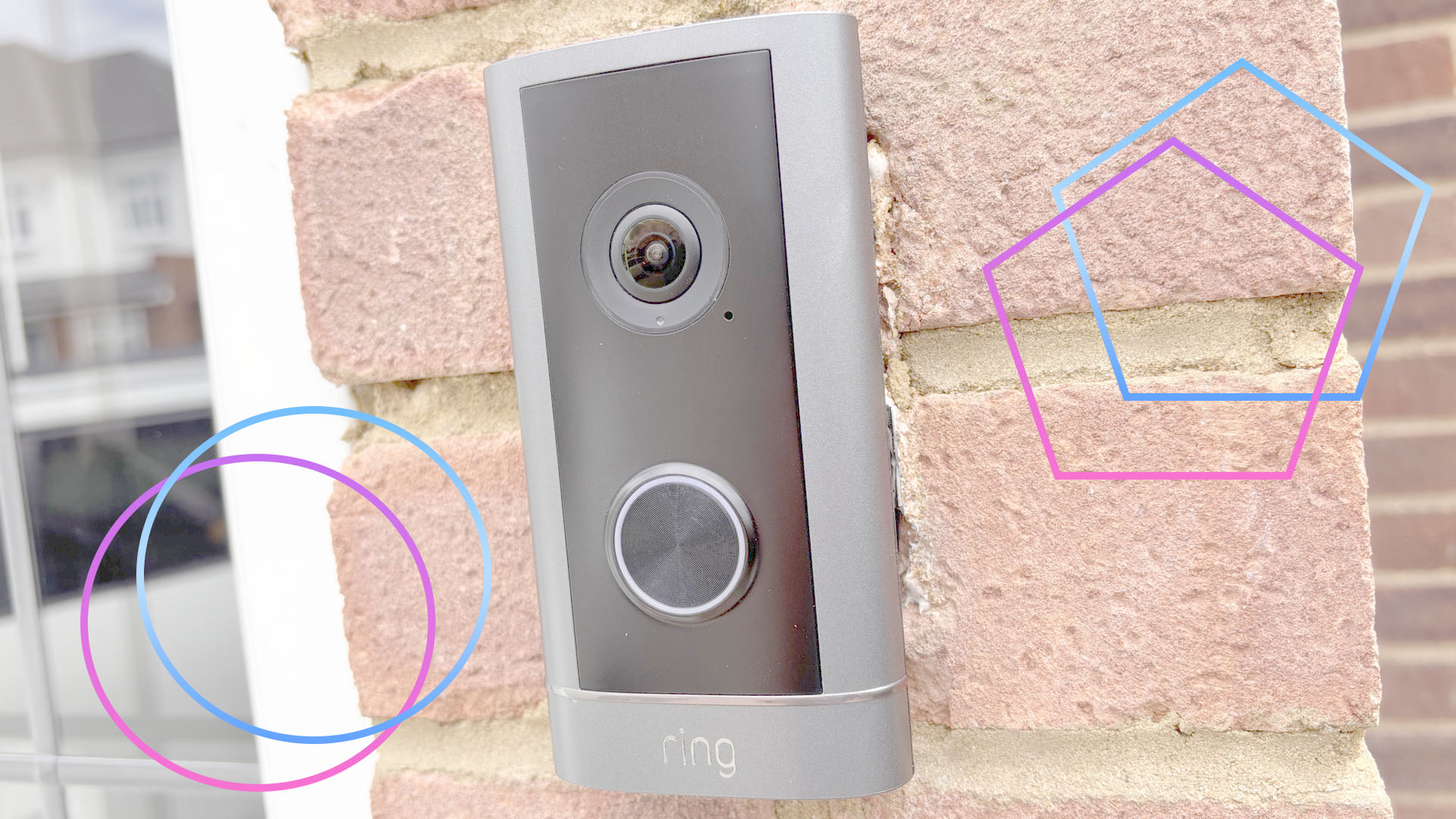
One of my neighbours has a Ring doorbell. I know this, not because they’ve told me, or because I’ve walked past and seen it installed, but because they have Quick Replies turned on.
Quick Replies are an automated feature that lets the doorbell play a short message if the doorbell is not answered within a set amount of time.
The default message is spoken in a whiny American voice: “We can’t answer the door right now, but if you’d like to leave a message, you can do it now.”
It’s a phrase that’s permanently etched into my brain, as my neighbour’s doorbell spurts that out multiple times a day, at maximum volume.
Advertisement
Seriously, what’s the point?
By default, the quick reply is spoken after 10s, which is a stupidly short period of time. I’m not sure it’s even possible to get the notification, pull my phone out and answer the door in that amount of time.
Advertisement
And, the system isn’t particularly smart. If you answer the door manually, like a normal person at home, then the timer will still expire and the message will play.
In any case, if you stick with the default timer, which my neighbours have clearly done, that 10s doesn’t give you enough time to get to the door to open it. So, if you are in, and are running for the door, there’s a good chance that whoever was calling will have gone away.
Advertisement
Even if you’re genuinely not at home, what’s the point in playing this message automatically? Do you know how people know you can’t answer the door? It’s when you don’t physically answer the door.
Turn it down
It’s quite incredible how loud Ring doorbells can be, and I’ve been woken up in the summer months by that bloody message blaring out. I’ve been this close to storming around, ripping the doorbell of the wall and stamping on it.
If this must be a feature, then why not have the choice of setting a different default volume for it, rather than the standard full-blast option? If a doorbell needs to speak by itself, it should at least do it with a whisper.
Advertisement
Advertisement
Actually, just turn it off
Listen, you really don’t need your doorbell to talk to every single person that calls at your home. It’s just annoying for everyone around you. It’s far better to handle it manually: when someone calls, you can use the app to send a reply of your choice. And, if you miss the caller, who cares?
Check the video history, and it’s obvious whether it’s someone you know or a courier with a parcel you were expecting. Don’t recognise the caller? I’ll bet good money that it was someone trying to sell you something, sign up for a charity or fill in a survey. Who wants a message from them?
I’ve spent the better part of a lifetime studying and writing about the way corrupted lawmakers and U.S. telecom giants work hand in hand to erode U.S. broadband standards and mapping so they can obscure the way corruption and monopoly result in limited broadband competition — resulting in shitty, expensive, spotty, and slow U.S. internet access (check out my Techdirt/Copia paper about it).
The Trump administration has certainly been no exception. After some modest improvements in broadband mapping and standards made possible by the 2021 infrastructure bill, the Trump administration has been working overtime to revert things right back to the status quo (read: shitty and broken).
FCC boss Brendan Carr falsely claimed in a statement that this downgrade was necessary because the faster standard was not “technologically neutral,” and having higher standards would be an overreach for the agency:
Advertisement
“As part of our return to following the plain language of Section 706, we adopt our proposal from the Notice [of Inquiry] to abolish without replacement the long-term goal of 1,000/500 Mbps established in the 2024 Report,” the order said. “A long-term goal is not mentioned in Section 706 and could appear to violate our obligation to conduct our analysis in a technologically neutral manner. At present, it is impossible to predict long-term technological developments and the evolution of consumer preferences.”
I hope you’ll notice that Brendan Carr has absolutely no problem violating or ignoring the law when it comes time to censor free speech or destroy U.S. media consolidation limits, but when it comes time to push giant U.S. telecom monopolies to try harder, or to enforce any meaningful consumer protections (like net neutrality), Carr is always suddenly concerned with taking things too far.
The downgrade was part of the FCC’s annual Section 706 Report (required by Congress), in which the captured agency unsurprisingly declares that U.S. broadband deployment is great and there’s really nothing that needs fixing.
Why is Carr suddenly concerned about having high standards? Well, a 1 Gbps goal would cause problems for Elon Musk, whose increasingly-congested Starlink low-Earth orbit satellite broadband system will struggle to reach that goal. While Starlink is great for remote users with no other options, it’s generally too congested to scale and is too expensive for people most in need. It’s also run by a white supremacist.
That hasn’t stopped Republicans from hijacking huge swaths of the $42.5 billion set aside for broadband access and redirecting it to Elon (see my feature at The Verge from last June). A lot of that money is being redirected away from better, faster, community-owned fiber networks or cooperatives, and toward a billionaire in exchange for much slower and more expensive LEO satellite service he planned to deploy anyway. Musk is poised to see a multi-billion dollar windfall for doing nothing differently.
Advertisement
The FCC’s abandoned gigabit speed goals is also of benefit to giant cable monopolies like Comcast, whose lack of network investment has long resulted in dated upstream speeds.
I’ve long covered how even pushing the FCC to adopt the faster 100 Mbps down, 20 Mbps up speed standard took more than a decade due to lobbying pressure. Big ISPs have also endlessly undermined efforts to more accurately map U.S. broadband access, well aware that better data would only serve to highly monopoly domination and private telecom market failure.
S3 keeps the source of truth while local NVMe repositories do the latency-sensitive work
Developers recently burned by GitHub’s system outages should take note that there are other ways to manage Git at scale. One approach, recently put into action by Cursor, is to build the distributed version control system on object storage.
A recent post from Cursor principal systems engineer Vicent Martí explains how the SpaceX subsidiary worked through its scaling issues with the notoriously fickle Git distributed version control system.
Advertisement
The post explains how Cursor arrived at an architecture for its own Git-based repository service called Origin, which is powered by an internal engine called Continuity. A beta of the service is available with paid Cursor plans.
“Agents have fundamentally changed the way we work with software, and in many ways they’ve made this situation worse. More code, more PRs, more CI runs. Version control is at the core of all of this, and it is possibly the hardest thing to change overnight,” Martí wrote.
Martí speaks from experience, having worked at GitHub through much of the last decade when the company arrived at its own current architecture for managing Git.
Synchronization is a bitch
Git creator Linus Torvalds designed his software to work as a content-addressable data store, where all the objects are stored and indexed by the SHA-1 hash of their contents.
Advertisement
Git sees a repository as a directed acyclic graph (DAG), with each commit being a node in a graph of nodes all connected by pointers. A Git server can look up an object directly by its SHA, but if it doesn’t have the SHA, then it “must actually walk the DAG step by step,” Martí noted.
A client may just want to fetch or clone a consolidated packfile of the repository, or even get a list of recent changes, but to fulfill these requests, the server must traverse the entire graph only to assemble the necessary objects.
Now, imagine providing such a service for over 400 million repositories, and you’ll get an idea of the scale at which GitHub operates (or struggles to do).
After some fiddling about, GitHub engineers landed on what they called Spokes, which basically involves keeping at least three tightly synchronized copies of every repository on speedy NVMe disks.
Advertisement
The approach became an industry standard, though over time its limits became apparent; the chief one is that the more replicas you make, the longer the synchronization takes. And Git does not play well with “eventual consistency,” Martí explained.
Plus, these days agents bring their own mayhem.
“When agents work with Git repositories at scale, they often operate outside of a monorepo by creating vast numbers of small repositories, many of them throwaway, and most of them barely touched,” Martí wrote.
Object stores to the rescue
When Cursor set out to build its own Git repository, it turned to object storage. Unlike file or block storage, object storage gives each chunk of bits its own unique identifier and files it with all the others in a single namespace (no directories).
Advertisement
The most popular object storage today is Amazon Web Services’ Simple Storage Service (S3), which is increasingly used as a foundational layer for enterprise software such as databases, container registries and message brokers, thanks to its low cost, built-in redundancy and – for all practical purposes – endless scalability.
With Origin, pushes are uploaded into S3 in a write-ahead log (WAL), capturing all changes as immutable objects. Wherever possible, changes are bundled together for faster throughput.
Simultaneously, the pushes are written to the local “reference” copy of the repository (usually an NVMe disk). Once both actions complete, other replicas of the repository can download the changes as needed.
“With the only requirement of having to synchronize the reference transaction with a single local repository instead of a quorum of replicas, we have a system that can ingest pushes as fast as our disk allows,” Martí wrote.
Advertisement
Git will still have to do DAG traversal for many operations, but it is better to do it locally on a speedy solid-state drive than over a network.
“Where does every repository live? The answer is ‘anywhere’. It doesn’t matter! We treat repositories like a warm cache on disk, but the source of truth is always the write-ahead log,” Martí noted.
We will see how well this approach plays out as Origin moves into being a production service. But if we don’t see stories about Origin outages, then Git managers will know to give object storage a serious look. ®
OpenAI has added a shortcut that surfaces your four most recent photos when you long press the plus button in ChatGPT on iPhone. It lands while Apple’s own camera and visual assistant features stay unavailable on iPhone in the EU.
OpenAI has taken two taps out of the most common thing people do with ChatGPT on a phone. Long pressing the plus button beside the prompt box now surfaces your four most recent photos, ready to attach.
The old path was not hard, just longer. Open the plus menu, choose Photos, then find the image in a library that may hold tens of thousands.
OpenAI’s consumer product lead Adam Fry called it “a fun, power user feature,” shipping it in the company’s 21 August weekly drop alongside better handling of the current time and faster loading for long conversations on the web.
Advertisement
Taken alone this is a gadget-blog item. What makes it worth a look is the gap it is quietly filling.
Apple demonstrated this exact job at WWDC26. A Siri mode in the Camera app and an expanded Visual Intelligence were meant to let you point a phone at something and ask about it, without attaching anything.
European iPhone owners are not getting those. Apple said in June that there is no timeline for Siri AI on iPhone or iPad in the EU, while keeping the features on Mac and Vision Pro.
The company was blunt about it. “We’re deeply disappointed that our EU users won’t have Siri AI on iPhone or iPad when we share our new software releases later this year,” said software chief Craig Federighi.
Advertisement
The dispute is over the Digital Markets Act. Apple argues the Commission’s reading of the interoperability rules would force it to give rival assistants the same deep system access Siri has, and regulators rejected both its Trusted System Agent proposal and an 18-month phased rollout.
The practical result is a continent of iPhones without a native visual assistant. TNW has put the population affected at around 450 million people across the EU.
OpenAI is building for exactly that opening. It is pushing further into the same market on the commercial side too, taking ads into 31 European countries.
So a long press is a trivial feature almost everywhere. In Europe it is the closest thing an iPhone owner has to a camera that answers questions.
You probably know by now that the AI models powering ChatGPT, Gemini, Claude, and other chatbots are trained on seemingly infinite databases of published works, containing hundreds of millions of books, online articles, academic papers, and basically anything you can find on the internet. Most published authors have, without their knowledge or consent, contributed to the development of the same AI tools that threaten to undermine their livelihoods. That seems illegal, right?
The reality isn’t that simple.
“I think one of the issues with this entire area of law and this entire area of technology is there’s a lot going on,” Cathy Gellis, an attorney with expertise in intellectual property, copyright, and technology, told TechCrunch. “It’s very complex and there are a lot of raw feelings about what is happening, both for and against.”
Last year, in one of the first rulings of its kind, Judge William Alsup ordered Anthropic to pay a mammoth $1.5 billion copyright settlement to a group of writers whose works were used to train the company’s AI models. At face value, this seemed like a moral victory favoring authors, but Judge Alsup actually ruled that Anthropic’s AI training was lawful. What Alsup penalized Anthropic for was pirating these books from illegal online shadow libraries.
Advertisement
“Like any reader aspiring to be a writer, Anthropic’s LLMs trained upon works not to race ahead and replicate or supplant them — but to turn a hard corner and create something different,” the judge wrote, comparing the way an LLM ingests trillions of words to a writer’s study of literature.
Gellis thinks the ruling is more advantageous for AI companies. What’s a $1.5 billion fine to a company projecting about $200 billion in annual revenue by 2028?
“I think it is generally good news for AI training that he looked at what was going on and really sort of thought it analogous to reading a copyrighted work as opposed to copying a copyrighted work,” Gellis said. “Copyright law hinges on copying, but it doesn’t hinge on using the work or experiencing the work, consuming the work, reading the work.”
Copyright law hasn’t been updated since 1976, which means that judges have to figure out how to interpret guidelines from 50 years ago when confronting legal questions that have the potential to shape the future of the AI industry.
Advertisement
“Everybody is very worried right now because the law is all over the place, and it’s because of this question,” Jason Henderson, Senior Attorney and Founder of the IP & Media Practice at JWL International, told TechCrunch. “They know that the AI model has been trained on so much stuff, and the law has not really caught up to that question.”
These questions often hinge on fair use law — namely, whether use of a copyrighted work is “transformative” enough to be considered legally permissible.
Fair use is a carve out of copyright law that allows for the use of copyrighted materials without explicit permission, protecting the ability to comment and iterate on copyrighted works through criticism, parody, education, and other means. Judges consider specific factors when deciding if something is fair use, including the purpose and nature of the work, the amount used, and its impact on the market.
“Copyright is always about protecting and growing the market,” Henderson noted. “The courts are kind of all over the place in their reasoning [in AI cases]. What’s tending to win is if what you’re doing is you’re training on somebody’s property because your purpose is to directly compete, then the courts will frown on it… If what you’re doing is not going to compete, then the courts are tending to find ways that it will be okay.”
Advertisement
Henderson is referencing a case in which the media and technology company Thomson Reuters sued the research firm Ross Intelligence for copying its content in order to build a competing, AI-based legal platform.
“Ross’s use is not transformative because it does not have a ‘further purpose or different character’ than Thomson Reuters’s,” Judge Stephanos Bibas wrote last year.
In that case, Judge Bibas decided that it was not fair use to train on Reuters’ content to make a new platform that would directly compete with it. While authors could potentially argue that chatbots are competing with them by using their works to generate new, synthetic books, that argument has not yet prevailed in court.
When it comes to the relationship between AI and copyright, Gellis finds it helpful to narrow down what we’re actually talking about – the way we think about copyright in terms of AI training is quite different from how we think about copyrighting AI-generated content.
Advertisement
In one case, Thaler v. Perlmutter, the court ruled that if a work is 100% AI-generated, it’s not copyrightable, which opens a whole new can of worms – how can we definitively prove whether or not a work was generated using AI, and if so, how do we know what percentage of it was created or assisted with AI?
“If you write your novel in [Microsoft] Word and run spell check, we kind of feel comfortable with the idea of saying that Word does not own your novel,” Gellis said. “[AI] is forcing us to look at a whole bunch of decisions that we kind of ignored for a while.”
Most AI companies are still lodged in pending litigation over these issues, which means that we won’t have a definitive solution to these problems any time soon.
“What you are seeing is that the initial opening volleys are being influential, and that influence itself could be undone if other courts decide different things, and it’ll take later states of litigation to figure out which one will prevail,” Gellis said. “But in the meantime, all these decisions are shaping everything that’s happening. It would be kind of foolish for the AI companies to ignore them.”
Advertisement
When you purchase through links in our articles, we may earn a small commission. This doesn’t affect our editorial independence.
The country needs to find a “compromise” between privacy and safety, according to Flock Safety CEO Garrett Langley.
“When people talk about just one of these, privacy or safety, they’re prioritizing the wrong thing, and what we have to prioritize as a country is compromise,” Langley said during a recent interview with Fox News. “How do we have our safety, and how do we balance privacy?”
Langley’s Fox News appearance was just the latest interview he’s given as the company faces a growing public outcry around concerns that Flock’s surveillance cameras, drones, and license plate recognition technology could be misused.
These concerns aren’t just hypothetical. The Washington Post recently identified 46 cases where police officers have been accused of using Flock technology for unauthorized purposes, including to stalk their wives, girlfriends, or exes.
Advertisement
After listening to an interview with one of the alleged victims, Langley told CBS News, “I apologize. It kills me that she went through that.” At the same time, he insisted, “I don’t think that Flock created police abuse. I think we’re the first company to ever shine a light on it and build the tools to find it.”
On the left, Michigan’s Democratic Senate nominee Abdul El-Sayed recently accused his opponent Mike Rogers of supporting “this mass proliferation of Flock cameras, any and everywhere, watching your every move to collect information without you even noticing.” And Vermont Senator Bernie Sanders posted, “STOP AI MASS SURVEILLANCE. STOP FLOCK.”
On the right, three House Republicans recently introduced a bill that would prohibit the federal government from purchasing automated surveillance systems that use facial recognition, biometric IDs, or license plate recognition, “including a Flock Safety camera.”
Advertisement
Flock has already made some changes in response to the criticism, reducing the default data retention time from 30 days to seven days and requiring that a case code be entered before accessing data. But both of these changes can be overridden — for example, police can save data for a longer time period by using a setting called Evidence Mode.
In its response to Flock’s announced changes, the American CIvil Liberties Union said, “While Flock has not shortened the default retention period to the ACLU’s recommended 48 hours, its proposal may be a step in the right direction. Whether this is a real change or just another Flock PR move, however, will depend on how its ‘Evidence Mode’ operates.”
For his part, Langley has said that state regulators should “pass bills that make [the illegal use of Flock data] a criminal offense.” And during his Fox News interview, he pointed to the changes the company has already made, while also saying, “Today, it is too often that in Flock and in other technologies, there’s no regulation. There’s no accountability, and we think that’s wrong.”
Visitors to Apple’s retail outlets this fall can expect to see more smart home products on display, as Apple Stores prepare to push updates such as a new HomePod mini or even the fabled Home Hub.
Rumors have consistently pointed towards Apple making changes to its smart home lineup, and it seems to be finally arriving this fall. It now appears that Apple is also preparing a retail push for the new hardware.
In Sunday’s “Power On” newsletter for Bloomberg, Mark Gurman writes that teams who work on retail store layouts are making space to put new products on show.
These changes affect Avenues, referring to the walls at the edge of the store. They are used to promote accessories and devices that aren’t the big-ticket iPhone, iPad, and Mac lines.
Advertisement
Big changes are on the way for this fall’s launches, with Avenues being rearranged and added to, so that all of Apple’s new items are on display.
While this is not unexpected for Apple considering the launches, the sheer size of the effort apparently indicates something new is being added. That is, a new item alongside an updated HomePod mini and a new Apple TV set-top box.
It is reckoned by Gurman that the changes will be to make space for the Home Hub. To Gurman, the changes are too extensive to be just updates for existing products.
As the Home Hub will be a whole new type of device, serving as a central port of call for a smart home network, Apple has to create a new Avenue section for it. There are expectations for there to be a dedicated space to show how the Home Hub works, including its interface, and how it fits into the home ecosystem.
Advertisement
Smart home changes
When it comes to what is expected this fall, the HomePod mini is expected to be more a spec-bump update, meaning improved processing. That chiefly means support for Siri AI, as well as possible upgrades to Wi-Fi 7 and Bluetooth 6, too.
The Apple TV 4K refresh is also anticipated to be an internal bump-up rather than external. An upgrade of chip to something like the A17 Pro or newer will allow it to work with Siri AI, too.
The aforementioned Home Hub is believed to take two forms. One will be a display on a half-dome base, while the other will attach to wall mounts and plinths magnetically.
Advertisement
The seven-inch square screen will handle many smart home functions, including controlling other devices on the network, according to rumors. The screen will also show users information, such as notes, calendars and itineraries, and also act as a picture frame.
It will also act as an intercom system, a way to view security camera footage, and handle smart locks. A built-in camera will also mean it could be used for FaceTime calls.
Walmart and its subsidiary Sam’s Club are finally launching tap-to-pay options, allowing customers to make convenient, contactless payments at checkout.
For years, shoppers at Walmart and Sam’s Club had to insert or swipe a physical credit card or pay in cash, rather than simply tap their card or mobile device. The retailers’ announcement on Friday said that the launch of Tap to Pay for customers and members “is part of a broader effort to make managing and using their money easier.”
Tap to Pay will roll out on Monday, Aug. 24, in select Walmart and Sam’s Club stores and will eventually be available at all US-based locations by the end of the year, according to the retail giant. Gas stations at some large Walmart Supercenters and most Sam’s Club warehouse locations will offer the payment option by mid-2027. You’ll also be able to add eligible Sam’s Club, OnePay and Walmart cards to your digital wallet, Walmart said in Friday’s announcement.
Tap-to-pay methods use short-range wireless tech to send locked payment data from your phone, watch or card to a checkout reader without touching it. Walmart’s been holding out on implementing Tap to Pay for some time, preventing transactions through Google Pay, Samsung Pay or Apple Pay, even when other retail competitors rolled out the convenient payment feature years ago. Target, for example, made digital payments available in 2019.
Advertisement
It’s unclear what prompted the change, and a representative from Walmart didn’t immediately respond to a request for comment.
One potential explanation for Walmart’s about-face was a direct response to customers’ anger over the giant retailer’s refusal to support mobile payments, a technology built into nearly every smartphone today. It’s also possible that Walmart had avoided enabling Apple Pay and Google Pay to push customers toward using its proprietary Walmart Pay app, which shared their shopping data.
Walmart shared the news on its Instagram account, along with a video showing countless complaints about not having Tap to Pay as an option at checkout.
Many Instagram users are excited about the change coming soon, with some saying, “Shut the automatic front doors 🥹” and, “now that’s how you listen to feedback and respond! 👏👏👏.”
Advertisement
Dashia is the consumer insights editor for CNET. She specializes in data-driven analysis and news at the intersection of tech, personal finance and consumer sentiment. Dashia investigates economic shifts and everyday challenges to help readers make well-informed decisions, and she covers a range of topics, including technology, security, energy and money. Dashia graduated from the University of South Carolina with a bachelor’s degree in journalism. She loves baking, teaching spinning and spending time with her family.
See full bio
Impressive as it most certainly is when an amateur fabricates a semiconductor, most of the projects we’ve seen are more demonstrations than workable chips. [Dr. Semiconductor], however, is going much further with his fabrication process, and is already working on a method to bond chips to printed circuit boards. It’s difficult to align a PCB with the pads on the underside of an opaque silicon wafer, however, so as a trial run he’s made and bonded some transparent LED chips.
The starting material for these chips is a gallium nitride (GaN) LED epiwafer, a stacked structure of n-doped GaN, an indium gallium nitride quantum well layer, and p-doped GaN grown on a sapphire substrate. When current passes through the structure, electrons from the n-doped layer and holes from the p-type layer recombine in the quantum well layer, emitting blue light. To make a functional LED from this, [Dr. Semiconductor] needed to make electrical contacts to both the n-type and p-type layers. Making the n-type contact required cutting through the p-type and quantum well layers.
This would normally be done with reactive ion etching in chlorine, but [Dr. Semiconductor] came up with a new process: a 355-nm ultraviolet etching laser causes GaN to break down into gallium and nitrogen, with the resulting cut being cleaned up by a potassium hydroxide etch. To deposit the contacts themselves, [Dr. Semiconductor] formed a photoresist mask, deposited metal (nickel, silver, and titanium) in a sputtering chamber, and used a developer solution to dissolve the mask and lift off the unwanted metal regions.
The LED after bonding and phosphor application.
When [Dr. Semiconductor] applied current between the two contacts, the LED glowed bright blue. The next step was to mount it to a PCB; to do so, he first sliced the wafer into individual LED chips with the ultraviolet laser. He then electroplated indium bumps onto a printed circuit board, positioned the chip above these bumps, added some rosin flux, and melted the indium bumps. This soldered the chip to the board and let the board power the LED.
Like most commercial LEDs, these were blue; most LED assemblies additionally include a phosphor layer which absorbs blue light and emits another color. To create a white LED, for example, [Dr. Semiconductor] mixed cerium-doped yttrium aluminium garnet phosphor power with clear silicone and spread it over the LED. This absorbs some of the blue light and emits yellow light, and the resulting mixture of blue and yellow light looks white to human eyes.
Welcome back to TechCrunch Mobility — your central hub for news and insights on the future of transportation. To get this in your inbox, sign up here for free — just click TechCrunch Mobility!
Waymo gets a lot of attention for its fast-paced expansion. And for good reason; it seems like every week, the company’s robotaxis are arriving in a new city, or expanding within an existing service area.
We’ve known for a while that Waymo’s sixth-generation self-driving system — which debuted in its next-generation Ojai robotaxi — is central to those ambitions. But now we have a better understanding about why.
The company, which just opened its Ojai robotaxi to all riders in Los Angeles, Phoenix, and San Francisco, has repeatedly said that this next-gen vehicle is cheaper to build, operate, and maintain — ingredients required if the company has any hopes of someday turning a profit.
Advertisement
What was less clear, until this week, was just how hands-on and vertically integrated Waymo has become as it chases that goal.
The company shared this week that it built a custom silicon chip — specifically a 5 nm ASIC chip, which is designed to handle the massive influx of raw data before it reaches the core “brain” of the self-driving system. (To get a sense of how much data, consider that the Waymo Ojai has 13 high-fidelity cameras.) Waymo said the chip delivers more than 1,000 TOPS (trillions of operations per second) of computing performance, a statistic that puts it roughly in the same performance range as Nvidia’s latest DRIVE AGX Thor automotive processor, a powerful computer designed for automated driving applications.
The end result, Waymo says, is a system that has “unmatched efficiency and performance.” The upshot: Waymo contends that this chip is a critical piece of a system that can react fast and safely in complex, high-density environments — like cities.
It’s worth noting that Waymo isn’t working alone on compute. The company listed a slew of partners, some for the first time, that includes AMD, Micron, Nvidia, Samsung, Sandisk, Socionext, and TSMC.
Advertisement
A little bird
Image Credits:Bryce Durbin
A couple of little birds spoke to Sean O’Kane (senior reporter, special projects at TechCrunch) about a rather curious investigation being conducted by the Idaho National Laboratory.
According to our sources, the lab is evaluating whether Chinese lidar sensors might pose a security risk if they become widely used on vehicles in the United States. That is notable on its own. But what got our attention is that the research is being funded by a company — or a group of companies — in the electric and autonomous vehicle industries.
O’Kane reached out to numerous companies, including Rivian, General Motors, Ford, Kodiak, Lucid Motors, Nuro, and Uber. And all of these companies said they were unaware of the review. Aurora, Nvidia, and Zoox didn’t respond to questions.
Also, the startup incubated within Rivian, has raised another $150 million in a Series D round led by Prysm Capital with participation from existing backers Eclipse, Greenoaks, and MVP Ventures. Also has raised $455 million since it spun out of Rivian in March 2025.
The raise is notable, and not just because Also has already reached a Series D round after launching just a little more than a year ago. The company’s mission has also evolved, which helps explain why it still needs to keep raising cash.
When Also launched in spring 2025, it was described as a micromobility company focused on pedal-assist electric bikes and commercial cargo quads. Now it is a “Palo Alto-based technology company building the world’s most capable driven and autonomous small electric vehicles.”
That autonomous driving component popped up earlier this year when Also closed a $200 million round and announced a multiyear commercial agreement with DoorDash to develop and deploy autonomous delivery vehicles.
Sidewalk delivery robot company Serve Robotics also had a notable and very timely deal this week. You might recall that earlier this month, Serve reported during its earning call that Uber had reduced its use of its robots on the app; that partnership is set to end next year. Separately, Uber also sold all of its shares in the company.
Advertisement
Months before these changes, Serve was working on several other deals that were recently finalized, according to insiders. Serve has partnered with Grubhub to use its sidewalk robots, starting in Chicago, Los Angeles, and Alexandria, Virginia. Serve also announced that its existing partnership with DoorDash has expanded to San Jose, California, and Washington, D.C.
Uber’s retreat from Serve illustrates an important lesson for any company attempting to scale: Always diversify. And it seems Serve has managed to do that.
Other deals that got my attention …
Einride, the Swedish electric and autonomous trucking company, struck a deal with Tesla to buy 500 of its electricSemis and make the electric big rigs available to its customers, which include Amazon. The Tesla Semis will be added in phases to Einride’s fleet over the next 24 months, starting in September. Reminder: Tesla is trying to scale up but recently pulled back on promises to reach “volume production” in 2026.
Advertisement
Grounded, the Detroit-based startup that customizes electric and gas-powered vans, raised a $5 million seed round, with repeat investments from existing backers Also Capital and Chicago-based early-stage firm The 81 Collection, along with Animal Capital, the Michigan Outdoor Innovation Fund, and “various SpaceX alumni,” according to founder and CEO Sam Shapiro.
Uber said it is investing in, and partnering with, drone delivery company Zipline. Uber and Zipline didn’t disclose the investment amount but did share one lofty goal: to make 1 million deliveries per day using the startup’s drones by the end of 2029.
Vessev, a New Zealand startup developing electric hydrofoil boats, raised $19 million in a Series A round led by Blackbird Ventures. New investors GD1 and Rypples joined alongside existing investors K1W1, Icehouse Ventures, Shasta Ventures, NZVC, and existing angel investors.
Notable reads and other tidbits
Image Credits:Bryce Durbin
Amazon wants its drone delivery service to reach nearly 500 U.S. cities by the end of 2026, expanding its current footprint sixfold.
Bedrock Robotics, an autonomous vehicle technology startup founded by veterans of Waymo and Segment, says excavators equipped with its self-driving system are now operating fully autonomously at three large customer sites in Nevada and Texas.
Advertisement
Hyundai’s luxury car brand Genesis unveiled a seven-seater electric SUV called the GV90 that will compete with other hefty EVs like the Cadillac Escalade IQ and Rivian R1S.
Tesla is one of 11 carmakers in China recalling millions of vehicles over its hidden emergency door releases, which can trap occupants in the event of a crash or a fire. Xiaomi, Xpeng, and Geely brands Zeekr and Lynk & Co. are also recalling EVs.
Tesla, Uber, and Waymo all received permits from Nevada regulators that will allow them to operate commercial robotaxi services in Clark County, home to Las Vegas. Together, these permits would deploy up to 8,000 robotaxis across the county over the next 12 months. It’s unlikely that all 8,000 of these vehicles will land in Vegas over the next year, but even a fraction of that amount will affect the city.
Uberwas fined €825 million ($966 million) by the Dutch Data Protection Authority for using automated systems to deactivate or suspend driver accounts without adequately informing them — a violation of European data protection law.
Advertisement
Uber also had a slew of other autonomous vehicle-related announcements this week, including early rider testing in London with partner Wayve; the launch of a robotaxi service in Zagreb, Croatia, with Pony.ai and Verne; and driverless rides in Dubai with Baidu.
Waymo has responded to questions from the National Highway Traffic Safety Administration as part of the regulator’s investigation into a crash in which a robotaxi struck a child at low speed. The catch: The responses (at least the ones that have been released so far) are all redacted.
When you purchase through links in our articles, we may earn a small commission. This doesn’t affect our editorial independence.



























































You must be logged in to post a comment Login