
Tech
Bluey at Disneyland: What to Know and What Else Is Coming to Disney Parks in 2026 and Beyond


Disneyland had a huge 2025 when it kicked off its 70th anniversary. This year, we’ll see the original Disney theme park continue to celebrate the milestone — all while building three new rides at California Adventure and a whole new Disneyland entrance and Avatar area.
Over at Walt Disney World in Florida, four new lands are being built right now, themed around villains, Pixar characters and more.
Here’s everything you need to know about Disneyland, Disney World and Disney Cruise Line in 2026 and beyond.
Bluey has arrived at Disneyland
Concept art of the Bluey show coming to Disneyland in 2026.
Spring break saw a new character move into Disneyland, with Bluey and family now hosting a stage show and themed area. Debuting on Sunday, March 22, Bluey’s Best Day Ever is located at the Fantasyland Theatre next to Mickey’s Toon Town, and has seen hours-long queues lining up to get inside during its debut week.
The theater has been transformed into Bluey’s school classroom and grounds, including a gnome village and fairy garden. Bluey and her sister, Bingo, will appear several times each day, along with actors and musicians, to “bring to life the popular music and games emblematic of beloved Bluey episodes.” Those games will include Keepy Uppy and the Grannies, as well as appearances by Chattermax and Unicorse.
There are also puzzles, games and photo ops throughout the Bluey area. Disneyland is also serving up Bluey-themed foods at Troubadour Tavern.
The hugely popular Australian cartoon about a family of dogs is a worldwide hit, and Disney is slated to release a Bluey movie in 2027. (In the meantime, you can watch Bluey episodes and minisodes on Disney Plus.)
California Adventure celebrates 25 years
The second Disney theme park built in Anaheim opened 25 years ago on Feb. 8, 2001. While the look of the park has changed a lot over those years, California Adventure has a few ways it’s celebrating the quarter-century milestone: It’s switching the Soarin’ attraction back to Soarin’ Over California until July 1; dressing Mickey Mouse and Minnie Mouse on Buena Vista Street with new outfits, featuring sun motifs like the one originally on the roller coaster; and offering various special anniversary-themed food items, merchandise and drinks.
Soarin’ Across America from coast to coast
At both Disney’s California Adventure and Disney World’s Epcot, the Soarin’ Around the World attraction is getting a US-themed makeover. Soarin’ Across America will arrive on July 2, 2026, and will feature scenes, sounds and scents from more than a dozen cityscapes and scenic areas.
Disney released a trailer starring Patrick Warburton, the original Soarin’ narrator and pilot, in which he says we’ll soon “sail across spacious skies” and may see “amber waves of grain” and “purple mountain majesties.” It’s part of Disney’s celebration of America’s 250th anniversary.
Disneyland’s 70th anniversary continues
Disneyland is continuing to celebrate its 70th anniversary this year, following its kick-off in May 2025. You’ll have plenty of time to get there as its last day is Aug. 9, 2026 — after which it’ll transition back to Halloween on Aug. 21, then the holidays on Nov. 18, before fully returning to its natural state in early 2027.
While many of the 70th anniversary shows were paused for Halloween and the holidays in 2025, they made a comeback in January, including the Paint the Night parade, Celebrate Happy Cavalcade and the Wondrous Journeys fireworks and projection show on the castle. Mickey and friends are also back in their 70th celebration outfits.
You can catch 70th anniversary-themed merchandise, food and drink items as well as a projection show at Carthay Circle and a 50-foot sculpture of Sleeping Beauty Castle on the esplanade between Disneyland and California Adventure; you can also find decorations sprinkled throughout Downtown Disney, Main Street USA, Disney’s hotels and even inside the Toy Story Midway Mania ride.
Check out the 70th anniversary decorations throughout the Toy Story Midway Mania ride.
Discounted Disneyland tickets and a new Magic Key
California residents can currently get a three-day Park Hopper ticket for $249, a 50% discount. You can visit from now until May 21 using this ticket. After that is a Kids’ Summer Ticket deal, with a one-day Park Hopper ticket costing $50 per child, ages 3 through 9. You can purchase it now and use it between May 22 and Sept. 7.
Disneyland is also adding (and removing) a Magic Key option: The Explore Key will replace the current Enchant Key. All California residents will be able to purchase it — not only Southern California residents. It will allow access on weekdays in June and July, which are currently blocked out for Enchant Key holders.
The Explore Key went on sale last month. It costs $999, with a $99 down payment and 0% APR on repayments for 12 months. Disney said its “full value” can be unlocked in just four visits to the parks, thanks to Park Hopper admission, 25% off parking, Lightning Lane Multi-Passes and 10% off merchandise and dining.
Disney World discounted summer tickets
For what Disney World is calling Cool Kids’ Summer, it’s offering two free nights and two free theme park days when you buy a four-night, four-day Disney hotel and ticket package for a visit during May 26 through Sept. 15. You can also save up to 30% on some Disney hotels between May 1 and Oct. 4.
Also part of Cool Kids’ Summer is a free day at a Disney water park (Typhoon Lagoon or Blizzard Beach) on your check-in day when staying at a Disney hotel between May 26 and Sept. 8; and a free dining plan for kids aged 3-9 when you buy a dining package for guests over 10 and a room at a Disney hotel.
Villains Land: 1 year closer
While it won’t be ready in time for 2026, construction is well underway for Disney’s first villains-themed area. Villains Land, which will celebrate all the classic baddies from Disney films, is coming to the Magic Kingdom at Disney World in Florida.
Imagineers have been drawing inspiration from architectural structures in Paris and Barcelona — like Gaudí’s buildings in the latter — to design Villains Land, Disney revealed during Destination D23 in August 2025.
Concept art for the new Villains Land.
“Paris is a city full of classic Art Nouveau … natural motifs and swirling designs there make nature appear to be ‘cursed,’ like magic has frozen it into place,” Disney said on its Parks Blog. “Barcelona’s art style is Modernisme, which has less natural patterns but gives the architecture an otherworldly, unnerving appearance.”
Villains Land, first teased during D23 2022, will be positioned on the other side of Big Thunder Mountain at the top left edge of the current Magic Kingdom map and will stretch around to where the Haunted Mansion is.
Two major attractions are planned, along with dining and shopping. Still no word yet on when it’ll open.
Dinosaur closes to make way for Tropical Americas Land
Concept art of Tropical Americas.
Animal Kingdom’s DinoLand USA area is no more, with the area on the Disney World map now a blank sea of grass as Disney slowly builds out the new Tropical Americas Land.
Construction began in the fall of 2024, with TriceraTop Spin and the midway area closing down in January 2025. The Dinosaur ride remained open until Feb. 1 this year but has now closed its doors as it’s transformed into a new Indiana Jones ride through a Maya temple (a relatively easy overlay since Disneyland’s Indiana Jones reportedly follows almost exactly the same ride track as Disney World’s Dinosaur).
The Pueblo Esperanza area will be themed like a South American village, with an Encanto-themed attraction, where you get to explore Antonio’s rainforest room inside the Casita, as well as a huge quick-service dining location, a fountain and a carousel.
Tropical Americas is planned to open in 2027.
First peek at Piston Peak
Piston Peak National Park: the setting for the new Cars-themed land at Magic Kingdom.
The Rivers of America and Tom Sawyer Island at Disney World’s Magic Kingdom have been closed and removed from the online map, as Disney works to construct a new land themed after Pixar’s Cars movies. Cars Land, which was added to Disney’s California Adventure back in 2012, remains extremely popular in the west, so it was only a matter of time before it was added to the eastern outpost.
In an expansion of Frontierland — which also includes Tiana’s Bayou Adventure and Big Thunder Mountain Railroad — Route 66 will feature a look inspired by the Rocky Mountains and the “American Frontier and its national parks.”
The Disney Parks Blog described the new area as “an awe-inspiring wilderness filled with towering trees, snowcapped mountains, breathtaking waterfalls, roaring rivers and impressive geysers.” Disney Imagineers are “using a style of architecture called ‘Parkitecture,’ which was developed by the National Park Service to create structures that harmonize with the natural environment.”
Concept art of the Cars rally race attraction coming to Disney World.
There will be two attractions, one of which is a rally race. Pixar Chief Creative Officer Pete Docter and Imagineer Michael Hundgen spoke about the new ride vehicle for this, and you can see a TikTok of Imagineers testing out off-road vehicles in the Arizona desert to create what the ride will feel like. Each rally car will have its own personality, name and racing number, Docter said.
“These are all things Lightning McQueen and Mater haven’t experienced before, like racing over rocky terrain, ascending to mountain peaks and dodging around geysers — how do you take these real-world elements and put a Cars spin on it?” Disney Parks said in a previous blog post.
While construction has begun and Disney has even released a map showing what the land may look like (geysers shooting water, a running river, an off-road rally track, mountains, a visitor’s lodge, a Ranger HQ and walking trails), we don’t expect Piston Peak to open until at least 2027 or 2028.
Disneyland expansion begins as the Avatar area is constructed
Concept art showing an aerial shot of the Avatar-themed area coming to Disneyland Resort.
Disneyland is finally expanding after unveiling plans almost five years ago. The expansion is expected to take a couple of years to complete and will push the park’s current boundaries past Downtown Disney and into the nearby parking lots. It’ll also transform “a portion of the current Hollywood Backlot area,” leading to the closure of the Monsters Inc. attraction permanently in 2027.
The biggest part of the expansion will be adding an Avatar-themed land, based on the second film, The Way of Water, as well as Avatar: Fire and Ash. It will include a dark boat ride much like Pirates of the Caribbean, “taking guests all the way to the wide-open seas of Pandora.”
It follows the success of the world of Pandora, based on the original Avatar film, in Disney World’s Animal Kingdom. Disney has no dates or details yet on when it’ll be complete.
Coming sooner than the Avatar land, however, is a new esplanade entry “experience” to replace the current walkway entry at the east side of Disneyland, as well as a new parking structure and pedestrian bridge over Harbor Boulevard. Construction on this begins in the fall.
Concept art of the new pedestrian bridge that will cross Harbor Boulevard.
A Coco ride is coming
It won’t be launching this year, but construction has begun backstage at California Adventure to build a new dark ride. It’ll be themed for the beloved Pixar movie Coco and populated by audio-animatronics.
The Coco ride will be located in the area near Pixar Pier and Paradise Gardens, in what is primarily backstage areas for cast members currently. It’ll have characters and music from the movies as you travel through the land of the dead with Miguel.
Concept art for the new Coco ride.
Coming Soon: Rock ‘n’ Roller Coaster Starring The Muppets
While the Monsters, Inc. ride is being removed from California Adventure, its animatronics and props are expected to be repurposed in Disney World, as an entire land themed around the Monsters Pixar movies is being built at Hollywood Studios.
Replacing the Muppets area of the theme park, Monstropolis — home of the Monsters, Inc. movies, shorts and Disney Plus streaming series — will feature Disney’s first-ever suspended roller coaster inside the city’s laugh/scream factory.
“The first time I saw Monsters, Inc., all I wanted to do was ride on one of those doors like Mike and Sulley,” Disney Experiences Chair Josh D’Amaro said at D23 in 2024. “Remember in the movie how those claws grab the doors and hoist them up into the air to take them away? We’re doing that too. And you’re going along for the ride.”
Concept art of the Monsters, Inc. suspender coaster.
A TikTok shows the design concept for the Monsters Inc. ride.
MuppetVision 3D closed permanently on June 8, 2025, but we don’t expect Monstropolis to be complete for another year or two.
On the bright side, the Muppets are being moved to the Rock ‘n’ Roller Coaster, and that overlay apparently won’t take long. Rock ‘n’ Roller Coaster Starring Aerosmith had its last day of operation on March 1, and the Muppets-themed version will open in the summer.
“Thanks to new management under legendary Muppets tycoon and owner of The Muppet Theatre, J. P. Grosse, groovy vibes will take over the Rock ‘n’ Roller Coaster Courtyard, including a new psychedelic wrap on the giant guitar marquee,” Disney said in August 2025.
California Adventure: 2 more Avengers rides
Avengers Campus already has two rides: Spider-Man Web Slingers and Guardians of the Galaxy. Soon, this will double as Disney builds two more Marvel attractions at California Adventure.
“We’re doubling the size of the land with two new attractions,” a structural engineer said in a video posted to Walt Disney Imagineering’s Instagram account on Feb. 26. The engineer showed off how the Avengers Infinity Defense structure is looking now, including its columns, foundations and a catwalk that will “support projectors, speakers and other types of show elements.”
Avengers Infinity Defense will see you assemble alongside the Avengers, battling King Thanos — set in a multiverse — featuring appearances by Black Panther, Ant-Man and Hulk.
Concept art of the Avengers Infinity Defense attraction coming to California Adventure.
Stark Flight Lab, the second ride, will see you help test Tony Stark’s latest tech.
“In Stark Flight Lab, guests will sit in ‘gyro-kinetic pods’ and roll along a track before stopping in front of a giant robot arm,” Disney said. “This robot arm will hoist you into the air where you’ll make several high-speed maneuvers inspired by Iron Man and some other Avengers.”
Construction began in 2025, but no launch dates have been revealed yet.
More Disney Cruise Line ships
Disney has been all in on launching cruise ships over the last few years, including the Disney Wish in 2022, the Disney Treasure in 2024 and the Disney Destiny in 2025.
The Disney Adventure is next up in 2026, part of the next four ships embarking soon. The other ship names and destinations have yet to be revealed, but they’ll set sail between 2027 and 2031.
Everything else coming soon
Here’s what else is new and coming soon to the theme parks:
- Animal Kingdom replaced the long-running show It’s Tough to Be a Bug inside the Tree of Life with a Zootopia-themed show. Zootopia: Better Zoogether features Judy Hopps, Nick Wilde and new character Heidi Howler, and will take you through several different areas of the city as they celebrate a holiday. It opened in November 2025, so you can experience it throughout 2026.
- Cinderella Castle at Magic Kingdom is currently being repainted in its original theme colors: gray, cream, blue and gold.
- A 3D-printed prop canoe was added to the Jungle Cruise ride in January.
- Disneyland and Hollywood Studios are adding Mandalorian and Grogu missions to the Millennium Falcon: Smuggler’s Run ride in Star Wars: Galaxy’s Edge, tying in with the release of The Mandalorian and Grogu in cinemas. The new missions will launch on May 22, 2026.
- Disney World’s water park Blizzard Beach reopened on Feb. 15, and Typhoon Lagoon is reopening on May 12.
- From July onwards, you’ll be able to book a wedding at the Haunted Mansion in Disneyland. Weddings will be hosted at the courtyard right outside the mansion’s front doors. The area can seat up to 25 guests. Unfortunately, it doesn’t include thematic midnight ceremonies — you can only host your wedding there in the early morning before park opening. Other new Disneyland wedding venues include the Magnolia Park Gazebo (right outside Tiana’s Palace), Magnolia Park Terrace (right outside the new Haunted Mansion queue) and Fantasy Faire Garden (opposite the castle).
- Buzz Lightyear’s Space Ranger Spin closed at the Magic Kingdom in August to get new ride vehicles with video monitors and two handheld blasters with always-on lasers that come in two different colors (so you can finally see which laser is yours). It’s also getting a new scene at the start, starring Buddy the friendly robot, and static Z targets will light up when you hit them. The ride reopens on April 8.
- Big Thunder Mountain Railroad is reopening in the spring at Magic Kingdom after a lengthy refurbishment. It will include “a journey through the spectacular natural phenomena of the Rainbow Caverns.”
- Bluey and Bingo meet-and-greets are coming to Disney World at the Conservation Station at Animal Kingdom as part of the Cool Kids’ Summer celebration, which goes from May 26 until Sept. 8.
- Following the release of the Walt Disney animatronic at Disneyland, Disney announced that a similar animatronic will be added to Disney World’s Carousel of Progress at Magic Kingdom in a new introductory scene to the ride.
Concept art of the overhauled version of Buzz Lightyear’s Space Ranger Spin, which will have two different colored lasers in each ride vehicle.


The undying thirst for smarter (historically, that means larger) AI models and greater adoption of the ones we already have has led to an explosion in data-center construction projects, unparalleled both in number and scale. Chief among them is Meta’s planned 5-gigawatt data center in Louisiana, called Hyperion, announced in June of 2025. Meta CEO Mark Zuckerberg said Hyperion will “cover a significant part of the footprint of Manhattan,” and the first phase—a 2-GW version—will be completed by 2030.
Though the project’s stated 5-GW scale is the largest among its peers, it’s just one of several dozen similar projects now underway. According to Michael Guckes, chief economist at construction-software company ConstructConnect, spending on data centers topped US $27 billion by July of 2025 and, once the full-year figures are tallied, will easily exceed $60 billion. Hyperion alone accounts for about a quarter of that.
For the engineers assigned to bring these projects to life, the mix of challenges involved represent a unique moment. The world’s largest tech companies are opening their wallets to pay for new innovations in compute, cooling, and network technology designed to operate at a scale that would’ve seemed absurd five years ago.
At the same time, the breakneck pace of building comes paired with serious problems. Modern data-center construction frequently requires an influx of temporary workers and sharply increases noise, traffic, pollution, and often local electricity prices. And the environmental toll remains a concern long after facilities are built due to the unprecedented 24/7 energy demands of AI data centers which, according to one recent study, could emit the equivalent of tens of millions of tonnes of CO2 annually in the United States alone.
Regardless of these issues, large AI companies, and the engineers they hire, are going full steam ahead on giant data-center construction. So, what does it really take to build an unprecedentedly large data center?
AI Rewrites Building Design
The stereotypical data-center building rests on a reinforced concrete slab foundation. That’s paired with a steel skeleton and poured concrete wall panels. The finished building is called a “shell,” a term that implies the structure itself is a secondary concern. Meta has even used gigantic tents to throw up temporary data centers.
Still, the scale of the largest AI data centers brings unique challenges. “The biggest challenge is often what’s under the surface. Unstable, corrosive, or expansive soils can lead to delays and require serious intervention,” says Robert Haley, vice president at construction consulting firm Jacobs. Amanda Carter, a senior technical lead at Stantec, said a soil’s thermal conductivity is also important, as most electrical infrastructure is placed underground. “If the soil has high thermal resistivity, it’s going to be difficult to dissipate [heat].” Engineers may take hundreds or thousands of soil samples before construction can begin.
GPUs

Modern AI data centers often use rack-scale systems, such as the Nvidia GB200 NVL72, which occupy a single data-center rack. Each rack contains 72 GPUs, 36 CPUs, and up to 13.4 terabytes of GPU memory. The racks measure over 2.2 meters tall and weigh over one and a half tonnes, forcing AI data centers to use thicker concrete with more reinforcement to bear the load.
A single GB200 rack can use up to 120 kilowatts. If Hyperion meets its 5-gigawatt goals, the data-center campus could include over 41,000 rack-scale systems, for a total of more than 3 million GPUs. The final number of GPUs used by Hyperion is likely to be less than that, though only because future GPUs will be larger, more capable, and use more power.
Money

According to ConstructConnect, spending on data centers neared US $27 billion through July of 2025 and, according to the latest data, will tally close to $60 billion through the end of the year. Meta’s Hyperion project is a big slice of the pie, at $10 billion.
Data-center spending has become an important prop for the construction industry, which is seeing reduced demand in other areas, such as residential construction and public infrastructure. ConstructConnect’s third quarter 2025 financial report stated that the quarter’s decline “would have been far more severe without an $11 billion surge in data center starts.”
There’s apparently no shortage of eligible sites, however, as both the number of data centers under construction, and the money spent on them, has skyrocketed. The spending has allowed companies building data centers to throw out the rule book. Prior to the AI boom, most data centers relied on tried-and-true designs that prioritized inexpensive and efficient construction. Big tech’s willingness to spend has shifted the focus to speed and scale.
The loose purse strings open the door to larger and more robust prefabricated concrete wall and floor panels. Doug Bevier, director of development at Clark Pacific, says some concrete floor panels may now span up to 23 meters and need to handle floor loads up to 3,000 kilograms per square meter, which is more than twice the load international building codes normally define for manufacturing and industry. In some cases, the concrete panels must be custom-made for a project, an expensive step that the economics of pre-AI data centers rarely justified.
Simultaneously, the time scale for projects is also compressed: Jamie McGrath, senior vice president of data-center operations at Crusoe, says the company is delivering projects in “about 12 months,” compared to 30 to 36 months before. Not all projects are proceeding at that pace, but speed is universally a priority.
That makes it difficult to coordinate the labor and materials required. Meta’s Hyperion site, located in rural Richland Parish, Louisiana, is emblematic of this challenge. As reported by NOLA.com, at least 5,000 temporary workers have flocked to the area, which has only about 20,000 permanent residents. These workers earn above-average wages and bring a short-term boost for some local businesses, such as restaurants and convenience stores. However, they have also spurred complaints from residents about traffic and construction noise and pollution.
This friction with residents includes not only these obvious impacts, but also things you might not immediately suspect, such as light pollution caused by around-the-clock schedules. Also significant are changes to local water tables and runoff, which can reduce water quality for neighbors who rely on well water. These issues have motivated a few U.S. cities to enact data-center bans.
Data Centers Often Go BYOP (bring your own power)
Meta’s Richland Parish site also highlights a problem that’s priority No. 1 for both AI data centers and their critics: power.
Data centers have always drawn large amounts of power, which nudged data-center construction to cluster in hubs where local utilities were responsive to their demands. Virginia’s electric utility, Dominion Energy, met demand with agreements to build new infrastructure, often with a focus on renewable energy.
The power demands of the largest AI data centers, though, have caught even the most responsive utilities off guard. A report from the Lawrence Berkeley National Laboratory, in California, estimated the entire U.S. data-center industry consumed an average load of roughly 8 GW of power in 2014. Today, the largest AI data-center campuses are built to handle up to a gigawatt each, and Meta’s Hyperion is projected to require 5 GW.
“Data centers are exasperating issues for a lot of utilities,” says Abbe Ramanan, project director at the Clean Energy Group, a Vermont-based nonprofit.
Ramanan explains that utilities often use “peaker plants” to cope with extra demand. They’re usually older, less efficient fossil-fuel plants which, because of their high cost to operate and carbon output, were due for retirement. But Ramanan says increased electricity demand has kept them in service.
Meta secured power for Hyperion by negotiating with Entergy, Louisiana’s electric utility, for construction of three new gas-turbine power plants. Two will be located near the Richland Parish site, while a third will be located in southeast Louisiana.
Entergy frames the new plants as a win for the state. “A core pillar of Entergy and Meta’s agreement is that Meta pays for the full cost of the utility infrastructure,” says Daniel Kline, director of power-delivery planning and policy at Entergy. The utility expects that “customer bills will be lower than they otherwise would have been.” That would prove an exception, as a recent report from Bloomberg found electricity rates in regions with data centers are more likely to increase than in regions without.
CO2

Research published in Nature in 2025 projects that data-center emissions will range from 24 million to 44 million CO2-equivalent metric tonnes annually through 2030 in the United States alone. While some materials used in data centers, such as concrete, lead to significant emissions, the majority of these emissions will result from the high energy demands of AI servers.
Estimating the carbon emissions of Hyperion is difficult, as the project won’t be completed until 2030. Assuming that the three new natural gas plants that are planned for construction as part of the project produce emissions typical for their type, however, the plants could lead to full life-cycle emissions of between 4 million and 10 million metric tons of CO2 annually—roughly equivalent to the annual emissions of a country like Latvia.
Concrete

Data centers are typically built from concrete, with steel used as a skeleton to reinforce and shape the concrete shell. While the foundation is often poured concrete, the walls and floors are most often built from prefabricated concrete panels that can span up to 23 meters. Floors use a reinforced T-shape, similar to a steel girder, measuring up to 1.2 meters across at its thickest point. The largest data centers include hundreds of these concrete panels.
The America Cement Association projects that the current surge in building will require 1 million tonnes of cement over the next three years, though that’s still a tiny fraction of the overall cement industry, which weighed in at roughly 103 million tonnes in 2024.
The plants, which will generate a combined 2.26 GW, will use combined-cycle gas turbines that recapture waste heat from exhaust. This boosts thermal efficiency to 60 percent and beyond, meaning more fuel is converted to useful energy. Simple-cycle turbines, by contrast, vent the exhaust, which lowers efficiency to around 40 percent.
Even so, total life-cycle emissions for the Hyperion plants could range from 4 million to over 10 million tonnes of CO2 each year, depending on how frequently the plants are put in use and the final efficiency benchmarks once built. On the high end, that’s as much CO2 as produced by over 2 million passenger cars. Fortunately, not all of Meta’s data centers take the same approach to power. The company has announced a plan to power Prometheus, a large data-center project in Ohio scheduled to come online before the end of 2026, with nuclear energy.
But other big tech companies, spurred by the need to build data centers quickly, are taking a less efficient approach.
xAI’s Colossus 2, located in Memphis, is the most extreme example. The company trucked dozens of temporary gas-turbine generators to power the site located in a suburban neighborhood. OpenAI, meanwhile, has gas turbines capable of generating up to 300 megawatts at its new Stargate data center in Abilene, Texas, slated to open later in 2026. Both use simple-cycle turbines with a much lower efficiency rating than the combined-cycle plants Entergy will build to power Hyperion.
Demand for gas turbines is so intense, in fact, that wait times for new turbines are up to seven years. Some data centers are turning toward refurbished jet engines to obtain the turbines they need.
AI Racks Tip the Scales
The demand for new, reliable power is driven by the power-hungry GPUs inside modern AI data centers.
In January of 2025, Mark Zuckerberg announced in a post on Facebook that Meta planned to end 2025 with at least 1.3 million GPUs in service. OpenAI’s Stargate data center plans to use over 450,000 Nvidia GB200 GPUs, and xAI’s Colossus 2, an expansion of Colossus, is built to accommodate over 550,000 GPUs.
GPUs, which remain by far the most popular for AI workloads, are bundled into human-scale monoliths of steel and silicon which, much like the data centers built to house them, are rapidly growing in weight, complexity, and power consumption.
Memory

In addition to raw compute performance, Nvidia GB200 NVL72 racks also require huge amounts of memory. An Nvidia GB200 NVL72 rack may include up to 13.4 terabytes of high-bandwidth memory, which implies a data-center campus at Hyperion’s scale will require at least several dozen petabytes.
The immense demand has sent memory prices soaring: The price of DRAM, specifically DDR5, has increased 172 percent in 2025.
Power

Hyperion is expected to use 5 gigawatts of power across 11 buildings, which works out to just under 500 megawatts per building, assuming each will be similar to its siblings. That’s enough to power roughly 4.2 million U.S. homes.
Just one Hyperion data center built at the Richland Parish site will consume twice as much power as xAI’s Colossus which, at the time of its completion in the summer of 2024, was among the largest data centers yet built.
Nvidia’s GB200 NVL72—a rack-scale system—is currently a leading choice for AI data centers. A single GB200 rack contains 72 GPUs, 36 CPUs, and up to 17 terabytes of memory. It measures 2.2 meters tall, tips the scales at up to 1,553 kilograms, and consumes about 120 kilowatts—as much as around 100 U.S. homes. And this, according to Nvidia, is just the beginning. The company anticipates future racks could consume up to a megawatt each.
Viktor Petik, senior vice president of infrastructure solutions at Vertiv, says the rapid change in rack-scale AI systems has forced data centers to adapt. “AI racks consume far more power and weigh more than their predecessors,” says Petik. He adds that data centers must supply racks with multiple power feeds, without taking up extra space.
The new power demands from rack-scale systems have consequences that are reflected in the design of the data center—even its footprint.
In 2022 Meta broke ground on a new data center at a campus in Temple, Texas. According to SemiAnalysis, which studies AI data centers, construction began with the intent to build the data center in an H-shaped configuration common to other Meta data centers.
LAND

Meta CEO Mark Zuckerberg kicked off the buzz around Hyperion by saying it would cover a large chunk of Manhattan. Many took that to mean Hyperion would be a single building of that size, which isn’t correct. Hyperion will actually be a cluster of data centers—11 are currently planned—with over 370,000 square meters of floor space. That’s a lot smaller even than New York City’s Central Park, which covers 6 percent of Manhattan.
Meta has room to grow, however. The Richland Parish site spans 14.7 million square meters in total, which is about a quarter the area of Manhattan. And the 370,000 square meters of floor space Hyperion is expected to provide doesn’t include external infrastructure, such as the three new combined-cycle gas power plants Louisiana utility Entergy is building to power the project.

Construction was paused midway in December of 2022, however, as part of a company-wide review of its data-center infrastructure. Meta decided to knock down the structure it had built and start from scratch. The reasons for this decision were never made public, but analysts believe it was due to the old design’s inability to deliver sufficient electricity to new, power-hungry AI racks. Construction resumed in 2023.
Meta’s replacement ditches the H-shaped building for simple, long, rectangular structures, each flanked by rows of gas-turbine generators. While Meta’s plans are subject to change, Hyperion is currently expected to comprise 11 rectangular data centers, each packed with hundreds of thousands of GPUs, spread across the 13.6-square-kilometer Richland Parish campus.
Cooling, and Connecting, at Scale
Nvidia’s ultradense AI GPU racks are changing data centers not only with their weight, and power draw, but also with their intense cooling and bandwidth requirements.
Data centers traditionally use air cooling, but that approach has reached its limits. “Air as a cooling medium is inherently inferior,” says Poh Seng Lee, head of CoolestLAB, a cooling research group at the National University of Singapore.
Instead, going forward, GPUs will rely on liquid cooling. However, that adds a new layer of complexity. “It’s all the way to the facilities level,” says Lee. “You need pumps, which we call a coolant distribution unit. The CDU will be connected to racks using an elaborate piping network. And it needs to be designed for redundancy.” On the rack, pipes connect to cold plates mounted atop every GPU; outside the data-center shell, pipes route through evaporation cooling units. Lee says retrofitting an air-cooled data center is possible but expensive.
The networking used by AI data centers is also changing to cope with new requirements. Traditional data centers were positioned near network hubs for easy access to the global internet. AI data centers, though, are more concerned with networks of GPUs.
These connections must sustain high bandwidth with impeccable reliability. Mark Bieberich, a vice president at network infrastructure company Ciena, says its latest fiber-optic transceiver technology, WaveLogic 6, can provide up to 1.6 terabytes per second of bandwidth per wavelength. A single fiber can support 48 wavelengths in total, and Ciena’s largest customers have hundreds of fiber pairs, placing total bandwidth in the thousands of terabits per second.

This is a point where the scale of Meta’s Hyperion, and other large AI data centers, can be deceptive. It seems to imply the physical size of a single data center is what matters. But rather than being a single building, Hyperion is actually a set of buildings connected by high-speed fiber-optics.
“Interconnecting data centers is absolutely essential,” says Bieberich. “You could think about it as one logical AI training facility, but with geographically distributed facilities.” Nvidia has taken to calling this “scale across,” to contrast it with the idea that data centers must “scale up” to larger singular buildings.
The Big but Hazy Future
The full scale of the challenges that face Hyperion, and other future AI data centers of similar scale, remain hazy. Nvidia has yet to introduce the rack-scale AI GPU systems it will host. How much power will it demand? What type of cooling will it require? How much bandwidth must be provided? These can only be estimated.
In the absence of details, the gravity of AI data-center design is pulled toward one certainty: It must be big. New data-center designers are rewriting their rule book to handle power, cooling, and network infrastructure at a scale that would’ve seemed ridiculous five years ago.
This innovation is fueled by big tech’s fat wallet, which shelled out tens of billions of dollars in 2025 alone, leading to questions about whether the spending is sustainable. For the engineers in the trenches of data-center design, though, it’s viewed as an opportunity to make the impossible possible.
“I tell my engineers, this is peak. We’re being engineers. We’re being asked complicated questions,” says Stantec’s Carter. “We haven’t got to do that in a long time.”
This article appears in the April 2026 print issue.
Goodyear has been a household name in the world of tires since 1898. No matter if you own a sports car, a family minivan, or an SUV, Goodyear’s tire offering truly has something for everyone. However, with so many options available across Goodyear’s SUV and 4×4 catalog, choosing the right tire can feel overwhelming. On top of everything that Goodyear offers, there are also 12 other tire brands owned by Goodyear, each with their own extensive lineup.
This means that choosing the best option for your needs can feel like a Ph.D.-level decision. To narrow it down and help you make the right decision, we looked at five standout Goodyear SUV tires — each built for a different kind of driver and a different kind of environment. The only thing you need to do is figure out your priorities, what type of tire you want, and what your budget looks like. With that in mind, here are five of the best Goodyear tires for SUVs.
Best SUV summer tire – Goodyear EfficientGrip 2 SUV
SUVs are, in theory, designed as rugged machines capable of trailblazing sand dunes, winter slopes, and muddy marshes. Although many SUVs today still hold onto that legacy, the reality is that most people use them like any other car, and that means everything besides off-roading. Moreover, if you live in a climate where snow and ice are novelties, a solid summer tire is likely all you’ll ever need. This is where Goodyear earned its keep as one of the best major tire brands out there.
In that sense, it is hard to argue against the Goodyear EfficientGrip 2 (EG2). On TyreReviews, the EG2 enjoys a near-perfect 9.8 out of 10 score, based on six professional tests and 16 owner reviews covering nearly 200,000 miles driven. It is the highest-rated Goodyear tire in TyreReviews’ database, tied for first place with the ultra-performance Goodyear Eagle F1 Asymmetric 6.
The tire also won the “Green Tyre” award in the 2025 Auto Bild EV tire test — finishing third overall (the only Goodyear tire on the test) — largely due to a tread life of 49,050 km (about 30,500 miles), the highest of any tire in that test. The only question here is how serious you’re willing to get. If you own a performance SUV and you value dynamics over touring and comfort, maybe the Goodyear Eagle F1 Asymmetric 6 is more your style. However, for comfort and quietness, the EG2 takes the cake.
Best SUV all-season tire – Goodyear Vector 4Seasons Gen 3 SUV
For SUV owners who want a single set of tires to handle rain, cold, light snow, and dry summer roads without swapping twice a year, the Goodyear Vector 4Seasons Gen 3 SUV (V4S) is one of the best-backed options on the market. The V4S carries a 9.3 out of 10 score on TyreReviews and has built its reputation specifically around wet and cold-weather safety. Keep in mind that these are the exact conditions where many all-seasons disappoint.
The SUV-specific version achieved a final rating of “Good” and finished 3rd in the 2025 Autobild Crossover SUV all-season test, praised for stable handling on both wet and dry surfaces, high aquaplaning safety, and short wet braking distances. The Gen 3 platform was awarded a top “Very Good” rating by ADAC in their 2024 all-season test and confirmed by Austria’s ÖAMTC as having excellent wet grip with a grade of 2.28 for wet braking, which was among the best in its class according to an Autodoc independent review summary.
AllTyreReviews also praised the V4S thanks to an overall quality rating of 96.4%, courtesy of 40 different measurements across four independent tests. With over four decades of development, the V4S also carries the Three-Peak Mountain Snowflake (3PMSF) symbol for its performance in snowy conditions and is available in tons of sizes. Although an all-season tire cannot be compared to a dedicated winter tire, the V4S is arguably the closest you can get to a winter tire without actually buying one, at least from Goodyear’s catalog.
Best SUV off-road tire – Goodyear Wrangler DuraTrac RT
If you take off-roading seriously, It’s unlikely you need to be educated why dedicated off-road tires matter. We’ll just cut to the chase: In Goodyear’s catalog, the most prominent off-road SUV tires are the Goodyear Wrangler All‑Terrain Adventure, the hardcore kevlar-reinforced Goodyear Wrangler MT/R, and the trusty Goodyear Wrangler DuraTrac RT (DTRT). Out of all of these, the Goodyear DTRT is likely the most coveted one.
A few years ago, Goodyear reported how its Goodyear Wrangler DuraTrac won “Off-Road” magazine’s Reader’s Choice award for five years in a row. Nowadays, the DTRT is the latest iteration from the DuraTrac line, which promises even better performance. According to Tyre Reviews, the DuraTrac RT features DuPont Kevlar technology woven into the tread construction to resist punctures, a three-ply sidewall reinforced with a Durawall compound for cut and abrasion resistance in rough terrain, and a 3PMSF certification confirming severe snow service capability.
It also comes in 42 sizes and is backed by a 50,000-mile treadwear warranty. When we covered five great off-road tires that will get you off-roading in no time, we picked the original DuraTrac from the Goodyear camp. It’s also worth noting that, although the original was criticized for being noisy on the road, the new-gen DTRT features resized and smaller lug voids that make the DTRT a whole lot quieter but still as capable as the original.
Best SUV winter tire – Goodyear Ultra Grip Performance 3
When temperatures drop consistently below 45 degrees Fahrenheit and roads turn wet, slushy, or snowy, an all-season tire could very easily prove insufficient. For SUV owners who want Goodyear’s best cold-weather option, the UltraGrip Performance 3 is the most tested and consistently recommended choice in the brand’s winter lineup. According to ADAC’s winter test of the very best winter tires for 2024/25 (as covered by TiresVote), the Goodyear Ultra Grip Performance 3 (P3) earned the top spot.
In 2025, AutoExpress also tested several winter tires to determine which was best, and the Goodyear UltraGrip Performance 3 finished second, just behind the Continental WinterContact TS 870 by a few points. However, the Goodyear P3 won in multiple categories, including snow braking, snow traction, wet braking, straight aquaplaning, and curved aquaplaning — categories many people would deem the most important when it comes to winter tires.
KBB’s list of the best winter tires in 2025 included the Goodyear WinterCommand Ultra (WS), and frankly, choosing between these two is indeed difficult. The WS Ultra is more tailored towards strict snow and ice, while the Ultra Grip 3 Performance is the more dynamic offering. In the end, it all depends on what you value more. If it’s strict snow and ice traction, it’s the WS Ultra. If it’s not just snow and ice, the Goodyear P3 is likely a better choice.
Best SUV tire for longevity – Goodyear Assurance MaxLife 2
What if you just want a set of tires that will give you the longest and most carefree experience from the entire Goodyear catalog? In that case, your best bet is likely the Goodyear Assurance MaxLife 2 (ML2). We could go into great detail about why this might be Goodyear’s longest-lasting tire, but there’s no need — Goodyear itself reports that the ML2 is “Goodyear’s longest-lasting tire, backed by an 85,000-mile (136,765 km) limited treadlife warranty.”
What we can do is provide a bit more context as to how “the real-world” views such claims, and according to Tires Easy, which analyzed over 2,500 user reviews, approximately 90% of owners praised the tire’s long-lasting mileage, with many reporting holding up well for over 70,000 miles. When we were looking for all-season tires with the best treadwear ratings, we had to include the ML2 because both real‑world reviews and official data confirm its high mileage capability. There are even owners out there who managed to stretch these up to 100,000 miles before replacing them.
One criticism of the ML2 is that this tire is not the best in wet traction, especially as they accumulate miles. On the other hand, the ML2 is widely praised for dry traction, comfort, and quietness.
How we made our list
With such a large catalog and rich history, it can be difficult to single out five Goodyear tire models that offer SUV drivers the very best experience. To do so, we reviewed dozens of tests and assessments, including those carried out by TyreReviews, AutoExpress, KBB, TiresVote, AllTyreReviews, AutoBild, Autodoc, and many more. We also explored owner forums, expert reviews, product impressions, marketing materials, warranty coverage, and long-term impressions, building on the work of previous writers on similar topics.
After going far and wide to find credible and defensible information supporting why these tires deserve praise, it’s important to stress that not everyone’s experience will match. Individual experiences vary, and many factors ultimately affect whether a tire will suit your needs. Even so, that was not the goal of this article. Instead, we set out to highlight the best Goodyear tires for SUV drivers in most environments, and we believe these tires are some of the very best the company has to offer.
Enter the MagSafe Accessory World
I have been testing MagSafe accessories for years, and you should totally take advantage of the vast ecosystem with your new Pixel. Whether you want a magnetic wallet or phone tripod, we have plenty of WIRED-tested recommendations in our guides. Most of them should work without fail on the Pixel 10 series. Here they are:
Other Screen Protectors to Consider

Photograph: Julian Chokkattu
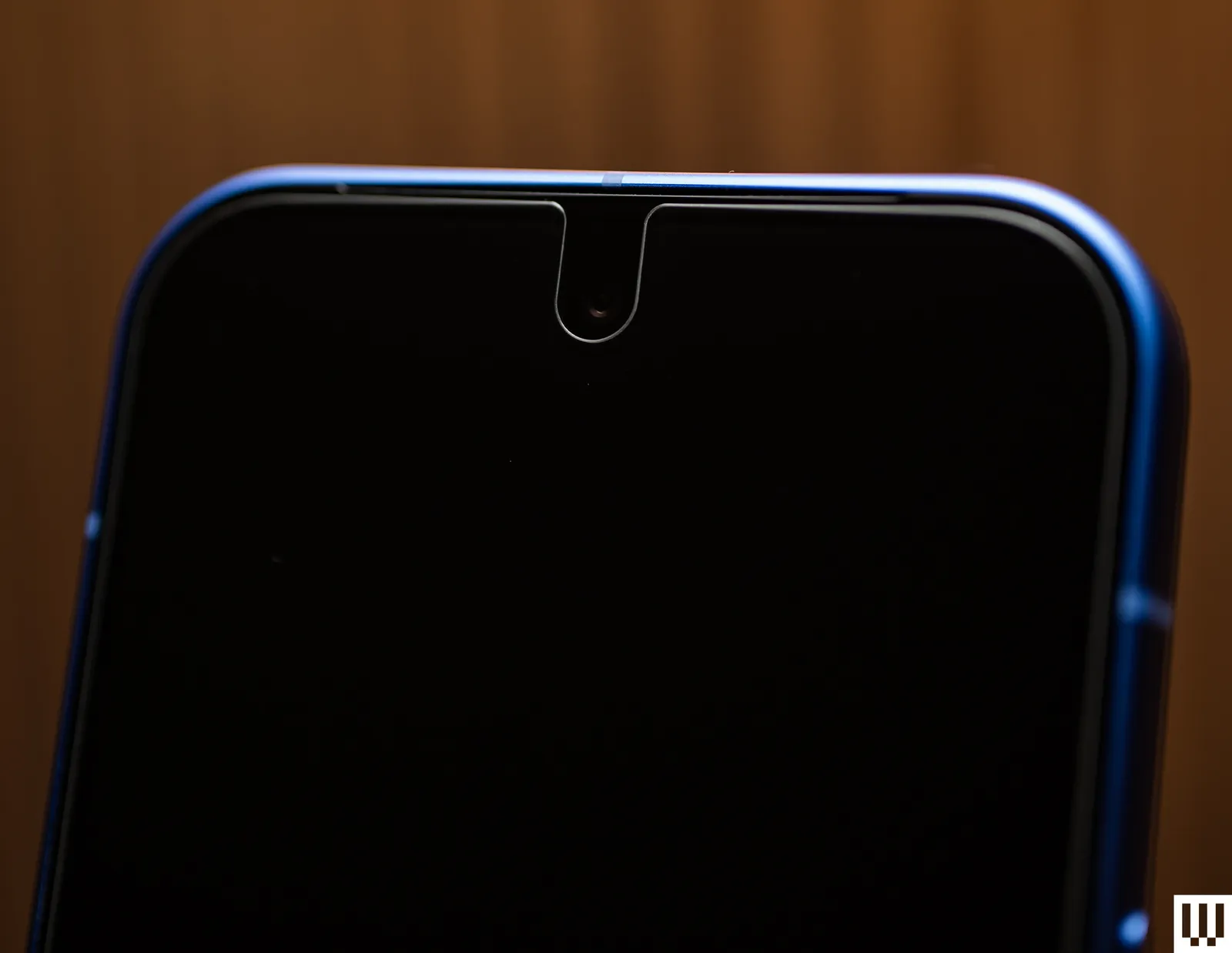
Zagg Glass Elite, Glass Elite Privacy, and XTR4 for $60: I have tested these screen protectors from Zagg on the Pixel 10. Zagg has a streamlined installation process that’s very easy to apply; my application was perfect. The Glass Elite uses aluminosilicate glass that isn’t too thick nor terribly thin, and the edges are rounded so they don’t feel sharp. (They don’t quite extend all the way past the bezels.) I don’t love the notch for the selfie camera because it stands out quite a bit. The Glass Elite Privacy is a two-way privacy screen protector, meaning folks on either side of you on a train can’t see what you’re looking at (though someone standing above you can). Text can look a bit fuzzy if you look closely with this protector, and you take a small hit to overall screen brightness, but it’s an otherwise solid option. Finally, the XTR4 covers more of the display, uses a stronger tempered glass, and strips away blue light (though whether that’s really helpful isn’t set in stone). Sadly, for all of these, you only get one in the box.
Spigen GlasTR EZ Fit Tempered Glass Screen Protector for $20 (2 Pack): This is the best bang for your buck when it comes to screen protection. Spigen gives you two in the box, and its application tool makes it impossible to make a mistake when installing the tempered glass protector. There’s even a squeegee tool to push out air bubbles. All that for $20.
UAG Glass Shield Screen Protector for $40: UAG includes the usual wet wipe, dust removal sticker, and microfiber cloth, and there’s a plastic shell you place on top of your Pixel to use as a guide when applying the tempered glass screen protector. It’s not the easiest method I’ve tried, as there’s room for some error (and potential to get grime or a smudge on the underside as you apply), but it was fairly quick and painless, and the air bubbles disappeared quickly.
Other Cases We Like

Photograph: Julian Chokkattu
Bellroy Pixelsnap Leather Pixel Folio for $75: A serviceable folio case for the Pixel 10 Pro Fold, this case spruces up your folding phone with leather in various colors. There’s a slot on the inside of the flap that lets you store a credit card or two, and the flap magnetically sticks to the front edges of the Fold to stay shut. It’s an elegant look, but the bend when you flip the folio open is a bit too thick and makes holding the phone feel a bit wobbly. Using it with the phone fully open isn’t too bad, but the whole thing doesn’t feel that protective.

Photograph: Julian Chokkattu
Casetify Impact Magnetic Case for $52: Casetify still leaves a bad taste in my mouth after it was caught stealing artwork from Dbrand and JerryRigsEverything. Its cases are still solid, with a thick and grippy bumper and clicky buttons. It is one of the few places that offer an insane amount of design options for Pixel phones (if you can trust they weren’t stolen).

Photograph: Julian Chokkattu
Casetify Pixel 10 Pro Fold Impact Magnetic Case for $60: This case is more protective than the Bellroy above, but the lip around the screen is a little too thick for my taste. It makes it hard to swipe in from the edges of the screen. If you don’t mind that, then you’ll appreciate that Casetify doesn’t use adhesives all over the case, but only in one spot (it provides extra stickers in the box if it comes off). It’s one of the only folding case options with dozens of fun designs to choose from. The $60 price is cheaper than many of its peers, and there’s a magnet for Pixelsnap wireless charging. It’s a shame the clear version Casetify sent me attracts so much dust and lint.

Photograph: Julian Chokkattu
Zagg Crystal Palace Lite for $30 and Crystal Palace Snap for $49: A super-simple, no-frills clear case, this Zagg option will do the job. There are two versions of the case. If you don’t care about the Qi2 magnetic function of your Pixel, go for the Lite, as it doesn’t have magnets baked into the case. (No Qi2 magnetic accessories will stick to it.) I’m not sure why you’d want to kill that functionality, especially since you can get magnetic cases for less than $20. Alternatively, you can buy the Crystal Palace Snap, which adds the classic magnetic ring on the back. It also has textured edges for better grip. Either way, the buttons are responsive, the edges are nicely raised over the screen, and the clear back shows off your Pixel’s color. I still think Dbrand’s Ghost Case 2.0 is the better clear case, because the Snap seems to pick up scuffs easily.
Zagg Rainier Snap Magnetic Case for $70: Also available for the Pixel 10 Pro XL, this rugged case has two pieces. Plop your Pixel into the thick back piece, and snap the front polycarbonate frame over it. It feels very rugged and protective without adding too much bulk, but the design leaves a lot to be desired. (Just a bit too tactical for me.) There’s a sizable lip over the screen for great glass protection, even if it means swiping in from the edges is a bit trickier. The buttons are responsive, but require a tiny bit more force to press. At least there are built-in magnets, so you can take advantage of Qi2.
Mous Clarity Pixelsnap Case for $65: This is my second-favorite clear case after Dbrand’s Ghost 2.0. There’s a thick bumper around the phone to absorb impacts, a solid magnetic connection, and a nice lip around the screen to keep it off the ground. The buttons are clicky, too.
OtterBox Symmetry Clear Pixelsnap Case for $42: This is a nice, clear case that’s also Pixelsnap-certified. The cutouts are accurate, the edges are slightly raised over the screen, and it offers a decent grip. If you prefer a completely clear case without a separate bumper, this will satisfy.
Spigen Parallax, Nano Pop, Tough, and Liquid Air Pixelsnap Cases for $19: I’ve tried several Spigen cases, and the Rugged Armor is my top pick. These other options have different designs, but they’re solid cases for the money. I found the Parallax slippery, and the sides also felt a bit cheap. The Nano Pop had a decently grippy texture on the edges, but the Liquid Air is one of my favorite Spigen designs. The buttons are just a little stiffer than I’d like. The Tough has a built-in kickstand that’s nice, although it can be a little tough to pop out if you have short nails. These are minor nitpicks, though. They’re great cases for under $20, especially considering they’re all Made for Google–certified.
UAG Pathfinder Pixelsnap Case for $60: Someone probably likes how this case looks. That person is not me, but clearly, there’s a market for this styling. If you fall in that camp, there’s not much to complain about the Pathfinder, except I found the buttons slightly stiffer than usual. It checks off all the other boxes, with a raised lip over the screen, but I just don’t find it that attractive (sorry).
Burga Tough Case for $50: This is one of the few nonmagnetic cases I’ve tested for the Pixel 10 series. If you absolutely don’t care for Qi2 and magnets in these phones, this is a perfectly fine case, and Burga has tons of designs you can choose from. The exterior is a hard plastic shell, but the phone is wrapped in a soft rubbery shell that absorbs impacts. The buttons are fairly clicky—not the most responsive—and there’s a solid lip around the screen.
Poetic Guardian, Poetic Spartan, and Poetic Revolution Case for $25: One thing to note is that Poetic includes a screen protector that embeds itself into the case, like old-school cases that offered full protection. You can opt not to use it as the case will work with or without it. The Revolution doesn’t have any magnets but has a built-in kickstand and a cover that can completely protect your cameras; I find this a little extreme, so I don’t care for it. It also, in my humble opinion, looks hideous. The Guardian looks much better, with a thick bumper, raised edges, and a covered port. The buttons are a little stiff, but at least it has built-in magnets for Qi2 (not certified). Finally, the Spartan (for Pixel 10a) has a built-in MagSafe ring stand that lets you use MagSafe accessories, grip your phone securely, and prop it up in kickstand mode. The buttons could be more responsive, but it’s an option worth considering if you want a sort of multitool phone case.
Avoid These Cases

Photograph: Julian Chokkattu
Peak Design Gnar Case for $60: I have historically liked Peak Design’s cases, but that hasn’t been true with the Gnar case for the iPhone 17 range and the Pixel 10. The edges of the phone feel way too slippery, and they also push in a little too much into the front screen, which disrupts my screen protector and creates a small air bubble. The lip around the display is also very lackluster, and I find it a little too hard to pull out the flap that protects the USB-C charging port. I don’t love the two-tone material choice on the back; it feels cheap and dull. The SlimLink square adds an extra layer of security for the Pixelsnap magnetic attachment, but you’ll have to pair it with relevant SlimLink docks and mounts to get the most out of it. I think you should just stick with the Everyday Case if you want to make use of Peak Design’s mounts.
Power up with unlimited access to WIRED. Get best-in-class reporting and exclusive subscriber content that’s too important to ignore. Subscribe Today.
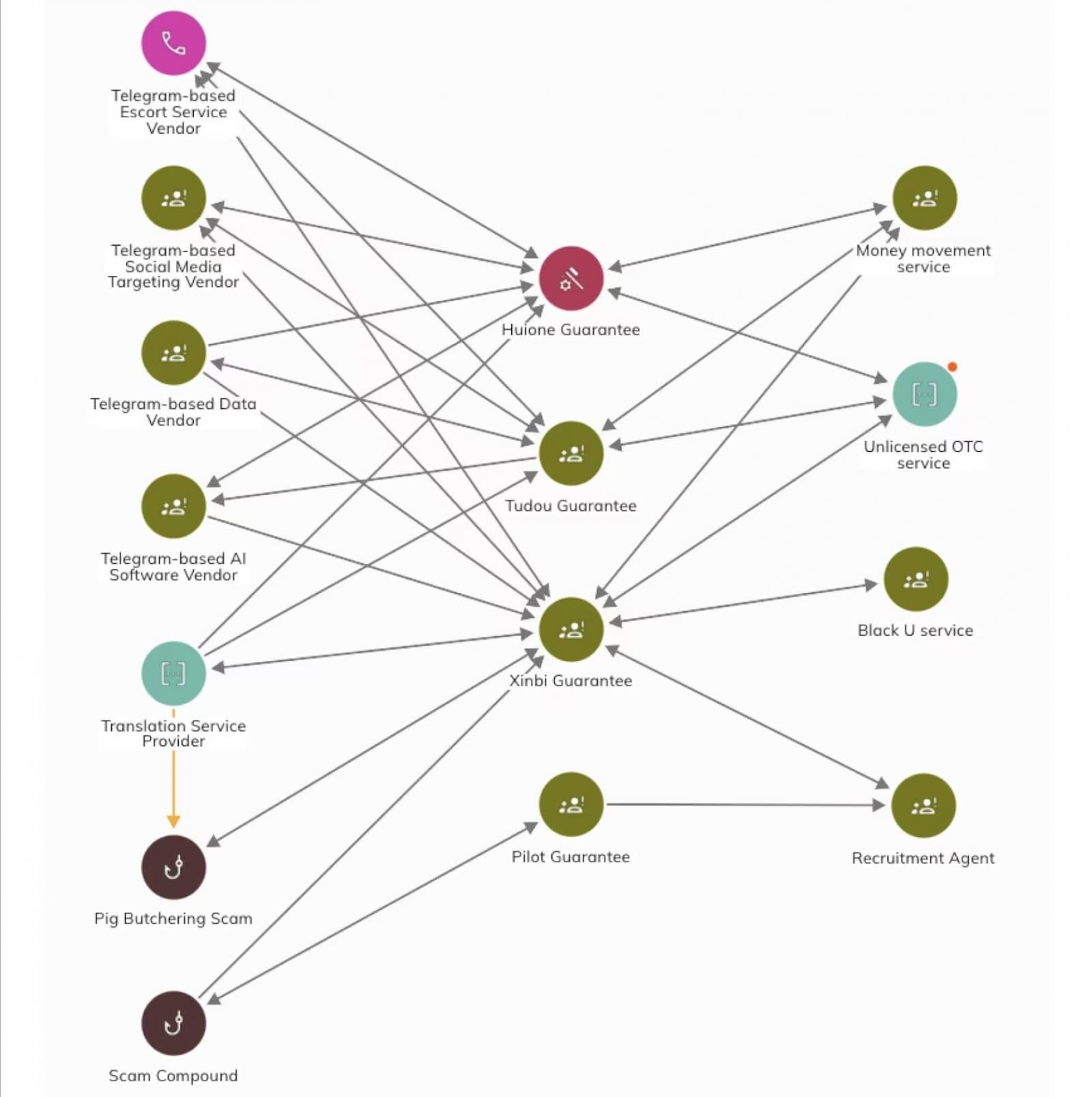
The United Kingdom’s Foreign, Commonwealth and Development Office (FCDO) has sanctioned Xinbi, a Chinese-language online marketplace that sells stolen data and satellite internet equipment to scam networks in Southeast Asia.
The Telegram-based marketplace Xinbi is also believed to have helped North Korean threat actors launder cryptocurrency stolen in large heists from companies and individuals worldwide.
According to blockchain analysis firm Chainalysis, Xinbi has processed over $19.9 billion between 2021 and 2025, facilitating everything from unlicensed OTC trades and money laundering to the sale of stolen personal databases.
Today’s sanctions also target #8 Park (a massive-scale scam compound linked by blockchain analytics firm Elliptic to the Prince Group crime ring) and Legend Innovation Co (the operator of #8 Park).
“Today the government has stepped up its fight against these scam centres, targeting the owners and operators of a recently identified facility known as ‘#8 Park,’ believed to be Cambodia’s largest scam compound, with capacity to accommodate 20,000 trafficked workers,” the FCDO said on Thursday.
“The UK is also the first country to sanction Xinbi, one of the largest illicit marketplaces in Southeast Asia, which provides cryptocurrency-based services to scam centres – including #8 Park.”
FCDO’s sanctions aim to isolate Xinbi from the legitimate crypto ecosystem, disrupting its operations by making it impossible to send or receive cryptocurrency payments, as happened when the Byex Exchange cryptocurrency platform shut down after being sanctioned by the U.K. last year.
Scam centers across Myanmar, Cambodia, and Laos are criminal-run operations often operated by Chinese crime syndicates that coerce people (many of them foreigners) to become accomplices in large-scale criminal operations that target victims worldwide in cryptocurrency investment scams, also known as pig butchering or romance baiting.
They usually contact targets through social media, messaging apps, and dating sites, using stolen information bought from dedicated online platforms like Xinbi, to lure victims into fake investment schemes. However, the scammers steal the money by moving it into accounts they control rather than investing it.
“Our sanctions today send a clear message: We will not allow British people to become victims of these dreadful scams or tolerate the awful human rights abuses perpetrated in these scam centres,” said Stephen Doughty, the U.K.’s Minister of State for Europe, North America and Overseas Territories.
“We must keep up the pressure on dirty money and those who benefit from it. At the Illicit Finance Summit in June, the UK will drive international action to tackle the ways in which ill-gotten profits are laundered and moved around the world.”
Today’s action follows another wave of seizures, asset freezes, and the shutdown of hundreds of scam centers in October 2025 after the FCDO and the U.S. Department of the Treasury’s Office of Foreign Assets Control (OFAC) jointly sanctioned the Cambodian Prince Group crime ring and its leader, Chen Zhi. The U.S. Department of Justice also seized $15 billion in bitcoin from Zhi, who remains at large.

Automated pentesting proves the path exists. BAS proves whether your controls stop it. Most teams run one without the other.
This whitepaper maps six validation surfaces, shows where coverage ends, and provides practitioners with three diagnostic questions for any tool evaluation.


A new info-stealing malware named Infinity Stealer is targeting macOS systems with a Python payload packaged as an executable using the open-source Nuitka compiler.
The attack uses the ClickFix technique, presenting a fake CAPTCHA that mimics Cloudflare’s human verification check to trick users into executing malicious code.
Researchers at Malwarebytes say this is the first documented macOS campaign combining ClickFix delivery with a Python-based infostealer compiled using Nuitka.
Because Nuitka produces a native binary by compiling the Python script into C code, the resulting executable is more resistant to static analysis.
Compared to PyInstaller, which bundles Python with bytecode, it’s more evasive because it produces a real native binary with no obvious bytecode layer, making reverse engineering much harder.
“The final payload is written in Python and compiled with Nuitka, producing a native macOS binary. That makes it harder to analyze and detect than typical Python-based malware,” Malwarebystes says.
Attack chain
The attack begins with a ClickFix lure on the domain update-check[.]com, posing as a human verification step from Cloudflare and asking the user to complete the challenge by pasting a base64-obfuscated curl command into the macOS Terminal, bypassing OS-level defenses.
.jpg)
Source: Malwarebytes
The command decodes a Bash script that writes the stage-2 (Nuitka loader) to /tmp, then removes the quarantine flag, and executes it via ‘nohup.’ Finally, it passes the command-and-control (C2) and token via environment variables and then deletes itself and closes the Terminal window.
The Nuitka loader is an 8.6 MB Mach-O binary that contains a 35MB zstd-compressed archive, containing the stage-3 (UpdateHelper.bin), which is the Infinity Stealer malware.
.jpg)
Source: Malwarebytes
Before starting to collect sensitive data, the malware performs anti-analysis checks to determine whether it is running in a virtualized/sandboxed environment.
Malwarebytes’ analysis of the Python 3.11 payload uncovered that the info-stealer can take screenshots and harvest the following data:
- Credentials from Chromium‑based browsers and Firefox
- macOS Keychain entries
- Cryptocurrency wallets
- Plaintext secrets in developer files, such as .env
All stolen data is exfiltrated via HTTP POST requests to the C2, and a Telegram notification is sent to the threat actors upon completion of the operation.
Malwarebytes underlines that the appearance of malware like Infinity Stealer is proof that threats to macOS users are only getting more advanced and targeted.
Users should never paste into Terminal commands they find online and don’t fully understand.
Automated pentesting proves the path exists. BAS proves whether your controls stop it. Most teams run one without the other.
This whitepaper maps six validation surfaces, shows where coverage ends, and provides practitioners with three diagnostic questions for any tool evaluation.

The Wall Street Journal reports:
Walking into his kitchen, Tim Yoder recoiled at a message on his refrigerator door: “Shop Samsung water filters.” Yoder, a supply-chain manager in Chicago, owns a Samsung Electronics Family Hub fridge. He paid $1,400 for an appliance that came with a 32-inch screen on the door that allows him to control other Samsung gadgets, pull up recipes or stream music. But since last fall, it’s been intermittently serving up ads, part of a pilot program being tested on some of Samsung’s smart fridges sold in the U.S. The response? Not warm. “I guess this is another place for somebody to shove an ad in your face,” said the 47-year-old Yoder, recalling the first time he noticed one…
The ads are only on certain Family Hub fridges that have screens and internet connectivity. They run as a rectangular banner at the bottom — part of a widget that also shows news, the weather and a calendar. Samsung declined to say how long the pilot might last or whether it would end. The firm recently unveiled a “Screens Everywhere” initiative that also includes washers, dryers and ovens…. Samsung launched the banner-type fridge ads that come as part of the widget via an October software update. In a footnote of a news release at the time, Samsung pledged to “serve contextual or non-personal ads” and respect data privacy. The banner ads can be turned off in settings.
Samsung said the purpose of the pilot is to explore whether ads relevant to home chores can be useful to owners, and that overall pushback has been negligible. The “turn-off” rate for the pilot ad program remains in the bottom single-digit range, it said… While owners can turn off the banner ads, doing so eliminates the widget altogether, a bummer for Brian Bosworth, a media-industry engineer who liked the feature. Bosworth thinks it’s wrong to take away the new feature as a condition. Wanting to keep the widget but not the ads, the 49-year-old in Edgewater, Md., made sure his home router’s ad-blocking software extended to his fridge. He hasn’t seen another since.
One 27-year-old plans to return his refrigerator after the entire display “lit up with a full-screen ad for Apple TV’s sci-fi show Pluribus,” according to the article. The all-caps ad beckoned him “with an oft-used refrain directed at protagonist Carol Sturka: ‘We’re Sorry We Upset You, Carol.’”
Thanks to Slashdot reader fjo3 for sharing the article.
Tech
Sony’s Patent Reveals How a Smartphone Could Snap Onto the DualSense and Unlock New Ways to Play


Photo credit: Sarang Sheth | Yanko Design
A recently uncovered Sony patent shows how users could connect a smartphone directly to the DualSense controller. The entire concept revolves around connecting two pieces of hardware that most people already own and using them to create a seamless gaming experience directly into PlayStation. Some drawings included with the application show a phone simply placed on top of the controller’s analog sticks and triggers. A magnetic thingy holds everything together, so you can simply plug your phone in and it transforms into a single, compact handheld item.

The console will automatically detect the connected phone, and games will begin to instruct the controller to use the buttons and sticks while simultaneously accessing all of the phone’s functionality. So developers have fast access to almost the entire phone, including the touchscreen for taps and swipes, the built-in motion sensors for tracking movements and orientations, the camera for quick snaps, and the position data for extremely precise steering hints.

PlayStation 5 Portal Remote Player – Midnight Black
- Play Your Game Collection with Remote Play – PlayStation Portal Remote Player can play compatible games you have installed on your PS5 console…
- Cloud Streaming from the Game Catalog and Classics Catalog – Discover an awesome library of PS5 games on the PlayStation Portal Remote Player with…
- Cloud Streaming for PS5 Games in Your Library – With PlayStation Plus Premium, stream select digital PS5 games in Your Library from PlayStation Store…
A no-brainer benefit is how information appears during gameplay, as the phone screen can handle all of the extra information, such as maps, gear lists, or side views, whilst the TV focuses on the main action. You can also tap on the phone screen to pick settings in a far more straightforward way than fumbling through menus with the sticks alone, and tilting the entire device, smartphone and controller, makes steering or aiming really simple.

Even character creation has been easier, with the phone’s camera capturing a fast facial photo or an item photo and inserting it directly into your in-game avatar. The motion sensors can detect even the smallest motions of the combined device, offering up entirely new possibilities for puzzles that respond to how you hold it.
Sony developed this concept around the idea of leveraging hardware that almost everyone has in their pockets, and they are not the first to try this. Yes, there have been phone clips that attach to controllers for years, but this idea does far more than just mount the phone; it instructs the game engine to use the phone for genuine control data rather than merely mirroring a feed.

Sony attempted to experiment with phone pairings with older controllers a few years ago, but they ran into time and connection quality concerns. In comparison, phones today are far more advanced, with crisper screens, quicker CPUs, and more dependable sensors – and consoles are far more capable of handling all of these additional input streams without issue.
The real question is if it’s worth it; do game developers care enough about this to begin producing games that make use of the extra controls? A racing game might employ phone tilt for steering, whereas an adventure game might use the phone screen for item listings. Overall, the configuration provides a lot of flexibility without requiring you to buy any additional gear.
[Source]

Last year, Garmin introduced a Pro version that incorporates the inReach’s satellite communications savvy. Not only does it cost at least $400 more than the Apple Watch Ultra and $200 more than the regular Fenix 8, but you also have to pay for the inReach subscription plan, which has several tiers and ranges from $8/month to $50/month depending on whether you want features like unlimited texting or sending photo messages.
What you get for this mind-boggling price is a sports watch that can do anything and everything. It has best-in-class battery life (every Fenix can last for weeks on a single charge, and up to a month with solar charging) and features like the depth sensor from Garmin’s Descent line, which means this watch works as a full-on dive computer for scuba and free diving. It has a microphone and speaker for basic voice commands (although no onboard cellular connectivity), the surprisingly useful built-in LED flashlight, and Garmin’s signature built-in topographic maps, 24/7 health monitoring, and tracking for over a hundred different activities.
I’ve taken the 51-mm version on pretty much every outdoor sport—snowboarding, trail running, mountain biking, and rock climbing. Every time I use it, its capabilities far outclass my own. I have irritated many a fellow climber by attempting to track route difficulty, duration, and falls while integrating my Body Battery metrics and so on. The danger is always that you’ll spend more time fiddling with your Garmin Fenix 8 than you do with your actual sport. I have the version with the sapphire glass face and the titanium bezel, and have smashed it into rock faces with nary a scratch. If you’re up for paying the price and want a good-looking watch that will last forever (I have friends who are still wearing their Fenix 5s and 6s, and honestly, they’re fine), this is the one to get.
Best Running Watch
The Garmin Forerunner series launched in the early 2000s and has become the quintessential runner’s watch. Like all Garmins, the Forerunner comes in a range of price points, each offering different features. Last year, Garmin released the Forerunner 570 ($550), a midrange model with no LED flashlight or onboard maps, and the Forerunner 970 ($750), which is the premium version. Before I go into detail about why the Forerunner 970 is the best option, I should also say that I have tested many previous Garmin Forerunners at various price points. If you’re not a triathlete, the older Forerunners are still worth considering, and the entry-level $200 Forerunner 165 is aimed explicitly at runners, instead of including triathletes as the more expensive models do.


Samsung’s newly introduced QuantumBlack technology adds a film to the company’s QD-OLED panels, enhancing immersion and reducing reflections from external light sources. The South Korean company said QuantumBlack improves both reflection control and surface hardness, and it will become a standard feature on all QD-OLED monitors expected to launch in 2026.
Read Entire Article
Source link
We’re all familiar with mixing red, yellow, and blue paint in various ratios to instantly make all kinds of colors. This works great for oils or watercolors, but fails when it comes to cans of spray paint. The paint droplets can’t be blended once they are aerosolized. Consequently, although spray cans are great for applying even coats of paint to large areas very quickly, spray-paint artists need a separate can for every color they want to use—until now.
Back in 2018, when I first saw professional spray artists lugging dozens to hundreds of cans to their work sites, I was inspired to start noodling on a solution. I’ve worked at Google X, Alphabet’s “moonshot factory,” as a hardware engineer, and I’m now building a startup in mechanical-design software. I’m no painter, but I know my way around mechatronics.
I wanted my solution to be inexpensive and simple enough to build as a DIY project and functional enough for an artist to use, without breaking their flow. So I began prototyping a system that combines base colors while they are still in pressurized form from off-the-shelf cans.
 This new rotary pinch valve can be opened and closed in tens of milliseconds and prevents backpressure from clogging lines.James Provost
I tried a few approaches where pres-surized paint from the base-color cansfed through tubes into a mixing channel, before emerging from a spray head. To control the ratios, I decided to borrow a trick that would be familiar to anyone who’s ever had to control the bright-ness of an LED using a microcontroller: pulse-width modulation. Initially, I used electronically controlled solenoid valves to release the paint from the cans. The paint would flow into a mixing channel for a relative duration that corresponded to the ratio of the base colors required to make a given hue. However, this failed because different cans never have the same internal pressure. Whenever two valves were open at the same time, the pressure difference would make paint flow backward into the lower-pressure can.
As an alternative, I removed the mixing channel and tried making the paint pulses from each can sequentially converge into a tube so that no more than one valve would ever be open at a time. Surprisingly, this worked perfectly. The backflow was eliminated, and it turned out that the natural turbulence of the flow was sufficient to mix the paints. Let’s say you want to produce a clementine orange color. This requires yellow and red paint in a ratio of 1:2, so the yellow valve opens for a period of time, and then the red valve opens for twice as long. The system then keeps repeating this cycle of pulses in a rapid pace to instantly create the spray-paint color you want.
The theory is straightforward, but making this work in practice took quite a bit of experimentation. First, I had to determine the actual durations of pulses that would produce evenly mixed colors, not just their ratios. I also needed to work out the size of the tubing (too narrow and you’d get low spray force; too wide and you’d have paint accumulating in the tubes). Eventually I settled on a maximum pulse duration of 250 milliseconds and a tube diameter of 1 millimeter.
Inventing A New Valve
Even though the system worked, the solenoid valves I used constantly clogged up. Designed for water purifiers, the valves didn’t prevent paint from entering the mechanism, where the paint would harden. Moreover, when the valves were turned off, they could stop backflow only if the inlet remained pressurized. So disconnecting a paint can from the system would cause instant leaking. Other off-the-shelf valves I tried couldn’t cycle fast enough and were too expensive.
I had some spectacular failures along the way of the sort that only pressurized paint can provide.
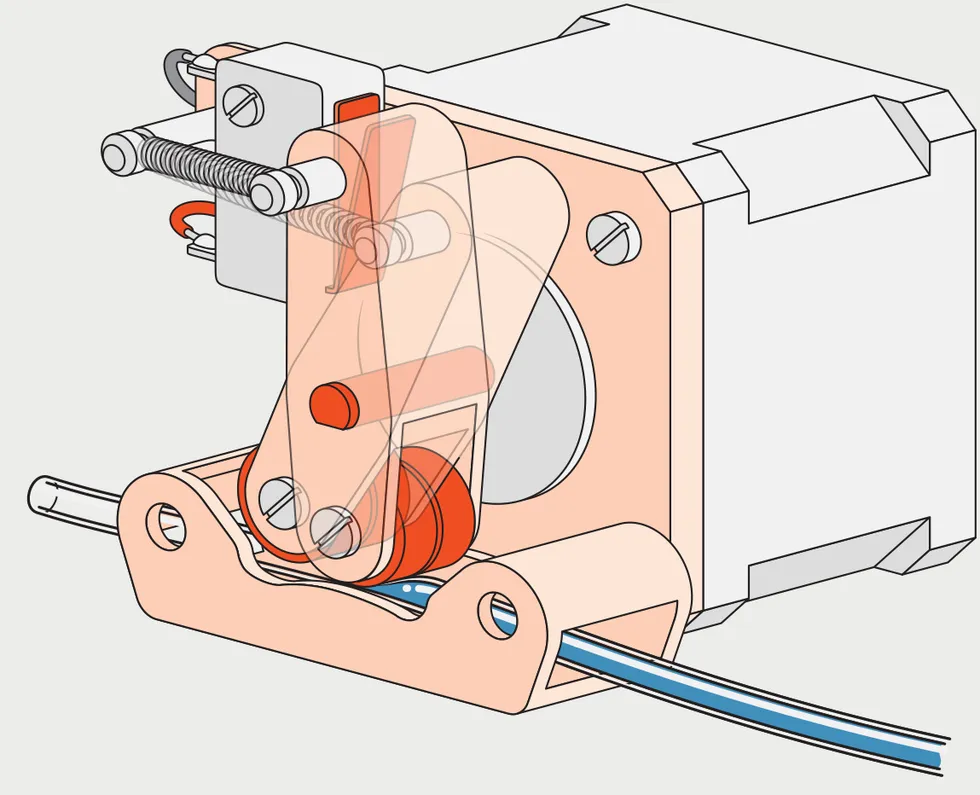
So I created my own mechanism: a high-speed, electronically controlled, rotary pinch valve. It has a stepper motor that rotates a lever with a rolling bearing to constrict fluid flow inside a flexible tube. This concept isn’t new—there’s something like them in every peristaltic pump. But I added a spring to firmly hold the lever in the closed position against any back pressure when the motor isn’t powered, making it a normally closed valve that isolates the attached can. Additionally, the valve is fast enough to be open for as little as 30 milliseconds.
I went through four major prototypes of the system before reaching a working version, and I had some spectacular failures along the way of the sort that only pressurized paint can provide. The final version uses four base colors—red, yellow, blue, and white—with the color mix controlled by four knobs attached to an Arduino Nano and a small display. The flow of paint is triggered by a push button placed above the spray head, similar to a spray can’s nozzle.
 Cans holding base colors (A) are attached to valves (B). An Arduino-based control panel (C) opens and closes valves to mix paint before it is aerosolized (E). By quickly opening and closing valves with varying durations in sequence (D), you can mix paint in specific ratios to create desired colors.James Provost
The length of time a base color’s paint valve can be open is one of eight values between 30 and 250 ms. This means that the entire system—which I coincidentally dubbed Spectrum—can create hundreds of distinct spray-paint colors instantly. It produces less than 84 (or 4,096) colors because duration ratios that are a multiple of each other will produce the same color—for example, 2:3 and 4:6. I added a force sensor to the push button, which allows for a gradient: Two color mixes can be dialed in, and as I increase my thumb’s pressure on the button, the paint mix shifts from one color to the other.
Spectrum’s various fixtures are 3D-printed, and project files and videos are available through my website at https://www.sandeshmanik.com/projects/spectrum. Preprints of technical descriptions of the rotary pinch valve and mixing methodology are available on TechRxiv. The total cost for the bill of materials is less than US $150.
Working on and off on the side for about seven years, I finally finished developing my system and writing the documentation in late 2025. After I posted a video to social media, I was heartened by the immediate positive response from spray-paint artists around the world. I’m now creating step-by-step instructions so that nontechnical people can build their own Spectrum paint sprayer. I look forward to seeing what creations artists out in the wild make!
From Your Site Articles
Related Articles Around the Web
Crypto needs a reset before the next bull run

Jannik Sinner faces Lehecka in Miami Final

AI Enhanced Financial Analysis | Course Module


-
 NewsBeat3 days ago
Manchester United reach agreement with Casemiro over contract clause amid transfer speculation
-

 News Videos3 days ago
Parliament publishes latest register of MPs’ financial interests
-

 Crypto World7 days ago
Best Crypto to Buy Now: Strategy Just Spent $1.57 Billion on Bitcoin During Fear While Early Investors Quietly Enter Pepeto for 150x Potential
-

 Crypto World7 days ago
Bitcoin Price News: Bhutan Sells $72 Million in BTC Under Fiscal Pressure, but the Smart Money Entering Pepeto Sees What the Market Does Not
-

 Sports5 days ago
Remo Stars and Kano Pillars Strengthen Survival Hopes in NPFL
-

 Business6 days ago
No Winner in March 21 Drawing as Prize Rolls to $133 Million for Next
-

 Sports5 days ago
Gary Kirsten Accuses Pakistan Cricket Board Of ‘Interference’, Mohsin Naqvi Responds
-

 Tech6 days ago
Give Your Phone a Huge (and Free) Upgrade by Switching to Another Keyboard
-

 Tech6 days ago
AI enters the chat: New Seattle dating app relies on tech to facilitate meaningful human connections
-

 News Videos5 days ago
Ch 9 Financial Management Part 1 | Detailed One Shot | Class 12 Business Studies Boards 2026
-

 Business2 days ago
Instagram, YouTube Found Responsible for Teen’s Mental Health Struggle in Historic Ruling
-

 NewsBeat21 hours ago
The Story hosts event on Durham’s historic registers
-

 Tech7 days ago
Today’s NYT Connections Hints, Answers for March 22 #1015
-
 NewsBeat3 days ago
Tesco is selling new Cadbury Dairy Milk bar and people can’t wait to try it
-

 Business6 days ago
Will Duke Basketball Win It All? Duke Basketball Enters Second Round as Third Favorite to Claim NCAA Title
-

 Sports6 days ago
2026 Kentucky Derby horses, odds, futures, preview, date: Expert who hit 12 Derby-Oaks Doubles enters picks
-
 NewsBeat6 days ago
Update on Wisbech river crash as search for teenage boy enters fifth day
-
 Entertainment5 days ago
Cynthia Bailey Dishes on ‘RHOA’ Season 17, Discusses Kandi
-

 Tech5 days ago
Samsung will soon let you control smart home devices from your car’s dashboard
-

 Fashion4 days ago
Does It Matter What You Wear When You’re Laid Off and Looking?
You must be logged in to post a comment Login