I know there is a rather large price difference between the Bowers & Wilkins Px8 S2 and the Sennheiser HDB 630. The Px8 S2 sits at $799, while the HDB 630 lands at $499. That $300 gap is not nothing. It is the difference between my $250 seat for The Wizard of Oz at the Sphere and the $450 first-level ticket that promised the full wraparound experience, flying monkeys included.
So why compare them?
Because the two are surprisingly close in a few areas that matter, and the gap is not as ridiculous as it looks on paper. Some readers will throw eggs. Probably the same bitter Rush fans still pretending Anika Nilles has not been killing it behind the kit on the Fifty Something tour because accepting reality would apparently violate the sacred scrolls of 2112. Someone get poor Geddy a glass of tea and a throat lozenge. He still remembers every word, but a few of those notes are landing somewhere near the corner of Bathurst and Wilson.
Could I have used the Bowers & Wilkins Px7 S3 instead? Sure. That would have made the pricing cleaner. It also would have required having a pair around, and this is what I had in front of me. Reviewing is not fantasy football. You work with the gear on the desk, the train, the airplane, the hotel room, and occasionally the Wawa-adjacent dog walk.
Advertisement
So here we are: a $799 British luxury wireless flagship versus a $499 German wireless headphone with a very useful USB-C dongle and enough sonic discipline to make the comparison less silly than it sounds.
Can der kleine David from Wedemark make the British Goliath blink?
Let’s find out.
This comparison is based on our full reviews of both models, which are linked below for readers who want the deeper individual breakdowns.
Advertisement
Related Reviews:
Why This Comparison Makes More Sense Than It Should
The Bowers & Wilkins Px8 S2 and Sennheiser HDB 630 are not aimed at identical buyers, but they do overlap in one very important way: Both are built for listeners who care more about sound quality than ANC trickery, app gimmicks, or whether their headphones match the color of their laptop. Which, for most of us, is a yes.
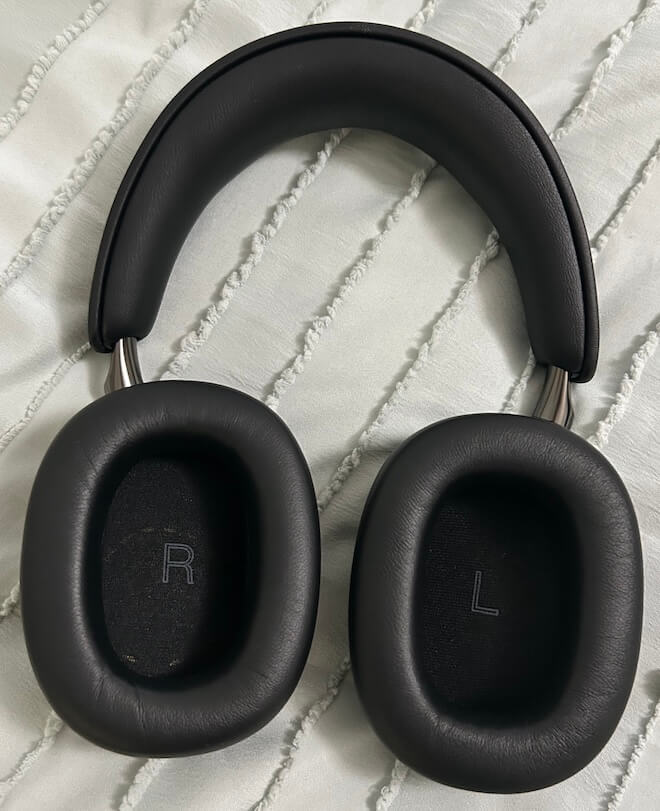
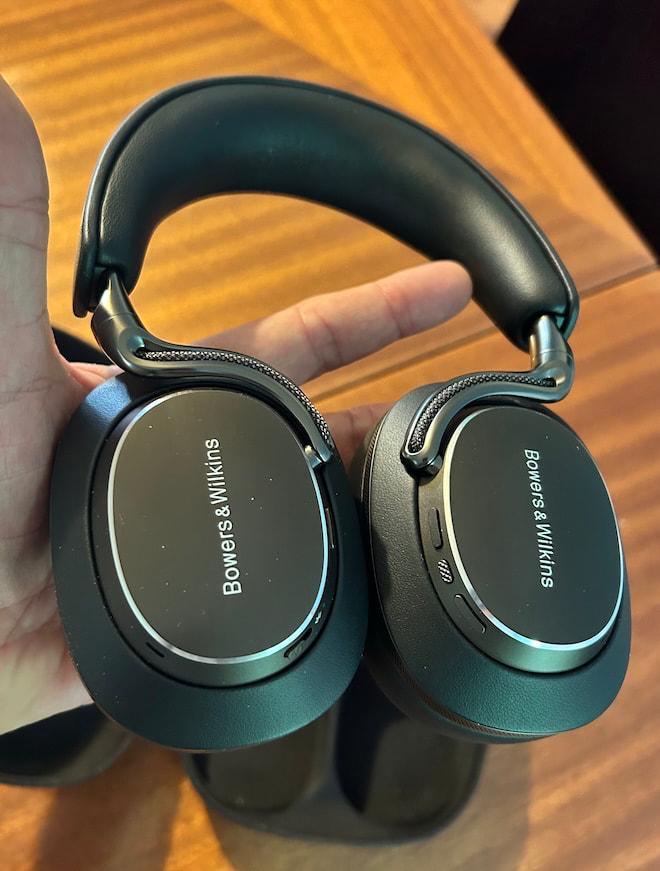
The Px8 S2 is the more luxurious headphone. Nappa leather, exposed cable detailing, a slimmer frame, stronger passive isolation, physical buttons, Bluetooth 5.3, aptX Lossless, aptX Adaptive, aptX HD, USB-C playback, 3.5mm wired playback, and a more powerful low-end presentation all reinforce its flagship position.
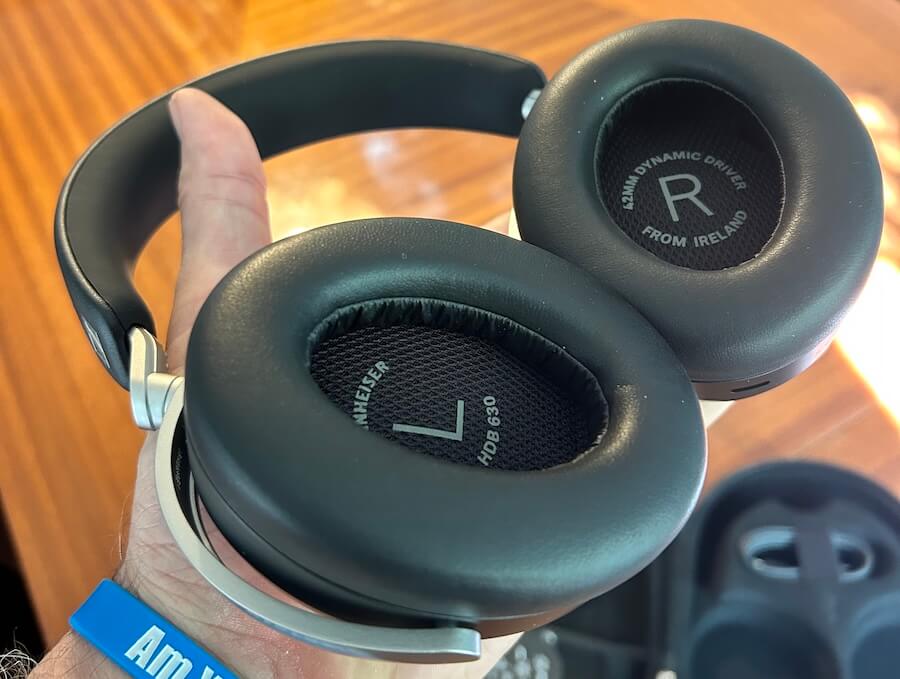
The HDB 630 is the more practical and more value-driven headphone. It offers 24-bit/96kHz playback via USB-C, Bluetooth 5.2 with aptX Adaptive and aptX HD, and the included BTD 700 USB-C dongle, which makes higher-quality Bluetooth easier to access from more phones, tablets, and laptops. Add in the better app, parametric EQ, crossfeed, bass boost, longer battery life, and more spacious midrange-focused presentation, and the Sennheiser starts looking like the more sensible troublemaker.
Advertisement. Scroll to continue reading.
Advertisement
One is wearing a tailored British overcoat. The other shows up with German paperwork, better battery life, and a dongle that actually solves a problem.
Design & Build Quality
Bowers & Wilkins Px8 S2
The Px8 S2 wins the materials contest.
One area where the Px8 S2 clearly pulls ahead is visibility. The Bowers & Wilkins branding, materials, and overall look stand out in a way the Sennheiser does not.
That became obvious during my usual coffee shop testing. My Asbury Park routine has become slightly more complicated lately, so I have been spending more time at a different local spot where the coffee is better, Hebrew is not uncommon, and the parking lot looks like a Range Rover, BMW, and Tesla owner’s support group.
This is also a crowd that includes some of my children’s former classmates, parents, soccer coaches, and baseball coaches, all of whom know I am the guy who rolls up in large Toyota SUVs with 150,000 to 200,000 miles on them and considers that “nicely broken in.”
Advertisement
They noticed the Px8 S2. More than once. The Sennheiser HDB 630 drew less attention, which may be a positive depending on your personality, wardrobe, or tolerance for conversations before caffeine. But in terms of brand presence and visual appeal, the Bowers made the stronger impression.
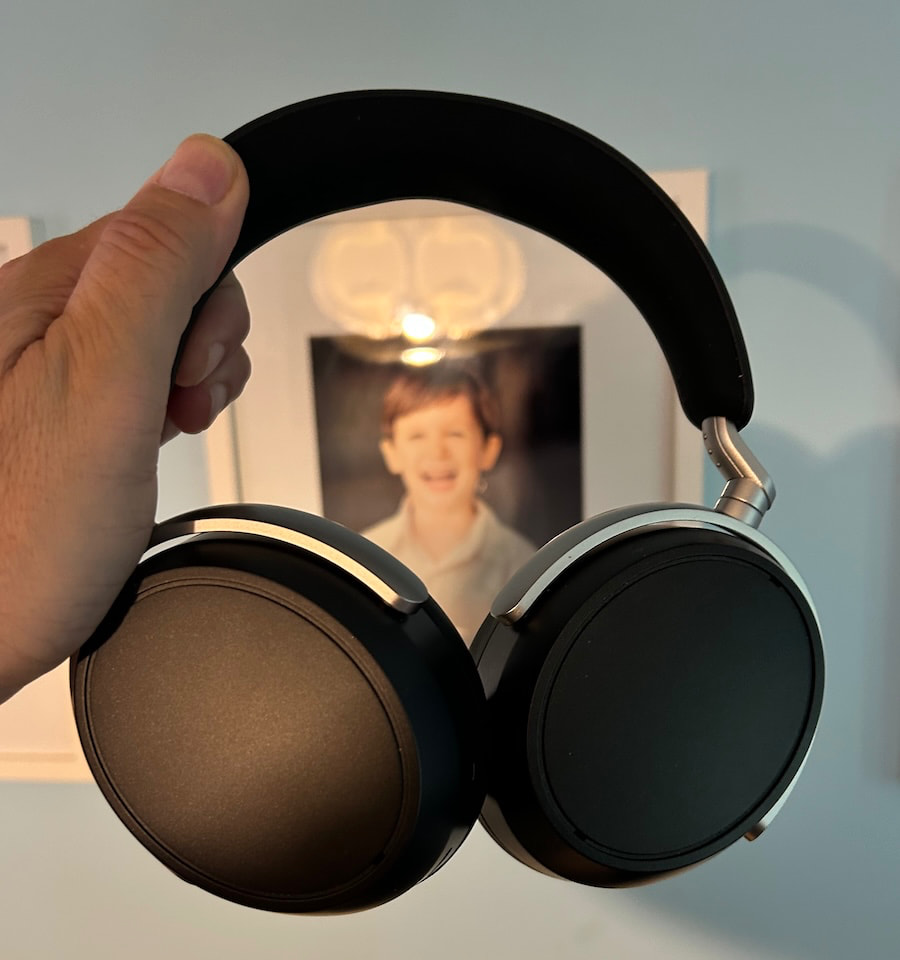
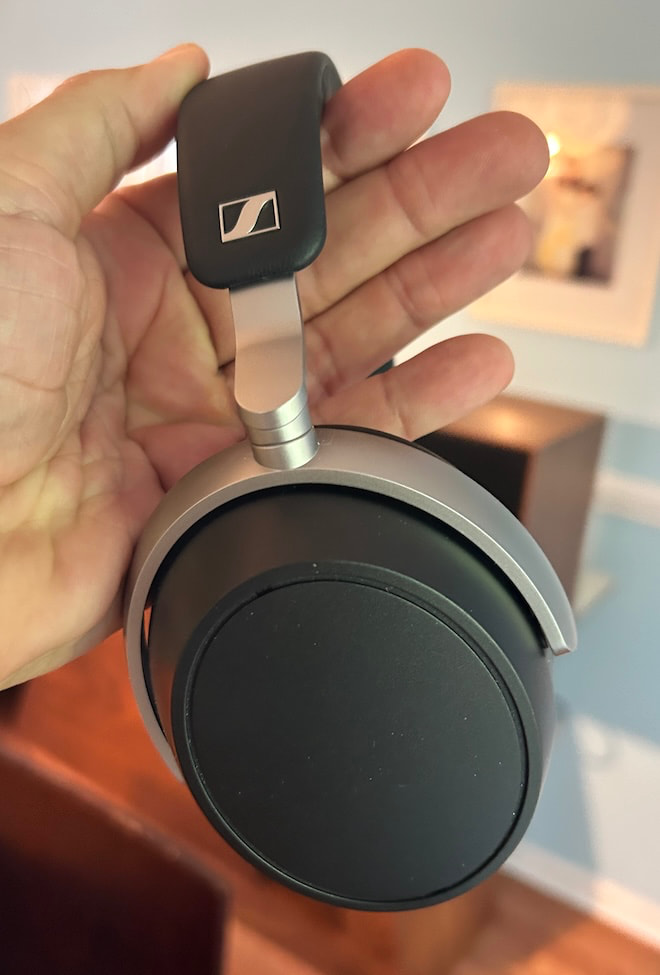
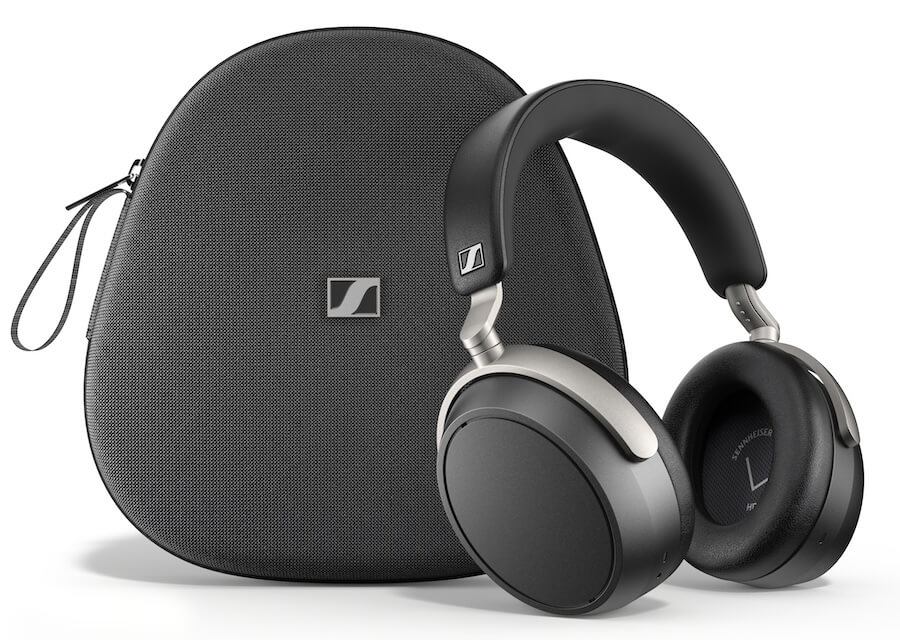
The HDB 630 is more understated. It borrows from the MOMENTUM 4 & 5 platform but feels more substantial than most Sony or Bose competitors. The travel case is practical, the accessories are well organized, and the included USB-C cable, 3.5mm analog cable, airline adapter, and BTD 700 dongle make the package feel complete.
Winner: Bowers & Wilkins Px8 S2
Comfort & Fit
Sennheiser HDB 630
On paper, these two are almost identical in weight. The Px8 S2 weighs 310 grams. The HDB 630 weighs 311 grams. On the head, they feel different.
The Px8 S2 has a firmer clamp. That helps with passive isolation and keeps the headphones planted while walking, commuting, or pushing through public transit crowds with the usual mixture of resignation and mild rage. The padding is comfortable, and the slimmer frame makes the Px8 S2 easier to wear for long stretches than the original Px8.
Advertisement
The HDB 630 has a lighter clamp and softer Japanese Protein Leatherette ear cushions. It feels less locked-in than the Bowers models, which some listeners will prefer. The pads can get warm during longer sessions, especially on trains or in warmer spaces, but the overall comfort is strong.
If you want a firmer, more secure fit, the Px8 S2 is better. If you want a lighter clamp and less pressure, the HDB 630 makes more sense.
Advertisement. Scroll to continue reading.
Winner: Tie, depending on fit preference
Advertisement
Battery Life
Sennheiser HDB 630
This one is not close.
The Px8 S2 delivers roughly 28 to 30 hours in real-world use with ANC. That is perfectly respectable.A 15-minute quick charge adds about seven hours, which is useful if you forgot to charge them before a flight or a long NJ Transit day. With the World Cup landing at MetLife Stadium this weekend, seven hours may only get you through the first cheerful lie about how smoothly NJ Transit is handling the crowds.
The HDB 630 averaged roughly 53 to 54 hours in real-world use, with around 51 to 52 hours when ANC was engaged all the time at above-average listening levels. A 10-minute charge also delivers about seven hours of playback.
That is almost a full week of commuting from a single charge. Sennheiser wins this category before the Bowers even finishes lacing its shoes.
Winner: Sennheiser HDB 630
Advertisement
Connectivity & Hi-Res Support
Bowers & Wilkins Px8 S2
The Px8 S2 has the stronger native Bluetooth spec. It supports Bluetooth 5.3 with aptX Lossless, aptX Adaptive, aptX HD, aptX Classic, AAC, and SBC, along with multipoint connectivity. It also supports wired playback via USB-C and 3.5mm, and both cables are included in the case.
For Android users with compatible hardware, that gives the Bowers & Wilkins a very complete wireless toolkit. For Apple users, the usual aptX problem remains. iPhones, iPads, and Macs do not support aptX Adaptive or aptX Lossless natively, so the Px8 S2’s best Bluetooth performance still depends on using the right source device.
The HDB 630 is more limited on the headphone side. It supports Bluetooth 5.2 with SBC, AAC, aptX, aptX HD, and aptX Adaptive. It does not support LDAC, Bluetooth LE Audio, or aptX Lossless. That gives the Px8 S2 the clear advantage on the spec sheet.
Where Sennheiser fights back is with the included BTD 700 USB-C dongle. The dongle gives Android, iOS, Windows, and macOS users a more reliable path to aptX Adaptive or aptX HD from devices that might otherwise be limited to AAC or basic Bluetooth codec support. That matters because a lot of phones, tablets, and laptops still handle Bluetooth audio with all the grace of a vending machine rejecting a perfectly good dollar bill.
The important distinction is that the BTD 700 improves the source side of the chain, but the HDB 630 headphones are still limited to the codecs they can actually receive: SBC, AAC, aptX, aptX HD, and aptX Adaptive. So no, the HDB 630 does not magically become an aptX Lossless headphone because the dongle knows a few extra tricks.
Advertisement
Winner: Bowers & Wilkins Px8 S2 for native Bluetooth support.
Advertisement. Scroll to continue reading.
Real-world compatibility winner: Sennheiser HDB 630, because the included BTD 700 dongle makes aptX Adaptive and aptX HD easier to access across more source devices, including Apple hardware.
Controls & App Experience
The Px8 S2 has the better physical controls. Real buttons still matter. Volume, playback, power, and Quick Action controls are easy to use without poking blindly at the side of your head like you are trying to reboot a router in the dark.
The Bowers & Wilkins Music app is clean and simple. It gives you ANC controls, wear sensor adjustment, battery status, Quick Action customization, and a basic EQ. It works. It also does not give you much room to shape the sound.
Advertisement
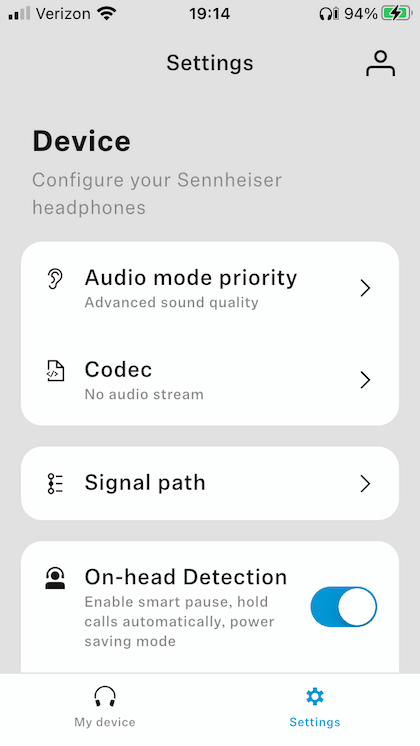
The Sennheiser Smart Control Plus app is far more useful. Parametric EQ, crossfeed, bass boost, ANC customization, and on-head detection controls make it the better tool for listeners who actually want to tune the headphone.
The downside? Touch controls. They work, but they are not as satisfying or consistent as physical buttons. I will take buttons every time. I am old enough to remember when pressing something meant something happened.
The Px8 S2 provides better passive isolation and stronger ANC. Penn Station, airports, Rutt’s Hutt, Kosher Square Pizza, and Rook Coffee in Oakhurst are not exactly anechoic chambers with better parking. In all of them, the Bowers did a better job lowering the outside world.
The passive isolation is so strong that there were times when ANC felt less necessary. That is a good problem to have. The issue is that ANC and Transparency mode do affect the sound. Clarity, low-end definition, and soundstage depth can shift depending on the source and the mode.
Advertisement
The HDB 630’s Hybrid Adaptive ANC is effective, but not as strong as the Bowers & Wilkins. Voices and sharper environmental sounds remain more noticeable. Passive isolation is also not quite at the same level.
The upside is that Sennheiser’s ANC does less damage to the sound. It tightens the presentation slightly and can shave off a bit of openness, but it does not flatten the music or make everything feel like it was run through cheesecloth.
If isolation is the priority, buy the Bowers. If preserving the music matters more than muting the entire planet, Sennheiser has a stronger argument.
Winner for isolation: Bowers & Wilkins Px8 S2 Winner for sonic consistency with ANC engaged: Sennheiser HDB 630
Advertisement
Advertisement. Scroll to continue reading.
Sound Quality: Bass
The Px8 S2 has the stronger low end. Sub-bass and mid-bass hit with more authority, more speed, and more physical impact. These are not neutral headphones, and they do not need to apologize for that.
The important part is that the bass does not smear the midrange. The Px8 S2 adds weight and drive without turning everything into wireless sludge. Rock, pop, electronic music, and modern recordings benefit from that extra punch.
The HDB 630 is leaner. Bass is present, controlled, and well integrated, but it does not hit with the same force or definition as the Px8 S2. Bass heads will probably prefer the Bowers. That is not a character flaw. Some people like their low end with a chair and a name tag.
Advertisement
Sennheiser’s choice is different: less skull pressure, more clarity, more space, and better midrange detail.
The Sennheiser has the stronger midrange focus. Vocals are more present, instruments have more breathing room, and the presentation feels cleaner through the center of the mix. Acoustic music, jazz, piano, and vocal-driven recordings benefit from that approach.
Advertisement
The Px8 S2 is clear and detailed, but male vocals sit slightly farther back than the instruments. Sam Cooke’s “Lost and Lookin’” was clean and crisp, but some of the warmth and texture I expect from that recording were pulled back. Nick Cave’s “Into My Arms” had the full, heavy piano weight the track demands, but his voice lost some of the growl and chest-shaking presence that give the song its emotional gravity.
That does not make the Px8 S2 weak through the midrange. It just tells you where Bowers & Wilkins made its choices. Compared with the HDB 630’s more midrange-forward balance, the Px8 S2 puts more emphasis on bass impact, speed, detail, and top-end air than on vocal intimacy.
Female vocals can vary by recording. Amy Winehouse comes through with the attitude intact. Aretha Franklin sounded clearer than lush, with a touch less body than expected.
Winner: Sennheiser HDB 630
Advertisement
Sound Quality: Treble and Detail
The Px8 S2 has more top-end energy. In my review, I noted that its top end had more air and sparkle, giving the sound a greater sense of openness and a slightly brighter character. The important part is that it does not turn hard or fatiguing with poor recordings, and with better tracks, the extra bite and presence are obvious.
Advertisement. Scroll to continue reading.
Amy Winehouse’s “Valerie” is a useful example. That track can grate with the wrong gear, but the Px8 S2 kept the guitar notes sharp, her vocals clean and crisp, and never pushed things into hardness. Dolly Parton’s “Jolene” and “I Will Always Love You” also showed that the Bowers does not round off the top end or soften the edges just to make everything easier to digest.
The HDB 630 is smoother through the top end. On Gotye’s “Somebody That I Used to Know,” the Sennheiser stayed clean and controlled, with no splashy treble tantrums. On Amy Winehouse’s “Valerie,” it avoided turning a bright recording into dental work, which is always appreciated before lunch.
Advertisement
So the Px8 S2 sounds more vivid and energetic up top, while the HDB 630 sounds smoother and more controlled. If you want more bite, air, and sparkle, Bowers wins this round. If you want a calmer treble balance that still preserves detail and space, Sennheiser makes the better case.
Winner: Tie, depending on taste
Soundstage & Imaging
The HDB 630 is the more spacious headphone. For a closed-back wireless design, it creates an unusually open presentation with strong imaging and a real sense of air. No, it is not an open-back headphone. Let’s not start selling magic beans. But it gets closer than most wireless ANC models have any right to.
The Px8 S2 has a precise and stable soundstage. Width, depth, and height are solid, and instruments are placed accurately. It sounds organized and controlled, but not as expansive as the HDB 630.
Advertisement
The Bowers gives you solidity and impact. The Sennheiser gives you space and separation.
Winner: Sennheiser HDB 630
Which One Sounds Better?
The Px8 S2 sounds bigger, punchier, and more dynamic. It has stronger low-end authority, a livelier top end, better passive isolation, and a more premium feel. It is the headphone I would pick for travel, louder environments, rock, electronic music, pop, and situations where I want more physical engagement from a wireless headphone.
The HDB 630 sounds cleaner, more spacious, and more balanced through the midrange. It gives up some bass weight and luxury finish, but gains clarity, app flexibility, battery life, and a more open presentation. It is the headphone I would pick for long listening sessions, vocal music, jazz, acoustic recordings, and anyone who wants less lifestyle theater and more actual listening substance.
Advertisement
The Px8 S2 is more fun in the visceral sense. The HDB 630 is more honest in the musical sense. The Sennheiser is the better fit for the audiophile purist who puts neutrality, midrange clarity, and tonal discipline ahead of bass weight, luxury finish, and the understandable desire to look slightly more important at the coffee shop.
Which One Is the Better Value?
Sennheiser HDB 630 Wireless Headphones with Travel Case
The Sennheiser HDB 630 is the better value.
Advertisement. Scroll to continue reading.
At $499, it delivers excellent clarity, long battery life, a useful app, USB-C hi-res playback, aptX Adaptive, strong comfort, and the included BTD 700 dongle. That dongle is not just filler in the box. It solves a real problem for people using phones, tablets, and laptops that do not always support the best Bluetooth performance natively.
The Px8 S2 justifies some of its higher price through better materials, stronger isolation, more authoritative sound, physical controls, broader codec support, and a more luxurious design. It feels like a flagship.
Advertisement
But $799 is still $799. At that price, the Px8 S2 has to be judged as a luxury wireless headphone, not just a better-sounding alternative. It clears that bar in many ways, but not every listener needs what it does best.
Value winner: Sennheiser HDB 630Bowers & Wilkins Px8 S2 Wireless Headphones in Warm Stone and Black
The Bottom Line
The Px8 S2 is the more premium, more physical, and more visually distinctive headphone. It has stronger bass, better passive isolation, more effective ANC, physical controls, and the kind of build quality that makes the price easier to understand, if not exactly painless.
The HDB 630 is the smarter value play. It gives you better battery life, a more useful app, stronger tuning flexibility, a more spacious presentation, and a cleaner midrange balance for considerably less money.
Advertisement
Can the German David slay the British Goliath?
Not quite. But he lands enough clean shots that Bowers & Wilkins should keep both gloves up.
Which One Should You Buy?
Buy the Bowers & Wilkins Px8 S2 if you want the more premium, more visually distinctive, and more physically engaging headphone. It delivers stronger bass, better passive isolation, more effective ANC, physical controls, and a more energetic presentation. It is the better choice for travel, commuting, louder environments, and listeners who want their wireless headphones to feel like a flagship product.
Skip the Px8 S2 if you want the best value, the longest battery life, the most flexible app, or the most neutral midrange. It is also not ideal if you dislike a more bass-forward tuning or expect ANC and Transparency mode to leave the sound completely untouched.
Advertisement
Buy the Sennheiser HDB 630 if you care more about clarity, neutrality, midrange balance, battery life, app control, and practical hi-res support than luxury materials or coffee-shop visibility. It is the better choice for long listening sessions, vocal music, jazz, acoustic recordings, and listeners who want a more spacious presentation for considerably less money.
Skip the HDB 630 if you want maximum bass punch, the strongest ANC, the most luxurious build, physical controls, or aptX Lossless support built into the headphones themselves.
Advertisement. Scroll to continue reading.
The Px8 S2 wins on luxury, isolation, bass impact, and flagship presence. The HDB 630 wins on value, battery life, app control, midrange clarity, and everyday flexibility.
Gaming handhelds are great because they are portable (basically small). But that is also one of its biggest weaknesses. I was reminded of that while trying Asus’ new ROG Xbox Ally X20 bundle at Computex 2026. On its own, the Ally X20 is already a more polished version of the ROG Xbox Ally X. It arrives with nice updates that sound minor on paper but make a device feel more complete in your hands. The real surprise, though, was the bundled ROG XREAL R1 Edition 20 Gaming AR Glasses.
I walked in to try the 20th anniversary edition of ASUS’ handheld console, but the massive 171-inch screen trick surprisingly stole the show.
The handheld gets the right upgrades
The ROG Xbox Ally X20 is not a total reinvention of Asus’ Xbox-branded handheld. It still sits in that familiar Windows handheld space, with PC gaming power, Xbox integration, and the usual promise of taking your library anywhere. Everything ASUS changed here is to smooth out the experience, and you can feel it as soon as you actually hold it.
Vikhyaat Vivek / Digital Trends
The biggest upgrade is the display. The X20 moves to a 7.4-inch OLED Nebula HDR panel, which is slightly larger than the standard Ally X screen and far more exciting visually. It supports a 120Hz refresh rate, FreeSync Premium Pro, Dolby Vision, and up to 1,400 nits of peak brightness.
The controls have also been cleaned up. ASUS added TMR joysticks, a Transforming D-pad that can switch between four-way and eight-way control, improved face buttons that sit more flush with the chassis, and rubberized grips on the back that definitely offer improved handfeel, which is important for gamers. A few extra fps, thanks to a faster chip, is great, though bad grips, mushy controls, or a weaker display are something you’ll notice every time you start playing on the gaming handheld.
Advertisement
Vikhyaat Vivek / Digital Trends
Then ASUS straps a giant screen to the idea
The bundled ROG XREAL R1 Edition 20 glasses are what make ASUS’ portable console a little more interesting than the new Intel G3 Extreme-powered handhelds. Even at their largest, handheld screens are still handheld screens. Admittedly, that is part of the appeal. If you wanted a bigger screen, you’d likely go for a gaming laptop. For many, this is exactly what they want: a smaller window into big games.
Except that the glasses still change that equation. They can project a virtual display up to 171 inches at 4 meters, which sounds absurd until you actually put them on. Now, you’re not relying on the handheld screen anymore, and the Ally X20 becomes an oversized controller, which is powering a much larger screen.
Vikhyaat Vivek / Digital Trends
During my hands-on with this ROG Xbox Ally X20 with the XREAL R1 Edition 20, I understood why the bundle exists. ASUS pairing these two gadgets together makes it all the more immersive. This isn’t the first time a pair of gaming AR glasses has been built for handhelds, but the Ally X20 bundle is the exception as it comes with the ROG XREAL R1 Edition 20, which is also optimized for this system in particular.
How AR glasses just work here
Vikhyaat Vivek / Digital Trends
Gaming AR glasses have been pretty niche in the overall PC and console gaming segment. However, you are already holding a portable console in your hands, which comes with its own set of cables, chargers, and a case. So adding another peripheral doesn’t sound too inconvenient. The fact that you can stay portable, while the glasses let the display feel massive when you want it to, sounds incredibly fun.
Not everyone would want this bundle, but the ROG XREAL R1 Edition 20 glasses complete it. They turn the Ally X20 from a nicer handheld into a more flexible gaming setup. You get the benefit of both a convenient form factor console with a 171-inch virtual screen when you want a more immersive experience.
When you buy a TV, what motivates the purchase: Picture quality? Value? Screen size? Brand loyalty?
Is brightness in nits, dimming zones and Delta E colour accuracy among those ‘needs’. I’d hazard a guess and say ‘probably not’.
Which is not to say that these areas are not important, but I’d make an assumption that most of the TV buying audience is not au fait with these areas – some won’t know their nits from their candelas, and others just won’t care.
And that’s fine.
Advertisement
But the TV market seems to have developed a fixation with measurements and numbers, and it’s become a question of to what end?
Advertisement
Playing the numbers game
For the most part, you’re unlikely to come across these technical terms during your TV buying experience. Browsing the likes of Currys, Amazon and Richer Sounds, you’ll be exposed to the marketing ramble, most of it words that look like they could be equations or formulas (NQ4 AI Gen3, a9 AI processor).
On our side, the reviewers’ side, we get this as well as insight on the technical side. Of course, we need to know how they work, but I won’t lie in saying that some of this stuff goes over my head and requires educating myself and asking questions.
Advertisement
The more advanced TVs get, the more complex they become to understand. The use of AI has, in a way, accelerated this complexity faster. AI is often used as a blanket term for tech. For some TV manufacturers, as part of their brand story, it’s easier to say AI to get people interested and fit as part of the overall story in tech.
Image Credit (Trusted Reviews)
AI has helped TVs achieve a higher level of performance. But it’s also turned TVs into a numbers game – my number is bigger than yours.
But what does it really mean? If I have a TV from Samsung, LG, Sony, Hisense and TCL and they all hit 3000 nits of brightness, which is better? The one with more dimming zones? The one that covers the widest colour spectrum? The one with the best Delta E number?
Advertisement
Focusing on these areas turns it into a specs battle, and for most people, none of these measurements will have much context in their living room. If the picture looks good, then it looks good. Things like Delta E, tone mapping, and colour gamut – they’ll end up just confusing the buyer or making decisions more complicated, not easier.
Advertisement
Welcome to the real world
The TV that prompted this discussion was the Hisense UR9.
On paper, this TV has stonking specs. It’s an RGB Mini LED, brand new technology to the TV market that allows for purer colours, displaying a wider range of colours than more conventional LCD TVs and doing so with more accuracy. The number of dimming zones is nearly 1000, it claims to hit peak brightness levels of 4000 nits. All these specs suggest a Bona fide contender.
So why was I left underwhelmed by the UR9’s picture?
Colours weren’t that punchy or bright. The levels of sharpness and detail were less than those of an LG OLED65G6 sat next to it. The Dynamic mode, which should be the brightest, looked dull. Filmmaker mode, Cinema mode and IMAX Enhanced mode all looked identical to the point where I thought something must be wrong with the TV.
Advertisement
Advertisement
Having reviewed the U8Q in 2025 and hailed that as the best Hisense TV I’d tested, the UR9 felt as if the balloon had popped, leaving me deflated.
Image Credit (Trusted Reviews)
Reasons? I don’t think the anti-reflection/anti-glare screen worked in Hisense’s favour, as it seemed to shave off levels of detail, sharpness, and reduce contrast, which I also noted on Hisense’s Canvas TV. Highlights and overall brightness weren’t as high as measurements suggested, black levels not as strong or as deep as I hoped.
Viewing angles weren’t great either, like down to the type of panel used, and colours were a bit off despite many reviews noting the accuracy the UR9 out of the box.
But something just wasn’t quite right with the TV’s picture performance.
Advertisement
Personally, I wonder if this is down to Hisense’s PQ philosophy, or how it views colour. Every brand has a PQ philosophy; Sony wants to reflect the creator’s intent, as do LG and Panasonic, while Samsung wants to do that and offer the brightest, most colourful picture experience with any technology it gets its hands on.
Advertisement
But I can’t quite discern what Hisense’s philosophy is. In the past I’ve found its TVs have relied heavily on Dolby Vision, which is not their PQ philosophy but Dolby’s.
Earlier this year, I witnessed a shootout between several TVs: OLED, Mini LED, RGB Mini LED, and SQD Mini LED. The model that fared the worst was the Hisense, with all the test patterns and demos causing some sort of issue.
Advertisement
One pattern in particular showed Hisense’s lack of precision. The pattern was a white rectangle surrounded by green. The rest of the TVs showed the white rectangle as white – the Hisense showed the white rectangle to be a shade of green…
The gist of all this? What the specs say on paper doesn’t always translate to the real world.
Don’t be swayed by the specs, the charts, the stats. Not everything is always what it appears to be.
UFC White House live streams will be an MMA event like no other, as the Octagon takes up residence on the South Lawn of the White House in Washington, DC, to mark the upcoming 250th anniversary of the United States on July 4 — and, more specifically, President Donald Trump’s 80th birthday on Sunday. With headliners from the US, Georgia, Brazil and France, the event also known as UFC Freedom 250 is a surprisingly multinational affair.
While there will doubtlessly be no end of pomp and pageantry taking place over the weekend, there’s the serious matter of two UFC titles up for grabs in a co-main event. At the very top of the bill is Ilia Topuria vs Justin Gaethje, with the former defending his Lightweight title. The unbeaten champion is one of the most dominant fighters in the organization and is sure to be a mainstay for years to come, while for ‘The Highlight’ it’s surely the last opportunity to win the belt outright as Gaethje approaches his 38th birthday.
Already at that age, Alex Pereira will need all of his experience and kickboxing skills to defeat Ciryl Gane for the Interim Heavyweight title. The Brazilian already held the Middleweight and Light Heavyweight straps in his illustrious career, meaning he has the chance to become the organization’s first ever three-division champion this weekend. He gives away a fair amount of weight to the absolute unit that is Gane, who himself is trying to win back the interim title he beat Derrick Lewis (also appearing on Sunday’s card) for five years ago.
Advertisement
Here’s where to watch UFC Freedom 250 live streams online and from anywhere with a VPN – including a clever way to watch UFC White House for just $1 and details of the full card.
How to watch UFC White House live stream in the US
Exclusive US coverage of the full UFC White House event is on Paramount Plus. You may have seen some sources say it will be on CBS, too, but there has been no official confirmation to this effect and no sign of it in the CBS listings.
Unlike most numbered UFC events, there will be no prelims – just one main card that starts at 8pm ET / 5pm PT.
Advertisement
Paramount Plus plans start from only $8.99 a month with the Essential Plan, or upgrade to Premium for $13.99 a month. You can also get a Paramount Plus trial with Walmart+ for $1 as with this sneaky trick we found.
A VPN is a handy piece of software that can make your device appear as if it’s back in your home country, thereby letting you unlock your usual streaming services. The best VPN right now? We recommend NordVPN – it does everything and comes with a 76% discount.
Advertisement
Using a VPN is incredibly simple:
1. Install the VPN of your choice. As we’ve said, NordVPN is our favorite.
2. Choose the location you wish to connect to in the VPN app. For instance, if you’re visiting the UK and want to view your usual US service, you’d select a United States server from the list.
Advertisement
3. Sit back and enjoy the action. Head to your usual local streaming service and watch the UFC.
How to watch UFC White House live stream in the UK
The UFC White House live stream is on TNT Sports 1in the UK.
You can get it by adding TNT Sports to your Sky, Virgin Media or EE TV package, or pay from £25.99 per month for a HBO Max plan that includes TNT Sports.
Advertisement
The action is set to begin at 1am BST on Monday morning.
If you’re abroad whilst the MMA live stream is on, a VPN like NordVPN can help you to access your home streaming services from anywhere.
How to watch UFC White House live stream in Canada
There are a host of pay-per-view providers offering a UFC White House live stream in Canada.
Advertisement
You can head to the likes of Sportsnet, Bell or the UFC Fight Pass to watch the whole event, where the PPV price is set at CA$69.99.
North of the border from the US? You can use NordVPN to watch your Paramount Plus subscription like you were back at home.
How to watch UFC White House live stream in Australia
That means you can live stream UFC White House via your web browser and devices like Android, iOS, Samsung TV, Apple TV, Android TV, Telstra TV and Chromecast.
Downloading a VPN will help you access your subscriptions from anywhere if you’re abroad when the fight is on.
Can I watch UFC White House for free?
Not quite. Other than the sneaky little Walmart+ for $1 trick described above in the US, there doesn’t seem to be any way to watch UFC White House for free. It’s on Paramount Plus in the US, which no longer carries a free trial. And it’s on PPV in many other countries around the world.
When does UFC White House start?
The UFC White House Main Card is scheduled to begin at 8pm ET / 5pm ET on Sunday, June 14. That’s 1am BST or 10am AEST in the UK and Australia on Monday, June 15.
Advertisement
Can I watch UFC White House on my mobile?
Yes. Most broadcasters have streaming services that you can access through mobile apps or via your phone’s browser – Paramount Plus, HBO Max and Kayo Sports all have mobile apps, for example.
You can also stay up-to-date with the latest UFC news and plays on the official social media channels on X (@ufc), Instagram (@ufc), Facebook (UFC) TikTok (@ufc) and YouTube (@ufc).
UFC White House full card
Ilia Topuria vs Justin Gaethje (for UFC Lightweight title) Alex Pereira vs Ciryl Gane (for UFC Interim Heavyweight title) Sean O’Malley vs Aiemann Zahabi (Bantamweight) Josh Hokit vs Derrick Lewis (Heavyweight) Mauricio Ruffy vs Michael Chandler (Lightweight) Bo Nickal vs Kyle Daukaus (Middleweight) Diego Lopes vs Steve Garcia (Featherweight)
Advertisement
We test and review VPN services in the context of legal recreational uses. For example: 1. Accessing a service from another country (subject to the terms and conditions of that service). 2. Protecting your online security and strengthening your online privacy when abroad. We do not support or condone the illegal or malicious use of VPN services. Consuming pirated content that is paid-for is neither endorsed nor approved by Future Publishing.
IQM added Vanguard director Barbara Venneman to its board as it nears a $1.8bn Nasdaq listing, Europe’s first for a quantum computing company.
IQM Quantum Computers, the Finnish maker of superconducting quantum systems, has appointed Barbara Venneman to its board of directors as the company approaches what would be the first Nasdaq listing by a European quantum computing company. Venneman currently serves on the board of Vanguard, one of the world’s largest investment management firms, and previously led Deloitte Digital globally. The appointment signals that IQM is stacking its governance with public-markets experience ahead of a shareholder vote scheduled for June 25.
That vote will determine whether IQM completes its merger with Real Asset Acquisition Corp (Nasdaq: RAAQ), a special purpose acquisition company based in Princeton, New Jersey. The deal, announced in February at a pre-money valuation of $1.8 billion, would give IQM a primary listing on Nasdaq with a potential dual listing on the Helsinki Stock Exchange. The SEC declared the registration statement on Form F-4 effective on June 5.
The transaction has gained momentum since February. IQM and RAAQ announced an upsized PIPE of $146 million in early June, up from an initial $134 million commitment, after Finnish pension insurer Ilmarinen joined existing institutional investors. Combined with cash from RAAQ’s trust account, an earlier €50 million financing from BlackRock, and IQM’s existing balance sheet of $172 million, the company expects to hold more than $450 million in cash at closing.
Advertisement
IQM’s commercial profile sets it apart from the cloud-only quantum providers that have dominated the US public market so far. The company builds full-stack superconducting quantum computers for on-premises deployment, giving customers direct ownership of the hardware rather than API access to shared systems. It has sold 21 quantum systems to 13 customers, including four of the ten largest supercomputing centres in the world, and ships what it describes as 15% of all publicly disclosed quantum systems globally.
The company reported verified 2025 revenue of approximately €31 million ($36 million) and more than $100 million in cumulative bookings and order visibility. Founded in 2018 as a spinout from Aalto University and VTT Technical Research Centre of Finland, IQM now employs more than 400 people across Europe, Asia, and North America. Its technology partners include Nvidia, Hewlett Packard Enterprise, and AWS, which made IQM’s Garnet processor the first quantum system available via AWS cloud in the European Union.
Venneman brings more than 30 years of experience in digital transformation and enterprise technology commercialisation. She also serves on the board of advisors at Decagon.AI, an enterprise AI software company, and holds an MBA from McGill University and a computer science degree from the Université de Montréal. IQM’s board chair Sierk Poetting said her background in “enterprise technology commercialization, AI, and governance” would be valuable as IQM scales its commercial presence in the US.
The board also reshuffled its founder representation. CEO and co-founder Jan Goetz will replace co-founder Juha Vartiainen as the founder representative on IQM’s board, consolidating the company’s executive and governance leadership under the same person as it transitions to public-company reporting requirements.
IQM is not the only quantum company taking the SPAC route to public markets. Infleqtion listed on the NYSE earlier this month, and Horizon Quantum Computing has pursued a similar path. The SPAC structure carries well-documented risks, with the 2021 wave of blank-cheque listings producing widespread underperformance. IQM’s deal will test whether a European hardware company with real revenue, institutional backing from BlackRock and Finnish pension capital, and a $1.8 billion valuation can break that pattern.
The AMD R600 Gallium3D driver saw 59 commits [last] Sunday to Mesa 26.2. Making this code restructuring and code cleaning all the more notable is that the improvements to this old AMD Radeon graphics driver was done in part by GitHub Copilot.
Gert Wollny has been among the few open-source developers left working on the AMD R600g driver that covers from the Radeon HD 2000 series through Radeon HD 6000 series graphics cards… [T]he old open-source GPU driver support is being assisted by AI long after the upstream vendor has stopped working on this driver — the Radeon HD 2000 “R600” series launched in 2007.
iOS 27 beta has an Extensions system for third-party AI in Siri, but Apple skipped the announcement at WWDC amid EU, legal, and messaging headwinds.
Apple’s iOS 27 developer beta contains underlying support for a feature the company never mentioned at its WWDC keynote on June 8: an Extensions framework that would allow iPhone users to swap between ChatGPT, Anthropic’s Claude, and Google’s Gemini directly inside Siri. Bloomberg’s Mark Gurman has reported that the system includes a settings panel and a dedicated App Store section, both built but toggled off on Apple’s backend. Apple has held discussions with OpenAI, Anthropic, and Google about granting entitlements for the framework, according to Bloomberg.
The feature was widely expected. Gurman first reported in March that Apple was building Extensions to replace the bilateral ChatGPT deal with an open system any qualifying AI provider could join. TechCrunch described the approach in May as a “choose your own adventure of AI models.” By the time WWDC arrived, the question was not whether Extensions would launch, but how prominently Apple would position it.
The answer was: not at all. Apple devoted the WWDC keynote almost entirely to Siri AI, its rebuilt assistant powered by a custom 1.2-trillion-parameter Gemini model running on Nvidia Blackwell GPUs in Google Cloud. The company introduced a standalone Siri app, personal context features, and a three-tier privacy architecture.
Advertisement
The 💜 of EU tech
The latest rumblings from the EU tech scene, a story from our wise ol’ founder Boris, and some questionable AI art. It’s free, every week, in your inbox. Sign up now!
Extensions did not appear in any slide, demo, or press release. Three strategic pressures help explain why.
The first is regulatory. Apple confirmed during WWDC week that Siri AI will not launch in the European Union, citing unresolved negotiations with the European Commission over the Digital Markets Act. The EU rejected Apple’s proposal for a Trusted System Agent that would let rival virtual assistants access Siri AI’s capabilities without direct exposure to sensitive device data.
Advertisement
Announcing a framework that invites third-party AI into Siri while simultaneously telling EU regulators that third-party access poses unacceptable risks would have been difficult to reconcile.
The second is legal. OpenAI is preparing possible legal action against Apple over the ChatGPT partnership struck in June 2024. OpenAI’s lawyers are working with an outside firm on options including a breach-of-contract notice, according to Bloomberg.
OpenAI believed the deal would drive billions in subscription revenue, but says Apple buried the integration behind friction, with users required to explicitly invoke “ChatGPT” by name and responses appearing in constrained windows. Announcing Extensions, a system explicitly designed to demote ChatGPT from its exclusive position to one option among several, would have escalated those tensions at a sensitive moment.
The third is messaging. Apple spent two years rebuilding Siri from the ground up after its original AI plans fell short. Siri engineering chief Mike Rockwell said the team had a working version the previous year but scrapped it because it did not meet their vision.
Advertisement
Craig Federighi called Siri AI’s agent-like capabilities “experimental.” Introducing a model-picker at the same moment Apple was trying to convince users, developers, and investors that its own AI had finally arrived would have undercut the relaunch narrative.
Gurman’s hands-on review of the Siri AI beta, published today, suggests the concern is not unfounded. He described the assistant as functional but buggy, with slow responses, cancelled queries, and misunderstood requests. Siri AI is roughly competitive with where leading chatbots were approximately six months ago, according to his assessment.
The assistant still cannot handle advanced workloads like research, programming, or data analysis. Apple is rolling out access through a waitlist, and even the public beta in July will be limited.
The underlying architecture, however, is designed to accommodate Extensions whenever Apple decides to flip the switch. Google’s Gemini already powers Siri AI under the hood through a deal worth roughly $1 billion per year. Extensions would sit on top of that, giving users the ability to route specific tasks through whichever third-party model they prefer.
Advertisement
That means Writing Tools, Image Playground, and open-ended chat could each be powered by a different provider. Apple’s approach would effectively turn Siri into a platform layer rather than a single-provider assistant.
For Anthropic and Google, the stakes are significant. Extensions would give Claude and Gemini native access to more than 1.5 billion active Apple devices without requiring users to download separate apps or leave the Siri interface.
For OpenAI, the picture is more complicated. The Extensions system might actually benefit ChatGPT by giving it more prominent placement through a model-picker interface, but it would also end the exclusive position OpenAI believed it was paying for with the original partnership.
The iOS 27 beta code also contains references to a foldable device internally codenamed V68, expected to debut in September, and macOS 27 includes pull-to-refresh gestures and Sidecar touch input that point toward a touch-screen MacBook under codenames K114 and K116. These hardware signals suggest Apple is building the Extensions framework with new device form factors in mind, not just current iPhones.
Advertisement
Apple has not publicly confirmed or denied that Extensions will ship with iOS 27 this fall. The framework is built, the discussions with AI providers are underway, and the regulatory, legal, and strategic obstacles are all in motion simultaneously. The question is no longer whether Apple will open Siri to third-party AI. It is whether the EU, OpenAI’s lawyers, and Apple’s own messaging discipline will let it happen on the timeline Apple originally intended.
My wife found this in a store and bought it for me a joke because it says “manly man smell like tree” on the box, which, I mean, you have to buy that. Sometimes a thing that seems like joke turns out not to be. Like this guide. The Last Call Shampoo bar is the same way—there’s a jokey element here and it’s fun, but it’s also a great bar of soap. Or shampoo. Or whatever you want it to be, really.
I’m what you might call a minimalist when it comes to all things grooming-related. I have a beard; I have never put anything on it. If I’ve ever used conditioner in my hair, it was by accident. You get the idea. I don’t see why I should need a bar of shampoo and a bar of soap, so to me, this thing is everything in one neat little package that lasts quite a while, doesn’t have any plastic packaging, and is even cheaper than most shampoo bars I’ve seen. Try it, you’ll like it. And you’ll smell like a fresh, clean tree. —Scott Gilbertson
Trustap was founded in 2017 and has offices in Cork and Dublin, as well as the UK, the US, Spain and Croatia.
Irish payments and transactions start-up Trustap has raised $10m in funding to be used for product development and expansion of its team.
It will also facilitate the launch of Trustap Index, described by the Cork-based fintech company as “a solution designed to make marketplace or e-commerce listings fully transactable by AI agents”.
The service will “work with leading AI models to handle product discovery, negotiation and payment on a buyer’s behalf, with the human confirming each transaction before funds are released”, according to Trustap, to align with a growing shift towards delegation of online commerce from people to AI agents.
Advertisement
The index, which will launch in 2026 and has an open waitlist for early access, aims to close gaps in discoverability of products for shopping agents and help them make more informed buying decisions based on numerous shopping criteria across fragmented platforms through “structured data precision”.
“This funding gives us the runway to ensure that when an AI agent shops anywhere on the internet, it can find the listing, verify the seller and complete the payment securely through infrastructure it can rely on,” said Conor Lyden, Trustap’s founder and CEO.
“We’ve spent years building the transaction platform that make ecommerce, peer-to-peer and marketplace platforms safe, more profitable, and trustworthy for buyers and sellers. Trustap Index is the natural next step in that journey.”
The funding round was led by Aperture Capital, with participation from TX Ventures and other existing investors.
Advertisement
Ben Robinson, CEO of Aperture Capital, said: “The rise of agentic commerce is happening faster than many people realise. We believe that Trustap, which already works with hundreds of marketplaces providing secure end-to-end transaction management, is uniquely positioned to orchestrate agentic transactions.
“Trustap acts as a single, trusted aggregation point that indexes and transforms fragmented inventory data into consolidated machine-readable information.”
Trustap was founded in 2017 and has offices in Cork and Dublin, as well as the UK, the US, Spain and Croatia. It employs more than 40 people working with around 300 customers.
It raised $5.5m in a Series A funding round almost two years ago, and soon after became the first company invested in by the Digital Irish Venture Fund.
Advertisement
Don’t miss out on the knowledge you need to succeed. Sign up for the Daily Brief, Silicon Republic’s digest of need-to-know sci-tech news.
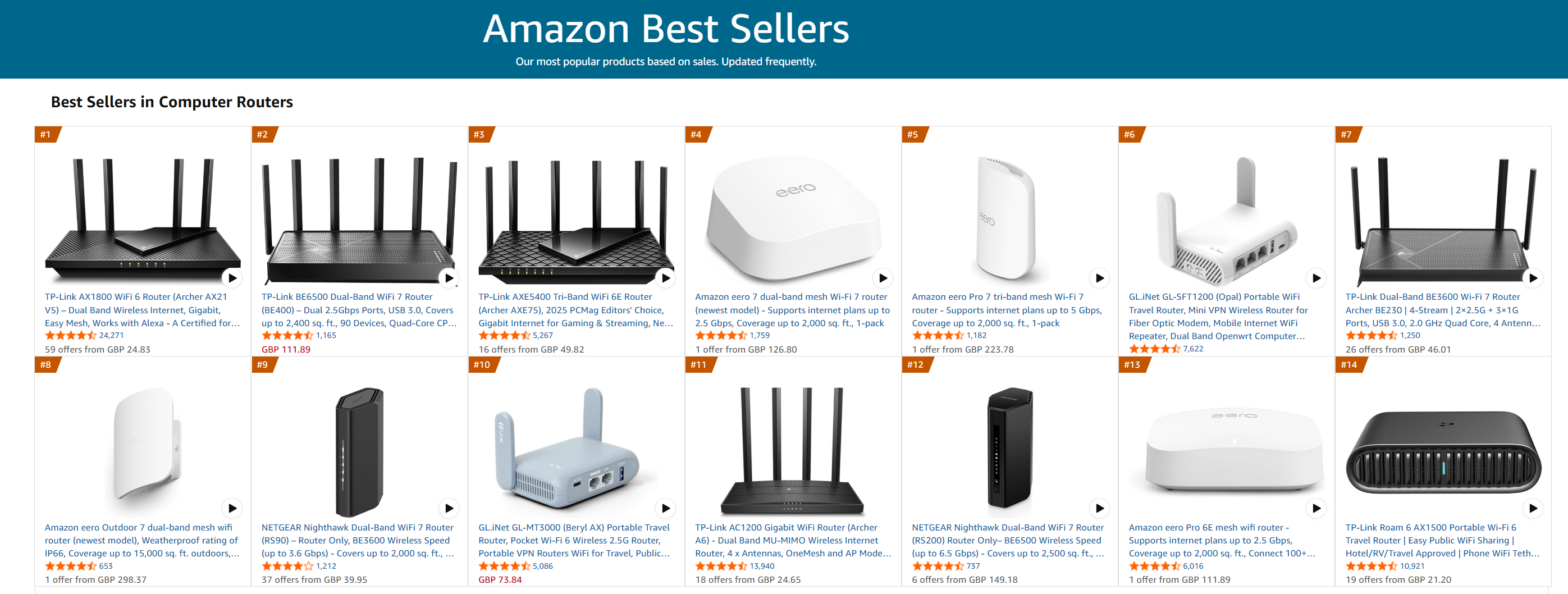
What just happened? TP-Link continues to vehemently argue that it is a US, not Chinese, company. The Pentagon says otherwise, and so does US-based Netgear, which believes its rival makes false advertising claims and has cost it millions of dollars in lost sales because consumers wrongly think that it’s no longer associated with China.
Netgear has filed counterclaims against TP-Link in the US District Court for the District of Delaware, escalating a legal fight that TP-Link started last November.
The original lawsuit accused Netgear of running a smear campaign that connected TP-Link to Chinese cyberespionage fears and breached a 2024 settlement between the two router giants. Netgear’s response now says the real deception is TP-Link’s attempt to rebrand itself as an American company.
According to the counterclaim, TP-Link “remains, at its core, a Chinese company selling Chinese-made products.”
Advertisement
Netgear alleges that TP-Link’s 2024 reincorporation in California did not fundamentally separate the business from China-based TP-Link Technologies, which later changed its name to Lianzhou.
It claims much of the company’s R&D and manufacturing remains in China under the same cofounder, with more than 13,000 employees there through 2024, compared with around 350 in the US.
Netgear also takes aim at TP-Link’s “Made in Vietnam” labeling, alleging that the country is mostly used for final assembly and that 99.5% of components in US-bound products are imported from China.
It says those claims are important because customers are increasingly wary of Chinese-made networking hardware, especially after federal agencies began scrutinizing TP-Link over pricing, cybersecurity, and national security concerns.
Advertisement
Netgear’s filing arrived one day after the US Department of Defense added TP-Link Technologies to its list of Chinese military companies operating in the United States. The designation does not itself ban consumer sales, but it adds extra pressure as TP-Link tries to convince regulators that its US arm is independent.
TP-Link is already seeking an exemption from the FCC’s foreign-made router ban by arguing that TP-Link Systems Inc. is headquartered in Irvine, California, and should be treated as an American company.
The FCC rules block approval of new consumer routers made outside the US, though existing devices can keep receiving updates until 2029. Netgear and Amazon-owned Eero have already received exemptions.
This isn’t TP-Link’s only courtroom problem, either. Texas sued the company in February, accusing it of deceptive marketing and allowing China-linked hackers to access American consumers’ devices. TP-Link denied those allegations, insisting it is independent from the Chinese government and that US user data is stored in the United States.
Advertisement
Netgear is seeking damages and an injunction barring TP-Link from repeating the contested claims. TP-Link, meanwhile, maintains that Netgear’s China-focused attacks are false, defamatory, and commercially motivated.
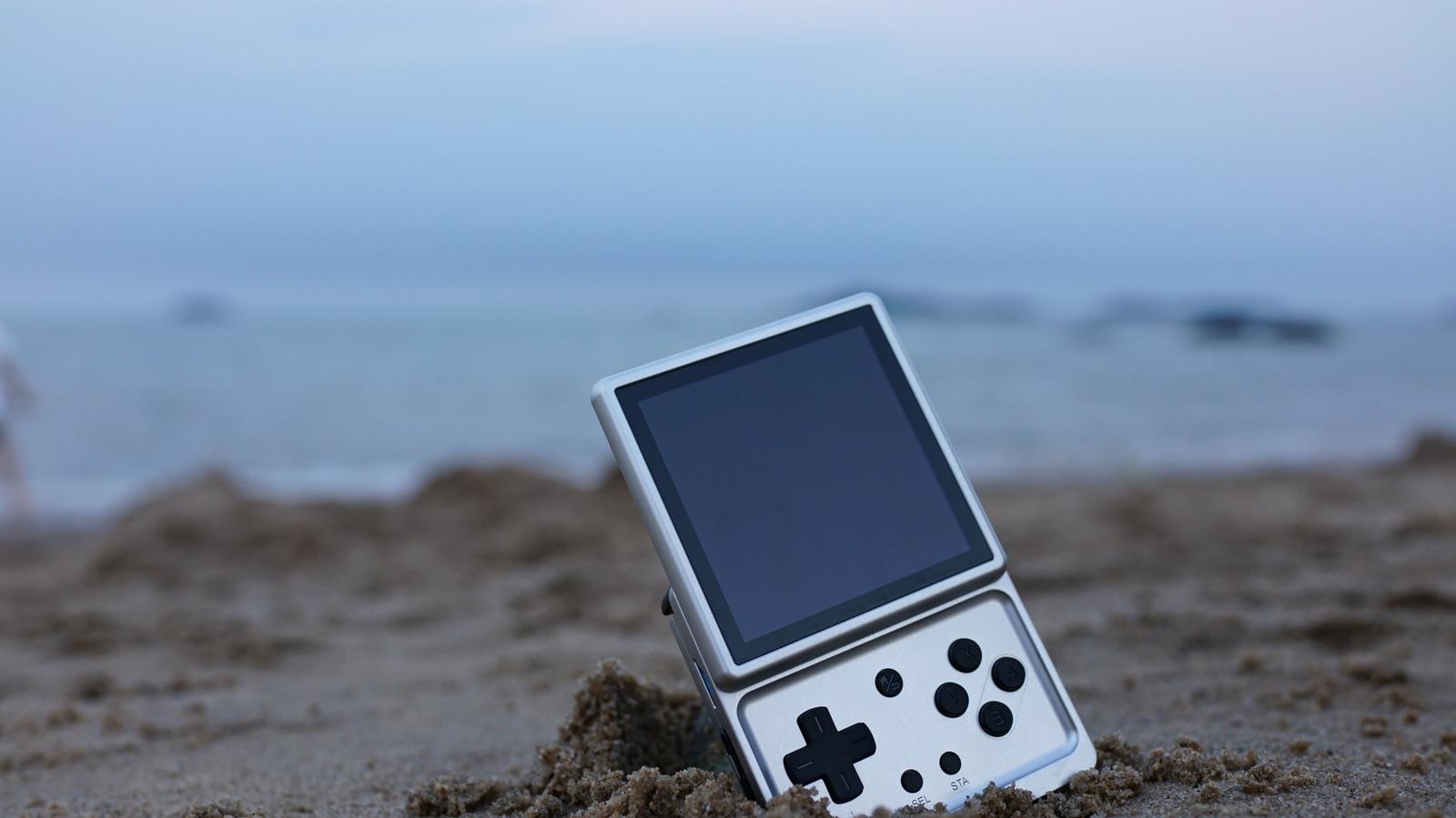
Customers can order new joysticks, batteries, screens and more.
Just because your Anbernic handheld has a broken joystick or a cracked screen doesn’t mean you have to trash it. Anbernic recently revealed a store page that’s dedicated to replacement parts for its gaming handhelds, ranging from its more recent RG Rotate to its older offerings like the RG350P. The store page has options to buy replacement shells, screens, conductive rubber pads, joysticks, batteries, motherboards and buttons for whichever handheld you’re trying to repair.
Beyond ordering the specific part on the storage page, you have to specify the model and color for your order. Anbernic is warning customers to get this info right since it won’t offer any claims if you mess up your device info. While the storage page is live, Anbernic doesn’t currently offer any guides or step-by-step instructions on how to replace individual parts.
Advertisement
However, for anyone with some DIY know-how, Anbernic’s new store page provides a useful way to extend the life of an already affordable device. Repairs could cost up to $236 for a replacement motherboard for more powerful devices, or as cheap as $3 for a spare conductive rubber pad. It’s a similar move to Apple introducing its Self Service Repair page, since previously, Anbernic customers had to go through the company’s support channels and be approved for a replacement device.




























































You must be logged in to post a comment Login