Connect with us
DAPA Banner

Tech

Can Investors Trust AI Sales Figures? Asks Wall Street Journal Opinion Piece

Published

on

A Wall Street Journal opinion piece warns of “a troubling trend” in AI’s growth. “Rather than selling software, some AI companies are paying their partners to use it.”

It cites OpenAI’s $1.5 billion joint venture with private-equity firms, Anthropic’s $200 million contribution to a private-equity firm joint venture, and Google’s $750 million subsidization of Gemini’s adoption by consulting firms. “These agreements muddy the distinction between a company’s sound growth trajectory and artificial financial engineering.”

[T]he scale and structure of the recent AI deals go beyond standard incentive mechanisms… When a seller pays customers to buy its products, it is unclear if its revenue growth reflects vibrant demand or a willingness to accept subsidies.

Slashdot reader destinyland writes:

This warning comes from a prominent figure in the investing community. For six years Robert Pozen was chairman of America’s oldest mutual fund company, after five years at Fidelity. An advocate for corporate governance, he’s currently a lecturer at MIT’s business school (and the author of the book Remote Inc.: How to Thrive at Work…Wherever You Are). “As AI companies prepare initial public offerings, investors should scrutinize their numbers closely,” Pozner writes, warning about “time-limited financial support”.
“In evaluating AI sales figures, analysts should consider the distorted incentives that the recent financing deals create,” writes Pozner:

Private-equity firms, enticed by promised returns, might demand rapid rollouts of AI products, rather than ensuring their orderly and safe development. Portfolio companies of private-equity firms may embrace AI tools not because they are needed but because adoption is mandated by their owners. Consultants may favor one set of AI models based on the subsidy instead of the merits.

Advertisement

If guarantees and subsidies are major factors in the rapid adoption of AI tools, investors should be skeptical of AI companies’ revenue projections. Many of their customers enticed by consultants will stop paying full price when the financial incentives are gone. Many of the portfolio companies of private-equity firms could back away from selected AI tools once these joint ventures expire. The challenge with evaluating these AI financing deals is the lack of transparency. At present, AI vendors don’t separate revenue driven by subsidies or joint ventures from standard sales.

The lesson from the telecom debacle is that financial engineering can obscure, for years, the difference between real customer demand and demand driven by incentives. When AI companies begin to finance their own product distribution, guaranteeing returns to investors and subsidizing sales, it’s a signal for investors to dig deeper.

Investing in an AI company? Ask what percentage of enterprise revenue is coming from subsidized channels or joint ventures, Pozner suggests. And the renewal/retention rate for customers not supported by subsidies or joint ventures…

Source link

Advertisement
Continue Reading
Click to comment

You must be logged in to post a comment Login

Leave a Reply

Tech

Doordash adds AI tools to speed up merchant onboarding, edit photos of dishes

Published

on

DoorDash on Monday added new AI-powered tools that let merchants speed up onboarding, edit photos to make dishes look better, and create websites based on their app listings.

The onboarding tool works similarly to the one Amazon launched in 2024. Merchants can point the tool to their website, from which it will automatically fetch information such as photos, store hours, and menu items to create a listing on the app. Merchants can review and edit all of this information before publishing the listing.

DoorDash has also revamped its video library. The library now lets merchants tag dishes in videos so that customers can order those items directly. The library also shows stats such as total views, video-driven sales, and new customer sales.


Restaurants are getting a few photo editing tools, too: AI Retouch can replace backgrounds, sharpen images, and optimize lighting without changing the dish; and AI Replate manipulates pictures of dishes so they look like they’re plated professionally, changing lighting and color. Merchants can also provide a reference image to apply a particular style to an existing image.

Advertisement
Image Credits: DoorDashImage Credits:DoorDash

“At DoorDash, we’re constantly building tools to help merchants succeed, from their very first day on the platform, to every order after. These new tools reflect our belief that the right technology should remove friction, not add it, so merchants can focus on what they do best: making great food and delivering incredible customer experiences,” Brian Tolkin, head of merchant product at DoorDash, said in a statement.

The company is adding new features to its commerce platform as well, one of which lets restaurant owners spin up a website based on existing DoorDash content, such as menu items and photos. The company said during a test of the new feature, merchants saw order conversion rates of nearly 10% on average.

The company has also added a new marketing campaign builder that lets merchants automate content creation, email outreach and scheduling.

Techcrunch event

San Francisco, CA
|
October 13-15, 2026

Advertisement

When you purchase through links in our articles, we may earn a small commission. This doesn’t affect our editorial independence.

Source link

Advertisement
Continue Reading

Tech

Employees are now more dangerous to their company than external hackers

Published

on


  • Internal threats now represent more than half of cases, at 57%
  • Employees’ devices and credentials are among the most targeted
  • Companies should acknowledge this and tighten access for a quick fix

New data from Orange Cyberdefense has suggested the biggest risks companies face could now be coming from inside, with internal threats rising from 47% to 57% in the space of less than a year.

For the first time ever, internal threats have become more common that external ones, with hacking remaining pretty steady at 31% of attacks compared with employee misuse, which rose from 29% to 45%.

Source link

Continue Reading

Tech

Think music is the worst hit by slop? AI has deeply polluted podcasts, as well

Published

on

AI slop has already flooded video feeds, gaming debates, software code, and search results. Now the same low-effort machine-made content is moving into podcasts.

Music usually dominates the AI slop debate, but the podcast problem may be harder to spot and harder to clean up. AI tools can now create, upload, and even monetize entire shows far faster than traditional podcast studios.

`

Is podcasting becoming the next slop factory?

A Bloomberg report points to how quickly this is spreading. According to the Podcast Index, 10,871 new podcast feeds were created over roughly nine days, and about 4,243 of them, or 39%, were likely AI-generated. One AI podcast startup now says it has more than 10,000 active shows and published 877 new shows in only 48 hours.

Podcasting becomes especially vulnerable at that scale because discovery works differently from music. A low-quality AI song can be skipped in seconds, but podcasts rely heavily on search, recommendations, and trust. If feeds are filled with machine-made shows, listeners may have to work harder to find real hosts, original reporting, or actual conversations.

Advertisement

That pattern is already visible across other AI-hit formats. Video platforms are trying to deal with low-quality AI uploads while also promoting AI tools for creators. Gaming has seen backlash over AI-assisted visuals, with some players calling certain AI graphics features slop. Coding has a similar issue too. AI can help developers write more code faster, but that also means more bugs, weak fixes, security risks, and extra review work. In podcasts, the concern is not just volume, but also how easily that volume can be turned into money.

Who benefits when podcasts become automated?

Easy monetization is what makes podslop more than just a quality problem. Some hosting services allow free podcasts to join ad marketplaces with very few checks, so AI-made shows can still earn money from downloads even if the content is thin or barely reviewed. One platform shares 60% of ad revenue with creators, while another says it can pause ads or remove shows if they are found to be slop.

Apple Podcasts has at least started asking creators to disclose when a material part of a show uses AI. Spotify, on the other hand, relies on broader rules against misleading content and has not released a specific AI podcast policy yet. This leaves listeners and advertisers with a trust problem because AI has made audio easier to produce and harder to verify.

Source link

Advertisement
Continue Reading

Tech

UCB pays up to $2.2bn for Candid Therapeutics, doubling down on T-cell engagers in autoimmune disease

Published

on

The Belgian pharma is buying a two-year-old San Diego biotech for $2bn upfront, the second TCE bet it has placed in months. The thesis: B-cell killers built for cancer can rewire how autoimmune diseases are treated.


Candid Therapeutics is two years old. It does not have an approved drug. Its lead programme has been tested in roughly 100 patients across multiple early-stage trials. On Sunday, UCB, the Brussels-listed pharmaceutical company, agreed to buy it for up to $2.2bn.

That kind of price for that kind of biotech needs an explanation, and the explanation, in 2026, has a name: T-cell engagers in autoimmune disease.

Under the agreement announced on 3 May, UCB will pay $2bn in upfront cash, with up to $200m in additional milestone payments tied to development and regulatory progress.

Advertisement

The 💜 of EU tech

The latest rumblings from the EU tech scene, a story from our wise ol’ founder Boris, and some questionable AI art. It’s free, every week, in your inbox. Sign up now!

The deal, is expected to close by the end of the second quarter or early in the third, subject to antitrust clearance. UCB has reaffirmed its 2026 financial guidance, which suggests it intends to absorb the transaction without recutting expectations.

It is the second time in a matter of months that the Belgian company has reached for the same therapeutic mechanism. In an earlier transaction, UCB licensed ATG-201, a CD19/CD3 bispecific from China-based Antengene, in a deal worth up to $1.1bn. The Candid acquisition lands on top of that and adds a different B-cell target.

Advertisement

What Candid actually has?

Candid’s lead asset is cizutamig, a bispecific antibody designed to bridge two cells: it grabs a T-cell on one end via CD3 and a plasma cell on the other via BCMA, the B-cell maturation antigen, instructing the T-cell to destroy the plasma cell.

The mechanism was developed for multiple myeloma, where killing rogue plasma cells is the entire point of treatment. The 2026 thesis is that the same engine can be repurposed to deplete the autoreactive B-cells and plasma cells driving autoimmune diseases such as lupus, myasthenia gravis, and a long list of less famous conditions in which the immune system attacks its own tissues.

According to UCB, cizutamig has now been clinically evaluated in over 100 patients combined across multiple myeloma and autoimmune indications, and is currently in Phase 1 studies across more than ten autoimmune diseases.

UCB describes it, in its statement, as a potential best-in-class BCMA T-cell engager for autoimmune disease, language that is both ambitious and conventional for press releases of this kind.

Advertisement

The reason buyers are willing to write nine-figure cheques on Phase 1 data is that the early autoimmune signals from this drug class, broadly, have been genuinely striking. Patients with severe disease have shown durable remissions after a single course of B-cell-depleting therapy, including in conditions where decades of small-molecule and biologic treatment have produced only partial control. None of this is yet definitive.

Late-stage data, larger cohorts, and longer follow-up will all be required. But the direction has been consistent enough that pharma boardrooms have begun pricing the modality as if it works.

Candid was founded in 2024 in San Diego, with backing from Two River Group and Vida Ventures and a launch financing of $370m. Its chairman, chief executive and president is Dr Ken Song, who previously led RayzeBio through its $4.1bn acquisition by Bristol Myers Squibb in late 2023. Building, scaling, and selling clinical-stage oncology and immunology biotechs is, in other words, what he does.

That history is part of what UCB is paying for. Buyers in this segment of the market are increasingly willing to underwrite management quality alongside molecule quality, particularly when the molecule’s commercial promise depends on disciplined trial design across a large number of small indications.

Advertisement

The valuation gap between the original $370m launch funding in mid-2024 and the $2bn upfront UCB is paying now, in cash, less than two years later, is a fair indicator of what investors think he and his team have built.

It is also a sharp reversal. In March, Candid had announced a reverse merger with Rallybio, a publicly listed but smaller rare-disease company, intended to take Candid public via a back-door listing. That transaction, by all appearances, has now been superseded. UCB’s offer was, presumably, the better one.

UCB’s purchase fits into a pattern that has become hard to miss. Over the past nine months, every major pharma company with an immunology presence has either bought, licensed, or partnered around T-cell engagers aimed at autoimmune disease.

Gilead acquired Ouro Medicines for $2.18bn earlier this year, picking up gamgertamig, another BCMAxCD3 engager. Sanofi licensed a trispecific from Kali Therapeutics in a deal worth up to $1.2bn. GSK paid $300m to license a CMG1A46 candidate from Chimagen for lupus. Prolium Bioscience launched in March with $50m to develop a CD20xCD3 engager. The list lengthens almost weekly.

Advertisement

Two facts explain the rush. The first is that the science, finally, looks like it might generalise; what worked in oncology to remove malignant B-cells appears to work in autoimmune disease to remove autoreactive ones, and the early human data are far better than the conventional pharmacology playbook predicted.

The second is that immunology is, by some distance, the largest pharmaceutical market in the world after oncology. Drugs like AbbVie’s Humira, before its biosimilar erosion, and Sanofi’s Dupixent are reminders that successful autoimmune therapies generate revenue at a scale to which only a handful of categories aspire.

If TCEs work in this setting, the prize is correspondingly large. If they do not, several of these deals will look expensive in retrospect.

Where the AI conversation does not quite fit

It is worth noting what is not driving the deal. Despite the surge of attention to AI-discovered medicines, from Google DeepMind spinoff Isomorphic Labs entering trials this year to ByteDance’s Anew Labs presenting its first AI-designed therapy and Anthropic paying $400m for a 10-person biotech startup to design protein-based drugs, cizutamig itself is a conventionally designed biologic.

Advertisement

It was discovered through licensing relationships and standard antibody engineering, not generative protein models. The molecules driving today’s autoimmune deal flow are, almost without exception, products of a previous decade’s chemistry.

AI’s promised acceleration in drug discovery has, so far, produced more announcements than approvals.

The Candid deal is, in that sense, a reminder that pharma’s largest near-term value creation is happening in molecules that were already in the pipeline before the AI hype cycle began. The next set of acquisitions, in two or three years, may well include AI-discovered candidates. This one does not need to.

What UCB now has, and what it has to prove

For UCB, the strategic logic is clean. The company is mid-sized in pharma terms, with a long-standing immunology franchise and a recent track record of opening up new therapeutic areas through targeted M&A.

Advertisement

Pairing the Antengene CD19xCD3 candidate with Candid’s BCMAxCD3 lead asset gives it two complementary B-cell-depleting mechanisms in a market that increasingly looks as though it will reward platform breadth rather than single-molecule excellence.

What UCB has to prove is execution. Phase 1 data in autoimmune disease are encouraging but thin. The competitive density is unusually high, with at least half a dozen large pharma companies pursuing similar mechanisms across overlapping indications. Pricing pressure, both regulatory and from payers, will hit any successful TCE the moment it nears approval. And manufacturing bispecific antibodies at scale is non-trivial. None of these is fatal. All of them are real.

By the time the deal closes this summer, the broader market may have adjusted its enthusiasm for the modality up or down. UCB has chosen to act before that adjustment.

Whether that proves to be timely or expensive will be visible in the Phase 2 readouts due over the next 18 months. For now, a two-year-old company that started as an autoimmune-disease bet by an experienced operator has been priced at $2.2bn, in cash, by a pharma company convinced that the bet is correct.

Advertisement

Source link

Continue Reading

Tech

16% of Parents Help Their Children Bypass Online Age Checks, Study Finds. One 15-Year-Old Just Uses a Fake Moustache

Published

on

The Independent reports that “more than a third of children in the UK have found a way around age verification measures” for social media sites and other online platforms. And new research from online safety organisation Internet Matters “suggests one in six parents have helped their child to get past age verification checks, with children reporting ‘tricking’ platforms into thinking they are older. ”

Parents also said they had caught their children drawing on facial hair in a bid to evade the technology. One mother said: “I did catch my son using an eyebrow pencil to draw a moustache on his face, and it verified him as 15 years old”… From a sample of 1,000 UK children, 46% said they believed age checks are easy to bypass, while 32% admitted to having done so.

49% of the children surveyed said they’d still encountered harmful content, according to the online safety activists. The group called the figure “unacceptable,” and complained that age verification measures “are often ineffective in practice or easy to bypass.”

Advertisement

Source link

Continue Reading

Tech

Ouster’s new color lidar is coming to replace cameras

Published

on

The tech industry has spent the last decade asking whether self-driving cars need lidar sensors, cameras, or all of the above. Lidar company Ouster says it has a new answer: put them both in the same sensor.

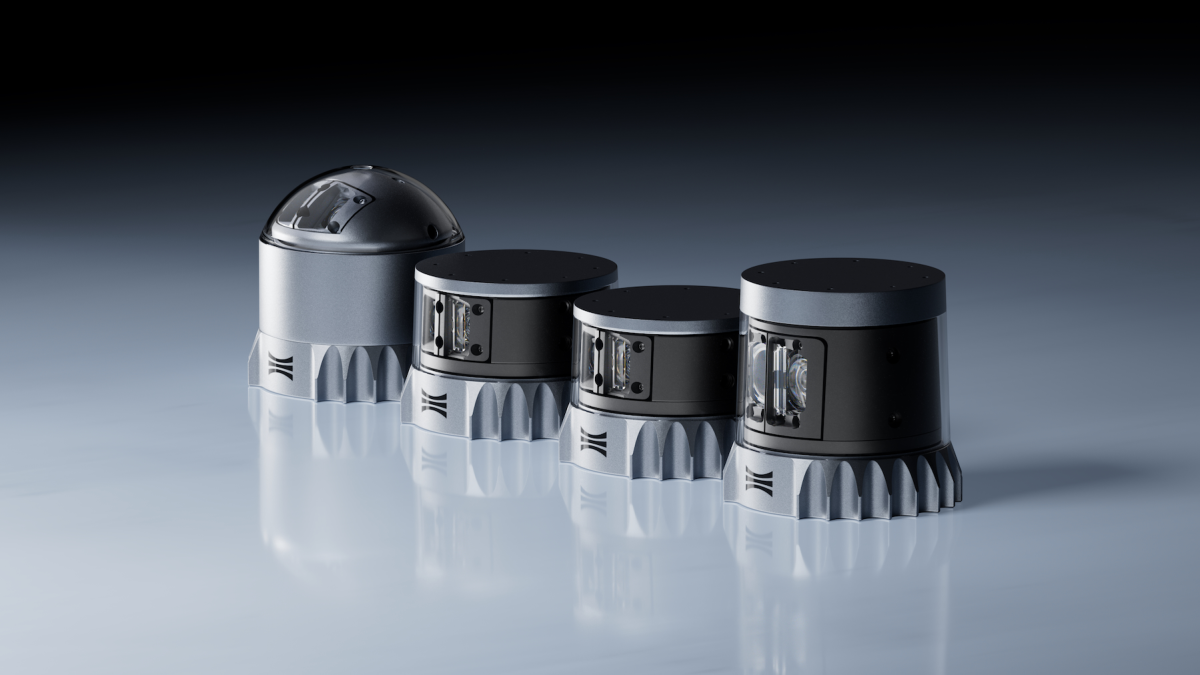
On Monday, the San Francisco-based company announced a new lineup of lidar sensors it calls “Rev8,” all of which offer so-called “native color lidar.” These sensors are capable of capturing color imagery and three-dimensional depth information at the same time, doing the work of two sensors in one.

Ouster CEO Angus Pacala said the development has been a decade in the making at his company, and he wasn’t shy about his ambitions for the new product lineup in an exclusive interview with TechCrunch, calling it the “holy grail of what a roboticist has always wanted.”

“For all of human history, it’s been: you buy a lidar sensor, you buy a camera, and you try to make sense of the combination with some higher level reasoning, and waste an enormous amount of time doing this,” he told TechCrunch. “And companies only get really halfway there in terms of calibrating and fusing the data streams.”

Advertisement

Ouster’s new sensors, he said, change this equation.

“The goal is to obviate cameras. There’s no reason that one sensor can’t do both,” he said.

The Rev8 lineup arrives at a dynamic moment for lidar companies. There has been a years-long wave of consolidation happening, with Ouster buying Velodyne, and Luminar’s assets recently getting acquired in bankruptcy.

Techcrunch event

Advertisement

San Francisco, CA
|
October 13-15, 2026

At the same time, the market for sensors is exploding. Waymo and others have finally deployed working robotaxis and are scaling quickly. Robotics companies — humanoid and industrial — are hoovering up investment dollars and need sensors to perceive the world. There’s so much interest in the space that new companies like Boston-based Teradar are popping up and testing the waters with entirely new modalities. (In Teradar’s case, it’s using terahertz imaging.)

Advertisement

A color lidar that combines pinpoint depth information with camera-quality image data could be especially valuable to the robotics players, Pacala said. And he said Ouster worked with Fujifilm and image science company DXOMARK to understand “what it means to build a great camera.”

In fact, Pacala claims Ouster’s color lidar is “improving in many ways on a modern camera” thanks to the way the company already designs and builds its sensors.

Ouster uses so-called “digital lidar” architecture. Instead of the analog approach, which involves many moving parts, Ouster captures the lidar info directly on its custom chip using what’s known as single photon avalanche diode (SPAD) detectors.

The company is using this same SPAD technology to capture the color image data in the Rev8 sensors. Pacala said this novel technique allows its image capture to be more sensitive than a normal camera.

Advertisement

“It’s 48-bit color, 116 dB of dynamic range, like mega pixel resolution. These are top line numbers that make it pound for pound good camera. But it just so happens it’s coming as a pre-fused data stream as a 3D colorized point cloud,” he said. “You can actually use the data as a camera stream as well, but it’s that’s one of the powers of this system, is you can use just the lidar data stream, you can use just the camera data stream, or you can use the pre-fused data stream, depending on how kind of forward-thinking your perception team is.”

Pacala said his company has already shipped samples to existing customers and that it’s now taking orders. He said he’s particularly proud of the OS1 Max sensor, which he said he considers to be “the industry’s best long range lidar.” It can see 500 meters in all directions and is smaller than other long range lidar “by a big margin.”

“We’ve had a long range LiDAR, but it hasn’t been just like clearly a cut above everything else,” he said. “That’s a big leap for Ouster. I think it means that we’ll start to see it much more on high-speed robo-trucking, robotaxi applications, I think a lot of drone stuff will transition to the OS1 Max.”

Other new lidars built on the Rev8 platform will include the OS0, OS1, and OSDome, according to a press release.

Advertisement

Ouster isn’t the only company that has started talking about color lidar. Last month, Chinese company Hesai announced its own color lidar platform that it says will enter mass production by the end of this year. Other companies, like Innoviz, have previously pitched their own takes on “color lidar.”

Pacala says most other players trying to “fuse” cameras and lidar sensors are basically packaging them together in a box, though. The approach Ouster (and, to be fair, Hesai) is taking is putting the lidar and imaging tech on the same chip.

This dramatically cuts down on the amount of work Ouster’s customers have to do to make sense of the competing sensor streams, Pacala said, and it also sets those customers up to eventually eschew cameras altogether — all while being cheaper and smaller than Ouster’s previous technology.

“This is kind of fundamentally changing the value proposition of what we’re selling to a customer from this stage forward,” he told TechCrunch.

Advertisement

When you purchase through links in our articles, we may earn a small commission. This doesn’t affect our editorial independence.

Source link

Continue Reading

Tech

Today’s NYT Connections Hints, Answers for May 4 #1058

Published

on

Looking for the most recent Connections answers? Click here for today’s Connections hints, as well as our daily answers and hints for The New York Times Mini Crossword, Wordle, Connections: Sports Edition and Strands puzzles.


Today’s NYT Connections puzzle is a tricky one. The purple group requires you to do some mental twisting of letters when you look at the words. Read on for clues and today’s Connections answers.

The Times has a Connections Bot, like the one for Wordle. Go there after you play to receive a numeric score and to have the program analyze your answers. Players who are registered with the Times Games section can now nerd out by following their progress, including the number of puzzles completed, win rate, number of times they nabbed a perfect score and their win streak.

Advertisement

Read more: Hints, Tips and Strategies to Help You Win at NYT Connections Every Time

Hints for today’s Connections groups

Here are four hints for the groupings in today’s Connections puzzle, ranked from the easiest yellow group to the tough (and sometimes bizarre) purple group.

Yellow group hint: Way past done.

Advertisement

Green group hint: Rock out.

Blue group hint: Trendy tea.

Purple group hint: Space jam.

Answers for today’s Connections groups

Yellow group: Qualities of overcooked meat.

Advertisement

Green group: Play some electric guitar.

Blue group: Ingredients in bubble tea.

Purple group: Planets/dwarf planet with first letter changed.

Read more: Wordle Cheat Sheet: Here Are the Most Popular Letters Used in English Words

Advertisement

What are today’s Connections answers?

completed NYT Connections puzzle for May 4, 2026

The completed NYT Connections puzzle for May 4, 2026.

NYT/Screenshot by CNET

The yellow words in today’s Connections

The theme is qualities of overcooked meat. The four answers are chewy, dry, stringy and tough.

The green words in today’s Connections

The theme is play some electric guitar. The four answers are jam, noodle, shred and solo.

Advertisement

The blue words in today’s Connections

The theme is ingredients in bubble tea. The four answers are boba, milk, sugar and tea.

The purple words in today’s Connections

The theme is planets/dwarf planet with first letter changed. The four answers are Bluto (Pluto), cars (Mars), Darth (Earth) and genus (Venus).

Toughest Connections puzzles

We’ve made a note of some of the toughest Connections puzzles so far. Maybe they’ll help you see patterns in future puzzles.

#5: Included “things you can set,” such as mood, record, table and volleyball.

Advertisement

#4: Included “one in a dozen,” such as egg, juror, month and rose.

#3: Included “streets on screen,” such as Elm, Fear, Jump and Sesame.

#2: Included “power ___” such as nap, plant, Ranger and trip.

#1: Included “things that can run,” such as candidate, faucet, mascara and nose.

Advertisement

Source link

Continue Reading

Tech

Amazon Opens Up Its Logistics Networks To Any Business

Published

on

After reducing its dependency on the US Postal Service and other carriers, Amazon is opening up its own logistics and delivery services to other businesses. “Today, Amazon is announcing Amazon Supply Chain Services (ASCS), opening its full portfolio of freight, distribution, fulfillment, and parcel shipping capabilities to businesses of all types and sizes, not only Amazon sellers,” the company wrote in a press release

Amazon is launching the new service with a few major businesses including Procter & Gamble, 3M, Lands’ End and American Eagle Outfitters Inc. For 3M and P&G, Amazon’s freight services will ship products from manufacturing sites to distribution networks, and fulfill orders directly to customers for Lands’ End and American Eagle. 

Much like Amazon Web Services (AWS), Amazon built its logistics service for internal use but now plans to sell it to other companies across industries including healthcare, automotive, manufacturing and retail. Amazon noted that its supply chain was never just a function but a “differentiator” to its core shopping experience, “the reason we could offer fast, dependable delivery that nobody else could.”

Amazon’s supply chain is comprehensive with warehouses, planes, trucks and delivery vehicles around the world. It has become America’s largest parcel carrier by volume, according to ShipMatrix. In addition, the retail giant has been selling its fulfillment services to companies that list goods on its retail marketplace for over 20 years. That has made it the world’s largest third-party logistics company, so expanding that service to other businesses shouldn’t be a big stretch. 

Advertisement

The move will, of course, pit Amazon against many of its key logistics suppliers including the USPS, DHL Group and others. Third-party logistics services are a huge part of the global economy estimated at more than $1.3 trillion representing “a very large opportunity,” Amazon’s ASCS VP Peter Larsen told The Wall Street Journal. Given Amazon’s scale, the new service could disrupt the entire industry, including the US Postal Service that’s already on very shaky financial ground

Source link

Advertisement
Continue Reading

Tech

5 Expensive Makita Tools Users Say Are Worth Buying

Published

on


We may receive a commission on purchases made from links.

Whether you’re a seasoned worksite professional or someone who revels in DIY projects at home, you’re hardly hurting to find the power tools needed for one job or another in retail environments. In fact, there are dozens of notable power tool brands available on the consumer market these days, many of which produce high quality tools at budget friendly prices.

Even the power tools bearing the brand of major manufacturers can vary dramatically in terms of price, function and overall quality. To that end, if you’re on the hunt for pro grade tools, odds are you’ve at least considered some options from Japanese tool maker Makita, which many compare favorably to more well-known options like Milwaukee and DeWalt

Advertisement

If you’re shopping for tools manufactured by any one of those brands, you’ve likely noticed that they often cost more than some competitors, and depending on the device, the sticker price could seem prohibitive. That’s particularly true with many tools branded with the Makita logo, and even as a case could be made that you typically pay a premium for quality in the power tool arena, high prices tend to not only induce sticker shock, but leave some users unsatisfied after the fact. On the other hand, some pricier Makita tools are known to deliver the goods and then some on the job. Here’s a few expensive Makita power tools that most users think are well worth the price. 

Advertisement

LXT Rear Handle 7 1/4 in. Circular Saw – $259

If you are considering purchasing a pricey Makita power tool, there are several factors you’ll need to consider before doing so. However, if you’re at all familiar with the brand, you likely know that it is particularly well regarded for its saws and cutting tools. As such, it should hardly come as a shock that a pair of pricey, but well-regarded Makita saws turned up in our research for this list. The first is the brand’s 18V X2 LXT Rear Handle 7 1/4-inch Circular Saw, which Home Depot typically sells for $259. 


While this is the lowest-priced item on this list, $259 is still a hefty chunk of change for most people. As for the saw itself, it’s fitted with a cooler-running, electronically controlled brushless motor with tech that bolsters its cross-cutting abilities. It also boasts a lightweight, ergonomic design for ease of use, and according to the device’s 4.8-star rating from Home Depot customers, it’s as solid a circular saw as you can buy in a retail environment.

That rating is based on more than 185 reviews, so we can assume it’s pretty legit. The bulk of those reviews praise the saw for its cutting power, reliability, and versatility, as well as its quiet operation and ease of use. They also appreciate the ability to double up on the battery for extended usage times. While a few noted durability issues and poor battery performance, this still looks like a sound investment for those in need, and the folks at Pro Tool Reviews clearly agree. 

Advertisement

LXT High Torque 1/2 in. Square Drive Impact Wrench – $339

While saws are a bread-and-butter sort of device for the Makita, the independently owned tool company offers a complete range of devices that are just as revered by worksite pros and DIYers. That list includes Makita’s 18V LXT High Torque 1/2 in. Square Drive Impact Wrench, though that particular tool will set you back a cool $339 through Home Depot’s online storefront.

While that price tag might be enough to put you off the device, we can tell you we’ve been fairly impressed with Makita’s impact wrenches ourselves. It would seem that the bulk of customers who’ve bought and used this particular impact wrench are pretty pleased with their purchase, with Home Depot shoppers rating it at 4.7-stars and Amazon users rating it at 4.8-stars. Between those factions alone, there’s a total of more than 2,500 reviews, the majority of which are 4 or 5-star in nature. 

Advertisement

Raw power is a common point of praise from fans, with the impact wrench packing 740 ft. lbs. of maximum torque and 1,180 ft. lbs. of breakaway torque. Many users have put the tool to work in their automotive endeavors, and few have complained about its performance, reliability or its durability. One Home Depot shopper even claimed it was the most powerful battery-operated tool they’d ever used. Even still, some did note that they felt the impact wrench might be a little too heavy for some users, especially with an 18V battery attached. Others noted a potential design flaw in the location of the forward/reverse switch.

Advertisement

Brushless Cordless 7-1/2 in. Dual Slide Compound Miter Saw – $819

Makita’s cutting tools can be pricey depending on your needs, and if you’re looking at the brand’s compound miter saws, you should probably expect to spend around $1,000 even on the low side of the market. That is very much the case with Makita’s LXT Brushless Cordless 7-1/2-inch Dual Slide Compound Miter Saw which will cost you $819 if you’re shopping with Home Depot.

The average DIYer likely doesn’t need a compound miter saw in their home workshop, as it’s hardly the sort of saw you need to make something like custom shelving units. If, however, you’re handling larger woodworking projects that require loads of fast, precision cutting, such a saw could prove invaluable. If you can find one that won’t take up too much space, all the better, with many user reviews noting this cordless Makita cutter very much fits that bill.

Despite the exorbitant price not including the two 18V battery packs required to power it, real world users appear plenty happy with this compound miter saw, rating it at 4.8-stars out of 5 on its Home Depot product page. Many of those users praise this saw for its compact, lightweight build and easy portability. Even as some noted issues with bent or unbalanced top guide bars out of the box, many reviewers — including some pro factions — believe it provides all the cutting power, accuracy and efficiency most woodworkers can handle. If that’s what you’re looking for in a compound miter saw, this Makita cutter could be an excellent investment.

Advertisement

15 Amp 1-1/8 in. 70 lb. AVT Breaker Hammer – $2,239

On the subject of tools that most people will simply never have a real need for, a breaker hammer — often called a jackhammer — is pretty high on that list. For most people, this is one of those tools that it might be smarter to rent from Home Depot than to buy. If, however, you’re in the business of repairing driveways, sidewalks, or concrete patios, a good breaker is a legitimate must-have tool. 

Makita does indeed make a couple of heavy-duty jackhammers, and you can currently buy its 15 Amp 1 1/8-inch 70 lb. AVT Breaker Hammer from Home Depot, assuming you’ve got $2,239 to pony up for the device. Now, we admittedly don’t know much about jackhammers, but we do know that purchasing any tool over $2,200 is a major investment, even if you are in the concrete breaking business. If you’re flinching at the price tag, you might be pleased to know that most users seem happy with their purchase, with Home Depot shoppers rating it at 4.5-stars and Amazon users rating it at 4.6. 

Advertisement

Not surprisingly, weight is a common point of complaint from both factions, with others noting some might find it difficult to control, and one noting their bit came loose during use. However, most users state that the hammer performed beyond expectations in breaking up or breaking through various materials. They also appreciate its low vibration functionality, with one user hailing it as “the best investment” you can make if you’re in construction.

Advertisement

15 Amp 12-1/4 in. Corded Planer – $2,979

Like a jackhammer, a wood planer is a tool that most folks will never really need to use. So much so that we’d wager many of you have no idea what a planer even is. In essence, it’s an essential woodworking tool that lets users shape several pieces of wood into uniform levels of thickness while producing smooth surfaces. 

As it’s a precision woodworking machine, you’d be correct in assuming that planers are typically not cheap. Nor is Makita’s version of the device, with Home Depot selling the brand’s 15 Amp 12-1/4 in. Corded Planer for a whopping $2,979. While most average Joes will no doubt flinch at that sticker price, pro woodworkers may be more willing to have a look, particularly since both Home Depot and Amazon users have rated it at 4.9 stars each. 

Given the fairly niche market for a wood planer, there are not many reviews of the device. Those numbers are still pretty impressive, though, as they essentially show that almost everyone who’s bought Makita’s 15 Amp, 12,000 RPM model believes it was well worth the money. Those who work with timber are particularly happy with its performance, while one user noted the high-priced planer managed to cut their workload “by half.” So, if you’ve got the money to spend and need a first-rate planer, this would seem to be a safe bet. 

Advertisement


Source link

Advertisement
Continue Reading

Tech

Today’s NYT Strands Hints, Answer and Help for May 4 #792

Published

on

Looking for the most recent Strands answer? Click here for our daily Strands hints, as well as our daily answers and hints for The New York Times Mini Crossword, Wordle, Connections and Connections: Sports Edition puzzles.


Today’s NYT Strands puzzle includes a fun topic. Some of the answers are difficult to unscramble, so if you need hints and answers, read on.

I go into depth about the rules for Strands in this story

Advertisement

If you’re looking for today’s Wordle, Connections and Mini Crossword answers, you can visit CNET’s NYT puzzle hints page.

Read more: NYT Connections Turns 1: These Are the 5 Toughest Puzzles So Far

Hint for today’s Strands puzzle

Today’s Strands theme is: May the forest be with you.

Advertisement

If that doesn’t help you, here’s a clue: Green and leafy.

Clue words to unlock in-game hints

Your goal is to find hidden words that fit the puzzle’s theme. If you’re stuck, find any words you can. Every time you find three words of four letters or more, Strands will reveal one of the theme words. These are the words I used to get those hints but any words of four or more letters that you find will work:

  • CENT, DOPE, DOPES, NOPE, HEAP, HEAPS, PEAS, SEAL, PRESS, WOOD

Answers for today’s Strands puzzle

These are the answers that tie into the theme. The goal of the puzzle is to find them all, including the spangram, a theme word that reaches from one side of the puzzle to the other. When you have all of them (I originally thought there were always eight but learned that the number can vary), every letter on the board will be used. Here are the nonspangram answers:

  • ASPEN, BIRCH, CEDAR, CYPRESS, DOGWOOD, EUCALYPTUS

Today’s Strands spangram

completed NYT Strands puzzle for May 4, 2026

The completed NYT Strands puzzle for May 4, 2026.

NYT/Screenshot by CNET

Today’s Strands spangram is BRANCHOUT. To find it, start with the B that’s three letters to the right on the bottom row, and wind up.

Advertisement

Toughest Strands puzzles

Here are some of the Strands topics I’ve found to be the toughest.

#1: Dated slang. Maybe you didn’t even use this lingo when it was cool. Toughest word: PHAT.

#2: Thar she blows! I guess marine biologists might ace this one. Toughest word: BALEEN or RIGHT. 

#3: Off the hook. Again, it helps to know a lot about sea creatures. Sorry, Charlie. Toughest word: BIGEYE or SKIPJACK.

Advertisement

Source link

Continue Reading

Trending

Copyright © 2025