Security teams log 54% of successful attacks and alert on just 14%. The rest move through your environment unseen.
The Picus whitepaper shows how breach and attack simulation tests your SIEM and EDR rules so threats stop slipping by detection.





Cisco has released security updates to patch a critical-severity Unified Communications Manager (Unified CM) flaw that allows attackers to gain root privileges.
Cisco Unified CM (formerly known as Cisco CallManager) serves as the central control system for Cisco IP telephony systems, handling device management, call routing, and telephony features.
The vulnerability (tracked as CVE-2026-20230) can be exploited remotely by threat actors without privileges in low-complexity server-side request forgery (SSRF) attacks.

“An attacker could exploit this vulnerability by sending a crafted HTTP request to an affected device. A successful exploit could allow the attacker to write files to the underlying operating system that could be used later to elevate to root,” Cisco said.
“Cisco has assigned this security advisory a Security Impact Rating (SIR) of Critical rather than High as the score indicates. The reason is that exploitation of this vulnerability could result in an attacker elevating privileges to root.”
Cisco’s Product Security Incident Response Team (PSIRT) is aware of publicly available proof-of-concept exploit code for CVE-2026-20230, but has yet to find evidence of active exploitation or targeting.
Luckily, the vulnerability only impacts systems where the WebDialer service is enabled, and WebDialer is disabled by default.
To check whether WebDialer is enabled, log in to Cisco Unified CM Administration, go to “Cisco Unified Serviceability,” click “Go,” and check the service status in the Tools > CTI Services menu under “Control Center – Feature Services.”
While there are no workarounds to mitigate this vulnerability, and it’s highly recommended to install Cisco Unified CM versions 14SU6 or 15SU5 (Sep 2026 or COP), administrators can also disable the WebDialer service until a patch is applied to block any incoming CVE-2026-20230 attacks.
To disable WebDialer, go through the following steps:
In January, Cisco fixed another critical Unified CM vulnerability (CVE-2026-20045) that has been actively exploited as a zero-day in remote code execution attacks.
Over the past several years, the company also removed a Unified CM backdoor account that allowed remote attackers to log in to unpatched devices with root privileges, and patched another flaw (CVE-2024-20253) that enabled threat actors to gain root access to vulnerable systems.
Over the past five years, the U.S. Cybersecurity and Infrastructure Security Agency (CISA) tagged 91 Cisco vulnerabilities as actively exploited in the wild, six of which have been used by various ransomware operations.

Security teams log 54% of successful attacks and alert on just 14%. The rest move through your environment unseen.
The Picus whitepaper shows how breach and attack simulation tests your SIEM and EDR rules so threats stop slipping by detection.
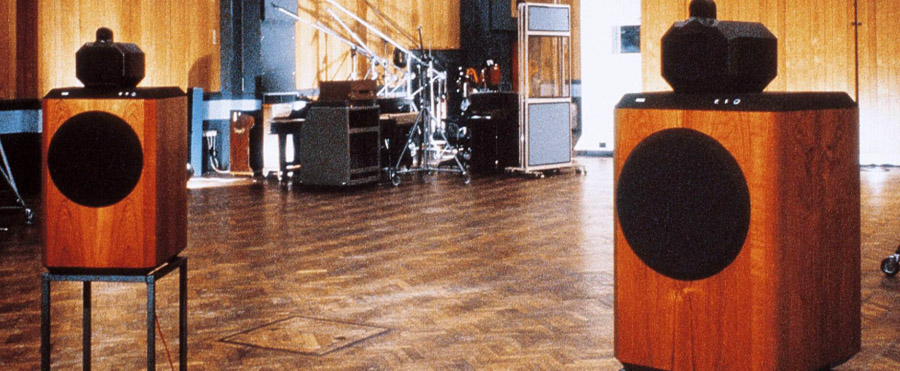
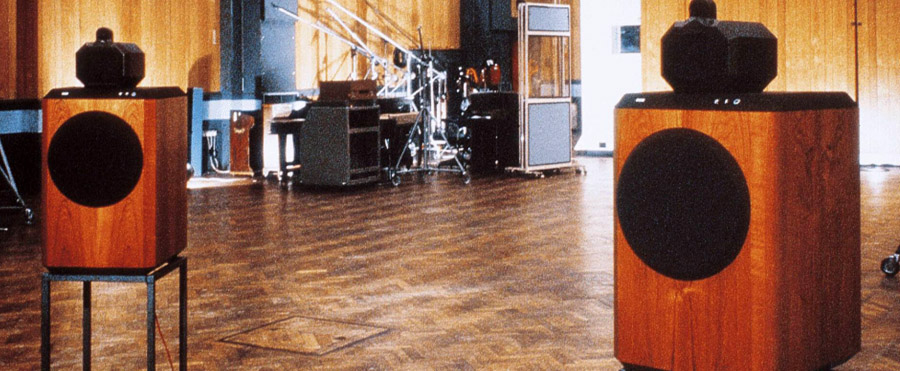
It’s hard to believe it has been 47 years since Bowers & Wilkins first released their iconic 800 series loudspeakers with the original 801 in 1979. The speakers developed such a reputation for precise, natural sound virtually overnight that Abbey Road Studios brought a pair in to serve as their studio monitors while recording and mixing classic albums by The Beatles and Pink Floyd and legendary soundtracks like John Williams’ “Raiders of the Lost Ark.” (Brief aside, you haven’t heard the “Raiders” soundtrack until you’ve heard it on a pair of B&W 801 speakers).
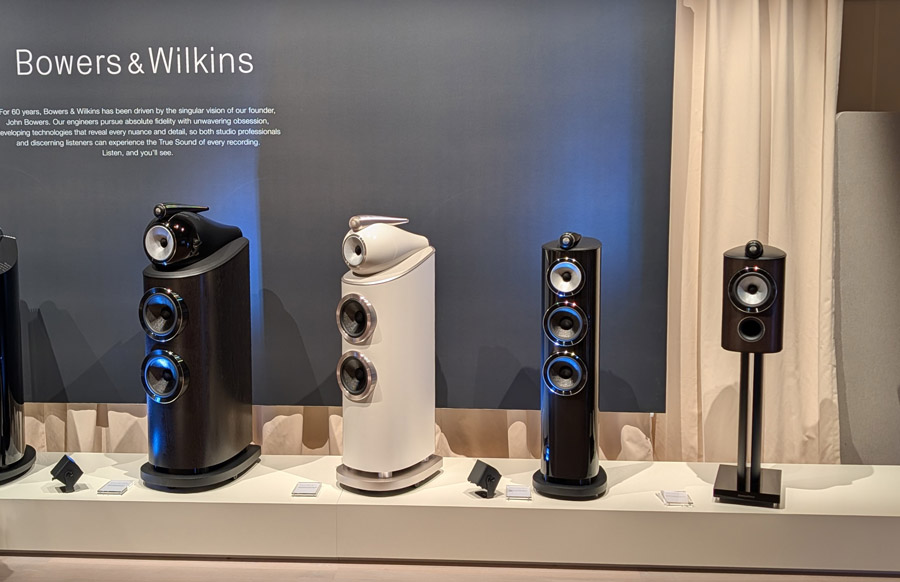
Today, at the High End HiFi show in Vienna, the legend continues with the unveiling of seven new models in the brand new Diamond D5 version of the 800 series loudspeakers. Price for the new models start at $15,000 USD/pair for the 805 D5 stand-mount (bookshelf) speakers up to $65,000/pair for the flagship 801 D5 towers. The price for the flagship is certainly a bit higher than what the “Series 80, Model 801” sold for in 1979 ($2,850/pair) – even when adjusted for inflation – but 40 years of good old-fashioned British sonic research and engineering has brought these speakers to their highest levels of both performance and industrial design.
The company unveiled a full suite of D5 800 series speakers at the show, not only for two channel music listening, but also for home theater implementations with dedicated center channel speakers that provide a perfect tonal match to other speakers in the line. Whether you’re upgrading a classic two-channel HiFi system or building out a custom home cinema, there’s an 800 series D5 speaker (or twelve) for you, as long as your financial situation can accommodate the hefty price tags.
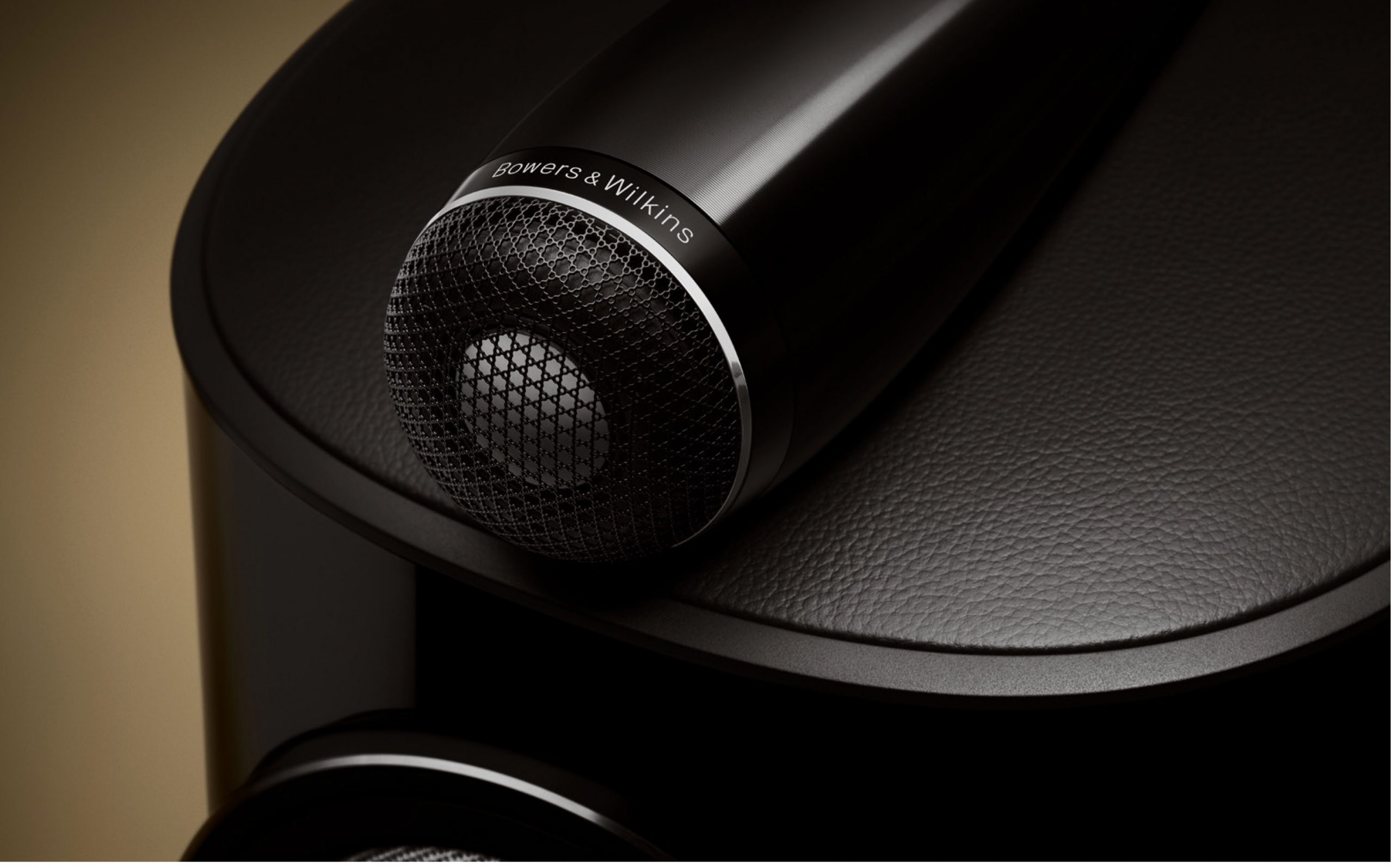
The Diamond D5 line-up is the fifth generation of the 800 series loudspeakers to use the company’s diamond dome tweeter which is primarily responsible for the speaker’s open airiness, realistic sound staging and sonic transparency. The company says the new 800 Series Diamond D5 range introduces “extensive acoustic, mechanical, and electrical improvements aimed at taking the already category-defining performance of the outgoing range to all-new heights.”
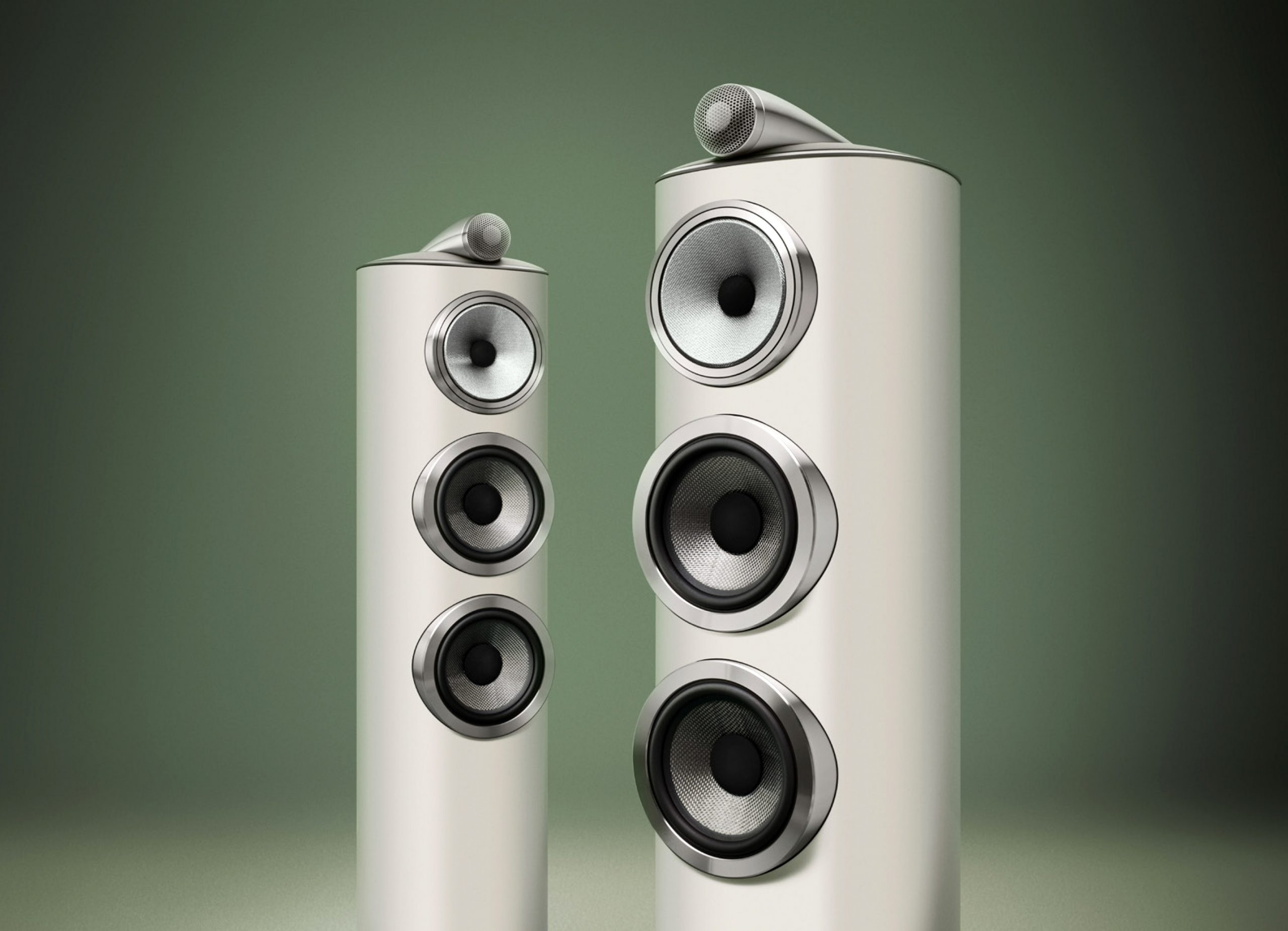
Most of the enhancements have been inspired directly by the company’s highest performance “Signature Series” D4 loudspeakers. And most of the tweaks are designed to further reduce unwanted cabinet resonance and vibrations. Some of these refinements and technology highlights include:
More details on each of these enhancements can be found on the Bowers & Wilkins web site.
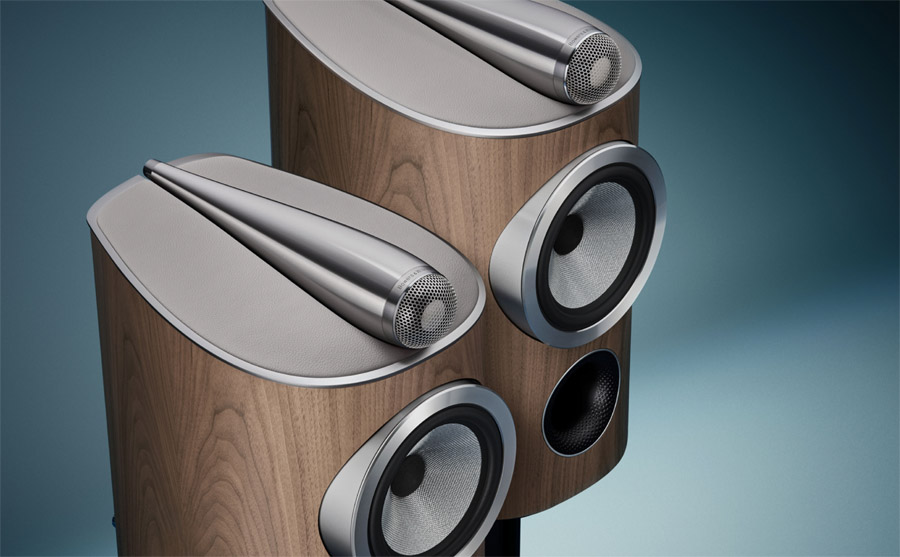
In addition to the sonic refinements, the Diamond D5 line-up features an new luxurious and lustrous aesthetic with four new finishes: Stealth Black, Warm White, Light Walnut and Dark Walnut.
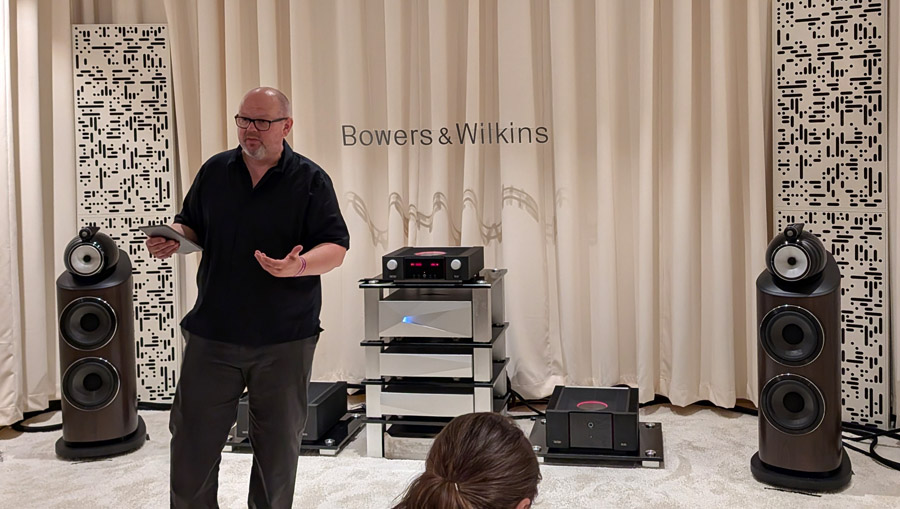
The Bowers & Wilkins 800 series speakers aren’t just featured in recording studios, and in the homes of well-heeled audiophiles and music lovers worldwide, they’re also used as reference speakers by sister companies Denon and Marantz. Every time a new Denon or Marantz A/V product is being developed, the company’s “sound masters” do extensive listening sessions at the company’s headquarters in Japan to evaluate the performance each piece of new gear. And the final approval from each soundmaster is only given after listening to each on Bowers and Wilson flagship 800 series speakers.
At a recent visit to these offices, we got to see (and hear) so many demos of the previous generation 801 D4 speakers playing vinyl and hi-res audio music tracks with top notch Denon and Marantz amps and receivers that we were trying to figure out how to sneak a pair out and hide it in with our carry-on luggage (but alas, they were too big for that).

I’d just finished off several waves of fighter planes and attack helicopters headed for the last port still under the control of my desperate nation, keeping our feeble chances alive for one more day. I returned to our base, an aging aircraft carrier, to chat with the corporate bigwig who’d thrown in with our ragtag remainders. He pulled out his smartphone and showed me how he was manipulating photos to make it look like we had more fighter jets than the few we possessed, projecting strength through misinformation.
Strangereal is getting a dose of 2026’s reality.
As the first Ace Combat game in seven years, and the first on this generation of consoles, Ace Combat 8: Wings of Theve has a lot of technical and story modernizations. At a preview in Los Angeles, I played several hours of the game across six different missions. Rest assured: It wholly embodies the franchise’s particular flavor of tense aerial combat without the severe complexity of ultrarealistic flight simulators.
It’s also undeniably set in the Ace Combat world of Strangereal, a fictional setting of vaguely European-styled nations embattled in generational wars fought with real-world planes… as well as massive flying wings and land battleships that wouldn’t look out of place in an anime. Yet in my time with the game, it’s what the developers at Project Aces — Bandai Namco’s internal team behind the Ace Combat series — pulled from our real-world 2026 that stuck with me.
Players can choose between one of three visual perspectives: traditional HUD from the pilot’s seat under the canopy, a canopy-free HUD looking straight out from the plane’s nose and a behind-the-jet view (seen here).
It’s integral to Project Aces’ framing for Ace Combat 8, which focuses on relationships between pilots and people close to the player. The game opens up with an unnamed player character being rescued from the sea and taken aboard an aircraft carrier carrying the last military resistance of the Federation of Central Usea, or FCU, following its defeat by the Republic of Sotoa. Before long, the player takes on the role of the titular Wings of Theve, a heroic pilot whose identity is obscured so that when one is shot down, another takes their place.
Taking on the mantle to preserve the myth is an old storytelling theme, but it takes on new life in Ace Combat 8. Project Aces wanted to bring the lens down from the skies to a more personal level, connecting players with the people they’re flying alongside and protecting aboard the ship. But the breaks between missions, when players bond with these fictional characters, also show them shooting smartphone videos of the Wings of Theve that are sent far and wide as promotional footage. As intentionally surreal as Strangereal is — an abstraction built to stage colossal wars and geopolitical upheaval — it’s still a little bizarre to see real-world smartphone propaganda used to win hearts and minds bleed into a franchise centered on fighter jet dogfights.
Standard missiles will lock on within 2,000 meters of a target, but they’ll generally only hit if the player is flying behind the enemy.
As CNET’s supervising editor of mobile coverage, it’s surreal to see social media warfare make its way into a military sim. But when the media sat down with Kazutoki Kono, the Ace Combat series brand director, at the preview, and I asked him about the inclusion of smartphone propaganda, Kono said he sees it as an extension of the player’s journey toward becoming an ace pilot.
“Obviously, there’s massive boss fights, different encounters, super challenging situations that you’ll have to deal with in dogfight situations, perhaps other ace pilots that are your rivals,” Kono said. “But on a much larger scale, I think social media and misinformation is another challenge that teams have to overcome nowadays. You could say that social media is just one among a wide range of challenges that needs to be overcome so the player feels that sense of growth.”
It’s a very specific choice considering which elements of our 2026 reality Project Aces didn’t include — such as drones, which have become more and more a part of modern warfare. I first spoke with Kono back in December after Ace Combat 8 was revealed at the Game Awards 2025. He shared that the unmanned aerial vehicle drone enemies included in Ace Combat 7 were disliked by fans; they wanted the man-on-man dogfight experience with radio chatter and human tension.
“There is always going to be this reality line that we’re going to want to aim for. That being said, we still can’t go for that line at the expense of the player experience,” Kono said in December. “For the player to have fun is always going to be a priority for us as a game design philosophy.”
The cockpit HUD view option is the purist simulator view, but it’s understandably more limited than the other two options.
I was thinking about this push and pull between reality and fiction as I sat down at my station for the preview. Kono’s comments about eschewing real-world elements such as the rise of UAV aircraft made me wonder how much of Ace Combat 8 would be geared toward preserving the dogfighting fantasy evoked in popular media such as Top Gun, even as modern air combat continues to veer toward drones and beyond-visual-range engagements.
Indeed, after my player character was rescued and met the crew, he was sent into the air in the backseat behind the current Wings of Theve, whose aviator sunglasses and charming smile looked uncannily like those of Pete “Maverick” Mitchell in Top Gun. In another nod to misinformation, the pilot, Cope, has had his record of enemy kills greatly exaggerated. When an enemy ace shot our plane down, Cope’s untimely death paves the way for the player to take his mantle — though he sticks around as a ghostly presence to guide you going forward. It’s a fun bit of torch-passing flavor that also provides context, as the player character is a classic wordless protagonist.
The Professor is one of three wingmen for the main character.
After that prologue, the first mission has the player character taking on the mantle of the Wings of Theve as a publicity move to keep morale up. The second and third missions bring me together with my squadmates — former community college academic The Professor, taciturn Noise and former stunt pilot Tasha (whose colorful hair wouldn’t look out of place on a K-pop idol).
In-game, you can command them to focus fire on targets, choose their own or form up on you. It’s a nice bit of flexibility to suit your play style, though I often lost track of what they were doing while I focused on my mission objectives. Mostly, I enjoyed the radio chatter as they ribbed one another.
You can also kit them out with different aircraft and missile or bomb loadouts tailored to each mission, though I didn’t notice much of a difference when I split them between A-10 Warthog ground-attack aircraft and Eurofighter Typhoon air-superiority jets. (It’s possible I wasn’t paying close enough attention.) After starting out in the F/A-18C multirole fighter — which Kono told me in December is his favorite and serves as the game’s “hero aircraft”– players can unlock more than 30 real and fictional aircraft, each with its own stats and payload options. That variety makes some better suited for dogfights and others more effective against ground targets.
Players will start with the F/A-18C jet, but can spend points earned completing missions to unlock over 30 others.
Unlocking is handled through a tech tree of sorts, starting with the F/A-18C and branching out not just to new aircraft but also to perks, including improved missile performance and larger bomb payloads. These can be equipped before missions, though each jet has a different perk capacity. With more than 100 standard missiles and dozens of additional missile and bomb options, armaments have always been where Ace Combat shifts from realistic aviation to arcade-style air combat. But it serves the heroic-pilot fantasy well — and makes missed shots a lot less painful.
We jumped around for the last segment of the preview. The fourth mission was a good blend of targets below and above, featuring harbors full of naval vessels to bomb, protected by enemy fighter jets. But it was the ninth mission that stopped me in my tracks: taking on a land battleship that looked like the USS Iowa on treads. My objective was to immobilize it while the iron leviathan’s guns, hovering quadcopter escorts and swirling defensive drone swarm tried to blast me out of the sky. They succeeded a few times, and it took several retries (and collapsed hotel buildings) to finally lock the beast in place.
The formidable land battleship has three railgun turrets that can shoot the player down from any distance.
The last mission we got to play, the 11th, had my squad taking on massive flying-wing aircraft transporting land battleship parts into enemy territory. Thanks to radar jamming, I had to track the skyborne behemoths by their long contrails, then bring my squad in close and rely on short-range missiles and gunfire to take them down. Flanked by fighter escorts, I screamed through the clouds in a visually breathtaking sequence, seeing firsthand the game’s Cloudly tech that Kono had described to me back in December.
Some targets like the Portage flying wing enemies (pictured) have several targets to hit before the whole vehicle goes down.
This feeling of breathless adventure among the clouds is one of the three core pillars at the heart of Ace Combat 8’s design philosophy, Kono told me and other media at the preview. Every decision they made needed to feed or strengthen one of them.
“The first [pillar] is photorealistic expression of the sky and giving the player the freedom to soar through it how they see fit,” Kono said. “The second is also at the player’s discretion, which enemies to engage with and the satisfaction of dogfights in the sky. The third is this process of becoming an ace pilot in the world, so you go from rookie to hero in the world of Ace Combat.” (Then he laughed, saying that there might be a fourth pillar they hadn’t even realized existed, given how vocal fans have been about the franchise’s background music.)
For all the effort devoted to realism, from recreating the world’s most iconic fighter aircraft to simulating cloud moisture droplets on the cockpit canopy, Ace Combat still delivers a powerful fantasy: that of a skyborne gunfighter fighting for what’s right. While I was caught off guard by Ace Combat 8’s decision to incorporate social media warfare, I was still swept up in watching my pilot’s legend grow — ideally through missiles and slick flying rather than doctored smartphone videos.


A forum thread titled “Hacking for Profit. Working method” offers a rare glance into how underground communities pass information about vulnerability exploitation and hacking techniques in a form of tutorial.
The post, written by an actor using the name “Hercules”, is not especially long or technical.”Its value lies in breaking down a complex process into clear, actionable steps. It covers how to scan, detect, assess, exploit, and monetize vulnerabilities in the wild, while also offering rare insight into the significance of vulnerability disclosure programs.”
Flare researchers analyzed the original post along with the responses over a period of a few months. The activity around the thread shows that its influence was not limited to the original post. Multiple users thanked “Hercules”, asked to connect privately, described themselves as beginners, or said they wanted guidance on how to move from theoretical learning to practical hacking. The response around the thread suggests that “Hercules” did more than describe a method.
This post was so popular that the same method was reposted and discussed across four additional forums. The threat actor gives novice threat actors a simple framework for understanding vulnerability exploitation and how to gain money from it.
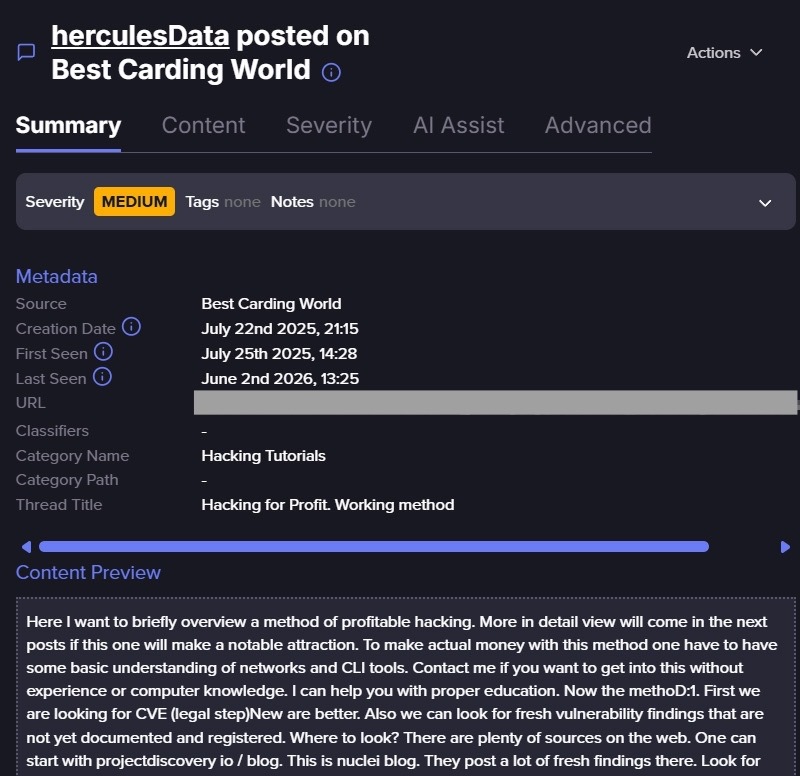
“Hercules” explains how to monetize a vulnerability discovery in the wild. He begins with advice on how to search for newly disclosed vulnerabilities, especially high-impact classes such as remote code execution, authentication bypass, account takeover, IDOR, and data exposure. He then moves to identifying exposed systems, validating whether those systems may be vulnerable, and deciding whether the results should be reported, sold, or exploited.
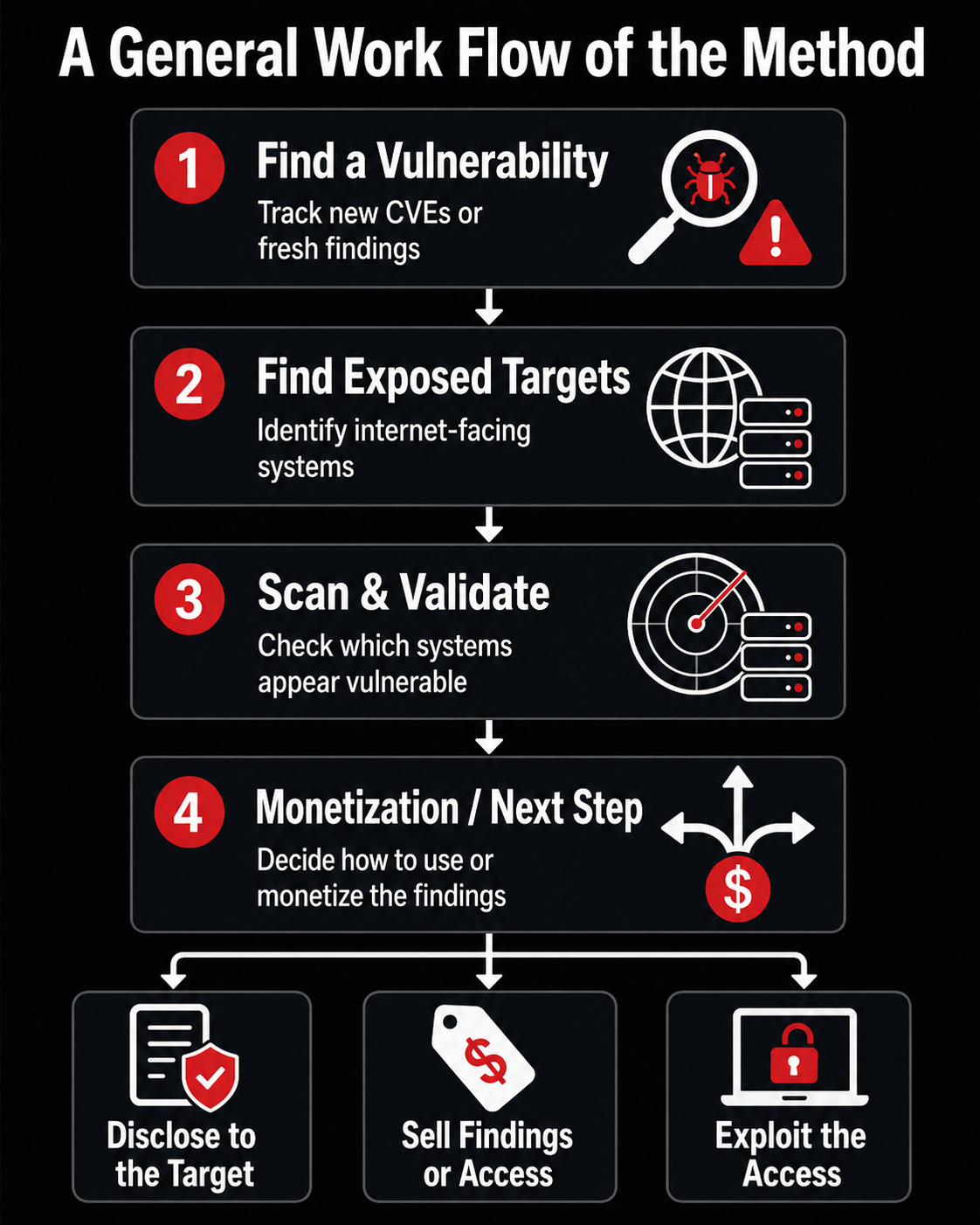
Three aspects stand out in the threat actor’s tutorial:
The usage of the Nuclei framework by projectdiscovery.io, which is highly popular among offensive security practitioners.
The understanding of the challenges defenders have when patching newly discovered vulnerabilities. These topics are further discussed in an educational blog by Yakir Kadkoda and Ilay Goldman in the “50 shades of vulnerabilities: Uncovering Flaws in Open-Source Vulnerability Disclosure”.
The tutorial is divided into “legal” and “illegal” parts. Meaning the reader can stop at any stage and decide to move from vulnerability disclosure to hacking.
Underground forums are actively teaching novice hackers to scan for, exploit, and monetize your vulnerabilities.
Flare monitors thousands of dark web sources, including the forums where these tutorials spread, so your team can detect exposure before attackers act on it.
The most effective part of the tutorial is not a technical trick. It is the tone. “Hercules” writes in plain language and presents the process as something that can be learned through action. He argues that many tutorials focus too much on computer science, operating systems, programming, or scanner parameters, while beginners want to “hack,” “break in,” and “gain access.”
He also suggests that users do not need to be advanced software engineers to begin. Public tools, community templates, automation, and even AI assistance are presented as ways to reduce the barrier, while programming skills are described as useful but not mandatory. The underlying message is simple: the technical gap is smaller than beginners think.
That message explains much of the forum response. One user said they had finished many hacking courses but still could not apply them in the real world. Another said they did not even know how to program and asked whether that would be a problem.
Others asked “Hercules” to contact them privately, said they wanted to learn under his guidance, or praised the post as clear and well structured.

The most intriguing part of the method is the monetization logic. “Hercules” describes several actions his “students” can take once a vulnerability is discovered:
Approach the owner of the server/website or hosting company and ask for payment in exchange for vulnerability information. Hercules even says that some people will provide payment in exchange for vulnerability disclosure and also says “…you can take your money home and be proud of yourself”.
Offer the finding on the underground markets. “Hercules” even suggests that an actor could approach the victim and sell the information elsewhere at the same time.
Exploit the vulnerability and detect what’s on the server.
Remote code execution can become access sold to botnet operators, used for illicit resource abuse, or leveraged for data theft. Account takeover, IDOR, and data leak vulnerabilities are framed as assets that can be sold quickly.
“Hercules” describes himself as a hacker rather than a fraudster, preferring to sell quickly instead of conducting downstream fraud.
The replies show that the post resonated because it offered experience and confidence, not just information. Users repeatedly asked for private contact, mentorship, and additional guidance. Some were blocked by forum limitations and said they could not send private messages yet.
Others described the post as a useful starting point and waited for follow-up material. Following are some replies from the thread:
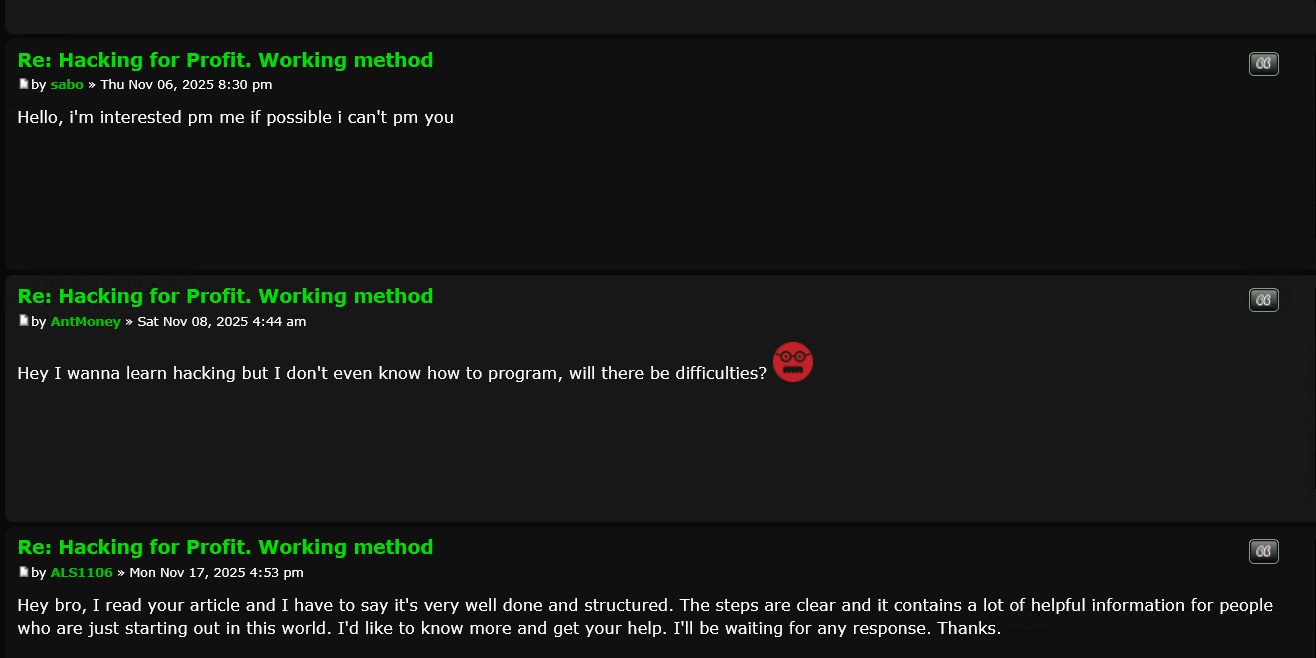
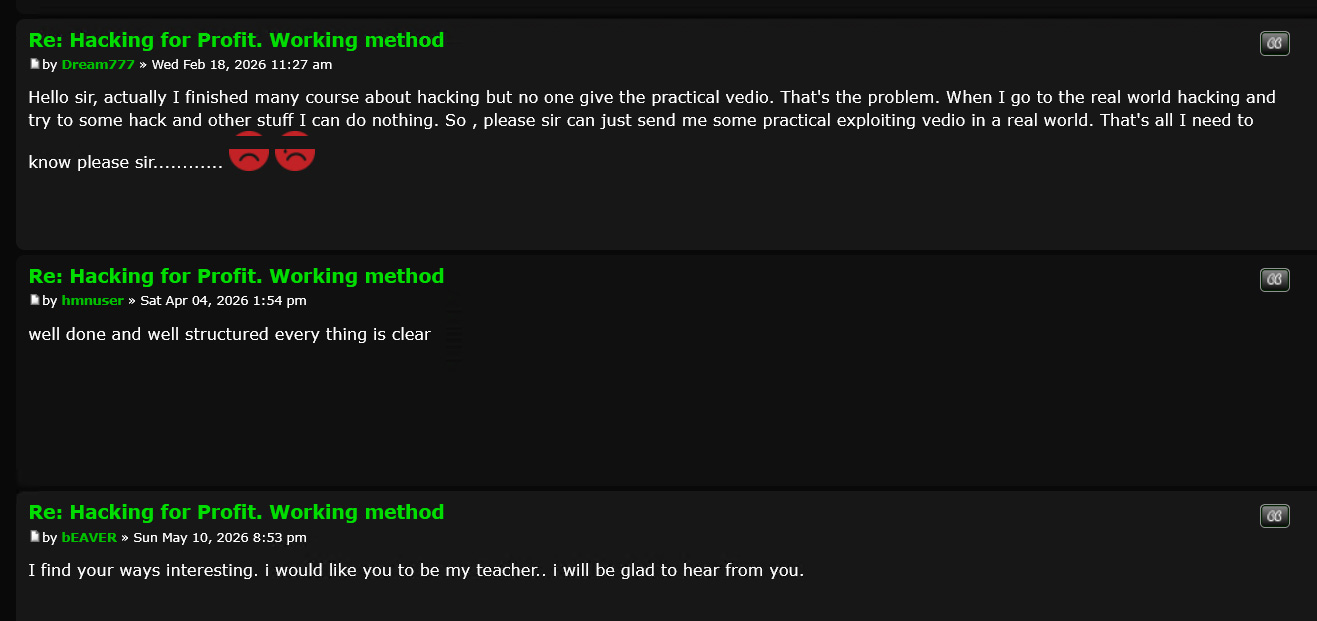
This long tail of engagement is significant. A sophisticated exploit write-up may attract technical readers, but a simple, motivational workflow can attract a broader audience.
It can remain relevant for months because it does not depend on one specific vulnerability. It teaches a reusable mindset: monitor new flaws, find exposed systems, validate, monetize, and repeat.
From a threat intelligence perspective, that makes the thread valuable even without unique indicators. It reveals how new actors are taught to think, what vulnerability classes they are encouraged to prioritize, and how experienced forum members convert curiosity into participation.
The post is also a soft recruitment channel, with “Hercules” repeatedly inviting users to contact him privately.
This tutorial calls attention to three aspects in a vulnerability program.
Critical and reachable vulnerabilities are highly targeted. We don’t need a post in the underground to know that. There are many automated botnets in the wild that are updated minutes after newly vulnerabilities are disclosed and PoCs are released. But even novice hackers are being trained today that these are high-valued targets.
The long tail of old vulnerabilities also matters. These legacy servers, old Drupal or WordPress sites with 2019 vulnerabilities will also be exploited by novice hackers.
Your paid vulnerability disclosure program matters. If they get paid, they will probably have more motivation to disclose the vulnerability. Even if they sell it on the dark web, once they disclosed the vulnerability, you will probably mitigate the risks.
The thread is not important because it introduces a new hacking technique. It is important because it demonstrates how cybercrime scales through simplification. “Hercules” takes a complex topic and turns it into a practical business workflow that beginners can understand.
The replies show that this approach works: users who were unsure, inexperienced, or frustrated by theory responded with interest.
Cybercriminal capability does not grow only through elite malware development or zero-day exploitation. It also grows through accessible tutorials, mentorship, public tooling, and communities that make illegal activity feel achievable.
Sponsored and written by Flare.

Elon Musk said that humanoid robots will push Tesla’s market value to $25 trillion. He also believes that they will reshape labor.
No longer will humans need to do dangerous, repetitive, or mundane things.
It’s a compelling vision. Yet the reality is likely far more nuanced.
My take is that the future of robotics in the industrial environment won’t look like us.
Rather, it will involve systems that are built to solve specific, high-value problems with speed, accuracy, and reliability.
Morgan Stanley forecasts the humanoid robot market will reach $5 trillion by 2050, with over a billion units deployed — roughly 90% for industrial and commercial use. But even that bullish projection comes with significant caveats: major advances in hardware, materials, and AI are required before humanoids can scale in industrial settings.
Then there is economics. Humanoids currently cost up to $200,000 per unit. At that price point, achieving ROI is extremely difficult given their still-limited capabilities.
Precision is an even bigger obstacle. Manufacturing has zero tolerance for error. Research from the IEEE illustrates the challenge: even folding laundry remains surprisingly unreliable for robots.
Translating meaningful dexterity into high-speed industrial workflows is a far steeper climb. And for many tasks — like driving a screw to mount a heat sink on a motherboard — a humanoid is simply overkill. A robotic arm, a screwdriver, and a smart navigation system will do the job better.
The traditional manufacturing model is based on a labor-first approach. An example is Foxconn, which employs around a million workers. Usually, these workers solve problems before considering automation systems.
True, this can work at scale, but it also has limitations with flexibility, consistency, and speed.
But manufacturing at the edge flips that equation. Instead of being produced in distant locations, production moves closer to where products are deployed. This allows for faster iteration, reduced logistics complexity, and greater responsiveness to demand.
From there, the model becomes about being technology-first. From the start, challenges are addressed with software, robotics, automation, real-time data, and AI. Think of it as “manufacturing in a box.”
Employees are still critical for this process, but they have a different role. They oversee operations, handle exceptions, and manage continuous improvement along with AI agents. Robots, on the other hand, focus on repetitive, precision-driven tasks and processes.
Manufacturing at the edge does not have to be monolithic. It can range from a warehouse, data center, or compact production facility. But instead of sprawling facilities, the footprints are generally smaller, say 50,000 to 100,000 square feet.
The benefits are clear: higher throughput, improved quality, faster time to market, and greater consistency. Manufacturing at the edge is also more cost-effective. This makes it easier to justify the onshoring of manufacturing.
The past few years have shown the importance of this. With COVID and geopolitical tensions, manufacturing on the edge offers a path to more resilient, localized production.
Building an AI-powered manufacturing environment is fundamentally different from traditional automation. It centers on flexibility. Manufacturing is dynamic as designs and capacity needs change, processes evolve, and systems must adapt without introducing friction or downtime.
This is why AI is so important, and why no single model can do it alone. A large language model might grab the headlines, but real-world systems draw on the full depth of AI — from classical machine learning for optimization, to deep learning for vision and perception, to generative AI for orchestration and insight. The power isn’t in any one technique — it’s in how they work together.
Another critical factor is knowing what should or should not be automated. Machines are ideal for consistency and repetition, while humans are adept at judgment, adaptability, and problem-solving.
In fact, AI can greatly empower operators. This can be done by providing real-time recommendations, visibility into system performance, and tools to continuously refine workflows. Humans remain firmly in the loop, overseeing operations, handling exceptions, and managing repair and optimization.
The robots that will reshape manufacturing won’t walk on two legs. They’ll be purpose-built machines running sophisticated AI, operating in compact and efficient facilities, augmenting skilled workers rather than fully replacing them.
The future of industrial automation isn’t about replicating humans. It’s about combining specialized machines, intelligent software, and human judgment to solve complex problems — faster, better, and at scale.
That transformation is underway. And it looks nothing like what Hollywood imagined.
We list the best Robotic Process Automation software.
This article was produced as part of TechRadar Pro Perspectives, our channel to feature the best and brightest minds in the technology industry today.
The views expressed here are those of the author and are not necessarily those of TechRadarPro or Future plc. If you are interested in contributing find out more here: https://www.techradar.com/pro/perspectives-how-to-submit
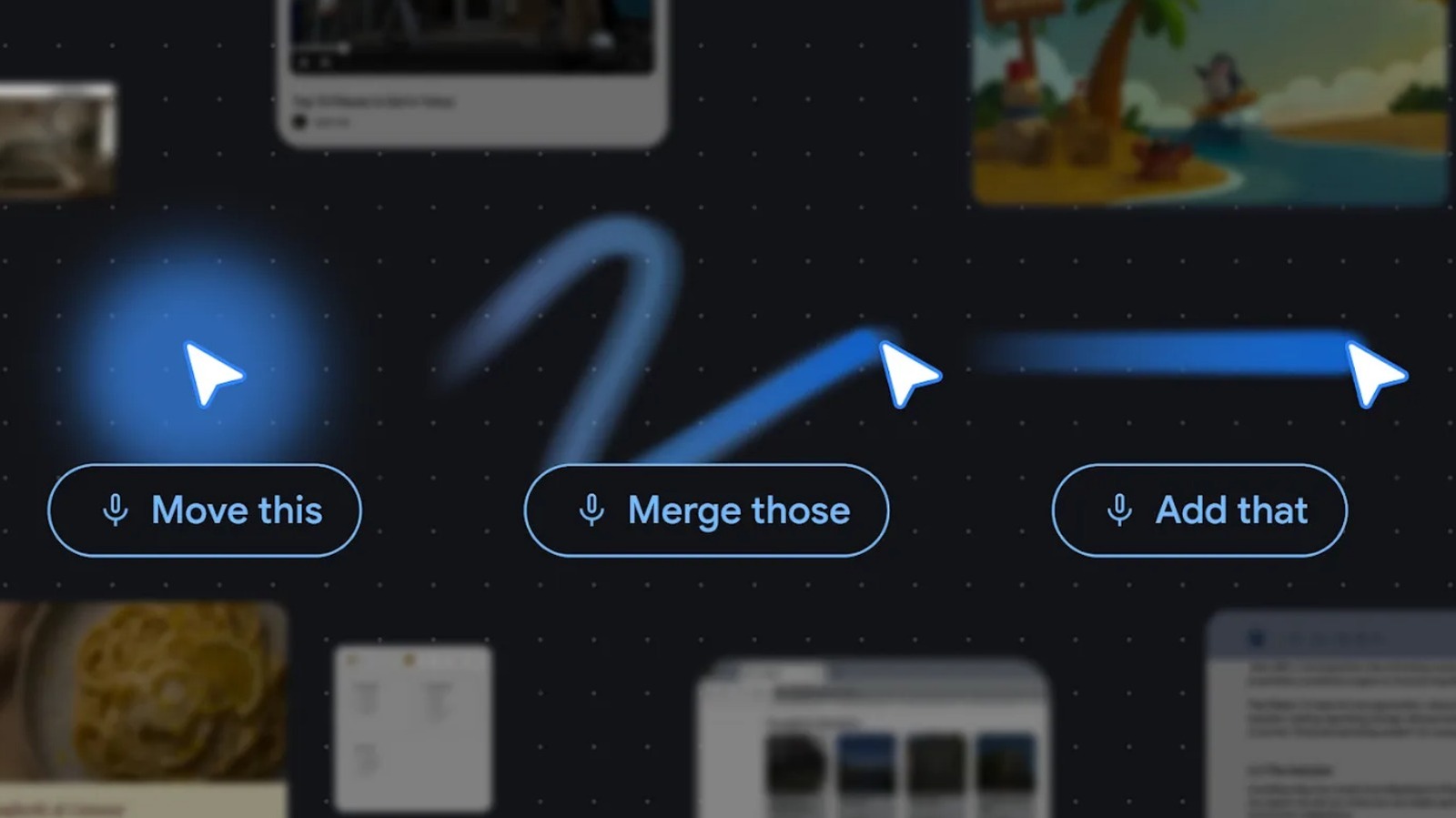
It seems that every day the Valley is releasing new AI-powered tools designed to save us time and reshape how we interact with our devices. Many of these are minor changes you might not even notice if you don’t already know to look for them, but some mark pretty significant renovations. Google recently announced that it is bringing one such technology to its new line of Googlebook laptops. These laptops are specifically designed for seamless Gemini Intelligence integration, and one of the key features is the new Magic Pointer technology, which promises to rethink the way you use one of the most fundamental elements of the personal computer: The mouse cursor.
The company recently announced via Google DeepMind that it’s “been exploring new AI-powered capabilities to help the pointer not only understand what it’s pointing at, but also why it matters to the user.” Google noted that one of the main barriers to interacting with AI features is that they’re often relegated to separate windows. This adds extra steps as users type, copy and paste, or drag and drop information. The Magic Pointer is meant to cut out that part of the process, allowing the user to bring the AI-powered tools to the information rather than the other way around. This is meant to give users a more uninterrupted workflow.
The intent behind the Magic Pointer is certainly a grand one. The idea to place all the power of Google’s AI directly on the cursor itself sounds overwhelming, but what does it look like in practice? It’s not yet clear what all the Magic Pointer will be able to do, but Google has already listed a few examples.
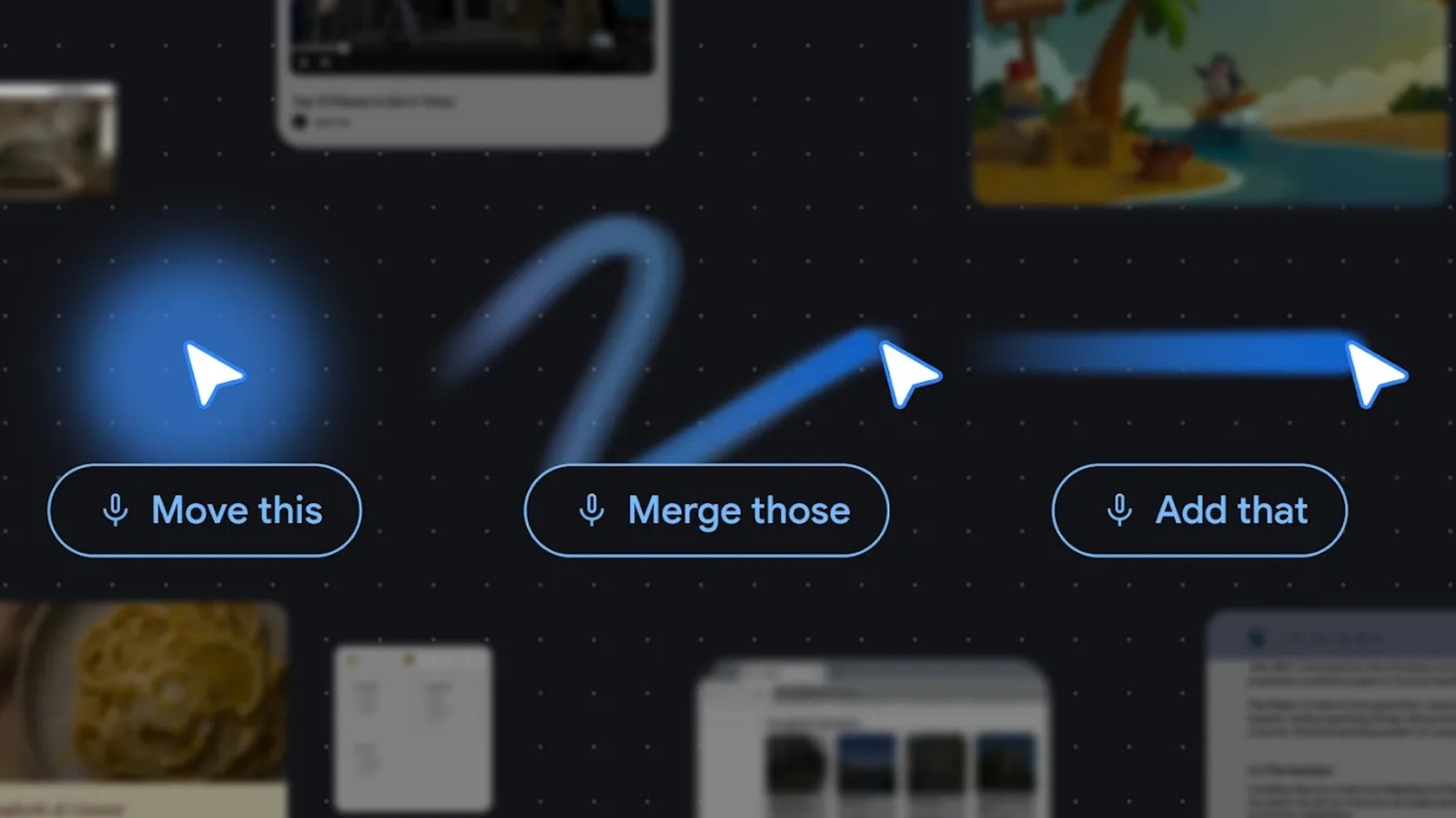
By giving your mouse a wiggle, a Gemini hot-menu will appear and offer a list of suggestions based on the context of the subject you’re pointing at on your screen. Google states that if you point at a date in an email, for instance, it might prompt you to set up a meeting or add an event to your calendar. You can point to two different images and select an option to combine them. You can point to a place on a map or an image of a building and select an option to “Show me directions,” and the AI will fill in the context and give you the information you want.
Google also shared a video showcasing some of these features, such as looking at a recipe online and using Gemini to add the ingredients to a shopping list, using a pop-up text box to issue commands for text revision and add emojis to a list, changing window colors, and using voice commands to tell the AI to perform tasks based on items being pointed at on screen.
Of course, there are some users who might not trust Gemini for their emails and other sensitive information, and this new method of using the AI probably won’t change that. It doesn’t appear to fundamentally change how the technology works, just how we interact with it.
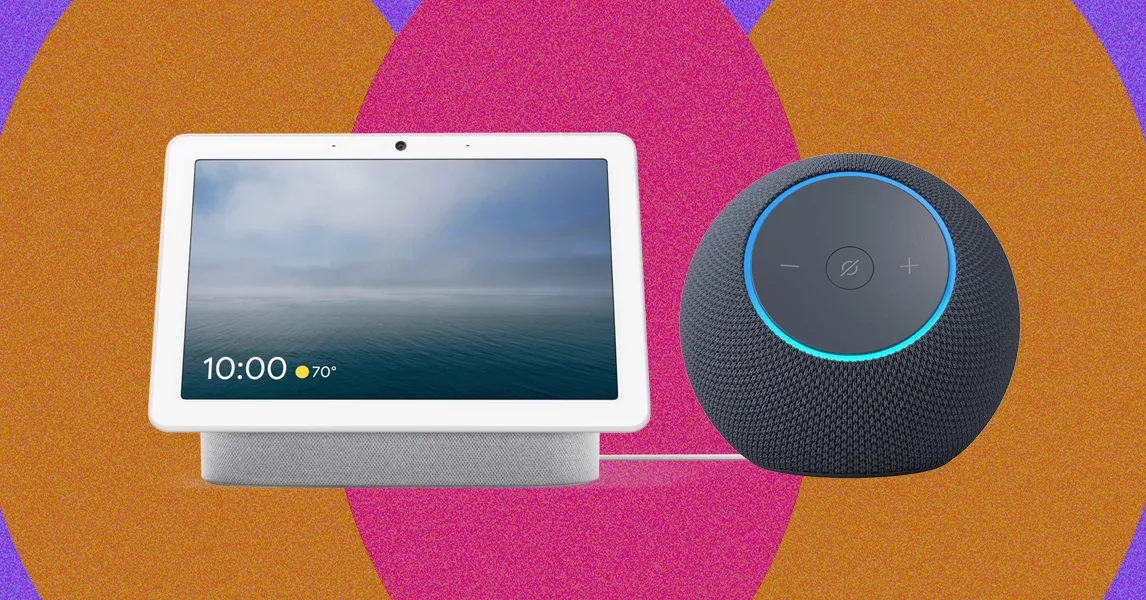
Amazon Echo Show 8 (4th Gen) for $180: This is a solid smart speaker with Amazon’s latest physical design and Alexa+ right out of the box, but it’s not a sound improvement over the older model, so I’d personally pick the third-gen option (see above) while it’s still available or upgrade to the Echo Show 11 ($220).
Amazon Echo Show 15 for $300: The Show 15 exists somewhere on the continuum of being a smart display and a smart TV, but it doesn’t quite fully nail being either. The widgets are fun to use since you can add so many to the Show’s 15-inch screen, but I’ve tried this device a few times, and I’ve always walked away underwhelmed. The Show 15 has grown on me while using it with Alexa+, though, particularly with a stand ($125) to sit on my desk. But it’s still larger than I need for day-to-day tasks, but smaller than what I’d want from a television.
Apple HomePod for $299: Apple’s flagship smart speaker has a muddy midrange and high-end, which is disappointing for the price point. The HomePod does have a lot of bass, though, if that’s your jam. If you want an Apple-powered smart speaker in your home, the Mini is a third of the price and has nearly identical capabilities to the full-size model.
Bang & Olufsen Beosound Level for $2,250: This is a gorgeous—though seriously expensive—speaker that’s built to last. The company has designed the high-end model to be repairable and upgradable over time. Made of natural fabric and wood, it’s a high-design flat speaker that comes with Google Assistant onboard—or you can buy it without a smart assistant for the same price.
JBL Authentics 200 for $200: This was my previous pick for a third-party smart speaker, but I’m uncertain of its access to Amazon and Google’s newest assistants. I’ll retest it once I confirm if it will gain access to one (if not both) assistants.
Sonos Era 100 for $189: Another third-party option, but it won’t grant access to Google support. You can connect it to Amazon Alexa, though. Plus, Sonos is a great investment if you’re really looking for a great speaker that can have smarts—but its smart assistant isn’t the primary feature.
Sonos Beam Gen 2 for $369: This is an older version of the Sonos Beam that still has Google support, but I’m uncertain if it’ll gain access to Gemini for Home.
WiiM A10 for $229: This speaker doesn’t have a voice assistant, but it does have compatibility with AirPlay 2, Google Cast, and Siri to be used as a Bluetooth speaker. WIRED reviewer Parker Hall says it reminds him of a Sonos speaker, but that it can instantly connect with Spotify Connect—faster than any other speaker he’s tried.
How Should You Choose Between Alexa, Google, and Siri?
The easiest way to choose which smart assistant to add to your house is to consider which ecosystem you’re already using in some capacity. If you’re a big Google or Android user, for example, adding a Google Assistant–powered speaker to your home is a no-brainer. It’s not always that simple, though. Apple and iPhone users will also find benefits in choosing HomeKit-powered devices, but Apple’s ecosystem is so limited that you might want to choose a different assistant for the devices you want. Amazon’s Alexa has the widest range of offerings, but Google Assistant’s range of features has me coming back again and again.
Here’s what you should ask yourself to decide:
Why Do I Prefer Google Assistant?
There are many reasons to love Amazon’s Alexa voice assistant, and it works pretty well. If you want to use your voice assistant to shop or use Amazon services like Prime Music or Prime Video, chances are an Alexa-powered speaker is best for you.
Google Assistant has fewer skills and is compatible with fewer smart home devices than Alexa, but Google Assistant can do enough to qualify as truly useful—plus, Google adds new skills fairly frequently. Speakers with Google Assistant work better when you network them together, and they’re compatible with a wide variety of Google apps and services. Google is better at answering random questions and telling you where to go out to eat, since it can access and send information to your phone through Google apps.
Spotify, Pandora, and YouTube Music are the main ways to play music with Google Assistant. The service can also send Netflix shows and movies to your TV if you have a Chromecast attached.
If you’re using a smart display, I also prefer Google smart display devices to Amazon’s because Alexa Show devices serve you sponsored content while Google’s will not. Amazon’s Show displays are already crowded with content by default that you’ll likely want to remove. (To do so, go to Settings on the device, and then click Home Content. You’ll currently find more than 40 options you can toggle on and off.) But you can’t fully remove the sponsored content unless you’re on Photo Frame mode. Meanwhile, Google’s displays make for better photo frames thanks to Google Photos and don’t have such a crowded interface of content to distract you. I’d stick to a Nest Home Hub unless you definitely want an Alexa display and won’t mind the occasional onscreen ad.
How Can I Get the Most Out of My Smart Speaker?
My biggest advice for enjoying a smart speaker to its fullest potential is to make sure you put it somewhere you’ll use it often. I love having a small speaker in my bedroom to ask about the weather while I’m getting ready for the day, and then I make sure there’s a smart speaker somewhere near my desk and living area (usually multiple, but I’m an odd case since I test these for a living) so that I can call out requests as I work, cook, and watch TV.
The next biggest to-do to maximize your smart speaker is to invest in other compatible smart home gadgets. Smart speakers work best when they have other devices to control and speak to. Set up some smart lights, a smart lock or two, a video doorbell, a couple of security cameras—you name it! And then command your smart speaker to help you control them or otherwise check on your home.
Can I Use My Smart Speaker With My TV or Entertainment System?
Sometimes! This varies by TV model and what you have connected to your TV. You can find some TVs that have built-in voice control, though some might be voice control through the remote rather than with the smart speaker. Apple’s smart speakers and Apple TV sync the best from what I’ve tested, if you’re looking for a single system. But otherwise, I haven’t found it as painless as I would have hoped.
If you’re looking for music entertainment, smart speakers are great. You can connect multiple smart speakers for a stereo system, or connect your smart speaker to existing systems. Depending on the system in question and what you already have, you might have to choose a smart speaker with a 3.5 mm wire-in option or a speaker that has built-in compatibility with Amazon Alexa and Google Assistant.
Should I Be Concerned About My Privacy?
Adding microphones to your home (and sometimes cameras) is a valid point of concern. Smart speakers are technically always listening, though they’re supposed to only listen for their wake word and otherwise ignore all other audio until asked a question. But there have been cases where police have requested audio recordings from smart speakers to use as evidence, including two separate murder cases in 2018 and 2019.
Most of the speakers I recommend have some method to shut down the speaker’s listening tendencies, whether an off switch or a camera cover, but it’s annoying to switch on and off if you want to use your speaker regularly. Alexa also no longer allows local processing, so everything you ask Alexa is now sent to the cloud to help Alexa+ run.
Ultimately, you should be concerned about your privacy, and it’s worth considering whether you want a set of microphones in your house. In my years of testing, I haven’t felt any of my smart speakers to be invasive, and they do a good job giving themselves away when activated (lighting up and asking “Hmm?” if they don’t understand the question), so it’s never felt like my speakers are sneakily listening to me. But it’s certainly a personal choice.
Will Smart Speakers Become Bricks?
The smart speakers in this guide are primarily made by large brands—Amazon! Google! Sonos!—and it’s unlikely any of them will suddenly vanish or become a useless brick speaker on your desk. There are even some first-generation Amazon Echos still working that are about a decade old (with mixed results, based on what users say online).
But a UK law passed in April 2024 adds more protection here. The law mandates three key points: more secure password procedures, more clarity on how to report bugs and security issues, and that manufacturers and retailers inform customers how long these products will receive support and software updates.
The last point is the most relevant for smart speaker users, since the fear is that you’ll buy a speaker that will suddenly stop getting updates and become unusable. I’ll be watching to see how much information is really offered to shoppers as it takes effect, but so far, we haven’t seen any changes. But it’s a law we like. While there’s not yet an equivalent law in the US, I’ll watch for updates here as well.
How Does WIRED Test Smart Speakers?
I employ a variety of tests with smart speakers. I do microphone tests, gauging how far away a speaker will hear and respond to a question, both while music is playing and while music is off. I also play a variety of songs to see how well the speaker performs at playing everything from chill lo-fi to our favorite metal band and beyond. I also sync it with smart devices to see how well it connects and controls those devices, and what kind of capabilities it has. If there’s a screen, I also test the features included with that. Finally, I also live with these speakers for at least a week (if not more like months!) to see how they fare on day-to-day use and long-term performance.
How Does WIRED Acquire Smart Speakers? What Does WIRED Do With Them After Testing Them?
Most of the smart speakers I test are provided as press samples by companies that make them. These samples are obtained with the understanding that no coverage is promised, nor are there any agreements about what that coverage will look like if it occurs. I also occasionally purchase my own speakers.
After testing, most smart speakers are kept for long-term testing or in storage for future comparison tests. If a smart speaker is deemed redundant, I usually locally recycle the device, as it likely won’t receive more updates or support from the company. If it’s still a viable speaker, I’ll donate it locally instead.
Power up with unlimited access to WIRED. Get best-in-class reporting and exclusive subscriber content that’s too important to ignore. Subscribe Today.

If you’ve just graduated and are stressed about your starting salary, you’re not alone.
According to a CNA report, a Ministry of Manpower (MOM) survey of residents aged 22 to 28 found that graduates across most disciplines are earning less than they expected when entering the workforce.
And with global uncertainty still looming, analysts are telling fresh grads to manage their expectations—or risk sitting on the job hunt longer than they’d like.
CNA cited figures from MOM to show the gap between what fresh grads expected to earn and what they actually took home.
IT graduates were among those with the highest expectations at S$6,000, but averaged S$5,150—a $850 shortfall. Engineering sciences grads expected S$5,000 and landed at S$4,450.
The disparity was even larger among business administration graduates, who expected S$5,000 but earned approximately S$4,000. Graduates in natural and mathematical sciences also saw one of the widest gaps, with expected salaries of S$5,000 compared to actual earnings of S$3,700.
Only a handful of disciplines met or exceeded expectations.
Law graduates earned an average of S$7,500 despite expecting S$6,500, while education graduates earned S$4,000 against expectations of S$3,800. Fine and applied arts graduates reported earnings that matched expectations at S$3,500.
MOM’s survey also shed light on why some graduates turn down job offers.
Among university graduates who rejected an offer, nearly one-third (30.6%) cited low pay as the main reason.
Another 26.7% said they were holding out for better opportunities, while 11.3% were uninterested in the role itself. Around 10% pointed to unsuitable workplace environments, and 6.1% said the jobs lacked clear career progression.
Professor Lawrence Loh from the NUS Business School told CNA that graduates’ emphasis on salary reflects Singapore’s rising cost of living.
He noted that many young professionals want to secure the highest possible starting salary because future pay increments can be difficult to obtain. A stronger starting point, he said, provides better long-term earning potential and career mobility.
While MOM expects wages to continue rising, the ministry noted that employers are taking a more cautious approach to salary increases due to global economic uncertainty and inflationary pressures.
That said, analysts also told CNA that graduates may have to “taper down their expectations” or risk delaying their entry into the workforce.
Anurag Garg, country lead at recruitment firm Michael Page, said prolonged job hunts could leave candidates frustrated and potentially cause them to miss out on suitable opportunities.
On the employer side, companies competing for top talent may encounter higher rates of offer rejections, which can lengthen hiring timelines.
Garg added that mismatched expectations could also contribute to underemployment, where workers take on roles that do not fully utilise their skills and qualifications.
As hiring conditions become more challenging, analysts say both employers and graduates will need to strike a balance between compensation expectations and market realities.
Featured Image Credit: The Recruiter

When the 29-year-old Samuel Rizzon is asked what he does, he answers with a single word: “developer.” While accurate, it’s a modest label for someone whose work has stretched well beyond writing code.
At an age when many engineers are still settling into a single specialty, Rizzon has built products embraced by large enterprises, online classrooms, and the open-source community, three arenas that rarely reward the same instincts. His is a story of versatility, of an engineer who has never been willing to be only one thing.
Interested in technology and building software from a young age, Rizzon developed and shipped his first product at 19: a Bible quiz he published to the Play Store and the App Store in 2015. It picked up 22,000 downloads, and that response was enough to convince him that making things people actually used was worth pursuing. Not long after, he joined TOTVS, Brazil’s largest technology company, where he would spend the next five years and lay the foundation of his career.
That foundation took shape around a single product. It started as a proof of concept for one client that wanted a way to sign documents digitally. Rizzon wrote it from scratch, and the prototype worked well enough to become a product in its own right. It grew into a standalone electronic signature platform comparable to DocuSign, and today it processes more than a billion documents for over a million customers.
Building it was largely a solo effort. Working before AI coding assistants existed, Rizzon architected the whole stack himself, from an Angular front end and a C# back end to a Chrome extension and a desktop application that reverse-engineered the physical A1 and A3 devices Brazilians use to authenticate documents. As the product matured, a team formed around him, eventually reaching roughly 10 engineers, designers, and product staff, with Rizzon leading the work that turned the prototype into a full product line.

The 💜 of EU tech
The latest rumblings from the EU tech scene, a story from our wise ol’ founder Boris, and some questionable AI art. It’s free, every week, in your inbox. Sign up now!
From there he spent a year at the consultancy CI&T before taking a remote role as a full-stack engineer for a New York startup, a job that gave him his first direct contact with the U.S. technology scene.
Around the same time, Rizzon set out to build a company of his own. He ran it out of his room in Brazil, without investors, without a team, and without a network to lean on. What he had was persistence, and it showed: he took the business from nothing to 30 paying customers across Brazil, the United States, and Ireland, with 8,000 people using its web app.
Since there was no one else to do it, he handled sales, client conversations, support, and marketing himself, the parts of a business most engineers never touch. He even started a YouTube channel during this period, which grew to 3,000 subscribers.
He doesn’t romanticize how hard it was, and he is especially frank about the difficulty of doing it from Brazil, far from any real startup network. “I had nothing, really nothing,” he points out. “It was just me in my room. Creating something and trying to sell it and reach customers. It was a very specific niche, and it was a hard niche.” That isolation forced him to operate on his own, and the founder instincts it produced would resurface later in the viral consumer projects that made his name.
Amidst the 2020 COVID-19 pandemic, with so much of work and school suddenly happening over video, Rizzon built a Chrome extension that muted every participant on a Google Meet with a single click, a product that could solve a problem he kept running into himself. The fix was simple, but it turned out plenty of other people had the same complaint.
That became clear fast. Within a year the extension had reached 150,000 users, almost all of them arriving by word of mouth. Its most devoted users were teachers, who were running online classes for 15 to 30 students and had no way to quiet the room without clicking each child one by one. “It was a pain for me, and I just fixed that with an extension,” Rizzon says. “It ended up being useful for a lot of teachers in particular.”
The traction caught the attention of the founder of MP3.com, who emailed Rizzon with an offer to buy it. He sold, marking his first exit and an early sign of the instinct for shipping consumer products that would shape his later work. He has stayed close to open source since, serving as co-founder and core component developer of Zard UI, a shadcn-style component library for Angular developers that has crossed 1,000 stars on GitHub.
After years of shipping one project after another, the one that finally broke through was GitCity. The idea came from a post on X about rendering a city, and Rizzon had a first version live within a day. He didn’t write any of it by hand; instead, he built the entire codebase with Claude Code. What it produced was a pixel-art 3D metropolis that renders GitHub developers as buildings, with one structure per coder.
“On the first day, when I had the idea of creating the city, I noticed that this could be a viral product,” he says. “So I prepared and made everything to go viral.”
People took to it immediately. In its first week the city grew from 12,000 buildings to 40,000, and it currently holds more than 80,000. Over two months GitCity drew 180,000 visitors, more than five million social media views, and 5,000 GitHub stars, with roughly 20 people contributing code. Rizzon’s own audience grew alongside it, climbing from 200 Instagram followers to 6,000 and an X account to nearly 4,000.
None of that happened by chance. Rizzon treated distribution as part of the product itself, wiring a one-click “share on X” button into every action a user could take. He also added a feature that lets one building attack another, which fires off an email to the target and pulls them back in to retaliate, and he also opened the experience with a cinematic shot of the skyline and made the 3D rendering run smoothly on phones.
Inspired in part by the indie developer Pieter Levels, he’s also begun earning money from it, taking in $2,000 from sponsored buildings and lining up companies to back a week-long event in which users hunt down a “dark boss” hidden in the city.
The project did more than rack up numbers; it brought recruiters from Delphi, who were looking for someone to carry that same obsession with user experience into their consumer product, and he’s now joining as a product engineer on their San Francisco team. He treats the move less as a destination than as a long apprenticeship, a chance to build a network and learn how the U.S. startup world actually works before starting a company of his own.
Whether the right title is developer, founder, or product engineer, Samuel Rizzon has spent a decade declining to choose just one. The same engineer who built a signature platform now handling more than a billion documents at TOTVS also turned GitCity into a viral calling card, proof that the instinct to ship and the obsession with how a product feels follow him regardless of the label.


Microsoft recently warned Office users on Apple devices that older versions of the company’s productivity apps running on outdated operating systems will lose the ability to edit files next month. Mobile users and Microsoft 365 subscribers can resolve the issue by simply updating their OS and Office, but users with…
Read Entire Article
Source link
When I first opened the box the Oura Ring 5 comes in, my first thought was, “Wow, that’s tiny.” My second thought was that this is a smart ring a lot of people have been waiting for.
As someone who got quite used to wearing the Oura Ring 4 Ceramic, I was surprised how noticeably smaller and lighter the new Ring 5 is.
The Ring 5, which Oura describes as the world’s smallest smart ring, is 40% smaller than its predecessor, measuring 6.09 mm wide compared to the Ring 4’s 7.90 mm, and 2.28 mm thick compared to the Ring 4’s 2.88 mm. Although the exact weight depends on your ring size, the Ring 5 weighs between 2 grams and 2.69 grams, while the Ring 4 weighs between 3.3 grams and 5.2 grams.
I found that these changes dramatically improve the ring’s comfort, and also make it more aesthetically pleasing compared to its predecessor. The ring no longer screams smart ring, and blends in with the rest of your jewelry. Oura says the Ring 5 is designed to look and feel like any other ring, and I think the company has achieved that.
The Ring 5 starts at $399.
Whenever I saw people discussing Oura’s smart rings, there always seemed to be two opposing viewpoints. One side swore the ring had changed their life, and the other argued that it was too bulky and that they would never consider getting one. I think the Oura Ring 5 changes the game and appeals to a larger audience, including those who shied away from smart rings due to their bulkiness.

Oura was aware of the demand for a smaller ring. The company told me that users had been asking for a thinner and more compact design, prompting the company to comply. Of course, Oura has also had to update its rings in response to competition from subscription-free rivals like RingConn and Ultrahuman, both of which sell rings lighter than the Ring 4.
While I never found the Oura Ring 4 overtly uncomfortable, the Ring 5 feels noticeably better on my finger. With the Ring 4, I was always aware that I was wearing it, but with this latest model, I often forget it’s there, which is great for people like me who don’t always wear jewelry.
I also found that the ring’s smaller size makes it more comfortable to wear at night for tracking sleep and health metrics. A smart ring is more comfortable than a smartwatch for nighttime wear, and the Ring 5’s smaller design lets it be even less noticeable at night.
As for battery life, the Ring 5 lasts between six and nine days, compared to the five to eight day range on the Ring 4. In my experience, the improvement seems to hold up. The ring arrived 50% charged, and after about 30 minutes on the charger following the set-up process, it reached 75%. After five days of continuous wear, I still haven’t needed to charge it, and I’m down to about 25% battery.
It’s worth mentioning that the Ring 5 comes in fewer sizes (sizes 6 to 13) than the Ring 4 (sizes 4 to 15). Oura told me that the fewer sizing options are due to the challenges of manufacturing smaller rings in the new form factor. The company said it chose to focus on the most popular sizes, and is monitoring demand for the discontinued sizes.

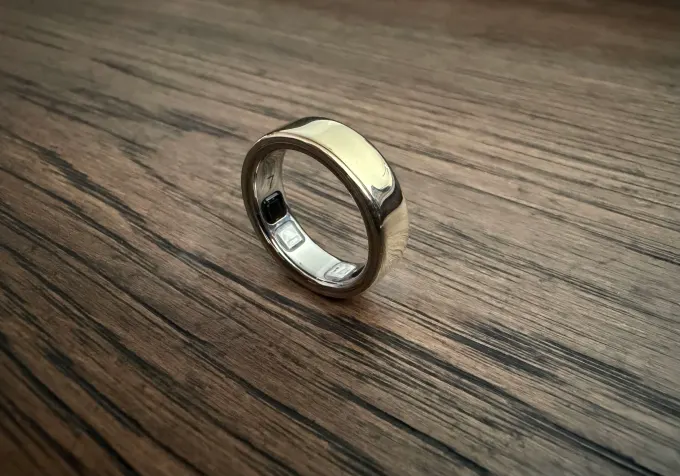
The Ring 5 comes in six finishes, including a redesigned Gold with a truer gold tone, an updated Deep Rose with a copper-like look, plus Silver, Brushed Silver, Black, and Stealth.
Oura sent me the Gold version, and I really like how it looks. Unlike previous gold Oura rings, this new color doesn’t have a yellow tinge to it, and instead has a subtler tone that feels closer to actual gold jewelry. It’s worth noting that the Gold finish, along with the Stealth and Deep Rose finishes, is priced at $499, exactly $100 more than the standard finishes.
As for durability, Oura says the Ring 5 is more scratch-resistant than previous generations thanks to a new finishing technique, but I can’t fully speak to durability yet considering I’ve only had it for five days.
There was a moment when I thought I had scratched the ring’s alignment guide line when I’d grabbed a rusty swing chain, but it turned out that rust had only rubbed on to the ring, and I was able to clean it off with a cloth.
Oura says the Ring 5’s new physical vapor deposition (PVD) coating process ensures the wearable retains its premium “out-of-the-box” look for longer. It will be interesting to see how this promise holds up.
The Oura Ring 5 is being launched alongside new software features that are also coming to the Oura Ring Gen3 and later products, including Blood Pressure Signals and Nighttime Breathing. I can’t speak to those yet, as they’re set to launch later this month.
Overall, the Oura Ring 5 is a notable upgrade over the Ring 4 in terms of comfort and aesthetics, making it a great choice for anyone who has yet to buy a smart ring. As for people who already have the Oura Ring 4, the decision to upgrade depends on your budget and how much you value aesthetics, especially since the Ring 4 will get all of the new software updates.
When you purchase through links in our articles, we may earn a small commission. This doesn’t affect our editorial independence.








Waymo dominates autonomous vehicle registrations as Tesla trails behind


This is BROKEN! INSANE 5x MONEY CAR WASH WEEK! The NEW GTA Online UPDATE Today! (GTA5 New Update)

SpaceX just won a second Golden Dome contract. This one is $4.16 billion.


Jade Biosciences, Inc. (JBIO) Discusses Positive Interim Results From JADE101 Phase I Healthy Volunteer Study and Development Plans Transcript


SHE IS KILLING XRP!!! WATCH URGENT AND ACT FAST

FIRST NIGHT REVIEW: Take That bring the Circus back to life in spectacular sun-soaked style


Is the Spurs Phenom Already Better Than Prime Diesel?

CFTC Has Approved the First Regulated Bitcoin Perpetual Contract in the U.S.


The House | Inside Andy Burnham’s Makerfield Campaign: “Nobody Thinks This Is In The Bag”


French Open 2026 results: Alexander Zverev beats Rafael Jodar and will play Jakub Mensik in semi-finals

Novak Djokovic v Joao Fonseca LIVE: French Open latest scores and results after Jannik Sinner’s shocking collapse

Weak ‘Supergirl’ Box Office Tracking Amid Milly Alcock Backlash


CryZENx Releases Fresh Playable Content Deep Inside Jabu-Jabu for His Ocarina of Time Remake

Snowflake (SNOW) Stock Rallies on Strong Q1 Results and AI Product Growth


Maddox Jolie-Pitt Legally Requests to Drop Brad’s Surname


Demand Conditions Improve In Chemicals Sector In April 2026

One of the Greatest Sitcoms of All Time Shoots Up Apple TV’s Charts 11 Years Later


This Week In Security: Ubiquiti Fixes, And FreeBSD Joins The Club You Don’t Want To Join

MicroStrategy Moves $30 Million in BTC to Coinbase Prime: Is the Bitcoin Sell-Off Already Here?

Seagate (STX) Stock Surges to Record High on AI Boom and Legal Settlement


You must be logged in to post a comment Login