Then it went to where the real bias has always existed: US law enforcement agencies. It promised to tie their systems in with those deployed by private citizens. It attempted to talk Ring (another company with too-close ties to cops) into bed, before shitting the shared bed in front of hundreds of millions of TV viewers during the most recent Super Bowl.
Flock’s reputation had already been in steep decline prior to the Super Bowl debacle, but that aborted arranged marriage saw its shady doings exposed to millions who previously weren’t aware there was a surveillance camera company even less concerned about rights and privacy than Ring.
Flock was doing things even Ring wouldn’t do. It was telling citizens one thing and giving cops something else entirely: a nationwide surveillance network with built-in ALPR (automatic license plate reader) capability with zero oversight. Flock said it would prevent federal abuse of local law enforcement camera networks and then did absolutely nothing to prevent this. Meanwhile, cop shops were using Flock’s cameras to track people across the country — you know, dangerous criminals like the woman (at the request of her abusive ex) who left Texas to seek an abortion in another state.
Advertisement
All of these concerns have resulted in Flock losing plenty of public market share. Sure, it may still be doing brisk business in the private market, but government contracts are where the real money is. Flock can’t seem to stop the bleeding. Multiple local governments have terminated contracts with Flock and plenty more are considering doing the same, especially now that it’s shady dealings have been called out by federal lawmakers like Senator Ron Wyden.
Still, the company has its supporters. And they’re exactly the sort of people you’d expect them to be. A public meltdown by a public servant is the subject of this excellent reporting by Joseph Cox of 404 Media. Here’s a bit of background, which also contains some super-useful background on Flock’s PR team.
Like in many other communities around the country, the use of Flock’s AI cameras has become a major topic of discussion in Bandera (Texas). In February, Bandera held a town hall meeting exclusively about Flock that Flowers moderated. Kerry McCormack, a former Cleveland city council member who is now on the public affairs team for Flock, came to that meeting to discuss the technology, demonstrating that the company is sending representatives even to tiny towns in order to promote its use.
Dial in on a couple of things. First, there’s the fact that former public servants are now running flack for Flock. Second, there’s the mention of Bandera, Texas city council member Jeff Flowers, who’s apparently so smitten of Flock that he’s willing to go full batshit when confronted by public criticism. Bandera’s city council voted 3-2 to end its contract with Flock in response to public resistance, which included repeated vandalizing of the town’s eight cameras.
Flowers apparently couldn’t handle this vote or the resistance that generated it. He went right off the rails, almost immediately:
Advertisement
After the vote, Councilmember Jeff Flowers, a staunch Flock supporter, said that if people in the town wanted privacy then the city council should basically ban all technology, essentially calling people who did not want government surveillance hypocrites.
Nice. This deep disconnection from reality wasn’t limited to comments made during the vote. He also posted an op-ed (subtitled “Bandera Declaration of Independence”) in the local newspaper, in which he ignorantly continued to claim that rejection of government surveillance was a hypocritical stance taken by people who voluntarily own smartphones and access the internet.
Flowers said that at the next city council meeting he will propose “a total ban on all cellular and GPS-capable devices for all operations within city limits. If we are to be truly ‘private,’ we must leave our smartphones at the city line.” He will also propose “a total ban on outward facing cameras,” and “a total termination of all internet services and electronic record-keeping. We are going back to 1880, paper ledgers and cash only.”
Flowers is the kind of idiot that’s almost smart enough to be dangerous. But he’s not quite there yet. It’s one thing to “share” information with service providers, apps, and online services. It’s quite another to be forced to share information with the government. While the government may actually demand less information in exchange for services than most internet service providers, people are far more willing to sacrifice privacy for convenience when the recipient is another private party.
Pretending these two things are equivalent is lazy at best, and totalitarian at worst. They’re not the same thing. And even if the collection of data by third parties might result in warrantless access of this data by the government, very few citizens are going to affirmatively choose to surrender data to the government, even if it’s nothing more than an always-on collection of their movements via automatic license plate readers.
To be sure, there are people working for Flock who think Flowers is worthy of a high five or two, if not a permanent position in the PR department. They’re no smarter than Flowers is. This is not a win for Flock. This is another unforced error by surveillance state enthusiasts who are voluntarily creating more negative press for Flock. Flock loses. Flowers rants. Flock loses again. If either party was truly smart, they’d be distancing themselves from each other.
Access your usual streaming services with Norton VPN
Watch Casper Ruud vs Joao Fonseca live streams in the last 16 of the French Open 2026 as the brilliant Brazilian tries to back up his breakthrough Roland-Garros performance with another, against a wily three-time grand slam finalist. Both players won their third-round matches after going two sets down, so anything could happen.
Norwegian Ruud reached the 2022 final in Paris, plus the US Open showpieces in 2022 and 2023, and absolutely loves it on the dirt. The 27-year-old has already won two five-setters this tournament – against Roman Safiullin in Round 1, then Tommy Paul in a Friday epic – and has the grit and guts that do well on the clay. He even saved two match points to eventually outlast Paul.
Fonseca has been spoken of as a future star, but on Friday he made his grand slam statement with a near-five-hour stunner to become the second player in history to beat Novak Djokovic from two sets down. The 19-year-old produced a display of increasingly brutal hitting to beat the 24-time major champion, and his childhood hero, 4-6, 4-6, 6-3, 7-5, 7-5 after seven minutes shy of five hours. He’s got the game to go far.
With Jannik Sinner, Carlos Alcaraz and now Djokovic either out or injured, there’s a chance for a surprise tournament winner. Who can make it through to the last eight?
Advertisement
Here’s how to watch Ruud vs Fonseca tennis streams from anywhere, including worldwide TV channels, broadcasters and any free Roland-Garros 2026 streams below.
How to watch Ruud vs Fonseca for FREE
Ruud vs Fonseca at Roland-Garros 2026 will be streamed live and for free in many countries around the world, with the best English-language coverage available in Australia on 9Now.
In the US, the majority of the French Open 2026 TV coverage is on TNT and truTV, which can be accessed directly or via ‘over the top’ streaming providers that offer free trials, our favorites are:
Traveling outside your home country for the tournament? Use Norton VPN to get past geo-blockers and tune in to your regular tennis live streams.
Use a VPN to watch any Ruud vs Fonseca stream
Away from home at the moment and blocked from watching Ruud vs Fonseca at the French Open 2026 on your usual subscription?
Advertisement
You can still watch Roland-Garros 2026 live thanks to the wonders of a VPN (Virtual Private Network). The software allows your devices to appear to be back in your home country, regardless of where in the world you are, making it ideal for viewers away on vacation or on business.
One of our favorites is Norton VPN. It’s among the best on the market:
It’s really straightforward to use a VPN to watch Ruud vs Fonseca.
Advertisement
1. Install the VPN of your choice. As we’ve said, Norton VPN is one of our favorites.
2. Choose the location you wish to connect to in the VPN app. For example, if you want to watch the 9Now stream, select ‘Australia’ from the listed countries.
3. Sit back and enjoy the action. Head to 9Now’s website and tune into Roland-Garros 2026.
Advertisement
How to watch Ruud vs Fonseca live streams in the US
In the US, Ruud vs Fonseca is being shown on TNT and truTV.
These channels are available via many cable package but what if you’re looking for an an OTT cable alternative that carries hundreds of other channels?
TNT and truTV are also available on YouTube TV, Sling TV (via its Blue package) and DirecTV. As we’ve mentioned above, both YouTube TV and DirecTV come with free-trial options.
HBO Max, meanwhile, is the dedicated streaming home of the entire tournament in the US. Prices for a Basic with ads plan start from $10.99, while you can bundle with Disney+, and Hulu for $19.99.
Advertisement
Outside the US for this tournament? Use Norton VPN to unlock your stream of Roland-Garros 2026.
How to watch Ruud vs Fonseca live streams in the UK
Tennis fans in the UK can watch Ruud vs Fonseca at the French Open 2026 on TNT Sports.
To access this you’ll either need to add it to your TV package, or you can take out a standalone subscription via HBO Max that includes TNT Sports. The best value streaming package is £25.99 a month for a 12-month term.
If you’re traveling overseas, don’t worry, as you can use Norton VPN to watch your usual Roland-Garros 2026 service from abroad.
How to watch Ruud vs Fonseca live streams in Australia
(Image credit: free)
In Australia, Ruud vs Fonseca coverage is split between 9Now and Stan Sport.
Advertisement
As we’ve mentioned above, 9Now is a free streaming option if you’re an Australian citizen.
There’s also exhaustive coverage of every court via Stan Sport. You’ll need a Stan Sport add-on for AU$20 in addition to a Basic subscription that costs AU$12.
Not in Australia right now? You can simply use a VPN like Norton VPN to watch all the action as if you were back home.
Advertisement
How to watch Ruud vs Fonseca live streams in Canada
(Image credit: Other)
Tennis fans in Canada can live stream Ruud vs Fonseca at the French Open 2026 on the TSN network of channels.
If you don’t have cable, the TSN Plus streaming service costs CA$8 a month or $80 each year.
Outside Canada while Roland-Garros 2026 is on? Simply use a VPN to watch from abroad.
Advertisement
How to watch Ruud vs Fonseca live streams in New Zealand
Sky Sport NZ is the French Open 2026 TV rights holder in New Zealand. That includes Ruud vs Fonseca.
You can access Sky Sport through satellite TV or get a live stream with the Sky Sport Now subscription service starting at $29.99 per day or $54.99 per month.
Missing a game due to work commitments abroad?Norton VPN will give you access to your home streaming service.
In the North Africa and the Middle East, beIN Sports has the tennis live streams. In Sub-Saharan Africa Canal+ and SuperSport are the places to go, depending on your country.
Advertisement
In India and the subcontinent, it’s Sony Pictures Networks, while CMG and Tencent in China and WOWOW in Japan are the most prominent broadcasters in Asia.
In France, France TV is the home to the vast majority of coverage, though Prime Video in country has exclusive coverage of the featured match in the 11 evening sessions, including two quarter-finals.
A handy list of broadcasters from all around the world is provided by tournament organizers here.
Away from home at the moment? Don’t forget Norton VPN will give you access to your regular streaming service.
Advertisement
How to watch Ruud vs Fonseca live streams anywhere else
French Open 2026 Q&A
What is the Ruud vs Fonseca head-to-head record?
Owing to Fonseca’s prodigious youth, this will be the first time the players have met on the ATP Tour.
What is the Ruud vs Fonseca start time?
Unsurprisingly after the Brazilian’s stunning win against Djokovic, Ruud vs Fonseca has been selected as the night match today.
Advertisement
That means play is due to start at 2.15pm ET / 11.15am PT / 7.15pm BST on Sunday, May 31.
That’s 4.15am AEST in the early hours of Monday, June 1, in Australia.
We test and review VPN services in the context of legal recreational uses. For example: 1. Accessing a service from another country (subject to the terms and conditions of that service). 2. Protecting your online security and strengthening your online privacy when abroad. We do not support or condone the illegal or malicious use of VPN services. Consuming pirated content that is paid-for is neither endorsed nor approved by Future Publishing.
Gemini Spark is Google’s new 24/7 agentic assistant, designed to help you help you “navigate your digital life,” which essentially means getting your online to-dos done, summarizing the things you don’t have time to read (like the entirety of your inbox), or organizing something that would have otherwise involved too much screen time-filled manual labor, like a personal expenses spreadsheet.
The service was first introduced at Google’s annual developer conference in May, where CEO Sundar Pichai joked that Spark, which runs on virtual machines in the cloud, means that “yes, you can close your laptop.” The in-joke here is that he’s comparing Spark to other agentic AI systems, like the ever-popular OpenClaw, which require keeping the machine awake to run its tasks.
Spark, he’s suggesting, is agentic AI for the rest of us — those who would rather get things done without nerding out about it by setting up an always-on AI machine.
In practice, Spark is still very much designed for work-adjacent tasks, given its integration with Google’s productivity apps like Gmail, Calendar, Docs, Sheets, and Slides. (After all, how many times are you preparing a deck for in your personal life? Unless you’re a Gen Z creator explaining the latest meme to your chronically offline friends, that is?)
Advertisement
Google also struggles a bit to come up with real-world examples that would convince someone that Spark is a “must-have” rather than a “nice-to-have” tool for personal use.
Among its suggestions for “personal productivity” is using Spark to scan your emails and calendar for the day and send you a recap with your top three must-do tasks,” which already assumes you are a person who jots down your to-dos in a calendar or email app, instead of a notepad (virtual or otherwise), or just keeps a running list in your brain. (E.g., Grab prescriptions and shampoo at Walgreens. Buy more dog food. Hang out with friends on Saturday.)
Google also suggests you could use Spark as a weekend planner, by drafting a Google Doc “suggesting three free activities based on my open calendar blocks for the upcoming weekend,” which, again, assumes you are some sort of scheduling nerd in your offline life.
Nevertheless, with early access to Gemini Spark, I decided to put it through its paces, with what are perhaps some real-world suggestions of my own. I came away surprised that it was a fairly useful implementation of consumer AI, but not one that deserves to have its own brand.
Advertisement
Finding Savings
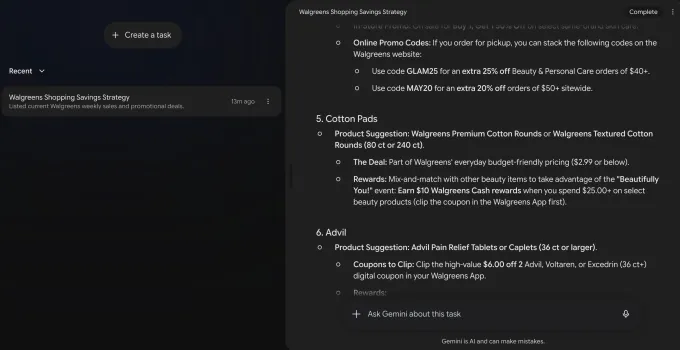
For one initial task, I asked Spark for help with a shopping-related research. The idea was to help me with an everyday local drugstore trip for household items, so I asked Spark for product suggestions based on weekly deals and coupons I could clip.
Image Credits:Screenshot of Gemini Spark by TechCrunch
At first, Spark seemed to do pretty well here, as it told me exactly what products were on sale that matched my needs, and suggested coupons to clip in the Walgreens app for extra savings. It even suggested how I could stack coupons for one item by combining online promo codes, if I were placing an online pick-up order and was planning to spend more on personal care items.
However, as is often the case with AI, the devil was in the details, as one of the promo codes was invalid when I tried it, despite meeting what the AI said were the requirements. Still, Spark pointed me to some other savings — like buy-one-get-one-free and rewards deals that made up for this gaffe.
Planning a packing list for a day trip
In another test, I asked Gemini for help with a packing list for a day trip out of town. I asked it to check the weather, gather the event details, and make suggestions of what to bring with us, like sunscreen or water, to see what it would come up with, after it learned more about the activity. I asked for the final list to be imported into Google Keep.
Image Credits:Screenshot of Gemini Spark by TechCrunch
Guess what Spark can’t do? Use Google Keep.
That’s a huge oversight, given that Google’s notetaking app would be essential for anything in the realm of personal productivity. Instead, it offered to make me a doc or draft me an email because, sure, that’s the sort of thing I’d want to check for my list of to-brings. (??)
Advertisement
In terms of the list itself, however, Spark was spot-on, suggesting lawn chairs or blankets, water, sunscreen, sunglasses, a light layer for when the sun goes down, a reusable shopping bag, and an umbrella for possible light showers that day. It also reminded me that dogs were not allowed, despite the event being outdoors. (Sorry, Princess!)
Image Credits:Screenshot of Gemini Spark by TechCrunch
Summer Camp / Activity Suggestions
My child has aged out of summer camps for kids (and should probably just get a job), but before we went that route, I wanted to scour the local area to find out if there were any summer activities available for teens that she could do in addition to her engineering camp in June. I asked Spark to do a thorough search and find any and all suggestions, keeping in mind that we would not want to drive more than around 30 minutes.
Image Credits:Screenshot of Gemini Spark by TechCrunch
Spark generated a decent list of ideas for activities that matched my child’s interests, and plotted out how far they were from home. Unfortunately, I forgot to prompt Spark to get the costs or dates of the programs, and it didn’t bother to tell me, which meant I still had to do more manual research on my own.
Image Credits:Screenshot of Gemini Spark by TechCrunch
Recurring Task: Summarize newsletters from email
Like many, I subscribe to too many newsletters, so I put Spark to work on preparing me a weekly summary, which would arrive every Friday, focused only on the top five posts or articles I shouldn’t miss reading, along with a link.
Image Credits:Screenshot of Gemini Spark by TechCrunch
The AI got to work, digging into my inbox and, within moments, had presented a summary of several interesting articles to read that included context and a link. (The link ended up being a Google.com redirect that didn’t work — I had to click the link displayed on the redirect page, as it never automatically sent me to the site in question.) While I generally liked the suggestions, Spark only returned four articles to read when I had requested five. Spark had interpreted the request as “4-5” for some reason.
Recurring Event: Suggest Weekend Activities
For another request, I asked Spark to compile a list of weekend activities around town for me on Fridays, so I can get to planning my weekend fun. As someone who lives in a smaller city, there aren’t always big events or things to do, so making sure you don’t miss the anticipated street festival or hot show when it comes to town is key. But there’s no single source to find everything there is to do — you have to read multiple local newsletters, visit websites and Facebook Groups, read the newspaper online, and more.
Spark instead set up a web search, combined (at my request) with a search of my Gmail for any relevant local newsletters, digests, or lists with keywords indicating a local activity suggestion. It then compiled a list of upcoming weekend events and noted that if I wanted to add any to my calendar, I could just reply.
If it wasn’t for Spark, I would have never known there is an Annual Beaver Queen Pageant nearby, which apparently features people in beaver costumes raising money for wetland conservation? OK, I might need to check that out. (You still have to tell Spark to add it, then click a button to confirm, but this is easier than the manual labor of reading through so many sources for ideas.)
Recurring Event: Check for Price Drops
Image Credits:Screenshot of Gemini Spark by TechCrunch
For my last request, I set Gemini Spark to work on tracking price drops for an expensive eye cream. As a penny-pincher, I’d never buy it unless there was a crazy sale. I wanted Spark to keep track of the price changes for me and alert me if the eye cream ever became more affordable. However, Spark’s interpretation of this request was to simply recheck the price every two weeks to see if it dropped below my target. I’m not sure that would be frequent enough to spot a deal. (I’ll update if the results are successful, but I believe I’ve set too low a bar as my target — even after raising my bar by another $10! — so this is probably just wishful shopping at this point. But I’m always hopeful some online retailer will make a pricing mistake one day!)
More Ideas to Come
I can already see how I’ll be able to integrate Spark into my everyday life in other ways, too — I already have ideas for more email monitoring and cleanup tasks, for instance. The next time I change the home’s air filter, I’m going to ask Spark to remind me in three months to swap it out. If I ever get around to taking a vacation, I’ll probably have some tasks for it then, as well.
Advertisement
Room to improve
While Spark already performed fairly well on my tasks with only small quibbles, the biggest criticism I had was that there’s no need for this to be a standalone product with a different branding. I think that adds to consumer confusion in this day and age, where there are so many things happening in the AI space, and where every new model has its own name and number, and some of these are quite wild. (Nano Banana, anyone?)
Image Credits:Gemini screenshot by TechCrunch
Why not just pitch Spark as something Gemini can do out of the box, instead of making it its own product? Why does the toggle have to say “switch to Spark,” instead of just “switch to Tasks?” (If it even needs to have its own space in the user interface!) I personally don’t want to carry the mental load of trying to determine whether something is a question or a task; I just want to type in a question or request and be done with it.
I also think the lack of Keep integration is a major miss in terms of being helpful with your personal productivity. Google Docs is overkill for a packing list. And, unfortunately, for iPhone users, tapping into Gemini Spark directly from your device through a push of a hardware button or gesture won’t be possible — unless Apple announces this at next month’s WWDC? Instead, you’ll need to launch the Gemini app and use it from there. (Another issue with having Spark as its own toggle within Gemini — you can’t program the iPhone’s Activity Button to go directly to Spark, which is separate from Gemini’s chatbot interface. How great it would be if everything Gemini does were all in a single destination! Ugh!)
And while Spark will later be able to do more with MCP integrations, not being able to set it to perform certain tasks, like booking your favorite date night restaurant regularly through Resy or looking for flight deals on a preferred booking engine, for instance, makes Spark feel somewhat lacking for the time being, given that not everything you do online takes place in Google’s universe of services.
(Also, I’d really like to text Spark. I wish that were an option, too.)
Advertisement
When you purchase through links in our articles, we may earn a small commission. This doesn’t affect our editorial independence.
I am sitting in the sweltering Nevada heat watching a man struggle to lift a bar over his head. If the man manages to do it, he will win $250,000.
The man is Boady Santavy — a two-time Olympic weight-lifting contestant from Canada — and he has muscles that look culled from the Marvel Cinematic Universe: massive, cartoonish arms that might as well belong to a superhero rather than a real human.
Santavy is attempting to beat the world record for the men’s snatch — a lift of 183 kilograms, or approximately 403 pounds. After a tortured few seconds, Santavy drops the bar — an official “no lift” — and, with a look of animated dismay on his face, hobbles away, visibly cursing.
Santavy is one of a small horde of 42 athletic contestants — weight lifters, swimmers, and track runners — that have gathered in Las Vegas over Memorial Day weekend to compete in the Enhanced Games, a unique (and, by now, quite notorious) athletic competition in which almost all of the participating athletes are on performance enhancing drugs.
Advertisement
Broadly derided by critics as the “steroid Olympics,” the games have taken the deeply unprecedented step of juicing many of their athletes to the gills — anabolics, testosterone, peptides, human growth hormones, and more are all in circulation. All of that chemical enhancement has taken place under the watchful eye of a team of medical professionals. Indeed, the competitors — a hodgepodge of athletes from different ages, skill levels, and backgrounds — spent 12 weeks in the United Arab Emirates at an elite compound, where they trained for the weekend’s event while working closely with doctors who tailored their “protocols” — or drug cocktails — to their individual needs.
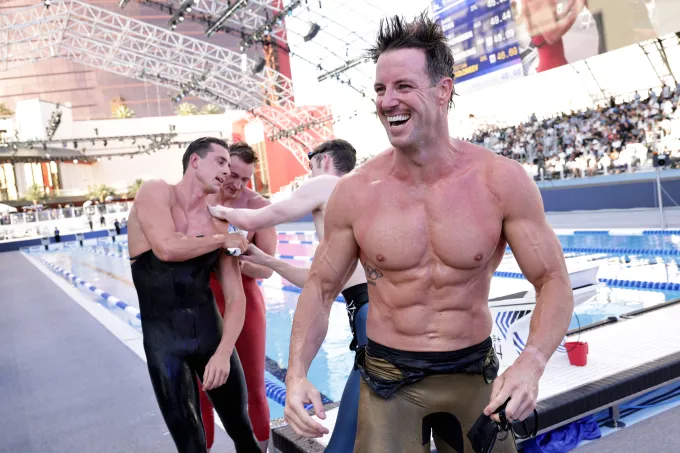
LAS VEGAS, NEVADA – MAY 24: (L-R) Kristian Gkolomeev, Shane Ryan and James Magnussen are seen during the Enhanced Games at Resorts World Las Vegas on May 24, 2026 in Las Vegas, Nevada. Image Credits:(Photo by Greg Doherty/Getty Images for Enhanced)
The athletes are also being paid “appearance fees” just to participate in the contest and, like Santavy, any competitor who happens to break a world record or place first during their competitive feats will be gifted extra cash — up to $1 million in the case of the 100 meter sprint and 50 meter freestyle.
In other words: Enhanced has taken the rulebook for professional athletic competition and aggressively spiraled it out the window.
Why am I, a technology journalist, covering this event?
Odd as it might seem for a place associated with weak-limbed nerds, Silicon Valley is largely to blame for Enhanced. Indeed, the bizarre spectacle is the work of a former startup that was founded by veterans of crypto, AI, and biotech firms, and that has been backed by the likes of mega-investor Peter Thiel and former Coinbase executive Balaji Srinivasan. The event is also at the forefront of a growing industry that Silicon Valley has embraced with open arms — that of human enhancement, in which injectable drugs and ingestible supplements serve as a source of both physical empowerment and good business.
Advertisement
Traditional athletic health organizations, of course, hate it. The World Anti-Doping Agency — the regulatory body for the Olympics — has called the Enhanced Games “dangerous,” and Travis Tygart, the CEO of the U.S. Anti-Doping Agency, describes it as a “clown show that puts profit over people.”
Steroids have long been viewed warily by the international health community, and even federally approved consumer drugs have stirred some concern among health professionals.
However, Enhanced’s organizers argue that they are actually the good guys — that they are trying to fix a persistent bug in organized sports that has existed since forever. That bug is that a whole lot of athletes are already doping — they’re just doing it secretly. The secrecy increases risk, as there may be limited medical oversight of how the athletes are using them. Conversely, in the Enhanced version of sport, athletes self-admittedly do the drugs under the careful supervision of a team of medical professionals.
If Enhanced were merely trying to improve sports safety, that would be one thing. But the truth is that it isn’t just an athletic competition — it’s also a business. The games are the work of Enhanced Group, Inc., a newly public company that enjoyed an IPO earlier this month at a $1.2 billion valuation. Enhanced sells personalized health treatments, including peptides, GLP-1s for weight loss, testosterone injections, and other physically “enhancing” drugs. The company also recently partnered with an AI company, Rezolve Ai, to launch a digital telehealth platform.
Advertisement
Enhanced wants to take what it’s done in Vegas and transform it into a global business: a distribution network for consumers looking to bulk up and make themselves more youthful. The drugs that Enhanced sells have been cleared by the FDA, but there is some concern that by normalizing steroid use, the company could have a trickle-down effect on the wider culture, leading some consumers (notably young ones) to seek less regulated, more dangerous compounds that could end up having disastrous results. This concern hangs over Enhanced’s athletic competition, which has largely been read as a big advertisement for its own business — as well as the peptide industry itself.
One nation, under peptides
I am one of some 200 journalists from around the world who touch down in Vegas two days prior to the games. Enhanced, which provides us with a dedicated workspace, regular meals, and press time with athletes and Enhanced executives, is exceedingly nice to us but one can’t escape the nagging suspicion that it’s because we are an integral part of their business plan. As the skeptical oglers of this Barnum & Bailey-esque curiosity, our job is to report back to the masses, who will then know of its existence. In other words, we are free marketing for Enhanced’s business.
That business is part of an industry that is due for a gold-rush-like boom later this year, should a certain deregulatory deliverance occur.
In February, U.S. Health Secretary Robert F. Kennedy Jr. went on The Joe Rogan Experience and said he was a “big fan” of peptides. Kennedy (who, himself, can look enhanced at times) also implied that he planned to encourage the FDA to make some peptides more accessible to the public. Kennedy appears to have made good on that promise because, in July, the FDA will convene a pharmaceutical advisory committee that considers whether restrictions on certain previously banned peptides will be loosened.
Advertisement
Canadian weightlifter Boady Santavy fails at an attempt to break the world record during the men snatch competition during the Enhanced Games at Resorts World Las Vegas in Las Vegas, Nevada, on May 24, 2026. Image Credits:ETIENNE LAURENT / AFP via Getty Images
Since then, the peptide industry has stood at a bizarre crossroads, in which some startups are reportedly conjuring products based on chemicals that currently reside in a legal “gray” zone, in the hopes of being first-to-market if and when the government eases up on them. Others are sticking to only FDA-approved products. A hot spot of this frenzy has been Silicon Valley, where techies are both using and investing in peptides with mutually aggressive gusto. Companies like Superpower, an AI longevity startup that sells FDA-approved peptides, and Noho Labs, a peptide startup backed by Elad Gil, have risen in prominence, while elite clubs like the AGI House have begun hosting peptide injecting “parties” — as personal use among the valley’s elite booms.
But peptides aren’t just gaining steam in the Bay Area; they’re also seeing a groundswell of use throughout the country, as fitness culture sees an aggressive upswing. Recent reports show that teens and twenty-somethings are turning to peptides to “looksmax” — the trendy new term that denotes any extreme effort to beautify one’s self — while the gym is increasingly seen as one of the key hubs of cultural life for young people. This country-wide push for self-improvement has been fueled by a social media landscape that champions the superficial. The progenitor of “looksmaxxing,” the 20-year-old online influencer “Clavicular,” has been a prominent, not to mention controversial, figure in the popularization of peptides. Yet he is only one in a sea of online voices, including podcasters like Joe Rogan and Andrew Huberman, who have recently promoted or platformed the topic.
This is all about “health,” right?
Peptide producers — including the executives at Enhanced — have sworn that their primary concern is consumer “health.” At the same time, they don’t seem to mind admitting that they’re also interested in money.
Maximilian Martin, the 29-year-old CEO and co-founder of Enhanced, is a calm defender of his company’s unconventional practices. Martin, who previously founded a bitcoin mining company and is always impeccably dressed in a suit and has an affable salesman’s smile, meets with journalists for a press conference on Saturday, where he answers questions with an even-keeled good nature, speaking soberly about how his company plans to monetize the creation of a new generation of chemically-altered mutants.
Appropriately, X-Men comes up.
Advertisement
“People have been using performance enhancements for a long time. If you look at, for example, Hollywood, and you look at Marvel superheroes, they’re all enhanced,” Martin offers. “Like Hugh Jackman doesn’t look like he looks at his age because he has such a clean diet and sleeps eight hours a night, right? So that market is already there. The peptide market in the U.S. today is already 85 million people. Most of that market is served by unsupervised, unregulated substances that people are taking. What we’re doing is we’re entering that market with a pathway for people to get to those benefits that they’re looking for in a safe and medically supervised way.”
Christian Angermayer, Enhanced’s billionaire co-founder and executive chairman, is more succinct. “I’m a capitalist,” he tells journalists bluntly. He doesn’t see a disconnect between profits and health. “There is no reason why something that is good should not also be a business.”
German entrepreneur and Enhanced Games co-founder, Christian Angermayer, talks with the press ahead of the Enhanced Games at the Resorts World in Las Vegas, Nevada, on May 22, 2026. The Enhanced Games is a multi-sport event that allows athletes to use performance-enhancing substances without worry of drug tests. Image Credits:(Photo by ETIENNE LAURENT / AFP via Getty Images)
Let the games begin
May 24th, the actual day of the games, is a sweltering blur of events — all of which take place inside a miraculous $50 million open-air stadium that has been constructed in a matter of weeks for the express purpose of hosting the games. The complex houses a track, swimming pools, and an expansive pavilion for the weightlifters. Surrounding risers are filled with an audience that cheers enthusiastically despite the hot sun.
Yet while the scene may superficially call to mind the Olympics, the vibe is much less a serious sporting event than it is an uncomfortable cocktail of America’s Got Talent, WWE, and Gladiator. Beautiful influencers fill the stands in youthful, colorful herds, and an announcer narrates the day’s events with a sonorous boom that makes it feel vaguely like we’re all sitting court side at WrestleMania. Later in the evening, The Killers — a staple of Vegas entertainment culture — will play a brief concert to close out the games.
The athletes, meanwhile, stalk the grounds like mythical titans, their bulking, unreal muscles glistening in the sunlight.
Advertisement
Martin is seen throughout the day, walking to and fro in his impeccable suit. This suit becomes progressively more wet throughout the evening, as he keeps rushing down to the pool to hug the swimmers who win their races. Angermayer glides about the event with a breezy energy, a tranquil smile affixed to his face. He drops by the press tent briefly to glad-hand.
Other staples of the tech industry — like Bryan Johnson, the mega-wealthy biohacker who plans to live forever — are also involved. Despite no known professional athletic achievements, Johnson spends the night commentating on the spectacle in a Charles-Barkley-esque, retired athlete kind of way. Later he and his girlfriend (whose vagina Johnson regularly tweets about) are seen walking past the media tent; Johnson is dressed in a bizarre outfit that makes him look a little bit like the Sleepytime Bear from Celestial Seasonings.
(L-R) US sprinter Marvin Bracy-Williams, US sprinter Fred Kerley, French sprinter Mouhamadou Fall and Liberian sprinter Emmanuel Matadi in the men’s 100m during the Enhanced Games at Resorts World Las Vegas in Las Vegas, Nevada, on May 24, 2026. Image Credits:(Photo by ETIENNE LAURENT / AFP via Getty Images)
The actual competitions are thrilling enough — and, in general, there seem to be a couple categories of athletes that have come to compete.
There are people like James Magnussen, a retired swimmer from Australia who has won Olympic medals in the past and sees the games as an opportunity to get back in on the action. Magnussen, an image of whose massive body spread virally throughout the web earlier this year, has spoken supportively of the peptide industry, and once said that the combination of peptides and testosterone made him feel like he was “18 again.” He will fail to break any records, however, and places last in two races.
Then there are people like Hafthor “Thor” Bjornsson — a massive Nordic body builder and competitive weight-lifter who has self-admittedly done a lot of steroids in the past and sees this competition as an opportunity to do them under closer, safer supervision.
Advertisement
Bjornsson is recognizable to many because he starred in Game of Thrones as Ser Gregor Clegane, the brutal knight who does the dirty work of the Lannister family and whose go-to fight move is to crush his opponents’ skulls with his bare hands. (On press day, a female journalist asks Bjornsson if he will crush her skull, and he politely obliges with a pantomimed head combustion.) During the games, Bjornsson thrillingly attempts a world record deadlift of 1,135.4 pounds, but ultimately fails to muster the strength.
LAS VEGAS, NEVADA – MAY 24: (L-R) Maximilian Martin, Co-Founder & CEO, Enhanced Games and Cody Miller speak during the Enhanced Games at Resorts World Las Vegas on May 24, 2026 in Las Vegas, Nevada. Image Credits:(Photo by Greg Doherty/Getty Images for Enhanced)
Finally, there are a few competitors like American swimmer Hunter Armstrong, who are abstaining from any supplemental intake altogether. Why is Armstrong even competing? It’s pretty simple: the money, Armstrong tells journalists. That’s the answer that a lot of athletes have given for their participation, in fact. Armstrong has Olympic ambitions and wants to keep himself in the running by not tainting his record. He also has a personal aversion to doping.
“The Olympic movement is something that is very important to me,” Armstrong tells the journalists. “Outside of personal reasons, if I were to go into some kind of protocol I would lose that opportunity.”
Armstrong is one of several competitors who will win their races (in the swimmer’s case, the 50-meter backstroke) despite not being “enhanced.”
The day’s events unfold at a steady pace and, despite organizers’ promise of a titanic extravaganza of unlocked human potential, the event, while entertaining, largely pales in comparison to the Olympics or even, say, a really thrilling football game. The whole thing ends on a weirdly convenient high-point: the competition’s last race of the night — the men’s 50-meter swimming freestyle — culminates with Enhanced’s first and only world-record. Kristian Gkolomeev, a hulking colossus from Greece (he is six feet, eight inches tall), cuts across the pool at a breakneck 20.81 seconds, besting the previous record by 0.07 seconds. The entire crowd erupts in cheers and the venue’s lights blare red in a gameshow-style spasm of celebration. The other swimmers pump their fists in the air victoriously, and Martin again rushes the field in his suit, intent on hugging the dripping Gkolomeev.
Advertisement
LAS VEGAS, NEVADA – MAY 24: (L-R) Maximilian Martin, Co-Founder & CEO, Enhanced Games and Kristian Gkolomeev, winner of the men’s 50m free, are seen during the Enhanced Games at Resorts World Las Vegas on May 24, 2026 in Las Vegas, Nevada. (Photo by Greg Doherty/Getty Images for Enhanced)Image Credits:Greg Doherty/Getty Images for Enhanced
The future is enhanced?
The critics of the Enhanced Games say it isn’t really about health, it’s about money. Yet it’s difficult to escape the sense that the games are also about something else, which is vanity — both that of America and the event’s organizers. America has always been the country where fitness culture extends beyond health into the realm of self-aggrandizement, and the Enhanced Games — a showy pageant embodying that principle — fits right in with the next big era of American self-regard. After all, the location of the event — the nation’s hedonism-fueled “Sin City” — hardly screams “health.” Las Vegas is the locale of spectacle and consumption — of barely-remembered nights in which revelers live for the moment, not the long-term. The organizers could have set the games in the symbolically purifying environs of the Swiss countryside or Joshua Tree, but instead they chose to set it in a place where people commonly risk their futures over a game of cards for a fleeting chance at glory.
Similarly, injecting yourself with drugs to make your muscles big doesn’t necessarily seem to be about long-term wellness as much as it’s about looking good in the moment — tomorrow’s potential health consequences be damned.
The glory for the event’s organizers, meanwhile, resides in their ability to usher in a new industry, commemorating it — as they have — with an extravagant ritual that, in their own words, heralds future “scientific breakthroughs” and “human advancement” (not to mention revenue). The gamble for them is on whether this industry does or does not blossom in the coming months, but like the consumers of their supplements, they appear to be living in the moment.
One place where limited glory is felt is the press corps towards the end of Enhanced’s three-day extravaganza. Around midnight, when the games are finally over and the crowd is dispersing, our hot and tired cohort retreats blearily to the media center — a florescent-lit workroom in the nearby Resorts World hotel. As I’m readying to leave, I make a pitstop to the bathroom and, after some necessary relief, turn a corner and run smack into Martin. He appears to be in a brand new suit (or perhaps the one he’s been wearing has simply dried), and he is admiring it in the bathroom mirror. He is undoubtedly preparing for the late-night press conference that’s scheduled to occur soon.
Having not actually spoken to him yet, I am at a bit of a conversational loss. What sort of patter can two men who are essentially strangers offer one another in a public bathroom late at night? How can I sum up the last 72 hours? “Congratulations,” my tired brain lands on, as I head for the door.
Advertisement
“Thank you,” he says, nodding briefly, then turns back to the mirror.
When you purchase through links in our articles, we may earn a small commission. This doesn’t affect our editorial independence.
Sinclair gas stations can be found across 32 states in the United States, with most locations in California, Colorado, Idaho, and Utah. The gas stations are instantly recognizable thanks to the green Apatosaurus in their logos – and sometimes standing outside.
Sinclair gas stations kept their iconic branding even after Sinclair Oil was purchased by HollyFrontier Corporation and Holly Energy Partners for $2.6 billion. The parent company rebranded as HF Sinclair, merging the two entities as they work together to grow their renewable diesel, lubricants, and marketing businesses.
Before the merger, Sinclair Oil was a privately held firm. The founder, Harry F. Sinclair, started working in the oil business at just 20 years old. He sold lumber to oil derricks, leading him to become the richest man in Kansas aged just 31 years old. He founded Sinclair Oil Corporation in 1916 at 40 years old. It became the seventh largest oil company in the United States by the 1920s, a few decades after the first ever gas station popped up in the U.S. Before that, people filled up their cars with gas rather differently.
Advertisement
The story behind Sinclair’s dinosaur?
Sinclair’s advertising started using a large dinosaur back in 1930. Multiple dinosaurs were used at that point, but the long-necked giant stood out. Known as DINO, it was originally called a Brontosaurus, but it’s now called an Apatosaurus, due to the confusion of the Brontosaurus being an individual species. “Sinclair has followed the prevailing opinions of the scientific community,” the company stated.
Advertisement
Two years after DINO’s debut, Sinclair registered the mascot as a trademark. DINO appeared at multiple World’s Fairs, including as a fiberglass animatronic in Sinclair’s Dinoland exhibit at the New York World’s Fair in 1964 and 1965. Around this time, he was also featured in the Macy’s Thanksgiving Day Parade. Today, you can see the 70-foot version of DINO, previously featured at Dinoland, at the Dinosaur Valley State Park in Texas. DINO is also “lovingly parodied,” as Sinclair itself says, as the Dinoco logo, which almost sponsored Lightning McQueen in Pixar’s “Cars.” Of course, you can still se DINO outside some Sinclair gas stations.
Although LCD displays have been used in almost every type of consumer electronics display over the last two decades, many of these screens have a few downsides that limit their usefulness in certain situations. As any owner of an early digital watch, an early laptop, or an early digital camera will testify, these displays often completely fail in direct sunlight. And, a currently new technology often using inexpensive displays in full sunlight conditions is ebikes, so [Volos Projects] decided to use a unique LCD display to solve this issue.
The display is called a reflective LCD (RLCD) and is actually a fairly old but overlooked piece of technology. Displays like these have a reflective layer that bounces ambient light back to the user, increasing contrast and readability in high light, especially when compared to more common transmissive displays. This build is based on a board from Waveshare, which includes the screen and its driver components, and [Volos Projects] integrated this into a test stand that mimics an ebike’s speed sensor and other hardware like turn signals. The display shows the bike’s speed and a few other indicators, and thanks to the screen, this information can be easily seen in full sun.
Although he doesn’t have it on an actual e-bike yet, he hopes it will be useful for those who want to try out something like this with their substandard e-bike displays. The code he’s used is available on a GitHub page for anyone interested. We’d imagine that a low-cost display like this would pair well with an open-source ebike like this one.
Coming back from a recent trip, I found myself sorting through a pile of photos that needed a little cleanup. Nothing dramatic. A distracting object here, an awkward background detail there. My first thought was Photoshop, but the full version requires a subscription, and I’m neither skilled enough to justify paying for it nor in need of everything it offers.
Mobile editing apps weren’t much more appealing. I have fat fingers, and there’s a special kind of frustration that comes from trying to make a precise adjustment on a phone screen only to tap the wrong thing three times in a row.
So I figured I’d try the obvious alternative. AI image tools have been improving at a remarkable pace, and every company in tech seems convinced that the prompt box is the future. Why not see if I could simply describe the edits I wanted and let the machine handle the rest?
And, to be fair, it worked. Sometimes. Other times it felt like I was trapped in a polite argument with software that kept misunderstanding perfectly reasonable instructions. The experience was enough to make me realize that image editing is changing rapidly, but not necessarily becoming simpler.
Advertisement
Why every editor wants to become a chat box
That exchange is quickly becoming the new shape of image editing. Adobe is building Firefly deeper into Photoshop and experimenting with conversational creative assistants. Canva has turned design tasks into a buffet of “Magic” buttons. Google’s Gemini image tools, ChatGPT image generation, Midjourney, Ideogram, Runway, and every other ambitious visual AI platform are circling the same idea: editing should feel less like operating software and more like asking for help.
Paulo Vargas / Digital Trends
The reason isn’t mysterious. Most people never wanted to become Photoshop monks. They didn’t want to memorize selection tools, blend modes, adjustment layers, healing brushes, and the sacred difference between “Save” and “Export as.” They wanted to erase a person from the background, fix a crooked photo, extend a scene, make a product shot less ugly, or generate something good enough for a presentation without opening a tutorial that begins with “first, understand non-destructive workflows.”
The prompt box is seductive because it skips the ceremony. It doesn’t ask whether you know what a layer mask is. It asks for a result.
Paulo Vargas / Digital Trends
The appeal is obvious, and sometimes it really does feel like liberation. A casual user can now do in 20 seconds what once required patience, software knowledge, or a friend who owned Photoshop and owed them a favor. The old barrier was technical. The new barrier is fuzzier: you still need to know what looks right, what looks fake, and where the machine has quietly decided to improvise.
When editing becomes negotiation
The problem is that asking for help isn’t the same as getting help. Anyone who’s used AI image tools for more than five minutes knows the little emotional dip that happens when the result is almost right, which somehow makes it more annoying. The person is gone, but the background now has the texture of melted wallpaper. The lighting is better, but the whole photo looks like it was shot for a luxury dentist. The object moved where you wanted it, but the AI quietly redesigned the table, changed the shadows, and added a mysterious extra finger because apparently hands are optional.
Paulo Vargas / Digital Trends
This is where editing becomes negotiation. You’re not only editing the image anymore. You’re editing the request. Make it warmer, but don’t make it fake. Remove that object, but keep the background natural. Make the sky moodier, but don’t turn it into a fantasy poster. Keep the face the same, which shouldn’t need saying, but very much does.
Old editing tools were annoying because they made you learn their rules. Prompt-based editing is annoying because it pretends language is enough, which is generous nonsense. Language is mushy, visual judgment is slippery, and AI models have a bad habit of being confident in the way a mediocre intern is confident: fast, eager, and occasionally convinced that the brief included a second moon.
Advertisement
“Zoom and enhance!”
The marketing version promises instant designers. The reality is smaller and less flattering: more people can now make design-shaped things without understanding the machinery underneath. That’s still a meaningful shift. It just deserves more suspicion than any product demo where every prompt works on the first try.
The first result is often the best sales pitch. It can look shockingly good at a glance, especially when the edit is simple. Then you ask for corrections. Fix the lighting. Restore that detail. Make the face less waxy. After a few rounds, the image can start drifting away from itself. Details soften, people turn into blobs, and the clean little edit becomes less impressive the harder you try to fix it.
Not quite Photoshop, not quite magic: The final image follows the prompts, but it also shows the limits of iterative AI editing. Each change nudged the photo farther from the original, especially in fine detail, texture, and color accuracy.Paulo Vargas / Digital Trends
For professionals, that can be useful without being relaxing. The boring work gets faster, but the supervision gets heavier. Someone still has to catch the flattened image, broken composition, softened detail, and impressive-for-three-seconds output before anyone else sees it. Some of the job moves from doing to directing, which sounds cleaner until the intern keeps giving everyone porcelain skin and suspiciously perfect lighting.
For casual users, the interface gets friendlier and the power gets closer. The frustration just gets harder to name. When a traditional editor annoyed you, at least the villain had buttons. When an AI editor gets a reasonable request wrong, the problem starts to feel like a conversation going badly.
Photoshop will survive. Powerful tools usually do. But its old logic is being absorbed into a simpler, stranger interface. The future of editing may not be learning where the tools are. It may be learning how to talk to a machine that keeps pretending it understood you.
After testing more than 60 mesh systems and routers in my last home, a modern two-story, 1,600-square-foot house, I found that single routers generally outperformed mesh systems, providing a faster and more stable connection, transferring files from one device to another on the network more quickly, and working efficiently without smart home connectivity issues. But many of those routers struggled to provide a fast connection in my backyard.
Mesh systems extend your coverage, and nodes can target dead spots. I used a node to extend Wi-Fi into my backyard and to plug in a TV in the back room via Ethernet for a more stable and reliable connection. But it wasn’t until I moved to an old Victorian house that I felt the full benefit of a mesh system. It’s slightly larger than my last home, but extremely thick stone walls can seriously dampen a Wi-Fi signal, especially on the fastest 6-GHz band.
After testing several systems in this home, it is crystal clear: I need a mesh for this house. A single router struggled to provide a signal for the front upstairs room and the garden, and I had to run an Ethernet cable to get the EV charger connected.
With a mesh, I can decide where I need the coverage, ensuring my big TV and office computer have a fast connection. Depending on where the internet comes into your home, it can be difficult to find a suitable spot for a single router. While there are exceptions to this, the single routers are often ugly devices, sometimes bristling with antennas, which are great for performance but aren’t pretty. Mesh manufacturers have taken the lead on routers that blend into the home better.
Advertisement
What About Wi-Fi Extenders?
Based on my testing, even the best Wi-Fi extenders aren’t worth considering. Cheap Wi-Fi extenders perform very poorly, and the good ones are expensive enough that you’d be better off upgrading your main router or opting for a mesh, both of which will perform far better. A mesh system should give you near-seamless handoff and limit interference; a Wi-Fi extender won’t do either.
What About Ethernet?
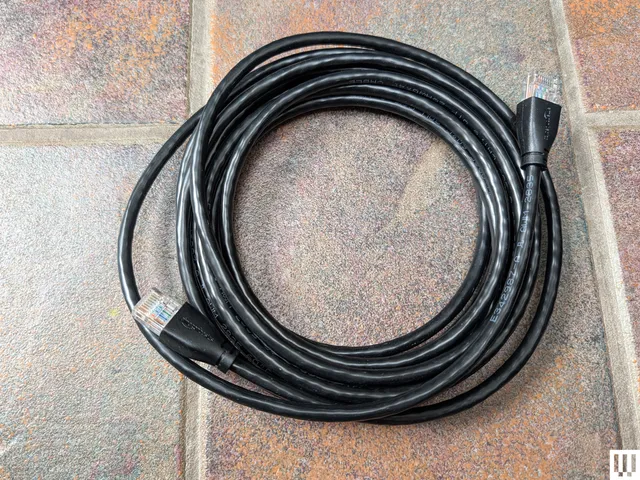
Amazon Basics
RJ45 Cat6 Ethernet Patch Cable
Advertisement
If you want a speedy, stable, and reliable connection, you can’t beat Ethernet cables. To run Ethernet cables around your home takes some effort, but it can be a great alternative or complement to Wi-Fi. Even if you can run cables between your main router and mesh nodes for wired backhaul, you will get a far stronger Wi-Fi signal throughout your home.
What About Powerline Adapters?
Plug these into a power outlet to pass an internet signal through your electrical wiring. You connect an Ethernet cable to your router at one end and another Ethernet cable to your device or switch at the other. These can work well for problem spots, but much depends on your wiring, and in my experience, their performance is far from consistent.
Powerline adapters advertise high speeds, but what you actually get depends on the quality of your wiring, electrical interference, and distance. In the real world, you are unlikely to get much more than 300 Mbps, and 50 to 100 Mbps is often more realistic. That’s enough if you just want to stream Netflix in the back bedroom, but the connection can also be impacted with latency spikes when you turn on power-hungry appliances, so it may not be suitable for gaming.
Advertisement
What About MoCA (Multimedia Over Coax Alliance) Adapters?
If you have coaxial cables—commonly used to send video signals for TVs—installed in your home, you can use them to pass an internet signal. When Ethernet was first developed, it ran over coaxial cables. Just like Powerline adapters, you need an adapter at either end to switch from Ethernet to coaxial and back. The latest MoCa 2.5 Adapters support speeds of up to 2.5 Gbps.
Create Your Own Mesh
The problem with recommending single routers over mesh systems or vice versa is that every home is different. The size, construction, local interference, devices within the home, and other factors will impact how efficient any router is, and the only way you can be sure what will work best is to test. But if you’re on the fence, I recommend opting for something that can be expanded into a mesh later if it turns out you need more coverage. You can also always buy a single mesh router or start with a two-pack and add more if required.
Advertisement
Depending on what kind of router you have, you may be able to create your own mesh by adding another router. There’s a little more configuration required than with a dedicated mesh system, but it’s not that complicated, it’s usually cheaper, and it potentially enables you to keep using your old router.
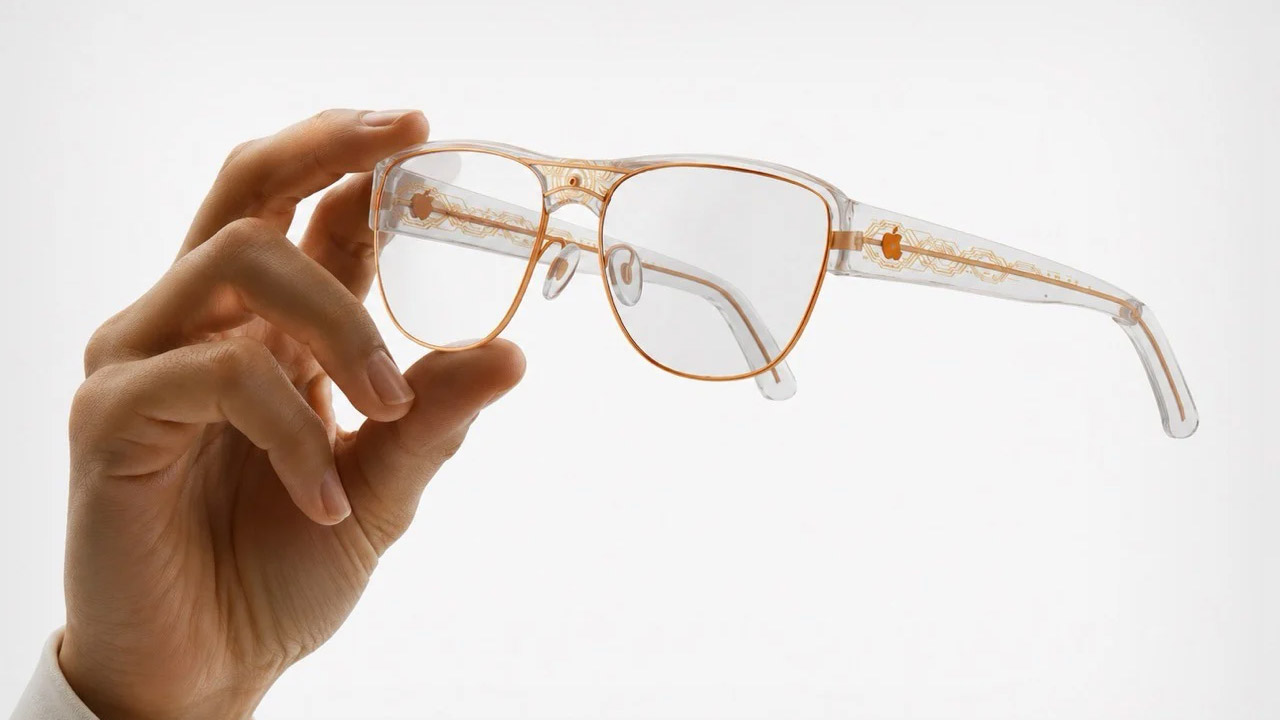
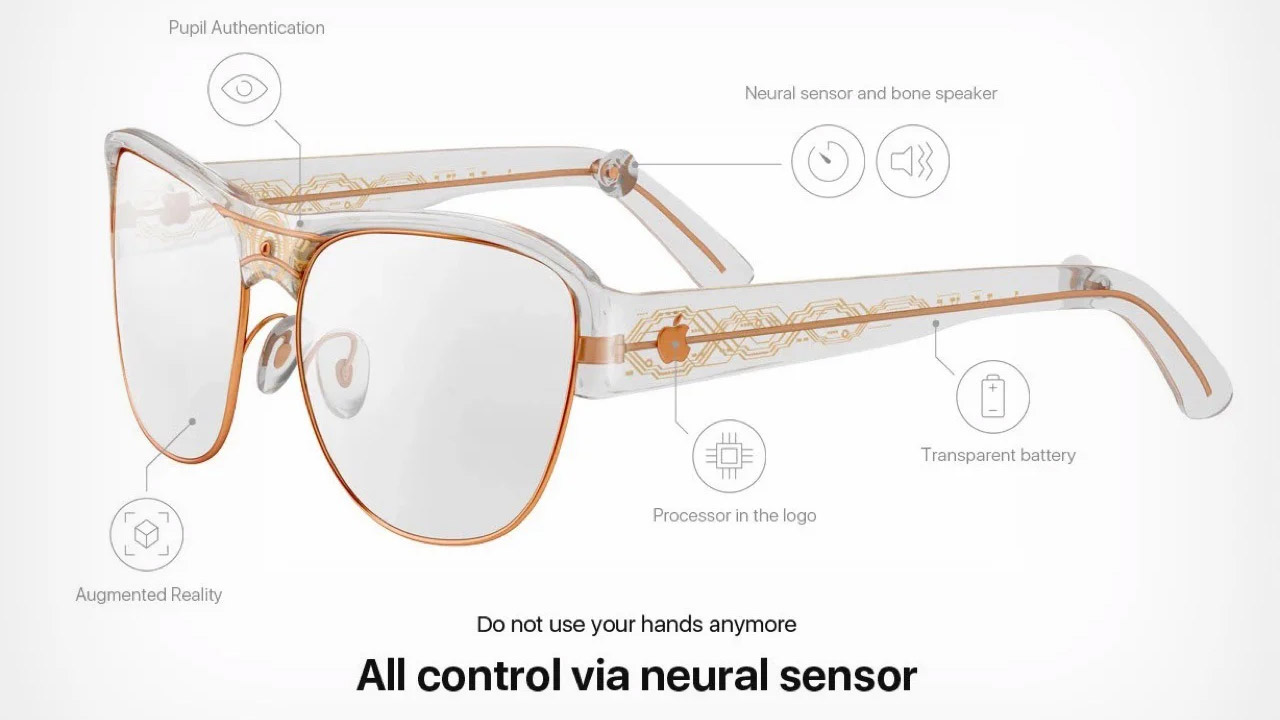
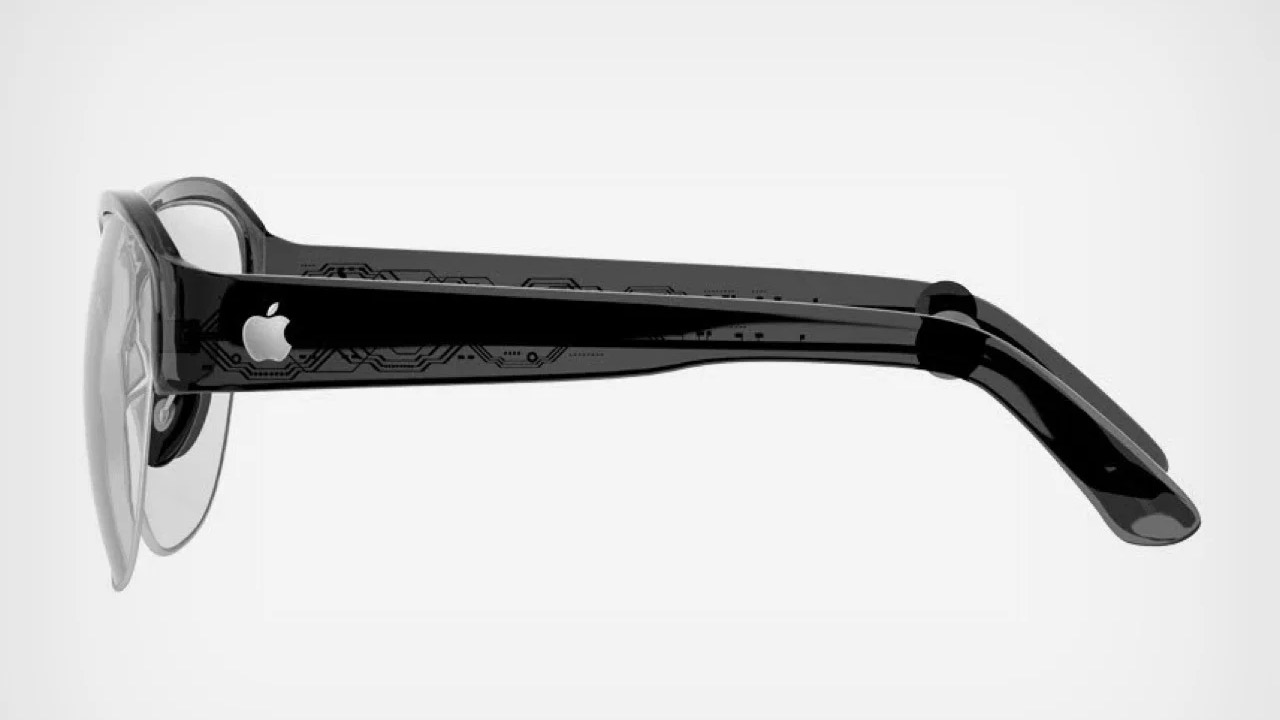
Photo credit: Oleh Koval via Yanko Bloomberg’s Mark Gurman laid out Apple’s revised plans in late May. The company has pulled resources away from any quick sequel to the Vision Pro headset. Those efforts now feed a different project, one that aims for store shelves sometime in 2027. The device carries the internal name N50. It will not project images into the lenses. It will not offer the full mixed-reality experience of a headset. Instead, the glasses will serve as a direct companion to an iPhone, much the way AirPods or an Apple Watch extend what the phone already does.
Current testing has been conducted on four different frame shapes. One has a broad rectangular profile reminiscent of traditional wayfarer styles. Another opts for a smaller rectangular shape, similar to Tim Cook’s signature design. Then there are two additional options: oval and circular, with one larger and the other smaller. Apple plans to offer many of these shapes at launch, each in a different color. Colors currently being considered include black, ocean blue, and light brown.
#1 SELLING AI GLASSES – Move effortlessly through life with Ray-Ban Meta glasses. Capture photos and videos, listen to music, make hands-free calls or…
CAPTURE WHAT YOU SEE AND HEAR HANDS-FREE – Capture exactly what you see and hear with an ultra-wide 12 MP camera and a five-mic system. Livestream it…
LISTEN WITH OPEN-EAR AUDIO — Listen to music and more with discreet open-ear speakers that deliver rich, quality audio without blocking…
These frames are said to be composed of high-quality acetate rather than plastic. That choice gives them a strong, high-end feel while keeping them remarkably light. Engineers are aiming for a weight of less than 50 grams to keep the glasses comfortable while not calling attention to the technology inside. Different sizes are being looked at also, to ensure a decent fit on pretty much every facial shape
Two cameras are mounted in the front of the frames, one for taking high-resolution photos and videos and the other for computer-vision work, which involves taking a closer look at the scene in front of the wearer to enable things like object recognition, text translation, and basic spatial awareness. When the cameras are turned on, indicator lights appear. The typical suspects of microphones and open-ear speakers are added for calls, music playback, and speech interactions.
The lower-level duties on the glasses are handled by a proprietary chip, internally referred to as N401, which is derived from the same silicon used in Apple watches. Anything more demanding is transferred to the associated iPhone over Bluetooth or an ultra-wideband link. This way, the glasses don’t require much power while yet allowing them to access Apple Intelligence functions operating directly on the phone. This also preserves personal information on the user’s devices rather than transmitting it elsewhere.
Siri is also set to receive a slight upgrade around the same time these glasses appear. The enhanced assistant will be able to draw on deeper information from the cameras and phone, allowing it to have more natural conversations and handle on-the-spot requests. Visual intelligence tools allow someone to point the glasses at a landmark, a plant, or a menu and receive useful information without having to enter or tap anything.
Prescription lenses will be supported, allowing the glasses to replace a user’s current eyewear. Early estimates put the beginning price between $299 to $499, with additional charges for prescription work. Analyst Ming-Chi Kuo expects first-year shipments of 3-5 million units if the launch goes as planned. Production is expected to pick up in the second quarter of 2027, with a spring or summer release at the latest. An official announcement might occur as early as late 2026, possibly at a fall event or even WWDC. [Source}
London iPhone theft victims have reported threats, AirTag catches a burglar in Pittsburgh, and California prisoners did not receive iPads, all in this week’s Apple Crime Blotter.
The latest in an occasional AppleInsider series, looking at the world of Apple-related crime.
Chicago man arrested in $31,000 iPhone theft
A 34-year-old temporary employee at a logistics facility in Illinois has been charged with stealing $31,000 worth of iPhones from the building.
According to Fox 32 Chicago, the man was caught on security footage entering a trailer, and later concealing the approximately 40 stolen iPhones in a sweater.
Advertisement
The man, who lives in Chicago, was charged with a felony count of theft.
London iPhone theft victims report threats
The city of London has, in recent years, suffered a massive wave of iPhone thefts, with 81,000 reported stolen in 2024 and 71,000 in 2025.
The New York Times reported on May 23 that many of those victimized by such thefts have subsequently received threatening phone calls and text messages from the thieves.
“I know who you are and where you live,” was the message received by a Chicago resident whose iPhone was stolen in London. “I’ve killed or far less than a phone before.”
Advertisement
The threats, the newspaper said, have often been tied to the thieves’ desire to have the victims unlink their IDs from the stolen devices.
AirTag helps catch man accused of multiple crimes in Pittsburgh
A man accused of both sexual assault and burglary has been caught after he stole an AirTag from the victim’s home.
According to CBS News Pittsburgh, the AirTag and $2 in cash were both taken from the victim’s home. Police followed the ping to a nearby location where the man was arrested, while fingerprints left at the scene also pointed to that particular suspect.
He confessed to the assault, but not to the theft of the AirTag. He has been charged with burglary, aggravated indecent assault, and indecent assault.
Advertisement
No, California prisoners were not given free iPads
A report by City Journal in mid-May alleged that state prisoners in California, including some on death row, were given tablet computers. The report states that these tablets have been used by prisoners to watch pornography and for other controversial purposes.
However, multiple aggregations of that report by other media outlets, including one by Fox LA, have erroneously referred to the tablets in question as “iPads.”
BREAKING: Newsom approved taxpayer-funded prison iPads now tied to porn, X-rated chats, and even grooming allegations— while California loses $1.3 BILLION over Medicaid fraud. This is insane. Watch before they spin it. pic.twitter.com/35rrdc5paO
They are not, as the original contract for the tablets was with Viapath/Global Tel Link. A recent bidding process led to a change in vendor to Securus Technologies.
Advertisement
Securus provides Android tablets under the EVOTAB brand. The tablets are not iPads, and there are no reports that Apple has ever been involved in the program.
In addition, the chairman of the House Oversight Committee, Rep. James Comer (R-SC) called the tablets “iPads” in announcing plans for Congress to investigate the program.
Why are taxpayers providing prisoners in California IPads to prey on women and minors?
Gov. Gavin Newsom may not have authorized iPads, but he did, earlier in May, preside over the release of California’s American Innovation Coin honoring Steve Jobs.
Information about “city-managed Apple accounts” was part of a report on Minneapolis Police Chief’s ouster
Brian O’Hara, the Minneapolis Police Chief and a prominent figure during the recent ICE siege in that city, resigned on May 26.
According to The New York Times, O’Hara stepped down following “a personnel investigation into his conduct,” and that “O’Hara had likely deleted a contact from his phone last year while facing a previous internal investigation into allegations that he had sexual relationships with city workers.” However, the report found no evidence that such relationships occurred.
Advertisement
KSTPpublished the report itself, which found that among the evidence in the “Original Investigation” was “Information from the City’s IT department about a transfer to City-managed Apple accounts on March 20, 2025.”
Man arrested in Florida iPhone theft, fraudulent charges
A man in Florida was arrested on May 17 and charged with stealing an iPhone and perpetrating a subsequent “wave of fraudulent credit card charges.”
CBS 12 reports a victim had approached the Stuart Police Department in December 2025 and reported that his iCloud account was compromised. Over the course of a month, the report said, the fraudulent purchases continued, which included gift cards and other items.
The man was arrested on five counts of fraudulent use of identification, petit theft, and theft of a credit card.
Advertisement
Customer service scam costs Californians $15,000
A resident of Folsom, Calif., told police that they were contacted by phone by a bogus Apple customer service representative.
According to The Folsom Times, the fake rep told the victim about false transactions, and later met the victim and “collected $15,000 in cash.”
Police are looking for a “porch pirate” who took an Apple Watch
Police in Rye, N.Y., put out a call in April to see if anyone recognized a “porch pirate” who was caught on camera stealing a “freshly delivered Apple Watch off the front porch of a residence in a neighborhood in close proximity to the Playland Parkway.”
The suspect, the police department said, “arrived on a motorized scooter 45 minutes after the package was delivered by UPS.”
Advertisement
Bangladeshi actress’ iPhone is stolen
An iPhone belonging to Bangladeshi actress Tanha Tasnia Islam was stolen in mid-May, reportedly by a man falsely posing as the driver for a different actor, Joy Chowdhury.
According to Daily New Nation, “discussions have begun,” in relation to the theft at Bangladesh Film Development Corporation (BFDC), as it took place while the actress was dubbing dialogue.
iPhone “snatched” from candidate for Miss International Queen Philippines
A woman competing in the Miss International Queen Philippines pageant had her silver iPhone 17 Pro Max stolen in mid-May.
The Daily Tribune wrote that the iPhone belonging to Mikay Bautista was “stolen by riding-in-tandem suspects” when she was in Quezon City.
Advertisement
Bautista was first runner-up in the competition, which took place two days after the theft.
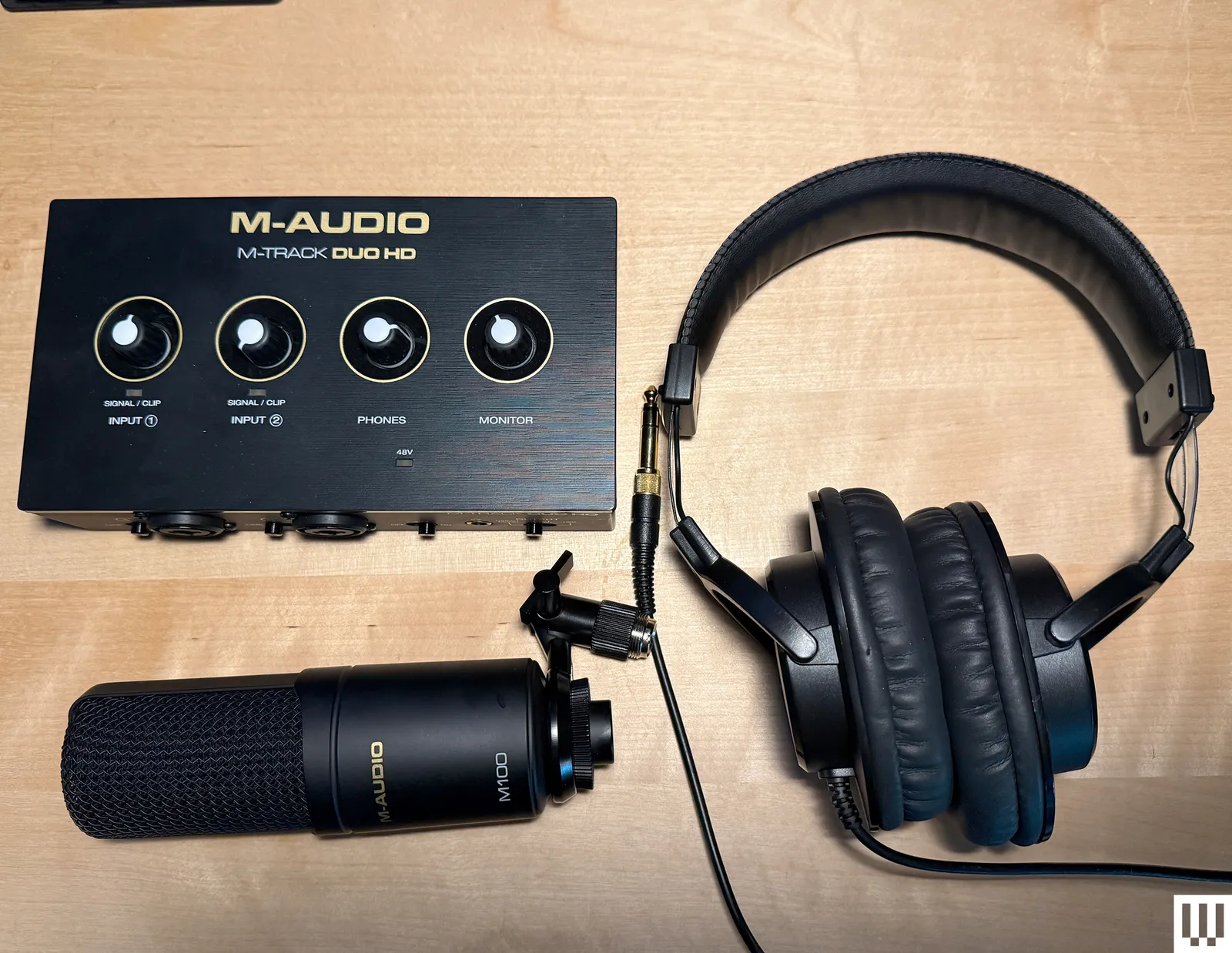
M-Audio has packaged everything this person would need in a tidy little box with its M Track Duo HD producer pack. It includes a two-channel class-compliant audio interface, an M100 condenser mic, a pair of HD41 headphones, a mic clip, a USB-C cable to connect the interface to your computer or mobile device, and an XLR cable to connect the mic to the interface—all for the low price of $200. Aside from a mic stand (we love this desk clamp boom arm stand from Innogear) and the unearned confidence necessary to speak into a mic for hours about a wide variety of esoteric topics, you need nothing else than what’s in this box to get started. Plug a few things in, fire up OBS or your favorite DAW, adjust the gain on the mic preamp, and get to work.
The interface is a lightweight box of plastic that’s about the size of a VHS tape or a self-help book you’d buy at an airport bookstore. The front panel has two combo XLR quarter-inch input jacks, both of which have separate line and instrument level impedance selectors. A 48-volt switch enables phantom power for both inputs at once, which is essential to power the included condenser mic or a Cloudlifter if you decide to go full-on PodBro and upgrade to a dynamic mic. There’s also a single quarter-inch TRS headphone jack and a three-way selector that dictates whether a direct mono, direct stereo, or USB signal feeds the dual-mono quarter-inch tip-sleeve output jacks on the back of the box.
Each channel has its own gain knob on the top of the unit, with an indicator light below that flashes white when a signal is present and red when the signal is clipping. Each preamp has 55 dB of gain on tap, which is more than enough to turn even the meekest of Teams meeting NPCs into audible, active participants. The motion of the knob is smooth and jitter-free until you hit the last 10 percent of its sweep, at which point some ambient digital noise seemingly clicks on and off as if it were triggered with a switch. This is way too much gain for any practical application due to the amount of clipping it’s likely to cause, so this is not a major concern for anyone who’s spent 30 minutes or so dialing in their levels and getting a feel for the thing.
Advertisement
A Mic for the Masses
The included condenser mic pairs well with the preamp in the interface. It’s a unipolar large-diaphragm condenser mic, which in normie language means the metal grate that covers the front of the mic is where you’ll want to point your voice, instead of the back. Condenser mics are much more sensitive to ambient noise than a dynamic mic, which is both an upside and a downside. A condenser mic works well a bit farther from your face than a dynamic mic, but you’ll need to boost the gain to pick up your voice at a greater distance. This picks up more background noise as well, which can lead to some embarrassing moments on Zoom calls when, say, the small flock of fowl your neighbor is illegally housing in their garage starts clucking nervously when a garbage truck rattles down the block. Luckily, Zoom has decent built-in noise suppression tools, so this was easy to address without any extra plugins or hardware.
The mic handles a standard male speaking voice quite well. I’m not fully trained on pensive NPR-speak just yet, but my standard tech-guy patter broadcast as clear as a bell with the mic 6 inches from my face, and the gain knob turned up to around 3 o’clock. The mic does not have a high-pass filter switch to roll off low-end rumble from accidental bumps into the stand or the mic itself, so you’ll need to take care to avoid fumbles that cause loud thumping noises if you prefer higher gain and a bit more distance from your mouth to the mic.



























































You must be logged in to post a comment Login