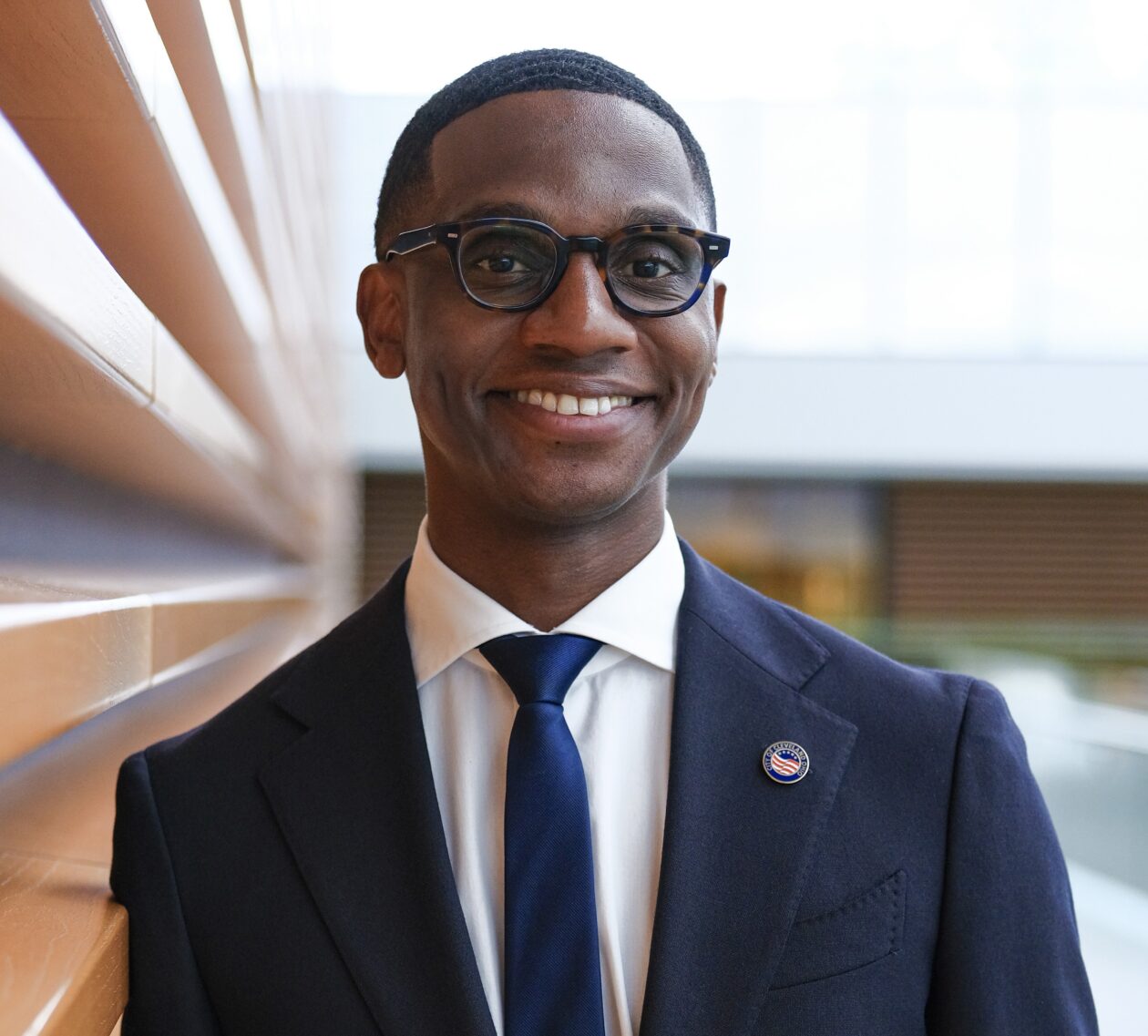
Cleveland Mayor Justin Bibb. (City of Cleveland Photo)
A guest column on GeekWire warning Seattle not to become “the next Cleveland” has taken on a life of its own — culminating in a phone call Thursday morning between the author of the piece and the mayor of Cleveland himself.
On the call, Mayor Justin Bibb acknowledged the lessons of Cleveland’s decline, many decades ago, but pushed back on the framing and focus of the piece, asserting that the real story is the city’s ongoing revival. He said Seattle should be paying attention to Cleveland for different reasons than the column suggested.
“We didn’t pivot fast enough, and the world left us behind,” Bibb said. “And now we are a comeback story of reinvention and resilience. And I think there’s a lot the country can learn from what we’re doing.”
Bibb said the old national narrative of Cleveland as “the mistake on the lake” is tired and outdated.
“The new story that’s emerging is Cleveland is going to lead America in terms of how we think about our industrial revival,” he said. “We’re making things in America again, making things in Ohio again, and I want Cleveland to lead the way.”
Advertisement
Seattle tech veteran and angel investor Charles Fitzgerald, who wrote the original column, said his intent was to compare Seattle today to Cleveland at its peak, not to take a shot at the modern city.
“We’re kind of fat, dumb and happy,” Fitzgerald said of Seattle. “My goal really is to get people to wake up and prepare the city for the next act, and remind them that prosperity is not guaranteed.”
Lessons from Seattle’s past: Bibb, a self-described student of history, said he’s studied Seattle’s own recovery from the Boeing bust of the early 1970s, when someone famously put up a billboard reading, “Will the last person leaving Seattle turn out the lights.”
Seattle responded by leveraging its research institutions and riding the technology boom, he said, and Cleveland is now trying to follow its own version of that playbook.
Advertisement
“I envy problems around growth,” Bibb said. “Those are the problems I want to have in the future in Cleveland, and I’m trying to create the baseline so we can have those problems.”
Fitzgerald agreed. “I think the cities are incredibly analogous,” he said. “We’re at the top of the world today, Cleveland was at the top of the world. … And we have the same risk in the sense that we’ve over-performed, and so we’ve got further to fall.”
Fitzgerald’s column, published Tuesday, drew parallels between Seattle today and Cleveland in the 1950s, when it was one of America’s largest and most prosperous cities. Bibb responded with a LinkedIn post that drew hundreds of reactions, defending Cleveland’s comeback and inviting Fitzgerald to visit.
GeekWire connected the two by phone on Thursday morning. Listen to highlights from the call on this bonus episode of the GeekWire Podcast.
Advertisement
Olympia and Columbus: For the Seattle tech community, the column was part of a broader debate over the region’s economic future in the midst of the AI frenzy and new efforts by lawmakers in Olympia to raise taxes on high-income earners and businesses in ways that many worry will undercut startups.
Bibb spoke to Cleveland’s experience in Ohio in comments on the call. Asked about Cleveland’s relationship with its state capital, Columbus, he said that despite being a blue city mayor in a red state, the partnership on jobs and the economy has been strong.
“We don’t tax corporate profits. We have great R&D tax credits statewide,” he said. “We want to compete with the best of them, from South Carolina to Texas to Washington to California. We want to make sure that Ohio is an easy place to do business, and that Cleveland is a city that’s moving at the speed of business.”
More broadly, Bibb cited billions in investments reshaping Cleveland, including a $1.6 billion airport modernization, a $4 billion tax increment financing district to redevelop the city’s waterfront, and Sherwin-Williams bringing 5,000 employees into a new downtown skyscraper.
Advertisement
He pointed to aerospace, advanced manufacturing, and the city’s health-tech sector, anchored by the Cleveland Clinic and Case Western Reserve University, as engines of the revival.
A Seattle reality check: Of course, Seattle has its own strengths, including parallel institutions such as the University of Washington and Fred Hutch Cancer Center, along with the AI and cloud computing operations of Microsoft and Amazon, and strength in areas such as fusion energy, space, and biotech.
In a post Thursday on LinkedIn, Jacob Colker, co-founder of the AI2 Incubator, pushed back on what he called the “breathless narrative” of Seattle’s decline, citing the region’s massive concentration of AI talent and capital, its dominance in the space economy, and its growing fusion and biotech sectors.
“The sky isn’t falling,” Colker wrote.
Advertisement
But Fitzgerald’s argument is less about Seattle’s current strengths than about whether local and state leaders are doing the right things for the next phase of growth. Fitzgerald said multiple people have already asked to join him on a trip to Cleveland, taking the mayor up on his offer — at least when the weather gets warmer.
“I love that,” Bibb said. “There is no better place than our respective cities, Cleveland and Seattle, to show the nation what’s possible.”
Intel said the agreement is reflective of a strong partnership with Apollo, as well as the organisation’s role in the age of AI.
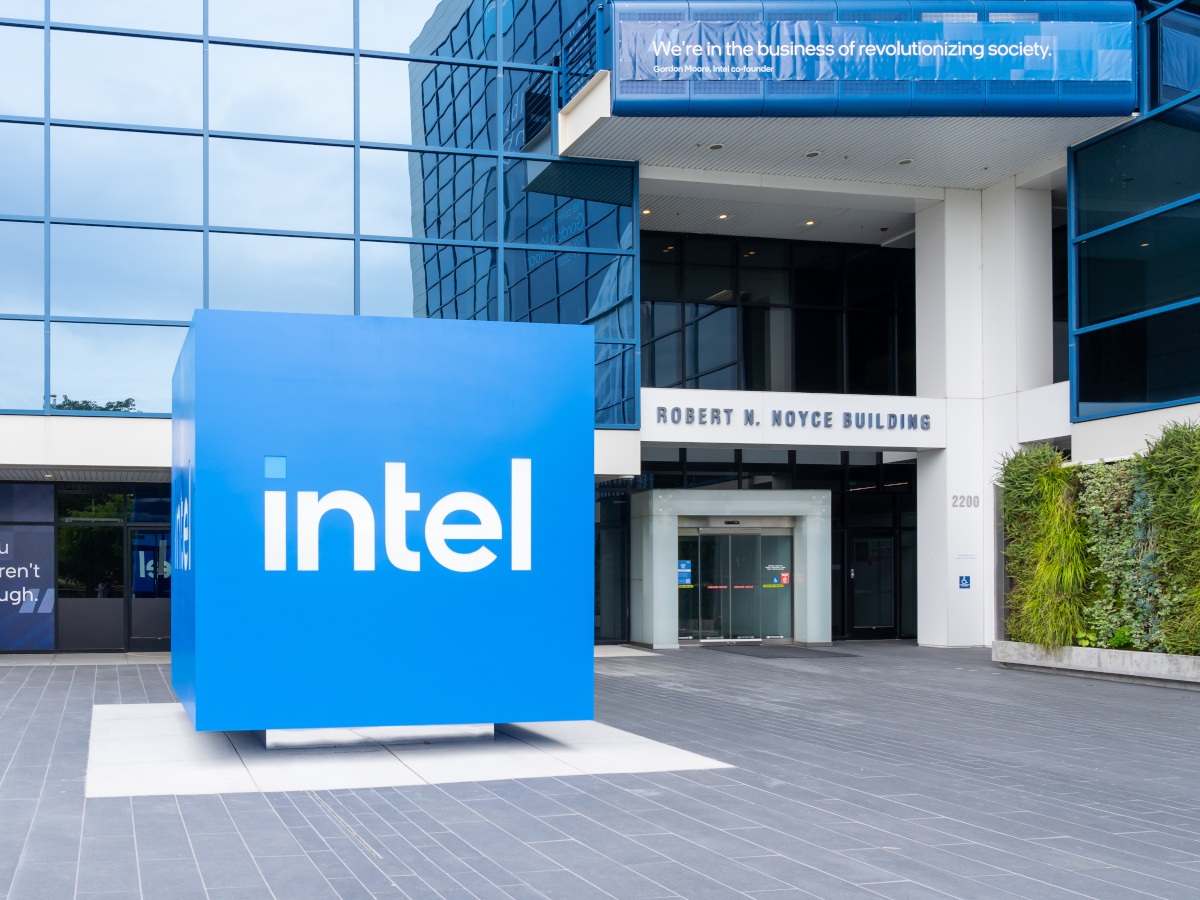
US technology company Intel has plans to repurchase a 49pc stake of the Leixlip, Kildare Fab 34 manufacturing facility, via a partnership with asset manager Apollo Global Management. The deal which will be valued at $14.2bn is expected to be funded through cash on hand and proceeds from the issuance of new debt of approximately $6.5 bn.
With work beginning in 2019, Fab 34 was designed to be an advanced semiconductor manufacturing facility.
There has been significant investment in the plant over the years with the organisation hitting several important milestones and currently it is a fabrication facility for products utilising the Intel 4 and Intel 3 process technologies, for example Intel Core Ultra and Intel Xeon 6 processors.
Advertisement
In 2024, it was decided that Intel would sell a 49pc stake in Fab 34 to Apollo Global Management.
At the time, David Zinsner, the chief financial officer at Intel, said that the $11bn deal would give the chip maker the “additional flexibility to execute our strategy as we invest to create the world’s most resilient and sustainable semiconductor supply chain”. Intel also said it would be retaining full ownership and control of Fab 34 and its assets.
Commenting on the recent announcement Zinsner said, “Our 2024 agreement was the right structure at the right time and provided Intel with meaningful flexibility, enabling us to accelerate critical initiatives. Today, we have a stronger balance sheet, improved financial discipline and an evolved business strategy.”
Apollo Partner Jamshid Ehsani added, “Our partnership with Intel began at an important stage in the execution of its advanced manufacturing roadmap, where our long-term strategic capital played a meaningful role in accelerating the production of next-generation chip technology.
Advertisement
“Flexibility and alignment are core to how we approach relationships as a long-term, solutions-oriented capital partner, and we are pleased to facilitate this transaction in support of Intel’s evolving strategic and operational priorities.”
Don’t miss out on the knowledge you need to succeed. Sign up for the Daily Brief, Silicon Republic’s digest of need-to-know sci-tech news.
Samsung already has its own slim magnetic case for the Galaxy S26 Ultra, so most people won’t think twice about alternatives.
But choosing the right Samsung Galaxy S26 Ultra case isn’t always as straightforward as it seems. Some cases look great on day one but end up feeling too smooth, slightly bulky, or just awkward to use after a few days. Thinborne is still a thin magnetic case, but it takes a slightly different approach.
This review focuses on how it feels in real use, and how it compares to Samsung’s own option.
Thinborne Overview of Features
It helps to look at what Thinborne actually offers and how those features translate in real use.
Advertisement
Material and Build
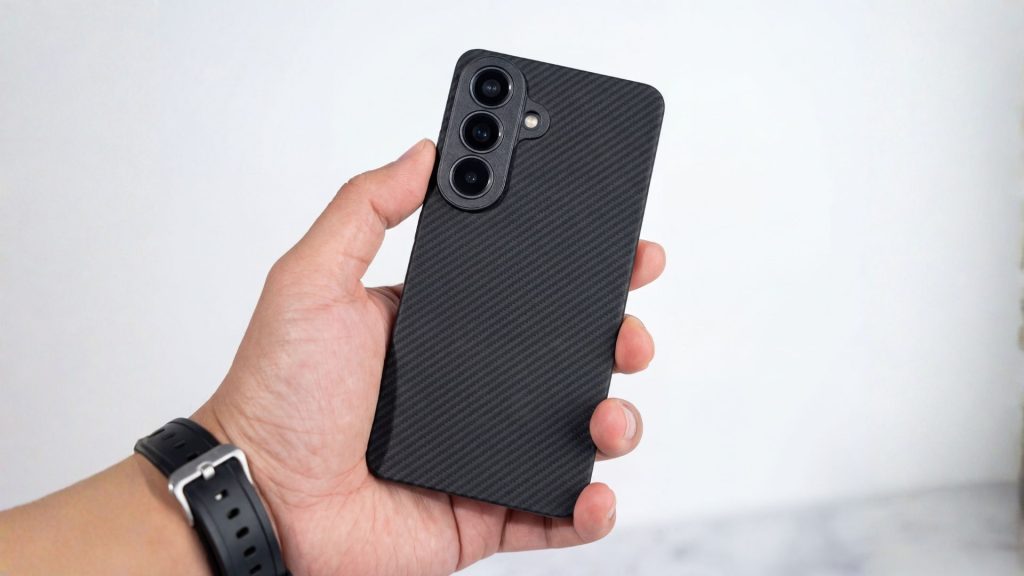
Thinborne uses 600D aramid fiber, which you’ll usually see in lightweight, high-strength materials. You’ll notice how it feels:
It’s very light
It feels firm rather than flexible
The surface has a subtle texture
At 0.90 mm thin, it doesn’t add much bulk. The phone still feels close to how it does without a case.
What makes it different from typical cases is the structure. It doesn’t have that soft, slightly rubbery feel you get from silicone. It’s more rigid, almost like a thin shell that snaps into place. Over time, silicone can start to feel sticky or collect dust – this doesn’t.
MagSafe Compatibility
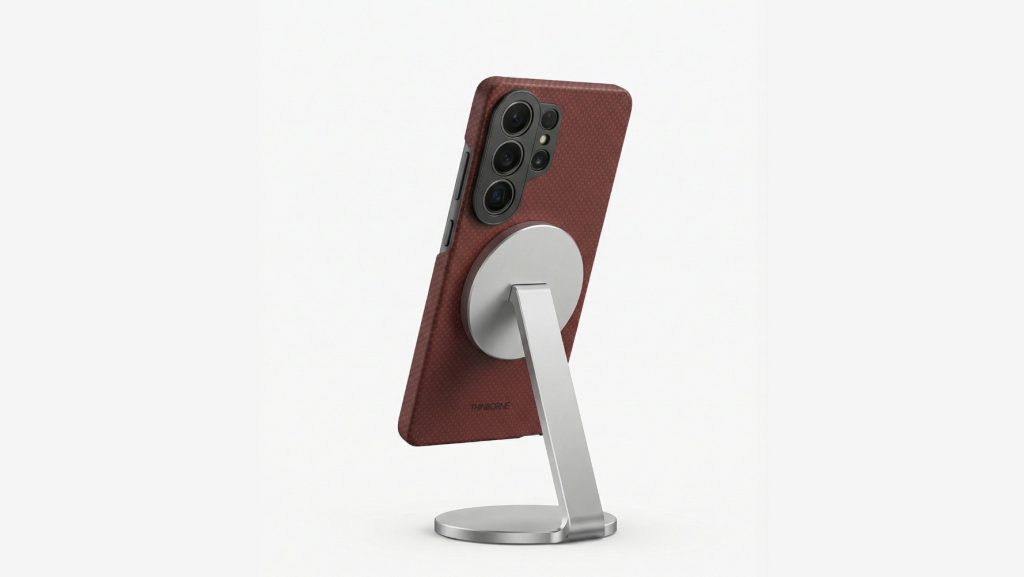
Like most Galaxy S26 Ultra cases, Thinborne includes built-in magnets since the phone itself doesn’t have them. In everyday use, that means:
Chargers snap into place quickly
Car mounts hold steady
Wallets and stands attach cleanly
The experience is straightforward, and everything lines up as expected (and it stays in place).
One thing that helps with the setup is the case’s rigidity. Since it doesn’t flex much, the alignment stays consistent. You don’t get that slight shift you sometimes notice with softer cases.
Available Colors
Thinborne keeps the color options simple:
Black
Royal Crimson
Wild Navy
All three use the same woven finish, so the feel doesn’t change – only the color does. The tones are muted and don’t draw too much attention.
Thinborne Thin Phone Case vs Samsung Galaxy S26 Ultra Slim Magnet Case
Samsung’s Slim Magnet Case is the most direct comparison. Both cases fall into the same general category: thin, lightweight, and magnetic.
Advertisement
Samsung doesn’t list an exact thickness, but it’s positioned as a slim case. What we do know is that it weighs 24 grams, making it a bit heavier than Thinborne, which weighs around 20 grams.
Here’s how they compare:
Feature
Thinborne Galaxy S26 Ultra Case
Samsung Slim Magnet Case
Weight
20 g
24 g
Thickness
0.90 mm
slim profile (not officially listed)
Material
600D aramid fiber
Synthetic/plastic
Grip
Textured (woven)
Smooth
Magnets
Built-in magnetic array
Built-in magnets
As you can see, Thinborne and Samsung look similar. In use, however, the differences can be noticed:
Grip – Thinborne has a bit more texture, so it feels more secure in your hand. Samsung’s case is smoother, which can feel slightly slippery.
Weight – The difference isn’t huge, but the lighter feel can be noticeable over time – especially on a large phone like the S26 Ultra.
Material feel – Thinborne feels more solid and structured. Samsung’s case feels more like a standard slim case.
Pricing and Availability
Thinborne and Samsung are priced almost the same, so cost isn’t really the deciding factor here.
Thinborne comes in at $69.69, while Samsung’s Slim Magnet Case is slightly higher at $69.99. The difference is minimal, and in practice, both sit in the same premium range for thin magnetic cases.
Advertisement
Where they differ is availability. Thinborne is sold through its official website and is also available on Amazon, which gives you a bit more flexibility when buying. It typically includes extras like a tempered glass screen protector as well.
Samsung’s case is easier to find overall. It’s available through Samsung’s store and most major retailers, making it a more convenient option if you prefer to buy locally or through familiar channels.
At this price point, it really comes down to which case fits your preferences better, not which one is cheaper.
Wrap Up
Thinborne keeps things simple, and that’s really the point. It’s built as a thin phone case that doesn’t change how the Galaxy S26 Ultra feels in your hand. The lighter weight, subtle texture, and rigid build all come together in a way that feels easy to live with day to day.
Advertisement
Samsung’s Slim Magnet Case still does what it’s supposed to. It’s reliable, widely available, and works well with magnetic accessories. But if you care about how your phone actually feels in use, Thinborne has a clear edge. The lighter weight and textured finish make it easier to hold, especially during one-handed use – something you start to notice after a few days of use.
Microsoft is investigating a known issue that prevents some Classic Outlook users from sending emails via Outlook.com.
Affected users are being warned that their message hasn’t reached some intended recipients, and they will encounter this problem more often when the Outlook.com account they use to send email is an Outlook profile linked to another Exchange account.
“This message could not be sent. Try sending the message again later or contact your network administrator,” the non-delivery report (NDR) error displayed when sending or replying to emails reads.
“You do not have the permission to send the message on behalf of the specified user. Error is [0x80070005-0x0004dc-0x000524].”
Advertisement
Microsoft added that another condition that may trigger these errors is that the sender’s account has an Exchange Online mail contact with the same SMTP address.
Classic Outlook non-delivery report (NDR) error (Microsoft)
While investigating this issue and still looking for a fix, the Outlook team shared several workarounds that may help affected customers temporarily mitigate the issue.
Microsoft recommends removing the M365 account Address Book so that the Outlook client does not check it when sending emails, hiding the Outlook.com contact from the Microsoft 365 account Global Address List (GAL).
Other alternatives include creating a new classic Outlook profile that includes only the account receiving NDR errors, and using the New Outlook client or Outlook.com on the web to send email from the affected account.
Automated pentesting proves the path exists. BAS proves whether your controls stop it. Most teams run one without the other.
This whitepaper maps six validation surfaces, shows where coverage ends, and provides practitioners with three diagnostic questions for any tool evaluation.
Scientists say extreme March heat caused an unusually rapid collapse of snowpack across the American West that’s leaving major basins at record or near-record lows. “This year is on a whole other level,” said Dr Russ Schumacher, a Colorado State University climatologist. “Seeing this year so far below any of the other years we have data for is very concerning.” The Guardian reports: […] The issue is extremely widespread. Data from a branch of the US Department of Agriculture (USDA), which logs averages based on levels between 1991 and 2020, shows states across the south-west and intermountain west with eye-popping lows. The Great Basin had only 16% of average on Monday and the lower Colorado region, which includes most of Arizona and parts of Nevada, was at 10%. The Rio Grande, which covers parts of New Mexico, Texas and Colorado, was at 8%. “This year has the potential of being way worse than any of the years we have analogues for in the past,” Schumacher said.
Even with near-normal precipitation across most of the west, every major river basin across the region was grappling with snow drought when March began, according to federal analysts. Roughly 91% of stations reported below-median snow water equivalent, according to the last federal snow drought update compiled on March 8. Water managers and climate experts had been hopeful for a March miracle — a strong cold storm that could set the region on the right track. Instead, a blistering heatwave unlike any recorded for this time of year baked the region and spurred a rapid melt-off. “March is often a big month for snowstorms,” Schumacher said. “Instead of getting snow we would normally expect we got this unprecedented, way-off-the-scale warmth.”
More than 1,500 monthly high temperature records were broken in March and hundreds more tied. The event was “likely among the most statistically anomalous extreme heat events ever observed in the American south-west,” climate scientist Daniel Swain said in an analysis posted this week. “Beyond the conspicuous ‘weirdness’ of it all,” Swain added, “the most consequential impact of our record-shattering March heat will likely be the decimation of the water year 2025-26 snowpack across nearly all of the American west.” Calling the toll left by the heat “nothing short of shocking,” Swain noted that California was tied for its worst mountain snowpack value on record. While the highest elevations are still coated in white, “lower slopes are now completely bare nearly statewide.”
Studio 64 Bits worked tirelessly for four months to hand-draw every single frame, allowing them to introduce Elden Ring to the wild world of Saturday morning television in the 90s. The end effect feels like a bizarre parallel universe in which the game appears alongside Thundercats and He-Man.
Ranni is right there at the start, cradling a double-necked electric guitar slung lazily across her shoulders, and as she begins noodling on the opening chords, the camera sweeps across these blasted landscapes, full of familiar faces from both the base game and the Shadow of the Erdtree expansion. We see Malenia charging ahead with blades flashing, Blaidd standing tall and loyal by her side, and Messmer looming large as the true new threat. Meanwhile, Miquella and Radahn share a dramatic moment, and Melina, Rykard, Mohg, Varre, Midra, Placidusax, Astel, Maliketh, and the Elden Beast all flash across the screen in quick, splashy bursts. Each character receives the usual cartoon makeover, complete with bold outlines, vivid colors, and exaggerated posturing that transforms their conflicts into heroic showdowns rather than gloomy, terrible struggles.
The animation sticks to the technical limits of 90’s TV production, which means that the colors don’t deviate much from a fairly limited palette, the lines have just a hint of that creaky hand-drawn cel look to them, and the transitions snap along with the same crisp timing you’d see on shows from that era. The music builds to a precise pitch, culminating in a driving rock song that sounds like it might have come directly from the opening titles of Jayce and the Wheeled Warriors or Captain Planet. Every second creates the impression that an entire series could follow, with the Tarnished rushing across the continent to repair the Elden Ring and face off against these legendary monsters in one thrilling episode after the next.
After the main intro concludes, the film transitions to a brief commercial in which Elden Ring appears to have recently been released for the old SNES. A happy narration promises additional dungeons, secrets, and a fate that is entirely in the player’s control. The tagline reverses a humorous old Nintendo slogan into ‘Now you’re playing with power, rune power’, and the spot concludes with a quick little bumper that parodies the DIC logo from coutnless old 90’s cartoons. It connects neatly to their last full-length SNES remake, making the entire package feel like one continuous block of faux Saturday morning programming.
Smart glasses have always had a basic problem for people like me. They looked cool in demos, sounded futuristic in press releases, and usually came with the same quiet catch. If you already wear glasses every day, you are expected to work around them. This meant adding prescription lenses later, settling for a fit that is not quite right, or treating the whole thing as a novelty instead of something you would actually wear throughout the day.
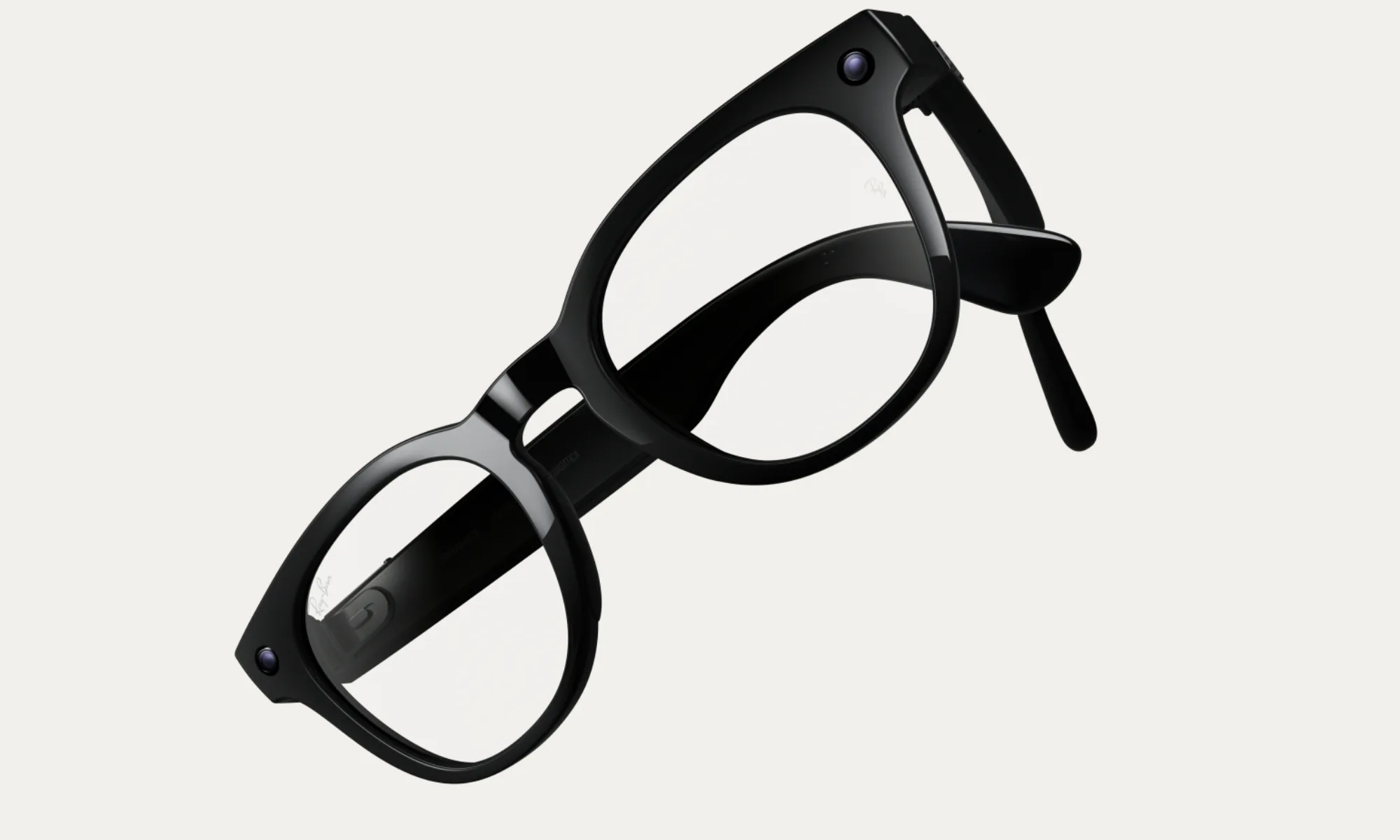
This is what makes Meta’s latest announcement more exciting. The company just unveiled its first prescription-optimized AI glasses, the Ray-Ban Meta Blayzer Optics (Gen 2) and Ray-Ban Meta Scriber Optics (Gen 2), and they are explicitly designed around people who rely on prescription eyewear all day.
Meta says they support nearly all prescriptions, start at $499 in the US, and will be available at optical retailers beginning April 14.
For me, that is the first time Meta’s glasses story has felt less like wearable hype and more like something I could actually live with.
Advertisement
Meta
Prescription wearers don’t have to do extra work
Billions of people around the world use glasses or contacts for vision correction, and Meta itself notes that many Ray-Ban Meta and Oakley owners already add prescription lenses to existing models. But “can be added later” is not the same thing as “built for you from the start.”
The new prescription-first push feels more thoughtful. Meta says that these new models were designed for all-day comfort and include features like overextension hinges, interchangeable nose pads, and optician-adjustable temple tips. These may sound like dry-product language stuff, but if you actually wear glasses every day, it is the kind of detail that decides whether something stays on your face for the next eight hours or if it gets thrown into a case after 20 minutes.
Balancing act between ‘gadget’ and ‘eyewear’
Meta
Meta is not just launching two new frame styles and calling it a day. It is trying to make AI glasses feel like a normal category of eyewear rather than a niche device for early adopters. These new prescription-optimized frames aren’t alone, as Meta also announced more frame and lens options across Ray-Ban Meta and Oakley Meta glasses.
There’s also a new software feature, like hands-free nutrition tracking, WhatsApp summaries and recall through Meta AI, and Neural Handwriting support expanding to iMessage. All of this makes these new glasses feel more natural for daily use. The tech itself is only half the story. The real breakthrough is when you don’t need to accommodate the hardware.
And if you already wear prescription glasses, that threshold is even higher. A smartwatch can be optional. Glasses are not.
Meta
This is the first Meta glasses move that feels genuinely practical
This is basically why I think these new Meta glasses matter more than they might look on paper. The usual wearable pitch is about features, AI tricks, cameras, and convenience. But for prescription wearers, such as myself, the first question is whether I would actually want to wear this all day instead of normal glasses?
And for a change, Meta seems to be answering that question directly.
Advertisement
Yes, the concerns don’t disappear, and smart glasses still have the privacy baggage and hefty price tag. They also haven’t proved that their AI features are useful often enough to justify becoming part of your daily routine. But this launch clears a much more fundamental barrier than people give it credit for.
And for someone who already owns prescription Wayfarers and knows how much difference proper eyewear fit makes, Meta’s new AI glasses suddenly feel a lot more attractive.
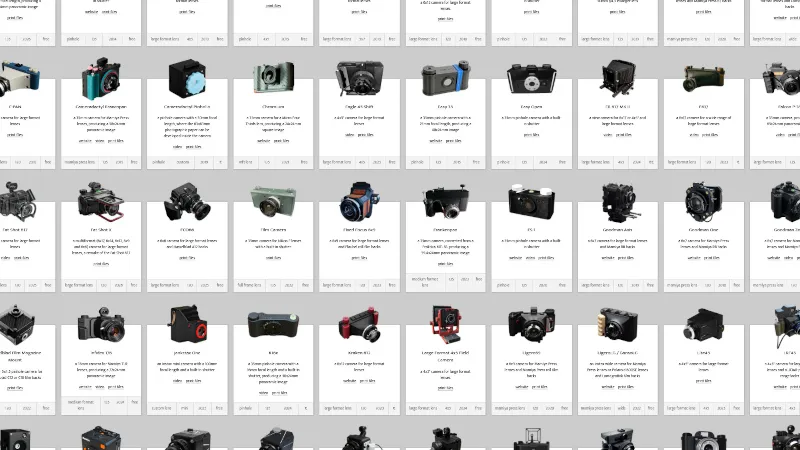
For those of us who hack old cameras, the 3D printer has undoubtedly been a boon. High precision, or at least consistent precision, lightproof enclosures can be easily made and reproduced for others. As a result there are quite a few printable cameras out there, and we’ve featured our share here. We didn’t realize just how many there are without the work of [Sebastian] though, as he’s gathered together every one he can find in a glorious catalog of homemade photographic construction.
As a snapshot of the world of home made cameras it’s refreshing to see such a wide range of designs. There are pinholes aplenty as well as cameras using lenses from scavanged point and shoots through 35mm SLR, medium format, and even one using a Micro Four Thirds compact digital camera lens. For film there’s 35mm and 120 as well as large format, but we’re pleased to see a few instant cameras in there. Some of the models in the list are paid-for designs but most of them are free, so you probably won’t need any encouragement to make yourself a camera!
Unless we missed something, we didn’t see any movie cameras in the list. With 35mm and 16mm models to be found, we hope some of them make it.
ChatGPT arrives on Apple CarPlay update for iOS 26.4
Update adds support for “voice-based conversational apps”
Interaction is limited to voice prompts only
We reported on a big Apple update in February of this year with the release of the new iOS 26.4 public beta.
The headline news was the inclusion of third-party, voice-controlled AI chatbots on CarPlay for the first time, allowing drivers to make the most of AI assistants outside of those that come part and parcel of many modern cars.
Where Mercedes-Benz has its “Hey Mercedes!” prompts, and Renault’s more recent offerings have Reno, these are not only limited to only the newest models, but are also relatively limited in what they can deliver.
Article continues below
Advertisement
On the other hand, the likes of ChatGPT, Google’s Gemini, and Claude open up the opportunity for more powerful AI assistants, even in older vehicles.
Last week, Apple released iOS 26.4 to the public, and a few days later, OpenAI responded with an update for ChatGPT that made it compatible with the iPhone mirroring software.
(Image credit: Mac Rumors)
Those running the latest version of iOS will see a dedicated ChatGPT app pop up on screen (so long as it exists on the device itself), and, when opened, it allows for “voice-based” conversations with the AI-powered app.
Advertisement
Users will be able to see a list of previous chats, but due to safety legislation put in place by Apple, they will only be able to converse with the chatbot, rather than type or read the resulting reams of text that it produces.
Sign up for breaking news, reviews, opinion, top tech deals, and more.
Essentially, it’s the same as interacting with the smartphone app in voice mode, and the CarPlay app is about as simple as they come. There’s merely an ask icon to show that the app is listening and a button to mute and end the conversation.
Advertisement
Analysis: simple but effective
(Image credit: Getty Images/NurPhoto)
ChatGPT’s voice mode is pretty good, and for most drivers, the ability to ask questions and receive detailed answers will be a boon. It’s a great tool for settling in-car arguments.
That said, there’s no wake word, so you have to open the app manually to use it (a distraction in itself), nor can the app be used to interact with the iPhone or make adjustments to the car’s settings like Siri and manufacturer-designed chatbots can.
It’s a cautious first step into the world of AI apps and Apple CarPlay or Android Auto integration, but it’s likely to be just the beginning.
And of course, you can also follow TechRadar on YouTube and TikTok for news, reviews, unboxings in video form, and get regular updates from us on WhatsApp too.
“Your AI? It’s my AI now.” The line came from Etay Maor, VP of Threat Intelligence at Cato Networks, in an exclusive interview with VentureBeat at RSAC 2026 — and it describes exactly what happened to a U.K. CEO whose OpenClaw instance ended up for sale on BreachForums. Maor’s argument is that the industry handed AI agents the kind of autonomy it would never extend to a human employee, discarding zero trust, least privilege, and assume-breach in the process.
The proof arrived on BreachForums three weeks before Maor’s interview. On February 22, a threat actor using the handle “fluffyduck” posted a listing advertising root shell access to the CEO’s computer for $25,000 in Monero or Litecoin. The shell was not the selling point. The CEO’s OpenClaw AI personal assistant was. The buyer would get every conversation the CEO had with the AI, the company’s full production database, Telegram bot tokens, Trading 212 API keys, and personal details the CEO disclosed to the assistant about family and finances. The threat actor noted the CEO was actively interacting with OpenClaw in real time, making the listing a live intelligence feed rather than a static data dump.
Cato CTRL senior security researcher Vitaly Simonovich documented the listing on February 25. The CEO’s OpenClaw instance stored everything in plain-text Markdown files under ~/.openclaw/workspace/ with no encryption at rest. The threat actor didn’t need to exfiltrate anything; the CEO had already assembled it. When the security team discovered the breach, there was no native enterprise kill switch, no management console, and no way to inventory how many other instances were running across the organization.
OpenClaw runs locally with direct access to the host machine’s file system, network connections, browser sessions, and installed applications. The coverage to date has tracked its velocity, but what it hasn’t mapped is the threat surface. The four vendors who used RSAC 2026 to ship responses still haven’t produced the one control enterprises need most: a native kill switch.
Maor ran a live Censys check during an exclusive VentureBeat interview at RSAC 2026. “The first week it came out, there were about 6,300 instances. Last week, I checked: 230,000 instances. Let’s check now… almost half a million. Almost doubled in one week,” Maor said. Three high-severity CVEs define the attack surface: CVE-2026-24763 (CVSS 8.8, command injection via Docker PATH handling), CVE-2026-25157 (CVSS 7.7, OS command injection), and CVE-2026-25253 (CVSS 8.8, token exfiltration to full gateway compromise). All three CVEs have been patched, but OpenClaw has no enterprise management plane, no centralized patching mechanism, and no fleet-wide kill switch. Individual administrators must update each instance manually, and most have not.
The defender-side telemetry is just as alarming. CrowdStrike’s Falcon sensors already detect more than 1,800 distinct AI applications across its customer fleet — from ChatGPT to Copilot to OpenClaw — generating around 160 million unique instances on enterprise endpoints. ClawHavoc, a malicious skill distributed through the ClawHub marketplace, became the primary case study in the OWASP Agentic Skills Top 10. CrowdStrike CEO George Kurtz flagged it in his RSAC 2026 keynote as the first major supply chain attack on an AI agent ecosystem.
AI agents got root access. Security got nothing.
Maor framed the visibility failure through the OODA loop (observe, orient, decide, act) during the RSAC 2026 interview. Most organizations are failing at the first step: security teams can’t see which AI tools are running on their networks, which means the productivity tools employees bring in quietly become shadow AI that attackers exploit. The BreachForums listing proved the end state. The CEO’s OpenClaw instance became a centralized intelligence hub with SSO sessions, credential stores, and communication history aggregated into one location. “The CEO’s assistant can be your assistant if you buy access to this computer,” Maor told VentureBeat. “It’s an assistant for the attacker.”
Ghost agents amplify the exposure. Organizations adopt AI tools, run a pilot, lose interest, and move on — leaving agents running with credentials intact. “We need an HR view of agents. Onboarding, monitoring, offboarding. If there’s no business justification? Removal,” Maor told VentureBeat. “We’re not left with any ghost agents on our network, because that’s already happening.”
Advertisement
Cisco moved toward an OpenClaw kill switch
Cisco President and Chief Product Officer Jeetu Patel framed the stakes during an exclusive VentureBeat interview at RSAC 2026. “I think of them more like teenagers. They’re supremely intelligent, but they have no fear of consequence,” Patel said of AI agents. “The difference between delegating and trusted delegating of tasks to an agent … one of them leads to bankruptcy. The other one leads to market dominance.”
Cisco launched three free, open-source security tools for OpenClaw at RSAC 2026. DefenseClaw packages Skills Scanner, MCP Scanner, AI BoM, and CodeGuard into a single open-source framework running inside NVIDIA’s OpenShell runtime, which NVIDIA launched at GTC the week before RSAC. “Every single time you actually activate an agent in an Open Shell container, you can now automatically instantiate all the security services that we have built through Defense Claw,” Patel told VentureBeat. AI Defense Explorer Edition is a free, self-serve version of Cisco’s algorithmic red-teaming engine, testing any AI model or agent for prompt injection and jailbreaks across more than 200 risk subcategories. The LLM Security Leaderboard ranks foundation models by adversarial resilience rather than performance benchmarks. Cisco also shipped Duo Agentic Identity to register agents as identity objects with time-bound permissions, Identity Intelligence to discover shadow agents through network monitoring, and the Agent Runtime SDK to embed policy enforcement at build time.
Palo Alto made agentic endpoints a security category of their own
Palo Alto Networks CEO Nikesh Arora characterized OpenClaw-class tools as creating a new supply chain running through unregulated, unsecured marketplaces during an exclusive March 18 pre-RSA briefing with VentureBeat. Koi found 341 malicious skills on ClawHub in its initial audit, with the total growing to 824 as the registry expanded. Snyk found 13.4% of analyzed skills contained critical security flaws. Palo Alto Networks built Prisma AIRS 3.0 around a new agentic registry that requires every agent to be logged before operating, with credential validation, MCP gateway traffic control, agent red-teaming, and runtime monitoring for memory poisoning. The pending Koi acquisition adds supply chain visibility specifically for agentic endpoints.
Cato CTRL delivered the adversarial proof
Cato Networks’ threat intelligence arm Cato CTRL presented two sessions at RSAC 2026. The 2026 Cato CTRL Threat Report, published separately, includes a proof-of-concept “Living Off AI” attack targeting Atlassian’s MCP and Jira Service Management. Maor’s research provides the independent adversarial validation that vendor product announcements cannot deliver on their own. The platform vendors are building governance for sanctioned agents. Cato CTRL documented what happens when the unsanctioned agent on the CEO’s laptop gets sold on the dark web.
Advertisement
Monday morning action list
Regardless of vendor stack, four controls apply immediately: bind OpenClaw to localhost only and block external port exposure, enforce application allowlisting through MDM to prevent unauthorized installations, rotate every credential on machines where OpenClaw has been running, and apply least-privilege access to any account an AI agent has touched.
Discover the install base. CrowdStrike’s Falcon sensor, Cato’s SASE platform, and Cisco Identity Intelligence all detect shadow AI. For teams without premium tooling, query endpoints for the ~/.openclaw/ directory using native EDR or MDM file-search policies. If the enterprise has no endpoint visibility at all, run Shodan and Censys queries against corporate IP ranges.
Patch or isolate. Check every discovered instance against CVE-2026-24763, CVE-2026-25157, and CVE-2026-25253. Instances that cannot be patched should be network-isolated. There is no fleet-wide patching mechanism.
Audit skill installations. Review installed skills against Cisco’s Skills Scanner or the Snyk and Koi research. Any skill from an unverified source should be removed immediately.
Enforce DLP and ZTNA controls. Cato’s ZTNA controls restrict unapproved AI applications. Cisco Secure Access SSE enforces policy on MCP tool calls. Palo Alto’s Prisma Access Browser controls data flow at the browser layer.
Kill ghost agents. Build a registry of every AI agent running. Document business justification, human owner, credentials held, and systems accessed. Revoke credentials for agents with no justification. Repeat weekly.
Deploy DefenseClaw for sanctioned use. Run OpenClaw inside NVIDIA’s OpenShell runtime with Cisco’s DefenseClaw to scan skills, verify MCP servers, and instrument runtime behavior automatically.
Red-team before deploying. Use Cisco AI Defense Explorer Edition (free) or Palo Alto Networks’ agent red-teaming in Prisma AIRS 3.0. Test the workflow, not just the model.
The OWASP Agentic Skills Top 10, published using ClawHavoc as its primary case study, provides a standards-grade framework for evaluating these risks. Four vendors shipped responses at RSAC 2026. None of them is a native enterprise kill switch for unsanctioned OpenClaw deployments. Until one exists, the Monday morning action list above is the closest thing to one.
Kia’s combustion-powered Seltos has grown up and glowed up with more space and bigger tech inside.
Antuan Goodwin
Antuan started out in the automotive industry the old-fashioned way, by turning wrenches in a driveway and picking up speeding tickets. He now has nearly 20 years of expertise and experience behind the wheel of hundreds of cars, including electric, hybrid, plug-in hybrid, hydrogen, and traditional combustion vehicles.
For each car he tests, Antuan covers more than 200 miles behind the wheel and evaluates driving dynamics; acceleration and braking performance; range; and efficiency.
Antuan’s goal is to use his extensive car knowledge to educate CNET readers and help with their next car-related buying decision. Whether you’re EV-curious, an EV-enthusiast or a combustion-car loyalist, Antuan will bring you the unbiased advice, reviews, best lists and news you need.





%20error.jpg)

















































You must be logged in to post a comment Login