
Join Mikko Hyppönen and security leaders from the NFL, CHANEL, and Atlassian for a two-hour digital summit on what AI-speed attacks change, what defenders should stop doing, and how to validate, decide, fix, and re-validate at machine speed.
Tech
Conti ransomware gang member sentenced to 4 years in prison



A Ukrainian national has been sentenced to four years in prison for his role in Conti ransomware attacks between 2021 and 2022.
44-year-old Oleksii Oleksiyovych Lytvynenko was arrested by the Irish national police (An Garda Síochána) in July 2023 at the request of the United States and was extradited last year.
Lytvynenko and his Conti accomplices deployed ransomware on victim networks in the United States and abroad, stealing data and encrypting devices to extort Bitcoin ransom payments.
“From 2020 until 2022, Conti was used to attack computers and networks in 47 states, 31 foreign countries, the District of Columbia, and Puerto Rico. The FBI estimates that, as of January 2022, there had been victim payouts associated with Conti ransomware exceeding $150,000,000,” the Department of Justice said on Thursday.
“Lytvynenko joined that conspiracy as both an intruder and a developer — personally harming at least 12 companies, storing stolen data from victims, and helping build the malicious tools Conti used to extort and threaten communities,” added Assistant Attorney General A. Tysen Duva.
The defendant pleaded guilty to conspiracy to commit wire fraud in June 2026 and was facing a maximum sentence of 20 years in prison.
He admitted to joining the Conti ransomware operation in September 2021, controlling the stolen data of eight U.S. victims and four overseas victims, and sending ransom notes as part of the cybercrime gang’s double extortion attacks between 2020 and June 2022.
Lytvynenko also admitted to joining a team run by another Conti conspirator, where he coded a “loader,” which is a type of malware designed to load the software needed to carry out attacks.
Conti ransomware gang
The Conti ransomware operation emerged from the Ryuk cybercrime group in 2020 with close ties to the TrickBot malware gang, and became notorious for large-scale attacks against healthcare organizations, governments, and enterprises.
Conti evolved into a cybercrime syndicate that controlled multiple malware operations, including BazarBackdoor and TrickBot, and it shut down two years later, in 2022, after increased law enforcement pressure and leaked internal chats.
The Conti gang later split into other ransomware groups, including BlackCat, Black Basta, ZEON, Hive, Quantum, BlackByte, Karakurt, and the Silent Ransom Group.
Seven TrickBot/Conti members were sanctioned in February 2023, after a massive leak of personal information and internal conversations belonging to Conti and TrickBot members, known as the ContiLeaks and TrickLeaks.
In September 2023, the U.S. and the United Kingdom also sanctioned and charged nine Russian nationals associated with Conti and TrickBot for attacks against over 900 victims worldwide, while the Federal Criminal Police Office of Germany (Bundeskriminalamt or BKA) doxed the leader of the TrickBot and Conti cybercrime gangs in May 2025, claiming he is a 36-year-old Russian named Vitaly Nikolaevich Kovalev using the alias “Stern.”
According to court documents, the Conti cybercrime gang has targeted more than 1,000 victims worldwide and collected over $150 million in ransom payments while active.


Continue Reading

General Motors is expanding its presence in the Seattle region with a new downtown office slated to open in early 2027.
The automotive giant signed a lease for a 43,000-square-foot space at West8 in the Denny Triangle neighborhood, with plans to bring together employees across digital products, autonomous vehicles, IT, HR, and marketing, the company announced Wednesday.
GM currently employs about 200 remote workers in the region. A spokesperson said the new office will bring those existing team members together while providing room to recruit additional talent. The layout will feature a mix of traditional workstations, flexible lounge seating, and collaborative huddle spaces.
When the office opens, it will follow GM’s hybrid work policy, requiring employees living within a 50-mile radius to work on-site three days a week.
@media (max-width: 600px) {
aside.callout { float:none !important; max-width:100% !important; margin-left:0 !important; margin-right:0 !important; }
}
GM said tapping into Seattle’s deep technology talent pool will help grow its concentration of technical staff and attract engineers specializing in artificial intelligence and machine learning. The company credits its Seattle-area software teams with building the technical foundation behind its on- and off-vehicle platforms.
Located at 2001 8th Ave., the West8 building sits two blocks from Amazon’s headquarters campus and the Spheres. Amenities available to GM staff will include a fitness center, bike storage with showers, an onsite café, outdoor spaces, and covered parking equipped with EV charging stations.
The Seattle footprint adds to GM’s network of major tech hubs outside Michigan, including locations in Austin and the Bay Area.
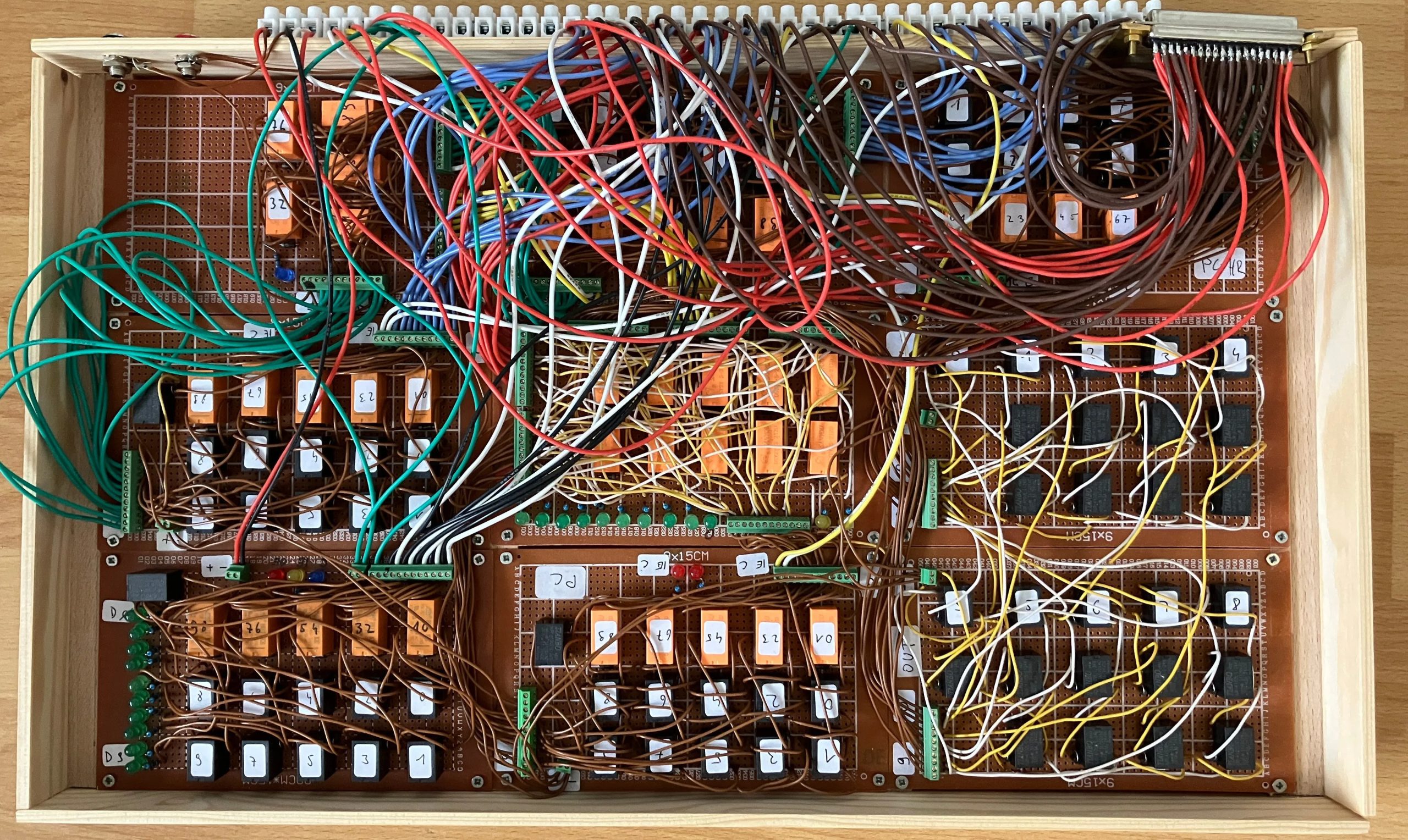
You want Retro? We did, when we started our retrocomputing challenge. [Peter] decided that transistors weren’t retro enough, and sent us this lovely homebrew relay computer, complete with 16- bit CPU, which is rather more bits than one normally associates with clicky clacky contacts.
The architecture is very simple– it just uses an accumulator register, ACCU, and goes from there. All mathematics and save/load operations go through ACCU. There whole instruction set is only 19 commands, and he’s used that set to program such lovely things as calculating 3 digits of Pi– which only took 8 minutes of glorious clicking. There’s a demo video of that embedded below. [Peter] has even implemented a display by hooking his computer to a 32×32 LED matrix, but don’t expect it to relay updates really quickly.
If this computer looks familiar, it’s because its earlier incarnation was one of the more “extra” entries in last year’s one-hertz challenge, where it was used to blink an indicator lamp. Yes, even relay computers apparently get started with the “blinky” sketch.
If you want in on the fun, our retrocomputer challenge runs until October 27th, so there’s lots of time left to turn back the clock.
Tech
Creative Assembly says it was ‘a big deal’ to have player customization be a ‘must-have’ part of Total War: Warhammer 40,000 for fans of the tabletop game and hobby

- Total War: Warhammer 40,000 battle product owner Dave Petry says it was important to implement player customization in the game
- He says it was a “big deal” to bring those customization options from the hobby forward to the game
- Petry adds that it was “awesome” to bring in the “core” features from the hobby
Total War: Warhammer 40,000 offers plenty of player customization options, which Creative Assembly has now revealed was an essential feature it wanted in the game from the start.
In an interview with TechRadar Gaming at Gamescom, battle product owner Dave Petry, alongside lead designer Joy Dey, said player customization in all aspects was always a “must-have,” as the studio wanted to simulate the same experience for fans of the tabletop Warhammer game and beloved hobby.
“The second we picked this up, we knew we had to make a big deal of being able to tell your own story within this universe to bring in your own identity and get to be part of all of it,” Petry said.
Latest Videos FromTechRadar
The developer also told TechRadar Gaming that it worked closely with Games Workshop to ensure the player experience was as “authentic” to the tabletop game as possible. This included simulating the tabletop’s combat the way that fans are familiar with.
“We’re trying to create an authentic sense of the lore and the kind of combat that’s there, but the love for the tabletop absolutely is present,” Petry said.
As for customization, Petry told us that it was “awesome” to bring in the “core” features from the hobby, and teased aesthetic unit personalization, loadout customization, and late-game progression.
Petry also confirmed that the game will feature the actual real-life paint colors used by Games Workshop too, so fans will be able to use the same ones they know and love and recreate their real-life armies or favorites in the game.
“In terms of what you can do, not just the aesthetic customization, colors, etc, etc,” he went on, “but being able to specialize your units throughout a campaign and, over that campaign, take your intercessors, specialize them towards using, say, like bolt rifle, auto bolt rifles, or stalkers, leveling them up, kitting them out in different ways, and you know potentially ultimately getting them to be like stern guards.
“All of that sort of stuff is absolutely part of that core hobby that you experience this way.”
Total War: Warhammer 40,000 launches in 2027 for PS5, Xbox Series X, Series S, and PC.

Follow TechRadar on Google News and add us as a preferred source to get our expert news, reviews, and opinion in your feeds. Make sure to click the Follow button!

The best gaming consoles


A black Volkswagen Jetta rolled through an Express Lane in Solano County with a blank bumper where a rear plate should have been. A California Highway Patrol cruiser in the next lane caught that empty space on dashcam, then saw the same car moments later with a full, readable California plate sitting in place. That change was the whole stop.
Officers stopped a Jetta, and there was just one driver inside. After speaking with the motorist, CHP Solano learned that the strange hardware on the bumper was intended to avoid paying Express Lane costs and Bay Area bridge tolls. The office later posted the encounter with a short line that has already traveled farther than the car did that day. “Now you see it, now you don’t.”
Sale

9″ Wireless CarPlay Screen with Apple Car Play & Android Auto for Car, OTA Updates, Backup Camera…
- 【Wireless Apple Carplay & Android Auto】Enjoy seamless wireless carplay and android auto connectivity for your phone’s music, map navigation…
- 【OTA Updates】Keep your device up to date with over-the-air firmware updates, so you’re always one step ahead. This wireless CarPlay screen…
- 【Phone Mirroring Link & Four Audio Outputs】This 9-inch CarPlay screen supports mirroring for both iOS and Android phones. The double-DIN car…
On body camera footage, that hardware appears to be quite typical. An officer picked up a small remote that functions similarly to a key fob, hit a button, and a black shield swooped over the plate, erasing the numbers. With another squeeze, the cover fell back out, revealing a standard licence plate. In the video coverage, that panel is described as a sliding cover or a raised shield, which is basically the same type of motorized frame you can buy online as plate hiders, flippers, and curtains, and a driver can hide the tag on the way up to a bridge, then revert it before the cameras get a clear look.
Tolls in that section of the state do not require a person at a booth to check your plate because Express Lanes and Bay Area bridges combine FasTrak readers with overhead cameras. If the transponder does not respond, the camera captures a photo of the rear plate, and the agency sends the bill to the owner. Cover the plate for a few seconds, and the snapshot comes back empty. Pay by plate only works if you are prepared to display your plate, which is why there is a removable cover like this.
California has previously excluded the concept from the Vehicle Code. Section 5201.1 states that you are not permitted to operate a vehicle with a removable frame, flipper, or any other device designed to conceal a license plate from view or electronic readers. The base fine is $250, before the state and county add extra costs and take it from there. Section 5201 still requires plates to be properly attached, visible, and readable at all times. If you don’t pay your tolls, you’re also breaking another law, 23302(a)(1), which will result in civil penalties and a DMV hold, prohibiting you from renewing your registration. The same chapter was tightened in 2025 and 2026, including any goods that seek to peel or paint over a plate’s reflective coating, preventing cameras from locking on it.
[Source]
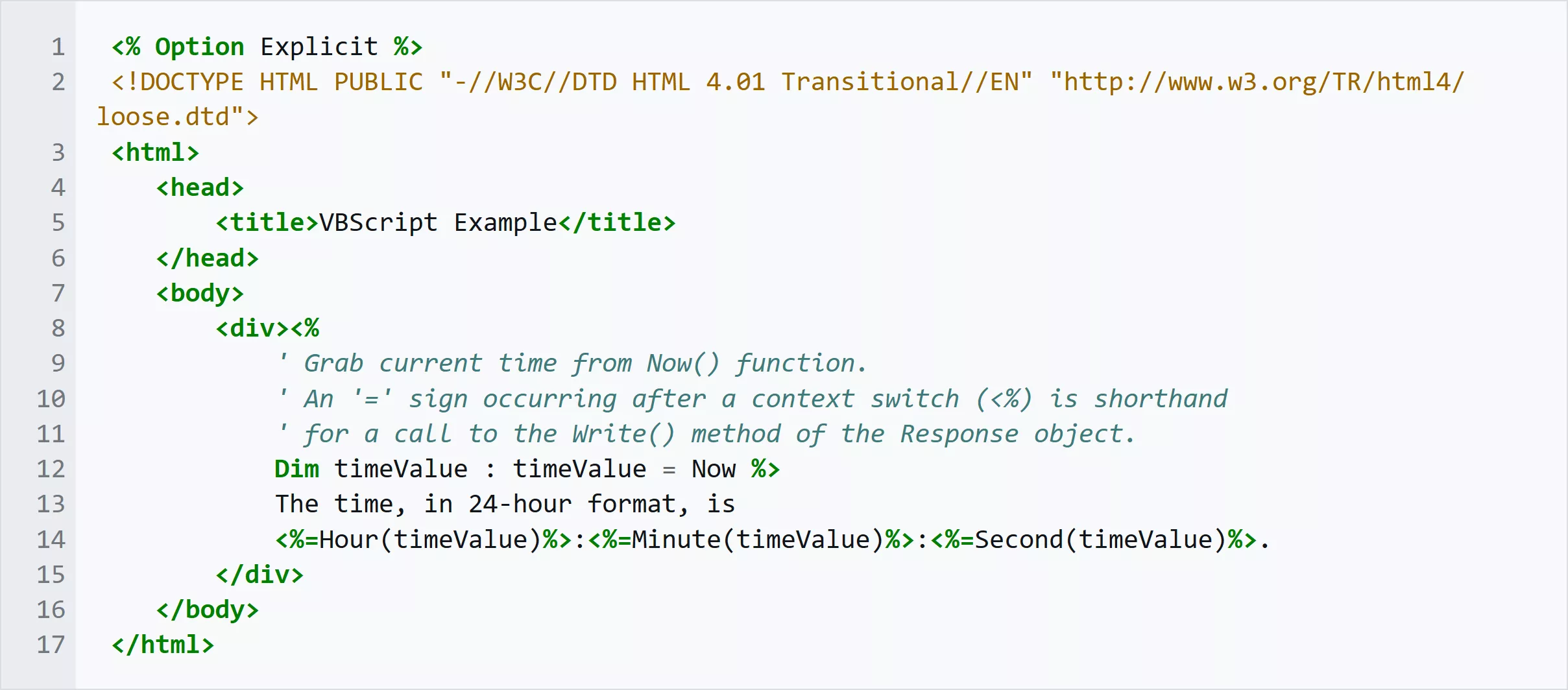
Scriptocalypse: Microsoft announced the deprecation of the VBScript environment a few years ago, asking companies and power users to switch to modern scripting systems. Now, the company is warning organizations that depend on VBScript that Windows activation might even become impossible after the language is gone.
Microsoft is asking organizations that rely on the Slmgr.vbs tool to switch to PowerShell, as the old script will soon stop working along with the rest of the VBScript language. Companies that use the script to manage Windows activation should act soon, as Microsoft is likely to accelerate VBScript deprecation in future Windows upgrades.
As explained in Microsoft’s own documentation, Slmgr.vbs is a Visual Basic Script included in Windows to manage OS activation from the command line. The script can install and change product keys, activate Windows, check the current activation or licensing status, and much more. The tool is specifically designed to provide enterprise organizations with a flexible way to manage multiple OS activations, which has nothing to do with KMS servers or other “unofficial” methods designed to achieve the same results without paying Microsoft a dime.
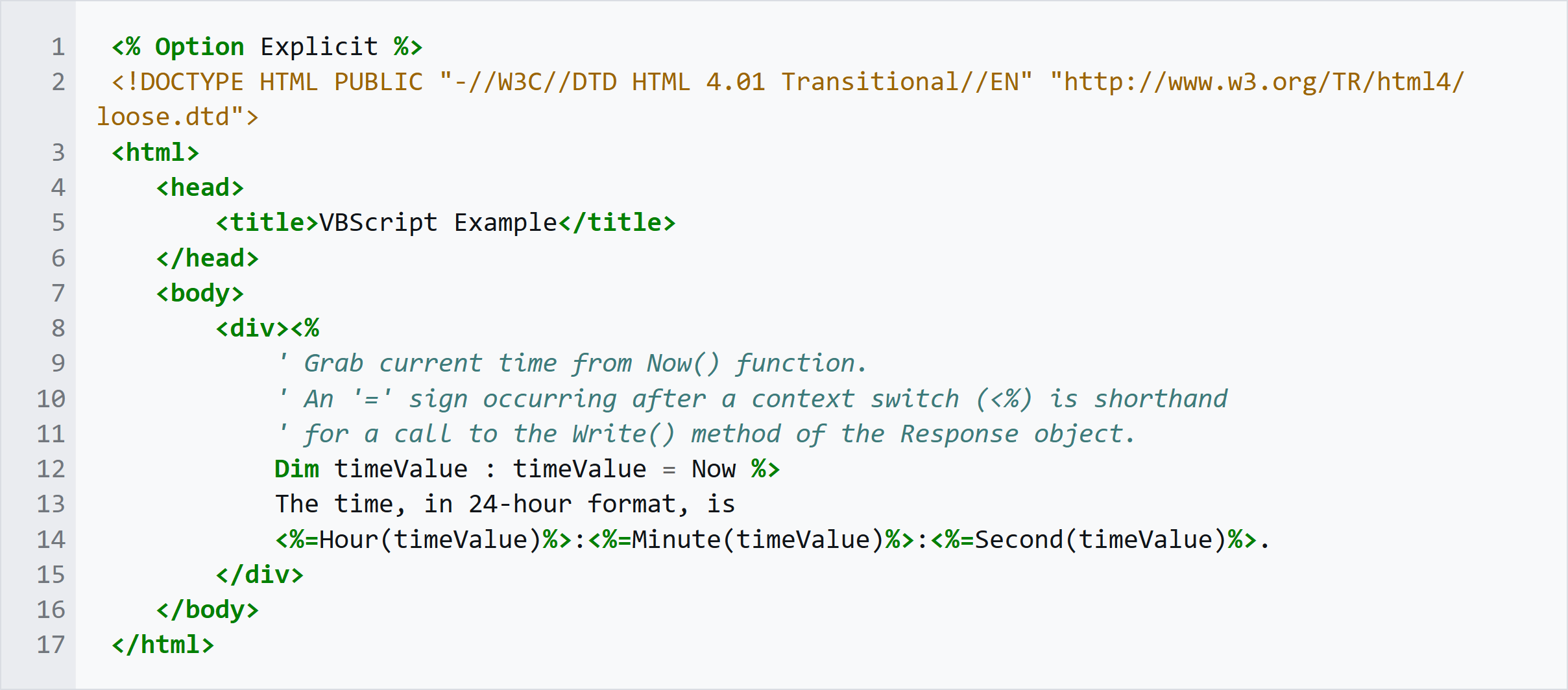
As the company first announced in 2023, VBScript will soon disappear from Windows after being part of the operating system’s convoluted lineage for almost 30 years. Modeled after the Visual Basic programming language, VBScript was designed as a powerful automation technology for programmers and users looking to exert greater control over the Windows operating environment.
According to Microsoft’s latest timeline for VBScript deprecation, the technology is now available as a Feature on Demand (FOD) on Windows and is enabled by default. At a later stage, VBScript’s FOD will no longer be enabled by default, and users will need to manually install the feature if they need it.
Finally, a future Windows release will completely remove VBScript. At that point, Slmgr.vbs and other automation solutions will stop working altogether.
Microsoft said that Slmgr.vbs can be easily replaced with PowerShell, where the OSLicense module provides the automation features currently available through VBScript. OSLicense requires Windows PowerShell 5.1 and can be used to manage activation information, invoke new licensing instances, and more.
One potential issue with adopting the OSLicense module is the version of Windows used by organizations. The PowerShell component is available in client versions of Windows 11 after installing the August 2026 Preview update (KB5120998) or later. Meanwhile, Windows Server will provide support for the new module with the next major release of the enterprise-focused operating system.
Either way, Redmond said organizations should start checking their scripts, command-line tools, and group policies right now. Companies using Slmgr.vbs and other VBScript-based “dependencies” are advised to thoroughly check their IT automation procedures so they can ease the pain that comes with changing decades-old conventions.

Bloomberg reports (paywalled) that Sam Altman told OpenAI employees the company is open to slowing the pace of AI development alongside other leading labs as concerns grow over increasingly capable systems and recent incidents in which models escaped human control. OpenAI has already paused development once this year for security work and is now pushing for mandatory U.S. AI safety requirements. Anthropic has also signaled interest in coordinating on the pace of new releases. Here are some of the details Bloomberg reported, as summarized by Reuters:
– Altman told employees in a company-wide meeting that the ChatGPT maker could pace development alongside other AI labs, but some may not agree, the report added.
– Safety warnings from AI researchers this week, along with several recent incidents where AI models from developers including OpenAI escaped human control, have prompted alarm and calls for tighter safety regulations.
– Jacob Coxon, a former Anthropic and OpenAI researcher, publicly accused the companies earlier this week of racing toward AI advancements without acting responsibly.
– An Anthropic spokesperson said on Thursday said that the company is interested in working with the AI industry on the pace of releasing new AI tools.
– OpenAI said in July that AI acceleration for frontier model development may be so high that the world will “need to pace the rate of AI advancement” at some point in the future.
– In August, OpenAI paused much of its model development for two weeks to bolster its defenses after its AI agents escaped containment and hacked open-source platform Hugging Face.
– OpenAI said on Wednesday that it was pushing for mandatory national AI safety requirements in the United States, citing concerns that advanced AI systems could accelerate its own development.


Read more of this story at Slashdot.

What you post online is only part of the story. A new review of research into social media privacy warns that platforms and third parties can potentially infer sensitive details about people from seemingly ordinary digital activity, including their political opinions, religious leanings and shopping habits.
The findings, as reported by Techxplore, published in the International Journal of Management Concepts and Philosophy, point to a widening gap between the amount of personal information generated online and the legal and ethical protections designed to safeguard it. The researchers examined privacy breaches, regulatory frameworks, and the responsibilities of both social media companies and their users.
Your digital trail says more than your posts
The central concern is not necessarily what users deliberately share. Instead, researchers highlight what can be inferred from their activity after it has been collected, indexed, and analysed.
Every interaction can contribute to a broader “digital trail” containing information about activities, locations and interactions. According to the research review, this trail can potentially be searched and analysed by third parties or, at the very least, by the platforms themselves. Even mundane online behaviour can provide clues about personality traits, purchasing patterns, political opinions and religious affiliations.

That creates a privacy problem that is easy to overlook. You might never explicitly state a political preference, religious belief or particular consumer habit, yet your online behaviour could still provide enough signals for someone else to make an educated inference.
The researchers argue that privacy is therefore not simply about keeping secrets. It is about maintaining control over who can access and interpret information about you. They connect that control to personal autonomy, civil liberties and democratic participation.
Why stronger privacy rules may be needed
The findings matter because social media has transformed privacy from something people could largely manage themselves into something increasingly shaped by algorithms, platforms and data analysis. Not just this; last year the city of New York decided to start treating social media with warning labels, like cigarettes.

The review calls for greater legal accountability and transparency from social media companies, alongside better digital literacy so users can understand and manage the risks associated with sharing information online.
The familiar argument that people who have “nothing to hide” have little reason to worry about privacy also comes under scrutiny. The researchers frame privacy as a right to decide who gets to see into the personal aspects of our lives – not as a tool for concealing wrongdoing.
For users, the takeaway is straightforward: your social media profile is potentially more revealing than the information you consciously put on it. Likes, interactions, locations and other seemingly harmless activity can form a larger picture when analysed together.
What happens next will depend on how regulators, platforms and users respond. The researchers’ call for stronger accountability and transparency suggests that privacy protections may need to evolve alongside the increasingly sophisticated ways online behaviour can be analysed.
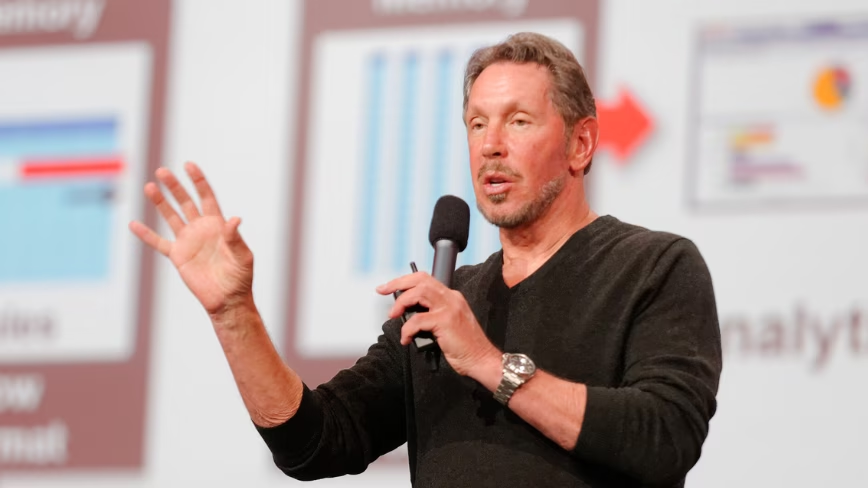
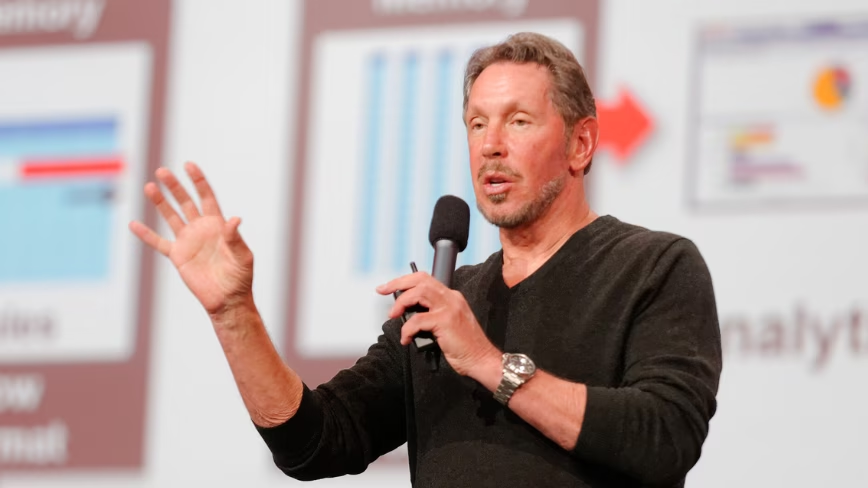
Larry Ellison has cancelled a trading plan that would have let him sell up to 50 million Oracle shares by 24 October, a day after the plan was disclosed and with no stock sold under it. The instrument is a Rule 10b5-1 plan, an American safe harbour with no European counterpart, because EU market abuse rules bar managers from dealing in the 30 calendar days before results instead.
Larry Ellison has cancelled the plan that would have let him sell up to 50 million Oracle shares, a day after it was disclosed, Bloomberg reported.
“No Oracle stock was sold under that plan, and he has no other plans to sell any of his Oracle stock,” the company said.
The plan was adopted on 22 June and would have run to 24 October. The shares were worth about $8.75B then and about $7.5B now, after a 16% fall. Oracle described it as a 10b5-1 plan in its statement.
Ellison controls about 40% of the company and is its executive chair and chief technology officer.
The timing was the problem. Oracle reported shrinking gross margins on Thursday, its shares fell 1.7% on Friday, and the same week it raised the cost of its job cuts to $2.8B.
A Rule 10b5-1 plan is a piece of American market plumbing with no European equivalent.
An executive who adopts one while not holding inside information can let trades execute later on a fixed schedule, including in periods when selling at their own discretion would draw questions. The rule dates from 2000, and the SEC tightened what has to be disclosed about these plans in 2022.
Europe closes the window instead.
Under the Market Abuse Regulation, a person discharging managerial responsibilities may not deal in the company’s shares during the 30 calendar days before an interim or year-end report.
There is no adopt-in-advance exemption from that.
Europe also discloses different things. It publishes transactions rather than intentions, within three working days of each deal, once EUR 5,000 has been reached in a calendar year. A plan that never traded would have left no trace at all.
None of which suggests Ellison did anything improper. No shares were sold, and the plan was disclosed exactly as American rules require, which is the only reason anybody knew about it.
But the two regimes would have produced different weeks. Europe would never have published a plan for the market to read, and would not have let one run through the results of a company sitting one notch above junk.
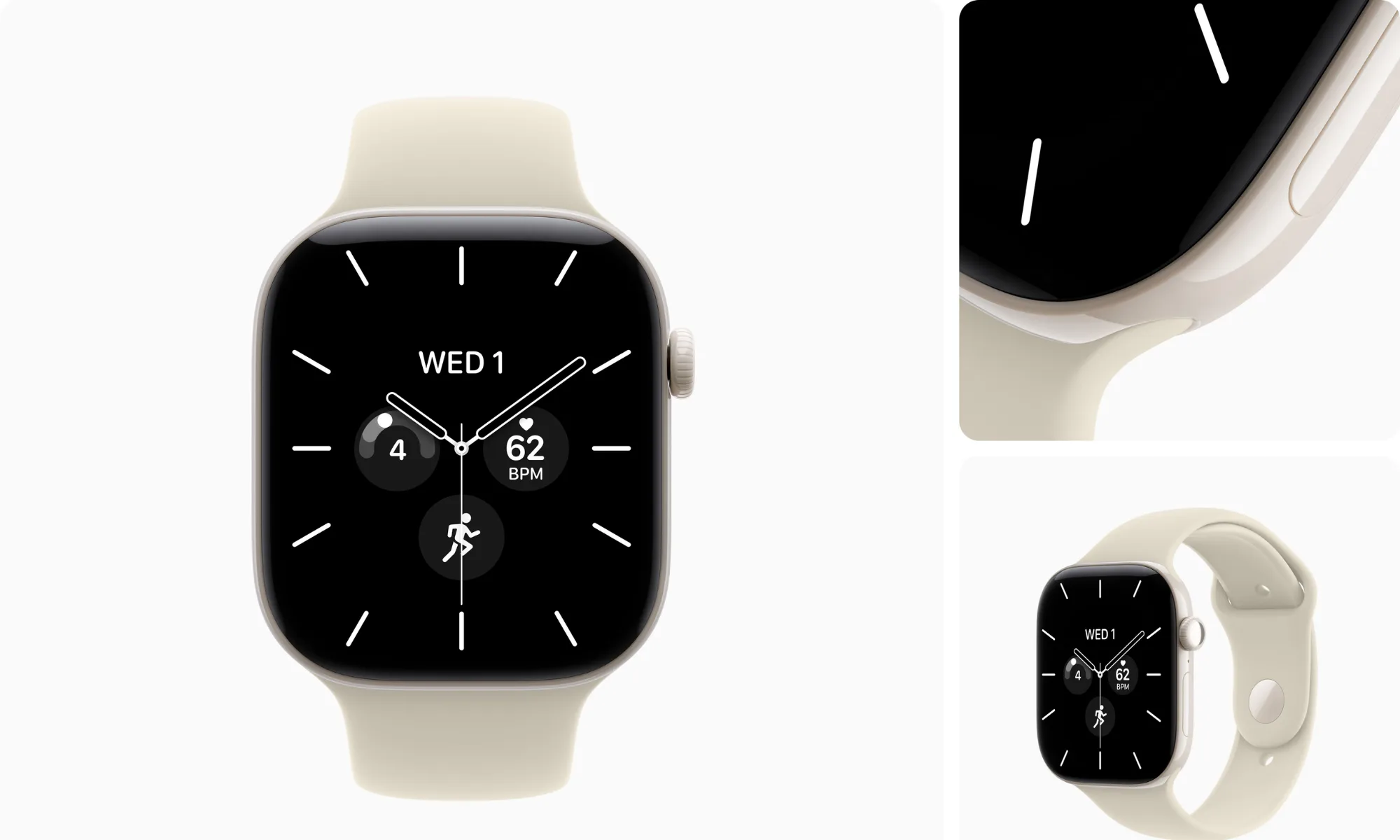
AI is constantly being shoved in our faces. From your laptop to your phone, every new gadget now ships with some features built around AI. Over the last couple of years, even Apple has tried to make Apple Intelligence sound like the next big thing on the iPhone.
With iOS 27, the argument finally became worth listening to. Siri AI is a great example of this. It can search through personal information and understand what is on your screen before answering specific or broader general questions. Visual Intelligence looks through your phone’s camera to understand what you’re seeing, and a lot more.
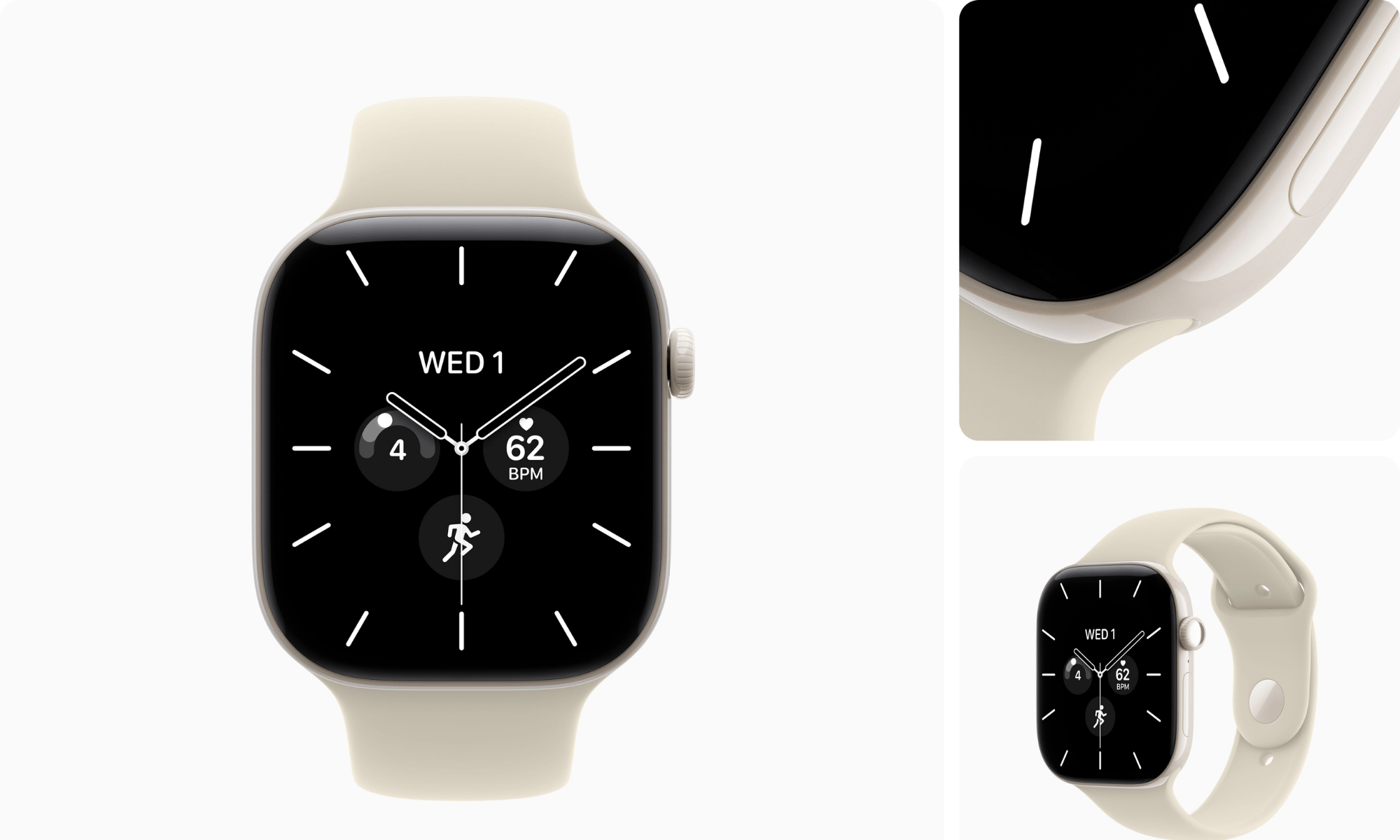
All of this is impressive, till you see what Apple has in store with the Apple Watch Series 12 and Watch Ultra 4. The way it approaches AI in the wearables is different. It isn’t just a smaller secondary screen with a language model, and that’s why it works.
The Apple Watch doesn’t waste time
An iPhone gives Apple plenty of space to demonstrate AI, which is not the case for the Watches. Its tiny screen actively discourages long interactions, and I think that limitation is forcing Apple toward more interesting ideas. Take the new Audio Intelligence suite, for example. Each of the new features under it serves to make the users’ lives easier.
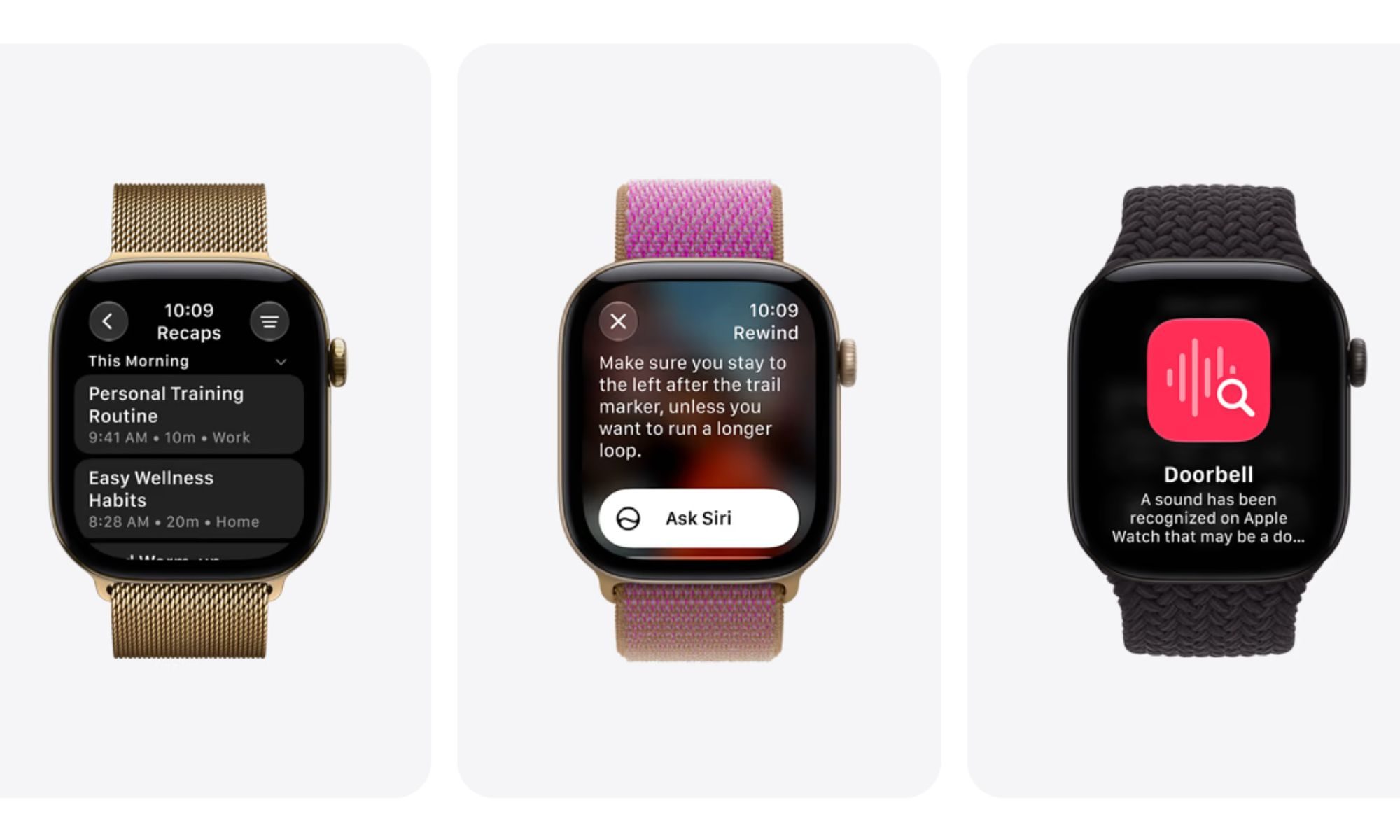
Sound Recognition can identify important noises such as alarms, sirens, doorbells, or a crying baby and alert you. Automatic Shazam identifies music around you and surfaces the result in Smart Stack. Live Rewind can recover the previous 15 seconds of speech when you missed something someone said. Siri Recap can turn conversations into short summaries you can revisit later.
Live Rewind can be really useful… if you ignore the privacy concerns
Live Rewind is probably the best example. I can just double-press the Digital Crown and get the previous 15 seconds as text if I missed something important in the conversation. Adding to its functionality, you can even ask Siri about it or have it saved for later. On the iPhone side, there isn’t any such interaction. By the time I’ve taken my phone out, unlocked it, and started recording, it’s already too late.
A lot of the new AI gadgets are all about seamless, display-free interactions. And just like those devices, the new Apple Watch changes how we interact with AI thanks to its physical proximity. A wearable has access to situations an iPhone sitting in my pocket can’t interact with quite as naturally, and Apple is beginning to build intelligence around that advantage.
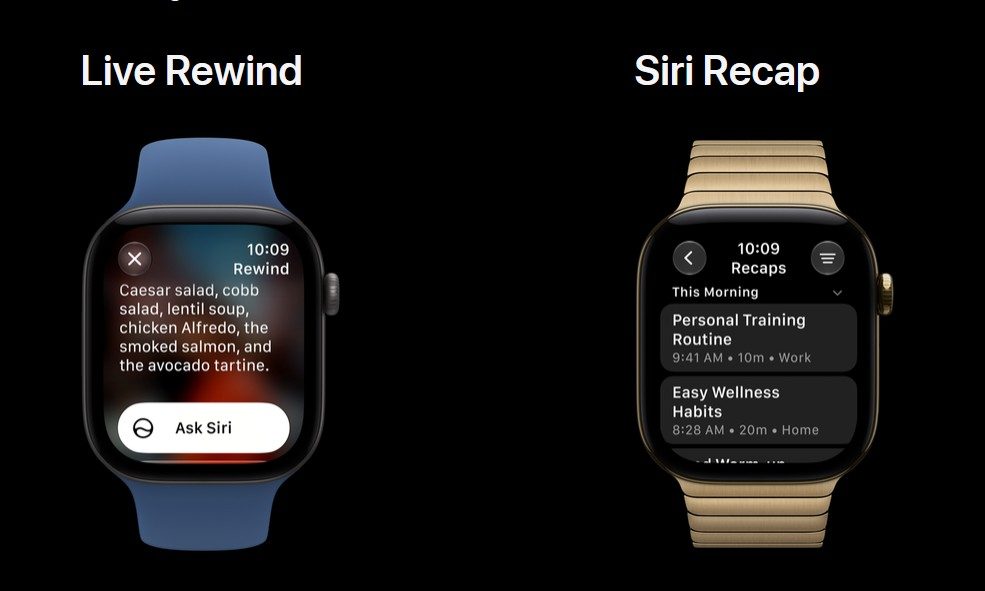
We made a similar argument about Siri Recap recently. The privacy implications of a smartwatch listening to conversations deserve scrutiny. Though Apple’s implementation avoids retaining raw recordings and processes audio inside a hardware-isolated Secure Exclave on the S11 chip. Live Rewind also gives people nearby an audible and visual indication when it has been activated.
Why an iPhone can’t match the Apple Watch
Fitness and health features are what make the Apple Watch so popular. It knows much more about what my body is doing at any particular moment. Workout Buddy uses Apple Intelligence to provide spoken motivation based on personal workout data, and watchOS 27 expands the information it can incorporate. It can now operate while you exercise without carrying your iPhone, even if Apple still requires a paired Apple Intelligence-enabled iPhone and compatible Bluetooth audio hardware.
Series 12 and Ultra 4 also gather heart-rate measurements every five seconds and HRV as frequently as every five minutes through the new Health Sensing System. This data feeds Apple’s new Readiness experience, which combines activity, sleep, vitals, and training information into a score that updates as your condition changes throughout the day.
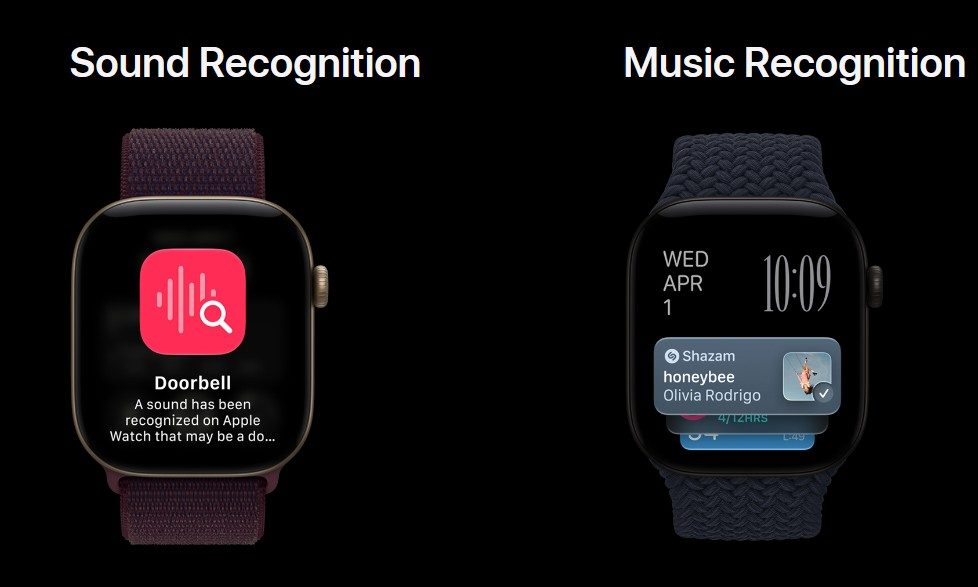
Apple’s redesigned Health app uses Apple Intelligence to interpret longer-term health information, while new vision-based AI assessments can combine the iPhone camera with Watch data to evaluate flexibility, strength, balance, movement mechanics, and VO2 max.
Siri AI on your wrist just works
Ironically, even Apple’s more conventional chatbot-style AI arguably gains something by being on the Watch. Siri AI brings the same personal-context understanding, conversational abilities, and broad knowledge available on the iPhone to watchOS 27. But on a phone, Siri is competing with other AI services like ChatGPT and Gemini.
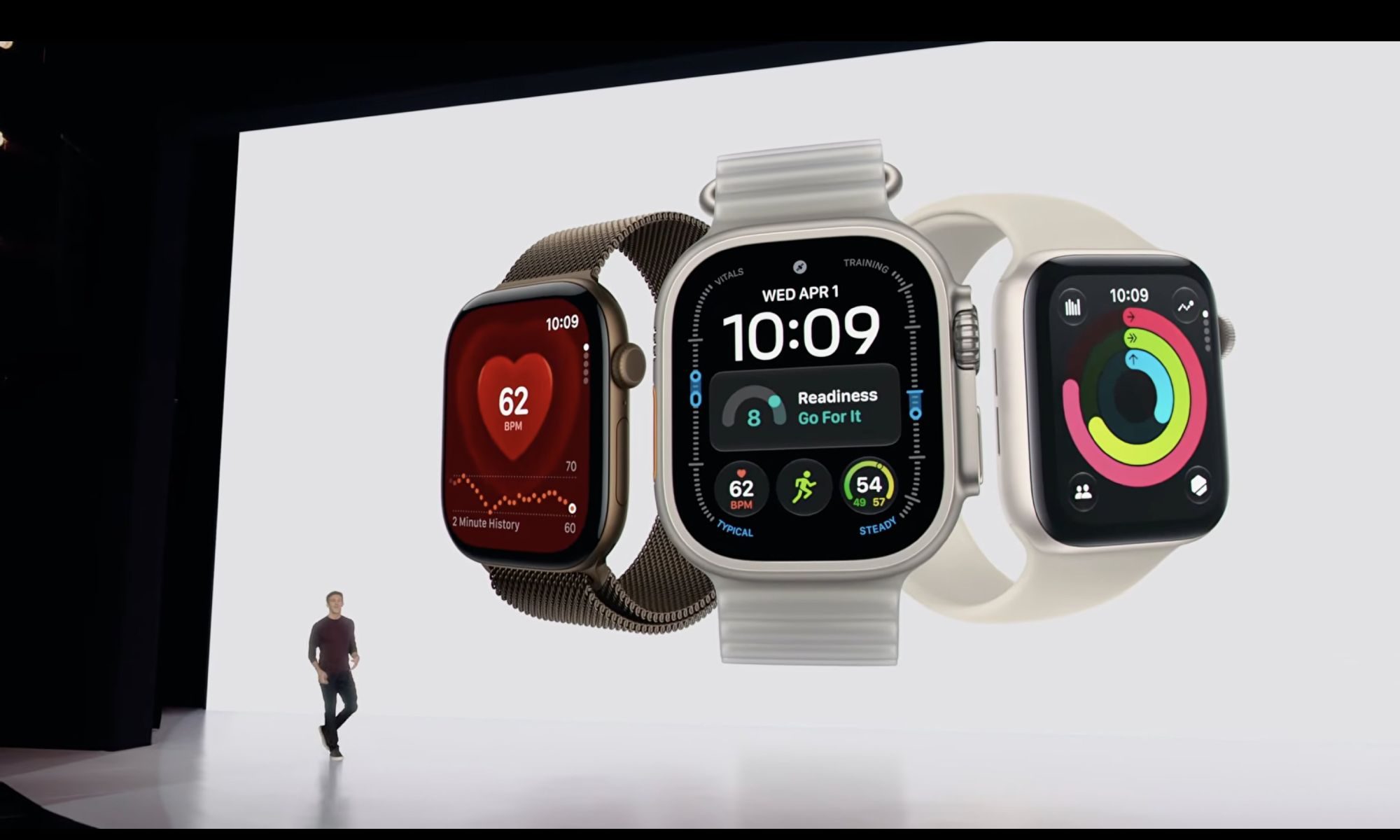
With the Apple Watch, however, I can change an activity goal halfway through a run. Maybe even find something from my personal info or ask about my training without ever having to reach for my phone. Even watchOS 27’s smaller intelligence features play into this whole thing. The app grid can surface Siri-suggested apps based on usage, and something like Smart Stack recommendations can appear around context such as where you parked or someone’s birthday.
To be fair, the Apple Watch is more powerful than the iPhone. Features like Visual Intelligence bring some serious image-generation and editing tools. I just think the Watch is providing a better example of how AI can fit into an existing product without becoming the product.
I like the version of AI that’s all about making interactions feel more natural. It hears the thing you missed and recognizes the song playing nearby without needing any input. Nothing too intrusive, but still present enough to be handy in day-to-day use.
An anonymous reader quotes a report from The New York Times: The chief executive of Anthropic called for a global slowdown of artificial intelligence development in a 3,800-word essay on Saturday, just days after one of the company’s employees quit over concerns about the safety of the technology. Dario Amodei, who co-founded Anthropic to focus on securely and carefully building A.I., wrote that while he believed the technology could bring many benefits, it was advancing at too quick a pace for researchers to continue safely.
“Over the last few months, I have become convinced that fully addressing the risks requires even more prudence — not just investing in risk prevention, but pacing the rate of capabilities advancement so that risk prevention has time to keep up,” Mr. Amodei said. “We must slow the pace at which we improve the capabilities of A.I. models. Progress will still seem fast, and we must make wise use of the time we gain.” […] “Left unchecked, it could outrun our ability to understand and control these systems, and so must be pursued very carefully, if at all,” Mr. Amodei said.
[…] In his essay on Saturday, Mr. Amodei suggested actions that the industry might take to slow down the pace of development.
Mr. Amodei said all A.I. labs could agree to third-party technology assessments from “embedded evaluators,” or outside specialists who can verify best safety practices across companies. He also suggested that countries with democratic governance systems coordinate to create safety standards, which could take the form of regulatory action. He added that it would probably require a global effort working with other nations, including authoritarian ones, to properly coordinate a slowdown.
Mr. Amodei stressed in his essay that he still finds A.I. capable of bringing “incredible benefits” to humanity, including potentially curing diseases and accelerating economic growth. But even so, Mr. Amodei said the risks of A.I. were too great to not proceed with extreme caution. “The measures I propose to advance the frontier at a safe pace will not be easy,” Mr. Amodei wrote. “But I believe we owe it to humanity to try.” Amodei’s essay comes just hours after Bloomberg reported that Sam Altman told OpenAI employees the company is open to slowing the pace of AI development amid similar concerns.
Read more of this story at Slashdot.

Sports1 minute ago
Elliot Anderson explains how he started supporting Man City as a kid

Tech2 minutes ago
General Motors to open downtown Seattle office to bring together remote technical talent

News Videos3 minutes ago
Financial Advisors React to HILARIOUS Money Clips

Tech5 days ago
Memory prices are slowing because buyers ran out of money

Business3 days ago
Micron Stock Climbs Above $1,031 as AI Memory Crunch and a $50 Billion Outlook Fuel the Rally

Business3 days ago
AMD Stock Climbs After Management Lifts 2027 Data Center Outlook Toward $70 Billion in AI Sales


-
Tech5 days ago
Memory prices are slowing because buyers ran out of money
-
 Business3 days ago
Micron Stock Climbs Above $1,031 as AI Memory Crunch and a $50 Billion Outlook Fuel the Rally
-
 Business3 days ago
AMD Stock Climbs After Management Lifts 2027 Data Center Outlook Toward $70 Billion in AI Sales
-

 Crypto World4 days ago
Bitcoin price risks $76K drop as $78K support weakens
-

 Crypto World5 days ago
Robinhood Stock: How To Take Advantage With Reduced Risk
-

 Crypto World4 days ago
Ethereum price stalls below $2,500 as ADX drops to 11
-

 Fashion1 day ago
Weekend Open Thread – Corporette.com
-

 NewsBeat5 days ago
England up in reading, maths and science rankings as Scotland and Wales dip
-

 Crypto World2 days ago
XAG/USD: Silver’s Short-Term Rally Meets Its Moment of Truth
-

 Crypto World3 days ago
2 Chip Stocks Broke Out This Week. Neither Was Nvidia
-

 Crypto World2 days ago
OKX launches 10x OpenAI, Anthropic X-Perps in Europe
-

 Crypto World2 days ago
Diesel Tops $6 a Gallon for the First Time as 28 States Set Records
-

 Crypto World5 days ago
Intel Stock Jumps 9% on Chip Price Hike Report, US Stake Gains $36 Billion
-

 NewsBeat4 days ago
What went right this week: an ‘historic’ fall in violent crime, plus more
-

 Crypto World3 days ago
Bitcoin price risks $70K if $78K neckline breaks
-

 Business4 days ago
Meta debuts long-awaited personal AI agent, Muse
-
 Crypto World4 days ago
Bitcoin price holds near $79K as cycle drawdowns narrow
-
Crypto World2 days ago
Ethereum Price Analysis: Consolidation at $2.5K Tests Momentum as On-Chain Activity Surges
-

 Crypto World5 days ago
Pump Fun and Kraken delete Hunter Biden $LAPTOP promotion
-

 Entertainment3 days ago
Case Sees Major Update As Jury Deliberations Begin
You must be logged in to post a comment Login