April Spiller has plenty of experience with kids. She’s been a teacher for the past 11 years, has nieces and nephews, and has multiple friends with kids.
“As a childless adult who has been around and helped raise over 2,000 other people’s kids, if I am giving you advice, it’s because I have either been there or have seen others going through it,” Spiller told HuffPost.
But she’s learned the hard way that her advice is rarely taken seriously because she’s not a parent herself. So now, she keeps her thoughts to herself.
Her experience raises an interesting question: is it ever OK for childless adults to give parenting advice? Even if you don’t have kids yourself, it’s natural to have opinions about choices your siblings or friends may make when raising theirs. But having opinions and being able to relate are different experiences.
Advertisement
To dig deeper into this debate, we talked to parents, childless adults and an ethicist for their opinions.
nicoletaionescu via Getty Images
“It’s judgment without knowing what’s going on.”
Valentina Rebeschini is a photographer living in London with a 14-year-old daughter. She’s been on the receiving end of plenty of parenting advice, and she’s done listening to people who don’t have kids themselves.
Simply put, she finds that people without kids rarely know what it’s actually like to parent them.
Advertisement
“The moment I mention I have a teenager [to someone who doesn’t have kids], I get the classic ‘oh good luck,’ without them actually knowing the situation. It’s judgment without knowing what’s going on underneath,” Rebeschini told HuffPost.
It’s a situation she’s seen play out throughout her kids’ childhoods. “When my daughter was younger, people who didn’t have children would say things like, ‘I wouldn’t give a child an iPad,’ or ‘I wouldn’t let them watch TV,’ and then found themselves doing exactly that once they had their own. Now, with a teenager, it’s the same thing. People imagine what ‘teenager’ means without knowing the developmental history, the day-to-day reality or whether there’s any neurodivergence involved,” she shared.
“
A person does not necessarily need to be a parent to recognise patterns and issues involving boundaries, communication, respect or behaviour.
Even when it’s coming from a place of lived experience, giving advice to someone with kids can backfire if you don’t have one yourself. “If I had it all to do over again, I would not give my friends with kids parenting advice. This isn’t the only reason this friendship ended, but it definitely contributed,” said Darrin Smith, a 37-year-old childless web developer.
Advertisement
Smith shared that a few years ago, one of his friends had a baby and insisted on using gender-neutral pronouns. “Posts would say things like ‘my child’ or ‘my baby.’ Her reasoning was not wanting to force gender norms on her kid,” Smith said.
As a gay Black man and her friend, Smith felt entitled to offer his opinion, which was that by withholding basic gendered language, she might be creating a problem before one existed. Ultimately, the friendship unravelled.
“It didn’t matter how logical or well-intentioned my perspective was. Giving unsolicited parenting advice is almost always received as a direct attack on their values as a mother,” Smith said. “If I could do it all over again, I’d just keep my thoughts to myself.”
“People without children have every right to care about what kind of adults we’re collectively raising.”
Advertisement
Not every experience of a childless adult doling out parenting advice is a bad one. “Some of the best advice I have received as a new dad was from a friend who doesn’t have kids,” dad Asim Zahid told HuffPost.
Zahid said that as far as he’s concerned, the value of advice is not dependent on whether somebody has kids; it’s the way the advice is given. As long as the advice isn’t accompanied by judgment, he’s all for it. “Advice becomes unhelpful when it’s perceived as criticism,” he said.
Vanessa Gordon, a mother of two, feels similarly. Recently, she said, a friend of hers who does not have children pointed out that she interacted with her kids as if they were her friends, not her children. “He also told me that he has noticed how my children can be very manipulative and how easily I give in to them, especially as I am juggling work and time with them at the same time,” Gordon said.
Klaus Vedfelt via Getty Images
“A person does not necessarily need to be a parent to recognize patterns and issues involving boundaries, communication, respect or behavior,” Gordon said.
She easily could have been offended by his advice, which she hadn’t even asked for. But Gordon told HuffPost that she actually appreciated it.
Advertisement
“His perspective was helpful because he was observing the situation from the outside. Parents can become so immersed in the daily realities of raising children that certain patterns are missed. A person does not necessarily need to be a parent to recognise patterns and issues involving boundaries, communication, respect or behaviour,” she said.
Conor Keenan, a dad of two kids, told HuffPost that some of the best parenting advice he’s ever received came from his sister, who doesn’t have kids but used to be a special needs teacher, and from his friend Cat, who doesn’t have kids but is a court-appointed child advocate.
“I think people without children have every right to care about what kind of adults we’re collectively raising. That doesn’t mean every piece of advice is good advice. But I’d rather hear someone out and decide for myself than dismiss their opinion simply because they don’t have kids,” he said.
What an ethicist thinks
Advertisement
According to Byron Hyde, an ethicist and philosopher of science and public policy at Bangor University in the UK, there’s a whole field of philosophical study devoted to what makes someone a good source of knowledge called epistemology.
“Many people assume that personal experience is a good source of knowledge and tend to look down on ‘book learning’ or other sources that are perceived to be ‘too academic’ or ‘intellectual,’” Hyde explained.
But he emphasised that the reality is that personal experience is considered the weakest type of evidence. This means that just because someone is a parent doesn’t mean their advice is automatically going to be good.
With this in mind, Hyde told HuffPost that the value of parenting advice depends on the evidence for where it’s coming from. “For example, if you’re friends with a child psychiatrist, why would you ignore their free advice, for which they normally charge as a professional, just because they don’t have children themselves?” Hyde asked.
Advertisement
But even childless adults who don’t work in career fields having to do with children may be worth listening to. “Don’t forget that everyone was a child once,” Hyde said.
There’s a time and place for giving advice – especially when it comes to something as personal as parenting. Hyde recommends that childless adults only offer parenting advice when it either comes from specialised training or knowledge gained through personal experience, such as something that they went through as a kid.
Otherwise, it’s best to keep quiet – even if you have opinions you’d really like to share.
Even if you do have advice that stems from trained knowledge or personal experience, Hyde recommends only sharing it when you’re asked. Unsolicited advice is rarely well-received.
Donald Trump said “everything’s going to work out fine and dandy” after an attack on a Saudi-operated oil pipeline, then gave a rather convenient answer after being asked when his costly Iran war might finally come to an end.
The US president insisted the conflict, which is now in its sixth month, would reach a conclusion “probably right after” America’s midterm elections in November.
Israel and the US launched the war at the end of February, with Trump at the time claiming it would only last around six weeks.
Asked on a visit to Dublin when it might end, he said: “I think very soon. I think it’ll be probably right after the midterms.
Advertisement
“They’re trying to hold out as long as they can, to complicate the election, but I think people are wise to it because Iran cannot have a nuclear weapon. It’s very simple.”
“And they would have probably hit us too, before we put out the fire,” Trump claimed Saturday. “But they cannot have a nuclear weapon. But I would say [the war will end] shortly. And oil will come tumbling down when that happens; oil prices will come tumbling down.”
Trump’s claim that the war will end shortly after the midterms arrives amid disastrous approval ratings, largely due to his handling of the economy and unpopular Middle East conflict.
The conflict escalated on Thursday after a major oil pipeline in Saudi Arabia — a US ally — was shut down following drone attacks launched from Iraq. Trump, who baselessly claimed Iran was responsible, tried to reassure the public.
“I have made a call with [Saudi Crown Prince Mohammed bin Salman],” he said. “He’s a good friend of mine, and it’s going to — I can just say everything’s going to work out fine and dandy. It’s going to be very good.”
Ahead of her dance floor debut later this month, Lacey – best known for her work as Stacey Slater in the long-running BBC soap – admitted that she’s “always wanted” to take part in Strictly, but until this year, she claimed she’d “just never been brave enough”.
“I’ve had a friend do it every year, so I know how hard it is,” she told the BBC. “A lot of my friends are physically fit, and they have been exhausted.”
On why she had a change of heart in 2026, she claimed that while she’s “not working on EastEnders this year”, she “thought it might be a good time to do it”.
Advertisement
“I’m not sure I am physically or mentally fit enough to do both jobs at the same time as well as run a household with three feral children!” she added with a laugh.
Looking ahead to her time on Strictly, Lacey enthused: “I’m actually most looking forward to the training. I think that I will enjoy that bit of it the most, and meeting everybody else.
“I’m obviously most terrified about the live Saturday nights and sitting in the makeup chair for that long, I’m not very good at that! I’m going to try my best and work on my patience.”
DALLAS — Republicans are increasingly worried that North Carolina’s Senate race is slipping out of contention.
For months, they had argued that a post-Labor Day infusion of cash could jolt new energy into the largely stagnant but critical Senate race. But as Republican nominee Michael Whatley struggles to meaningfully close the gap against Democrat Roy Cooper in the polls, some in the party fear they’re running out of time.
Republicans’ concerns were apparent in side conversations, closed-door meetings and even on-stage speeches at their splashy midterm convention in Dallas.
Sen. Rick Scott of Florida, a former National Republican Senatorial Committee chair, told POLITICO that North Carolina was “probably one of the hardest” states on the map.
Advertisement
“You’re running against an existing governor,” Scott said of Cooper. “So that makes it harder in an open seat.”
One person, granted anonymity to discuss a private lunch they attended with Senate Majority Leader John Thune and the Senate Leadership Fund on the second day of the convention, similarly described the North Carolina race as “tough.” The lunch was focused on the party’s battleground Senate map, and Thune zeroed in on Alaska, Maine and Michigan as top targets.
“North Carolina and Georgia are seen by most as off the map at this point, and with Michigan and New Hampshire becoming real flip opportunities as we get closer to November, it’s becoming even more challenging to justify spending in North Carolina and Georgia,” said one GOP pollster who was in Dallas for the convention and, like others in this article, was granted anonymity to speak candidly.
Public polling has consistently shown Cooper ahead, including a survey released Thursday that found the Democrat leading Whatley by 11 points among likely voters.
Advertisement
Even President Donald Trump appeared to acknowledge the challenge: “Now in North Carolina, you have a little more difficult case, because people don’t quite get it, but they’re going to find out,” he said during his speech on the first night of the convention, while reiterating his support for Whatley, his former handpicked Republican National Committee chair.
The White House later announced that he will travel to Gastonia, North Carolina, for a campaign rally with Whatley next week. “The president’s first visit in the coming week is going to be helpful,” said a person close to the Whatley campaign. “Roy Cooper has maxed out his support and can’t grow anymore. But voters in NC, especially on the right, tune in late and break late. The Trump visit will be a good motivator for our voters.”
North Carolina’s Senate contest has been one of the more subdued races of the cycle, especially for a perennial battleground that could play a pivotal role in determining control of the upper chamber. That could change as more money pours in during the final stretch — and if Whatley can pick up more steam.
“Some in D.C. — [Republicans] and [Democrats] — have viewed North Carolina as typically a slam dunk for Republicans,” Doug Heye, a longtime GOP strategist who is from North Carolina. “But that just isn’t true, as tight presidential and senatorial margins have shown us time and again.”
Advertisement
SLF, the top Senate super PAC, has pledged an initial $71 million in North Carolina through Election Day, including an initial $17 million summer advertising campaign supporting Whatley. No Going Back PAC, which is affiliated with the president’s MAGA Inc. super PAC, dropped roughly $5 million into North Carolina earlier this week. But in a state that has some of the country’s most expensive media markets, both parties may ultimately need to spend substantially more.
Whatley was at the Dallas convention, where he attended an event hosted jointly by SLF and the NRSC discussing the battleground map. He also had a speaking slot.
Whatley told POLITICO that he was confident his campaign was “going to have the resources that we need to get our message out and talk to the voters about the issues that they care about.” Asked about the prospect of an influx of support from MAGA Inc., Whatley said he would “wait and see how that entire universe is going to come.”
But some Republicans are questioning whether additional money is enough to change the race’s trajectory at this point.
Advertisement
“There is still time, but even with at least $100 million, [Whatley] would need a campaign team capable of turning that money into actual points,” said one North Carolina-based Republican operative.
And Whatley could run up against the overall difficult environment for the GOP, as the party needs to shore up Republicans in other expensive states — like Texas — that historically have not needed attention.
“We can’t allocate a limited amount of resources and energy to 10 Senate races and expect to do well. We should be over-indexing where we think we have an edge,” the GOP pollster told POLITICO in Dallas.
The NRSC isn’t worried about Whatley’s current standing.
Advertisement
“Summer polling has flattered North Carolina Senate Democratic candidates before only to be proven wrong in November,” Bernadette Breslin, NRSC national press secretary, said in a statement. In 2020, polling at this point in the cycle showed GOP Sen. Thom Tillis trailing Cal Cunningham, the Democrat, before Tillis ultimately won by roughly two percentage points. Cunningham was also caught in a late-cycle scandal.
Democrats haven’t won a Senate race or carried North Carolina at the presidential level since 2008, though they’ve come close a few times. But it’s undeniable that Republicans’ struggle to address high costs of living — voters’ top concern heading into November — and Trump’s sagging approval ratings are putting Democrats in a strong position, both in North Carolina and other key battleground states.
“When you look at Republicans who won close races in the past, the setting and political environment aren’t the same,” said a national GOP operative who was also in Dallas for the convention.
“Sen. Tillis was elected in 2014, a wave year for Republicans,” the operative said. “Tillis won reelection in 2020 with Trump at the top of the ticket, and his opponent had a huge scandal. 2022 was an open seat [and] Ted Budd was a congressman. Dems gave up on the seat and didn’t put the money needed into the race to win.”
Advertisement
For their part, North Carolina Democrats aren’t relying on Cooper’s current wide polling advantage to hold. The Cooper campaign noted that the former governor’s lead is already narrowing.
The political dynamics of the state also make Democrats uneasy: North Carolina has backed the Republican presidential nominee in each of the last four elections, and Whatley could still benefit from an enormous influx of outside spending.
“A Democrat has not won statewide federal office here in nearly two decades — and Whatley’s elite D.C. connections mean Republicans are going to spend whatever it takes to keep this seat,” Jeff Allen, Cooper’s North Carolina campaign manager, said in a statement. “North Carolina is a 50-50 state and this will be a margin-of-error race, which is why we’re building a campaign to earn every vote and make sure North Carolinians know that Roy Cooper will fight for them, while Michael Whatley will continue to enrich himself at their expense.”
Still, for Republicans, the challenge goes beyond money. Motivating lower-propensity Republican voters — who are loyal to Trump but who may otherwise ignore a midterm election — is central to the party’s strategy. It was an overarching goal of the midterm convention as GOP lawmakers and Trump officials repeatedly warned of a democratic socialist takeover and focused on bread-and-butter issues for their base.
Advertisement
Paul Shumaker, a longtime North Carolina GOP operative and top consultant for Tillis, said Whatley is running up against two key hurdles that threaten to dog Republicans this cycle: GOP voters’ low enthusiasm and Trump’s sinking standing with unaffiliated voters.
“The President is underwater with unaffiliated voters, and Michael Whatley has to win a majority of those unaffiliated who turn out this election year,” said Shumaker, who is unaffiliated in the race. “Given North Carolina’s registration number and the fact that there is little to no crossover voting between the two major parties, fixing both problems is the only path to victory.”
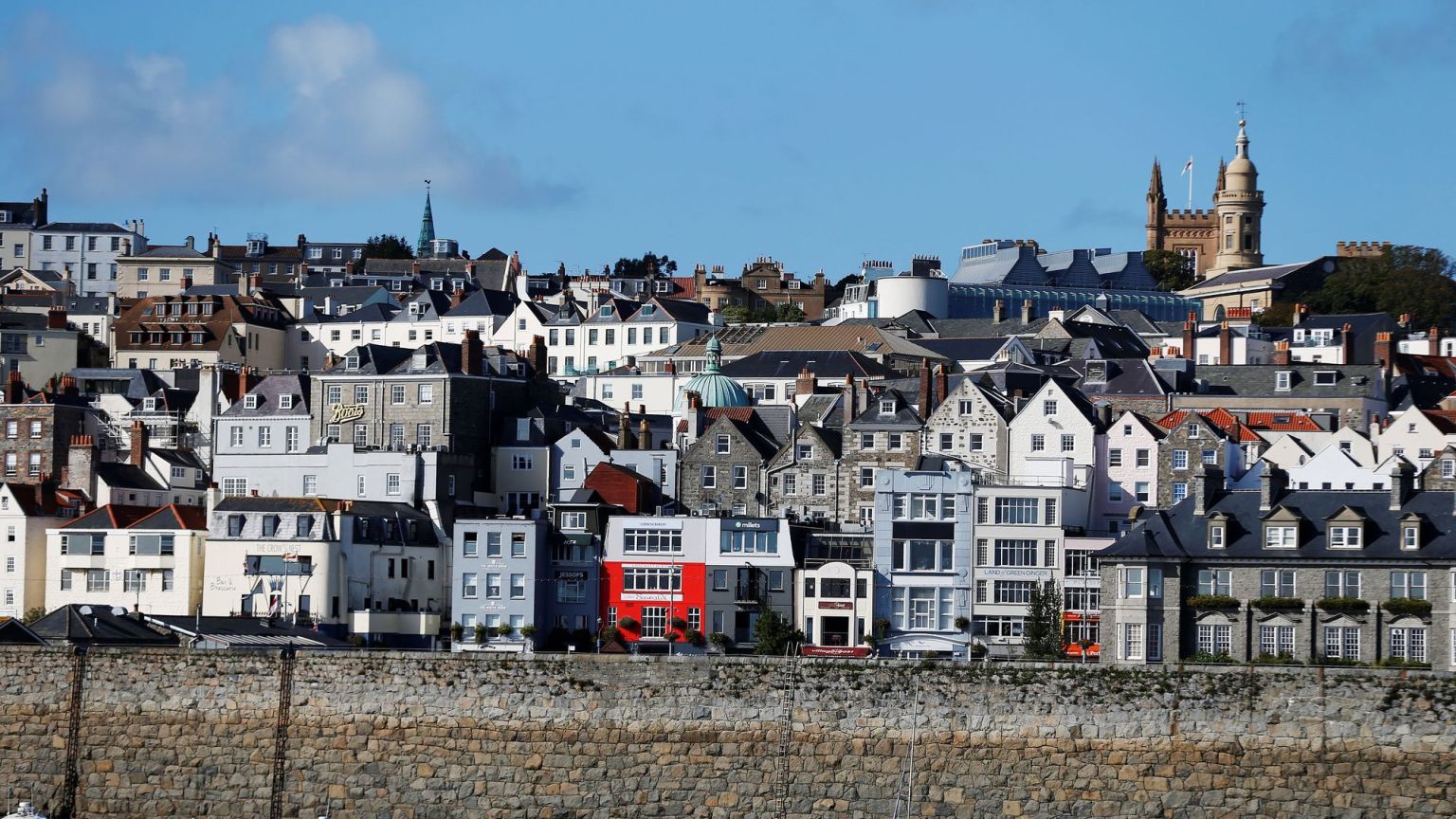
On the August bank holiday, I found myself in Guernsey. Its capital, St Peter Port, was largely as you’d expect from an island of just 24 square miles in the English Channel – something like a quaint English market town, transplanted just off the French coast. There was an abundance of cosy pubs, independent boutique shops and interesting historical tidbits.
What was unexpected, though, was the quantity and quality of opportunities for boozing. On a Bank Holiday Sunday, we had no trouble finding places to drink, even late into the night. What’s more, everywhere was packed with young people, enjoying the kind of spontaneous fun that has basically become a foreign concept in London.
In Soho – supposedly the beating heart of our capital’s nightlife – getting your hands on an impromptu late-night drink can feel nigh-on impossible. By midnight, the shutters are coming down, staff are stacking chairs and punters are rushing to drink up so they can catch the last Tube home. Staying out requires careful planning, either booking in advance or knowing the few places that open into the early hours – and risking being turned away when, invariably, the entirety of central London descends on the handful of bars still serving. The Home Office even warns against areas imposing uniform closing hours for this very reason.
Advertisement
What’s interesting is that Guernsey doesn’t actually have more liberal licensing laws than London. In fact, the rules are, on paper, stricter than somewhere like Westminster Council. Guernsey’s ordinary licensing hours are fairly prescriptive, with standard licensed premises like pubs and bars expected to stop selling alcohol at 12.45am. But Guernsey’s law explicitly recognises nightclubs as a separate category, with later permitted hours, generally until 1.45am. Venues are able to apply for exemptions to stay open later in some cases.
More importantly, Guernsey has not adopted anything quite like the system that constrains Soho. While the licensing of new venues is still restricted so as not to cause too much disturbance to residents, the basic approach is to regulate any nuisance caused by particular establishments, rather than to treat the existence of a thriving nightlife district as problematic in itself.
Advertisement
The killjoys at Westminster Council have adopted essentially the opposite attitude. Soho sits inside the so-called West End Cumulative Impact Zone. This means that, because the area already contains a lot of pubs, bars, restaurants and clubs, the council can treat further licensed activity as potentially harmful, simply because it adds to the total number of people drinking, talking, smoking and generally enjoying themselves after sundown. Any new licences are assumed to be rejected by default, unless the owner can prove that the venue will not contribute to late-night disorder.
Earlier this year, Two Floors – a Soho bar that had operated for 30 years without a single residential complaint – was refused permission to stay open until the frankly quite civilised hour of 1am on Fridays and Saturdays. Even the police conceded that the venue itself was not a source of crime. Its only offence was to be a bar in an area Westminster believes already has too many of them.
Advertisement
One of the parties responsible for preventing Two Floors opening later was the Soho Society. The group, which is part-funded by Westminster Council and has a formal say in the licensing-decision process, has explicitly vowed to veto any new bar and restaurant in Soho, as well as any application to operate beyond Westminster’s already restrictive core hours. The society has a history of making vexatious complaints, including last year objecting to a new gin bar and distillery on the grounds that it could spontaneously catch fire and explode at any time. Although the objection was ultimately rejected, the distillery was still left paying thousands of pounds in legal costs.
The core assumption is that there are already too many opportunities to booze in Soho – and that’s a bad thing. Last month, Westminster Council consulted on its new licensing policy, with the proposals maintaining the effective blanket ban on new pubs and bars in Soho. Even more blasphemously, it proposed to discourage ‘vertical drinking’ – thus threatening the time-honoured London tradition of standing on the pavement outside a pub.
This was all part of the council’s wider planning policy of preventing an ‘over-concentration’ of drinking establishments in Soho in order to preserve a broader ‘mix’ of uses – which is a bit like complaining that there’s an ‘over-concentration’ of jewellers in Hatton Garden. Even London mayor Sadiq Khan recognised that this was insane and denounced the proposals as far too restrictive. For once, he’s right – there is something perverse about a council looking at one of the world’s most famous nightlife districts and deciding that its problem is, apparently, too much nightlife.
Advertisement
It doesn’t have to be this way. While Soho is punished for its own success, somewhere like Guernsey is capable of acknowledging that nightlife is part and parcel of living in a capital city – even if that capital is only home to circa 20,000 people, rather than nine million.
Perhaps a more similar comparison to London would be somewhere like Manchester. Manchester operates under the same licensing laws as Westminster – the Licensing Act 2003 – yet has taken a markedly more enabling approach. It has no fixed core hours and, crucially, no cumulative impact zones that hamstring the creation of any new venues. This flexibility and openness to nightlife have led to Manchester often being described as having a better, more vibrant night-time scene than London does. An investigation in The Times last year actually found that Manchester ranked No1 in England for venues open past 2am, with London trailing in a dismal 10th place.
For an even more radical alternative, we can look further afield. Gibraltar’s licensing system has long designated particular districts as ‘Leisure Areas’. Here, rather than treating a nightlife hotspot as something to be discouraged, the law recognises it as somewhere bars, restaurants and entertainment venues are expected to flourish.
Advertisement
Under Gibraltar’s Leisure Areas legislation, a licence can permit the sale of alcohol during whatever hours the licensing authority decides – even, in principle, without any restriction on hours at all. Separate licensing rules explicitly allow for extensions until 4am in some cases.
Imagine, for a moment, if Soho were a designated late-night Leisure Area. Rather than throttling the very businesses that bring people into the West End in the first place, Westminster could embrace Soho’s natural role as the world-leading party neighbourhood. A less hostile licensing regime and more venues opening later – and more venues in general – would mean more jobs, more custom for restaurants, taxis and hotels, and more business-rates revenue for the council itself. Put aside the whinging residents who complain about the noise after moving into an internationally famous club district, then everyone’s a winner.
Advertisement
A serious late-night district would make London feel like a capital city again. It feels embarrassingly provincial to have to sheepishly explain to tourists that the only place for them to go after midnight is home. And, perhaps most importantly, a less puritanical approach to licensing would make nights out in London finally feel fun again.
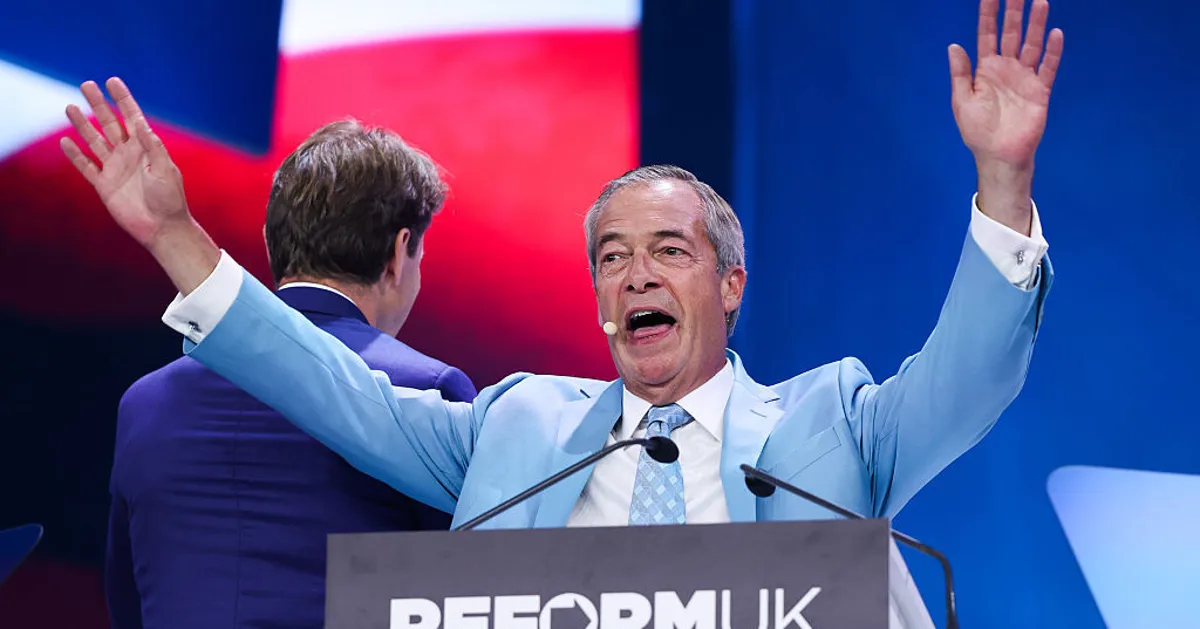
Reform UK has received a £36 million donation from a crypto billionaire who gave Nigel Farage a controversial £5m gift.
Christopher Harborne’s donation comes just hours after another crypto billionaire, Ben Delo, gave the party the same amount.
Thailand-based Harborne also gave Reform £9 million last August.
Writing in the Daily Telegraph, Harborne said the donation was “a philanthropic gift to our country” intended to help Reform prepare for government.
Advertisement
He said: “Whilst I have been making donations to Reform of around £1 million a month, Ben Delo told me he was going to make a record donation of £36 million.
“My competitive spirit inspired me to match it, so that is what I’ve done. And I hope others may join us.”
Farage said: “I am honoured and humbled that Ben Delo and Christopher Harborne have shown such confidence in Reform.
“Both men know that we are the only party that can turn the country around and win the next General Election – thanks to their generosity, we are now able to fight that election on a level playing field.”
Advertisement
The donation means Mr Harborne retains his position as Reform’s largest donor, having already given £9 million to the party last August.
The £5 million gift from Harborne to Farage is at the centre of an investigation by the parliamentary standards watchdog after the Reform leader failed to declare it in his register of interests.
In his Telegraph article announcing the donation, the billionaire said the UK needed a “profitable and dynamic economy” to be able to address the three “existential threats” of nuclear war, AI and climate change.
His donation comes a day after it was reported Delo had given £36 million to the party, saying it would ensure a “level playing field” between Reform and its opponents.
Advertisement
Delo, who moved back to the UK from Hong Kong in order to avoid a proposed cap on donations from overseas voters, was pardoned by US president Donald Trump last year after a conviction for violating the US Bank Secrecy Act.
The Telegraph reported he had intended to give Reform £1 million a month up until the next election, but was donating the money in a lump sum in case the government introduced a cap on all political donations.
MPs last week backed measures including a cap on overseas donations at £100,000 and a suspension of funding through cryptocurrency, but the draft legislation still needs to be passed by the House of Lords to become law.
Backbench calls for a cap on all donations have not been successful.
Advertisement
The twin donations offer Mr Farage’s party a boost after a summer dominated by scrutiny of Reform’s finances, including the launch of a criminal investigation into allegations it breached rules on political donations.
Reform UK denies any wrongdoing and has said it will co-operate fully with the probe.
Listen to Commons People, the podcast that makes politics easy. Every week, Kevin Schofield and Kate Nicholson unpack the week’s biggest stories to keep you informed. Join us for straightforward analysis of what’s going on at Westminster.
Without thinking about it, most people default to using their dominant hand when picking up a fork or mug, as they do when picking up a pen or pencil.
Recently, though, chatter on social media suggests that using your non-dominant hand (for example, using your left hand if you’re right-handed) when eating or doing other tasks can be a way to challenge your brain. In turn, this may lower your risk of dementia.
Research shows learning new skills is good for your cognition. But can simply eating with your non-dominant hand impact dementia?
Here’s what experts say:
Advertisement
Using your non-dominant hand isn’t going to lower your risk of developing dementia, but continually learning new skills can be good for your brain.
When it comes to using your non-dominant hand as a way to lower dementia risk, “the brass tacks is that there is no direct evidence,” said Dr David Gonzalez, a neuropsychologist at Rush University Medical Center in Chicago.
Dr Benjamin Rosenstein, an assistant professor at the University of Minnesota Medical School, agreed. “There’s no evidence that using your non-dominant hand for activity is going to help prevent dementia.”
But that doesn’t mean this habit is all bad. Staying engaged in hobbies and interests and learning new things can help lower dementia risk, Rosenstein noted, which is where this idea likely comes from.
Advertisement
Gonzalez said he appreciates the idea of challenging your brain.
“There is some literature suggesting that individuals who have more lifelong challenge, whether that is challenging work, more challenging or intellectually stimulating hobbies, or being an autodidact and just learning and going through things, that there does tend to be a lower risk for developing dementia later in life,” he said.
Gonzalez explained that the evidence for this is weaker than for other lifestyle changes that can lower dementia risk. (More on that in a second.) The impact that learning new things has on dementia risk is a little more mixed.
Learning one specific new hobby or skill won’t in itself help lower your chance of developing dementia, according to Rosenstein. Instead, “it’s more that if you are learning something new, you are keeping yourself [engaged],” Rosenstein added. “If you’re trying to learn something new, you’re staying engaged with things, you’re challenging yourself, you’re keeping yourself active.”
Advertisement
More than even the learning itself, staying engaged and keeping your brain active are good for cognition.
According to Gonzalez, trying something new is good for the brain, but you need to consider the “quality and quantity of mental activity to have some sort of neuroprotective benefit.”
“When we talk about quality, what I mean is sort of like Goldilocks’ principle of not too easy … but not too hard towards frustrating,” he said.
You want the “just right” amount of challenge and novelty.
Advertisement
“In this case, for someone who is right-hand-dominant trying to use their left hand for a task, there is a smidge of truth there,” Gonzalez said, because you are challenging your brain to a new task.
“But it’s less about using the hand itself because once you are able to use it for a task, it’s no longer a challenge,” Gonzalez added. Meaning, you may teach yourself this skill over several days, but once you master the skill, it’s no longer a mental challenge and no longer has a protective effect on the brain.
Doing something different once or a few times isn’t going to do much for your brain, either. Instead, it’s the continual dedication to trying a variety of new things, Gonzalez explained, whether a new language, recipe, sport, hobby or leveling up a home improvement project.
“Individuals for whom doing a variety of challenging things is most protective are doing a variety. They’re not just doing one thing,” he said.
Advertisement
Yagi Studio via Getty Images
A viral social media video claimed that eating with your non-dominant hand can help lower your dementia risk, but doctors say that isn’t entirely true.
To learn something new, the brain needs to make new connections. This is good for our cognition.
“Our brains, more than any other organ, are reciprocal,” Gonzalez said. “They respond to our worlds.”
Lifestyle habits can help lower your dementia risk
There isn’t one magic pill, food or activity that will prevent dementia. Instead, it’s “these whole entire practices that can be protective over time,” said Rosenstein, and can help lower your risk of developing the condition.
Advertisement
Again and again, the factors that protect your brain health as you age are regular exercise and a nutritious diet such as the Mediterranean-diet-inspired MIND diet or the DASH diet, which aims to lower blood pressure, Rosenstein said.
“If we’re thinking about midlife … protecting your heart health, so things like managing blood pressure, blood sugar, cholesterol, reducing smoking, trying to watch your weight,” Gonzalez said. Getting enough high-quality sleep is also important.
“And actually, we’re seeing a lot on social engagement. So individuals who are isolated or lonely … being disconnected from others or feeling disconnected is related to dementia, and the inverse of that, being connected, fostering connection, has been shown to help reduce that risk,” Gonzalez added.
If you are someone who wants to try out the non-dominant-hand eating habit, there is nothing wrong with that. But don’t let it be the only way you’re challenging your brain.
Advertisement
“What’s more important is approaching life with that zest, that curiosity and that spice,” Gonzalez said.
Be curious about new things; try new hobbies, make different crafts, learn an instrument, meet different people – all of these are great ways to keep your brain engaged as you age.
Now that we’re heading into cosy season, a lot of us are reaching for our favourite Halloween films such as Practical Magic and Hocus Pocus. Cosy, witchy vibes to get us in the mood for long, dark nights.
One thing that stands out in Practical Magic is the style. Particularly with the two aunts played by Stockard Channing and Dianne West Long – draping skirts, big sleeves and lots of layering with necklaces and shawls. For some of us, this is the definition of timeless.
Now, ahead of the long-awaited release of Practical Magic 2, we have learned where the inspiration for this style was found and, to be honest, it seems so obvious now that we know.
Advertisement
The inspiration behind the aunts’ style in Practical Magic
Back in 2020, Vulture spoke with Stockard Channing about Practical Magic and noted that the aunt’s style in Practical Magic seemed to mirror that of Fleetwood Mac’s Stevie Nicks.
Stockard said: “That very female, feminine thing — all those fabrics and floating things — that was especially [costume designer] Judianna Makovsky. Lots of beads and jewellery. Not as mobile as Stevie Nicks, probably. But that same sense of timelessness.”
Interestingly, Stevie Nicks did record a couple of songs for the Practical Magic soundtrack. “If You Ever Did Believe” was the lead single for the soundtrack in collaboration with Sheryl Crow.
Advertisement
Stevie also did a version of the Fleetwood Mac single “Crystal” for the film.
A match made in Heaven, really.
Practical Magic 2 is out in cinemas on Friday, 11th of September.
It’s perhaps a little strange but I really love doing the laundry. I love carrying a soft stack of clothes to the washing machine, hearing the gentle swish as they go through the cycle and eventually putting them back away in drawers and wardrobes.
There is just one problem and for a slightly uptight person like me, it really is a problem. My washing machine has a digital timer that counts down how many hours and minutes the cycle has left. I’m not exaggerating when I say that when I have a wash on, my whole day revolves around that timing.
But… it lies. It lies specifically about having 11 minutes left. Every single time. It drives me up the wall. How can I plan my day around this undetermined end? I can’t. It’s impossible.
Advertisement
Why washing machines lie about how long is left
Speaking to Homes and Gardens in 2023, appliance expert Rich Mullins shared some insight: “Factors like the size of the load, the type of fabric, water temperature, and the level of soil on the clothes can significantly extend the cycle duration. This results in a ‘lie’. These adjustments are designed to provide better cleaning and fabric care, but they can add extra time to the process.
“For example, if your washing machine detects a heavy load, it may incorporate longer agitation or rinsing times to ensure proper cleaning.”
So, how do I make the washing machine timer more precise?
Advertisement
Of course, I could try lightening up a little and letting the machine takes as long as it needs to wash my clothes but, according to washing machine expert Katy Roberts, there is sort of a solution here.
Speaking to Ideal Home, she said: “Many washing machines have sensors that detect if the load is balanced before it starts its final spin. If your appliance detects an imbalanced or uneven load, this can make that final minute stretch much longer.
“To combat this, try to distribute your clothes evenly in the drum to help your washing machine reach its balance faster.”
This article contains major spoilers for The Gentlemen season two.
The Gentlemen is once again thrilling Netflix audiences with its larger-than-life characters, unique mix of comedy and violence and, indeed, its creative use of swearing.
Guy Ritchie’s hit TV series – inspired by his 2019 film of the same name – centres around Theo James’ Eddie Horniman, a young man who inherits his family estate after the death of his father, only to discover it’s the home to a huge drug empire.
Also starring Kaya Scodelario, Vinnie Jones and Ray Winstone, the new batch of episodes is currently sitting at the top of the Netflix charts, after debuting on the platform at the beginning of September.
Advertisement
Once you’ve already binged through all eight episodes, check out these behind-the-scenes facts about the making of season two of The Gentlemen…
The scripts for The Gentlemen season 2 didn’t always correspond to what we see on screen
Guy Ritchie has a unique way of bringing his creative ideas to life – and it’s one that often forces the cast to just roll with things.
“It’s impossible to guess what’s on the page that’ll end up on screen,” long-term collaborator Vinnie admitted to Many Of Many in an interview published in September.
Advertisement
He explained: “I’ve worked with Guy many times, and I can show you a script of Lock, Stock… that looks nothing like the film. He finds it as he goes along, so you’re better off just focusing on the scene you’re shooting that day.”
Ray Winstone agreed with Vinnie, but explained that the cast quickly caught on to how the Snatch director works.
“You’ll get a three-page dialogue scene for yourself. You might not want to learn it, because you know it’s going to change the next day. But if you don’t learn it, you haven’t got an idea what you’re doing,” Ray claimed.
Vinnie and Ray added that they are both happy to help cast members get accustomed to Guy’s work style.
Advertisement
“In the first week, I had to explain to some panicking actors, ‘That’s just how he works – it happens to all of us’,” Vinnie told the magazine.
“Once you get to a place within when you’re working that you know what’s going to come next is going to be better, that gives you the confidence to actually go on and play the part properly,” Ray explained.
Guy Ritchie and Theo James behind the scenes of The Gentlemen
Meanwhile, the show’s leading man, Theo James, previously highlighted Guy’s unusual style when promoting the first series.
“You either give in or… it’s going to end badly for you! He has the script, and the story, but then, on the day, it’s completely rewritten in the room,”he told The Guardian back in 2024. “The first couple of days, it’s a little bit of shock and awe.”
The writers wanted to introduce a new bad guy that audiences could still ‘connect with’, which is what led to Hugh Bonneville being cast
Advertisement
Hugh Bonneville joined season two of The Gentlemen as Lord Hawthorne, a well-connected member of the House of Lords with a hidden dark side.
“We wanted to create a character who was an antagonist, but also one who we could emotionally connect with,” Matthew told Tudum. “And that’s why we felt Hugh was so good for the role.”
Matthew added that the show’s creative team was “really keen for Eddie to ascend in both the criminal world and the world of the establishment”, pointing out that Hugh’s character is “willing to engage with criminals, but on his own terms”.
Advertisement
Theo James and Hugh Bonneville in The Gentlemen
While Maya Jama is best known as a presenter, she quickly took to acting
Maya Jama may not be an experienced actor, but the Love Island host was seemingly a natural on the set of The Gentlemen season two.
She appears in the first episode of the new series as Aisha, a fixer who drops into Eddie’s estate to offer her expertise.
Jasmine Blackborow, who plays Charly, told the Daily Star: “[Maya] was absolutely gorgeous on set and she was nervous because she’s not done this before. She was there running her lines again and again and when she did it she was just such a pro.”
Susie Glass herself, Kaya Scodelario, previously explained that she sent Maya a DM after learning she’d been cast in season two, to ensure she felt welcome on set.
Advertisement
“I just said, ‘Hey, babe, heads up! This is going to not be what you expect. Be ready to be on your toes and trust the process’,” she told Grazia.
Maya Jama was surprised at how unintimidating Guy Ritchie was on the set
Fortunately, it doesn’t seem like Maya needed any help settling in.
The former Masked Singer judge revealed that she found director Guy Ritchie to be a reassuring presence on set.
Advertisement
“He’s very personable and he would be like, ‘Yeah, you’re doing well’, and reassure me, which was really nice,” she told LBC.
She claimed: “He’s just really involved and kind of a genius to watch, because everyone’s practising their lines and then he says something that’s way better than the original.”
“I didn’t even have to change my accent so it was great,” Maya added, before confirming she’ll be back for season three of the crime drama.
Kaya Scodelario on set with The Gentlemen newbie Maya Jama
The cast stayed on Guy Ritchie’s estate during filming
When the cast filmed scenes on Guy’s own Ashcombe Estate, they also stayed with the director at the Wiltshire property.
Advertisement
He bought this working farm in 2001 for £9 million, when he was still married to Madonna. You can spot it in the shooting party scenes in episode one, which see Eddie try to advance his position of power.
“That was a lot of fun but tricky at times too,” production designer Martyn John told CNN Traveller. “You’re in the middle of nowhere with no phone signal or internet. We had to take everything in; so, flowers, food, dogs, guns and also… frozen partridges.”
Speaking to Variety about this experience, Maya recalled: “Waking up and being like, ‘Fucking hell, this is nuts, I’m in Guy Ritchie’s house!’ was insane.”
Bobby’s sauna was also inspired by the director’s own
Advertisement
Ray Winstone’s Bobby spends much of the second season doing his business from his sauna, which is inspired by Guy’s own, situated on one of the lakes at his estate.
Production designer Martyn Johns built Bobby’s sauna from scratch, following very specific instructions from the director.
“He said to me, ‘Do you know what, Martyn? I’d love it if it was on a pontoon, and we could float it out onto the lake’,” he told Country and Townhouse. “And I had to say that we couldn’t really do that, because of electrics and the film crew – think about it, there’s 200 people behind the camera and five in front.”
Luckily, Martyn managed to create a safe solution by placing the sauna on the edge of the lake.
Advertisement
“Guy then asked, ‘Can we then go down through the floor into the lake, as a plunge pool?’ And I said, ‘Of course we can’ – grandly agreeing to it, and then having to make it work,” Martyn added about making the “really fun” set piece.
The filmmaker loved it so much that he wanted Bobby’s exact sauna to be relocated to his own lake after filming, but as Martyn pointed out, “things like that don’t really move”.
Ray Winstone as Bobby in The Gentlemen season two
Christopher Raphael/Netflix
The Gentlemen season two really did bring the cast and crew to Italy for those sun-soaked scenes
As was the case with season one, the Netflix gangster drama’s main action is filmed at Badminton House in Gloucestershire, which has also been used in Bridgerton.
Advertisement
However, the second season also sees Eddie and Susie expand their criminal empire to Italy, taking the cast and crew across the continent.
“The madness of Italy’s beauty, its culture, its history and its traditions were something I felt would fit perfectly into our show,” Guy told CNN Traveller.
“I had wanted to expand the canvas of The Gentlemen in this season. Italy was just an obvious choice. British gangsters colliding with the Italian Mafia just feels so right for our world. Some fruit hangs low and looks so tasty you just can’t resist for very long.”
One of the stunning locations used is Villa Rusconi-Clerici, which doubles as Bella’s Palazzo.
Advertisement
The late-19th-century villa is located in Verbania, on the shore of Lake Maggiore and was also used for Eddie and Bella’s grand wedding. This wedding scene also makes use of the church Chiesa San Leonardo, which was transformed for the series.
The Gentlemen’s wedding scenes were shot at a church in remote Italy
For the wedding shoot, the production team built a temporary pier in front of the villa for filming, and used the building as a base while the cast and crew filmed in the area.
Production designer Martyn John told Time Out that they had a limited timeframe to film the Italian scenes, so they had to carefully choose locations close together.
“We went to Italy to look for the villa, but we [also] had to find a church, a village, a town square and a hotel within the same zone,” he explained.
“We only had two weeks to film in Italy, so it was paramount that I found everything in one place.”
Advertisement
The Gentlemen’s production team had to deliver opulence on a small budget for season two
While the team behind The Gentlemen didn’t divulge their exact budget, they did tell Variety they had to get creative in creating the show’s luxurious world… without the finances of master criminals.
Jonathan Glickman, an executive producer on the Netflix series, praised the crew for “maintaining the scale and scope by smartly deploying resources”.
He explained that many of the props used in the second series of the crime drama were loaned to production rather than bought.
Advertisement
While Moretti’s tiger is a CGI composition, its cage was real – albeit upcycled from something found in most gardens.
“I found this steel gazebo on eBay for £20,000,” production designer Martyn John explained. “[We] put sides on it, put bars on it, and that became the tiger’s cage.”
Geoff’s cottage furniture actually includes personal belongings from the crew
In fact, Martyn filled Vinnie Jones’ character’s house with his own furniture after clearing out his three garages.
Advertisement
“A lot of the stuff I’d outgrown ended up furnishing Geoff’s cottage,” he told Country and Townhouse. “The leather chairs he sits in, a lot of the pictures, are from my old house…”
Martyn pointed out that the cabinets and kitchen table also belonged to him, but he was going to get rid of them as he prepared to move, which coincided with The Gentlemen going back into production for season two.
He also explained that, rather thriftily, many of Geoff’s kitchen supplies came from eBay.
“When we’re finishing on a film or series, sometimes there’s a load of stuff that’s just going to go in a skip, so I’ll put it in the boot of my car and take it home – it’ll come in handy. And it did this time, for Geoff’s cottage,” he revealed.
Advertisement
Meanwhile, fans have also spotted a connection between The Gentlemen and another major Guy Ritchie project
Fans on Reddit have suggested that one key moment in episode six re-used footage from Guy’s film The Covenant, as Eddie began reflecting on his time in Afghanistan.
The Convenant, released in 2023, was also set during the war in Afghanistan, and stars Jake Gyllenhaal as a special forces sergeant in the US military.
The Gentlemen’s costume designer had a major part in telling in the story
Advertisement
The Gentlemen is full of eccentrically dressed characters who love to flaunt their wealth and power, and this world-building is largely down to stylist, and long-time Guy Ritchie collaborator, LouLou Bontemps.
“She understands where Guy’s going with it, I think that’s the massive thing,” Vinnie Jones, who plays the groundskeeper Geoff, told Man Of Many. “Those two are on the same level, and once you get on that level, it’s magical.”
It’s not just that LouLou understands the show’s creator – she also has a handle on perfectly blending the actors with their character.
“A lot of times you’ll go to a wardrobe before the movie and think, ‘Well, none of that’s me’, you know?’ It’s a bit different with Loulou,” Vinnie added. “You go there, and a lot of the stuff on the rail will give you a smile for you and for your character.”
Advertisement
But even while considering the actors, the stylist also used clothing to map the character’s journey in the show.
Giancarlo Esposito, who plays the villainous Stanley, declared the stylist a “genius”.
“It’s an empowerment to get with her and to figure out, ‘Well, what is Stanley trying to say here? Is he relaxing? Is he in business mode? What’s happening with him?’ I love clothing and I get the advantage of really feeling like a collaborator with LouLou,” he revealed.
Theo noted to Tudum how his character’s style has evolved as he enters the criminal underworld. ”Eddie has gone from a kind of classic, slightly stuffy second child of a duke to a highly wealthy and dangerous criminal who’s also a peer of the realm,” he explained.
Advertisement
Eagled-eyed fans may have noticed Eddie wearing more red this season. “He looks great in it, but red is warning and red is power and red is anger and red is all of these things,” LouLou explained.
Eagle-eyed fans may have noticed Theo James wearing more red in The Gentlemen’s second season
LouLou also noted how Susie’s wardrobe changed, following the character’s narrative.
“Susie, from the beginning, was this femme fatale gangster,” LouLou told Tudum. “She is that girl in all of us that wants to play dress up, but can. It’s a little bit more mature, it’s a little bit more bougie in Season 2 because she’s doing well and she’s branched out a little bit.”
Some of the show’s accessories come with their own bodyguard
Characters in the crime drama like to flaunt their wealth, even if they don’t like to reveal exactly how they made their money.
Advertisement
The costumer told GQ that the first series saw Theo’s Eddie wearing more subtle pieces that “he had inherited from his father”, whereas in series two “time has passed and he’s definitely gone and spent some of his money on watches of his own choice.”
Last series, it was reported by GQ that the watches worn on screen were worth around £6m, and that season two had beaten that, although, stylist LouLou has admitted that most of them were loaned to production rather than purchased.
The more expensive pieces seen on-screen are kept under close watch to ensure they are safe. “The watches come with a person who has to guard them, which means another human being who stands over and watches me try to take it off and put it in my pocket,” Giancarlo told Man Of Many.
Season two was originally supposed to introduce us Vinnie Jones and Ray Winstone’s characters to each other for the first time
Advertisement
Vinnie Jones shooting The Gentlemen’s new season
“There’s a scene which we never did in the end, where Geoff goes to the prison to see [Bobby] – which never got done but it was being spoken about,” Vinnie told Radio Times.
Both actors said they’d be keen for their characters to cross paths, with Ray suggesting that “maybe that will come” in the next season, “if I’m back”.
“I’ll see what I can do,” Vinnie then quipped.
Theo James went into season two hoping to show a very different side of Eddie
Theo told Tudum that he hoped to showcase a more complicated side to his cool-as-cucumber character.
Advertisement
The Divergent actor said that while his character starts out as “a good person just trying to help his family out”, he eventually turns into someone who gets his own way by using “deep and savage violence.”
When scripting Eddie this season, writers asked themselves: “Does he want too much? Will he lose his soul in his quest to ascend and become stronger?”
He also told Deadline: “In a way, through season one, I wanted him to go further. I wanted him to take deeper risks and make bigger mistakes, but Guy’s feeling was of echoes of Corleone in the very first act of The Godfather – a civilian with a moral duty to his family, and he feels like he’s just trying to get out of a fucked-up situation.
“Ultimately, he learns that he’s quite good at the criminality side, and there’s an elixir to it and an allure.”
Advertisement
“The reason to do a second season was there are elements that we hadn’t really fully touched on,” he noted. “We hadn’t plumbed Eddie’s character, and there was an ability to do that, and to look at the moral complications of power. In season two, it’s established that there are no apologies.”
Theo James and Guy Ritchie pictured during the shoot for The Gentlemen season two
Multiple variations of the heart-wrenching scene when Eddie discovers the fate of his wife were shot
“We actually shot a bunch of [versions],” Theo recalled to The Hollywood Reporter. “Eddie sees what’s happened, and there’s an aftermath.
“Guy wanted a bit more mystery, so we don’t understand where he is or what’s happening to him until the end of episode seven — and then he starts this story of ultimate revenge fuelled by anger.”
Interestingly, the ending was one of the first scenes Theo James shot for The Gentlemen season two
Advertisement
Theo told Radio Times that the climax of the scene was done “really early on”, and was, as you can imagine, both a “stressful” and “complex scene to shoot”.
“I guess, after season 2, [Eddie] has control,” he observed. “But ultimately, in the nod to Godfather II, it’s a dog that needs to be dealt with ultimately, I would assume.”
Finally, The Gentlemen went with that brutal ending for a reason
Speaking to The Hollywood Reporter, Theo explained what the creative team was trying to achieve with the cliffhanger at the end of season two.
Advertisement
After learning that Freddy knew about Gospel John’s plan and had helped him, Eddie beats his brother up, but does not kill him. Instead, he demands that Freddy kill Gospel John himself.
“That was something we had talked about with Guy and Matthew for a long time,” Theo explained. “[Eddie] can’t murder his brother straight up and straight out because then he loses his family. But he has to have some semblance of revenge.
“So that [ending] came from trying to figure out: How do you do both in one? How do you punish him without killing him?”
Theo added that the writers wanted to force Freddy into doing something so “atrocious” that it would spiritually destroy him.
Advertisement
All eight episodes of The Gentlemen season two are now streaming on Netflix.
Now that longer nights are just around the corner, us horror fans are getting ready for our favourite holiday; Halloween. For me, it’s a month-long horror film watch-a-thon with a mix of classic horrors, Simpsons Halloween specials and family films such as Hocus Pocus.
One film that always makes it to my rewatch list is John Carpenter’s 1978 classic Halloween. It’s the ideal slasher film. It’s a little campy, a little scary and now, almost 50 years since it first came out, Michael Myers’ mask is still quite creepy even among the dated horror tropes.
However, I have just learned that this iconic mask was not made for the film and is actually the mask of a famous actor just… painted white.
The actors’ face used for Michael Myers’ mask
Advertisement
So, this mask is actually William Shatner of Star Trek fame’s face just… painted white. That’s it. You can’t unsee it now, right? It’s featureless, pale and fear-inducing but it’s also just William Shatner.
Personally, I would be pretty offended if something on my body contributed to such a horror icon and I’m not sure he was very thrilled, either.
Speaking on the YouTube channel Jake’s Takes, he said: “I thought, ‘Is that a joke? Are they kidding?’
“I recognised it as the death mask they had made for me. They made a mask of my face on Star Trek out of clay so I would not have to be available for the prosthetics they would have to put on my face to look old or evil or whatever it was they were making me look like.
Advertisement
“So somewhere along the line, someone got that mask and made a mask of it for [the holiday] Halloween.”
Speaking on Netflix’s The Movies That Made Us, Halloween production designer and editor Tommy Lee Wallace shared that when he was tasked with finding a ‘creepy mask’, he visited a magic shop on Hollywood Boulevard which had a large display of masks.
He said: “Up on the shelves were these full face masks of Richard Nixon, and down at the end was Mr. Spock. And right next to it was this blank face [Shatner’s character] Capt. Kirk.”
Advertisement
He then made it creepier by enlarging the eyeholes, removing the eyebrows and sideburns, darkening the hair and of course, painting the face white.













































You must be logged in to post a comment Login