Y Combinator-backed insurance tech startup Corgi became embroiled in yet another controversy earlier this week when Papermark, maker of open source data room software, accused Corgi of stealing its software and passing it off as its own.
Corgi denies this. “No code was used from Papermark,” the company tells TechCrunch.
But there were reasons why people believed the initial allegation, which was made by Papermark co-founder Marc Seitzon X and concerned Corgi’s newly released product called Dataroom. Deal room software is essentially secure document sharing. It is famously used by startups to pitch VCs and send them supporting materials for due diligence.
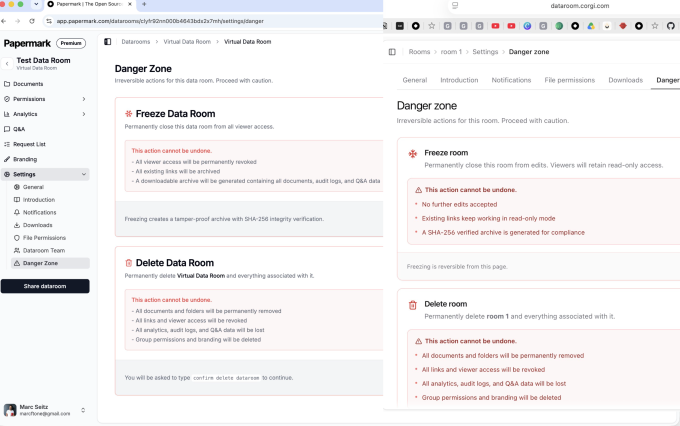
Seitz’s post blew up because he shared screenshots showing Corgi’s product using the same language for the same features as Papermark’s, word for word. He went as far as to call Corgi’s new product copyright- and license-infringing, and “fraud.”
Advertisement
Image Credits:Marc Seitz/Papermark
Corgi’s co-founder and CEO Nico Laqua saw the tweet and promised to investigate. Soon after, he responded on X with a full denial, showing that the code was different between the two products.
While he strenuously pushed back on the allegations of a license violation — arguing that “copying my style” is a different claim than “stealing enterprise code” — he did admit that relying on a vibe-coding design led to the replica features.
“Looking back, we should’ve leaned more into our own language and visual choices instead of taking cues from existing products in the space, and that’s on us,” he posted.
A Corgi spokesperson confirmed to TechCrunch that the offending features were vibe-coded and said they have already been changed, downplaying the situation.
“The issues were isolated to visual elements on two peripheral settings pages,” the spokesperson told us, adding that these elements were “immediately updated” and that “our team confirmed that no code was used from Papermark.”
Advertisement
Laqua and the spokesperson also accused Papermark of making these accusations because Corgi is offering a less expensive product. “I get that this stings since we’re putting out something mostly free that competes with his SaaS. I’d be mad too,” Laqua wrote of Seitz. Seitz did not respond to a request for comment.
The copying of visual elements and identical feature language, however, went beyond sour grapes as a credible complaint. It raises a new and thornier question: If vibe coding makes it so easy to copy the look, feel, and every function of another’s work, while not copying every line of the code itself, how much does it matter if the source isn’t identical?
Obviously, legally speaking, it’s the only thing that matters. So this is not the same as the controversy over Y Combinator alum PearAI, a 2024 startup that admitted to cloning another open source project and releasing it under its own license.
Morally speaking, this is ambiguous and will become increasingly common.
Advertisement
As fellow YC alum and founder of the agent operating system OpenProse Dan Barrett explained on X: “In a world where a bot can trivially copy 1:1 the structure of something even if the character-level code diverges … what makes one unacceptable and the other not? existing IP law, incidental to the old world? is there not some greater principle at work here?”
Corgi is now vigorously trying to clean up any reputational damage. It has issued a cease-and-desist letter to Seitz demanding that he take down the tweet, the company confirmed to TechCrunch. The founder of Hello World Cafe, which competes in part with Corgi’s coffee shop business, says he also received a cease-and-desist from Corgi’s lawyers over a tweet joking about the Dataroom controversy. Though X still remembers. There have been hundreds of comments and countless subtweets.
Laqua also recently went viral for his comments on Stebbings’ podcast about how he expects employees to work seven days a week. “Whatever you can get done in five days, I promise you, you’ll get more done in six and seven,” he said.
That is, of course, the fallacy of startup hustle culture. Decades of research repeatedly conclude that human productivity is not a quadratic equation. While sprints can be effective and build camaraderie for short-term problems like the site going down, the research shows that, as a matter of routine, more hours of work reduces productivity, not the other way around.
The startup also got tongues wagging for how fast it has raised money with increasing valuations, even by AI-startup standards. Last month, Corgi raised a $106 million Series B1, valuing the company at $2.6 billion, just three weeks after announcing a $160 million Series B at a $1.3 billion valuation and four months after its $108 million Series A.
Advertisement
Corgi also operates a 24-hour coffee shop, with plans to open more, Laqua said on the Stebbings podcast.
When you purchase through links in our articles, we may earn a small commission. This doesn’t affect our editorial independence.
Executive search firm Christian & Timbers estimates that there are only about 2,000 engineers in the U.S. with the special cocktail of sector know-how, gravitas, and hands-on applied AI experience needed to consistently help enterprises see a return on their AI expenditures.
“Not 2,000 available,” reads the study, shared exclusively with TechCrunch. “2,000 total.”
As enterprises move from trying to access the best models to figuring out how to implement them into workflows that meaningfully improves their bottom line, it appears the forward-deployed engineer (FDE) — engineers who work within client organizations to build, implement and deploy software or AI models — is about to become among the most sought-after specialist in the AI industry.
Demand for FDEs is already rising rapidly, according to the C&T study, which projects demand for these specialists to surge by 2,100% by the end of the year.
Advertisement
The research draws on interviews with more than 250 C-suite hiring executives across 180 companies, a focused survey of 80 Fortune 500 executives, and interviews with more than 300 FDEs and applied AI engineers between January and June 2026.
At the start of the year, only 5% to 10% of companies were planning to hire FDEs, and mostly only for small pilots. By the end of the second quarter, however, that number jumped to 70%, with the largest consulting and services firms reporting a need to increase their FDE headcount by 10 times, building full teams of 20 to 100 employees.
“This is all happening at a speed I’ve never seen. Enterprises are hiring in the middle of summer,” Jeff Christian, founder of C&T told TechCrunch.
That kind of demand will outstrip supply, if C&T’s study is accurate. The report found that there are roughly 17,000 U.S. FDEs on the market today, a good chunk of whom are already employed by Palantir, which invented the concept of the FDE years ago. (Christian said some of his clients are even buying Palantir’s technology just so they can access the firm’s FDEs.)
Advertisement
Only a fraction of the FDEs out in the wild are apparently elite enough to deliver true ROI, which these days is measured as “multiple tens of millions of dollars of ROI impact,” according to Christian. That could manifest as revenue acceleration on the go-to-market side (lead generation) or “replacing FP&A or replacing 2,300 document processors in India,” Christian says.
As Chris Taylor, CEO of Ode with Anthropic (a new FDE-focused services firm), put it: “Many FDEs are well equipped to help you roll Claude Code out to your workforce. Very few are capable of building your flagship AI product feature.”
Now that token-maxxing has morphed into value-maxxing, and enterprises taking a harder look at their balance sheets, accounting for AI spending is becoming more important than ever.
“This fall, [Wall Street] is about to say, ‘Hey, we’ve given you two years to figure this out…and you haven’t. There’s no ROI. So we’re going to start punishing those that have spent hundreds of millions, maybe even billions on this, and aren’t generating ROI, and rewarding those that have’,” Christian said.
Advertisement
AI companies are under pressure, too, as they’ve already spent tens of billions to train and deploy their models. For frontier AI firms, reaching profitability will depend on whether they can inject their technology into as many enterprises as possible, though that task is now being threatened by cheaper, increasingly capable open-weight models from China.
That’s why firms like OpenAI and Anthropic have set up their own ventures — Ode with Anthropic and OpenAI’s Deployment Company — and staffed them with FDEs whose sole purpose is to go forth and spread their tech around the enterprise.
It’s not only top AI firms and large consultancies clamoring for FDEs, however. Enterprises from insurance and fintech to healthcare and gaming, are seeking out these specialists, Christian said.
Companies are hiring teams of FDEs instead of bringing them in from firms like Ode, or Deployment Co, seeking to keep knowledge of proprietary processes in-house and protect them from the likes of OpenAI and Anthropic.
Advertisement
“Everybody’s concerned that if they give up their proprietary business processes, [the AI firms] can compete with them, which is true in many different areas,” Christian said. “So having this muscle internally is so important.”
Taylor said he’s starting to hear the phrase “internal forward-deployed engineers” more often, but his clients aren’t yet asking Ode to put together internal FDE teams for them.
While many an enterprising young engineer might think they have the industry expertise and AI chops to take advantage of what may turn out to be a talent war, Christian warns that the FDE may not always be in demand.
“Maybe in two years, everything’s automated, and agents are automating agents as opposed to humans automating agents,” Christian said. “That is something that could occur. Hopefully, it doesn’t, and we continue to need these people within companies.”
Advertisement
In the medium-term, he thinks the need for FDEs will shift from enterprise AI to physical AI as companies try to implement things like humanoid robots into their workflows. But within five or 10 years, he says it’s entirely possible that the role of FDE will “go away.”
That may be true for all knowledge work, if AI leaders and CEOs’ vehement predictions come true. While C&T focuses on recruiting for fast-growing industries and hasn’t seen a pullback yet, Christian says more general search firms have definitely experienced a slowdown in recruitment requests.
Everything to do with AI is growing and in demand, he says. For now.
“I think that there’s absolutely a time soon where we’re going to see an impact in our business,” Christian said.
Advertisement
When you purchase through links in our articles, we may earn a small commission. This doesn’t affect our editorial independence.
As we’ve seen many times before, there’s usually some way wrangle a bit more life out of what would otherwise be considered old and obsolete technology. Perhaps one thing that has been passed over by the masses a bit to early is older datacenter GPUs, which is understandable in one sense because of the rate NVIDIA is pumping out new ones, but these cards have plenty of useful life left in them for the average person, as [Andrew] demonstrates.
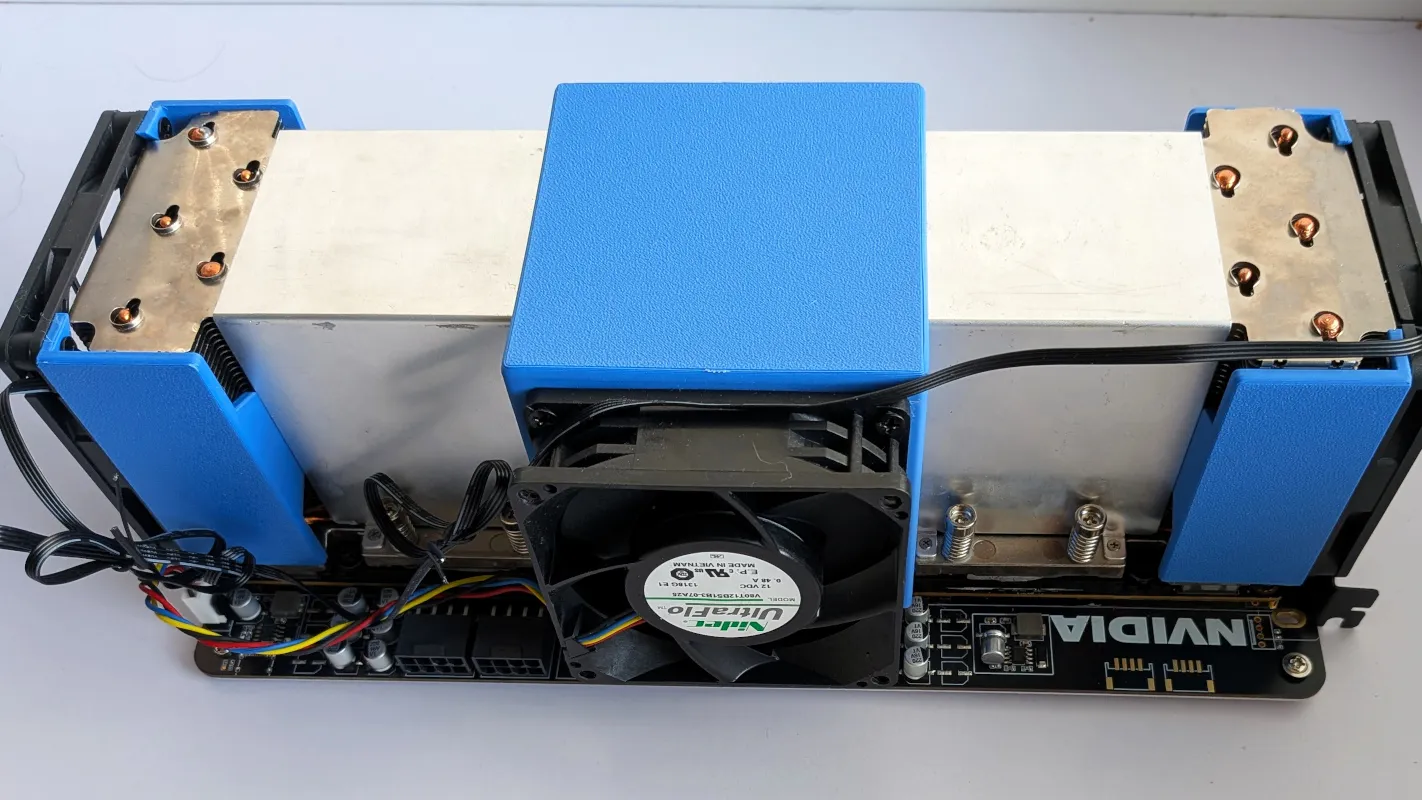
The cards [Andrew] is using are Tesla V100s of 2017 vintage. Despite being older hardware they have high-speed memory which allows them to run modern LLMs locally, competitively with online models. In this test, Gemma 4 26B and Qwen3 35B are run, with Gemma being a bit faster because it fits entirely in GPU memory and Qwen3 being a bit more capable but more hungry for resources. [Andrew] built a PCI card that can host two V100s, allowing these larger models to fit completely in memory.
Even though these don’t perform at the same level as the latest top-tier online models, they’re surprisingly capable and also have the benefit of running completely locally. This might be concerning for those looking at the global economy being propped up by companies that essentially have no moat for motivated users, especially as more and more datacenter hardware becomes available on the secondhand market. While this build by [Andrew] goes into detail on getting the software stack up and running, we recently featured another build using the same GPUs that focuses a bit more on hardware for those looking to get started with local hosting.
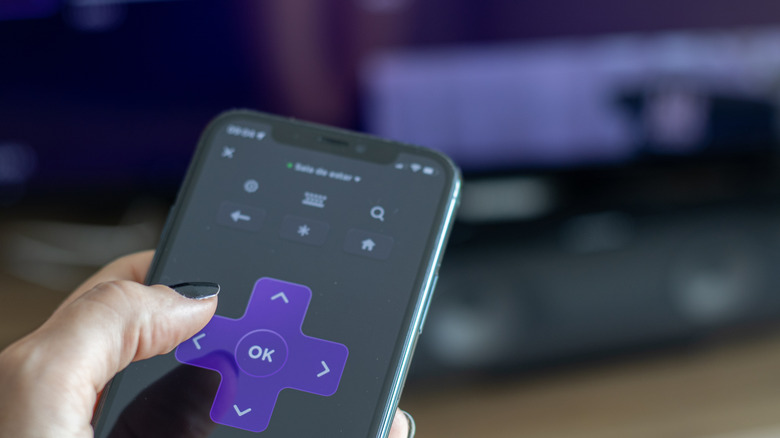
You can even use your Roku like a PC, if you have the right phone.
Meir Chaimowitz/Shutterstock
One of the best things about owning a Roku TV or streaming box is the ability to easily integrate it with the rest of your tech setup. While having streaming apps a remote-click away is handy, so is being able to control the TV from a smart speaker or smartphone. Best of all, you can quickly mirror your phone’s screen to the TV. Screen mirroring your Android phone to a Roku device can be a convenient way to enjoy your local media or show friends your vacation photos on the big screen. It can also help you give slide presentations or even take part in a video conference.
Roku makes the process of connecting your Android phone an easy one, assuming both devices support the Miracast protocol. Along with the ability to use your own headphones, it’s one of the features that makes Roku compelling for those who haven’t dumped it yet on account of a pending acquisition by Fox. While very few Roku devices appear to lack support for screen mirroring, certain Android devices may not support Miracast natively. The most notable exceptions are Google Pixels, which use the Google Cast and DIAL protocols but do not support Miracast. You may still be able to cast individual apps, such as YouTube or Netflix, which support DIAL.
Below, we’ll cover how to mirror your screen to a Roku from the most popular Android devices that support casting — namely, Samsung Galaxy phones and tablets. But if you have a different brand, you’ll find similar capabilities under different names if you poke around in your settings. For example, LG phones have Screen Share, and on OnePlus devices, you’ll find Screen Projection. If you have a Pixel, however, you’re out of luck. Google’s phones do not support the Miracast protocol needed to mirror to Roku.
Advertisement
We’ll also discuss how to solve minor issues that can occur when establishing a casting connection, and how to expand functionality even further for devices that support a full desktop mode with an external display on Android.
Mirror your screen or cast individual apps from Android to Roku
renata colella/Shutterstock
Head to the settings menu on your Roku, which can be accessed from the text menu on the left side of the home screen. Scroll down and select System > Screen mirroring > Screen mirroring mode. Choose either Always Allow or Prompt, but only choose the former if your Wi-Fi network is private and secure. Finally, make sure that your phone is on the same network as the Roku you’re mirroring to.
If you’re using a Samsung Galaxy device, you can now mirror your screen with just a couple of swipes (for other brands, consult your device’s documentation). Swipe down from the top right of your phone’s screen to open the quick settings panel, then select Smart View. Alternatively, tap Settings > Connected Devices > Smart View. Once you’re in the Smart View interface, it will begin to scan for nearby wireless displays. Select your Roku device when its name shows up onscreen, then tap Start Now if prompted for confirmation. Other brands should have a similar mirroring option in their pull-down menus.
Advertisement
While mirroring, a Smart View pill will hover on the screen of your phone, and tapping it will surface a context menu. If you’re just mirroring media from a single app, say, Netflix, and don’t want other apps or notifications to show up on the big screen, tap Cast Netflix Only. This lets you browse your phone and receive notifications as usual while only mirroring your app of choice. If the video is letterboxed on your TV screen, tap the Smart View pill again, and tap Change Aspect Ratio.
If you don’t hear audio from a video or other source and have made sure the volume is up on both devices, swipe into quick settings and tap Media Output inside of the now-playing media pill, then ensure your Roku is selected.
Advertisement
Roku allows Samsung Galaxy owners to use wireless DeX for a full desktop experience
Samsung
Samsung Galaxy smartphones have access to a user-favorite feature called DeX, which turns Android into a Windows-like desktop experience. The phone becomes a touchpad and keyboard for the interface (look for a corner square icon to show up when DeX is active), or you can connect a Bluetooth mouse and keyboard. (Something similar may be coming to Google’s Android skins in the nebulous future.) Normally, DeX activates when you plug the phone into an external display, but it can also be triggered by connecting to a wireless display, including a Roku.
To cast your screen to a Roku in DeX mode, open quick settings by swiping down from the top right of your screen and tapping the Wireless DeX toggle. Alternatively, go to Settings > Connected Devices > Samsung DeX > Connect Wirelessly. The phone will scan for nearby displays, which can take a few moments. Once your Roku device shows up, tap on it, then tap Start Now, and DeX will launch wirelessly on the TV.
In our testing, we’ve found that there can be considerable lag while using DeX wirelessly. If you’re experiencing sluggishness, setting your TV’s picture mode to gaming can sometimes make things a bit more responsive.
Nimble, a New York City-based tech startup VentureBeat previously covered for its efforts to re-invent web search for enterprises by using multiple AI agents to improve accuracy and depth, is taking another step toward its vision of a world in which agents do most of the web searching instead of us typing and reviewing the results manually.
Nimble today launched Web Search Agents, a new retrieval system designed to help AI agents perform more 21% more accurate web research while using significantly fewer tokens — 51% less compared with leading AI search alternatives on comparable, according to the firm.
While Nimble did not disclose its specific benchmarking methodology or competitors evaluated, the results underscore a growing trend in enterprise AI: optimizing retrieval has become as important as improving the underlying language models themselves.
Nimble’s leadership says the product combines self-learning retrieval strategies, proprietary web indexes, and live web access to deliver domain-specific search capabilities that outperform general-purpose web search services for enterprise workloads.
Advertisement
“Our research team built self-learning retrieval algorithms that learn a customer’s domain,” said Nimble CEO and co-founder Uri Knorovich in an interview with VentureBeat. “They find the exact information more efficiently, reduce the amount of multi-hop reasoning required, and lower token usage while improving accuracy.”
Rather than positioning itself as another general search engine, Nimble is targeting developers building autonomous agents that require continuously updated information from the public web for research, lead generation, competitive intelligence, compliance, and other business-critical workflows.
It’s also designed to slot in seamlessly to an enterprise’s existing systems and workflows.
“You can run the agent directly through the Nimble API with zero infrastructure,” Knorovich said. “For large enterprises, we’re partnering with Microsoft, Oracle, Snowflake, and others so customers can deploy these agent systems inside their own infrastructure.”
Advertisement
How does it work and stack up to other, existing AI-powered search and agentic systems? Read on to find out.
Moving beyond generic AI web search into specialized search agents that fit your enterprise’s needs
Most AI applications today rely on general-purpose search application programming interfaces (APIs) for search engines and public knowledge bases that return broad collections of files, leaving the language model responsible for determining which sources are relevant.
That process often requires multiple retrieval steps, additional reasoning, and significant token expenditure before an agent produces an answer. This is obviously inefficient and raises the cost spent to run AI search looking through irrelevant sources.
Nimble argues that before long, every enterprise will need its own methods for searching, retrieving, and validating external information since each enterprise relies on its own distinct preferred sources, signals, and standards of trust.
Advertisement
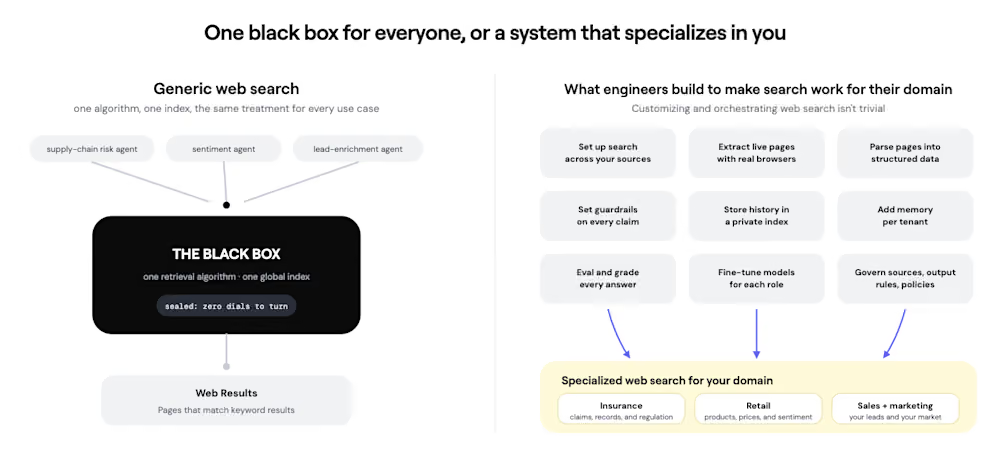
As such, instead of applying one search strategy to every workload, Nimble’s Web Search Agents are designed to learn the characteristics of a specific domain and adapt how information is retrieved, providing agents with structured, relevant context rather than forcing them to sift through large amounts of generic search results.
“Instead of one generic retrieval model, we build specialized retrieval models for each customer’s domain, making them faster, cheaper, and more accurate,” Knorovich explained. “A single enterprise can run hundreds of different agents. Each one has its own domain expertise, guardrails, goals, and search algorithm. The optimization starts with the second search, without requiring any setup from the customer.”
Nimble Web Search Agents diagram. Credit: Nimble
Its goal is not only to reduce redundant retrieval, but also to shorten multi-step research paths and avoid repeatedly sending raw pages through a language model for parsing, resulting in the 51% reduced token figure the company cites.
Advertisement
The distinction is particularly relevant for long-running enterprise agents performing research over hours or days rather than answering simple consumer questions. In those scenarios, reducing unnecessary tool calls can significantly lower operating costs while improving answer consistency.
That emphasis reflects a broader shift occurring across the AI tooling ecosystem. As foundation models become increasingly capable, infrastructure vendors are competing on everything surrounding the model—including retrieval, orchestration, memory, observability, and governance.
The company’s latest release extends that vision with a concept it calls “Harness as a Tool,” which powers its new domain-specialized Web Search Agents. Rather than requiring engineering teams to assemble separate search APIs, browser automation, extraction pipelines, validation logic, memory systems, and orchestration code, Nimble packages those capabilities behind a managed interface.
Advertisement
The harness can determine what to search, navigate pages when conventional indexes are insufficient, extract relevant information, validate the results, and return the final context in a form designed for downstream agents.
Nimble also says the system retains domain-specific memory and builds proprietary indexes that improve as customers run more searches.
“The biggest research breakthrough is adding semantic memory and a caching layer to the agent,” Knorovich told VentureBeat. “The agent learns usage patterns and domain expertise over time, so every subsequent search becomes faster and more efficient.”
As for what domains Nimble can tackle, the company says it can address virtually any knowledge work domain.
Advertisement
“We’ve seen customers build investment banking analysts, competitive intelligence agents for product managers, go-to-market research agents, newsroom monitoring, insurance applications, life sciences research, and supply chain optimization,” Knorovich said. “Our customers surprise us every day with new agent use cases.”
However, for enterprises concerned about data privacy and retention, Knorovich assured VentureBeat that: “Nimble is zero-data-retention by design. Customer queries are never stored in our environment, and when customers deploy semantic memory and self-learning models, that knowledge stays in their own tenant—not ours.”
Customer deployments point to operational gains
Nimble supported the announcement with early customer examples from AI-native software vendors and enterprise users.
AI-native CRM company Rox reported achieving a 20× reduction in token costs after adopting Nimble’s retrieval infrastructure while simultaneously improving the quality and completeness of information available to its AI agents.
Advertisement
Although the company did not disclose detailed workload measurements or a reproducible baseline, the example illustrates the operational savings retrieval optimization can provide for high-volume agent deployments.
Nimble says its infrastructure currently supports more than 90 million searches each day across Fortune 500 enterprises and AI-native companies operating mission-critical workflows where accuracy, completeness, and enterprise control are essential.
API, SDK and MCP support target AI builders
The platform is immediately available through an API, SDK, and Model Context Protocol (MCP) integration, allowing developers to connect Nimble directly into AI agents regardless of the orchestration framework they use.
Developers can use the platform for several categories of web intelligence, including:
Advertisement
Low-latency live web search
Deep multi-step web research
Web crawling
Structured dataset generation
Domain-specific information retrieval
The company also provides documentation and pre-built agents for common web extraction tasks while allowing developers to build custom retrieval agents using natural-language descriptions instead of manually maintaining scraping logic.
Nimble is offering two notably different consumption models. Developers can begin with a pay-as-you-go Agent API priced from $0.025 per Web Search Agent request at the listed low-effort setting. Companies that want Nimble to configure and manage custom data delivery can instead buy annual managed plans beginning at $2,500 per month.
Where Nimble fits in the emerging agentic search stack
Nimble enters a market that has rapidly expanded beyond traditional web search into autonomous research agents capable of planning, browsing, reasoning, and synthesizing information. Products such as ChatGPT Deep Research, Google Gemini Deep Research, Alibaba’s Tongyi DeepResearch, Perplexity, and Sakana Marlin all seek to automate knowledge work that previously required hours—or, in Marlin’s case, potentially weeks—of human research.
Rather than competing head-to-head as another end-user research assistant, however, Nimble is positioning itself one layer lower in the AI stack—as the web intelligence infrastructure that powers those agents or custom enterprise applications built on leading foundation models.
Advertisement
That distinction reflects an increasingly important architectural shift in enterprise AI. Most “Deep Research” systems optimize the overall research workflow, generating search plans, iteratively gathering information, and producing synthesized reports.
Nimble instead argues that the retrieval layer itself has become the primary bottleneck for enterprise AI deployments. If an agent retrieves too many irrelevant pages or performs unnecessary search iterations, token consumption, latency, and operating costs all increase before the model even begins its main reasoning process.
“Customers across life sciences, insurance, healthcare, pharma, retail, and digital-native companies are all telling us the same thing: we need to feed our agents with more accurate context, and we need to reduce the amount of tokens every task consumes,” Knorovich said.
The launch blog makes that argument more concrete by describing how teams frequently rebuild the same retrieval stack themselves. A production agent may start with a search API, then accumulate browser controls, parsers, extraction components, validation steps, memory, caching, evaluations, and custom workflow logic. Nimble is positioning its harness as a managed alternative to that growing engineering burden.
Advertisement
In Nimble’s view, improving retrieval before reasoning begins is more valuable than simply giving a language model more documents to analyze. The company’s Web Search Agents therefore adapt retrieval strategies to a particular workload, combining proprietary indexes with real-time web retrieval and task-specific search policies rather than applying the same search algorithm across every domain.
That makes Nimble less of a direct competitor to OpenAI’s or Google’s research assistants than to developer-focused retrieval infrastructure such as Exa and Tavily. Those platforms also provide AI-native search APIs and research capabilities, but Nimble differentiates itself by emphasizing self-learning retrieval strategies, proprietary indexing, enterprise governance, managed delivery, and token efficiency for production agents.
For organizations building their own AI systems, the distinction could become increasingly important. Foundation models are becoming more capable across the industry, shifting competitive differentiation toward the infrastructure surrounding them—including retrieval, orchestration, memory, observability, and governance. Nimble’s strategy reflects that broader trend, betting that better web intelligence can deliver larger operational gains than incremental improvements in model reasoning alone.
Enterprise infrastructure versus AI research assistants
The different positioning is also reflected in pricing.While consumer-facing AI research assistants are generally sold as productivity subscriptions for individual users or teams, Nimble is pricing its managed service as enterprise infrastructure designed to power production applications. Its pay-as-you-go API, however, gives developers a lower-cost path to test the underlying agent technology before committing to a managed deployment.
Advertisement
Platform
Primary audience
Primary focus
Lowest publicly available price (USD)
Advertisement
Nimble
Developers and enterprises
Managed web retrieval and orchestration infrastructure combining specialized search, browsing, extraction, validation, proprietary indexing, and memory
$0.025 per Agent API request (low-effort setting). Managed service starts at $2,500/month (Startup plan, billed annually).
Advertisement
ChatGPT Deep Research
Professionals, enterprises, and knowledge workers
Autonomous multi-step research with iterative browsing, synthesis, and citations
$20/month (ChatGPT Plus). Higher limits are available with Pro, Team, Enterprise, and Edu plans.
Advertisement
Google Gemini Deep Research
Consumers and enterprises
Research planning integrated with Gemini, Google Search, and Google’s productivity ecosystem
$19.99/month (Google AI Pro, U.S.). Higher-capacity AI Ultra and enterprise Workspace offerings are also available.
Advertisement
Tongyi DeepResearch
Developers and AI researchers
Open research model for long-horizon information-seeking and agentic search
Free (open source). Users are responsible for their own infrastructure and cloud compute costs.
Advertisement
Perplexity
Consumers, professionals, and enterprise teams
AI-powered web search and cited research
Free entry tier. Perplexity Pro starts at $20/month with Enterprise Pro available separately.
Advertisement
Exa
Developers and AI platform builders
AI-native search, content retrieval, and asynchronous research agents
Free developer tier (includes monthly credits). Paid Search API pricing starts at approximately $7 per 1,000 requests while Agent runs range from $0.012 to $1.00 per run depending on effort level.
Advertisement
Tavily
Developers building AI agents
Search, extraction, crawling, and research APIs for agents and RAG workflows
Free developer tier (1,000 monthly credits). Pay-as-you-go usage starts at approximately $0.008 per credit.
Advertisement
Sakana Marlin
Enterprises, strategy teams, financial institutions, and research organizations
Ultra Deep Research for hours-long strategic reasoning and executive-grade reports
Pay-as-you-go from approximately $0.61 per credit (¥98/credit) with with 100 credits required per research run (approx $61 per run).
Advertisement
The first subscription tier is Pro at approximately $936/month (¥150,000/month) followed by Team at approximately $2,495/month (¥400,000/month) with Enterprise pricing available by quote.
The comparison reveals three increasingly distinct markets.
ChatGPT Deep Research, Gemini Deep Research, and Perplexity operate primarily as user-facing research assistants.
Exa and Tavily provide developer-facing retrieval and research APIs.
Nimble and Sakana Marlin occupy more enterprise-oriented territory, but at different layers: Nimble supplies retrieval infrastructure, while Marlin performs long-horizon strategic analysis.
Sakana Marlin is particularly useful as a counterpoint. It is positioned as a “Virtual CSO” rather than a search API, running autonomous research loops for as long as eight hours and producing executive-ready reports, references, and supporting materials.
Nimble, by contrast, is designed to sit beneath those kinds of systems, supplying the specialized retrieval, browsing, extraction, validation, and orchestration that enterprise agents need to gather reliable external information before reasoning begins.
Advertisement
The comparison therefore should not be read as a direct price-to-price evaluation. A $20/month ChatGPT Plus or $19.99/month Google AI Pro subscription buys an individual AI workspace with Deep Research capabilities.
Nimble’s $2,500/month managed plan funds concurrent production agents, managed ETL, MCP integration, web-page capacity, storage, and hands-free data delivery.
Sakana Marlin’s approximately $936/month (¥150,000/month) Pro plan pays for extended, compute-intensive strategic research workflows.
Each price reflects a fundamentally different product boundary and deployment model rather than simply a different level of AI capability.
Advertisement
Why retrieval is becoming the next AI battleground
As enterprise AI systems mature, the industry is increasingly recognizing that model quality alone does not determine application performance.
Large language models frequently fail not because they cannot reason, but because they lack timely, trustworthy external information. That reality has fueled rapid investment across retrieval-augmented generation, AI-native search, web intelligence platforms, knowledge graphs, browser automation, and agent infrastructure.
Nimble’s launch reflects this evolution by focusing less on building another frontier model and more on improving the quality of information flowing into existing ones.
Whether the company’s reported 21-point improvement in answer quality and 51% reduction in token usage hold up across a broad range of enterprise deployments remains to be independently validated.
Advertisement
The larger strategic bet is that, as frontier models become more interchangeable, companies will differentiate themselves through the data, retrieval policies, trusted-source rules, memory systems, and orchestration layers surrounding those models. Nimble is not trying to build the researcher that sits in front of the user. It is trying to become part of the infrastructure that determines what the researcher can find, how efficiently it can find it, and whether the resulting evidence is complete enough to support production decisions.
Web Search Agents are available through Nimble’s API, SDK, and MCP integrations, with a free trial available for developers evaluating the platform.
from the and-by-“efficiencies”-we-mean-“destruction” dept
Quick background: the $8 billion FCC Universal Service Fund (USF) applies a small surcharge on traditional phone lines to fund broadband expansion to unserved rural homes, schools, and libraries (of which the U.S. has a lot thanks to rampant telecom monopolization).
While the USF, like all government programs, hasn’t been absent of fraud (usually at the hands of private companies), it’s generally done a lot of good for people stuck on the wrong side of the digital divide. The kind of boring, steady infrastructure work that doesn’t get headlines, or mentioned in books about “abundance.”
Enter Trumpism, which has been taking a merciless hatchet to absolutely any effort, anywhere across government, to try and ensure that Americans — whether rural Trump supporters, struggling school kids, or inner city urban residents — have affordable access to the internet.
The USF is technically overseen by the Universal Service Administrative Company (USAC), which has been tasked since 1998 with overseeing more than $9 billion in broadband subsidies annually. Now FCC boss Brendan Carr has announced a full review of the program, something he says is necessary for the sake of efficiency:
Advertisement
“In taking up this effort, we will improve oversight, reduce administrative costs, and increase accountability of USAC and its Board of Directors. Our end goal is to ensure Americans receive the best bang for their buck on universal service spending—a commonsense win for government efficiency and accountability.”
This being Trumpism and Brendan Carr, there are obviously red flags in the way they’re going about this.
One being that the Trump administration’s version of “efficiency” and “accountability” — as we saw with DOGE — generally involves the mindless dismantling of useful programs by clowns who have very little functional human empathy or understanding of the things they’re destroying.
One other issue is that Carr historically has never meaningfully opposed giant telecom monopolies like AT&T on any policy battle of note, so the idea that he’s seriously going to root out fraud and abuse of the USF program is laughable. At best it’s likely that the program is retooled to ensure big telecom monopolies get more money in exchange for significantly less subsidy oversight.
Certain Trump Republicans had been pushing for the USF to be destroyed entirely, though that gambit was surprisingly scuttled by the Supreme Court last year. So now the name of the game for that sector of Trumpism will be to destroy the program while trying to make it seem like they’re not destroying the program. Especially when it comes to helping minority communities afford internet access.
The Federal Trade Commission is suing healthcare giant Hims & Hers for allegedly sharing its customers’ medical and healthcare information with advertisers and tech giants, like Meta and Snap, as well as for misleading consumers about its privacy practices.
The lawsuit is the federal consumer watchdog’s latest crackdown in recent years on healthcare companies that share sensitive information with outside companies without their customers’ knowledge. Hims & Hers, now a publicly traded company, provides prescription medication for sexual wellness, mental health conditions, weight loss, and other issues, and as such handles a large amount of sensitive patient data.
Companies typically try to learn more about their customers by installing code on their websites in order to share users’ information with advertisers, like Meta and Snap, which then use the data to provide information about who is visiting their websites and when.
In its complaint filed in a California federal court, the FTC alleged that Hims & Hers placed pixel-sized trackers provided by Meta, Snap and other tech and advertising giants, including Microsoft, Pinterest, Reddit and X. These trackers, the FTC said, “captured and shared users’ health information,” contrary to Hims & Hers’ own privacy policy. The FCC alleges the company also used Meta’s tools to track users’ clicks and other actions that users took on its website.
Advertisement
The FTC also accused Hims & Hers of deceptive billing, and drawing up policies that allegedly made it difficult for customers to cancel, in violation of federal consumer protection laws.
Hims & Hers did not explicitly deny the FTC’ s claims in a statement on its website. The company claimed its privacy policy “makes clear” that users “may choose how their data is used,” and said it is “confident” in its position. Hims & Hers said it plans to defend against the FTC’s allegations.
The use of pixel-sized trackers has previously revealed how people’s sensitive data gets shared with the companies who provide the code, highlighting how misconfigurations can result in unwanted data collection.
Advertisement
In 2024, TechCrunch found that the U.S. Postal Service was sharing logged-in users’ home addresses with Meta, LinkedIn and Snap by using their pixel tracking code. The USPS removed the code soon after.
When you purchase through links in our articles, we may earn a small commission. This doesn’t affect our editorial independence.
Qantas completed a record-breaking 24-hour, 24-minute test flight from Melbourne to Toulouse on Tuesday. “The specially adapted A350-1000ULR airliner is due to debut with the Australian carrier’s nonstop Sydney-London route from 2027,” reports The Guardian. From the report: Tuesday’s flight is thought to be the longest ever by a commercial plane, beating the previous record of 22 hours and 42 minutes set by a Boeing 777-200LR in 2005 between Hong Kong and London via the Pacific in 2005.
Flight-tracking provider Flightradar24 said the trip was the second-most-tracked flight ever on its channels — behind a 2022 flight carrying Queen Elizabeth II’s coffin — with more than 3.6 million people following its progress northwards via Canada. Qantas has ordered 12 modified A350-1000ULR aircraft, designed to connect Australia’s east coast with London and New York in about 20 hours.
For listeners with smaller rooms, loudspeaker shopping often comes down to two mildly absurd choices: buy standmounts and discover the stands consume nearly as much floor space as towers, or buy full-size floorstanders and watch your living room get annexed by MDF.
Q Acoustics has finally inserted something between those two choices.
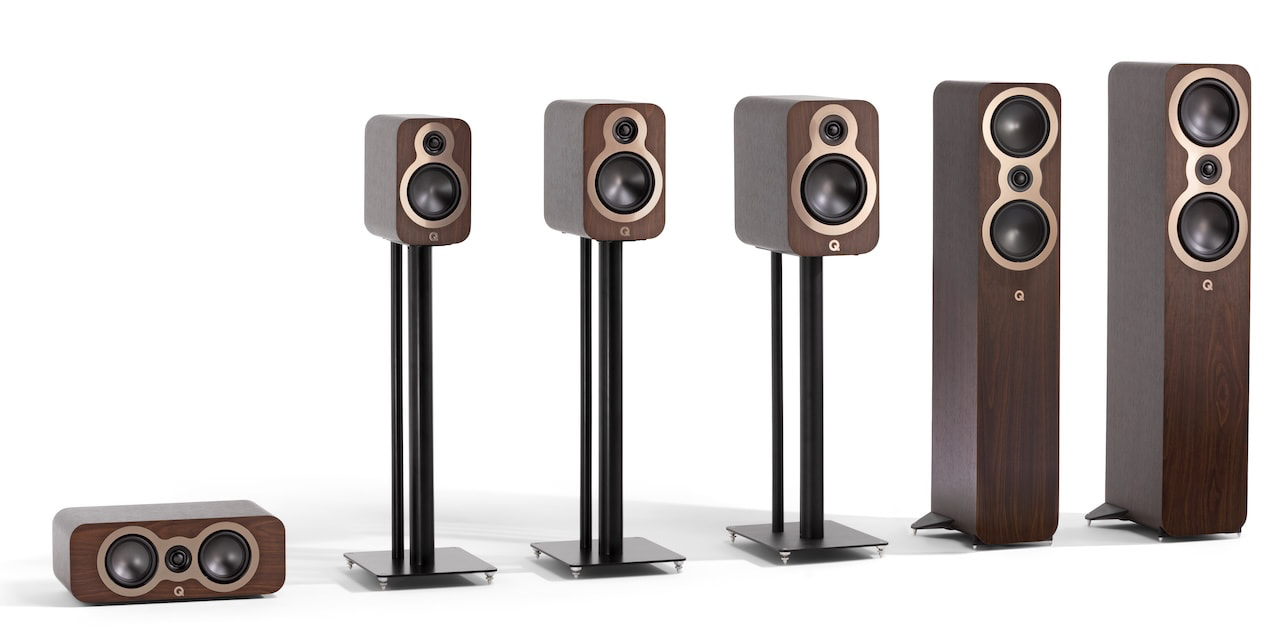
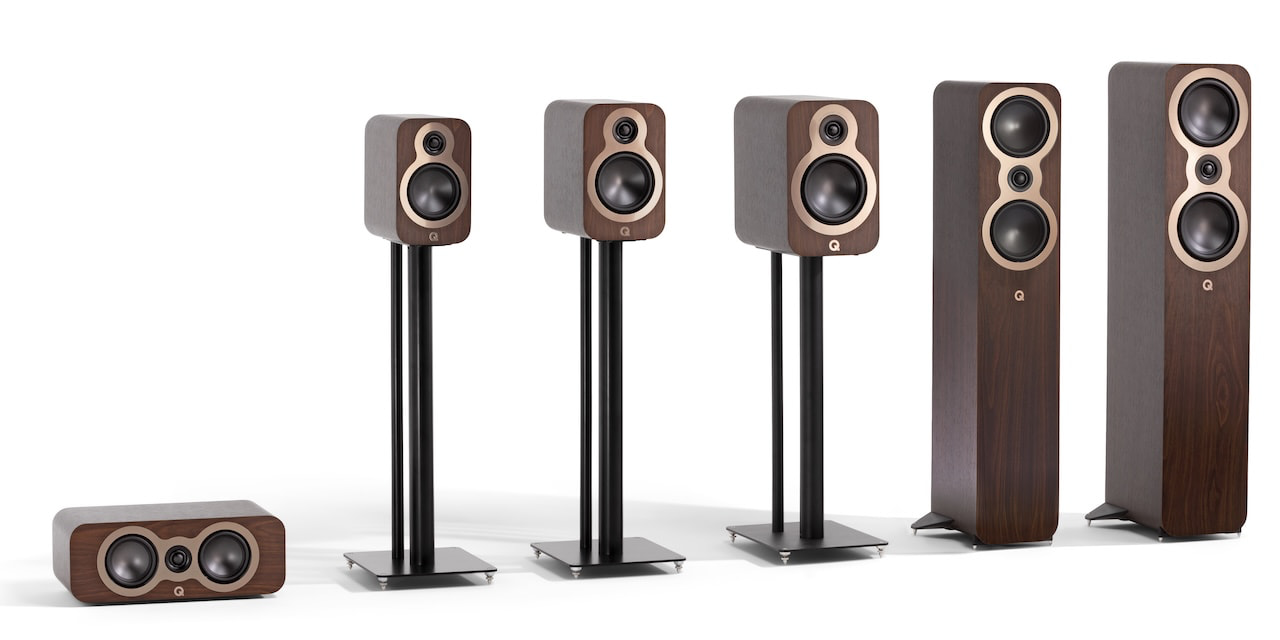
The new Q Acoustics 3040c is a compact floorstanding loudspeaker designed to deliver more scale and bass extension than the 3030c standmount without the size and visual presence of the larger 3050c. Priced at £599, €899 or $1,099 per pair, it becomes the sixth passive loudspeaker in the 3000c range and completes a lineup that now covers everything from desktop and bedroom systems to multichannel home theaters.
There is, however, an interesting wrinkle for American buyers: the 3040c costs only $100 less than the larger 3050c.
Advertisement
This is not the floorstander to buy because it saves a pile of money. It is the one to consider because it saves space.
Related Reviews:
The Missing 3000c Model
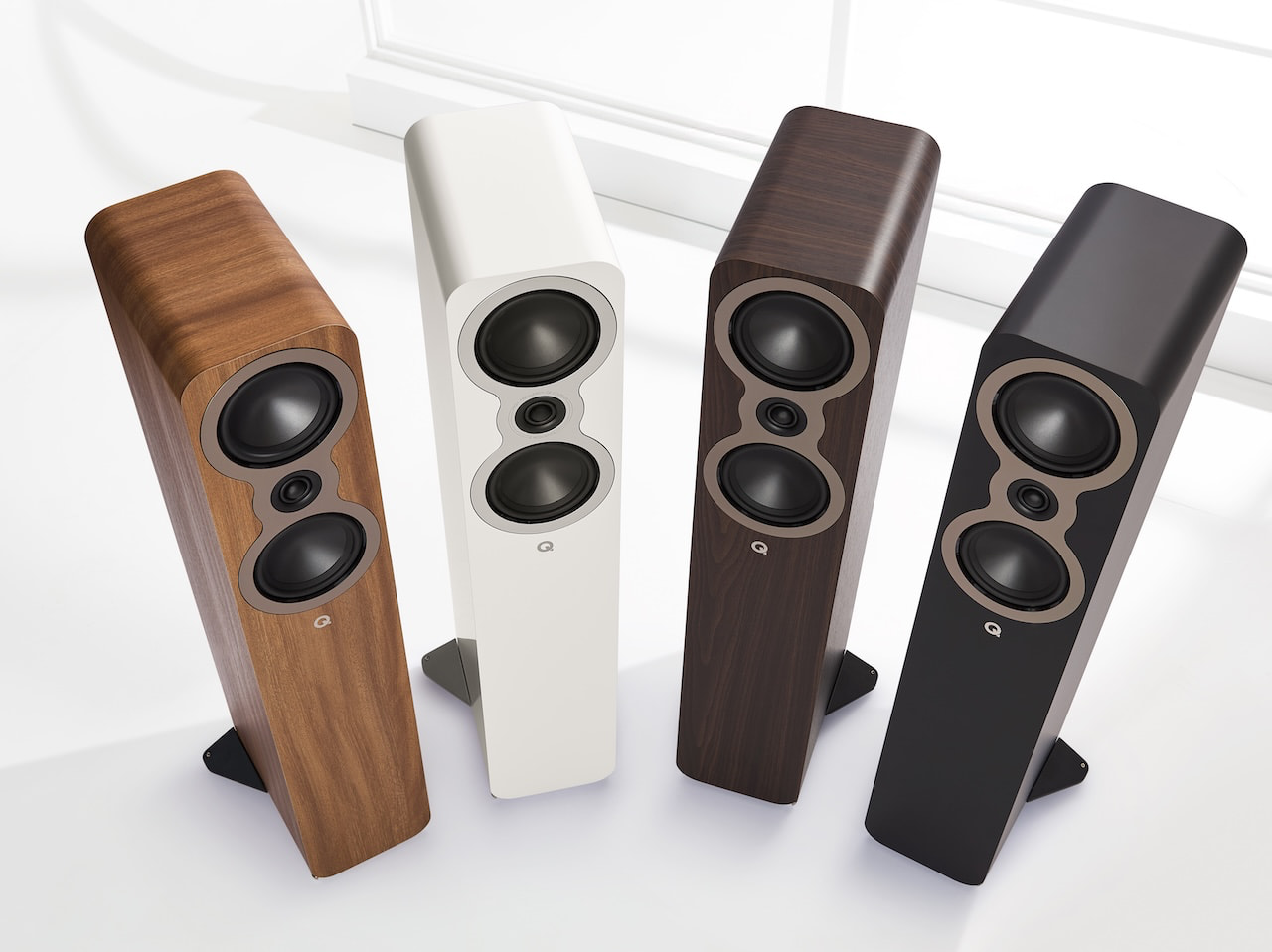
Q Acoustics 3040c Loudspeaker finishes
When Q Acoustics introduced the 3000c Series in 2024, the range included three bookshelf or standmount models, one large floorstander and a center-channel speaker. The original lineup incorporated technology developed for the more expensive 5000 and Concept Series, including C3 Continuous Curved Cone midrange and bass drivers, mechanically isolated tweeters, P2P cabinet bracing and HPE pressure equalization in the floorstanding model.
What it did not include was a smaller tower.
The 3040c fills the rather obvious gap between the $699 per pair 3030c and $1,199 per pair 3050c. According to Q Acoustics, customer feedback indicated demand for a more compact and agile floorstander that could deliver greater scale than a bookshelf speaker without overwhelming tighter living spaces.
That makes sense. A standmounted 3030c may have a smaller enclosure, but once suitable stands are added, its practical footprint is not necessarily much smaller. The 3040c places everything into one cabinet, moves the tweeter closer to seated ear height and extends the claimed low-frequency response to 43 Hz.
Advertisement
It also means there is no stand shopping, no filling hollow metal columns with sand and no discovering that the attractive stands cost almost as much as the loudspeakers.
Twin C3 Drivers
The two-way 3040c uses a pair of 4.75-inch C3 Continuous Curved Cone midrange and bass drivers positioned above and below a 0.9-inch tweeter.
Advertisement. Scroll to continue reading.
Q Acoustics originally introduced its C3 driver architecture with the 5000 Series. The cone profile combines the bass performance of a conventional straight cone with the midrange control and dispersion characteristics of a flared design. The goal is tighter low-frequency performance, reduced distortion and smoother integration with the tweeter.
The 3040c’s tweeter is hermetically sealed and mechanically isolated from the front baffle. Separating it from pressure changes and vibration generated by the two larger drivers is designed to reduce distortion and prevent the midrange and bass drivers from coloring the treble.
Advertisement
That approach originated higher up the Q Acoustics food chain in the Concept and 5000 Series before migrating into the more affordable 3000c models. The company has not merely installed another woofer in a stretched 3020c cabinet and headed to the pub.
Bracing and Pressure Control
Compact towers present their own cabinet problems. Their tall internal volume can encourage standing waves and pressure buildup, neither of which does imaging, bass definition or tonal accuracy any favors.
Q Acoustics addresses that with P2P Point to Point bracing in the areas of the enclosure most susceptible to low-frequency vibration. The 3040c also uses HPE Helmholtz Pressure Equalizer tubes to reduce internal pressure and suppress standing waves, technology previously reserved for the 3050c within the 3000c range.
The rear-ported cabinet includes the low-profile terminal panel introduced with the 5000 Series. Its recessed binding posts help keep speaker cables from protruding excessively behind the cabinet, although “close to the wall” should not be confused with “pressed against it.” Rear ports still need room to work.
Advertisement
A solid aluminum stabilizer extends from the base and includes spikes that can be adjusted from above. Including the stabilizer and spikes, each 3040c measures 37.1 inches high, 11.2 inches wide and 11.1 inches deep, with a weight of 32.1 pounds.
Four finishes are available: Satin Black, Satin White, Pin Oak and Claro Walnut.
What Might It Sound Like?
We have not heard the 3040c, so any declarations about its sonic performance will have to wait until a review pair arrives.
We do, however, have considerable experience with the technology surrounding it.
Advertisement
Our review of the 3020c found it more transparent, detailed and dynamically alert than the softer-sounding 3000i models it replaced. It also proved more revealing of amplifier quality and tonal balance than its affordable price might suggest.
The 5000 Series demonstrated how much flexibility exists within the same basic driver platform. The 5040 offered a leaner, more neutral and highly detailed presentation, while the larger 5050 delivered greater bass weight, warmth and room-filling impact.
Advertisement. Scroll to continue reading.
That history gives us a useful framework, but not a verdict. The cabinet volume, crossover and twin-driver configuration will determine whether the 3040c leans toward the speed and clarity of the smaller 3000c models or adopts some of the additional tonal weight of the 3050c.
Advertisement
On paper, its 88 dB sensitivity, 6-ohm nominal impedance and 4-ohm minimum should make it compatible with a broad range of integrated amplifiers and A/V receivers. Q Acoustics recommends between 25 and 120 watts per channel.
A competent 50 to 100-watt amplifier should be a sensible starting point, but our experience with the 3020c and 5000 Series suggests that amplifier character will matter. Buyers using brighter or leaner electronics should audition the combination rather than assuming every box with binding posts will produce the same result.
Stereo and Home Theater
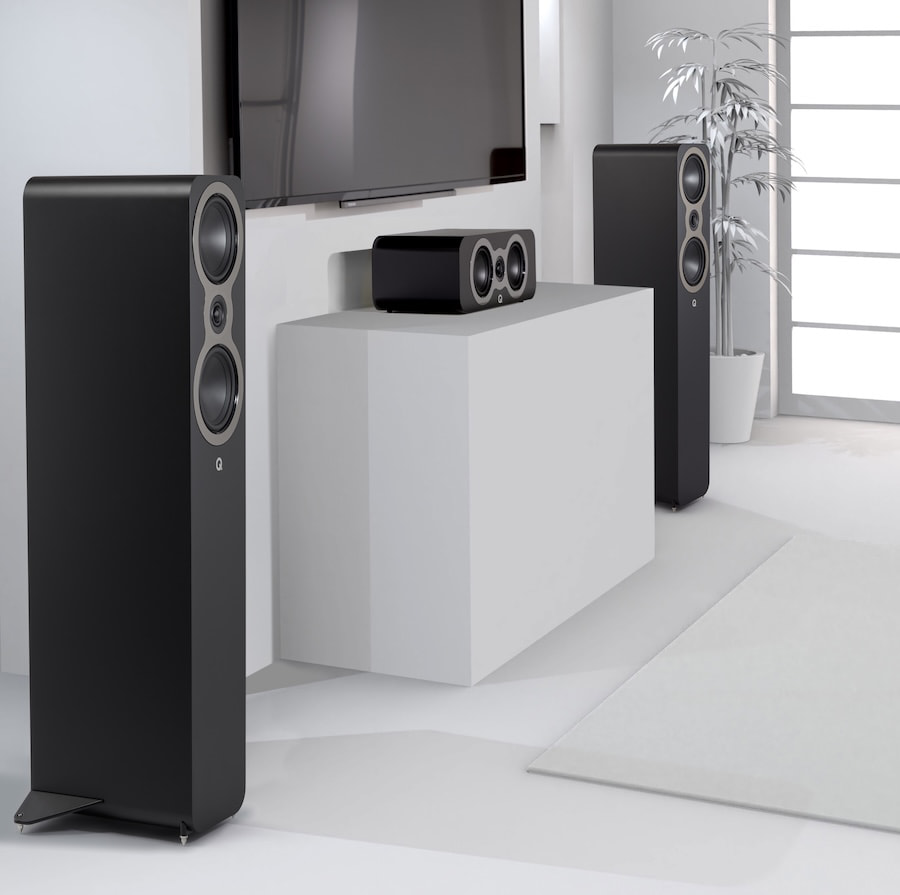
The 3040c could be particularly useful as the front left and right channels in a compact home theater, paired with the 3090c center speaker and one of the smaller 3000c models for surround duty.
Its claimed 43 Hz extension is respectable for a tower this size and may be sufficient for music in a small or medium-sized room. It does not eliminate the need for a subwoofer when reproducing deep electronic bass, pipe organ recordings or movie soundtracks with meaningful low-frequency effects.
Advertisement
The existing 3060S remains Q Acoustics’ slimline subwoofer option for the range, although larger rooms and more ambitious home theaters may benefit from something with greater output and deeper extension.
Specifications:
Specification
Q Acoustics 3040c
Design
Two-way floorstanding loudspeaker
Midrange and bass drivers
2 x 4.75-inch C3 Continuous Curved Cone
Tweeter
0.9-inch mechanically isolated
Frequency response
43 Hz to 30 kHz at -6 dB
Sensitivity
88 dB
Nominal impedance
6 ohms
Minimum impedance
4 ohms
Recommended amplifier power
25 to 120 watts
Crossover frequency
2.4 kHz
Effective cabinet volume
26.8 liters
Dimensions
37.1 x 11.2 x 11.1 inches
Weight
32.1 pounds each
Who Is This For?
The Q Acoustics 3040c makes the most sense for listeners who want the scale and convenience of a floorstanding loudspeaker but have a smaller living room, den, apartment or dedicated listening space. It also deserves consideration from 3030c buyers who would otherwise need to purchase stands and might prefer a cleaner, more integrated installation.
Home theater users looking for compact front channels that visually and acoustically match the rest of the 3000c family are another obvious audience.
Who Should Look Elsewhere?
Listeners with larger rooms, a preference for high playback levels or a need for greater low-frequency weight should consider the 3050c, 5040 or 5050.
Advertisement
American buyers with enough room for the 3050c face the most difficult decision. At only $100 more, the larger tower may offer greater scale and bass capability for very little additional money. The 3040c has to win that argument through placement flexibility, proportions and room compatibility rather than price.
Q Acoustics 3000c Series Pricing
Stereo loudspeaker prices are per pair. The 3090c center channel and 3060S subwoofer are priced individually.
Q Acoustics 3050c large floorstander: £749 / €1,099 / $1,199
Q Acoustics 3090c center channel: £229 / €379 / $399
Q Acoustics 3060S subwoofer: £399 / €499 / $549
The Bottom Line
The Q Acoustics 3040c is not merely a discounted 3050c. It is a space-specific alternative for listeners who want more than a standmount can provide but do not need a large tower looming beside the television.
Advertisement. Scroll to continue reading.
That makes it more useful than a last-minute addition designed to fill an empty position in the catalog. The 3000c Series already offers some of the strongest value in the affordable loudspeaker category, and the 3040c addresses a legitimate gap without stripping away the driver and cabinet technology that made the rest of the range successful.
Advertisement
The pricing is particularly attractive in the United Kingdom and Europe. In the United States, the narrow gap between the 3040c and 3050c makes room size the deciding factor.
Smaller can be smarter. It just is not automatically cheaper.
Bissell PowerClean FurFinder for $260: This was our previous top pick for the best cordless vacuum. It got bumped though because the regular Bissell PowerClean ($200) is a touch cheaper since it doesn’t come with the FurFinder upholstery attachment, while Dyson and Ryobi’s vacuums have more powerful suction for pet hair.
Black and Decker Dustbuster Flex for $130: This is another cool handheld vacuum that’s great for cars or even indoor areas like staircases. It has a 4-foot hose, longer than most compact vacuums, and a handy little charging mount that the accessories clip into. Thank goodness for the charging mount, though, since the battery only lasts 15 minutes.
Advertisement
Dyson Spot+Scrub Ai Robot Vacuum for $1200: This is Dyson’s first robot vacuum that doubles as a mop, and it serves both purposes well. It uses the same app as other Dyson vacuums and can learn multiple floors of your home. The base station is large and unique, with a visible dustbin that’s certainly a callback to the clear dustbins of the brand’s cordless vacuums. Dyson says it has artificial intelligence to spot stains and scrub them away, but I couldn’t tell a difference and it didn’t spot the cherry stains I intentionally created. It’s also tall, so it was often bumping into cabinets and low furniture.
Dyson V8 Cyclone for $400: This is a new version of the long-favored Dyson V8, but I wasn’t super impressed when testing it side by side with the only slightly more expensive V10 Konical. It did a fine job and has 150 air watts of power, but I’d recommend the V10 over the V8 any day.
Advertisement
Dyson V10 Konical for $500: I expected to prefer the V8 Cyclone, but the V10 Konical did a better job vacuuming up debris in my tests, comes with a HEPA filter, and has a built-in light so you can better spot dust and dirt when using it on hard floors. When tested and scored against all of the new and current Dyson vacuums, the V10 Konical was in third place, ahead of both the V8 Cyclone and the V15 Detect. It’s a great buy if you want a Dyson vacuum but don’t want to manage multiple heads, and it will be compatible with Dyson’s base station that comes out later this year.
Dyson V15Detect for $846: There are a lot of Dyson vacuum models, and the older V15 Detect is a good choice if you want two vacuum heads included without spending close to a grand. There’s an option to upgrade and get a Submarine wet roller head if you want it to double as a mop. It performed solidly in testing against Dyson’s other vacuums, but wasn’t the best. I’d recommend looking for it on sale for under $700; anything higher and there’s no point in not buying the Gen5Detect or V16 Piston Animal instead.
Advertisement
Dyson PencilVac Fluffycones for $600: This is a new take on a stick vacuum with the motor and dustbin built into the slender handle. There’s both a Fluffycones version, which I tested, that has four fluffy cone-shaped rollers in the head, and a cheaper Fluffy version. I was impressed with the maneuverability of the PencilVac Fluffycones and often find myself grabbing it between runs of my robot vacuum to keep debris and cat litter under control. It’s also lightweight and easy to push, and it has a freestanding charging mount. But it’s a little pricey for being only for hard floors.
EcovacsDeebot X11 Omnicyclone for $1100: If you want a newer robot vacuum, the Ecovacs Deebot X11 Omnicyclone has a unique design with no dust bag. Instead, it has a rounded canister like a Dyson or stick vacuum, circling the debris to keep it from tangling. It’s a great robot vacuum overall, especially if you don’t want to buy dust bags over and over.
Eufy X10 Pro Omni for $700: This was our previous top robot vacuum pick. It’s a well-priced option that can vacuum and mop, and has a solid 8,000 Pa of suction power. But Eufy does have a newer model that you can pick up for just a little more if you want a self-cleaning roller mop instead of roller pads, with almost double the suction power.
Roborock Saros 20 for $1,600: Roborock’s latest robot vacuum is overall pretty good, but WIRED reviewer Adrienne So noticed it left debris behind on her hard floors, specifically on the divider when it moved from her carpet onto hard flooring. This could be a fault of the super-high suction, which hits 36,000 Pa. There are a few other features she hoped would work better, too, including the AdaptiLift (which raises the vacuum up on uneven surfaces) and beta stain-detection feature. We’re in touch with Roborock about these issues.
Advertisement
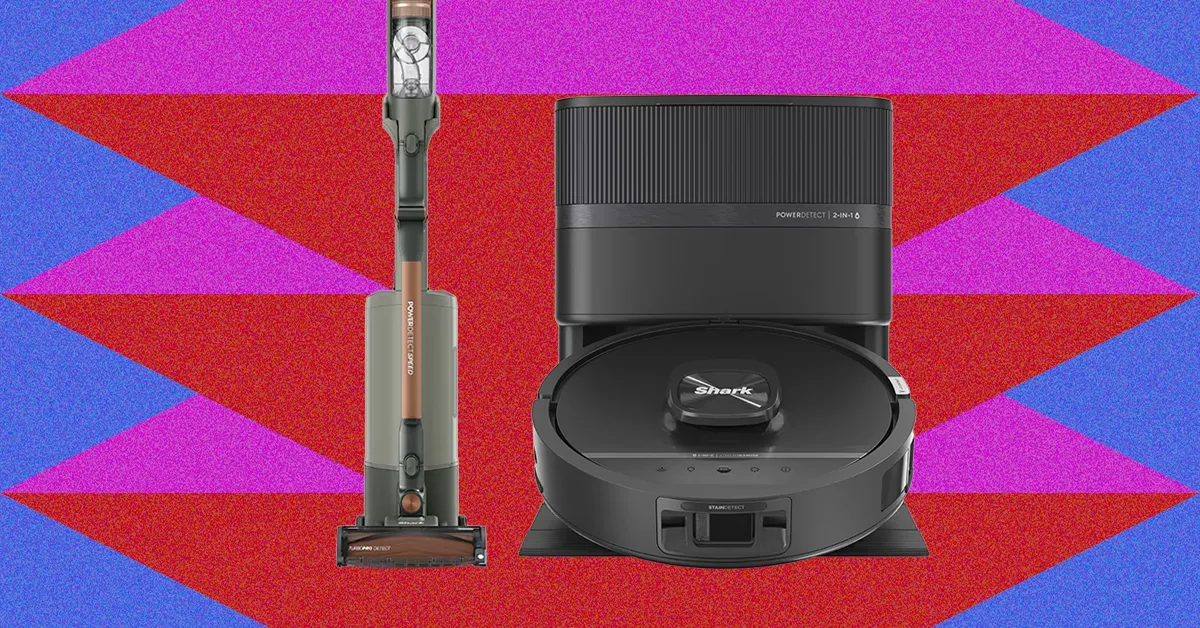
Shark PowerDetect Cordless Vacuum for $418: This is the original PowerDetect vacuum I recommended, with 380 watts of power, three cleaning models, two accessories, and an option to upgrade to include a self-emptying vase station. It can bend to get under furniture and often outpaced Dyson vacuums in my tests, especially when cleaning up sand or cereal on carpet. I prefer the Shark PowerDetect Speed a little more since it’s cheaper and has more options for its base station, but either vacuum is a smart buy.
Tineco Pure One Station 5 for $459: If you want a cordless stick vacuum but don’t want to deal with emptying it all the time, this Tineco vacuum comes with a self-emptying docking station. You’ll eventually have to empty the station, but it’s a great bonus feature and keeps the vacuum from falling over around your home since it’s stored safely in the docking station.
Worx Cordless Cube Vacuum for $120: This adorable, cube-shaped vacuum is one of my favorite handhelds, and is my go-to for vacuuming the car since it’s so easy to hold. It can also store all of its accessories inside itself, and the hose is four feet long to reach your entire carpeted car trunk.
Advertisement
FAQs
Which Style Vacuum Is Right for You?
To help you choose which one to buy, here’s what makes each vacuum style great.
Cordless Vacuums or Stick Vacuums: These vacuums look like the name suggests, with a long, sticklike arm that connects the vacuum head to the canister and controls. You’ll need to hold this up in a way you wouldn’t have to with an upright vacuum, but these are powerful and super mobile. They make for a great main vacuum, and are especially useful if you have multiple floors to vacuum since they’re easy to carry up and down stairs.
Robot Vacuums: Robot vacuums and are controlled with an app and allow for hands-free cleaning. Several models that double as mops, too. You’ll have to spend time moving furniture for the best clean possible, and you’ll usually still want a regular vacuum of some kind. But these are a huge help for frequent cleans in homes with kids and pets.
Handheld Vacuums: Handheld vacuums are ideal for targeted cleans or for cleaning specific places like stairs and cars. Most stick vacuums can transform into a handheld vacuum, but true handhelds are much lighter and have a more compact design (but also sacrifice battery power and dustbin capacity).
What About Upright Vacuums?
An upright vacuum is the classic, original vacuum style that sits straight up on its own, is much heavier than a cordless stick vacuum, and requires an outlet connection to operate. We don’t have an upright vacuum we recommend, since cordless stick vacuums have become the main focus for most shoppers (and as frequent vacuumers ourselves, we usually reach for cordless and robot vacuums anyway). We’re considering upright vacuums to test in the future, however, so feel free to comment on this guide with models we should consider.
Advertisement
Do You Need a Stick Vacuum and a Handheld Vacuum?
Do you need a handheld vacuum if you already have a cordless vacuum? Likely not, because most stick vacuums can transform into a handheld vacuum. Stick or cordless vacuums usually allow you to remove the stick between the vacuum head and canister base and instead connect those two pieces directly, making it into a handheld vacuum. It’ll be much heavier than a handheld-only vacuum and might be irritating for some use cases, but you don’t need both unless there’s a specific reason. A handheld is a good add-on if you already have an upright vacuum you love that doesn’t need replacing.
How Often Should You Replace Your Vacuum?
Vacuums last about five years, depending on the use frequency and build quality. Some cheaper stick vacuums might last only a year or two, though, so it’s worth investing in a better vacuum rather than a cheap dupe. If you’re curious what signs might indicate your vacuum needs replacing, check out our guide to how long vacuums can last.
A former Comcast retail employee alleges that a Connecticut store manager tied the lowest-performing salesperson to a chair each month and had co-workers smash a cream pie into their face, recording the incidents as a sales-motivation tactic. The plaintiff says he resigned after reporting the alleged assaults and is seeking damages for constructive discharge and emotional distress. Ars Technica reports: A Comcast store in Plainville, Connecticut, “had a policy that the highest-ranked Retail Sales Consultant for the prior month was instructed by his or her supervisor — Ms. Peterson, the Comcast Store manager — to tie the lowest-ranked sales consultant for the prior month to a chair in the back office and thereafter assault that person by violently smashing a cream pie in their face,” the complaint alleged (PDF).
Plaintiff David Figueroa’s lawsuit said he was hired as a retail sales consultant on February 2, 2026, and was supervised by store manager Sully Fuentes Peterson. Figueroa alleges that Peterson “designed and implemented” the pie-in-face ritual to meet goals related to sales and positive responses in customer surveys.
“Defendant did not inform the Plaintiff prior to his acceptance of Defendant’s offer of employment that the Comcast Store has a policy of subjecting Retail Sales Consultants to public assaults by co-workers — at the direction of Ms. Peterson, the store manager — for the purpose of increasing Defendant’s sales and profitability,” the lawsuit said.
Figueroa resigned on February 27, and he alleges it was a constructive discharge. The lawsuit says the defendant, Comcast, was negligent because it “reasonably should have known” about the store management’s policies and that the policies could harm employees. Comcast “failed to properly supervise the Comcast Store’s management team,” allowing store management to humiliate employees “for the purpose of promoting the Defendant’s revenues and profits,” the lawsuit alleged. Comcast said in a statement: “The Company has zero tolerance for harassment, humiliation, or any behavior that compromises a respectful and safe workplace. This matter is in litigation so we will not comment on the specific allegations, other than to say that we disagree with the claims in the complaint and its characterization of the alleged events, and intend to fully respond through the legal process.”

















































You must be logged in to post a comment Login