Connect with us
DAPA Banner

Tech

Credential management as a financial risk control

Published

on

Passwork logo

Author: Eirik Salmi, System Analyst at Passwork

When a threat actor walks into your network using a legitimate username and password, which control stops them?

For most financial institutions, the honest answer is: nothing catches it immediately. The attacker looks like an authorised user. They move laterally, escalate privileges, and map critical systems for an average of 186 days before the breach is even identified — and a further 55 days to contain it — according to IBM’s Cost of a Data Breach Report (2025).

By then, the operational damage is done, and the regulatory clock has already started.

Advertisement

On January 17, 2025, the Digital Operational Resilience Act (DORA) entered into application across the EU. Article 9 of the regulation makes credential security a binding financial risk control, with supervisory consequences for institutions that fall short.

The question is no longer whether your authentication posture meets best practice. It is whether it meets the law — and whether you can prove it.

This article traces the specific Article 9 requirements that govern credential management, explains why a compromised password is an operational resilience failure under DORA’s framework, and outlines the practical controls that close the gap.

The threat that DORA was built to counter

Stolen credentials are the single largest initial access vector in 2025, accounting for 22% of all data breaches, per Verizon’s Data Breach Investigations Report. For financial institutions, the sector-specific cost of that exposure averages $5.56 million per incident, according to IBM’s Cost of a Data Breach Report — down from $6.08 million in 2024, yet still the second-highest of any industry globally.

Advertisement

The supply side of credential theft has been fully industrialised. Initial Access Brokers sell verified corporate network access for an average of $2,700, with 71% of listings including privileged credentials — pre-packaged access that requires no technical skill to exploit, according to Rapid7 research.

Infostealers such as Lumma, RisePro, StealC, Vidar, and RedLine automate credential harvesting at scale. IBM X-Force data shows their delivery via phishing increased 84% year-on-year in 2024, with 2025 data pointing to an even steeper trajectory.

DORA’s Article 9 exists precisely to interrupt this chain. The regulation reflects a documented, ongoing threat to the operational continuity of European financial markets.

DORA Article 9 requires strong authentication, least-privilege access, and documented controls.

Advertisement

Passwork delivers all three — self-hosted, ISO 27001 certified, with full audit logs your compliance team can export on demand.

Try Passwork Free

What DORA Article 9 actually requires

Article 9 of DORA — titled “Protection and Prevention” — sits within the ICT risk management framework mandated by Article 6. It sets out specific technical and procedural obligations that financial entities must implement.

Two provisions are directly relevant to credential management.

  • Article 9(4)(c) requires financial entities to “implement policies that limit the physical or logical access to information assets and ICT assets to what is required for legitimate and approved functions and activities only.” This is the least-privilege principle, stated as a legal obligation.

  • Advertisement
  • Article 9(4)(d) goes further, requiring entities to “implement policies and protocols for strong authentication mechanisms, based on relevant standards and dedicated control systems, and protection measures of cryptographic keys whereby data is encrypted based on results of approved data classification and ICT risk assessment processes.”

Unpacking that language in operational terms: MFA is mandatory. The reference to “relevant standards” points directly to FIDO2/WebAuthn — the most widely deployed authentication standard currently resistant to Adversary-in-the-Middle (AiTM) phishing kits, which can bypass SMS and TOTP-based MFA in real time. Cryptographic key management is a regulatory requirement.

Privileged access management (PAM) tools are not named explicitly in the regulation — but the controls they deliver map directly onto Article 9’s requirements. Session recording, just-in-time (JIT) access provisioning, and privileged credential vaulting are precisely the “dedicated control systems” the regulation describes.

Institutions that have not deployed these controls face a compliance gap that supervisors can act on.

The European Banking Authority (EBA) and ESMA’s Regulatory Technical Standards under DORA provide additional specificity on ICT risk management requirements, reinforcing the Article 9 baseline with sector-specific implementation guidance.

Advertisement

Credential compromise as an operational resilience failure

DORA’s stated purpose is to ensure financial entities can withstand, respond to, and recover from ICT disruptions. A credential compromise looks entirely different through that lens than it does through a security incident lens.

With an average dwell time of 186 days, a compromised credential does not produce a discrete security event. It produces a sustained, invisible threat to operational continuity — an attacker moving laterally, escalating privileges, and mapping critical systems while appearing as a legitimate user. It is a direct threat to the operational continuity DORA is designed to protect.

The breach of France’s national bank registry in January 2026 made the mechanics concrete. A threat actor obtained the credentials of a single civil servant with access to Ficoba — the interministerial database holding records on every bank account opened in France.

Using only that one account, the attacker accessed and extracted data on 1.2 million bank accounts, including IBANs, account holder names and addresses, and tax identification numbers.

Advertisement

The affected system was taken offline, operations at the registry were disrupted, and the incident was reported to France’s data protection authority, CNIL. The attack required no technical sophistication.

Under DORA, an incident of that scale at a financial entity would trigger mandatory reporting obligations under Article 19 — an initial notification within 4 hours of classification (and no later than 24 hours after detection), an intermediate report within 72 hours, and a final report within one month.

The third-party dimension: Vendor credentials are your credentials

DORA’s Chapter V places explicit obligations on financial entities regarding ICT third-party risk. The compliance perimeter does not stop at the institution’s own systems.

The Santander breach in May 2024 is the European reference point. Attackers used credentials stolen from employees of Snowflake to access a database containing customer and employee data across Spain, Chile, and Uruguay.

Advertisement

The credentials had been harvested months earlier by infostealer malware infecting contractor workstations. None of the compromised Snowflake accounts had multi-factor authentication enabled.

The entry point was not inside Santander. It was a vendor’s weak authentication posture — and it exposed data belonging to one of Europe’s largest banks without a single exploit being written.

Under DORA, a financial institution whose critical ICT provider suffers a credential-based breach faces direct regulatory exposure. Institutions must contractually require equivalent authentication standards from their vendors and audit compliance against those requirements.

A vendor’s password policy gap is not the vendor’s problem alone — it is the financial entity’s regulatory liability.

Advertisement

Building a DORA-compliant credential management

Meeting Article 9’s requirements demands a structured programme across four areas.

  • Deploy phishing-resistant MFA first. FIDO2/WebAuthn-based authentication — hardware security keys, passkeys, platform authenticators. SMS and TOTP-based one-time passwords are not adequate against current attack techniques. Enforce phishing-resistant MFA for all users, with particular rigour on privileged accounts and remote access paths.

  • Enforce least-privilege access. JIT provisioning — granting elevated access only for the duration of a specific task — eliminates the standing privileges that make credential theft so damaging. Deactivate accounts immediately on offboarding. Dormant accounts are among the most common and most avoidable attack vectors.

  • Vault all credentials. Service account passwords, API keys, and privileged credentials must be stored in an encrypted, access-controlled credential vault. Manual credential management at scale is operationally unworkable and produces no audit trail. A business password manager Passwork — deployed on-premise within the institution’s own infrastructure — provides the encrypted vaulting, granular access controls, and complete activity history that Article 9 demands.

  • Advertisement
  • Monitor continuously. Anomalous login behaviour — unusual geolocations, off-hours access, lateral movement patterns — must trigger automated alerts. Reducing that 186-day average dwell time is the single most effective lever for cutting both financial exposure and DORA incident reporting obligations.

All four controls depend on the same foundation: how credentials are stored, shared, accessed, and monitored. Without structure at that layer, even well-designed policies fail at execution.

How Passwork supports DORA compliance in practice

Passwork is a corporate password manager certified to ISO/IEC 27001 and available as a self-hosted deployment — meaning your credential data never leaves your own infrastructure.

For financial entities navigating DORA’s Chapter V supply chain obligations, that distinction matters: a third-party SaaS credential store introduces exactly the kind of ICT dependency the regulation requires you to govern.

For institutions working through the four controls above, Passwork addresses the credential management dimension of each.

Advertisement
  • MFA enforcement across the credential layer. Passwork supports biometric, passkey, and security key MFA natively, with SAML SSO and LDAP integration for enterprise environments.

  • Role-based access control and least privilege. Permissions are assigned at vault and folder level, inherited from AD or LDAP groups, and updated automatically on directory changes. Offboarding revokes access to shared credentials in a single operation — logged and timestamped, producing the evidence an investigator will request under Article 9(4)(c).

  • Privileged account inventory and secure sharing. Passwork provides a structured, searchable repository of all organisational credentials, including shared administrative accounts. Encrypted vault sharing replaces informal channels that leave no audit trail and cannot be revoked.

  • Audit logs for compliance documentation. Every credential access, permission change, password reset, and sharing event is recorded in a tamper-evident log, exportable for compliance reporting and integrable with SIEM systems. A structured activity history is a substantively stronger response to a regulator than a policy document alone.

DORA compliance is as much an evidence problem as a technical one. The institutions that navigate enforcement most effectively are those that can produce documentation on demand.

Advertisement

Act before the audit

DORA has converted credential management from a security best practice into a binding financial risk control. Articles 9(4)(c) and 9(4)(d) are explicit: least-privilege access, strong authentication, and cryptographic key protection are legal obligations for every financial entity operating in the EU.

Operational resilience begins with identity — and identity begins with controlling who holds the keys.

Audit your credential controls against Article 9, document the findings, and have the evidence ready before a regulator asks. Under DORA, the absence of documentation is itself a finding.

Passwork is designed for exactly this situation: a self-hosted password manager that keeps credential data inside your own infrastructure, enforces MFA across every access point, and generates the tamper-evident audit logs that turn a compliance conversation from a liability into a demonstration. ISO/IEC 27001 certified, with LDAP and SAML SSO integration for enterprise environments.

Advertisement

Start your free Passwork trial — full functionality, no limitations.

Sponsored and written by Passwork.

Source link

Advertisement
Continue Reading
Click to comment

You must be logged in to post a comment Login

Leave a Reply

Tech

Brev raises $3.3M for AI agents that keep companies on track with goals

Published

on

Brev co-founders Vic Hu (left) and Chris Pitchford. (Brev Photo)

Brev, a startup with roots in Seattle’s tech community, has raised $3.3 million in pre-seed funding for its AI tools that automatically track how companies are performing against goals.

The company’s AI agents join standups, business reviews, and other internal meetings, then automatically update goals and flag risks. Brev also pulls data from tools like Slack, Jira, and Salesforce, generates agendas, and tracks follow-through on action items. 

Overall, the idea is to replace manual coordination that often slows teams down. 

“Everything is grounded in quotes from participants, which keeps the AI accurate and unlocks context that would otherwise be lost across hundreds of meetings every quarter,” explained Brev CEO and co-founder Chris Pitchford in an email this week. 

Pitchford is a serial startup founder and a former executive at Ally, a Seattle goal-tracking startup that Microsoft acquired in 2021. He founded Brev with CTO Vic Hu, a former senior engineer at Meta and engineering manager at Indeed. Benn Graham is founding engineer.

Advertisement

Its pre-seed funding, announced Wednesday, was led by Resolute Ventures, with participation from ShuckerVC, Duro VC, Gaingels, and FOG Ventures. Brev plans to use the money to expand its engineering team and deepen integrations with business tools its customers use. 

When GeekWire first reported on Brev in October 2024, it was bootstrapped and pitching itself as a “business performance OS.” Since then, it has launched a self-serve product with usage-based pricing, and started working with companies including RecordPoint, Flex, and Patlytics. 

The company competes in a space that includes goal-tracking and performance-management software, along with a growing wave of AI meeting assistants. In effect, Brev is aiming to bridge those two segments, connecting what happens in meetings to larger company goals rather than treating them as separate workflows. 

Notably, Microsoft discontinued Viva Goals in 2025, the successor to Ally, the company where Pitchford was previously an exec, leaving a gap in the market that Brev could help fill.

Advertisement

Brev’s longer-term goals include moving beyond tracking into actively driving execution for its customers, with AI that coordinates across teams and tools.

The company is based in San Francisco, where Pitchford is now located, with Hu based in the Seattle area and Graham in Toronto. It has contractors across multiple time zones and is hiring.

Source link

Advertisement
Continue Reading

Tech

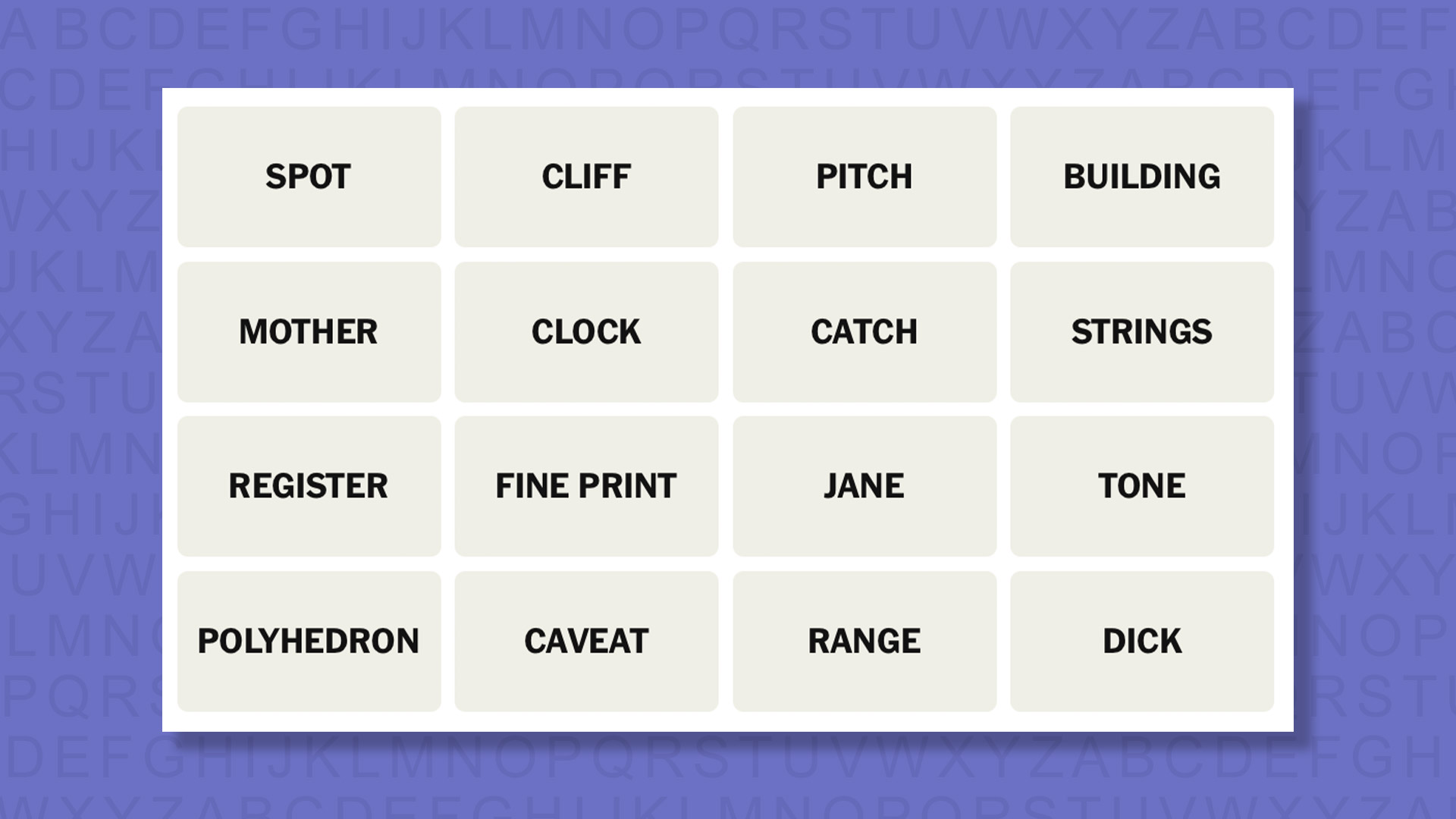
NYT Connections hints and answers for Sunday, April 26 (game #1050)

Published

on

Looking for a different day?

A new NYT Connections puzzle appears at midnight each day for your time zone – which means that some people are always playing ‘today’s game’ while others are playing ‘yesterday’s’. If you’re looking for Saturday’s puzzle instead then click here: NYT Connections hints and answers for Saturday, April 25 (game #1049).

Good morning! Let’s play Connections, the NYT’s clever word game that challenges you to group answers in various categories. It can be tough, so read on if you need Connections hints.

Advertisement

Source link

Advertisement
Continue Reading

Tech

Apps to distract you from the endless cycle of doomscrolling

Published

on

You open your phone to check the time or a quick message. The next thing you know, an hour has passed and you’ve scrolled through endless celebrity drama, cat videos, awful news stories, influencer rants, and whatever else the algorithm decided to throw at you.

Even though you probably don’t want to keep wasting your time and energy on this mind-numbing content, you do it again the next day.

Doomscrolling, the habit of spending excessive amounts of time consuming content on social media, has become incredibly widespread. A survey from last year found that 64% of Americans say they doomscroll

Researchers have warned that doomscrolling can negatively affect several aspects of your well-being, including your mental health and attention span. Spending long periods scrolling can lead to brain fatigue, difficulty focusing, and disrupted sleep. And if a lot of the content you’re consuming is negative or stressful, it can leave you feeling disheartened, anxious, and emotionally drained. 

Advertisement

It’s hard to break the cycle of doomscrolling, but there are plenty of apps that provide content that’s engaging and productive.

Of course, you could always read a book or go for a walk (we have a guide on how to stop doomscrolling), but this list is for when you have a few spare minutes and want something to do on your phone that isn’t endless scrolling. 

Dudel Draw

Image Credits:Dudel Draw

If you want to take a break from doomscrolling and try something creative, Dudel Draw might be a good app for you. Each day, the app gives you a random shape that you turn into a drawing. These daily shapes vary from basic geometrical forms to more complex and abstract designs.

Techcrunch event

San Francisco, CA
|
October 13-15, 2026

Advertisement

You can also get your friends in on the creativity with some fun competition by comparing your different creations, which could serve a nice break from sending each other endless TikToks or Instagram Reels.

Dudel Draw is available for free on iOS.

Advertisement

Radio Garden

Image Credits:Radio Garden

If you still want to feel connected to the world without scrolling through social media, you can check out Radio Garden. The app lets you listen to over 25,000 live radio stations from across the globe. 

Once you open the app, you’ll see green dots marking cities and towns. Tap any dot to listen to radio stations broadcasting from that location. You can add favorites or search for radio stations, countries, and places. 

Radio Garden is free, but it also offers an ad-free premium plan for $2.99 per month. The app is available on both iOS and Android

Elevate

Image Credits:Elevate

Elevate is an app designed to help improve focus, memory, reading, math skills, and other cognitive abilities. It includes over 40 games to train different abilities you use in everyday life, from reading faster to comparing prices more efficiently. 

You can track training streaks and compare your mind’s performance over time. 

The app offers a free version with access to three games per day, or a yearly subscription of $39.99 for unlimited access. It’s available on both iOS and Android

Advertisement

Vocabulary 

Image Credits:Vocabulary

Vocabulary is an app that helps you learn new words every day. You can pick your difficulty level and choose categories that interest you, like emotions, the human body, business, and more. Each word comes with a definition, example sentences, and a guide on how to pronounce it. 

The app also includes mini-games to help you review the words you’ve learned. You can set a goal of how many words you want to learn each week and create a regular learning routine. 

Vocabulary offers a free trial, and then costs $4.99 per month or $59.99 per year. It’s available on iOS and Android

Seterra

Image Credits:Seterra

If you’re a geography nerd looking to test your knowledge or just want to improve your geography skills, Seterra is perfect for you. The app features over 300 different games to test your map skills. You can test your knowledge of world flags; discover oceans, seas, and rivers; and explore mountain ranges and volcanoes across the globe.

Seterra lets you track your progress across categories and see leaderboards for top scorers for each game. 

The app is free and available on both iOS and Android

Advertisement

NYT Games

Image Credits:NYT

The NYT Games app offers several word, logic, and number games that change every day to exercise your mind. You can play the crossword, try the word-guessing game Wordle, group words with a common theme in Connections, see how many words you can make from seven letters in Spelling Bee, and more. 

The app costs $5.99 per month for unlimited access and archives, but some games like Wordle, Strands, and the Mini Crossword are available to play for free. 

NYT Games is available on both iOS and Android

Drops

Image Credits:Drops

If you want to learn a new language but want to try something other than Duolingo, Drops is a good option. The app uses visually engaging mini‑games to help you build vocabulary and common phrases in more than 45 languages, with bite‑sized lessons designed to be completed in about five minutes a day.

Drops is designed for both beginners and experts who want to grow their foreign language vocabulary.

The free version of the app offers five-minute lessons per day. You can get unlimited access and premium features for $11.99 per month or $79.99 per year. The app is available on both iOS and Android.

Advertisement

This story was originally published in March 2026 and is updated regularly with new information.

When you purchase through links in our articles, we may earn a small commission. This doesn’t affect our editorial independence.

Source link

Advertisement
Continue Reading

Tech

Why Cohere is merging with Aleph Alpha

Published

on

Canadian AI startup Cohere is taking over Germany-based Aleph Alpha, with the blessing of their governments, in a bid to offer a sovereign alternative to enterprises in an AI landscape dominated by American players. “Sovereign AI” refers to systems where companies and governments retain full control over their own data — rather than routing it through U.S. tech giants like Microsoft or Google.

As companies that develop large language models, Aleph Alpha and Cohere have been hometown stars, while still lagging far behind OpenAI and the likes globally. But similarities aside, this isn’t an alliance between equals. Last valued at $6.8 billion, Cohere will lead the new entity that will incorporate Aleph Alpha, subject to approval by authorities and shareholders.

The deal’s key financial backer is Schwarz Group, a German retail conglomerate. As an existing shareholder in Aleph Alpha, it is already fully onboard with the acquisition. And going forward, it will also become a strategic backer of the newly combined entity with €500 million in structured financing (approximately $600 million). In return, Schwarz Group expects the new entity to run on STACKIT — the sovereign cloud platform operated by its IT division, Schwarz Digits — giving the retail giant a major enterprise customer for its cloud business.

To fund the combined entity, Cohere is also raising a new round of financing — a Series E — and Schwarz Group will serve as its lead investor. The valuation has already been set: according to German business media outlet Handelsblatt, the term sheet pegs the company’s combined worth at around $20 billion.

Advertisement

This would be a significant leap that combined revenue alone can’t justify. While Cohere reported $240 million in annual recurring revenue in 2025, Aleph Alpha had previously generated little revenue and significant losses. But investors are betting that teaming up will improve their odds against much larger rivals.

They may not be alone in the thinking that consolidation is the path forward. Elon Musk’s AI startup xAI has reportedly discussed a three-way partnership with France’s Mistral AI and Cursor, which SpaceX recently secured the option to buy. But it remains unclear whether Mistral would be interested in risking undermining its positioning as an alternative to U.S. tech that boosted its revenues. A partnership with xAI — an American company — would complicate that identity.

Cohere, too, is hoping to get tailwinds from enterprises looking for alternatives to AI providers that may not meet their requirements when it comes to privacy and independence. The new entity plans to target highly-regulated industries — including defense, energy, finance, healthcare, manufacturing and telecommunications— as well as the public sector.

Techcrunch event

Advertisement

San Francisco, CA
|
October 13-15, 2026

Aleph Alpha also developed specialized language models targeting enterprises and public institutions in Europe, such as the PhariaAI suite. A subsequent pivot away from building its own frontier models and the departure of its cofounder and CEO Jonas Andrulis made its strategy and leadership less clear, and left it in a weakened negotiating position. But its team of 250 people and their expertise could still complement Cohere.

Advertisement

“Their focus on small language models, European languages and tokenizers is a really complementary one to our own, which is more of a general focus on large language models,” Cohere CEO Aidan Gomez said in a press conference announcing the plans on Friday.

Amid growing tensions with the United States, Canada has been increasingly keen to sign bilateral initiatives with a variety of partners, including Germany. With a shared concern for privacy and security, the two countries recently launched a Sovereign Technology Alliance to “strengthen sovereign AI capacity and reduce strategic technology dependencies.”

The question remains whether European organizations will view an initiative involving Canada as sufficiently sovereign, or whether they will trust that the alliance will remain transatlantic in the long run. According to Gomez, “Cohere will become a Canadian-German company.” But that promise could be harder to keep if the company goes public — putting ownership in the hands of global shareholders with no particular allegiance to either country.

When you purchase through links in our articles, we may earn a small commission. This doesn’t affect our editorial independence.

Advertisement

Source link

Continue Reading

Tech

Alexander 3D-Printed a Real Engine That Runs

Published

on

3D-Printed Working Engine
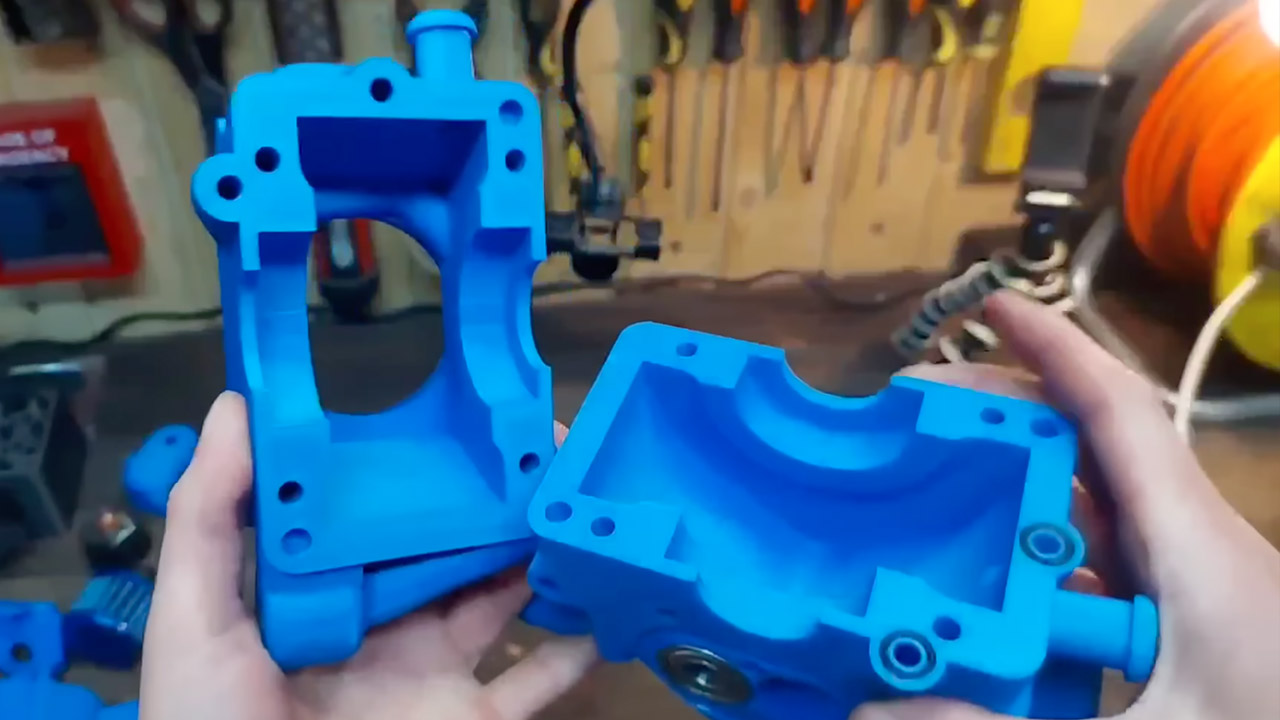
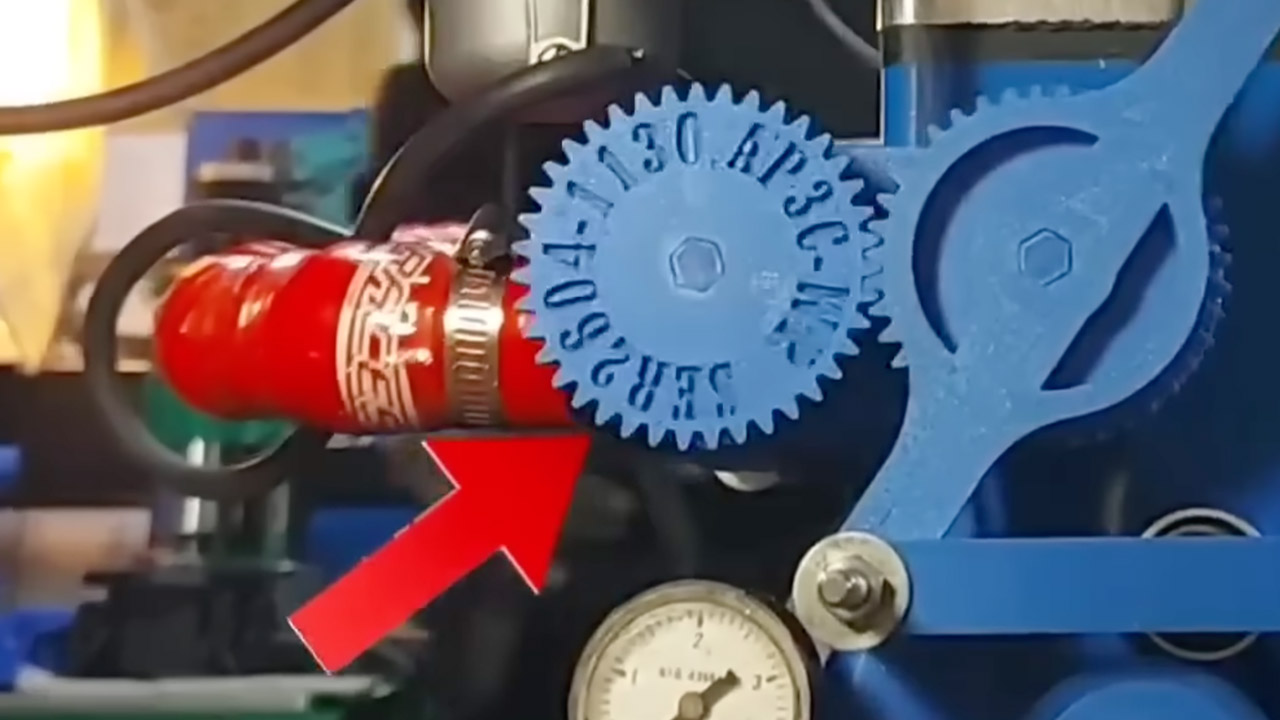
Alexander worked in his workshop for years on a simple goal: to turn spools of everyday filament into a workable internal combustion engine. That is, anything with a few hundred horsepower to get the aging bones going. His third generation of this made-from-scratch engine, known as the AP3 Carbon D125, has recently met that target. The new design surrounds a 125cc single-cylinder four-stroke engine, which is commonly found in scooters.


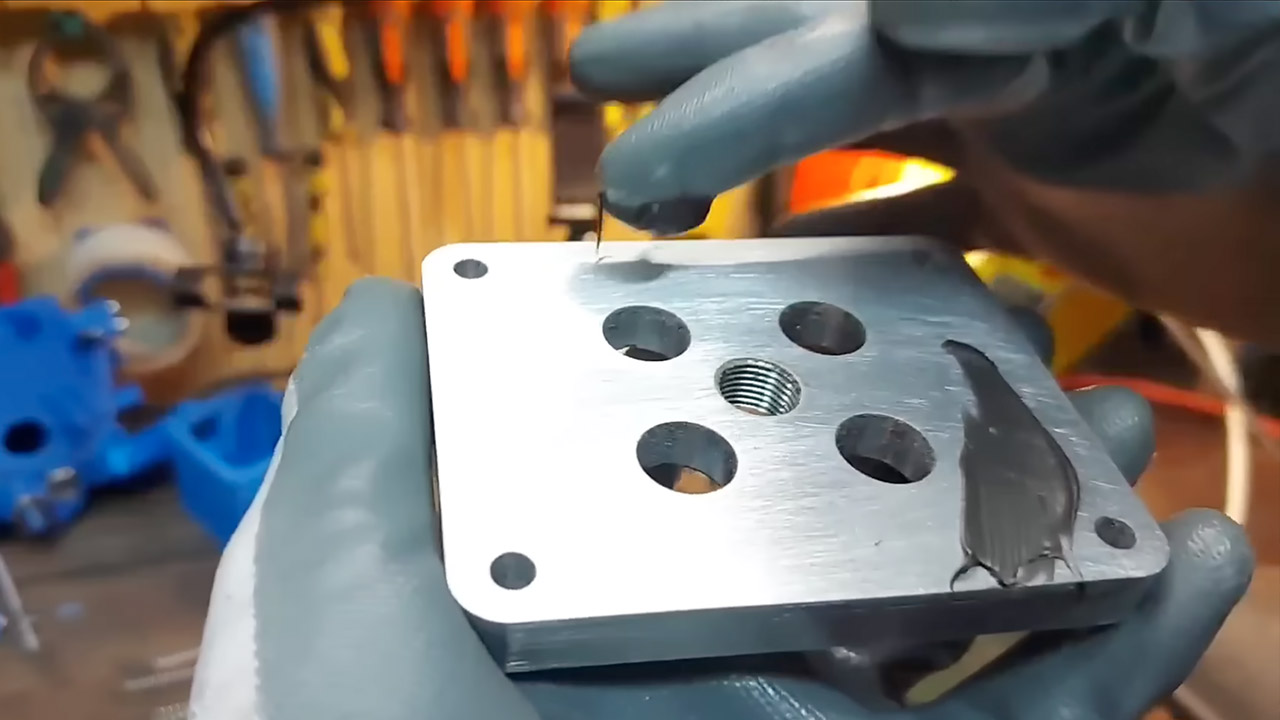
The majority of the engine parts were created in his workshop using an Elegoo Centauri Carbon 2 Combo printer and a variety of different types of filament, specifically ASA, ABS, and PET-CF, but the cylinder bore is lined with a stainless steel sleeve, giving the entire thing a bit more reliability than the other parts. A friend at a CNC shop delivered the head, which was machined from aluminum to contain four valves and dual overhead cams. Bearings, belts, and some odd bits of hardware were required to complete the engine. The previous attempts taught us a lot of hard lessons, as the second engine ran for four minutes before heat melted the cylinder body and killed the compression completely, the nuts were in some awkward spots, torque was impossible to apply evenly, and water and oil mixed inside the head. Alexander had to virtually dismantle everything and start from scratch.


Bambu Lab A1 3D Printer, Support Multi-Color 3D Printing, High Speed & Precision, Full-Auto Calibration…
  • High-Speed Precision: Experience unparalleled speed and precision with the Bambu Lab A1 3D Printer. With an impressive acceleration of 10,000 mm/s…
  • Multi-Color Printing with AMS lite: Unlock your creativity with vibrant and multi-colored 3D prints. The Bambu Lab A1 3D printers make multi-color…
  • Full-Auto Calibration: Say goodbye to manual calibration hassles. The A1 3D printer takes care of all the calibration processes automatically…

3D-Printed Working Engine
This time, however, he put an oil pump directly into the crankcase. Four small bearings and a pair of gears revolve inside a printed enclosure to accomplish this. A basic pressure regulator fits in the main gallery and ensures that the oil gets to where it needs to be. There’s no need for an external pump this time. He also installed a separate positive crankcase ventilation system to keep the oil where it belonged. The cooling system underwent a similar makeover. A mechanical water pump was printed onto the cylinder body. Its impeller rotates on bearings and a timing belt. Coolant circulates through passages in the cranium and around the sleeves. Long story short, there are no fancy electric pumps and no mysterious leaks between the oil and water lines.

3D-Printed Working Engine
Now, he used the old crankshaft from his prior attempts, but first checked it with a dial indicator. The needle changed only 0.05 millimeters, which is well within the tolerance for a 125cc engine. He also created a head gasket with braided copper wire around the sleeve and a high-temperature material rated for 1,000 degrees Celsius. Putting it all together was a tedious task. Alexander hand lapped the valves and carefully sealed each joint. When everything was ready, he filled the crankcase with 10W40 and attached it to a test rig.

3D-Printed Working Engine
The initial crank brought instant effects, and this time it caught, settled into a steady idle, and kept the compression, which was a good start; however, a brief timing check revealed that the water-pump pulley was spinning at the incorrect speed due to a slipped tensioner. A little tweak and it was all set. On the second run, the pump operated well and the coolant flowed properly. However, the oil pressure gauge remained silent, either because the sender required calibration or because the tolerances were just a little too loose, and a suspected vacuum leak appeared on the intake side where the epoxy had not yet been entirely applied. Still, it ran smoothly enough to demonstrate that the main architecture held together properly.

3D-Printed Working Engine
Alexander believes the crankcase oil pump was the true game changer; seeing the oil pour through the gallery during a bench test gave him the confidence to put the rest together and see it operate. Every printed part not only survived, but appeared to manage the heat and vibration of the first few minutes with ease.
[Source]

Source link

Advertisement
Continue Reading

Tech

How to watch London Marathon 2026: Free Streams & TV Channels

Published

on

The London Marathon 2026 live streams will feature a stellar lineup of the world’s elite long-distance runners tackling the iconic 26.2-mile course, which winds from Greenwich to The Mall, via the famous dry dock, the Cutty Sark, in the UK capital. Alongside defending champions Sebastian Sawe and Tigst Assefa, more than 59,000 runners will pound the tarmac, including former F1 world champion Sebastian Vettel and Olympian Laura Kenny.

The 29-year-old Sawe claimed victory in 2:02:27 twelve months ago, finishing ahead of Jacob Kiplimo, the half-marathon world record holder, on his marathon debut. The Ugandan will once again expect to contend for a podium place. Ethiopia’s Deresa Geleta is the third runner to have gone under the 2:03 mark, while Joshua Cheptegei and Tamirat Tola, the reigning Olympic champions over 10,000m and the marathon respectively, are also in contention. Amos Kipruto, the 2022 London Marathon champion, is also set to line up.

Advertisement

Source link

Continue Reading

Tech

Today’s NYT Mini Crossword Answers for April 26

Published

on

Looking for the most recent Mini Crossword answer? Click here for today’s Mini Crossword hints, as well as our daily answers and hints for The New York Times Wordle, Strands, Connections and Connections: Sports Edition puzzles.


Need some help with today’s Mini Crossword? Read on for all the answers. And if you could use some hints and guidance for daily solving, check out our Mini Crossword tips.

If you’re looking for today’s Wordle, Connections, Connections: Sports Edition and Strands answers, you can visit CNET’s NYT puzzle hints page.

Advertisement

Read more: Tips and Tricks for Solving The New York Times Mini Crossword

Let’s get to those Mini Crossword clues and answers.

completed-nyt-mini-crossword-puzzle-for-april-26-2026.png

The completed NYT Mini Crossword puzzle for April 26, 2026.

Advertisement

NYT/Screenshot by CNET

Mini across clues and answers

1A clue: Alternative to electric, for a stove
Answer: CASA

5A clue: Developer’s projects
Answer: APPS

6A clue: Sketch comedy spinoff launched on March 21, 2026
Answer: SNLUK

Advertisement

7A clue: One of 24
Answer: HOUR

8A clue: Gas brand with a green-and-white logo
Answer: HESS

Mini down clues and answers

1D clue: Kayak alternative
Answer: CANOE

2D clue: Great grade
Answer: APLUS

Advertisement

3D clue: N.B.A. team with the 7’4” star Victor Wembanyama
Answer: SPURS

4D clue: “___ not what your country can do for you …”
Answer: ASK

6D clue: Sound made with a finger to the lips
Answer: SHH

Advertisement

Source link

Continue Reading

Tech

Today’s NYT Connections: Sports Edition Hints, Answers for April 26 #580

Published

on

Looking for the most recent regular Connections answers? Click here for today’s Connections hints, as well as our daily answers and hints for The New York Times Mini Crossword, Wordle and Strands puzzles.


Today’s Connections: Sports Edition is a tough one. If you’re struggling with today’s puzzle but still want to solve it, read on for hints and the answers.

Connections: Sports Edition is published by The Athletic, the subscription-based sports journalism site owned by The Times. It doesn’t appear in the NYT Games app, but it does in The Athletic’s own app. Or you can play it for free online.

Advertisement

Read more: NYT Connections: Sports Edition Puzzle Comes Out of Beta

Hints for today’s Connections: Sports Edition groups

Here are four hints for the groupings in today’s Connections: Sports Edition puzzle, ranked from the easiest yellow group to the tough (and sometimes bizarre) purple group.

Yellow group hint: Whack!

Advertisement

Green group hint: Hoops team monikers.

Blue group hint: Common last name.

Purple group hint: Not 2 or 3.

Answers for today’s Connections: Sports Edition groups

Yellow group: Hard-hit baseball.

Advertisement

Green group: NBA teams with singular nicknames.

Blue group: ____ Johnson.

Purple group: What “1” might mean.

Read more: Wordle Cheat Sheet: Here Are the Most Popular Letters Used in English Words

Advertisement
completed NYT Connections: Sports Edition puzzle for April 26, 2026

The completed NYT Connections: Sports Edition puzzle for April 26, 2026.

NYT/Screenshot by CNET

What are today’s Connections: Sports Edition answers?

The yellow words in today’s Connections

The theme is hard-hit baseball. The four answers are frozen rope, laser, liner and screamer.

The green words in today’s Connections

The theme is NBA teams with singular nicknames. The four answers are Heat, Jazz, Magic and Thunder.

Advertisement

The blue words in today’s Connections

The theme is ____ Johnson. The four answers are Flau’jae, Gus, Lane and Randy.

The purple words in today’s Connections

The theme is what “1” might mean. The four answers are fastball, pitcher, point guard and top rank.

Source link

Advertisement
Continue Reading

Tech

The climate tech IPO window could finally be cracking open

Published

on

Climate tech startups are capital intensive, timelines are long, and the technology is often considered “first of its kind.” What’s more, a key value proposition is addressing pollution — an externality that is, at best, poorly priced by the market. Those aren’t the qualities stock pickers tend to favor.

And yet, public markets appear to be warming to climate tech startups — or at least some of them.

This week, nuclear startup X-energy went public, raising $1 billion in an upsized share offering that appears to have delivered a windfall for its investors, including Amazon. Retail investors apparently can’t get enough, with the stock popping 25% in its first hour of trading. Also this week, geothermal startup Fervo said it filed for an initial public offering. The size of the Fervo IPO has yet to be disclosed, but private investors have valued the company at around $3 billion, according to PitchBook.

The move to go public aligns with what investors told TechCrunch at the end of last year. After years of tepid attitudes toward climate tech companies, they expected public markets to start welcoming energy-related startups. Nearly every investor that weighed in on the question said the startups with the best chances of going public specialize in either nuclear fission or enhanced geothermal. Fervo, specifically, was mentioned several times.

Advertisement

Thank data centers for that. The AI craze has taken a trend of rising demand for electricity and made it sexy and salable. Companies that were already betting on the upswing lucked into a trending narrative that coincided with their technological maturity. Fortune certainly favors the prepared. 

The IPOs are also certain to please investors, letting them return capital to their LPs. The recent dearth of IPOs has kept a chunk of climate tech funding locked up, at a time when many funds would like to start cashing out.

But it’s not just about cashing out.

Techcrunch event

Advertisement

San Francisco, CA
|
October 13-15, 2026

Fervo and X-energy have followed the traditional route to public markets, suggesting there is confidence that a broad base of investors wants to participate. If it were just about freeing up investor capital, the startups could have followed the SPAC route. (Several have.) But these two companies took the longer path.

Advertisement

Yet for all that success, a wide swathe of climate tech will probably be left out of the IPO wave.

Companies that aren’t entangled in energy markets will have to find other ways to press on — and without access to the deep pockets the public market provides. The divergence suggests the climate tech world is starting to go K-shaped, a trend which Mark Cupta, managing director at Prelude Ventures, suggested when I spoke to him a little over a week ago.

Companies stuck on the poorer side of the IPO window still have private investors to lean on. But there, too, a K-shaped trajectory is starting to appear.

Venture capital and growth funds raised about $6.5 billion last year, according to Sightline Climate. That’s the same as in 2021, but because there are more funds today, each fund is now smaller. For founders, that could be bad news since funds have less to draw on. On the upside, more competition could drive better fundraising results.

Advertisement

At the same time, the big funds keep getting bigger. Infrastructure dominated climate tech fundraising last year, with 42 funds raising 75% of all dollars in the sector, according to Sightline Climate. That success will spill over into the startup side if it’s a company with a mature technology that is ready to build big. 

Sightline said that many new infrastructure funds are specializing in renewables, grid technologies, and energy storage. In other words, the K-shape isn’t going away anytime soon.

When you purchase through links in our articles, we may earn a small commission. This doesn’t affect our editorial independence.

Source link

Advertisement
Continue Reading

Tech

OpenAI CEO apologizes to Tumbler Ridge community

Published

on

In a letter to the residents of Tumbler Ridge, Canada, OpenAI CEO Sam Altman said he is “deeply sorry” that his company failed to alert law enforcement about the suspect in a recent mass shooting.

After police identified 18-year-old Jesse Van Rootselaar as a suspected shooter who allegedly killed eight people, the Wall Street Journal reported that OpenAI had flagged and banned Van Rootselaar’s ChatGPT account in June 2025 for after she described scenarios involving gun violence. The company’s staff debated alerting police but ultimately decided against it, eventually reaching out to Canadian authorities after the shooting.

OpenAI has since said that it is improving safety protocols, for example by putting more flexible criteria in place to determine when accounts get referred to authorities, and by establishing direct points of contact with Canadian law enforcement.

In Altman’s letter, which was first published in the local newspaper Tumbler RidgeLines, the CEO said he’d discussed the shooting with Tumbler Ridge Mayor Darryl Krakowka and British Columbia Premier David Eby, and they’d all agreed “a public apology was necessary,” but “time was also needed to respect the community as you grieved.”

Advertisement

“I am deeply sorry that we did not alert law enforcement to the account that was banned in June,” Altman said. “While I know words can never be enough, I believe an apology is necessary to recognize the harm and irreversible loss your community has suffered.”

Altman also said that OpenAI’s focus will “continue to be on working with all levels of government to help ensure nothing happens like this again.”

In a post on X, Eby said Altman’s apology is “necessary, and yet grossly insufficient for the devastation done to the families of Tumbler Ridge.”

Techcrunch event

Advertisement

San Francisco, CA
|
October 13-15, 2026

Canadian officials have said they are considering new regulations on artificial intelligence but have not made any final decisions.

Advertisement

If you are in a crisis or having thoughts of suicide, call or text 988 to reach the 988 Suicide and Crisis Lifeline.

When you purchase through links in our articles, we may earn a small commission. This doesn’t affect our editorial independence.

Source link

Advertisement
Continue Reading

Trending

Copyright © 2025