






Connect with us

Tech

Designed By Pininfarina, Infinix NOTE 60 Ultra Debuts at MWC 2026

Published

on

Smartphone design is pretty much the same in 2026. You get a slab of metal and glass with a big, bulky camera module on the back, and there’s only so much you can do with it. Infinix seems to have looked at that trend and said, “Screw it.” That’s because, to design its new flagship phone, the Hong Kong-based smartphone maker called in the legendary Italian design firm Pininfarina. For the uninitiated, these guys were a coachbuilder responsible for designing some of the most iconic cars, including the Ferrari 250 GT and the Testarossa.

Pininfarina has employed some of that expertise to design the Infinix Note 60 Ultra. So, how is it different? Instead of a large camera bump, Infinix has opted for an aluminum unibody design with what it calls the world’s first Uni-Chassis camera module. The entire rear panel is formed from a single sheet of Corning Gorilla Glass Victus, creating a smooth, uninterrupted surface. The display is a 1.5K Ultra HDR panel with a 144Hz refresh rate and up to 4500 nits of peak brightness.

The design includes a “Floating Taillight” element on the back that lights up when the phone powers on. Like the new Xiaomi 17 series, there’s also a hidden Active Matrix display embedded in the rear panel that can display notifications, icons, or a pixel-style virtual companion. As expected, colors on the Note 60 Ultra are inspired by Italian racecars, including Torino Black, Monza Red, Amalfi Blue, and Roma Silver.

Pretty Outside, Powerful Inside

Infinix isn’t leaving any stone unturned with the Note 60 Ultra. It’s powered by the MediaTek Dimensity 8400 Ultimate chipset built on a 4nm process. For context, the processor houses one Cortex-A725 core running at 3250 MHz, three Cortex-A725 cores running at 3000 MHz, and four Cortex-A725 cores running at 2100 MHz. Coupled with 12GB of RAM and 256GB of storage, the performance should be good enough for an AnTuTu score of over 1.6 million.

XOS 16, based on Android 16, will run the show, and it introduces a redesigned interface called GlowSpace. The software also integrates several AI-driven tools, including an Advanced Health Monitor for tracking vitals, AI-powered file organization, and an adaptive knowledge base that evolves based on user behavior. The company has promised three years of major Android updates and five years of security patches.

Advertisement

Another neat feature of the Note 60 Ultra is support for two-way satellite calling and messaging. It allows users to stay connected even when they’re outside traditional cellular coverage. This could be particularly useful in remote locations or during network outages.

Battery life is handled by a massive 7,000mAh silicon-carbon battery, which Infinix says has self-healing capabilities that can restore up to 1% of battery health every 200 charging cycles. It’ll be very interesting to test that feature long-term. Charging is fast, too. The device supports 100W wired charging and 50W wireless charging.

Cameras

Despite the not-so-huge camera bump, the Note 60 Ultra packs a triple-camera setup headlined by a 200MP Samsung ISOCELL HPE sensor. It’s paired with a 50MP Samsung ISOCELL JN5 periscope telephoto camera and a 112-degree ultra-wide camera.

The telephoto system supports multiple zoom levels, including a 2x optical crop, 3.5x optical zoom, and up to 7x lossless digital zoom. Infinix says the system can reach up to 100x zoom for long-distance shots. The phone also supports Ultra HDR capture using Infinix’s XDR Image Engine, which should improve dynamic range and preserve details, though I’m yet to test its capabilities myself.

Source link

Advertisement
Continue Reading
Click to comment

Leave a Reply

Your email address will not be published. Required fields are marked *

Tech

The Trump Administration Just Admitted Its War On Law Firms Was A Bluff. The Cowards Who Folded Already Paid The Price.

Published

on

from the profiles-in-cowardice dept

We’ve said it over and over again on this site: when you stand up to the bully, the bully backs down. When you capitulate, you get nothing but a permanent stain and an invitation for more abuse.

And here we are again.

The Wall Street Journal is reporting that the Trump administration plans to abandon its defense of the executive orders sanctioning law firms that dared to represent clients the president didn’t like. The Justice Department is expected to drop its appeals of four separate trial-court rulings that struck down Trump’s actions against Perkins Coie, Jenner & Block, WilmerHale, and Susman Godfrey.

The fact that these attacks were legal losers is no surprise. We called this out as unconstitutional nonsense when Trump first started targeting law firms. The courts agreed, with judge after judge striking down the orders as unconstitutional retaliation. But it was at least a little surprising that the Trump admin just gave up on this fight, rather than continuing its losing streak. As the WSJ reports:

Advertisement

An ideological mix of judges ruled against the administration, saying the executive orders undermined bedrock principles of the U.S. legal system. In one decision, Judge Richard Leon, an appointee of President George W. Bush, said blocking the sanctions was necessary to preserve an “independent bar willing to tackle unpopular cases, however daunting.”

In another decision, Judge Beryl Howell, an appointee of President Barack Obama, said even more cuttingly, “This action draws from a playbook as old as Shakespeare, who penned the phrase: ‘The first thing we do, let’s kill all the lawyers.’”

So the firms that fought back—the ones that read the Constitution and believed it still meant something—won a total, complete victory. The administration folded. The executive orders are dead.

But, the story of the firms that fought and won is actually the less interesting part of this saga. The far more consequential story is about the firms that didn’t fight. The ones that looked at a blatantly unconstitutional executive order and decided the smart play was to grovel.

Led by Paul Weiss, nine large law firms decided to cut deals with the administration rather than challenge what was an obviously hollow legal threat. They promised nearly $1 billion in pro bono work for causes favored by the administration. They effectively paid a cowardice tax—tribute to a bully who, it turns out, had no actual leverage over them.

Advertisement

And what did they get for it?

While the administration lost its battle in court, the executive orders nonetheless put a lasting chill on the industry. Fear of the orders prompted nine large firms to make deals with the president, promising nearly $1 billion in pro bono work for causes favored by the administration. Many of the same firms that took a leading role opposing the Trump administration in court during his first term have shied away from taking on pro bono cases adverse to the government.

That “lasting chill” the WSJ describes is real, but it was from the law firms themselves, not the executive orders. By capitulating, those firms validated the threat and made it seem scarier than it ever actually was. Every firm that cut a deal told the world: “This threat is credible enough that we—supposedly the top lawyers in the country—would rather surrender than fight.” And by doing so, they made it harder for every other firm to stand up. They didn’t protect themselves. They weakened the entire profession.

As we said at the time, lawyers had one chance to pick which side of history they wanted to be on. Many chose poorly. And the consequences were immediate and tangible: even Trump-friendly companies refused to work with the firms that caved, because who wants to be represented by lawyers who demonstrated they’d fold under the flimsiest of pressure?

UCLA law professor Scott Cummings put it well in the WSJ piece:

Advertisement

“This affected the interest of big law firms doing what they normally do, to stand up for people without representation…. In that sense, Trump achieved something important that will linger.”

But I’d frame this differently than Cummings does. Trump didn’t “achieve” this. Paul Weiss and the other capitulators achieved it for him. Trump threw a blatantly unconstitutional punch, and instead of letting the courts block it (which they did, easily, for every firm that fought), these firms dove out of the way and handed him their lunch money. The “achievement” here belongs to institutional cowardice, not executive cunning. And that distinction matters, because it means the chilling effect on legal representation wasn’t an inevitable consequence of Trump’s power, but a choice.

This isn’t the first time we’ve seen this dynamic play out. Just a couple of months ago, the Trump administration quietly dropped its appeal in its effort to withhold education funding from colleges they deemed too “woke.” The administration had threatened to pull billions in funding from states and schools that refused to sign documents attesting they’d eliminated DEI programs. A federal judge struck it down on multiple grounds, including that it threatened educators’ free speech. The administration appealed… and then abandoned the appeal entirely.

The case was brought by the American Federation of Teachers, the American Sociological Association and a school district in Eugene, Ore. Randi Weingarten, president of the A.F.T., said the case was the most important of the 22 lawsuits that her union had filed, along with partner groups, against Mr. Trump in his second term, because of the precedent it would establish for limiting executive power.

“You cannot, by executive fiat, rewrite 60 years of educational opportunity,” Ms. Weingarten said in an interview, referring to the civil rights laws that protect students from racial discrimination in schools.

The American Federation of Teachers fought and won. But universities like Columbia and Cornell had already surrendered. They cut their own deals, gutted their own programs, and reorganized their institutions to appease an administration whose legal threats were, once again, built on sand. And just like with Paul Weiss, the capitulation didn’t buy them safety. Columbia folded and then the administration still threatened its accreditation.

Advertisement

Because that’s how bullies work. Giving in doesn’t satisfy them. It emboldens them.

The pattern across both stories is pretty clear. The Trump administration launches a legally dubious attack. Some institutions panic and fold. Others stand firm, go to court, and win. Then the administration quietly abandons the fight. And the institutions that folded are left sitting there, having paid a price—in money, in reputation, in institutional integrity—for a threat that was never going to survive judicial review.

The nearly $1 billion in “pro bono” commitments those law firms made is particularly galling now. That’s a billion dollars pledged to administration-favored causes, extracted through what amounted to a protection racket built on an unconstitutional executive order that the government itself just admitted it can’t defend. It doesn’t even matter if those law firms ever actually pony up that pro bono representation. The damage is already done. They told the world — and every future authoritarian who might be taking notes — that major American law firms can be rolled if you just threaten them loudly enough.

Meanwhile, the firms that fought are walking away with their reputations intact, their principles uncompromised, and a stack of lower-court rulings affirming what was obvious from the start: what the administration tried to do was unconstitutional. And critically, the administration quit before those cases could work their way up to a Supreme Court that has proven… let’s say flexible… in its willingness to bless executive overreach. We’ll never know if SCOTUS would have found some creative way to let these executive orders stand. But we do know this: the administration’s own lawyers apparently concluded that the answer wasn’t going to be favorable, or at minimum that the fight wasn’t worth having.

Advertisement

That’s the actual lesson here—but it’s narrower than “the system works.” The administration’s legal theory was so weak it couldn’t survive even the first round of judicial scrutiny. A DOJ that has proven willing to argue almost anything looked at these cases and decided it couldn’t defend them. That’s how hollow this threat was. The firms that fought won not because the whole machine is functioning properly—plenty of evidence suggests it isn’t—but because this particular attack was so constitutionally indefensible that contesting it in court was basically a formality. Which makes the capitulation all the more inexplicable: they surrendered to a threat that collapsed the moment anyone bothered to fight it.

For Paul Weiss and the others, that’s going to be a fun thing to explain to future clients.

Filed Under: doj, donald trump, law firms, trump administration

Companies: paul weiss, perkins coie

Advertisement

Source link

Continue Reading

Tech

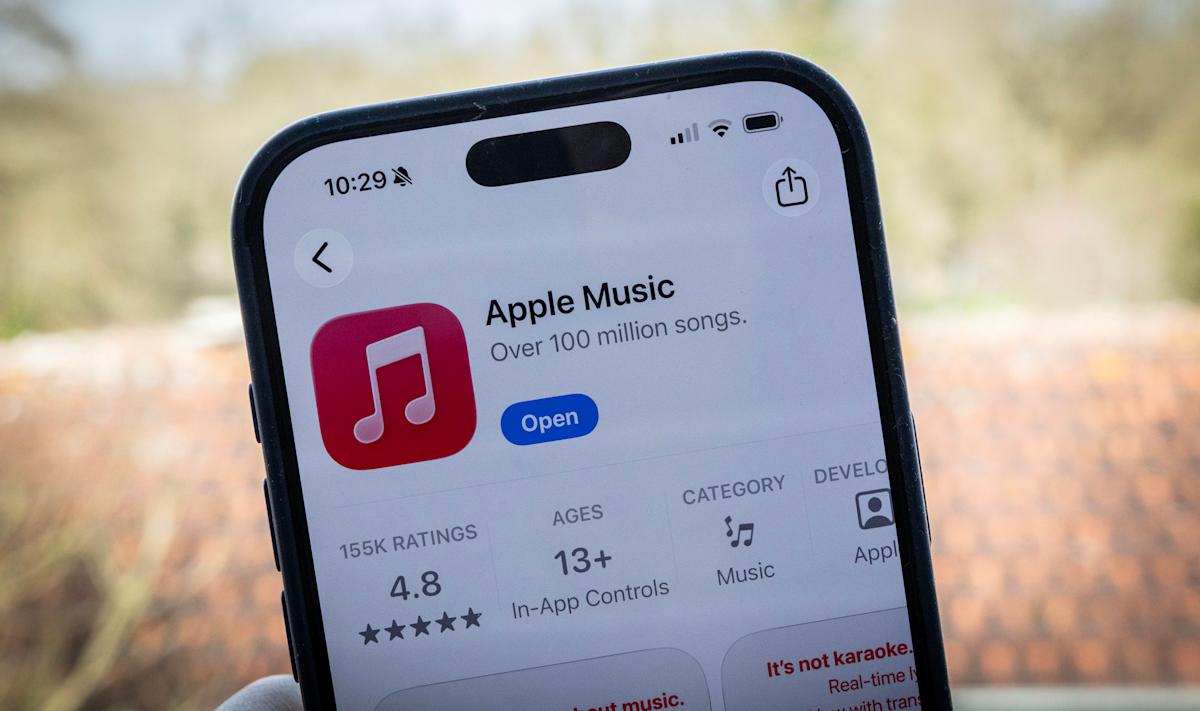
Apple Music can now flag AI content, but only if distributors elect to label it

Published

on

While music streaming apps like Bandcamp, Spotify and Deezer have taken steps to inform users about AI-generated content, we haven’t heard much out of Apple Music in that regard. However, Apple Music has now introduced “Transparency Tags” designed to show listeners if any elements were generated in whole or part by AI. The catch is that Apple is leaving it up to labels and distributors to create those tags, according to an Apple newsletter to industry partners seen by Music Business Worldwide..

“Proper tagging of content is the first step in giving the music industry the data and tools needed to develop thoughtful policies around AI, and we believe labels and distributors must take an active role in reporting when the content they deliver is created using AI,” Apple wrote, calling it a concrete first step toward transparency around artificial intelligence.

Streaming platforms already use metadata tags for things like song and album titles, genre and the name of the artist. The new tags will now identify any artwork, tracks, compositions and music videos created in whole or in part by AI.

However, Apple’s new system requires labels and distributors to opt in and manually flag their use of AI, a system that’s similar to what Spotify is doing. On top of that, Apple has no apparent enforcement mechanism for AI content.

Advertisement

By contrast, other music platforms including Deezer and Bandcamp are using in-house AI-detection tools to flag content whether the distributor opts in or not. Deezer disclosed in January 2026 that it receives over 60,000 fully AI-generated tracks every day, double the number it saw in September 2025. Synthetic content, also called “AI slop,” has accounted for 13.4 million tracks on its platform, Deezer added.

Source link

Continue Reading

Tech

Could the Trump administration rerun the TikTok playbook on Fortnite?

Published

on


A source familiar with the matter recently informed the Financial Times that top White House officials are discussing whether to force Tencent to divest its ownership stakes in American and Finnish game companies. Internal negotiations between Tencent and multiple US agencies date back to the first Trump administration, when the…
Read Entire Article
Source link

Continue Reading

Tech

Humble Games’ Former Bosses Buy the Studio’s Back Catalog

Published

on

Former Humble Games executives have reacquired the publisher’s catalog of more than 50 indie titles from Ziff Davis and relaunched their company as Balor Games. “For the developers we have worked with over the years, this moment is a reunion,” Balor Games CEO Alan Patmore wrote in a statement. “[It has] the same leadership and the same commitment to thoughtful publishing remain in place. What changes is our scale and our focus. Balor Games is built for inventors and backed by believers. To that end, it exists to be a seal of quality for independent games.” Engadget reports: The Humble Games lineup includes (among others) Slay the Spire, A Hat in Time, SIGNALIS, Forager, Coral Island, Monaco and Wizard of Legend. Separate from the Humble transaction, Balor also bought the complete catalog of Firestoke Games (which shut down last August) and publishing rights to Fights in Tight Spaces. In total, the young studio now owns the publishing rights to over 60 indie titles. Humble Games is separate from the Humble Bundle storefront. The latter is still owned by Ziff Davis.

The pair view the newly anointed Balor as a developer-friendly publishing house. As for its name, Balor is a supernatural being in Irish mythology. It’s sometimes depicted as having three eyes. Triple-eye, triple-I… Clever devils! The triple-I moniker is a more recent addition to the gaming lexicon. It typically means something defined by indie creativity and passion — with a budget far less than AAA but more than a tiny two-person passion project. (Balor says it’s about “high-quality, impactful games.”) You wouldn’t be blamed for wondering how that’s different from AA. But the slant here is to define the genre less by budget and more by “indie” intangibles. You can learn more about the company’s vision in an interview with GamesIndustry.biz.

Source link

Continue Reading

Tech

Google settles with Epic Games, drops its Play Store commissions to 20%

Published

on

Google is moving forward with a series of Play Store changes after settling a years-long legal battle with Fortnite maker Epic Games over anticompetitive concerns. The tech giant on Wednesday said it will drop its Play Store commissions to 20% on in-app purchases, with another 5% tacked on if app developers choose to use Google’s billing system. It’s also making it easier for users to install alternative app stores through a new optional program called the Registered App Stores program.

“With these updates, we have also resolved our disputes worldwide with Epic Games,” Google said in a company blog post.

The changes are part of a new settlement between the two tech rivals that will allow Epic Games to bring Fortnite back to the Google Play Store globally, while also investing in its own alternative app store, the Epic Games Store for Android.

As part of the agreement, Google’s Registered App Stores program will offer a more streamlined installation flow for users who want to install apps from outside of Google Play. One of Epic’s concerns was that the process for sideloading apps involved scary warnings to users about the danger of non-Play Store apps. Of course, users should be wary — sideloaded apps are a well-known security risk. But some third parties, like Epic Games, wanted to run their own legitimate (and secure) app stores without the scare tactics.

Advertisement

That program will allow this, as approved stores will need to meet certain quality and safety requirements, Google notes. The program is coming to markets beyond the U.S. first. Once the settlement is approved by the court, it will launch stateside as well.

Another notable change is the adjustment to the Play Store commission structure. Like Apple, Google’s default commission has been 30%, with a reduced fee of 15% for recurring subscriptions. Now, it will go even lower: the new “service fee” will be 20% for in-app purchases on new installs and 10% for recurring subscriptions.

However, this fee does not include the use of Google’s own billing system — that’s another 5%. (This rate applies in the U.S., European Economic Area [EEA], and the U.K. Other countries will have their own market-specific rates.)

There will also be new programs for developers, including an Apps Experience Program and a revamped Google Play Games Level Up program, both of which incentivize developers to build quality experiences on Android. Developers who opt to participate in these programs will pay the 20% commission on transactions taking place in their existing app installs, but will pay only a 15% commission on transactions from new app installs.

Advertisement

These new fees will go live by June 30, 2026, in the EEA, U.K., and U.S. The new developer programs will also launch at that time.

Australia will gain access to the new fee structure on September 30, followed by Korea and Japan by December 31. The new fees will expand to the global market by September 30, 2027.

“We believe these changes will make for a stronger Android ecosystem with even more successful developers and higher-quality apps and games available across more form factors for everyone. We look forward to our continued work with the developer community to build the next generation of digital experiences,” Google’s post said.

Epic Games praised the settlement and the resulting changes in its own statement, noting that “These changes will evolve Android into a true open platform with competition among stores.” On X, Epic Games CEO Tim Sweeney said “THANKS GOOGLE!” calling the move a “better deal for all developers.”

Advertisement

Epic Games has long been involved in a similar lawsuit with Apple over its App Store commissions. Apple was forced to change its policy to give developers the ability to link to outside payment options. That case is under appeal, with Apple most recently winning a partial reversal of the court’s order.

Source link

Advertisement
Continue Reading

Tech

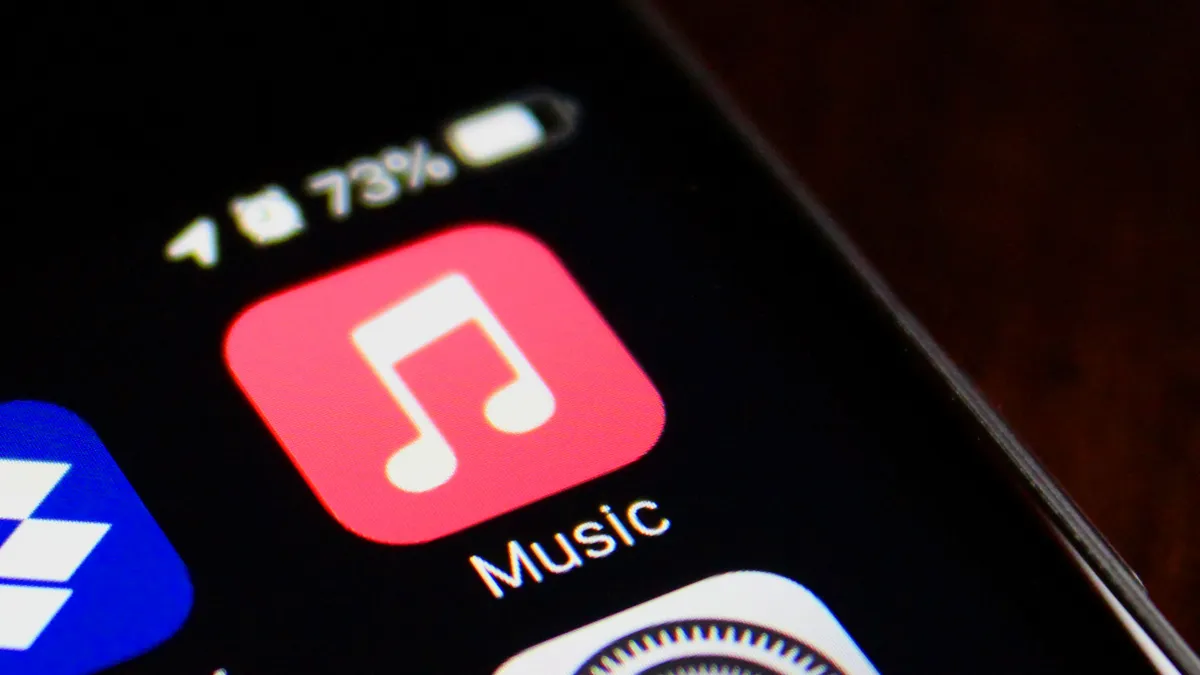
Apple Music to add Transparency Tags to distinguish AI music, says report

Published

on

Apple Music is changing the way that record labels and distributors can flag AI-generated or AI-assisted content when they upload it to the platform.

According to Music Business Worldwide, Apple sent a newsletter to industry partners on Wednesday to explain how it will roll out a new set of metadata to promote transparency around how and when AI is used in music.

Metadata typically refers to fields like the song title, album title, genre, artist name, and other information that helps keep files organized. Now Apple Music will add the option to include metadata tags that distributors can use to flag when AI-generated content is involved in certain aspects of a song. These tags allow distributors to distinguish between a song’s artwork, track (music), composition (lyrics), or music video.

This seems like something that Apple Music users are interested in — a Reddit user posted a mock-up of a similar feature concept just days ago. But the problem with this sort of opt-in tagging is that it’s on the label or distributor to manually choose to flag their use of AI. Spotify is taking a similar path.

Advertisement

Other music-streaming platforms like Deezer are trying to flag content with in-house AI-detection tools, but it remains challenging to create these sorts of systems that are maximally accurate.

TechCrunch has reached out to Apple for more information.

Source link

Advertisement
Continue Reading

Tech

How to Survive Daylight Saving Time: Start Early (2026)

Published

on

Daylight saving time is coming, and it’s my least favorite version of the dreaded time change.

Losing an hour ruins the sleep of everyone in my household. It was one thing when it was just a pair of irritated adults, but now we have a 3-year-old who doesn’t understand what daylight saving is or why he should go to bed earlier than he did the night before. Sure, we’re all going to love the brighter evenings, but why did they have to go away in the first place?

The best method to survive this madness is to start early. Scientists and brands I spoke to all gave me the same advice: Start a few days early by setting your alarm 15 to 20 minutes earlier to make the time change a transition rather than a harsh loss of an hour come Sunday morning.

For both my child and me, it’s not just the audible alarm I’ll be changing but also our bedside sunrise alarm clocks. Light is one of the biggest things that can impact your circadian rhythm, and a noisy alarm has never cut it for me anyways. Here’s how a little extra light in the morning can hopefully make the entire transition easier for my family.

Advertisement

Starting Early

Waiting to deal with the time change is a recipe for serious discomfort. “Our bodies can’t shift a full hour in one day,” says Salk Institute scientist Emily Manoogian. “So if you can break it up over two to three days, it makes it a lot easier. This looks like shifting your food, light, and sleep times by a 20 to 30 minute advance for a couple of days before the DST shift.”

Manoogian says that both light and food synchronize your body clock, so these are good cues to change to help your body naturally adjust to the oncoming time change. She says that animal studies show that changing the time you eat breakfast and dinner in sync with the time change can help you to adjust much faster and return to normal life.

It will take a little more lifting to adjust your alarm each morning, but it’s better to do a little more work now than feel groggy and disoriented next week. Manoogian says that acute circadian disruptions like daylight savings shifts can result in several health issues, including insulin resistance, gut issues, anxiety, depression, and increased risky behaviors.

Just Add Light

Manoogian isn’t the only one who suggests starting earlier. Both Hatch and Lumie, makers of sunrise alarm clocks, gave me the same advice: Change your alarms a little earlier over a few days. They both also recommend using light to your advantage.

Advertisement

“Light is one of the most powerful signals for resetting your internal clock, which is why morning light exposure is especially helpful after the daylight saving transition,” says a Hatch representative.

While Lumie and Hatch both make great sunrise alarm clocks, they work differently. Hatch’s Restore 3 ($170) connects to Wi-Fi, so it can automatically update the time without you needing to change anything once daylight savings hits. You’ll also be able to easily adjust the time of your alarm in the Hatch app, letting you make quick adjustments as long as you’re within Bluetooth range of your Restore. The brand also introduced a Daylight Saving Assistant to use with kid devices like the Hatch Baby ($100), which can automatically shift a child’s schedule in small increments over several days.

Lumie, on the other hand, doesn’t connect to Wi-Fi or an app, so you need to manually change your alarms and the time on the clock. You’ll need to switch that each night yourself leading up to the time change, plus fully switching the time over Saturday night and bringing your alarm back to its original time. While it’s more work, Lumie’s alarm clocks like the Bodyclock Luxe 700FM ($259) and the Bodyclock Shine 300 ($169) are brighter than the Hatch, so it’s still a good investment.

The Models Worth Snagging

Looking for a new sunrise alarm ahead of Sunday? Here are the ones to get.

Advertisement

Lumie

Bodyclock Luxe 700FM

Source link

Advertisement
Continue Reading

Tech

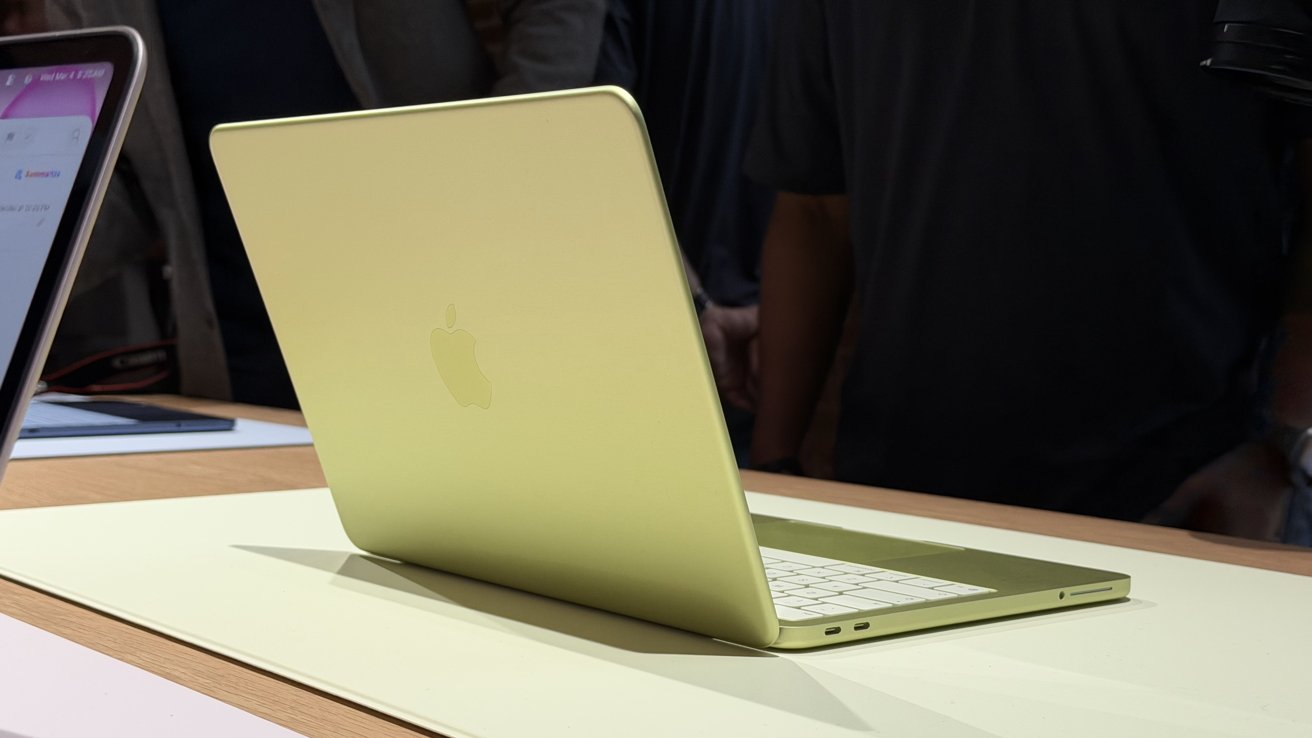
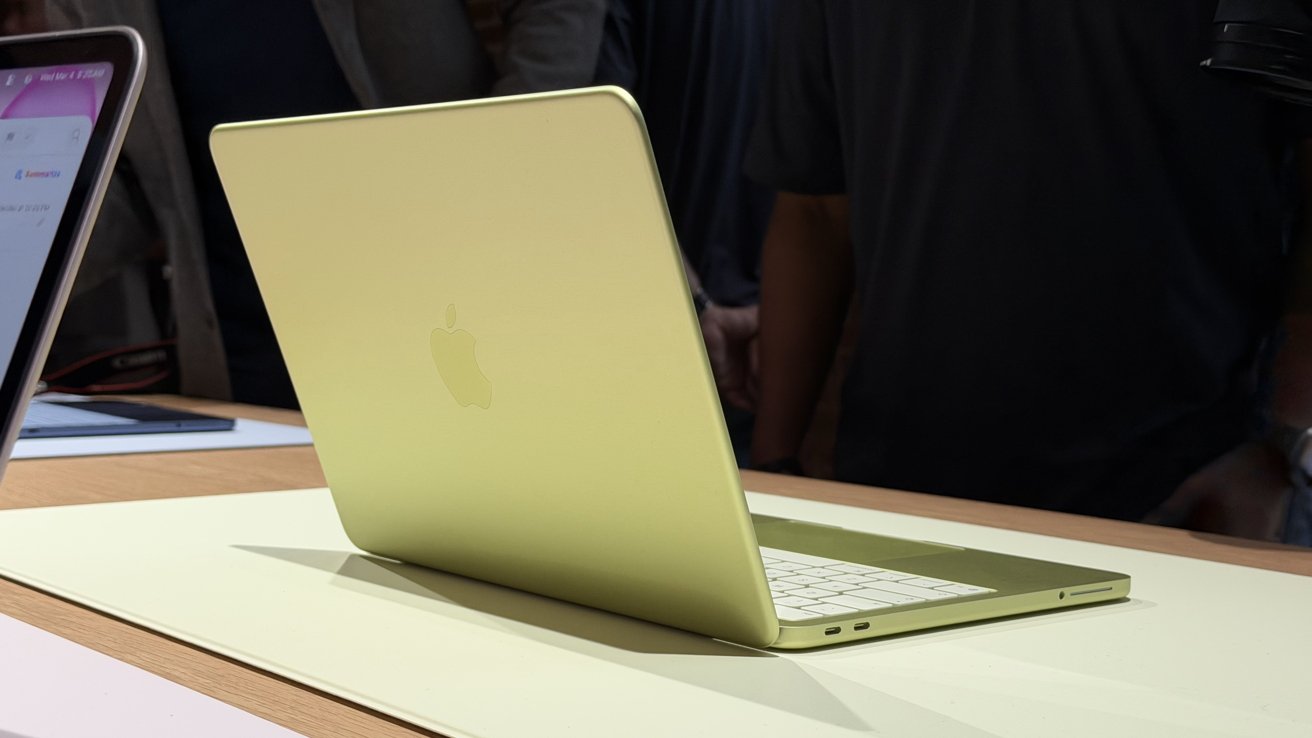
MacBook Neo name chosen to reflect its 'fun, friendly, and fresh' look

Published

on

An interview reveals Apple’s approach with MacBook Neo was a complete rethink of a budget-friendly laptop, not simply rehashing old tech at a lower price.

Open yellow Apple laptop on a light desk, viewed from behind, with white keyboard, slim ports on the side, and people standing in the dim background
The MacBook Neo is a new budget-friendly product

The MacBook Neo is a brand new category in the lineup that has a new-to-Apple moniker to go with it. It’s not just a new laptop, but a new market for the premium product seller.
According to an interview with Director of Mac Product Marketing, Colleen Novielli conducted by Techradar, the MacBook Neo is meant to be competitive in the $599 price range. It brings Apple’s attention to detail and premium materials to a product nearly half the price of the MacBook Air.
Continue Reading on AppleInsider | Discuss on our Forums

Source link

Continue Reading

Tech

How to watch India vs England: Free Streams, TV Channels

Published

on

England and India meet in the semi-final of a T20 World Cup for the third time in a row. On the previous two occasions, the winner has gone on to lift the trophy. Neither side has looked like the complete package so far, although England have exceeded pre-tournament expectations.

Source link

Advertisement
Continue Reading

Tech

Microsoft, Europol take down global phishing as a service network which was able to bypass 2FA with ease

Published

on


  • Europol leads multinational operation against Tycoon 2FA
  • Platform enabled large-scale phishing with MFA bypass
  • Authorities dismantled core infrastructure and seized domains

Tycoon 2FA, one of the largest phishing-as-a-service (PhaaS) platforms in the world, has been taken down after a global coordinated law enforcement operation.

The operation was led by Europol, and included police forces from Latvia, Lithuania, Portugal, Poland, Spain, and the United Kingdom.

Source link

Continue Reading

Trending

Copyright © 2025