Many streamers and YouTubers use small mics attached to their clothes for better audio, and a black mic looks out of place in most colorful outfits. DJI wants to change that with its Mic Mini 2.
Hot on the heels of the Osmo Pocket 4 launch, the company has launched the Mic Mini 2, a follow-up to the original Mic Mini that launched in November 2024. The big headline? You can now customize the look of your microphone with swappable magnetic covers.
The covers come in obsidian black and glaze white right out of the box, with 12 more colorful options sold separately. Whether you want your mic to pop or disappear into your jacket, the choice is yours.
What’s actually new on the Mic Mini 2?
Beyond the colors, DJI has added three voice tone presets: Regular, Rich, and Bright. These let you tweak how your voice sounds without post-production, which is a genuinely useful addition for solo creators.
Advertisement
The rotatable magnetic clip is also new, allowing you to aim the mic toward the sound source, whether you are wearing it upright, sideways, or inverted.
DJI
The core audio specs are unchanged, however. You get the same 48kHz, 24-bit recording, automatic limiting, two-level noise cancellation, and a similar 11.5-hour battery life on the transmitter.
The wireless range still tops out at just over 1,312 feet, and there is still no on-mic redundant recording. That said, DJI has already teased a Mic Mini 2S with internal recording and support for up to four transmitters, coming later this summer.
Is the Mic Mini 2 worth buying?
If you already have the original Mic Mini and it’s working well, it’s not an instant upgrade. That said, the launch price is about 40% less than the original Mic Mini, making it tempting for buyers.
DJI
The DJI Mic Mini 2 starts at €59 for a single transmitter and mobile receiver bundle, while the two-transmitter camera kit will run you €99.
One unfortunate catch: like the Osmo Pocket 4, DJI has no plans to bring the Mic Mini 2 to the US due to its FCC certification status. If you are outside the US, it is available now and well worth considering.
Here at Hackaday we cover the world of retrocomputing, which means that we see all manner of older computers in our everyday work. We might even claim that we’ve seen them all, were it not that every now and then something comes along which surprises us. [Tynemouth Software] has done just that, with an unexpected Commodore. It’s a Commodore 4064, something that was new to us, but which is best described as a Commodore 64 in a PET case. He’s bringing this one back to life.
For those with weak early-Commodore-fu, maybe it’s worth a quick recap. The PET was Commodore’s big hit from the early 1980s, and it took the form of an all-in-one machine with a CRT display built in. They packed a 6502, BASIC, blocky monochrome graphics, and unexpectedly an IEE-488, or GPIB port. Meanwhile the 64 was the company’s smash hit early 1980s home computer in a compact console design, with high-res color graphics for the time on your TV, and a synthesizer chip that’s still legendary in 2026. Combining a 64 mainboard with the super-robust PET case appears to have been part of Commodore’s business and education offerings.
This one appears to have been in the damp, because that board is definitely more than a bit grubby. After a lot of debugging its power and video circuits, including an unexpected sync splitter board to drive the non-composite monitor, he narrows down the problem to a dodgy ROM and some memory errors.
Advertisement
It seems there’s some question in Commodore enthusiast circles as to whether these machines were assembled from surplus PET parts, but he puts that one to bed by pointing out the custom metalwork and the few custom Commodore 64 features on the board. All in all it’s an interesting dive into an unusual 8-bit machine.
Apple had a record-breaking March quarter partially thanks to excellent performance in China, but there’s more to the story than just basic demand.
The US government went through a period of upheaval in 2025 thanks to the new administration’s aggressive, random, and now illegal tariffs. While not much has improved in that regard, the relationship between the US and China has improved somewhat in the intervening year.
According to Apple CEO Tim Cook on CNBC, that improved relationship with China was a positive development, but not the drive. He claims it is that “the product has really resonated with the customer.”
There’s no doubt that demand for the iPhone 17 lineup has carried through into the blockbuster quarter. Of the $111.2 billion Apple brought in, $20.497 billion belonged to Greater China.
Advertisement
Compare that to the year-ago performance, $16 billion, and that’s a $4.4 billion increase. It is certainly no small feat.
There have been concerns with demand in China thanks to political unrest between it and the United States. Chinese customers could easily decide to show loyalty to local brands that aren’t based in a country engaged in a trade war.
However, Apple’s iPhone 17 lineup was enough to spur demand, which was likely aided by the excellent entry iPhone 17e model that debuted during the quarter. The Mac also did well in part due to the MacBook Neo, but there has also been unprecedented demand for the M4 Mac mini due to AI trends.
Cook may have to face questions about the CEO transition or the status of the Apple Vision Pro during the earnings call, but China will likely be a lesser concern given the numbers. All eyes are on what’s next as Cook takes on the role of Executive Chairman starting September 1 with John Ternus taking over as CEO.
The U.S. Federal Bureau of Investigation (FBI) warned the transportation and logistics industry of a sharp rise in cyber-enabled cargo theft, with estimated losses in the United States and Canada reaching nearly $725 million in 2025.
This represents a 60% surge in losses compared to the previous year, fueled by criminals increasingly using hacking and impersonation tactics to hijack high-value freight. Confirmed cargo theft incidents have risen 18 percent last year alone, while the average value per theft grew 36 percent to $273,990, due to more selective targeting of high-value loads.
The bureau said in a public service announcement on Wednesday that threat actors have been infiltrating the computer systems of freight brokers and carriers through spoofed emails and fake web links since at least 2024.
Once inside, criminals post fraudulent listings on online load boards (digital marketplaces used by shippers, brokers, and carriers) and impersonate legitimate companies to divert shipments.
Advertisement
For instance, in February, the typosquatting monitoring platform Have I Been Squatted reported that the Diesel Vortex financially motivated threat group was stealing credentials from freight and logistics operators in the U.S. and Europe in phishing attacks that had been running since September 2025 and were using 52 domains.
“The Federal Bureau of Investigation is publishing this Public Service Announcement (PSA) to warn the public of cyber threat actors increasingly using sophisticated, cyber-enabled tactics to impersonate legitimate businesses to hijack freight, steal high-value shipments, and reroute deliveries, resulting in a surge of strategic cargo theft,” the FBI warned.
“Cyber threat actors target US transportation and logistics sectors, including companies with interests in shipping, receiving, delivering, and insuring cargo.”
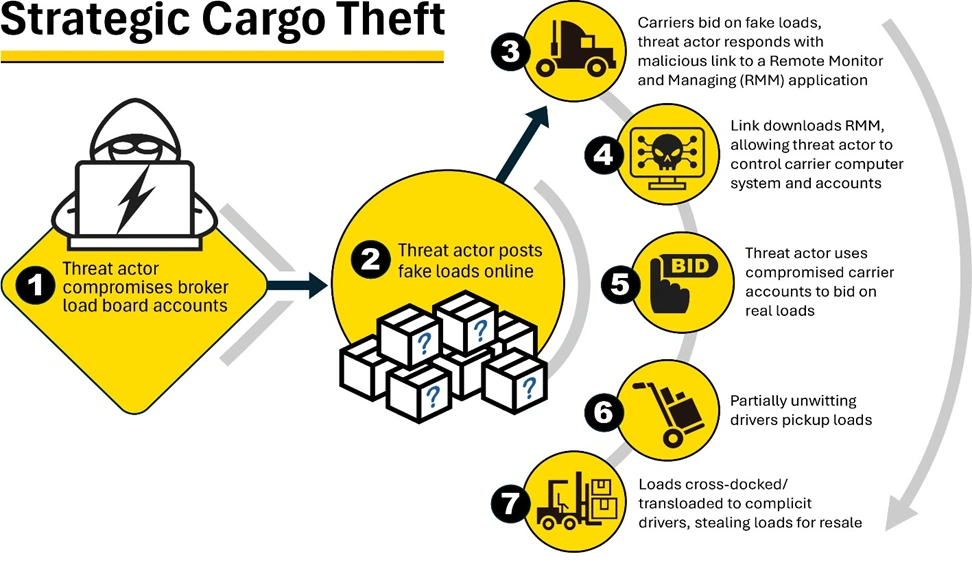
Cargo theft attack flow (FBI)
Attackers first compromise broker or carrier accounts by luring employees to phishing sites that install remote monitoring software, and then gain undetected access to the targeted company’s systems.
In the next stage, they post tens of thousands of fake freight listings, tricking legitimate carriers into downloading malicious files, and then accept real shipments under a stolen carrier identity. The loads are rerouted to complicit drivers, stolen for resale, and, in some cases, the criminals also demand ransoms for the location of diverted loads.
Advertisement
Threat actors linked to cyber-enabled cargo theft attacks will also alter the compromised carrier’s registration details with the Federal Motor Carrier Safety Administration and update insurance records, thus ensuring that legitimate companies will discover they have been hacked until brokers report missing shipments booked in their name without their knowledge.
To block cyber-enabled cargo theft attempts, the bureau urged transportation and logistics companies to verify all shipment requests through secondary channels, implement and enforce multi-factor authentication when possible, validate all unexpected communications using a two-factor authentication process, and maintain detailed records of all vehicles and drivers.
The FBI also advised victims of cyber-enabled cargo theft schemes to file a complaint with the Internet Crime Complaint Center (IC3) in addition to filing police reports for the stolen cargo.
In its 2025 Internet Crime Report, released earlier this month, the FBI said IC3 received over 1 million complaints last year, linked to nearly $21 billion in reported losses from various cyber-enabled crimes, including investment scams, tech support fraud, business email compromise, and data breaches.
Advertisement
AI chained four zero-days into one exploit that bypassed both renderer and OS sandboxes. A wave of new exploits is coming.
At the Autonomous Validation Summit (May 12 & 14), see how autonomous, context-rich validation finds what’s exploitable, proves controls hold, and closes the remediation loop.
Think one GPU is very much like another? Think again. It turns out that there’s surprising variability in the performance delivered by chips of the same model. That can make getting your money’s worth by renting time on a GPU from a cloud provider a real roll of the dice, according to research from the College of William & Mary, Jefferson Lab, and Silicon Data.
“It’s called the silicon lottery,” says Carmen Li, founder and CEO of Silicon Data, which tracks GPU rental prices and benchmarks cloud-computing performance.
The silicon lottery’s existence has been known since at least 2022, when researchers at the University of Wisconsin tied it to variations in the performance of GPU-dependent supercomputers. Li and her colleagues figured that the effect would be even more pronounced for AI cloud customers.
Performance varies for GPU models in the cloud
Advertisement
So they ran 6,800 instances of the index firm’s benchmark test on 3,500 randomly selected GPUs operated by 11 cloud-computing providers. The 3,500 GPUs comprised 11 models of Nvidia GPU, the most advanced being the Nvidia H200 SXM. (The team wasn’t just picking on Nvidia; the GPU giant makes up most of the rental cloud market.)
The benchmark, called SiliconMark, is intended to provide a snapshot of a GPU’s ability to run large language models, or LLMs. It tests 16-bit floating-point computing performance, measured in trillions of operations per second, and a GPU’s internal-memory bandwidth, measured in gigabytes per second. The results showed that the computing performance varied for all models, but for the 259 H100 PCIe GPUs it differed by as much as 34.5 percent, and the memory bandwidth of the 253 H200 SXM GPUs varied by as much as 38 percent.
SOURCE: SILICON DATA
Differences in how the GPU is cooled, how cloud operators configure their computers, and how much use the chip has seen can all contribute to variations in performance of otherwise identical chips. But Silicon Data’s analysis showed that the real culprit was variations in the chips themselves, likely due to manufacturing issues.
Such randomness has real dollars-and-cents consequences, the researchers argue, because there’s a chance that a pricier, more advanced GPU won’t deliver better performance than an older model chip.
Advertisement
So what should GPU renters do? “The most practical approach is to benchmark the actual rental they receive,” says Jason Cornick, head of infrastructure at Silicon Data. “Running a benchmark tool [such as SiliconMark] allows them to compare their specific instance’s performance against a broader corpus of data.”
Infinix has introduced the GT 50 Pro as a gaming-focused smartphone with meaningful upgrades. It solves problems such as overheating and delays when playing for long hours. The device integrates an advanced cooling mechanism, improved control, and strong performance capability.
The GT 50 Pro is for gamers seeking a high-end smartphone with no interruptions. While other phones focus on making phone calls and sending text messages, the GT 50 Pro is designed for gamers. This means better control and cooling features to ensure good performance.
Smart Cooling That Prevents Overheating
The HydroFlow Liquid Cooling system is specifically designed to address overheating in gaming phones. The cooling mechanism ensures overheating does not occur by shielding the heat-producing parts and simultaneously circulating liquid to disperse heat.
In addition, to make the gaming experience easy and smooth, the GT 50 Pro comes with pressure-sensitive GT Triggers. Such triggers offer fast input and control in extreme gaming situations, along with adjustable settings options.
Display and Performance
The GT 50 Pro is equipped with an enormous 6.78 inches 1.5K screen with a maximum refresh rate of 144Hz. This ensures that the visuals are crisp and clear, especially when gaming or scrolling. In addition, the phone has high-brightness capabilities, ensuring you can view the screen in various lighting conditions. The phone is equipped with eye-care features that minimize eye strain during use. When it comes to audio, the device supports Dolby Atmos.
Advertisement
The GT 50 Pro runs on the MediaTek Dimensity 8400 Ultimate chip, which uses a very efficient 4nm process. As such, the phone delivers smooth performance in any game and does so in a very power-efficient manner, meaning it won’t overheat or drain its battery.
Camera and Battery
Infinix has added a balanced camera setup to the GT 50 Pro. The primary 50 MP camera should take clear photos thanks to the stabilization system and is used for landscape shots, alongside the 8 MP ultra-wide-angle camera. The 13 MP front camera is effective for selfies and video calls.
With a large 6500mAh battery, the GT 50 Pro offers longer battery life, including when playing games. The device supports not only wired but also wireless fast charging. Furthermore, the reverse charging feature is present; additionally, bypass charging provides heat management.
Price and Availability
In terms of availability, the GT 50 Pro is available in two storage variants, with 12GB of RAM and expansion support. It also supports RAM expansion for better efficiency. However, the price will depend on the region and may vary in different markets.
Laboratory or in-field measurements are often considered the gold standard for certain aspects of power system design; however, measurement approaches always have limitations. Simulation can help overcome some of these limitations, including speeding up the design process, reducing design costs, and assessing situations that are often not feasible to measure directly. In this presentation, we will discuss two examples from the power system industry.
The first case we will discuss involves corona performance testing of high-voltage transmission line hardware. Corona-free insulator hardware performance is critical for operation of transmission lines, particularly at 500 kV, 765 kV, or higher voltages. Laboratory mockups are commonly used to prove corona performance, but physical space constraints usually restrict testing to a partial single-phase setup. This requires establishing equivalence between the laboratory setup and real-world three-phase conditions. In practice, this can be difficult to do, but modern simulation capabilities can help. The second case involves submarine HVDC cables, which are commonly used for offshore wind interconnects. HVDC cables are often considered to be environmentally inert from an external electric field perspective (i.e., electric fields are contained in the cable, and the cable’s static magnetic fields induce no voltages externally). However, simulation demonstrates that ocean currents moving through the static magnetic field satisfy the relative motion requirement of Faraday’s law. Thus, externally induced electric fields can exist around the cable and are within a range detectable by various aquatic species.
Advertisement
Key Takeaway:
Learn how to use modern simulation to translate single-phase laboratory corona mockups into accurate three-phase real-world performance for 500 kV and 765 kV systems.
Explore the physics behind how ocean currents interacting with HVDC submarine cables create induced electric fields—a phenomenon often overlooked but detectable by aquatic species.
Gain actionable insights into how to leverage simulation to reduce design costs and bypass the physical space constraints that often stall traditional testing.
See a practical application of electromagnetic theory as we demonstrate how relative motion in static magnetic fields necessitates simulation where direct measurement is unfeasible.
Who Should Attend:
Transmission engineers, submarine cable designers, and environmental compliance officers
Can’t attend live? Register for the recording.
Note that COMSOL will follow up with all registrants about this event and any related questions.
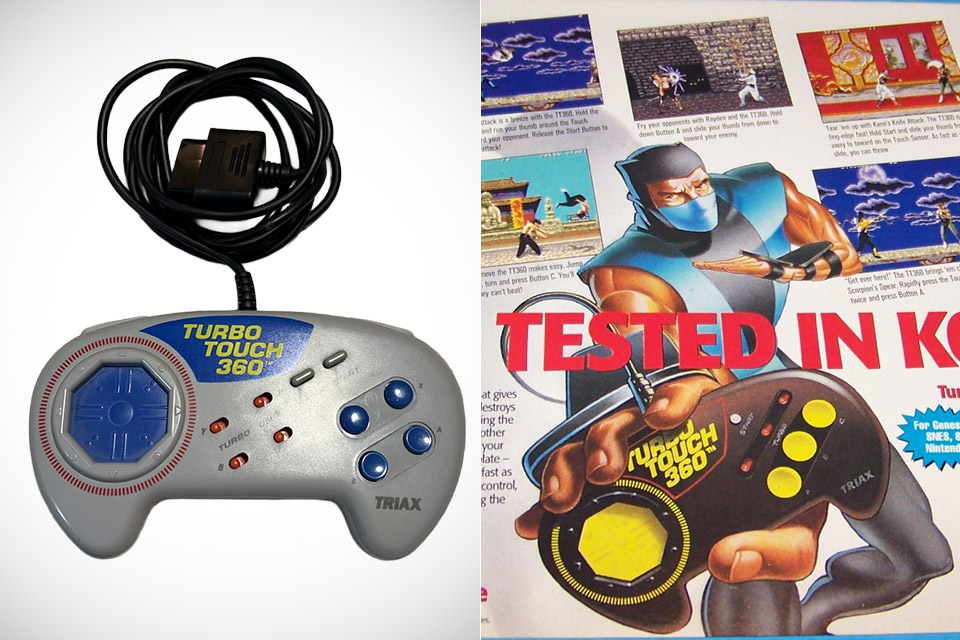
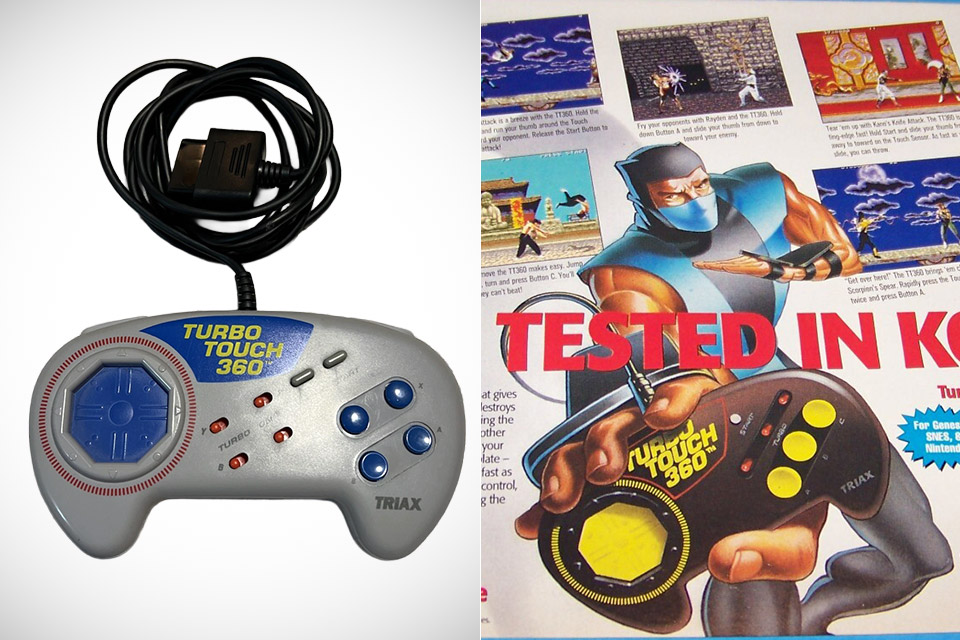
Gamers in the 1990s sat through plenty of marathon sessions on consoles like the Super Nintendo as well as SEGA Genesis, and their thumbs suffered as a result of continual pressure on rigid directional pads. Triax had a solution for the problem in the Turbo Touch 360. They abandoned the traditional movable plastic directional pad in favor of a flat octagonal plate with capacitive sensors underneath. So all you had to do was lightly lay your thumb on the surface, and it would register the direction you were attempting to go in.
The plate had eight sensors grouped around it to cover the majority of the straight shoots and diagonals, but because you don’t get a smooth, continuous circle of movement, it wasn’t fully analog, despite being dubbed the Turbo Touch 360, which implies complete freedom in all directions. Players could lean on the pad to achieve greater movement without having to hammer down as hard. Triax even went so far as to have an orthopedic specialist praise the design, claiming that it reduced scorching and numbness during those all-day gaming sessions to death.
Magazine ads showed the controller in action, and one of the examples they used was how you could land special moves in Mortal Kombat without having to struggle, and to top it all off, there was a turbo fire switch for shooting fans, giving you an advantage in older games that rewarded you with points for tapping buttons quickly.
The controller made its debut at a large electronics expo toward the end of 1993. Then there were versions for the NES, SNES, and Sega Genesis, with the Genesis version also working on certain earlier platforms such the Atari and Commodore. People who took one up immediately noticed how unusual it felt; more specifically, it was far too simple to accidentally trigger an input by resting your thumb on the plate. So precision deteriorated in tight platform games or when you had to make sudden changes of direction.
Most reviewers stated it was overly sensitive and awkward to use for an extended period of time. One modern test, in which they went back in and tinkered with the loose contacts inside a Super Nintendo, demonstrated that it was possible to make it somewhat usable again, but it was still not as accurate as a standard pad, especially in side-by-side runs through Mario or fighting games.
Advertisement
However, Triax did not give up immediately. Next thing you know, news spreads that they’re working on a new controller called the Multi-Function, which, based on certain designs and accounts, resembled a joystick rather than a flat plate. And, to top it all off, there were two more buttons on the sides that indicated they would allow you to manipulate three dimensions in games. Capcom was looking at it, and Electronic Arts had begun development on six titles that would make use of the new inputs. It was set to release for the price of a conventional game at the time, and it looked very good, but then it simply… vanished.
Decade-old vulnerabilities still drive millions of attacks across UK networks
Hackers prefer easy targets left open by outdated, unpatched systems
AI-driven scans expose weak networks at unprecedented speed and scale
Across the United Kingdom, thousands of organisations continue operating computer systems with security holes that were first identified over ten years ago.
Cybercriminals are taking full advantage of this negligence, launching relentless waves of attacks against these unprotected entry points.
SonicWall’s 2025 UK cyber threat data claims a single vulnerability in widely deployed Hikvision IP cameras accounted for 67 million attack attempts nationwide, about 20% of all major intrusions detected across British networks during the entire year.
Article continues below
Advertisement
Attackers exploit what organisations already know but ignore
“Meanwhile, Zombie Tech continues to haunt UK networks,” said Spencer Starkey, Executive Vice President for EMEA at SonicWall.
“We’re seeing millions of attacks tied to a single long-known vulnerability, alongside continued exploitation of issues first disclosed more than a decade ago.”
Advertisement
Attackers do not need sophisticated zero-day exploits when organisations leave decade-old doors wide open.
The Hikvision camera vulnerability is not new, but it remains effective because too many networks have not been patched.
Sign up to the TechRadar Pro newsletter to get all the top news, opinion, features and guidance your business needs to succeed!
Interestingly, about 80% of IT leaders claim that they can spot a breach within eight hours of it occurring – however, evidence shows that intrusions typically go unnoticed for 181 days on average.
Advertisement
This gap is critical because intrusions often go unnoticed when teams assume systems are secure.
Generally, ransomware volume in the UK fell by 87% during 2025, but that seemingly positive statistic hides a darker trend.
The number of organisations successfully compromised actually rose by 20%, meaning attackers are hitting fewer targets but causing more damage per successful breach.
Advertisement
“On the surface, the 87% drop might look like progress, but the reality is more alarming,” Starkey said. “More organisations are being successfully hit, and attackers are doing it with far greater precision.”
Smaller organisations are disproportionately affected, with ransomware present in 88% of SMB breaches compared to just 39% at large enterprises.
The geographic concentration of these attacks is stark, with England experiencing nearly all of the UK’s ransomware incidents.
London and the South East account for the vast majority of successful hits, reflecting where the most valuable targets are located.
Advertisement
The growing number of AI tools is a problem, as bots are now generating 36,000 scans per second across UK networks, causing AI-enabled attacks to increase by 89% in 2025.
Cybercriminals now combine automation with precision targeting, making it easier for them to find and exploit outdated systems at scale.
What organisations need to do about the zombie tech problem
To tackle this issue, organisations should start by conducting an immediate inventory of all connected devices that may have been installed years ago and then forgotten.
Advertisement
Every device in that inventory must be checked against known vulnerability databases, with priority given to patching any issue that has public exploit code available.
Any device that cannot be patched should be replaced with modern alternatives that receive regular security updates.
Network segmentation should also be implemented to isolate legacy devices so they cannot be used as entry points to more critical systems.
Firewalls must be tested regularly to ensure they are actually blocking the traffic patterns associated with known vulnerabilities, rather than merely logging them.
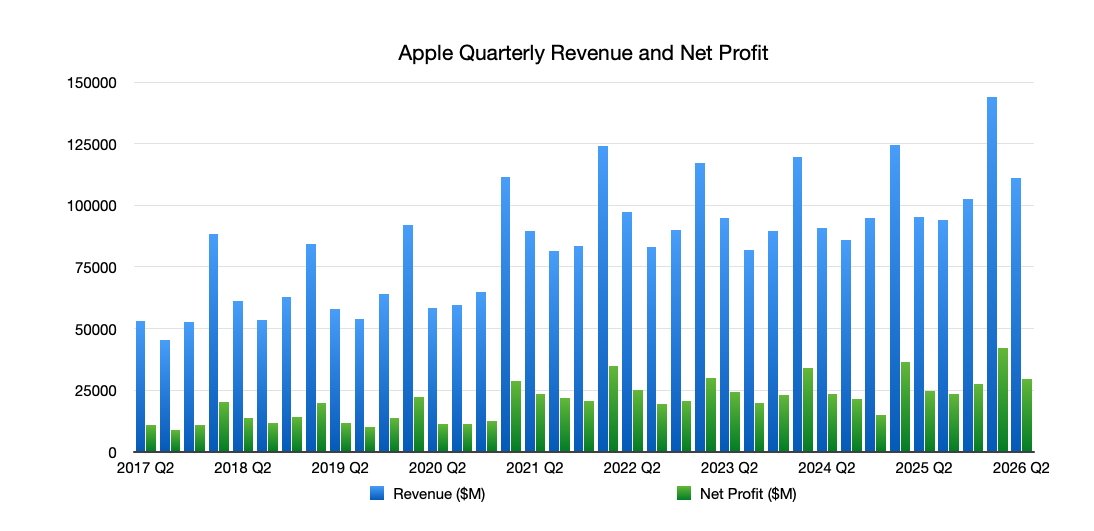
Apple has reported its financials for the second quarter of 2026, posting a second-quarter record of $111.2 billion with gains almost across the board that exceed the expectations of Wall Street analysts.
The second quarter of Apple’s financial calendar has ended, and is usually a fairly quiet affair following the blockbuster first-quarter figures. For 2026, Q2 has a fair bit of expected spice, due to the John Ternus announcement.
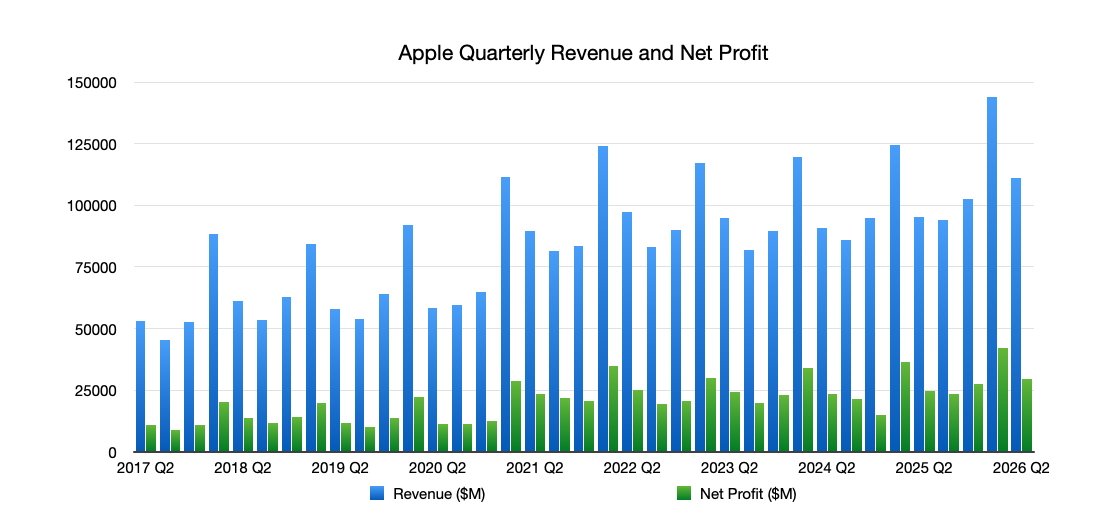
In the quarter, Apple’s revenue hit $111.2 billion, up from the $95.4 billion reported in the year-ago quarter.
The Wall Street consensus as of April 29 was an average of $109.69 forecast.
Advertisement
Apple quarterly revenue and net profit as of Q2 2026
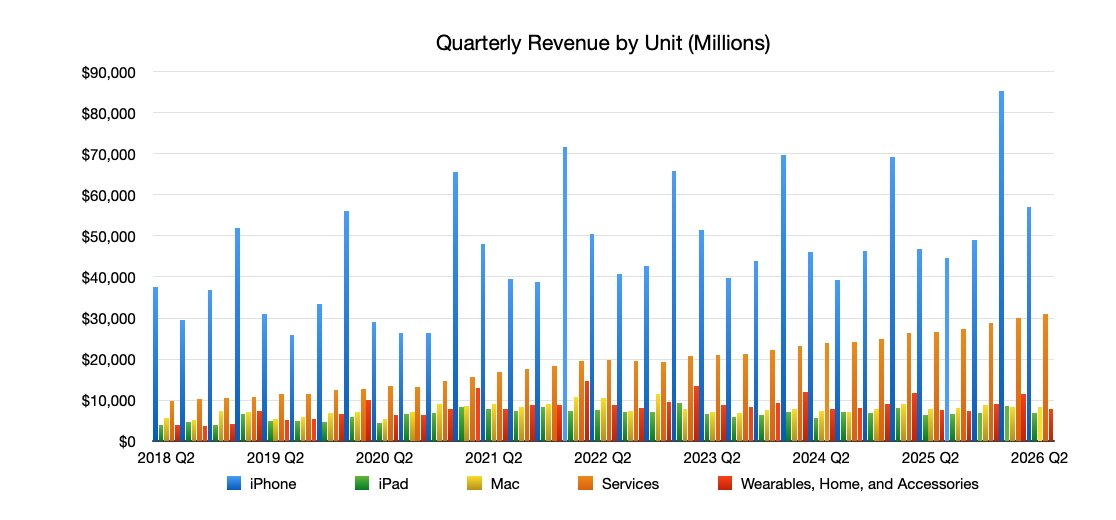
When it comes to product categories, iPhone revenue of $56.99 billion is up from $46.84 billion in Q2 2025. Mac revenue of $8.4 billion is up from $7.95 billion.
The iPad revenue of $6.9 billion is a positive move from last year’s dip to $5.56 billion. Wearables, Home, and Accessories shifted from $7.5 billion in the year-ago period to $7.9 billion now.
Services, the ever-dependable product category, continued its ever-ongoing growth path, from $26.6 billion in Q2 2025 to $30.9 billion now.
Advertisement
During Q1, Apple enjoyed some post-holiday product launches, including the M4 iPad Air, the iPhone 17e, the M5 upgrade to the MacBook Air, and the M5 Pro and M5 Max MacBook Pro. It also launched the Apple Studio Display update, the Pro Display XDR was replaced by the Studio Display XDR, and the MacBook Neo shocked the notebook industry.
This took place to a backdrop of continually rising prices for memory and other components, which Apple has so far insulated itself from. Analysts will be keen to find out Apple’s plans to take on this problem, as well as its AI strategy.
Apple also announced that it is launching an additional $100 billion share repurchase program. The quarterly dividend has also been increased, rising 4% to $0.27 per share.
Apple quarterly revenue by unit as of Q2 2026
Advertisement
Current-CEO Tim Cook commented that there was double-digit growth across every geographic segment, with iPhone also achieving a March quarter revenue record, thanks to iPhone 17 demand.
Kevan Parekh, CFO, added that there were new March quarter records for operating cash flow and EPS. “Continued strong customer demand for our products and services once again helped us achieve a new all-time high for our installed base.”
However, the biggest talking point for the results will be the announcement of a CEO transition later in 2026. On September 1, Tim Cook will become executive chairman, with hardware chief John Ternus taking the reins.
While Ternus won’t be involved in the usual conference call with analysts that follows the results release, he will be a hot topic of conversation as analysts try to determine how the future governance of the company will go.
Advertisement
As always, AppleInsider will be listening in to the call, no matter where the conversation flows.
Florida-based pet food and product online retailer Chewy has been around for less than 15 years but has quickly become a popular source for everything pet-related. Chewy even has supplies for farm animals, reptiles, fish, and more, carrying over 3,500 brands, including everything from food to medicine to toys. My cat is constantly throwing up (same) and requires Hill’s Sensitive Skin and Stomach, which costs roughly as much as my car insurance every month. I use WIRED’s Chewy promo codes to save money so I can spring for the 50-cent instant ramen while she can remain vomit-free. Browse our roundup of verified coupons to score 50% off pet food and toys, $20 off your first purchase, free shipping deals, and more spring 2026 promotions.
Save $30 With Today’s Chewy Promo Codes
If you’ve been wondering whether Chewy is right for you, now’s the time to try. First-time users can get a $20 eGift card when they purchase over $49 on their first order at Chewy and use code WELCOME. And if you’ve never placed an order with their pharmacy, use Chewy coupon code RX20 at checkout to save 20% on prescription essentials like Simparica Trio, NexGard Plus, Heartgard, and more pet medications.
If you’re a returning customer, don’t fret. Chewy has rotating deals on a myriad of pet essentials and supplies, like flea guard, treats, litter, toys, and more. With this Chewy promo code, you can get almost half off, with $20 off orders of $49 or more with Chewy coupon code GIFT20OFF. This is a rare coupon that is only for existing customers who are signed in with their account. Plus, you can get an extra $5 off on the first order made through the Chewy app with promo code. You’ll just need to download the app, and input the above code in the box on the checkout screen for $5 off.
Get Sitewide Chewy Free Shipping
New customers can also get free 1-3 day delivery (with real-time tracking technology) on first-time orders over $35, which seriously helps in cutting down the convenience cost of being able to get your 40-lb litter box to your third-floor apartment without having to lug it on the L train yourself (speaking from experience, don’t endure what I’ve had to). Get the convenience without having to pay for it with Chewy coupons for free delivery on all items.
Advertisement
Save 50% With Chewy Coupons and Spring Pet Food Deals
Already a devoted pet-parent/Chewy member? While often the best Chewy promo codes are reserved for first-time customers, existing customers can score daily deals like buy 3, get 1 free offers on toys. Make sure to stay tuned here, because while our top Chewy promo codes unlock over 20% off, there’s more to look forward to., Expect discount codes still to come like 50% off premium dog and cat food, up to 40% off Flea and Tick medications for fall, and free shipping on $35 easy price to hit when you’re grabbing pet essentials (not to mention I’ll spend any amount to not lug around boxes of concrete clay litter in the pits of hell, aka the subway).
Get 50% Off Your First Chewy Autoship Order
Do we have any equestrians in the house tonight? If so, you’re in luck. You can get 40% off horse joint health supplements with Chewy promo codeEQSUP.
Surprisingly, some deals don’t require you to apply a code or lift a finger. When you set up an autoship subscription on products you’ll get 35% off your first order, and up to 50% off featured pet food brands; along with an additional 5% off all future deliveries.
Chewy lets shoppers combine autoship with other brand-specific deals or category discounts (they just need to be listed on the “Today’s Deals” page). Plus, Chewy makes it easy: you can pause, skip, or cancel any scheduled autoship at any time. You won’t have to be locked in to a subscription and you can adjust frequency as needed, from weekly to monthly and more. And there are even extra discounts for autoship orders on pharmacy items like important prescription medication.
Advertisement
Save on our Favorite Chewy Tech Products
I’m sort of the cat tech guru around here, and have tested a myriad of the best pet tech like automatic feeders and automatic litter boxes, and I have some very strong opinions about which are worth the money (or not). I’m currently using—erm, my cats are using—the Litter-Robot 4 automatic litter box, and although it’s pricey, this box has changed my life. Gone are the days of foul smells, scooping, and pouring litter. This little machine does all the dirty work for you so that you can spend more time on cuddles. I also own the LEVOIT Core Pet Care Air Purifier which has been a game changer for me living in a cramped apartment with two giant cats—it really helps to dissipate any smells, pet hair or pesky dander. I feel like my house overall feels more clean because of this small powerhouse machine. When I transition from WFH I’m going to invest in this inexpensive camera, INSTACHEW Purrsight 360 Degree Wi-Fi Security Pet Camera, to keep an eye on the goings on and shenanigans while I’m at work.






























































You must be logged in to post a comment Login