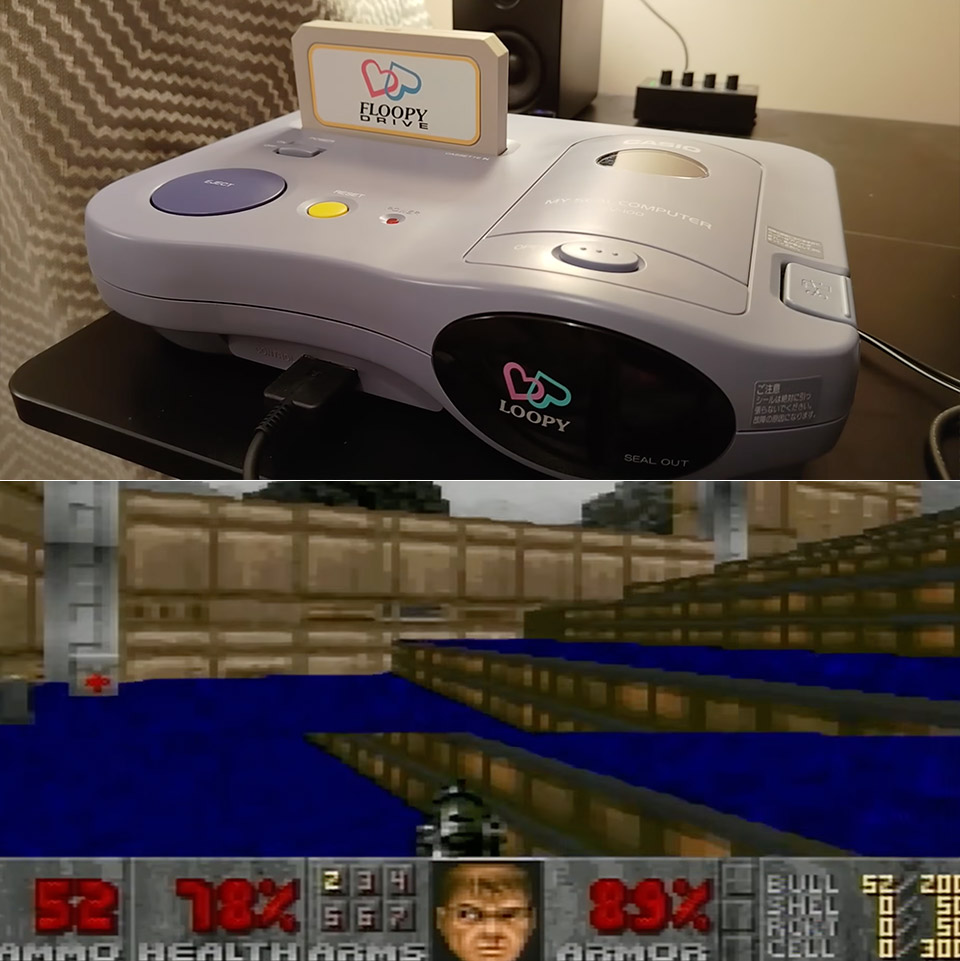
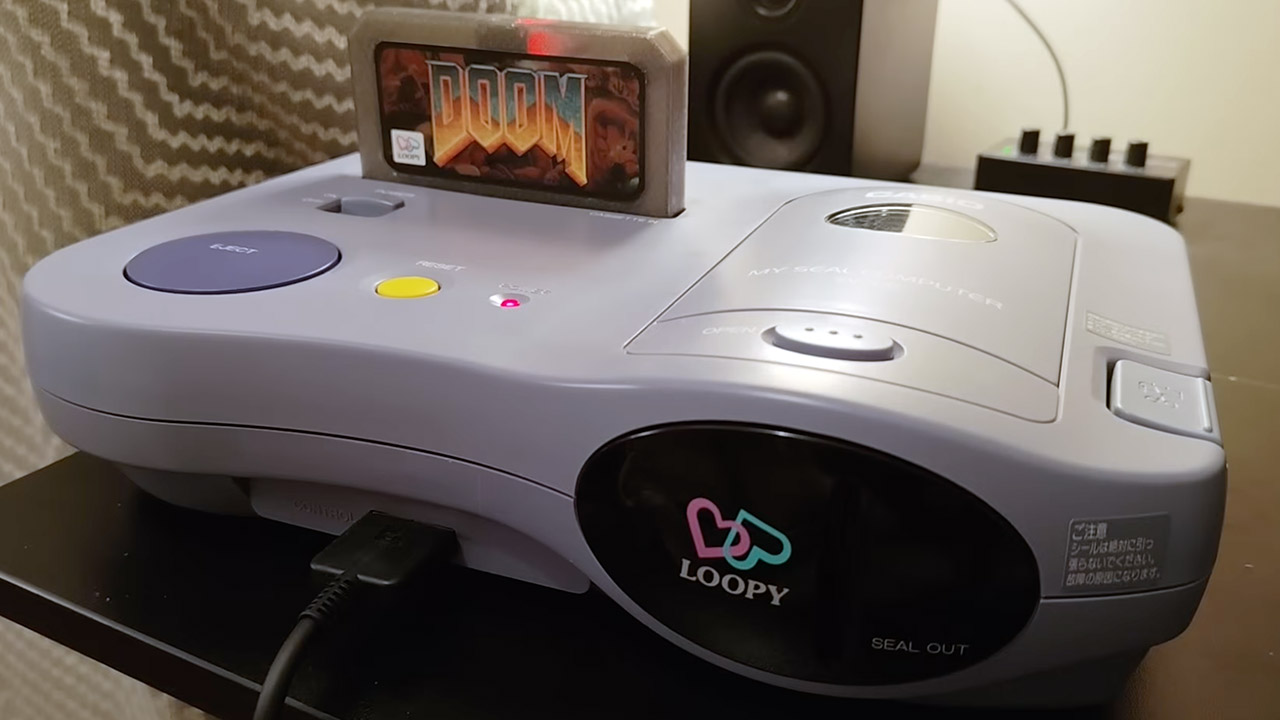
Casio released the Loopy in Japan back in 1995 as a home console aimed at young girls. It featured a built-in thermal printer that could turn any game screen into a physical sticker. Only about eleven games ever appeared for the system before Casio ended production a few years later. The hardware sat largely forgotten outside a small group of collectors until a new flash cartridge and one determined developer changed the picture.
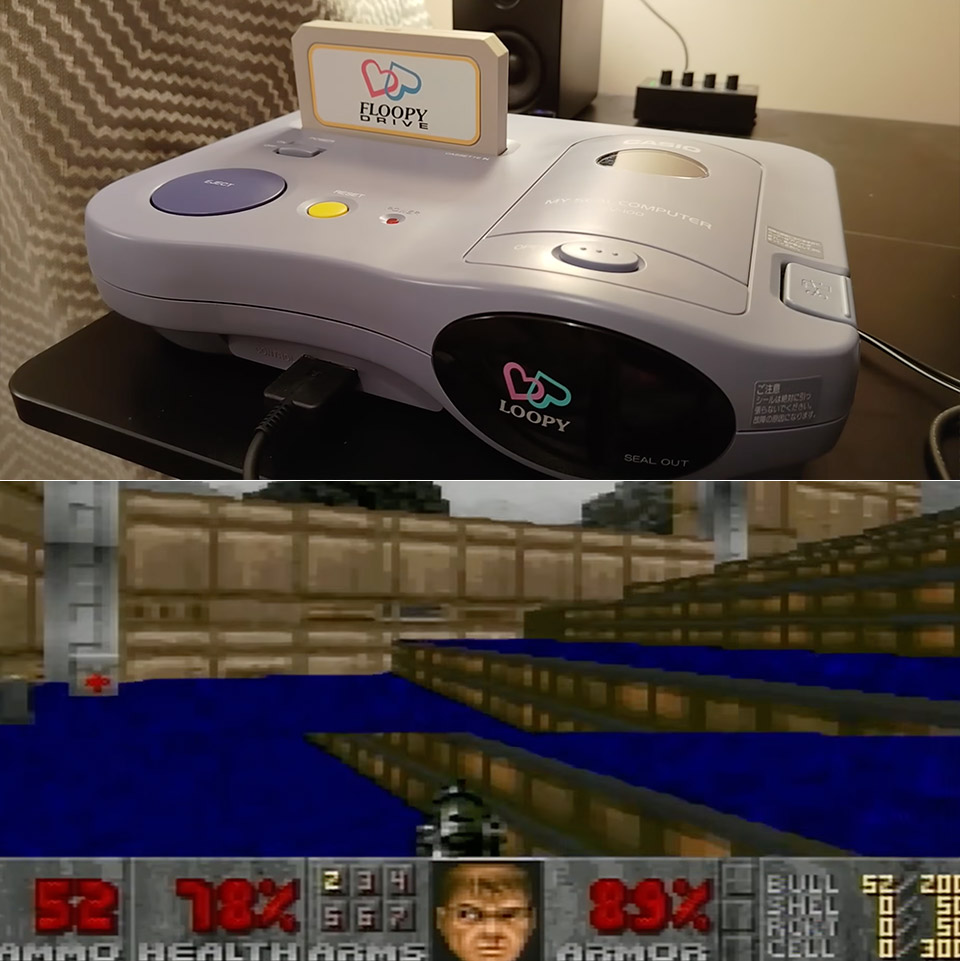
The Loopy is powered by a Hitachi SH-1 CPU that operates at around 16 megahertz and uses big-endian byte ordering throughout. It has 512 kilobytes of main RAM and 128 kilobytes of video memory, with graphics handled by a unique video display engine that operates in bitmap mode. Audio was initially based on four channels of 12-bit PCM, but the Loopy port adopts a different approach, separating music and effects over separate devices. The port was programmed by ThroatyMumbo, who also released the complete source code on GitHub under the name LoopyDOOM. Its roots can be traced back to GBADoom, an open-source version already modified for the Game Boy Advance, which in turn was derived from PrBoom and all the way back to the original id Software code; this new effort just added the Loopy-specific pieces.
Kick off the fun with a Nintendo Switch 2 system, your choice of a select digital game, and a savings* of up to $29.99!
Includes choice of either the Mario Kart World, Donkey Kong Bananza, or Pokémon Pokopia digital game download
One system, three play modes: TV, Tabletop, and Handheld
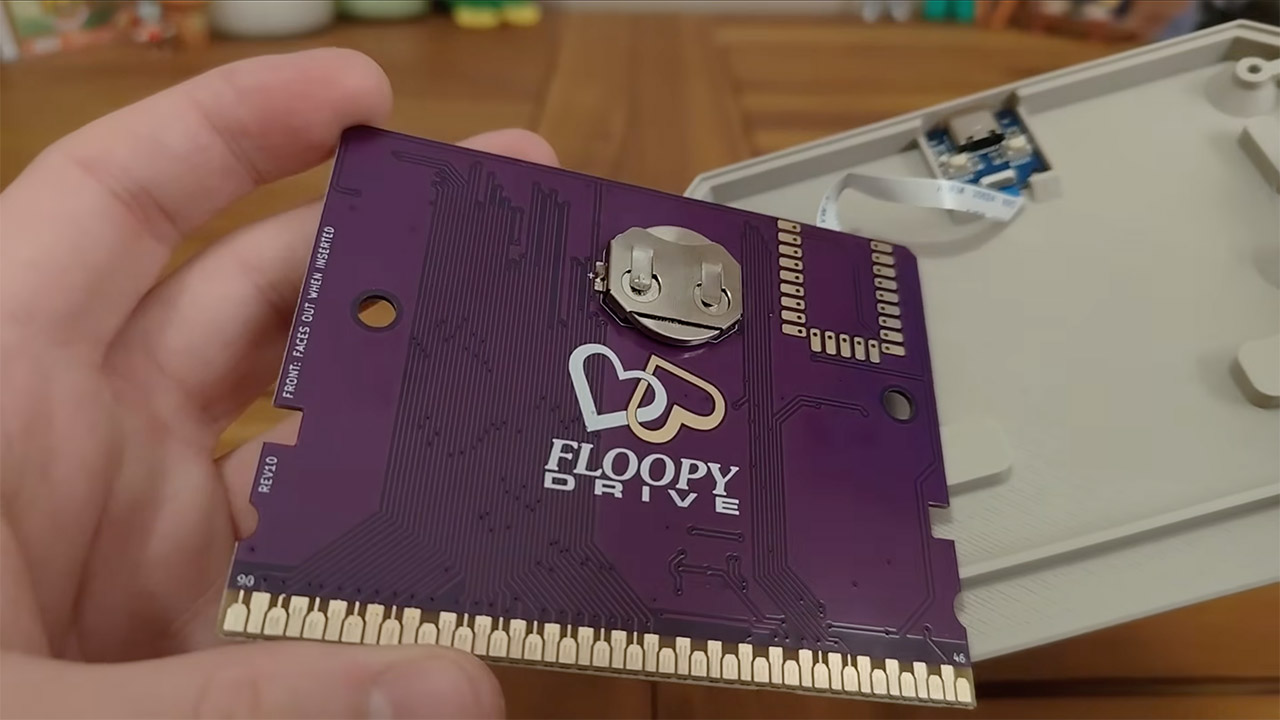
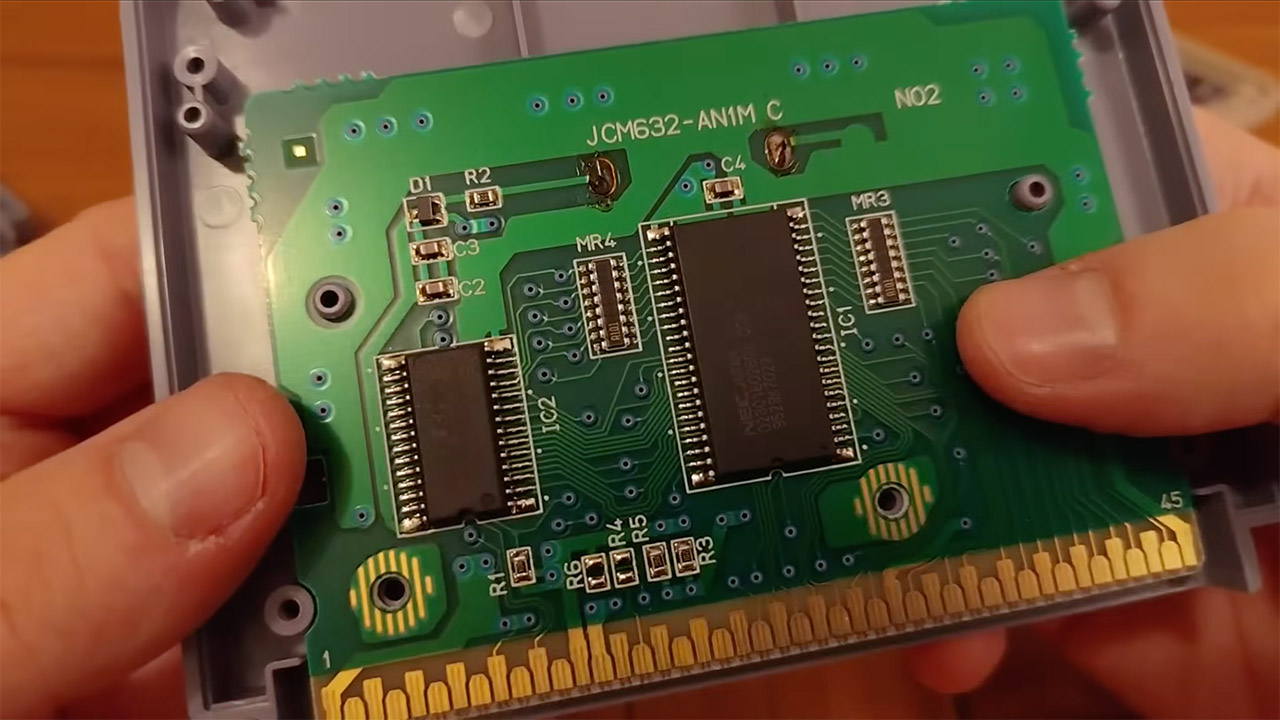
The biggest issue was that there was no straightforward way to install new software on a real Loopy, as retail carts were read-only, and no official developer tools were available. All of that changed when a hobbyist developed the Floopy Drive, a flash cartridge that allows you to write custom code directly to the cart via USB when it is outside the console. With that little tool, the port could move from emulation testing to running on real hardware.
Graphics are handled using an 8-bit per pixel bitmap layer with double buffering, with one frame drawing in the background and the previous one remaining on the screen. That keeps everything running smoothly even though the processor is handling every pixel on its own, with no fancy 3D chip to aid. On actual hardware, the game runs at between eight to fifteen frames per second. Even in quiet portions, movement feels quick, but things slow down a little when you’re ascending stairs or fighting a swarm of enemies.
Advertisement
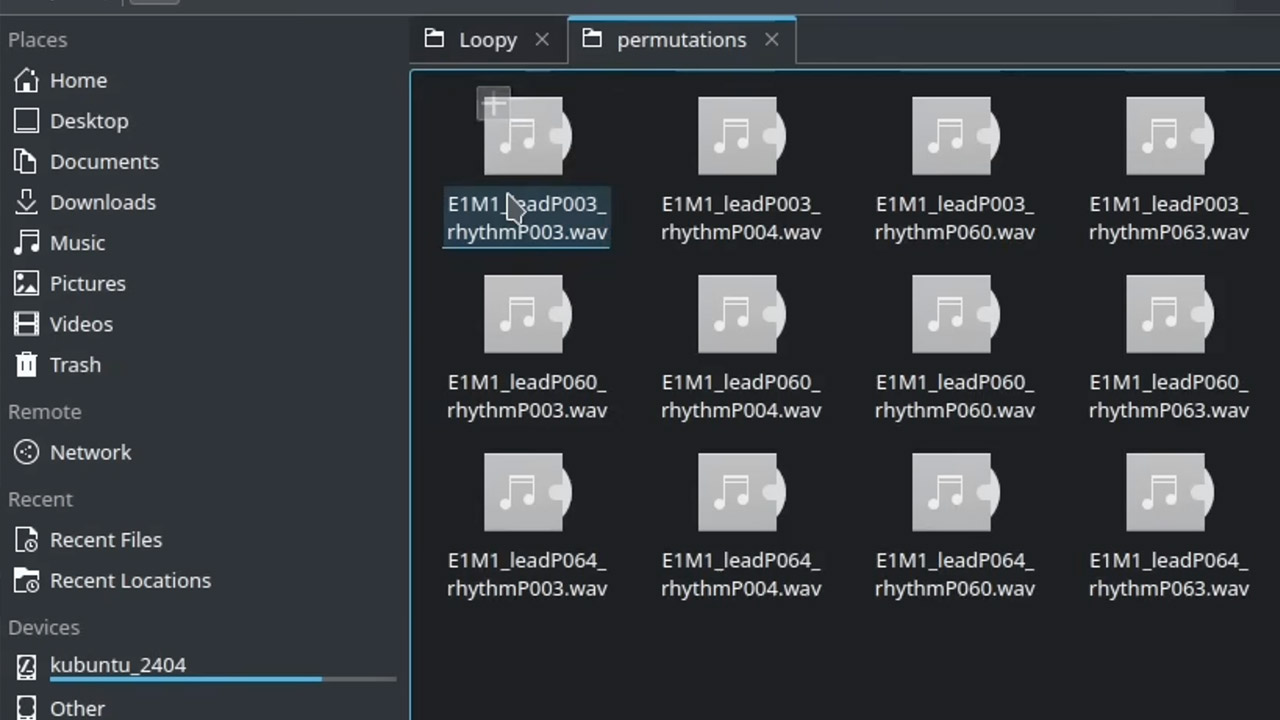
Working on music was challenging because the original tracks were in this strange MUS format that the build tools had to translate into note tables for the Loopy’s uPD937 processor. Because the chip uses its own sound library rather than General MIDI, the developer had to listen to each file in the first six levels, select the closest accessible tones, and occasionally run some variations via an AI computer before making final judgments by ear. The result is played with the console’s native audio and includes every map available in the game.
Sound effects take a different approach because the upd937 synthesizer lacks a PCM channel, therefore all that is delivered over a serial port is a series of short command frames to the RP2040 chip, which happens to be located on the Floopy Drive cartridge. A little extra gear helps get the correct digital audio from that chip out, into an external DAC, and back into the console. So, after updating the cartridge’s firmware, you can expect to hear gunfire, item being picked up, and monsters.
It appears that one of the options menu items simply sends the current screen directly to the thermal printer built into the console, allowing you to take a sticker of your progress (or your favorite moment) with you when you walk away, as intended by the console’s designers. Of course, the one negative to this function is that it is dependent on the printer not jamming on the paper path, so keep your fingers crossed.
There is an emulator called LoopyMSE that will run the same binary for testing, but it will never be completely realistic because it cannot duplicate all hardware limits, such as sprite-per-scanline restrictions. When it comes down to it, the real hardware determines whether or not everything works smoothly. The port currently only includes the first six maps from the shareware episode, complete with music and sound, which is a good start. As previously stated, all of the code is available on GitHub, so anyone may add new levels, enhance speed, or experiment with some of the hardware’s additional features.
Morgan Stanley has pared its Apple price target from $364 to $360 after slowing Services growth and higher memory costs weakened its earnings outlook, despite strong demand for the company’s products.
The investment bank kept its Overweight rating on Apple, but analyst Erik Woodring said two of the three factors that usually support the stock are under pressure. Morgan Stanley identified those factors as the iPhone, Services, and gross margins.
The iPhone remains the strongest part of Morgan Stanley’s report, seen by AppleInsider. Services growth and margins now appear weaker than the firm expected, however, prompting it to reduce its fiscal 2027 earnings estimate from $10.39 to $10 per share.
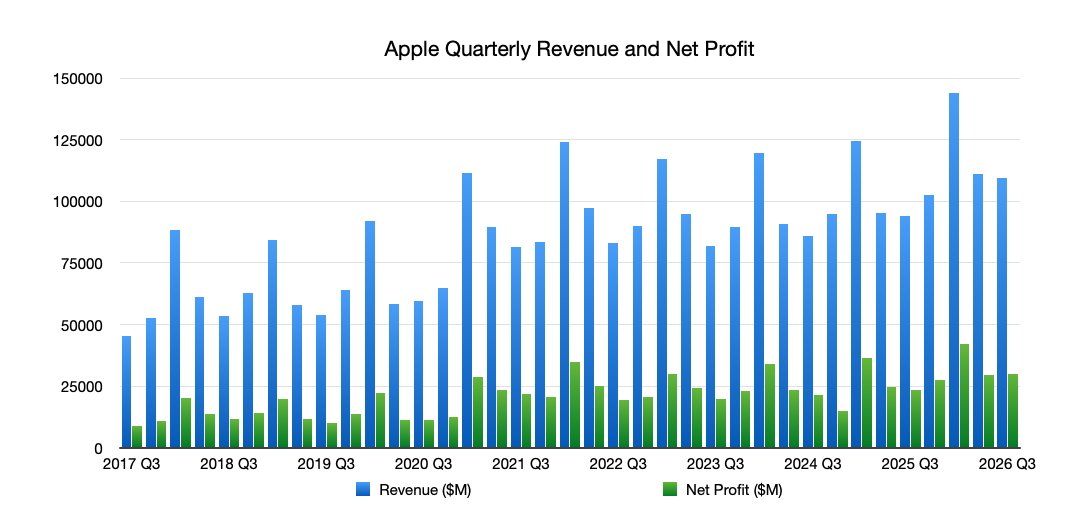
Apple reported fiscal third-quarter revenue of $109.4 billion on July 30, up 16% from the previous year. iPhone revenue reached a June-quarter record of $54.3 billion, while Mac revenue climbed 29%.
Advertisement
The company also told analysts that its active installed base and number of customers upgrading devices reached records. Morgan Stanley said the results could indicate that replacement cycles are beginning to shorten after several years of customers holding onto devices for longer.
Services growth is falling below 10%
Apple’s Services business generated $30.7 billion during the quarter, up 12% from 2025. Morgan Stanley said the growth rate missed its 14.6% consensus forecast.
The firm expects Services growth to slow to about 9.5% in the September quarter, which would mark the first result below 10% since the June 2023 quarter. Foreign exchange accounts for much of the slowdown, but Morgan Stanley also pointed to weaker App Store performance.
According to the report, Apple cited softer mobile gaming activity, uneven game-release schedules, litigation, and changes to App Store business models in some countries. Management also referred to broader changes in consumer engagement without blaming the weakness on a single factor.
Advertisement
Services gross margin fell from 76.7% in the March quarter to 75.6% in the June quarter. Morgan Stanley said the decline supports its view that the App Store is no longer outperforming the rest of the Services business.
Apple’s Services business generated $30.7 billion during the quarter, up 12% from 2025.
The slowdown makes future price increases and the launch of Apple’s upgraded Siri more important to the investment case. Morgan Stanley said Apple described internal and developer feedback as overwhelmingly positive, but the company is still evaluating the feature’s computing costs and revenue potential.
Apple also suggested that heavier Siri use could create opportunities for higher-tier iCloud+ subscriptions. Morgan Stanley said it hasn’t yet seen a clear measurable boost from AI in either product demand or Services revenue.
Memory costs squeeze Apple’s margins
Apple guided for a September-quarter gross margin between 47% and 48%. Morgan Stanley estimates that tariff refunds contribute about one percentage point, leaving an underlying midpoint of roughly 46.5%.
Morgan Stanley’s estimated underlying gross margin of 46.5% would be about 1.5 percentage points lower than Apple’s June-quarter gross margin. The firm said Apple’s gross margin has historically remained flat or increased by as much as half a percentage point during the same seasonal transition.
Advertisement
Management told analysts that higher memory costs would account for more than the entire sequential decline. Savings on other components and a more profitable sales mix weren’t enough to offset the increase.
Morgan Stanley expects future iPhone price increases and shipments of a foldable iPhone assumed in its model to provide some relief in the December quarter. Neither has been announced by Apple, and the larger question is whether memory inflation will delay a sustained margin recovery into fiscal 2027.
The firm’s revised $360 target is based on projected calendar 2027 earnings of $10.30 per share and an unchanged multiple of about 35 times earnings.
Demand is strong, but supply is tight
Apple management also acknowledged constraints affecting advanced 3-nanometer chip production for the iPhone, Mac, and iPad during the September quarter. Morgan Stanley said the problem reflects demand exceeding Apple’s earlier forecasts more than a supplier failing to execute.
Advertisement
Apple’s outlook implies that iPhone revenue will grow in the mid-teens percentage range year over year during the quarter.
Apple also said its supply chain has less flexibility than usual to respond. Channel inventory was lean at the end of the June quarter, and Morgan Stanley expects it to remain tight through September.
Apple’s outlook implies that iPhone revenue will grow in the mid-teens percentage range year over year during the quarter. Morgan Stanley believes growth could have been stronger without the component constraints.
The firm’s supply-chain checks also indicate that Apple hasn’t reduced its production plans for the second half of calendar 2026. Morgan Stanley interprets that as a sign Apple still expects customers to upgrade when its next iPhones arrive, even if higher prices test demand.
Despite its near-term concerns, Morgan Stanley remains positive about Apple’s longer-term prospects. The firm pointed to the company’s growing installed base, strong cash generation, faster product launches, and potential expansion in AI, health, payments, cloud services, and the home.
Apple shares closed at $333.43 on July 30, leaving room for near-term upside in Morgan Stanley’s view. The firm expects the stock to remain under pressure until new iPhones, the upgraded Siri, regulatory approvals, or stronger earnings estimates give investors another reason to buy.
Some phones chase every new feature and leave most people behind. This one stays close to the ground and works through ordinary hours without complaint. Motorola built the Moto G Play (2024) around a clear idea: give people a large screen, a battery that lasts, and a camera that handles daylight without drama, all for $99.99 (was $150).
Sapphire Blue plastic wraps around the entire phone, and the edges bend just enough to fit comfortably in the palm of your hand. The matte texture effectively resists fingerprints, which are typically a major issue on lower-cost phones by lunchtime. The phone weighs 185 grams and is only 8.5mm thick, so it doesn’t seem fragile or heavy. If you’re caught in an unexpected deluge, a water-repellent coating will silently safeguard your phone from damage. The side-mounted fingerprint scanner lies nicely under the power button, and you’ll become used to unlocking the phone in a day or two because it’s so fast. A 3.5mm headphone port is prominently displayed on top, and the dual speakers perform admirably in terms of clarity, even at modest volumes.
Blazing-fast Qualcomm performance. Get the speed you need for great entertainment with a Snapdragon 680 processor and 4GB**** of RAM.
Fluid display + immersive stereo sound. Bring your entertainment to life with an ultrawide 6.5″ 90Hz* HD+ display plus stereo speakers, Dolby Atmos…
50MP*** Quad Pixel camera. Capture sharper, more vibrant photos day or night with 4x the light sensitivity.
The large 6.5-inch LCD panel dominates the majority of the frontage, and with a resolution of 1600 by 720 pixels, text stays accessible for messaging, maps, and even viewing video on the go, all without requiring excessive power consumption. The 90 Hertz refresh rate also means that ordinary scrolling and light animation run smoothly, which is a nice feature at this price point. It’s not extremely bright, peaking at roughly 500 nits, which is adequate for indoor rooms and shaded outdoor areas. On a side note, the screen is covered by Gorilla Glass 3, which has proven its durability after months of being thrown around in pockets and bags.
Advertisement
The dependable Snapdragon 680 chip, along with 4GB of memory, is under the hood (a somewhat dated expression, but I hope you get the point). Everyday chores like as checking email, surfing social media, and playing casual games go smoothly and quickly. Standard storage is a fair 64GB, and there’s a dedicated microSD slot that can accommodate up to a 1TB card if you need more.
The single fifty-megapixel rear camera is combined with a respectable f/1.8 lens and phase-detect focus; in excellent light, the photographs are clear and colorful, with a reasonable amount of information. Pixel binning, which combines data to produce slightly more impressive 12-megapixel images by default, is also available. However, low light is a very different issue. As one might expect, detail fades and noise seeps in. To put it bluntly, the front eight megapixel camera is a bit of a compromise, but it does a good job of handling video calls and selfies as long as the subject keeps steady and the lighting is pretty even. For both cameras, the maximum video recording resolution is 1080p at 30 frames per second.
The battery life is quite excellent at 5000 milliamp-hours, which should last most people a full day with some charge remaining. Lighter users may even get a second day out of it. Fifteen watt charging is also present and accurate; with a compatible adapter, the battery will charge itself in a few hours. The phone comes with Android 13, and unless you’re on one of those low-cost carriers, you should expect at least one significant update to Android 14. Security patches will be available for a limited time after that, but Motorola has done its best to keep things neat and tidy, including some essential features like family space restrictions and basic privacy measures. Some carrier versions include a few extra apps that you can safely disable, but overall it’s a pleasant, clean experience.
In many people’s eyes, the Ford Mustang is, and always was, a prime symbol of American V8 sports cars. The Mustang is different from many other Ford mainstream models because it has been loved by enthusiasts for decades. The Mustang nameplate carries real weight, and it probably surprised a lot of people when Ford took the Mustang name and decided to make a four-door crossover family EV from it.
Before the Mustang Mach-E, Ford thought about building a four-door pony car, but the project never advanced past a full-size clay model. If there is one thing the two Mustangs share, it’s speed and performance, although the Mach-E does not get its performance from a good old 5-liter Coyote V8. Thanks to electric motors, the Mach-E pushes 480 horsepower and up to 700 lb-ft of torque in its top-spec GT model.
Advertisement
This is enough to propel the GT to 60 mph in just 3.3 seconds, quicker than any ICE Mustang ever. When autoevolution compared it to the Mustang Dark Horse, the Mach-E GT even managed to outrun it in the quarter mile — 12.3 seconds against the Dark Horse’s 12.8. However, the world of performance SUVs in 2026 is truly impressive, so much so that the Mach-E is nowhere near the top. Here are five SUVs quicker than the Ford Mustang Mach-E.
Advertisement
Tesla Model X Plaid
Zuumy/Shutterstock
Tesla’s own spec sheet lists the tri-motor Model X Plaid at 0-60 in 2.5 seconds and the quarter mile in 9.9 seconds, putting it well ahead of the Mach-E GT’s 3.3-second sprint. Independent testing backs that figure up: using a VBOX performance recorder, InsideEVs clocked a stock Model X Plaid at 2.3 seconds to 60 mph and 9.75 seconds in the quarter mile at 144.88 mph, both quicker than Tesla’s claimed numbers.
The three-motor setup produces a combined 1,020 horsepower and 1,050 lb-ft of torque, routed to all four wheels, and the SUV can seat up to six people across three rows. That’s more than double the Mach-E GT’s 480 horsepower, and 350 lb-ft more torque than the Ford’s 700 lb-ft peak. Despite a curb weight north of 5,000 pounds, the Model X Plaid draws power from a 100-kWh battery pack and tops out at an electronically limited 149 mph.
Where the Mach-E GT needed 12.3 seconds to clear the quarter mile against the Mustang Dark Horse, the Model X Plaid covers the same distance in well under 10 seconds — a gap of more than two and a half seconds. At a starting price around $130,000, it undercuts plenty of gas-powered performance SUVs while out-accelerating nearly all of them in a straight line.
The Model X won’t be around much longer to enjoy that title, though — Tesla confirmed both the Model X and Model S will end production in 2026, with Fremont’s plant space shifting to Optimus robot manufacturing instead.
Advertisement
Porsche Cayenne Turbo GT
Who says that you need electrons to make an SUV go quick? The top-spec ICE Porsche Cayenne Turbo GT, the quickest ICE SUV Porsche has ever made, represents the very top-end of what dinosaur juice can give you in terms of speed. MotorTrend’s instrumented testing recorded a 2.9-second run to 60 mph for the Cayenne Turbo GT Coupe, along with a quarter-mile time of 11.21 seconds at 121 mph
Both of these are comfortably ahead of the Mach-E GT’s 3.3-second and 12.3-second marks. Porsche’s twin-turbo 4.0-liter V8 produces 650 horsepower and 626 lb-ft of torque, sent to all four wheels through an 8-speed automatic transmission, and the Turbo GT tops out at a manufacturer-claimed 190 mph. That’s 170 more horsepower than the Mach-E GT’s 480, though 74 lb-ft less torque than the Ford’s 700 lb-ft
Advertisement
This also shows the Porsche leans on raw power and a lighter curb weight rather than outright torque to close the gap. At under 5,000 pounds, the Cayenne Turbo GT is roughly 300-ish pounds lighter than the Mach-E GT, and it backs its straight-line numbers up on a track: Porsche set a Nürburgring Nordschleife SUV lap record with the Turbo GT, a benchmark the Mach-E GT has never targeted.
Pricing starts north of $200,000, positioning it well above the Mach-E GT on cost as well as capability. We do have to note that Porsche just recently came out with the very first electric Cayenne which promises performance metrics that go beyond the Turbo GT, but since it’s a brand-new model that hasn’t been nearly as tested, we decided to skip it for now.
Advertisement
Aston Martin DBX707
Felix Mizioznikov/Shutterstock
The Porsche Cayenne Turbo GT isn’t the only super expensive ICE SUV that manages to outrun the Mach-E. Coming from the U.K., the top-spec, all-out Aston Martin DBX 707 super SUV can even top out at a claimed 193 mph. Car and Driver’s testing clocked the DBX707 at 3.1 seconds to 60 mph, with a quarter-mile time of 11.5 seconds at 119 mph — both quicker than the Mach-E GT’s 3.3-second and 12.3-second figures.
Aston’s 4.0-liter twin-turbo V8 sends 697 horsepower and 664 lb-ft of torque through a 9-speed automatic to all four wheels. That’s 217 more horsepower than the Mach-E GT’s 480, though 36 lb-ft short of the Ford’s 700 lb-ft max. The V8 layout also brings extra mass: at 4,940 pounds, the DBX707 is a heavier machine than most rivals on this list, yet it still out-accelerates the Mach-E GT thanks to raw output and Aston’s aggressive launch tuning.
Aston built the DBX707 around a bonded-aluminum architecture developed specifically for this model, distinguishing it from the shared platforms other automakers use for their SUVs. Pricing starts at north of $270,000 – enough to buy a Mach-E for every one of Snow White’s seven dwarfs. Either way, when we reviewed the 2025 Aston Martin DBX707, we gave it a near perfect nine out of ten, and even included it in our Editor’s Choice list.
Advertisement
Lotus Eletre R
Lotus was never really about mainstream crossover EVs, but rather small, nimble Exiges, Evoras, and the lot. However, when EVs started popping up left, right and center and many legacy brands found themselves at a crossroads of whether to go more EV or stick with ICE, Lotus took the former. A direct product of that is the Lotus Eletre R.
To drive home just how fast the Eletre R is, Top Gear tested it at a 2.94-second run to 60 mph, along with a quarter-mile time of 10.77 seconds at 133.9 mph — both well ahead of the Mach-E GT’s 3.3-second and 12.3-second figures. Two electric motors power the Eletre R — 905 horsepower and 726 lb-ft combined — with a rear-axle gearbox that shifts through two ratios instead of one, unusual for an EV.
Advertisement
That’s 425 more horsepower than the Mach-E GT’s 480, and 26 lb-ft more torque than the Ford’s 700 lb-ft peak. Unlike the gas-powered entries on this list, the Eletre R draws power from a 109-kWh lithium-ion battery pack. An 800-volt architecture lets it accept up to 350 kW of charging power, well above the 400-volt systems most EV rivals use.
The top speed comes in at a claimed 165 mph, the lowest ceiling of any SUV on this list, since Lotus prioritized off-the-line acceleration over sustained high-speed running. The Eletre R also carries a curb weight north of 5,800 pounds, proof that even a machine that heavy can out-accelerate a Mustang. When we took the 2024 Lotus Eletre for a first drive, we noted that it didn’t feel overly fast on the road, in spite of the numbers.
Advertisement
Ferrari Purosangue
Martyn Lucy/Getty Images
Most ICE cars that keep pace with EVs lean on turbochargers, hybrid assist, or superchargers to do it. The Ferrari Purosangue skips all of that. No hybrid assist, no forced induction of any kind — yet it still outruns the Mach-E. That’s why it earns the title of thoroughbred SUV — although Ferrari really does not like it when you call it an SUV.
When we took the Ferrari Purosangue for a first drive, we agreed because while it is absolutely amazing, it does not really do SUV things all that well. The Purosangue runs on a naturally aspirated 6.5-liter V12, a genuinely non-existent setup in a segment now dominated by turbos and hybrids. Car and Driver’s testing recorded a 3.2-second run to 60 mph, ahead of the Mach-E GT’s 3.3-second mark, with a claimed top speed of 193 mph.
The V12 revs to 8,250 rpm and produces 715 horsepower and 528 lb-ft of torque, sent through an 8-speed dual-clutch transmission to all four wheels. That’s 235 more horsepower than the Mach-E GT’s 480, though 172 lb-ft short of the Ford’s 700 lb-ft of torque — a gap the Ferrari closes by revving harder instead of leaning on low-end muscle.
At 4,784 pounds, it’s also the lightest SUV on this list by a wide margin, thanks to heavy use of carbon fiber in the body. Pricing starts north of $393,000, which is enough to buy a Mach-E for all nine members of the Fellowship of the Ring, with a spare left over for Gollum to call his precious.
Advertisement
How we made the list
Gabriel Nica/Shutterstock
Putting this list together, we wanted more than five ways to hit the same number. That’s why you’ll find a naturally aspirated V12 sitting next to twin-turbo V8s, a six-seat family EV, and a plug-in hybrid SUV all on the same page. Each entry represents a genuinely different way of going fast: forced induction, electrification, raw displacement, or some combination of the three. If an SUV only proved that turbochargers work, we didn’t need five of those.
To keep it honest, we leaned on manufacturer specs only where independent testing is not available, and flagged those cases directly in the text. Wherever possible, we pulled tested 0-60 mph and quarter-mile figures from outlets with a track record of running their own instrumented tests — Car and Driver, MotorTrend, Top Gear, InsideEVs, KBB, and autoevolution among them — rather than relying on secondhand aggregator numbers.
Advertisement
Every figure in this list is sourced and linked, so you can check our math yourself. This piece also builds on groundwork laid by other writers on our team who’ve covered and tested these SUVs individually over the past few years, and their reporting helped shape which vehicles made the cut here.
“A hardware wallet is supposed to be the safest place to keep Bitcoin,” writes The Street, since it never connects to the internet, its keys never leave the device, and “the whole point is that an attacker would need to physically hold it to steal anything.”
The problem is that anyone who can reproduce the recovery seed doesn’t need to possess the COLDCAR, Nerds.xyz points out. More from The Street:
[The recovery seed] is supposed to come from a hardware random number generator producing 128 bits of entropy, a number so large that guessing it is computationally impossible. It wasn’t. According to Block’s engineering team a single code change on March 1, 2021 caused the firmware to silently fall back to a software-based generator instead of the hardware one. On Mk3 devices the effective search space collapsed to roughly 40 bits. Coinkite has confirmed that figure and called it preliminary. The gap between 128 bits and 40 bits is not a matter of degree. It is the difference between a lock that cannot be picked and one that can be brute-forced by anyone with rented cloud computing….
Chainalysis found the attacker went after the largest balances first, pulling more than $30 million in the opening ten minutes. Within about 25 minutes, roughly 594 BTC had moved out of some 500 single-signature wallets. One victim lost around $1.8 million… Coinkite has shipped fixed firmware, but with a warning that matters more than the patch itself. Updating does not repair an existing seed. A seed created with weak entropy stays weak forever. Affected users have to generate an entirely new wallet on updated hardware and move their coins to it. By Saturday morning Galaxy research was tracking 1,158.66 BTC, worth roughly $75.1 million, taken from 2,673 addresses, according to the article. And “The Coldcard exploit is ONGOING,” Galaxy Research posted an hour ago on X.com. “Move Coldcard single-sig funds to safe locations immediately!”
Advertisement
We have reported ~600 addresses we believe to be hackers holding funds stolen from Coldcard-generated weak entropy addresses to federal investigators, industry compliance firms, and cross-industry cyber investigators.
Thanks to Slashdot reader BrianFagioli for sharing the news.
Perhaps more importantly, Rorra, Boroux, and Culligan have shed nearly all plastic from their devices, especially in areas that come in contact with filtered water. Boroux in particular has taken the extra step of attaining certification for microplastic filtration. If microplastics are a big concern for you, the new generation of gravity-fed filters does quite a bit to alleviate these worries.
Best Countertop Water Filter Overall: Boroux Legacy
Photograph: Matthew Korfhage
Photograph: Matthew Korfhage
Boroux
Legacy Water Filter System
Advertisement
WIRED
NSF-certified microplastic and particulate filtration
Independent testing shows yearlong filtration of PFAs, heavy metals, chlorine
Gosh, it’s handsome
TIRED
Big, bulky
Setup and filter priming is tedious
Of the three new-school gravity-fed systems I tested, the Boroux is my Goldilocks choice among usability, aesthetics, filter life, and extensive third-party testing. It’s also obtained international certifications to NSF criteria (in this case, through the WQA) for particulate and microplastic removal, in addition to lead-free manufacturing.
Independent third-party testing showed efficacy against chlorine, PFAS, and lead. And my own testing showed its efficacy in chloramine-treated water systems, reducing total chlorine by more than 95 percent. The water tasted good. And the Boroux is also the prettiest water filter system I know, which matters quite a bit if it’s going to live in your kitchen for years.
One reason for Boroux’s performance is simple: Boroux’s filters are a trusted technology, functionally identical to the original Berkey black filters made with a mix of activated carbon and antimicrobial silver. In fact, they’re made by the Berkey filters’ original manufacturer, Clearbrook, which also separately sells its own filters.
Advertisement
Berkey is not currently selling those filters. The company is instead embroiled in a long fight with the Environmental Protection Agency, which issued a stop-sale notice in 2023 on Berkey’s classic black activated-carbon filters, saying the company’s antimicrobial claims meant the Berkey water systems were being sold as unregulated pesticides. Berkey’s maker, New Millennium Concepts, has since been fighting this order in court, but has also endorsed a filter called the Phoenix that I’m in the process of testing.
BORK!BORK!BORK! The sight of the police can make even the clearest conscience twitch. Perhaps the authorities have finally come to ask about that music track you copied 30 years ago. We’re not saying the presence of the law sent this digital signage into a tizz, but you never know.
Spotted by an eagle-eyed Register reader at a Phoenix airport car rental building, today’s borked signage looks like the result of a PC in the background choking when trying to find a boot device.
Advertisement
The EFI Shell looks much like a terminal prompt and usually appears because the system has failed to boot normally. An experienced user can use it to load drivers or boot loaders manually, but for the vast majority, it doesn’t rear its head unless something is amiss.
The system appears to have dropped into the EFI Shell instead of starting the signage software. Perhaps the expected drive or filesystem mapping has disappeared, or a startup script is looking for something that is no longer there. An experienced techie might be able to fix it, but the audience here is more likely to consist of harried passengers wondering whether EFI Shell is a new budget airline.
And then there is the presence of the police. We know that some users find the approach to quality adopted by certain software vendors bordering on the criminal, but calling the cops on some borked signage seems a bit excessive. There doesn’t appear to be anyone inside the vehicle, so perhaps the officers have gone in search of the IT operative responsible for the shoddy work that has left the digital sign in such a distressed state.
Hopefully it won’t give users ideas about how to escalate the ticket that IT appears to be studiously ignoring. Tech support, after all, is not the fourth emergency service, despite what that user with a dodgy mouse might think. ®
Wenxin Fang of Redmond, Wash., holds the ZeroPivot Protractor that he designed and is selling through a new Kickstarter campaign. (Photo courtesy of Wenxin Fang)
Wenxin Fang was 14 years old when he realized he was fed up with fighting with a flimsy piece of plastic in math class.
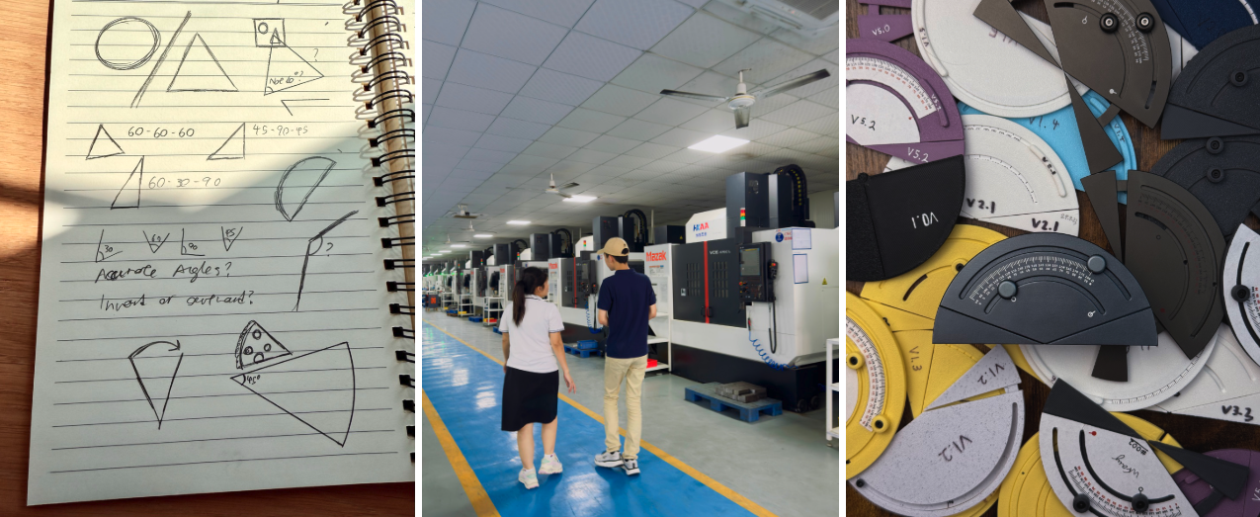
As an eighth grader at Evergreen Middle School in Redmond, Wash., Fang kept bumping into the limits of standard classroom protractors — the cheap, clear tools generations of students have used to measure and plot angles. Frustrated by how often he had to realign the plastic arc just to mark a single line, he started sketching an alternative in his notebook.
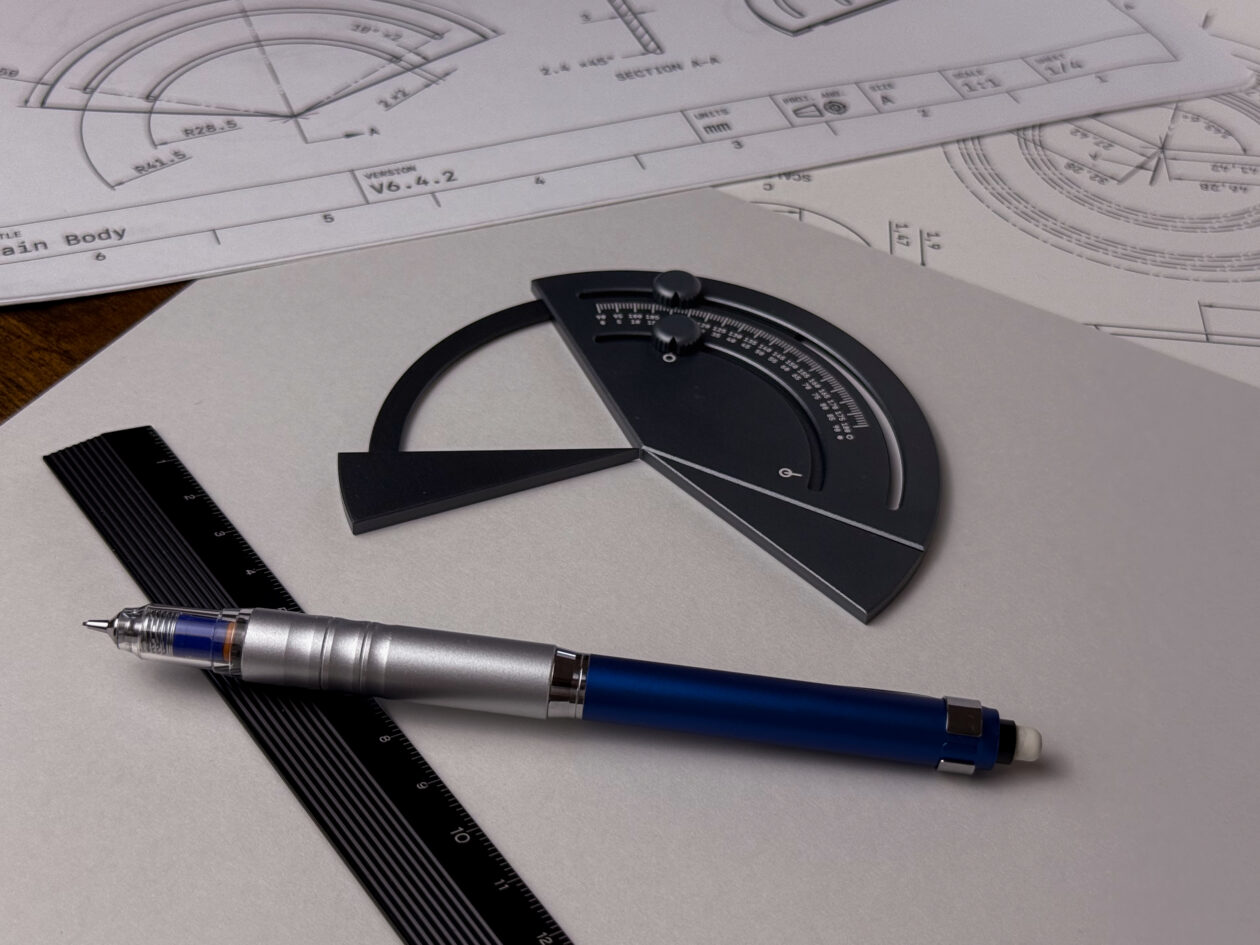
Two and a half years and seven design iterations later, the incoming Tesla STEM High School junior is launching the ZeroPivot Protractor, a sleek, precision-machined aluminum hardware project aiming to drag an overlooked classroom staple into the modern era.
“I shouldn’t be fighting with a piece of plastic to draw an angle,” said Fang, now 17, during a call from China this week where he was meeting with suppliers ahead of production of his tool.
Fang launched a Kickstarter campaign on July 26 to fund the initial production run of the ZeroPivot. The campaign hit its initial target within 48 hours and has raised more than $2,200 from dozens of early backers.
Advertisement
Priced at $19, the ZeroPivot is positioned as a durable, high-precision upgrade over standard $3 plastic models. The funding will cover tooling costs and help manufacture the custom-machined aluminum components through HKAA Industrial, a supplier Fang vetted and partnered with during a visit to Shenzhen.
To make the tool work, Fang abandoned the traditional semi-circular design in favor of a guide-rail system made from anodized aluminum — a material choice he insisted on despite the higher production costs.
Unlike a standard protractor, which requires users to mark an angle’s vertex and rays in separate steps, the ZeroPivot features an adjustable sliding mechanism that allows users to plot and draw precise angles in a single fluid sweep.
“I went down this path of product design, trying to come up with something that’s small, that’s almost simplistic … that is able to improve the lives of people in tiny ways through good design,” Fang said.
Advertisement
Fang didn’t just keep his ideas trapped in his notebook. After coming up with the initial sketches, he brought them to his middle school engineering teacher, who encouraged him to build an actual prototype rather than treat it as a fleeting thought.
The ZeroPivot Protractor. (Photo courtesy of Wenxin Fang)
When he transitioned to high school, that mentorship expanded into a full support structure. A trio of teachers helped him turn his hobby into a legitimate consumer hardware launch:
Steven Bonomo, an engineering and product design teacher with a background working on Microsoft’s Surface Laptop line, guided Fang through user testing, ergonomics, and physical product design.
Andrew Christensen, who has a background in law, walked him through the corporate, operational, and legal logistics of starting his company, Bonae Artis LLC.
Karen Schaeffer, a graphic design teacher, helped him refine the brand identity and the final visual aesthetics of the product and its packaging.
That guidance proved essential as Fang spent the past year user-testing prototypes in class on himself and his classmates, refining the tool’s feel and mechanics in real classroom conditions.
Balancing the demands of a hardware startup with high school homework requires an intense level of discipline — and plenty of late nights.
“It’s a ton of work, that’s just the reality of it,” Fang said. “If you’re pushing a project by yourself, there’s not an external deadline there. What you have to do is set deadlines for yourself and say, ‘Hey, this iteration needs to get out by Sunday.’ I do late nights pretty often just to get something in on time.”
Diary of a protractor reinvention, from left: Wenxin Fang’s notebook sketches, touring a manufacturing facility in China, and various prototypes throughout the process. (Photos courtesy of Wenxin Fang)
For Fang, the ZeroPivot is just the starting point for a career he has been prepping for since childhood. His earliest memory of designing anything was at age 9 during Chinese Lunar New Year, when he used Lego bricks and superglue to create a custom ceiling hook to help his grandparents hang decorative lanterns.
Now aiming for a college degree and future career in product design and mechanical engineering, Fang sees the protractor project as proof of what simple, physical problem-solving can accomplish.
Advertisement
“That was kind of when I first realized, hey, I could make something so simple, and I could have somebody else use it, and it could be really nice for them,” Fang said.
With the Kickstarter campaign already funded, Fang is focused on executing the manufacturing run smoothly in China and delivering the finished ZeroPivot protractors to backers by his estimated February fulfillment target.
While he isn’t yet ready to reinvent the ruler or big pink eraser, Fang does envision creating more consumer hardware tools down the road. But his immediate motivation remains remarkably simple.
“I’m definitely focused on getting this through to fulfillment and getting this in people’s hands,” Fang said. “I think that is the most satisfying part of doing products — getting to see people using them.”
The Social Media Victims Law Center accused the companies of creating addictive and dangerous platforms.
Tada Images/Shutterstock
Another lawsuit is aiming to hold social media platforms accountable for their claimed impact on younger users. The Social Media Victims Law Center (SMVLC) filed a personal injury and wrongful death lawsuit against Meta, TikTok, Snap and Google. The legal action accused these companies and their platforms of creating addictive and dangerous products that contributed to the death of four kids.
The lawsuit accused the social media platforms of having “ignored repeated warnings from their own researchers, concealed evidence of harm, and built systems that profiled minors during moments of psychological vulnerability.” The SMVLC also alleged that these companies tracked user behaviors to push certain content, including “diet and beauty advertisements, appearance-changing filters, social comparison features” and more, which led to “depression, self-harm and suicidal ideation” in the name of increasing user engagement. The deaths related to the lawsuit happened between July 2024 and September 2025 in Texas, North Carolina, Minnesota and Tennessee, but SMVLC filed the lawsuit in Delaware after internal documents from these social media companies were unsealed in recent state and federal court proceedings.
We reached out to the companies named in the lawsuit and will update the story when we hear back. In a statement to Engadget, a Google spokesperson said, “Providing young people with a safer, healthier experience has always been core to our work. In collaboration with mental health and parenting experts, we’ve built services and policies to provide young people with age-appropriate experiences, and parents with robust controls. We send our deepest sympathies to the families and are reviewing the claims in this lawsuit.”
Advertisement
Besides this latest legal action, the same platforms are facing other similar lawsuits. Earlier this summer, four US states sued Meta, claiming that both Facebook and Instagram had addictive designs and misled the public about how safe these apps were. A month prior, Meta, Snap and TikTok each individually settled a social media addiction lawsuit that was filed by a Kentucky school district.
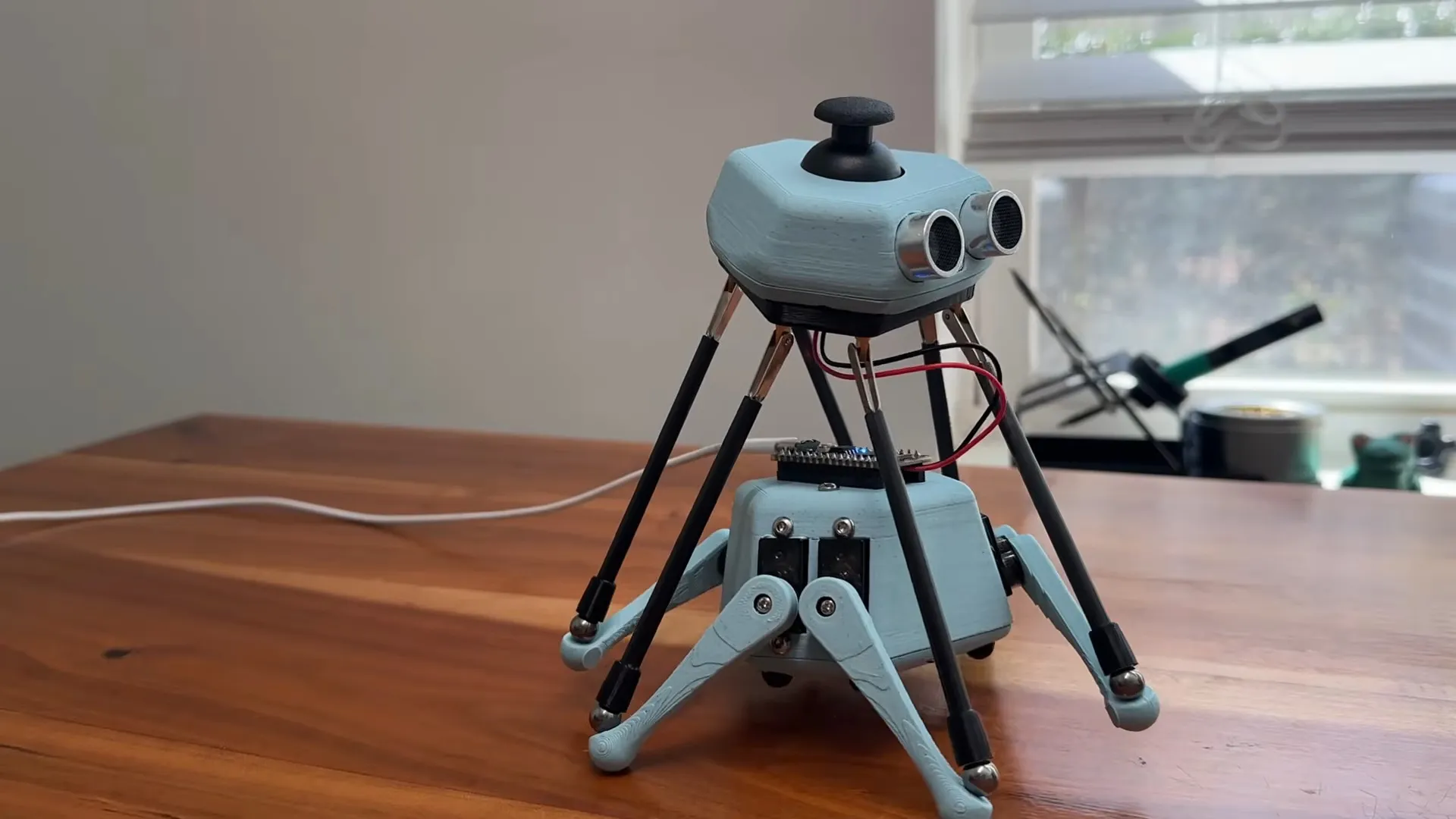
Stewy is a very interesting robot, with some slightly odd kinematics. Its head is a Stewart platform, which is a common-enough 6-DOF actuated plate normally used with a fixed base. By connecting legs to the same servos running the Stewart platform, [JD] turned it into an adorable hexapod walker. The walker had a problem, though: it can’t feel its feet, and [JD] thinks that would make it much more mobile on uneven surfaces. So he got some resistors to turn the cheap servos in its legs into force-sensing actuators.
Well, almost. He’s not actually putting strain gauges or anything like that into the legs; he’s just measuring the voltage drop across a resistor in series with the servos. Since the motors draw more current the more torque they’re putting out, he has a very quick and easy way to sense the current and thus the torque using good old Ohm’s law and an analog input on the microcontroller driving the robot. It’s a simple hack, but the data he’s getting is surprisingly good for how much work it is to add to a robot, as you can see in the video — at least once he slowed down the servos a touch.
Perhaps this isn’t a ground-breaking innovation, but [JD] does a very good idea explaining it. Of course if you want to use resistors to sense force directly, force-sensitive resistors are a thing that we’ve seen in everything from Twister-mat MIDI controllers to self-leveling 3D printers.
Refundable charge intended to discourage time wasters from filing applications that will never be realized
Ofgem is seeking feedback on proposals to levy a fee on datacenter development projects at the time they apply for a grid connection.
The move aims to discourage companies from seeking approval for speculative applications that clog up the pipeline and cause connection delays, without ever resulting in finished datacenters.
Advertisement
The UK regulator for electricity and gas says connection applications for electrical supply have surged from 41 gigawatts (GW) to 125 GW in under a year, with datacenters accounting for at least 80 GW of the new demand.
Even before that happened, one of the UK’s big developers complained that its build teams faced a wait of “a number of years” for work such as local substation upgrades to increase grid capacity.
Ofgem is proposing a Datacenter Commitment Fee paid by the developers of large server farm projects when accepting a grid connection offer. The fee would be refunded once the facility is drawing power, or forfeited if the project exits the queue early instead.
Alan Howard, Omdia principal analyst for Colocation and DC Building, told us previously that the power connection queue issue is a big problem, not just for the UK, but also in the US and other markets around the globe.
Advertisement
“The strategy for many datacenter operators is to secure multiple land parcel rights, request a grid load connection for each (often requiring a costly load study), and see what gets approved so they can build. The capital investment to take all these projects seriously is clearly untenable and a huge financial risk for the energy sector if the demand doesn’t fully materialize,” he said.
The issue is therefore that developers apply in multiple locations to secure power for a single campus, fill up the national application pipeline with speculative requests and hold up the works for viable projects.
“Britain’s electricity demand connections queue has more than tripled in size in less than a year, and consumers should not bear the risks created by speculative projects taking up space in the system,” said Eleanor Warburton, the regulator’s director for Energy System Design and Development.
Ofgem’s suggestion is that the fee should be set within a proposed range of £237,500 ($319k) to £712,500 ($957k) per megawatt, which it believes is equivalent to about 2.5 percent to 7.5 percent of average project costs.
Advertisement
It is suggests developers demonstrate progress with their project if they wish to retain their place in the queue, meeting criteria such as financial capability, commercial maturity and procurement activity milestones.
Global colocation biz Telehouse, which operates five datacenters in the London area, told The Register it supports measures to ensure grid capacity is prioritized for credible project, though it has some reservations.
“Ofgem’s proposal is an important initiative, but it must be implemented in a way that maintains the UK’s attractiveness as a destination for AI and digital infrastructure investment,” said Telehouse Europe, managing director, Mark Pestridge.
“A refundable fee-based approach should not deter serious investors, but create a more transparent connections process that gives viable projects greater certainty.”
Advertisement
However, reforming the queue will not resolve the underlying capacity challenge, Telehouse points out – the need to expand the grid and make more energy available.
“A long-term solution will require sustained investment in the grid, alongside much closer collaboration between datacenter operators, local councils, National Grid and network operators at the earliest stages of planning,” Pestridge said.
“Better coordination and forecasting will help ensure infrastructure is developed in the right places, at the right time, and that viable projects do not continue to face delays even after speculative demand has been removed.”
The finger of blame for all this bother can be pointed at the government, which unveiled its AI Opportunities Action Plan at the start of last year. This included plans for “AI Growth Zones” with streamlined planning processes to speed along the building of more datacenters, apparently without bothering to check if the electricity infrastructure was ready.
Advertisement
To try to tackle the bottleneck, the government set up an AI Energy Council, bringing together energy industry representatives and major technology firms to thrash out a strategy, co-chaired by the former Technology Secretary and Energy Secretary. The Register reported on the challenges faced last year.
Ofgem’s consultation is open to anyone with an interest, and closes on September 16, 2026. The agency has response templates available on its website here. ®




























































You must be logged in to post a comment Login