
Security teams log 54% of successful attacks and alert on just 14%. The rest move through your environment unseen.
The Picus whitepaper shows how breach and attack simulation tests your SIEM and EDR rules so threats stop slipping by detection.



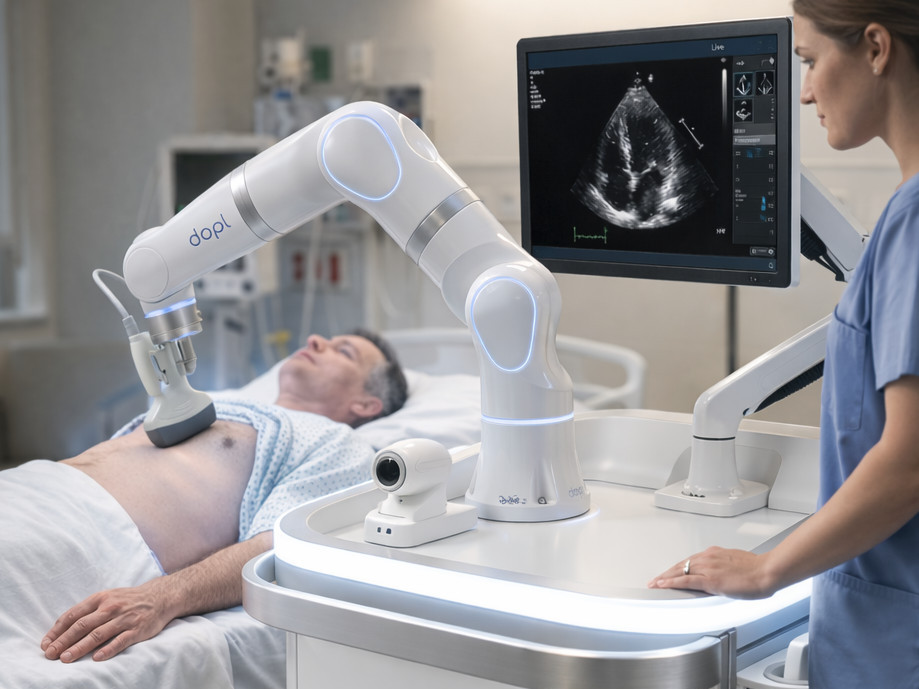
Dopl Technologies announced $6.3 million in new funding to support the development and commercialization of a remotely operated robotic ultrasound system. The Bothell, Wash.-based startup has now raised more than $8 million.
Dopl is pursuing FDA clearance for its platform, which pairs off-the-shelf ultrasound probes with commercially available robots. The system facilitates communication between a remotely based ultrasound technician (or sonographer) and the robot, allowing the sonographer to conduct the exam with haptic feedback.
The platform also includes a video connection to allow conversations between the sonographer, patient and onsite health personnel.
The goal, said CEO Ryan James, is to target underserved and typically rural communities “to improve access to care and the time it takes for patients to get that care.”

While Dopl could eventually create remote interfaces for a variety of health services, ultrasound has widespread applications.
“People say that ultrasound is the new stethoscope,” James said. While perhaps best known for its use in obstetric exams during pregnancy, the diagnostic tool is also employed for cardiac and vascular exams and can be used to detect stroke, cancer, heart disease and other conditions.
The startup was co-founded by James, Chief Operating Officer Steve Seslar, and Chief Medical Officer Wayne Monsky, who began researching novel care delivery methods together at the University of Washington in 2017.
The system pulls together a suite of technologies including fine-motor robotic control, haptics, computer vision, AI, and advanced networking.
The new investment allows the company to hire staff to help it navigate the FDA approval process. Dopl is conducting clinical evaluations of its platform and aims to submit an application for FDA clearance next year.
Dopl currently provides in-person ultrasounds using its technology through traveling sonographer services. FDA clearance would allow it to perform remote robotic exams and scale its platform.
The startup has a letter of intent with a rural health care collaborative that includes 31 critical access hospitals in Washington and has partnerships across the nation, including on the East Coast.
The company also expects to take advantage of opportunities through the Rural Health Transformation Program, a $50 billion federal effort that will distribute funds in every state from fiscal years 2026 to 2030. The program is targeting innovations that expand access to care.
The seed round was led by SpringTide Ventures, which was joined by WRF Capital, Tacoma Venture Fund (pre-seed round lead), HeartX, Transform Health Ventures, Precursor Ventures, and additional early-stage institutional investors.
Dopl was a finalist for startup of the year at the 2026 GeekWire Awards.
There is competition in this market, including traditional ultrasound companies and startups. A notable rival is AdEchoTech, which launched in France in 2008 and has since received FDA clearance to sell in the U.S.
James said Dopl’s haptic technology sets it apart, allowing remote technicians”to actually feel the patient as they’re scanning.”
The remote robotic care delivery industry is rapidly growing, James said, and “represents the next wave of care delivery and shift in mindset in terms of how clinicians operate.”

Winners & losers: For the first time in nearly two decades, Mojang has announced a significant change in Minecraft’s hardware requirements, a rare move for one of the biggest gaming products in history. The Microsoft-owned studio wants to future-proof Minecraft: Java Edition, but players running older hardware won’t be cheering this time around.
Minecraft: Java Edition now officially recommends 16GB of RAM, and that’s just the starting point. Mojang recently explained that the wildly popular sandbox game is getting a more modern baseline for its system requirements, acknowledging that some players with aging systems will be disappointed as the company works to keep improving its blocky experience for everyone else.
The update arrives after 17 years without a change to Java Edition’s requirements, a long stretch by any video game’s standards. After nearly two decades, Minecraft has essentially grown out of its shoes: players will need stronger PCs to run future builds – no matter the impossibly expensive costs of crucial silicon components such as memory chips and GPUs.

Minecraft’s system requirements officially changed on July 21, covering both the “Fast” and “Fancy” presets. The game’s official store page now lists a 1080p, 30 FPS target for the Fast preset, and a 1080p, 60 FPS target for the Fancy preset. The Fast preset calls for 8GB of RAM with a discrete GPU, or 12GB with an integrated GPU. The Fancy preset, meanwhile, recommends 16GB of RAM for comfortably running Java Edition for the foreseeable future.
A 16GB recommendation might sound like a lot, especially considering Java Edition currently allocates only around 4GB of system memory by default. Mojang is also updating its CPU and GPU requirements, with stronger, modern processors, either x86-64 or Arm64, now needed to properly run the Fancy preset.
Minecraft: Bedrock Edition still has lower system requirements than Java Edition, though players will need the latter to use custom mods on PC. Mojang says the new requirements are still modest compared to modern AAA games, meaning Java Edition should keep running smoothly on most well-equipped gaming systems.

The company explained: “We want to make it clear for players what kind of computer can run Java Edition smoothly. While older devices may still launch the game, they will struggle to deliver a good experience. This can lead to low frame rates, visual issues, long loading times, or performance that doesn’t match what players expect.”
Guaranteed performance on older hardware is officially a thing of the past, but Mojang argues that’s for the best. Leaving aging systems behind will let developers focus on meaningful technical upgrades, starting with the shift from OpenGL to Vulkan.

Microsoft on Monday launched its first cybersecurity-specialized model alongside a new AI cybersecurity platform at a small event in San Francisco, taking a big swipe at major players in the space — namely Anthropic, Google and OpenAI.
The company describes MAI-Cyber-1-Flash as a model that’s built “to find challenging vulnerabilities in complex codebases.” The model is built to animate MDASH, Microsoft’s harness dedicated to software vulnerability identification and remediation.
The new security platform is dubbed Perception, and it’s designed to deploy teams of agents to assist with and automate various security workflows, including identifying and remediating bugs. The platform can also integrate with MDASH.
The company claims MAI-Cyber-1-Flash is significantly more powerful (and more cost-effective) than competitor models, based on its performance on an established AI cybersecurity benchmark.
“We’re very very excited to announce our results,” said Mustafa Suleyman, the co-founder of DeepMind and current CEO of Microsoft AI. “We have MAI-1 Cyber Flash binded [sic] with GPT 5.4 inside of the MDASH harness — which beats out Gemini, GPT 5.5 Cyber, GPT 5.6 Sol, and Mythos 5 on Cyber Gym, which is the primary benchmark that we all use. The golden benchmark.”
“We’re shipping this into production immediately,” he added.
Noting that hackers are increasingly using AI in their cyberattacks, Hayete Gallot, Microsoft’s vice president for security, described Perception as a way for enterprise defenders to “defend against AI with AI at the scale and speed that the attackers have.”
Perception uses agentic red teams, blue teams, and green teams. The red teams can provide detailed simulations of potential attacks — providing context about potential threat actors and the likely vulnerabilities that they might exploit. Blue teams are dedicated to detecting and triaging existing bugs, while green teams take “corrective actions” against those bugs.
Dave Weston, the lead engineer for Perception, described the platform as a massive efficiency upgrade for corporate defenders. “We’ve gone from this taking hours and hours of manual work from multiple specialized folks across the security organization — appsec hunters, remediation engineers, you name it — and in minutes, we have a fix for all of this. Not only do we discover the issues and prioritize them, but we have detection, posture fixing, and even a code fix.”
Though AI has offered new defensive capabilities to companies, its availability to cybercriminals has given rise to a dazzling array of potential threats.
Microsoft’s new security tools, which the company said will be available in preview on November 3, will enter an increasingly crowded field of AI cybersecurity solutions. Earlier this year, Anthropic launched Mythos, a security platform that was released to a small coterie of partner organizations through a program called Glasswing. OpenAI has also launched its own security solution in May through a program called Day Break.
When you purchase through links in our articles, we may earn a small commission. This doesn’t affect our editorial independence.


Apple is being sued by three people who claim approximately $1.8 million in Bitcoin was stolen after downloading and using a fraudulent Sparrow Wallet application from the App Store.
The complaint, filed on July 24 in California, alleges that Apple failed to adequately review and monitor applications distributed through the App Store while promoting the marketplace as a safe and trusted source for software.
Plaintiffs James Ramirez, Christopher Ellis, and Jalen Delgado say the malicious application impersonated the legitimate Sparrow Bitcoin wallet and instructed them to enter their seed phrases.

After entering those secret recovery credentials, the victims allegedly had their Bitcoin transferred to cryptocurrency wallets controlled by the scammers.
The legitimate Sparrow Wallet is a desktop application available for Windows, macOS, and Linux, and does not offer an iOS version.
However, Sparrow Wallet’s developer says that scammers have repeatedly published applications in Apple’s App Store that impersonate the cryptocurrency wallet.
According to the complaint, Delgado downloaded the fraudulent application on or around May 1, 2025, entered his seed phrase, and shortly afterward discovered that 1.05033242 Bitcoin, worth approximately $120,000, had been transferred to a scammer.
Ramirez allegedly downloaded the app on July 25, 2025, and lost 7.4 Bitcoin, valued at approximately $875,000. The complaint says Ramirez reported the fraudulent app and theft to Apple that same day, but alleges Apple never contacted him regarding that report or subsequent reports.
Just over a week later, on or around August 3, Ellis allegedly also installed the Sparrow app from the App Store. After entering his seed phrase, Ellis discovered that approximately $840,000 in cryptocurrency had been transferred to a scammer and immediately reported the app and theft to Apple.
The complaint also claims that Apple ranked the fraudulent Sparrow app and included it in curated cryptocurrency app collections, effectively recommending it alongside legitimate applications.
However, Apple had allegedly been warned about fraudulent Sparrow Wallet apps more than a year before the plaintiffs’ losses.
The complaint includes a January 6, 2024 post from Craig Raw, the developer of the legitimate Sparrow Wallet application, who said a scam Sparrow Wallet app remained available in the App Store despite him and others reporting it weeks earlier.

Raw also warned users to only obtain Sparrow Wallet through its official website rather than trusting an application solely because it was available through an app store.
MacRumors also shared a more recent attempt by Raw to protect users from the fake Sparrow applications on the Apple App Store by submitting an unpublished placeholder app that explained that mobile apps using the “Sparrow Wallet” name were fake.
According to Raw, Apple initially flagged his developer account for termination over alleged dishonest activity, but later reversed the decision.
Apple told BleepingComputer that it acted quickly to remove applications impersonating Sparrow Wallet and terminated the developer accounts associated with them.
Apple also said developers who believe content distributed through its services infringes their intellectual property can submit a dispute to the company’s legal department.
Customers can separately report suspected App Store scams and fraud through Apple’s Report a Problem service, and Apple said it takes immediate action when applications are found to violate its guidelines.
The plaintiffs are seeking reimbursement for the stolen cryptocurrency, compensatory and punitive damages, restitution, attorneys’ fees, and other damages.
They are also asking the court to require Apple to improve and publicly disclose its procedures for detecting and removing fraudulent applications, while also introducing warnings about the risks associated with cryptocurrency apps.

Security teams log 54% of successful attacks and alert on just 14%. The rest move through your environment unseen.
The Picus whitepaper shows how breach and attack simulation tests your SIEM and EDR rules so threats stop slipping by detection.
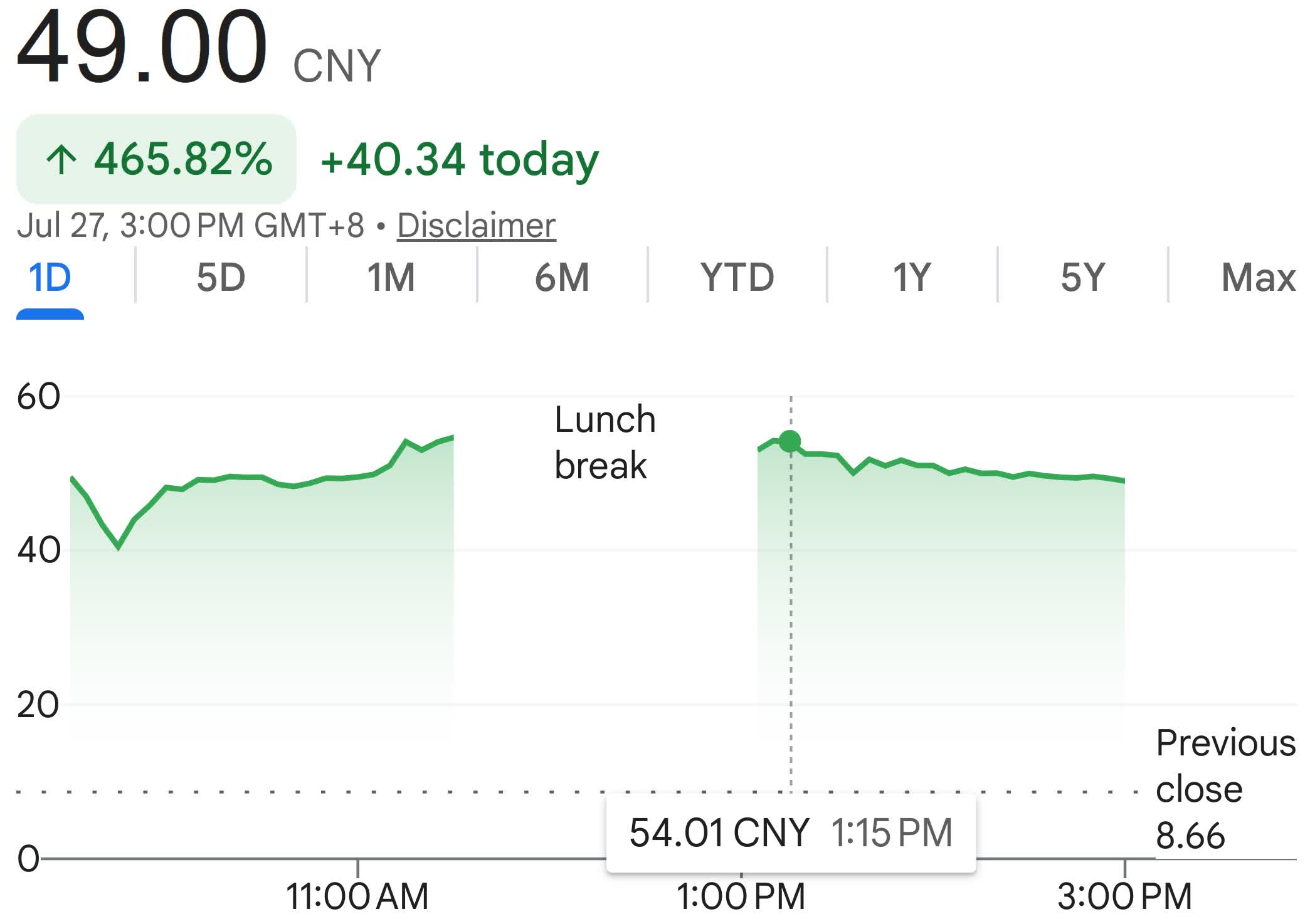
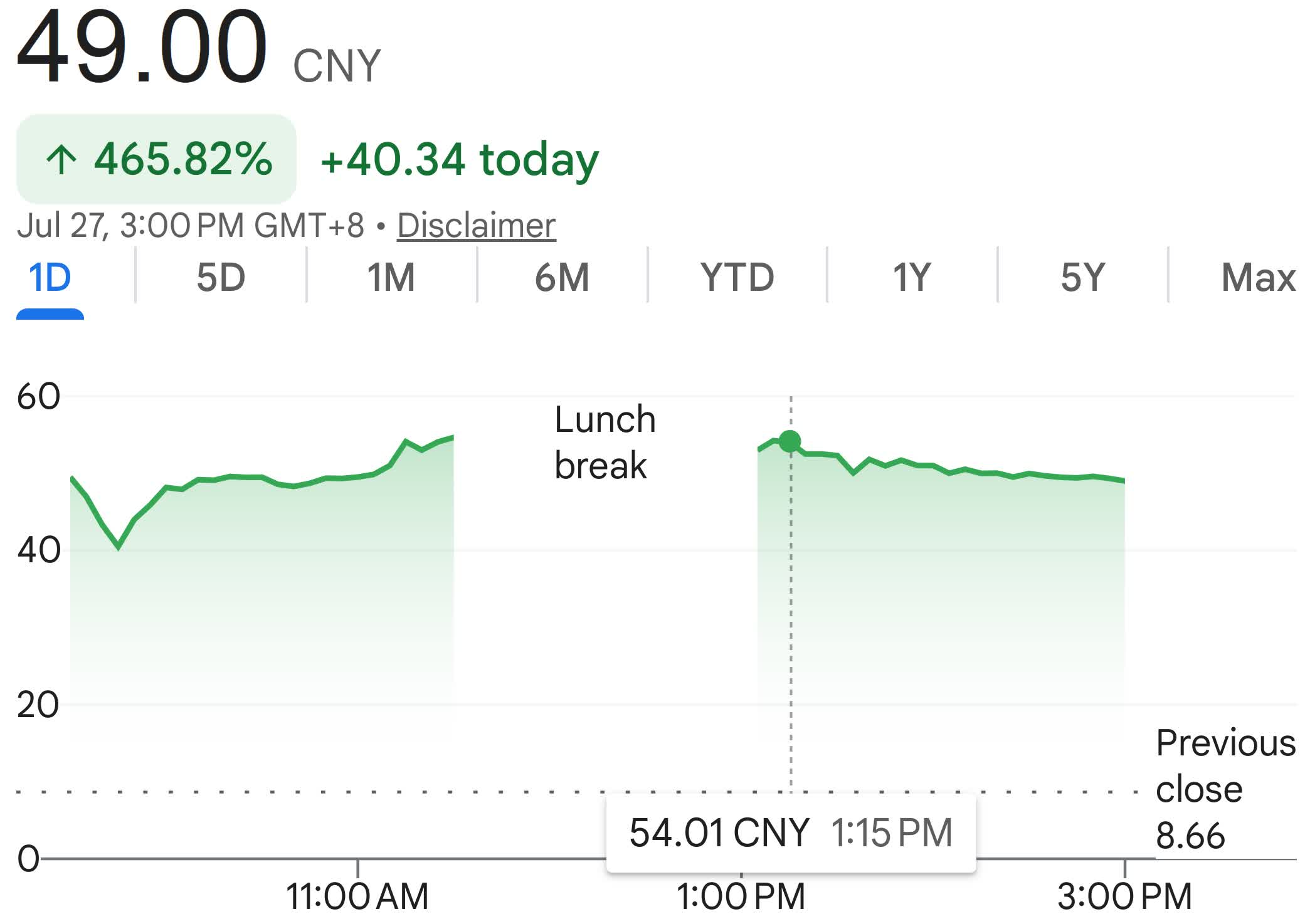
What just happened? Chinese memory maker CXMT is now the country’s most valuable company after an impressive first day on the market that exceeded expectations. The stock’s initial public offering price was set at CNY 8.66 but ended up closing at CNY 49.00 – a gain of nearly 466%.
CXMT, short for ChangXin Memory Technologies, is one of several major players in the memory market that are profiting from the ongoing AI boom. At present, CXMT ranks fourth overall with an eight percent share behind Samsung, SK Hynix, and Micron with shares of 36%, 29%, and 24%, respectively.
Larry Yang, chief economist of First Seafront Fund Management, told AFP that CXMT’s first-day performance reflects investors’ overwhelmingly bullish sentiment regarding the company.
The memory maker closed the successful day of trading with a market cap of around 3.65 trillion yuan, or roughly $540 billion. Fortune said it was mainland China’s second largest IPO ever, following that of Agricultural Bank of China back in 2010.
Yang added that the newly raised money will give CXMT the ability to expand production capacity, in addition to boosting its global influence. Being able to tap a homegrown hardware maker should also benefit China in its AI race against the US.
CXMT was founded in 2016, just in time to leverage the pandemic-fueled PC buying surge. Then came the AI boom and as you can imagine, hardware makers and investors have been singing all the way to the bank. Consumers, meanwhile, have been met with soaring prices on smartphones, game consoles, and virtually everything else that relies on a memory chip to operate.
Worse yet, there appears to be no relief in sight. Earlier this month, SK Hynix said it expects the memory crunch to peak in 2027 and continue through at least 2030.
According to AFP, Apple is now testing DRAM chips from CXMT for use in future products. Signing on as a supplier for the Cupertino-based company is no doubt high on CXMT’s list of short-term goals.

What just happened? Samsung Electronics has expanded its semiconductor partnership with Broadcom to focus on AI chips, bringing together chip design, manufacturing, and memory in a deal that could run through the end of the decade. The companies said the agreement covers memory chips, contract manufacturing, and advanced packaging, with total activity expected to exceed $200 billion by 2030. The partnership gives Broadcom deeper access to Samsung’s production capabilities, while Samsung secures longer-term demand for its most advanced fabs.
At a technical level, the deal is built around closer integration between Broadcom’s ASIC designs and Samsung’s manufacturing stack. Broadcom’s next-generation communications chips will be produced using Samsung’s sub-2-nanometer process, putting them at the leading edge of chip scaling, where efficiency and heat management are becoming increasingly challenging.
The two companies are also working on next-generation high-bandwidth memory, a critical component for AI systems that need to move large amounts of data quickly. As models grow larger, memory bandwidth has become a limiting factor, making tighter coordination between logic chips and memory increasingly important.
The partnership reflects a broader shift in how AI hardware is being developed. Large tech companies are moving toward custom-built chips designed for specific workloads rather than relying solely on general-purpose GPUs. That trend is pushing chip designers and manufacturers toward closer, longer-term collaborations.

For Samsung, the deal is also about strengthening its position in the foundry market, where it competes with TSMC. Securing consistent, high-volume work from a company like Broadcom could help improve utilization at its advanced manufacturing facilities.
Samsung has been trying to attract more customers for its most advanced nodes. Earlier this year, the company said it expected to win additional 2-nanometer orders following discussions with major tech firms. Its leadership has also pointed to ongoing talks around next-generation memory, including HBM4E and HBM5.

Samsung has landed large contracts before, including a $16.5 billion deal to produce chips for Tesla. But the Broadcom agreement stands out for its scope, covering multiple parts of the semiconductor process rather than a single product line.
The timing comes as demand for AI infrastructure continues to grow and become more specialized. Performance gains are increasingly tied to how chips, memory, and packaging work together rather than improvements in any single component.

— Jeff Lyon is now chief information security officer at Seattle’s Remitly. Lyon joins from Coinbase, where he was head of infrastructure security for two years. Past roles include security leadership at Robinhood and Amazon Web Services. Lyon also served as a petty officer with the U.S. Navy for more than nine years.
“Remitly’s mission to transform lives through trusted financial services that transcend borders resonates deeply and is a natural progression of my work building security organizations, secure applications, and safe-by-default platforms across fintech,” Lyon said in a LinkedIn post.
Remitly has seen a reshuffling of leadership since co-founder and CEO Matt Oppenheimer departed in February. Ankur Sinha resigned as chief product and technology officer in June, and Rina Hahn left as chief marketing officer earlier this month. Veteran tech and finance executive Sebastian Gunningham now leads the company.

— Joseph Williams, a longtime Seattle-area leader at the intersection of tech and public service, was named director of Cybersecurity Programs at Western Washington University.
Williams most recently served as the governance, risk management and compliance (GRC) practice director at consulting firm Artemis Connection. His varied career includes working as information and communications technology sector lead for the Washington State Department of Commerce; Seattle office director for Pacific Northwest National Laboratory; and divisional CTO at Microsoft.
In 2025, Williams was named GeekWire’s Public Policy Champion for Innovation.
Williams’ experience “sets the stage for propelling our cybersecurity programs to new heights as we seek to equip and empower our graduates to be successful in exciting careers in a fast-changing technology landscape,” said Filip Jagodzinski, computer sciences’ department chair.

— Kartik Murthy was named vice president of product for Yoodli, a roleplay platform using AI to help people improve their professional skills.
Murthy joins the Seattle-based startup from the cybersecurity company Coalition, where he served as head of product for four years. He has held product management roles at companies including Meta, Google and Uber.
“In a world where many AI products try to automate workflows, Yoodli is taking a bet on humans and it’s already paying off,” Murthy said on LinkedIn.

— Phoebe Weiser is now an investor at the longtime Seattle venture firm Madrona. She joins from Databricks, where she worked as a product manager, and previously held internship and full-time roles at Microsoft.
“After building in security at Microsoft and data engineering at Databricks, I’m looking forward to partnering with the next generation of founders. I’m especially grateful to the managers, mentors, and teammates over the past few years for everything they taught me about building products at scale,” she said on LinkedIn.
— Salman Taherian is now head of AI for Grant Thornton, a Chicago firm offering audit, assurance, tax and advisory services. Taherian, who is based at the company’s office in Bellevue, Wash., joins from Amazon Web Services where he was global head of agentic AI and strategic partner accounts. Past employers include Wipro Limited and Relx.

Flexible printed circuit boards are a fascinating technique for making electronics venture beyond the two-dimensional, but surprisingly they’re not something many of us have worked with. [Jessica Stanley] gave a talk at the recent Electromagnetic Field event in the UK, exploring the different ways to make your electronics bend.
She starts with an overview of flexible electronics, detailing the techniques used with conventional polyimide substrates and etched copper. We’re particularly enamoured of a stretchable PCB made by coiling a flexible circuit round a piece of elastic. Since she’s looking for techniques accessible to everyone that don’t either cost a fortune or require dangerous chemicals we look at conductive paint and electrolysis, before arriving at using a vinyl cutter to create adhesive traces.
We’ve no doubt all noticed that flexible PCBs can be ordered from the usual fabrication houses at a price, but the value in this talk lies in reminding the viewer that this is not the only path. She demonstrates well that simple flexible PCBs can be within the reach of almost anyone, which is perhaps the encouragement needed for people to try this medium. The full talk is below the break.


ai and ml
The Open Security AI Alliance says the Hugging Face/OpenAI mess proves frontier labs can’t be trusted to properly secure sensitive systems
In the wake of OpenAI agents attacking Hugging Face, Nvidia has recruited a new posse of partners to promote open source models as the security solution the industry needs. The AI arms dealer announced the foundation, the Open Secure AI Alliance, in a blog post today, describing the mission of the group being “to ensure defenders everywhere have open, frontier tools they can trust and control.”
Partners in the group are numerous, ranging from established tech giants like Microsoft, Red Hat, HPE, IBM, and Adobe to newer groups like Palantir, SpacexAI, Hugging Face, and The Linux Foundation. What all the founding members have in common, Nvidia said, is that they agree open source AI models are a fundamental part of modern cybersecurity, just like prior open source tech has been for the infosec space.
“The United States and its partners now face a choice in AI security: whether the defenses that protect our infrastructure will sit inside a few opaque systems or be built on open models, harnesses and tools that any defender can study, adapt and deploy,” Nvidia said in the announcement.
The claims in many ways echo the pleadings from tech industry heavyweights made in an open letter to US government regulators last week. That letter, signed by many of the same companies that are part of the founding OSAA cadre, essentially argues that regulators should ensure Anthropic, Google, and OpenAI don’t end up with total control of the US AI market, and that open-weight models should be given a seat at the table, too.
The new alliance is arguing that, not only do open-weight models need to be allowed to proliferate in the US, but they also need to be considered a fundamental part of the security puzzle.
For those unfamiliar with the Hugging Face incident, a group of autonomous OpenAI agents, operating in a sandbox and stripped of guardrails to test their full capability to solve cybersecurity puzzles, exploited a pair of zero-days to escape and gain access to the internet. For some reason, the bots thought the solution to the problems they were posed could be found in Hugging Face systems, so they broke in and accessed a bunch of private information and hijacked some credentials.
When Hugging Face turned to closed-source US frontier AI lab bots to examine the incident and help figure out what happened, those tools declined to help because they thought the data Hugging Face was trying to examine was itself malicious. Hugging Face turned to Chinese-made GLM 5.2, hosted on its own infrastructure, to figure things out.
“That incident showed a practical truth,” said Nvidia. “When defenders cannot inspect, adapt and run advanced AI on their own infrastructure, their ability to respond is constrained at exactly the moment speed matters most.”
Only open-source AI models, which China leads development on, can fill that role, the OSAA argues, and it’s prepared to counter those who say open models are a threat: Just look at what happened last week and it’s readily apparent that closed source models are dangerous too.
The Alliance is pooling its efforts to give security pros access to essential open tools. Nvidia said that it’s participating by releasing its Object-Oriented Agent project on GitHub, HPE is contributing its SPIFFE/SPIRE zero-trust AI identity framework, Hugging Face has handed its Safetensors transparent AI model weight formatting to the PyTorch Foundation, and SpaceXAI has open-sourced Grok Build (though the reason behind that doesn’t appear to be entirely benevolent).
In addition, IBM and Red Hat have released Lightwell, an automated open-source vulnerability remediation platform, while Microsoft has come out with MDASH, a multi-model agentic scanning harness to automate bug discovery and remediation. Those efforts, while not open source themselves, are still a sign that Alliance members “are building an open defense stack,” Nvidia said.
The OSAA ended its announcement with another call for policymakers not simply ban open-source AI models, as doing so “would weaken defensive capacity and risk concentrating power, dependence, and vulnerability in a few closed providers,” the group said.
Many providers, as we saw last week, are more concerned with protecting themselves than helping victims of autonomous cyber attacks respond quickly.
Clement Delangue, cofounder and CEO of Hugging Face, said in a post on X that he spoke to OpenAI over the weekend about last week’s incident and asked the company to provide funding to support the development of better open-source AI cyber defenses. It’s not clear if the company plans to fulfill that request; it’s not a founding member of the Nvidia-led OSAA. Neither is Google or Anthropic, for that matter.
We reached out to all three companies for their take on the new initiative, but didn’t hear back from any of them. ®


Like any piece of technology, wind turbines (not to be confused with windmills) aren’t functional forever. With time and use, they break down, often requiring deconstruction after just seven to 10 years of service. Wind turbines can be up to 750 feet tall, and given their immense size, figuring out what to do with the massive turbine blades becomes an important issue, lest they end up taking over landfills. Many have taken on the challenge, ensuring that these blades receive a new lease on life and don’t end up tossed in an ever-expanding landfill somewhere.
With that said, it’s worth mentioning that full-on recycling of wind turbine blades isn’t impossible. For instance, companies like Carbon Rivers have figured out ways to break down the fiberglass and steel of these blades, keeping the glass fibers intact so they can be used in new creations (via Department of Energy). However, this is a highly specialized and therefore expensive process, which is why it’s not adopted on a wider scale. For this reason, many companies have opted for simpler, more creative, and, in several cases, less pricey ways of using retired turbine blades, such as in constructing playgrounds, bridges, and art installations. As these companies and artists have shown, wind turbine blades don’t need to be tossed aside when their perceived usefulness is over. The following are just some of the great and unexpected ways these large constructs have been reused over the years.
Though it may seem like wind turbine blades only serve a single purpose, evidently, there are lots of uses for them once their job of converting the kinetic energy of wind into electric power is over. One of the most functional of all is in construction, which can look different from case to case. In some instances, these blades are recycled and turned into concrete to create blocks and barriers. The company Renewablade is one of the foremost names exploring this technology and putting it into scalable, real-world use. Their blocks are lighter and easier to transport than regular concrete blocks. Des Moines, Iowa’s Mercy College of Health Sciences used 28 of Renewablade’s wind turbine blade-concrete composite barriers while construction crews worked on the campus.
Aside from using wind turbine blades to create new forms of concrete, they’ve also seen use as structural elements in buildings. A highly-publicized example comes out of Lund, Sweden, where a 365-car parking garage used dozens of decommissioned blades as curtain walls: Those that aren’t vital to holding the full weight of the building, but cover the outer sides. The decision to use recycled turbine blades came as part of the building’s overall intent to create what they call “visible sustainability” (via Vattenfall). This involved installing solar panels on the roof for clean EV charging — another consideration for cities looking to remedy their EV charging woes — and pollinator-friendly plants to encourage the natural habits of local wildlife.
There’s nothing saying that reusing or recycling materials has to be a drab, corporate affair. If possible, it should be fun, and that’s exactly what wind turbine blade playgrounds seek to achieve. As evidenced by the efforts of Superuse Studios – an architectural collective dedicated to construction using reused and waste materials — these massive pieces are excellent for creating fun and enriching playgrounds for kids. Simultaneously, they instill in the younger generation a sense of duty to make the most of what already exists and creativity regarding what the world around them can look like.
Surprisingly, it seems that wind turbine blades are quite versatile when it comes to playground construction. They can act as tunnels, especially if enhanced with several entry and exit points throughout. Cut and installed upright, they make fine forts for imaginative play and seem more than sturdy enough to support the weight of kids and playground essentials such as slides and climbing ropes. As of 2022, Superuse has managed to recycle 27 turbine blades, creating playgrounds and other installations across the Netherlands. The company claims that these playground projects reduced carbon emissions by roughly 90% compared to the average new construction playground.
Given their length, size, and sturdiness, there’s something to be said for the structural uses of wind turbines. Aware of the possibilities, some have even used wind turbines as supporting pieces for footbridges. One example is the Midleton to Youghal Greenway Bridge in Cork, Ireland, which features two LM13 blades that act as supports in lieu of traditional steel girders. The just-over-18-foot steel deck bridge was completed in January 2022 at a cost of around $31,069.83. Far from one of the largest bridges ever built, but still impressive for an experimental piece, it remains in use by the public, albeit with consistent monitoring of its condition.
BladeBridge — the same company responsible for this construction — later got the opportunity to create a second wind turbine blade bridge. This one had the backing of the Science Foundation Ireland, the Northern Ireland Department of the Economy, and the US National Science Foundation, and was assembled in Draperstown, Northern Ireland, in April of the same year. It’s a bigger creation at around 19 feet in length, featuring a timber deck and two turbine blades as girder replacements with steel angles bolted on. This bridge came to £10,808 (roughly $13,450 in 2023) – and while it wasn’t a permanent installation, its low cost and durability indicate there could be a future for more bridges like it.
As noted in the wind turbine blade playground example, many wind turbine parts are hollow. Thus, with some tweaking, they can theoretically live new lives as forms of item storage or display. This has already shown promise, as chopped-up turbine blades have been turned into large planters in public spaces. DTE’s Warren Service Center in Detroit, Michigan, gave this innovative idea a try with great success. All it takes is cutting up a small piece of the blade, installing a false bottom, cutting out drainage holes, and adding foam to the edges to aid in durability.
The aforementioned BladeBridge project has created some intriguing turbine blade planters of its own in Ireland. At the 2025 Wind Energy Ireland Expo, BladeBridge showed off combination bench-planters created out of recycled turbine blades. Pictured above, one of them features small seating sections broken up by various plants, while another utilizes leftover cuts from an LM13 turbine blade in a three-spoke configuration — a design that, as the company explained, intentionally invites people to sit close to one another to spur conversations and create connections.
If you want a turbine blade bench of your own, the company Noblewins sells them in different shapes and seating arrangements. While they’re environmentally-conscious and visually interesting, know that they are surprisingly expensive, with even smaller examples totaling multiple thousands of dollars.
In addition to planters, turbine blades have also been used as unique snow walls, as demonstrated by a Wyoming-based artist, Chris Navarro. He took several cut-up blade portions and turned them into a combination art piece snow wall, which he told Cowboy State Daily is intended to provide onlookers with feelings of hope and renewal. After all, in the most literal sense, this is a way for these huge, difficult-to-recycle wind turbine parts to take on a new identity. Murals on both sides of the wall were planned to coincide with the art piece’s optimistic message.
Meanwhile, others have used complete turbine blades to make dramatic artistic expressions. For example, as part of the Hull UK City of Culture 2017 celebration, multimedia artist Nayan Kulkarni installed a 246-foot-long blade turbine in the middle of Hull in East Yorkshire, England. The appeal of the aptly-titled art project “Blade” was that it appeared overnight, dazzling onlookers with its sheer size and presence within an urban center. In reality, moving the blade and putting it into place was no easy task. Per Informed Infrastructure, the blade required special tripods to hold it up, loads of heavy machinery to get it correctly positioned, and it called for the temporary removal of street lamps, traffic lights, and more to accommodate its size.

European misinformation researchers say TikTok, X, and Meta are obstructing access to platform data required under the EU’s Digital Services Act through rejections, restrictive quotas, costly APIs, and burdensome security demands. Although regulators have fined X and pushed platforms to improve access, researchers remain skeptical that the changes will provide reliable, reproducible data at scale. Ars Technica reports: In recent years, social media companies shut down public access tools like Meta’s CrowdTangle and replaced them with content libraries, or, like X, paywalled their API data, forcing academics to pay “hundreds of dollars a month,” said Duncan Allen, a research officer at Democracy Reporting International (DRI) in Germany. Researchers say that without API access, what Iamnitchi describes as the “black holes” in what society knows about how these platforms recommend content or handle reports regarding sensitive content will only grow. Others, like TikTok, cap how many posts any researcher account can pull each day, which Allen said can make it “impossible to study anything at scale.”
The DSA was meant to solve this by allowing vetted researchers at credible institutions to have access to API data if they could show it would help in studying systemic risks, from illegal content to threats to fundamental rights. But two years after the law took effect, researchers say they struggle to meet its security requirements and face narrow interpretations from platforms of what qualifies as a systemic risk. Application forms differ by platform, but most require data to be stored on infrastructure that cannot be compromised — such as a machine physically disconnected from the Internet — a resource most universities lack, [said Adriana Iamnitchi, chair of computational social sciences at Maastricht University in the Netherlands, who leads research into online disinformation campaigns.]
Even for researchers who secure approval, “there’s no guarantee that the data is good,” said L. K. Seiling, coordinator of the DSA40 Collaboratory, a German initiative that tracks 46 DSA applications. API data is often difficult for a colleague to reproduce, so a researcher’s work cannot be checked for errors, which Iamnitchi said is a “basic requirement of science.” DSA40 data shows that of 46 tracked applications, 20 were approved and 14 rejected. But approval rates vary widely: TikTok approved 11 of 13 applications, while X rejected 11 of 23. The true rejection rate is likely higher because the tracker relies on voluntary reporting, Seiling said. “There’s no structured advantage for researchers to use this pathway,” Seiling said. “Data access as it’s set up right now tries to disincentivize researchers.”






Weekend Open Thread: Brooks Brothers


Grayscale Files For Worldcoin ETF, WLD Registers Sharp Rise


How a former Blue Peter presenter stunned America’s Got Talent judges


Intel is reversing course and bringing hyper-threading back to its server chips


Sail Virtually Aboard The “Itanic” With IA-64 Emulator

Turtle Beach Command Series KB7 review: a nifty screen-equipped gaming keyboard

New Jersey voter registration controversy explained: How 6,600 noncitizens got on the rolls, and what happens next

Johnny Depp’s R-Rated Gothic Cult Classic Gets New Release Ahead of Sydney Sweeney Remake


Ethics, other provisions in crypto Clarity Act to be further discussed


Luke Littler dismantles Gerwyn Price to retain title in Blackpool

Shanghai science forum photos show China’s AI and robotics advances in rivalry with US

Commonwealth Games boxing: Jadumani Singh seals dominant 5-0 win over Pakistan’s Sumama Rehman to enter quarter-finals | Commonwealth Games News


2026 3M Open leaderboard: Scottie Scheffler finds putter in Round 1, sits three back


The Peugeot Family: How 200 Years of an “Old Money” Dynasty Died in A Boardroom


16 Dresses for the High Summer Event


Spain sweeps the board at 2026 World Cup with individual awards


Andrew Cuomo joins OKX board as crypto exchange expands in U.S.

A New Post-Apocalyptic Gundam Anime Series Blasts Into SDCC


BITCOIN JUST ENTERED THIS CRITICAL ZONE…


XRP Ledger adds $2.6B as RWA inflows rank second
You must be logged in to post a comment Login