Connect with us
DAPA Banner

Tech

Elgato Stream Deck+ review: completely unnecessary but totally compelling

Published

on

First, you can’t see why you’d ever want a Stream Deck for your Mac, then you try one, and you will never give it back. Out of all the different models, though, the Stream Deck+ is best, and here’s why.

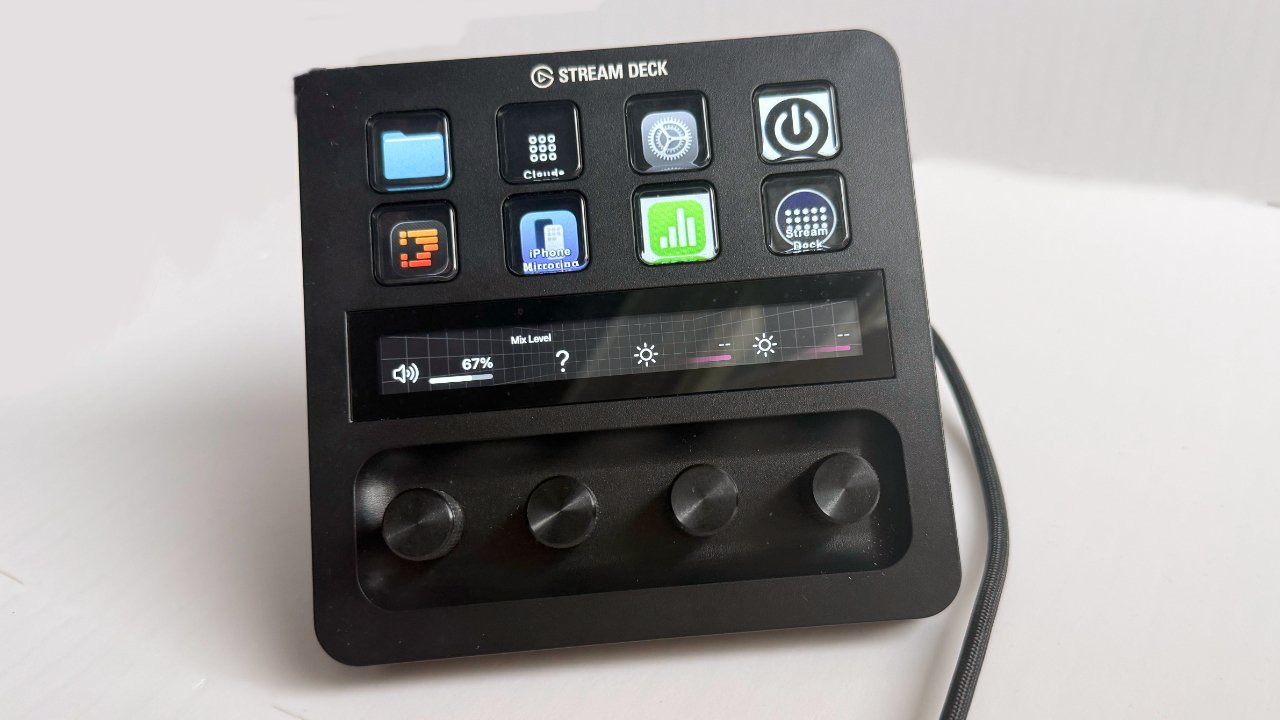
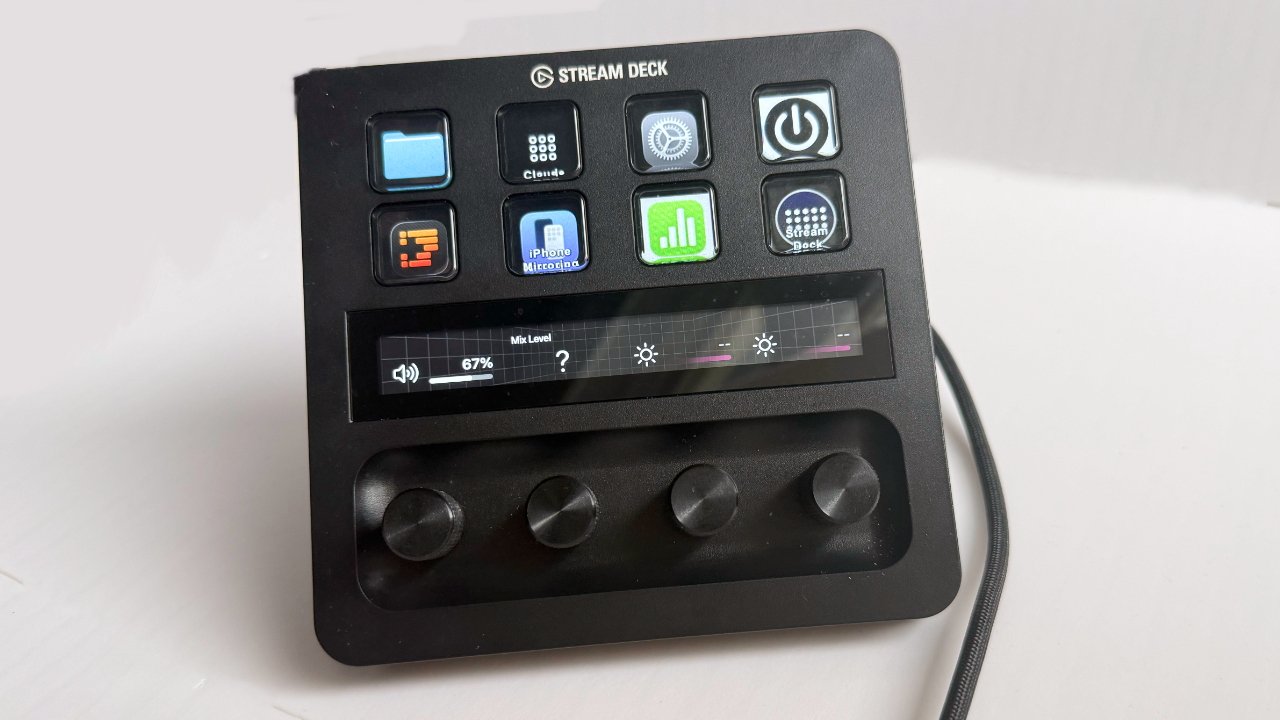
Black Elgato Stream Deck console with eight colorful square buttons, a central status screen showing volume and brightness controls, and four round control dials along the bottom edge
Get a Stream Deck+ and you’ll never use a Mac without one again

Every Stream Deck is a Mac accessory that provides buttons to launch apps, perform entire sequences of tasks, or turn on your smart lights. You connect it through a USB-A or USB-C cable, and the difference in the models is chiefly in how many buttons you get and whether you also have dials.
Get any of them. I’ve just set up a button that switches audio between my Mac and my headphones. I have one that opens all the folders for the books I’m writing. Another launches every app I need for AppleInsider, and positions them on the screen where I want.
Continue Reading on AppleInsider | Discuss on our Forums

Source link

Continue Reading
Click to comment

You must be logged in to post a comment Login

Leave a Reply

Tech

Anthropic accidentally leaks Claude Code source in npm slip

Published

on

Anthropic confirmed yesterday that ‘human error’ led to the leak of much of the source code of its star product Claude Code.

Anthropic has accidentally leaked the source code of its Claude Code agent after a misconfigured software package exposed it to the public. It follows a separate incident last week where Fortune said the company had accidentally leaked thousands of files.

The leak was spotted on Tuesday by security researcher Chaofan Shou, according to The Register, who found that the official npm package for Claude Code had shipped with a map file referencing an unobfuscated TypeScript source. Chaofan Shou proceeded to announce his find on X, sparking a flurry of activity.

That file pointed to a zip archive stored on Anthropic’s Cloudflare R2 storage bucket, which anyone could download and decompress. The archive reportedly contained some 1,900 TypeScript files totalling more than 512,000 lines of code, including full libraries of slash commands and built-in tools.

Advertisement

Within hours, a copy of the code was uploaded to GitHub, where it was ‘forked’ more than 41,500 times, according to The Register, effectively ensuring that the exposure could not easily be undone.

“Earlier today, a Claude Code release included some internal source code,” an Anthropic spokesperson told SiliconRepublic.com. “No sensitive customer data or credentials were involved or exposed. This was a release packaging issue caused by human error, not a security breach. We’re rolling out measures to prevent this from happening again.”

The incident comes just days after Fortune reported that Anthropic had accidentally made thousands of files publicly available, including a draft blogpost describing an upcoming model known internally as both “Mythos” and “Capybara” – one that the document said presents cybersecurity risks.

The Register cited software engineer Gabriel Anhaia, who published a detailed analysis of the exposed code, saying the incident should serve as a cautionary tale for development teams everywhere.

Advertisement

“Apparently, a source map file was included in the npm package. Source maps are meant for debugging – they map minified/bundled code back to the original source,” Anhaia wrote in his analysis of the Claude Code leak. “Including one in a production npm publish effectively ships your entire codebase in readable form.

“This is a reminder for every engineering team: check your build pipeline. Make sure .map files are excluded from your publish configuration. A single misconfigured .npmignore or files field in package.json can expose everything,”

As experts and commentators pored through the now available source code, there seemed to be consensus that they were impressed with what they saw.

“Notice no one said the code is slop,” said prominent US tech blogger Robert Scoble in a social media post. “In every painful moment there are always gifts. The gift is that we all know now that Anthropic’s code is pretty damn good.”

Advertisement

However it also clear that the leak is a gift to its powerful competitors who are vying to compete with one of Anthropic’s most successful products, and have been given an inside view of what’s behind it.

Don’t miss out on the knowledge you need to succeed. Sign up for the Daily Brief, Silicon Republic’s digest of need-to-know sci-tech news.

Source link

Advertisement
Continue Reading

Tech

The UK government reportedly wants Anthropic to expand its presence in London

Published

on

While the US and Anthropic are in the midst of a major dispute, the UK is trying to sway the San Francisco-based AI company to expand its presence on English soil. According to a report from The Financial Times, staffers at the UK’s Department for Science, Innovation and Technology have worked on proposals that include expanding Anthropic’s office in London, along with a potential dual stock listing.

The UK’s strategy follows a public fallout between Anthropic and the US Department of Defense earlier this year. After the AI company said it wouldn’t budge on certain AI guardrails, the Department of Defense pulled its contract and eventually designated Anthropic a supply chain risk. While the designation is currently temporarily blocked by a court-ordered injunction, the feud is far from over. In the meantime, the UK’s efforts to court Anthropic have ramped up in the recent weeks thanks to the company’s disagreements with the US, according to FT‘s sources.

With no end in sight for the debacle with the Department of Defense, Anthropic’s CEO, Dario Amodei, is expected to visit the UK in May, according to FT. However, even in London, Anthropic will have to compete against OpenAI, which already committed to expanding its footprint in the English capital in February.

Source link

Advertisement
Continue Reading

Tech

In Japan, the robot isn’t coming for your job; it’s filling the one nobody wants

Published

on

Physical AI is emerging as one of the next major industrial battlegrounds, with Japan’s push driven more by necessity than anything else. With workforces shrinking and pressure mounting to sustain productivity, companies are increasingly deploying AI-powered robots across factories, warehouses, and critical infrastructure.

Japan’s Ministry of Economy, Trade and Industry said in March 2026 that it aims to build a domestic physical AI sector and capture a 30% share of the global market by 2040. The country already holds a strong position in industrial robotics, with Japanese manufacturers accounting for about 70% of the global market in 2022, according to the ministry.

Based on conversations with investors and industry executives, TechCrunch explored what’s driving that shift, how Japan’s approach differs from the U.S. and China, and where value is likely to emerge as the technology matures.

Driven by labor shortages  

Several factors are driving adoption in Japan, including cultural acceptance of robotics, labor shortages driven by demographic pressures, and deep industrial strength in mechatronics and hardware supply chains, Woven Capital managing director Ro Gupta told TechCrunch.

Advertisement

“Physical AI is being bought as a continuity tool: how do you keep factories, warehouses, infrastructure, and service operations running with fewer people?” Hogil Doh, Global Brain general partner, also said. “From what I’m seeing, labor shortages are the primary driver.”

Japan’s demographic crunch is accelerating. The population declined for a 14th straight year in 2024; those of working age make up just to 59.6% of the total, a share projected to shrink by nearly 15 million over the next 20 years, Doh pointed out. It’s already reshaping how companies operate: a 2024 Reuters/Nikkei survey found labor shortages are the main force pushing Japanese firms to adopt AI.

“The driver has shifted from simple efficiency to industrial survival,” Sho Yamanaka, a principal with Salesforce Ventures, said in an interview with TechCrunch. “Japan faces a physical supply constraint where essential services cannot be sustained due to a lack of labor. Given the shrinking working-age population, physical AI is a matter of national urgency to maintain industrial standards and social services.”

Techcrunch event

Advertisement

San Francisco, CA
|
October 13-15, 2026

Japan is stepping up efforts to advance automation across manufacturing and logistics, according to Mujin CEO and co-founder Issei Takino. The government has been promoting automation to address structural challenges such as labor shortages. Mujin, a Japanese company, has built software that lets industrial robots handle picking and logistics tasks autonomously. Mujin’s approach centers on software — specifically robotics control platforms — that allows existing hardware to perform more autonomously and efficiently, Takino said.

Advertisement

Hardware strength, system risk

Where Japan has historically excelled is in the physical building blocks of robotics. Whether that advantage translates into the AI era is a more open question. The country continues to demonstrate strength in core robotics components such as actuators, sensors and control systems, according to Japan-based venture capitalists, while the U.S. and China are moving more quickly to develop full-stack systems that integrate hardware, software and data.

“Japan’s expertise in high-precision components – the critical physical interface between AI and the real world – is a strategic moat,” Yamanaka said. “Controlling this touchpoint provides a significant competitive advantage in the global supply chain. The current priority is to accelerate system-level optimization by integrating AI models deeply with this hardware.”

Hardware capabilities are strongest in China and Japan, with Japan particularly strong in robot motion control, while the U.S. leads in the service layer and market development, Takino said. Historically, many U.S. companies have leveraged their software strengths to build integrated businesses – similar to Apple – pairing strong software platforms with high-quality hardware sourced from Asia. However, this model may not fully translate to the emerging world of physical AI, Takino said.

“In robotics, and especially in Physical AI, it is critical to have a deep understanding of the physical characteristics of hardware,” Takino said. “This requires not only software capabilities, but also highly specialized control technologies, which take significant time to develop and involve high costs of failure.”

Advertisement

WHILL, a Tokyo- and San Francisco-based startup that makes autonomous personal mobility vehicles, is drawing on Japan’s “monozukuri,” or craftsmanship heritage, as it takes a broader, full-stack approach to global expansion, CEO Satoshi Sugie told TechCrunch. The company has developed an integrated platform combining electric vehicles, onboard sensors, navigation systems and cloud-based fleet management for short-distance and autonomous transport. The company is leveraging both Japan and the U.S. for development, using Japan to refine hardware and address aging population needs, and the U.S. to accelerate software development and test large-scale commercial models, Sugie noted.

From pilots to real-world deployment

The government is putting money behind the push. Under Prime Minister Sanae Takaichi, Japan has committed about $6.3 billion to strengthen core AI capabilities, advance robotics integration and support industrial deployment.

The shift from experimentation to real deployment is already underway. Industrial automation remains the most advanced segment, with Japan installing tens of thousands of robots each year, particularly in the automotive sector. Newer applications are also beginning to gain traction, Doh said.

“The signal is simple – customer-paid deployments rather than vendor-funded trials, reliable operation across full shifts, and measurable performance metrics such as uptime, human intervention rates and productivity impact,” Doh said.

Advertisement

In logistics, companies are deploying automated forklifts and warehouse systems, while in facilities management, inspection robots are being used in data centers and industrial sites.

Companies like SoftBank are already applying physical AI in practice, combining vision-language models with real-time control systems to enable robots to interpret environments and execute complex tasks autonomously.

In defense, where autonomous systems are becoming foundational, competitiveness will depend not just on platforms but on operational intelligence powered by physical AI, Terra Drone CEO Toru Tokushige told TechCrunch. Tokushige added that by combining operational data with AI, Terra Drone is working to enable autonomous systems to function reliably in real-world environments and support the advancement of Japan’s defense infrastructure.

Investment is shifting beyond hardware, with companies allocating more capital to orchestration software, digital twins, simulation tools and integration platforms, according to investors and industry sources.

Advertisement

The rise of hybrid ecosystems

Japan’s physical AI ecosystem is also evolving in ways that differ from traditional tech disruption models. Rather than a winner-take-all dynamic, industry participants expect a hybrid model, with established companies providing scale and reliability, while startups drive innovation in software and system design.

Large incumbents, including Toyota Motor Corporation, Mitsubishi Electric, and Honda Motor, retain significant advantages in manufacturing scale, customer relationships, and deployment capabilities. But startups are carving out critical roles in emerging areas such as orchestration software, perception systems, and workflow automation.

“The relationship between startups and established corporations is a mutually complementary ecosystem,” Yamanaka said. “Robotics requires heavy hardware development, deep operational know-how, and significant capital expenditure. By fusing the vast assets and domain expertise of major corporations with the disruptive innovation of startups, the industry can strengthen its collective global competitiveness.”

Japan’s defense ecosystem is also shifting away from dominance by large corporations toward greater collaboration with startups, the Terra Drone CEO said. Large companies remain focused on platforms, scale and integration, while startups are driving development in smaller systems, software and operations, with speed and adaptability becoming key competitive factors.

Advertisement

Companies like Mujin are developing platforms that sit above hardware, enabling multi-vendor automation and faster deployment across industries. Others, including Terra Drone, are applying similar approaches to autonomous systems, combining AI and operational data to support real-world applications at scale.

“The most defensible value will sit with whoever owns deployment, integration, and continuous improvement,” Doh said.

Source link

Advertisement
Continue Reading

Tech

Hackers exploit React2Shell in automated credential theft campaign

Published

on

Hackers exploit React2Shell in automated credential theft campaign

Hackers are running a large-scale campaign to steal credentials in an automated way after exploiting React2Shell (CVE-2025-55182) in vulnerable Next.js apps.

At least 766 hosts across various cloud providers and geographies have been compromised to collect database and AWS credentials, SSH private keys, API keys, cloud tokens, and environment secrets.

The operation uses a framework named NEXUS Listener and leverages automated scripts to extract and exfiltrate sensitive data from various applications.

Cisco Talos attributes the activity to a threat cluster tracked as UAT-10608. The researchers gained access to an exposed NEXUS Listener instance, allowing them to analyze the type of data harvested from compromised systems and understand how the web application operates.

Advertisement
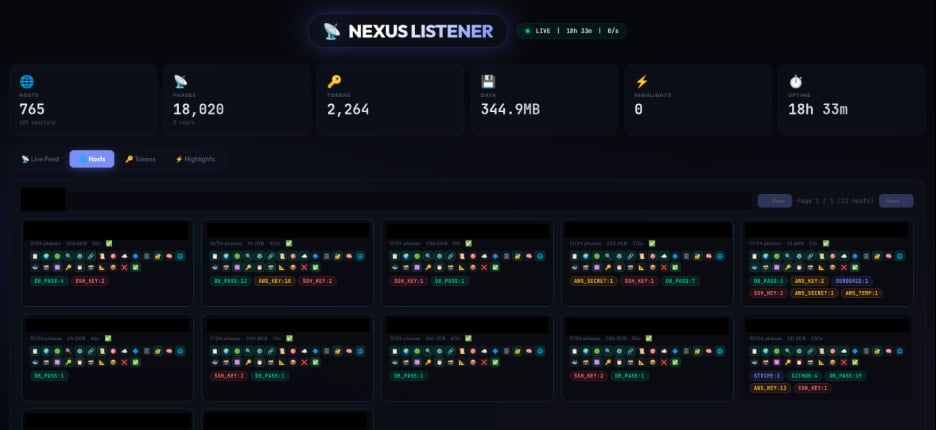
The main panel of Nexus Listener
Source: Cisco Talos

Automated secret harvesting

The attack begins with automated scanning for vulnerable Next.js apps, which are breached via the React2Shell vulnerability. A script that executes a multi-phase credential-harvesting routine is placed in the standard temporary directory.

According to Cisco Talos researchers, the data stolen this way includes:

  • Environment variables and secrets (API keys, database credentials, GitHub/GitLab tokens)
  • SSH keys
  • Cloud credentials (AWS/GCP/Azure metadata, IAM credentials)
  • Kubernetes tokens
  • Docker/container information
  • Command history
  • Process and runtime data

Sensitive data is exfiltrated in chunks, each sent via an HTTP request over port 8080 to a command-and-control (C2) server running the NEXUS Listener component. The attacker is then provided with a detailed view of the data, including search, filtering, and statistical insights.

“The application contains a listing of several statistics, including the number of hosts compromised and the total number of each credential type that were successfully extracted from those hosts,” Cisco Talos says in a report this week.

“It also lists the uptime of the application itself. In this case, the automated exploitation and harvesting framework was able to successfully compromise 766 hosts within a 24-hour period.”

Volume of secrets collected in the campaign
Source: Cisco Talos

Defense recommendations

The stolen secrets allow attackers to perform cloud account takeover and access databases, payment systems, and other services, also opening the door to supply chain attacks. SSH keys could be used for lateral movement.

Cisco highlights that the compromised data, including personally identifiable details, also exposes victims to regulatory consequences from privacy law violations.

Advertisement

The researchers recommend that system administrators apply the security updates for React2Shell, audit server-side data exposure, and rotate all credentials immediately if there is suspicion of a compromise.

Also, it is recommended to enforce AWS IMDSv2 and replace any reused SSH keys. They should also enable secret scanning, deploy WAF/RASP protections for Next.js, and enforce least-privilege across containers and cloud roles to limit impact.

Automated pentesting proves the path exists. BAS proves whether your controls stop it. Most teams run one without the other.

This whitepaper maps six validation surfaces, shows where coverage ends, and provides practitioners with three diagnostic questions for any tool evaluation.

Source link

Advertisement
Continue Reading

Tech

Cover you eyes! Why the MAFS Australia 2026 finale will be brutal to watch

Published

on

After a season dominated by cheating twists, walkouts and “alternative match” chaos, Married at First Sight Australia is heading into its final week — and if the latest episodes are anything to go by, not every couple will survive. It’s going to be brutal. And awesome.

The Final Dinner Party airs Monday, April 6, followed by the Final Vows on April 7 — where the remaining couples must decide whether to stay together or walk away for good.

Source link

Advertisement
Continue Reading

Tech

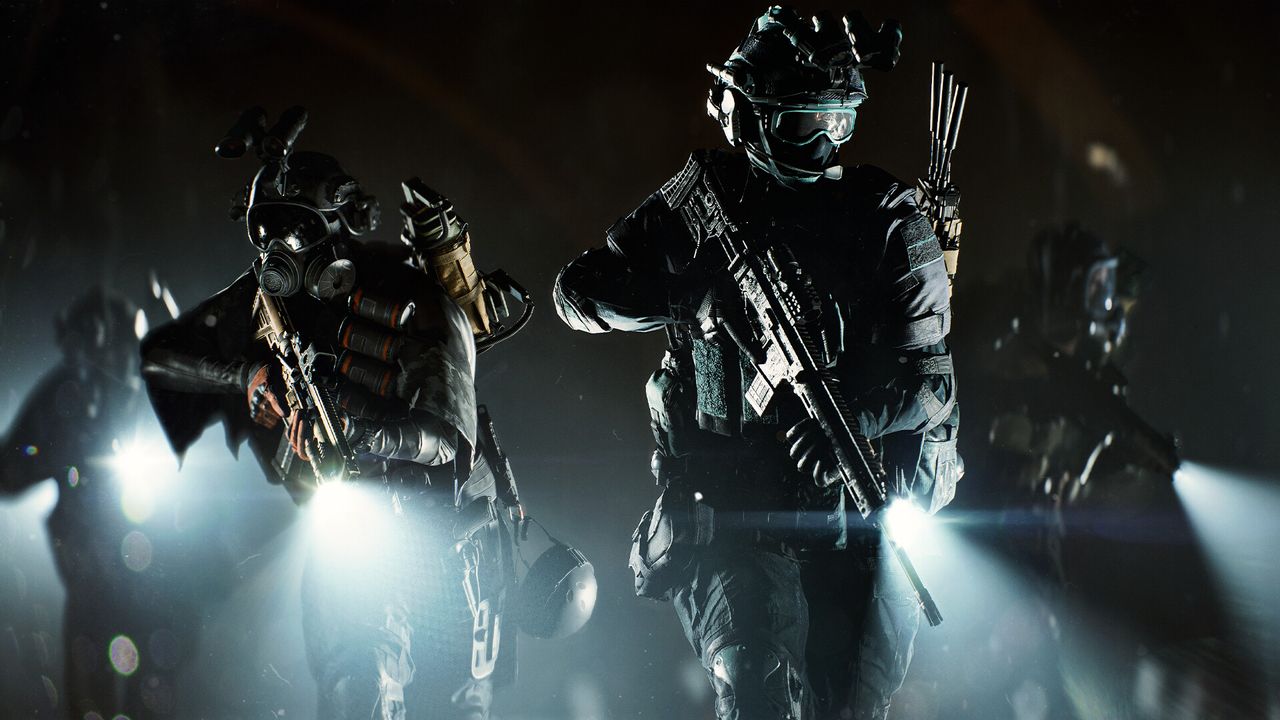
Battlefield 6 captures the ‘gritty, authentic, modern soldier experience’ according to its audio director

Published

on


  • Ripple Effect studio audio director Jeff Wilson has discussed the game’s “gritty” soundtrack
  • “The campaign has the most amount of music in it because it’s thematic,” he said
  • He also explained how the team weaved “musical flavour” into the multiplayer experience

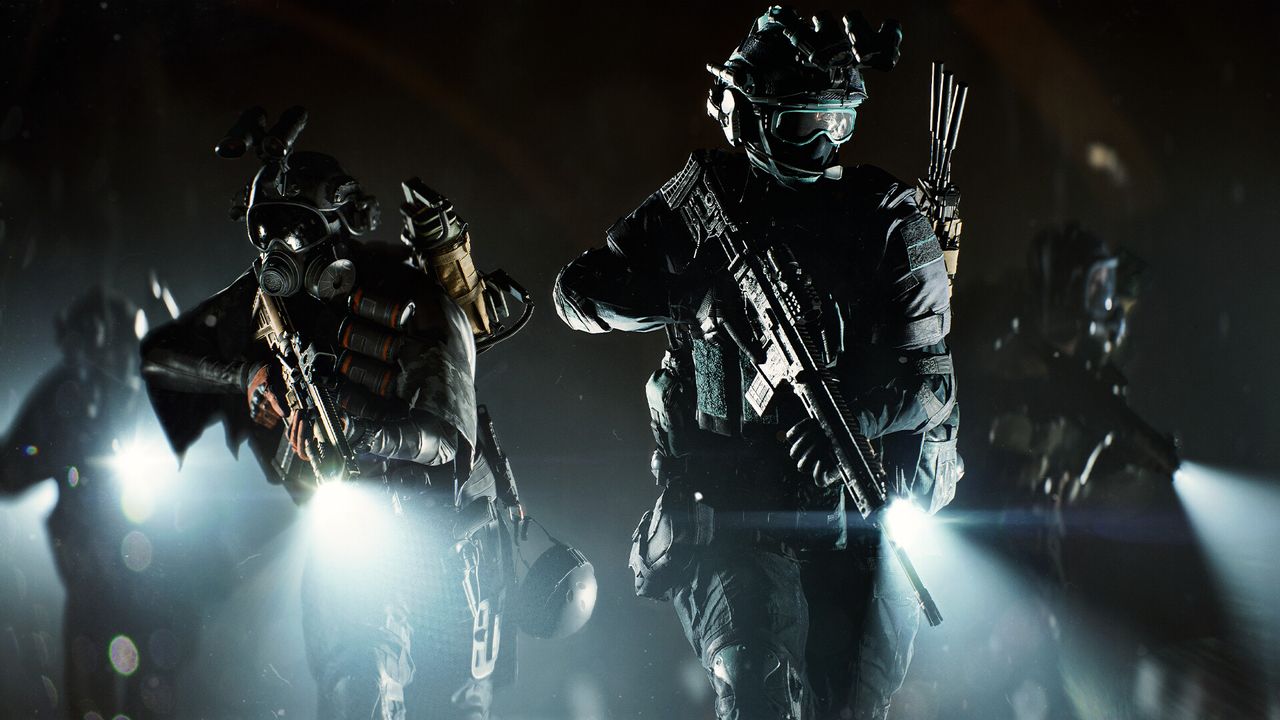
Ripple Effect studio audio director Jeff Wilson has spoken on the creation of the Battlefield 6 soundtrack, which he says was intended to capture the “gritty, authentic, modern soldier experience”.

In a new interview with TechRadar Gaming, the veteran first-person shooter (FPS) developer talked about working on the three “big tentpole experiences” that underpin the game: the premium campaign and multiplayer offering, plus the free-to-play Redsec battle royale mode.

Advertisement

Source link

Continue Reading

Tech

Nothing’s rumoured AI glasses could bring some much-needed style

Published

on

If you’ve spent any time looking at the current crop of smart glasses, you’ll know the industry is currently stuck in a bit of a ‘tech-first, fashion-later’ rut. 

While Meta and Ray-Ban have done a decent job of making smart glasses look like, well, glasses, the rest of the market often makes it feel like we’re wearing miniature computers on our faces with thick, heavy, uninspired frames. 

However, according to recent reports, Nothing – the London-based company known for its transparent tech and glowing LEDs – is finally ready to jump into the ring. And that’s exactly what the AI glasses market really needs right now. 

Most smart glasses don’t look that great

Let’s be honest: most smart glasses are a bit of an eyesore.

Advertisement

Since they started hitting the market a few years ago, much of the industry has focused more on utility than aesthetics, often resulting in chunky frames and awkward silhouettes that scream early adopter rather than style icon. 

Advertisement

Even as we move away from the truly hulking first-gen specs toward sleeker AI-driven frames, the designs remain largely utilitarian. You can always tell when someone is wearing a pair of smart glasses – maybe with the exception of Ray-Ban’s Meta Glasses, given the current discourse around filming people when they’re unaware. 

Ray Ban Meta GlassesRay Ban Meta Glasses
Ray-Ban Meta Glasses. Image Credit (Trusted Reviews)

Meta has recently tried to fix this by padding out its collection with more variety, particularly with its Oakley Meta Vanguards, but there’s still a massive gap in the market for something that feels fresh and fashionable. 

Most tech companies are playing it safe, sticking to traditional frame shapes that try to hide the technology within. We haven’t really seen a company embrace the “tech” as a design language in a way that actually looks cool on a night out.

Advertisement

What the market needs is variety – not just “here’s the same frame in black, slightly-less-black, and prescription”, but different design philosophies entirely. That’s where Nothing’s arrival could be genuinely refreshing.

Nothing is one of few companies that could change that

Nothing’s whole shtick is visual identity, present in both its hardware and software offerings. Transparent elements, intentional shapes, hardware that looks like it belongs in a music video – you know what I mean. You see a Nothing Phone, or even Nothing headphones, and you know exactly what they are.  And in a sea of similar-looking glasses, that’s exactly what we need. 

Advertisement

Nothing Phone 3a - back - glyphsNothing Phone 3a - back - glyphs
Nothing Phone 3a. Image Credit (Trusted Reviews)

Bloomberg’s Mark Gurman reports that Nothing is planning AI-powered glasses for the first half of 2027, equipped with cameras, microphones and speakers, and designed to lean on a phone and the cloud for AI processing rather than cramming everything into the frames themselves – very similar to Meta’s popular formula that we already know works. 

However, it’s not the hardware that’s important here – for my argument, anyway – it’s the Nothing vibe that it could bring to the table. If Nothing manages to implement its design DNA in eyewear in a way that still feels wearable (and not like a cosplay prop), it could help smart glasses make the jump from tech accessory to something you’d actually like to wear. 

Advertisement

No AR glasses, but that’s not surprising

It’s important to note that Nothing is said to be working on AI glasses, not AR glasses like the high-end Meta Display specs – and that’s fine, maybe even preferable for now.

A display changes the entire dynamic of smart glasses design, introducing new cost, battery, heat, and comfort issues to deal with. As we’ve already seen with Meta’s Display specs, even a multi-billion-dollar company can’t shrink the tech down to something that even slightly resembles regularly sized glasses – so Nothing likely wouldn’t be able to either. 

Advertisement

Meta Display glassesMeta Display glasses
Meta Display glasses. Image Credit (Meta)

Instead, the lighter, sleeker AI-powered glasses route seems like the safer bet – especially if, as I expect, Nothing wants to put a particular focus on the look of the smart specs. 

After initial hesitation, they could arrive in 2027

It wasn’t always a sure thing, though. 

Advertisement

Reports suggest that CEO Carl Pei was initially resistant to the idea of glasses, but has since come around as the Android XR charge – led by Google and Samsung – begins to take shape. Samsung’s Galaxy Glasses are expected to arrive sometime in 2026, but Nothing is reportedly aiming for a 2027 release window.

That might feel like a long way off, but if that extra time allows them to perfect a design that actually looks like high-end eyewear rather than a prototype, it’ll be well worth the wait. 

Source link

Advertisement
Continue Reading

Tech

Fitness tracking under scrutiny as Strava military data leak exposes personnel

Published

on

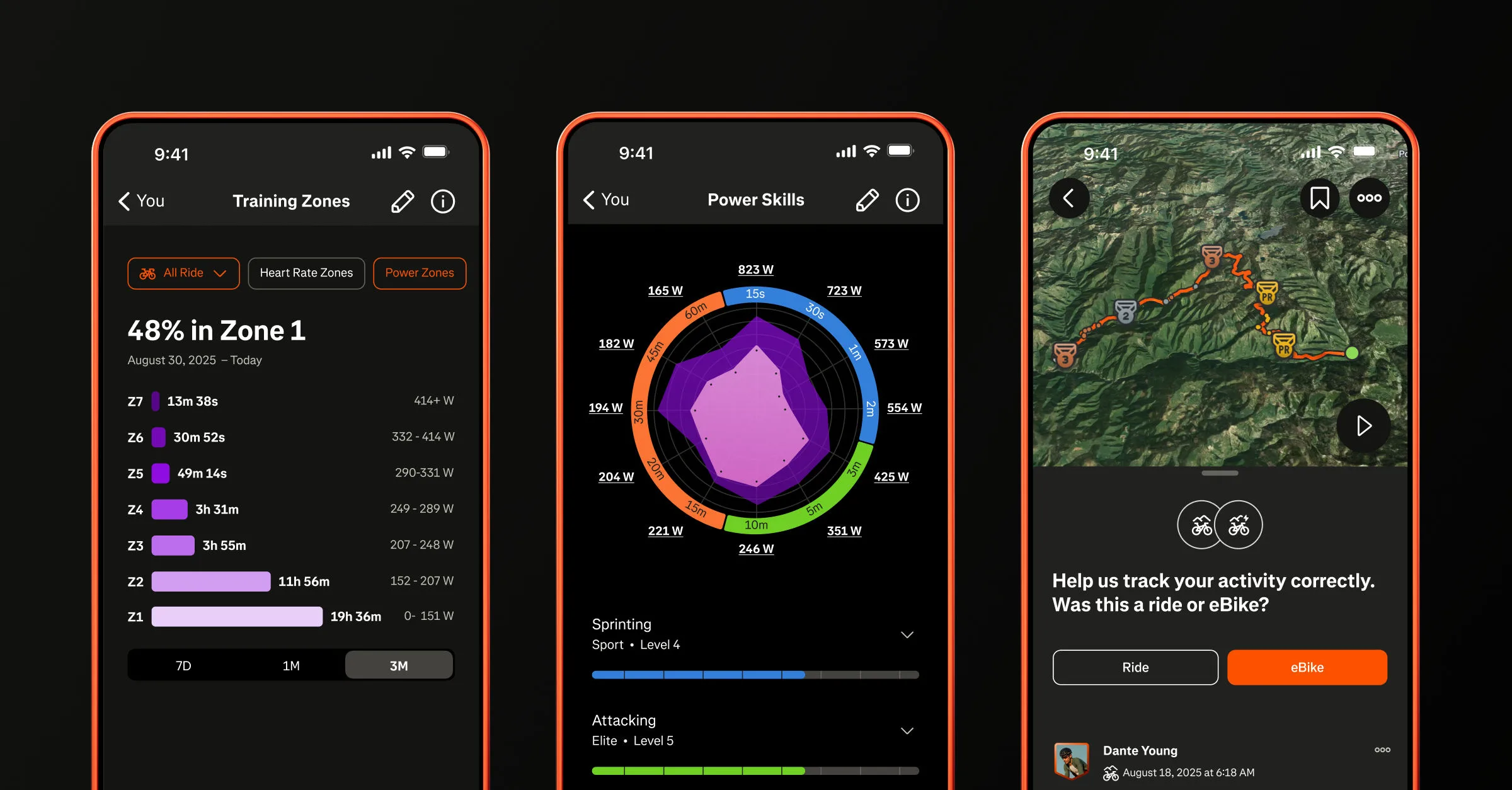
Your Strava runs might feel private, but a new Strava military data leak shows how easily that information can reveal more than your workout. In the latest case, activity logs have been linked to more than 500 UK military personnel, connecting everyday exercise to sensitive locations.

This goes beyond visible routes. Shared histories and account details can be combined to identify people and map where they live and work. Known locations become more revealing once behavior is layered on top.

A recent incident showed how a single tracked session revealed the position of a naval vessel. Routine posts can carry real consequences. The issue comes down to visibility and how much is left open by default.

Public runs tied to real people

The investigation uncovered shared routes connected to personnel across several UK bases, including Northwood, Faslane, and North Yorkshire. These weren’t abstract traces. Account histories made it possible to link sessions to specific individuals.

Advertisement

Once identified, an account can reveal habits, frequent routes, and social connections through shared features. That expands the scope quickly and makes tracking easier over time.

In one case, a run label hinted the user understood the risk, yet it stayed accessible. That gap between awareness and action is part of the problem. Analysts warn that small fragments of information can still be combined into something far more detailed.

Small details build a bigger picture

The real danger builds over time. Repeated uploads create a trackable footprint that becomes easier to follow with each new entry.

Even if locations aren’t secret, surrounding behavior adds meaning. Movement between sites, timing, and consistency can all be inferred. For an outside observer, that’s enough to map routines and spot patterns.

At a submarine base, shared logs helped identify personnel and even family members through linked accounts. That kind of exposure extends beyond the original user and makes the data more valuable.

One setting can reduce the risk

The fix is already available, but many users skip it. Strava includes privacy controls that limit who can view your sessions and routes. Leaving those settings unchanged keeps your activity visible by default.

Advertisement

Switching activities to private reduces exposure right away. It limits how easily routes can be traced and makes long-term patterns harder to build. Or you can check out other fitness apps.

The bigger takeaway applies to any fitness app that shares location data. If you use Strava, it’s worth checking your settings now and locking down what others can see. A small change can keep your routine from becoming a signal.

Source link

Advertisement
Continue Reading

Tech

TechCrunch Mobility: ‘A stunning lack of transparency’

Published

on

Welcome back to TechCrunch Mobility — your central hub for news and insights on the future of transportation. To get this in your inbox, sign up here for free — just click TechCrunch Mobility!

You might recall the congressional hearing last month that sparked criticism against Waymo over its use of remote assistance workers in the Philippines. We have covered that issue extensively. You can read about the company’s remote assistance and road assistance teams here and here

Waymo tends to get the most attention because, well, those robotaxis are now operating commercially in 10 U.S. cities, with more coming soon. But the issue of remote assistance is not a Waymo issue. It’s an autonomous vehicle technology issue. 

A new report from Sen. Ed Markey (D-MA) makes my point. 

Advertisement

Markey sent letters to seven U.S. companies — Aurora, May Mobility, Motional, Nuro, Tesla, Waymo, and Zoox — working on autonomous vehicle technology with a list of questions. He wanted to know how often these companies’ vehicles relied on input from remote staff. 

They all refused to say, according to the results of Markey’s investigation. Markey said it was a “stunning lack of transparency from the AV companies around their use of remote assistance operators to help guide their AVs.”

You can read senior reporter Sean O’Kane’s article, which digs into the issue and includes the rather mute responses from the companies. (TechCrunch reached out to all of them.) One interesting admission from Tesla: The company said its remote assistance workers are authorized to temporarily assume direct vehicle control (a very different thing than “remote assistance”) as a final escalation maneuver.

Techcrunch event

Advertisement

San Francisco, CA
|
October 13-15, 2026

But here’s the thing — this is not going away. And silence will not defuse the matter. If anything, Markey seems more motivated than ever to get answers. He is now calling on the National Highway Traffic Safety Administration to investigate companies’ use of remote assistance workers and said he is “working on legislation to impose strict guardrails on AV companies’ use of remote operators.”

Advertisement

A little bird

blinky cat bird green
Image Credits:Bryce Durbin

Nothing this week that we have been able to verify. Send us tips! Have one? Email Kirsten Korosec at kirsten.korosec@techcrunch.com or my Signal at kkorosec.07, or email Sean O’Kane at sean.okane@techcrunch.com.

Deals!

money the station
Image Credits:Bryce Durbin

It seems like just last week I was writing about Uber being everywhere, all at once. And I see it is still a trend, although this time it isn’t directly related to autonomous vehicles. 

Uber said it is buying Berlin-based startup Blacklane, which provides on-demand, black-car chauffeur services, as the ride-hail giant expands deeper into luxury and executive travel services. Blacklane, which was founded in 2011, had raised more than $100 million to date from rental car company Sixt, Mercedes-Benz, and Alfahim, a conglomerate in the UAE.

The timing of the acquisition is notable. It comes just a few weeks after Uber announced the launch of Uber Elite, a chauffeur service that also offers a bunch of luxury offerings like airport meet-and-greets and in-vehicle amenities. 

Other deals that got my attention …

Manna Air Delivery, a consumer drone delivery startup based in Ireland, raised $50 million from ARK Invest, the Ireland Strategic Investment Fund, Schooner Capital, Coca-Cola HBC, and Molten Ventures.

Advertisement

Saronic Technologies, an autonomous military ship developer based in Austin, raised $1.75 billion in a Series D funding round led by Kleiner Perkins. The company is now valued at $9.25 billion. Other investors include Advent International, Bessemer Venture Partners, DFJ Growth, BAM Elevate, and other new partners and recognizes the continued commitment of its existing investors, including 8VC, Caffeinated Capital, Andreessen Horowitz, Elad Gil, and Franklin Templeton.

Voltify, a startup that has developed a way to retrofit diesel locomotives with battery power, raised $30 million in seed funding co-led by Israeli venture firm Aleph and Australian miner Fortescue.

Notable reads and other tidbits

Image Credits:Bryce Durbin

Also, the micromobility company created inside Rivian that spun out last year, will work with DoorDash to develop autonomous delivery vehicles. As part of the deal, DoorDash took part in Also’s $200 million Series C funding round, which was led by Greenoaks Capital. DoorDash is getting a seat on Also’s board of directors, too.

Baidu robotaxis stalled throughout Wuhan, China, in some cases trapping passengers for up to two hours due to system failure. 

GM is ramping up its efforts to improve its advanced driver-assistance system, Super Cruise. CEO Mary Barra posted on LinkedIn that GM has started supervised testing of its next-gen automated driving system on public highways in California and Michigan.

Advertisement

“Soon, more than 200 supervised and manual test vehicles will be in live traffic, with trained drivers ready to take over at any time. This data will guide future updates to strengthen our autonomous capabilities,” she wrote.

Lucid issued a recall for more than 4,000 Gravity SUVs after discovering a problem with the seat belts.

The National Highway Traffic Safety Administration reported that traffic deaths fell 6.7% to 36,640 in 2025 from the prior year. This is the second-lowest traffic fatality rate in recorded history at 1,10 fatalities per 100 million vehicle miles traveled, according to the NHTSA.

All of those long TSA lines are prompting airlines to catch up and adapt. For instance, United Airlines has updated its mobile app to show TSA wait times at select airports.

Advertisement

The Subaru-Toyota partnership keeps cranking out EVs. At the New York Auto Show, Subaru introduced the all-electric Gateway, a three-row SUV that is essentially a rebadged Toyota Highlander EV

Tesla’s Q1 sales figures show its cheaper vehicles aren’t helping it turn around declining sales. (Some legacy automakers have seen EV sales plummet.) That seems to have affected Tesla’s workforce numbers at its Austin, Texas, factory, which dropped 22% in 2025. Meanwhile, I riff on the changing of the guard over at Tesla (and, no, I am not referring to the string of executive departures there, although that is interesting). CEO Elon Musk shared that production of the Tesla Model S and X has ended, a milestone that marks the shift away from building cars designed for people to drive and toward robots and self-driving cars.  

Toyota’s Woven Capital has appointed a new CIO and COO in a push to find the “future of mobility.”

Uber and Chinese autonomous vehicle company WeRide launched robotaxi operations without a human safety operator in Dubai as part of a broader expansion in the Middle East.

Advertisement

Waymo’s robotaxi service is now live at San Antonio International, its fourth major airport. Meanwhile, Wired looked at Waymo’s school bus problem (meaning the investigation into the illegal behavior of its robotaxis around school buses). The article provides new details on how the Austin School District tried to help Waymo solve the problem. It didn’t work.

One more thing …

My podcast, the Autonocast, spent some time talking with Ashu Rege, DoorDash’s VP of Autonomy. We recorded the episode prior to the Also-DoorDash announcement, which makes his comments about the company’s strategy all the more interesting. Check out the episode here.

Source link

Advertisement
Continue Reading

Tech

Russia’s Allegedly Beefing Up Its Navy With Impressive New Ships

Published

on


Reports that Russia has been strengthening its navy have been circulating for some time. In recent months, one verifiable sign of activity has been the launch of the Admiral Amelko frigate. 

This is the fifth and latest ship in the Gorshkov-class of frigates, or if they’re referred to by their rather dry official designnation – Project 22350. This class of ship represents a key part of Russia’s post-Soviet naval strategy. Indeed, it’s the only class of ocean-going surface warship developed by the Russians since the demise of the Soviet Union. The ships are designed to be multi-role platforms capable of handling a range of missions, from air defense to anti-submarine warfare. Currently, there are three of them in active service, with a fourth, the Admiral Isakov, and the aforementioned Admiral Amelko both set to join the fleet in 2027. 

Advertisement

In remarks published by The National Interest, Alexander Stepanov, of the Moscow-based Institute of Law and National Security called the ship “a sea terminator, a universal soldier, that can hunt down enemy nuclear-powered submarines. Given this, it’s likely a relief to hear that these ships are hardly rolling off the production line at a high rate of knots. 

For instance, the Admiral Amelko’s keel was laid down in April 2019, and it isn’t expected to enter service until late 2027. This is fast, by the way; the first ship in the class took 12 years to build. Although, to be fair, a major U.S. Navy frigate program was recently cancelled due to major production delays, so this is not a uniquely Russian problem.

Let’s have a closer look at the Gorshkov-class of frigates and whether they live up to their self-penned terminator moniker. 

Advertisement

The Gorshkov-class Frigates

The Gorshkov-class frigate is, at least by virtue of being the sole contender, central to the Russian Navy’s current surface fleet development and is representative of a focus shift to smaller ships that carry hypersonic missiles. The Admiral Amelko is the most recent example of the class and was launched at the Severnaya (Northern) Shipyard in St. Petersburg on 24 August 2025.

Russia’s strategy in adopting these multi-role vessels allows its navy to operate without relying on larger destroyers or cruisers. This is part of a change of approach from trying to match the US Navy in terms of sheer numbers to a more versatile fleet that relies heavily on hypersonic missiles. 

Advertisement

In terms of equipment, the ships are built around vertical launch systems capable of deploying a mix of cruise and anti-ship missiles. The Admiral Amelko is installed with 32-cell launch systems as opposed to the 16 installed on earlier frigates.  These are capable of launching missiles such as the Kalibr and Oniks systems alongside anti-submarine weapons. The Gorshkov-class ships are also the first “surface combatants” of the Russian Navy with the capability of launching the 3M22 Zircon missile, a scramjet missile thought to be the world’s fastest.

On paper, this makes the Gorshkov-class sound like a formidable foe. However, assessing the full impact of these claims is not always straightforward. Russia’s naval modernization is often framed in more dramatic terms than the evidence supports, and much of the available information comes from official announcements or (sometimes state-sponsored) secondary reporting. It’s all very well calling a ship a “sea terminator,” but such a name has to be earned before it means anything. 

Advertisement


Source link

Continue Reading

Trending

Copyright © 2025