
Security teams log 54% of successful attacks and alert on just 14%. The rest move through your environment unseen.
The Picus whitepaper shows how breach and attack simulation tests your SIEM and EDR rules so threats stop slipping by detection.





Epic Aircraft builds single-engine turboprops that move fast and carry serious loads for their size. The newest version, the E1000 AX, keeps every bit of that performance edge while folding in deeper Garmin automation than the company has used before.
The Pratt & Whitney PT6A-67A engine still produces 1,200 shaft horsepower. That’s plenty of power to match the all-carbon-fiber airframe, which has a maximum cruise speed of 333 real airspeed knots. It can climb at a whopping 4,000 feet per minute and still reach 34,000 feet. With full tanks, it can travel 1,560 nautical miles and still carry 1,150 to 1,177 pounds of payload, depending on how you rig it up.
Sale

These numbers placed the E1000 GX at the top of the single-engine turboprop class in terms of speed and usable load. The AX retains the same reliable engine, prop, and basic aerodynamics. What has changed significantly is the cockpit, as well as all of the new safety features. Garmin’s G1000 NXi flight deck is now the focal point of the entire system. The GFC 700 autopilot features envelope protection, a one-button level mode, and tighter connectivity throughout the panel. Then there’s Autothrottle, which is a significant addition to the AX’s capabilities because it manages power from takeoff to landing, maintains commanded speeds, and monitors engine limits so pilots don’t have to keep a close eye on torque, temperature, or overspeed conditions because they’re all handled behind the scenes, and it considers flap and gear position when adjusting thrust, so you don’t have to worry about those details either.

The real show stopper, however, is Garmin’s Autoland technology. If you activate it, either by pressing the ceiling button or because the system detects the pilot is in trouble, the aircraft will level the wings, select the best airport based on distance, runway length, fuel, and weather conditions, fly the approach, configure the plane, land, stop on the runway, and turn off the engine. It also follows proper air traffic control procedures and keeps passengers informed. The certified aircraft now has all of the necessary hardware and integration in place, but full operational activation is still pending regulatory certification, which is expected in the near future.

Even beyond that, several other modifications cut pilot workload even further. To keep the plane coordinated, an auto yaw damper is activated after takeoff and deactivated before landing. When you need to take a break, electronic brake hold prevents the aircraft from drifting about on the ground, and a radar altimeter allows you to see where you are in relation to the surface. If you want to go the extra mile, there is optional StormOptix weather radar and 3D SafeTaxi routing, which provide you with even more situational awareness on the ground and in the air. PlaneSync handles database updates automatically and allows you to monitor your aircraft remotely with no effort.

Inside the cabin, the aircraft has a lot of space for its class, especially when compared to its competitors in the six-seat single turboprop sector, which can sometimes seem tight. People who are 6’8″ or taller can fit rather comfortably up front. The CoolView windows across the cockpit and cabin have a specific gold coating that effectively blocks 73% of infrared heat. This also effectively reduces glare and UV exposure. It also includes high-speed internet via Starlink, making it an excellent choice for anyone looking to stay connected while in the air. Furthermore, True Blue Power lithium-ion batteries are an excellent improvement over outdated battery systems, providing improved performance, a longer lifespan, and less maintenance for the owner.

A well-specced E1000 AX will cost between 4.7 and 4.85 million dollars, depending on the options you choose. That puts it on par with other high-end single turboprops and some smaller light jets, but it does have some advantages. For one thing, it is much less expensive to operate than some of its competitors, and the fact that it just has one engine makes it much easier to manage for owner-pilots or pilots in small corporate flight departments.

An anonymous reader quotes a report from Krebs on Security: Microsoft today released software updates to plug at least 570 security holes in its Windows operating systems and other software, almost triple the number of vulnerabilities the software giant fixed in its record-smashing Patch Tuesday release last month. Microsoft attributed the burgeoning patch counts to vulnerability discoveries aided by artificial intelligence. Nearly 60 of the bugs quashed in July’s Patch Tuesday earned a “critical” severity rating, meaning miscreants or malware could use them to seize remote control over a Windows device with little or no help from the user. Microsoft also addressed three zero-day flaws, including two that are already being exploited in the wild.
Two of the zero-day weaknesses allow an attacker to elevate their user rights on a Windows system, as do approximately 250 other elevation of privilege flaws fixed this month; they include CVE-2026-56155 – an Active Directory Federation Services bug — and CVE-2026-56164, a Microsoft Sharepoint vulnerability. CVE-2026-50661 is a security feature bypass in Windows BitLocker that could allow attackers to gain access to encrypted data if they have physical access to the device. Microsoft said this bug has been detailed publicly, but that it is not aware of any active exploitation.
In a blog post on July 9, Microsoft Executive Vice President Pavan Davuluri wrote that Windows users will notice “a higher volume of security updates included in each security release” as a result of AI aiding in the discovery of vulnerabilities. “The pace of vulnerability discovery is changing with advances in AI making it possible to find more issues, faster, across more code, with new mechanisms that can accelerate both discovery and analysis,” Davuluri wrote.


Microsoft announced on Wednesday that systems running Windows 10 Enterprise LTSB 2016 and Home and Pro editions of Windows 11 24H2 will stop receiving updates in three months.
However, as the company explains on its support website, Enterprise and Education editions will remain under mainstream support until October 12, 2027.
“On October 13, 2026, Windows 11, version 24H2 Home and Pro editions, and Windows 10 Enterprise LTSB 2016 will reach end of updates,” Microsoft warned yesterday in a message center update.

“After this date, devices running these editions will no longer receive monthly security and non-security preview updates containing protections from the latest security threats.”
Customers are advised to upgrade to Windows 11 25H2 (also known as the Windows 11 2025 Update), which became generally available in September 2024 as a minor update installed on version 24H2 through an enablement package.
Devices running Windows 11 24H2 Home and Pro that aren’t managed by IT departments will receive the Windows 11 25H2 update automatically, but they’ll still be able to postpone the update or choose when to restart.
“If you have an eligible Windows 10 or Windows 11 device, you can check whether the update is available by selecting Settings > Windows Update and selecting Check for updates. If your device is ready for the update, you’ll see the option to Download and install Windows 11, version 25H2,” Microsoft added.
You can find more details about Windows servicing dates on the Windows Lifecycle FAQ page or using the Lifecycle Policy search tool. Microsoft also provides a list of products that it will retire or reach the end of support in 2025.
Microsoft also stopped rolling out security updates to devices running Home and Pro editions of Windows 11 23H2 in November.
More recently, in June, it quietly extended the free Windows 10 Extended Security Updates (ESU) program for consumers by an additional year. Following this extension, Microsoft is now allowing enrolled devices to continue receiving security updates until October 12, 2027.

Security teams log 54% of successful attacks and alert on just 14%. The rest move through your environment unseen.
The Picus whitepaper shows how breach and attack simulation tests your SIEM and EDR rules so threats stop slipping by detection.
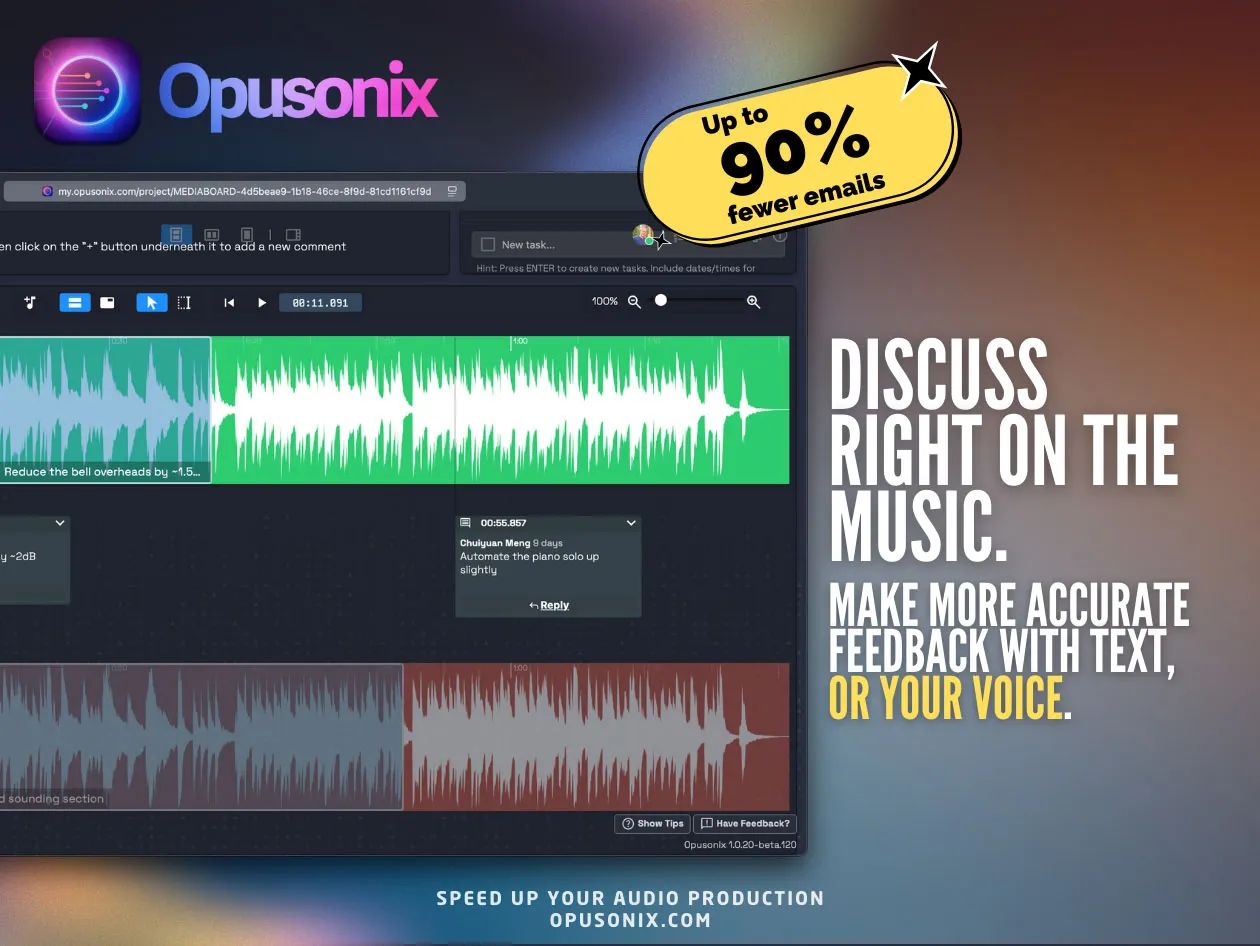
Opusonix is the workflow-first platform built for music producers and engineers who are tired of endless email chains and scattered files. By centralizing feedback, versions, and tasks in one structured workspace, it helps you cut email traffic by up to 90% so you can focus more on creating and less on chasing approvals. From time-coded comments and version testing to album planning and client-friendly demo pages, Opusonix gives you the tools to manage every mix, project, and album with clarity and speed. It’s on sale for $50.

Note: The Techdirt Deals Store is powered and curated by StackSocial. A portion of all sales from Techdirt Deals helps support Techdirt. The products featured do not reflect endorsements by our editorial team.
Filed Under: daily deal


Flock camera attacks and vandalism are happening nationwide, but when more than a dozen Flock automated license plate readers went down between April and October 2025 in Virginia, authorities started paying attention. Now, a U.S. Air Force engineer and mechanic is facing charges. Jeffrey Sovern faces 13 felony counts of destruction of property, six counts of petit larceny, and six counts of possession of burglary tools in connection with the Flock Safety camera takedowns across North Suffolk between April and October 2025. Sovern has pleaded not guilty.
The alleged vandalism began with cameras simply being redirected away from roads. Things soon escalated, with poles holding the cameras being knocked down. Finally, authorities started noticing cameras being thrown off bridges and onto interstates below.
Authorities were on the case as soon as they noticed Sovern’s gray pickup truck near one of the Flock cameras in question. From there, they obtained a warrant to place a GPS tracker on the car. That gave them enough to carry out a search warrant at Sovern’s home. While there, they recovered solar panels and other components believed to be from the destroyed camera systems.

Though Sovern’s the only one being charged in this particular case, it’s not just Virginia seeing pushback in response to Flock cameras. Since the company’s founding, Flock has signed contracts with more than 5,000 law enforcement agencies across nearly every state in the U.S, working out to over 20 billion license plate scans every month.
Flock cameras record a wide range of vehicle characteristics such as make, model, color, and distinguishing features, which proponents claim help law enforcement agencies better investigate crimes and identify suspects. On the flip side, many believe that Flock is creating a controversial surveillance network capable of tracking ordinary motorists who aren’t suspected of any criminal activity whatsoever, effectively violating their constitutional rights.
In Virginia, being charged with felony destruction of property entails having intentionally damaged or destroyed another person’s property, with the value of the damage being $1,000 or more. According to Suffolk police, each Flock camera installation includes an $800 camera, a $500 pole, and a $350 solar panel. With 13 different incidents total, Sovern faces 25 charges in all. And for a good idea of how fed up people are getting with Flock, he’s received over $15,000 in donations to support his case.

Loewe has expanded its premium TV range with the launch of the Antares, a new OLED television that pairs individually calibrated panels with a highly customisable design.
The German brand has also introduced an optional Antares soundbar. This gives buyers the option to upgrade the TV’s built-in audio without turning to a third-party speaker system.
Available in 42-inch, 48-inch, 55-inch and 65-inch sizes, the Loewe Antares starts at £2,500 / €2,500. Meanwhile, the matching soundbar costs £300 / €300.
Rather than focusing purely on picture quality, Loewe is pitching the Antares as a TV that can be tailored to suit different homes. Buyers can choose from interchangeable aluminium onlays in silver or black.
In addition, a range of installation options includes wall mounts, rotating floor stands and even a floor-to-ceiling stand. Some of the floor stands also support Loewe Magic.Motion. This allows the TV to rotate via the remote control.

Underneath the bespoke exterior is a 4K OLED panel, with each display individually calibrated at Loewe’s factory in Kronach, Germany. The company says this helps deliver more accurate colours and contrast. Moreover, there is support for leading HDR formats for a more cinematic viewing experience.
Audio has also received plenty of attention. The Antares features Loewe Invisible Sound technology with integrated speakers hidden within the chassis. However, users can also add the new 80W front-firing Antares soundbar for more powerful stereo sound. The TV can also operate as a centre speaker within a wider surround sound setup. Thus, it makes it easier to expand into a full home cinema system later.
On the smart side, the TV runs Loewe OS9, with support for streaming services including Netflix, Disney+, Prime Video, Apple TV+, YouTube and Spotify. It also includes AI-powered features and voice control. In addition, there is Apple AirPlay and Matter compatibility for smart home integration.
Gamers haven’t been overlooked either. The Antares supports HDMI 2.1, 4K at up to 144Hz, Variable Refresh Rate (VRR) and Auto Low Latency Mode (ALLM). This makes it well suited to current-generation consoles and gaming PCs.
Loewe has also included its Dual Channel platform, enabling USB recording and timeshift functionality for live TV. Furthermore, the modular design aims to make servicing and future upgrades easier.
The Loewe Antares is available now, with prices ranging from £2,500 to £4,000 depending on screen size. The optional Antares soundbar is sold separately for £300, giving buyers the choice between the TV’s integrated audio or a more immersive setup.


Two leading members of the Scattered Spider cybercrime collective were sentenced to five years and six months in prison each for hacking Transport for London (TfL) in 2024.
TfL disclosed that its network was breached in August 2024, with the attack disrupting internal systems and online services, including TfL’s Dial-a-Ride service, concessionary travel cards, digital payments, and contactless ticketing rollout, as well as the public transportation agency’s ability to process refunds.
Additionally, 148 systems became inoperable across TfL’s network, and all 27,000 TfL employees had to reset their passwords in person after the breach.
While TfL reported £29 million in losses and recovery costs after the attack, officials estimated that the UK economy could have lost up to £56 billion had the threat actors succeeded in shutting down the transport network.
TfL revealed on September 12, 2024, that the attackers had also stolen customer data (including names, addresses, and contact details). Four days later, on September 16, officers from the City of London Police and the UK National Crime Agency (NCA) arrested 20-year-old Thalha Jubair and 18-year-old Owen Flowers at their homes.
Investigators said that Flowers was also in the process of hacking U.S. healthcare companies Sutter Health and SSM Health Care Corporation, and that, at the time of his arrest, devices seized from him included evidence of the TfL intrusion.
Both pleaded guilty last month under the Computer Misuse Act and were sentenced today to five years and six months in prison each.

NCA Deputy Director Paul Foster described Scattered Spider as “the most significant cybercrime threat to the UK in recent years,” and he credited TfL’s early cooperation with law enforcement for enabling the convictions.
“These convictions would likely not have been possible had Transport for London not engaged with law enforcement early, so I would urge any other organisation to please do the same in such circumstances,” Foster said. “We will continue working with partners in the UK and overseas to identify offenders and bring them to justice.”
The U.S. Department of Justice also charged Jubair in September 2025 with conspiracy to commit computer fraud, money laundering, and wire fraud in connection with at least 120 network breaches between May 2022 and September 2025.
According to court documents, these attacks affected dozens of U.S. organizations, including critical infrastructure entities and U.S. courts, with Jubair and his accomplices extorting over $115 million from victims worldwide between August 2024 and July 2025.
In July 2025, the NCA arrested four other suspected Scattered Spider members believed to be linked to a wave of cyberattacks against major UK retailers, including Harrods, Marks & Spencer, and Co-op.
Security teams log 54% of successful attacks and alert on just 14%. The rest move through your environment unseen.
The Picus whitepaper shows how breach and attack simulation tests your SIEM and EDR rules so threats stop slipping by detection.

An anonymous reader quotes a report from Ars Technica: Big changes are coming to Android apps, but they’re not the changes Google wanted. The settlement between Google and Epic that aimed to put to rest the companies’ long-running antitrust battle is being withdrawn, and that means third-party app stores are coming to the Play Store. Google has confirmed that it will begin distributing rival app stores next week, setting the stage for competing platforms to take a bite out of Google’s Android revenue stream. […] Google and Epic were set to return to court on July 16 to argue in favor of the settlement. However, the writing may have been on the wall. In a recent expert analysis provided to the court, MIT economics professor Nancy Rose noted that the settlement was “unlikely to enable Google Play’s potential competitors to overcome their long-standing network-effect disadvantage in a timely manner.”
With settlement approval looking increasingly unlikely, Epic and Google agreed this week to call the whole thing off. Here’s how Google Trust and Reputation Communications Lead Dan Jackson explains the company’s decision: “We’ve agreed with Epic to withdraw our motion to modify the US Court’s injunction rather than prolonging this process which creates uncertainty for the ecosystem. This allows us to focus on executing our recently announced global business model evolution to deliver greater app store choice, lower prices, and more opportunities for developers and users. We remain committed to maintaining Android’s industry-leading security and fostering a competitive ecosystem where every app store and developer has the freedom to compete. In parallel, we continue to comply with the US Court’s injunction.”
In a brief filing (PDF), Google’s legal team informs the court that Google is prepared to begin distributing third-party app stores in Google Play on July 22. Under the terms of Judge Donato’s original injunction, these stores will have access to the full catalog of Google Play apps by default. Developers will have the option to opt out of distribution in these stores, and Google has a support page explaining how to do so. Google also has documentation on how app stores can get access to the Google Play catalog. It won’t be mirroring those apps in any shady storefront that asks. The court has allowed Google to charge reasonable fees to cover its security and compliance review of third-party stores, which will be $5,000 per year.
Google will also require approved stores to block malware, respect intellectual property, and include mechanisms to update and uninstall apps. App stores can be removed from the program if more than 1 percent of attempted app installs appear to be malware or unwanted software. It’s unclear if there will be separate, possibly more stringent requirements for storefront distribution in the Play Store. However, Google is prohibited from unreasonably blocking third-party store clients uploaded to Google Play. The changes Google has announced under the Epic agreement will proceed for now. That means Registered App Stores will happen globally, but they will probably only appear in the Play Store for US users. Google hasn’t specified if there will be any differences in the features available to the stores downloaded from Play versus registered stores.

US President Donald Trump has criticized New York Governor Kathy Hochul’s recent executive order to introduce a year-long, statewide ban on hyperscale data centers, urging the state to change its stance “immediately.”
In a post on Truth Social, Trump characterized data centers as “money machines” that create taxes and jobs comparable to “liquid gold,” implying not only are they crucial for cloud computing and AI, but also for the country’s economy.
Though states like “Alabama, Florida, Texas, Arizona” and others could now see more projects being relocated amid ongoing moratoriums, Trump worries about the implications of this “terrible decision.”
The executive order, signed by Governor Hochul on July 14 2026, makes New York the first US state to impose a statewide moratorium on new data centers – in this case, those requiring 50MW+ of power.
Despite mounting local opposition for data center buildouts across the US, and indeed the world, Trump argues they’re “tremendous wins for the states and communities that are lucky enough to get them,” being that they create jobs and are responsible for “their own water and power.”
It’s important to note that the year-long ban for New York State is exactly that – a temporary ban designed to buy the state enough time to consider environmental and social impacts, and to rewrite legislation and guidance accordingly.
Urging Governor Hochul to “change its policy, immediately,” Trump argues that ongoing moratoriums like these could cause the US to lose to “China, and other countries” in what’s playing out to be a global AI race.

Follow TechRadar on Google News and add us as a preferred source to get our expert news, reviews, and opinion in your feeds.


This article is crossposted from IEEE Spectrum’s careers newsletter. Sign up now to get insider tips, expert advice, and practical strategies, written in partnership with tech career development company Parsity and delivered to your inbox for free!
Before we get into this week’s article, I’d love to hear from you. If you have a question about your career or an upcoming decision that you want advice about, you can ask it here. I’ll be reading through your responses and picking questions to answer on a regular basis. Now back to our regularly scheduled program.
Software engineers have some of the shortest tenures of any white-collar profession. The average software engineer stays at a company for roughly two years, about half as long as workers in most other knowledge professions. The layoffs of the past few years have certainly highlighted this instability, but it was already there.
This isn’t an essay about a broken job market though. Rather, it’s about how to turn that instability to your advantage, which is something I’ve spent the last decade doing on purpose.
I switched careers into software in my 30s. I had a stable job at a community college, complete with a union and a pension. It was about as secure as a career gets, and I learned to program on the side.
Then I did something nearly everyone in my life considered reckless: I quit, leaving the secure job to become a junior developer at 31. My own mother was skeptical. I took the riskier job anyway, for two reasons: It was the work I actually wanted, and I could see potential.
My first development job was at a grocery retailer. Good people and a company I liked. But I kept meeting engineers earning twice my salary for the same work. In the San Francisco Bay Area, surrounded by some of the best engineering talent in the world, I realized my skills were stagnating.
So I left for a small startup. I learned more in nine months than I had in the previous two years, and my salary doubled.
Over the years I’ve come to treat career risk as something to manage deliberately. It falls into two categories.
The first type of risk involves the job itself: Bet on yourself by striving for better roles and opportunities.
Job-hopping for money alone isn’t wrong, especially early on. But the returns shrink after the first few hops, and the stress of chasing a slightly bigger paycheck every year will wear you down.
There’s another career risk with rewards that compound: Seeking positions to work alongside the strongest engineers.
You might struggle to keep up. You might even get laid off. But the skills you absorb working alongside people better than you are the ones that create durable stability. You build marketable expertise, you see how different organizations actually operate, and every project becomes another tool you carry to the next opportunity. Working next to stronger engineers is a proven way to increase your own expertise.
If that feels too big, try volunteering for a project you have no idea how to do. The risk is that you fail in front of people. The reward is a new skill and a resume line that opens the next door.
Compare that with the “safe” path.
You stay at one company, assuming loyalty will be rewarded. It usually isn’t. And when you finally leave, by choice or not, you may find the skills you built are worth little on the open market. You might be the in-house expert in an aging tech stack while employers are hiring for more cutting edge technologies. Suddenly you’re competing against people with half your experience.
You could be taking on a risk you didn’t notice.
The second form is risking your time, which means betting on trends.
Some trends are non-negotiable. If you’re a software engineer, then cloud services, ReactJS, and AI are mainstream enough that ignoring them actively damages your career. A backend engineer who refuses to learn cloud architecture is volunteering for obsolescence.
The real gamble is with the smaller trends: the niche tools you stumble onto and find quietly interesting, with no idea whether they’ll matter.
About two and a half years ago, I learned about retrieval-augmented generation (RAG). Almost no one in my circle was talking about vector databases, a central piece of RAG. Today RAG is close to mainstream, and for once, I had the early-adopter advantage.
Most of these bets don’t pay off. But when one turns into a major trend, you’re already on the ground floor. Right now I’m making the same bet on voice AI. It isn’t mainstream. It may never be. But if it becomes the next thing, I’m already there, building a foundation.
Counter-intuitively, job-hopping and betting on trends gave me the thing I was after the whole time: stability. I’ve rarely struggled to find work, because every risky move stacked skills the market actually wanted.
If you feel stable and comfortable right now, enjoy it. But ask yourself whether you’re still learning. Because if you’re not, the comfortable choice and the dangerous one may have converged.
The goal isn’t to avoid the open market forever. It’s to make sure that when you land on it, you’re not at its mercy.
By Brian Jenney
P.S. Don’t forget to submit questions about your career or an upcoming decision that you want advice about here!
—Brian
Until recently, human mathematicians have been central to creating new proofs, even when the work relies on massive computational resources. AI is now challenging that status quo. Writer Benjamin Skuse surveys the ongoing debate in the field about the role of AI, and the existential questions mathematicians have about their own careers. If AI mathematicians surpass human knowledge, could these researchers become “priests to oracles”?
A new partnership between UCLA and five major semiconductor companies is the latest program aiming to bridge the gap between industry and academia. The US $125 million university-industry hub is meant to strengthen collaboration and speed up the R&D process to help meet AI’s fast-paced hardware demands.
True mentorship is far more than friendly advice. This key leadership skill requires advocacy and honest feedback via lasting relationships, and it can strongly benefit both mentor and mentee. Parul Jain, a product management leader at Deloitte, shares what she learned from serving as a mentor—something she didn’t have for much of her own early career.
From Your Site Articles
Related Articles Around the Web

alternative_right shares a report from Phys.org: In a study published in Nature, LSU physicists have developed the first room-temperature quantum material capable of distinguishing and transporting different quantum states of light, overcoming one of the biggest challenges in quantum materials research. Led by Associate Professor of Physics Omar S. Magana-Loaiza, the work establishes a general design principle for engineering an entirely new class of quantum materials, opening new possibilities for quantum computing, secure communications, sensing technologies and advanced energy systems.





Weekend Open Thread: Nutriplenish Leave-In Conditioner


Character.AI enters the microdrama arena with its own productions, but there’s a twist

2026 Genesis Scottish Open Thursday TV coverage: Round 1


Super Eagles star Moses Simon opens up on Liverpool transfer regret


Young campaigners urge incoming PM to act on outdoor junk food ads


XRP BOMBSHELL… XRP OMBOARDED FOR TRANSACTIONS!!!


Get Your ESP32 Sunny Side Up With This Solar Dev Board


Dark Secrets Emerge When Jailbreaking LLMs

Disney’s Most Ambitious Failed Star Wars Attraction Is Coming to SDCC

New Cornerback Enters Vikings Trade Rumor Mill


how to make coin bank box with cardboard #scienceproject #money #diy #shorts

Cloudflare Precursor Watches Your Mouse and Keyboard To Decide If You Are Human


CFTC blocks Kalshi from unwinding Michigan trades after court order

Vicki Gunvalson Defends Discussing Heather Dubrow’s Money
Ripple, Coinbase, Circle Join Linux x402 Foundation to Help Shape AI Payments


Watch: Is Donald Trump facing a popular backlash on immigration?


Michigan officials not expected to discuss AD Warde Manuel at Thursday meeting

Firefighters issue update on Dovestone moorland blaze as fire enters fourth day


ACCC warns AI could lift insurance costs in risk-prone areas


Hollywood’s Biggest Director Just Called Out AI, And It’s Glorious



You must be logged in to post a comment Login