Connect with us
DAPA Banner
DAPA Coin
DAPA
COIN PAYMENT ASSET
PRIVACY · BLOCKDAG · HOMOMORPHIC ENCRYPTION · RUST
ElGamal Encrypted MINE DAPA
🚫 GENESIS SOLD OUT
DAPAPAY COMING

Tech

Etzioni on AI: Backlash against AI-generated text mirrors the anti-GMO movement

Published

on

(Illustration generated by Google Gemini)

Wikipedia’s volunteer editors have recently banned the use of large language models to generate or rewrite articles. Gartner reported that 53% of U.S. consumers distrust AI-powered search results, and 61% want to turn the summaries off. Add the “Made by Humans” badges sprouting on Substack, and a consensus seems to be forming: people are rejecting AI content.

I get it.

In 2024, I founded TrueMedia.org to fight political deepfakes; as a professor, I think hard about the potential downsides of AI-generated content and cognitive surrender (the habit of letting the model do your thinking for you). However, my concern is with output and downstream impact, not with the input process. A deepfake harms because it deceives; a polished paragraph isn’t tainted because a model tightened it.

So, the anti-AI-content movement, like the spent anti-GMO movement, is missing the boat.

Back in 2017, researchers warned that AI risked a “GM-style backlash.” They had the analogy half right. They just bet on the wrong half. I foresee the anti-AI-content movement going where the anti-GMO movement went: a loud opening act, a long taper, and a quiet ending in which the product is everywhere.

Advertisement

The lessons of ‘Frankenfood’

In 1992, an English professor named Paul Lewis coined the term “Frankenfood” in a letter to The New York Times. By the late 1990s, Greenpeace had built an entire campaign around the metaphor, Prince Charles was lobbying Tony Blair, and the European Union had imposed a de facto moratorium on new GMO approvals that lasted from 1998 to 2004. American shoppers were told they were eating monstrosities. State-level labeling fights consumed a decade.

Look where we landed. By 2025, herbicide-tolerant soybeans accounted for 96% of U.S. soybean acres, up from 17% in 1997. Herbicide-tolerant corn is at 92%. Cotton is at 93%. The National Bioengineered Food Disclosure Standard finally took effect in January 2022, and Cornell researchers, analyzing Nielsen scanner data, found it produced essentially no behavioral change. A collective shrug. Mandatory labeling, the central demand of the activist movement for two decades, turned out to be irrelevant by the time it arrived.

European attitudes followed the same arc, though more slowly. Eurobarometer concern about GMOs in food dropped from 63% in 2005 to 27% in 2019. The fight didn’t end with a victory for either side. It ended with people losing interest. Today, most people have never heard of Frankenfood.

Why did GMOs win the long game? Three reasons that map almost exactly onto AI-generated content.

Advertisement

First, the product is indistinguishable. Nobody can tell whether the corn syrup in their soda came from a bioengineered cob, and after a while they stop wondering. AI-written prose is already past the Turing threshold for casual reading. Many readers cannot tell a competent LLM draft from a competent human one.

Second, the economics are decisive. GMO seeds offered higher yields and lower input costs, so farmers adopted them and grocery chains stocked the resulting products. AI-generated content is almost free to produce. The supply curve has shifted so far that purist abstention is no longer a market option; it’s a hobby.

Third, the worried minority gets served by voluntary labeling. The Non-GMO Project verifies more than 50,000 products for consumers who care. The mandatory federal label was redundant by the time it arrived. The AI equivalent is already emerging: C2PA provenance, “human-written” attestations, Substack verification marks. The committed minority will have their channels. Everyone else will not bother to check.

Market solutions for real harms

GMO crops cross-pollinated into neighboring fields whether the neighbor wanted them or not. AI text could do the same to the next model’s training data: today’s output becomes tomorrow’s input, with no one’s consent and no clear way to opt out. This is the model collapse scenario: the worry that the supply will get worse over time rather than better, as synthetic text crowds out the human-written corpus.

Advertisement

The market is already solving for this problem. Every major lab is now paying for human-authored content precisely because they recognize the risk.

The GMO panic also produced its share of catastrophist scenarios: a runaway gene escaping into the wild, a novel pathogen engineered by accident, a collapse of the food supply. None of them happened. Markets adjusted, regulators learned, refuges were planted, contamination was managed.

Not every concern was overblown. Seed-market consolidation became real, Roundup litigation continues, and herbicide overuse is a live agronomic problem. None of it is what the Frankenfood campaign warned about.

The equivalent AI fear is that synthetic text will overwhelm the human corpus and that we will drown in an ocean of AI slop. It belongs in the same category: vivid, mechanistically plausible at first glance, and ultimately defeated by the same boring forces. Readers value curated text. Publishers gate their archives. Provenance standards emerge. The civilizational scenario is the part that doesn’t survive contact with the actual market.

Advertisement

Not every AI concern is overblown either. NewsGuard has identified more than 3,000 AI content farm sites pumping out fake local news and propaganda for ad revenue, across 16 languages. Deepfakes deceive voters in real elections. The output harm is real. So is the remedy: verification and gatekeeping. The same tools we already use against bad content of any provenance.

Wikipedia’s ban, in this light, is a Greenpeace moment rather than a market verdict. It is the strongest available signal from the constituency that cares most, and it is also the constituency least representative of how the other 99% of readers behave. The encyclopedia has already carved out exceptions, the way every absolute internet policy eventually does. Translation from other-language Wikipedias and basic copyediting of an editor’s own prose are permitted by the policy on day one. The carve-outs will widen from there: accessibility rewrites, citation formatting, draft scaffolding for new editors in underserved languages.

The concerns are legitimate but also typical of early concerns about many a powerful technology. Five years from now, the Gartner question will likely read differently because the product will be better and the novelty will have worn off. Watermarking will matter most where the stakes are high (elections, courtrooms, financial disclosures), and matter less in everyday reading. The slop will get filtered, the good AI writing will blend in, and many of the people who said they would never read it will read it without thinking much about it.

Frankenfood became corn syrup. The villagers will put down their torches when the lights stay on.

Advertisement

Source link

Continue Reading
Click to comment

You must be logged in to post a comment Login

Leave a Reply

Tech

US-Iran Peace Agreement Prompts Stock Rally, Leaves Some Investors Skeptical and Questions on Speed of Resuming Oil Production

Published

on

“Asian stocks rallied Monday while oil prices tumbled,” reports CNBC, “after the U.S. and Iran agreed to a peace deal aimed at ending nearly four months of conflict…”


The strongest reaction was seen in energy markets. U.S. crude oil futures for July delivery were down 4.77% to $80.83 per barrel by 8:27 p.m. ET. Brent futures, the international benchmark, for August delivery traded about 4% lower to $83.77 per barrel. Asian equities surged. South Korea’s Kospi jumped 5.1%, Japan’s Nikkei 225 climbed 3.6%, and the broader Topix advanced 2.6%… The U.S. dollar index weakened 0.32% to 99.483, while the yield on the benchmark 10-year Treasury note fell 5 basis points to 4.423%, suggesting that investors were dialing back inflation concerns on easing energy prices. “The most immediate implication is a repricing of the inflation risk premium that markets have been carrying since the Strait closed,” said Billy Leung, investment strategist at Global X ETFs…

Besides safe-haven Treasurys, gold also rose. “Gold is the interesting outlier here,” Leung said. “In a clean risk-on trade, gold should be selling off as the geopolitical premium unwinds, but it is holding bid around $4,300, which tells you the market is not fully trusting the deal yet.” Spot gold prices were up almost 2% at $4,302.19 per ounce. That skepticism reflects lingering uncertainty around the agreement, which remains unsigned and subject to implementation risks. [Josh Gilbert, lead Asia Pacific analyst at trading platform eToro] cautioned that “the deal isn’t actually signed until June 19th, the details are still thin, and this conflict has shown more than once that headlines can turn on a dime.”

Analysts at Commonwealth Bank of Australia also stressed that the oil outlook hinges on how quickly shipping and production can normalize. Vivek Dhar, head of commodities and sustainability research at CBA, expects Brent to fall to around $80 a barrel by year-end, assuming the Strait remains open and exports recover. However, he warned that damage to refining infrastructure, the presence of sea mines and uncertainty over tanker traffic could slow the return to normal operations. Even so, he said markets are likely to take comfort from the prospect that oil flows need only recover to around 60%-70% of pre-war levels to restore expectations of a global supply surplus.

Advertisement

For investors, the biggest implication will likely be what cheaper energy means for inflation and central banks. Lower oil prices ease pressure on households and businesses while reducing the risk of a broader inflation resurgence just as major central banks enter a busy week of policy meetings.
UPDATE: “A US official is rejecting Iran’s assertion that it will receive billions of dollars in frozen funds before a planned 60-day negotiating period begins following Friday’s signing of an agreement,” reports CNN:

The pushback came after Iran’s deputy foreign minister, Kazem Gharibabadi, said the next phase of talks would depend on Washington first fulfilling several obligations, including releasing Iranian funds frozen abroad.

The differing accounts underscore a significant gap between how the United States and Iran are describing what must happen before the next round of negotiations can move forward.

Source link

Advertisement
Continue Reading

Tech

The WWDC hangover and Siri AI blindspots

Published

on

Apple’s WWDC went about as expected for 2026. While it’s a tiny bit disappointing, Siri AI turned out to be worth the wait, but with some painful app-based gaps.

WWDC 2026 was on Monday, and it was expected to be a bit of a slow one this time around. As predicted by the rumor mill and countless reports in the weeks ahead, it certainly wasn’t an event that shouted about many new features.

Actually, that’s not quite true. Apple did harp on about one big thing, and that was its whole artificial intelligence push.

Sorry. Apple Intelligence and Siri AI.

Advertisement

Before the event, we knew full well that the main beats would basically be Siri and AI stuff, and a bit of periphery. I even asked for there to be something that wasn’t AI to talk about.

Admittedly, Apple did bring up other things that weren’t AI. Except they were not things I could excitedly tell my mother about when explaining the significance of Apple’s launches.

Making things more reliable and responsive? That’s nice, but that’s also what we expect from updates throughout the year anyway.

There was more talk about parental controls and Screen Time updates. This again is great for parents, as now little Timmy can be protected from blood and gore as well as unsolicited nudes.

Advertisement

But neither are things that can be enthused about to friends or people curious about what happened. “Hey, you’ll like how you’ll see confirmation codes on your iPhone screen when you phone a business number” is neat, but not sexy enough to enthuse about.

Really, the only subject worth discussing is the whole AI thing.

Shockingly more intelligent

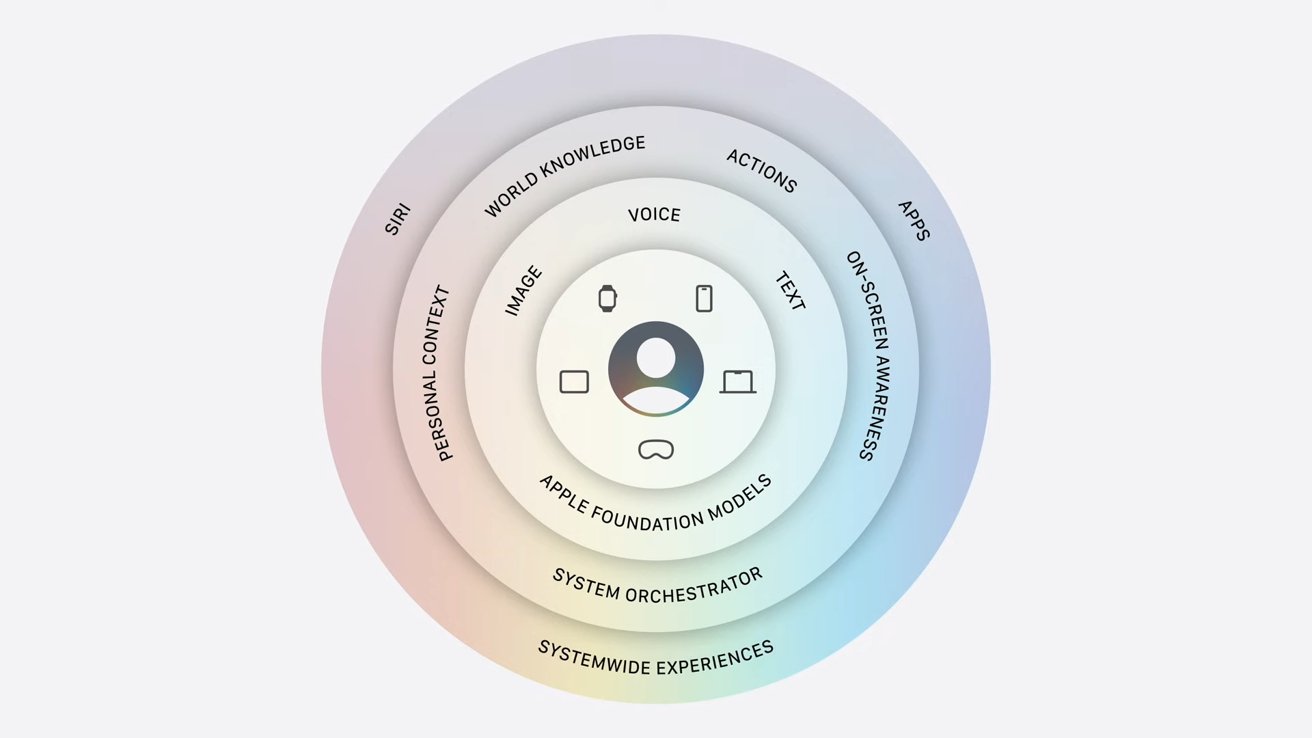
Apple went into a whole spiel about its artificial intelligence work, complete with handy circle-based graphics explaining the whole ecosystem. The whole thing of using Apple Foundation Models, a “System Orchestrator” connecting stuff together, and the “Systemwide Experiences” with Siri and Apps.

All very nice and showing in a public-friendly way how everything is interconnected and works as a giant whole, without explaining how. For Joe Public, that’s explanation enough.

Advertisement
Circular Apple AI diagram with concentric layers labeled personal context, world knowledge, actions, apps, onscreen awareness, system orchestrator, systemwide experiences, and inner icons for voice, text, image, and user.

An explanatory circle-in-circle explanation of Apple’s AI strategy. At least, it looks explanatory…

The main thing is that Apple’s two-year-late Siri upgrade has finally turned up. It’s late, but surprisingly, it wasn’t disappointing.

What Apple promoted heavily in 2024, the entire contextual-awareness thing, actually works properly. After reaching the end of the waitlist to use Siri AI, as well as the lengthy indexing process, I was able to ask some questions that could easily be troublesome for Old Siri.

The first one was simple. “Where was I born?”

Advertisement

Cue Siri coming up with the correct response of my hometown. What was unexpected was that the detail was picked up because I had a photo stored in iCloud of my passport for identity validation purposes.

Being greeted by the mugshot-like images of my passport and personal information as evidence of where it got the answer from was a bit of a shock.

A second query asking when I last went on vacation was similarly fast. This time, it used a combination of photographs and messages with my partner.

It understood we travelled to Rome in early April 2025, how long we were there for, and that we visited places like the Colosseum and the Roman Forum. Again, providing links to sources for context.

Advertisement

This is quite impressive, as is using the camera to photograph far-away slides in a presentation and asking Siri to summarize it all. The lengthy tiny print became something much easier to digest for my at-the-time tired brain and eyes.

Sure, we wanted it two years ago after Apple first demonstrated the idea. The two-year delay was made worse by seeing other AI firms developing quickly and leaving Siri in their dust.

That said, it was certainly worth the wait.

This is all something that you can enjoy in the fall if you’re not installing the developer betas. Unless you wait for the public betas, or don’t care about any risks to your data.

Advertisement

Except if you’re in the EU. That’s still a mess that Apple needs to clean up.

Massive blind spots

That said, there were some gaps in its capability. For example, it couldn’t generate a list of recent messages in Slack, nor could it work out what my mother last said in Facebook Messenger.

While my AppleInsider email is handled in the Mail app and could be accessed by Siri, my personal email in Gmail could not.

As impressive as Siri AI is, private third-party data sources are probably going to be the stumbling block. Unless apps like Gmail provide access to the data troves in some way, they will be areas that Siri won’t be able to use to help the user.

Advertisement

These data blind spots may be opened up by Google and other sources in the future. But there’s also the temptation to keep them locked off from Siri completely, if only to make their own AI services provide the same functionality.

Google Gemini already has the capability of accessing your Gmail email if you have a supported AI plan. There’s no incentive for Google to let Siri AI do the same and miss out on those consumer subscriptions.

Colorful Apple Intelligence promotional graphic showcasing Siri AI features, including writing assistance, visual intelligence, expressive voices, intelligent photo editing, notification summaries, and app integrations on a dark futuristic background

The only bento box that mattered in WWDC 2026.

Money is always a factor in business decisions, and the massive potential of Siri could influence other big tech rivals not to play ball with Apple’s vision.

Advertisement

I may not be able to access communications from my personal email, but at least Siri can tell me what the lowest-calorie but highest-protein option available at my local KFC is for a post-gym workout.

That would be the grilled chicken salad. It was OK.

Last week’s Sunday Reboot discussed the inevitable Intel hardware and software support changes arriving this fall.

Advertisement

Source link

Continue Reading

Tech

Sonic Adventure 2 Redux Rebuilds a 2001 Classic Into Something Fans Can Play Right Now, Thanks to Unreal Engine 5

Published

on

Sonic Adventure 2 Redux Demo Unreal Engine 5 Remake
JeliLiam decided enough time had passed. The original Sonic Adventure 2 arrived on Dreamcast in 2001 and later reached GameCube players as Sonic Adventure 2 Battle. It delivered breakneck platforming, rival hedgehogs trading blows, and a story that actually mattered. Official channels never delivered a true modern version. So one dedicated creator started fresh in Unreal Engine 5 and called the result Sonic Adventure 2 Redux.


The project is accessible for free download on Game Jolt, but each new demo adds considerable content to the whole campaign. Demo 3 was only released a few days ago and appears to be the most complete yet. When people launch Demo 3, they are guided through three distinct stages that show how far the project has advanced. Pyramid Cave is a masterclass in atmosphere, with ancient stone halls and burning inscriptions lit in a dramatic way that changes as flames flicker and light bounces off the carved stone walls. Sky Rail pushes Sonic across elevated tracks high above the skies, and every boost or grind along the rails feels real. Meanwhile, Pumpkin Hill recreates the terrifying treasure hunt ambiance of the past, complete with floating platforms, concealed paths, and a sinister atmosphere that remains unsettling even in high definition.

Sale


LEGO Sonic The Hedgehog Team Sonic Command Truck Building Toy – Pretend Play Vehicle W/5 Figures for Boys…
  • SONIC’S COMMAND CENTER – Gaming fans ages 8 years old and up can build the LEGO Sonic the Hedgehog Team Sonic Command Truck (77006) building set for…
  • 5 LEGO SONIC FIGURES – Sonic, Tails, and Metal Sonic minifigures plus Burrobot and Caterkiller figures speed into action as kids stage heroic…
  • LAUNCH & CHASE ACTION – Young gamers can deploy Tails on his ATV through the truck’s interactive launch feature while dodging attacks from the…


Plus, two new boss fights have been added to the mix. Hot Shot and Egg Golem require you to use your wits and timing in a different way than Big Foot or Shadow, but they retain the original essence while giving players more opportunities to employ speed and positioning. New animatic-style cutscenes have also been introduced to bookend certain sections and help tie the story together without requiring the full cinematic experience. The project now has enough story to tie everything together, making it feel more like a journey than a series of isolated stages.

Advertisement

Sonic Adventure 2 Redux Demo Unreal Engine 5 Remake
Everything is built on the Azure foundation, a one-of-a-kind physics foundation that allows the main gameplay loop to shine through. This includes building speed through loops and ramps, chaining moves for a high score, and only activating the bounce bracelet or spindash when it feels right. At the same time, Azure Framework smoothes out all of the previous rough edges. Even when objects move quickly, the camera movement is smooth and steady. The controls are exactly what you’d expect from a modern game. Furthermore, the menus and on-screen text have been greatly cleaned up while maintaining their original flair.

Sonic Adventure 2 Redux Demo Unreal Engine 5 Remake
For fans, the visuals are unquestionably the most impressive aspect of the remake. Each location has incredible detail on every surface. The stone at Pyramid Cave looks to have worn down over time. The metal in Sky Rail captures and reflects light in a very realistic way, while the character models are faithful to the original designs from 2001, but with considerably cleaner textures and smoother movements.
[Source]

Source link

Continue Reading

Tech

The AI Use Case Question Teachers Are Still Asking

Published

on

This article is part of the collection: Teaching Tech: Navigating Learning and AI in the Industrial Revolution.


A fourth-grade teacher asked a simple question:

“What can I actually use this for in math?”

This teacher captured the broader moment in education. Over the past several years, schools have been urged to respond to the rapid emergence of generative AI tools such as ChatGPT with limited information and a lot of hype and horror stories. Some have framed the technology as potentially transformative for teaching and learning, while others claim the opposite. Yet in many classrooms, adoption has been slower and more selective than the surrounding hype might suggest.

Advertisement

That hesitation is often interpreted as resistance to innovation, but conversations with educators suggest a different interpretation. In many cases, teachers behave as experts in most fields do when encountering a new technology, evaluating whether it solves a real problem. When professionals encounter a tool that is widely marketed but still evolving, they ask a basic question: What does this actually help me do better?

For many educators, that question remains unresolved when it comes to classroom instruction, and that’s what our research project aimed to answer: What are teachers experiencing with generative AI in their classrooms?

In fall 2024, EdSurge researchers facilitated discussions between a group of 17 teachers from around the world. We convened a group of third to 12th grade teachers, and some of them designed and delivered their own lesson plans, either teaching with or about AI.

Overall, our participants’ responses reflect a few major themes, with the most prominent sentiment being an air of indifference. In particular, a fourth grade math teacher participant attempted to use generative AI in her instruction. However, before adoption, she asked how AI could help her elementary students learn math. Her question captured what several participants were thinking, aligning with 2024 data from the Pew Research Center that shows educators were split on whether student AI use was more harmful than helpful.

Advertisement

A Technology Arriving Faster Than Schools Can Unpack

A high school computer science teacher from Georgia describes her fears about generative AI’s widespread push into classrooms:

NEWSLETTERS

STAY AHEAD IN EDUCATION.

Sign up for EdSurge newsletters for timely news, insights and analysis.

One of my biggest fears is actually Arthur C. Clarke’s rule: any sufficiently advanced technology is indistinguishable from magic…we have students, parents, and teachers looking at AI as if it’s magic.

A high school library media specialist from New York described the same tension from a different angle:

Advertisement

There’s a fear about not being able to keep up with how things progress…the new tools and the impact it has on education.

Schools typically adopt new technologies through deliberate cycles of experimentation, professional development and evaluation. Generative AI has entered classrooms through a different pathway. Consumer tools became available to teachers and students simultaneously, often before schools had developed policies or instructional frameworks for using them.

The result is a situation in which educators encounter the technology while they are still trying to understand its implications.

Where AI Is Already Providing Value

In conversations with teachers, the pattern that appears consistently is a classic user design case. The most immediate use cases for generative AI have little to do with student learning. Instead, an engineering and computer science teacher in New Jersey addressed workload:

I have a running discussion with some of my colleagues about how to use AI to lesson plan. I use it routinely to lesson plan. I don’t really use the lessons, but we have to produce all this stuff for admin that no one reads… AI will just roll it off.

Another teacher described similar experimentation among colleagues:

Advertisement

It’s really great that so many people have kind of scratched the surface and are using it to support their productivity and efficiency… lesson planning and newsletters and stuff like that.

These examples reflect a pattern seen across many professions: Generative AI is particularly effective at drafting, summarizing and generating text. In contexts where professionals face time pressure and administrative demands, those capabilities can be immediately useful.

Teachers experience those same pressures. Beyond instruction, many juggle grading, lesson planning, parent communication, extracurricular supervision and administrative reporting. In that environment, a chatbot that helps compress routine tasks can feel genuinely helpful.

Recent research, as well as national survey data from RAND’s American Educator Panels, suggests that teachers are adopting generative AI primarily as a productivity tool rather than a core instructional technology, a pattern that mirrors how educators in this study described their own early experimentation.

However, instructional discretion is different from a teacher’s administrative workload.

Advertisement

The Instructional Use Case Remains Unclear

When teachers consider introducing AI tools to students during class time, the calculations they make change. The relevant question becomes: What student learning problem does this tool solve? Many educators are still trying to answer this question, even after several years of exposure to generative AI in some capacity.

Some teachers are experimenting with AI in limited ways, such as using it as a revision partner in writing. A science teacher from Guam said:

Students write a first draft and then feed it into ChatGPT for a second draft… but I push them not to use it for research.

Others are designing lessons where the technology itself becomes the subject of inquiry. A high school special education teacher in New York shared how she removes the veil from the magic of chatbots.

We purposely trained [a chatbot] wrong, so students could understand the data is only as good as how and who trains it.

Learning science research suggests that students benefit most when technology supports reflection and revision, rather than replacing the productive struggle of critical thinking and problem solving, a principle that many teachers in this study have applied. In these cases, AI becomes a tool that students analyze and critique. The participants do not attribute AI as a source of authoritative knowledge.

Advertisement

AI Literacy as a Practical Classroom Entry Point

Many teachers see the most promising instructional opportunity in AI literacy, as it may feel most appropriate to teach students about the tools they’re hearing about and encountering daily. International guidance from the United Nations Educational, Scientific and Cultural Organization (UNESCO) and the Organisation for Economic Co-operation and Development (OECD) increasingly frames AI literacy as a foundational skill for students, encouraging schools to help young people understand how algorithmic systems generate information, rather than incorporating AI tools into everyday classroom tasks.

Students already live in environments shaped by algorithmically designed systems, from social media feeds to recommendation engines. Generative AI introduces another layer to that ecosystem.

An elementary teacher from New York state describes focusing on helping students understand how these systems produce information and where they fail:

For me it starts with literacy — [teaching] students how to prompt, and then how to fact-check the information that’s generated to make sure there’s no bias in it.

A middle school teacher from New York uses simple analogies to illustrate how machine learning systems work:

Advertisement

We used an exercise about making the best peanut butter and jelly sandwich. The ingredients were the dataset, the procedure was the algorithm, and the output depended on how it was designed.

These lessons treat AI less as a productivity tool and more as a window into how digital systems generate knowledge.

Hallucinations, Bias and the Question of Trust

Teachers also raised consistent concerns about the reliability of generative AI outputs. An elementary library media specialist from New York said:

You ask ChatGPT to write a paper on something and it makes something up totally imaginary.

To illustrate the risks, some educators point to real-world examples. A high school French teacher shared:

I tried ChatGPT. I think it’s very useful if you know your content very well. IIf you don’t know your content, it’s hard to tell whether or not it’s accurate.

Others connect these issues to broader discussions about algorithmic bias, explaining why they fear that students will become reliant on these tools. A high school computer science teacher in New Jersey shares her concerns about the increased use of AI by students. She works at a school with large populations of African American, Latino and Black newcomer families from African and Caribbean countries:

Advertisement

When we talk about bias, we look at hiring data and incarceration data… and facial recognition systems where error rates vary depending on who the system is trying to recognize.

In these contexts, AI becomes less a tool for answering questions and more a case study of how technological systems shape information.

The “Air of Indifference”

Taken together, these conversations reveal a stance that is not often captured in public discussions of AI in schools. What initially appeared to be an insignificant factor in keeping teachers interested in robust discussions about AI turned out to be a prominent theme aligned with both existing and emerging research.

By and large, teachers are not rejecting the technology. But they are also not reorganizing their classrooms around AI.

Instead, many are adopting a posture that might be described as pragmatic indifference:

Advertisement

“I use it for lesson planning… but I don’t really use the lessons.”

“I push students not to use it for research.”

In other words, teachers are using AI where it clearly saves time while maintaining boundaries around core learning tasks. This posture reflects professional judgment, rather than resistance to inevitable technological innovation.

Schools exist partly to create conditions in which students practice complex cognitive work, such as deep reading, methodical writing, reasoning through problems and evaluating evidence. If a tool primarily reduces the need to perform that work, teachers have reason to question whether it advances or undermines learning.

Advertisement

And that brings us back to the fourth-grade teacher’s question: What can I use this for with fourth-grade math?

If the instructional use case for AI remains unclear, what should students be learning instead?

That question leads to a deeper conversation about the kinds of skills that remain valuable even as technologies change.

Source link

Advertisement
Continue Reading

Tech

Chinese cybercrime operation that used AI to scam ‘hundreds of thousands of victims’ sued by Google

Published

on

Google is suing to dismantle the infrastructure behind an alleged massive AI-powered cybercrime operation.

On Friday, the tech giant announced a lawsuit against an alleged Chinese cybercrime network called Outsider Enterprise, which Google says uses AI in its campaigns to send scam text messages impersonating Google and other brands to steal passwords and credit card numbers. 

Outsider Enterprise has financially scammed “hundreds of thousands of victims” with losses “estimated in the millions.” The group deployed 9,000 fake websites, one million fraudulent web domains, and 2.5 million texts sent to Android users in a two-week period, according to Google. 

The company said, “55,000 spam texts were flagged by Android users in just two weeks this past May — that’s more than two text spam complaints a minute.”

Advertisement

Google said it uses “AI-powered tools to fight AI-powered scams,” which enable the company to detect scams and alert users of suspicious calls and text messages, leading to the interception of more than 10 billion scam messages a month.  

The company said it has been collaborating with AT&T, T-Mobile, and Verizon to block the scam text messages, and said it is coordinating with the FBI.

An FBI spokesperson told TechCrunch that the bureau, in coordination with Google and Lumen’s Black Lotus Labs, seized several domains used by the cybercriminals, as well as Shopify storefronts and accounts used to test the operation’s phishing service.

The spokesperson said that since July 2023, Outsider Enterprise’s phishing platform enabled cybercriminals to steal “at least an estimated 3,870,000 stolen credit cards and a corresponding estimated $1.9B in losses.”

Advertisement

Inside Outsider Enterprise

In its complaint filed as part of the lawsuit, Google laid out the evidence it gathered against people involved in the Outsider Enterprise operations, whom the company said are foreign-based cybercriminals whose real identities are unknown. This group “built, maintains, and uses a turn-key, online software suite that enables criminals, regardless of technical skill, to publish fraudulent websites designed to rob victims and enrich themselves,” according to the complaint. 

Google said this “phishing-for-dummies” software called Outsider, which costs $88 per week or $200 per month, allows operators to create fake websites with the help of AI platforms, including Google’s own Gemini. The fake sites impersonate several services and companies, such as telecom providers, financial institutions, government agencies, and retailers. 

To lure people to the fake websites, the cybercriminals collaborate with one another to send victims malicious text messages, or purchase ads. The common goal is to steal passwords and corresponding multi-factor codes as well as financial information, which the scammers can do by receiving the data that victims input into the fake websites, with the information being transmitted through Outsider’s platform in real time. 

“Part of the Outsider software’s appeal is the ease with which someone with limited technical expertise — like many members of the Enterprise— can purchase the software, execute various phishing attacks, and, upon purchase, meet other members of the Enterprise who are proficient in other areas,” Google wrote, referring to Telegram channels where the cybercriminals can collaborate, train each other, discuss strategies, and develop phishing attacks. “The Enterprise brazenly coordinates its efforts in open and largely uncoded discussions on Telegram.” 

Advertisement

According to Google, the Outsider platform allegedly offers cybercriminals “more than 290 pre-built templates that mimic the legitimate websites” that generate replicas of real websites “in minutes,” along with guides on how to “weaponize AI-generated code,” as well as a dashboard to track progress of phishing campaigns. The cybercriminals have allegedly used Google Drive and Google Cloud infrastructure to host the phishing websites.

“The Outsider software has been used to create over a million phishing websites to swindle innocent victims out of millions of dollars,” Google wrote in the complaint.

To give an idea of the scale of Outsider Enterprise’s operation, Google said that over a five-month period, from November 14, 2025 to April 14, 2026, the company detected more than 1.59 million URLs connected to it. 

Google said the Outsider Enterprise operation is made up of several groups of cybercriminals: those who develop and maintain the phishing software and website templates; those who supply lists of targets curated from public records, social media, and data breaches; a “spammer group” that provides tools and the infrastructure to send scam texts in bulk, which includes smartphone banks, SIM cards, and modems; and those who monetize the stolen credentials and launder the stolen money.

Advertisement
A screenshot showing a Telegram message where a cybercriminal advertised stolen digital credit cards on several cellphones. Image Credits:Court document

The cybercriminals have stolen “at least 36,000 payment cards issued by financial institutions in 95 countries,” according to Google. 

The company accused the people behind Outsider Enterprise of impersonating Google and its brands, of infringing its copyright, of racketeering activities, of committing wire fraud, and false advertising. With the lawsuit, Google is seeking compensatory and punitive damages, and an order to stop the criminals from carrying out their activities.

This story was originally published at 10:26 a.m. PDT and has since been updated with new information from Google’s complaint, and the FBI’s comment.

When you purchase through links in our articles, we may earn a small commission. This doesn’t affect our editorial independence.

Source link

Advertisement
Continue Reading

Tech

Is using a VPN legal in the USA, Canada and Mexico? What World Cup travelers need to know

Published

on

The 2026 FIFA World Cup spans three countries, drawing millions of fans across the US, Canada, and Mexico borders. As travelers hop between cities like New York, Vancouver, and Mexico City, many rely on the best VPN services for security and content access.

Yet, a key concern looms at the checkpoint: Is using a Virtual Private Network (VPN) safe during border crossings and while navigating these countries? While VPNs remain completely legal in all three host nations, federal law doesn’t guarantee a smooth experience.

Source link

Continue Reading

Tech

Why Google’s Pixel 10a is the Smartphone Built for People Who Just Want It to Work

Published

on

Google Pixel 10a Smartphone in 2026
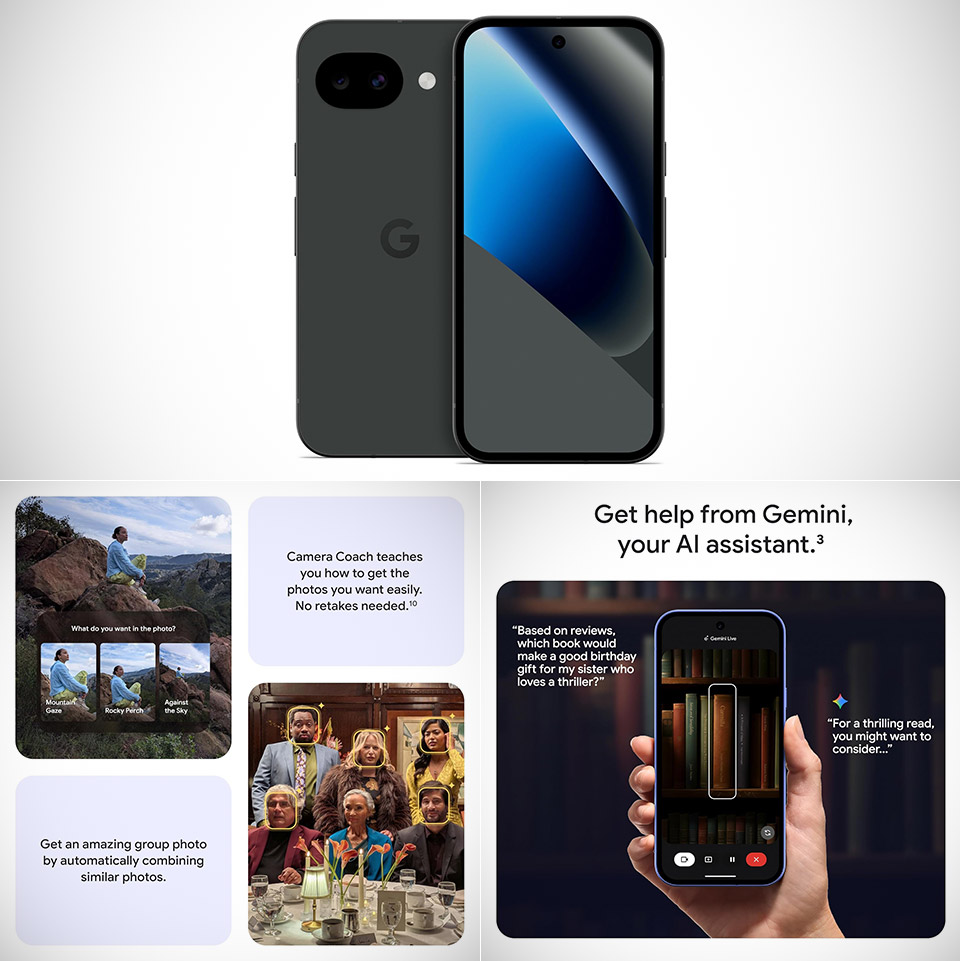
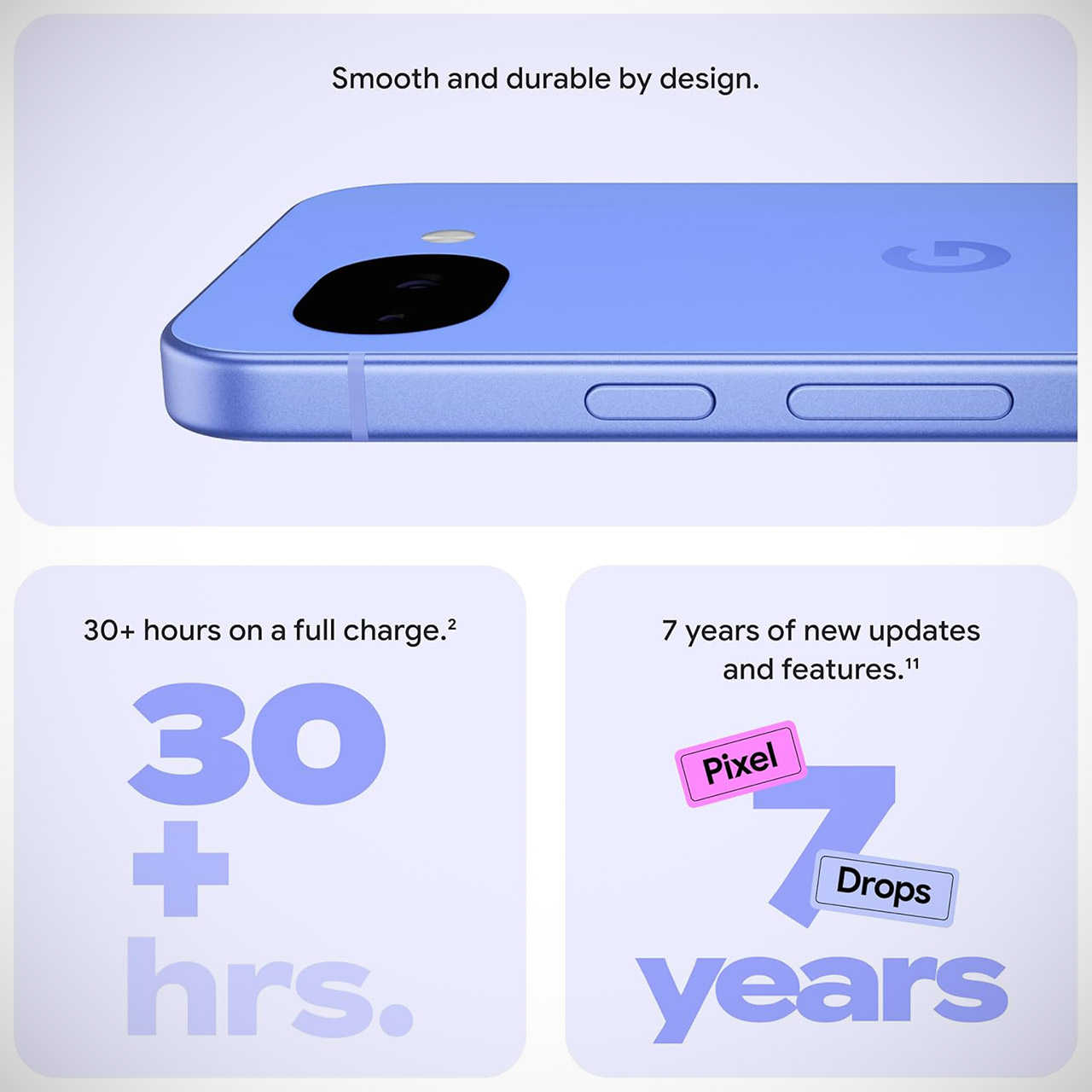
Google took a cautious approach with the Pixel 10a, choosing not to push the boundaries too far with new chipsets or extra lenses, instead focusing on the nitty-gritty details that make a difference in everyday life, and keeping the starting price for the 128GB model at a still-reasonable $449 (was $499).


They’ve fixed certain design flaws from the previous generation, such as getting hooked in your pocket. Fortunately, the new Pixel features a much better rear surface that will not slip off a table and will easily fit in your pocket. It’s also rather compact, standing 6.1 inches tall and weighing only 183 grams. The build quality is respectable, with strong IP68 dust and water resistance as well as strengthened glass up front to withstand a few bumps / scrapes.

Sale


Google Pixel 10a – Unlocked Android Smartphone – 7 Years of Pixel Drops, 30+ Hours Battery, Camera Coach…
  • Google Pixel 10a is a durable, everyday phone with more[1]; snap brilliant photography on a simple, powerful camera, get 30+ hours out of a full…
  • Unlocked Android phone gives you the flexibility to change carriers and choose your own data plan; it works with Google Fi, Verizon, T-Mobile, AT&T…
  • Pixel 10a is sleek and durable, with a super smooth finish, scratch-resistant Corning Gorilla Glass 7i display, and IP68 water and dust protection[4]


The screen on the 6.3-inch pOLED display sees a significant brightness boost, while the refresh rate is also adaptable, ranging from 60 to 120Hz, allowing for seamless scrolling and movement throughout the interface. Google’s own Tensor G4 CPU and 8GB of RAM offer performance comparable to last year’s flagship.

Advertisement

Google Pixel 10a Smartphone in 2026
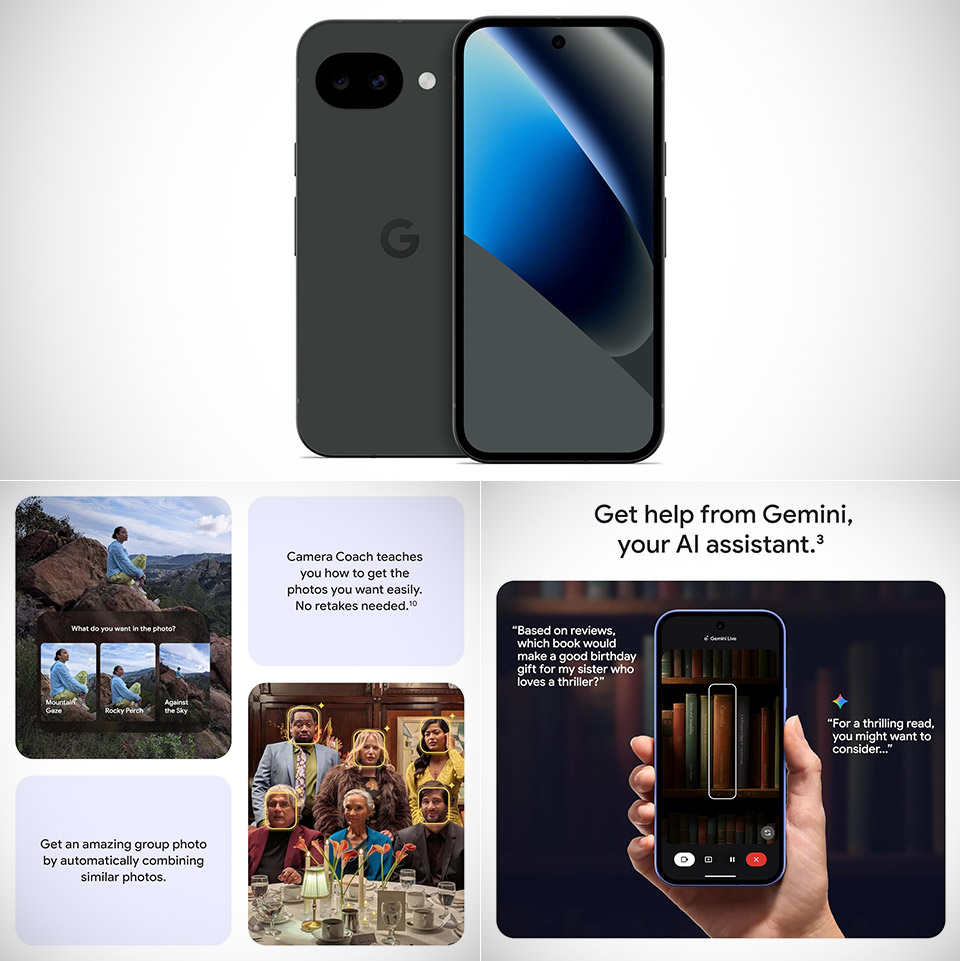
The camera remains the standout feature, with a 48-megapixel primary sensor and a 13-megapixel ultra-wide combo producing shots that are as clear as day in any lighting. We can’t forget about the software either, which includes a host of cool extras such as auto facial-expression suggestions in group shots, on-screen framing tips, and even the ability to magically remove unwanted sections from the frame with a single touch. Video quality is definitely no slouch, with silky-smooth footage that can handle 4K with ease.

Google Pixel 10a Smartphone in 2026
Battery life has improved significantly over the previous generation, with a 5100mAH battery that will keep you going all day without breaking a sweat. Real-world tests showed a solid 12-15 hours on a single charge, depending on usage levels. The 30-watt rapid charger will provide a nice little boost before you go out the door, and while wireless charging only manages 10 watts, it’s still present and works perfectly for a short top-up on the move.

Source link

Continue Reading

Tech

I ‘upgraded’ to Gemini for Home, but wish I hadn’t bothered

Published

on

After finishing up the Amazon Alexa+ review, I suddenly had an email that Google Gemini for Home was ready.

I fished my Google Nest Hub (2nd gen) out of the drawer where it’s been languishing, upgraded and then set about performing some simple tasks.

Could Gemini convince me to move away from Alexa?

Not a chance. In fact, it’s terrible in a lot of ways. Here are just a few things that it gets completely wrong.

Advertisement

It can’t change alarms

As I was writing this column at 4:30pm, I thought I’d try something simple. “Hey Google, set alarm for five fifty,” I said. The screen changed and the alarm had been set for 17:50. I was aiming for a morning alarm, but didn’t clarify that, so my bad. So, I asked Gemini to change the alarm to 5:50am.

Advertisement

The screen updated and showed the correct time. Job done, I thought. But, as this was a test, I didn’t really want the alarm. So, I asked Gemini to cancel it, and it came back telling me I’d got two alarms: one for 5:50am and one for 5:50pm.

The context of the conversation was clearly lost there. Amazon Alexa+ can deal with these requests, in this order, and get the correct outcome.

Advertisement

It can’t deal with PDFs and has an odd response

I can send PDFs to Alexa+ and have it strip out detail and meaning from them, such as calendar invites or to-do action points. I asked Gemini if it could do the same, and it said no, but it said that I could ‘paste in the text’.

As I was talking to a smart display, I asked how I could paste the information, and the response said, “You can simply paste the text directly into our chat here, just as you would when sending a message to a friend.”

Gemini for home just paste some textGemini for home just paste some text
Image Credit (Trusted Reviews)

Only, I can’t, because there’s no option and the Nest Hub can’t open PDFs for me to even copy any text.

Advertisement

It gets caught out by simple questions

I next went for a simple question, one that AI can struggle with: how many of the letter S are there in the word across?

Advertisement

I could see my prompt appear properly on screen, but Google Gemini told me, “There is only one ‘e’ in the word across.”

I tried again but asked how many letters’ S ‘ there are, and this time Gemini told me there were three of the letter ‘S’.

Gemini for Home can't countGemini for Home can't count

Alexa+ gets this question right.

There’s often nothing useful on-screen

Ask Alexa+ something on a smart display, and the screen will often show snippets of information or links to recipes. Do the same thing on a Nest Hub and you just get a page of black text on a white background. It makes it look like a work in progress.

Advertisement

Advertisement

Even worse, in some cases, I’ve had the screen go blank. When asking for a recipe recommendation, Google Gemini just spoke a stir-fry recipe at me with nothing on screen.

Ask about the weather and its just text on screen, with none of the niceness of Alexa+’s weather icons. Well, I say that, but if I ask, “OK Google, when’s a good time to have a BBQ?”, the answer page shows weather icons for the next good day, along with the voice response.

It doesn’t always get complicated commands

I’ve got a light around my desk, called Desk Strip. “Hey Google, turn on desk strip and then turn it off in five minutes,” I said. That seemed to work, the light came on and a timer appeared on the screen. However, when the timer ran out, the Nest Hub sounded an alarm.

To be fair, Alexa+ can struggle with these commands, and often creates a routine that does what you want, but named after the full command that you’ve asked for. However, with Alexa+, you can say, create a one-time routine first and then it does what you want (with a one minute delay).

Advertisement

Both systems can at least follow a single command, such as, “Turn of desk strip in five minutes.”

Advertisement

Some things are improving

When I first used Gemini for Home at the start of May, I started by asking it to remember that my wife’s a vegetarian. This information was logged, but when I then asked for a chicken recipe for my wife and me, Gemini suggested roast chicken.

Doing the same thing on Alexa+ came back with vegetarian options, along with a reminder that my wife is a vegetarian.

Advertisement

However, since then, Gemini for Home has been updated, and it now remembers the information and will give vegetarian options when asked (or at least recipes where meat could be added to one portion later).

It’s not as good as the competition

Amazon Alexa+ feels a long way ahead of Gemini for Home. And, Amazon’s app and hardware are also better. It feels as though Google has a long way to go if it wants people to switch back to its platform. For now, I’m sticking with Alexa+ for voice.

Source link

Advertisement
Continue Reading

Tech

Chris Seedor once spent 1,500 Bitcoin on a GPU. Now he insures crypto fortunes

Published

on

In context: Chris Seedor didn’t set out to build a company focused on bitcoin security. In fact, when he first got his hands on the cryptocurrency, he saw little reason to use it. Now, he’s trying to solve one of its biggest challenges: how to securely store bitcoin for people who choose to hold it themselves.

His journey began in 2011, when a friend handed him what would later turn out to be a small fortune in digital assets. At the time, Seedor was a mechanical engineering student at a university in Germany and saw little use for bitcoin.

“He gave me tons and tons of free Bitcoin,” Seedor says. “I didn’t see any use for it because I live in Germany and PayPal is a thing and I didn’t have a drug habit or something.”

He eventually spent nearly 1,500 of those coins on a graphics card – an ordinary purchase at the time that would look very different once bitcoin’s price took off. “I famously own the most expensive graphics card in the world,” Seedor told The Block during an interview at BTC Prague. “I bought a graphics card for a little less than 1,500 bitcoin in 2011.”

Advertisement

Fifteen years later, Seedor is focused on a different challenge: securing bitcoin for people who choose to hold it themselves.

That trade-off is built into cryptocurrency. When people hold their own assets, there’s no middleman – but they’re also solely responsible for keeping those assets safe.

For Seedor, addressing that challenge first meant building a physical product rather than a financial one. He developed a stainless steel seed phrase backup – a durable storage device for the recovery phrase that controls access to a crypto wallet – designed to withstand disasters such as fire.

The product, known as the Seedor Wallet, reflects a practical approach shaped by his engineering background. It is intentionally simple. As Seedor puts it, it is “the most primitive form to store the most advanced sound money.”

Advertisement

That same line of thinking eventually expanded into Bitsurance, a company focused on insuring bitcoin held in hardware wallets. The premise is straightforward: software can only go so far, and many of the biggest risks facing crypto holders are physical.

Seedor points to scenarios that extend beyond lost passwords or hacked exchanges. “I always had this fear of the $5 wrench attack,” he said. “What if somebody comes to my house, kicks my door and threatens me or my family? What do I do in that scenario?”

Those concerns are not hypothetical. He referenced cases in France where crypto holders have been targeted in violent incidents, including a reported kidnapping attempt involving the wife of Sébastien Borget, co-founder of the Ethereum-based virtual world The Sandbox.

Bitsurance is designed to address those kinds of risks, along with more conventional threats such as fire and flooding. The policies cover bitcoin stored on hardware wallets and are underwritten by Liberty Specialty Markets, part of the Liberty Mutual Group. If a claim is approved, the payout is made in fiat currency rather than bitcoin.

Advertisement

The company currently offers coverage of up to €500,000. While that limit may cover only a portion of some larger holdings, it illustrates how traditional insurance is beginning to move into a market that has long operated without it.

The approach stands out because it brings together two very different worlds. Bitcoin was built to eliminate reliance on centralized institutions, yet services such as insurance inevitably reintroduce elements of that structure. In practice, that means translating decentralized risks into something insurers can model and price.

Seedor’s journey – from casually spending bitcoin to building tools and services to protect it – mirrors a broader shift in the crypto landscape. Early users could afford to treat bitcoin as an experiment. That is no longer the case.

Advertisement

Source link

Continue Reading

Tech

Fire burns Google Cloud India’s network, which remains slow a week later

Published

on

Off-PREM

PLUS: Japan’s space truck is back in business; Zoho’s DIY servers; Record tech exports for Korea, and more!

Google Cloud customers with resources in India have had to deal with elevated latency for several days – and there’s no end in sight.

Per a Google status page, on June 9th “A fire at a third-party data center facility required an emergency power shutdown of networking equipment, isolating a non-compute local Point of Presence (POP) in Delhi and reducing available network capacity in the metro area.”

Advertisement

That shutdown caused “intermittent periods of elevated latency and possible packet loss” for network traffic headed to Google Cloud from Delhi, Chennai, Mumbai and surrounding areas. “Customers may experience slightly elevated latency and non-optimal network routing into Google Cloud until the affected facility is fully restored,” Google warned.

Google has implemented “traffic mitigations” that it says have improved performance “for some Cloud customers,” and is trying to arrange extra peering capacity.

That work is ongoing, with the ads-and-cloud giant promising it is “further augmenting our Delhi backbone capacity” and hopes to have better news on Monday. The web giant is also working to improve regional peering capacity in the city of Chennai, to assist large ISPs in India and hopes that work will be complete on Wednesday, June 17th.

Japan’s space truck is back in business

Japan’s Aerospace Exploration Agency (JAXA) last week successfully launched its H3 rocket, a welcome return to form after its previous two missions failed.

Advertisement

This success will be doubly sweet for JAXA, because the H3 used for this mission employed a pair of outboard boosters – the first time the agency has used the launcher in this configuration.

The rocket launched on June 12th and placed six satellites in orbit.

South Korean tech exports boom, not just because of AI

South Korea’s Ministry of Science and IT on Sunday announced exports of IT products reached $47.8 billion in May, a new record and a sum 128 percent higher than tech exports in May 2025.

Semiconductor exports surged by 162.9 percent year over year, due to the AI boom. Mobile phone exports also grew by 15.9 percent, while a category the Ministry calls “computers and peripherals” saw 259.6 percent year-on-year growth.

Advertisement

“Displays rebounded due to increased demand for OLEDs for new mobile phones and strong sales of new laptops,” the Ministry said. “Overall exports of mobile phones increased due to a rise in the average selling price of high-spec finished products and robust demand for high-value components such as camera modules.”

South Korea imported over $15.7 billion worth of tech in the month, up 36 percent year-over-year, but still achieved a record trade surplus of over $32 billion.

Zoho builds its own servers

Indian SaaS giant Zoho has cooked up a custom server called “Nathu La” that it says will reduce the cost of operating its platform.

“The design philosophy behind Nathu La is rooted in the Open Compute Project (OCP), emphasizing modularity, thermal efficiency, and ease of maintenance, and enabling Zoho’s data centers to significantly reduce total cost of ownership and power consumption,” according to a company statement.

Advertisement

The machines run Intel Xeon 6 processors and Chipzilla helped to design them, but Zoho says “all intellectual property [is] owned in India.”

Zoho says the servers will also help to lower inferencing costs.

The company didn’t say how it calculated its performance numbers. The Reg fancies Zoho has compared its own boxes to whatever machines it currently buys off the shelf, and believes that servers tuned to its own needs will deliver better performance.

That’s a conclusion many hyperscalers reached years ago.

Advertisement

NTT Data’s new boss

Japanese tech giant NTT Data has a new president and CEO: Kazuhiko Nakayama scored the twin roles last week, capping a career with the company that started in 1989 and most recently saw him serve as chief financial officer.

Previous CEO and president Yutaka Sasaki will become senior executive vice president.

“Over the past three years I have had the honour of working closely with Mr Sasaki and the leadership team on a strategic course that has established NTT DATA among the top five IT services businesses globally,” Nakayama said, according to NTT Data’s announcement of its new leadership. “That experience has reinforced my conviction in the strength of our offering, the quality of our people and the size of the opportunity ahead. As I take on the responsibilities of CEO and lead the growth of the NTT DATA Group going forward, I feel a deep sense of dedication, possibility and excitement.” ®

Source link

Advertisement
Continue Reading

Trending

Copyright © 2025