Civil society groups and MEPs are demanding urgent European Commission action on spyware after Citizen Lab confirmed that Stelios Kouloglou, a member of the Parliament’s PEGA spyware inquiry, was himself hacked with Pegasus in 2022 and 2023. The attacker is unknown, the Commission is silent, and the PEGA committee’s 2023 recommendations remain largely unanswered. This is the follow-up beat to TNW’s earlier story on the hack itself.
Pressure is mounting on the European Commission to act on spyware, after forensic evidence showed one of the EU’s own spyware investigators was hacked with Pegasus. Civil society groups issued a joint statement demanding the abuse be met with accountability, “not impunity”.
The attacker remains unidentified, and Citizen Lab says it has no indication the Greek government was responsible. The same Pegasus-linked email address appeared in an earlier campaign against journalists across Europe, suggesting a customer authorised to deploy the NSO Group tool in multiple countries.
Whoever was behind the hack could have accessed confidential committee documents and deliberations. Lawmakers have described the incident as an attack on the rule of law, and the Parliament’s left grouping is demanding strict EU-wide limits on spyware use.
The Commission did not respond to requests for comment from TechCrunch. It has yet to publicly account for its implementation of the PEGA committee’s 2023 recommendations, the gap campaigners now want closed with a public roadmap.
A rap sheet, not an isolated case
The statement’s signatories list a pattern of European scandals: spyware used against exiled journalists in Latvia, Lithuania, and Poland, the targeting of the Parliament’s president with Predator, and Graphite infections in Italy, where spyware-laced fake WhatsApp apps have also surfaced. EU public money has meanwhile flowed to the surveillance industry itself, according to EUobserver.
Advertisement
Enforcement of the bloc’s dual-use export rules remains patchy, as leaked Bulgarian export licences to governments accused of repression showed. On paper the EU regulates spyware sellers, and in practice it sometimes funds them.
NSO Group has meanwhile explored selling Pegasus altogether, a prospect that raises its own accountability questions. The tool’s customers, whoever they are, keep finding European targets.
The PEGA committee spent two years documenting Europe’s spyware problem, and one of its own members was bugged while doing it. If that does not trigger the urgent response campaigners want, it is hard to imagine what would.
AI-generated videos and pictures are destroying one of the largest and most enduring sources of joy and compassion on the internet: animals. Whether the imagery features sailors rescuing a polar bear, baby cows separated from their mothers, or a lost pet that was miraculously found, many people have reached the point where they can’t take the creatures on their feeds at face value anymore. The explosion of deepfakes and AI slop over the past few years has led to widespread frustration among viewers, creators, and organizations that support animals, forcing everyone to hunt in the pixels for glitches or other telltale signs of AI.
Mibbby Butler was overjoyed one day in April when she received a text message that her lost cat, Brooklyn, had supposedly been found. Her roommate’s boyfriend had allegedly taken the cat and dumped him 30 minutes away in the Los Angeles suburbs the day prior. Butler quickly posted a missing poster on social media, and she was driving around with her roommate searching for Brooklyn when a stranger sent her a photo. In it, he is sitting on a kitchen counter while being embraced by a girl.
“My baby is OK!” Butler exclaimed to her roommate. But if she wanted to get him back, the person said, she would have to pay money up front for Brooklyn’s purported temporary care. That’s when Butler sensed she was being scammed and began looking closer at the photo.
Brooklyn was posing the same way as he had in the picture Butler used for the missing poster. In both images, a Torani syrup bottle and a microwave can be seen in the background, except in the new photo, the label text was garbled, a classic sign that it was AI-generated. A disheartened Butler didn’t pay up. “I didn’t know people scammed for lost pets,” she says, noting she also didn’t report the incident to police because she wasn’t sure a crime had occurred. Four months later, Brooklyn is still missing.
Advertisement
The flood of fakes has been no easier on the creators of authentic content. The nonprofit We Animals has published the work of 175 photojournalists who have documented alleged animal abuse and other harms at farms, circuses, and scientific labs. The material can be shocking, which naturally invites skepticism, says Eva von Jagow, the group’s marketing manager. For instance, drone footage We Animals shared of rows and rows of hutches allegedly used to shelter calves separated from their moms on a dairy farm in Arizona looks almost too mesmerizingly perfect to be real.
In the past, people have claimed We Animals’ work is staged or photoshopped. It’s no surprise, then, that some viewers have begun accusing the group of relying on AI, even though it bans the photographers it works with from using the technology. “How to prove it’s not AI?” an Instagram user commented earlier this month on the dairy farm video.
To convince audiences that its content is authentic, We Animals expects it will have to start sharing behind-the-scenes clips and more details about the steps staffers take to verify submissions. It also plans to adopt technology that embeds the provenance and editing history of photographs and videos into digital files. Victoria de Martigny, the group’s director of visual content, says preserving trust is crucial, or else it could “open up the door to people questioning all of the work,” and “we don’t ever want to be in that position.”
Real, evocative images often pull on viewers’ heartstrings and are an important way for conservation and welfare projects to attract donations. But for the owners of AI slop accounts, synthetic imagery can be a convenient path to collecting likes and ad revenue. Since fakes are much cheaper to produce, they appear to be drowning out real clips in social feeds and search results, says Oscar Horta, a philosopher and leading animal activist who recently helped direct a short film on how AI could affect wildlife.
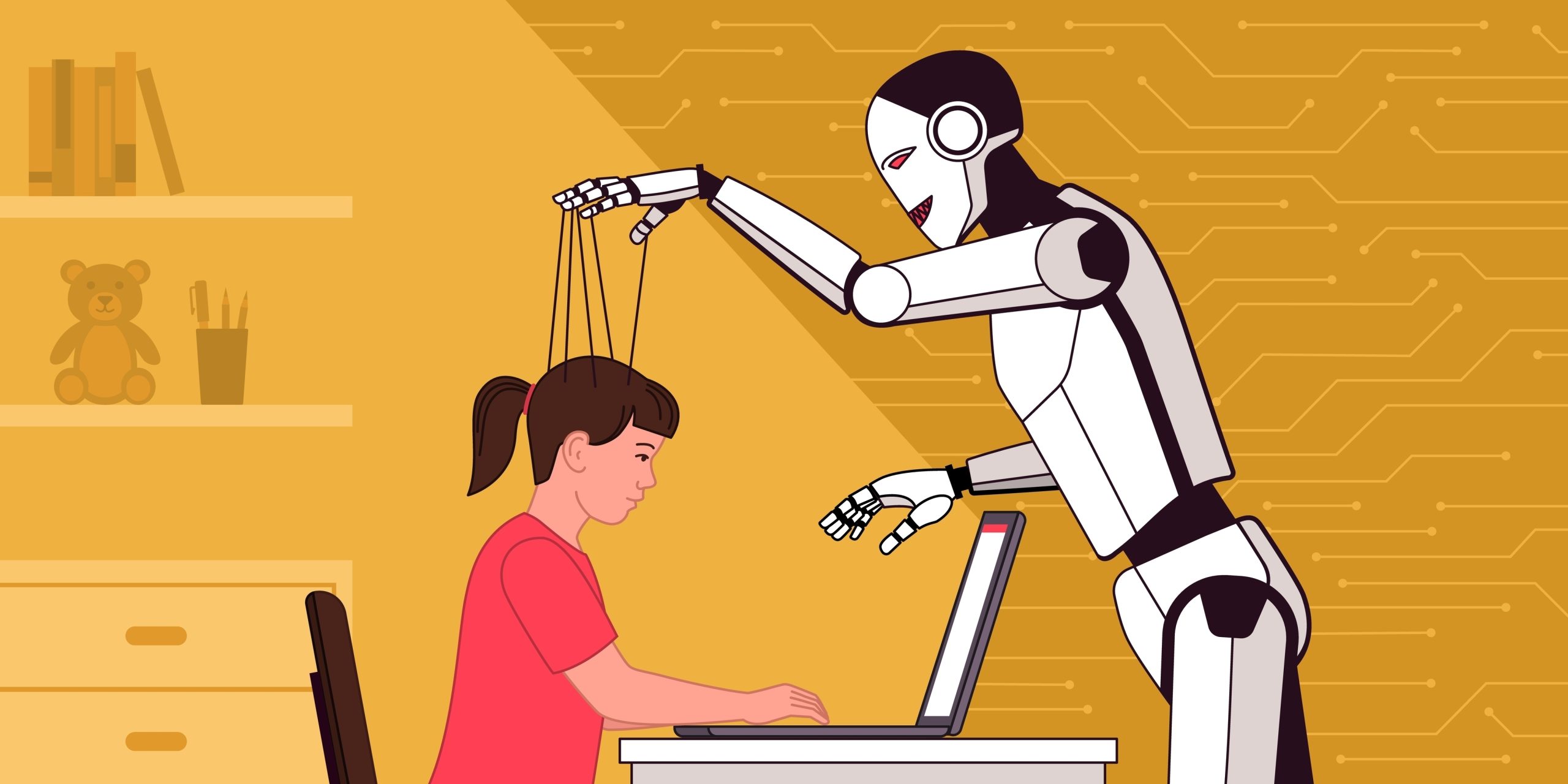
Have you considered that the greatest risk of artificial intelligence might not be plagiarism, but the quiet erosion of students’ ability to think for themselves?
“How does Kate Chopin use irony to challenge the reader’s understanding of freedom?” I ask while standing in front of my 11th-grade English class.
Normally, this is the point where students flip through the text, underline a few lines, exchange ideas with classmates and slowly begin constructing an answer. Instead, their eyes stare back at me. Shoulders shrug.
“I don’t know,” one student says.
Advertisement
Then another follows with a response I’ve begun hearing more frequently.
“I use ChatGPT. How am I supposed to know that?”
The room becomes quiet again. Not because students are thinking; many aren’t even trying to. And that’s the problem.
I’ve taught English and special education in New York City for 13 years. Throughout my career, I’ve worked with students whose disabilities affect their reading and writing ability, executive functioning, attention span and language processing. I’ve spent years designing lessons that help students access learning without taking away the cognitive work required to truly engage in the learning.
Advertisement
My role has never been to lower expectations but to remove barriers while preserving rigor. Students have always struggled. That’s part of learning. But lately, I’m seeing something different. They aren’t just struggling with literature. They’re struggling with thinking itself.
This isn’t because artificial intelligence suddenly makes students less capable. National reading data show persistent declines in literacy achievement, while writing research consistently finds that adolescents struggle most with analytical and evidence-based writing, which are essential tasks that cultivate critical thinking. AI didn’t create those challenges, but it happened to arrive at exactly the moment those foundational skills became even more fragile.
If we’re not intentional about encouraging students to think, AI risks becoming a substitute for the very cognitive work students most need to practice.
When AI Becomes the Brain Instead of the Thought Partner
A student is absent. I send the assignment home. The next morning, it comes back looking nothing like the work I watched that same student produce in class. The vocabulary is sophisticated. The literary analysis flows effortlessly. Complex symbolism appears, even though the student struggled the day before to identify the protagonist’s motivation.
Advertisement
Then, I administer an in-class assessment.
With pencil and paper, many of those same students struggle to organize ideas, support claims with textual evidence, or sustain a multi-paragraph response. The discrepancy isn’t simply about cheating. It raises a more fundamental question: Whose thinking is actually being measured?
Researchers describe this phenomenon as cognitive offloading, the tendency to rely on external tools to reduce mental effort. To be fair, humans have always done this. We use calculators for arithmetic, GPS for navigation, and calendars to remember appointments because those tools free cognitive space for more complex tasks.
Reading, writing and critical thinking, however, serve a different purpose. The assignment isn’t merely the product; it is the practice. Every annotation, rough draft, revision and discussion strengthens the cognitive muscles students rely on to analyze, reason and synthesize information and make judgments independently.
Advertisement
Researchers are beginning to examine what happens when generative AI assumes more of those “human” responsibilities. A 2024 study by Microsoft Research and Carnegie Mellon University found that workers who relied more heavily on generative AI reported less critical evaluation and independent reasoning at work. Although the study focused on adults rather than K-12 students, it raises important questions for education. If adults become less likely to critically evaluate information when AI consistently performs the thinking for them, what might that mean for adolescents whose reasoning skills are still developing?
I use AI almost every day. It helps me brainstorm, challenge my thinking, locate research and consider perspectives I might have overlooked. But AI never replaces my judgment. I still evaluate the evidence, make the decisions, and write the final product.
That’s the difference between AI as a learning partner and AI as a learning replacement.
The Evidence Extends Beyond My Classroom
What I’m observing in my classroom isn’t happening in isolation.
Advertisement
According to the 2024 National Assessment of Educational Progress, only 30% of eighth graders performed at or above the “Proficient” level in reading, while one-third scored “Below Basic.” Reading achievement remains below pre-pandemic levels, meaning many students are entering high school with diminished comprehension, vocabulary, and analytical reading skills.
Those numbers matter because reading comprehension underpins every academic discipline. When students struggle to interpret complex texts, evaluate evidence, or construct meaning independently, the temptation to let AI do that cognitive work becomes even greater.
Higher education is reporting similar concerns. Faculty increasingly describe incoming students as less prepared to read complex texts independently, construct evidence-based arguments, and sustain analytical writing.
This summer, Brown University economics professor Roberto Serrano made headlines after noticing students earned an average score of nearly 96% on a take-home midterm, far above the course’s historical averages. Suspecting that many students had relied on generative AI rather than demonstrating their own understanding, Serrano replaced the traditional take-home final with a proctored, in-person exam. The average score fell to under 49%. This exposed an uncomfortable reality: Polished work completed outside the classroom does not always reflect what students can independently explain, analyze, or apply.
Advertisement
While this happened in a college, it is not far from what K-12 educators are experiencing in their own classrooms. This incident at Brown should signal to K-12 teachers and leaders that we are responsible for ensuring students succeed beyond graduation in postsecondary settings like college, career training programs, military service, or the workforce.
If our students arrive at their postsecondary environments unable to think critically, independently explain, or defend their own thinking, we must engage in introspective work and ask ourselves a difficult question: Did we, as K-12 educators, properly prepare our students for the next phases of their lives and the intellectual demands that await them?
AI is not responsible for this; we are. And we should welcome the challenge to push ourselves as educators to be intentional in our teaching and designing of learning experiences that will help develop our students’ ability to engage in higher-order thinking, resilience, and cognitive stamina before they step onto a college campus or other postsecondary environments.
Schools themselves are beginning to recalibrate their relationship with technology.
Advertisement
Across the country, districts have expanded handwritten assignments, paper-based assessments, technology-free instructional blocks, and restrictions on personal devices after educators reported improvements in attention, discussion quality, and independent reasoning. Even within my own school community, students are expected to put their phones into locked pouches for the school day.
Perhaps the issue isn’t technology itself, but how much thinking we ask students to surrender to it. And maybe a question to consider: Did we move too fast integrating AI technology into our school communities, and are we still learning about it?
What This Looks Like in My Classroom
Over the past year, I have realized it is imperative that my students learn about artificial intelligence alongside digital citizenship, including the importance of using AI safely and ethically. As their educator, I want them to understand that AI is meant to support their learning and become their thought partner, not be the primary thinker and creator.
Advertisement
Before opening a computer, let alone an AI tool, they annotate texts independently, discuss ideas with classmates, gather evidence, and develop an original claim. They wrestle with uncertainty because productive struggle isn’t a barrier to learning; it’s the mechanism through which learning occurs. Only after students have established their own thinking do I invite AI into the conversation.
Instead of asking AI to complete an assignment, students use it to generate counterarguments, identify gaps in reasoning, suggest additional textual evidence, or offer alternative interpretations. They compare AI-generated responses with their own, critique each response’s strengths and limitations, and decide what strengthens their work. The final decision always belongs to the student, as does the ability to think critically about the information they are assessing.
I’ve also begun intentionally reintroducing practices many classrooms have quietly abandoned, not because they’re nostalgic, but because they build cognitive endurance. Students complete handwritten brainstorming, annotate printed texts, participate in technology-free discussions, and periodically write entirely without devices. These are pro-thinking activities, not anti-AI activities.
I also establish intentional boundaries around technology. Not every lesson requires AI or needs a screen. Some learning experiences that I develop are technology-free because students deserve opportunities to wrestle with ideas before technology enters the conversation.
Advertisement
So far, the transition hasn’t been seamless.
Students initially resisted and became frustrated when I would say “no” to them getting a laptop to engage in the assignment and instead required handwritten planning before digital drafting. I often ask them to develop an argument in my ELA class before consulting AI. They had become accustomed to immediate answers and gratification, where productive struggle felt uncomfortable for them.
That feeling of discomfort isn’t always evidence that learning isn’t happening. Often, it’s evidence that it is. It’s what I often felt as I struggled with my math classes in high school and spent hours looking at formulas that my brain couldn’t compute. But the harder I studied, the easier things became.
Over time, I watched the same experience occur with my students. They became more willing to defend their reasoning because they knew those ideas belonged to them. They asked deeper questions. They worked with their peers and revised more thoughtfully. They self-assessed before they jumped to AI to evaluate their thinking. But most importantly, they began trusting their own thinking again.
Advertisement
From Digital Citizenship to Cognitive Citizenship
Digital citizenship should also include what I think of as cognitive citizenship: understanding when technology strengthens their thinking and when it quietly replaces it. That means teaching students to interrogate AI rather than accept its responses at face value.
I encourage students to ask:
Is this response accurate?
What evidence supports this claim?
What perspectives are missing?
Does this actually answer my question?
Would I have reached the same conclusion on my own?
These questions shift students from passive consumers to active evaluators. AI becomes another perspective instead of an unquestioned authority.
The Future Depends on What We Choose to Preserve
It’s important to keep in mind that education exists to cultivate thinkers and develop growing minds capable of questioning, evaluating and creating answers.
Advertisement
The future of education isn’t choosing between old-school instruction and new-school innovation. It’s knowing when each best serves students. Some of our oldest instructional practices, like handwritten drafting, discussion, annotation, sustained reading, and productive struggle remain some of the strongest builders of cognition. Rather than abandoning them, we should pair them with AI in ways that amplify, rather than replace, human learning.
Because while AI can generate an essay, it cannot wrestle with uncertainty, defend an argument to its peers, or discover an idea through persistence. Those moments remain uniquely and beautifully human. And those are exactly the moments educators must continue to protect.
SpaceX has announced plans to build a new $100 billion “Starbase” launch site on the southern coast of Louisiana, giving it a third potential location to launch its giant Starship rocket. SpaceX executives and Louisiana governor Jeff Landry revealed that Elon Musk’s company will be authorized to build a 125,000 acre (195 square mile) facility on the coast in an area called Pecan Island.
“We’re preparing to build a spaceport that, until now, has only existed in science fiction,” SpaceX CEO Elon Musk said. “SpaceX was founded to bring about a future where humans are out exploring amongst the stars, which will only be possible when we make going to space as routine as flying on an airplane. Starbase, Louisiana will unlock that future.”
As SpaceX detailed in a new video, the Louisiana facility will be massive with five launch complexes, each with two launch pads. “The development will also include a propellant production facility, power generation, vehicle processing and residential housing for employees and their families,” according to a press release from Louisiana State.
Starbase, Louisiana will be built to support thousands of Starship flights a year with missions launching to Earth orbit, the Moon, Mars, and beyond pic.twitter.com/SE6gyNZWBK
SpaceX plans to blanket the skies with data center satellites and Starbase, Louisiana will be a key part of that. The location will allow SpaceX to launch Starship rocket southward toward the polar regions, where it can place its “Starmind” data center satellites into ideal orbit positions. It will also give SpaceX close proximity to natural gas in the region needed to create Starship’s methane-based rocket fuel.
The announcement comes on the heels of SpaceX’s massive public offering. The company also recently announced plans to build a “Terafab” chip foundry in Texas that will supply AI processors to its SpaceXAI division. Those chips are another key component in Musk’s vision for orbiting AI data centers.
Exxon Mobile, the previous owner of the Pecan site, returned it to the state as part of a settlement over lawsuits accusing the company of coastal land loss. As part of its deal with Louisiana, SpaceX pledged to work with the state to extensively restore the the area with marshland preservation, wildlife preservation and storm protection. Things will move along pretty quickly for a project of that scale, though. Production on the site will begin in 2027, with the first launch stated for 2029.
It’s not a problem that Taylor Sheridan has often had to contend with, but some fans are worried that Lioness season 3 is about to enter a mid-season slump.
At the halfway point of the political drama, there’s a lot going on, with few answers in sight. This season’s drama revolves around two simultaneous timelines: Joe being kidnapped by unknown Russian operatives, and, the six months leading up to her capture. Do we know who is responsible? Not exactly.
But still, let’s press on in the face of potential adversity — when does Lioness season 3 episode 5 arrive on Paramount+?
Advertisement
Latest Videos FromTechRadar
What time can I watch Lioness season 3 episode 5 on Paramount+?
Lioness | Season 3 Official Trailer | Paramount+ – YouTube
HP and Huawei enter patent-sharing deal, with Huawei’s Wi-Fi 7 patents central to the deal
Huawei is still under the microscope by the US Department of Commerce
The companies have had a previous run-in about Wi-Fi patents
Huawei has confirmed a multi-year global patent cross-licensing agreement with HP in relation to its Wi-Fi technology, ultimately granting the latter permission to use certain Huawei Wi-Fi patents. In return, Huawei will also receive rights to some of HP’s patents.
Central to the agreement is Huawei’s Wi-Fi portfolio, including Wi-Fi 7 technology, however neither company has actually disclosed the exact patents that are covered. Further details, like the financial terms or the deal’s duration, are also under wraps.
The deal is of great geopolitical significance, with California-based HP striking up a deal with Shenzhen-based Huawei – a Chinese company that remains on the US Department of Commerce’s Entity List.
Latest Videos FromTechRadar
Advertisement
HP and Huawei deal
Although US restrictions have severely restricted Huawei’s ability to buy American chips, software and other technology, and other international restrictions including in the UK have sought to remove Huawei hardware from critical national infrastructure, this new deal is proof that the company still has major influence outside of China.
Importantly, an HP spokesperson (via Reuters) stressed that this is merely a patent licensing agreement: “It is not new, and does not represent a broader strategic or commercial relationship, partnership, or collaboration with Huawei.” The company noted that such licences are normal because manufacturers need access to patented technology for certain standards, like Wi-Fi.
“This milestone agreement not only reflects the companies’ cooperation in the field of intellectual property licensing but also recognizes Huawei’s innovation capabilities and core technological strength as well as HP’s position as a global leader in computers and peripheral equipment,” Huawei wrote.
Ultimately, being on the Entity List doesn’t represent an outright ban for American companies to transact with Huawei, but it does place the company under US scrutiny. Neither does it mean that HP has been given special treatment to bypass US restrictions to open this deal.
Sign up to the TechRadar Pro newsletter to get all the top news, opinion, features and guidance your business needs to succeed!
Advertisement
A work in progress
Interestingly, the deal didn’t just come from nowhere. HP and Huawei have been involved in a dispute over Wi-Fi intellectual property for a while. Huawei accused HP’s products of implementing its Wi-Fi 6 patents without a relevant licence in August 2025.
Standard-essential patent owners are generally expected to make their patents available under FRAND terms to grant manufacturers access to the technology, but cross-licence deals like this latest one are often seen as the most efficient and cost-effective way to open up the technology.
Rather than both companies paying full royalties to each other, HP gets Huawei rights and Huawei gets HP rights in return. It’s unclear if one of the companies has also made a balancing payment.
In other circumstances, Huawei’s current rates for consumer products are $0.50 per device for both Wi-Fi 6 and Wi-Fi 7.
Advertisement
For Huawei, it’s just another opportunity to turn years of R&D into important revenue. “By the end of 2025, Huawei held a total of 165,000 active patents and had signed over 260 patent licensing and cross-license agreements with many of the world’s largest patent holders,” the company shared in a 2026 update.
With everything else going on in the world, it’s been a while since we’ve dug into a good old-fashioned patent troll story or a bogus defamation SLAPP. Today we’ve got a two-for-one. Leigh Rothschild is a patent troll of some renown — his entities have been connected to over 1,300 patent lawsuits — who regularly sues companies over questionable patents and plays the standard patent troll shakedown game of offering to “settle” for less than it will cost to defend the lawsuit.
We’ve mentioned Rothschild in the past on Techdirt for his patent trolling ways. Like many patent trolls, Rothschild is known for setting up a number of separate companies that control the various patents he holds or controls. Rothschild’s trolling is covered widely all over the internet, and it’s not difficult to find one of dozens of people calling out his trolling techniques:
The Rothschild Modus Operandi is to obtain a fairly bogus patent (in this case, patent 9,936,086), form a limited liability corporation (LLC) that only holds the one patent and then sue a load of companies with vaguely related businesses for infringement. A key element of the attack is to offer a settlement licensing the patent for a sum less than it would cost even to mount an initial defence (usually around US$50k), which is how the Troll makes money: since the cost to file is fairly low, as long as there’s no court appearance, the amount gained is close to US$50k if the target accepts the settlement offer and, since most targets know how much any defence of the patent would cost, they do.
Anyway, back in 2022 Rothschild apparently acquired a very sketchy patent, US Patent 8,799,083, on a “system and method for managing restaurant customer data elements.” The patent describes a series of blatantly obvious methods of letting a restaurant customer share some information about their preferences and track their orders. Plenty of prior art exists showing that this patent never should have been granted.
Rothschild took the patent he claimed he acquired and (as described above) put it into a dedicated shell company, Analytical Technologies, then sued at least twenty food-ordering businesses in Marshall, Texas (because, of course). The playbook worked about as well as it usually does: Subway, Darden, Denny’s, Cracker Barrel, Five Guys, and Dairy Queen all settled or stipulated to dismissal within a few months.
Advertisement
Starbucks did not.
Suing Starbucks was perhaps a strategic error, because rather than fold and settle, Starbucks hit back hard, accusing Rothschild, personally, of fraud, claiming that Analytical Technologies was “a sham shell entity to shield himself from personal liability” and claiming that there’s a “pattern and practice of [Rothschild] underfunding (or not funding) his shell entities” with the implication being that doing so was to avoid having to pay out legal fees if he lost the lawsuit.
It also pointed out that records show that the original named inventor on the patent, Andrew Silver, who had supposedly sold the patent to Rothschild… had already sold the patent earlier and engaged in other sketchy behavior, such that he probably no longer retained the rights to the patent when he “sold” it to Rothschild:
On April 14, 2008, Table Top Media (“TTM”) purchased the application that would mature into the parent ’007 Patent and said patent’s progeny, including the application that would mature into the Asserted ’083 Patent.
During the prosecution of the parent ’007 Patent, the application was abandoned because Silver failed to respond to an office action (a Notice of Abandonment dated 04/13/2010 stated that there was no reply to the Final Rejection mailed on 02/04/2009).
Silver and Gostanian revived the abandoned ’007 Patent by telling the USPTO that Silver’s former patent agent, Steven McDonald, had “unexpectedly passed away”. ’007 PxHx, 11/9/2010. But Steven McDonald was still alive and assisting Silver with the ’007 prosecution when the patent went abandoned as the privilege logs on the TTM litigation demonstrate…
There’s a lot more in the filing regarding the supposed “death” of McDonald who somehow kept helping Silver with his patents. But more importantly, there’s the issue of who actually owned this particular patent:
Advertisement
On February 19, 2014, Gostanian told the USPTO that Silver was the “100% owner” of the Asserted Patent in order to file a terminal disclaimer and obtain issuance, even though Gostanian and Silver understood that TTM had an “existing contract” and was the owner of the ’083 Patent application.
At the same time that Gostanian submitted the terminal disclaimer to the USPTO stating that Silver owns 100% of the ’083 Patent, Silver and Gostanian were preparing a lawsuit to sue TTM for specific performance because Silver sold the Asserted ’083 Patent family to TTM in 2008.
Mr. Silver submitted a sworn declaration in his lawsuit against TTM stating unequivocally that TTM bought the ’083 Patent family in 2008:
It then shows a bunch of documents, including ones signed by Silver showing that he knows that TTM owns the patent that he later claimed to sell to Rothschild. Oops!
If that wasn’t enough, there was the fact that the patent had expired before Rothschild ever filed. And because the asserted claims were method claims describing things a customer does — ordering, paying at the table — Starbucks couldn’t be a direct infringer at all. The only theory left was indirect infringement, which requires that Starbucks knew about the patent while it was still alive. Which is why Rothschild needed a pre-suit notice date, and why his lawyers’ explanation for the one they used is such a problem. Because it turns out they didn’t actually notify Starbucks while the patent was still valid:
Neither AT nor its counsel has provided to Starbucks or its counsel any support for AT’s Actual Notice Allegation.
On August 2, 2024, counsel for AT emailed counsel for Starbucks and stated, “We can agree to remove that statement [the Actual Notice Allegation] if we cannot provide you proof on Monday [August 5, 2024].”
But counsel for AT did not provide proof of AT’s Actual Notice Allegation on August 5, 2024. And counsel for AT did not remove the Actual Notice Allegation.
On September 5, 2024, counsel for AT admitted in an email that the Actual Notice Allegation was a “misrepresentation” and the result of a “typo/cut and paste problem”
That seems like quite an admission! So the patent expired in November of 2023. The troll claimed that it had notified Starbucks of its alleged infringement in March of 2023. Starbucks claimed they heard nothing until June of 2024. And when Starbucks asked for proof of the supposed notice, Rothschild’s lawyers promised it, didn’t produce it, didn’t withdraw the load-bearing allegation, and eventually admitted it was a “misrepresentation” due to a cut and paste “problem.”
Yikes. And yet, all those other fast food joints settled.
Advertisement
The filing from Starbucks resulted in an article on Bloomberg Law, entitled, “Starbucks Levels Fraud Claim in New Tactic to Fight Patent Suit.” In it, lawyer Rachael Lamkin, who is one of Starbucks’ lawyers and a long-term fighter against patent trolls, is quoted calling out Rothschild’s shell games:
Lamkin said she’s tussled with the prolific inventor for years and has been particularly frustrated by the early settlement offers from Rothschild, which she called “obnoxiously low.”
“The settlement amounts are so low that companies aren’t going to pay attorneys the thousands of hours it takes to catch him at his game,” she said in an interview. “And with Leigh Rothschild, we never get the money because the shells go bankrupt.”
This claim appeared to particularly annoy Rothschild, who turned around and sued Lamkin and Starbucks… for defamation. In Florida. The complaint goes on for a while about what an amazing “inventor” Rothschild is and how important his various patents are… and also about how he’s involved in various charities, claiming that the statement about shell companies and bankruptcies was defamatory. Also, Rothschild claimed that this one quote in a random Bloomberg article caused him — a guy who has been involved in over 1,000 lawsuits — to require special new medication for high blood pressure. Really?
Neither LMR nor any of the companies he is involved with, however, has ever owed any of the Defendants any money for them to “get.”
Moreover, none of the companies LMR is involved with is a “shell” (i.e., a company with no significant assets or operations); instead, each of the companies is a lawful corporate entity with assets, bank accounts, and operations appropriate for its purpose, which in most cases is to own and license valuable U.S. patents.
Further, none of the patent companies LMR is involved with has ever “go[ne] bankrupt.” Acknowledging this fact, Defendant Lamkin stated recently to LMR directly that “before I’m done with you I’m going to bankrupt you,” which evidences her own knowledge contrary to any “bankrupt” entities, and evidences her own bad faith and malevolent intent.
Be careful who you tussle with, however. Lamkin’s answer to the complaint (which includes counterclaims against Rothschild) has some fun statements:
Attorney Lamkin denies that Rothschild “has been an inventor his entire life.”
The answer also argues that the final paragraph above in which Rothschild claimed Lamkin had told him she would bankrupt him was “a fabrication.”
Advertisement
Attorney Lamkin denies that she has told Rothschild, “before I’m done with you I’m gong to bankrupt you.” That allegation is a fabrication. Attorney Lamkin denies the assertion that no patent company owned or managed by Rothschild has ever “go[ne] bankrupt.” Attorney Lamkin denies that she has knowingly made a false statement in connection with the facts at issue in this lawsuit or that she has exhibited “bad faith and malevolent intent.”
Later, in the counterclaims, Lamkin points out the factual basis for her original claims to Bloomberg, detailing multiple cases in which Lamkin represented a company sued by a company controlled by Leigh Rothschild, where, during discovery, it came out that the company had basically no working capital or funding, including examples where Rothschild was ordered to pay fees to the companies Lamkin represented and did not do so.
The most telling is the last one, of a shell company that only had $5 in its bank account:
Similarly, in RCDI, RCDI responded to post-judgment discovery admitting it only had “five dollars ($5.00)” in its bank account….
In short, by Rothschild’s own averred admissions based on his personal knowledge, multiple entities owned and/or controlled by him had little to no assets to satisfy judgments against them. This matches the definition of a “shell” entity that this Court has routinely applied….
The filing also highlights how this defamation lawsuit was clearly ridiculous, given that it included Starbucks as a defendant, even though the only statements mentioned were from Lamkin:
As further evidence of Plaintiffs’ improper motive in using this matter as leverage to settle the E.D. Tex. Litigation, Plaintiffs have sued Starbucks even though the statements at issue cannot be attributed to Starbucks.
The case was handed over to a magistrate judge, who recommended ruling against Rothschild on the defamation claim, finding that the statements by Lamkin were clearly not defamatory.
Advertisement
As framed within the context of the Bloomberg article, the statement is consistent with Rothschild’s reputation within the relevant PAE community. The undisputed facts show that, according to other online publications, Rothschild was described as a “patent troll” who asserted patent litigation lawsuits through his numerous shell companies, and that he utilized shell companies for the purpose of evading fees and penalties…. It is also undisputed that numerous articles, other internet posts, and judicial documents referred to Rothschild’s companies as “shells.”… Based on the undisputed facts, Rothschild’s reputation before Lamkin made her statement was that he created “shell” companies and that he was a “patent troll.” The Court agrees with Lamkin that her statement was consistent with Rothschild’s reputation, so Lamkin’s statement concerning Rothschild’s conduct with respect to PAE litigation does not support a defamation claim.
Imagine being such a patent troll that a court has to say, in effect, “dude, come on, everyone knows you’re a patent troll with shell companies for your trolling” and also “your reputation is such shit already that calling you a troll couldn’t make it worse.”
The court also rejected the argument that saying his companies go bankrupt was defamatory, in part because there’s nothing inherently disgraceful about bankruptcy:
The Court must determine whether Lamkin’s statement concerning Rothschild’s company “tends to” subject Rothschild to “hatred, distrust, ridicule, contempt, or disgrace.”… This Court finds that it does not. Bankruptcy is viewed as a helpful, oft-used tool for individuals or entities experiencing financial difficulty.
And even if both of those rulings were wrong, the court found, Lamkin’s statements were still protected under the First Amendment as rhetorical hyperbole, because you have to read the quote in the context of the whole article it appeared in. Rothschild wants to separate out specific minor inaccuracies (such as whether any of his companies was technically a shell or technically declared bankruptcy). But as the magistrate judge points out, that’s not how any of this works:
… the Court cannot disregard the context in which Lamkin’s statement was made in determining whether Lamkin’s statement was one of fact or one of opinion or hyperbole…. The broader context of Lamkin’s statement within Lamkin’s interview—which was subsequently republished in the Bloomberg article—is that Lamkin and Rothschild (and the entities connected with Rothschild) have long been engaged in PAE legal struggles and that Rothschild’s entities have failed to pay attorneys’ fees in PAE lawsuits. Lamkin and Rothschild have a history of litigation, and Lamkin’s statement that “we never get the money because the shells go bankrupt” stems from Lamkin’s experience in litigating cases against Rothschild, resulting in frustration from the low settlement offers and the inability to collect fees. …These facts are included in Lamkin’s quotes to the Bloomberg reporter. It is clear from the context of the Bloomberg article as a whole, as well as from the context of Lamkin and Rothschild’s litigation history and related experience with each other, that the statement is an opinion and hyperbole…
Indeed, the magistrate’s recommendations were for finding that Rothschild ran afoul of Florida’s anti-SLAPP law and that he should have to pay Lamkin’s legal fees:
Advertisement
In sum, Rothschild’s defamation claim was without merit and arose out of Lamkin’s free speech in connection with public issues. Moreover, Rothschild did not shoulder his burden to show that the defamation claim was not primarily based on First Amendment rights and was not without merit. Thus, Lamkin is entitled to an award of attorneys’ fees and costs against Rothschild under Florida’s Anti-SLAPP statute
Lamkin’s own counterclaim, for abuse of process, didn’t survive either — the court found it barred by Florida’s litigation privilege, and noted that simply filing a harassing lawsuit isn’t “abuse of process” without something more. So the scorecard is technically split, but the part that mattered went Lamkin’s way, along with the fees.
Under patent law, a judge can award reasonable fees in “exceptional cases.” Indeed, Rothschild was hit with such fees in the past for his trolling. But if you follow that link, you’ll see that the entity in question was RCDI, the company mentioned above that claimed it only had $5 in its bank account. A fee award against an entity that claims to only have $5 is worthless.
That’s what Starbucks was trying to route around by going after Rothschild personally for fraudulent transfer. We’ll never find out if it would have worked: the Texas case ended almost exactly a year ago, with both sides stipulating to dismissal and each eating its own costs. Rothschild then kept the Florida defamation case going for another full year after the fight that produced it was over.
Advertisement
Which means the one thing in this entire mess that looks likely to actually cost Rothschild money is the lawsuit he chose, entirely voluntarily, to file himself.
To say that Donald Trump has been waging an ideological war against the American free press would be an understatement in the extreme. Even attempting to list out the many, many ways in which he has attempted to threaten, sue, undermine, stifle, chill, attack, and hamstring media outlets would be a waste of time. No thinking person fails to understand that he hates any media outlets that don’t behave like full sycophants and no reasonable person thinks that his actions are a positive for the country.
But sometimes his administration really does endeavor to show just how corrupt and against the First Amendment it is, in the starkest possible terms. Stars & Stripes is a news outlet partially funded by the Pentagon. It is under congressional mandate to operate on 1st Amendment principles and describes its work like this:
Stars and Stripes provides independent news and information to the U.S. military community, including active-duty servicemembers, DoD civilians, veterans, contractors, and their families. Stars and Stripes retains its editorial independence and is congressionally mandated to be governed by First Amendment principles, but it is part of the Pentagon’s Defense Media Activity. The Pentagon funding that makes up roughly half of Stars and Stripes’ annual budget is primarily used to print and distribute the newspaper to troops scattered across the globe, including in warzones such as Afghanistan, Iraq and Syria. The remainder of the news organization’s funding comes from advertising and subscriptions.
Earlier this year, however, a Pentagon spokesman said the administration planned to overhaul Stars & Stripes, with a specific aim to remove content it considered to be “woke distractions that siphon morale” and instead, presumably, force in content that does the opposite. If any of that sounds like an encroachment on editorial independence, congratulations, you have a working prefrontal cortex.
Erik Slavin has worked at Stars & Stripes for over two decades and was named Editor in Chief in 2025. He recently sat for an interview with CBS and was asked about the Pentagon’s stated aim to interfere in the editorial content of the paper. While noting that he had no idea what “woke content” the Pentagon was objecting to and what the standard for that would be, because nobody at the Pentagon bothered to tell him, he indicated that any attempt to censor the paper by the Pentagon would be his red line and counter to both the law and Pentagon policy that the paper be independent.
The Pentagon on Friday fired the editor-in-chief of Stars and Stripes and a top reporter for insubordination after they spoke publicly against any interference by the Defense Department in the military news outlet that has a long history of editorial independence. It was the latest move by an administration that has grown increasingly aggressive toward the news media.
Slavin said he was being fired “for stating in a CBS interview that hypothetical censorship of news for service members would constitute a red line.” Korte participated in the same interview.
“I stand by the principle that Stars and Stripes must remain editorially independent, as required by law and by the department’s own policies,” Slavin said.
This is a newspaper with a long, long history. It has been publishing since the American Civil War. It has endured despite the ire of military men far greater than its current whiskey-soaked Secretary of Defense/War/Whatever. General George Patton once tried to ban the paper over cartoons depicting American soldiers in a way he didn’t like, only to have General Eisenhower tell him to calm the hell down and not interfere.
Advertisement
The skin of people like Trump and Hegseth is apparently as thin as the paper upon which Stars & Stripes is printed. To so perfectly encapsulate their own anti-speech desires by firing someone simply for saying he wouldn’t bow to government censorship is significant, though unsurprising.
Meanwhile, American military members appear to be losing a news outlet that focuses on them.
Perplexity and Nvidia have launched “Portable Computer,” a local-first version of Perplexity’s agent platform that runs AI models, files, tools, and workflows directly on Nvidia-powered Linux hardware. Local tasks incur no token charges and keep data on-device by default, with users asked for permission before the system escalates a step to a cloud model. VentureBeat reports: For Nvidia, which has spent the past two years selling the world on trillion-dollar AI data centers, the announcement signals something subtler but strategically important: the chipmaker believes local AI has crossed a threshold from hobbyist curiosity to practical tool — and it wants to sell the hardware that runs it.
“Local AI reached an inflection point,” said Nader, Nvidia’s director of developer technology, who focuses on developer tooling and open source. “For the longest time, it was hobbyists and enthusiasts, and they were running these quantized models that were quantized down to be super tiny… And while that’s cool, it’s not super practical. But all that changed with a lot of these new open source models that have come out that are super useful.”
[…] Portable Computer arrives today for Pro, Max, Enterprise Pro, and Enterprise Max subscribers on Linux, with Windows support following in September. Any RTX GPU with at least 24GB of VRAM — roughly a GeForce RTX 3090 or newer — clears the bar, a threshold Nate called “sort of the floor where we really want to make sure that we can deliver a great experience, but balance that with making it broadly available.”
Bill Gates at the keyboard in a 2018 file photo. (Gates Notes Photo)
Bill Gates is legendary, bordering on notorious, for his late-night emails — missives to colleagues with piercing questions about Java back in the day, or malaria these days, or whatever esoteric topic he happens to seize upon at any given moment.
But increasingly, he is sending these messages to AI, not to people. He’ll bounce something off Claude, get ChatGPT to weigh in, and insert himself in the middle.
He described the pattern in an interview with GeekWire: “It’s 3 a.m., I want to understand sodium batteries. Now, there’s no reason to go to sleep. Here we go! Yeah, it’s crazy.”
If you’re a curious person, he said, “this is a mind-blowing time.”
In terms of productivity, he added, “we are in heaven.”
Advertisement
All of which might be predictable. This is Bill Gates, after all. Now 70 years old, he has spent more than five decades impatient for the future to arrive — making the case that innovation, on the whole, will ultimately put humanity and the world in a better place.
So here’s the surprise twist: He’s now deeply concerned about where technology is headed, how fast it’s progressing, and how little the world is doing to get ready.
In a new essay, Gates says the “turbulent AI era” has arrived, with technology threatening to erase categories of jobs, supercharge fraud and deepfakes, lower the bar for cyberattacks on critical infrastructure, make it easier to engineer a deadly new disease, let governments kill without humans involved in the decision, and fundamentally change how kids grow up.
If someone came up with a credible plan to slow the pace of AI globally, he writes, he’d likely support it. But he doesn’t expect one. The geopolitical and economic forces are too much.
Advertisement
He says that the world needs to take action, and offers three ideas to start:
Build new institutions, at home and globally. No existing agency was designed for a technology that touches jobs, security, health, energy and elections all at once, he writes.
Gates calls for new national bodies that can set priorities across agencies, plus a new international organization modeled on nuclear weapons inspections, aviation rules and the ozone treaties.
Set aside jobs for humans. Gates calls this “Human Reserved”: work that machines will be fully capable of doing, but that we decide to keep for people anyway. The model is a nature reserve — land where we could build roads and buildings, but choose not to, because the loss would be too great.
Advertisement
One example: a robot delivering the news that you have an incurable disease. “There’s no technical reason why it couldn’t,” he writes. “Yet it shouldn’t.”
The idea came in part from watching the caregivers who looked after his father through Alzheimer’s, work he describes as “irreplaceably human.”
Tax AI tokens and robots. Today a company that hires a worker pays payroll taxes, while a company that buys a robot deducts the cost. Gates says that gives employers a reason to replace people. He’s calling for a tax on AI to change the incentives and help pay for retraining.
He first floated a robot tax nine years ago, but the idea was widely dismissed. He’s still for it. He acknowledges that it isn’t economically efficient, but says that with innovation accelerating, we can afford a little inefficiency as the price of keeping people employed.
Advertisement
Gates is candid that he doesn’t have all the answers, particularly on the proposal for “Human Reserved” jobs. Who decides what gets reserved, and by what criteria? How do you keep companies from using robots in the jobs that are supposed to stay human?
These, he writes, “will need to be worked out in public.”
In the meantime, he’s working it out with Claude. Gates said he has talked the idea through with the chatbot, thinking through different ways to get the share of work reserved for humans up to 40%, using shorter workdays and earlier retirement to spread what’s left around.
Crossing the threshold
In the GeekWire interview, Gates said the essay came out of a specific realization: the AI industry is blowing past its own warning signs, one after another, and almost nobody is saying so out loud.
Advertisement
For years, he said, people in AI described certain moments as dangerous points where the industry would stop and think hard before going further: making it easier to build a bioweapon, making it easier to launch a cyberattack, building machines people become emotionally dependent on, wiping out large numbers of jobs, and losing control of the technology itself.
“We’re in the process of crossing every single one of those thresholds,” he said.
Meanwhile, nobody in the industry wants to be first to step on the brakes. “Most people you talk to will say, yeah, well, if everybody else would slow down, maybe I would, too,” he said.
Gates said one way out of that standoff is for governments to step in.
Advertisement
His example: any AI model capable of designing new molecules — the capability that would let someone engineer a new disease — should be monitored. The monitoring would be mandatory rather than voluntary, and it would cover free models as well as commercial ones. It would also have to be written so a company can’t copy the model elsewhere and strip the monitoring out.
“To me, that’s kind of like common sense,” he said. “But we don’t see a specific proposal to do that.”
‘The whole thing seems so empty to me’
Under an executive order signed by President Trump in June, AI companies are asked to submit their most powerful models for government testing up to 30 days before release. The order specifically bars the program from becoming a licensing or preclearance requirement. The White House finalized the framework in early August.
Gates said he doesn’t get it.
Advertisement
“What is the threshold that’s being examined, and what is the action taken when you cross that threshold?” he said. “The whole thing seems so empty to me.”
If the world can’t take these basic steps, he said, “I really am going to throw up my hands.”
If the process stays voluntary, with no line and no consequence for crossing it, “we’re going to look back on this as a kind of eye-of-the-storm type moment,” he said.
Asked if he had taken his proposals to the Trump administration or to other heads of state, Gates said with a bemused tone, “Well, you could tell me who at the White House I should be talking to about this.” He said he hopes the essay reaches people in Congress and in the executive branch.
Advertisement
He said the public argument among AI companies over whether the risks are real is beside the point, because privately the people running them already agree. “I know they’re all worried,” he said, “or all of them that I know, which is basically everybody but Elon.”
People inside AI companies who acknowledge the downsides, Gates said, get told: “Hey, you’re hurting our PR while we’re trying to raise trillions of dollars.”
Gates said he previously expected losing control of AI to be a distant problem, something to worry about “many years from now.” He’s no longer convinced that’s the case.
He referenced an Aug. 11 episode of the Dwarkesh Patel podcast featuring Ryan Greenblatt, chief scientist at the AI safety group Redwood Research. Greenblatt said that as AI systems get more capable, the people building them understand less and less about what is happening inside, and that sufficiently advanced models could end up working against their creators.
“These are people who are super expert on the thing, going, well, maybe we won’t be able to control these things,” Gates said. “I mean, what kind of risk have we chosen to run here?”
Advertisement
In the poorest countries, he expects AI to do more good than harm. In the countries where the Gates Foundation works, doctors, teachers and farm advisors are all in short supply. AI can help fill those gaps. The foundation will lay out that work at its Goalkeepers event next month, including an effort to make AI models work as well in African languages as they do in English.
The job losses, he added, will hit rich countries first.
It’s the first big wave of new attention on the Microsoft co-founder and Gates Foundation chair since he answered lawmakers’ questions in the Jeffrey Epstein investigation on June 10, sitting for a nearly six-hour voluntary interview with the House Oversight Committee.
Advertisement
Gates, who has not been accused of any wrongdoing, was asked by Axios whether he’s concerned that the Epstein issue could undercut his message. According to the site, he compared this to earlier situations when personal and professional challenges diminished his ability to speak out on key subjects: during the Microsoft antitrust trial, and his divorce from Melinda French Gates.
The AI Road Ahead
For all of this, Gates is still thinking about how technology will change human life and productivity, in many ways for the better on an individual level.
A key step, he said, will be establishing broad-based persistent memory for AI agents across contexts. For now, AI still doesn’t know you like a human assistant who’s familiar with your relationships and how you think about your time.
Gates sees the role of apps changing in the future. Instead of bouncing between different pieces of software, he said, AI will increasingly be the primary interface. “You won’t go to those applications,” he said. “You’ll just go to your personal agent.”
He also sees AI continuing to transform shopping, to an extreme: “We will get to a point where you won’t buy things yourself. You just won’t.” Telling the agent to help you buy something, “it’ll consider so many more things, and it’ll make it so much easier for you to do it.”
Asked whether he is still an optimist, Gates didn’t answer directly. “I don’t think being pessimistic is helpful,” he said.
“I do think, wow, this is sure an interesting time. I’m the guy who in my 30s thought people in their 50s or 60s didn’t understand anything.” He called it “kind of bizarre” that he would be delivering a message like this at 70.
“But I am very concerned. And honestly, when you get people one-on-one, so are they.”
If you’re the type of person who’s drawn to the idea of open-ear audio as well as a standout design, then there’s plenty here to catch your eye. The brushed metallic finish and looping clip-around design make these feel more like a fashion accessory than earbuds, and with several colour options to choose from, there’s room to customise them to your look.
Each bud attaches to your earlobe via a silicone-coated flex arm. Because they don’t seal your ear canal at all, you can wear them for hours without any of the fatigue you’d get from a more traditional pair of in-ears. Fitting them is straightforward, and nudging them up or down to find your sweet spot takes no effort at all. You also get IPX4 water resistance for sweat and splashes, which makes them a reasonable companion for outdoor activities.
On the features front, the Bose Ultra Open Earbuds run on Bluetooth 5.3 with SBC, AAC and aptX Adaptive codec support. Snapdragon Sound is along for the ride too, and a later update brought Bluetooth multipoint, so you can be paired to two devices at the same time.
Wireless performance held up well during testing, with barely any dropouts to speak of. Bose’s Immersive Audio mode is worth exploring as well but only if you’re in a quiet environment. You can pick between Still and Motion modes depending on whether you’d rather the sound stay fixed or shift with your head movements, though turning it on does eat into battery life.
Advertisement
That battery life is rated at 7.5 hours per charge, beating the original Sony LinkBuds and is decently respectable for day-to-day use. Flipping on Immersive Audio drops that figure to around 4.5 hours. Fast charging means a two-minute top-up is good for two hours of playback. Wireless charging is available, but it requires a separate slip-on accessory, which feels like an odd omission at £299.
Sound quality, as ever with open-ear designs, comes with caveats. In the right setting, the Bose Ultra Open Earbuds sound clear and clean in the mids and highs. Bass, predictably, is where the open design works against them, and in louder environments like a packed commute or a busy gym, the volume ceiling becomes noticeable.
Immersive Audio widens the soundstage but softens the overall clarity, so sticking with plain stereo tends to deliver a more satisfying result. Call quality is also a disappointment, as background noise has a habit of creeping back in the moment you start speaking, which muddies your voice for whoever’s on the other end.
If you’re already set on open-ear audio and you want something that’s comfortable, distinctive and capable, the Bose Ultra Open Earbuds are well worth considering. Just go in knowing that the bass is thin and call quality isn’t their strong suit, and you won’t be left feeling short-changed.




























































You must be logged in to post a comment Login