Connect with us

Tech

Flapping Airplanes on the future of AI: ‘We want to try really radically different things’

Published

on

There’s been a bunch of exciting research-focused AI labs popping up in recent months, and Flapping Airplanes is one of the most interesting. Propelled by its young and curious founders, Flapping Airplanes is focused on finding less data-hungry ways to train AI. It’s a potential game-changer for the economics and capabilities of AI models — and with $180 million in seed funding, they’ll have plenty of runway to figure it out.

Last week, I spoke with the lab’s three co-founders — brothers Ben and Asher Spector, and Aidan Smith — about why this is an exciting moment to start a new AI lab and why they keep coming back to ideas about the human brain.

I want to start by asking, why now? Labs like OpenAI and DeepMind have spent so much on scaling their models. I’m sure the competition seems daunting. Why did this feel like a good moment to launch a foundation model company?

Advertisement

Ben: There’s just so much to do. So, the advances that we’ve gotten over the last five to ten years have been spectacular. We love the tools. We use them every day. But the question is, is this the whole universe of things that needs to happen? And we thought about it very carefully and our answer was no, there’s a lot more to do. In our case, we thought that the data efficiency problem was sort of really the key thing to go look at. The current frontier models are trained on the sum totality of human knowledge, and humans can obviously make do with an awful lot less. So there’s a big gap there, and it’s worth understanding. 

What we’re doing is really a concentrated bet on three things. It’s a bet that this data efficiency problem is the important thing to be doing. Like, this is really a direction that is new and different and you can make progress on it. It’s a bet that this will be very commercially valuable and that will make the world a better place if we can do it. And it’s also a bet that’s sort of the right kind of team to do it is a creative and even in some ways inexperienced team that can go look at these problems again from the ground up.

Aidan: Yeah, absolutely. We don’t really see ourselves as competing with the other labs, because we think that we’re looking at just a very different set of problems. If you look at the human mind, it learns in an incredibly different way from transformers. And that’s not to say better, just very different. So we see these different trade offs. LLMs have an incredible ability to memorize, and draw on this great breadth of knowledge, but they can’t really pick up new skills very fast. It takes just rivers and rivers of data to adapt. And when you look inside the brain, you see that the algorithms that it uses are just fundamentally so different from gradient descent and some of the techniques that people use to train AI today. So that’s why we’re building a new guard of researchers to kind of address these problems and really think differently about the AI space.

Asher: This question is just so scientifically interesting: why are the systems that we have built that are intelligent also so different from what humans do? Where does this difference come from? How can we use knowledge of that difference to make better systems? But at the same time, I also think it’s actually very commercially viable and very good for the world. Lots of regimes that are really important are also highly data constrained, like robotics or scientific discovery. Even in enterprise applications, a model that’s a million times more data efficient is probably a million times easier to put into the economy. So for us, it was very exciting to take a fresh perspective on these approaches, and think, if we really had a model that’s vastly more data efficient, what could we do with it?

Advertisement

Techcrunch event

Boston, MA
|
June 23, 2026

Advertisement

This gets into my next question, which is sort of ties in also to the name, Flapping Airplanes. There’s this philosophical question in AI about how much we’re trying to recreate what humans do in their brain, versus creating some more abstract intelligence that takes a completely different path. Aidan is coming from Neuralink, which is all about the human brain. Do you see yourself as kind of pursuing a more neuromorphic view of AI? 

Aidan: The way I look at the brain is as an existence proof. We see it as evidence that there are other algorithms out there. There’s not just one orthodoxy. And the brain has some crazy constraints. When you look at the underlying hardware, there’s some crazy stuff. It takes a millisecond to fire an action potential. In that time, your computer can do just so so many operations. And so realistically, there’s probably an approach that’s actually much better than the brain out there, and also very different than the transformer. So we’re very inspired by some of the things that the brain does, but we don’t see ourselves being tied down by it.

Ben: Just to add on to that. it’s very much in our name: Flapping Airplanes. Think of the current systems as big, Boeing 787s. We’re not trying to build birds. That’s a step too far. We’re trying to build some kind of a flapping airplane. My perspective from computer systems is that the constraints of the brain and silicon are sufficiently different from each other that we should not expect these systems to end up looking the same. When the substrate is so different and you have genuinely very different trade-offs about the cost of compute, the cost of locality and moving data, you actually expect these systems to look a little bit different. But just because they will look somewhat different does not mean that we should not take inspiration from the brain and try to use the parts that we think are interesting to improve our own systems. 

It does feel like there’s now more freedom for labs to focus on research, as opposed to, just developing products. It feels like a big difference for this generation of labs. You have some that are very research focused, and others that are sort of “research focused for now.” What does that conversation look like within flapping airplanes?

Advertisement

Asher: I wish I could give you a timeline. I wish I could say, in three years, we’re going to have solved the research problem. This is how we’re going to commercialize. I can’t. We don’t know the answers. We’re looking for truth. That said, I do think we have commercial backgrounds. I spent a bunch of time developing technology for companies that made those companies a reasonable amount of money. Ben has incubated a bunch of startups that have commercial backgrounds, and we actually are excited to commercialize. We think it’s good for the world to take the value you’ve created and put it in the hands of people who can use it. So I don’t think we’re opposed to it. We just need to start by doing research, because if we start by signing big enterprise contracts, we’re going to get distracted, and we won’t do the research that’s valuable.

Aidan: Yeah, we want to try really, really radically different things, and sometimes radically even things are just worse than the paradigm. We’re exploring a set of different trade offs. It’s our hope that they will be different in the long run. 

Ben: Companies are at their best when they’re really focused on doing something well, right? Big companies can afford to do many, many different things at once. When you’re a startup, you really have to pick what is the most valuable thing you can do, and do that all the way. And we are creating the most value when we are all in on solving fundamental problems for the time being. 

I’m actually optimistic that reasonably soon, we might have made enough progress that we can then go start to touch grass in the real world. And you learn a lot by getting feedback from the real world. The amazing thing about the world is, it teaches you things constantly, right? It’s this tremendous vat of truth that you get to look into whenever you want. I think the main thing that I think has been enabled by the recent change in the economics and financing of these structures is the ability to let companies really focus on what they’re good at for longer periods of time. I think that focus, the thing that I’m most excited about, that will let us do really differentiated work. 

Advertisement

To spell out what I think you’re referring to: there’s so much excitement around and the opportunity for investors is so clear that they are willing to give $180 million in seed funding to a completely new company full of these very smart, but also very young people who didn’t just cash out of PayPal or anything. How was it engaging with that process? Did you know, going in, there is this appetite, or was it something you discovered, of like, actually, we can make this a bigger thing than we thought.

Ben: I would say it was a mixture of the two. The market has been hot for many months at this point. So it was not a secret that no large rounds were starting to come together. But you never quite know how the fundraising environment will respond to your particular ideas about the world. This is, again, a place where you have to let the world give you feedback about what you’re doing. Even over the course of our fundraise, we learned a lot and actually changed our ideas. And we refined our opinions of the things we should be prioritizing, and what the right timelines were for commercialization.

I think we were somewhat surprised by how well our message resonated, because it was something that was very clear to us, but you never know whether your ideas will turn out to be things that other people believe as well or if everyone else thinks you’re crazy. We have been extremely fortunate to have found a group of amazing investors who our message really resonated with and they said, “Yes, this is exactly what we’ve been looking for.” And that was amazing. It was, you know, surprising and wonderful.

Aidan: Yeah, a thirst for the age of research has kind of been in the water for a little bit now. And more and more, we find ourselves positioned as the player to pursue the age of research and really try these radical ideas.

Advertisement

At least for the scale-driven companies, there is this enormous cost of entry for foundation models. Just building a model at that scale is an incredibly compute-intensive thing. Research is a little bit in the middle, where presumably you are building foundation models, but if you’re doing it with less data and you’re not so scale-oriented, maybe you get a bit of a break. How much do you expect compute costs to be sort of limiting your runway.

Ben: One of the advantages of doing deep, fundamental research is that, somewhat paradoxically, it is much cheaper to do really crazy, radical ideas than it is to do incremental work. Because when you do incremental work, in order to find out whether or not it does work, you have to go very far up the scaling ladder. Many interventions that look good at small scale do not actually persist at large scale. So as a result, it’s very expensive to do that kind of work. Whereas if you have some crazy new idea about some new architecture optimizer, it’s probably just gonna fail on the first rum, right? So you don’t have to run this up the ladder. It’s already broken. That’s great. 

So, this doesn’t mean that scale is irrelevant for us. Scale is actually an important tool in the toolbox of all the things that you can do. Being able to scale up our ideas is certainly relevant to our company. So I wouldn’t frame us as the antithesis of scale, but I think it is a wonderful aspect of the kind of work we’re doing, that we can try many of our ideas at very small scale before we would even need to think about doing them at large scale.

Asher: Yeah, you should be able to use all the internet. But you shouldn’t need to. We find it really, really perplexing that you need to use all the Internet to really get this human level intelligence.

Advertisement

So, what becomes possible  if you’re able to train more efficiently on data, right? Presumably the model will be more powerful and intelligent. But do you have specific ideas about kind of where that goes? Are we looking at more out-of-distribution generalization, or are we looking at sort of models that get better at a particular task with less experience?

Asher: So, first, we’re doing science, so I don’t know the answer, but I can give you three hypotheses. So my first hypothesis is that there’s a broad spectrum between just looking for statistical patterns and something that has really deep understanding. And I think the current models live somewhere on that spectrum. I don’t think they’re all the way towards deep understanding, but they’re also clearly not just doing statistical pattern matching. And it’s possible that as you train models on less data, you really force the model to have incredibly deep understandings of everything it’s seen. And as you do that, the model may become more intelligent in very interesting ways. It may know less facts, but get better at reasoning. So that’s one potential hypothesis. 

Another hypothesis is similar to what you said, that at the moment, it’s very expensive, both operationally and also in pure monetary costs, to teach models new capabilities, because you need so much data to teach them those things. It’s possible that one output of what we’re doing is to get vastly more efficient at post training, so with only a couple of examples, you could really put a model into a new domain. 

And then it’s also possible that this just unlocks new verticals for AI. There are certain types of robotics, for instance, where for whatever reason, we can’t quite get the type of capabilities that really makes it commercially viable. My opinion is that it’s a limited data problem, not a hardware problem. The fact that you can tele-operate the robots to do stuff is proof that that the hardware is sufficiently good. Butthere’s lots of domains like this, like scientific discovery. 

Advertisement

Ben: One thing I’ll also double-click on is that when we think about the impact that AI can have on the world, one view you might have is that this is a deflationary technology. That is, the role of AI is to automate a bunch of jobs, and take that work and make it cheaper to do, so that you’re able to remove work from the economy and have it done by robots instead. And I’m sure that will happen. But this is not, to my mind, the most exciting vision of AI. The most exciting vision of AI is one where there’s all kinds of new science and technologies that we can construct that humans aren’t smart enough to come up with, but other systems can. 

On this aspect, I think that first axis that Ascher was talking about around the spectrum between sort of true generalization versus memorization or interpolation of the data, I think that axis is extremely important to have the deep insights that will lead to these new advances in medicine and science. It is important that the models are very much on the creativity side of the spectrum. And so, part of why I’m very excited about the work that we’re doing is that I think even beyond the individual economic impacts, I’m also just genuinely very kind of mission-oriented around the question of, can we actually get AI to do stuff that, like, fundamentally humans couldn’t do before? And that’s more than just, “Let’s go fire a bunch of people from their jobs.”

Absolutely. Does that put you in a particular camp on, like, the AGI conversation, the like out of distribution, generalization conversation.

Asher: I really don’t exactly know what AGI means. It’s clear that capabilities are advancing very quickly. It’s clear that there’s tremendous amounts of economic value that’s being created. I don’t think we’re very close to God-in-a-box, in my opinion. I don’t think that within two months or even two years, there’s going to be a singularity where suddenly humans are completely obsolete. I basically agree with what Ben said at the beginning, which is, it’s a really big world. There’s a lot of work to do. There’s a lot of amazing work being done, and we’re excited to contribute

Advertisement

Well, the idea about the brain and the neuromorphic part of it does feel relevant. You’re saying, really the relevant thing to compare LLMs to is the human brain, more than the Mechanical Turk or the deterministic computers that came before.

Aidan: I’ll emphasize, the brain is not the ceiling, right? The brain, in many ways, is the floor. Frankly, I see no evidence that the brain is not a knowable system that follows physical laws. In fact, we know it’s under many constraints. And so we would expect to be able to create capabilities that are much, much more interesting and different and potentially better than the brain in the long run. And so we’re excited to contribute to that future, whether that’s AGI or otherwise.

Asher: And I do think the brain is the relevant comparison, just because the brain helps us understand how big the space is. Like, it’s easy to see all the progress we’ve made and think, wow, we like, have the answer. We’re almost done. But if you look outward a little bit and try to have a bit more perspective, there’s a lot of stuff we don’t know. 

Ben: We’re not trying to be better, per se. We’re trying to be different, right? That’s the key thing I really want to hammer on here. All of these systems will almost certainly have different trade offs of them. You’ll get an advantage somewhere, and it’ll cost you somewhere else. And it’s a big world out there. There are so many different domains that have so many different trade offs that having more system, and more fundamental technologies that can address these different domains is very likely to make the kind of AI diffuse more effectively and more rapidly through the world.

Advertisement

One of the ways you’ve distinguished yourself, is in your hiring approach, getting people who are very, very young, in some cases, still in college or high school. What is it that clicks for you when you’re talking to someone and that makes you think, I want this person working with us on these research problems?

Aidan: It’s when you talk to someone and they just dazzle you, they have so many new ideas and they think about things in a way that many established researchers just can’t because they haven’t been polluted by the context of thousands and thousands of papers. Really, the number one thing we look for is creativity. Our team is so exceptionally creative, and every day, I feel really lucky to get to go in and talk about really radical solutions to some of the big problems in AI with people and dream up a very different future.

Ben:  Probably the number one signal that I’m personally looking for is just like, do they teach me something new when I spend time with them? If they teach me something new, the odds that they’re going to teach us something new about what we’re working on is also pretty good. When you’re doing research, those creative, new ideas are really the priority. 

Part of my background was during my undergrad and PhD., I helped start this incubator called Prod that worked with a bunch of companies that turned out well. And I think one of the things that we saw from that was that young people can absolutely compete in the very highest echelons of industry. Frankly, a big part of the unlock is just realizing, yeah, I can go do this stuff. You can absolutely go contribute at the highest level. 

Advertisement

Of course, we do recognize the value of experience. People who have worked on large scale systems are great, like, we’ve hired some of them, you know, we are excited to work with all sorts of folks. And I think our mission has resonated with the experienced folks as well. I just think that our key thing is that we want people who are not afraid to change the paradigm and can try to imagine a new system of how things might work.

One of things I’ve been puzzling about is, how different do you think the resulting AI systems are going to be? It’s easy for me to imagine something like Claude Opus that just works 20% better and can do 20% more things. But if it’s just completely new, it’s hard to think about where that goes or what the end result looks like.

Asher: I don’t know if you’ve ever had the privilege of talking to the GPT-4 base model, but it had a lot of really strange emerging capabilities. For example, you could take a snippet of an unwritten blog post of yours, and ask, who do you think wrote this, and it could identify it.

There’s a lot of capabilities like this, where models are smart in ways we cannot fathom. And future models will be smarter in even stranger ways. I think we should expect the future to be really weird and the architectures to be even weirder. We’re looking for 1000x wins in data efficiency. We’re not trying to make incremental change. And so we should expect the same kind of unknowable, alien changes and capabilities at the limit.

Advertisement

Ben: I broadly agree with that. I’m probably slightly more tempered in how these things will eventually become experienced by the world, just as the GPT-4 base model was tempered by OpenAI. You want to put things in forms where you’re not staring into the abyss as a consumer. I think that’s important. But I broadly agree that our research agenda is about building capabilities that really are quite fundamentally different from what can be done right now.

Fantastic! Are there ways people can engage with flapping airplanes? Is it too early for that? Or they should just stay tuned for when the research and the models come out well.

Asher: So, we have Hi@flappingairplanes.com. If you just want to say hi, We also have disagree@flappingairplanes.com if you want to disagree with us. We’ve actually had some really cool conversations where people, like, send us very long essays about why they think it’s impossible to do what we’re doing. And we’re happy to engage with it. 

Ben: But they haven’t convinced us yet. No one has convinced us yet.

Advertisement

Asher: The second thing is, you know, we are, we are looking for exceptional people who are trying to change the field and change the world. So if you’re interested, you should reach out.

Ben: And if you have another unorthodox background, it’s okay. You don’t need two PhDs. We really are looking for folks who think differently.

Source link

Advertisement
Continue Reading
Click to comment

Leave a Reply

Your email address will not be published. Required fields are marked *

Tech

How To Deep Clean Your Workshop Floor So It Looks (Nearly) New Again

Published

on


We may receive a commission on purchases made from links.

We always strive to keep our house clean. In most cases, however, because keeping our DIY workspace dust and dirt-free is not always at the top of our to-do list, our workshop spaces are often saved for last or skipped entirely. But if you’re serious about woodworking or you love spending time on project cars, you know that one of the biggest challenges DIYers face is keeping their workspace floor clean. After all, it deals with a lot (the occasional coffee spill, oil spills, metal shavings, dirt from shoes, paint stains, and sawdust), and not only will all these ruin the appearance of your garage, but they will also risk making your cordless power tools unusable at a certain point if dirt gums up moving parts or blocks airways.

If you’re like most of us, you’ve probably built small habits that help you stay on top of surface spills, dirt, crumbs, and dust. For instance, you might have set aside one hour a week to wipe down surfaces and sweep away dust, or you might be used to cleaning up oil spills when they happen. Either way, such habits will keep your garage floor looking tidy and safe to walk on. But that’s not to say that they’ll make your workshop floor look all-new, and that’s where deep cleaning comes in handy.

Advertisement

As the name suggests, deep cleaning entails setting aside a few days each year to thoroughly clean your workshop beyond your regular cleans. This allows you to handle oil spills that can get pretty gross when left for too long, and even get into corners and nooks that can go unnoticed on a weekly basis.

Advertisement

Prepare your workshop floor for deep cleaning

Choose an appropriate day to begin deep cleaning your workshop floor. A sunny, dry day will work best because it allows your space to air-dry quickly, preventing mold growth. Then, gather the tools you need to tackle the mammoth task. A thorough workshop cleaning requires specific tools and cleaners, and you’ll want to know which work best for your type of garage flooring to avoid accidentally damaging it. If your workshop floor has an epoxy coating, for instance, you’ll want to skip anything with ammonia or bleach. Instead, opt for a safe cleaner, such as Zep Neutral pH Industrial Floor Cleaner, which is available on Amazon for $12.

The next step is to completely clear the floor by removing all your power tools, furniture, and hand tools. You’ll also want to separate everything into donate, keep, and throw piles. Once you’re done, vacuum or mop the floor to remove loose debris and dirt. It’s worth noting that if your workshop has woodworking tools that are difficult to move, like a table saw or a thickness planer, you’ll want to make sure they’re free of debris and clean before vacuuming your floor.

Advertisement

Deep clean your workshop floor the right way

Once you’re done prepping, the next step is to thoroughly clean your workshop floor. To do so, start by soaking your workshop floor with a warm water and mild soap solution for a few minutes. You can even cover the dirty floor with a degreaser, but remember that some of these cleaners have harsh fumes. Wear personal protective equipment like gloves and make sure your workshop is well-ventilated when using them.

Next, use a soft-bristled brush to scrub the floor and remove stubborn stains. If you have a pressure washer, you can use it instead of a mop. Not only is pressure washing a fun way to clean your workshop floors, but it’s also a quick and easy way to blast away layers of stubborn grime and dirt. If you don’t have one, you can rent a gas-powered pressure washer from Home Depot at around $87 a day. If you need to remove stubborn rust stains from your workshop floor, you can achieve this by using lemon juice and vinegar. Just sprinkle the rusted area with some lemon juice and apply vinegar directly over the lemon. Let it soak for a few minutes, then scrub with a stiff brush.

Finish by rinsing the area well with clean water and drying it thoroughly with a dry mop. It’s a wise idea to let your garage air-dry completely before bringing your power tools back into the workshop. If time is not on your side, however, you can use a dehumidifier or a fan to speed up the drying process. This way, you’ll create a conducive environment that prevents mold and mildew growth.

Advertisement

Remove stubborn oil, grease, and other auto fluid stains from your garage

If you’re a DIY mechanic and you always perform your own car repair or maintenance at home, you know that your workshop floor is an absolute magnet for oil and other fluid spills. While the deep cleaning process of a woodworking workshop floor is still the same as that of an at-home auto repair shop, there are certain things you should know. Getting rid of stubborn oil, grease, and other automotive fluids is going to be a pain. Of course, there are plenty of tips and products that can help remove stubborn oil stains from your concrete, but not all of them will work as well as they claim.

To remove stubborn oil and grease stains from your garage floor the right way, you’ll need an absorbent material like cat litter or cornmeal. Sprinkle it on the affected area and let it soak for about 15 to 20 minutes before sweeping it away and scrubbing the area with a stiff broom and soapy water. Alternatively, you can give a degreaser like Krud Kutter Concentrated Cleaner/Degreaser Stain Remover or WD-40 a try. They’ll safely dissolve grease, oil, and other fluids from concrete without damaging your floor.

Advertisement


Source link

Continue Reading

Tech

Photographer Crams Functional Computer Inside a DSLR Camera Lens Adapter

Published

on

Computer Camera Lens Adapter Mod
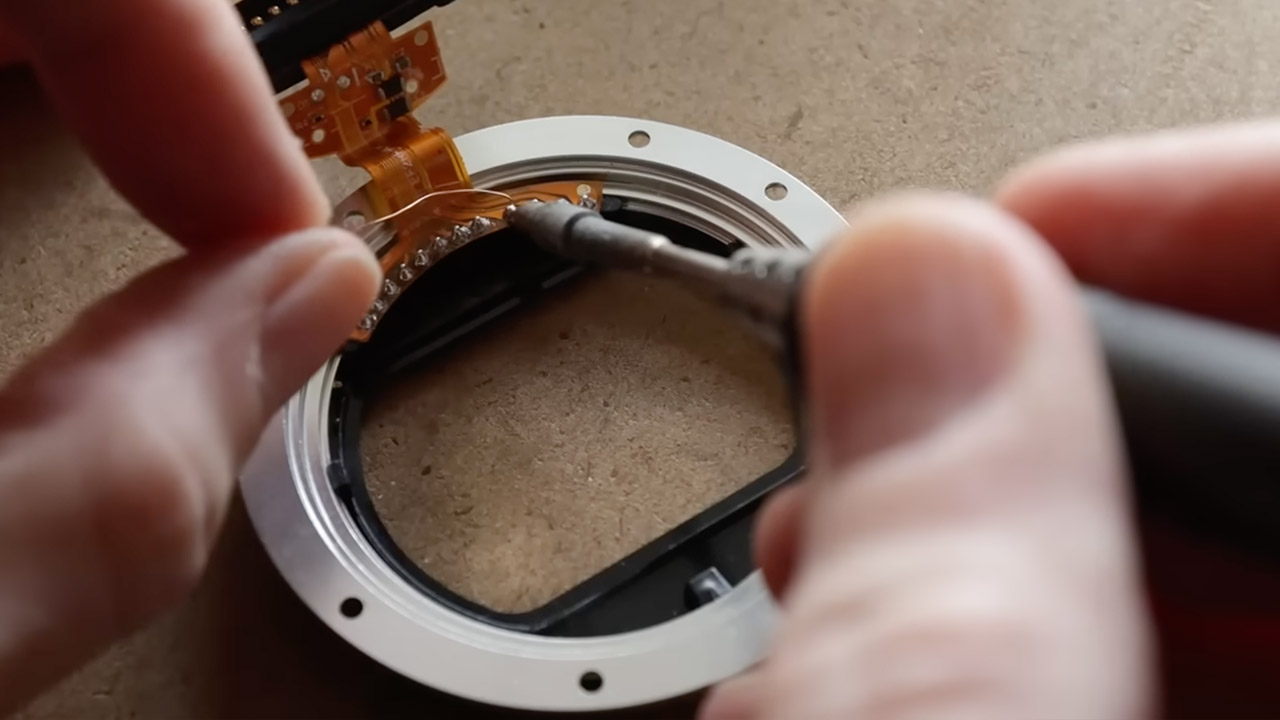
Photographer Ancient crammed a fully functional computer into the tiny gap of a lens adapter, which may seem like an odd location to put one, but that’s just the goal. This adapter, which connects DSLR lenses to mirrorless camera bodies, is often just a hole in a metal item, but Ancient didn’t think that was adequate. Instead, they transformed that often-overlooked sliver into a home for a miniature computer and a programmable aperture.


Ancient recovered a transparent LCD screen from an ancient phone that was well past its prime. After the backlight and other unneeded layers were removed, the screen sat in the light path as if nothing was there, unless the computer commanded it to block the way. Under the LCD is a custom PCB that Ancient designed from scratch, complete with a configuration that allows the entire assembly to fit into the adaptor enclosure.

Sale


Canon PowerShot V10 Compact Vlogging Camera, 1″ CMOS Sensor, 4K Video Streaming, Built‑in Wide‑Angle…
  • Compact Powerhouse: Canon PowerShot V10 vlogging camera features a sleek, pocket-sized design; perfect for on-the-go creativity; enjoy the ultimate…
  • Versatile Vlogging Camera: Incredible low-light capabilities with a 15.2-megapixel 1-inch back-illuminated CMOS sensor; features a retractable…
  • Adaptable Built-In Stand: Comes with an innovative stand that folds in both the front or back; content creator camera with a flexible stand allows for…

Computer Camera Lens Adapter Mod
Power is delivered to the rig via some gold contacts on the adapter, which Ancient meticulously matched to an odd pinout after extensive investigation. A few buttons slapped on the outside of the housing allow you to control the computer directly. The firmware for this little board is available on Github under AncientJames/aperture, and it handles all of the LCD’s sophisticated functions.

Computer Camera Lens Adapter Mod
The LCD functions similarly to a dynamic iris, with no mechanical parts to bother with and only a collection of pixels that change from clear to opaque and back again to change the shape of the aperture in whatever insane way you like. Unlike a regular iris which just opens and shuts the whole thing, this digital one can do all sorts of interesting things, like display a lot of shapes continuously or even generate animations that change over time.

Computer Camera Lens Adapter Mod
Photographers gain a lot more control over bokeh and depth effects. Your out-of-focus area can now be a spinning flower, a collection of caution signs, or even tiny little animations reminiscent of childhood cartoons. When you move the camera while the aperture scans horizontally, you get a really amazing parallax wobble that looks like 3D without the need for repeated exposures or post-processing.

Advertisement

Source link

Continue Reading

Tech

Valve admits Steam Deck availability is affected by memory and storage shortages

Published

on

Don’t expect the Steam Deck to be easier to get anytime soon. Valve has posted a notice on the Steam Deck page with a warning that the handheld gaming console “may be out of stock intermittently” in certain regions “due to memory and storage shortages.” The company also reiterated that the more affordable Steam Deck LCD is no longer in production and will no longer be available once stocks run out. Valve started phasing out the LCD console back in December, which means the OLED handhelds are now the only choice for gamers who want to get a Steam Deck. The company’s notice comes after it completely ran out of Steam Deck units a few days ago.

RAM and storage shortages are plaguing tech manufacturers due to massive demand for those components from the artificial intelligence industry. AI companies have been snapping up available memory chips and hard drives for their rapid infrastructure buildouts, leaving everyone else short. In fact, we couldn’t find any deals for RAM last Black Friday, and Samsung global marketing leader Wonjin Lee warned at CES 2026 that memory price hikes are on the horizon.

Valve also had to delay the release of the Steam Machine and the Steam Frame VR headset due to industry-wide memory and storage shortages. It had intended to start shipping those devices in early 2026, but it admitted in its announcement that it has to rethink their launch date and pricing, insinuating that they could be priced higher than the company had planned,

Source link

Advertisement
Continue Reading

Tech

Should You Clean New Brake Rotors Before Installing Them?

Published

on


Anyone who has worked on a car’s brakes knows that it can be a dirty job. Grease and brake dust get everywhere, though to some people that’s just part of the “fun” of getting your hands dirty while working on cars. 

That being said, there are a number of situations where getting dirty isn’t necessarily a good thing. When you’re reinstalling brake rotors, for example, cleanliness is a big deal, whether you’re using the old rotors or not. You don’t want to introduce corrosion between the brake rotor and the wheel’s hub, and you want to make sure the surface of the brake rotor is free of debris before installing its brake pads. 

What about new brake rotors? Let’s say you just picked up a new set of rotors for your prized 1997 Acura Integra Type R and you’re eager to get them installed. The new rotors look clean right out of the box, so there’s no harm in unwrapping and slapping them on the car, right? Not so fast: You should always take a few minutes to ensure the rotors are clean. 

Advertisement

New brake rotors need to be cleaned before installation

Most of the time, new brake rotors will come covered with a thin film of protective oil to prevent corrosion while it’s sitting in the box. Putting that rotor on the hub without cleaning it first can potentially end up placing this film of oil between the rotor’s surface and brake pads, possibly reducing your vehicle’s ability to stop by increasing your braking distance. It’s the reason why using a lubricant like WD-40 is a bad idea.

A little bit of good, old-fashioned elbow grease is what’s called for here. Giving the rotor a nice scrub with some warm, soapy water and and then drying it thoroughly with a clean cloth will do the trick. Lightly using brake cleaner spray may also help dissolve any more stubborn oil that remains on the brake rotor.

Advertisement

However, it’s definitely not as simple as just giving the rotor a few shots of brake cleaner spray and calling it a day. Carefully inspecting the new rotors for any debris from the manufacturing or packaging process can prevent a lot of headaches down the figurative and literal road. You should also clean the hub you’re mounting the rotor on as well to ensure your new rotor fits well. Use a wire brush on your hub for the best results — even the thinnest coatings of rust can lead to performance problems.


Advertisement

Source link

Continue Reading

Tech

The best noise-canceling headphones for 2026

Published

on

Noise is hard to escape, whether it’s the hum of traffic, the buzz of a busy office or the neighbor’s lawn mower starting up right when you need to focus. That’s where noise-canceling headphones earn their keep. A good pair doesn’t just quiet the world around you, it creates a pocket of calm so you can actually enjoy your music, podcasts or peace and quiet.

Modern noise-canceling headphones have come a long way, combining powerful ANC with clearer sound, longer battery life and smarter features like adaptive modes and multipoint connectivity. Some emphasize comfort for long flights, while others are tuned for audiophiles who want studio-level clarity.

We’ve tested a wide range of options to find the best noise-canceling headphones for every listener. Whether you’re after something lightweight for travel or a premium set for focused work sessions, these picks deliver the sound, silence and comfort you need to tune out the chaos.

Best noise-canceling headphones of 2026

Image for the large product module

Bose/Engadget

Advertisement

Connectivity: Bluetooth | ANC type: Hybrid Adaptive | Customizable ANC: Yes | Max battery life with ANC: 30 hours | Transparency mode: Yes | Weight: 264 grams | Collapsible: Yes (folds both flat and inward)

Read our full Bose QuietComfort Ultra Gen 2 review

The second-gen version of the QuietComfort Ultra Headphones aren’t an entirely new device, but there are impactful upgrades all around. With regard to the ANC specifically, Bose enhanced its ActiveSense tech to smooth any adjustments to sudden spikes in ambient noise levels. This bolsters what was already superb ANC performance, an achievement that gives the company a slight edge over the competition.

The new version also includes significant updates to power management and battery life, with at least five more hours of use in all listening modes. You’ll also get lossless audio over USB-C, putting the QC Ultra Headphones on the same level at Apple’s AirPods Max and others. A comfy fit, reliable controls and folding design round out the spec sheet for this model.

Advertisement
Pros
  • Industry-leading ANC got even better
  • Sound and power upgrades are substantial
Cons
  • Still expensive
  • Glossy finish isn’t for everyone
Image for the large product module

Billy Steele for Engadget

Connectivity: Bluetooth | ANC type: Hybrid Adaptive | Customizable ANC: Yes | Max battery life with ANC: 30 hours | Transparency mode: Yes | Weight: 254 grams | Collapsible: No (ear cups swivel flat but do not fold inward)

Advertisement

Read our full Sony WH-1000XM6 review

Sony’s 1000X line has been our top pick for best wireless headphone for a long time now. That’s still true. However, even though the company packs in lots of premium features alongside excellent sound quality, the M6 sits just below Bose in terms of pure ANC abilities. With the WH-1000XM6, Sony subtly redesigned its flagship headphones, making them way more comfortable to wear for long periods of time. This is an important factor to consider when purchasing over-ear headphones. We also noticed in our tests that the company made noticeable improvements to the active noise cancellation, thanks to a new QN3 chip. There are now 12 total ANC mics as well – the previous model only had eight. This all combines to better block background noise at medium and high frequencies, including human voices.

The M6 also has improved sound quality, thanks to new drivers, some help from mastering engineers and spatial audio upmixing. Its battery life remains the same 30 hours as its predecessor, which is more than enough to get you through several days of work or long international flights. Speak-to-Chat still reduces volume and activates ambient sound when you talk and the M6 can automatically change noise settings based on your location or activity. The only real downside is that they’re $50 more than the WH-1000XM5 at full price ($450).

Advertisement
Pros
  • Improved sound
  • Better ANC performance
  • Tons of handy features
  • Supremely comfy
Cons
  • Price has increased again
  • Speak-to-Chat still needs work
  • Call quality suffers in loud environments
Image for the large product module

Photo by Billy Steele / Engadget

Connectivity: Bluetooth | ANC type: Hybrid | Customizable ANC: Yes | Max battery life with ANC: 35 hours | Transparency mode: Yes | Weight: 192 grams | Collapsible: No (ear cups swivel flat but do not fold inward)

Read our full Sony WH-CH720N review

Advertisement

The WH-CH720N won’t win any design awards with these over-ear headphones, but what you get for the price is well worth some aesthetic sacrifices. Due to their all-plastic construction, the CH720N are super lightweight and comfy, allowing you to wear them for hours at a time. The ANC isn’t as robust in these budget headphones as that in more expensive headphones, but it’s above average for products in this price range. Toss in customizability and a handy transparency mode, and you’ve got a solid device that costs only $150 — and regularly goes for around $100.

In addition to decent noise reduction for a small investment, the CH720N has 35-hour battery life, physical controls, DSEE upscaling and Sony’s 360 Reality Audio. You can also adjust both the EQ and the level of ambient sound. Plus, the company’s ever-present Adaptive Sound Control can automatically switch the sound settings based on your activity or location. Last but not least, the overall sound quality is really impressive for headphones at this price. There’s plenty of detail and subtlety in the audio; you can really hear the gritty texture of distorted guitars and near-pristine acoustic instruments.

Pros
Advertisement
  • Affordably priced
  • Lightweight and comfy
  • Great sound quality
  • Some handy features
Cons
  • ANC struggles in certain environments
  • Lots of plastic
  • No automatic pausing
  • Advanced features reserved for pricier models
Image for the large product module

Billy Steele for Engadget

Connectivity: Bluetooth | ANC type: Adaptive | Customizable ANC: No | Max battery life with ANC: 30 hours | Transparency mode: Yes | Weight: 300 grams | Collapsible: No (ear cups swivel flat but do not fold inward)

Read our full Bowers & Wilkins Px7 S3 review

If you seek to pair excellent sound quality with capable ANC performance, the Px7 S3 are the best option. Sure, you can find more impressive noise-blocking abilities elsewhere, but if you want pristine audio as well, Bowers & Wilkins is the way to go. An adaptive ANC setup uses eight microphones to capture unwanted noise and automatically adjust to any changes. 40mm dynamic full-range bio cellulose drivers pipe in balanced tuning that provides you with the finest detail of any song.

Advertisement

You’ll also get up to 30 hours of battery life with ANC enabled, although you will probably surpass that figure. Plus, handy tools like transparency mode, multipoint Bluetooth and an adjustable EQ cover the basics on the Px7 S3. You won’t find more advanced features than those, but what Bowers & Wilkins does offer here is finely tuned and carefully polished.

Pros
  • Excellent sound quality
  • Comfy fit
  • Sophisticated design
Cons
  • Expensive
  • Awkward button locations
  • A lack of advanced features
Image for the large product module

Photo by Billy Steele / Engadget

Advertisement

Connectivity: Bluetooth | ANC type: Hybrid Adaptive | Customizable ANC: Yes | Max battery life with ANC: 60 hours | Transparency mode: Yes | Weight: 292.9 grams | Collapsible: No (ear cups swivel flat but do not fold inward)

Read our full Sennheiser Momentum 4 Wireless review

Sure, there are headphones that will last longer than Sennheiser’s Momentum 4 Wireless, but they don’t offer the combo of great battery life, ANC and good sound quality you’ll find here. On this model, the company made big improvements to its active noise cancellation, catching up to rivals like Bose and Sony. Specifically, the ANC on the Momentum 4 handles constant distractions more effectively than previous models in the series.

I don’t care for the design Sennheiser introduced on the Momentum 4 as the company ditched what was a quite novel look for something much more generic and plastic. However, the change comes with the bonus of increased comfort. You’ll also get excellent sound quality, in fact, it’s some of the best you’ll find in wireless headphones. There’s noticeable depth to the audio profile with a wide soundstage that complements all genres. You might even discover finer details you previously missed. And, of course, its 60 hours of battery life with ANC on is double what a lot of flagship headphones offer these days.

Advertisement
Pros
  • Impressive 60-hour battery life
  • Better ANC performance
  • Great sound quality
  • Improved comfort
Cons
  • Pinch gesture feels unnecessary
  • Standout design is gone
  • Auto on/off needs work

How to choose the best noise-canceling headphones for you

Design

When you’re shopping for the best wireless headphones, the first thing you’ll need to decide on is wear style. Do you prefer on-ear or over-ear headphones? For the purposes of this guide, I focus on the over-ear style as that’s what most noise-canceling headphones are nowadays. Sure, you can find on-ear models with ANC, but over-ear, active noise-canceling headphones are much more effective at blocking outside sounds since your ears are completely covered.

For gamers, there are also gaming headsets that feature noise cancellation — some even have detachable microphones, so they can double as over-ear headphones. However, for the purpose of this article, we’re only going to be focusing on noise-canceling headphones rather than headsets. Look for models with a comfortable headband and memory foam ear cups to ensure you can wear them for long periods without discomfort.

Many headphones also come with a range of color options, so if aesthetics matter to you, you’ll find plenty of choices beyond just black or white. Whether you’re looking for something neutral or a bold pop of color, brands now offer a variety of styles to match your personal taste.

Advertisement

Finally, if you’re planning to wear your headphones for long periods of time, it’s important to pick a model with a comfortable fit. Memory foam ear cups, an adjustable headband, and lightweight materials can make all the difference during extended listening sessions. After all, great sound is only part of the equation; comfort matters just as much.

Type of noise cancellation

Next, you’ll want to look at the type of ANC a set of headphones offers. You’ll come across terms like “hybrid active noise cancellation” or “hybrid adaptive active noise cancellation,” and there are key differences between the two. A hybrid ANC setup uses microphones on the inside and on the outside of the device to detect outside noise and cancel it out. By analyzing input from both mics, a hybrid system can combat more sounds than “regular” ANC, but it does so at a constant level that doesn’t change.

Adaptive ANC takes the hybrid configuration a step further by continuously adjusting the noise cancellation for changes in your environment and any leakage around the padding of the ear cups. Adaptive noise-canceling also does a better job with wind noise, which can really kill your vibe while using headphones outdoors. Some high-end headphones also support Dolby Atmos, which enhances spatial audio and makes everything from music to movies sound more immersive. For the purposes of this best headphones list, I’m only considering products with hybrid ANC or adaptive ANC setups because those are the most effective at blocking noise and improving your overall listening experience.

Customization

You’ll also want to check to see if the ANC system on a prospective set of headphones offers adjustable levels of noise cancellation or presets. These can help you dial in the amount of ANC you need for various environments, but it can also help you save battery life. Master & Dynamic, for example, has ANC presets that provide both maximum noise blocking and more efficient cancellation that is more energy efficient. Other companies may include a slider in their companion apps that let you adjust the ANC level to your liking. Some high-end models even allow you to fine-tune the ANC for specific types of environments.

Advertisement

How we test noise-canceling headphones

The primary way we test headphones is to wear them as much as possible. I prefer to do this over a one-to-two-week period, but sometimes deadlines don’t allow it. During this time, I listen to a mix of music and podcasts, while also using the headphones to take both voice and video calls.

Since battery life for headphones can be 30 hours or more, I drain the battery with looping music and the volume set at a comfortable level (usually around 75 percent). Due to the longer battery estimates, I’ll typically power the headphones off several times and leave them that way during a review. This simulates real-world use and keeps me from having to constantly monitor the process for over 24 straight hours.

To test ANC performance specifically, I use headphones in a variety of environments, from noisy coffee shops to quiet home offices. When my schedule allows, I use them during air travel since plane noise is a massive distraction to both work and relaxation. Even if I can’t hop on a flight, I’ll simulate a constant roar with white noise machines, bathroom fans, vacuums and more. I also make note of how well each device blocks human voices, which are a key stumbling block for a lot of ANC headphones.

ANC-related features are something else to consider. Here, I do a thorough review of companion apps, testing each feature as I work through the software. Any holdovers from previous models are double checked for improvements or regression. If the headphones I’m testing are an updated version of a previous model, I’ll spend time getting reacquainted with the older set. Ditto for the closest competition for each new set of headphones that I review.

Advertisement

Other noise-canceling headphones we tested

AirPods Max

Apple’s AirPods Max are premium, well-designed over-ear headphones that incorporate all of the best features you find on standard AirPods: solid noise cancellation, spatial audio and easy Siri access. However, their $550 starting price makes them almost prohibitively expensive, even for Apple users. There are better options available at lower prices, but if you can pick up the AirPods Max at a steep discount, they might be worthwhile for the biggest Apple fans among us.

Dyson On-Trac

The On-Trac headphones have an almost infinitely customizable design, and that’s what’s most unique about them. The sound profile offers some nice detail, but lacks dynamic range overall. ANC is average at best and there aren’t any advanced features that will make your life easier. Well, except for the hearing health monitor, which is actually handy. All told, that’s not a lot for a set of $500 headphones.

Sonos Ace

The Sonos Ace is an excellent debut for the company’s first headphones. The combination of refined design, great sound quality and home theater tricks creates a unique formula. However, ANC performance is just okay and key functionality is still in the works for many users.

Sony ULT Wear

If most headphones don’t have the level of bass you desire, the ULT Wear is an option to consider. The low-end thump isn’t for everyone, but there are also plenty of handy features and a refined look to make the $200 set more compelling than many in this price range.

Advertisement

Beats Studio Pro

The Studio Pro lacks basic features like automatic pausing, and multipoint connectivity is only available on Android. Moreover, they’re not very comfortable for people with larger heads. Overall sound quality is improved, though, and voice performance on calls is well above average.

Master & Dynamic MH40 (2nd gen)

The MH40 are a great set of headphones if you favor crisp, clear and natural sound that isn’t overly tuned. This pair showcases the company’s affinity for leather and metal too, but limited customization and short battery life for non-ANC cans kept this set from making the cut.

Bowers & Wilkins Px8

The company’s trademark pristine sound is on display here, but the Px8 is more expensive and not nearly as comfortable as the Px7 S3.

Noble Audio FoKus Apollo

While this is my top pick for overall sound quality in our main guide to the best wireless headphones, the ANC performance is less impressive than the Px7 S3. Bowers & Wilkins gets the nod here for its improved noise cancellation over the Px7 S2 and Px7 S2e, and its overall excellent audio quality.

Advertisement

Noise-canceling headphones FAQs

Does noise cancellation block all noise?

Noise cancellation doesn’t block out all noise, though it does drastically reduce the volume of most external sounds.

Is there a difference between wired vs wireless noise-canceling headphones?

In terms of sound quality, if you have two headphones — one wired and one wireless — with similar specs, the difference is going to be very minimal. However, wireless headphones offer more convenience, allowing you to move around more freely with your headphones on, which is why they often feature noise cancellation to minimize external sounds.

Does noise cancellation impact sound quality?

ANC does bear some weight on sound quality, but the impact of this often doesn’t outweigh the benefits. Noise cancellation reduces ambient noise, allowing a greater focus on audio detail. For audiophiles, however, there may be a small difference in sound fidelity when ANC is turned on.

Source link

Advertisement
Continue Reading

Tech

The Small English Town Swept Up in the Global AI Arms Race

Published

on

A short drive from London, the town of Potters Bar is separated from the village of South Mimms by 85 acres of rolling farmland segmented by a scribble of hedgerows. In one of the fields, a lone oak serves as a rest stop along a public footpath. Lately, the tree has become a site of protest, too. A poster tied to its trunk reads: “NO TO DATA CENTRE.”

In September 2024, a property developer applied for permission to build an industrial-scale data center—one of the largest in Europe—on the farmland. When locals caught wind, they started a Facebook group in hopes of blocking the project. More than 1,000 people signed up.

The local government has so far dismissed the group’s complaints. In January 2025, it granted planning permission. The following October, multinational datacenter operator Equinix acquired the land; it intends to break ground this year.

On a dismal Thursday afternoon in January, I huddled around a gate leading onto the farmland with Ros Naylor—one of the Facebook group’s admins—and six other local residents. They told me that they object to the data center on various grounds, but particularly to the loss of green space, which they see as an invaluable escape route from town to countryside and buffer against the highway and fuel stop visible on the horizon. “The beauty of walking in this area is coming through this space,” says Naylor. “It’s incredibly important for mental health and wellbeing.”

Advertisement

As the UK government races to meet the voracious demand for data centers that can be used to train AI models and run AI applications, similarly large facilities stand to be built across the country. For the people who live in closest proximity, though, the prospect that AI might buoy the economy or infuse new capabilities into their smartphone is thin consolation for what they consider a disruption to a countryside way of life.

Bonfire of Red Tape

Since the mid-20th century, London has been hemmed in on all sides by a nearly contiguous patchwork of land known as the green belt, made up of farms, forest, meadows, and parks. Under UK law, construction is only permitted on green belt land in “very special circumstances.” The aim is to protect areas of countryside from urban encroachment and stop neighboring towns from melding into an amorphous blob.

After the present government came to power in 2024, however, the UK introduced a new land classification—grey belt—to describe underperforming parcels of green belt on which construction should be more readily permitted. At around the same time, the government announced it would treat data centers as “critical national infrastructure.” Together, those changes have cleared the way for a raft of new data centers to be built across the UK.

As they attempt to develop models capable of surpassing human intelligence, the world’s largest AI labs are planning to spend trillions of dollars in aggregate on infrastructure. Across the globe, wherever new data centers are being built, developers are encountering organized resistance from impacted communities.

Advertisement

When the local planning authority approved the Potters Bar data center, its officers concluded that the farmland met the definition of grey belt. They also said their decision was colored by the government’s support for the data center industry. The benefits from an infrastructure development and economic standpoint, they concluded, outweighed the loss of green space.

“People have this slightly romantic idea that all green belt land comprises pristine, rolling green fields. The reality is that this site, along with many others, is anything but that,” says Jeremy Newmark, leader of Hertsmere Borough Council, the constituency that encompasses Potters Bar. “It’s a patch of very low-performing green belt land.”

Source link

Advertisement
Continue Reading

Tech

Today’s NYT Mini Crossword Answers for Feb. 17

Published

on

Looking for the most recent Mini Crossword answer? Click here for today’s Mini Crossword hints, as well as our daily answers and hints for The New York Times Wordle, Strands, Connections and Connections: Sports Edition puzzles.


Need some help with today’s Mini Crossword? I admit, I thought 8-Across was spelled with another letter at the end, but I guess you can spell it two different ways. Read on for all the answers. And if you could use some hints and guidance for daily solving, check out our Mini Crossword tips.

If you’re looking for today’s Wordle, Connections, Connections: Sports Edition and Strands answers, you can visit CNET’s NYT puzzle hints page.

Advertisement

Read more: Tips and Tricks for Solving The New York Times Mini Crossword

Let’s get to those Mini Crossword clues and answers.

completed-nyt-mini-crossword-for-feb-17-2026.png

The completed NYT Mini Crossword puzzle for Feb. 17, 2026.

Advertisement

NYT/Screenshot by CNET

Mini across clues and answers

1A clue: Prefix meaning “eight”
Answer: OCTO

5A clue: Classic poem that begins “I saw the best minds of my generation destroyed by madness”
Answer: HOWL

6A clue: One of the Jenners
Answer: KYLIE

Advertisement

7A clue: As one word: A henchman/As two words: “Please proceed”
Answer: GOON

8A clue: Prickly seedcases
Answer: BURS

Mini down clues and answers

1D clue: “Stop, I’m blushing!”
Answer: OHYOU

2D clue: Indicator of difficulty in Connections
Answer: COLOR

Advertisement

3D clue: Identical siblings
Answer: TWINS

4D clue: Repeated cheer at a soccer stadium
Answer: OLE

6D clue: Soviet spy org.
Answer: KGB

Advertisement

Source link

Continue Reading

Tech

Anthropic and Infosys to partner on agentic AI

Published

on

Claude and Topaz platforms will be integrated to create AI agents for enterprise customers.

Indian conglomerate Infosys will team up with AI giant Anthropic to pool their collective resources for agentic AI enterprise solutions in telecoms, financial services, software development and manufacturing.

The integration of Anthropic’s Claude platform with Infosys’s own AI offering, Topaz, will help customers to automate complex workflows while adhering to high standards of governance and transparency, the company said today (17 February).

In a statement on the partnership, Infosys also said that its goal is to help clients build custom AI agents that can work persistently across long, complex processes rather than one-off interactions, while helping organisations to modernise legacy systems by combining Topaz and Claude.

Advertisement

Salil Parekh, the CEO of Infosys, said: “AI is not just transforming business – it is redefining the way industries operate and innovate. Our collaboration with Anthropic marks a strategic leap toward advancing enterprise AI, enabling organizations to unlock value and become more intelligent, resilient, and responsible.”

India is this week hosting a major AI summit as it attempts to show the world that it can compete with the US and China in the constantly evolving global AI race. World leaders, tech moguls, AI founders and investors will attend the New Delhi conference.

Anthropic CEO and co-founder Dario Amodei said of the new partnership: “There’s a big gap between an AI model that works in a demo and one that works in a regulated industry – and if you want to close that gap, you need domain expertise.

“Infosys has exactly that kind of expertise across important industries: telecom, financial services and manufacturing. Their developers are already using Claude Code to accelerate their work and to create AI agents for industries that demand precision, compliance and deep domain knowledge.”

Advertisement

This week, Anthropic also announced partnerships with Air India and Cognizant around internal deployment of Claude.

Infosys, based in Bengaluru, has operated for more than 40 years and employs more than 300,000 people working with clients in around 60 countries. Anthropic was recently valued at around $380bn after a Series G funding round.

Don’t miss out on the knowledge you need to succeed. Sign up for the Daily Brief, Silicon Republic’s digest of need-to-know sci-tech news.

Source link

Advertisement
Continue Reading

Tech

Styx: Blades of Greeds review: a flawed, but fun stealth adventure

Published

on

Why you can trust TechRadar


We spend hours testing every product or service we review, so you can be sure you’re buying the best. Find out more about how we test.

Styx: Blades of Greed isn’t an Assassin’s Creed game. It’s not a Sniper Elite, a Hitman, or part of any of the other popular stealth action franchises that have received new entries in the last couple of years. This is a proper, old-fashioned stealth game – the kind that you really don’t see much of anymore.

Review info

Platform reviewed: PC
Available on: PC, PS5, Xbox Series X and Series S
Release date: February 19, 2026

Advertisement

Source link

Continue Reading

Tech

Fractal Scape review: looks like it’s designed by Apple, but it’s far more generous with its features

Published

on

Why you can trust TechRadar


We spend hours testing every product or service we review, so you can be sure you’re buying the best. Find out more about how we test.

Fractal Scape review: one-minute review

The bar keeps being raised in gaming peripherals lately, and as such, there’s no room for overpriced or feature-bloated models whose specs don’t translate to a great user experience. Fractal Design clearly knows this very well as it enters the wireless gaming headset market with a $200 model that looks like something Apple would try to sell you for $500, and comes with a charging dock and feature set that you’ll be more accustomed to seeing from pricer Astro headsets.

The looks will be a big selling point for many, as you’d expect from Fractal and its reputation for understated, Scandi-style PC cases. Available in both black and white, it’s got a grown-up look quite apart from the gaming peripherals of yesteryear, and with a detachable mic and Bluetooth connectivity, you can quite comfortably leave the house wearing the Fractal Design Scape as your smartphone’s headset without broadcasting an overstated ‘gamer gear’ look to the world and its judging eyes.

Advertisement

Source link

Advertisement
Continue Reading

Trending

Copyright © 2025