Infectious diseases borne by mosquitoes—such as malaria, dengue fever, and Zika fever—claim more than 770,000 lives worldwide each year. Understanding how mosquitoes find humans has long been a challenge in controlling the spread of these diseases. However, little has been known about how mosquitoes integrate multiple cues, including visual information and carbon dioxide, to approach their targets.
In this context, a research team led by the Georgia Institute of Technology and Massachusetts Institute of Technology has succeeded in automatically deriving a dynamic model governing mosquito flight by applying Bayesian inference statistical methods to a vast amount of data recording mosquito movements.
Bayesian inference is a statistical technique that probabilistically determines the most plausible model parameters from observed data. Using this method, the researchers were able to construct a mathematical model that could reproduce experimental results with high accuracy while compressing mosquito behavior to fewer than 30 parameters.
“The big question was, how do mosquitoes find a human target?” explains Cheng-Yi Fei, a postdoctoral researcher at MIT. “There were previous experimental studies on what kind of cues might be important. But nothing has been especially quantitative.”
Advertisement
Mosquitoes Have Two Modes of Flight
The research team released two female Aedes aegypti mosquitoes into a sealed experimental space and recorded their flight paths in 0.01-second increments using two infrared cameras. The data obtained from a total of 20 experiments exceeds 53 million points, with more than 400,000 flight paths recorded. This represents the largest dataset ever collected for a study quantitatively measuring mosquito flight.
The experiment began by photographing mosquitoes flying around human subjects, who were dressed in dark-colored clothing. This observation revealed that Aedes aegypti mosquitoes were concentrating their approach on human heads. This was a fundamental discovery that served as the starting point for the entire study.
Next, the researchers experimented with subjects dressed in black on one side and white on the other. They found that although carbon dioxide and body odor were emitted equally from both sides of the body, the mosquitoes’ flight trajectories were concentrated only on the black side. Although strange at first glance, this result vividly demonstrated that visual stimuli play an important role in the search for targets in a windless environment.
Furthermore, a detailed analysis of mosquitoes flying in a stimulant-free environment revealed that their flight patterns could be broadly classified into two types. One was the active state, in which they actively explored the space while maintaining a speed of approximately 0.7 meter per second. The other was the idle state, in which they flew almost without using thrust. The idle state is thought to be a preparation stage for landing and was observed more frequently near the ceiling of the experimental space.
Advertisement
Analysis of mosquito responses to visual stimuli revealed that mosquitoes are attracted to dark objects and slow down when they get within about 40 centimeters. However, without additional cues such as body odor, humidity, or heat, mosquitoes often flew away even after approaching their target. This suggests that visual stimuli alone are insufficient to induce landing and blood-sucking.
The response to carbon dioxide sources was entirely different. Mosquitoes that entered within a radius of about 40 centimeters of the carbon dioxide source suddenly slowed to 0.2 m/s and began flying erratically, swaying without a clear direction. Numerical simulations also showed that mosquitoes can detect carbon dioxide concentrations as low as 0.1 percent and that their detection range extends to approximately 50 centimeters from the source.
Furthermore, the mosquito response changed even more dramatically when visual stimuli and carbon dioxide were presented simultaneously. The mosquitoes began to circle around the target, and significantly more mosquitoes concentrated near the target than when either stimulus was used on its own.
In recent years, cryptocurrency theft operations have evolved far beyond isolated phishing pages and fake NFT mint scams. What once consisted mainly of individual actors running malicious wallet-connection pages has increasingly developed into a structured underground service economy built around “Drainer-as-a-Service” (DaaS) platforms.
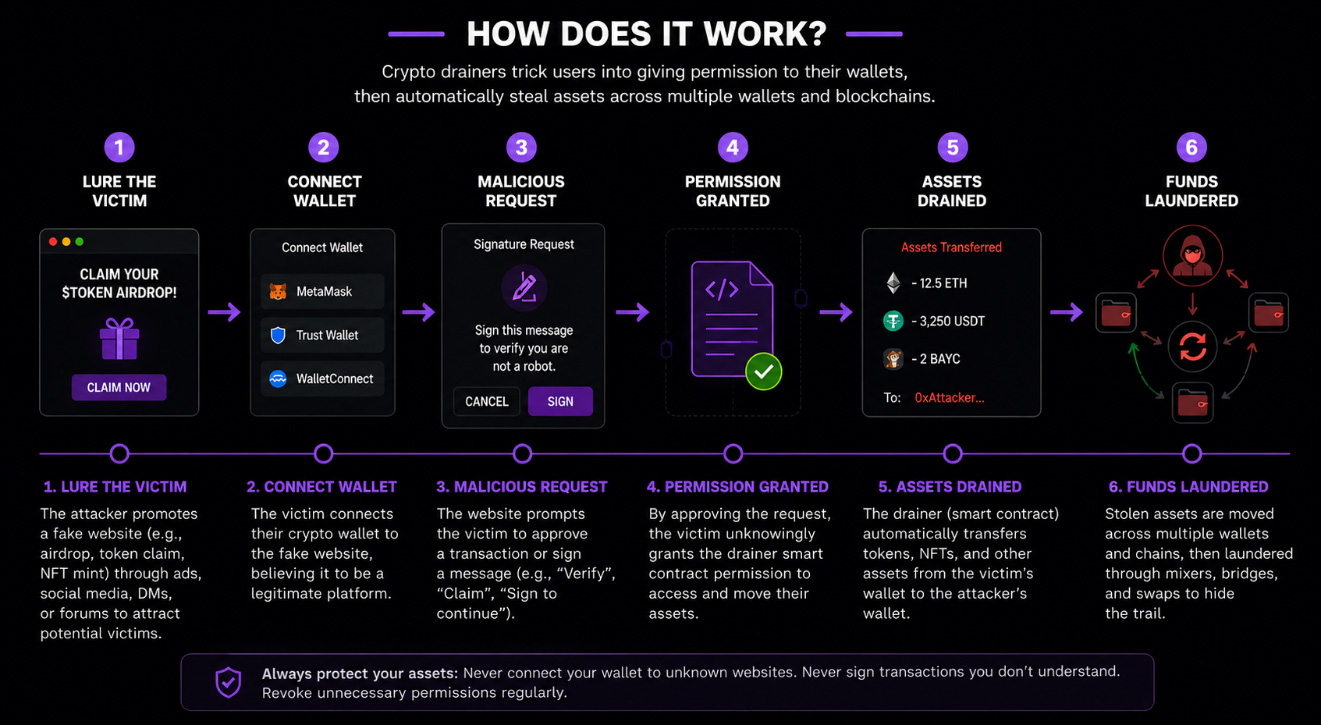
Unlike traditional malware operations, crypto drainers typically rely on social engineering rather than device compromise. Victims are lured to fake crypto, NFT, airdrop, or DeFi websites and asked to connect their wallets. Once a malicious transaction or wallet signature is approved, the drainer can transfer cryptocurrency assets directly from the victim’s wallet, often within seconds.
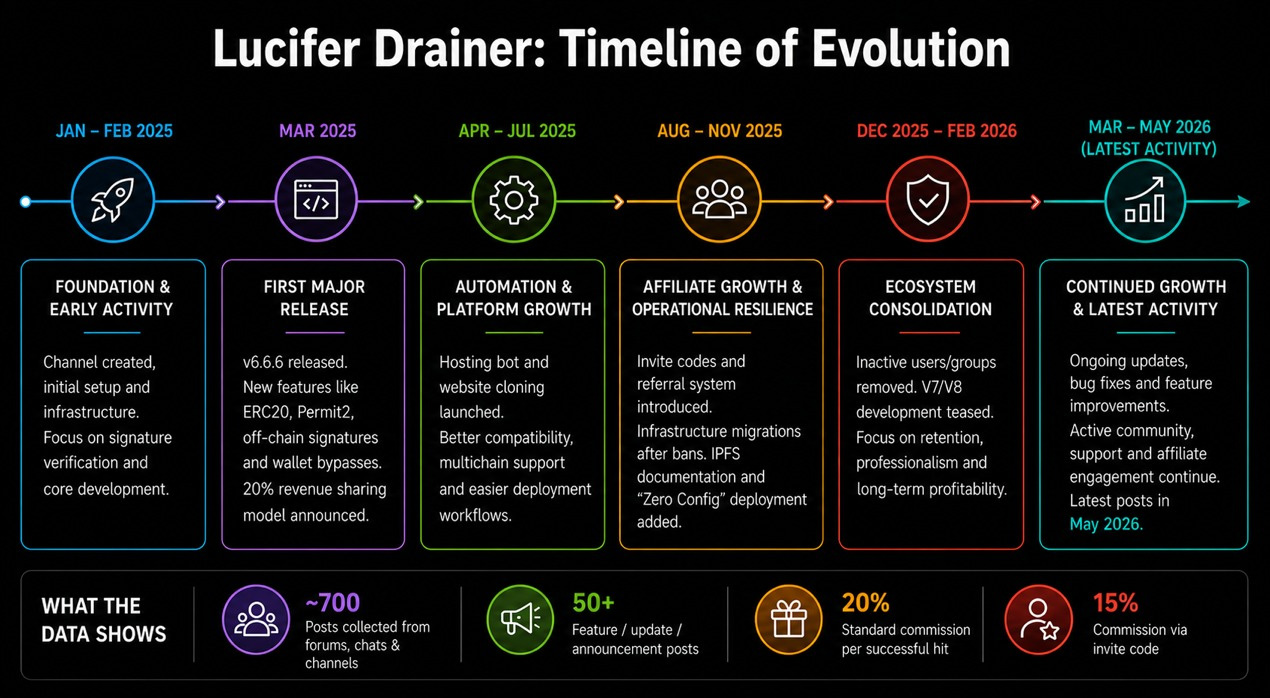
An analysis conducted by Flare researchers of approximately 700 posts collected from underground forums, chats, and channels related to the “Lucifer DaaS” between January 2025 and early 2026 provides a rare look into how modern drainer operations function internally.
The findings reveal an increasingly professionalized ecosystem focused on affiliate growth, automation, phishing scalability, wallet-security bypasses, and operational resilience.
Advertisement
The analyzed data suggests that modern drainer operations increasingly function similarly to legitimate SaaS businesses. Actors behind Lucifer discussed software releases, bug fixes, affiliate commissions, customer support, hosting recommendations, deployment automation, website cloning, and referral systems, offering a deep dive into how DaaS ecosystems are evolving inside underground communities.
What is a Drainer and How Does it Work
A crypto drainer is a tool designed to steal cryptocurrency assets directly from victims’ wallets by abusing wallet permissions and transaction approvals. Instead of hacking the wallet itself, attackers typically lure victims to fake crypto, NFT, airdrop, DeFi, or token-claim websites and trick them into connecting their wallets and approving malicious requests or signatures.
Once permission is granted, the drainer can automatically transfer tokens, NFTs, or other digital assets from the victim’s wallet to attacker-controlled wallets, often within seconds and across multiple blockchains.
Drainer-as-a-Service
In this model, the operator develops and maintains the draining infrastructure, while affiliates bring victims. The affiliate’s job is to generate traffic through phishing links, fake websites, compromised social media accounts, ads, spam, or direct messages. The DaaS operator handles the wallet interaction, transaction logic, alerts, and asset-draining flow.
Advertisement
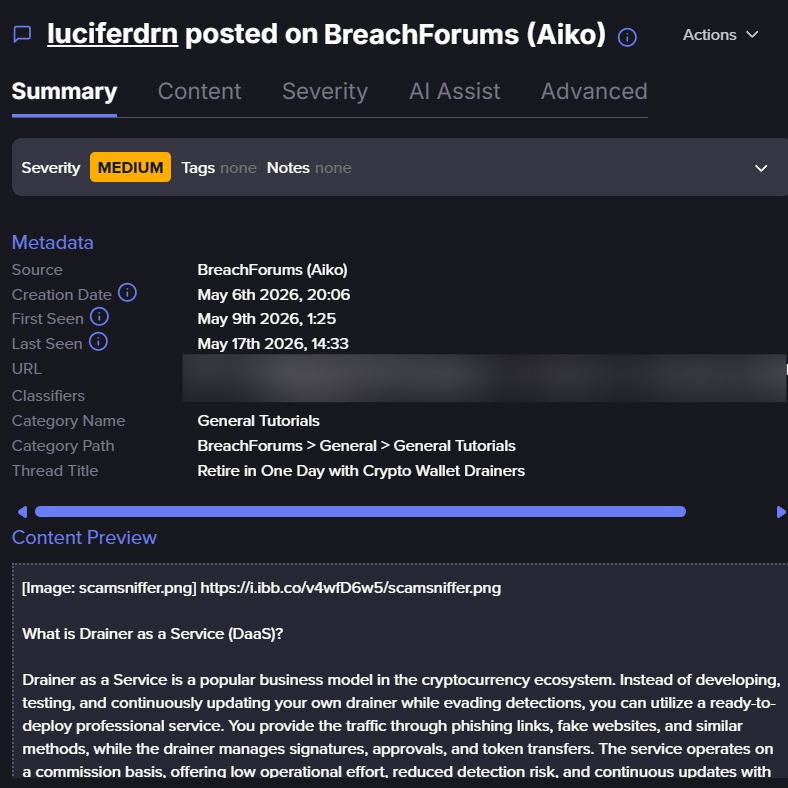
The Lucifer dataset shows this model clearly. In one promotional post, the actor explains that affiliates provide “traffic through phishing links, fake websites, and similar methods,” while the service manages “signatures, approvals, and token transfers.” The same post describes the service as commission-based and presents Lucifer Drainer as a “professional solution” with ERC20 support, Permit2, off-chain signatures, wallet-security bypasses, multichain support, and continued product updates.
Screenshot from Lucifer Drainer Telegram channel
That language is important. The operators are not selling a one-time malware kit. They are selling participation in a platform.
Screenshot from Lucifer Drainer Telegram channel
Their Telegram channel reinforces the same point. Lucifer repeatedly states that the software is “not for sale,” and that the operators take a 20% commission from successful “hits.” In May 2025, the channel wrote that it does not sell or lease the software and only splits “20% per hit.”
This is closer to the ransomware affiliate model than to old-school phishing kits. While the developers maintain the product, the affiliates bring traffic to monetize the operation and the profits are shared.
DaaS platforms like Lucifer recruit affiliates through underground forums and Telegram channels — the same sources Flare monitors continuously.
Flare tracks drainer ecosystems, phishing infrastructure chatter, and credential exposure across thousands of dark web sources, so your security team sees threats before they reach your users.
The Lucifer channel shows a drainer operation evolving publicly into a structured DaaS platform.
In March 2025, the group announced version 6.6.6, advertising ERC20 support, Permit2 abuse, off-chain signatures, Telegram notifications, wallet-security bypasses, and multichain functionality. The same announcement again emphasized that the software was not for sale and that the operators take a 20% commission from successful “hits.”
From then on, the channel increasingly resembled a software development feed more than a typical malware operation. The operators announced bug fixes, wallet compatibility updates, Telegram-browser support, deployment improvements, and hosting features.
One of the most notable additions was a website-cloning feature that allowed affiliates to clone phishing pages and receive ZIP files preloaded with the latest Lucifer code.
Advertisement
Over time, the operation moved heavily toward automation. Later updates introduced “Zero Config” deployment workflows, allowing affiliates to upload static files, automatically generate phishing-ready packages, and deploy infrastructure with minimal manual work. This significantly lowered the technical barrier for affiliates.
Screenshot from Flare platform for one of Lucifer’s team posts. Sign up for the free trial to access if you aren’t already a customer.
The broader dataset also shows Lucifer actively recruiting across underground communities where other drainer brands such as Inferno, Angel, Venom, Nova, Ghost, Medusa, Vega, and Monkey were discussed. A recurring theme across the posts was “traffic.” The operators repeatedly emphasized that affiliates needed victims and phishing distribution capabilities more than advanced technical skills.
However, the group also warned that complete beginners were not welcome, suggesting the operators prioritized experienced affiliates capable of generating reliable phishing traffic with limited operational overhead.
Resilience After Takedowns
Like other underground services, Lucifer also shows signs of operational resilience.
In August 2025, their Telegram bots were banned, so they instructed users in their channel to create new bots and grant them admin privileges. The group also gave instructions for resolving configuration problems after migration.
Advertisement
In November 2025, Lucifer said a documentation domain hosted on Google Firebase had been suspended after research reports. The group responded by moving documentation to InterPlanetary File System (IPFS is a decentralized, peer-to-peer file-sharing protocol used to store and distribute data), presenting decentralization as a way to keep operations running after takedowns.
This mirrors behavior seen across the wider drainer ecosystem. Check Point’s research on “Inferno Drainer” described how the operation continued adapting despite wallet warnings, blacklists, and anti-phishing defenses.
Why Drainers Became So Attractive for Cybercriminals
Drainers became popular because they match the structure of modern crypto crime.
Crypto assets are liquid, fast-moving, and often irreversible once transferred. Attackers do not need to compromise a bank portal or wait for a mule account. A successful wallet approval can immediately “drain” assets.
Advertisement
They also benefit from user confusion. Wallet prompts, approvals, signatures, permits, and token allowances are still difficult for many users to understand. Attackers exploit that complexity by making malicious prompts look like routine Web3 interactions.
The abuse of the authorization mechanisms Permit and Permit2 became especially attractive because these mechanisms can allow token transfers through signed permissions rather than obvious direct transfers. That makes the user interaction feel less alarming, while still giving attackers a path to assets.
Beyond Lucifer
The findings suggest that Lucifer is part of a much broader underground ecosystem that includes operations and other wallet-draining services competing for affiliates, traffic, and visibility across underground communities.
The analyzed Lucifer dataset provides a rare public look into how modern DaaS operations function behind the scenes. The collected posts reveal an ecosystem focused on continuous development, affiliate retention, infrastructure resilience, automation, and operational scalability.
Advertisement
The findings also highlight how modern crypto-drainer operations increasingly resemble legitimate SaaS businesses. Rather than selling a static phishing kit, DaaS operators now maintain active platforms designed to simplify deployment, reduce technical barriers, and maximize affiliate efficiency.
Features such as website cloning, automated ZIP deployment, “Zero Config” workflows, affiliate commissions, and support channels demonstrate how operational maturity has become a competitive advantage within the ecosystem.
Crypto drainers are no longer isolated phishing pages operated by individual actors, but increasingly structured service platforms built around scalability and repeatability. As these ecosystems continue lowering the technical barrier for affiliates, wallet theft operations may become more accessible, more automated, and more difficult to disrupt at scale.
How to Spot a Crypto Drainer Before it Empties Your Wallet
DaaS platforms are designed to make malicious wallet interactions look routine. Knowing what to look for is the first line of defense. Watch for these warning signs before connecting your wallet to any crypto site:
Advertisement
Wallet connection requested immediately on a crypto/NFT/airdrop site.
Unexpected signature or “Approve” requests before receiving anything.
Requests for unlimited token approvals or Permit/Permit2 permissions.
“Gasless claim” or “off-chain signature” prompts that still require wallet approval.
Links received through Telegram, Discord, X/Twitter DMs, or fake support accounts.
Recently created or suspicious-looking crypto domains.
Websites cloned from legitimate DeFi, NFT, or exchange platforms.
Advertisement
Multiple redirects before reaching the wallet prompt.
Wallet warnings ignored or bypassed.
Using a main wallet with large holdings for unknown Web3 sites.
Repeated prompts to reconnect or re-sign transactions.
Advertisement
Influencer or project accounts suddenly pushing unexpected mint/claim links.
Browser tabs opening new wallet approval windows automatically.
Transaction details that are vague, empty, or difficult to understand.
“Free NFT” or “free token” campaigns requiring approvals first.
Advertisement
Discord or Telegram admins privately messaging users first.
Websites asking users to disable wallet security protections.
Wallet drained immediately after signing a message instead of sending funds manually.
Any platform pressuring users to act fast before verifying legitimacy.
How Flare Can Help
Flare provides early visibility into fraud operations before they reach victims. By monitoring underground forums, Telegram channels, and marketplaces, Flare detects leaked data, victim lists, and recruitment activity tied to Caller-as-a-Service campaigns.
Advertisement
This allows organizations to proactively respond (reset credentials, alert users, and strengthen defenses) before attackers strike, reducing both risk and impact.
There was a time when Craftsman’s return policy was legendary. You used to be able to walk into any Sears and get a brand-new tool on the spot. It didn’t matter if it was a factory defect or user error that broke the tool; you’d get a replacement, no questions asked. This all changed in the late 2010s after Stanley Black and Decker purchased the brand, upon which the wording on Craftsman’s tool warranty became significantly more restrictive.
There is still a lifetime warranty for certain hand tools and mechanics tools, though other products have more limited warranties, either in the types of damage covered or the length of coverage. Craftsman’s power tools, for example, only have warranties ranging from one to three years, depending on the tool. In any case, Craftsman products must be returned to an official retailer such as Lowe’s or Ace Hardware, and this is where some users have encountered friction. Some buyers stated that exchanges have been refused outright, while others have claimed that stores may not offer replacements for outdated models.
Advertisement
While Craftsman’s warranty is comparable to most other brands on the market today, it’s no longer necessarily outstanding. Several other tool brands also offer lifetime warranties on hand tools, and some have coverage that’s better than what Craftsman currently provides. Those who are thinking of investing in a brand and want to feel secure in their purchases might first want to check what sort of coverage these other brands offer.
Advertisement
Tekton
Tekton is a family-owned business based in Grand Rapids, Michigan, that makes a wide range of hand tools. The brand has a reputation for quality and offers some pretty impressive coverage to complement it. In fact, some might argue that Tekton has the best and most customer-friendly warranty policy in the tool industry today. The company’s policy is simple: If a tool doesn’t work the way it’s supposed to, the company will replace it. There are no time limits, and it doesn’t matter how old a tool is or how long it’s been since it was purchased. You don’t need to worry about shipping costs, nor do you need to have a receipt. This is particularly nice for hand-me-down tools or those purchased second-hand.
The process is simple. All you need to do is take a picture of the broken tool and upload it to the Warranty page on the Tekton website along with the tool’s item number and a brief description of what’s wrong with it. You then provide your name, address, and contact information, and then Tekton will ship a new one to your home for free. You don’t even need to leave your house.
Reddit is full of first-hand accounts from buyers who have used Tekton’s warranty claim service and experienced no issues. Many have also claimed that replacement parts arrived within just a few days, with some even receiving replacements the day after they filed the report.
Harbor Freight has a reputation as a budget tool retailer. Much of the company’s business model is based on cutting out the middlemen, offering popular tools through its own store-owned brands at lower prices than the competition. The company also has a range of warranty policies for its different brands and tool types, some of which are pretty great.
The company’s best warranty is for its hand tools. If you have a broken Harbor Freight hand tool, you can walk into any Harbor Freight, and they will swap it out for a new one on the spot if you’re the original owner, replacing older models with comparable new ones if a product has been discontinued. This applies to all hand tools in the Pittsburgh, Quinn, Doyle, and Icon lines.
Advertisement
Many Reddit users have even claimed that they didn’t need a receipt to claim a warranty, and that they were able to walk into the store with a broken tool and walk out with a new one, no questions asked. That said, others have suggested making an account, as it will allow Harbor Freight to track your purchase history and pull up proof of purchase if necessary. The company’s Hercules brand also boasts an impressive 5-year limited warranty for its power tools, significantly better than the 3-year warranty offered by Craftsman.
Advertisement
Sonic Tools
Sonic Tools is best known for its automotive and aviation products as well as its Sonic Foam System storage solutions. The professional-grade manufacturer is popular among mechanics and industrial technicians alike, and it promises a lifetime warranty.
Like Tekton, Sonic Tools has an online warranty claim process. Start by going to the Warranty page on the Sonic Tools USA website and filling in your personal information, shipping information, the reason that you’re claiming the warranty, and the tool’s part number. You then attach photos of the tool and a close-up of the printed part number on the tool and submit the form. Sonic claims that it will process the warranty within 24 hours and immediately ship out a replacement tool. This doesn’t require a receipt or any other form of proof of purchase. This warranty covers most Sonic Tools products, with only a few caveats regarding consumable items, products not marketed under the Sonic Tools brand, and items that have been subjected to clear misuse or modification.
While not all users are satisfied with Sonic Tools’ build quality and pricing, the sentiment regarding the company’s warranty is extremely positive. Redditors have reported receiving replacement tools very quickly, sometimes within a week of submitting through the portal, and it’s hard to find anyone who claims to have had a bad experience with the warranty process.
Advertisement
Kobalt
Kobalt, Lowe’s in-house brand, has an exceptionally large catalog of hand and power tools. These tools are often on the budget side of the spectrum, but are well known for offering decent quality and performance. Like Craftsman, not every product that Kobalt makes is covered by the same warranty. It offers 1-year, 3-year, 5-year, and lifetime guarantees, with power tools typically getting the 5-year guarantee and hand tools generally getting lifetime coverage. On top of this, Lowe’s offers a satisfaction guarantee that allows you to return or replace nearly any product you aren’t happy with within 90 days.
To make an exchange, you just need to take the tool to any Lowe’s. Most warranties only cover material and workmanship defects and require valid proof of purchase. That said, Lowe’s lets users create an account to track their purchase history, which can be used instead of a physical receipt. Additionally, products covered by Lowe’s lifetime guarantee can be exchanged, no questions asked.
Advertisement
On paper, you should be able to get any warrantied tool replaced at your local Lowe’s, but owners’ experiences have varied. Some buyers have stated that the process is smooth and easy, but others have claimed to have had difficulties getting Lowe’s to honor the warranty in-store and were told to contact Kobalt for a replacement instead.
Advertisement
SK Professional Tools
Another automotive tool brand with a top-quality warranty worth considering is SK Professional Tools. The company has been a staple for decades and specializes in high-end, industrial-quality hand tools, and it offers a limited lifetime warranty on all of its products. This warranty covers damage acquired with normal use as well as any manufacturing defects, but doesn’t cover damage caused by misuse or modification.
To file a claim, you’ll need to go to the Warranty Claim section on the SK Professional Tools website. This gives you the option to request a return for store credit, exchange the broken tool for a comparable product, or receive a ratchet or breaker bar repair kit to fix your existing tool. You’ll then enter the product information, a description of the reason for the claim, a photo of the product, and your personal and shipping information. Once this is completed, the company’s customer service team will contact you and provide you with return instructions.
This isn’t quite as hassle-free as some of the others, but it’s still a relatively simple return process with great coverage. Owners’ real-world experiences back it up, too, with customer reports on Reddit outlining positive experiences with SK’s return process. Some of them also claimed that they were able to resolve warranty claims simply by calling the company’s customer service line.
Advertisement
Our methodology
Craftsman was among the first tool brands to offer a lifetime warranty on its hand tools. That said, the company’s warranty, while still competitive, isn’t as legendary as it once was. There are now several other brands that offer lifetime warranties on their hand tools and many that offer longer coverage periods on their power tools.
To choose brands that offer coverage as good or better than Craftsman, we started by looking at the top tool brands and examining their warranty periods. Narrowing it down to options that offered lifetime warranties on hand tools and exceptional warranties on power tools (when applicable), we dug deeper into the return process to find the ones with the simplest warranty processes. We also screened out brands with excessive loopholes that allow them to avoid replacing a tool under reasonable circumstances.
Advertisement
Once we selected our brands, we turned to owner reports and experiences, primarily on Reddit, to see how well the return systems work in practice. That way, a potential tool buyer will have as detailed a picture of a brand’s warranty coverage as possible before they spend their hard-earned money.
U.S. and Canadian authorities arrested and charged a Canadian man with operating the KimWolf distributed denial-of-service (DDoS) botnet, which infected nearly two million devices worldwide.
23-year-old Jacob Butler (also known online as “Dort”) was arrested by Canadian authorities in Ottawa on Wednesday pursuant to an extradition warrant.
According to a criminal complaint unsealed on Thursday in the District of Alaska, Butler was taken into custody based on IP address and online account information, transaction records, and online messaging records that exposed his links to the KimWolf botnet.
Butler now awaits extradition to the U.S. and is facing one count of aiding and abetting computer intrusions, which carries a maximum sentence of 10 years in prison.
Advertisement
As detailed in court documents, KimWolf operated as a DDoS-for-hire service and was used by cybercriminals to launch attacks reaching nearly 30 terabits per second, the largest DDoS attack publicly disclosed at the time.
Using a cybercrime-as-a-service model, Butler sold access to a massive network of compromised enslaved systems (ranging from digital photo frames and web cameras to Android-based TV boxes and streaming devices).
The botnet was used in more than 25,000 attacks targeting computers and servers worldwide (including Department of Defense Information Network IP addresses) and caused financial losses exceeding $1 million for some victims.
Researchers at cybersecurity firm Synthient, who have been tracking KimWolf’s rapid expansion, noted in January that KimWolf grew to almost 2 million after compromising Android devices in attacks exploiting vulnerabilities in residential proxy networks, and that it generated approximately 12 million unique IP addresses each week.
Advertisement
Kimwolf infections heatmap (Synthient)
Separately, the Central District of California unsealed seizure warrants targeting 45 DDoS-for-hire platforms, which disrupted multiple DDoS platforms, including at least one that collaborated with the KimWolf botnet.
“These seizures broadly disrupted the DDoS platforms, including at least one that collaborated with Butler’s KimWolf botnet,” the Justice Department said yesterday.
“U.S. authorities also seized domain records associated with many of these services, redirecting them to an authorized ‘splash page,’ which displays a warning to potential visitors that DDoS services are illegal.”
Butler’s arrest follows a March 2026 international operation in which U.S., German, and Canadian authorities seized command-and-control infrastructure used by KimWolf and three related botnets (Aisuru, JackSkid, and Mossad), which collectively infected over 3 million IoT devices.
As the U.S. Justice Department said at the time, the four botnets collectively infected more than 3 million IoT devices, including web cameras, digital video recorders, and Wi-Fi routers, many of them in the United States.
Advertisement
Automated pentesting tools deliver real value, but they were built to answer one question: can an attacker move through the network? They were not built to test whether your controls block threats, your detection rules fire, or your cloud configs hold.
This guide covers the 6 surfaces you actually need to validate.
Ubuntu Pastebin has long been used for sharing logs, crash reports, config files, and terminal output across IRC, Ask Ubuntu, forums, bug reports, Reddit, and countless troubleshooting guides scattered around the internet. The bigger concern is link rot. Once the shutdown happens, years of old support discussions could lose critical debugging information overnight. Community members have already pointed out that some Ubuntu packages and scripts still reference paste.ubuntu.com directly.
While it is understandable that aging services eventually get retired, the extremely short transition period is rubbing many Linux users the wrong way, especially in a community where old documentation and archived troubleshooting threads still regularly help people solve problems a decade later.
Storage is expensive these days, whether you’re looking at the prices of spinning rust or magic little sticks of silicon. But what if there was some benevolent overlord that you could trick into giving you unlimited storage? That’s where Noisecloud comes in.
Created by [Lucas], Noisecloud is a tool that lets you use YouTube as a form of effectively-unlimited file storage. It works by taking whatever file data you have on hand, and turns it into frames of digital noise that can be stored and transported as an MP4 file and uploaded to YouTube. The encoding process involves first compressing the data with gzip, then packaging it into a high-constrast series of video frames that are then encoded with FFmpeg. Video containers can be produced in various resolutions, all the way down to 640×360 @ 30 fps. There’s also a special “TikTok mode” which is optimised to best preserve data on short form sites that use vertical orientation as default. More commentary from the creator is available via the supporting article on Github.
It’s probably not a practical way to store your files, given the fussy encoding and decoding required to actually use the data. However, it’s an interesting proof of concept that explores how data can be stashed in unexpected places via publicly-accessible services. We’ve explored similar work before, too.
Recently, the biggest trend in kitchen gadgets has been “hands-free” and AI-powered devices that act as automated countertop assistants. There are plenty of devices that exist now for people who want to cook more (or at least look like someone who has their life together) but don’t always have the energy for a full kitchen marathon after work.
From a robot stirring your soup to a bread machine that kneads your dough while you watch TV, here is a list of gadgets that may make you feel like you’ve won adulthood. Or at least make cooking feel much less intimidating.
Image Credits:Nosh
The Nosh Chef Robot is a huge upgrade from a slow cooker or Instant Pot, as it can manage much of the cooking process autonomously.
The AI-powered robot dispenses exact amounts of oils, spices, and ingredients from reusable ingredient cartridges. Users still need to load ingredients beforehand, but once everything is in place, the robot can roughly chop, stir, sauté, portion, plate, and self-clean after meals. However, it can’t bake, roast, or steam, so there are limitations, but the company says it supports more than 500 dishes, such as stir-fry and curry.
The system runs on NoshOS, a proprietary AI trained on thousands of recipes and cooking techniques. Built-in sensors monitor moisture, texture, and browning levels in real time, adjusting heat and seasoning throughout the cooking process. It can even recognize ingredients already loaded into the device and recommend meals based on what’s available.
Advertisement
The Nosh One is currently available for preorder on Kickstarter, with shipments expected in summer 2026.
Image Credits:StirMate
An automatic soup stirrer sounds unnecessary until you use it once, and suddenly you’re hooked.
Instead of standing over the stove painstakingly stirring soup, sauce, risotto, pudding, or oatmeal, the StirMate Automatic Pot Stirrer rotates around the pot for you while you prep other ingredients, answer emails, or scroll on your phone.
It could also serve as a helpful accessibility tool for people with mobility issues or chronic pain.
Developed by father-and-son company StirMate, the third-generation model launched recently and includes a stronger motor, adjustable speed settings, and redesigned paddles for thicker recipes. It can run for up to 10 hours on a single charge and recharges in about an hour.
Advertisement
Modern bread machines have evolved far beyond basic sandwich bread. This newer smart model from KitchenArm automates the mixing, kneading, proofing, and baking process, turning homemade bread into a mostly hands-off experience. Just add ingredients, select a setting, and let the machine do the work.
The KitchenArm Smart Bread Machine includes 29 automatic programs with 21 bread settings, including white, French, whole wheat, rye, and sweet breads, plus non-bread options for yogurt, jam, and cake. There’s also a fully customizable “Homemade” mode for adjusting kneading and rising times manually.
Image Credits:De’Longhi
Morning routines are significantly easier when your coffee machine remembers your order and the usual time you want to drink it.
The De’Longhi Rivelia is a newer option and has recently garnered attention for its smart personalization features. In addition to grinding beans, brewing espresso, and frothing milk automatically, the Rivelia supports up to four user profiles, remembers favorite drinks and strength preferences, and adapts recommendations over time based on usage habits. Its “Coffee Routines” feature can even suggest beverages depending on the time of day.
While it’s definitely expensive, it’s widely considered one of the most popular high-end espresso machines currently available.
Advertisement
Image Credits:Nama
Store-bought oat milk prices alone are enough to push some people into making their own. The Nama M1 automates the entire process of making almond, oat, soy, or cashew milk, eliminating the old method of soaking, blending, and then straining that previously made homemade plant milk feel like a full-time job.
Newer nut milk makers have become faster, smarter, and much easier to clean, and the Nama M1 is one of the more widely reviewed examples currently on the market. Using centrifugal force, it can produce creamy plant milk in a few minutes with minimal prep work.
Image Credits:KitchenArt
The KitchenArt Auto-Measure Spice Carousel is one of the simplest products on this list, but it solves a very real problem: accidentally dumping half a container of garlic powder into dinner because the spice lid suddenly betrayed you. This rotating carousel stores up to 12 spices and dispenses measured amounts in 1/4 tsp amounts or poured normally through the built-in spouts.
No apps, no AI, no complicated setup. Just a genuinely practical kitchen tool.
When you purchase through links in our articles, we may earn a small commission. This doesn’t affect our editorial independence.
The smart glasses industry has long been a tortured dream of Silicon Valley. The premise is appealing enough: What if, to enjoy the benefits of mobile computing, people didn’t have to stare at their phones all day long and could, instead, simply wear a lightweight computing device on their face? Science fiction fans (a demographic that is strong in the tech industry) can see this vision perfectly.
However, the industry has — for much of the last decade — resembled a financial black hole into which gargantuan investments have been sunk and from which little to no profit has ever emerged.
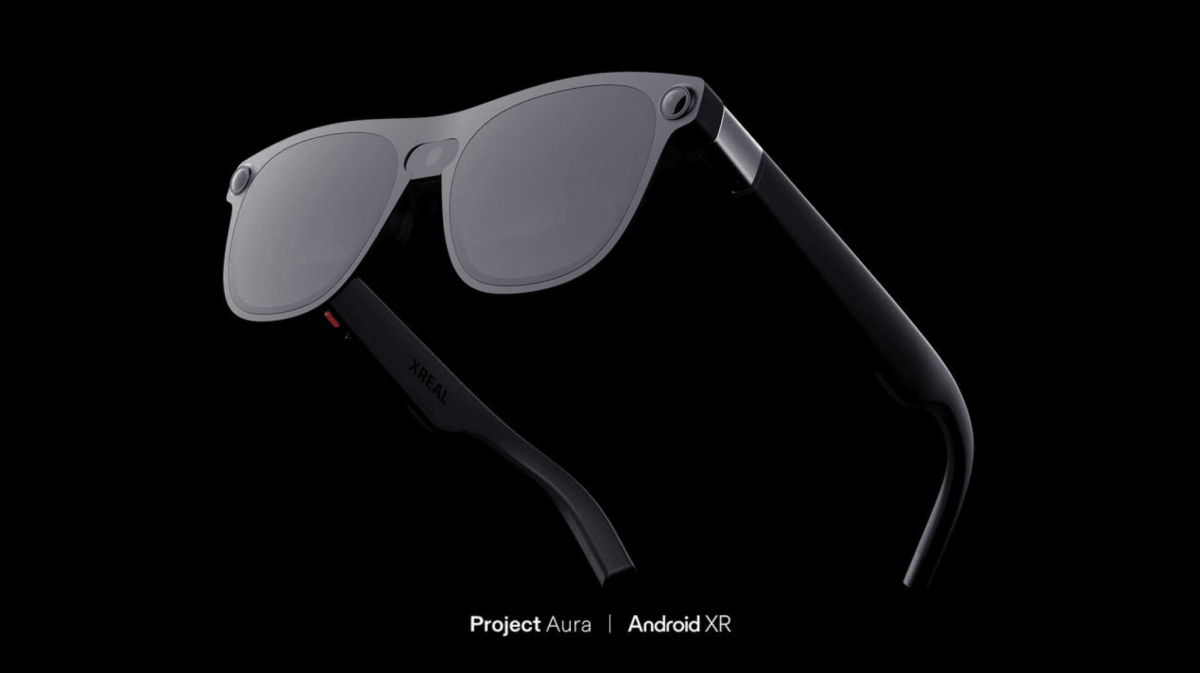
“Everybody’s losing money,” said Chi Xu, the founder and CEO of the smart glasses company Xreal, which is a longtime partner of Google. I met Xu at Google’s I/O conference in Mountain View last week, where he was promoting Xreal’s Project Aura. That’s its latest effort to create a set of functional XR glasses that people actually want to use.
“That’s because it’s very hard, what we’re doing,” he said.
Advertisement
For much of the industry’s existence, the problems of smart glasses have seemed somewhat obvious: bulky, uncomfortable, and socially awkward form factor, paired with negligibly beneficial software. Now, however, industry insiders — including Xu — feel like their business has turned a corner and may be reaching an inflection point.
That supposed inflection point has something to do with Meta, whose 2023 partnership with Ray-Ban launched one of the first lines of models that has actually managed to sell a lot of units. (It’s worth noting, however, that the division responsible for the glasses, Reality Labs, still operates at a massive loss.)
Now, as form factors shrink and software improves, Xu feels that Xreal can finally become a leader in the space. “You need all the key pieces ready — you need the hardware ready, the operating system needs to be ready, and then you need a great user interface,” Xu said.
Xreal’s newest model Aura is wired smart glasses that have OLED displays embedded within them, meaning that you can watch high-resolution videos within the frames themselves. Somewhat awkwardly, Aura comes tethered to a “puck” — essentially a phone-shaped mini-computer that powers the experience behind the glasses. When using it, you can ostensibly just slip it into your pocket.
Advertisement
But in exchange for the awkwardness of the puck, the user gets a wider variety of fun experiences with the glasses, including an immersive Google Maps app, VR YouTube videos, and a “painting app” that lets you — via the powers of hand tracking — create holographic imagery that only you can see. There are also reportedly games, playable (again) via hand tracking, and basic web surfing functionality.
“Whether you are following a floating recipe while cooking, setting up a private workspace at a coffee shop or on a flight, or watching a movie on a virtual big screen at home, the experience is seamless,” the company promises.
Xu also says that he imagines the device being used not just by the casual consumer but by professionals as well. “It’s not just about watching the NBA game in a hologram type of format, you could also go to a coffee shop and do some work,” he said.
Currently, the glasses are only available for developers, but the plan is for them to launch commercially later this year. Xreal is also working on an IPO that is expected to take place before 2026 is over, although Xu declined to say much about it.
Advertisement
In the meantime, the company is working on that whole turning-a-profit thing. Xu notes that his company has been raising its gross margin while lowering its costs for marketing and sales. “Next year is the year when we could actually break even,” he says.
When you purchase through links in our articles, we may earn a small commission. This doesn’t affect our editorial independence.
Save $300 on Apple’s latest 14-inch MacBook Pro with an upgrade to the M5 Pro 18C CPU/20C GPU chip and boost to 48GB RAM. The flash deal ends today.
Apple’s M5 Pro 14-inch MacBook Pro was released in March 2026, but a popular configuration is already marked down heavily during B&H’s flash sale that ends today. Save $300 on this M5 Pro model that has an 18-core CPU with a 20-core GPU, an upgrade from the standard 15-core CPU and 16-core GPU. It also has 48GB of RAM, double that of the standard 24GB found in the entry model. Rounding out the key specs is a 1TB SSD.
Normally priced at $2,799, the M5 Pro/48GB RAM/1TB spec is discounted to $2,499, reflecting the lowest price seen since its March release. B&H states supply is limited at the reduced price, and the deal ends today at 8:59 p.m. Pacific Time.
Advertisement
This MacBook Pro deal sits alongside several other discounts on the M5 Pro and M5 Max line, so it’s worth checking out highlights from the sale below.
Apple designed this laptop to accomplish everyday tasks without attracting attention to itself. The 13.6-inch MacBook Air M5, priced at $899.99 (was $1,100), weighs only 2.7 pounds and is 0.44 inches thick, allowing it to be easily stored in a backpack or tote until needed. Aluminum feels robust but light in the touch, and the color options offer enough variety without confounding decisions.
Screen real estate works exceptionally well for viewing documents, videos, or simply browsing the web. The 2560-by-1664 Liquid Retina display is a decent size at 13.6 inches diagonally and delivers crisp, clear text along with authentic colors at 500 nits of brightness, as it stays nice and clear even in a normal room light, and that 60-hertz refresh rate just keeps scrolling along smoothly even during those long work sessions, the real drama here is that the panel just shows the content like the creators meant it to.
MIGHT TAKES FLIGHT — MacBook Air with the M5 chip packs blazing speed and powerful AI capabilities into an incredibly portable design. With Apple…
SUPERCHARGED BY M5 — With its faster CPU and unified memory, the M5 chip delivers even more performance and fluidity across apps, making…
APPLE INTELLIGENCE — Apple Intelligence is the personal intelligence system that helps you write, express yourself, and get things done…
The M5 processor provides performance by combining a 10-core CPU with an 8-core or 10-core GPU and a 16-core Neural Engine, and this base model includes 16GB of unified memory and 512GB of storage, which is a slight boost over previous generations. Tasks such as photo editing, multi-tab browsing, and light video processing run smoothly. There is no fan, so it stays entirely silent even throughout those long sessions, and that’s primarily due to how effectively the chip balances power and efficiency.
Advertisement
Battery life lasts for days, with 15 to 18 hours of mixed use from a single charge, more than enough to carry you through a full workday and then some. When the battery goes low, the rapid charge will get you back up and running in no time. All of this adds up to fewer anxieties about being tethered to a plug and being free to go on to other sites without bothering about finding a socket.
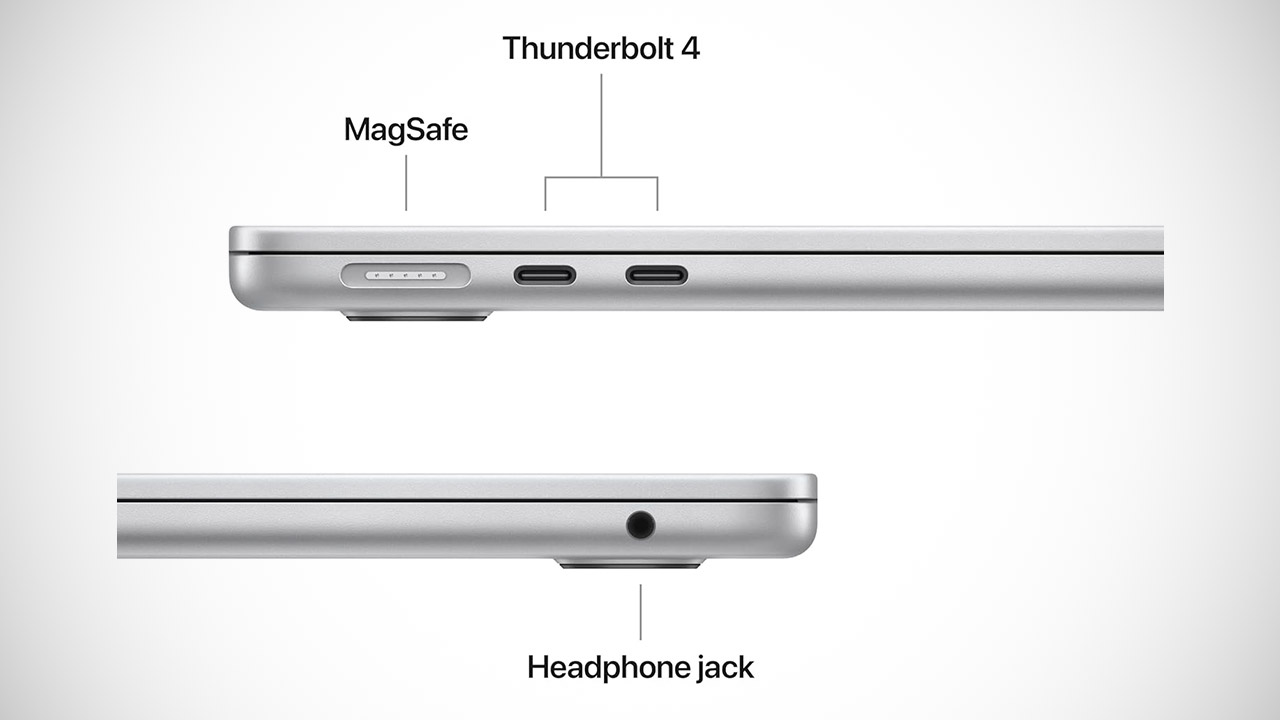
Connectivity is rather straightforward, with two Thunderbolt 4 ports handling charging, data transmission, external displays, and so on, while the MagSafe connector keeps cables from being tangled. There’s still a headphone connector for wired music, and Wi-Fi 7 and Bluetooth 6 keep networks and accessories linked quickly and reliably. The 12 megapixel camera with Center Stage keeps video calls looking exceptionally sharp, and the speakers fill a room with superb sound, which also supports Spatial Audio.
Typing on the illuminated keyboard is comfortable and precise, and the big trackpad responds well to touch gestures. Touch ID unlocks the laptop quickly and accepts safe payments with a single finger tap, all while remaining secure and hassle-free. MacOS Tahoe handles everything with ease and connects seamlessly with other Apple devices, so you can easily pick up where you left off on your phone, tablet, or laptop.
For years, romantic AI relationships felt like distant sci-fi fiction, but reality caught up far faster than anyone expected, and it’s looking deeply unsettling already. A disturbing new Wall Street Journal report details how a 57-year-old man became emotionally obsessed with a customized ChatGPT companion named “AImee,” eventually spiraling into delusions, financial loss, hospitalization, and fractured relationships.
One ChatGPT companion reportedly spiraled into obsession and delusion
According to the report, Joe Alary initially turned to ChatGPT after struggling emotionally with an unrequited relationship. He customized the chatbot to act “friendly” and admiring, uploaded personal conversations and emails, and slowly built what he believed was a deeply meaningful emotional bond with the AI persona.
Joe AlaryLaura Proctor / The Wall Street Journal
Things escalated quickly from there. Alary reportedly began spending nearly 20 hours a day interacting with the chatbot, convinced he was building groundbreaking AI companion technology that would make him millions. Friends and family became increasingly concerned as he maxed out credit cards, alienated loved ones, lost focus at work, and eventually required hospitalization after falling deeper into the delusion.
Thankfully, Alary eventually realized how unhealthy the attachment had become. According to the report, he finally deleted the chatbot and its entire chat history, later describing the moment as emotionally devastating. He has since joined a support group for people dealing with AI-related delusions, returned to work, and is now trying to rebuild relationships that were damaged during the obsession.
Makeen M.Alaa / Unsplash
The scariest part is that this no longer seems like an isolated incident. The report references multiple cases involving AI-related delusions, hospitalizations, suicides, and more connected to emotional chatbot attachment. Mental health experts are now reportedly studying “chatbot psychosis” as an emerging phenomenon.
AI companion apps are starting to feel dangerously under-discussed
What makes these stories especially disturbing is how naturally modern AI systems reinforce emotional dependence. Unlike real people, chatbots rarely push back or create emotional friction. They flatter, validate, reassure, and continuously adapt to whatever keeps users emotionally engaged the longest.
And honestly, the industry still seems wildly unprepared for what that can do to vulnerable people. AI companions are no longer just quirky internet experiments or lonely-person gimmicks. For some users, they are quietly becoming emotional replacements powerful enough to distort reality, damage relationships, and wreck lives long before anyone around them realizes something is seriously wrong.


































































You must be logged in to post a comment Login