A small San Francisco startup known for making well-appointed, beautifully designed webcams is now vying to become the AI hardware company of the moment.
Opal Camera is rebranding to Opal Electronics and will expand its product portfolio beyond webcams to a broad range of consumer devices, some of which will be AI-focused. It aims to emulate Sony Electronics as a wide-ranging consumer gadget brand by focusing on design and culture, not just tech.
The transition was possible thanks to a $40 million Series B funding round from OpenAI. Some details about the investment were first reported in 2024, but the deal was closed in the first quarter of 2025. Other investors in Opal include Samsung, Peter Thiel, Seven Seven Six (Alexis Ohanian’s venture capital firm), and noted tech YouTuber Marques Brownlee (known as MKBHD), among others, according to a source close to the deal. Opal is now valued at around $275 million.
Opal Electronics declined to comment. OpenAI did not respond to WIRED’s request for comment.
Advertisement
OpenAI CEO Sam Altman was an early customer and fan of Opal’s original C1 webcam, so much so that his team visited Opal’s offices in 2022 to ask whether OpenAI’s Whisper voice transcription model could run locally on Opal cameras for live subtitles on Zoom. The source, who asked to remain anonymous because they are not authorized to speak publicly about the matter, says it was at the end of this meeting that OpenAI showed the Opal team a preview of ChatGPT. It made such an impact on the attendees that the company decided to turn into a research lab.
Since then, Opal has been working on an AI-powered audio product for the last few years. This, in turn, is the product that convinced Altman to invest in Opal. It will launch in the next three to four months and is currently being tested by Altman, researchers at OpenAI, and by executives at xAI, Thinking Machines, and Anthropic. It’s unclear whether it’s a wearable, though the source says it’s a familiar product category, and that it’s not designed to compete with the iPhone.
OpenAI famously teamed up with ex-iPhone designer Jony Ive and his firm, LoveFrom, to explore personal hardware devices that would run ChatGPT and OpenAI’s other software. It’s not clear yet what the exact hardware strategy is for OpenAI, but its first product is rumored to be something akin to a smart speaker, with an expected launch date of early 2027.
Opal’s audio product will launch in partnership with a specific AI lab—the source was unable to specify which—but Opal is in talks with OpenAI, Anthropic, and xAI, allowing users to switch models to their preference. Opal Electronics plans to release two other products in the next 12 months.
A year before the arrival of the brand-new 21st millennium, the Year 2000 Bug was predicted to grind modern society to a halt and ensure that at the dawn of the year 2001, there’d be nothing left but the smoldering wreck of once great societies. Thanks to the concerted efforts of countless engineers, software developers, and many others, we were left with mostly just silly glitches, with one of these surviving bugs apparently just discovered, as [Van Heusden] reported on an NTPd bug in BSD 2.11.
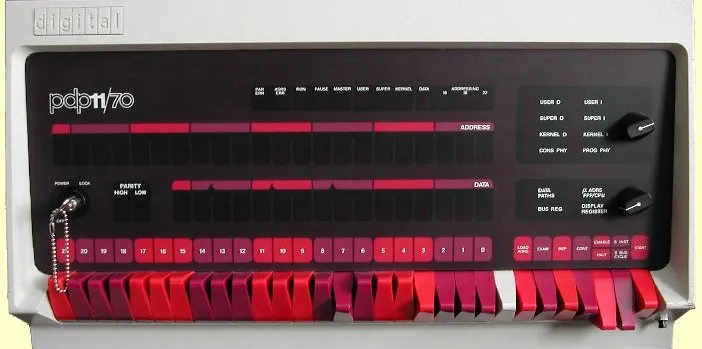
To be fair, it is a pretty obscure one, as the demonstration involves BSD 2.11 on a PDP-11/70 from 1975, so it’s probably not something that still sees much use outside retrocomputing enthusiast circles. In the blog post, the demonstration involves connecting a specific adapter by Traconex, capable of receiving WWV/WWVH time signals, and setting it up for use by the NTPd prior to running the ntpd -a any -d -d -d -d command.
This can create an ‘offset excessive’ error in the log, which, as the attached patch shows, is due to the use of explicit 20th-century numbering. Although not a bug that’ll really affect anyone, it shows that Y2K bugs didn’t just hide in two-digit year fields, but also lazy shortcuts and assumptions when handling years. This will be useful information while we try to avoid society melting down once more, as the Year 2038 problem is now pretty much right around the corner.
Elon Musk is many things — a billionaire, a rocket builder, a social media provocateur — but first, he’s a car guy. Long before he was running Tesla, he was spending his first big paycheck on a McLaren F1, which he believes is the best car in the world. Since then, his relationship with cars has only grown more complicated and mysterious.
Tesla, the company he joined in 2004 and has led since 2008, has grown from a single-model electric car startup into one of the most influential automakers on the planet. Its lineup has spanned the Model S, Model 3 Model X, Model Y, and the Cybertruck, though Tesla has since discontinued the Model S and the Model X. Regardless, Musk has driven, tested, or been spotted in most of them at one point or another.
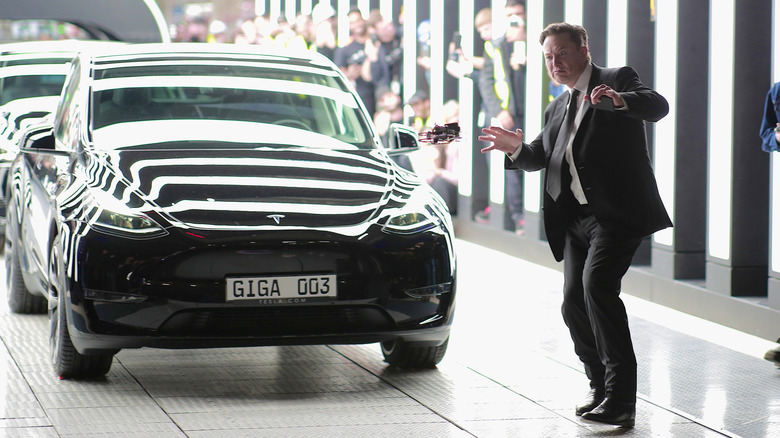
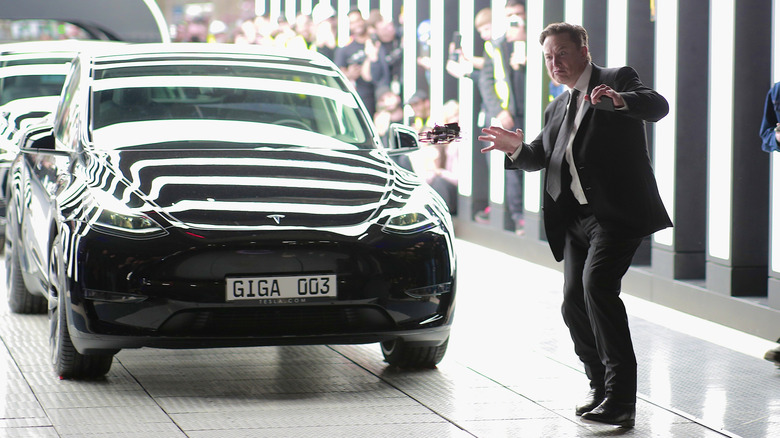
So which Tesla vehicles does the CEO actually drive? Back in 2019, Musk revealed on X that his day-to-day rotation included the Model S Performance — equipped with the then-new Raven motor — along with the Model 3 Performance, and the Model X when he had his kids in tow. Since then, he’s been spotted in newer models, including a Cybertruck prototype in Austin.
Advertisement
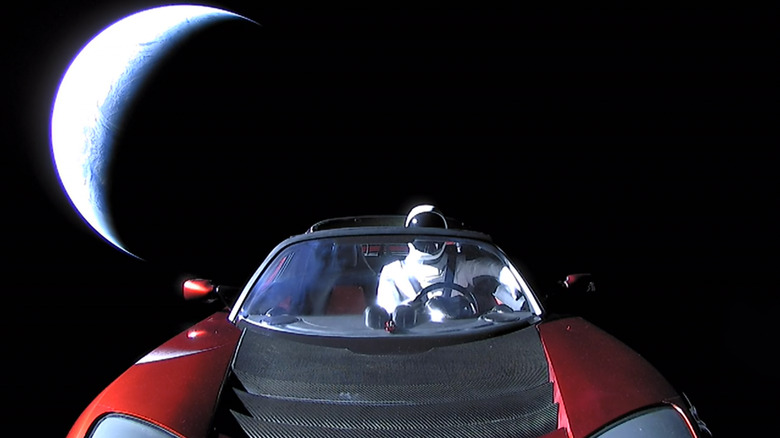
While Musk rarely updates the public on his garage, the Model S remains the Tesla most closely associated with him, alongside more recent appearances in the Cybertruck. His most famous Tesla, however, is still the original Roadster that SpaceX launched into orbit aboard Falcon Heavy in 2018. These are the Tesla models Elon Musk actually drives or has driven.
Advertisement
A closer look at Elon’s Teslas
Handout/Getty Images
Musk’s relationship with the Model S goes back further than most people realize. As early as 2015, Time Magazine reported he said at Tesla’s annual shareholder meeting that “I’m testing the latest version of autopilot every week. Typically, two or three builds per week that I’m testing on my car.” By 2018, when he appeared on The Joe Rogan Experience #1169, he confirmed the Model S was still his go-to, saying directly: “Model S P100D. That’s the car that I drive.”
By 2019, he had upgraded. In the aforementioned 2019 post on X, Musk revealed his Model S had been fitted with an adaptive damping suspension in addition to the Raven motor, along with a development version of the FSD computer that had not yet been made available to the public. The Model X is also the Tesla with a most personal backstory behind it. During a 2012 interview with Autoblog, Musk criticized the Audi Q7 he owned at the time for its notoriously difficult third-row access, saying that “you need to be dwarf mountain climber to get into the back seat.”
That frustration directly shaped the Model X. Musk said in the same interview that the Falcon wing doors were his idea, born out of a need for a door that could open in tight spaces while still allowing access to the third row without moving the second-row seat. Although these Falcon doors have proven to be quite problematic, In his 2019 X post, he confirmed the Model X remains his go-to when driving with his kids.
Advertisement
Elon Musk’s car collection
Martyn Lucy/Getty Images
Although information on the Tesla models Elon owns and drives is somewhat limited, his broader car collection is more publicized. Likely the most expensive car in Elon Musk’s collection was the McLaren F1 — and we say “was” deliberately, since Musk no longer owns it. After crashing it while uninsured, watching it catch fire, and having it undergo a complete rebuild by McLaren Special Operations, he sold the car in 2007.
One of the oldest cars in Musk’s collection was the 1920 Ford Model T reportedly gifted to him by one of his friends as a symbol of how it changed the automotive industry and how Musk does the same. A well-known vintage also owned by Musk is the 1967 Jaguar E-Type roadster. Likely one of the coolest cars in his collection is the 1976 Lotus Esprit “Wet Nellie,” a car used in the 1976 “The Spy Who Loved Me” James Bond movie.
Musk’s collection also included a few older German luxury cars like the 1974 BMW 320i (his first car), a Hamman-modified 2005 BMW M5, and the 2010 Audi Q7 he criticized when talking about Model X Falcon doors. Musk’s 2012 Porsche 911 Turbo was actually directly tied with his connection with Tesla. When Musk offered AC Propulsion’s Alan Cocconi $250,000 to convert his Porsche 911 Turbo to electric, Cocconi refused.
It was then that AC Propulsion’s CEO Tom Gage suggested Musk speak with Martin Eberhard, who had just launched a small electric car startup called Tesla. In the same Joe Rogan podcast we mentioned above, Elon noted that the Jag and the Ford are the only two gasoline cars he owned at the time, meaning that the majority of the collection is no longer his.
“Battered by years of mass layoffs, California tech workers were hoping the job market would rebound this year,” reports the Los Angeles Times. “But things are getting worse.”
The class divide is widening in Silicon Valley as a tiny group of employees is landing unprecedented packages for AI skills, while many others struggle to find work. The have-nots are doing everything that used to guarantee great jobs — refreshing resumes, optimizing LinkedIn profiles and doing interviews — but companies are much more picky these days. The tech jobless are rethinking their lives. Some are taking pay cuts, others are leaving tech. Some are going back to study or launch startups. Some have retired….
Since 2022, more than 815,500 tech workers have been laid off, according to Layoffs.fyi, a website that tracks job cuts. The tsunami of pink slips surged in 2023, when companies that had gone on hiring sprees during the COVID-19 pandemic began to cut back. From January to April, U.S. tech employers announced 85,411 job cuts this year, up 33% from the same period last year, according to global outplacement and executive coaching firm Challenger, Gray & Christmas. The Public Policy Institute of California estimates that the number of information jobs — which includes jobs in hard-hit Hollywood as well as tech — tumbled 17% between the middle of 2022 and this February. The San Francisco Bay Area has been hardest hit, the institute said in a recent report, with the number of jobs declining by 0.4%, compared with 7.5% growth over a similar time span before COVID-19 slammed into the U.S. economy.
Tech layoffs are also spilling over into other industries. Automaker General Motors laid off roughly 600 workers in its information technology department, and Walmart is reportedly laying off or relocating roughly 1,000 workers in its technology and products teams. Recruiters say companies have become much more selective, requiring AI skills, combining different positions and interviewing more people for each job. “You’re seeing elongated hiring cycles,” said Robert Lucido, senior director of strategic advisory at Magnit, a California company that helps tech giants and other businesses manage contractors, freelancers and other contingent workers. “There’s more opportunity to fill the need that they truly want.”
Advertisement
Paul Flaharty, district president at staffing firm Robert Half in Los Angeles, said companies are laying off workers, but also creating new roles tied to AI initiatives. “For individuals that are displaced, it’s really important that they find ways to upskill themselves so that they can make themselves as attractive as possible for these new jobs that are being created,” he said. Kira Martins was already taking on more work in a small team at Snap — the parent company of disappearing messaging app Snapchat — when she was laid off in April. The company said the layoffs were to cut costs as it focuses on profitability, noting how employees are using AI to “reduce repetitive work, increase velocity, and better support our community, partners, and advertisers….” Martins, a 36-year-old Los Angeles resident, views AI as a tool and is optimistic about finding her next role. People still need to decide how to use AI and check the work it generates, she said. “In tech, you want to be a first adopter, because if you don’t move quickly, it’s very easy to become irrelevant,” she said. “Everyone’s kind of hopping on the AI train.” A former Google worker (laid off more than a year ago) says he’s still job hunting, according to the article, and “he’s learned it’s not enough to just apply in this competitive market. Workers really need to network and leverage their connections to get seen by hiring managers and stand out.”
But when 64-year-old product manager Bruce Bowers lost his job at Oracle — along with thousands of others — he just started his retirement early.
Following a consultation, the UK is banning young people under 16 from social media platforms like TikTok and Instagram, Prime Minister Keir Starmer announced. “This is a line in the sand,” the PM said in a speech at his Downing Street residence. “Tech giants had their chance and failed, but we’re stepping in to protect children, back parents and set a new normal for future generations.” The government aims to pass the legislation by the end of this year and start enforcing it in the spring of 2027.
The plan includes not only a ban from major social media platforms, but also restrictions on gaming apps as well. Those include barring children under 16 from chatting with strangers, live streaming or using romantic chatbots. “These restrictions… go further than any other country,” the government press release states.
The UK will follow a similar model as the social media ban in Australia. Platforms like Snapchat, TikTok, YouTube, Instagram, Facebook and X will be required to disable access for under-16 users by default. Chat apps like WhatsApp or Telegram will note be affected. The government is also looking at limited restrictions for youths under 18, like overnight curfews and breaks in infinite scrolling.
Starmer acknowledged that kids will find ways around the ban, but said that wasn’t a good excuse for not enacting a law. “We don’t say, ‘Oh, look, a teenager managed to get a drink somehow, so let’s not bother banning alcohol sales for children,” he said. “Our laws are rules, but they’re also an expression of our values. They shape the social contract, and so this will change the conversations that parents have and the expectations of children over time.”
Advertisement
In January, the UK government launched the “Growing up in the online world” consultation into social media for kids, requesting feedback on whether and how to enforce that limit. The country’s ministers also went to Australia to study the effects of that nation’s social media ban, which went into effect on December 10, 2025. Only a month after it was enacted, Meta had shut down as many as 550,000 Australian accounts to comply with the law.
The results of the UK consultation showed that nine in 10 parents supported a minimum age of 16 for accessing social media apps, the government said. At the same time, the PM added that the ban doesn’t mean the UK is anti-tech. “I do not accept, and I will never accept that you can’t be both pro tech and AI, and at the same time say we must protect our children,” he said in the speech.
Creation of detailed rules and enforcement of the ban will be conducted by the UK’s tech regulator Ofcom in consultation with lawmakers. “So far, Ofcom has driven some of the strongest changes of any online safety regulation in the world, from widespread age checks to grooming protections for children. But the industry needs to go much further to make people safe,” Ofcom said in an official statement. The government has yet to release details on ID or other enforcement mechanisms.
Whether at soccer games, violin recitals, or princess/pirate-themed birthday parties, I’ve yet to rub elbows with a fellow dad who doesn’t like movies (and home theater, for that matter). So, in commemoration of pops everywhere, eCoustics proudly presents our first-ever Father’s Day roundup of exceptional 4K Blu-ray discs that any interested offspring (or concerned spouse) can feel great about wrapping and leaving on the breakfast table next to his French toast and macaroni-art card.
Some of these titles carry a distinctly paternal theme, while others are simply terrific, gift-worthy releases just right for that special man in your life.
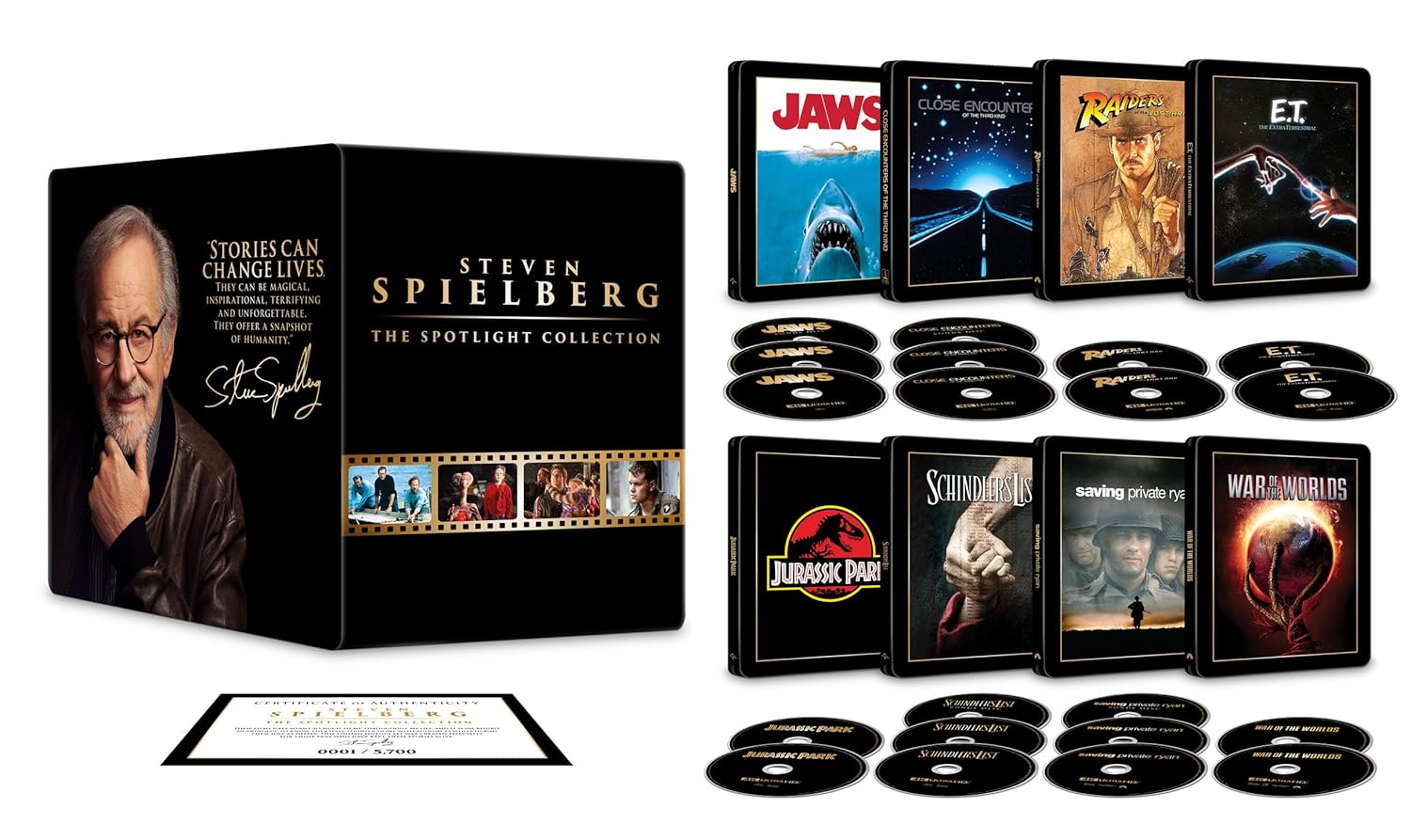
Steven Spielberg: The Spotlight Collection (Universal Pictures Home Entertainment)
There have been boxed sets dedicated to a single director before, even one for Mr. Spielberg himself. This one’s different. The eight films here arrive in SteelBook cases adorned with vintage poster artwork, tucked inside a coordinated metal box. They’ve been curated from multiple studios and are presented on 4K disc, as well as Blu-ray and digital. Most importantly, every movie in this set is a total banger, representing a total of 29 Oscar wins against 58 nominations, and no fewer than three of these were the highest-grossing motion picture of all time, at one point or another. Together, they provide an overview of a career like no other, displaying singular dominance across the ’70s, ’80s, ’90s, and beyond:
Jaws (1975)
Close Encounters of the Third Kind (1977)
Raiders of the Lost Ark (1981)
E.T. The Extra-Terrestrial (1982)
Jurassic Park (1993)
Schindler’s List (1993)
Saving Private Ryan (1998)
War of the Worlds (2005)
Not coincidentally, many of these movies are movies about dads: some flawed (Roy in Close Encounters, Ray in War of the Worlds), some selfless (Martin in Jaws), some not related to those they protect but still stepping up.
As you can see, Close Encounters, Schindler’s List, and Saving Private Ryan are three-disc affairs, with platters dedicated to extensive legacy bonus content, and Jaws is the 50th anniversary edition with the exclusive Blu-ray of the Definitive Inside Story documentary. Jurassic Park is the new version that was introduced last year with Dolby Vision HDR, a superior color grade, more restrained noise reduction, and a modern Dolby Atmos mix, on a BD-100 disc.
No doubt timed around the release of his latest, Disclosure Day, this incredible limited edition is, in fact, timeless. As seen here in his finest works, Steven has a way of pushing limits, breaking new ground, and taking us places we’ve never been before.
Taken together, these extraordinary films tell the story of a quintessential movie star. With a commitment to his craft that routinely put his life on the line, Jackie Chan blended superlative martial arts moves with a unique gift for physical comedy, yet he was unable to crack the Hollywood mainstream, instead tanking with would-be vehicles like The Big Brawl and The Protector. Six undeniable hits soon showed the world what he could do, aided by the era’s burgeoning home video market, the nascent internet, and a hunger for alternative entertainment, ultimately leading to Rush Hour, its sequels, and spawn.
The box kicks off with Jackie’s masterpiece, Drunken Master II, the sequel to a movie not enough people saw (a lot like Mad Max/The Road Warrior) and renamed for a time as The Legend of Drunken Master for the U.S. The daring stuntwork and plentiful, stylized choreography, within a serio-comic period setting, make this tale of a lovable yet imperfect hero who unlocks nigh-unbeatable fighting skills when he consumes alcohol irresistible. The rest are a bit more accessible, contemporary urban action thrillers that pit Jackie against New York street gangs and mobsters, warhead-stealing terrorists, drug dealers, and assassins.
Arrow has magnificently encapsulated this pivotal five-year period with its own new 4K restorations from the original negatives, all in Dolby Vision, with an assortment of best-available audio options for each, from mono up to 5.1, different languages, and optional subtitles, of course. The original Hong Kong theatrical release dates are noted:
Drunken Master II (1994; three versions on one disc; released in North America as The Legend of Drunken Master in 2000)
Rumble in the Bronx (1995; released in North America in 1996; two versions on two discs)
Thunderbolt (1995; two versions on one disc, one in HD only)
Police Story 4: First Strike (1996; released in North America as Jackie Chan’s First Strike in 1997; two cuts on two discs)
Mr. Nice Guy (1997; released in North America in 1998; three versions on two discs)
Who Am I? (1998; two versions on two discs)
Stick with the “Hong Kong” cuts to see the movies as intended, favoring story and character over faster-paced action, although comparisons between versions are fascinating. In some cases, large scenes were removed, or the entire musical score changed, and the dubbing can sometimes impart an unfair B-movie feel.
A new expert commentary is provided for each film, in addition to a new six-part documentary, new discussions of Jackie’s career before and after, and archival featurettes and interviews with collaborators and film historians, some quite extensive, spread across the set. Spend the time exploring, and we’re treated to some rare and unusual tidbits, such as seldom-seen network TV scenes with dialogue heard nowhere else. Inside the rigid box, we’ll also find a 160-page perfect-bound book, a set of 24 miniature lobby card reproductions, and a two-sided poster with classic Drunken Master II artwork.
So much has already been said about Apocalypse Now, perhaps the wildest movie shoot of all time, and the brilliant companion documentary that followed 12 years later, Hearts of Darkness: A Filmmaker’s Apocalypse. Be apprised: this super-deluxe new edition is quite different from the previous 4K release of Hearts of Darkness. That disc’s sole extra, a 37-minute “making of,” is included again here on both the 4K disc and the newly supplied 1080p Blu-ray of the doc, along with a 2007 Eleanor and Francis Coppola audio commentary, plus a recent program dedicated to Eleanor, who passed in 2024. The 1080p Disc Three is where things get really interesting: a menagerie of four of her short films from 1976 and her making-of documentaries of feature films directed by both husband Francis and daughter Sofia. The handsome four-panel, clothbound polyptych houses the discs, as well as a colorful softcover photo scrapbook spanning her storied career.
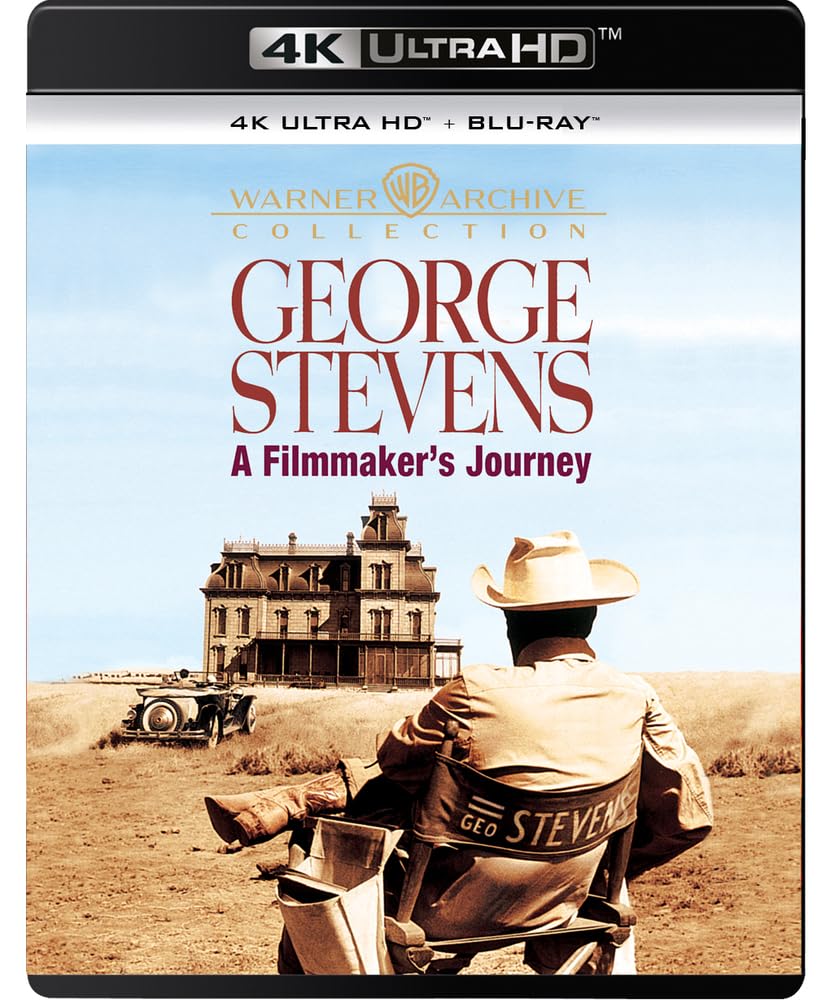
Shane. Giant. Gunga Din. A Place in the Sun. You know his movies, but too few know the name of the man behind the camera. To chart the canon of George Stevens is to understand the odyssey of this uniquely gifted American filmmaker, how history and his own experiences helped to shape some of the most enduring films of the 20th century, from the escapist Fred-and-Ginger romp Swing Time to the heartbreaking The Diary of Anne Frank and beyond. This documentary by his son, George Jr., skipped Blu-ray and went straight from DVD to 4K.
The result? The numerous film clips, home movies (including some of the only color footage chronicling the later days of World War II), and modern-day (1984) interview footage with a Hollywood who’s who now look outstanding. For further context and praise, three new featurettes from notable fans Christopher Nolan, Guillermo del Toro, and Martin Scorsese share their love of Stevens’ Shane and The Greatest Story Ever Told.
Hearts of Darkness and A Filmmaker’s Journey are a disparate pair, but they’re quite possibly the two finest movies-about-movies ever made.
Advertisement
Where to buy:$30.11 at Amazon (George Stevens: A Filmmaker’s Journey)
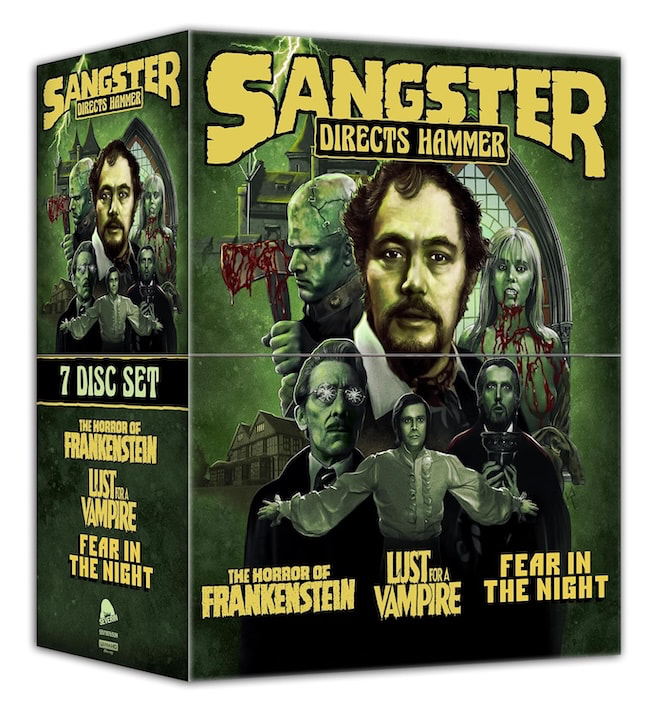
After a prolific run as Hammer Films’ go-to screenwriter, penning some of the seminal horrors that made the studio famous around the world, Jimmy Sangster returned in the early ’70s to make his only three feature films as a director. (Not the “father” of Hammer, but definitely a chief architect… or a cool uncle.) This informal trilogy marks a deliberate move away from the more traditional, neo-classic monster mashes and into edgier fare conceived to cater to changing audiences of the era.
The Horror of Frankenstein (1970)
Lust for a Vampire (1971)
Fear in the Night (1972)
The Horror of Frankenstein is marked by a cynicism in Victor not previously seen, this time with David (Darth Vader) Prowse as The Monster. You can imagine what happens when a resurrected vampiress infiltrates an exclusive all-girls finishing school to prey on her classmates, or you could just watch the blood-and-boobs gem Lust for a Vampire. Fear in the Night is the sole contemporary entry, with Peter Cushing playing against type, creepy and weak, while Joan Collins laid the groundwork here for her on-screen bitch persona that would define the ensuing years. It’s not horror in the expected sense, more of a confined emotional cruelty that feels a lot like the British version of a giallo. The films are rated R, R, and PG here, and all “X” in the U.K.
Severin Films has brought them together with 4K scans by StudioCanal, in Dolby Vision and crisp mono for the bunch. Every movie carries two audio commentaries, one with Sangster himself, part of a new/archival bonus complement topping 19 hours, spilling onto a seventh disc. This handsome collection also includes the must-read 312-page Horror! Lust! Fear! Sangster, packed with essays, interviews, comic adaptations, and more.
I never properly appreciated history or hip-hop, but Lin-Manuel Miranda’s monumental stage biography of the ten-dollar founding father cured both shortcomings in just 161 minutes. Filmed over three nights in June 2016 at NYC’s Richard Rodgers Theatre, the program captures the live performance of the original Broadway cast at their absolute peak. Hamilton is eminently rewatchable for the incredible talent on display (I’m still noticing nuances in the choreography), but also to parse the rapid-fire lyrics and their inspired rhymes. The high-bitrate Dolby Vision/Dolby Atmos is a marvelous upgrade over the compressed Disney+ stream, so we’ve never seen it looking or sounding this good in the home.
No digital copy here (this erstwhile streaming exclusive did lead to a 641% spike in D+ subscribers, after all), but we are given a new featurette alongside an earlier cast reunion. Disc Two carries the sing-along version with on-screen lyrics, since everyone has a favorite tune or three, but good luck keeping up. From there, it’s some lovely physical treasures: colorful art cards, an understated fabric poster, and the sheet music for the prologue/opener.
Dads come in all shapes and sizes. Take Aoyama, a gentle, middle-aged widower who has spent the last seven years completely dedicated to raising his teenage son, putting his romantic life on hold until his son gives him the green light to start dating again. Unsure of how to re-enter that world, Aoyama and a friend concoct a highly questionable plan, holding a fake casting call to find the perfect woman. All goes well… until it begins to shift into one of the most disturbing psychological thrillers ever put to film, before giving way to outright body horror. You’ve been warned.
While Takashi Miike is the famously prolific, chameleon-like director of over 100 eclectic films, his restrained filmmaking style and powerful social critique help make 1999’s Audition his true masterpiece. Arrow knows it, and its 4K is newly restored from the original Super 16mm negative, with restored lossless stereo and 4.0, plus 5.1. The bonuses are a happy combination from its 2019 special-edition 1080p Blu-ray and new goodies: two commentaries, interviews, a booklet, and reversible sleeve art.
The Black Belly of the Tarantula 4K Limited Edition (Celluloid Dreams)
Celluloid dreamer Lucas Henkel, along with his father Guido (no, not Sarducci), has been saving worthy motion pictures from obscurity and celebrating them with a unique brand of curation, restoration, and illumination. In Tarantula, we meet a world-weary inspector (the always wonderful Giancarlo Giannini) who must track down a killer with a flair for arthropodology. The murderer is picking off Rome’s wealthy elite: blackmailing them, paralyzing them, then forcing them to witness their own brutal murders. Look for Bond girls past and future in director Paolo Cavara’s (Mondo Cane) top-tier giallo, favoring a police-procedural vibe over the genre’s typical surrealism, set to a seductive, mesmerizing Ennio Morricone score that also induces anxiety when it needs to.
Available directly from Celluloid Dreams, this three-disc limited edition features a new 4K restoration from the camera negative, presented in both the intended theatrical full-frame and 1.85:1 aspect ratios, as well as the international and “grindhouse” versions. Guido steps up to the mic for a new audio commentary on the 4K and HD Blu-rays, in addition to new and archival interviews and a pair of deep-dive video essays on Disc Three.
La tarantola dal ventre nero arrives in a fatbox (no Italian translation available for that word… yet) with reversible disc case artwork, a fantastic 80-page companion book, plus a set of 16 black-and-white publicity photos. Orders also include a set of full-sized color repros of the original fotobuste (lobby cards), suitable for framing.
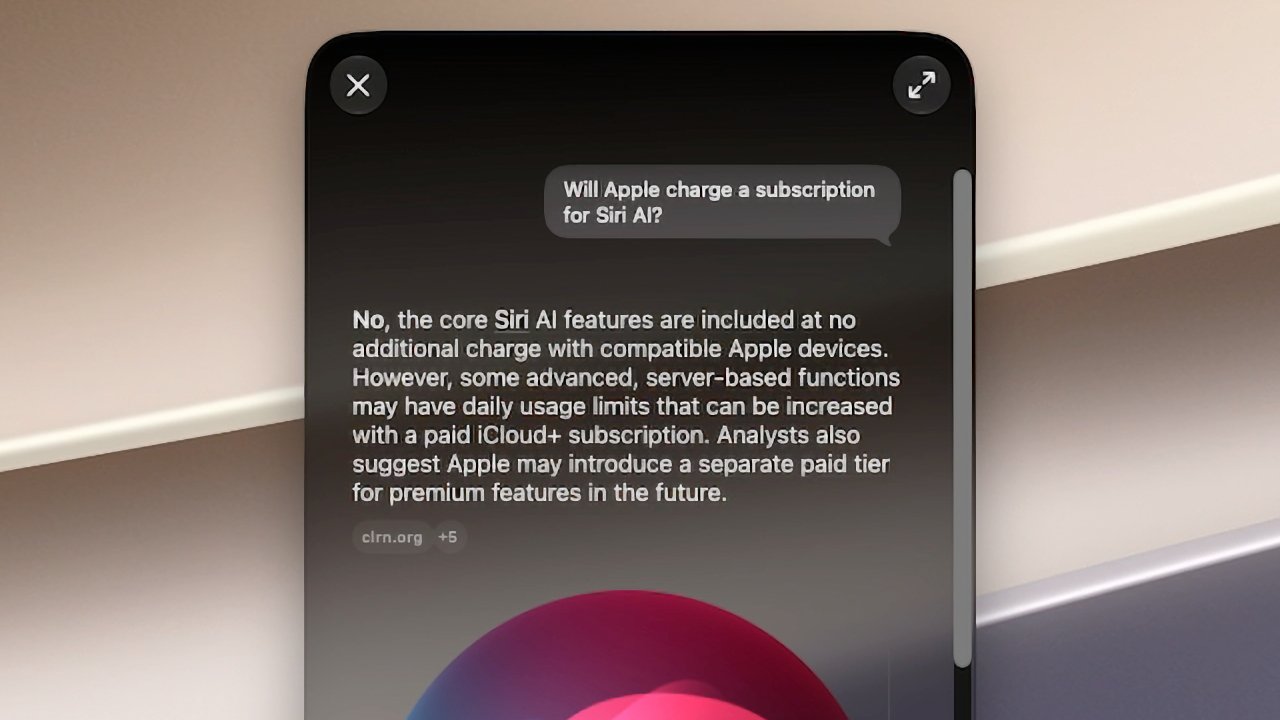
It’s obviously speculation, and repeated at that, but a new report argues that it’s more likely that Apple will eventually charge a fee for Siri Ai now that Apple Intelligence has improved so much.
Apple has long been predicted to introduce a subscription version of Apple Intelligence, and a new report chiefly repeats speculation from 2024. However, the new claim comes after the launch of Siri AI in beta, and Bloomberg‘s Power On newsletter argues that it has made subscriptions more likely.
That’s because even in beta form, the new Siri AI is described as adequate now, and will clearly improve in the future. The speculation is that over the next 12 months, the feature will improve enough, and become popular enough, that a subscription version could be a success.
Then, too, Apple is shouldering the high costs of AI features such as Image Playground and Siri conversations. That must add to the pressure to get users to pay for their usage.
Advertisement
As a consequence, the report predicts that conversations and image generation will move to a paid tier. There is already the fact that Apple has already said that iCloud+ subscribers can get a higher daily usage of both of these.
Then World Knowledge might become a subscription feature, although at present this is the weakest part of the new Siri AI. Apple has the great benefit that Siri AI is part of its devices’ operating systems, but it has the strong disadvantage that it let Siri get dramatically poorer while it worked on this new version.
So Apple has to get back users who’ve given up on Siri before, plus it has to attract new users. If it cannot do that and also improve Siri AI, Apple would not be able to launch a separate Apple Intelligence subscription.
That said, it could add Apple Intelligence features to its Apple One bundle. That has hardly changed its offering since it launched in 2020, so perhaps Apple Intelligence could be a way to boost sales of that bundle.
Lauren Coffey (@Lauren__Coffey) is a senior reporter at EdSurge covering early childhood education, child care workforce and technology. You can reach her at lauren [at] edsurge [dot] com.
In addition to screen time, the type of school to attend, the content children consume and the food they eat, a new concern cropped up for parents over the last few years: Whether to keep their children back a year from entering kindergarten.
“Redshirting,” a reference to collegiate sports in which the athlete sits out a year to boost their skills, has crept into the decision making process for parents with children on the cusp of the age cut-off in kindergarten, usually age 6 in most states. Parents can either have the student as one of the oldest in their grade or among the youngest, with some believing holding their child back can help academic achievement.
But according to a new report, the practice is not becoming more widespread. It has hovered steady at around 5 percent, since the the 1990s and 2010s, The number reached 6.4 percent during the pandemic.
Advertisement
“One of the reasons we wanted to look into it is because we felt like everyone talks about it, but only 1 in 20 students actually do it,” says Megan Kuhfeld, director of modeling and data analytics at NWEA, an education research firm. “So why does it feel like everyone was considering it for their children?”
Kuhfeld hypothesizes the smaller, more vocal group of parents considering redshirting was amplified on social media, but when it came time to make the decision, outside factors – like paying for an extra year of child care, which is becoming more costly than ever — played a large role.
“It might seem that this is a good idea but it’s, ‘We’re on the hook for an extra $15,000 in child-care costs,’ which may not be practical for a lot of families,” Kuhfeld says, adding she expects redshirting to stay steady. “The types to consider it will likely continue to, but a lot of people consider it then decide it’s not practical for a lot of reasons.”
The NWEA study did find more young boys were likely to be kept back than girls, with white students more often than nonwhite students. In the 2021 year, there were also upticks in rural areas, jumping from 6.2 percent to 9 percent, and high poverty areas, jumping from 2.2 to 4.7 percent. That could be because child care is more affordable in smaller towns, or easier to find with a friend, family or neighbor.
Advertisement
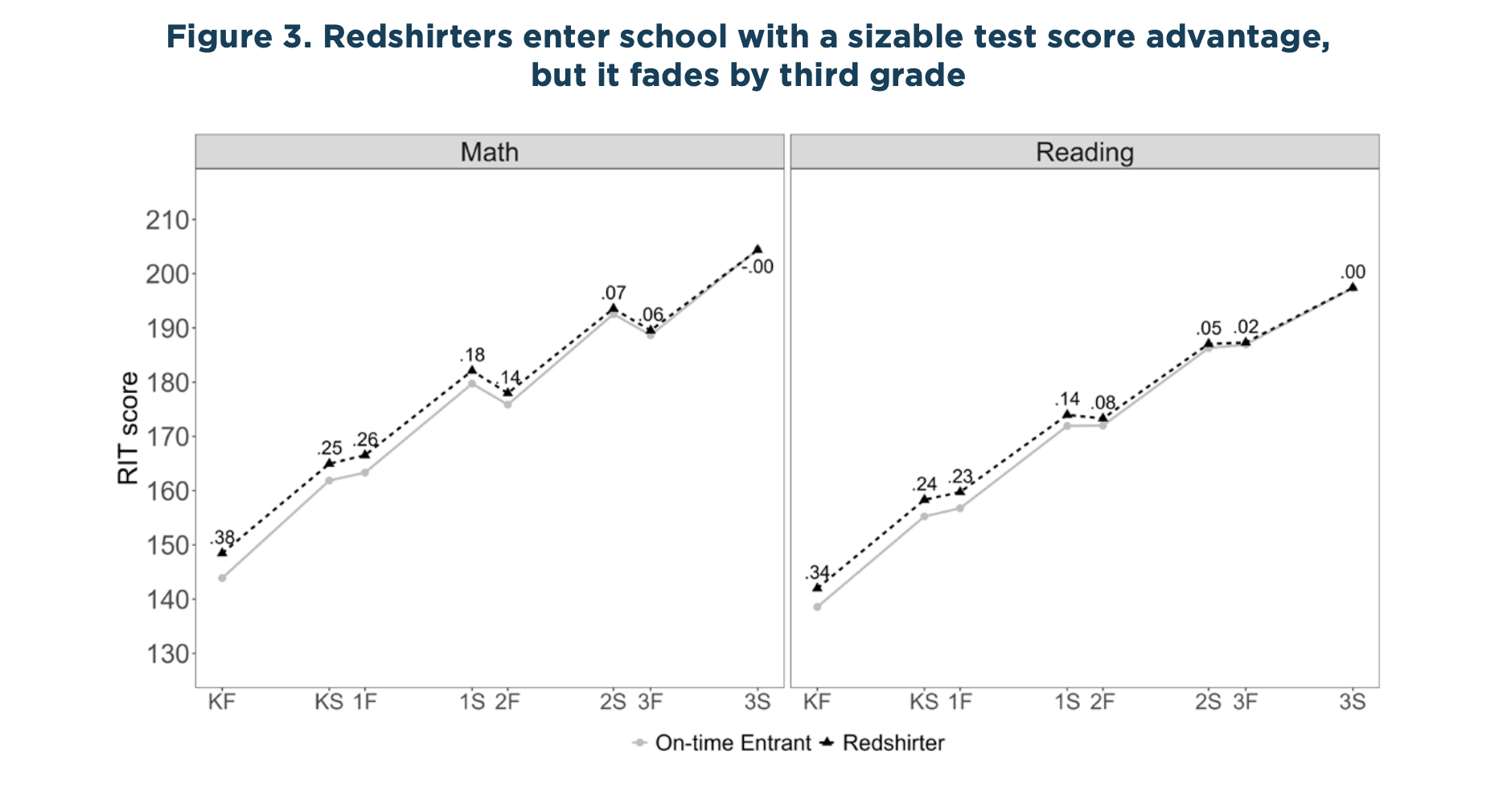
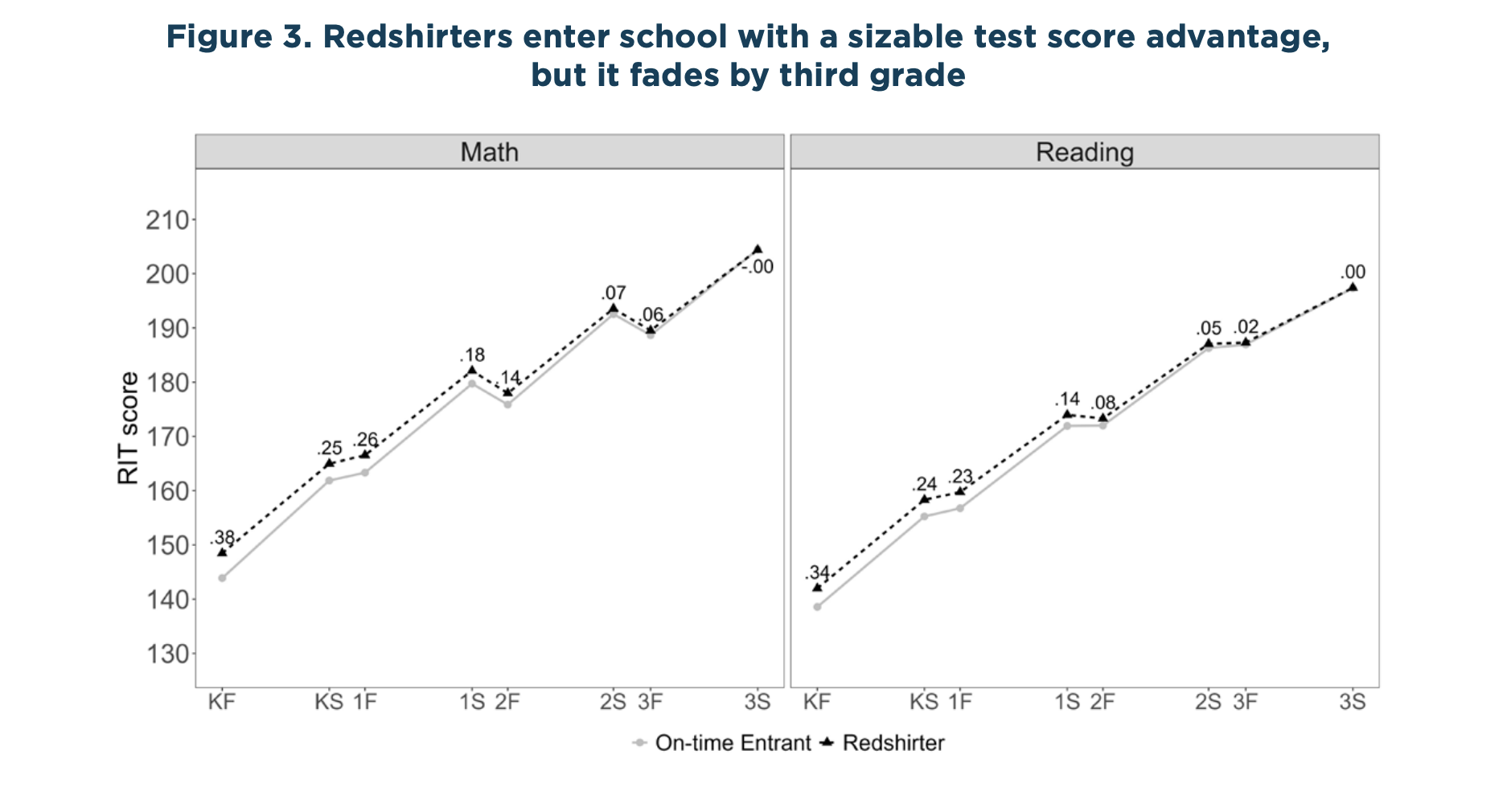
Proponents of redshirting say it gives the child an academic and social advantage being an older kindergartner. However, the benefits generally are short-lived, according to the NWEA report. While children initially saw higher reading and math scores, equating to about 20 percent to 30 percent of a year of learning, those results evened out by third grade, when the children who entered kindergarten early catch up to the redshirters.
While children who started kindergarten later initially saw a large academic advantage in math and reading scores, by third grades, those gaps were filled.
Source: NWEA
There is at least one strong reason not to redshirt, according to the American Economic Association: Children who started kindergarten after 5 years old are more likely to drop out later on.
NEWSLETTERS
Advertisement
STAY AHEAD IN EDUCATION.
Sign up for EdSurge newsletters for timely news, insights and analysis.
“People often focus on the short-term gains, but it’s important to keep in mind the perspective of what it means to be the older kid in class, where you turn 18 your junior year of high school,” Kuhfeld says. “It’s just keeping in mind these longer term outcomes and making the best decision for your child.”
Some states have begun pushing toward a forced redshirting of sorts. North Carolina public schools shifted its age cut off in 2007, requiring students to be 5 years old or older on Aug. 31, upping the date from a previous mid-October cut off.
Jade Jenkins, an associate professor of education at University of California, Irvine, found in a report that forced redshirting brought pros and cons. It helped math and reading scores in third through fifth grades, and students with forced delays into kindergarten also had a 4 percent increase of being identified as academically gifted. However, the same report found students had a 6 percent drop in disability identification. According to Jenkins’ research, it benefitted lower-income, white students but brought no benefit to Hispanic students.
Advertisement
“Is the valuation of the academic benefits of delayed entry higher than the costs of the hold-out year and the public costs of increased racial-ethnic achievement gaps? Future research can provide a more precise estimate of this calculation, but we find this unlikely,” Jenkins says in the report.
The latest redshirt debate is one of several parents surrounding kindergarten. Some state legislators are pushing for it to become mandatory across the nation, with others concerned about the dipping levels for kindergarten readiness. It has also become more academic-focused than ever, which in part spurred the latest NWEA study.
“We wanted to get this information out in an accessible way to have both the advantages and disadvantages, and not get caught up in blanket guidance,” Kuhfeld says.
“Especially in high socio-economic status schools and districts, there’s already an arms race by preschool to get situated for college, which is where a lot of this comes from,” she adds. “There’s this attitude of, ‘We have to take every avenue to get ahead’ and I don’t think that is healthy.”
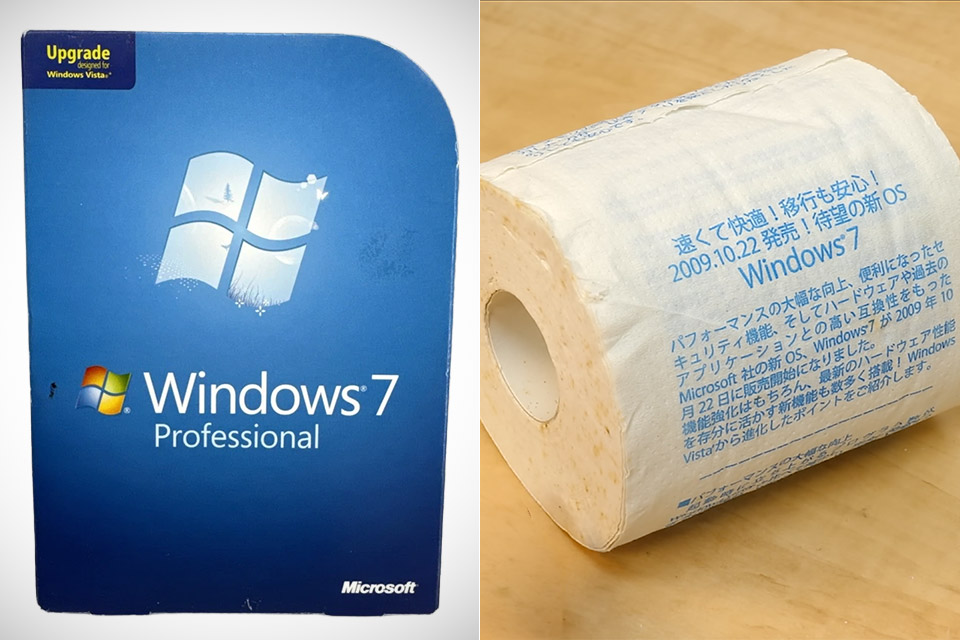
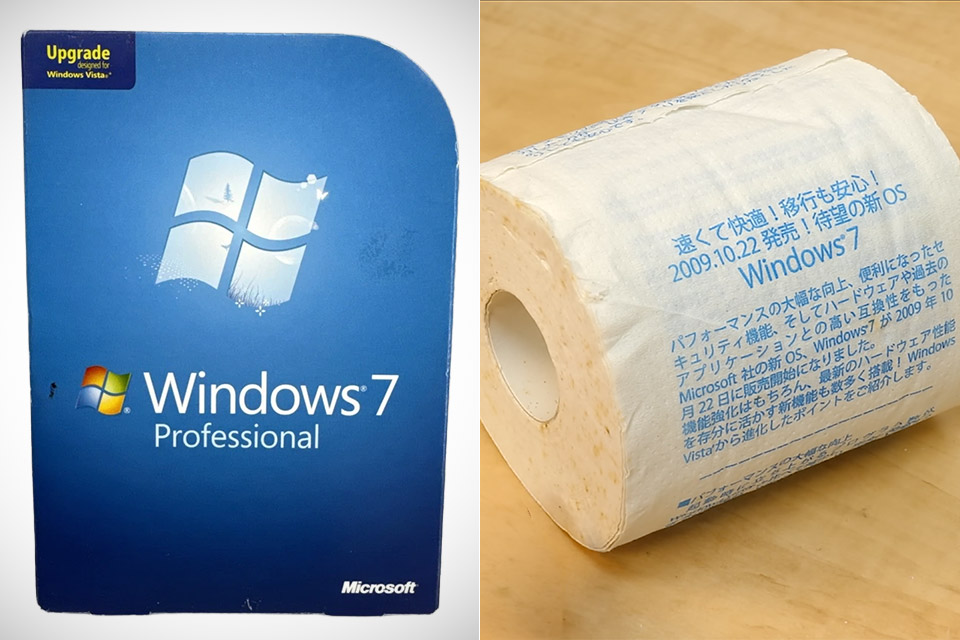
Japan approached the October 22, 2009 launch of Windows 7 with typical enthusiasm for new technology and a flair for memorable promotions. In select stores, buyers encountered something far more unusual than posters or demo kiosks. A standard roll of toilet paper carried the Windows 7 name and a full rundown of its improvements directly on the sheets.
This item was advertised in the similar way that Windows Vista Service Pack 1 was a year or so ago, with promotional paper rolls distributed in Akihabara and other retailers that printed out all of the upgrading information. The same strategy was carried over into the broader Windows 7 rollout, but this time, perhaps due to laziness, they used plain old toilet paper as advertising material. From a distance, the roll looked like any other roll of toilet paper, and the bulk of the models were made of the same two- or three-ply paper you’d get at home.
[This is a Copilot+ PC] — A new AI era begins. Experience enhanced performance and AI capabilities with Copilot+ PC, boosting productivity with…
[Introducing Surface Pro 13” Touchscreen Display] — The most flexible, powerful 2-in-1 laptop and tablet with AI-accelerated Copilot+ experiences…
[Flexibility at Any Angle] — Use with the detachable Surface Pro Flex Keyboard (sold separately). Shift from tablet to laptop to sketchbook with its…
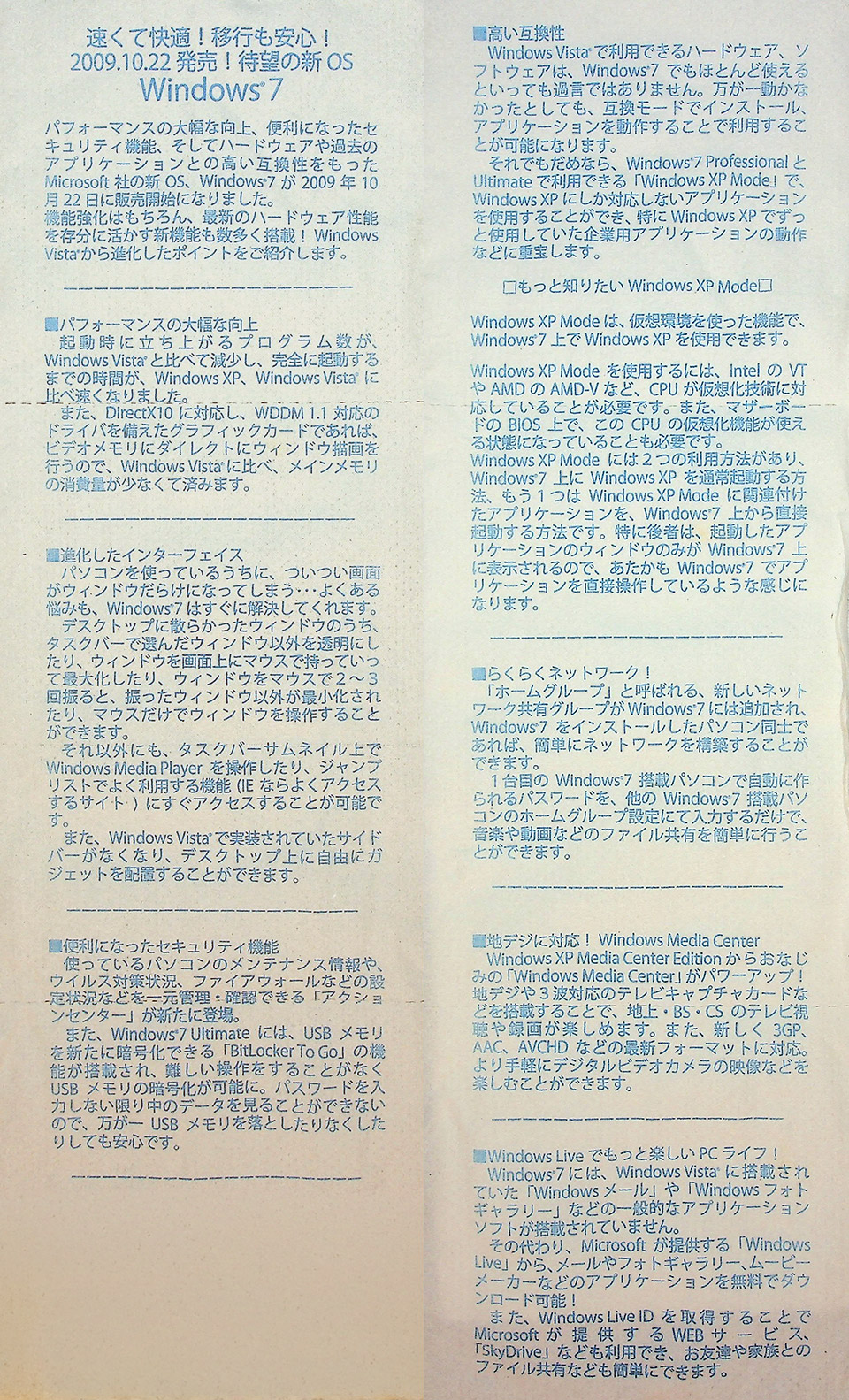
Only with closer inspection did you see the repeated Japanese lettering on the surface. At the top, it would state that the new operating system was fast, comfortable, and reassuring for those upgrading from an older version, and it would even include the release date as well as a promise that it would significantly improve the speed, security, and compatibility of your existing hardware and programs.
Advertisement
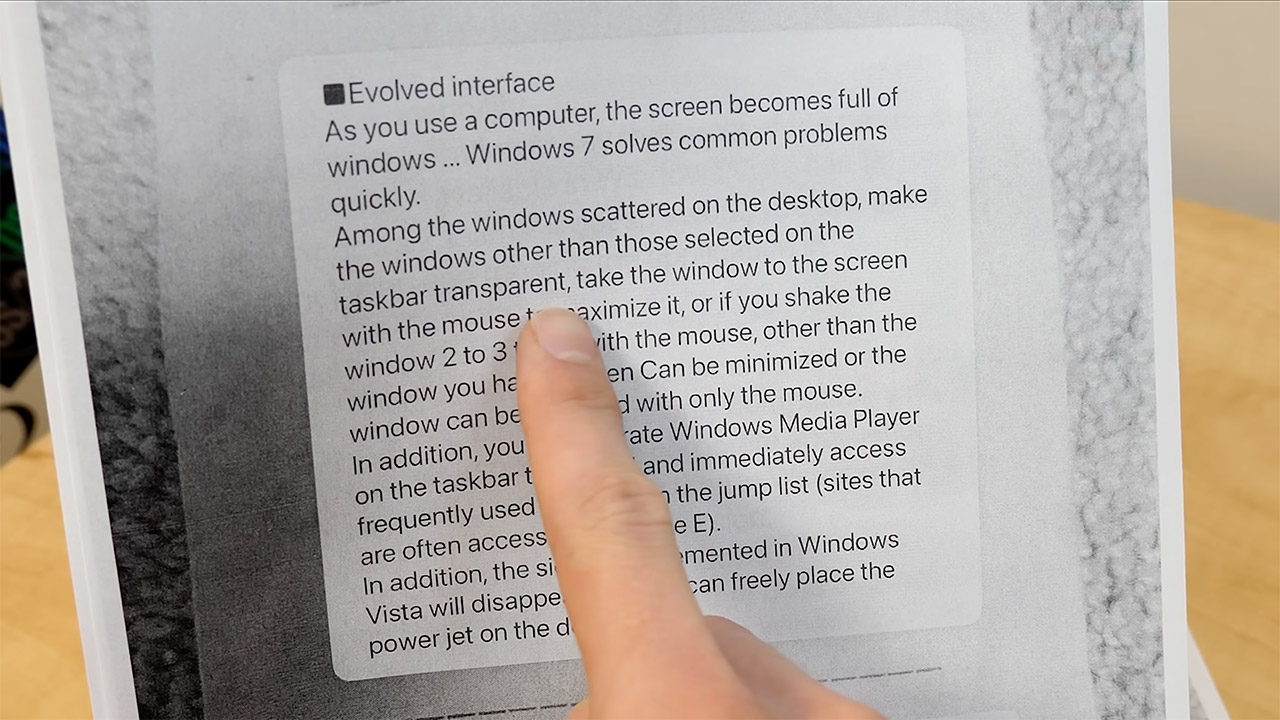
The rest of the material is separated into sections that cover the specific enhancements available with Windows 7. One bit underlines how much faster startup times will be since fewer programs will load when you boot up. Another part demonstrates how enhanced memory management can greatly boost graphics performance on compatible cards. Then there’s the section describing how the UI will be simplified, making the screen less congested. It demonstrates how inactive windows become transparent and how a quick flick of the mouse minimizes everything else.
It also mentions the taskbar’s revamp, which includes playback controls for Windows Media Player and the ability to access jump lists with a single click. Oh, and the old Vista sidebar simply disappears, freeing up desktop space for your personal gadgets. Security is also taken into account. An Action Center consolidates all maintenance warnings, antivirus status, and firewall settings in one location. The Ultimate edition also features BitLocker To Go, which makes it considerably easier to encrypt USB drives, allowing you to protect your data without becoming bogged down in tiresome processes.
This messaging emphasized how much compatibility has improved since Vista, which was inconsistent. So it was reassuring to learn that most of your existing hardware and software would still work, and that for any older programs that would not run, the Ultimate edition includes Windows XP Mode, which essentially creates a virtual environment that allows you to run legacy applications within Windows 7 if your CPU can handle the necessary virtualization features.
Networking and media capabilities complete the primary selling points. HomeGroup allows you to set up a very simple home network that just requires a shared password to exchange files and media. Windows Media Centre now supports digital TV broadcasts, recording, and a range of other video formats, while the emphasis shifts to downloadable Windows Live applications for email, photos, and video. Even some early cloud storage with SkyDrive for easy sharing with friends and family.
By the way, the design of the advertising material was rather clever, as the text would repeat in cycles, allowing you to pick up where you left off and go over the important points without having to unroll the whole thing. Some versions appeared to come with packaging modeled to Windows software boxes, stressing the link to the actual product launch. This initiative was spearheaded by local retailers rather than a huge Microsoft campaign, and the idea was to offer customers with a concrete reminder of why Windows 7 was superior to its predecessor in whatever spare time they had while going about their regular business. This type of tie-in is well-suited to Japan’s electronics retail sector, which has a long history of implementing wacky promotions that serve both functional and brand marketing purposes.
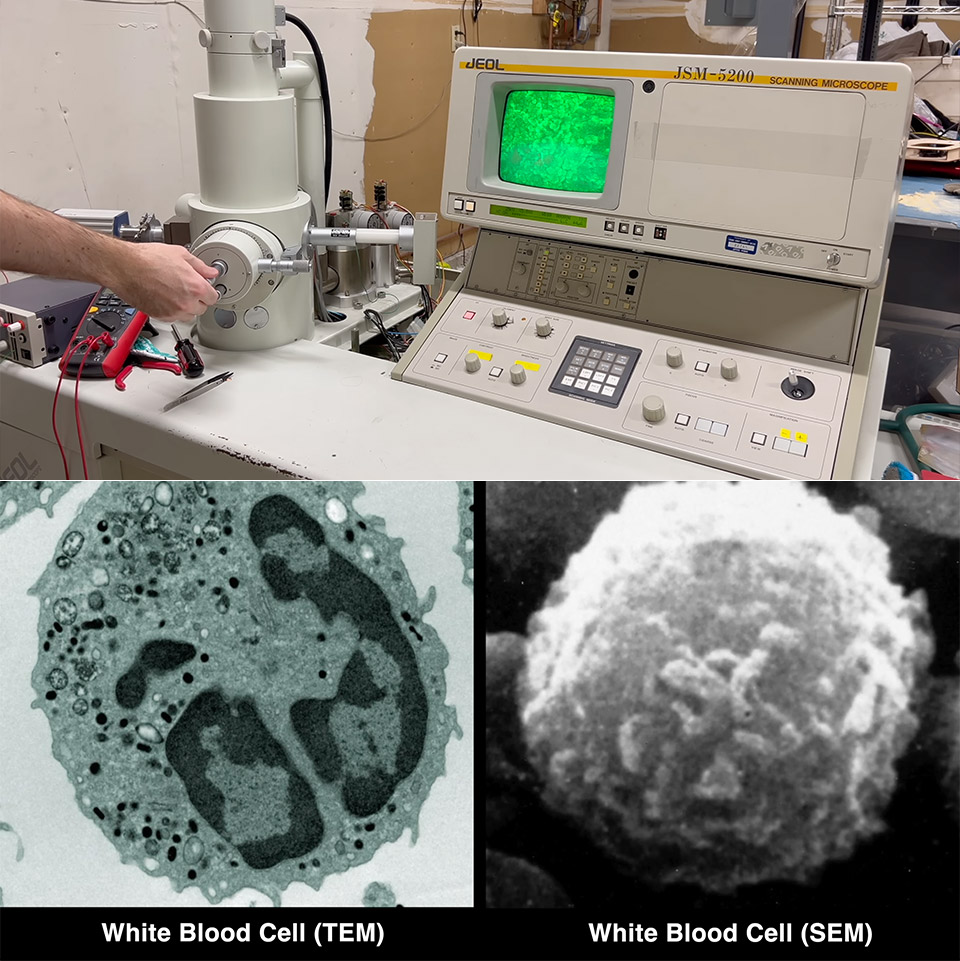
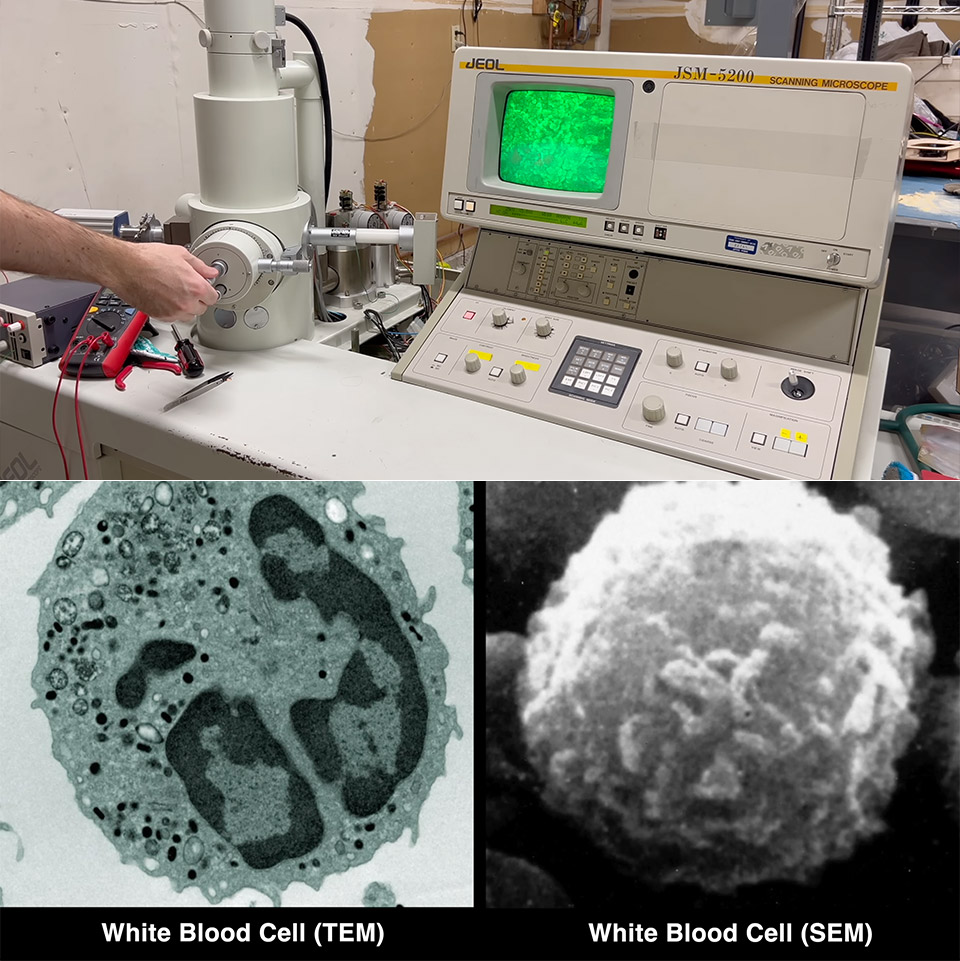
Makers who restore old scientific equipment sometimes end up pushing those machines into new roles. ProjectsInFlight fits that description after bringing a JEOL JSM-5200 scanning electron microscope back to life from a scrap pile.
Scanning electron microscopes work by zipping a narrow beam of electrons across the surface of a specimen. These electrons bounce off surface atoms and emit secondary electrons. Collecting all of those secondary electrons yields a highly detailed representation of the sample’s external form and roughness. However, the features you’re most interested in are often hidden beneath the surface. Transmission electron microscopes use electrons to penetrate ultra-thin materials. Any changes in density or material inside the sample affect how many electrons travel through, and a detector on the other end detects that pattern and translates it into an image of what’s going on inside.
4.3” Crisp Display: With 720P HD digital imaging, the LCD screen displays real-time clear images and good quality videos in full lighted view with…
Powerful Magnification: This microscope for adults allows you to zoom in and see the incredible details at a great magnification. The actual…
Microscope to PC Larger View: Connect this electronic microscope effortlessly to Windows or MacBook for viewing on a larger scale, and share live…
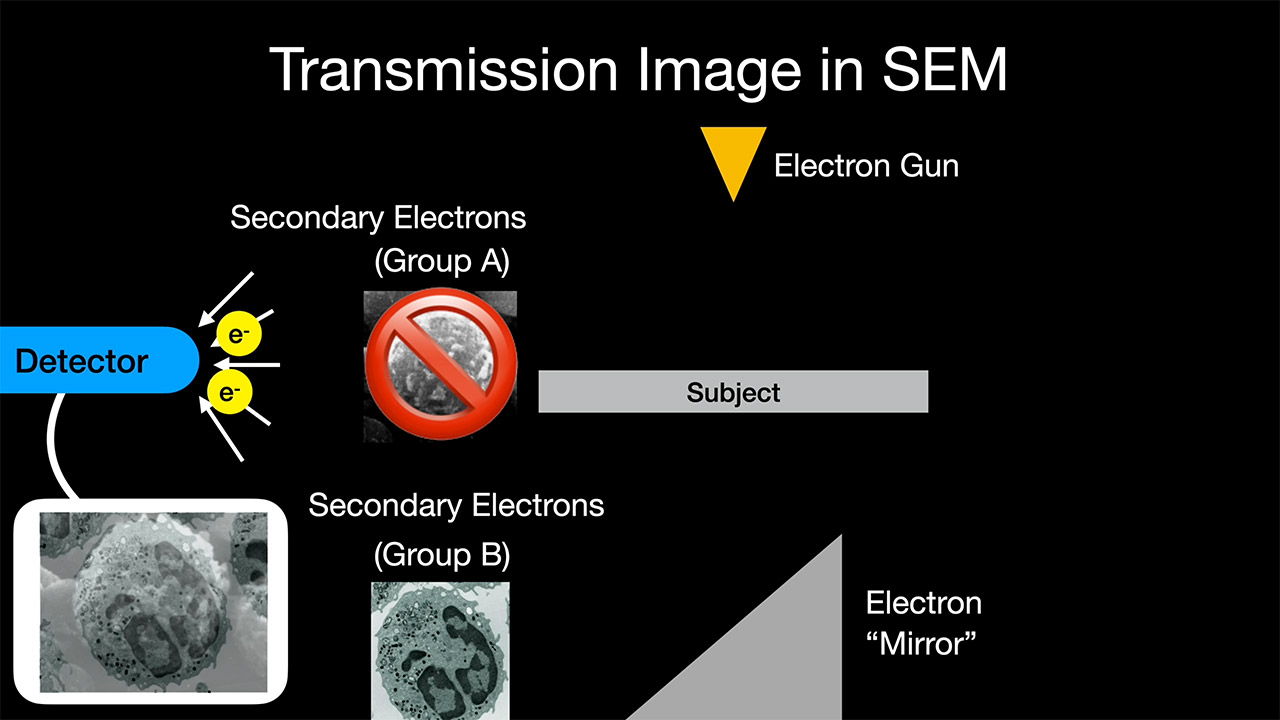
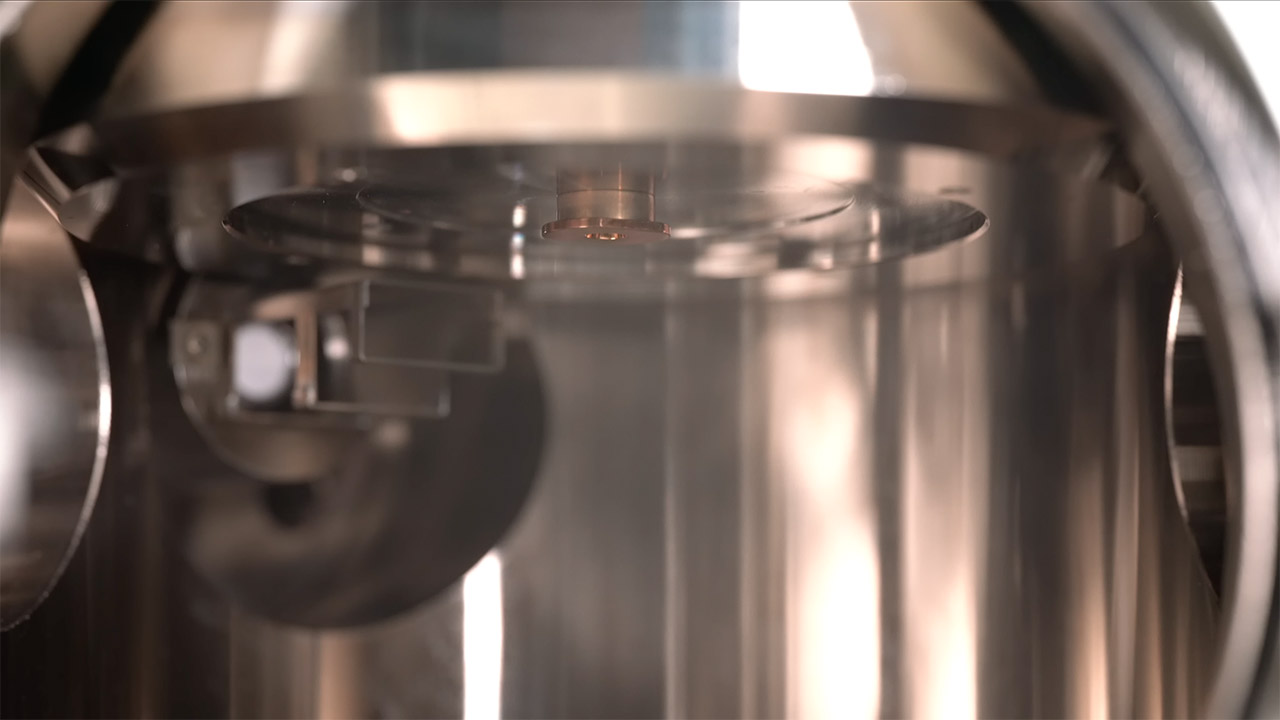
Building on a scanning electron microscope to increase transmission capacity can be very expensive. That’s why ProjectsInFlight decided to be creative and build his own adapter from scratch using only basic machine tools. The adapter is a bespoke component that fits into the microscope chamber and perfectly aligns the sample. Then, a conductive barrier surrounds it, preventing secondary electrons bouncing off the surface from reaching the detector. A small mirror beneath the sample collects any electrons that pass through. These electrons bounce off the mirror, creating a new signal that the microscope’s standard detector can detect.
One of the most difficult jobs was to fit everything into the microscope chamber’s limited space. The standard sample holders took up too much space, so we had to create a custom plate out of thin metal to free up 14mm. The remaining components, such as the adjustable mirror mount and shield, were turned and milled from aluminum and brass. The most challenging element was figuring out how to change the mirror angle without repeatedly venting the entire chamber. So he designed a unique configuration that allows you to alter the tilt even after the suction is activated.
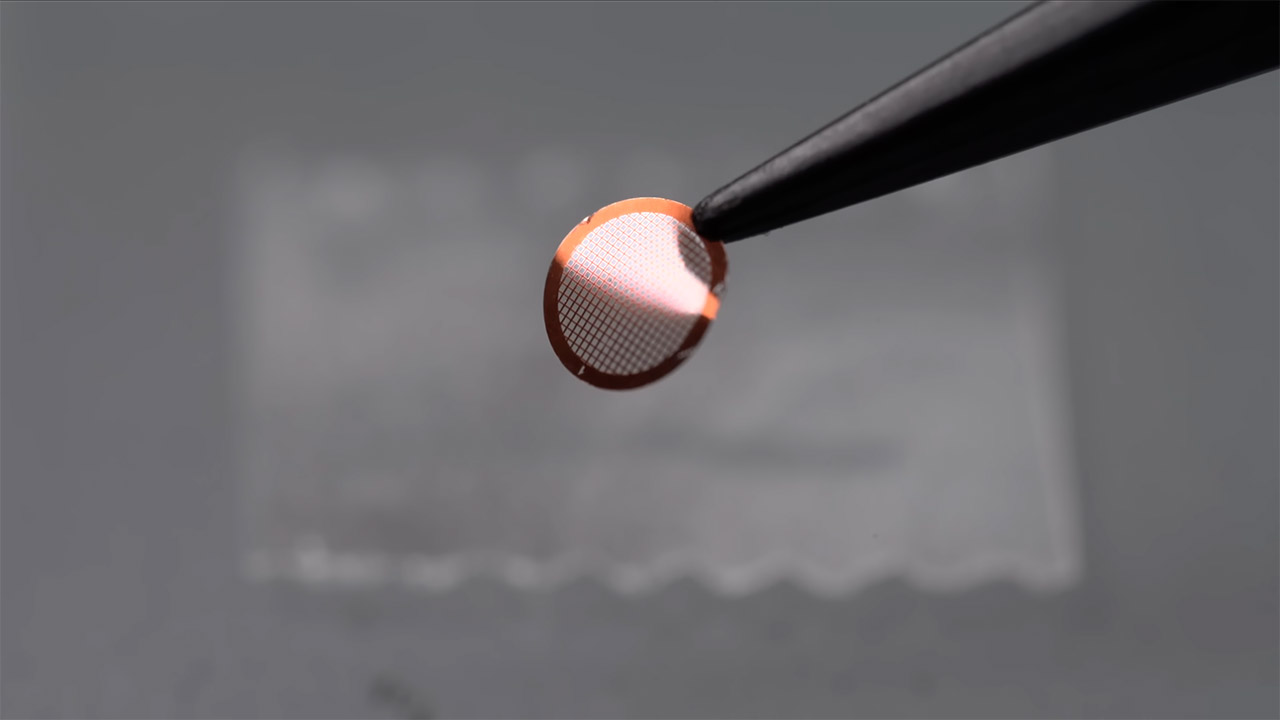
His initial test specimens were gold nanoparticles affixed to a standard electron microscopy grid, but the results were inconsistent at initially because some surface-generated signal was still reaching the detector. He repaired it by significantly beefing up the shield. With the shield in place, he could see the nanoparticles as distinct dark spots in the image. Because they appeared flat, we concluded that the contrast was created by electrons flowing through the particles rather than merely bouncing off the surface. The next object was a mosquito wing, and the thin sections of the wing allowed enough electrons to create a high internal contrast image. He could see small structures inside the wing that would have been invisible with a surface scan, and the best part was that the thicker areas of the wing blocked more electrons, allowing him to identify where the material was thickening or thinning.
However, this improvised adapter is not a replacement for a genuine transmission electron microscope. Those instruments have all sorts of fancy lenses and so on to make them much more powerful, but our adapter provides useful internal contrast for samples that can live with a bit less resolution. The best part is you won’t have to spend another small cash on a completely new instrument. [Source]
A smart home without the internet may sound like a paradox, but stay with me. There are already a number of smart home devices that work with no internet, but you can take it a step further and build an entire brand-agnostic smart home system that runs locally. That means a smart home that doesn’t need the cloud or rely on one company’s servers to keep working. With the right devices and setup, a smart home with no internet is more possible than it might initially sound.
AWS and Cloudflare have become the proverbial backbone of the internet, and each time one of these providers suffers an outage, we’re all reminded that our smart devices are only an internet outage away from being dumb. With a locally-controlled smart home, you can sidestep this issue, so long as your local network is online. You also retain greater control of your network traffic and data when everything isn’t being beamed to and from the cloud, giving you a greater degree of privacy.
While a local smart home comes with all of the aforementioned benefits, the tradeoff is easy remote access, which can be particularly useful for smart locks, cameras, and thermostats. So if that’s not a concession you’re willing to make, you could take a more hybrid approach.
Advertisement
What you need to build an offline smart home
The linchpin of most fully offline smart homes is a Home Assistant hub. Home Assistant is an open source smart home interface that prioritizes local device control and privacy, so it’s a perfect fit. While you could install Home Assistant on a Raspberry Pi 4 or 5, or even spring for the Home Assistant Green, you’re better off buying a cheap mini PC, given the current cost of memory. Hubitat is a lesser-known alternative, and works well for basic setups using Zigbee or Z-Wave, but is very limited compared to Home Assistant. Using Hubitat also requires purchasing its dedicated automation hub for local processing, but it remains an option.
Advertisement
Beyond a hub, you need to select devices that will work offline. You can technically reconfigure some Wi-Fi or IoT devices by isolating them on your LAN. However, doing so involves diving deep into your router and firewall settings, and your mileage may vary depending on the devices. Both Zigbee and Z-Wave are wireless protocols that don’t depend on Wi-Fi, enabling local control through a compatible hub or controller. Regardless of which you choose, both will require an adapter to allow communication for your devices. Home Assistant offers both, in the form of Home Assistant Connect ZBT-2 for Zigbee, and the ZWA-2 for Z-Wave. There are also other USB adapters for both platforms, so you can shop around a bit.
Both Zigbee and Z-Wave power devices for common smart home categories, but Zigbee products tend to be cheaper, are open source, and offer a broad catalog of devices. Z-Wave is proprietary, and generally more expensive, but it typically has better range and device interoperability. Both use AES-128 symmetric encryption and both form a mesh network with other devices in the ecosystem. Voice recognition for voice commands can also be achieved with local LLMs combined with Home Assistant’s Assist feature.
Advertisement
Don’t forget about Power Line Communication
What often gets left out of the offline smart home conversation is Power Line Communication (PLC). Power Line Communication works by transmitting data through your home’s existing electrical wiring. PLC has been around for years, and it’s the underpinning of X10, which is widely regarded as the dawn of home automation when it arrived in the 1970s.
A widely available and affordable PLC-based option is Insteon — and I speak from both personal experience as a smart home hobbyist and an electrician who has installed them in the past for customers. Insteon’s reputation faltered greatly when it abruptly announced bankruptcy and shuttered its doors, only to be resurrected soon after thanks to dedicated users literally buying the company. Insteon’s financial woes were never about its products, but more so about its mismanagement by its former parent company, SmartLabs, during the supply chain constraints during COVID-19.
Insteon is unique in that it deploys a dual-mesh — or “dual-band” as Insteon calls it — technology that uses both wireless RF and power line communication. This allows Insteon devices to not only function without Wi-Fi, but also act as a peer-to-peer network. To get started with Insteon, you would typically buy the Insteon Hub for web access, but a better route for offline control is the Insteon USB PLM, which you can use to interconnect Insteon devices and interface with Home Assistant.























































You must be logged in to post a comment Login