












Private and public sectors need to join efforts to make robotaxi deployment a smoother affair, says Geotab’s Edward Kulperger.
Over the past decade, self-driving cars have become a somewhat common sight across several major cities in the US, China and elsewhere. Cautious regulators now want robotaxis on European roads.
Across the region, a number of countries, including Germany, Spain and the UK are allowing companies to pilot the technology in urban areas.
The needle is moving here in Ireland as well, with the Irish Government having approved partially autonomous vehicles (AVs) – also called level 2 AVs – on the country’s roads earlier this year, and kick-starting a strategy towards level 4 autonomous technology, or fully autonomous vehicles.
Though it may be years before we see fleets of driverless taxis in the country.
The safety argument
The argument for robotaxis primarily hinges on safety, according to Edward Kulperger, the senior vice-president for the EMEA region at the Canadian fleet management company Geotab, who tells SiliconRepublic.com that AVs are safe today and would “for sure” be safer than human driving in the future.
Geotab has about 6.5m connected assets, including robotaxis and other logistics vehicles on its platform, Kulperger explains. These assets, that have collectively completed more than 300m miles of complete AV driving, produce approximately 100bn individual data points.
This includes GPS data, vehicle and energy performance, accident data and vital information on other maintenance issues, which are used to monitor vehicles in real time, as well as train future fleets. “That’s a massive baseline to draw from,” says Kulperger.
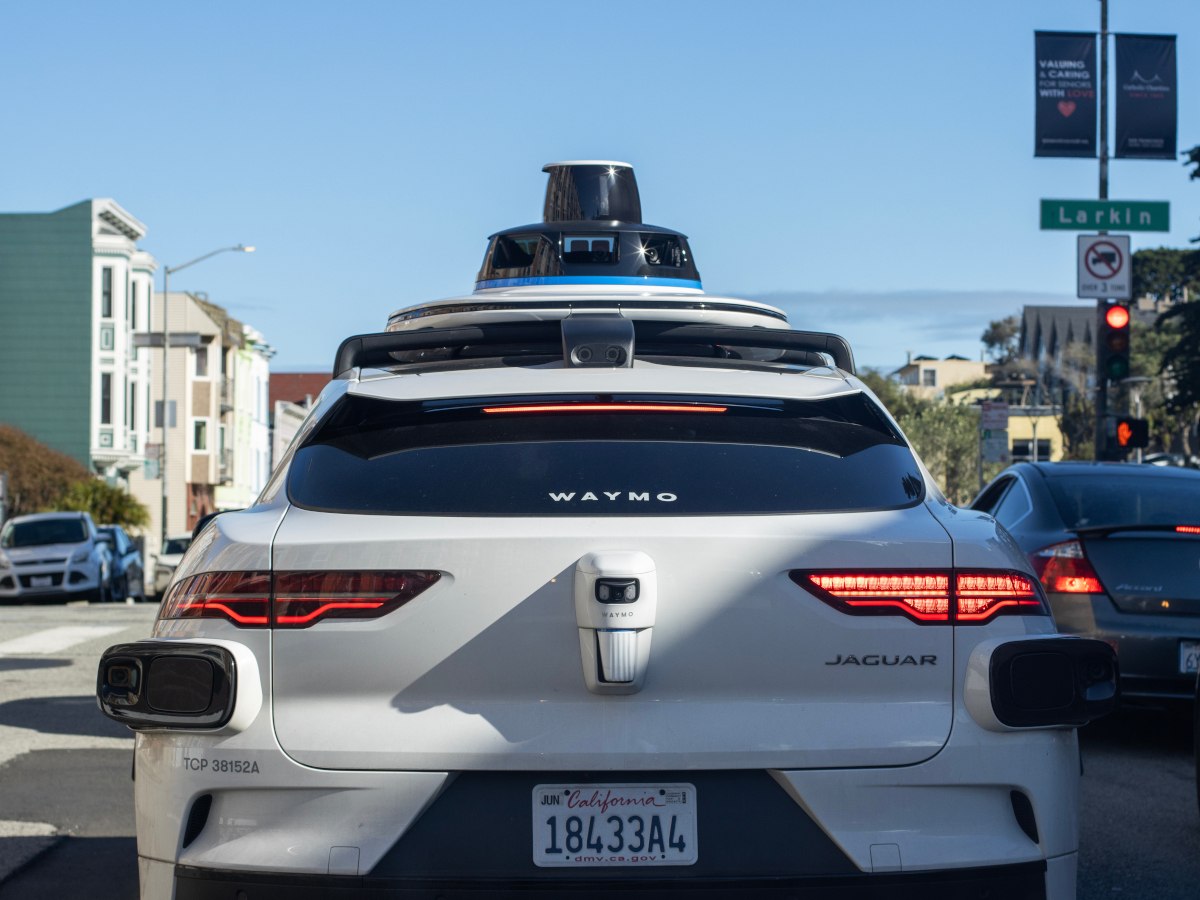
Waymo, which has more than 200m in AV miles, said that its data indicated that its robotaxis were better than humans at avoiding crashes that result in injuries.
Just days ago, the Estonian ride hailing company Bolt announced a plan to launch its European robotaxi services on 25,000 Lucid-made cars. The company said it would use its extensive existing European data to train up the driverless fleet with hopes of growing the number to 100,000 by 2035.
Kulperger argues that AVs mean no distracted, reckless or drunk driving. While still in its infancy, the fast-advancing technology – now boosted with new advances in AI – will “surpass [humans] from a safety perspective”, he says. It’s also more efficient, he adds. “I think it’s really paramount that we, as a society, dive into fixing this [issue of road deaths].”
Then there’s other problems too, such as road congestion and concentration of pollution in urban streets that Kulperger believes AVs could also help resolve.
Road deaths globally dropped 21pc between 2011 and 2025 according to the World Health Organization (WHO), despite the addition of more than 1bn vehicles within the period. Still, more than 1m lives were taken on roads across the world just last year.
Meanwhile, road fatalities dropped by 3pc on average in the EU last year, amounting to nearly 19,500 deaths. Romania continues to have one of the highest fatality rates in the bloc alongside Bulgaria and Croatia (Croatia’s capital Zagreb was tapped by Uber to launch its first robotaxi service in the continent just last month).
The massive drop in road deaths, though, is attributed to “safe road systems”, says the WHO. This recognises human error as unavoidable, and promotes safer roads, infrastructure, vehicles, speed limits and regulations to hopefully ensure that crash impacts remain within survivable levels. Smarter vehicles, of course, aid in driver safety.
Still, some experts point to a lack of sufficient independent data backing up the narrative that AVs are less crash-prone than humans. They argue that driverless vehicles face problems of an entirely different kind to what humans might experience on the road.
Earlier this year, Waymo recalled pulled 3,900 robotaxis from US streets over a software issue that let AVs enter and drive in closed freeway construction zones. Just a month earlier, the company recalled nearly 3,800 robotaxis from the US over a software issue that could allow vehicles to drive onto flooded roadways.
Meanwhile, last December, the Alphabet-owned company briefly suspended services in San Francisco after a massive outage stalled Waymos on roads, disrupting traffic and adding on to the gridlock.
Waymo’s Chinese competitor Baidu also faced a similar issue in Wuhan after more than 100 of its Apollo Go robotaxis abruptly stopped on the city’s roads in late March.
Bloomberg reported that Chinese authorities, as a result, suspended issuing new licences for level 4 AVs, preventing companies from adding new robotaxis to their fleet or expanding to new cities.
Both countries have seen grievous AV-related injuries in recent years as well.
But according to experts like Kulperger, the hope is that over time, and with enough data captured from different urban layouts globally, issues like these will eventually be fixed. “The rapid adoption and acceleration now is kind of unprecedented – it’s really doable,” he says.
“Our societies have invested a lot in trains and buses – I think we complement that,” Kulperger says when asked what role robotaxis would play in alleviating congestion-related issues. He envisions a mixed fleet of public transport alongside AVs to help people reach destinations safely.
“You take a train, and then maybe you move to an AV to get to your destination…I think the economic and societal benefits [of AVs], will be realised, you know, exponentially as it grows.”
Data is the answer
The robotaxi market is expected to grow to $168bn by 2035, with a global fleet size of 3.6m robotaxis, according to data from Counterpoint Research.
Waymo, Tesla and China’s Baidu Apollo Go, WeRide and Pony.ai are all expected to lead the market, supported by their technology, funding and aggressive roll-out strategies. Meanwhile, ride-hailing leaders, including the likes of Uber, Lyft, Bolt and Grab are continuing to partner with robotaxi builders, connecting companies with their wide customer-base.
In Europe, these businesses are targeting to deploy more than 100 AVs per city by 2030, Kulperger says. “That gives you a little bit of insight into the kind of timeline.
“The thought process is to focus on logistical corridors… so arteries, freightways and to integrate that with various fleets.”
Europe’s old roads and unruly weather – a particular cause for trouble in areas like Ireland – have made expanding into the region somewhat challenging for businesses. Though that hardly seems like a hurdle anymore.
“We work with the largest AV organisations today,” Kulperger says, including one with driverless fleets in the US and recently in Europe. “We’re just at the tipping point of it really starting to scale.
“I think [by] 2030, we’ll see increasingly in, you know, cities like Dublin, a mixed fleet on the road where you have personal vehicles that are completely autonomously driven alongside partially assisted vehicles.”
Regulations need to evolve with the technology, says Kulperger. The bloc has been known to be slow with regulations, but it is attempting to change that across the board in recent years. Earlier this June, 18 EU member states, including Ireland, signed a declaration to support large-scale cross-border testbeds for AVs.
“I think it’s incumbent upon [the] private and public sector to start to really work together at the state and city level to deploy this because the safety and efficiency is kind of demanding it,” Kulperger says.
“The cities that’ll be best positioned to lead this might not be the ones that are most advanced today on autonomous vehicle…[but would be] ones that can combine the technology with the right regulatory infrastructure and commercial environment.”
Don’t miss out on the knowledge you need to succeed. Sign up for the Daily Brief, Silicon Republic’s digest of need-to-know sci-tech news.








.jpg)




















































You must be logged in to post a comment Login