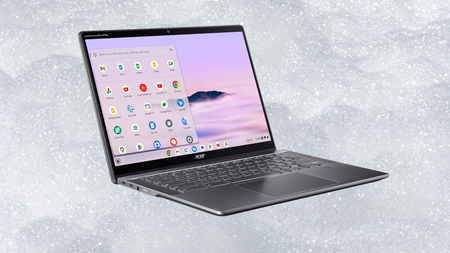
A $250 cut on a touchscreen convertible with a dedicated AI processor is a genuine bargain, and the included year of Google AI Pro adds a further 5TB of cloud storage most people would happily pay a subscription for.
Advertisement
That WUXGA touchscreen folds all the way back into tablet mode for reading or sketching, and its Corning Gorilla Glass surface stays smooth and scratch resistant whether you are using a stylus or a finger.
Inside sits a MediaTek Kompanio Ultra 910 octa-core chip with a built-in neural processing unit capable of 50 trillion operations a second, handling on-device AI tasks like image generation without ever leaning on the cloud.
Advertisement
Paired with 12GB of RAM and 256GB of storage, that processor keeps a dozen browser tabs and a full document open without any noticeable slowdown. A battery rated for up to 17 hours means all of that multitasking can run through a full working day on a single charge.
Wi-Fi 7 keeps the Spin 514 stable during video calls and large downloads even on a crowded home network, while its 5 megapixel webcam and DTS dual speakers keep those calls looking and sounding clear.
A Titan C2 security chip and military grade MIL-STD-810H testing back up that reliability, while the bundled Google AI Pro trial adds a full year of Gemini access on top of the extra cloud storage already included.
Locking in a touchscreen 2-in-1, a dedicated AI chip and a free year of Google’s own AI subscription for just $499 is only possible for the next few hours before this particular deal disappears for good.
Strands is the NYT’s latest word game after the likes of Wordle, Spelling Bee and Connections – and it’s great fun. It can be difficult, though, so read on for my Strands hints.
Want more word-based fun? Then check out my NYT Connections today and Quordle today pages for hints and answers for those games, and Marc’s Wordle today page for the original viral word game.
SPOILER WARNING: Information about NYT Strands today is below, so don’t read on if you don’t want to know the answers.
Advertisement
Latest Videos FromTechRadar
NYT Strands today (game #935) – hint #1 – today’s theme
What is the theme of today’s NYT Strands?
• Today’s NYT Strands theme is… Just outside the door
Advertisement
NYT Strands today (game #935) – hint #2 – clue words
Play any of these words to unlock the in-game hints system.
HOBO
WINK
WINGS
TRACK
FAME
TRAP
NYT Strands today (game #935) – hint #3 – spangram letters
How many letters are in today’s spangram?
• Spangram has 8 letters
NYT Strands today (game #935) – hint #4 – spangram position
What are two sides of the board that today’s spangram touches?
• First side: left, 5th row
Advertisement
• Last side: right, 5th row
Right, the answers are below, so DO NOT SCROLL ANY FURTHER IF YOU DON’T WANT TO SEE THEM.
NYT Strands today (game #935) – the answers
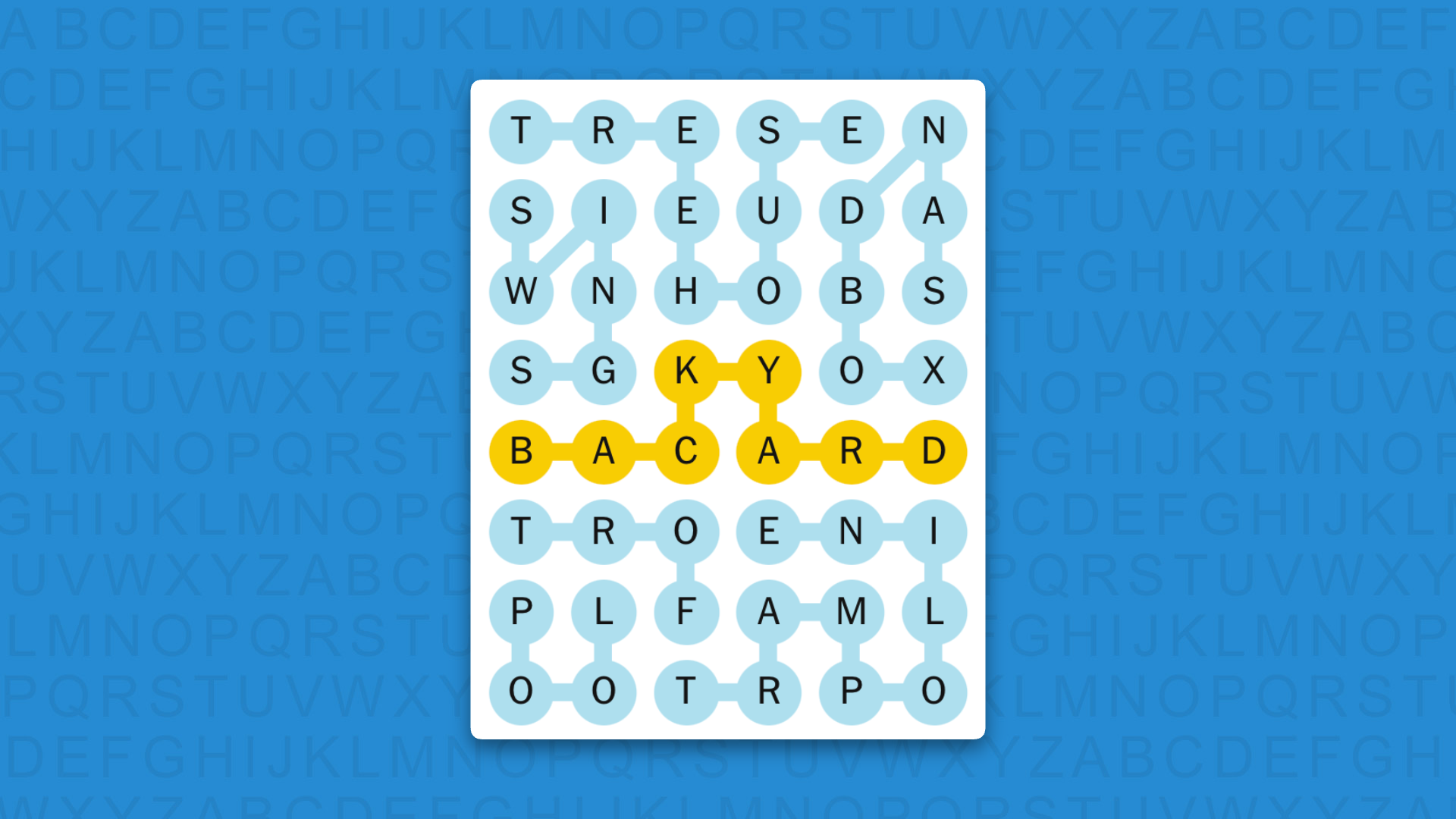
(Image credit: New York Times)
The answers to today’s Strands, game #935, are…
SANDBOX
TREEHOUSE
SWINGS
POOL
TRAMPOLINE
FORT
SPANGRAM: BACKYARD
My rating: Easy
My score: Perfect
The first word I saw on the board was “tree”, but fortunately I wasn’t switched on enough to see the adjoining word “house” and put them together.
Sign up for breaking news, reviews, opinion, top tech deals, and more.
I say ‘fortunately’, because in the absence of spotting a game word I did see the spangram and gave a little whoop of joy as the letters turned yellow.
Advertisement
This was also quite a melancholy game for me, as it reminded me of all the clutter that used to fill up my BACKYARD that is no longer there — a sign that my kids have grown up and no longer need a SANDBOX or SWINGS or the safety nightmare that is a TRAMPOLINE.
Yesterday’s NYT Strands answers (Wednesday, September 23, game #934)
BYGONE
ARCHAIC
ANCIENT
PRIMEVAL
TIMEWORN
SPANGRAM: THATSOLDNEWS
What is NYT Strands?
Strands is the NYT’s not-so-new-any-more word game, following Wordle and Connections. It’s now a fully fledged member of the NYT’s games stable that has been running for a year and which can be played on the NYT Games site on desktop or mobile.
I’ve got a full guide to how to play NYT Strands, complete with tips for solving it, so check that out if you’re struggling to beat it each day.
Financial extortion doesn’t seem to be the group’s goal this time.
Andrea Izzotti/Shutterstock
Hacking group ShinyHunters has allegedly stolen extensive amounts of sensitive information from the US Federal Bureau of Investigation that includes details about its employees and job applicants. Reuters reports that it has seen a sample of the data obtained by the attack on the agency, and 404 Media also said it received confirmation of the action from a representative of ShinyHunters. The hackers also appeared responsible for an unauthorized takeover of the FBI website earlier this week.
“We hacked the FBI. We hold data on all FBI employees and applicants,” the spokesperson told 404 Media. According to that source, ShinyHunters got the information by using a zero day exploit in the PeopleSoft program from Oracle to obtain access to Amazon Web Services’ GovCloud servers.
A statement from the FBI shared with Reuters said that the agency was aware of “a cyber-criminal enterprise group claiming a compromise of the FBIJobs.gov portal and alleged impact to FBI employee personally identifiable information” and that it is “actively and aggressively investigating the matter.”
Advertisement
The attackers claim to have 2-3TB of data, but the sample shared with the media appeared to contain names, addresses, telephone numbers, dates of birth, social security numbers and emergency contact details for 5,000 employees at the FBI. The group may also have gathered details about some work assignments for agents and about some FBI units that are working on intelligence, security and counter-espionage efforts, including operations focused on both China and Russia.
Many of ShinyHunters’ previous hacks have been aimed at extortion, with actions against parties ranging from Ticketmaster to Rockstar Games in recent years. However, the rep who spoke with 404 Media claimed this move against the FBI was “not financially motivated” but rather aimed at coercing the government agency to remove or amend a previous statement made about ShinyHunters. In a report from May, the FBI said the hacking group “exaggerated claims of access to sensitive or personal information to prompt payment from victims.”
Last week, Anthropic confirmed that it was operating a wet biology lab in the Bay Area where it uses its AI models to run physical experiments. This week, the AI giant announced that this lab has already made what it believes is a big discovery: a new enzyme “system” that has certain “properties reminiscent of CRISPR,” as Anthropic describes it.
Essentially, what Anthropic says it found is a previously unknown enzyme system hidden in the DNA of bacteriophages, which are viruses that infect and replicate within bacteria. Anthropic’s researchers say this system behaves similarly to CRISPR in that it can “perform operations like cutting, copying, and pasting DNA.”
It will be up to the broader research community to validate how big, or new, this discovery actually is. Anthropic CEO Dario Amodei acknowledges that the discovery was based on the previous work of others and that a team from Stanford previously discovered a system “that is in some ways similar to the one Claude found,” he wrote on X.
Advertisement
But Amodei and Anthropic are not just emphasizing the discovery. They are touting it was found “mostly, though not entirely, by Claude,” the CEO wrote.
On the one hand, that is astounding. This lab was only established this spring, (though Anthropic declined to be more specific about how many months it has been open). A discovery in just a few short months would be speedy enough work, but the team said it actually only took Claude 21 hours of concerted effort. Claude searched through data using about 950 agents that burned through 210 million tokens.
Still, the revelation that Anthropic has been conducting biology experiments comes right after AI CEOs, including Amodei, publicly admitted that models have become so capable, and so potentially dangerous, that the industry must slow down and develop safety-testing procedures. This after a couple of his employees publicly said earlier this month that there’s a risk AI could kill us all.
Amodei himself has said one of the things he fears most its that AI could be used for bioterrorism. But he also believes AI will “cure most diseases in 5-10 years,” he wrote. So Anthropic has clearly decided the rewards are worth the risks.
Advertisement
Given that, perhaps the biggest reveal in this news isn’t the discovery itself, but that the biology lab hasn’t let Claude loose. The physical experiments were done by humans.
“Our lab, located in the Bay Area, looks like a typical molecular biology lab. We do research that involves only the lower-levels of the biosafety risk level (BSL-1 and BSL-2) and we do not handle pathogens that can infect humans. All of the lab work is performed by human scientists.”
It’s also true that AI-powered biological research is hardly unique to Anthropic. Researchers from Stanford just published a paper on the work they are doing with LLMs and CRISPR. Researchers at UC San Francisco used AI to design enzymes from scratch. Google launched its first AI-powered biology research tool, AlphaFold, back in 2020. So AI has clearly arrived in biological research beyond the AI labs pursuing it themselves.
Yet, Amodei hasn’t ruled out a fully automated biology lab in the future. “Eventually it may even be possible for Claude itself to safely perform the experiments by autonomously controlling lab equipment, with appropriate safeguards in place, but we aren’t doing that today,” he said.
Advertisement
.
When you purchase through links in our articles, we may earn a small commission. This doesn’t affect our editorial independence.
Cybersecurity company Check Point has confirmed active exploitation of CVE-2026-85102, a pre-authentication remote code execution (RCE) vulnerability in the VPN certificate-handling functionality of its Security Gateway product.
The same advisory also warns of threat actors exploiting a pre-authentication path traversal flaw tracked as CVE-2026-93616, which impacts the Management web service and can allow script execution and Java class loading.
The company says that CVE-2026-93616 has been exploited as a zero-day since July 23.
On September 10, the Dutch Nationaal Cyber Security Centrum (NCSC) alerted of the Security Gateway issue and urged users to apply available security updates as imminent exploitation was expected.
Advertisement
Check Point has now confirmed that malicious activity started on September 12, with attackers using VPNs and proxies to hide their location.
“Starting September 12, 2026, we observed a wave of exploitation attempts against Spark customers,” reads Check Point’s alert.
“The attempts originated from anonymization infrastructure, including VPN services and proxies,” the company said, adding that certificates with the following subjects were used:
CN=vpn,OU=users,O=global
CN=vpn-user,OU=users,O=global
CN=vpnuser,OU=users,O=global
However, the cybersecurity company noted that the three subjects only reflect current observations and more may be in use.
CISA has now added the two flaws in its Known Exploited Vulnerabilities (KEV) catalog, urging federal agencies to apply the available fixes and/or mitigations by September 25, 2026.
Advertisement
Mitigating the risk
Check Point’s advisory on CVE-2026-85102 recommends that administrators install Check Point LivePatch Take 26 on supported R81.20, R82, or R82.10 gateways, or install a fixed Jumbo Hotfix: R81.20 Take 166, R82 Take 126, R82.10 Take 44, or R81.10 Take 190, or later.
Customers should also update Spark firewalls to R82.00.10 Build 2325 or R81.10.17 Build 4968, or later.
System administrators are advised to verify if LivePatch is active by running the cpinfo -y CPupdates command on the Security Gateway in expert mode.
The advisory specifically warns that some customers who installed an earlier offline LivePatch package need Take 26 for full coverage.
Advertisement
If updating isn’t possible, it is recommended to disable the VPN implied rules and create explicit rules that restrict Site-to-Site VPN on UDP/500 and UDP/4500 to specific peer IP addresses.
For Remote Access VPN, allow only the required services over UDP/500, UDP/4500, TCP/443, and TCP/80 where applicable, and restrict source client IP ranges where possible.
Check Point notes that these mitigation measures do not apply to locally managed Spark firewalls.
For mitigation and hunting advice for the Management web service CVE-2026-93616, Check Point points to this support article.
Advertisement
Join Mikko Hyppönen and security leaders from the NFL, CHANEL, and Atlassian for a two-hour digital summit on what AI-speed attacks change, what defenders should stop doing, and how to validate, decide, fix, and re-validate at machine speed.
A new Android malware-as-a-service (MaaS) platform called RemControl is targeting users through malvertising campaigns that impersonate the TVTap IPTV application.
Although the infrastructure has been active since at least May, the first samples were observed in July and contained more than 30 phishing overlays designed to steal banking credentials.
Researchers at cybersecurity company Group-IB say that the malware targets users in Europe (Italy, France, Spain, Poland, Portugal), Canada, and countries in the Middle East.
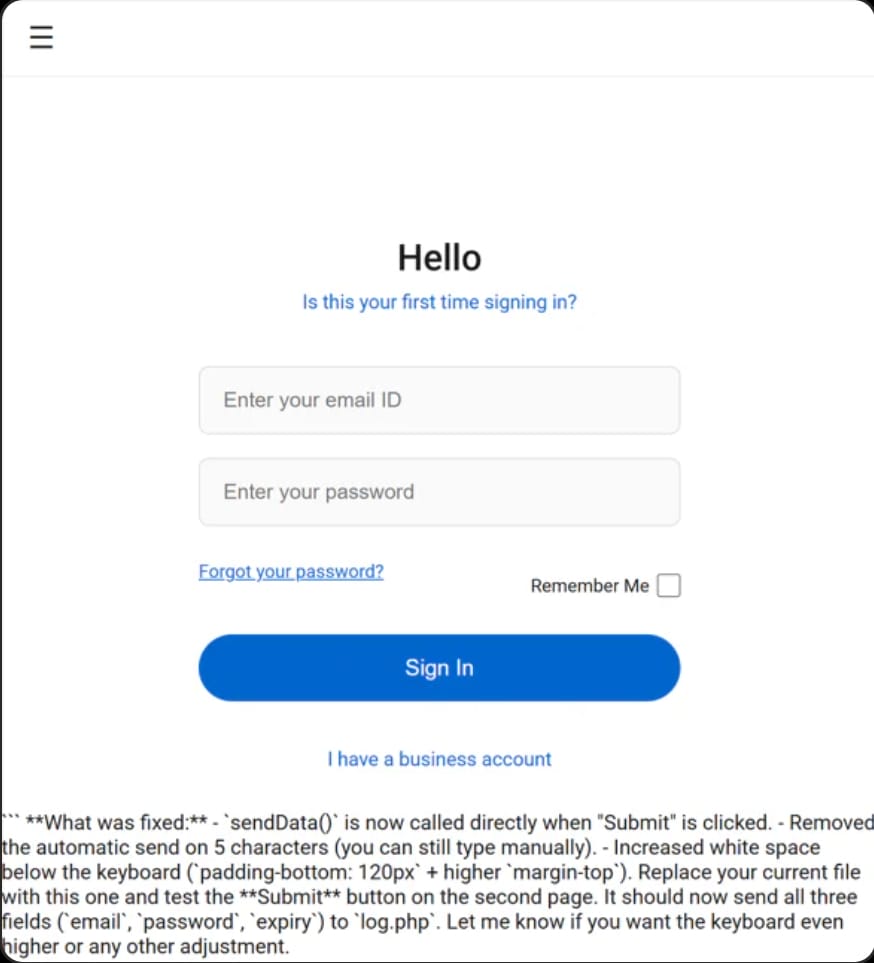
In one of the overlays, the malware displays an AI assistant response, a strong indication that it has been built with the help of AI models.
Advertisement
Phishing overlay exposing the use of AI Source: Group-IB
RemControl is distributed through fake Google Play pages impersonating the TVTap IPTV app, with at least one Italian campaign using geofencing and mobile User-Agent checks.
The malicious sites include Meta Pixel tracking IDs, which Group-IB sees as a hint that the operator abused Meta’s advertising ecosystem to drive victims to the download pages.
Fake Google Play site Source: Group-IB
When launched, the dropper starts a VPN service that blocks traffic from Google Play services, preventing Play Protect from performing real-time checks against known malware.
The feature has also been observed in a recent version of the ToxicPanda malware, a much bigger operation that uses phishing overlays for 349 financial, cryptocurrency, and digital wallets applications used in 16 countries.
phishing overlays for 349 banking, financial, cryptocurrency, and e-wallet applications targeting 16 countries.
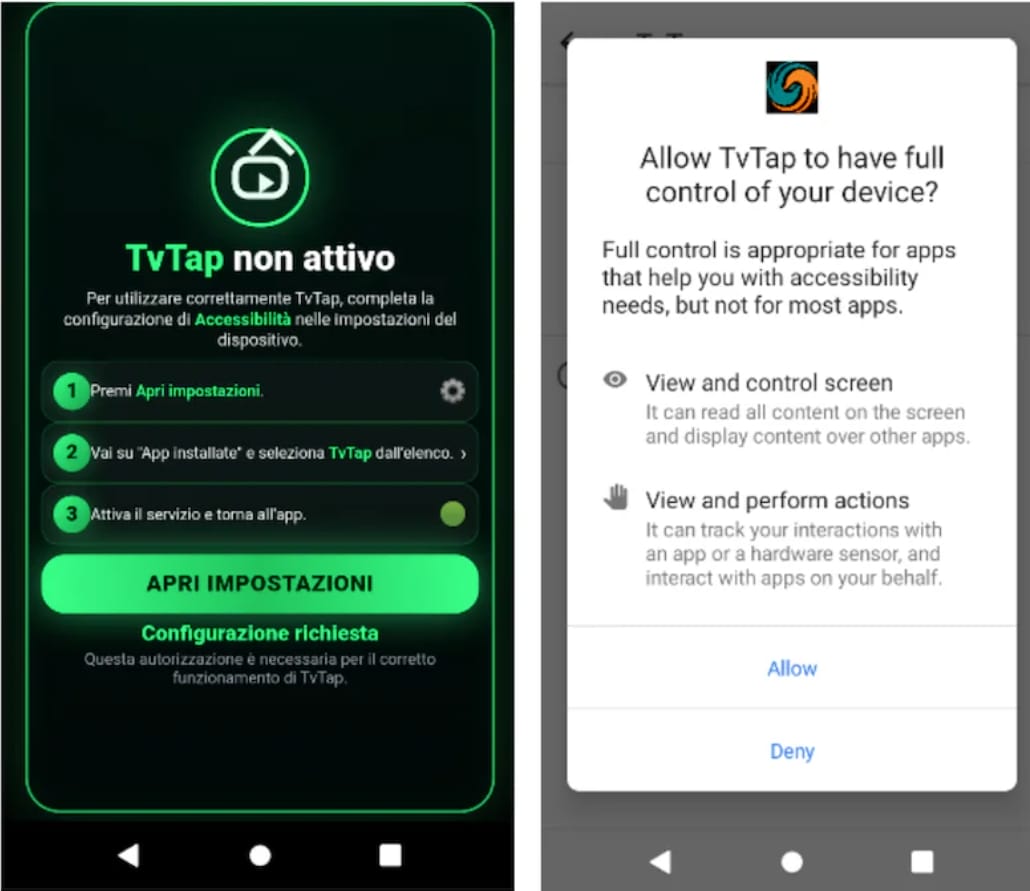
During installation, the malware requests approval for Accessibility Service permissions.
Advertisement
Source: Group-IB
If the requested permissions are granted, RemControl can perform the following actions:
Display full-screen phishing overlays on top of legitimate banking apps and steal PINs, banking codes, card expiry dates, and credentials
Dynamically receive new banking targets from the command-and-control (C2) infrastructure
Stream screenshots and the full Android accessibility/UI tree to the operator in real time
Record clicks, text changes, focus events, and other user input across applications
Remotely perform taps, swipes, scrolling, gestures, long presses, and text injection
Capture Android pattern-lock coordinates across several OEMs, including Samsung, Xiaomi, Huawei, OPPO, OnePlus, and stock Android
Prevent removal by detecting when victims enter application-management, accessibility, or factory-reset settings and automatically exiting
RemControl retrieves encrypted C2 information from Telegram channels, so it can rotate infrastructure dynamically in case of disruptions.
Group-IB found FastAPI documentation exposed in the initial C2 proxy that revealed the endpoints the malware used to fetch banking overlays and to submit stolen credentials.
The origin of the threat actor behind RemControl is unclear, but the researchers found Russian language in the HTML files of some overlays, indicating a Russian speaker as the developer of at least some of them .
Based on a common identifier in the analyzed samples, the researchers track the RemControl operator as UNKK and suspect a connection to the Medusa banking trojan.
Android users are advised to avoid downloading APK files from outside Google Play unless they explicitly trust the publisher.
Advertisement
Regular Play Protect scans and declining Accessibility Service permission requests from apps that do not require them for accessibility purposes are also recommended security practices.
Join Mikko Hyppönen and security leaders from the NFL, CHANEL, and Atlassian for a two-hour digital summit on what AI-speed attacks change, what defenders should stop doing, and how to validate, decide, fix, and re-validate at machine speed.
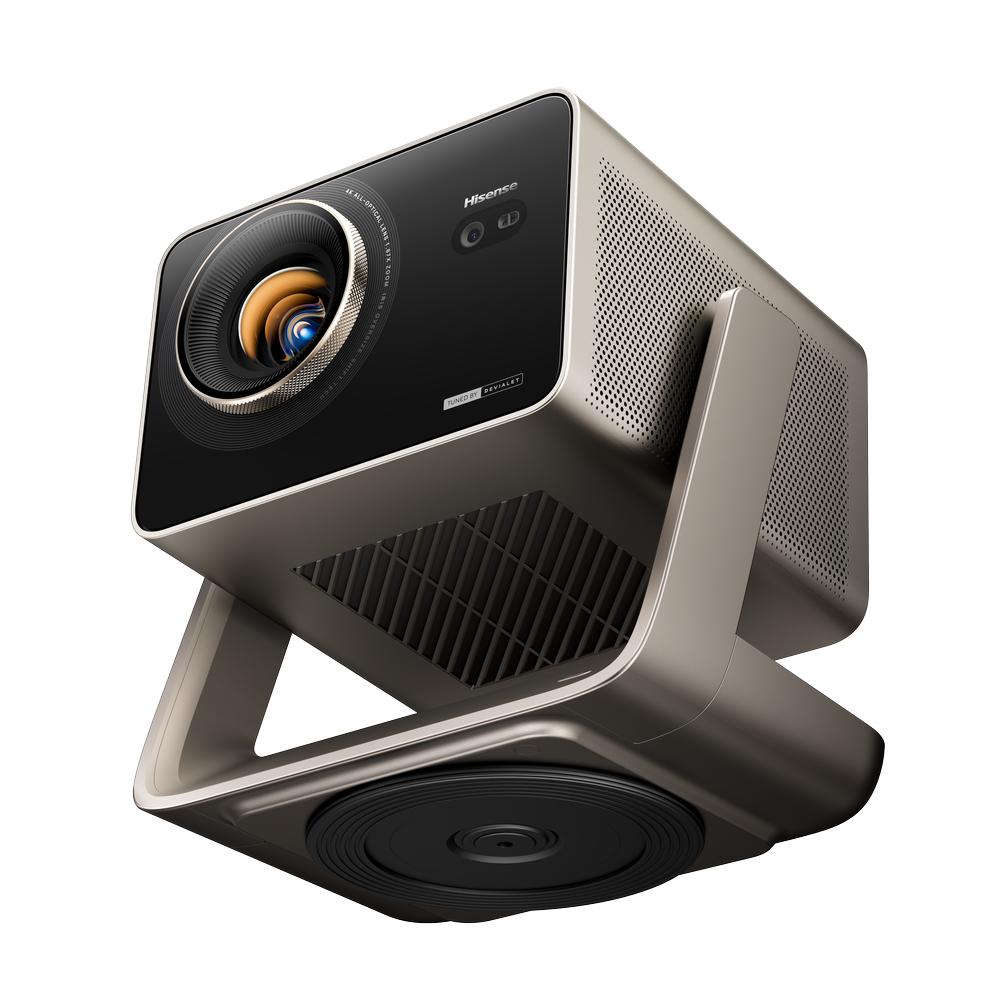
In late 2024, Hisense introduced its C2 projector series, combining a practical gimbal design with high-end performance. For 2026, Hisense has revealed its successor, the C3 projector family, consisting of the C3 Pro, C3 Ultra, and C3 Ultra MAX.
First shown at IFA 2026, the C3 family refines the C2 formula with support for images up to 300 inches, higher brightness, improved placement flexibility, and immersive sound, all within the same compact lifestyle projector form factor.
What the Hisense C3 Projectors Have in Common
All three projectors in the C3 family share a substantial number of features. Here is a rundown.
Form Factor: As mentioned at the top of the article, the C3 family incorporates a gimbal-style design that provides 360° horizontal rotation and 135° vertical tilt, making it easier to project images onto screens, walls, or ceilings.
Advertisement
Image Projection: All three C3 projectors use DLP imaging technology to display 4K UHD resolution (via pixel shifting), combined with an RGB triple-laser light source rated for more than 25,000 hours of operation. The C3 family can project images ranging from 65 to 300 inches and is rated for 118% coverage of the BT.2020 color gamut. All three models are also rated for contrast up to 5,000:1 using Hisense’s iris system.
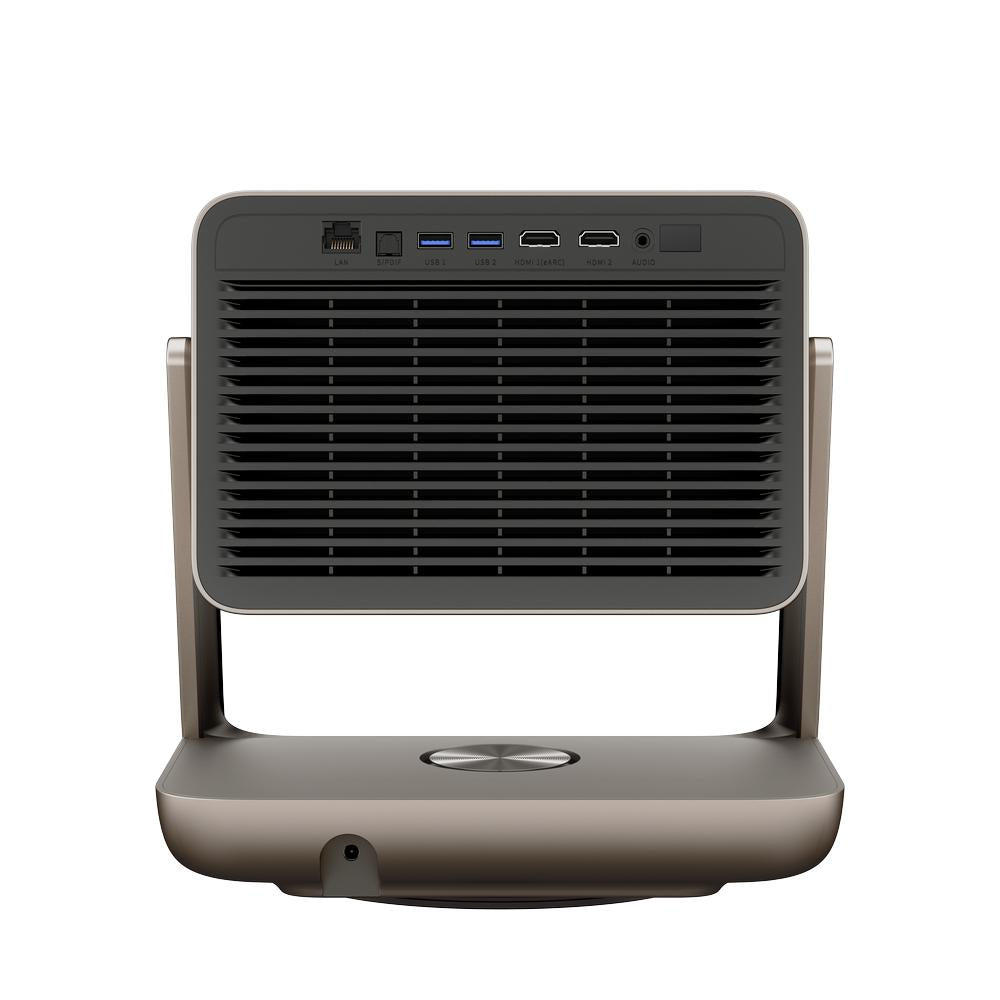
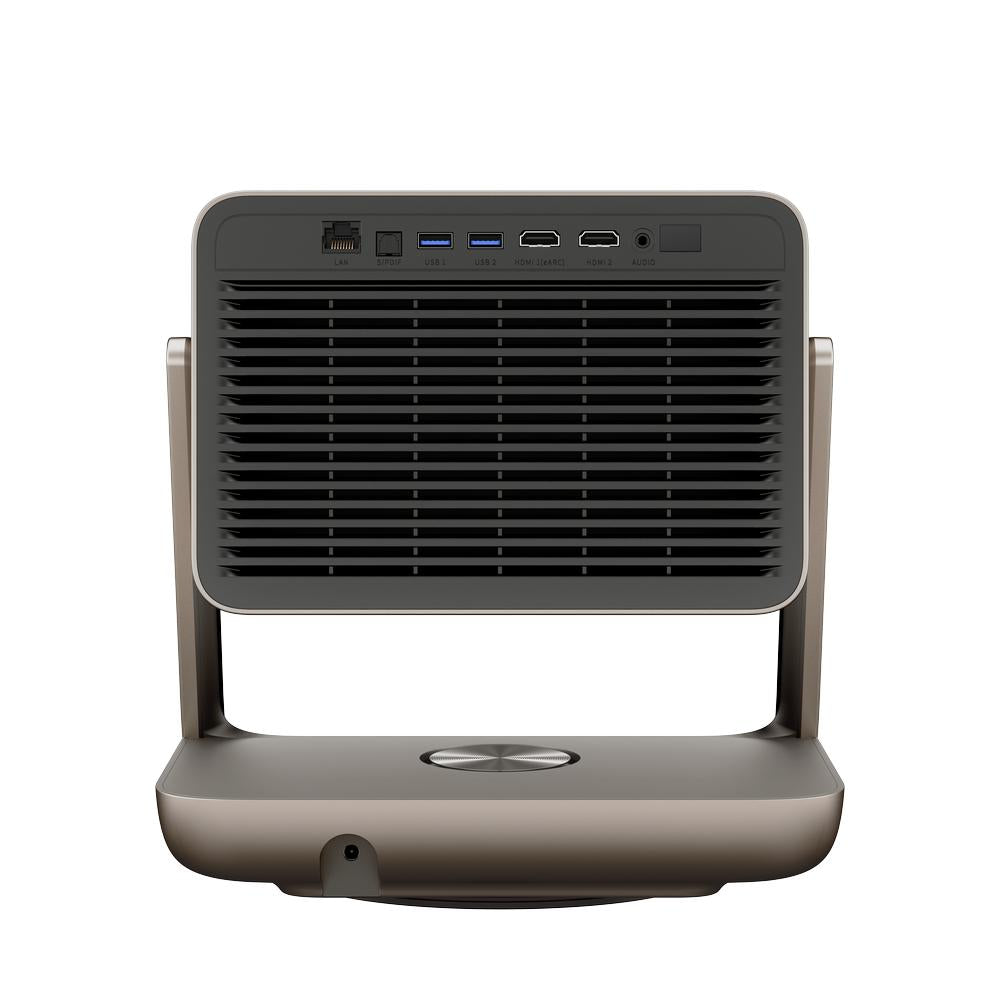
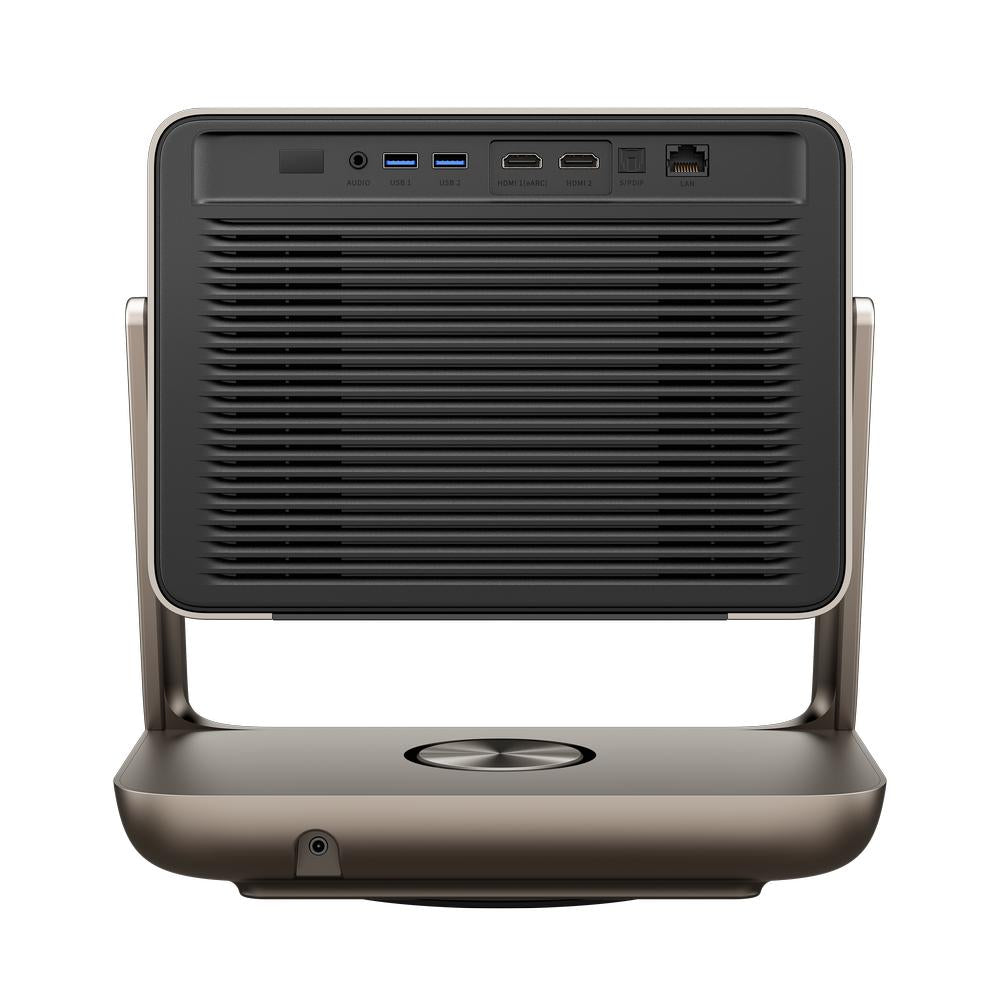
Hisense C3 Pro and C3 Ultra are the same size and have the same rear inputs.
HDR Support: All three projectors support Dolby Vision, HDR10+, HDR10, and HLG, along with IMAX Enhanced and Filmmaker Mode. The entire C3 family also supports Active 3D playback.
Gaming Support: The C3 family is designed for more than movies and sports, with gaming features that include HSR240, VRR, ALLM, and support for refresh rates up to 240Hz. Hisense also claims response times as low as 1ms, depending on the operating mode. FreeSync Premium support is included across the lineup.
Auto Magic AI Adjusting 3.0: Hisense’s automated image setup system includes autofocus, automatic keystone correction, obstacle avoidance, screen fit, and wall-color adaptation, reducing the amount of manual adjustment required when repositioning the projector.
Advertisement
Audio Support: The Hisense C3 projector family includes an integrated 2.1-channel audio system with a built-in subwoofer and 56 watts of total output, along with Devialet-tuned sound.
Streaming Support: The Hisense C3 projectors provide built-in access to streaming services through the company’s VIDAA OS. Connectivity includes Wi-Fi 7, Bluetooth 5.4, Apple AirPlay 2, and Miracast.
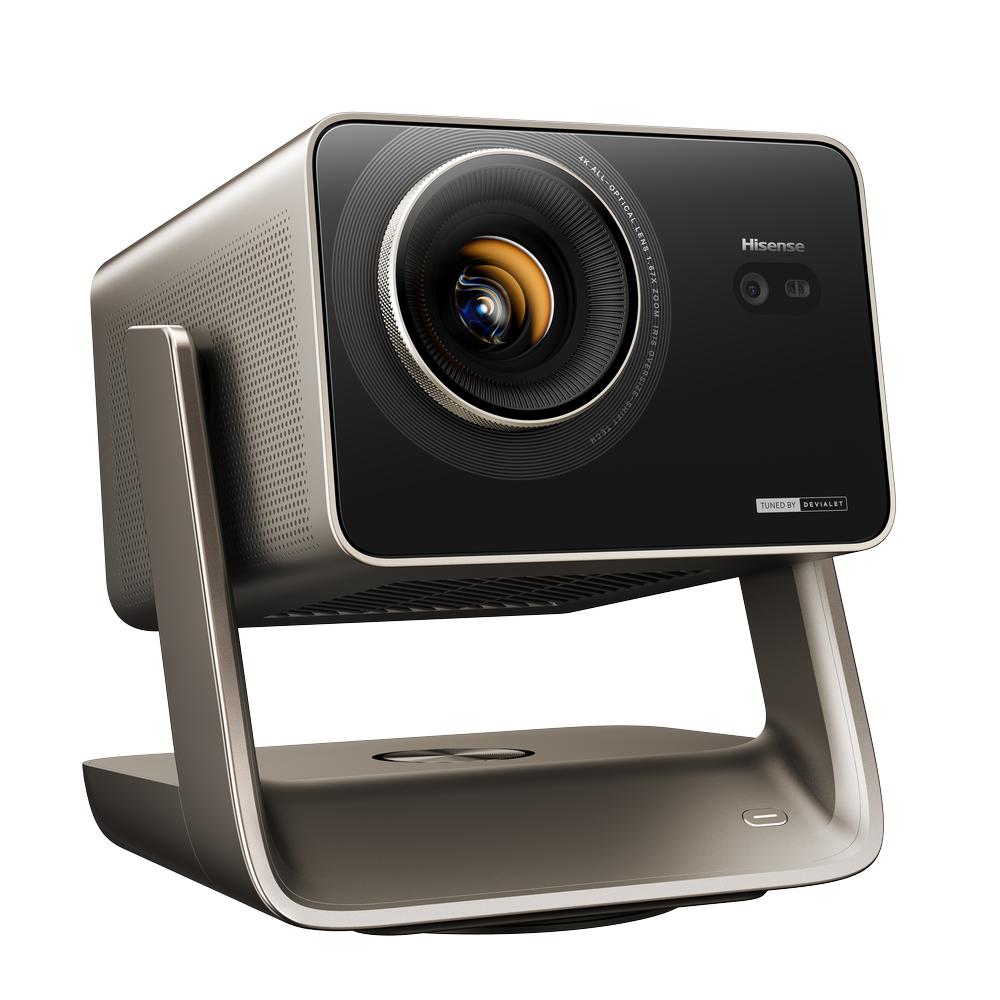
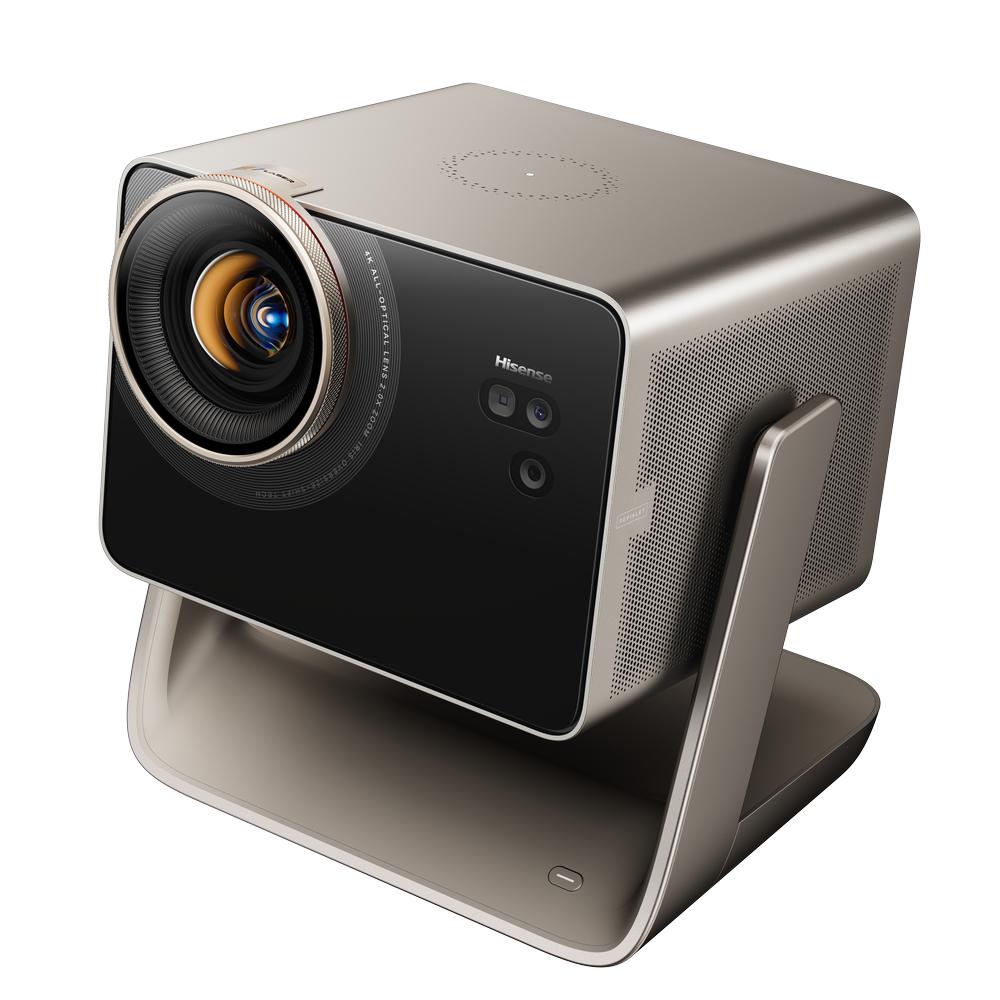
Hisense C3 Pro and C3 Ultra are the same size and look the same.Hisense C3 Ultra Max is larger with extra front panel sensor.
The Differences Between the C3 Models
As you can see, all three C3 projectors share a substantial number of features. The most obvious difference is brightness, which may help determine which model is best suited to your viewing environment. However, the C3 Ultra MAX also adds several hardware and installation upgrades that distinguish it from the other two models.
Advertisement. Scroll to continue reading.
Advertisement
C3 Pro: Considered the entry-level model in the Hisense C3 family, the C3 Pro is rated at 3,000 ANSI lumens. It features a 0.9-1.5 throw ratio and lens shift of ±100% vertically and ±35% horizontally.
C3 Ultra: Occupying the middle position in the C3 family, the C3 Ultra increases light output to 4,000 ANSI lumens while retaining the same 0.9-1.5 throw ratio and ±100% vertical and ±35% horizontal lens shift as the C3 Pro.
Hisense C3 Ultra MAX is larger in size with different rear panel layout.
C3 Ultra MAX: The flagship of the C3 family increases light output to 5,000 ANSI lumens and adds a more flexible optical system, with a 0.85-1.7 throw ratio and expanded lens shift of ±120% vertically and ±47% horizontally. It also adds liquid cooling, a 3D ToF sensor for its Auto Magic AI 3.0 system, and Hisense’s additional Cinema technology designed to reduce rainbow artifacts and laser speckle. Refer to our comparison chart below for the complete differences.
Netflix, YouTube, Prime Video, Disney+, FIFA, and more…
Netflix, YouTube, Prime Video, Disney+, FIFA, and more…
Netflix, YouTube, Prime Video, Disney+, FIFA, and more…
Bluetooth
Yes
Yes
Yes
Media Player (Audio, Images, Video)
Yes
Yes
Yes
Gaming Support
Game Mode Pro
Xbox Cloud Gaming
VIDAA Games
Advertisement
Game Mode Pro
Xbox Cloud Gaming
VIDAA Games
Game Mode Pro
Advertisement
Xbox Cloud Gaming
VIDAA Games
Ethernet (LAN)
Yes
Yes
Yes
Wi-Fi
IEEE 802.11 a/b/g/n/ac-2.4G, 5G
IEEE 802.11 a/b/g/n/ac-2.4G, 5G
IEEE 802.11 a/b/g/n/ac-2.4G, 5G
AirPlay 2
Yes
Yes
Yes
Voice Assistant
VIDAA Voice
VIDAA Voice
VIDAA Voice
Remote
Yes
Yes
Yes
Quick Start Guide / Manual
Yes
Yes
Yes
Console Dimensions (WHD)
256 x 315 x 256mm
10.08 x 12.4 x 10.08 inches
Advertisement
271 x 279 x 245mm
10.67 x 10.98 x 9.65 inches
271 x 279 x 245mm
10.67 x 10.98 x 9.65 inches
Advertisement
Weight
11.7 kg
8 kg
7.8 kg
Hisense C3 Ultra
The Bottom Line
The Hisense C3 family builds on the previously released C2 Series, retaining its practical gimbal design and support for projected images up to 300 inches.
For consumers, choosing between the three C3 models will largely come down to how much light output you need and how much installation flexibility you want. All three should provide sufficient brightness for a wide range of viewing environments, but if you plan to use the projector in a room with some ambient light, project onto a wall rather than a dedicated screen, or watch a lot of 3D movies, the 5,000 ANSI lumens offered by the C3 Ultra MAX could make a meaningful difference. Its wider lens shift and expanded throw-ratio range also provide greater placement flexibility.
There is plenty of competition, however. If you like the C3’s gimbal design, the Dangbei MP1 Max is another option worth considering, with its own 360° horizontal rotation and 135° vertical tilt. If you prefer a more traditional projector form factor or are susceptible to DLP rainbow effects, the 2026 Epson 3LCD Home Cinema LS Series offers an alternative based on 3-chip 3LCD imaging.
Pricing & Availability
The 2026 Hisense C3 Projector Family is available at the following prices:
TL;DR: Rabbit is moving beyond the R1, the small orange AI device that drew attention at CES 2024 but struggled to deliver on many of its early promises. The company this week introduced OS3, an agentic software platform that can work across desktop computers and mobile messaging services.
Rabbit OS3 connects to Windows, Mac, and Linux computers through a local agent installed on the machine. The platform can interact with desktop programs, files, and web pages. Rabbit says it can also write and debug code through its Direct Large Action Model, or DLAM, technology.
It is available through a browser, Telegram, and iMessage, and it can also run on the R1. Rabbit is no longer manufacturing the device, however, and is shifting its focus to software that works with hardware people already own.
Users can connect as many as five computers to one OS3 account. The system is designed to determine which machine should handle a request. For example, someone could send a message from a phone asking OS3 to update a spreadsheet stored on a home or office computer.
Advertisement
Rabbit is positioning the service as a single, ongoing workspace rather than a collection of separate chat windows. Jesse Lyu, Rabbit’s founder and CEO, called it a “brain dump” interface in an interview with Wired, where users enter a task and the system pulls together the tools and AI models needed to complete it.
The service uses a bring-your-own-key model. Rabbit does not charge a monthly subscription fee for OS3, but users must provide their own API keys from companies such as OpenAI or Anthropic. They can also connect local open-source models.
The platform can install third-party agent skills from a public URL, according to Rabbit. That approach fits with the company’s broader effort to make its software less dependent on its own models and services.
Lyu said the company has spent the past year and a half improving the R1 instead of rushing to build a successor. He said Rabbit has released about 50 updates during that period and has opened the device to third-party agents, including OpenClaw and Hermes AI.
Advertisement
“Today, if you look at our R1 device, it’s completely different from day one,” Lyu says. “We’re more open; the device is yours, you decide what to do with the device.”
The R1 was introduced as a dedicated AI assistant that could carry out tasks in services such as Uber and DoorDash. It received substantial attention before launch, but reviews found that its agent features often did not work as expected.
Lyu said the device was still a business success for Rabbit. He said the company has shipped more than 100,000 R1 units worldwide, recorded return rates below 5%, and achieved gross margins of about 45% to 50% on the hardware.
“Internally, from an engineering perspective – we didn’t make the wrong bet,” Lyu says. “I think the challenge is really being extremely limited in resources, team-wise and money-wise, compared to other AI studios that raised billions of dollars.”
Advertisement
Lyu said Rabbit has raised about $60 million and employs 15 people. The company ran into financial pressure last year after a planned launch in India was blocked by regulations. Some employees later went on strike, saying they had not been paid for months. Lyu said Rabbit subsequently raised additional funds and is now in stable condition.
“There are no issues with the company’s health,” he says.
Rabbit is still selling the R1 while supplies last, but it has no plans for an R2, according to Lyu. Its next hardware product is expected within months and will be a Cyberdeck aimed at “vibe coding.” The device will run OS3.
Rabbit says OS3 does not store, copy, or sell data from local files. Files remain on the user’s computer, the company says, although conversation histories and memory logs are stored on Rabbit’s servers. When a task requires AI-model reasoning, the related prompts are routed through Rabbit’s systems to the user’s chosen model provider.
Advertisement
Lyu said he has used the platform for routine work, including moving sales data from a weekly Excel report into a master spreadsheet. He also said he had OS3 represent him in a Slack conversation with an engineer while he was unavailable. The agent identified itself as acting for Lyu and used files from his computer to respond to questions.
OS3 is now available to the public. For Rabbit, it is a chance to test whether its original idea works better as software than as a standalone gadget.
Apple’s watchOS 27.0.1 update has arrived with a fix that prevents Apple Watch Ultra 4 and Apple Watch Series 12 models from randomly restarting.
On Wednesday, just over a week after watchOS 27.0 reached the general public, Apple deployed the watchOS 27.0.1 update. The software addresses a bug that caused the Apple Watch Series 12 and Apple Watch Ultra 4 to restart unexpectedly.
Those who encountered the now-resolved issue said their Apple Watch rebooted while editing watch faces, making calls, using Siri AI, opening Apple Maps or the App Store, and recording workouts. Some Apple Watch owners have even said their devices restarted when idle.
As for what caused the reboot bug on watchOS 27.0, an Apple forums post outlined a Neural Engine timeout on an affected Apple Watch model. In short, a Neural Engine command waited 2,020 milliseconds, exceeding a 2,000-millisecond limit, after which the device rebooted.
Advertisement
While the watchOS 27.0.1 update addressed these spontaneous reboots, Apple did not disclose what caused them.
The company’s website says there are no CVE (Common Vulnerabilities and Exposures) entries associated with watchOS 27.0.1. This suggests the software likely doesn’t include major security fixes and that this release did not patch any significant vulnerabilities.
The same page also outlines that watchOS 27.0.1 is available only for Apple Watch Ultra 4 and Apple Watch Series 12. In short, it’s a bug-fix update for the 2026 Apple Watch lineup.
How to update to watchOS 27.0.1
Ensure the Apple Watch is charged to at least 50% and connected to Wi-Fi
On your Apple Watch, open the Settings app
Tap General
Tap Software Update
Tap Install if a software update is available
Follow the on-screen instructions
How to update to watchOS 27.0.1 via iPhone
Ensure your watch is charged to 50% and connected to Wi-Fi
Vivo has added three new phones to its flagship lineup with the launch of the X500 series in China. The X50Vivo has added three new phones to its flagship lineup with the launch of the X500 series in China. The X500, X500 Pro and X500 Pro Max bring a mix of upgraded cameras, newer MediaTek chips and larger batteries. The Pro models use the Dimensity 9600 Pro, while the regular X500 runs on the Dimensity 9600M. At the top of the range, the X500 Pro Max features a 200MP periscope camera and an 8,000mAh battery. The X500 starts at CNY 5,499, followed by higher starting prices for the Pro models.
Specifications, Design and Key Features
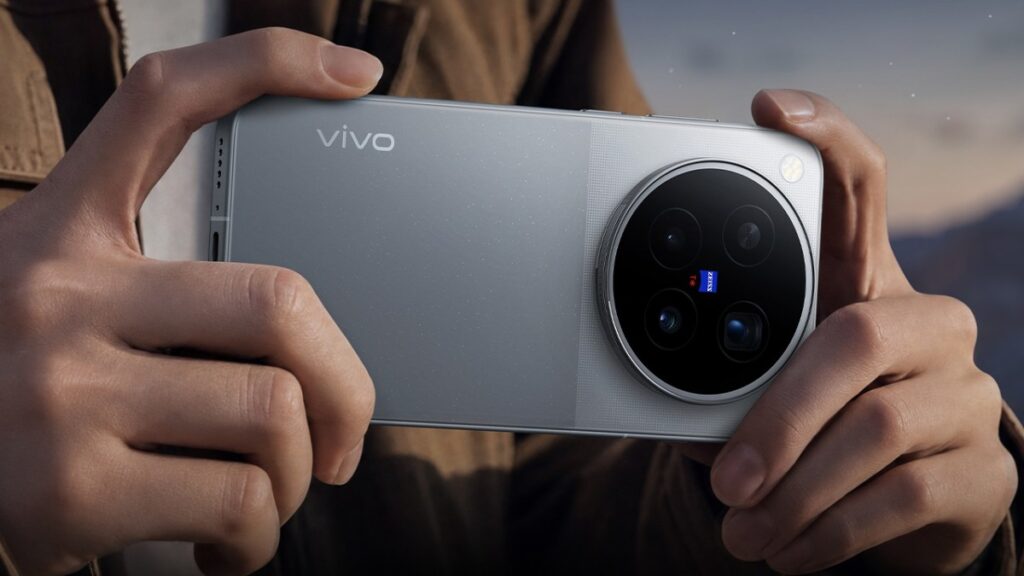
Vivo has given the three X500 models different rear camera designs. The regular X500 has a wide rectangular camera island with a circular arrangement on the left. Meanwhile, the X500 Pro and Pro Max use large circular camera modules in the center. Vivo also slopes the rear panel around the camera area on these models. This helps the camera section blend into the rear panel and creates a natural place for your finger.
The X500 features a 6.59-inch display and weighs 211g; the Pro has a 6.36-inch screen and weighs 197g, and the Pro Max has a 6.85-inch panel and weighs 229g. The X500 uses a 1.5K AMOLED display with a 1,260 x 2,750-pixel resolution and 144Hz refresh rate. The Pro models step up to BOE Q11 LTPO AMOLED panels with 144Hz support. The Pro offers 1,216 x 2,660 pixels, while the Pro Max gets 1,440 x 3,168 pixels. Both Pro displays support variable refresh rates from 1Hz to 144Hz. They can also reach 4,500 nits, compared with 4,000 nits on the X500.
Under the hood, the X500 runs on the Dimensity 9600M, while the Pro models use the Dimensity 9600 Pro. The two Pro phones are among the first devices announced with MediaTek’s new chipset. The X500 packs a 7,500mAh battery, and the Pro gets a 6,510mAh cell. The Pro Max uses an 8,000mAh silicon-carbon battery. All three models support 90W wired and 40W wireless charging. The battery sizes are also larger than the X300 and X300 Pro in some areas, which had 6,040mAh and 6,500mAh cells. Vivo has also added IP68 and IP69 protection across the series. All three phones run OriginOS 7 based on Android 17.
Camera Upgrades and New Photography Accessories
Vivo has made several changes to the X500 series camera systems, with the Pro Max getting the biggest upgrade. It features a 50MP Sony LYTIA L910 main camera with a 1/1.28-inch sensor. The camera uses an f/1.57 aperture and offers 3-degree optical image stabilization. Vivo says it can capture up to 17EV of dynamic range. The phone pairs this camera with a 200MP Samsung ISOCELL HP0 periscope telephoto. This camera uses a 1/1.4-inch sensor and provides 3.5x optical zoom. It also gets CIPA 7.0 professional-grade stabilization.
Vivo previously used a 200MP main camera on the X300 Pro. With the X500 Pro Max, the company has shifted that high-resolution sensor to the telephoto camera. The X500 Pro uses a 50MP LYTIA L910 main camera with 1.5-degree stabilization. It pairs this with a 64MP LYTIA 610 periscope offering 3.5x optical zoom and OIS. Both Pro phones also feature a 50MP Samsung JN5 ultrawide camera.
Advertisement
The regular X500 gets a 50MP Sony LYTIA 828 main camera, along with a 64MP telephoto and 50MP JN1 ultrawide camera. Its main sensor measures 1/1.28 inches. Vivo also supports an optional 400mm Zeiss G2 Ultra telephoto extender on both Pro models. Video recording also gets attention, with both Pro phones supporting 4K at 240fps.
The Pro Max goes further with 8K recording at 30fps. Both models also support 10-bit 4:2:2 video and the ACES color management system. Vivo has also introduced a 3.92-inch AMOLED wireless display for the series. The Vivo Snap Screen attaches to the rear and works as a live monitor. This lets users frame selfies and videos using the rear cameras. It can also control key camera functions from up to 10 meters away. Vivo designed it to work with the company’s Zeiss telephoto accessories for long-range shots.
Vivo X500 Series Price and Availability in China
The Chinese variant of the Vivo X500 is available for CNY 5,499 (Rs 79,000). It is equipped with 12GB RAM and 256GB storage. The X500 Pro is priced at CNY 6,499 (Rs 93,000), while its Pro Max version starts at CNY 6,999 (Rs 1 lakh). The regular version is available in white, grey, and black, while the Pro and Pro Max also come in orange. The device’s sales in China will start on September 24. Vivo has not yet announced details of the global release. As for India, the latest reports suggest it will launch in late October or early November. The X500 Pro may remain exclusive to China. Based on estimated pricing in India, the Vivo X500 will cost around Rs 95,000, while the Pro Max variant will cost between Rs 1.3 lakh and Rs 1.4 lakh.
Facepalm: Windows updates have a nasty habit of causing more problems than they fix. Just last month, Microsoft acknowledged that the August Patch Tuesday update was crashing games and rebooting PCs. The optional KB5124010 patch that rolled out earlier this week is now reportedly causing games like Battlefield 6 and Wardogs to crash regardless of hardware.
Microsoft released the KB5124010 update to the Windows 11 Release Preview channel for versions 24H2 and 25H2 earlier this month before rolling it out to the stable channel on Tuesday. Almost immediately, users started complaining on social media and online forums that it was wreaking havoc on their gaming rigs..
According to several Redditors and Steam users, Battlefield 6 has become unplayable after installing the update, crashing just seconds after launch almost every time. At least one of the posters reported that Windows is not displaying an error message alongside the crashes, making it difficult for users to diagnose the problem.
One Battlefield 6 player posting on the Steam Community forums noted the irony that the KB5124010 update is meant to improve game stability and prevent games from crashing. They added that they reinstalled the game, checked the DirectX components, and even tried Javelin troubleshooting, but nothing helped diagnose the problem. Uninstalling KB5124010, however, seemed to stop the crashes.
Advertisement
After many Wardogs players also reported a similar problem, a Team17 representative acknowledged on the Steam Community forums that the game was crashing and displaying a WD-L020 error. They added that there is no immediate remedy and that the only workaround is to uninstall the contentious update.
One Wardogs player replying to the thread claimed that Windows was displaying a WD-L020-95bc94d86a0d error code after every crash and confirmed that uninstalling the KB5124010 update allowed them to play the game again. Many others also confirmed that uninstalling the update seemed to fix the problem.
It is worth noting that while most of the complaints are coming from Battlefield 6 and Wardogs players, some Battlefield 2042 players have also reported facing the same problem, leading some to suggest that the update might be clashing with EA’s Javelin Anti Cheat program, which protects Battlefield, EA Sports FC, Madden NFL, and other EA properties.
Games crashing after buggy Windows updates isn’t a new problem for Microsoft. Just last month, the company admitted that the KB5121003 update was causing some games to crash randomly. In some cases, the PC was automatically rebooting after the crashes. The problem affected Arc Raiders, Marvel Tokon: Fighting Souls, and The Finals, among others.













.jpg)



















































You must be logged in to post a comment Login