






Connect with us
DAPA Banner
DAPA Coin
DAPA
COIN PAYMENT ASSET
PRIVACY · BLOCKDAG · HOMOMORPHIC ENCRYPTION · RUST
ElGamal Encrypted MINE DAPA
🚫 GENESIS SOLD OUT
DAPAPAY COMING

Tech

Google goes it alone with a new cybercrime crew taxonomy

Published

on

Security

So much for Microsoft and CrowdStrike’s plans for consistent names across the industry

Google has created a new taxonomy to describe cybercrime outfits, seemingly abandoning a Microsoft-led effort to create consistent names.

The Big G announced its new schema on Saturday in a post that notes its 2022 acquisition of Mandiant and its subsequent incorporation into a new team called the Google Threat Intelligence Group (CTIG).

Advertisement

Now that two have become one, Google reckons they need consistent naming conventions to describe cybercrime crews.

The result is a two-word schema in which the first word “is a unique and memorable term chosen to represent the specific actor.” If security folk have already applied a particular moniker Google will use it, otherwise it will randomly generate a word “to remove bias.”

Google says the second word “categorizes threat clusters by motivation, attribution, or activity type based on which category we consider to be most important for defense and response strategies.”

More on that later.

Advertisement

Google has decided on the following names:

  • CASTLE to describe crews from the People’s Republic of China

  • ION for threats from Iran

  • NEPTUNE for North Korean attackers

  • RELIC for Russians

  • COMET for cybercrims who aren’t backed by a state

Google’s post notes that other infosec industry players have developed their own schemas for describing threat actors and says the web giant is therefore “intentionally seeking to keep this system as simple as possible to streamline operations and facilitate mapping to other naming taxonomies.”

That’s an odd position, given that in 2025 Microsoft and CrowdStrike tried to spark an industry-wide effort to apply consistent names to threat actors. As we noted at the time, the existence of multiple naming schemas means that researchers often refer to the same group by ten different names. Researchers use the names Seashell Blizzard, IRIDIUM, VOODOO BEAR, BE2, UAC-0113, Blue Echidna, PHANTOM, BlackEnergy Lite, and APT44 to refer to the same entity – Russia’s Military Intelligence Unit 74455.

With most orgs using multiple security tools and therefore receiving threat intelligence security info from many vendors, users must try to understand which crews they’re trying to defend against.

Advertisement

At the time, sources told us Google and Mandiant were keen to adopt the Microsoft-led scheme.

Google’s new announcement suggest the relationship either wasn’t consummated or didn’t last.

Back to the issue of possible bias, as in 2024 China’s National Computer Virus Emergency Response Center (CVERC) complained that western companies choose names like “Typhoon,” “Panda,” or “Dragon” to describe Chinese cybercrime groups.

CVERC suggested names that reflect English language idioms, such as “Hurricane” or “Koala” are more appropriate.

Advertisement

For what it’s worth, “Koala” is a word from the language spoken by the Darug people, the indigenous tribe who lived around Sydney, Australia, prior to British colonization. Koalas are utterly supine creatures that sleep 18 to 22 hours a day, and a mention of the marsupials may therefore not spur defenders to action, even if the creatures’ habits do perhaps describe the behavior of some sleeper malware. ®

Source link

Continue Reading
Click to comment

You must be logged in to post a comment Login

Leave a Reply

Tech

I Went from Rising Senior to Teacher. Here’s What I Learned

Published

on

I’m a high school student in Paramus, New Jersey. I’m also the creator of a free economics program that I teach to middle school students. With each virtual session I lead, I share a link in the chat with my students, and they load the simulation I created — one that puts them in positions like CEO of a sports team or commissioner of a league.

In one simulation, every student runs a team’s payroll and decides whether keeping their star player is worth exceeding their salary cap and crossing into “luxury tax” territory. Nobody tells them about the consequences of going into the luxury tax; they learned the way real general managers do, by paying the additional fee and experiencing the negative impact it can have on a team.

I created the program because I am a huge sports fan and I wanted to share my passion with other kids. I also knew that a lot of kids love professional team sports and almost none of them love economics, even though the two are often linked. A team salary cap is a budget constraint. A trade deadline is linked to supply and demand. A rookie contract is a bet on future value.

Simulations Unveil Concepts

So far, I’ve led two six-week online classes for about 30 middle school students. Each class combines slide lessons explaining economic concepts, open discussions, and simulations I built with artificial intelligence. 

Advertisement

My students played a luxury tax game where they managed a roster under real salary cap pressure. They played an NFL draft game where they weighed risk against reward with every draft pick. There were trade negotiations, ticket-pricing challenges, and roster-building hurdles with no clear “right” answers. Hiding inside each simulation were economic concepts that teachers have spent decades trying to get students to care about, like incentives, opportunity cost, scarcity, risk and market value.

I expected the sports fans in my classes to dominate the conversations. In reality, the student who knew every sports statistic wasn’t always the one who made the smartest payroll decision. The student who couldn’t name a single starting team lineup often built the most balanced roster in the class because they understood the trade-offs better than the sports fanatics.

Leading these online classes gave me real insight into what it takes to be a successful teacher. What I realized is that a great lesson is not about the content; it’s about how students interact with the content. I could have lectured for an hour on opportunity cost, watching eyes glaze over. Instead, I gave them a roster and a budget that couldn’t cover everyone they wanted to draft, and the concept of opportunity cost practically taught itself. Instead of being just another “vocabulary word,” the concept became the reason they couldn’t sign Jalen Brunson.

Teaching these middle schoolers and seeing what really motivated them to engage with the material makes me think this can be applied to every subject. It doesn’t have to be done with a video game. It can be accomplished with a worksheet, flashcards or other activities. The idea just has to make students feel like the concepts they’re exploring matter outside of the classroom.

Advertisement

Discussion Fuels Learning

Another observation that surprised me was how much the discussions mattered. I initially thought the simulations would be the main event and the teaching and discussions would be “filler.”

In reality, it was the opposite.

It turns out that the simulations created the basis for discussion and disagreement, and that is where the learning happened. For example, after the luxury tax game, I had students defend their choices to the class. One student explained that they paid the tax because they were “in a championship window,” while another student didn’t pay the tax because their roster was “too young to waste the money.” They were doing real economic reasoning, but they didn’t notice. They were simply having a great time discussing their teams.

Peer-Led Teaching Lowers the Stakes

Peer-led teaching is not a replacement for trained teachers. But I do think that peer-led programs such as the one I led can be a valuable complement to teacher-led classes because they can lower the stakes and make learning less daunting for students. When the person teaching you is closer to your own age and the lesson is built around a game instead of a grade, students are more willing to take risks.

Advertisement

Based on my observations, students in student-led classes seem more likely to guess and debate. Their ideas might be wrong, but they are willing to try and make themselves vulnerable in front of their peers – something that they may not be willing to do inside a formal classroom. That freedom to try, fail, and try again is where a lot of real understanding begins.

Lessons Learned Along the Way

If you are a teacher and I haven’t chased you away with my precociousness, here are three more pieces of advice to help you help your students.

Incorporate what students love. Consider starting with something your students are already interested in and then sneak in the educational subject behind it. I never opened a class by saying, “Today we’re learning about scarcity.” Instead, I opened by saying, “You have $40 million and three players you can’t afford to keep.” The economics lesson arrived after the engagement, not before. Using a topic students already cared about did more to fuel their learning than any creative explanation I could’ve ever written.

An accessible entry point gives students a reason to care before asking them to memorize anything. The students in my classes kept asking for more simulations. Parents told me their children were recommending the class to friends, which is not something I have ever heard a kid do for an economics worksheet.

Advertisement

Let students be wrong. Some of my best sessions came from a student making a terrible trade and the whole class reacting. My first instinct was usually to jump in and explain why the move would not work. But I realized that the better outcome arrived when I waited and let the students teach.

This is the kind of class “mistake” that students remember. Those moments stick with them much longer than any rule or definition written on a slide and help them truly grasp the underlying concepts.

Keep the barrier to entry low. I purposefully made my program free and ran it on Zoom, so students of all backgrounds can join from anywhere in the world. I communicated that they do not need to be great at math, nor do they need to know every player in the NBA or NFL. They do not even need to think of themselves as “economics kids.” They just need to be curious about why things cost what they cost, why teams make the choices that they make, and why every decision has a trade-off.

Making the program easily accessible was particularly beneficial to those students who need a subject taught in a less formal setting. They are often the first ones who are intimidated by traditional classroom learning. If a class feels like it has prerequisites before you even reach the first lesson, you sometimes lose the student as soon as they walk into the classroom.

Advertisement

I started my program because I thought a cool sports simulation could make economics more interesting to students. What I learned is that peer-led discussion in a topic students are invested in – whether it is sports or pop culture – can do something better. It lowers the stress, creates a welcoming environment for all students, and still creates genuine opportunities for learning. I’m looking forward to offering more sessions – teachers can join too.

Source link

Continue Reading

Tech

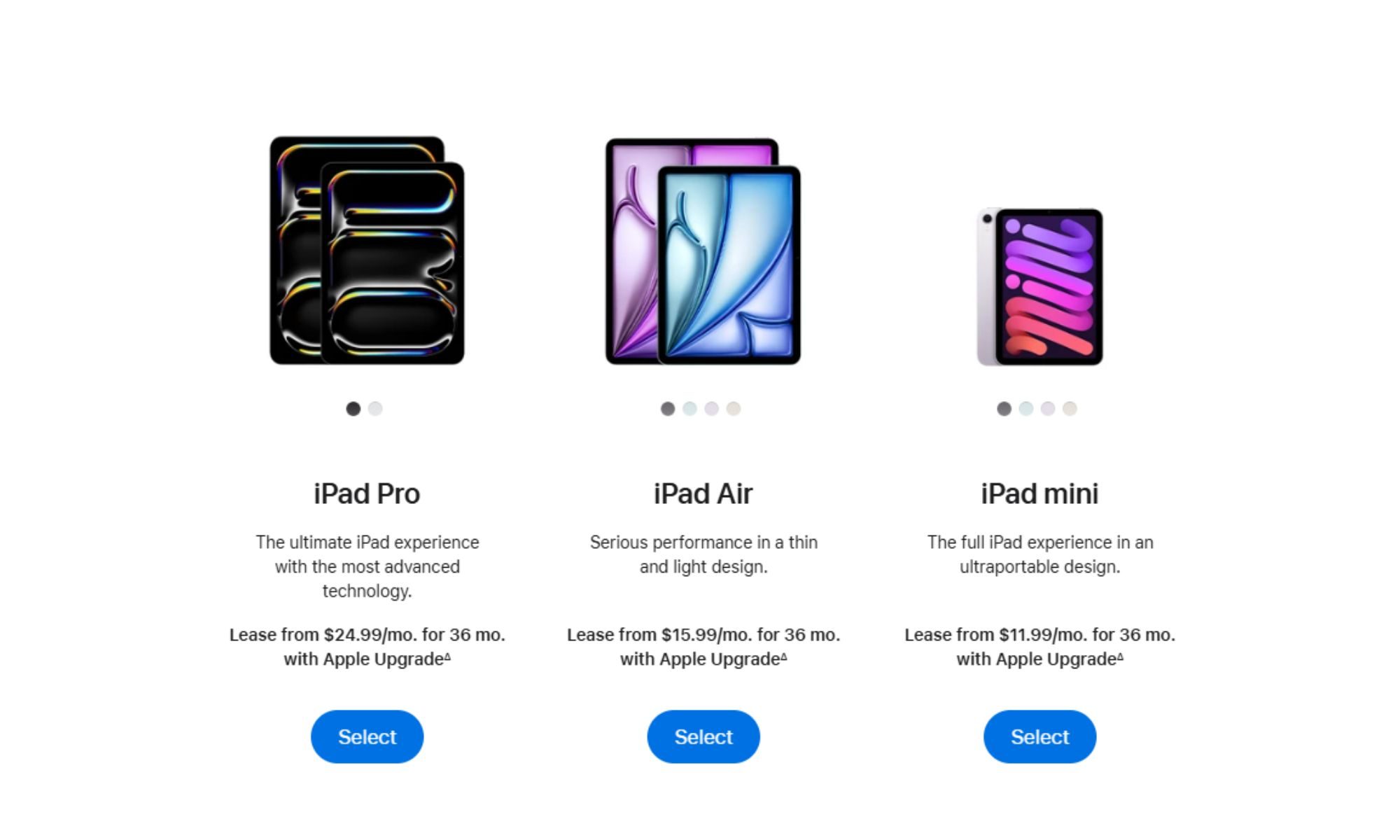
Apple’s new Upgrade program lets you lease an iPhone, Mac, Watch, and iPad

Published

on

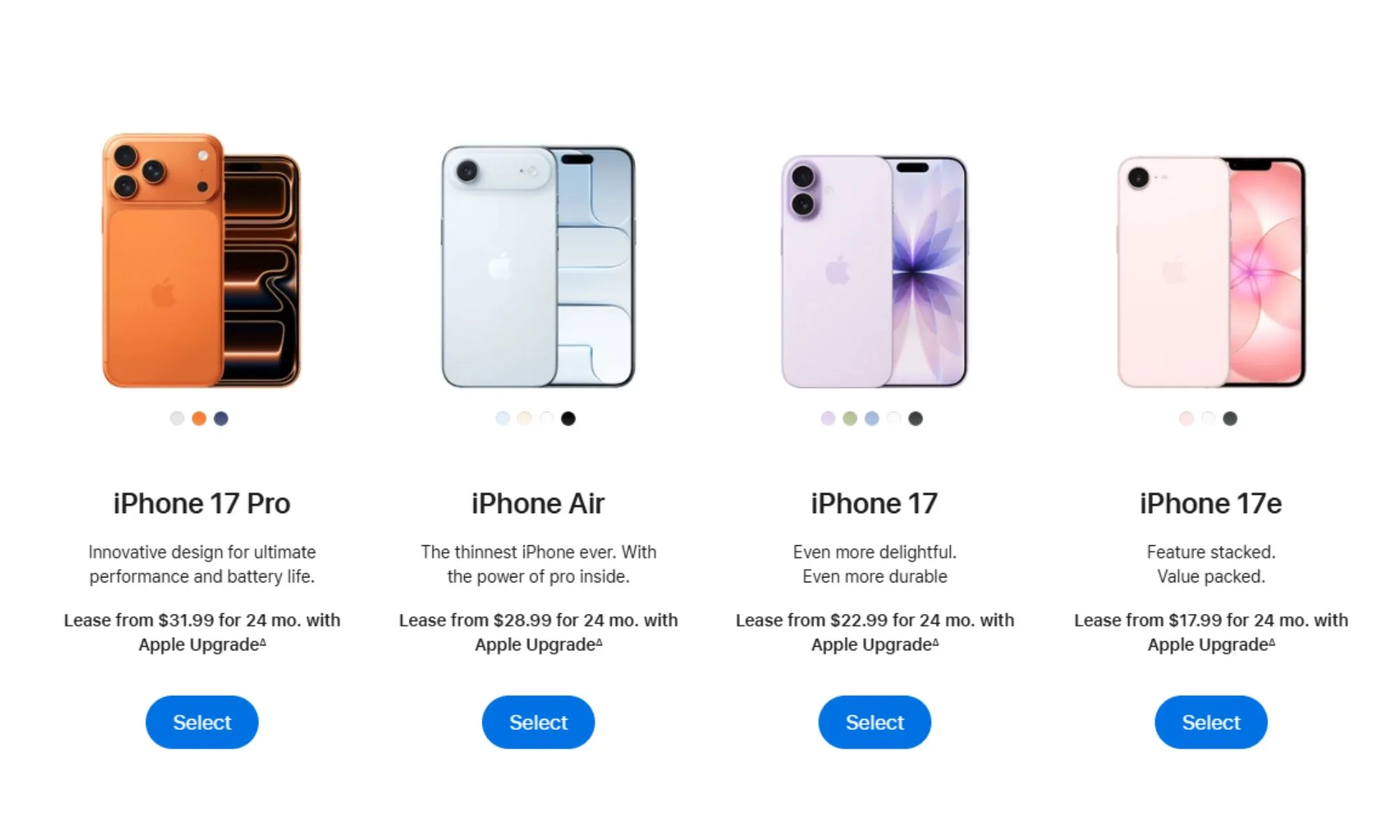
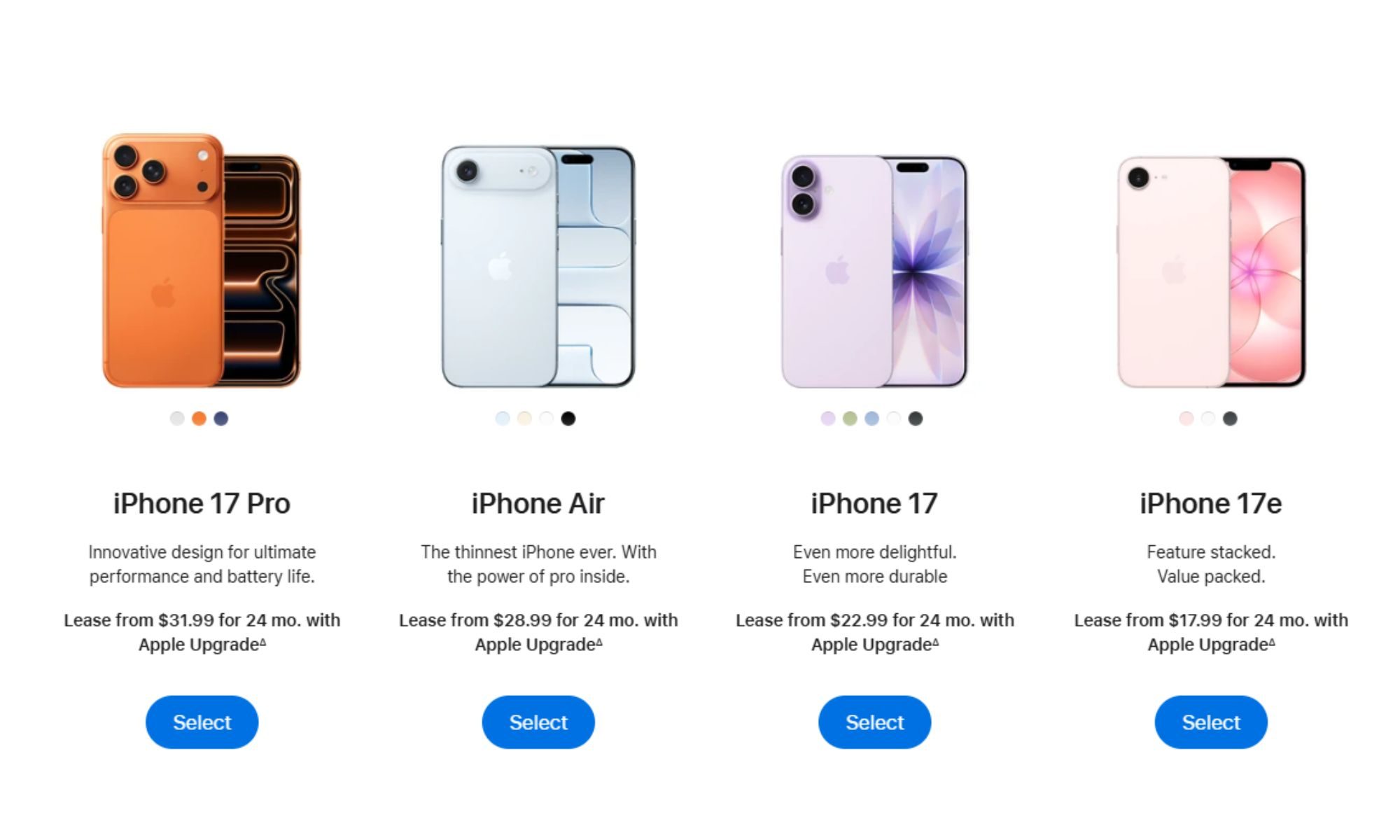
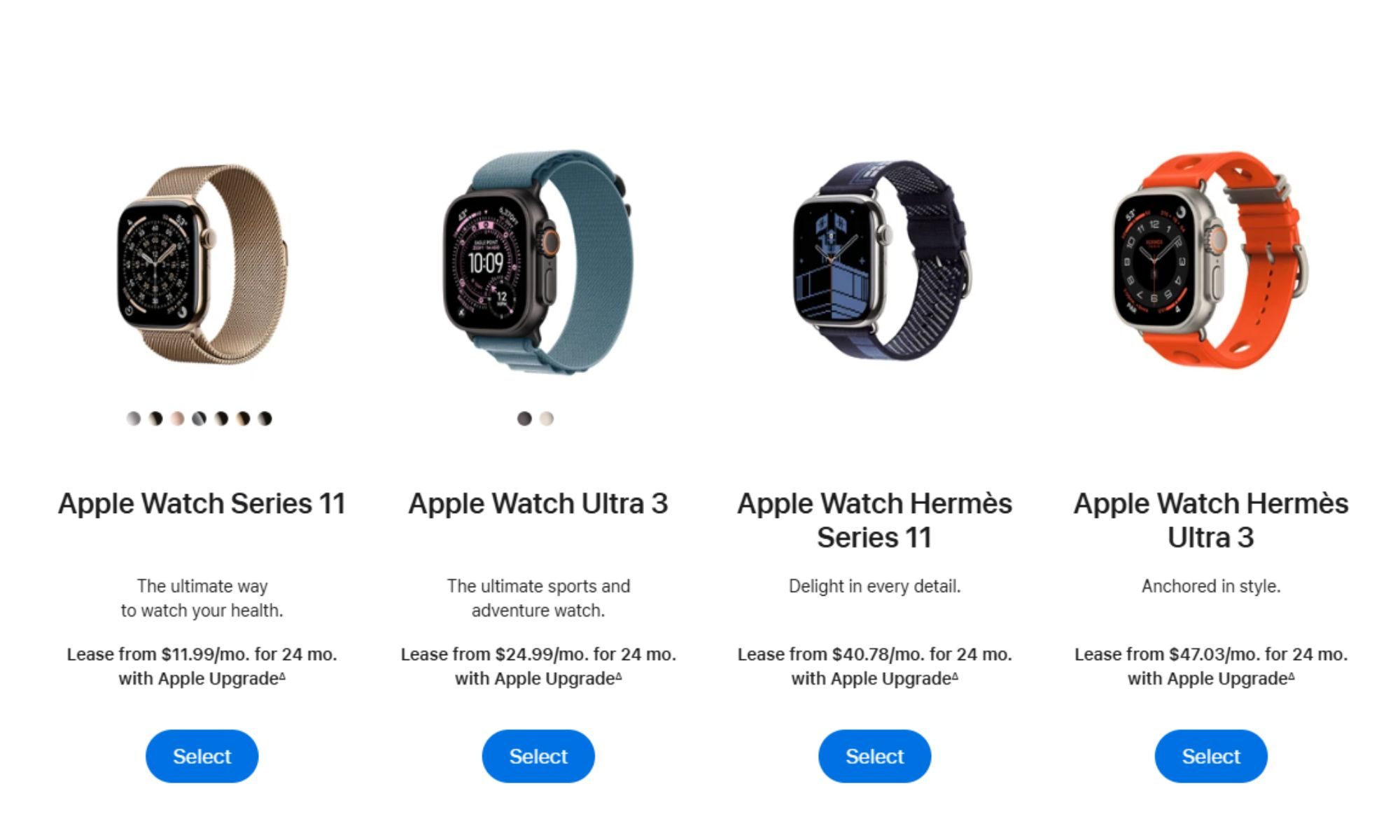
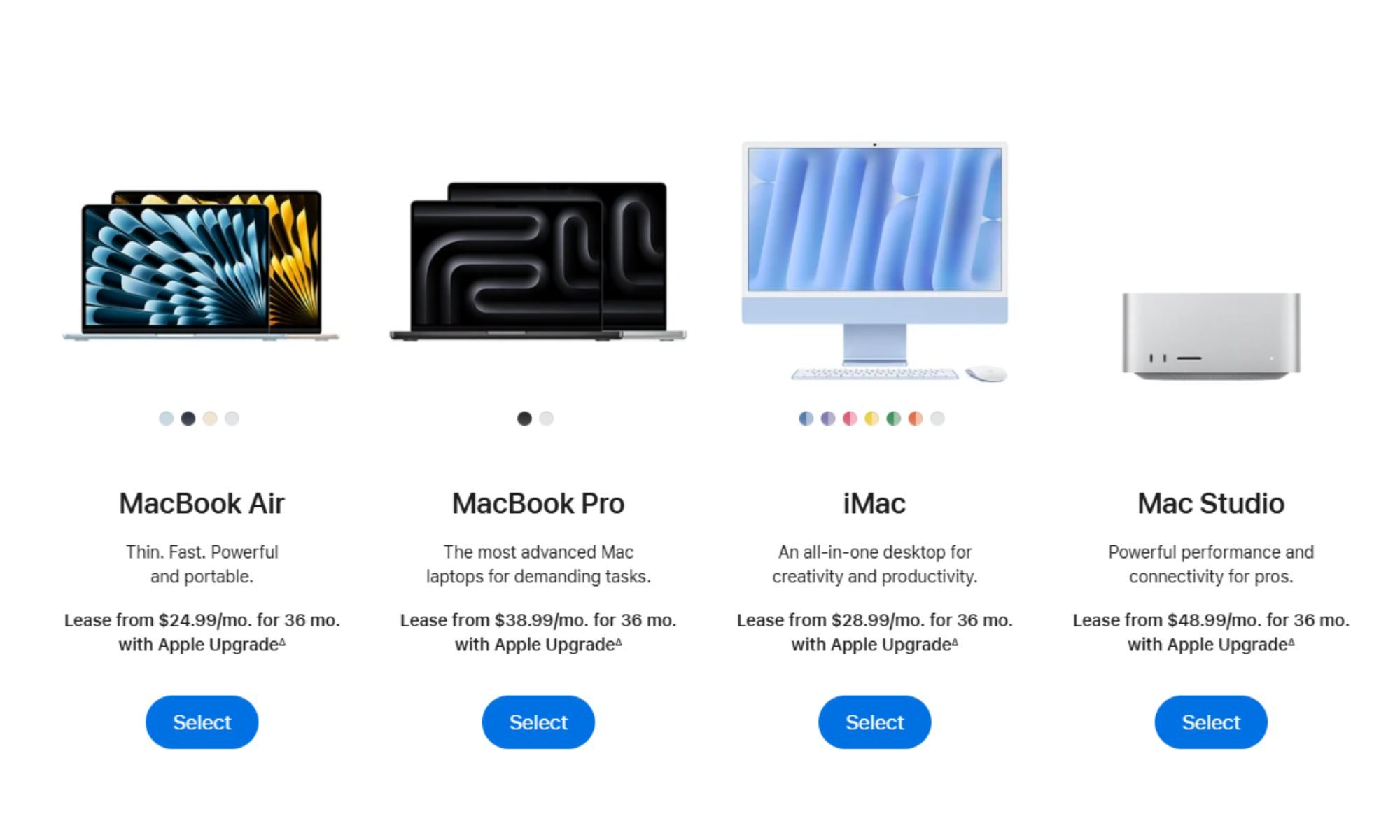
Apple has officially launched Apple Upgrade, a leasing program that lets customers pay monthly for an iPhone, iPad, Mac, or Apple Watch instead of buying the device outright. The program went live today on Apple’s website in partnership with Klarna, replacing the iPhone Upgrade Program that Apple has offered since 2015.

What you can lease and what it costs

The lease length depends on what you’re planning to get. Phones and watches get shorter terms, 12 or 24 months, while iPads and Macs stretch to 24 or 36 months, giving those categories more room before the lease is up. The program covers most current hardware, including iPhones, the MacBook Air, MacBook Pro, iMac, Mac Studio, iPad Pro, iPad Air, iPad mini, Apple Watch Series 11, and Apple Watch Ultra 3. However, the iPhone 16, base iPad, and MacBook Neo aren’t eligible. Anyone leasing an iPhone also needs to be on a postpaid plan with AT&T, T-Mobile, or Verizon, as prepaid carriers don’t qualify.

Pricing differs from device to device. A 256GB iPhone 17 Pro starts at $31.99 a month on the 24-month plan, or $45.99 a month for those who want out in a year. Tablets and laptops land in similar territory, with a 256GB iPad Pro starting at $24.99 a month over 36 months and a 16GB MacBook Pro starting at $38.99 a month over the same term.

Apple doesn’t require a security deposit for the lease, but it also doesn’t allow customers to make a down payment to reduce their monthly payments. The one lever customers do have is a trade-in, which can reduce the monthly rate for the length of the initial lease.

What you’re actually committing to

Signing up is simple on paper. Apple requires a Klarna account and runs only a soft credit check, so applying won’t affect credit scores, but Klarna then owns the relationship for the life of the lease, handling billing through its own app rather than Apple’s.

The terms get more complicated after that. Upgrading to a new device before a lease ends is allowed, but the fee for doing so grows the more payments are still owed, which turns an early upgrade into a calculated cost rather than a simple swap. A device also has to come back in good condition when the term wraps up, or Apple will charge a damage fee, something customers can offset with an AppleCare plan, though it isn’t bundled into a lease price the way it was under the old iPhone Upgrade Program.

Advertisement

Apple is also offering a short window to walk away entirely. Canceling within 14 days of receiving a device cancels the lease outright, but missing that window means paying an early termination fee instead. Customers who ride out the full term get three options. They can upgrade and return the current device, leave the program and return it, or pay a one-time fee through Klarna to buy it outright. Waiting more than six months to decide removes the choice, since Apple will automatically charge the purchase fee by default.

Apple Upgrade retires a financing model Apple built around outright ownership and replaces it with one in which monthly payments don’t guarantee owning anything at all. Customers deciding whether to sign up should read the fee structure in Apple’s FAQ closely, since it does more to define the actual cost of the program than the marketing copy on the page.

Source link

Advertisement
Continue Reading

Tech

Too many AI agents can get in each other’s way

Published

on

AI and ML

For enterprise agents, less is more

Anthropic and OpenAI have both proposed the deployment of agent armies as a way to maximize the notional benefits of artificial intelligence systems.

But the optimal agent workforce isn’t necessarily the largest. Researchers affiliated with the NTT Research’s Physics of Artificial Intelligence (PAI) Lab and Harvard University’s Center for Brain Science (CBS) say there’s a point at which enterprise AI agents get in each other’s way.

Advertisement

Back in 2024, OpenAI used the term “swarm” to describe multi-agent architecture, before settling on a more anodyne term “OpenAI Agents SDK.” Anthropic is focused on multi-agent orchestration.

In both cases, the implication is that productivity rises along with the number of agents you run, an idea that means you spend more at OpenAI and Anthropic.

But according to Elizabeth Pavlova, senior data scientist at Harvard CBS, and Hidenori Tanaka, head of NTT’s PAI Lab and associate professor at Harvard CBS, adding agents doesn’t necessarily improve productivity and may hinder it at some point.

The ideal number of agents is 16, they say, at least for the Flag Game used to assess multi-agent interaction. With fewer than 16 agents, the software cannot gather enough evidence to reach a consensus decision. With more than that, the agents become polarized and split into opposing camps.

Advertisement

In a paper scheduled to be presented at the ICML 2026 Workshop AI4GOOD, Pavlova and Tanaka describe the Flag Game, which is intended to measure the tension between an agent’s private evidence and how that gets reconciled with social input from other agents.

The goal of the game is to guess a national flag for which each agent has only a fractional view.

Distributed systems require some consensus mechanism in order to work together. So the agents are allowed to communicate with each other.

Each agent in the game considers the fraction of a flag that it can see and each makes a guess about the full flag. The agents then interact, passing their guess on to a listener, broadcasting their guesses to other agents, or engaging with a manager system that takes their guesses and returns an opinion about the nature of the flag.

Advertisement

The game ends when 85 percent or more of the agents agree on which country’s flag they “see” during three consecutive rounds of analysis, or after some limited number of allowed steps.  

Adding agents improves performance up to a point, but then becomes a problem. When the agent population is large, groups emerge, each of which validates its collective position through the consensus of its members.

“Our research shows that simply adding more AI agents does not necessarily improve performance — just as hiring more people does not automatically make a company more effective,” said Tanaka in a statement. “Communication becomes harder, and groups can split into competing camps.”

The authors’ message for enterprise leaders is that when it comes to AI agents, focus on quality rather than quantity. ®

Advertisement

Source link

Continue Reading

Tech

Amazon Leo seeks FCC approval to launch 5,105 satellites that would connect with mobile devices

Published

on

An illustration shows campers using a smartphone to connect with a stylized Amazon Leo satellite network. (Amazon Photoillustration)

Amazon Leo has asked the Federal Communications Commission to approve its plan to launch up to 5,105 satellites capable of providing space-based connectivity for mobile devices.

“Our plan is to start deploying in 2028, and we’re excited to work with partners to make it happen,” Chris Weber, vice president of business and product for Amazon Leo, said on X.

The direct-to-device network, Amazon Leo D2D, would complement Amazon’s satellite network for high-speed internet service via fixed antennas. It would also leverage the existing direct-to-device network operated by Globalstar, which is in the midst of a merger with Amazon.

So far, more than 390 Amazon Leo satellites have been launched into low Earth orbit, and Amazon says it plans to start rolling out commercial service later this year. The company plans to have 3,232 first-generation satellites in orbit by mid-2029, and the FCC has already given the go-ahead for more than 4,500 second-generation satellites that would give an extra boost to network coverage.

This latest move, which was expected ever since the plans for acquiring Globalstar were announced in April, aims to capitalize on the growing interest in direct-to-device connectivity.

Advertisement

“In the large parts of the world where mobile phones serve as the primary means of internet connection, the Leo D2D System will give customers greater speed and throughput to expand what they can accomplish today,” Amazon said in a news release. “The system is designed to reach any compatible mobile device — including any of the growing number of smartphones from major manufacturers that have satellite-capable chipsets built in.”

In addition to services for individual users, direct-to-device service can provide uninterrupted communications for disaster response, global fleet management, remote operations across worksites and supply chains, and connectivity for remote sensors, Amazon said.

Globalstar’s network already supports emergency SOS, dead-zone texting and roadside assistance for compatible iPhones and Apple Watch models, and Amazon said it would collaborate with Apple on future satellite services using the expanded network.

Advertisement

The FCC application calls for deploying satellites in five orbital shells, ranging in altitude from 510 to 580 kilometers (317 to 360 miles). The satellites would communicate with each other via optical laser links, with mobile devices using L-band and S-band radio frequencies, and with Amazon ground stations via Ka-band and V-band frequencies.

Amazon Leo has already announced partnerships with telecom operators including Vodafone, DirecTV, Herotel and Australia’s National Broadband Network. Amazon said its D2D service would help those partners fill in their coverage gaps.

Direct-to-device is an emerging frontier in connectivity, but that frontier is already starting to get crowded. SpaceX’s Starlink Mobile network is currently leading the pack, in partnership with T-Mobile and other telecom operators around the world. Other players include AST SpaceMobile, Orbcomm, Viasat, Lynk Global and Iridium.

In its application, Amazon pledged that its network would be structured to minimize interference with other networks.  

Advertisement

Source link

Continue Reading

Tech

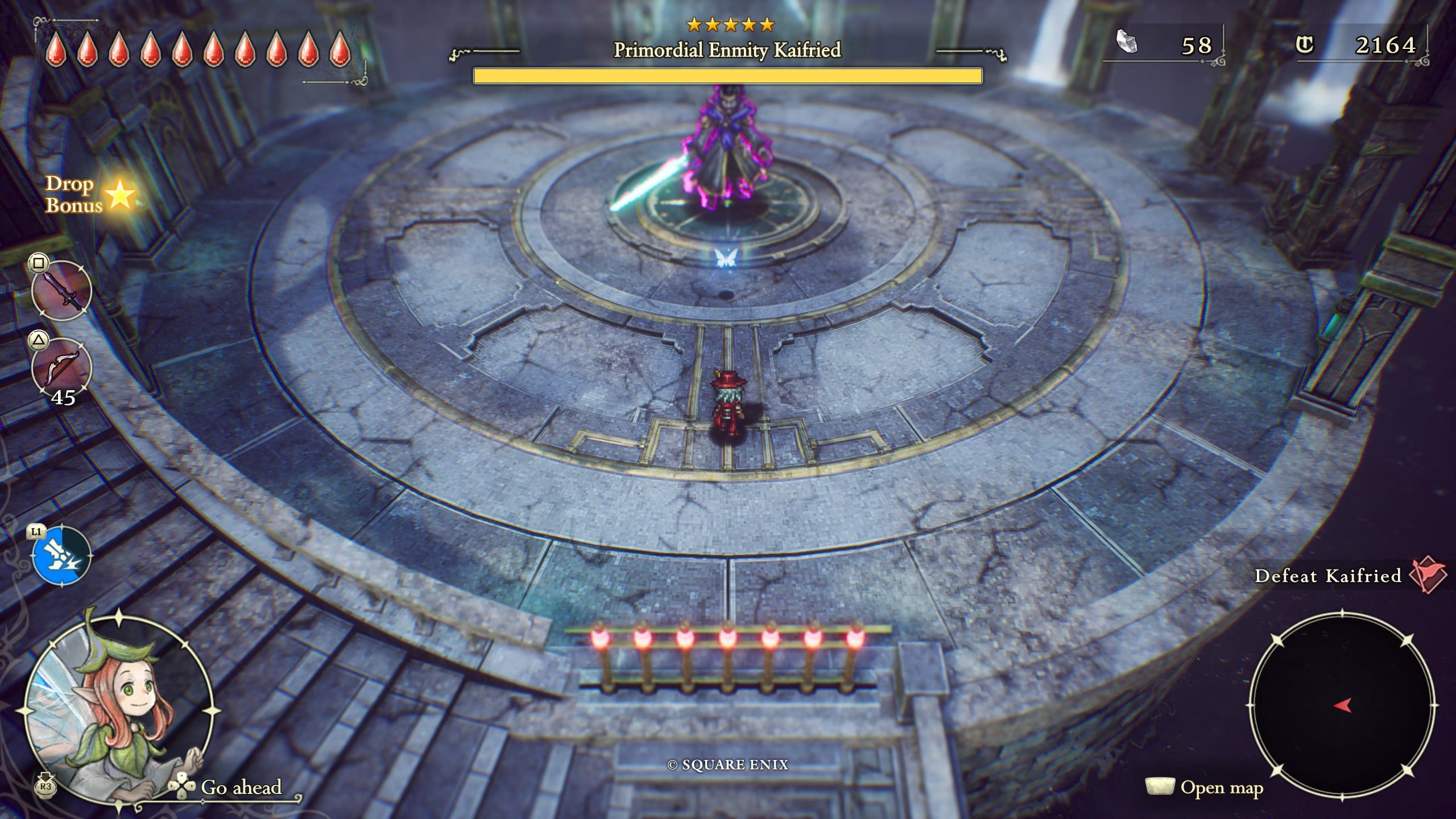
The Adventures of Elliot: The Millennium Tales review: great gameplay, underwhelming narrative

Published

on

Why you can trust TechRadar


We spend hours testing every product or service we review, so you can be sure you’re buying the best. Find out more about how we test.

When I first caught a glimpse of The Adventures of Elliot: The Millennium Tales, it sparked a great sense of anticipation within me. After all, Square Enix and Claytechworks were collaborating to bring a brand new HD-2D RPG to the table, which appeared to combine sprinklings of classic Zelda titles with the visual, sonic, and environmental grandeur from series such as Mana and Dragon Quest.

Review info

Platform reviewed: PS5
Available on: PS5, Nintendo Switch 2, Xbox Series X and Series S, PC
Release date: June 18, 2026

Advertisement

I’m a huge fan of the HD-2D graphical style, and massively enjoyed recent releases such as Final Fantasy: The Ivalice Chronicles and Dragon Quest 1 & 2 HD-2D Remake, but I still wasn’t quite sure if I’d love The Adventures of Elliot. Was the action combat going to be polished and engaging enough? Was the world going to deliver the spectacle and appeal conjured up with other series? Would the narrative have me hooked?

Source link

Continue Reading

Tech

Nvidia, Tech Giants Launch AI Safety Initiative

Published

on

wiredmikey shares a report from SecurityWeek: Nvidia and a large group of technology, cybersecurity, and enterprise software companies have launched new initiative aimed at developing and sharing open source tools, models, and techniques for securing AI systems and agents. The new Open Secure AI Alliance aims to give defenders more open tools for testing, auditing and protecting AI models and agents. Nvidia points to the recent security incident involving OpenAI and Hugging Face, noting that when closed AI tools could not differentiate between attackers and defenders and blocked forensic work, Hugging Face used the open-weight GLM 5.2 model on its own systems to review over 17,000 actions and contain the breach. “The right response is not to deny defenders access to capable open systems. It is to pair openness with strong safeguards, clear rules against malicious misuse, rigorous evaluation and rapid remediation. In cybersecurity, the safer path is the one that gives more defenders the ability to test, verify and strengthen the systems on which society relies,” Nvidia said.

Thanks to longtime Slashdot reader SphericalCrusher for also sharing the news.

Source link

Continue Reading

Tech

Arizona State Launches Influencer Degree Where Students Must Gain Real Followers

Published

on

Arizona State University has launched a 120-credit bachelor’s degree in content creation that teaches video, podcasting, branding, analytics, media law, and social strategy. For their capstone, students are “expected to build a real social media account and demonstrate audience growth during the program,” reports Dexerto. From the report: The Content Creation BA is housed within ASU’s Walter Cronkite School of Journalism and Mass Communication and appears in the university’s 2026-2027 course catalog. The 120-credit-hour degree prepares students to become “an influencer and strategic storyteller” by teaching video production, podcasting, personal branding, audience analytics and social media strategy. The program was approved by the ASU University Senate in March 2026. Its proposal said graduates would be prepared to work independently as influencers and content creators across livestreaming, videography, writing, podcasting, graphics and emerging media.

[…] For the program’s final project, students will choose a social media platform, such as TikTok, create a content and growth strategy, and attempt to gain real followers throughout the semester. “They will have demonstrable audience growth,” [explained Jessica Pucci, senior associate dean at the Cronkite School]. “They will have a platform of their choice with real content and real followers and a real audience behind them.” The curriculum includes courses titled How to Become an Influencer, On-Camera Presence, Introduction to Editing, Videography, Podcasting and Audio Storytelling, Social Media Foundations and The Digital Audience.

Source link

Continue Reading

Tech

Can You Fit Golf Clubs In A Mazda MX-5 Miata?

Published

on


You’ll almost never see a negative comment about the Mazda MX-5 Miata thanks to its go-kart-like handling, affordable price point, and adorable design. But there’s one problem, which was even highlighted in our own review of the latest Miata: the cabin and cargo room is lacking. Hey, nobody said the Miata was practical. However, a lot of people still wonder if they can fit golf clubs inside the Miata. I mean, cruising to the course with the top down sounds like a dream. But is it possible? 

Whether you get the Sport, Club, or Grand Touring variant of the Miata, you’re getting the same cramped interior space. The headroom is 37.4 inches, the shoulder room is 52.2 inches, the hip room is 52 inches, the legroom is 43.1 inches, and the cargo volume is 4.59 cubic feet. And there are many small cars with larger trunks than the Miata. 

Advertisement

Golf bags range in size from 34 to 38 inches for stand bags and 38 to 42 inches for cart and tour bags. Generally, a golf bag cannot lay flat inside of a Miata’s trunk since they are longer than the length of the trunk and it’s not deep enough to lay it diagonally. Even some individual clubs are too long. Alternatively, you can put the golf bag in the passenger seat if nobody is sitting there. 

Advertisement

The delightful Miata falls short on cargo space when other sports cars don’t

For many car enthusiasts, the small cargo space of the Miata is a deal breaker despite all of its other positive features. The Miata makes for a comfortable and fun commuter, but not having room for hobby supplies and having no room for luggage does make the Miata fall short for some families. SlashGear’s Chris Davies noted in his review that “there are EVs with bigger frunks than the Mazda’s trunk” (although Ford will charge you for that now). He then added that there are is no traditional glovebox in the cabin either. 

Sports cars, to be fair, are not known for their trunk space. However, there are a handful of options that can fit a golf bag if you want a weekend cruiser that gets you to the green. For example, the Honda Civic Type R has 24.8 cubic feet of cargo volume while the Volkswagen Golf GTI has 19.9 cubic feet — and both of these cars are cheaper than the Miata. If you want to splurge a bit, the BMW M3 has 16.9 cubic feet of cargo space.

Advertisement


Source link

Advertisement
Continue Reading

Tech

Anthropic’s Dario Amodei responds: doesn’t oppose open-weight models, but fears Chinese AI

Published

on

Anthropic founder and CEO Dario Amodei responded on Monday afternoon to murmuring in the industry that his company somehow supports efforts by the U.S. government to ban open-weight Chinese models, or possibly open-weight models generally.

“Anyone who has read my past writing should know that I don’t regard such bans as a useful measure, but let me state it clearly so that there is no doubt: Anthropic has never advocated for a ban on open-weights models,” he wrote, emphasis his own.

His response came after Nvidia founder and CEO Jensen Huang took to X (his first post on the platform) to share an open letter on Friday in which Nvidia and a long list of other AI companies including Hugging Face, Meta, Microsoft, Mistral, and Nvidia urged policymakers not to impose broad “premature restrictions” on open-weight AI models.

While that letter did not mention China specifically, the debate in the industry has centered on allegations that Chinese AI labs are growing in capability often by stealing intellectual property from their American counterparts. One method is distillation, where an AI bombards another model with prompts to learn how it works.

Advertisement

Amodei said in the blog post published Monday that he views open-weight models as falling into a different bucket than the threat China poses. “Open-weights models that don’t have dangerous capabilities are a public good: they don’t cost anything besides the compute needed to run them, and they provide value to businesses, developers, and researchers.”

Amodei said in his post that he has longstanding fears about AI, but businesses using open-weight models, even ones from China, are not among them.

His fear is that “authoritarian governments” will build models that are more powerful than those in the U.S. to achieve “permanent military superiority” and/or use AI to repress their own people. He said the Chinese Communist Party (CCP) isn’t the only authoritarian government he’s concerned about, but it is the “most capable.”

Amodei also said he fears AI will enable “biological attacks” not just cybersecurity ones. And, in his view, open-weight models are more dangerous in those scenarios because it’s difficult to apply guardrails to them or monitor their usage. He also noted, citing a UK AI Security Institute report, that once open-weights are released they cannot be withdrawn

Advertisement

This runs counter to what open source advocates argue: that access to powerful open models not controlled by a single entity helps defenders protect themselves.

Amodei listed actions he believes would thwart China, including restricting its access to powerful chips (which has been a longstanding U.S. policy) and calling for a formal crackdown on distillation. The U.S. has threatened sanctions against China if it determined there was IP theft involving U.S. models.

Interestingly, Amodei also said he supports growing efforts, some led by the U.S., to create a model safety testing organization, especially if the entire world, including China, agreed to submit to it.

“I think this idea is actually close to a consensus: I have been heartened both that the Trump administration has moved in this direction in recent months, and by recent industry proposals that would apply such testing to the most capable models regardless of their country of origin or whether they are open or closed (while exempting less capable models, such as those from startups and academia, entirely),” Amodei wrote.

Advertisement

“Note that to be effective,” he added, “testing would need to be global, which means even the CCP would need to be on board. I think this may actually be possible … limited cooperation around preventing AI biological weapons may be possible because it is in China’s interest too.”

When you purchase through links in our articles, we may earn a small commission. This doesn’t affect our editorial independence.

Source link

Advertisement
Continue Reading

Tech

Apple TV will continue to grow, says incoming CEO Ternus

Published

on

It’s not as if John Ternus was likely to shut down Apple TV, but he has now affirmed that it will continue to develop when he becomes Apple CEO.

If you subscribe to the argument that Apple should be making hardware devices instead of TV shows, you could have expected engineer John Ternus to agree. Or at least that his focus as CEO would be on devices instead of movies.

Speaking at the launch of the new fourth season of “Ted Lasso,” Ternus said all the right things to reassure Apple TV viewers and staff. According to Reuters, he described Apple TV as amazing.

“I think we have such tremendous momentum right now on Apple TV,” he said. “There’s so many amazing shows, so many amazing characters and stories, and so we’re just gonna keep building on that momentum.”

Advertisement

Tim Cook was also at the “Ted Lasso” launch and talked about the aims he has had since the start of the streaming service in 2019. “Our role is to be the best, that’s our lane,” he said.

“We’re not about the most, there are… other companies that do that,” he continued, “but we’re about the best, and I feel like we really hit our stride in providing that.”

Cook also said that the intention with Apple TV is to produce shows where the company thinks it can be unique. “Where we can innovate in a way that others might not be able to,” he said.

Season four of “Ted Lasso” was launched on July 27, 2026, at the Academy Museum in Los Angeles. It’s debut on Apple TV is on August 5, 2026.

Advertisement

Source link

Continue Reading

Trending

Copyright © 2025