Connect with us
DAPA Banner

Tech

Google’s AI mental health features feel helpful – but not enough alone

Published

on

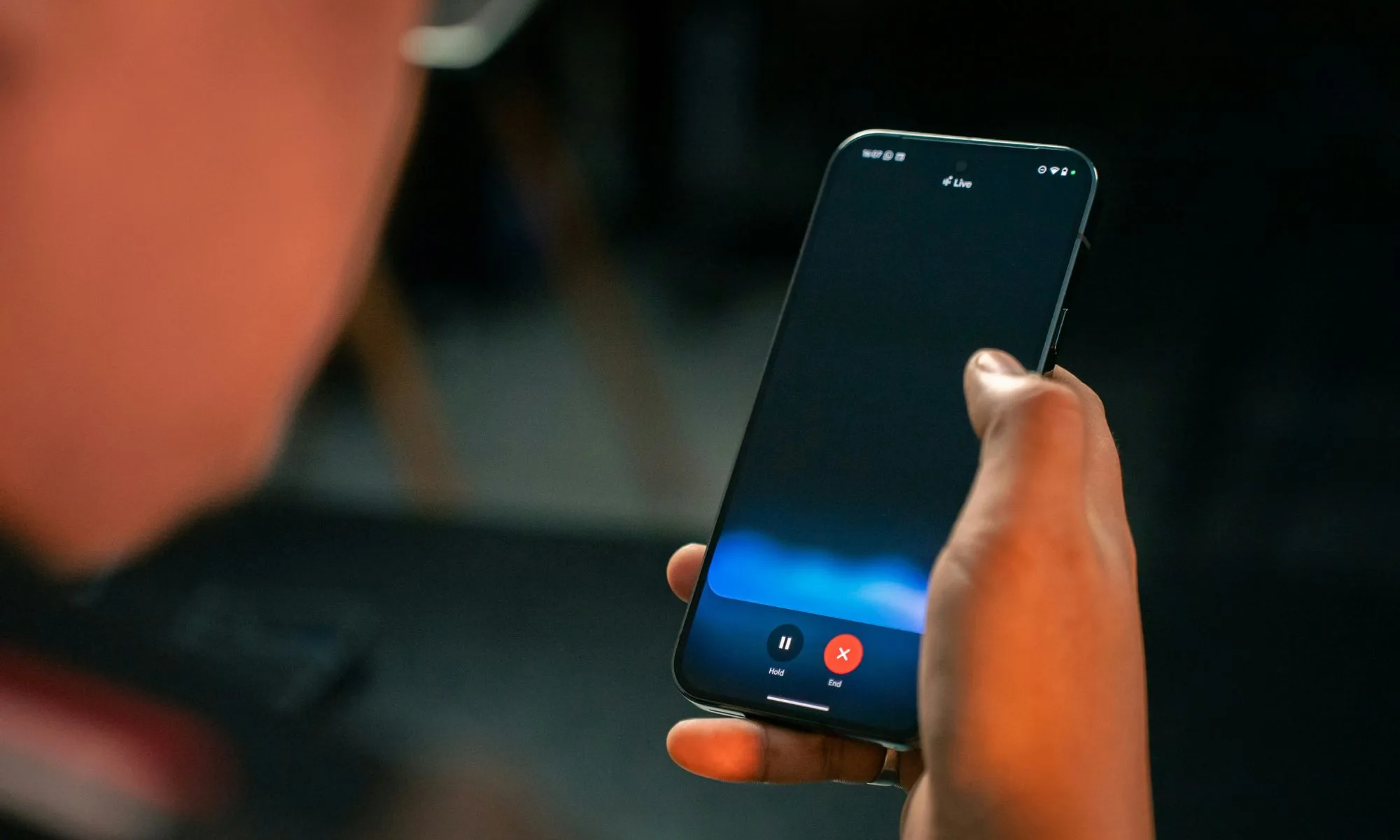
Google is sharpening its focus on mental health safety with a key update to its Gemini platform, introducing a “one-touch” crisis support feature designed to connect users with real-world help faster. The move is part of a broader push to ensure AI tools act responsibly in sensitive situations, especially when users may be experiencing distress.

At the core of this update is a redesigned safety mechanism that activates when Gemini detects signals of potential mental health crises, including self-harm or suicidal thoughts. Instead of continuing a standard AI conversation, the system shifts toward immediate intervention. Users are presented with a simplified interface that allows them to instantly reach out to professional support through calls, texts, live chat, or official crisis hotline websites.

What makes this approach notable is its persistence

Once the one-touch interface is triggered, access to crisis support remains visible throughout the conversation, ensuring users are continually encouraged to seek human help rather than relying solely on AI-generated responses. The design prioritizes urgency and ease of access, reducing friction at moments when quick action can be critical.

This update reflects a growing recognition that AI must do more than provide information – it must actively guide users toward safe outcomes. Google says the system has been developed in collaboration with clinical experts, ensuring that responses are structured to encourage help-seeking behavior without reinforcing harmful thoughts or actions.

Advertisement

Importantly, Gemini is also being trained to avoid validating dangerous beliefs or behaviors

Instead, it aims to gently redirect users, distinguish between subjective feelings and objective reality, and prioritize connections to real-world resources. This balance between responsiveness and restraint is central to the platform’s evolving safety framework.

The significance of this feature lies in its potential real-world impact. With over one billion people globally affected by mental health challenges, digital tools like Gemini are increasingly becoming the first points of contact during vulnerable moments. By embedding a one-touch pathway to professional support, Google is attempting to bridge the gap between online interaction and offline care.

For users, this means faster, more direct access to help when it matters most. The update reduces the burden of searching for resources and ensures that support options are presented clearly and immediately.

Looking ahead, Google plans to continue refining these guardrails through ongoing research, testing, and collaboration with mental health professionals. As AI becomes more integrated into everyday life, features like one-touch crisis support could play a crucial role in shaping how technology responds to human vulnerability – prioritizing safety, accountability, and real-world connection over convenience alone.

What we think

Google’s AI mental health features feel like a step in the right direction, especially with tools that quickly guide users toward real-world help. The one-touch crisis support and improved responses show a clear intent to prioritize safety over engagement.

Advertisement

But there’s an inherent limitation here – AI can assist, but it cannot replace human empathy, clinical judgment, or long-term care. For someone in distress, a well-timed prompt helps, but it’s not a solution. These tools work best as bridges, not endpoints. The real challenge is ensuring users don’t stop at AI interaction and actually reach professional support when it truly matters.

Source link

Continue Reading
Click to comment

You must be logged in to post a comment Login

Leave a Reply

Tech

YouTube is testing an AI search mode that ‘feels more like a conversation’

Published

on

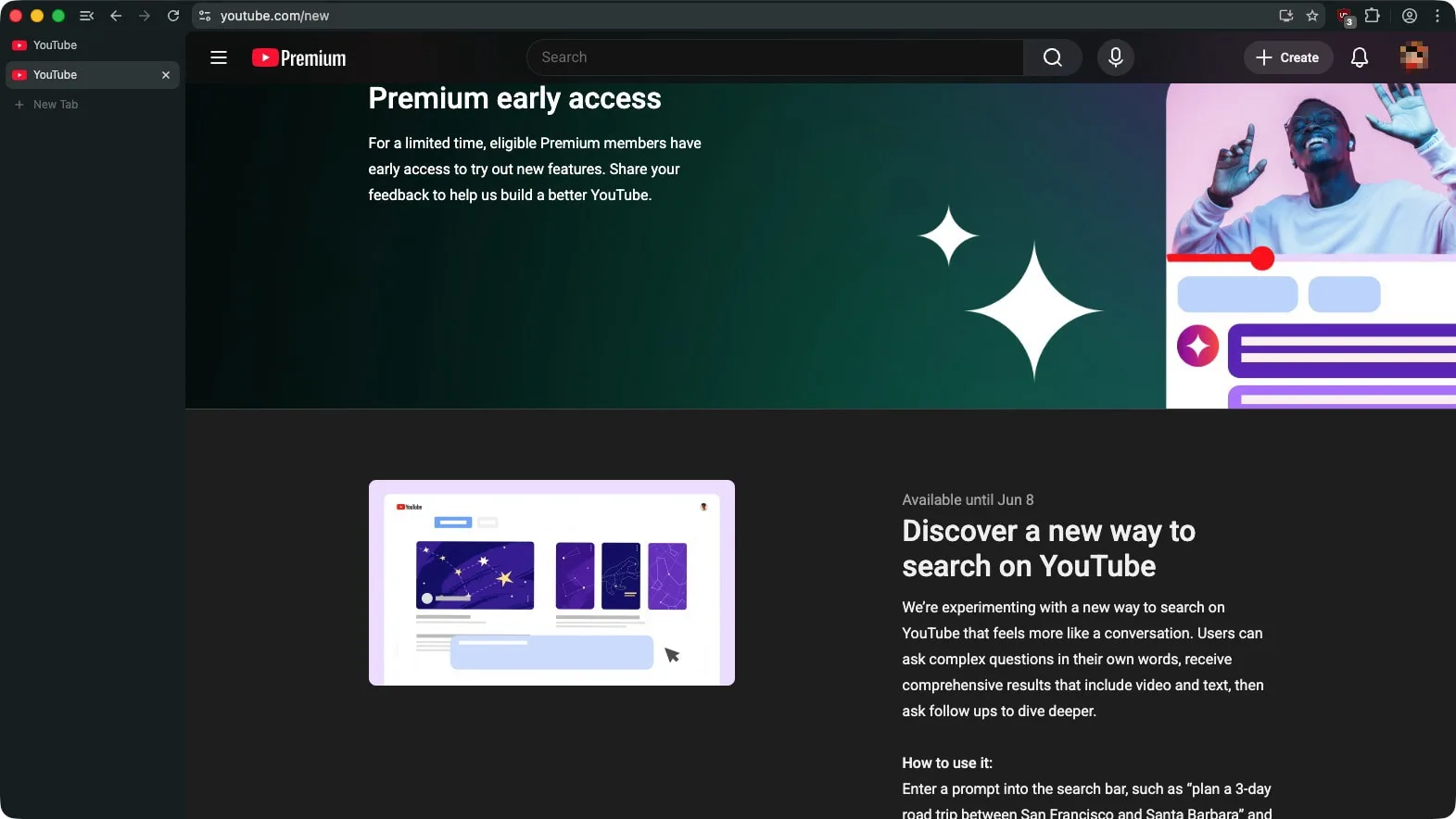
Google is determined to impose AI search onto as many of its products as possible, and the latest, er, victim is YouTube. A new feature called “Ask YouTube” will let you pose complex questions and receive “comprehensive results that include video and text, then ask follow ups to dive deeper,” Google explained on its YouTube Labs page. The experimental feature is available starting today until June 8 for Premium US subscribers 18 and older.

To use it, first, enable the feature in your account. Then, click on the new “Ask YouTube” button in the search bar and you’ll see prompt suggestions, or you can enter your own, like “plan a 3-day road trip between San Francisco and Santa Barbara.” After getting the results, you can try follow-up questions or choose from suggested prompts to explore in more detail.

As shown in The Verge‘s quick test, the prompt “short history of Apollo 11 moon landing” brought up a summary of the mission, along with videos and time stamps for relevant information. Follow-up questions yielded similar results, but some queries just showed a list of videos like you’d see in a classic YouTube search. As happens with AI, one of the searches (around a Steam Controller) yielded factually inaccurate information, according to The Verge‘s Jay Peters.

Tech companies love AI a lot more than the public, and YouTube users are particularly passionate about hating AI-generated slop. YouTube’s AI search function may fare better with subscribers, but only if it helps them find quality content more quickly.

Advertisement

Source link

Continue Reading

Tech

Squarespace Promo Codes: 20% Off in May 2026

Published

on

Squarespace helps small businesses and regular Joe Schmoes to get software help to build their own websites (for both personal and business), even including the commerce side of things with point of sale, inventory, and customer data features (both online or in person). In the age where literally everything is digitized and accessed through the World Wide Web, having an online presence is the most important thing you can do for your business or brand’s growth. Creating a website can be difficult, with the HTMLs and coding and what not—that’s where Squarespace comes in. And we’ve found some of the best Squarespace promo codes and coupons to help you save 10% on new websites, 20% on yearly plans, and up to 50%, while growing your business.

Get 10% Off With This WIRED Exclusive Squarespace Promo Code

One of the best things about Squarespace is the versatility of it—compared to other website builders, it’s hard to beat in terms of the large number of layout options, user-friendly interface, and the various features available. Some of those features include built-in ecommerce capabilities (for those hoping to sell their work), promotion marketing tools, and booking and appointment handling. WIRED even named Squarespace one of the best websites to show off your portfolio of work. Right now, first-time users can get 10% off any website or domain plan, plus a 2 week free trial period. All you need to do is click the coupon above and enter the Squarespace promo code WIRED10 into the box at checkout to see the savings roll in.

Unlock a Free Trial and 36% Off When You Choose a Squarespace Annual Plans

Squarespace continues to reign at the top of our list of the best website builders, with features and customizable templates that help any skill level design like a pro. But don’t just take our word, users can start with a free 14-day trial and then make a decision on which plan best suits their personal or business’ needs. Squarespace frequently releases discount codes for 20% off new websites, but forget needing one–the easiest way to save up to 36% is by locking in an annual price rather than a pay-as-you-go model with the monthly plan. You’ll need your business to have a website for longevity, so I’d recommend buying long term and saving big.

Prices per plan range, with the yearly plan discounts of up to $1,520, depending on the plan you choose. With the basic plan, you’ll pay $16 per month, but save 30% when you buy annually. For Core, the midrange tier, you’ll pay $23 per month, billed at $276 annually. Meaning that if you opt for the annual plan, you’ll save over $84 over a year, and over $1,520 with an Advanced annual plan. Plus, if you aren’t sure which service is right for you, Squarespace asks a series of questions to figure out which features you actually need and then it’ll recommend a plan based on your feedback. Additionally, all plans allow you to publish your website on your terms, and come with a free custom domain.

Advertisement

Students Get a 50% Off Squarespace Discount Code

Like Millennials and Gen Z-ers, Squarespace knows just how important our digital footprint is in this day and age. That’s why Squarespace is offering a student discount, where students can get 50% off annual plans to help launch their burgeoning business. All you need to do to get the Squarespace coupon code is verify your student status with Student Beans. Once you’ve verified using the free service, just input the offer code during checkout. Note: authorized students can obtain only one code every 12 months, whether the offer code is redeemed or not.

Join Squarespace Circle for 20% Off and 40% Off Referral Discounts

Squarespace Circle perks is how people can get rewarded for using the platform. While you previously had to launch three websites to be eligible for Squarespace Circle, now any creative professionals can join (for free).

There are a few subscription tiers to choose from. There’s the free tier, where you’ll get 10% off new annual subscriptions, along with 3 month-extended free website trials. Next is gold, where you can get 20% off annual subscriptions and a six-month free trial. The highest tier is platinum, which gets you 25% off annual subscriptions and a one year website trial.

Plus, there’s a referral discount for Circle members, where you can earn money for bringing your clients to Squarespace with Circle referral payments, including up to 40% off plans. There are tons of perks for any small biz owner using Squarespace Circle, including: 20% off with promo code CIRCLE20, commission for bringing new folks to Squarespace, a 25% discount on new website subscriptions when you reach Platinum status. 20% off new annual email campaigns and scheduling subscriptions, a six-month free trial, priority customer support, educational resources and more. Although the benefits are tiered based on the number of websites you publish, the free option of Circle offers a 10% discount on annual plans, 3 month free trials, and early access to news on product launches. Check out the links above to see if Squarespace Circle would be a good fit for you (or your business).

Advertisement

Get 20% Off Squarespace Acuity Scheduling (Or Try it for Free)

Squarespace Acuity Scheduling is an online scheduling solution for your business that completes annoying (but necessary) administrative tasks like calendar syncing, automated email and text message reminders, payment processor integrations, and more. Read our review here to learn about our experience using the online scheduling service firsthand.

Plus, you don’t even need a Squarespace website to use Acuity. It includes a separate scheduling page clients can visit to book appointments, and you can embed your Acuity scheduler in almost any website. Then, if you decide to add a website from Squarespace, it’s super easy to use Squarespace’s tools and pre-designed templates. They make it easy, with a free trial option that requires no website or credit card. If you decide on a plan, you’ll save 20% annually on Starter and Standard, and 19% off Premium.

Launch Your Business Today With Squarespace Business

Knowing where to begin when starting a small business can be super daunting. Squarespace wants to make that easier, by providing an inclusive, all-in-one platform to help you run your entire business more efficiently. Squarespace has a whole suite of tools to manage and grow the business, with design-forward website templates to get started and customization options to make sure it fits with your business. Plus, there’s AI help available when needed to streamline the entire process.

Squarespace has basically everything you need to grow your online business: you can sell products, offer services, and book appointments, and Squarespace’s client management systems make booking seamless. You’ll be able to manage inventory, shipping, POS, and more from one convenient dashboard, making all of the moving parts of your small business a whole lot more manageable.

Advertisement

Create Your Squarespace Portfolio

Along with this job, I also have a personal writing career, which focuses on creative nonfiction memoir-style writing. Now that I’ve gotten about half a dozen essays published, I’ve been wanting to make a website so people can more easily find my work online. I’ve never designed a website before, but Squarespace portfolio makes it easier than ever to showcase my work with professionally designed, mobile-friendly layouts.

Check Out the New Squarespace AI Website Builder

AI is everywhere, and here at WIRED, we know it all too well. Squarespace is jumping on the AI bandwagon, with its new Blueprint AI service, which helps you smartly build your website. It’s free to use, although you need a paid Squarespace account to publish any website you create with Blueprint AI. If that’s not your jam and you prefer to go a little more old school, you can browse pre-built website templates, including specific designs optimized for various business focuses and needs.

Squarespace recently announced their partnership with perplexity for AI optimization (AIO) tools. This basically means that Squarespace will serve as the website building and hosting partner for Perplexity’s browser, Comet, in an effort to build a seamless transition from AI-powered research to professional business building for users. Customers will be able to get fast guidance on domain registration, brand development, and design recommendations through the Comet AI chatbot.

Buy Your Dream Domain

If you’re looking for a place to showcase your work or launch your small business publicly, a Squarespace domain is an easy one-stop-shop for all your business’s online needs. For one price, your personalized domain comes with everything you need, including design features, tools, and even taxes and fees are accounted for. Plus, if you need inspiration, you can even generate a domain name using AI.

Advertisement

Source link

Continue Reading

Tech

Microsoft and OpenAI gut their exclusive deal, freeing OpenAI to sell on AWS and Google Cloud

Published

on

Microsoft and OpenAI on Monday announced a sweeping overhaul of the partnership that has defined the commercial AI era, dismantling key pillars of exclusivity and revenue-sharing that bound the two companies together for years and replacing them with a looser, time-limited arrangement that gives both sides far more freedom to pursue rival relationships.

The amended agreement, disclosed simultaneously in blog posts from both companies, marks the most significant restructuring since Microsoft first invested $1 billion in OpenAI in 2019 — and it transforms what was once the most consequential exclusive technology alliance in a generation into something that more closely resembles a strategic but arm’s-length commercial relationship.

Under the new terms, Microsoft will no longer pay any revenue share to OpenAI when customers access OpenAI models through Azure. OpenAI, meanwhile, will continue paying a revenue share to Microsoft through 2030 — at the same 20 percent rate — but that obligation is now subject to a total cap. Microsoft retains a license to OpenAI’s intellectual property for models and products through 2032, but that license is now explicitly non-exclusive. And OpenAI, critically, can now serve all of its products to customers on any cloud provider — including Amazon Web Services and Google Cloud — ending the exclusivity that had been a cornerstone of the original deal.

“The rapid pace of innovation requires us to continue to evolve our partnership to benefit our customers and both companies,” Microsoft wrote in its blog post Monday. OpenAI echoed the framing, calling the amended agreement a move “grounded in flexibility, certainty, and a focus on delivering the benefits of AI broadly.”

Advertisement

The diplomatic language belies the drama that led to this moment — months of behind-the-scenes tension, competing deal announcements, public contradictions, and even the specter of litigation between two companies whose fates have been intertwined since the earliest days of the generative AI revolution.

How a billion-dollar bet on AI created the most powerful exclusive partnership in tech

To understand why Monday’s announcement matters so much, it helps to understand what came before it. When Microsoft poured its initial $1 billion into OpenAI in 2019, and then followed with a cumulative investment exceeding $13 billion, it secured something extraordinary: exclusive commercial access to OpenAI’s models and intellectual property. Azure became the sole cloud provider for OpenAI’s API products. Microsoft integrated OpenAI’s GPT models into everything from Bing to Office to GitHub Copilot. The arrangement was, by any measure, one of the most lopsided technology licensing deals in modern history — Microsoft got privileged access to the most capable AI models on the planet, and OpenAI got the capital and infrastructure it needed to scale.

The deal even contained an unusual provision: Microsoft’s exclusive rights would remain in force until OpenAI achieved artificial general intelligence, or AGI — a loosely defined milestone referring to AI systems that rival or exceed human intelligence across a broad range of tasks. OpenAI’s board retained the authority to declare when AGI had been reached, at which point certain commercial terms would change. It was, in effect, a philosophical tripwire embedded in a business contract.

That structure worked well enough when OpenAI was a research lab with a modest commercial footprint. But as ChatGPT exploded into the mainstream in late 2022 and OpenAI’s annualized revenue rocketed into the billions, the constraints began to chafe. OpenAI found itself locked into a single cloud ecosystem at precisely the moment when enterprises — its fastest-growing customer segment — were demanding multi-cloud flexibility. In an internal memo earlier this month, OpenAI’s revenue chief Denise Dresser put it bluntly, telling staff that the Microsoft partnership had “limited our ability to meet enterprises where they are,” according to a report from The Verge.

Advertisement

Amazon’s $50 billion OpenAI investment created a legal crisis that forced the restructuring

The proximate cause of Monday’s restructuring was not a philosophical disagreement about AI safety or corporate governance. It was a $50 billion check from Amazon. In February, OpenAI announced that Amazon would invest up to $50 billion in the company — $15 billion upfront, with another $35 billion to follow when certain unspecified conditions were met. In exchange, OpenAI agreed to expand its existing cloud agreement with AWS by $100 billion over eight years and, most controversially, committed to making AWS the exclusive third-party distribution provider for Frontier, its new enterprise agent-building platform. OpenAI also agreed to co-develop “stateful runtime technology” on AWS Bedrock, the infrastructure layer that allows AI agents to maintain memory and context over extended tasks.

The problem was that OpenAI’s existing contract with Microsoft almost certainly prohibited these arrangements. Microsoft held exclusive rights to any OpenAI product accessed through an API — a category that plainly included Frontier. On the very day OpenAI announced the Amazon deal, Microsoft issued a pointed public statement insisting that “Azure remains the exclusive cloud provider of stateless OpenAI APIs” and that “OpenAI’s first party products, including Frontier, will continue to be hosted on Azure.” The contradiction between the two announcements was stark, and it created immediate legal exposure. The Financial Times reported in March that Microsoft was actively considering legal action to enforce its contractual rights. The situation placed OpenAI in an impossible position: it had made promises to Amazon that it seemingly could not keep under the terms of its Microsoft agreement.

Monday’s deal resolves that impasse entirely. By converting Microsoft’s license from exclusive to non-exclusive and explicitly granting OpenAI the right to serve products on any cloud, the new terms retroactively validate the Amazon arrangement and eliminate the legal overhang. Amazon CEO Andy Jassy wasted no time celebrating. “We’re excited to make OpenAI’s models available directly to customers on Bedrock in the coming weeks, alongside the upcoming Stateful Runtime Environment,” he wrote on X, adding that the company would share more details at an event in San Francisco on Tuesday.

Inside the new financial terms that shift billions of dollars between the two AI giants

The financial mechanics of the new deal deserve careful parsing, because they reveal which side gave up what — and who came out ahead. Under the old arrangement, money flowed in both directions. When customers bought ChatGPT subscriptions or accessed OpenAI models through their own applications, OpenAI paid Microsoft a cut — reportedly 20 percent. Conversely, when enterprise customers accessed OpenAI models through Azure’s API, Microsoft paid OpenAI a share of that revenue. This bilateral structure reflected the deep integration between the two companies: Microsoft was simultaneously OpenAI’s investor, cloud provider, distribution partner, and largest customer.

Advertisement

The new deal makes the cash flow one-directional. Microsoft stops paying OpenAI entirely. OpenAI continues paying Microsoft its 20 percent share, but only through 2030, and now subject to a total cap whose precise dollar figure has not been disclosed. Given that OpenAI’s revenue is growing rapidly — the company was reportedly on pace to generate tens of billions annually — that cap could become material relatively quickly.

For Microsoft, the trade-off is straightforward: it sacrifices the exclusivity that made Azure the only gateway to OpenAI’s models, but it gains immediate financial relief by eliminating its outbound revenue-share payments while continuing to collect inbound payments for several more years. And it retains approximately 27 percent ownership of OpenAI’s for-profit entity, meaning it participates in the company’s growth regardless of which cloud serves the workloads. Last quarter alone, Microsoft reported $7.5 billion in revenue from its OpenAI investment in a single quarter, according to TechCrunch’s reporting. For OpenAI, the calculus is different. It accepts a continued obligation to pay Microsoft through 2030, but it gains the commercial freedom to sell everywhere — a freedom that is arguably worth far more than the revenue-share savings. Enterprise customers overwhelmingly operate in multi-cloud environments. Being locked into Azure was not just a technical constraint; it was a sales objection that OpenAI’s competitors, particularly Anthropic and Google, exploited relentlessly.

Why the disappearance of the AGI clause signals a new era for AI governance

One of the more philosophically intriguing aspects of Monday’s announcement is what it does to the AGI provision that once governed the partnership. Under the original agreement, Microsoft’s exclusive commercial rights were tied to a trigger: if OpenAI’s board determined that the company had achieved AGI, certain terms — including Microsoft’s access to the most advanced models — would change. The provision was meant to ensure that a truly superintelligent system would remain under the nonprofit board’s control rather than being commercially exploited. In practice, it created perverse incentives: OpenAI had a financial reason to never declare AGI, and Microsoft had a financial reason to argue that AGI had not been reached regardless of what the technology could actually do.

The new deal sidesteps this entirely. Microsoft’s license now runs through a fixed calendar date — 2032 — “independent of OpenAI’s technology progress,” as the companies put it. The AGI trigger, a concept that once sat at the philosophical heart of the partnership, has been replaced by a spreadsheet. Andrew Curran, a close observer of OpenAI’s governance, noted on X that language defining AGI had been removed from OpenAI’s website, sharing a screenshot showing the change. The move drew sharp reactions. One commenter observed that “removing the definition = removing the accountability. whoever controls when AGI is declared controls a lot of commercial terms.”

Advertisement

The shift reflects a broader maturation — or perhaps disillusionment — within the AI industry regarding AGI as a meaningful commercial or governance concept. When the original deal was struck, AGI felt like a distant, almost mythical threshold. Now, with models like GPT-5.5 demonstrating increasingly general capabilities, the term has become more of a marketing slogan than a technical benchmark. Replacing it with fixed dates and dollar caps is, in some sense, an admission that the industry has moved beyond the framework that once defined this partnership.

Multi-cloud AI competition intensifies as enterprises gain the power to choose

The most immediate beneficiary of the new arrangement is the enterprise customer. For years, organizations that wanted access to OpenAI’s models had essentially one option: Azure. That constraint is now gone. Within weeks, according to Jassy, OpenAI’s models will be available on AWS Bedrock alongside the stateful runtime environment that powers long-running AI agents. Google Cloud is presumably not far behind.

This multi-cloud availability arrives at a moment when the AI infrastructure market is undergoing rapid consolidation and expansion simultaneously. Meta recently committed $48 billion to cloud providers CoreWeave and Nebius. Amazon’s investment in OpenAI, combined with its existing relationship with Anthropic — in which Amazon has invested up to $4 billion — positions AWS as a model-agnostic platform where enterprises can mix and match AI capabilities. Microsoft, meanwhile, has developed its own relationship with Anthropic, using Claude to power agentic products — a hedge against the very OpenAI dependency it spent billions creating.

The competitive dynamics are now genuinely complex. Microsoft competes with OpenAI in AI products (Copilot vs. ChatGPT), partners with OpenAI’s rival Anthropic, and remains OpenAI’s largest shareholder. OpenAI sells on Azure, AWS, and soon everywhere else, while building its own data centers. Amazon invests in both OpenAI and Anthropic. Google builds its own models while also hosting competitors on Vertex AI. Jehangeer Hasan, a technology commentator, captured the mood on X, calling the announcement a “notable shift in the cloud AI landscape” that signals “intensifying multi-cloud competition and a push toward giving developers more flexibility instead of locking them into a single ecosystem.” Chris Alexander, an engineer, offered a more candid assessment: “honestly Azure’s OpenAI endpoints are so unreliable, we mostly just hit you all directly,” adding that “it would be nice to have options in AWS or GCP for sure.”

Advertisement

What the restructured deal means for the future of AI’s biggest partnership

Several open questions remain. The precise dollar amount of the revenue-share cap has not been disclosed, and it will matter enormously as OpenAI’s revenue scales. The meaning of “first on Azure” — whether it implies a meaningful exclusivity window or merely simultaneous availability — remains deliberately ambiguous. And OpenAI’s own infrastructure ambitions, including plans to build proprietary data centers, could eventually reduce its dependence on any third-party cloud, including Azure.

Microsoft’s position, while less dominant than before, is not as diminished as some early commentary suggested. It remains OpenAI’s primary cloud provider, its largest shareholder, and a licensee of its technology through the end of the decade. It has diversified its own AI strategy with investments in Anthropic, its own Phi and MAI model families, and deep integration of AI across its product portfolio. The company reported $7.5 billion in OpenAI-related revenue last quarter — a figure that demonstrates the sheer financial scale of the relationship even in its loosened form.

For OpenAI, the new agreement is a coming-of-age moment. The company that once depended on Microsoft for everything — capital, compute, distribution, and credibility — now operates as an independent force capable of striking multi-billion-dollar deals with Microsoft’s biggest rivals. Sam Altman announced the changes on X with characteristic brevity: “We have updated our partnership with Microsoft.”

Seven years ago, when Microsoft CEO Satya Nadella and Altman first shook hands on a deal to commercialize artificial intelligence, the arrangement rested on the assumption that OpenAI needed Microsoft more than Microsoft needed OpenAI. Every clause — the exclusivity, the AGI trigger, the revenue share — reflected that original imbalance. Monday’s restructuring is proof that the assumption no longer holds. The partnership that launched the generative AI revolution has survived, but the power dynamics that created it have not. In the AI industry, it turns out, the only thing that moves faster than the technology is the leverage.

Advertisement

Source link

Continue Reading

Tech

The G512 X is Logitech’s most advanced and customizable gaming keyboard yet

Published

on

Thanks to the adoption of features like rapid triggers, analog switches and TMR sensors, the tech in fancy gaming keyboards has changed surprisingly quickly in the past few years. So to keep up with the pace of development, Logitech is putting a bunch of advanced components in its latest flagship offering — the G512 X — to create what may be its most configurable keyboard to date.

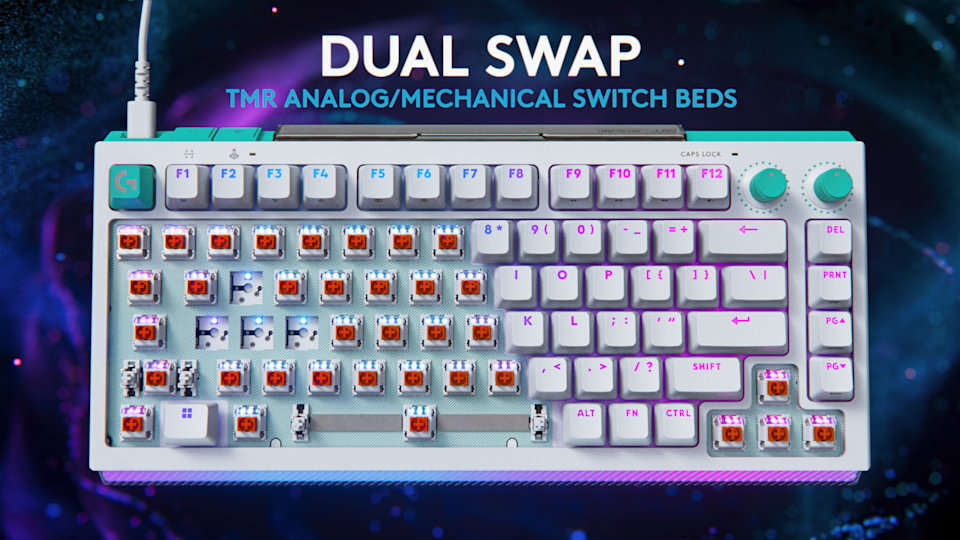
Available in both 75 and 98 percent layouts, the G512 X is based on a novel design that supports both mechanical and analog switches. Out of the box, every key features PBT keycaps and uses one of Logitech’s MX mechanical switches. However, for important buttons like WASD, users can swap in up to nine bundled Gateron KS-20 magnetic analog switches. This means that when combined with the keyboard’s 39 tunneling magnetoresistance (TMR) switch beds, users can enable support for customizable rapid triggers and multipoint actuation, complete with five bundled second actuation pressure point (SAPP) rings in case you need even more control over every keystroke. The one potential downside is that Logitech only added TMR switch beds to the left side of the keyboard, so if you prefer more unusual keybinds, you won’t have quite as many configuration options.

The 39 TMR sensors on the left of the keyboard are the ones that support the included TMR switches.

The 39 TMR sensors on the left of the keyboard are the ones that support the included TMR switches. (Logitech)

Meanwhile, to meet the demands of competitive gamers who need lightning-fast response times, Logitech added an 8K polling rate. This includes both 8K reporting and processing to deliver input times of just 0.125 milliseconds. Elsewhere, the G512 X comes with dual dials, a large RGB lightbar and game mode presets — all of which can be tweaked in Logitech’s G Hub app.

However, the coolest thing about the G512 X might be all the handy little details scattered across the keyboard. For example, its adjustable feet serve double duty as keycap and switch pullers, so when you want to adjust your layout, you won’t need to go searching elsewhere for the right tool. On top of that, there is built-in storage for the nine included magnetic analog switches and five SAPP rings, so you’ll always have them on hand if you want to make changes. Finally, while it is an optional accessory, Logitech created a transparent palm rest with a laser-etched surface that will enhance the G512 X’s onboard RGB lighting.

Advertisement
Logitech's optional palm rest really boosts the output of the Logitech G512 X's front-mounted RGB lightbar.

Logitech’s optional palm rest really boosts the output of the Logitech G512 X’s front-mounted RGB lightbar. (Logitech)

Unfortunately, at $180 for the 75 percent layout or $200 for the 98 percent model, the G512 X is a bit pricey. And unlike some other members of Logitech’s G5 family, there’s no option for a wireless variant. But if you want a keyboard with practically all the latest tech and a ton of customizability (including the ability to select linear, tactile or clicky switches), the G512 X is a very intriguing option for demanding gamers.

The G512 X is available directly from Logitech today, with wider availability slated for May 2.

Source link

Advertisement
Continue Reading

Tech

4 Perks You Probably Didn’t Realize Come With Buying Tires At Sam’s Club

Published

on


Buying new tires is rarely fun, but it feels a little better when you know you’re getting something extra with your purchase. Any time a tire retailer throws in some perks, you can rest easier knowing you got more value out of that new set you bought. While most focus on pricing or brand, the real value shopper keeps an eye out for who has the best incentives, as well. Sam’s Club is one such place. If you’re a member, your tire purchase comes bundled with several benefits you might not even know about.

Like all the best warehouse clubs, Sam’s Club wants to make the shopping experience feel more elevated for tis members. This is especially true of its Tire & Battery Center. Members get a whole range of tire perks, and that’s in addition to the discount you get from simply being a part of the warehouse. These benefits are automatically included with your tire purchase, too, so you don’t even have to do (or pay for) anything extra to enjoy them.

Advertisement

Free lifetime tire maintenance

You get free lifetime tire maintenance when you buy tires at Sam’s Club. It’s a standing benefit that lasts for the usable life of the tires (defined as when tread depth reaches 2/32 of an inch). This maintenance package includes free tire rotations, balancing, tire pressure top-offs, tread depth checks, and flat repairs, all at no additional cost to you.

These no-cost maintenance tasks add up fast. Rotations alone are recommended every six months or 6,000 miles, and the average cost of a rotation and balance can be over $130 on average. Over the life of the tires, that could add up to over a thousand extra bucks in your pocket. As long as you buy and install them through the Tire & Battery Center, you’re covered for the life of the tire. Add in the free flat repairs, which are over $50 on average, and that’s even more cash you don’t have to spend.

Advertisement

Road hazard protection

Potholes, nails, broken glass, even ladders… you’re bound to encounter at least one out there. Road hazards are simply a part of life as a driver, and there’s no way to predict when or where you might encounter one. But encounter one you surely will. That’s why Sam’s Club’s road hazard protection is such a nice advantage. They go beyond the manufacturer’s standard warranty to cover any damage caused by these everyday driving hazards. If one of your Sam’s club tires gets punctured out on the road and can’t be safely patched, Sam’s Club gives you a replacement credit pro-rated based on the remaining tread.

Essentially, Sam’s Club makes it so that you’re only responsible for the portion of the tire you used. That’s so nice, especially if the tire’s on the newer side. That pro-rated coverage will shave a ton off the cost of replacing the tire replacement. No separate package purchase or special enrollment required, either. It’s automatically included as part of the installation package.

Advertisement

Emergency roadside assistance

At Sam’s Club, every qualifying tire purchase comes with up to four years of 24/7 emergency roadside assistance. Starting from from the date of purchase, you’re covered for a wide range of common roadside issues. This includes towing, flat tire assistance, jump-starts, fuel delivery, and lockout service. You won’t find that in a Costco tire package.

To use it, all you have to do is call the toll-free number they give you at purchase. As long as your membership’s active, you can call and request assistance at any time, day or night. It’s kind of like their own version of AAA’s roadside assistance, in a way. Whether it’s a dead battery in a parking lot or a flat tire on the highway, knowing you have help available saves you the headache of paying for a separate subscription service… or, worse, wishing you had. By bundling it into tire purchases, Sam’s Club saves you hundreds you would have had to spend on something like AAA.

Advertisement

Discounted installation

All Sam’s Club members, regardless of tier, get competitive pricing on all their major tire brands. But Plus members get another perk: a 50% discount on tire installation when purchasing a set of four tires. Given that installation typically costs $20 per tire, this discount translates to an immediate savings of $40 per set. Costco doesn’t charge installation fees, but Sam’s Club tends to have cheaper tires. With the Plus discount on those installation fees, Sam’s tires look like the better deal.

The installation package includes mounting, balancing, valve stem installation, tire pressure monitoring system (TPMS) reset, and environmentally responsible disposal of old tires. That last one often shows up on your receipt as a hidden fee at other places, so it’s really good to know you’re getting a discount on it as a Plus member. Even if you’re just a base-tier Sam’s Club member, don’t be dismayed: you still get all the other perks listed above.

Advertisement


Source link

Advertisement
Continue Reading

Tech

YouTube is turning into an answer engine with a new conversational search feature

Published

on

YouTube Premium subscribers in the US (18 years and older) have something new to play with. As reported by The Verge, the company is testing a conversational AI search experience called Ask YouTube that is unlike anything YouTube has offered before.

So what exactly is Ask YouTube?

Instead of typing keywords into a search bar and hoping for the best, you can now ask YouTube a full question and get a response that feels more like a conversation. You can enable this feature using YouTube’s experimental feature

Once you do, you will notice an Ask YouTube button built into the YouTube search bar. When you click the search bar, YouTube surfaces suggested prompts like “What caused the 2008 financial crisis?” or “How to fix a stripped screw.” These might be trending searches or based on your own YouTube history. 

You can either search for these trending search terms or enter your own search term and hit the Ask YouTube button to perform the search. When I searched for “prisoners’ dilemma”, YouTube gave me a text overview followed by a featured video. 

Then there were additional videos under different subheadings, including “step-by-step logic of the dilemma” and “real-world applications,” followed by quick concept overviews using shorts. 

I performed multiple searches and found that the search results are a mix of text summaries, long-form videos timestamped to relevant sections, and galleries of YouTube Shorts organized under themed headers. It is a genuinely different experience from the standard search results page.

Does it actually work?

In my limited testing, the AI search worked really well. Not only did it give me an overview of the topic and relevant videos, but I also liked that it sorted them into different categories, giving me an idea of their content. 

Advertisement

Whether it’s better or worse than the normal YouTube search, I cannot comment. I will need to use it for longer to make any such assessment.

Source link

Advertisement
Continue Reading

Tech

Prototype Camera Finally Photographs the Paths of Invisible Ghost Particles

Published

on

Prototype Camera Ghost Particles
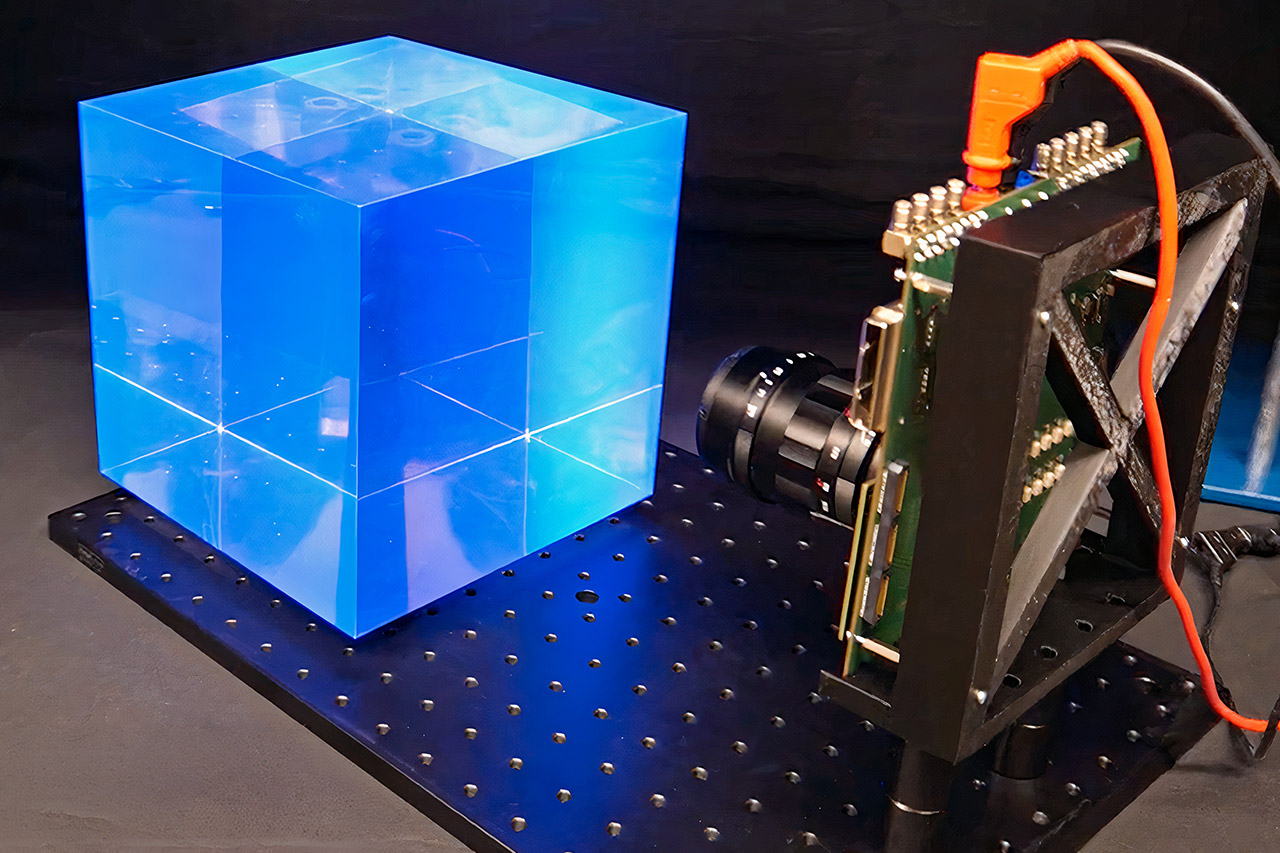
Scientists in Switzerland have developed a prototype camera capable of capturing clear three-dimensional images of neutrinos, particles so elusive they often earn the label ghost particles. Neutrinos come in huge numbers from the sun and other sources throughout space, yet they interact so rarely with ordinary matter that trillions pass through a person every second without any effect


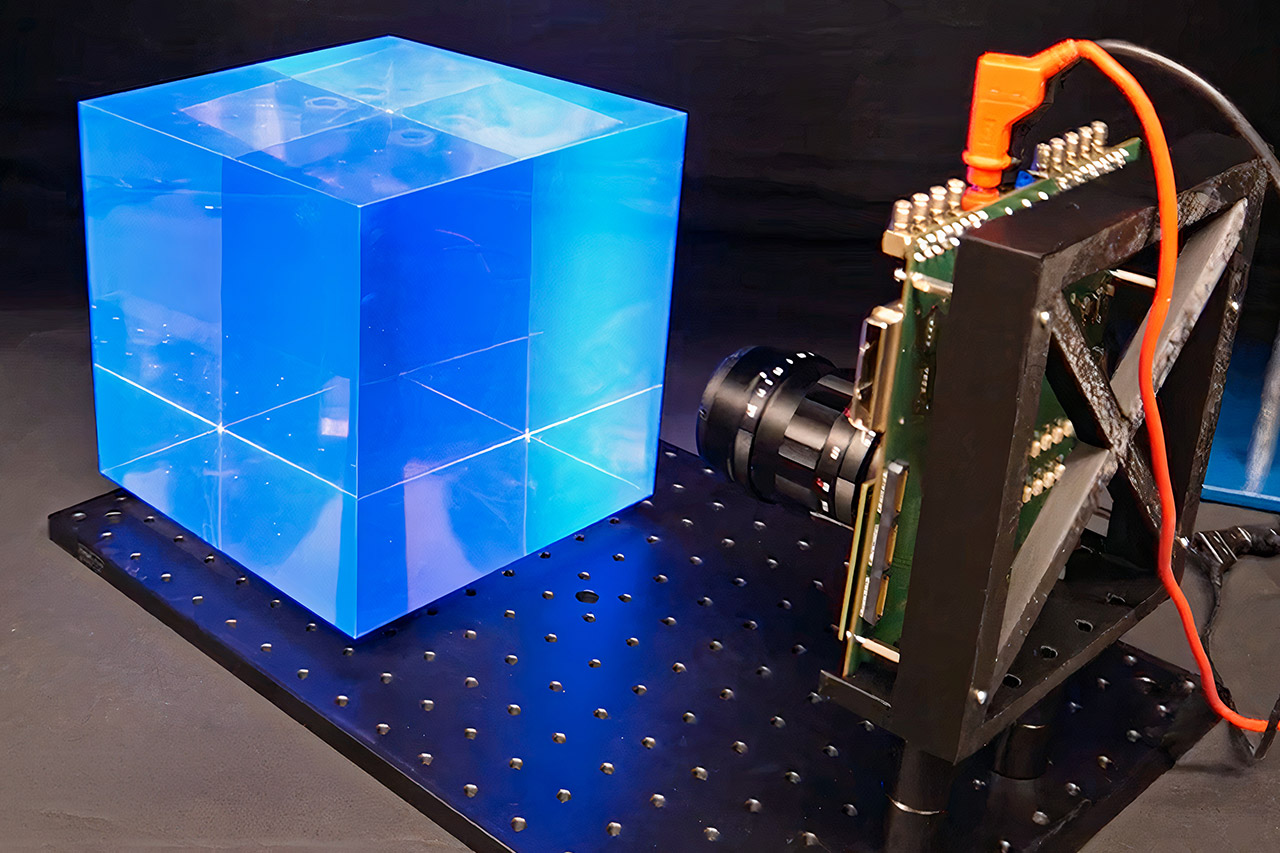
For years, detecting them needed large subterranean containers filled with specific liquids or massive arrays of sensors buried deep in the ground to capture the exceedingly rare occasions when one collides with an atom. That works, but it’s a bit pricey and doesn’t allow scientists to track the particles’ travels very well. However, a team of researchers from ETH Zurich and EPFL has recently developed a new device called PLATON, which is a far easier way of doing things.

Sale


Xtra Muse, Vlogging Camera with 1” CMOS & 4K/120fps Videos, Pocket Camera with 3-Axis Gimbal Stabilizer…
  • Cinematic-Style Footage – Experience the power of Xtra Muse’s 1-inch CMOS sensor, capable of recording breathtaking 4K resolution videos at 120fps…
  • Ultra-Steady Shooting – No more shaky videos! Xtra Muse’s advanced 3-axis gimbal camera stabilizer ensures exceptional smoothness. Enjoy smooth…
  • Effortless Framing – Enjoy Xtra Muse’s expansive 2-inch touch screen, and switch between horizontal and vertical shooting effortlessly.

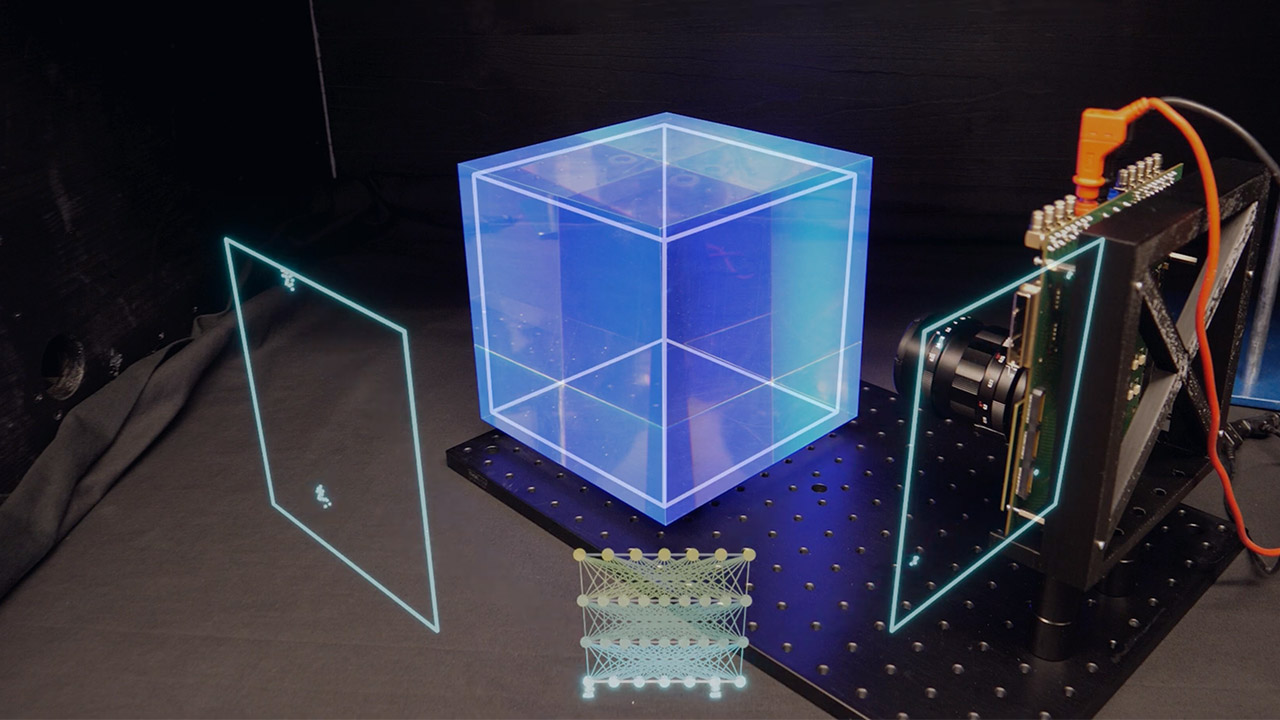
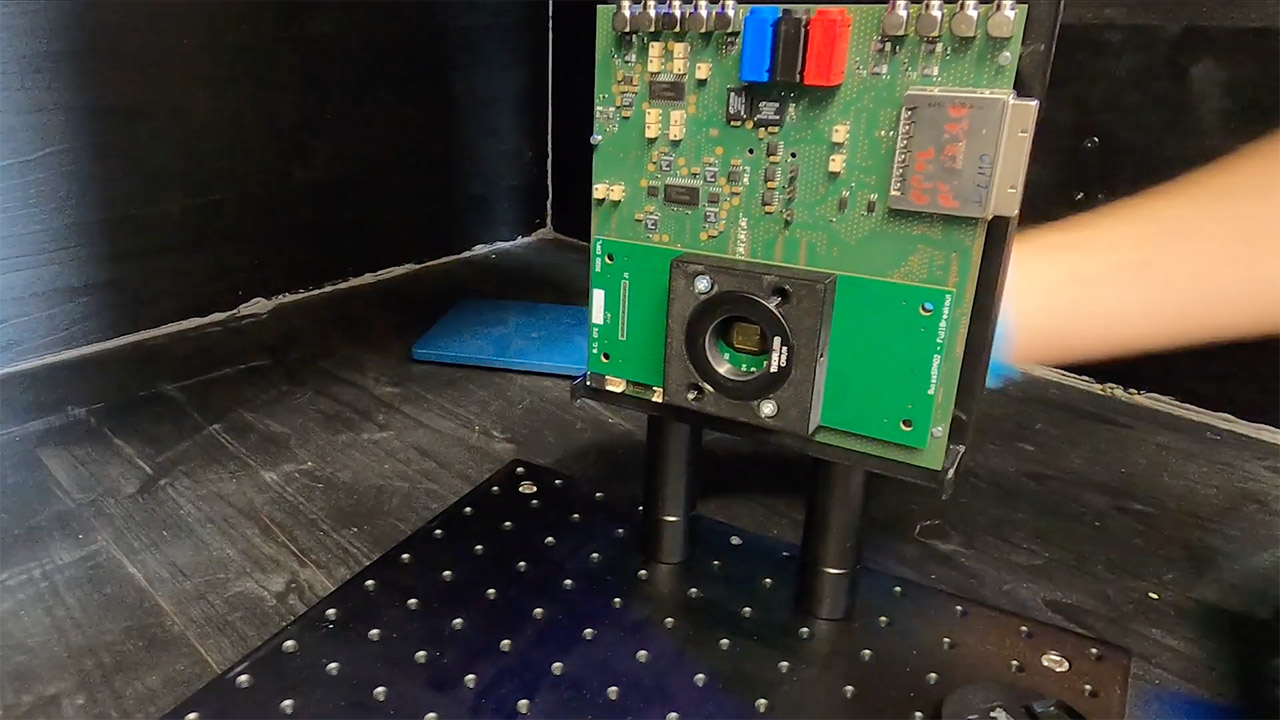
The idea is to use a solid block of a special material called a scintillator, which emits tiny flashes of light whenever a particle passes through it, and to that block is attached a specially designed camera with a grid of tiny lenses and a sensor that can pick up individual photons of light, as well as the exact time they hit it.

Advertisement

Prototype Camera Ghost Particles
When a neutrino interacts with the block, it produces a brief burst of energy that is converted into light, and the camera captures the pattern of light flashes from a variety of angles at the same time. The data is then processed by some sophisticated software, which uses timing information and complex pattern recognition to create a comprehensive 3D representation of the particle’s route. Previous detectors would slice the scintillator into thousands of small bits and connect them with fibers to determine where the particles were, but this made them all large, expensive, and completely unworkable. PLATON does all of the heavy lifting with the camera.

In laboratory experiments, the new device performed admirably, reconstructing tracks from electrons emitted by a known radioactive source. Simulations based on genuine neutrino interactions indicated that it could pinpoint sites with an accuracy of roughly a fifth of a millimeter. According to team member Davide Sgalaberna, this simplifies the process of creating particle detectors while also providing a high level of 3D precision.

Prototype Camera Ghost Particles
This technology opens a host of new possibilities for future studies that will enable researchers to investigate neutrinos more efficiently, and it could be valuable in a variety of other areas as well. Medical imaging is another area where accurate readings inside materials are critical. Of course, there is still a lot of work to be done before it can be scaled up to the size required for large science projects, but for now, this prototype looks promising. As technology advances and becomes more accessible, it has the potential to reveal a great deal more about these fundamental particles and how they help form the cosmos.
[Source]

Source link

Advertisement
Continue Reading

Tech

Alleged Silk Typhoon hacker extradited to US for cyberespionage

Published

on

China

A Chinese national accused of carrying out cyberespionage operations for China’s intelligence services has been extradited from Italy to the United States to face criminal charges.

According to a DOJ announcement, Xu Zewei is alleged to be a contract hacker for China’s Ministry of State Security (MSS) who conducted breaches between February 2020 and June 2021 as part of a coordinated intelligence-gathering campaign.

Xu was previously arrested in Milan, Italy, in 2025 at the request of U.S. authorities for his alleged ties to the Silk Typhoon hacking group.

image

The indictment links Xu to a series of attacks attributed to the Chinese Silk Typhoon hacking group, also known as Hafnium, which exploited vulnerabilities in internet-facing systems to gain initial access to victim networks. Once inside, the attackers performed reconnaissance, deployed malware, and stole data.

The DOJ says Xu was involved in intrusions targeting COVID-19 research organizations, where the attackers allegedly sought to obtain data on vaccines, treatments, and testing.

Advertisement

U.S. authorities also allege that Xu and his co-conspirators exploited Microsoft Exchange Server zero-day vulnerabilities beginning in late 2020 as part of a widespread campaign to compromise email servers and gain access to victim networks.

After breaching vulnerable Exchange servers, attackers deployed web shells that allowed them to access mailboxes, move laterally within networks, and exfiltrate data. The widespread exploitation led to global incidents impacting thousands of organizations before patches were fully available.

Prosecutors say Xu and his co-defendant operated as contracted hackers under the direction of MSS officials.

“According to court documents, officers of the PRC’s Ministry of State Security’s (MSS) Shanghai State Security Bureau (SSSB) directed Xu to conduct this hacking,” the DOJ said.

Advertisement

“When Xu conducted the computer intrusions, he allegedly worked for a company named Shanghai Powerock Network Co., Ltd. (Powerock),” the announcement adds, describing it as one of many firms used to carry out hacking operations on behalf of the Chinese government.

Xu is expected to appear in federal court, where he faces multiple counts related to computer intrusions and conspiracy.


article image

AI chained four zero-days into one exploit that bypassed both renderer and OS sandboxes. A wave of new exploits is coming.

At the Autonomous Validation Summit (May 12 & 14), see how autonomous, context-rich validation finds what’s exploitable, proves controls hold, and closes the remediation loop.

Claim Your Spot

Source link

Advertisement
Continue Reading

Tech

The Risks Of Anonymity In The Age Of Generative AI

Published

on

from the desperately-seeking-satoshi dept

As its name suggests, generative AI is designed to generate material in response to prompts by drawing on its probabilistic database built up through analyzing huge quantities of training input. But it can draw on those patterns to analyze other files, and that’s also a widely used application. Writing in The Argument, Kelsey Piper encountered an interesting variant of that approach:

Recently, Anthropic released a new version of Claude, Opus 4.7. I did what I usually do when a new AI model is released by Google, OpenAI, or Anthropic and ran a bunch of tests on it to see what it can do. One of those tests is to paste in some text from unpublished drafts of mine and ask it to guess the author.

From only the above text [not shown here], 125 words, Claude Opus 4.7 informed me that the likeliest author is Kelsey Piper. This is an Opus 4.7-specific power; ChatGPT guessed Yglesias, and Gemini guessed Scott Alexander. I did not have memory enabled, nor did I have information about me associated with my account; I did these tests in Incognito Mode.

As Piper admits:

Advertisement

this is far from an impossible feat of style identification — a lot of my writing is public on the internet, and this is clearly the start of a political column, narrowing the possible authors down dramatically.

She went on to input less obvious material. For example, an “unpublished draft of a school progress report in a completely different register”:

“Kelsey Piper,” said Claude. (ChatGPT guessed Freddie deBoer. Gemini guessed Duncan Sabien.)

An unpublished fantasy novel produced a similar result, although:

in that case it took more like 500 words for Claude to inform me that it’s the work of Kelsey Piper (whereas ChatGPT flattered me by guessing that I’m real fantasy novelist K.J. Parker).

And finally, “a college application essay I wrote 15 years ago, when my prose style was vastly worse and frankly embarrassing to reread”:

“Kelsey Piper,” said Claude, and in this case, also ChatGPT.

Piper comments:

Advertisement

Right now, today’s AI tools probably can be used to deanonymize any writer who has a large public corpus of writing under their real name and also writes anonymously, unless they have been extremely careful, for years, to make sure that nothing written under their secondary account has the stylistic fingerprints of their primary one. Many academics and industry researchers, for instance, have reported being identified from a draft or in the middle of a chat.

And she concludes:

Whatever goods anonymity ever offered us, we will have to do without them. I don’t want the anonymous posters to all go away and for everyone to frantically delete all their old internet presence before it surfaces, but more than anything, I don’t want them to be surprised.

Those links to other cases of unpublished material being recognized by AI show that Piper’s experience was not a one-off, although the results remain in the realm of anecdata. But even if imperfect, the ability of generative AI to carry out this kind of analysis quickly and often accurately represents an important new option for the well-established field of stylometry. Wikipedia explains:

Stylometry may be used to unmask pseudonymous or anonymous authors, or to reveal some information about the author short of a full identification. Authors may use adversarial stylometry to resist this identification by eliminating their own stylistic characteristics without changing the meaningful content of their communications. It can defeat analyses that do not account for its possibility, but the ultimate effectiveness of stylometry in an adversarial environment is uncertain: stylometric identification may not be reliable, but nor can non-identification be guaranteed; adversarial stylometry’s practice itself may be detectable.

The limitations of stylometry were demonstrated in John Carreyrou’s attempt to reveal the true identity of Bitcoin’s pseudonymous creator, Satoshi Nakamoto, published in The New York Times a few weeks ago. Carreyrou concluded that various real-world coincidences plus linguistic evidence indicated that Bitcoin was created by the 55-year-old British computer scientist Adam Back, something Back denies. Carreyrou’s attempts to use computerized stylometry (not the AI services Piper drew on) were unsatisfactory, and he eventually adopted a more hands-on approach to text analysis, which involved looking at Satoshi’s vocabulary, grammatical hyphenation mistakes and the use of British spellings.

Despite Carreyrou’s lack of success, stylometric analysis by generative AI is likely to become more common in many disciplines for the simple reason it is so quick, easy and cheap to carry out. Even if its results are unreliable, people may find it useful as a stimulus for further investigations. And as we know, the fact that generative AI systems can churn out nonsense hasn’t stopped hundreds of millions of people from using and trusting them anyway.

Advertisement

Follow me @glynmoody on Mastodon and on Bluesky.

Filed Under: adam back, anonymity, bitcoin, chatgpt, claude, deanonymization, gemini, generative ai, grammar, john carreyrou, opus, satoshi nakamoto, stylometry, wikipedia

Companies: anthropic, google, new york times, openai

Source link

Advertisement
Continue Reading

Tech

Robinhood account creation flaw abused to send phishing emails

Published

on

Robinhood

Online trading platform Robinhood’s account creation process was exploited by threat actors to inject phishing messages into legitimate emails, tricking users into believing their accounts had suspicious activity.

Starting last night, Robinhood customers began receiving “Your recent login to Robinhood” emails stating that an “Unrecognized Device Linked to Your Account” was detected, containing unusual IP addresses and partial phone numbers.

“We detected a login attempt from a device that is not recognized,” reads the phishing email. “If this was not you, please review your account activity immediately to secure your account.”

image

Included in the email was a button titled “Review Activity Now”, which led to a phishing site at robinhood[.]casevaultreview[.]com, which is now down. 

However, screenshots on Reddit indicate that the site was likely used to try to steal Robinhood credentials.

Advertisement

What made the emails convincing is that they came from the legitimate Robinhood email address noreply@robinhood.com and passed SPF and DKIM email security checks.

Exploiting Robinhood account creation onboarding flaw

Attackers abused Robinhood to generate phishing emails by exploiting a flaw in the company’s onboarding process that allowed them to inject arbitrary HTML into its account confirmation emails.

BleepingComputer confirmed that when a new Robinhood account is registered, the company automatically sends a “Your recent login to Robinhood” email to the associated address, containing the registration time, IP address, device information, and approximate location.

To inject the phishing message, threat actors modified their device metadata fields to include embedded HTML, which Robinhood did not properly sanitize.

Advertisement

This HTML was then injected into the Device: field of the account creation email, causing it to render as a fake “Unrecognized Device Linked to Your Account” message.

To target Robinhood customers, attackers likely used lists of known customer email addresses from previous data breaches. In November 2021, Robinhood suffered a data breach impacting 7 million customers, with the data later offered for sale on a hacking forum.

The attackers also used Gmail’s dot aliasing behavior, where adding periods to an address does not change its destination, allowing them to register accounts using variations of real email addresses while still delivering the messages to the intended recipients.

As a result, recipients received what appeared to be a standard login alert, but with an embedded phishing section warning of “unrecognized activity” and urging them to review their account.

Advertisement

Robinhood confirmed the incident in a statement posted to X.

“On Sunday evening, some customers received a falsified email from noreply@robinhood.com with the subject line ‘Your recent login to Robinhood.’,” posted RobinHood.

“This phishing attempt was made possible by an abuse of the account creation flow. It was not a breach of our systems or customer accounts, and personal information and funds were not impacted.”

BleepingComputer has confirmed that Robinhood has fixed this flaw by removing the Device: field that was previously abused from their account creation emails.

Advertisement

Robinhood advises users who received the message to delete it and avoid clicking any links.


article image

AI chained four zero-days into one exploit that bypassed both renderer and OS sandboxes. A wave of new exploits is coming.

At the Autonomous Validation Summit (May 12 & 14), see how autonomous, context-rich validation finds what’s exploitable, proves controls hold, and closes the remediation loop.

Claim Your Spot

Source link

Advertisement
Continue Reading

Trending

Copyright © 2025