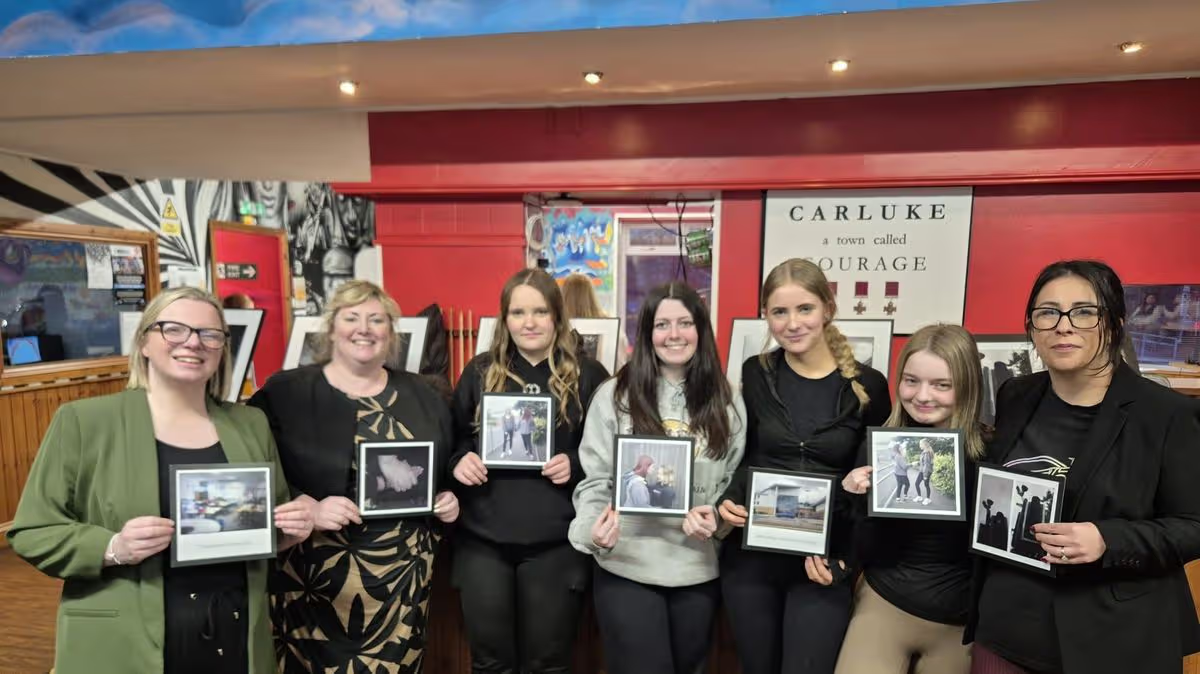
A group of four young women attached to the Evolve youth group at Street Level have been working on the ‘Photovoice’ project with Suzanne Gallacher-Graham, a lecturer in Criminology and Criminal Justice at the University of the West of Scotland.
Motherwell, Wishaw and Carluke MP, Pamela Nash, has praised the work of members of a Carluke youth group in examining the important issues of sexual consent and sex education.
Advertisement
A group of four young women attached to the Evolve youth group at Street Level have been working on the ‘Photovoice’ project with Suzanne Gallacher-Graham, a lecturer in Criminology and Criminal Justice at the University of the West of Scotland.
Suzanne is also a PhD candidate at the University of Strathclyde and, as part of this, has been working with the group in Carluke to shape her research, as well as create and analyse data with them using photography and creative methods.
Their work culminated in an exhibition at Street Level at which Pamela Nash MP attended, alongside Councillor Lynsey Hamilton, Scottish Labour’s candidate for Clydesdale.
Nash said: “It’s crucial that our young people learn about sexual consent and are encouraged to speak openly about this and all matters relating to sex in a safe space to ensure they can make informed decisions.
Advertisement
“It was so refreshing to see exactly this at the Photovoice exhibition – the young women involved should be proud of themselves for making such a big contribution to Suzanne’s research.”
Councillor Hamilton said: “It was a pleasure to attend the exhibition and hear from the young women who have been taking part in the project with Suzanne.
“The breakout sessions really allowed time for some discussion and reflection, and I’m sure everyone attending found it as interesting and informative as I did.”
Advertisement
Suzanne added: “It has been a genuine pleasure to work with this group of young women.
“We have produced some very interesting and important findings that we feel are relevant for people in roles which have an input on the future of sex education and the prevention of violence against women and girls.”
*Don’t miss the latest headlines from around Lanarkshire. Sign up to our newsletters here.
And did you know Lanarkshire Live had its own app? Download yours for free here.
The chief executive of the UK Biobank, one of the world’s largest biomedical databases, recently wrote to over 500,000 participants telling them that some of their data had been made available for sale online through a Chinese website. This wasn’t a data breach or hack, but rather researchers who had legitimately accessed the data trying to sell it.
Although it was stated that participants could not be identified, and there was no sign that the data had actually been bought by anyone, the fact that someone could even try to sell parts of the dataset is extremely concerning. Unfortunately, the failure was unlikely to be in the protection set up by the biobank itself, but rather in the honesty of the researchers accessing the data.
This raises the wider question of whether data – any data – can ever really be protected. Many databases, including the UK Biobank, operate secure research environments where restrictions are put on those accessing the information. This can be through secure computer portals or platforms (as used by the UK Biobank), or limiting researchers to only downloading the results of their analyses rather than the raw data itself.
But the problem is that once data exists, there is always a chance that it can be leaked through either accident or dishonesty. Legal restrictions, such as data protection laws, can give power to police or governments to try to stop this happening, or to subsequently prosecute. But in a world of international computer networks, and very different national views on privacy, even laws can only do so much. For instance, it has been claimed that data has been exposed accidentally from the UK Biobank 198 times before.
Advertisement
If this isn’t bad enough, the increasing availability of sophisticated AI tools means that even anonymised data can be de-anonymised. This is because AI tools are able to find complex patterns or links in data that no human would ever be able to discover.
So what is the answer? Do we revert to using pen, paper and filing cabinets, or do we need to keep evolving the way we think about our data and its security?
Harms v benefits
Possibly the main fear that people have with their data being made widely available is becoming the victim of fraud, bribery or perhaps a commercial organisation using it to make large profits or using it in other ways that we would not approve of. But the possibility of this depends on the type of data.
For instance, there are very clear reasons to keep data on personal finances, telephone records, or many other details about our personal lives confidential. However, when considering health data, including the types held in biobanks, does the potential for significant societal benefits change the way we think about risks and harms?
Advertisement
Medical confidentiality is considered a human right, certainly in Europe and the UK. This is because of the possibility of coercing or manipulating people if you have inside knowledge about their health. Doing this for nefarious gain is clearly wrong and must remain illegal.
A woman taking part in UK Biobank coronavirus research. John Birdsall/Alamy
Giving health data access to insurers or employers is less clear cut. While we all accept that their business practices mean that they do need to know a certain amount of information about us, many people feel uncomfortable with the idea of giving companies all of our healthcare information. This is where data protection laws come in that limit what and how commercial organisations use our data, albeit such laws require ongoing scrutiny as they are not always as effective as we may like.
However, looking beyond the individual, the real value of health data is at a group level. Humans are complex both biologically and psychologically, meaning that researchers need to look across a lot of people before patterns start to emerge. So how can this be balanced with personal privacy?
Veil of ignorance
The philosopher John Rawls proposed a thought experiment for considering issues of justice and society. His idea was to suggest people adopt a “veil of ignorance” by trying to forget their own personal position – including, race, gender, class, intelligence and health – when thinking about what might be best for society. So what would adopting a veil of ignorance mean when considering health data?
Advertisement
Aggregating health data is certainly not a new idea, and is the reason why organisations like UK Biobank exist, which to date has resulted in more than 18,000 research publications. So from the position of a veil of ignorance, the more data from the more individuals the better, as it does seem to lead to more research possibilities.
Second, research is very complex and now involves a wide range of disciplines, individuals and skills. Data from the UK Biobank has been used by 22,000 researchers in more than 60 countries. Again, from the veil of ignorance position, making data freely available to the widest range of researchers seems to be a good thing as the more people looking at it, in different ways, the higher the likelihood of discovering something useful.
Of course, safeguards do need to be in place to stop information being shared too widely, but these safeguards are becoming harder to implement as data processing software and AI is making it increasingly easy to identify individuals from otherwise “anonymous” data. Perhaps the issue is therefore focusing efforts less on controlling the availability of data, and instead increasing our focus on controlling how it is subsequently used.
This latest incident, alongside the wider context of daily cyber-attacks and leaks from other databases, seems to show that sooner or later most attempts at protecting data will fail. As a consequence, rather than trying to protect data, maybe we should start to accept that this type of data could now be considered a type of public good.
Advertisement
As with other public goods, the ethical obligation is to ensure how they are used. Yes, this may mean that commercial organisations, or even foreign governments, could use our data in ways we may not individually approve of, but disapproval of the actions of companies or other countries is hardly a new thing.
Political and international agreements regulate how all sorts of resources are used, and health data should now be included. Similarly, laws already exist to dictate what businesses can and can’t do with data.
It could be argued that if the potential benefits of fully open data sharing are truly enormous, and this incident among many others has shown we cannot protect such datasets, maybe we need to stop focusing on the futile task of trying to protect the data, and instead focus on working out how to ensure it is used in the right way.
Neil Robertson’s maths blunder will cost him three figures after he was hit with a first for conceding a frame early during his World Snooker Championship first round win
Neil Robertson will have to cop a four-figure fine after conceding a frame early during his World Snooker Championship first round win over Pang Junxu.
Advertisement
The Australian, who claimed victory at the Crucible back in 2010, began his clash last week by taking the first frame but then ended the second prematurely, but only after some questionable mental maths from Robertson.
The 44-year-old conceded the frame when he was trailing by 47 points. There were three reds left on the table, meaning he could still win without needing snookers, but the mathematical misstep saw Robertson mistakenly concede early.
Players are able to concede, but will receive a warning from the referee and be handed a £250 fine. However, a couple of unrelated fines earlier in the season mean Robertson’s error will actually cost him £2,000, report The Metro. A further error could see Robertson fined £10,000.
Referee Terry Camilleri did indeed warn Robertson, who cut a confused figure before realising his error. Robertson was actually 57 points behind and had simply got his sums wrong, which was quickly noticed on commentary.
Advertisement
Ken Doherty said during the BBC’s coverage: “Well, what’s happened there? He’s actually conceded when he can still win. That’s very unusual for Neil Robertson to do something like that. You don’t really see that in the game anymore, but it’s going to cost him Pang Junxu’s first frame. Now 1-1.”
Joe Perry, a friend and mentor to the Australian, was also on commentary duty and added: “I’m not entirely sure Neil realised he could still win. That’s totally out of character for Neil. He’s going to get a warning from the referee, then he’ll realise what he’s done.”
Doherty went on to claim: “You don’t really see that anymore. There were a few players doing it a few years ago, that’s why they brought in the warning and the fine to stop players conceding frames when there was enough points on the table to win. Pang Junxu won’t be too displeased!”
Advertisement
Content cannot be displayed without consent
Robertson’s blunder wouldn’t dent the Australian’s tournament ambitions as he secured a 10-6 victory. He’s since seen off Chris Wakelin to set up a quarter-final clash with John Higgins, who himself downed Ronnie O’Sullivan. Robertson was pleased to dodge the Rocket, taking aim at the chalk he uses.
“I would prefer to play John so I don’t have to contend with the chalk that Ronnie uses, which should be banned from the game,” he told BBC Four. “I don’t know how you are allowed to even use it.”
Robertson later added: “All the players hate it, it just destroys it. You get kicks, bounces and it makes an absolute mess of the table. I know he [O’Sullivan] is friends with [artist] Damien Hirst, but it’s like he is making artwork with the chalk all over the cloth. I don’t think he does it to put off anyone, he is not that way inclined at all. He is about the only player left on tour that uses that chalk – hopefully they bring in a ban.”
Police would like to speak to this man in connection with the incident
Police are looking for a man in connection with an incident where paint was squirted over a car. At about 7.50pm on April 7, a man was seen squirting paint over a car in Dalby Court, Welland Estate.
Advertisement
The same vehicle was scratched on a previous occasion at around 1pm on March 8, causing around £300 of damage.
Cambridgeshire Police would like to speak to a man captured on CCTV in connection with the incidents. A police spokesperson said: “Police have released a CCTV image of a man they would like to speak to in connection with criminal damage in Peterborough.
“Officers believe the incidents are linked and are asking anyone who recognises the man in the image, or who has information about either incident, to come forward.”
Anyone with information should call police on 101 and quote incident 35/25498/26.
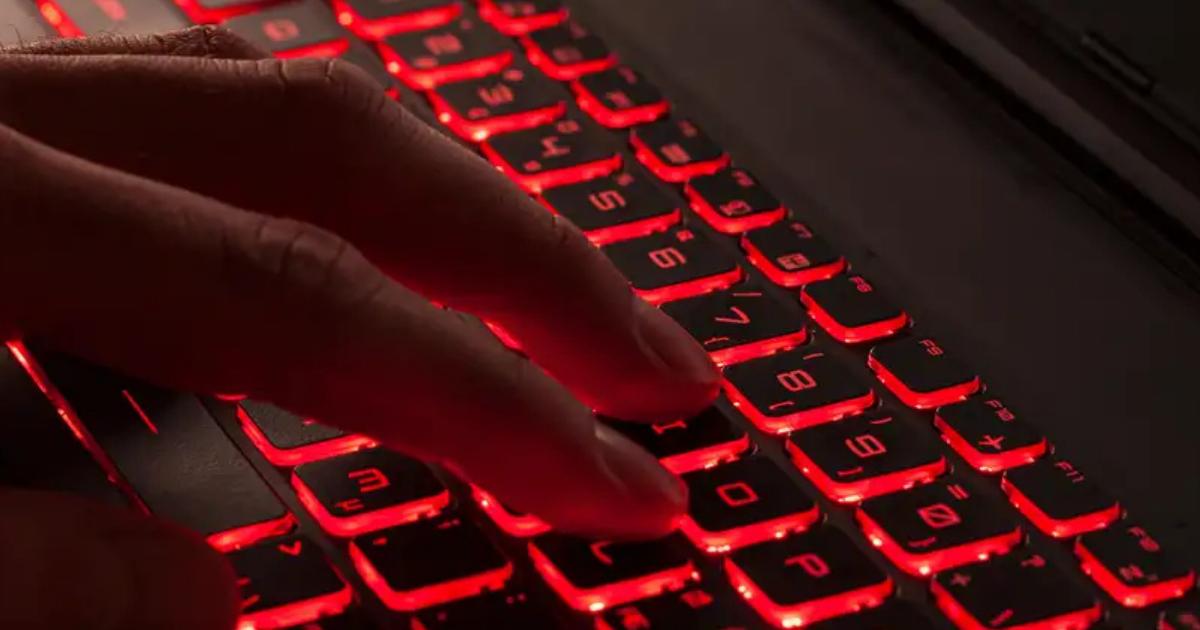
Sir David Davis warned the attack was “a direct interference with a Member of Parliament carrying out his duties”, as he told the Commons his website “was hit with 142 million requests, consuming nearly 800 gigabytes (GB) of data”.
The Goole and Pocklington MP alleged much of the traffic was “traceable to China”.
Recommended reading:
Attacks on Sir David’s website are thought to have begun last Thursday morning, when a series of tab-style links, supposed to contain information about the Conservative MP, directed users instead to gambling pages.
Advertisement
“This is not a minor nuisance, it’s a direct interference with a Member of Parliament carrying out his duties.” (Image: UK Parliament)
On Monday evening, the website daviddavismp.com displayed the message: “Briefly unavailable for scheduled maintenance.
“Check back in a minute.”
Describing the attack, the former Brexit secretary said: “Last Thursday, my Ipsa (Independent Parliamentary Standards Authority) provided website was compromised.
“Malicious links were inserted, redirecting users to south-east Asian gambling websites – I guess it could be worse.
Advertisement
“We took it down immediately.
“It was restored but then came under sustained distributed denial of service (DDoS) attack, traceable to China.
“In just 24 hours, the site was hit with 142 million requests, consuming nearly 800GB of data.
“This is not a minor nuisance, it’s a direct interference with a Member of Parliament carrying out his duties.”
Advertisement
A DDoS attack involves the attacker flooding a server or website with internet traffic originating from more than one source.
The Press Association understood that while the majority of traffic appeared to come from China, Sir David’s office has identified a small number of hits from other countries and is working with website hosts to find a way to prevent further attacks.
Deputy speaker Nus Ghani told MPs: “I do not think it would be appropriate to discuss the details publicly about preventative action and how members are supported to protect themselves against these kinds of cyber threats.
“If members would like security advice on how to make personal accounts and devices more resilient, they should contact PSD (Parliamentary Security Department).
Advertisement
“For matters related to parliamentary accounts and equipment, members should contact PDS (Parliamentary Digital Service) through the PDS service desk.”
The Made in Manchester festival will take place at Bolton Wanderers Football Club on June 13 and 14, promising a packed line-up and activities for all ages.
On Saturday, N-Trance and K-Klass will headline, alongside epic tributes to Oasis, Queen, Gerry Cinnamon and The Stone Roses.
The Saturday will also feature performances from Yon Mon, Two Connors, Radio Addicts and Manchester SKA Foundation.
Advertisement
Sunday will feature live performances from Harry Wright and Radio Addicts, with free entry for children.
There will also be a food court, VIP area, and fairground.
More information can be found here: https://madeinmanchesterfestival.co.uk/buy-tickets
Lianne was just 13 when she lost her parents to Aids. Newly orphaned, she had to find a way to keep herself and her younger sister alive. With no money to finish school, unable to find a job and struggling to put food on the table, there was only one option – sex work.
Now 24, she knows the dangers in Eswatini, a kingdom in southern Africa once described as the epicentre of the HIV epidemic and a country still struggling with some of the highest infection rates in the world.
“Both my parents passed away. Hunger led me to join this work although I know it’s risky,” Lianne says, explaining that she earns under £25 a week. She is unable to acquire HIV preventative medication – known as PrEP – on her own.
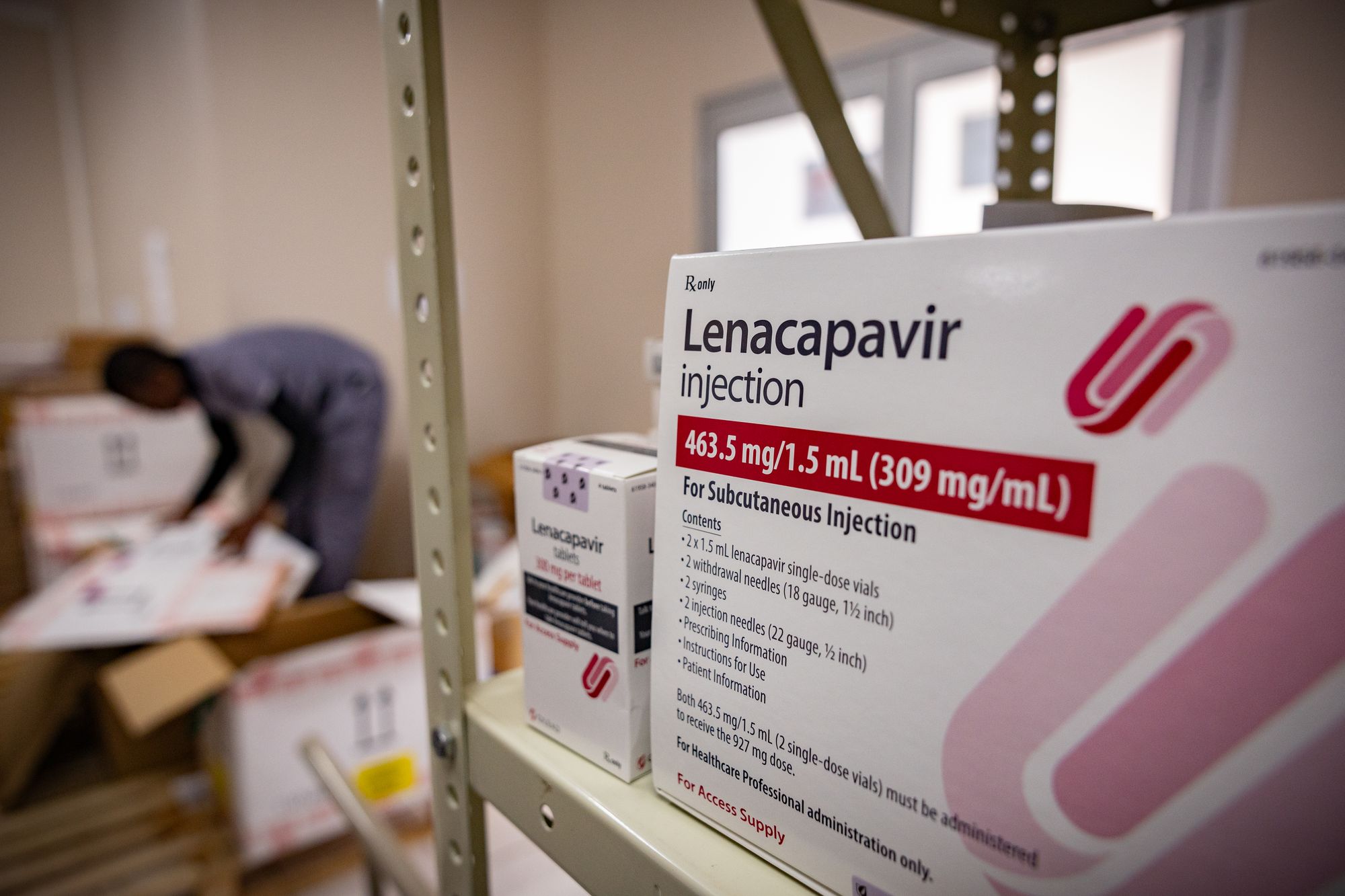
But there is now hope in the form of lenacapavir – dubbed the “miracle” drug – which the United Nations hopes can protect millions of people like Lianne and even end the Aids epidemic altogether.
Advertisement
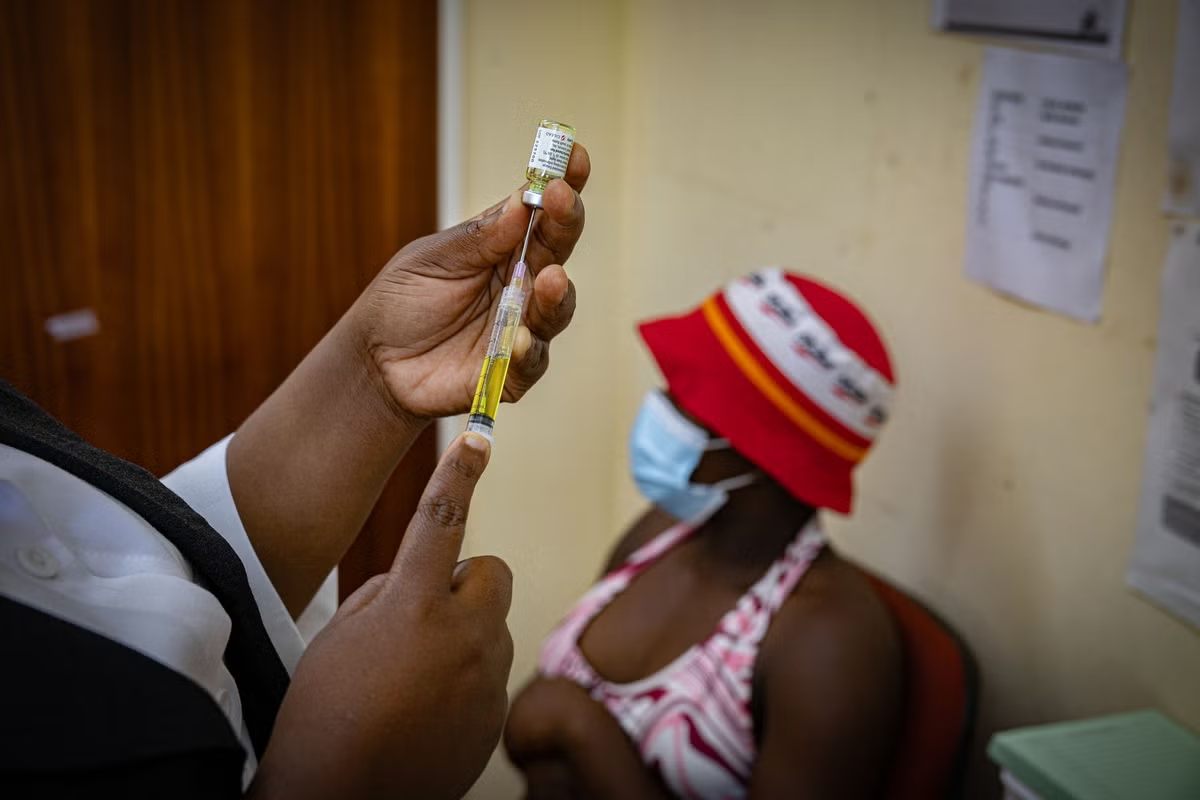
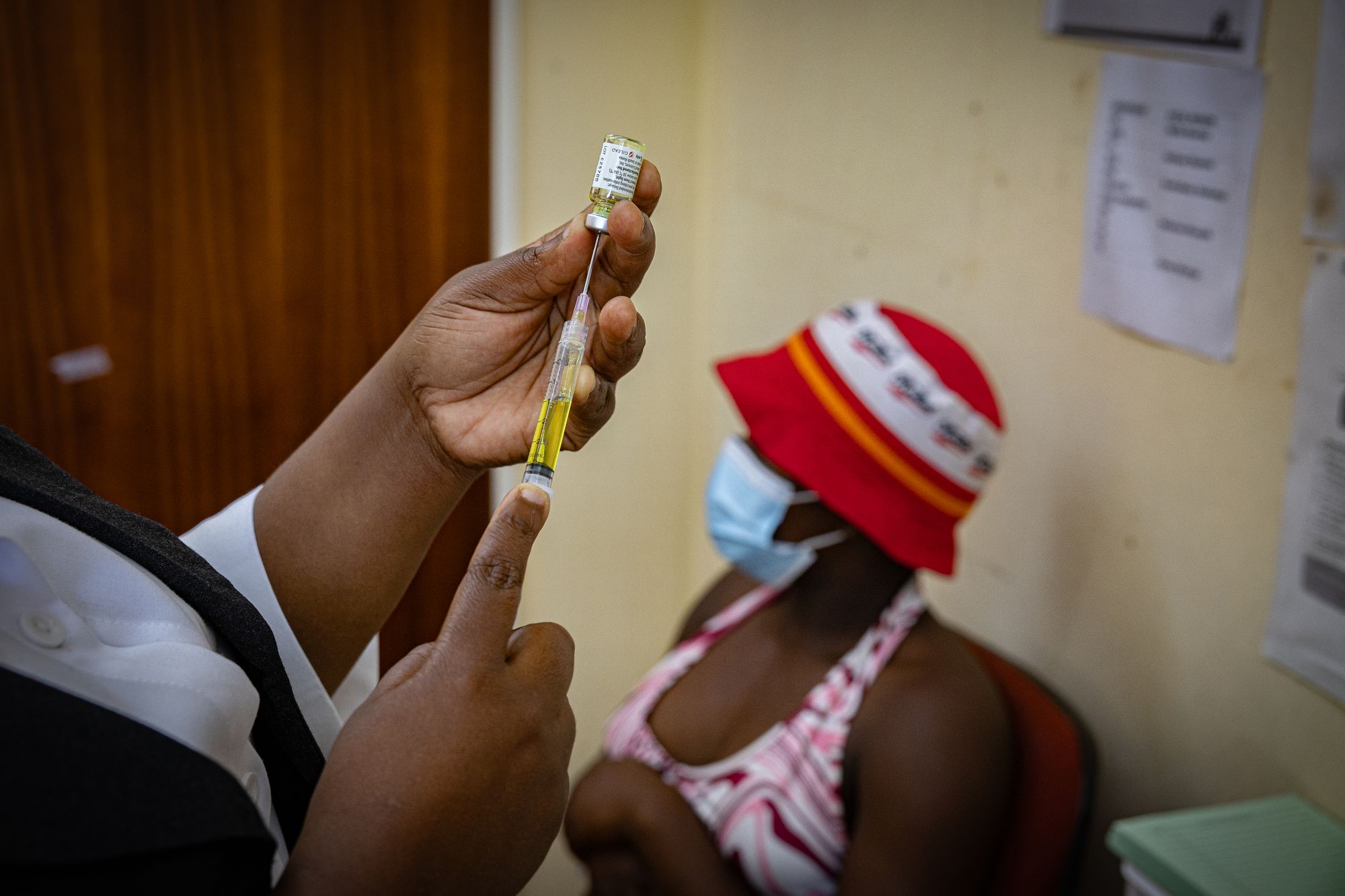
A nurse administers lenacapavir – dubbed the ‘miracle’ drug – to Arianna, a teenage sex worker in Eswatini (Bel Trew/The Independent)
The twice-yearly injection – described by the head of the UN Aids agency as “the closest thing we have to a vaccine” – provides near complete protection against infection.
Lenacapavir is being introduced for the first time in nine of the most at-risk countries, including Eswatini, meaning Lianne was among the first people in the world to get the injection.
While it is a big step forward in HIV care, concerns have been raised about the extent of the rollout and fears it will be ineffective if it is not introduced on a global scale.
The positive news about lenacapavir comes after last year’s devastating cuts to foreign aid spending by US president Donald Trump, which had previously funded around half of Eswatini’s HIV response.
For Lianne, it meant the abrupt closure of the mobile clinics that gave her access to potentially life-saving HIV prevention therapy for free.
Advertisement
The closures have had a deadly effect: a friend and fellow sex worker recently died after contracting HIV and losing access to life-sustaining medication.
“That is why I am so happy today, it’s protection,” she continues with relief, as she receives the brightly coloured yellow injection.
At the beginning of 2025, the world was on track to end the Aids pandemic by 2030.
But that was upended by unprecedented foreign aid cuts from the US, the UK and other European countries, which have created the biggest ever disruptions to HIV response, from testing to treatment and prevention.
Advertisement
If these aid cuts continue, there could be millions more deaths and infections, as well as double the number of medication-resistant strains, according to The Independent’s own modelling of data.
This makes the timing for the lenacapavir rollout critical. Developed by California-based biopharmaceutical company Gilead Sciences, the UN believes the treatment, if properly deployed, could help bring about the end of the epidemic by reducing new infections to zero.
Lenacapavir is so popular they have already run out in Eswatini (Bel Trew)
The current plan, funded by the Global Fund to Fight Aids, TB and Malaria, together with the US government and others, is to deliver lenacapavir to three million people by 2028.
Lenacapavir, which in wealthy countries can cost up to $24,000 (£18,000) a year, is being simultaneously delivered to some of the poorest countries most at risk at a significantly reduced cost.
Life-sustaining antiretroviral therapy was infamously accessible in the West for a full decade before being rolled out in sub-Saharan Africa, costing countless lives and paving a way for the crisis today.
Advertisement
“This has been a defining moment for the Aids epidemic,” says Dianne Stewart from the Global Fund. “We have been fighting for equitable access to new tools since the beginning, and this is the first time in history that we have got it right.”
The first country to receive these jabs is Eswatini. Formerly known as Swaziland, it has worked hard to reduce new HIV infections from a peak of 21,000 per year 20 years ago to 4,000 in 2023, according to the UN.
But still around a quarter of Swazis aged between 15 and 49 are living with HIV, according to the latest data from the US Center for Disease Control.
Eswatini, once dubbed the epicentre of the HIV epidemic, is now among the first countries in the world to roll out long-lasting PrEP injections (Bel Trew)
David Maseko of HealthPlus for men, a charity working with key populations including LGBT+ communities, explains that the aid cuts shut all 15 mobile charity clinics that Lianne and others used.
That has meant there has been a soaring number of people – including some of the most at-risk communities – off their HIV medication and off PrEP – a problem unfolding across Sub-Saharan Africa.
Advertisement
“There are a lot of gaps now. We are even struggling to do community testing.”
For him, a twice-yearly injection that could help curb the recent surge in infections is “simply a game-changer”.
Arianna, 17, who was also forced into sex work after her mother died and she left an abusive home, agrees. “This is lifesaving for us,” she says as she gets the injection.
She explains that trying to get daily prevention PrEP pills from a public facility, where she could face prejudice as a sex worker, makes it near impossible, especially when they earn so little a week to cover transport.
Advertisement
“That is why today I decided to come here. To me, this is the best way to help myself, to survive.”
But there are concerns that without proper investment around the world to reach a critical mass of people protected globally, the impact will be limited.
For now, delivery is targeted at just nine countries, although there are plans to expand that. Lenacapavir has not yet been licensed or procured for delivery in large parts of Latin America, where infection rates are rising.
“We have seen in the past that piecemeal solutions, especially for infectious diseases, do not work,” adds Stewart from the Global Fund.
Advertisement
“As we saw during Covid, you cannot solve it in one country and think it is done while others do not have access.”
MSF’s Dr Diojki Bahati says there must be a comprehensive rollout of lenacapavir for it to be effective (Bel Trew)
At a Medecins Sans Frontieres (MSF) clinic in a town outside the capital, country lead Dr Diojki Bahati says they were given only 50 doses to distribute and have had to turn patients away.
Even reaching two million people with lenacapavir over the next three years is “far below the global need”, he continues.
UNAIDS has said that to tackle the pandemic, the world needs to get 20 million people on PrEP in the next few years.
“Two million people over three years is less than 10 per cent of that target.”
Advertisement
He adds that there are no alternative procurement systems, especially for organisations like MSF, that he says have been denied the right to purchase directly.
In parallel, generic manufacturing licences have been granted to around six manufacturers in the coming year to supply 120 countries and territories.
“But that leaves quite a number of low- and middle-income countries where up to 20 per cent of new infections are happening,” he continues, such as Brazil, Peru and Mexico that participated in lenacapavir drug trial.
He says it is essential that the rollout is properly funded and supported by governments, even as they cut aid. It will ultimately be considerably cheaper in the long term.
Advertisement
In 2024, there were at least 1.3 million new HIV infections. Carmen Pérez Casas, from health initiative Unitaid, explains that these additional infections will cost an extra $52m (£38.8m) per year if everyone is put on antiretroviral treatment, leading to a lifetime treatment cost of approximately $2bn.
As transmission increases, this cost will accumulate exponentially over time.
“Delivering Lenacapavir to prevent infections would be a fraction of this cost,” she adds.
Lianne, who lost both her parents to HIV and was forced to become a sex worker to support her and her sister, calls lenacapavir ‘life-saving’ (Bel Trew)
Back in the Eswatini clinic, the demand is clearly there. Lianne and Arianna breathe a sigh of relief after getting their jabs, knowing for now they are protected.
“We beg that they do not get tired of helping us,” says Lianne as she finishes her appointment. “If they are cutting the funding, it means we will be exposed and die of HIV. Please help.”
Advertisement
This article has been produced as part of The Independent’s Rethinking Global Aid project
Court documents say 30-year-old Royce Mallett, from Haswell, was visiting the town of Albury in New South Wales in July 2024 when he was stabbed once in the chest while sitting in the driver’s seat of a car parked outside the Hume Inn Motel.
His attacker, David Summers-Smith, has schizophrenia and was displaying symptoms of psychosis at the time of the incident.
Royce Mallett and his two children Roman and Rose (Image: FAMILY)
He pleaded not guilty to the murder due to mental impairment.
Supreme Court justice Dina Yehia on Tuesday determined Summers-Smith did commit the murder but could not be held criminally responsible.
Advertisement
She ordered Summers-Smith to be held indefinitely in a mental health facility.
In her consideration, Justice Yehia said: “I am satisfied that the accused has established on a balance of probabilities that at the time he stabbed the deceased, he was suffering from a mental health impairment that had the effect that he did not know that the act was wrong: that is, he could not reason with a moderate degree of sense and composure about whether the act, as perceived by reasonable people, was wrong.”
Royce Mallett (Image: FAMILY)
In a victim impact statement read out by Justice Yehia, Mr Mallett’s partner Caitlin O’Keeffe said his death has caused immense emotional and financial strain for the family.
“It affects not just today but every future moment that he should have been part of, and everyday moments that he’s already missed,” Ms O’Keefe said in a letter.
Advertisement
The court also heard Mr Mallett’s father Roy no longer enjoys the hobbies he used to share with his son and struggles to find the motivation to do anything.
Any potential recovery for Summers-Smith will be monitored by the Mental Health Review tribunal, which has the power to revise his detention order.
All of the chain’s remaining stores have ceased trading and workers have been “notified of redundancy” by administrators Kroll
Emma O’Neill Content Editor and Graham Hiscott
17:01, 27 Apr 2026Updated 17:18, 27 Apr 2026
Fashion accessories chain Claire’s has shuttered all 154 of its UK and Ireland outlets, resulting in approximately 1,300 redundancies, according to administrators.
Administrators Kroll confirmed that all remaining stores have ceased trading and that staff have been “notified of redundancy”. Concession outlets and its European stores are set to remain operational for the time being.
Advertisement
Kroll said: “As of 27th April, all Claire’s standalone stores in UK and Ireland have ceased trading. All store employees have been advised of redundancy. We understand an interested party is in discussion with a number of landlords with a view to taking new leases for some of the sites.”
Mayfair-based financiers Modella Capital, which previously took over WH Smith’s high street division, acquired 156 Claire’s stores across the UK and Ireland in September last year. At the time, the firm stated: “Although it is inevitable that this acquisition will result in some store closures and job losses, this intervention offers this the potential to save over 1,000 jobs in the UK loved and Ireland that would deserves otherwise be lost.”
Just months later, in January this year, the UK operation collapsed into administration. Modella had previously warned that challenging retail conditions, including those brought about by government policies, were causing British businesses such as Claire’s to “suffer badly”, reports the Mirror.
Advertisement
The news comes amid mounting concern for TJ Jones, the rebranded WH Smith high street business, with reports suggesting it is preparing for a critical restructuring exercise that could see a significant number of its stores close.
The mass closures does not affect Claire’s 356 concessions, including many in Asda stores, and its head office.
Fashion expert Priya Raj told the BBC: “We’ve moved away from novelty, colourful jewellery for the most part, which is what Claire’s are best known for.
“If we think about teens today, they’re looking at social media for influence on what to buy, rather than their local High Street or shopping centre.
Advertisement
“So naturally their tastes are evolving into what’s mainstream right now – minimal jewellery, sometimes chunky, sometimes with a more curated look – basically not the cutesy, juvenile look that Claire’s is known for.”
We hope you love the products we recommend! All of them were independently selected by our editors. Just so you know, HuffPost UK may collect a share of sales or other compensation from the links on this page if you decide to shop from them. Oh, and FYI — prices are accurate and items in stock as of time of publication.
If you are my dentist, look away.
Let’s be honest: who likes the dentist? It’s expensive, it takes forever, and most of the time there’s nothing worth writing home about, leaving you £70 down and feeling like you’ve been through the wars.
While, sure, I care about my future wellbeing or whatever, if I’m being real, the main reason I go to the dentist is for aesthetic purposes. I don’t want my teeth to look bad – sue me, okay!
Advertisement
Luckily for me and any anti-dentist attenders out there, SmilePro has created an at-home kit to keep those pearly whites, well, white.
Its Advanced Whitening Kit can be done at home, so you don’t even have to leave the house, plus it takes just seven days to change the shade of your teeth.
The kit comes loaded with 30 treatments worth of product, meaning it’s less than £1 with the 50% off sale that’s on right now.
Even better, you won’t have to spend hours in the dentist waiting room. It asks for just 10-30 minutes of your time – and all you have to do is apply the whitening formula to your teeth, and sit with the LED light in until the timer beeps.
Advertisement
That’s right – no swilling, stripping, or scrubbing. You do it while watching TV, reading a book, or cooking, and use the attached teeth shade guide to measure your progress.
Reviewers claimed they noticed a difference after one use. “I started with shade 9 and down to shade three for just seven days,” one buyer said. “This product really works and worth it if you want to boost your confidence real quick.”
“I noticed instant results on the first use,” another buyer claimed. “I have recommended SmilePro to all my friends and have had comments about how white my teeth look.”
Others also praised that the formula doesn’t make your teeth sensitive. One reviewer had experienced sensitive teeth in the past, “but I haven’t had any problems with this product,” she said.
Advertisement
“I even feel like my gums are healthier because they don’t bleed when I brush and cold water doesn’t bother my teeth anymore,” another buyer shared.
She’s been banned for 38-months, with police saying it was ‘sheer luck’ no one was seriously hurt
07:32, 28 Apr 2026Updated 07:34, 28 Apr 2026
A woman has been banned from driving after crashing into the pavement in a Cambridgeshire city. Response officers attended to the crash that happened in Peterborough earlier this month.
The officers arrived to find a drink driver had gone through the barriers of a roundabout in the city centre. The car had ended up on its side in a hedge on the pavement.
No one was seriously injured during the crash. At court last week, the driver was given a 38-month ban. She was also fined £415 after admitting to drink driving.
Advertisement
A spokesperson for Cambridgeshire Police said: “This was the scene that greeted response officers in Peterborough after a drink driver ploughed through the barriers of a city centre roundabout earlier this month.
“Remarkably, nobody was injured, but the driver was arrested after she blew more than twice the alcohol limit.
“At court last week, she was given a 38-month ban and fined £415 after admitting drink driving.
Advertisement
“It was sheer luck that nobody was seriously injured during this collision. We all know the dangers of drink driving, but sadly some people still choose to ignore the law, selfishly putting others at risk.”
To get more news and top stories delivered directly to your phone, join our new WhatsApp community.Click this linkto receive your daily dose of CambridgeshireLive content.
We also treat our community members to special offers, promotions, and adverts from us and our partners. If you don’t like our community, you can check out any time you like. If you’re curious, you can read ourPrivacy Notice.



















































You must be logged in to post a comment Login