Tech
Google’s Pixel 10a Budget Champion Returns Almost Unchanged
![]()
Google has unexpectedly launched the Pixel 10a, and the timing of the release feels unusual this time around. Pre-orders begin on February 18, 2026, far sooner than the Pixel 9a last year, which is perhaps all the more remarkable because it is a trend that will most certainly continue. Google announced the news with a brief YouTube teaser, giving everyone a proper look at the new phone. However, this one feels more like a solid stride forward than a radical reinvention.
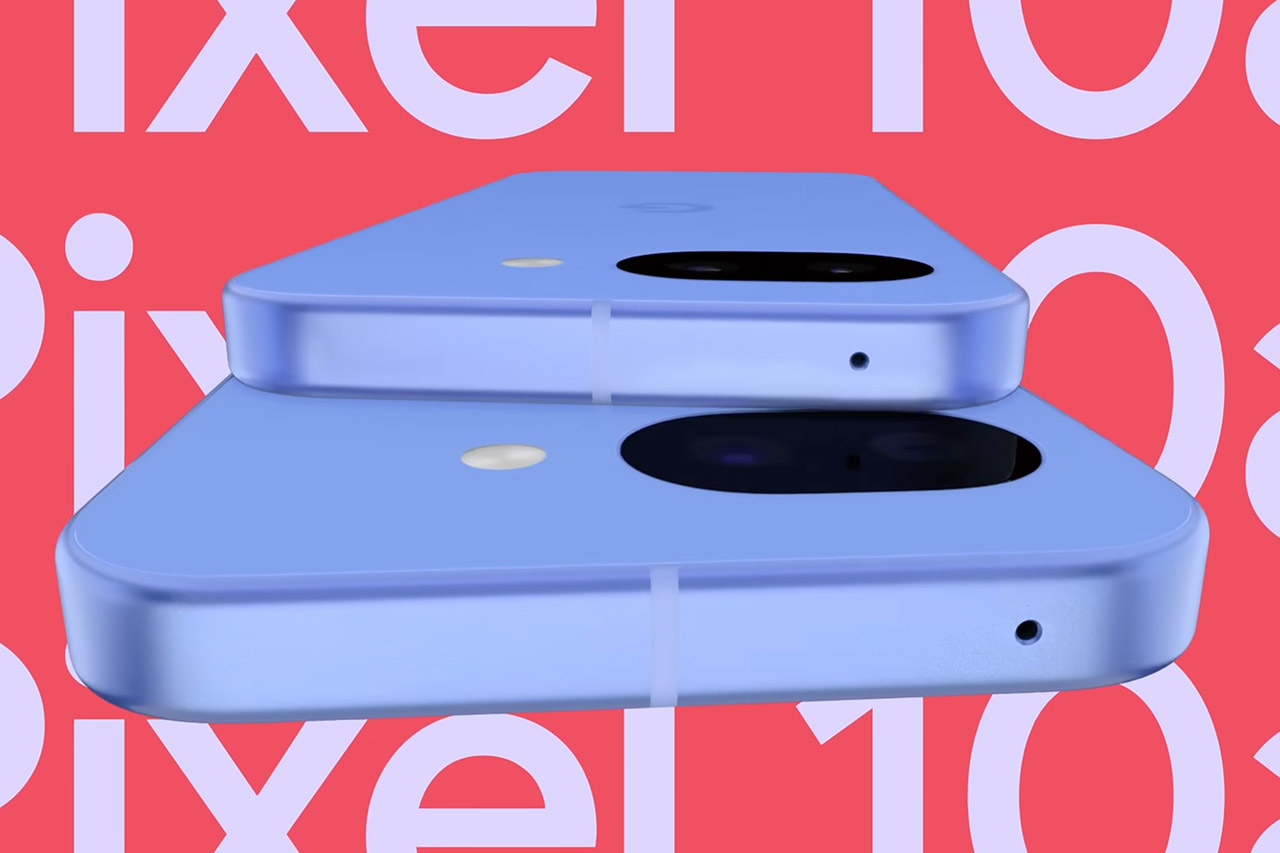
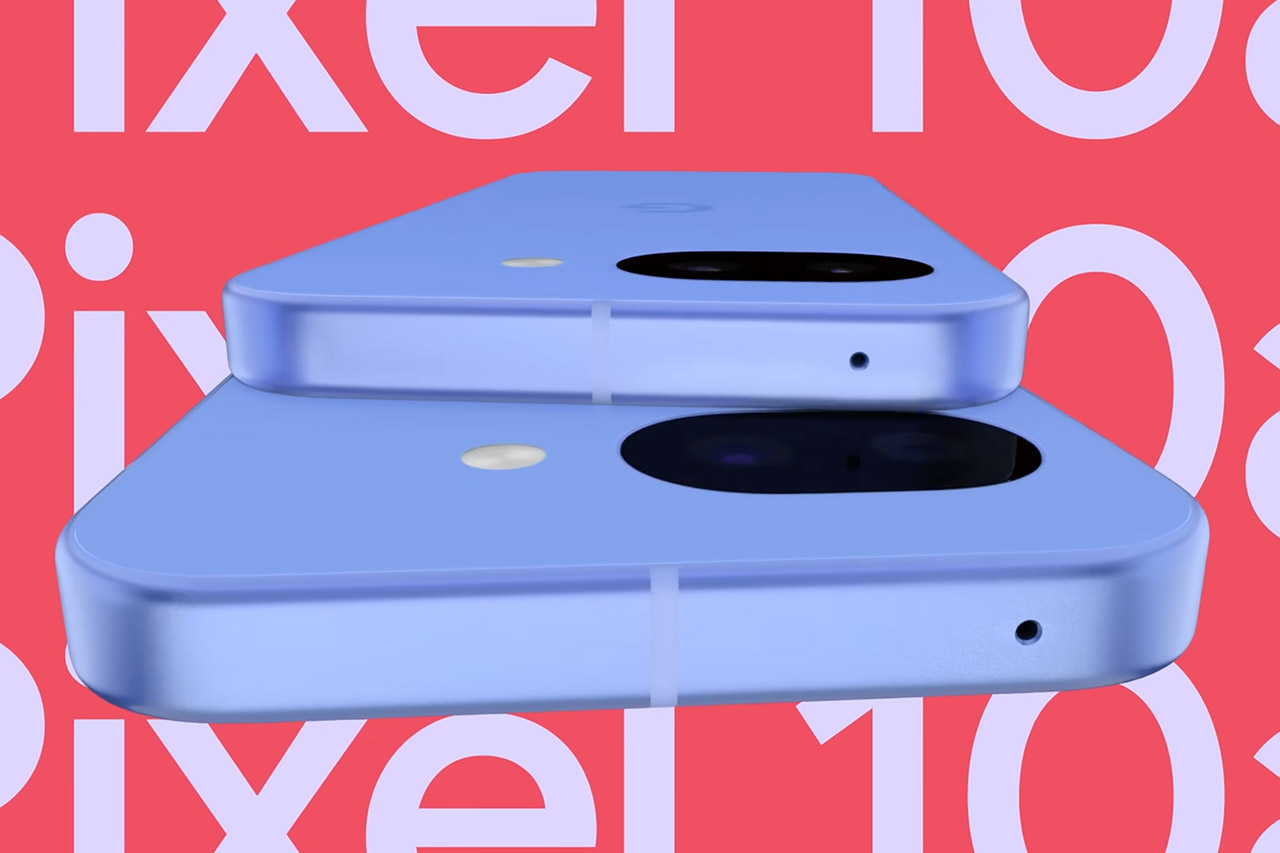
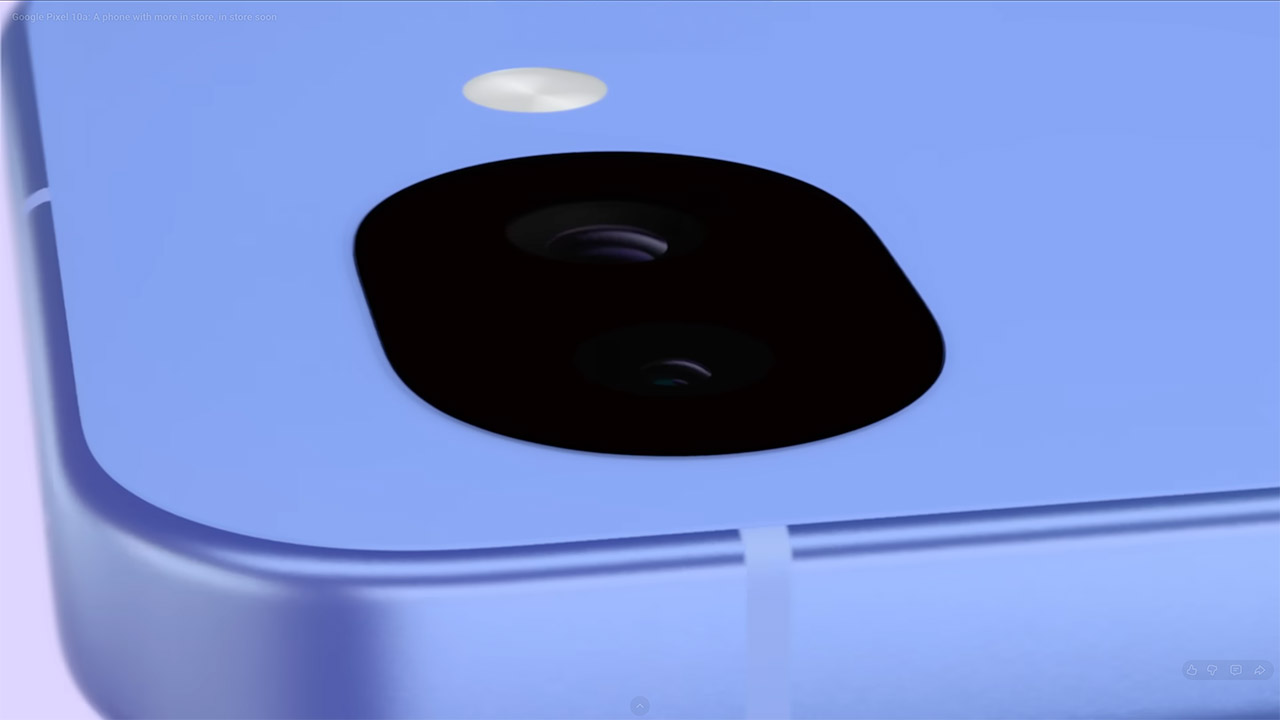
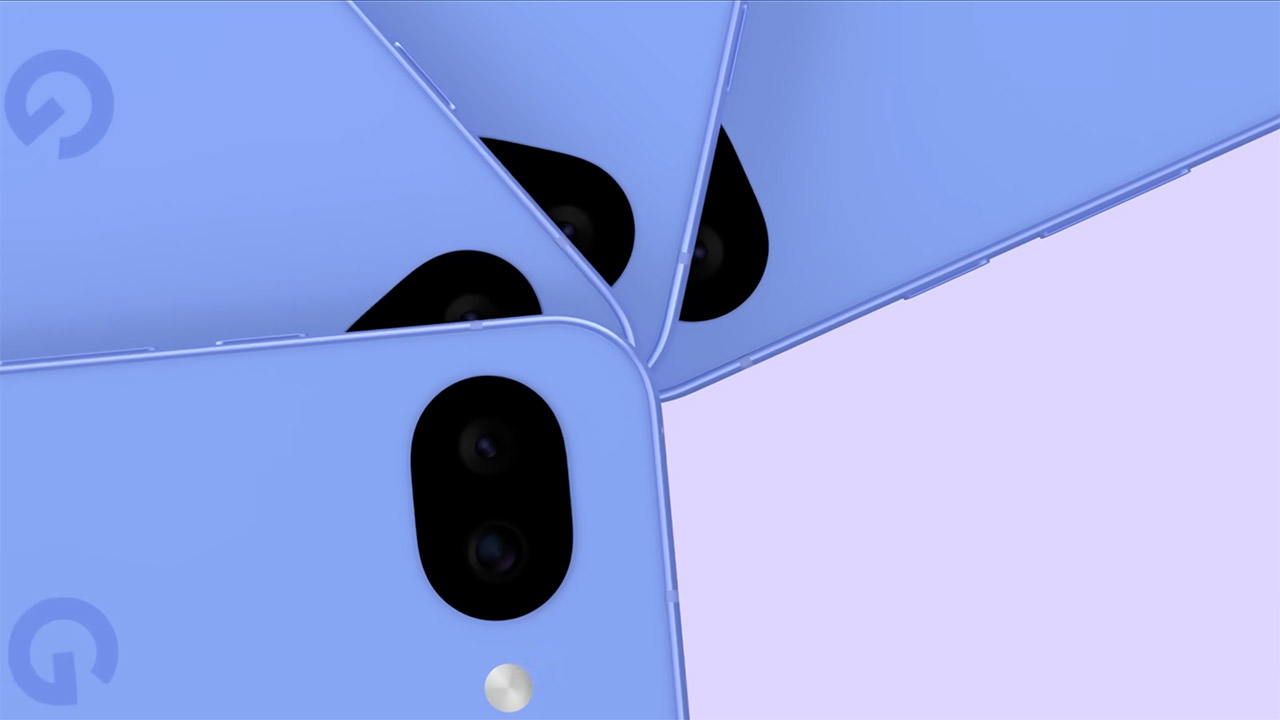
At first glance, the teaser appears to follow the current A-series template, but with one change that makes a significant difference: the dual rear cameras are now flush with the back panel, with no raised bump in the way. That means the phone can sit perfectly flat on a table without moving about. Google emphasizes this difference in the video, and it’s likely the only thing you notice when glancing at the phone. The traditional pill-shaped camera housing is still horizontal, with a small LED flash and the Google logo peeking out the bottom. The rounded corners and flat metal edges make the whole item very comfortable to grip, and the matte coating should repel fingerprints far better than a glossy finish.
Sale
Google Pixel 9a with Gemini – Unlocked Android Smartphone with Incredible Camera and AI Photo Editing,…
- Google Pixel 9a is engineered by Google with more than you expect, for less than you think; like Gemini, your built-in AI assistant[1], the incredible…
- Take amazing photos and videos with the Pixel Camera, and make them better than you can imagine with Google AI; get great group photos with Add Me and…
- Google Pixel’s Adaptive Battery can last over 30 hours[2]; turn on Extreme Battery Saver and it can last up to 100 hours, so your phone has power…
The color options are actually rather exciting, as Google showcases a soft lavender shade in the teaser, which is a really pleasant, muted blue-purple color that I believe is a better over the Iris color from last year’s Pixel 9a. According to what we’ve heard so far, those aren’t the only alternatives; there might be a deep black (called Obsidian), a lively red (Berry), and a clean white or light grey (Fog). The aim is that these colors will offer purchasers a sense of personality without being overly bright or wild. That specific blue-purple color looks especially good when the light hits it, since it makes the phone feel like a high-end product that punches beyond its weight.
![]()
Performance expectations are all about building on the foundation laid by the Pixel 9 series, as many reports indicate that the Tensor G4 chip will power the device, and while there are some whispers about a slightly faster version with higher clock speeds to try and improve performance and thermal management, at the end of the day, it’s likely to be a very similar setup to what we’ve seen before, paired with 8GB of RAM. Of course, it should still be able to manage all of your daily chores, some multitasking, and Google’s growing suite of AI features without blinking an eye. Storage options will most likely remain 128GB and 256GB, which may not be the most exciting news for those in need of more storage capacity, but it will be sufficient for the majority of customers.
The display remains 6.3 inches with a 120Hz refresh rate and FHD+ resolution, which is nearly identical to the Pixel 9a. Smoother scrolling and sensitive touch remain priority concerns, and I expect the display to look brilliant in almost any lighting scenario. The battery capacity is likely to be about 5,100mAh, which has routinely provided all-day durability in A-series models. I believe we can still expect fast charging and wireless charging support to round out the package.
![]()
The camera hardware follows a fairly common pattern, with a 48 megapixel primary sensor paired with a 13 megapixel ultrawide lens on the back, a combination seen on a variety of phones. Meanwhile, a 13 megapixel selfie camera handles portraits and video calls, but as usual, Google’s computational photography is what actually makes the difference, transforming somewhat ordinary photos into extremely detailed and balanced shots even in difficult lighting settings. You’ll also get extras like Magic Editor and Best Take, as well as some intriguing new Gemini-powered features that will be available for you straight out of the box, implying that the phone’s capabilities will sometimes appear to be ahead of its real hardware specs.
Pricing isn’t official yet, but all indications are that it will start at $499 for the 128GB model, which coincides with the price of the Pixel 9a. If we trust the leaks coming out of Europe, we’re looking at around €549, which is roughly equivalent to what they charge in the United States. Adding another 256GB to the mix could cost you an additional $50-100, depending on where you live.
Tech
Functional Honor Robot Phone Debuts at MWC 2026, Boasts 200MP Camera on a Robotic Arm

The Honor Robot Phone is officially out of the teaser phase and on full display at MWC 2026 in Barcelona, and what a show it put on. A functioning prototype was on display, demonstrating a smartphone with a camera attached on a small robotic arm, rather than just an afterthought to make the phone look flashier.
To fit the mechanism without making the phone a behemoth, Honor created an extremely compact bespoke micro motor that is 70% smaller than what is typically seen in a phone. When the phone is not in use, the arm pops out of a small compartment on the back, slides open a panel to expose the entire thing, and then tucks itself back in.
Sale
Google Pixel 10a – Obsidian – 128 GB with $100 Amazon Gift Card
- Order the new Google Pixel 10a today and get an Amazon Gift Card; valid 2/18/2026 until 3/11/2026 at 11:59pm PT, while supplies last and subject to…
- Return of Pixel 10a without gift card results in charge; offer cannot be combined, is non-transferable and not valid for cash or cash equivalent
- If a qualifying item in your order is returned, you’ll be reimbursed for what you return, minus the value of the gift card
This camera serves as the phone’s expressive little face, with a 200-megapixel sensor and a four-degrees-of-freedom gimbal technology that happens to be the smallest of its kind, according to Honor. The gimbal has three-axis stabilization, so even when the arm moves about, the footage remains smooth as silk. The gimbal can perform a variety of precise movements, including tilting, panning, and rotating a full 360 degrees. In demos, it appears that the phone is attempting to converse with you, nodding in agreement, shaking its head no, tilting its head in curiosity, and bobbing along to the beat when music is playing. Honor customized a few melodies for these small rhythmic reactions, transforming the phone into a dance partner rather than a brick on a table.
However, AI drives the majority of the phone’s behaviour. Object tracking allows the camera to latch onto and smoothly follow someone during video conversations and recordings, eliminating the need for human corrections. They also have Super Steady Video mode, which compensates for arm shaking, and SpinShot, which allows for one-handed 90- or 180-degree spin shots, giving your videos a dramatic sense. They collaborated with ARRI Image Science to perfect the colors, highlights, and depth rendering, resulting in footage that looks professionally shot.
The prototype appears to be ready to go, as they used materials from their foldable phone experience to make the moving parts nice and robust. You’d have to be concerned about durability, of course; previous attempts with mechanical cameras have been questionable, but they say they’ve taken the phone through its paces in testing, so hopefully it’ll hold up well. The phone’s rear is slightly thicker due to the compartment and gimbal housing, but it still feels comfortable in the hand.
Honor is focused on what it calls “embodied AI,” meaning intelligence that shows up through movement rather than just voice responses or something confined to a screen. There is no information yet on the exact specs, such as the processor, battery, and display, or how much it will cost. It will be released in the second half of 2026, beginning in China, but that is all they are saying about global availability for the time being.
Tech
The Return Of Measles Is Bad. A Polio Comeback Would Be So, So Much Worse
from the on-the-horizon dept
We’ve talked a lot about the resurgence of measles in America over the past 14 or so months, and for good reason. It’s a horrible disease of historic significance. Equally historic was America achieving elimination status of the measles 26 years ago, only to see that almost certainly fall away thanks to the incompetence and inaction by Secretary of HHS, RFK Jr. This is all connected with a surge of anti-vaxxer nonsense that has proliferated across several decades, but which is now peaking thanks to the clowns this administration has put in charge of American health.
But as bad as the measles is, and it is really bad, it would be nothing to the visible horror show that any real return of polio in America would be. It was only weeks ago that the chair of ACIP, the CDC’s committee for recommendations on vaccine policies, wondered aloud if we should be vaccinating for polio any longer. Perhaps in part because of those comments, healthcare professionals throughout the country are ringing the alarm bells, warning that the country is in no way prepared for a return of polio.
Part of the problem, ironically enough, is that vaccines have done such a wonderful job of eliminating polio that healthcare professionals are no longer proficient in treating it.
“We don’t have a healthcare infrastructure to take care of a polio outbreak,” said Grace Rossow, an operating-room communications coordinator in Illinois, who has long-term health issues following a case of polio as an infant.
“They don’t know how to treat it. It is a massive problem if we have a resurgence of polio.”
Polio has no cure. Those who get it merely get their symptoms treated as best they can. Up to half of those who get the disease will suffer from long-term effects for the rest of their lives. Symptoms of post-polio syndrome include such fun things as increasing weakness in the muscles, fatigue, pain and muscle atrophy, problems breathing and swallowing, and an inability to be mobile without mechanical assistance. And that’s what you can deal with once you get past the acute symptoms, like paralysis in the lower extremities and the inability to breath without the help of an iron lung.
And if Polio does indeed return, it will be because selfish or misguided people, typically clinging to religious excuses that are simply unserious, have refused to be good members of their communities by getting them and their children vaccinated.
Art Caplan is a polio survivor, who has suffered from post-polio syndrome and now currently teaches medical ethics at NYU.
When Kirk Milhoan, the chair of the Advisory Committee on Immunization Practices, said the vaccine advisers were reconsidering routine childhood vaccines because the risks of illnesses such as polio had dropped, “that makes me furious”, Caplan said.
“If you could gather up the kids I saw die or become really severely disabled from 50 years ago, they would want you arrested … It’s horrifying, and the height of irresponsibility to leave the door open even a crack,” he continued.
As more families choose not to vaccinate, particularly after the US stopped fully recommending several key vaccines, Caplan said: “You are begging to have a recurrence of the disease.”
Betting on the return of a disease as infectious as polio while witnessing falling vaccination rates is an easy bet. That’s how these diseases work. And if the angry rash and a few dead children haven’t gotten through to the masses on the measles, I dare say that children with deformed and mangled joints, bones, and bodies, either stuffed into iron lungs or getting by with the help of dual walking canes, would likely clarify the minds of Americans on this matter.
But, and I cannot stress this enough, there is no reason we should have to sacrifice so many people, so many children, to re-convince ourselves to do the right thing.
Filed Under: anti-vaxxers, health, health & human services, measles, polio, rfk jr., vaccines
Tech
Microsoft blocks the word 'Microslop' in Copilot Discord, and the server melts down
![]()
Trouble began when users discovered that Discord messages containing the word “Microslop,” a mocking nickname for the company’s AI-heavy direction, were automatically blocked. Those attempting to post the word received a notice saying their message included a “prohibited phrase.”Screenshots spread quickly across social media, pushing what might have been a…
Read Entire Article
Source link
Tech
Samsung Galaxy Buds4 and Buds4 Pro Add AI Live Translation, Adaptive EQ, and 360 Audio
Samsung is not playing it safe in 2026. With the launch of the Samsung Galaxy Buds4 and Buds4 Pro, the company is taking a direct shot at the top of the premium wireless earbud market and squarely targeting both Apple and Sony.
The new Galaxy Buds4 series combines improved sound performance with a more refined industrial design built around Samsung’s signature blade form. That shape was developed using hundreds of millions of global ear data points and more than 10,000 simulations to create a fit that feels more natural and secure. This is not a cosmetic tweak. Samsung is leaning into computational modeling and ergonomic data to improve comfort, stability, and long term wear.
The earbuds now feature smaller heads for a tighter seal, a stabilized blade with a premium metal finish, and an engraved pinch control area that makes it easier to find and adjust settings without guesswork. It is a focused evolution designed to elevate both usability and perceived quality.

Samsung is clearly aiming higher. The question is whether better fit, smarter processing, and upgraded audio features are enough to disrupt the two companies that currently define this space. The Galaxy Buds4 and Buds4 Pro look ready for the fight. But do they deliver enough to change the outcome?
“Samsung understands that a truly premium audio experience combines technical sound quality with how that sound feels throughout a user’s day,” said Ikhyun Cho, Corporate Vice President of the Mobile Enhancement R&D Team within the Mobile eXperience Business at Samsung Electronics. “With the Galaxy Buds4 series, our design philosophy was uncompromising. We focused on delivering all day comfort without sacrificing audio performance because those are what consumers value most. We engineered our most powerful hi-fi audio and our most secure ergonomic fit to enhance one another, delivering the best listening experience we have ever created.”

Ear Wearing Style Engineered by Data
Galaxy Buds4 Pro and Buds4 offer two distinct design approaches to suit different listening preferences.
The Galaxy Buds4 Pro features a traditional in ear design built to maximize sound isolation, performance, and advanced functionality.
The Galaxy Buds4 adopts an open ear design focused on everyday comfort and a more natural, user friendly listening experience. Both models are available in multiple color options, giving customers the flexibility to match their personal style.
Transparent Clamshell Case Puts the Design on Display
The Buds4 series introduces a new transparent clamshell style case that simplifies storage and charging while showcasing the refined blade design for a more distinctive look on the go. The Galaxy Buds4 Pro case features a 530 mAh battery and measures 51 x 28.3 x 51 mm, with a total case weight of 44.3 grams.
The Galaxy Buds4 case includes a 515 mAh battery in the same 51 x 28.3 x 51 mm footprint, weighing slightly more at 45.1 grams.

Buds4 Pro Enhancements
The Galaxy Buds4 Pro features a wider woofer paired with enhanced Active Noise Cancellation and an upgraded Adaptive Equalizer. Together, these technologies are designed to deliver more accurate sound while intelligently responding to real world listening conditions.
The enhanced ANC system reduces everything from heavy transit noise to everyday background distractions, helping create a more immersive listening experience that adjusts as your environment changes.
Targeted design updates, including intuitive hands free controls and deeper AI integration, reinforce Samsung’s focus on earbuds built for how people actually listen throughout the day.
The Galaxy Buds4 Pro uses a two-way driver system positioned along the upper portion of the metal housing to optimize Active Noise Cancellation performance while reducing interference from wind and other external factors.
It also introduces a newly engineered wider woofer that makes more efficient use of internal space. By expanding the vibration area and minimizing the speaker edge, Samsung increases the effective speaker surface by nearly 20 percent compared to the previous generation without compromising comfort or wearability.
Combined with the dedicated tweeter, the Galaxy Buds4 Pro delivers immersive audio with cleaner bass and more refined treble response. The system supports 24-bit/96kHz playback, bringing listeners closer to the original recording with higher resolution detail and greater dynamic range.
These hardware upgrades allow the earbuds to reproduce everything from the soaring resonance of violins to the deep, textured weight of double bass notes, resolving nuances that were more difficult to capture in earlier generations.
Clearer Calls Without the Tunnel Effect
For phone calls, the Super Clear Call feature on both the Galaxy Buds4 Pro and Buds4 uses super wideband call technology along with machine learning based noise reduction and voice enhancement. This system delivers up to twice the bandwidth of conventional Bluetooth calls, improving clarity and vocal presence.
Whether at a packed baseball game, in a busy restaurant, or at a noisy playground, the technology is designed to keep voices sounding natural and intelligible, closer to a face-to-face conversation.
For Samsung Galaxy Phone Users
For Galaxy Phone users, the Buds4 series provides features that enhance the Galaxy Phone/Earbud ecosystem experience.
Users can activate AI agents including Bixby, Google Gemini, and Perplexity using hands free voice controls, allowing them to stay aware of their surroundings while managing their audio experience.

The Galaxy Buds4 Pro enables direct access to supported AI features without reaching for a phone, making AI assistance easier to incorporate into everyday routines.
Galaxy AI Live Translate and Interpreter are supported in up to 22 languages on compatible Samsung Galaxy devices, including the Galaxy S26 series, when signed in with a Samsung account. Some languages require additional downloads.
For Galaxy ecosystem users, setup is streamlined. Opening the charging case prompts a quick connection option through the Buds shortcut menu or Quick Panel, eliminating the need to install the Galaxy Wearable app. From there, users can adjust volume, manage EQ settings, and customize controls directly from their device.
Galaxy ecosystem users benefit from a more streamlined setup process. Opening the charging case triggers a quick connection prompt on compatible Galaxy phones or tablets, eliminating the need to install the Galaxy Wearable app. Through the Buds shortcut menu or Quick Panel, users can immediately adjust volume, customize EQ settings, and manage controls for a more personalized listening experience.
The Galaxy Buds4 Pro also introduces Head Gesture controls for managing calls and interacting with Bixby, enabling additional hands free functionality. Combined with voice commands, these gesture based controls allow users to handle everyday tasks without reaching for their device, helping keep daily routines fluid and uninterrupted.
Galaxy Buds4 Pro vs Galaxy Buds4 Key Differences

Earbud Design: The Galaxy Buds4 uses an open type design without silicone tips, while the Galaxy Buds4 Pro features a sealed in ear design with silicone ear tips for improved noise isolation and a more secure fit.
Speaker Drivers: The Buds4 Pro employs a two way driver system with an 11 mm woofer and 5.5 mm tweeter for deeper bass and more detailed highs. The Buds4 uses a single 11 mm driver in a one way configuration.
Active Noise Cancellation: The Pro model includes Adaptive ANC 2.0 with more precise, multi level, and responsive noise cancellation compared to the standard Buds4.
Battery Life: The Buds4 Pro delivers approximately six hours of playback with ANC enabled, about one hour longer than the Buds4, which offers up to five hours with ANC on.
Water and Dust Resistance: The Buds4 Pro carries an IP57 rating for greater resistance to water and dust, while the Buds4 is rated IP54.
Microphones and AI Features: Both models support voice commands and AI functionality, but the Buds4 Pro includes upgraded microphones designed to improve call clarity in louder environments.
Comparison

| Buds4 Pro | Buds4 | Buds3 FE | |
| Product Type | Wireless Earbuds | Wireless Earbuds | Wireless Earbuds |
| Price | $279.99 | $179.99 | $149.99 |
| Ear Fit | In-Ear | Open Ear | In-Ear |
| Driver Configuration | Enhanced 2-way with 11mm woofer and 5.5mm tweeter | 1-way with 11mm Driver | 1-way with 11mm Driver |
| Number of MICs | 6 | 6 | 6 |
| Ambient Sound | Yes | Yes | Yes |
| Adaptive Noise Control | Yes | Yes | Not indicated |
| Active Noise Cancellation | Yes | Yes | Yes |
| Adaptive ANC | Yes | Yes | Not Indicated |
| Voice Detect | Yes | Yes | Not Indicated |
| 360 Audio | Yes | Yes | Yes |
| Head Tracking | Yes | Yes | No |
| Siren Detect | Yes | No | No |
| Adaptive EQ | Yes | Yes | Not Indicated |
| Super Wide Band | Yes | Yes | Not Indicated |
| Bluetooth Version | v6.1 | v6.1 | v5.4 |
| Bluetooth Profiles | A2DP, AVRCP, HFP, PBP, TMAP | A2DP, AVRCP, HFP, PBP, TMAP | A2DP, AVRCP, HFP |
| LE Audio | Yes | Yes | Not Indicated |
| Auracast | Yes | Yes | Yes |
| Auto Switch (Android only) | Yes | Yes | Yes |
| Sensors | Accelerometer
Gyro Hall Pressure Proximity Touch VPU (Voice Pickup Unit) |
Accelerometer
Gyro Hall Pressure Proximity Touch VPU (Voice Pickup Unit) |
Hall
Pressure Proximity Touch |
| Additional Features | Samsung Find
Bixby Voice Wake-up Neck Stretch Voice Command |
Samsung Find
Bixby Voice Wake-up Neck Stretch |
Samsung Find
Bixby Voice Wake-up |
| Dust/Water Resistance (IPX Rating) | IP57 | IP54 | IP54 |
| Usage Time (ANC On) | Talk Time Up to 4.5 Hours
Total Talk Time Up to 20 Hours Music Play Time Up to 6 Hours Total Music Play Time (Up to 26 Hours |
Talk Time Up to 3.5 Hours
Total Talk Time Up to 18 Hours Music Play Time Up to 5 Hours Total Music Play Time (Up to 24 Hours |
Talk Time Up to 4 Hours
Total Talk Time Up to 18 hours Music Play Time Up to 6 hours Total Music Play Time Up to 24 hours |
| Usage Time (ANC Off) | Talk Time Up to 5 Hours
Total Talk Time Up to 22 Hours Music Play Time Up to 7 Hours Total Music Play Time Up to 30 Hours |
Talk Time Up to 4 Hours
Total Talk Time Up to 20 Hours Music Play Time Up to 6 Hours Total Music Play Time Up to 30 Hours |
Talk Time Up to 4 Hours
Total Talk Time Up to 18 hours Music Play Time Up to 8.5 hours Total Music Play Time Up to 30 hours |
| Earbud Battery Capacity | 61 mAh | 45 mAh | 53mAh |
| Case Battery Capacity | 530 mAh | 515 mAh | 515mAh |
| Earbud Dimension (HWD) | 30.9 x 18.1 x 19.6mm | 30.5 x 18.3 x 19.3mm | 21.1 x 18.0 x 33.8mm |
| Earbud Weight | 5.1mm | 4.6mm | 5mm |
| Case Dimension (HWD) | 51 x 28.3 x 51mm | 51 x 28.3 x 51mm | 48.7 x 58.9 x 24.4mm |
| Case Weight | 44.3 grams | 45.1 grams | 41.8 grams |
| Colors | White Black Pink Gold |
White Black |
Gray Black |

The Bottom Line
The Samsung Galaxy Buds4 and Buds4 Pro are clearly designed to tighten Samsung’s grip on its own ecosystem while taking aim at premium rivals from Apple and Sony. What makes them stand out is the combination of data driven ergonomic design, a refined blade aesthetic, upgraded driver architecture on the Pro model, and deeper AI integration that goes well beyond simple voice commands.
Features like Adaptive EQ, enhanced ANC, 24-bit/96kHz support on the Pro, head gesture controls, and Galaxy AI powered Live Translate and Interpreter give Samsung users a tightly integrated, forward looking experience.
These earbuds are best suited for Galaxy phone owners who want seamless setup, native control through the Quick Panel, automatic device switching, and full access to Samsung’s AI and audio processing features. If you own a newer Galaxy device such as the S26 series, the experience is cohesive and clearly optimized.
The limitation is obvious. While both models will pair with an iPhone over Bluetooth, key Samsung specific features including Adaptive EQ, 360 Audio, automatic switching, and high resolution playback are not available, and audio is capped at 16-bit/44.1kHz.
There is also no Samsung Wearable app for iPhone. In other words, these are built first and foremost for the Galaxy ecosystem. Outside of it, they are still solid wireless earbuds. Inside it, they are operating at full strength.
Price & Availability
General availability and shipping are expected to begin on March 11, 2026.
Related Reading:
Tech
The ‘European’ Jolla Phone Is an Anti-Big-Tech Smartphone
“There are Chinese components as well—we are totally open about it—but the key is that, as we compile the software ourselves and install it in Finland, we protect the integrity of the product,” Pienimäki says.
What makes Sailfish OS unique over competitors like GrapheneOS and e/OS is that it’s not based on the Android Open Source Project, but Linux. That means it has no ties to Google—no need for the company to “deGoogle” the software; meaning there’s a greater sense of sovereignty over the software (and now the hardware). Still, it’s able to run Android apps, though the implementation isn’t perfect. Another common criticism is that it’s not as secure as options like GrapheneOS, where every app is sandboxed.
There’s a good chance some Android apps on Sailfish OS will run into issues, which is why in the startup wizard the phone will ask if you want to install services like MicroG—open source software that can run Google services on devices that don’t have the Google Play Store, making it an easier on-ramp for folks coming from traditional smartphones without a technical background. You don’t even need to create a Sailfish OS account to use the Jolla Phone.
Jolla’s effort is hardly the first to push the anti–Big Tech narrative. A wave of other hardware and software companies offer a deGoogled experience, whether that’s Murena from France and its e/OS privacy-friendly operating system or the Canadian GrapheneOS, which just announced a partnership with Motorola. At CES earlier this year, the Swiss company Punkt also teamed up with ApostrophyOS to deploy its software on the new MC03 smartphone. Jolla is following a broader European trend of reducing reliance on US companies, like how French officials ditched Zoom for French-made video conference software earlier this year.
The Phone
A common problem with these niche smartphones is that they inevitably end up costing a lot of money for the specs. Take the Light Phone III, for example, a fairly low-tech anti-smartphone that doesn’t enjoy the benefits of economies of scale, resulting in an outlandish $699 price. The Jolla Phone is in a similar boat, though the specs-to-value ratio is a little more respectable.
It’s powered by a midrange MediaTek Dimensity 7100 5G chip with 8 GB of RAM, 256 GB of storage, plus a microSD card slot and dual-SIM tray. There’s a 6.36-inch 1080p AMOLED screen, the two main cameras, and a 32-megapixel selfie shooter. The 5,500-mAh battery cell is fairly large considering the phone’s size, though the phone’s connectivity is a little dated, stuck with Wi-Fi 6 and Bluetooth 5.4.
Uniquely, the Jolla Phone brings back “The Other Half” functional rear covers from the original. These swappable back covers have pogo pins that interface with the phone, allowing people to create unique accessories like a second display on the back of the phone or even a keyboard attachment. There’s an Innovation Program where the community can cocreate functional covers together and 3D-print them. And yes, a removable rear cover means the Jolla Phone’s battery is user-replaceable.
Tech
Android gets patches for Qualcomm zero-day exploited in attacks
Google has released security updates to patch 129 Android security vulnerabilities, including an actively exploited zero-day flaw in a Qualcomm display component.
“There are indications that CVE-2026-21385 may be under limited, targeted exploitation,” the company said on Monday in its March 2025 Android Security Bulletin.
While Google didn’t provide any further information on the attacks currently targeting this vulnerability, Qualcomm revealed in a separate security advisory issued on February 3 that the flaw is an integer overflow or wraparound in the Graphics subcomponent that local attackers can exploit to trigger memory corruption.
Qualcomm says it was alerted to this high-severity vulnerability on December 18, and it notified customers on February 2. According to its February advisory, which has yet to flag CVE-2026-21385 as exploited in attacks, the security flaw affects 235 Qualcomm chipsets.
With this month’s Android security updates, Google fixed 10 critical security vulnerabilities in the System, Framework, and Kernel components that attackers exploit to gain remote code execution, elevate privileges, or trigger denial-of-service conditions.
“The most severe of these issues is a critical security vulnerability in the System component that could lead to remote code execution with no additional execution privileges needed. User interaction is not needed for exploitation,” Google said.
Google issued two sets of patches: the 2026-03-01 and 2026-03-05 security patch levels. The latter bundles all fixes from the first batch, as well as patches for closed-source third-party and kernel subcomponents, which may not apply to all Android devices.
While Google Pixel devices receive security updates immediately, other vendors often take longer to test and tweak them for specific hardware configurations.
Google and Qualcomm spokespersons were not immediately available for comment when contacted by BleepingComputer earlier today regarding the CVE-2026-21385 attacks and their targets.
Google released patches for two other high-severity zero-day vulnerabilities (CVE-2025-48633 and CVE-2025-48572) in December, both of which were also tagged as “under limited, targeted exploitation.”
Tech
AI Proof Verification: Gauss Tackles 24D
When Ukrainian mathematician Maryna Viazovska received a Fields Medal—widely regarded as the Nobel Prize for mathematics—in July 2022, it was big news. Not only was she the second woman to accept the honor in the award’s 86-year history, but she collected the medal just months after her country had been invaded by Russia. Nearly four years later, Viazovska is making waves again. Today, in a collaboration between humans and AI, Viazovska’s proofs have been formerly verified, signaling rapid progress in AI’s abilities to assist with mathematical research.
“These new results seem very, very impressive, and definitely signal some rapid progress in this direction,” says AI-reasoning expert and Princeton University postdoc Liam Fowl, who was not involved in the work.
In her Fields Medal–winning research, Viazovska had tackled two versions of the sphere-packing problem, which asks: How densely can identical circles, spheres, et cetera, be packed in n-dimensional space? In two dimensions, the honeycomb is the best solution. In three dimensions, spheres stacked in a pyramid are optimal. But after that, it becomes exceedingly difficult to find the best solution, and to prove that it is in fact the best.
In 2016, Viazovska solved the problem in two cases. By using powerful mathematical functions known as (quasi-)modular forms, she proved that a symmetric arrangement known as E8 is the best 8-dimensional packing, and soon after proved with collaborators that another sphere packing called the Leech lattice is best in 24 dimensions. Though seemingly abstract, this result has potential to help solve everyday problems related to dense sphere packing, including error-correcting codes used by smartphones and space probes.
The proofs were verified by the mathematical community and deemed correct, leading to the Fields Medal recognition. But formal verification—the ability of a proof to be verified by a computer—is another beast altogether. Since 2022, much progress has been made in AI-assisted formal proof verification.
Serendipity leads to formalization project
A few years later, a chance meeting in Lausanne, Switzerland, between third-year undergraduate Sidharth Hariharan and Viazovska would reignite her interest in sphere-packing proofs. Though still very early in his career, Hariharan was already becoming adept at formalizing proofs.
“Formal verification of a proof is like a rubber stamp,” Fowl says. “It’s a kind of bona fide certification that you know your statements of reasoning are correct.”
Hariharan told Viazovska how he had been using the process of formalizing proofs to learn and really understand mathematical concepts. In response, Viazovska expressed an interest in formalizing her proofs, largely out of curiosity. From this, in March 2024 the Formalising Sphere Packing in Lean project was born. Lean is a popular programming language and “proof assistant” that allows mathematicians to write proofs that are then verified for absolute correctness by a computer.
A collaboration bringing in experts Bhavik Mehta (Imperial College London), Christopher Birkbeck (University of East Anglia, England), Seewoo Lee (University of California, Berkeley), and others, the project involved writing a human-readable “blueprint” that could be used to map the 8-dimensional proof’s various constituents and which of them had and had not been formalized and/or proven, and then proving and formalizing those missing elements in Lean.
“We had been building the project’s repository for about 15 months when we enabled public access in June 2025,” recalls Hariharan, now a first-year Ph.D. student at Carnegie Mellon University. “Then, in late October we heard from Math, Inc. for the first time.”
The AI speedup
Math, Inc. is a startup developing Gauss, an AI specifically designed to automatically formalize proofs. “It’s a particular kind of language model called a reasoning agent that’s meant to interleave both traditional natural-language reasoning and fully formalized reasoning,” explains Jesse Han, Math, Inc. CEO and cofounder. “So it’s able to conduct literature searches, call up tools, and use a computer to write down Lean code, take notes, spin up verification tooling, run the Lean compiler, et cetera.”
Math, Inc. first hit the headlines when it announced that Gauss had completed a Lean formalization of the strong prime number theorem (PNT) in three weeks last summer, a task that Fields Medalist Terence Tao and Alex Kontorovich had been working on. Similarly, Math, Inc. contacted Hariharan and colleagues to say that Gauss had proven several facts related to their sphere-packing project.
“They told us that they had finished 30 “sorrys,” which meant that they proved 30 intermediate facts that we wanted proved,” explains Hariharan. A proportion of these sorrys were shared with the project team and merged with their own work. “One of them helped us identify a typo in our project, which we then fixed,” adds Hariharan. “So it was a pretty fruitful collaboration.”
From 8 to 24 dimensions
But then, radio silence followed. Math, Inc. appeared to lose interest. However, while Hariharan and colleagues continued their labor of love, Math, Inc. was building a new and improved version of Gauss. “We made a research breakthrough sometime mid-January that produced a much stronger version of Gauss,” says Han. “This new version reproduced our three-week PNT result in two to three days.”
Days later, the new Gauss was steered back to the sphere-packing formalization. Working from the invaluable preexisting blueprint and work that Hariharan and collaborators had shared, Gauss not only autoformalized the 8-dimensional case, but also found and fixed a typo in the published paper, all in the space of five days.

“When they reached out to us in late January saying that they finished it, to put it very mildly, we were very surprised,” says Hariharan. “But at the end of the day, this is technology that we’re very excited about, because it has the capability to do great things and to assist mathematicians in remarkable ways.”
Hariharan was working on sphere-packing proof verification as the sun was setting behind Carnegie Mellon’s Hamerschlag Hall.Sidharth Hariharan
The 8-dimensional sphere-packing proof formalization alone, announced on February 23, represents a watershed moment for autoformalization and AI–human collaboration. But today, Math, Inc. revealed an even more impressive accomplishment: Gauss has autoformalized Viazovska’s 24-dimensional sphere-packing proof—all 200,000+ lines of code of it—in just two weeks.
There are commonalities between the 8- and 24-dimensional cases in terms of the foundational theory and overall architecture of the proof, meaning some of the code from the 8-dimensional case could be refactored and reused. However, Gauss had no preexisting blueprint to work from this time. “And it was actually significantly more involved than the 8-dimensional case, because there was a lot of missing background material that had to be brought on line surrounding many of the properties of the Leech lattice, in particular its uniqueness,” explains Han.

Though the 24-dimensional case was an automated effort, both Han and Hariharan acknowledge the many contributions from humans that laid the foundations for this achievement, regarding it as a collaborative endeavor overall between humans and AI.
But for Han, it represents even more: the beginning of a revolutionary transformation in mathematics, where extremely large-scale formalizations are commonplace. “A programmer used to be someone who punched holes into cards, but then the act of programming became separated from whatever material substrate was used for recording programs,” he concludes. “I think the end result of technology like this will be to free mathematicians to do what they do best, which is to dream of new mathematical worlds.”
From Your Site Articles
Related Articles Around the Web
Tech
The Analogue Pocket will be back in stock this week, but there’s a tariff-related price increase
The Analogue Pocket handheld retro console has proven to be extremely popular, as initial runs have sold out. The company just announced the system will be , along with the dock accessory. Preorders open up on March 4 at 11AM ET, with shipments going out this June.
That’s the good news. The bad news? The little console is getting slapped with a price increase. It’s shooting up to $240 from the recent price of $220, with the company President Trump’s neverending tariffs. The device is assembled in China and Trump just after the Supreme Court struck down the old ones. We love to suddenly pay more for gadgets that have been out in the wild for nearly six years, don’t we folks?
For the uninitiated, the Pocket isn’t an emulation machine. It plays actual Game Boy, Game Boy Color and Game Boy Advance cartridges. It also integrates with various Game Boy accessories, like the camera and printer. The console can even handle Game Gear, TurboGrafx-16 and Atari Lynx games, but those require separate adapters.
We praised the Analogue Pocket , calling it “a clever little thing” that is sure to light up the nostalgia center of your brain. It even made our list of the , which is notable given competition included stuff like the Steam Deck.
In any event, this drop will likely sell out quickly. We recommend parking a browser on the company website just prior to 11AM ET if you can stomach the new price.
Tech
Predator: Badlands Slays on 4K UHD Disc: Review
As the only director to have helmed more than a single Predator film (previously the direct-to-streaming Prey and animated anthology Killer of Killers), Dan Trachtenberg has become the de facto shepherd of the franchise, and that’s a good thing. With Badlands, he takes audiences in a new direction, revealing some deep backstory to the “Yautja” culture and even creating sympathy for the story’s underdog protagonist.
We open on their homeworld where Dek, the runt of his clan, struggles to prove his worth, particularly in the eyes of his cold, fanatical father. Barely escaping execution, Dek blasts off to the “death planet” of Genna, desperate to kill the ultimate prey and earn his prized camouflage cloak once and for all. Immediately we discover how this place earned its nickname, and he only survives his first few moments with the help of a sassy robot, a “synthetic” named Thia (Elle Fanning). They form an unconventional bond and begin a shared quest, fraught with danger and more than a few twists big and small.

Predator: Badlands was shot digitally and yielded a native 4K master filled with extensive computer-generated visual effects that are photo-realistic and imperceptibly blended, such that the adventure plays out like we’re viewing it all through a 2.39:1 window. The use of color is occasionally quite clever, such as when a bleak, oppressive sky is streaked with vermilion. Emissive highlights stand out as well, particularly when the headlights of high-tech vehicles slice through the darkness.
Enemies approach and attack from all directions, and the hand-to-hand fights are some of the fiercest I’ve seen in a minute, bringing us some wonderfully hyperactive panning across the surrounds. Bass impact is outstanding, from rocket blasts to explosions to individual weapon hits, with the testosterone meter seldom dipping below 10. Among the more subtle flourishes, a distinctive inorganic effect is applied to the synthetics’ voices, at different levels as the mood commands. Worth noting, the Dolby Atmos track is exclusive to the 4K disc, as the included HD Blu-ray disc tops out at DTS-HD Master Audio 7.1.

Trachtenberg anchors the commentary, joined by his producer, director of photography and stunt coordinator. The track also appears on the HD Blu-ray, where the assorted featurettes do a fantastic job of breaking down the unique challenges of such an original production. In addition, there are half a dozen deleted, alternate and extended scenes, some rendered as detailed pre-visualizations, totaling almost half an hour, with their own optional commentary. The two-disc (plus digital copy) set is also being offered as a SteelBook ($76.99 at Amazon)
Fans will be quick to note that this is not the first Predator movie that tips its cap to the long-running Alien franchise, although when the script isn’t giving us a nifty wink it can be a bit derivative of a variety of sources. Overall, Badlands is a fierce and revitalized entry in the franchise that absolutely dominates in a home theater setting.
Movie Details
- STUDIO: Fox/Disney
- FORMAT: Ultra HD 4K Blu-ray (February 17, 2026)
- THEATRICAL RELEASE YEAR: 2025
- ASPECT RATIO: 2.39:1
- HDR FORMATS: Dolby Vision, HDR10
- AUDIO FORMAT: Dolby Atmos with TrueHD 7.1 core
- LENGTH: 107 mins.
- MPAA RATING: PG-13
- DIRECTOR: Dan Trachtenberg
- STARRING: Elle Fanning, Dimitrius Schuster-Koloamatangi, Rohinal Nayaran, Chris Terhune, Mike Homik, Stefan Grube
Our Ratings
★★★★★★★★★★ Picture
★★★★★★★★★★ Sound
★★★★★★★★★★ Extras
Where to buy
Related Reading:
Tech
The few new things in Apple’s midrange tablet
The iPad Air, the middle child in Apple’s tablet lineup, has been upgraded to the M4 chip with increased RAM and… Well, there’s not a whole lot else if I’m being honest. At the very least, the new iPad Air M4 models remain at the same price as the iPad Air M3, with the 11-inch version starting at $599 and the 13-inch at $799. I would give Apple more credit if it had increased the starting storage or added literally anything else.
If you put them side by side, you might not be able to tell the difference, but this upgrade would benefit creatives and professionals more than anything. There’s a significant performance bump from the M3 to the M4, and the increased RAM is doing a lot of work, especially if you’re taking advantage of Apple Intelligence.
If you’re using an M1-powered iPad Air or something even older, though, the new iPad Air M4 should be a compelling upgrade. Pre-orders start at 9:15AM ET on March 4, with the units arriving a week later. We expect full reviews will be published by then. But in the meantime, let’s dive into what the performance gains might look like and what we’re missing out on in this year’s iteration of the iPad Air.
iPad Air M4 vs. iPad Air M3: Performance and battery life
The most significant difference between the two iPad Air generations is their chipsets. The latest iPad Air launches with the M4 chip versus its predecessor’s M3 chip, and it gets a bump in RAM from 8GB to 12GB.
I don’t give much fanfare to incremental chip increases because the performance gain is usually minimal. However, the M4 is up to 30 percent faster than the M3, according to Apple. That might be noticeable to even casual users, especially as the years go on and iPadOS becomes more demanding. For power users, it’ll mean more demanding work like video editing will be noticeably quicker.
For those in need of the fastest internet speeds, the new iPad Air is also equipped with Apple’s N1 chip, which enables Wi-Fi 7 and Bluetooth 6, the latest connectivity technology. However, I really don’t imagine the average user needing up to 46 gigabits per second of internet speed compared to the iPad M3’s 9.6 Gbps on Wi-Fi 6. If you do, you’re in the tax bracket for an iPad Pro.
Now, despite the increase in speeds, the battery life between the M4 and M3 models remains the same. Apple claims all four models get up to 10 hours of battery life surfing the web on Wi-Fi or watching video (up to 9 hours on cellular). No complaints here.
iPad Air M4 vs. iPad Air M3: Design, display, audio and cameras
For better or worse, we’re not getting any changes in any of these departments, which is why I’m lumping them together.
The iPad Air comes in blue, purple, beige and gray. The 11-inch option measures 9.74 x 7.02 x 0.24 inches and the 13 comes in at 11.04 x 8.46 x 0.24 inches. As their names suggest, they’re both rather light, at 1.01 pounds (1.02 pounds for M4) and 1.36 pounds, respectively. My only wish was that we got new colors that popped a bit more.
Then there’s the displays. All four versions of the iPad Airs sport a Liquid Retina LED display at 264 ppi. The 11-inch supports a 2,360 x 1,640 resolution with a peak brightness of 500 nits, while the 13-inch offers a 2,732 x 2,048 resolution at 600 nits. It would’ve been nice to see an OLED or even Mini-LED panel make its way to the iPad Air, which could’ve made the screen more vivid and vibrant. But it’s more disappointing that we’re stuck at 60Hz unlike the Pro models that offer 120Hz, making their visual experience smoother.
Both products feature landscape stereo speakers. The iPad Air M3’s audio quality couldn’t live up to the iPad Pro, so I doubt the M4 model will.
You won’t catch me taking photos with an iPad, but for those of you who do, the iPad Air M4 features the same 12MP cameras on the front and back as its predecessor.
iPadOS 26, Apple Intelligence and Apple accessories
Nothing huge is happening to iPadOS or the Apple accessories in the iPad Air refresh. The revamped Magic Keyboard from last year still works with these new models, as does the Apple Pencil Pro. iPadOS 26, released last fall, was a major update but will still be familiar enough to anyone who has used an iPad before. The new iPad Air M4 is getting a significant boost in AI processing speeds, though, thanks to its new chip and 50 percent increase in RAM. However, unless you’re an AI power user, you probably won’t notice a difference there.
All that said, if your love language is spreadsheets, the full specs are helpfully laid out below:
iPad Air M4 vs. iPad Air M3: Specs at a glance
|
Spec |
iPad Air M4 |
iPad Air M3 |
|
Price |
$599 (11-inch), $799 (13-inch) |
|
Processor |
M4 |
M3 |
|
Display |
11-inch: Liquid Retina, 2,360 x 1,640, LED display at 264 ppi 13-inch: Liquid Retina, 2,732 x 2,048, LED display at 264 ppi |
|
RAM |
12GB |
8GB |
|
Storage |
128GB, 256GB, 512GB, 1TB |
|
Battery |
Up to 10 hours (Wi-Fi), 9 hours (Cellular model) |
|
Cameras |
12MP Wide (rear), 12MP Center Stage (front) |
|
Apple accessories |
Apple Pencil Pro, Apple Pencil, Magic Keyboard Folio |
|
Dimensions |
11-inch: 9.74 x 7.02 x 0.24 inches 13-inch: 11.04 x 8.46 x 0.24 inches |
|
Weight |
11-inch: 1.02 pounds 13-inch: 1.36 pounds |
11-inch: 1.01 pounds 13-inch: 1.36 pounds |
-
Politics4 days agoITV enters Gaza with IDF amid ongoing genocide
-
Fashion4 days agoWeekend Open Thread: Iris Top
-
Tech2 days agoUnihertz’s Titan 2 Elite Arrives Just as Physical Keyboards Refuse to Fade Away
-
Business7 days agoTrue Citrus debuts functional drink mix collection
-
Politics2 hours agoAlan Cumming Brands Baftas Ceremony A ‘Triggering S**tshow’
-
Sports3 days ago
The Vikings Need a Duck
-
NewsBeat5 days agoCuba says its forces have killed four on US-registered speedboat | World News
-
NewsBeat3 days agoDubai flights cancelled as Brit told airspace closed ’10 minutes after boarding’
-
Tech7 days agoUnsurprisingly, Apple's board gets what it wants in 2026 shareholder meeting
-
NewsBeat5 days agoManchester Central Mosque issues statement as it imposes new measures ‘with immediate effect’ after armed men enter
-
NewsBeat3 days agoThe empty pub on busy Cambridge road that has been boarded up for years
-
NewsBeat2 days ago‘Significant’ damage to boarded-up Horden house after fire
-
NewsBeat3 days agoAbusive parents will now be treated like sex offenders and placed on a ‘child cruelty register’ | News UK
-
NewsBeat7 days agoPolice latest as search for missing woman enters day nine
-
Entertainment1 day agoBaby Gear Guide: Strollers, Car Seats
-
Business5 days agoDiscord Pushes Implementation of Global Age Checks to Second Half of 2026
-
Business5 days agoOnly 4% of women globally reside in countries that offer almost complete legal equality
-
Tech4 days agoNASA Reveals Identity of Astronaut Who Suffered Medical Incident Aboard ISS
-
Crypto World7 days agoEntering new markets without increasing payment costs
-
Politics2 days ago
FIFA hypocrisy after Israel murder over 400 Palestinian footballers