Connect with us
DAPA Banner
DAPA Coin
DAPA
COIN PAYMENT ASSET
PRIVACY · BLOCKDAG · HOMOMORPHIC ENCRYPTION · RUST
ElGamal Encrypted MINE DAPA
🚫 GENESIS SOLD OUT
DAPAPAY COMING

Tech

GreyVibe hackers use ChatGPT, Gemini to power cyberattacks

Published

on

GreyVibe hackers use ChatGPT, Gemini to power cyberattacks

A likely Russian threat group tracked as GreyVibe has been using AI-generated lures and a rich set of custom malware tools to target entities in the military, government, civilian, and business sectors.

The cyberespionage campaign has been active since at least August 2025 and appears to align with Russian state interests, although researchers cannot confidently classify it as a nation-state operation.

Cybersecurity company WithSecure discovered the activity in January this year and determined that its focus is on Ukrainian or Ukraine-related organizations.

The link to a Russian-speaking threat actor is supported by the language for the malware panels, comments in code artifacts, and command-and-control (C2) server time configured to UTC+3 (Moscow time).

Advertisement

According to the researchers, GreyVibe has used several attack chains against its targets, including:

  • PhantomMail: Spear-phishing emails delivering malicious ZIP/RAR archives via Google Drive and 4sync links, using decoy PDFs or fake errors while deploying malware. The observed lures impersonated Ukrainian government, emergency, telecom, and energy entities.
  • PhantomClick: Fake CAPTCHA/ClickFix pages disguised as Zoom and LAPAS sites trick victims into running self-infecting commands through fake Cloudflare verification prompts.
  • PrincessClub: Fake Ukrainian adult/dating websites delivering FallSpy Android spyware and PhantomRelay/LegionRelay Windows malware. The operators used fake female Telegram personas and later added WebRTC-based live calls that could capture the victim’s audio/video.
  • DroneLink: Fake Ukrainian military charity websites themed around FPV drones and UAVs shared infrastructure and tooling with PrincessClub campaigns.
  • Nebo: Fake “СПО НЕБО” Russian military communications login pages were likely designed to trick Ukrainian military personnel into believing they were accessing a Russian military terminal.

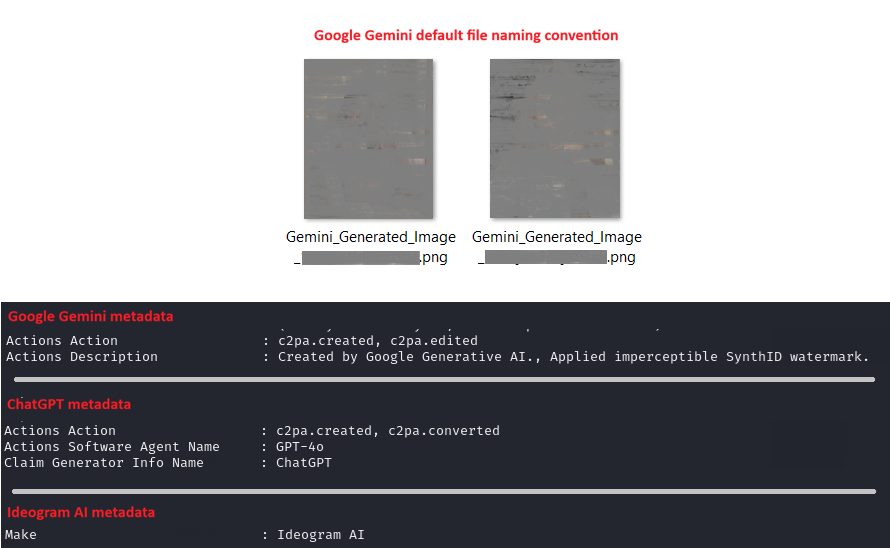
The diversity and quality of these lures are notable, and WithSecure says this is the result of using multiple AI tools, including ChatGPT, Ideogram AI, and Google Gemini, to generate detailed and realistic content to support them.

LLM markers in images used by GreyVibe
source: WithSecure

The use of AI extends to the creation of tools as well, with the researchers mentioning LOOKVALPS, LOOKVALJS, DAYLIGHT, and TEASOUP, all custom obfuscators that were likely developed with LLM assistance.

A PowerShell-based remote access trojan named LegionRelay was also likely developed with assistance from AI tools, the researchers say.

LegionRelay supports file theft, screenshot capturing, browser credential theft, Telegram and WhatsApp data exfiltration, and RDP access setup.

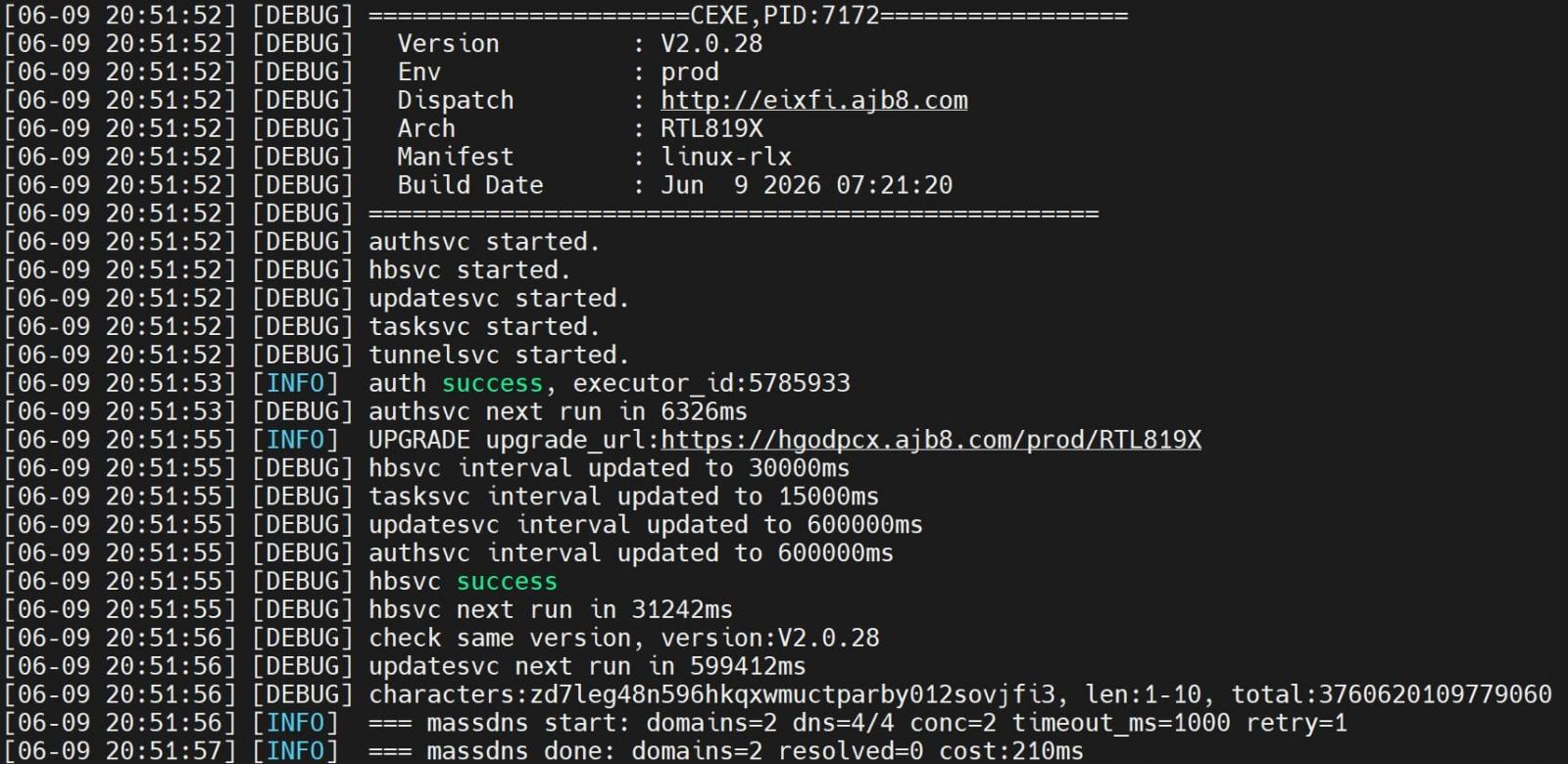
Another malware used by GreyVibe is PhantomRelay, also a PowerShell RAT. The malware supports system fingerprinting, dynamic script loading, and PowerShell and Windows command execution.

Advertisement
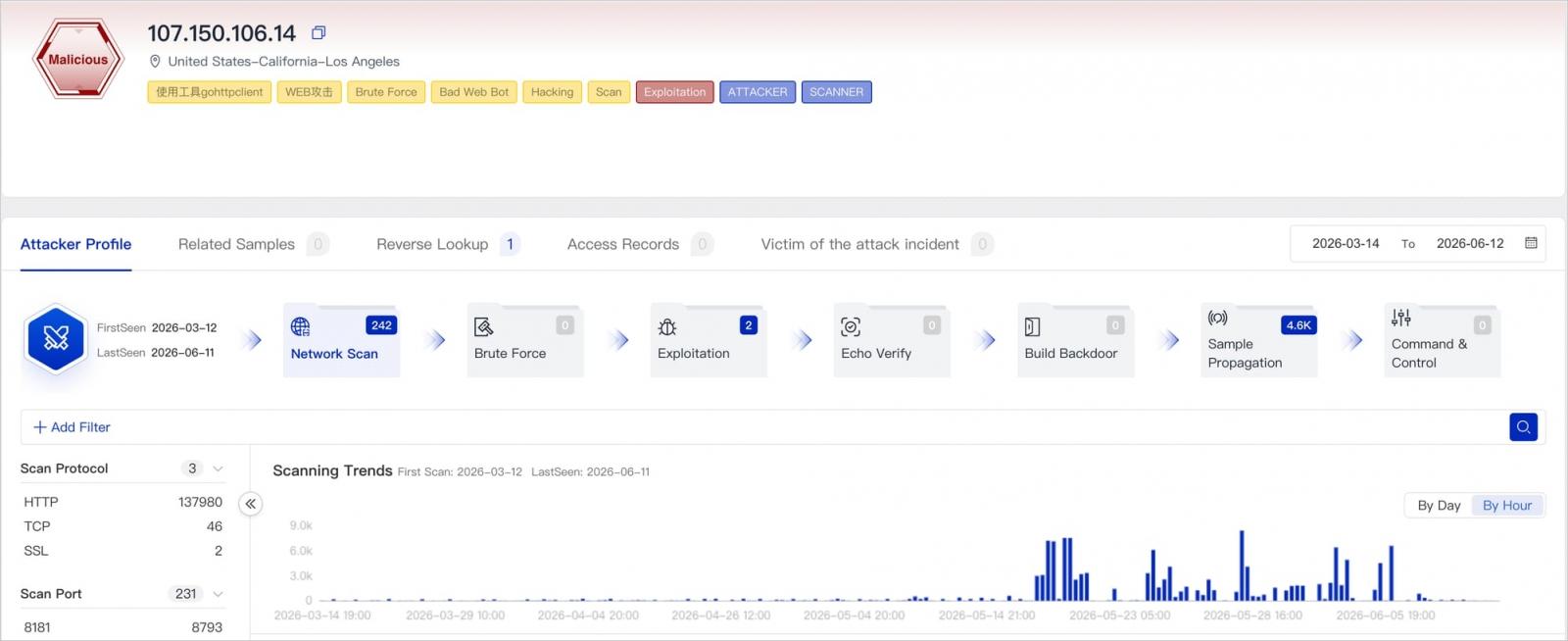
Overview of malware and campaign associations
Source: WithSecure

Finally, the hackers employed the FallSpy Android spyware on the PrincessClub and Nebo campaigns, which is designed purely for collecting intelligence.

The malware collects contact lists, call logs, device and network information, location data, media files, and SIM information.

WithSecure notes that while GreyVibe activity is consistent with a nation-state operation, the threat actor “lacked the level of sophistication and operational discipline typically associated with mature nation-state actors.”

Furthermore, the PhantomRelay malware has been seen in cybercrime activity, although researchers could distinguish its usage from state-aligned operations. This led the researchers to believe that GreyVibe may include “current or former cybercriminal actors.”

Some evidence pointing to this theory includes the use in early and test samples of a unique ISO builder associated with a group of former TrickBot members (UAC-0098) that targeted Ukraine at the start of the Russian invasion.

Advertisement

Furthermore, the threat actor uploaded development and test samples to a public scanning platform, which is not typical with nation-state actors. Additionally, a cryptocurrency miner was deployed on some victim machines.

The researchers are unsure “whether former or current cybercriminal members have been absorbed into a state-backed group, operate independently but with state-directed tasking, or have formed a hybrid team involving state-affiliated and cybercriminal members.”

Organizations can set up defenses against GreyVibe’s malicious activity by using the indicators of compromise (IoCs) provided by WithSecure.


article image

Automated pentesting tools deliver real value, but they were built to answer one question: can an attacker move through the network? They were not built to test whether your controls block threats, your detection rules fire, or your cloud configs hold.

This guide covers the 6 surfaces you actually need to validate.

Advertisement

Download Now

Source link

Continue Reading
Click to comment

You must be logged in to post a comment Login

Leave a Reply

Tech

Microsoft holds up rural Washington as data centers ‘gone right,’ but does the model still work?

Published

on

Microsoft hosted a community party in Quincy, Wash., on Thursday celebrating the opening of its first data center there 20 years ago. (Microsoft Photo)

As data center backlash builds nationwide, Microsoft is pointing to Quincy, Wash., as Exhibit A in making the case that it’s a company communities can trust. But it’s not clear whether the conditions that made things work 20 years ago in the rural city still apply today.

On Thursday, Microsoft celebrated the community as the home of its first data center, hosting a public party and awarding $210,000 in grants to local organizations. Over its two decades in Quincy, the company has created jobs and contributed to property taxes that helped fund infrastructure including a high school and police station. The local poverty rate more than halved over 10 years, dropping to 13% in 2023.

“The story of Quincy, Washington, and Grant County is a story of data centers gone right,” Microsoft President Brad Smith said in a GeekWire interview.

However, much has changed since Microsoft flipped the switch on its first server there. In the mid-2000s, the region enjoyed surplus, accessible and affordable energy from hydropower, and statewide droughts were an anomaly. That’s no longer true.

Communities across the country are growing anxious about the rapid deployment of energy-hungry data centers driving up utility bills and straining local water supplies, which the facilities use for cooling. Seattle is considering a one-year moratorium on the computing infrastructure, while Denver; St. Charles, Mo.; a county near Dallas and one in Arkansas have recently approved bans.

Advertisement

A March Gallup survey found that seven in 10 Americans oppose the construction of data centers for AI applications in their local area, with nearly half strongly opposed.

So is the Quincy model still relevant?

Smith says yes — with caveats.

The formula for success “may need to be a little bit different,” he said. To that end, the company launched its Community First AI Infrastructure Initiative in January, pledging to be a good neighbor wherever it builds. That includes paying for its own electricity and forgoing local incentives such as property tax breaks.

Advertisement

In practice, though, it’s more complicated.

Quincy has become Washington’s data center hub, with Microsoft as the largest operator and other tech companies continuing to build there. To meet rising demand, the county’s utility wants to add six new transmission lines — a project affecting private owned properties and estimated to cost $260 million, the Seattle Times reports. It’s unclear who will bear those costs and to what extent. Microsoft has committed more than $2.6 million, according to the Times.

Earlier this year, state lawmakers pursued legislation requiring data center operators to cover costs associated with energy deployment and generation — a measure that could have quelled some of the public concern about the facilities. The bill passed the House, but died in the Senate after Microsoft publicly opposed it.

The company expects to spend $190 billion in capital costs this year, largely on AI infrastructure.

Advertisement

Smith said Microsoft supports state-level legislation broadly, but stressed the need to ensure that the benefits of data center developments flow to local communities and that rate payers are protected. He pointed to efforts underway in La Porte, Ind., and Cheyenne, Wyo., as promising new projects.

“People are smart,” he said. “They have a way of sniffing out whether a developer of data centers is going to be responsible or not, and they’re insisting that people be responsible — and I don’t think that’s the least bit inappropriate.”

Source link

Advertisement
Continue Reading

Tech

Luna Introduces Luna Band With Real-Time Health Tracking Features

Published

on

Luna has officially unveiled the Luna Band, a new voice-first wearable designed to help users improve their daily routines through real-time health tracking. Supported by the company’s LifeOS intelligence system, the wearable continuously monitors body signals and transforms them into personalized recommendations. Luna designed the device for people who want smarter support for productivity, recovery, and overall health. The invite-only Drop 1 is expected to begin shipping by the end of July 2026.

Luna Band: Key Highlights

Luna designed the Luna app to make health tracking simpler and more organized by consolidating several wellness features into a single platform. This app integrates features that involve stress management, nutrition, exercise, supplements, and recovery into a single application. Another customization option available to users is creating personal health modules in the app.

The application brings together aspects of stress, diet, fitness, nutritional supplements, and productivity within the app’s micro-apps. Users can also sync third-party devices and other relevant health-related data sources for a more personalized experience.

Luna Band

The company also allows users to create their own health modules in the app rather than relying solely on prebuilt features. Alongside this, Luna highlights its voice-logging feature, which eliminates the need for manual data entry. Users can quickly record meals, workouts, and daily habits through simple voice commands, making health tracking faster.

Advertisement

Luna designed LifeOS as one of its main AI-powered features to simplify health tracking through personalized insights and recommendations. The system continuously studies body signals, lifestyle habits, biomarkers, and health trends to deliver a better understanding of overall wellness. Luna says LifeOS is included with the Luna Band platform.

Price and Availability

Luna has confirmed that the first release of the Luna Band, called Drop 1, will be available through an invite-only system. Users interested in the wearable can sign up through the company’s official waitlist before shipping starts later in July 2026.

Source link

Advertisement
Continue Reading

Tech

MSI’s Triple Mode OLED monitor is a Computex showstopper and my eyes genuinely can’t wait for it

Published

on

Dual-mode gaming monitors have been around long enough that the novelty has worn off. MSI has decided that two modes simply aren’t enough and has unveiled the MPG OLED 322URDX36 ahead of Computex 2026.

It is the world’s first Triple Mode gaming monitor, and if the execution is as good as it sounds, it could be one of the few gaming monitors that I’d be genuinely interested in. 

What is Triple Mode and why does it matter?

The MPG OLED 322URDX36 lets you switch between three resolution and refresh rate combinations: 4K at 360Hz, 2K at 520Hz, and FHD at 680Hz. Even when you want to prioritize resolution, you still get 360Hz of refresh rate. 

Dual-mode monitors on the market can toggle between 4K and FHD or 2K and FHD, but none reach 360Hz at 4K, and none of them offer three modes. MSI is the first to do both.

The monitor features a 32-inch fifth-generation QD-OLED panel built using Samsung’s Penta Tandem technology, the same architecture that Samsung has used to push brightness and longevity on its recent models.

Advertisement

Peak HDR brightness sits at 1,500 nits, which should help enhance visibility, even in bright rooms. MSI has also carried over its DarkArmor Film from previous models, which improves black levels by 40% compared to regular OLED panels.

MSI revealed a 34-inch ultrawide monitor that could finally fix one of QD-OLED’s biggest weaknesses

The MPG 341CQR QD-OLED X36 has:

• 3440 x 1440 ultrawide resolution
• 360Hz refresh rate
• 0.03ms response time
• 5th-Gen Tandem QD-OLED
• RGB Stripe subpixel layout
• Up to… pic.twitter.com/KJiT2tX2JS

— Chris Mizo (@MizoChris) May 29, 2026

Advertisement

What about connectivity?

The MPG OLED 322URDX36 sports a DisplayPort 2.1a port with UHBR20, which pushes 4K at 360Hz without compression, along with a USB Type-C port that supports 98W power delivery. That USB-C charging speed is meaningful for creators and professionals.

MSI will officially launch the MPG OLED 322URDX36 at Computex 2026, which opens on June 2, 2026. Pricing and availability have not been announced yet. 

While the gaming monitor market has been revisiting the same dual-refresh rate formula for nearly two years now, MSI’ Triple Mode is the first genuinely structural innovation since dual-mode arrived. The supply chain and pricing might still need work, but the technology itself is quite promising. 

Advertisement

Source link

Continue Reading

Tech

Blue Origin Rocket Exploded Thursday Night During Hot-Fire Test

Published

on

Spaceflight Now shared their video of the explosion, which the Orlando Sentinel describes as showing Blue Origin’s rocket “become engulfed in flames. The fireball expands out and covers the entire launch pad as the fuselage of the rocket can be seen crumbling into the flames.”

Blue Origin founder Jeff Bezos said on X.com “It’s too early to know the root cause but we’re already working to find it. Very rough day, but we’ll rebuild whatever needs rebuilding and get back to flying. It’s worth it.” (SpaceX founder Elon Musk posted “Sorry to see this, I hope you recover quickly.”)

It’s unclear how this will impact future launches. “The rocket was destroyed,” reports CBS News, “and as the smoke cleared, there was no sign of the erector-gantry used to move the New Glenn from its hangar to the pad and to raise it from horizontal to vertical. Likewise, one of two tall lightning towers was no longer visible.”

It was the first such on-pad explosion at the Cape since a SpaceX Falcon 9 rocket blew up on nearby pad 40 on Sept. 1, 2016… Blue Origin only has one New Glenn pad, the one that was damaged in the Thursday test. The New Glenn, which has launched three times, is a heavy lift rocket designed to compete head-to-head with SpaceX Falcon 9 and Falcon Heavy rockets. During New Glenn’s most recent flight in April, an upper stage malfunction prevented a commercial internet satellite from reaching its planned orbit

Advertisement

The New Glenn destroyed Thursday was to send 48 Leo internet satellites owned by Amazon into space [which were not on board for the hot-fire test]
Blue Origin posted on X.com that “Debris from our recent hotfire anomaly may wash ashore in the coming days/weeks. If you encounter any debris, do not touch or approach it for your safety.”

“Spaceflight is unforgiving, and developing new heavy-lift launch capability is extraordinarily difficult…” NASA Administrator Jared Isaacman posted on X.com.
“âWe will provide information on any impacts to the Artemis and Moon Base programs as it becomes available.”


Thanks to long-time Slashdot reader symbolset for sharing the news.

Source link

Advertisement
Continue Reading

Tech

ChatGPT share links abused to host fake outage pages to deliver malware

Published

on

ChatGPT

Threat actors are abusing ChatGPT’s content-sharing feature to display fake OpenAI outage pages that direct users to download malware disguised as the ChatGPT desktop application.

The “LLMShare” campaign, discovered by Push Security, uses Google ads to direct users searching for ChatGPT to a malicious shared ChatGPT page hosted on chatgpt.com, allowing the attack to be delivered through a legitimate OpenAI domain.

Fake sponsored ChatGPT advertisement

Users who click the advertisement are taken to a legitimate ChatGPT shared page, but instead of seeing a chat conversation, they are presented with a rendered outage notice claiming the web version is unavailable and that they should download the desktop application instead.

“We’re experiencing high traffic right now,” reads the fake outage message.

“Our website is temporarily unavailable due to a large number of users. Download our desktop app to continue.”

Advertisement
Fake outage message
Fake outage message

Unlike traditional phishing pages hosted on attacker-controlled infrastructure, the fake outage notice is rendered through ChatGPT itself. 

The attackers created a custom HTML page using ChatGPT’s rendering capabilities and published it through a shared chatgpt.com/s/ link, allowing the fake outage notice to be displayed from a legitimate ChatGPT URL.

Push Security noted that the page includes “Show code” and “Remix with ChatGPT” controls, revealing that the fake outage notice is actually generated from custom HTML and CSS rendered by a ChatGPT prompt.

If the visitor clicks on the download button, they are brought to a website at openew[.]app that impersonates OpenAI’s desktop application download portal. 

Fake ChatGPT download site

The researchers say the site uses cloaking to display content only to targeted victims. When security platforms like URLScan visited the URL, they were shown a harmless AR/VR company website instead.

The website offers both macOS [VirusTotal] and Windows [VirusTotal] downloads that install malware on devices. While it is unclear what payloads are ultimately deployed, earlier campaigns abusing AI platform sharing features have distributed infostealers.

Advertisement

BleepingComputer’s test of the Windows version on Any.Run found that it executes various commands to determine whether the device is a legitimate computer or a virtual machine.

Push Security also observed attacks abusing Claude Artifacts, Anthropic’s feature for sharing rendered applications and content, to host ClickFix-style lures that tricked users into executing malicious commands.

AI platforms’ sharing features have been abused in the past to distribute malware to unsuspecting victims.

Earlier this year, threat actors used Google advertisements to direct users searching for Claude downloads to shared Claude conversations containing malicious installation instructions.

Advertisement

Other campaigns abused shared ChatGPT and Grok conversations that conducted ClickFix attacks by impersonating software installation guides that instructed victims to execute commands that installed malware.


article image

Automated pentesting tools deliver real value, but they were built to answer one question: can an attacker move through the network? They were not built to test whether your controls block threats, your detection rules fire, or your cloud configs hold.

This guide covers the 6 surfaces you actually need to validate.

Download Now

Source link

Advertisement
Continue Reading

Tech

Microsoft Build 2026: What to Expect

Published

on

It’s tech developer conference season. Hot on the heels of Google I/O and just ahead of Apple’s WWDC, here comes Microsoft’s developer conference, Build. Like virtually all of these events for the past few years, we expect the Windows-maker to focus a lot on AI

An AI focus is essentially required from a tech company these days, and Microsoft knows that. But what exactly is in store at this year’s conference? We have a few guesses, and some of the session speakers say a lot about how AI is being viewed over at Microsoft right now. 

On Monday, CEO Satya Nadella will take the stage and tell the world about what Microsoft has been up to and its plans for the future. Here’s what we’re expecting. 

Advertisement

When is Microsoft Build?

Microsoft’s Build developer conference will take place on June 2 and June 3 in San Francisco. The opening keynote will begin on June 2 at 10:00 a.m. PT. In-person attendees have shelled out nearly $1,100, but much of the event will be streamed live on YouTube, where the event can be viewed for free.

Copilot and AI agents

Copilot is now the vehicle for Microsoft’s AI endeavors, so we expect it to take center stage during this year’s conference. During Microsoft’s latest earnings call, Nadella said the company is “evolving our family of Copilots from synchronous assistants to async coworkers that can execute long-running tasks across key domains.” In fact, Agent Mode is now the default mode across several Office 365 Copilot products, including Word, Excel and PowerPoint. 

Agents will be the new normal and focus for Microsoft going forward. “We are at the beginning of one of the most consequential platform shifts that will change the entire tech stack as agents proliferate and become the dominant workload,” Nadella said. 

Advertisement
AI Atlas

For being the new and hot thing in the AI world, agentic AI is almost boring to talk about at this point. It’s everywhere. But its capabilities will likely be at the center of Microsoft’s announcements. Unlike a typical chatbot, agentic AI can perform tasks on your behalf. An agent can surface relevant information in your email inbox or even shop for you. 

We already know that its own AI assistant, Copilot, is becoming more agentic in Office 365, and we expect that to extend further into its products and operating system. 

It’s hard to talk about agentic AI in 2026 without mentioning OpenClaw, and Build will certainly feature some conversation around the viral AI agent tool. The “Clawfather” himself, OpenClaw creator Peter Steinberger, is hosting a breakout session this year.

One possibility reported by The Information is that Microsoft could introduce a new coding model to increase the number of people using its GitHub Copilot. More models are also on the way, according to the report, specializing in advanced reasoning, images and speech. 

Windows 12

We don’t have much to say about Windows 12 because Microsoft hasn’t said much, either. Still, this would be a great time to announce the next version of the company’s operating system. Providing at least a glimpse of what’s to come seems reasonable, and it’ll be interesting if Microsoft has something up its sleeve that’s truly innovative, especially on the heels of Google’s announcement for its new OS that merges Android and ChromeOS.

Advertisement

Not everyone is impressed with the AI in Windows, as it’s essentially unavoidable. Microsoft has been continually adding AI features into its operating system, and Copilot itself can sometimes feel more intrusive than helpful. All of this frustration has led many users to look into Linux-based operating systems to free themselves of the loaded AI found in Windows. 

What could end up happening is nothing. Microsoft will undoubtedly announce new features that will make their way to Windows, but it might not necessarily need a new version number to highlight them.

Think outside the Xbox

There’s no indication that Microsoft will spend any time on gaming, though there’s always a chance it could have something hiding up its sleeve. In early May, the company backed down on adding Copilot AI to its gaming consoles, with Asha Sharma, CEO of Xbox, stating in an X post, “Microsoft will begin winding down Copilot on mobile and stop development of Copilot on consoles.”

What’s next for Xbox is anyone’s guess, but we don’t imagine it will take up much, if any, space at Build this year. 

Advertisement

Source link

Continue Reading

Tech

No fix yet for critical Gogs RCE bug

Published

on

Security

Researcher reported the vuln in March. Maintainers haven’t responded to his messages since

There’s a huge hole and no one is patching it thus far. A critical, remote code execution (RCE) bug in Gogs, a popular open-source self-hosted Git service, can be exploited by any authenticated user – no special privileges required – on a default installation to fully compromise vulnerable servers, steal credentials and multi-factor authentication secrets, or even modify code in hosted repositories in a wide-reaching supply-chain attack.

A security researcher reported the 9.4-rated flaw to project maintainers in mid-March. It still doesn’t have a patch. It does, however, have a public Metasploit module – so we’d expect reports of in-the-wild exploitation to start very soon.

Advertisement

The vulnerability affects all supported platforms, including Windows, Linux, and macOS, and installation methods, according to Rapid7 researcher Jonah Burgess, who found and reported the bug to Gogs maintainers via GitHub (GHSA-qf6p-p7ww-cwr9) on March 17.

After they initially acknowledged that they received the report on March 28, Burgess says he never heard back from the Gogs team – not when he asked them for a status update, nor when he reminded them of the vulnerability disclosure date and asked if they wanted an extension to fix the flaw before its release.

“We have not received any further communication from Gogs, and the GHSA has remained unanswered since March 28,” Burgess told The Register. “Because there is currently no official patch, our team submitted a pull request with a suggested fix today [Friday], which is currently awaiting review. At this time, we have no evidence suggesting that this vulnerability is being exploited in the wild.”

Gogs sponsor DigitalOcean also did not respond to The Register’s inquiries, including when the security issue would receive a patch.

Advertisement

The vulnerability stems from an argument injection flaw in Gogs’ pull request merge flow, specifically the Merge() function in internal/database/pull.go. 

If a Gogs repo owner or admin enables “Rebase before merging” and a user opens a pull request, the PR’s base branch name gets passed directly to a git rebase command without a  separator to mark the end of command options. Gogs also fails to properly sanitize the input.

This means an attacker can create a malicious branch (such as –exec=touch${IFS}/tmp/rce_proof), and Git treats it as an –exec flag, not a branch name, and executes the payload.

For Windows installations, the payload delivery method is slightly different, and Burgess developed an exploit module to auto-implement a cross-platform approach.

Advertisement

Until the maintainers fix the flaw, Burgess suggests Gogs’ users take the following precautions to mitigate the issue.

First, and most importantly, restrict user registration (DISABLE_REGISTRATION = true in app.ini) to prevent untrusted users from creating accounts. 

Restricting repository creation (MAX_CREATION_LIMIT = 0 in app.ini) to prevent users from creating their own repos also blocks the easiest attack path – creating a new repo with rebase enabled – but it won’t prevent exploitation by users with write access to existing repositories.

Finally, audit rebase merge settings, and disable “Rebase before merging” under Settings > Advanced. “Note that this is not an effective defense against a malicious user who owns or has admin access to a repo, since they can re-enable rebase at will,” the threat hunter warns. “There is no global or organization-level setting to restrict this.” ®

Advertisement

Source link

Continue Reading

Tech

ASCENDO DSP4-6602 Amplifier Delivers Massive Subwoofer Power for Custom Home Theaters

Published

on

ASCENDO Immersive has built its reputation in the luxury home theater market around loudspeakers, subwoofers, amplifiers, and control solutions designed for rooms where “good enough” is not part of the design brief. The company’s latest DSP4-6602 amplifier is aimed squarely at that world: custom cinema installations that need substantial, sustained power for large passive subwoofer arrays without turning the equipment rack into a thermal disaster.

The DSP4-6602 is a high-performance four-channel DSP amplifier, configured as stereo x 2, and designed to address a real problem in ambitious home theater builds. Large-format passive subwoofers can deliver the scale, impact, and low-frequency control that luxury cinema rooms demand, but they also require external amplification with enough current, headroom, and processing flexibility to keep everything under control.

That is where ASCENDO is positioning the DSP4-6602: not as a mainstream AVR accessory, but as a purpose-built power and DSP solution for integrators building systems where bass performance has to be felt, managed, and trusted.

Pro Tip: More about passive and powered subwoofers

Advertisement

Four Channels of DSP Controlled Subwoofer Muscle

Traditional professional amplifiers can be a poor fit for residential cinema rooms, even when they deliver the required power. Fan noise, limited control integration, rack heat, and less convenient operation can all become problems once the gear leaves a commercial environment and moves into a custom home theater. The DSP4-6602 is designed to close that gap, offering high-output amplification and DSP control in a package aimed at residential installations.

ascendo-dsp4-6602-front-back

Power: The DSP4-6602 is rated for sustained output down to 5Hz with up to 6,600 watts RMS power. Stable into 2-ohm loads and bridgeable into 4-ohm loads, it is designed to drive ASCENDO’s largest infrasonic and high-output passive subwoofer systems with the control and headroom required for luxury home cinema installations.

DSP: Built-in DSP features include input delay of up to 100ms per channel and output delay of up to 20ms, allowing each source to be delay-matched and level-matched. The DSP4-6602 also supports 4 x 4 audio routing and mixing, 8-section input parametric EQ, 8-section output parametric EQ, high-pass and low-pass filters, FIR filters, volume control, mute, and polarity adjustment.

Installation Friendly: The DSP4-6602 includes features aimed specifically at custom residential cinema integration. A low-noise cooling system, with three rear-mounted fans and front-panel cooling vents, is designed to support quiet in-room operation. Control features include selectable 12V trigger input logic, trigger output, configurable auto-standby, and Ethernet-based multi-amplifier management for larger systems.

Advertisement
ascendo-dsp4-6602-inputs-right

Whether used as a standalone amplifier or integrated into a 1RU (Rack Unit) 19-inch wide equipment rack, the DSP4-6602 provides the power density, control sophistication, and operational refinement needed for next-generation immersive cinema environments.

The DSP4-6602 has both the brute-force low-frequency performance and residential refinement that today’s high-end cinemas require,” says Geoffrey Heinzel, co-managing partner of ASCENDO. “This amplifier gives integrators and designers a solution capable of handling demanding subwoofer systems without the compromises typically associated with professional amplification at this level.”

Specifications

Ascendo Model DSP4-6602
Product Type  Amplifier
Price Consult Authorized Dealer
Input Impedance 20k Ω (Balanced),
10k Ω (Unbalanced)
Maximum Input Level 8.7 V rms (+21 dBu) (Default Gain)
Signal to Noise Ratio ≥ 105 dB (Default Gain, A-weighted, 20 Hz – 20 kHz, 8 Ω)
Frequency Response Typical: ±1.0dB (10 % Rated Power, 5 Hz – 20 kHz, 8 Ω)
Rated Output Power (THD+N = 1%, 1 kHz continuous sine wave, one channel driving) 8 Ω/Stereo – 4 X 650 W
4 Ω/Stereo – 4 X 1150 W
2 Ω/Stereo – 4 X 1650 W
8 Ω/Bridge – 2 X 2200 W
4 Ω/Bridge – 2 X 3330 W
Output RMS Voltage 72.1 V
Output Peak Voltage 102 V
Gain (Rated Power, 1 kHz) 25 dB (4 V) – 43 dB (0.5 V)
Default Gain (Rated Power, 1 kHz) 31 dB (2 V)
THD+N Typical: 0.05 % (10 % Rated Power, 8 Ω)
SNR (Signal to Noise Ratio) ≥105sB (Default Gain, A weighted, 20Hz – 20kHz 8 Ω)
Damping Factor ≥ 1000 (8 Ω, 20 Hz – 200 Hz)
Cross-Talk ≥ 90 dB (20 H z – 1 kHz, Below Rated Power, 8 Ω)
High / Low Pass Filter Butterworth:12dB, 18dB, 24dB, 36dB, 48dB
Bessel: 12dB, 24dB, 48dB
Linkwitz-Riley: 12dB, 24dB, 48dB
PEQ (Parametric Equalizer) Peaking (+/-24dB)
Low-shelf (+/-24dB)
High-shelf (+/-24dB)
All-pass 1st
All-pass 2nd
General-Low
General-High
Butterworth-Low 
Butterworth-High
Bessel-Low
Bessel-High
Other Functions Bypass, Reset, Copy, Paste, Save, Invoke, Phase Display
Main Power  100 – 240 VAC (± 10 %), 50/60 Hz
Protection Under Voltage, DC, Over Temperature; Limiter: Over Temperature, Over Load, Short (Test condition: 20 ms, 1 kHz, THD+N = 1%)
Dimensions (WxHxD) 483 x 45 x  376 mm
(19 x 1.77 x 14.8 inches)
Weight 9 kg / 19.84 lbs 
ascendo-dsp4-6602-xlr-inputs
ascendo-dsp4-6602-inputs

The Bottom Line 

The ASCENDO DSP4-6602 is not a conventional amplifier for a typical home theater upgrade. It is a high-output, DSP-controlled amplifier designed for ASCENDO custom cinema systems, especially installations using passive infrasonic and high-output subwoofers that require external amplification, system tuning, and dealer setup.

Advertisement. Scroll to continue reading.

What makes it different is the combination of 6,600 watts RMS output, operation down to 5Hz, 2-ohm stability, bridgeable 4-ohm support, onboard DSP, low-noise cooling, trigger control, auto-standby, and Ethernet-based multi-amplifier management. Those features make it better suited to large residential cinema installations than many traditional professional amplifiers.

Advertisement

The important caveat is that the DSP4-6602 is not intended for DIY installation. It needs to be specified, installed, and calibrated by an authorized ASCENDO dealer as part of a larger system. For ASCENDO customers building a custom theater around passive subwoofers, it provides the amplification, control, and integration tools needed to make those systems work properly.

ascendo-dsp4-6602-amplifier-angle

Price & Availability

The Ascendo DSP4-6602 is only available from authorized distributors, dealers, and installers, where pricing information is provided by request.

For more information: aia-cinema.com

Advertisement

Source link

Continue Reading

Tech

Creative launches Sound Blaster AE-X for high-end audio enthusiasts

Published

on


The Sound Blaster AE-X uses the same PCIe x1 interface as the previous model, though the underlying hardware appears to be on a different level. The new card leverages an ESS Sabre DAC (ES9039Q2M), which Creative says is engineered to deliver clearer sound, low harmonic distortion, and high dynamic range….
Read Entire Article
Source link

Continue Reading

Tech

CoStar buys Zonda for $800M to complete real estate data empire

Published

on

TL;DR

CoStar Group is acquiring Zonda, the leading new-home construction data and marketplace platform, for $800 million in cash. The deal fills the last gap in CoStar’s real estate data empire, which already spans commercial, multifamily, residential resale, and spatial data through more than 40 acquisitions totalling $7.3 billion.

CoStar Group has agreed to acquire Zonda, the leading provider of new-home construction data, homebuilder software, and residential real estate marketplaces, for $800 million in cash. The deal, announced on Thursday, is expected to close in the second half of 2026 and will be accretive to adjusted earnings per share in its first full year.

Advertisement

Zonda serves more than 3,000 customers across the homebuilding ecosystem, including many of the largest residential builders, developers, suppliers, and lenders in North America. Its platform covers the full lifecycle of new-home development, from land acquisition and construction forecasting to community marketing and online marketplaces, tracking more than 500 housing metrics.

Filling the new-construction gap

CoStar has spent the past 15 years assembling what is arguably the most comprehensive real estate information platform in the world. Its CoStar Suite dominates commercial real estate research. Like other data platform operators consolidating their markets, the company has expanded methodically through acquisitions, completing more than 40 deals for approximately $7.3 billion over that period.

Apartments.com now generates $1.1 billion in annual revenue. Homes.com, the company’s residential brokerage marketplace, has grown subscribers by 337% since the first quarter of 2024 and claims to be the second-largest and fastest-growing residential real estate marketplace in the United States. CoStar completed its $1.6 billion acquisition of Matterport, the 3D digital twin and AI company, in February 2025.

The pattern is clear. CoStar covered commercial real estate through its flagship product, multifamily rentals through Apartments.com, residential resale through Homes.com and Matterport, and the physical built environment through Matterport’s spatial data. New-home construction was the remaining gap. Zonda fills it.

What Zonda actually does

Zonda was created through a 2018 merger of Hanley Wood, a B2B information services company serving the US residential construction industry, and Meyers Research, a provider of real-time market data for homebuilders. Private equity firm MidOcean Partners orchestrated the combination and rebranded it as Zonda in 2020. The $800 million sale to CoStar represents the kind of PE exit that has become typical in the SaaS and data platform sector, where specialised vertical data companies are built through roll-ups and sold to larger platforms.

Advertisement

Zonda’s three core products are subscription-based data and intelligence covering the new-home market, online marketplaces for new homes in the US and Canada, and a suite of software tools for virtual home evaluation including visualisation, customisation, and tours. The data side tracks everything from lot availability and permit activity to pricing trends and absorption rates at the community level.

CoStar’s financial position

CoStar reported first-quarter 2026 revenue of $897 million, up 23% year on year, and expects full-year revenue of $3.8 billion, an 18% increase over 2025. Adjusted EBITDA is projected to reach $770 million, an 83% increase from 2025 and a 20% margin. The company has the balance sheet to absorb an $800 million cash deal without significant strain.

The stock, however, has not reflected the operational momentum. CoStar shares have declined roughly 49% over the past six months, a drop driven partly by heavy investment spending on Homes.com and partly by broader market scepticism about the timeline to profitability for the residential business. CEO Andy Florance has been buying shares on the open market, purchasing more than 70,000 shares at prices between $34.67 and $36.00 earlier this year.

The data monopoly question

With Zonda, CoStar will hold dominant or leading data positions across every major segment of the US real estate market. Proptech startups building AI-powered tools for real estate development, valuation, or investment will increasingly find that the underlying data they need flows through CoStar’s pipes.

Advertisement

That consolidation carries the same dynamics seen in other data-platform markets. A single operator controlling the reference data for an industry can set pricing, shape how participants see their own market, and create switching costs that entrench its position. CoStar’s pitch is that integration creates value: homebuilders using Zonda data will be able to list on Homes.com, track competitor pricing through CoStar analytics, and market to renters through Apartments.com, all within one ecosystem.

Whether that integration delivers value or simply concentrates pricing power will depend on execution. For now, CoStar has spent $800 million to ensure that the next generation of real estate intelligence runs on its platform, not someone else’s.

Source link

Advertisement
Continue Reading

Trending

Copyright © 2025