
Tech
Grok nonconsensual pornographic deepfakes almost led to an App Store ban

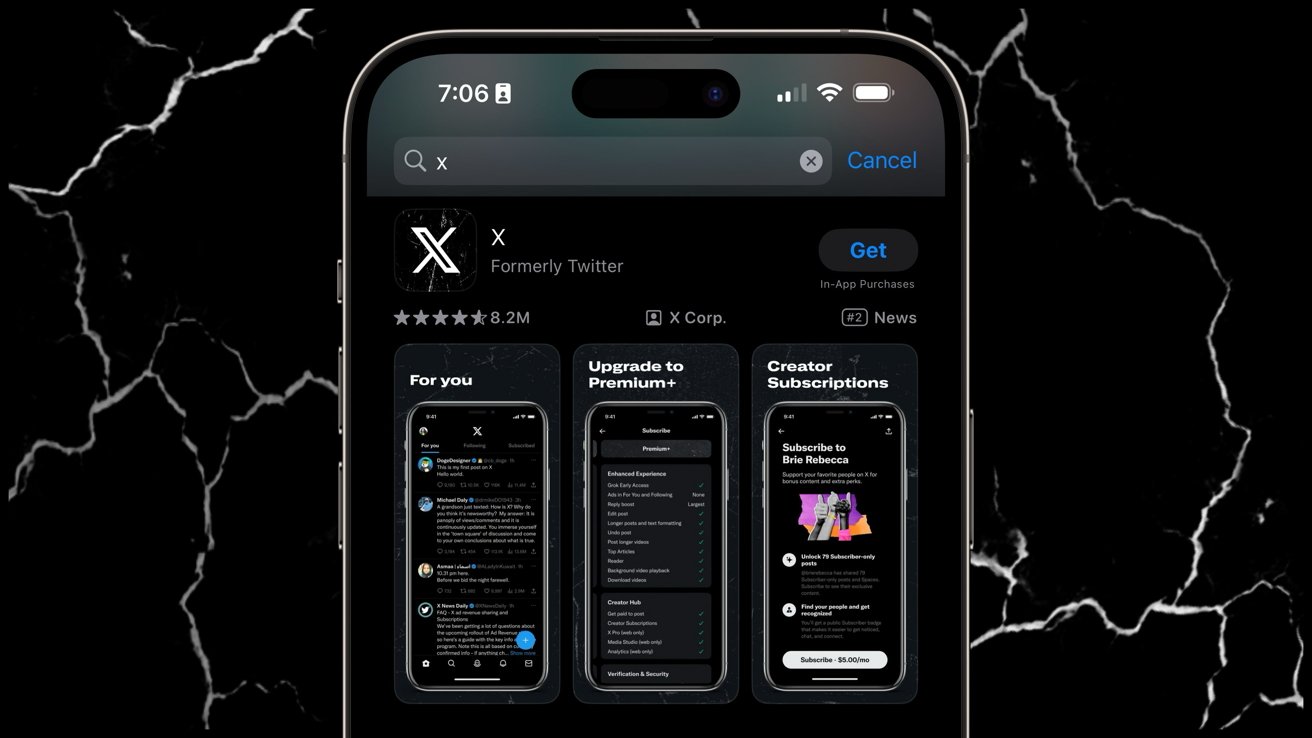
Apple reportedly threatened Grok owner xAI with an App Store ban if the deepfake nude generation issues weren’t addressed. In spite of ongoing problems with the chatbot, the app was never removed.
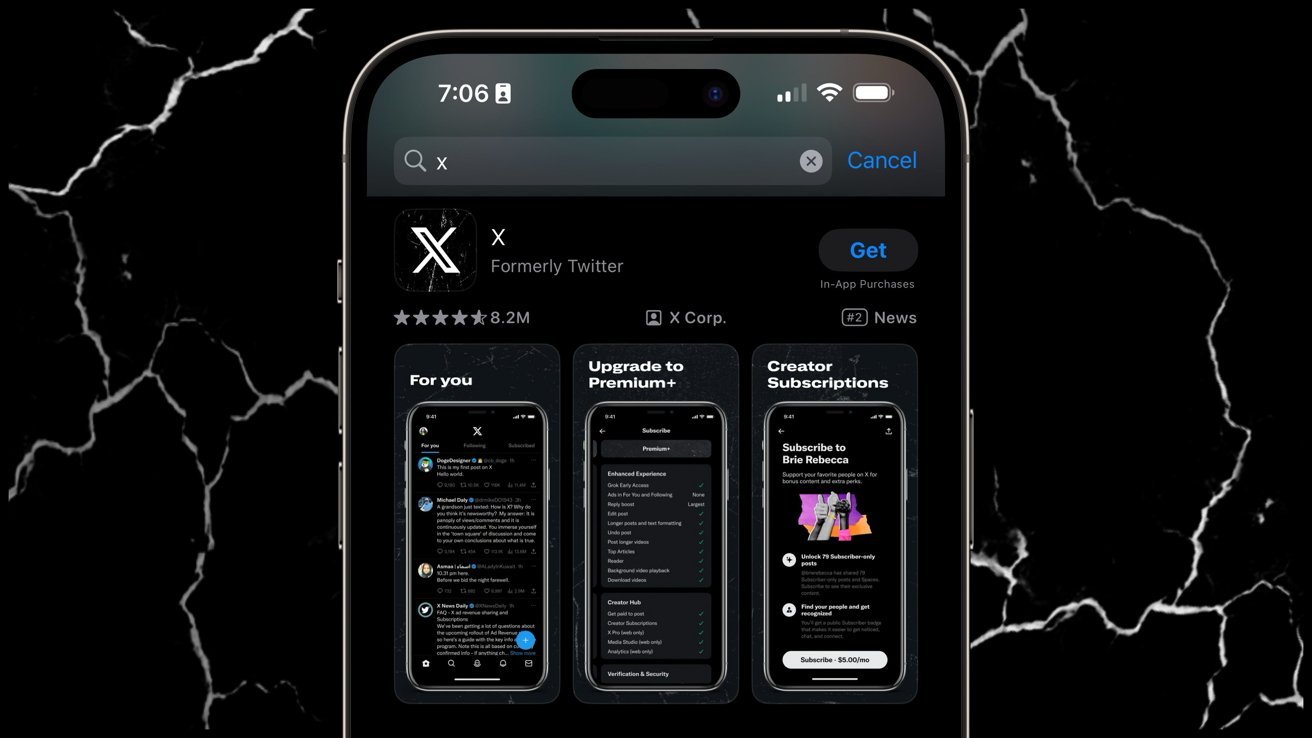
X and Grok faced backlash after deepfake problem
For several horrific days in January, social media platform X was flooded with AI-generated pornographic images involving non-consenting adults and minors. Many wondered why legal entities were slow to respond, but above all, why Apple was completely silent on the matter.
According to a new report from CNBC, shared by 9to5Mac, Apple did threaten to remove Grok from the App Store. While Elon Musk did change moderation rules on X, even after monetizing the illegal porn, the Grok app didn’t change much at all.
Continue Reading on AppleInsider | Discuss on our Forums



Colin Angle, the guy who co-founded iRobot and helped put robot vacuums in millions of homes, just unveiled his new company and forthcoming product. The new venture is called Familiar Machines & Magic and it’s making robots for companionship, and not for sweeping floors.
They are called Familiars and are being described as “physically embodied AI systems to perceive, adapt and interact with people in ways that feel natural and consistent.” That sounds like a pet, but with loyalty and love replaced by algorithms.
“The next era of robotics is not just about dexterity or humanoid form — it’s about machines that can build and sustain human connection,” he said at The Wall Street Journal’s Future of Everything conference. “My goal has always been to create systems that understand context, remember interactions and behave with consistency over time.”
The company says that its first Familiar has been “purpose-built for social interaction” with a general design architecture “optimized for expressive, whole-body movement that communicates attention, awareness and intent.” It’s also fairly cute.
The animal-esque robot is covered by a touch-sensitive coat and includes a series of cameras, along with a microphone array. This should allow it to interact with humans in a fairly normal way, which is helped along by an onboard AI stack that’s “powered by a custom small multimodal model optimized for social reasoning.”
There isn’t an actual product yet. The first Familiar is a working prototype and acts as a proof of concept. With that in mind, we don’t know when or if the company will put something on store shelves or how much one of these fake pets will cost. As an aside, animal shelters will let you take home a cute critter for $50 to $125 bucks.

Surfshark has released a native app for Vega OS, bringing its virtual private network service to the latest generation of Amazon Fire TV devices powered by the company’s new Linux-based platform. The update restores functionality lost when Amazon moved away from its Android-based Fire OS in late 2025.
When Vega OS replaced Fire OS as Amazon’s underlying software for Fire TV streaming hardware in October, it broke support for Android apps, meaning existing apps didn’t carry over. This created a gap for those who relied on VPNs for streaming and required developers to rebuild apps for the new environment. Surfshark’s new app closes that gap, offering what the company describes as “core VPN capabilities” on Vega OS devices.
The practical benefits remain the same: A VPN encrypts internet and streaming activity, masks IP addresses and can help avoid ISP throttling during high-bandwidth use. The tech is also commonly used to access region-specific libraries on services like Netflix and HBO Max — a use case that had effectively been sidelined on newer Fire TV devices until this new wave of native apps began arriving. Surfshark notes its Vega OS app currently focuses on core features and supports the WireGuard protocol. Broader support is expected to come later, as the app and platform mature.
For now, this is less about new features and more about restoring parity for people upgrading to newer Fire TV hardware. Surfshark joins other providers, including NordVPN and IPVanish, in building dedicated apps for Amazon’s Vega OS ecosystem. As more developers follow suit, Vega OS moves closer to matching the app ecosystem it replaces.
For more context, check out CNET’s coverage of Surfshark VPN, our roundup of the best VPN services and our guide to the best VPNs for Fire TV Stick.

The next version of WatchOS is set to get a stripped-down version of the Watch Ultra’s signature watch face, alongside multiple others, according to a report by Bloomberg’s Mark Gurman. Whether this means the latest version of the OS will primarily be an aesthetics upgrade, or Apple has just stayed tight-lipped about WatchOS 27, remains to be seen.
With WWDC 2026 just around the corner, most eyes are on iOS 27, which is set to include the Google Gemini-powered Siri to strengthen Apple’s AI efforts, but rumors on the latest from WatchOS have been minimal.
According to Gurman’s newsletter Power On, Apple has several new watch faces in the works for the next version of WatchOS, but the most familiar of them is also the most notable. A new, modular watch face is set to make an appearance, which borrows heavily from the Modular Ultra watch face.
Apple Watch Ultra’s modular watch face.
The new watch face is said to have removed the large complication in the center, the three smaller complications above the clock and the surrounding information around the bezel. What’s left is a stripped-down version of the original: A massive clock that takes up the top two-thirds of the display, with three small complication options below it.
Simplifying this specific watch face could be an attempt to make it more approachable for the standard Apple Watch lineup, while providing glanceable information with the three complication options.
Apple Watch users are set to get another watch face before WatchOS 27. With the release of WatchOS 26.5, a new Pride Luminance watch face will be introduced, alongside an accompanying watch band in time for Pride month in June.
A smartwatch getting new watch faces is about as exciting as telling time itself. It’s not particularly exciting — even if it’s something that’s trickled down from a higher-end model.
An Apple representative didn’t immediately respond to a request for comment.

There is no doubt that Apple needs to diversify its processor supply chain, but Samsung and Intel are weak alternatives next to TSMC. Apple may try anyway.
Rumors have come and gone about Apple buying Intel for its US foundries, but something about that idea stuck. More recent rumors suggested Apple could start relying on Intel for Apple Silicon production as soon as 2027 or 2028.
According to a new report from Bloomberg, Apple has been considering Intel and Samsung to build “main device chips” for some time. While the recent chip and memory shortage has added some pressure, Apple had allegedly been making these considerations well before the current situation.
Samsung makes sense as an option because it is the distant number two chip fabricator to TSMC. It has the capabilities of meeting Apple’s strict quality demands, though it would be vastly limited on capacity.
Intel has been repeatedly mentioned in many rumors for various reasons. There was a time when it seemed Intel would dissolve, but it was revived thanks to a controversial 10% stake purchased from the US government under Trump.
The company even approached Apple for a direct investment, though it appears that nothing ever came from that.
Even if the Intel and TSMC’s joint venture results in some Apple chip production in the United States, it would be a paltry amount that barely put a dent in TSMC’s monopoly. However, it would surely score some brownie points with the US administration.
The report suggests that no decision has been made and Apple may not move forward with any new partners. TSMC continues to be the producer of Apple Silicon with over 60% of that made in Taiwan.
Apple is stuck between a rock and a hard place, as is the rest of the world. TSMC has been one of the few companies the world can rely on for advanced silicon, and if China decides to invade, it could devastate the global economy.
At this point, it seems Apple’s only options are strengthening its rival Samsung or embracing the flailing Intel. This situation could be among the defining aspects of John Ternus’ tenure as CEO, though some are apparently more worried about retiring executives.
Tech
Section 702 Vote Pushed Back Another Six Weeks Following GOP’s ‘But With Cryptocurrency Ban’ Failure

from the many-wrenches-in-many-gears dept
The administration isn’t exactly winning here. The GOP has been opposed to a clean reauthorization since its first brush with warrantless surveillance back during the Biden administration. GOP members weren’t upset that the FBI routinely abused the NSA’s Section 702 collections to access US persons’ communications… unless those communications happened to be theirs.
Despite their mostly-performative opposition, Section 702 was again given a clean reauthorization. This time around, the GOP seems even more reluctant to give these powers a pass, despite it being clear President Trump would like this to happen.
Trump’s interest is more selfish than most. While he too has been performatively critical of the surveillance that swept up some of his MAGA buddies during Biden’s term in office, he’d definitely like for his FBI and DOJ to be able to warrantlessly surveil Americans he doesn’t like. Since both entities are nothing more than willing enablers of Trump’s vindictive whims, allowing the FBI to warrantlessly access US persons’ communications probably sounds wonderful. And since it appears he doesn’t believe there will ever be a regime change, he has no qualms about extending these spy powers in perpetuity with zero modifications, including those ordered by FISA court judges.
Somehow, even his party loyalists are reluctant to appease him. Section 702 has been on the verge of expiration multiple times, with only the periodic placement on temporary life support keeping these powers from being relegated to history.
With the powers set to expire at the end of April, the GOP offered up something halfway between a Hail Mary and deliberate sabotage, as Politico reports. While the House did manage to pass a three-year extension of Section 702, GOP House members added a rider that ensures this particular version wouldn’t be greenlit by the Senate.
The Senate is unlikely to clear the House-passed extension, which will be sent over with an unrelated, permanent ban on the Federal Reserve’s ability to issue a digital currency attached.
That provision was included at the behest of ultraconservatives, but it is so divisive across the Capitol that it has stalled a major affordable housing package for months. Senate Majority Leader John Thune earlier this week warned that the digital currency ban was “not happening” as part of spy law renewal.
Whether this clause was meant to keep the government from competing with Trump’s private sector offerings or just there to deter the Fed from paying closer attention to cryptocurrency market hardly matters. When John Thune is giving it a preemptive thumbs down, it’s a non-starter.
The Senate, however, received this GOP-spiked can and has only managed to kick it a bit further down the road. While some cynicism is warranted, it also buys time for surveillance reform advocates to gather the information they need to push back against yet another clean re-authorization.
The Senate approved the punt by a voice vote Thursday afternoon before the House passed it under fast-track procedures on a 261-111 vote.
As part of a deal Senate leaders cut with Sen. Ron Wyden (D-Ore.) to speed up the extension’s passage ahead of the midnight deadline, Sens. Tom Cotton (R-Ark.) and Mark Warner (D-Va.), the leaders of the Senate Intelligence Committee, will send a letter telling the Director of National Intelligence Tulsi Gabbard and the Justice Department to declassify an annual 702 court opinion within 15 days so it can be used as part of the negotiations.
This is not an unreasonable ask. The public has a right to know what the government thinks it can get away with under this surveillance power. What has always been pitched as a foreign-facing collection has been shown, for years, to be routinely accessed by Intelligence Community agencies for the sole purpose of accessing US persons’ communications without a warrant or even direct FISA court approval.
That an aggrieved Republican party may actually result in Section 702 reform is something that was never on anyone’s bingo card, especially since it’s usually been the same handful of Democratic party senators who have pushed back against these spy powers — something they have consistently done even when their own party has occupied the Oval Office.
Will reform actually happen this time? If history is any indication, a majority of Congressional reps will find some way to talk themselves out of their objections just in time to make it a problem for the next administration to solve. But there seems to be enough bipartisan opposition to a clean re-up to give reform a fighting chance.
Filed Under: fbi, fisa, gop, nsa, section 702, surveillance powers, surveillance state, trump administration, warrantless searches


The handheld is powered by a Unisoc Tiger T618 octa-core CPU alongside a Mali G52 GPU ticking along at 850MHz. The combo is paired with 3GB of RAM and 32GB of eMCP storage, and supports expansion via TF card slot. WiFi 5 comes standard, as does Bluetooth 5.0 connectivity, and…
Read Entire Article
Source link


Through Lego robotics and a STEM curriculum, Project LEDO serves as both an inspiration and a safety net for low-income kids and students of color in Portland, Ore., and surrounding areas.
“In a climate where school funds no longer cover vital STEM enrichment, Project LEDO serves as a consistent and reliable pillar,” said Cynthia Kieffer, principal of Portland’s Lent Elementary, adds that the program develops teamwork, perseverance and leadership in kids.
Others who work with the program echo that sentiment.

“We have seen our students become more engaged when they are able to explore STEM in a supportive, welcoming and encouraging environment,” said Eman Abbas of the Iraqi Arabic School in Lake Oswego.
Project LEDO founder Fidel Ferrer “sparks curiosity, fuels innovation and reminds our KairosPDX leaders that they belong in the world of science, technology, engineering and math,” said Tiffany Dempsey, a director at KairosPDX, which provides teacher training and elementary education.
Since Ferrer launched Project LEDO’s first robotics camp with 25 students in 2021, the nonprofit has served 1,500 kids and expanded to provide school supplies, laptops and food for families in need.
For his STEM and community leadership, Ferrer is being honored at the GeekWire Awards as STEM Educator of the Year, alongside Tracy Drinkwater, founder of Seattle Universal Math Museum (SUMM). First Tech is sponsoring the award. Both will be recognized at the GeekWire Awards event May 7 at Seattle’s Showbox SoDo.

Ferrer was inspired to create Project LEDO by his own experience feeling like an outsider in science and tech. He immigrated to the U.S. from Cuba with a dentistry degree, then enrolled at Portland State University in 2012, earning a bachelor’s in biochemistry and molecular biology. After working in a lab, he shifted to technology and joined Apple.
Particularly in college, he said, “I didn’t feel a lot of folks that look like me in that field. It was really isolated.”
That changed when Ferrer began volunteering at a Portland school with a large Black and Hispanic student population. Energized by the experience, he wanted to expand his reach and registered as a nonprofit while still working at Apple in Global Operations & Strategy.
Project LEDO takes its name from “La Edad de Oro,” a book that Ferrer’s mother read to him as a child, which translates to “the golden age.” The organization serves kids from kindergarten through eighth grade, with a focus on sixth and seventh graders competing in Lego robotics competitions.
Programming includes summer camps and in-school and after-school sessions during the academic year. The organization is also exploring international education partnerships in Cuba, Bolivia and Nigeria.
Project LEDO has seven employees and contract instructors across multiple sites, along with volunteers who handle the essential — if unglamorous — task of sorting Lego pieces after each robotics season. Most funding comes from individual donors, foundations and corporate support.
In recent years, Ferrer has also been tapped as a STEM education voice for state and global leaders, including as an advisor for Oregon’s STEM Investment Council.
But what excites him most is watching students transform. At a December Lego robotics contest, Ferrer saw kids who had once shown little interest in STEM show up confident, polished and even cheering on their competitors.
“It was such an inspiration to me,” Ferrer said. “They were so, so incredibly good.”
Astound Business Solutions is the presenting sponsor of the 2026 GeekWire Awards. Thanks also to gold sponsors Amazon Sustainability, Baird, BECU, JLL, First Tech and Wilson Sonsini, and silver sponsors Prime Team Partners.

Looking for the most recent Mini Crossword answer? Click here for today’s Mini Crossword hints, as well as our daily answers and hints for The New York Times Wordle, Strands, Connections and Connections: Sports Edition puzzles.
Need some help with today’s Mini Crossword? I thought 1-Across and 1-Down were pretty tough today. Read on for all the answers. And if you could use some hints and guidance for daily solving, check out our Mini Crossword tips.
If you’re looking for today’s Wordle, Connections, Connections: Sports Edition and Strands answers, you can visit CNET’s NYT puzzle hints page.
Read more: Tips and Tricks for Solving The New York Times Mini Crossword
Let’s get to those Mini Crossword clues and answers.
The completed NYT Mini Crossword puzzle for May 5, 2026.
Mini across clues and answers
1A clue: Word before “time” or “potatoes”
Answer: SMALL
6A clue: Spot for a backyard grill
Answer: PATIO
7A clue: “Moving right ___ …”
Answer: ALONG
8A clue: Major or general
Answer: RANK
9A clue: Sprouting part of a potato
Answer: EYE
Mini down clues and answers
1D clue: Word before “time” or “ribs”
Answer: SPARE
2D clue: Language spoken in Kuala Lumpur
Answer: MALAY
3D clue: Make amends
Answer: ATONE
4D clue: Sausage segment
Answer: LINK
5D clue: Fuel for a firepit
Answer: LOG

Visible offers access to Verizon’s network in two unlimited plans for as low as $25 per month, with unlimited data, talk and text using Verizon’s 5G & 4G LTE networks, and unlimited talk and text to Mexico and Canada. Buying a new phone and signing up for a new phone contract can be super overwhelming—with all of the options available, confusing contract terms, and hidden fees making things more complicated. Visible makes it easy to save even more on their already affordable plans, and you can even score a free phone with our Visible promo code.
It should be said, for transparency, that such low costs mean that you won’t get some of the perks we’ve come to expect with the bigger tech and cell providers. For the low price of Visible, there’s only minimal customer service via an on-site chat, so if you’re someone who needs a lot of technical support, this may not be the provider for you.
Save on Your Plan With a Visible Promo Code
There are tons of Visible promo codes available this year, so be sure to check out our coupons above. Some of the best deals we’ve seen are major discounts on various plans, including a code (above) that will help you get Visible+ for $30/month for up to 5 years when you port in from an eligible carrier. And when you join Visible with a Back Market phone, you can save up to $432 over 36 months. Use code SWITCH26 for $6 per month off Visible, $9 per month off Visible+ plans, or $12 per month off Visible+ Pro plans for 26 months (valid only for new members).
Join Visible and Go Unlimited for Only $20
If you’ve been wanting to switch providers and pay way less, now is the time to make the change! Right now, when you pick any monthly plan, you’ll get unlimited 5G data on the Verizon network, starting at $20 per month for 12 months. To get this discount, use Visible promo code FRESHSTART.
Enjoy Major Benefits When You Join the Visible Inner Circle
Visible makes it easier (and cheaper) than ever to stay connected to your inner circle. Visible’s Inner Circle membership allows you to give or receive payments between the members of your Circle, making it easier than ever to share plans with friends and family. This helps to simplify payments, including set up and managing shared payment responsibilities in one place, while still maintaining privacy on payment details and account control. You can also save $5 per month on Visible+ or Visible+Pro plans by joining an Inner Circle.
from the nothing-to-see-here dept
The Trump administration’s war on science has been a furious one. Be it deep cuts to scientific research, policies that ignore scientific research, or the appointment of deeply unscientific people to lead scientific cabinet positions, it seems that Trump thinks that knowledge is the enemy.
You will recall how RFK Jr. fired every single member of the CDC’s ACIP vaccination panel last summer. It became obvious in the aftermath why he did so, after installing a cadre of anti-vaxxers to replace them and moving to shift immunization policy away from vaccines at the federal level. Trump appears to have taken a page from Kennedy’s playbook, as he recently terminated the entire board of the National Science Foundation days ago.
All 22 members of the National Science Board were terminated by the Trump administration via a terse email on Friday. The administration has provided no explanation for purging the board, which helps steer the National Science Foundation and acts as an independent advisory body for the president and Congress on scientific and engineering issues, providing reports throughout the year. The ousters represent another severe blow to the NSF and the overall scientific enterprise in America.
Members received a two-sentence email saying that, “On behalf of President Donald J. Trump,” their positions were “terminated, effective immediately.”
The post is filled with commentary from the board members and others pointing out that this leaves America with a gaping hole of leadership from a scientific advisory standpoint. The NSB advises both the Executive and Legislative branches. Trump has also nominated Jim O’Neill, an investor, to be the next Director of NSF. There is speculation that this move was done as a way to clear the field for O’Neill to replace them with hand-picked members that will further his tech bro agenda. He also already works for the federal government as Kennedy’s Deputy Secretary of HHS.
But maybe the explanation for the timing here is much more simple: Trump may have caught wind of a forthcoming NSB report about America falling behind in scientific research.
Multiple dismissed members believe the timing was deliberate, as the board was finalizing a report highlighting a widening U.S.–China gap in research and development spending. The report addresses areas central to Trump’s stated priorities, such as artificial intelligence, quantum computing, and the Moon race, but underscores lagging U.S. investment. Critics suggest the administration may seek a board more aligned with short-term political goals rather than long-term, exploratory research.
Now that sounds more like the Donald Trump I’ve come to know. This is less likely to be 4D chess at work then he simply didn’t want to be embarrassed by this report. There’s a simple test for whether that was part of the impetus here. If that same report does get finalized eventually and gets released, then it wasn’t. If we never get that report, it probably was. Simple.
But wasn’t isn’t simple is going to be digging ourselves out of the scientific debt that Trump is placing upon the country. If knowledge is power, as the saying goes, then America is less powerful today than it was before this administration.
Filed Under: donald trump, nsf, rfk jr., science, scientific research

Taylor Townsend vs Victoria Jimenez Kasintseva preview, head-to-head, odds, prediction & betting tips

Stop Ignoring This When Making Financial Decisions (Reupload)

I visited the beautiful ‘forgotten’ city near Cambridge locals say is ‘now cool’

Manchester United reach agreement with Casemiro over contract clause amid transfer speculation

US brings back mandatory military draft registration

Steven Gerrard disagrees with Gary Neville over ‘shock’ Chelsea and Arsenal claim | Football
Stop Ignoring This When Making Financial Decisions (Reupload)

How much content creators & YouTubers earns in India? #youtube #instagram #money

Yahoo Finance Live: Stocks drop as US-Iran hostilities ramp up again May 4, 2026
-

 Business6 days ago
Most Commercial Energy Audits Miss the Real Losses
-

 Fashion6 days ago
Kylie Jenner’s KHY Enters a New Era with ‘Born in LA’
-

 NewsBeat2 days ago
Channel 5 – All Creatures Great and Small series 7 new post
-
 Tech4 days ago
Trump’s 25% EU auto tariff breaches Turnberry Agreement that also covers semiconductors and digital trade
-
 Sports4 days ago
Paul Scholes issues Marcus Rashford reality check as agreement emerges over Man United star
-

 Crypto World7 days ago
CFTC’s AI will review U.S. crypto registration applications, chairman tells CoinDesk
-

 Business6 days ago
Barclay Brothers Avoid Bankruptcy: HSBC Drops High Court Petitions After IVA Deal
-
 Business5 days ago
Tesla Officially Registers Elon Musk’s Stock: What Investors Need to Know
-
 Crypto World7 days ago
Robinhood Phishing Scam Exploits Gmail Dot Feature to Bypass Security
-

 Tech7 days ago
Get Ready for More Brain-Scanning Consumer Gadgets
-

 Business4 days ago
Two Powerball Tickets Split $143 Million Jackpot in Indiana and Kansas
-

 Tech6 days ago
Texas Instruments made a new flagship graphing calculator: the TI-84 Evo
-
 Crypto World4 days ago
CoreWeave (CRWV) Stock Climbs 8% Despite $45M Insider Share Dump
-
Business2 days ago
Winning Numbers Drawn as Jackpot Resets to $20 Million
-
Crypto World5 days ago
Securitize and Computershare Enable Tokenized Equity Issuance for Over 25,000 U.S.-Listed Stocks
-

 Crypto World5 days ago
Gibraltar Proposes Tokenized Funds Regulation to Bolster Compliance
-

 Fashion2 days ago
Mary J. Blige Vegas Residency Looks: Crystal-Embellished Fjolla Haxhismajli, Todd Fisher, and More!
-

 Tech5 days ago
Official SAP npm packages compromised to steal credentials
-
 Crypto World7 days ago
Bitcoin (BTC) Price Action: Analysts Project $85K Rally Despite Current Consolidation Near $77K
-

 Tech7 days ago
Acer Swift 16 AI (2026) Review: Where Do Your Hands Go?
You must be logged in to post a comment Login