
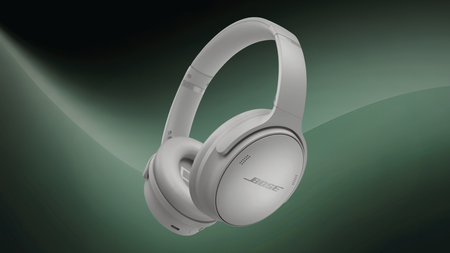


MWC 2026 officially gets underway on March 2 and will continue through March 5, but the announcements are already coming ahead of its start. We can always count on the annual tech event to bring tons of new phones, laptops and tablets, and we’re expecting to see some robots and other gadgets too — plus plenty of AI news, of course. In addition to the announcements, MWC is our chance to get hands-on time with some of the most interesting new devices, like the Xiaomi 17 Ultra and Honor’s Robot Phone.
Engadget’s Mat Smith is on the ground in Barcelona, and we’ll be updating this story as the week goes on to keep you in the loop on everything that caught our attention. Keep checking back here for the latest MWC news.

Honor
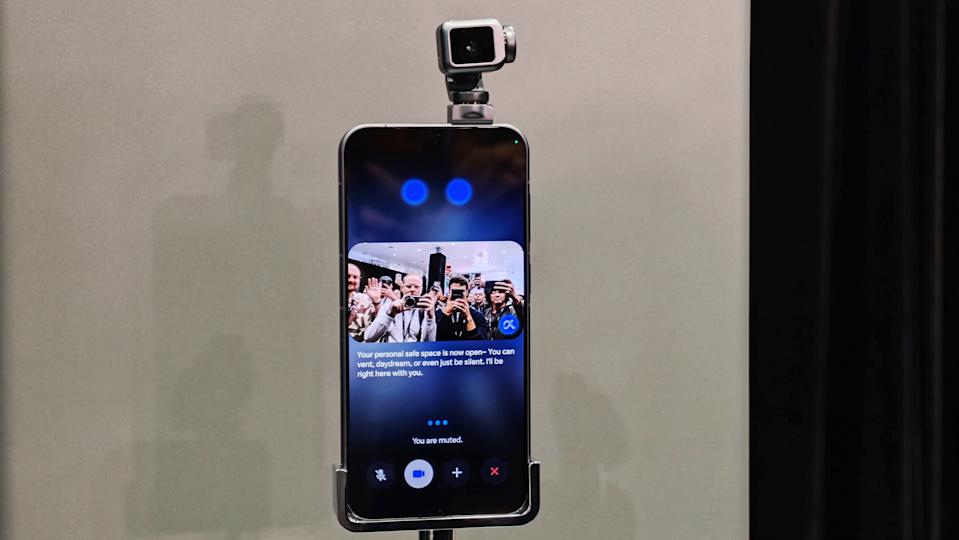
The Robot Phone. (Image by Mat Smith for Engadget)
Honor teased its Robot Phone this past fall and we just finally got a proper look at it at MWC. And it’s pretty freakin’ cute. The phone is equipped with a camera that’s mounted on a highly mobile 4-degrees-of-freedom gimbal, which tucks away into a compartment on the back when it’s not in use (making for a pretty beefy camera bump). In a demo at MWC, the camera, which behaves like a little robot head, bobbed along to music and showed off some of its gesture skills, like cocking its “head” and nodding in agreement.
Honor didn’t reveal too much spec-wise, but the company says the primary camera uses a 200-megapixel sensor. The gimbal will offer three-axis stabilization, which will be coupled with camera modes such as Super Steady Video and AI Object Tracking. The Robot Phone isn’t quite ready for release at the moment, but the company says it will launch later this year.
Advertisement
Be sure to check out Mat Smith’s writeup on the Robot Phone for a more in-depth look.
Honor’s humanoid robot. (Image by Mat Smith for Engadget) (Image by Mat Smith)
It’s not a humanoid robot reveal without some backflips and a choreographed dance performance. Honor introduced its robot at MWC with all the spectacle we’ve come to expect (though the bot didn’t do any talking). It’s simply called the Honor Robot, and the company has plans for it to be used in both industrial and domestic settings.
Honor Magic V6 (Honor)
The Robot Phone isn’t the only phone Honor showed off at MWC. The company also announced its Magic V6 smartphone, which it says is the thinnest phone in its category, measuring 8.75mm folded and 4.0mm open in the white colorway. The other three colors — black, gold and red — are slightly thicker, at 9mm folded and 4.1mm open.
Not too much has changed from the V5, though, which only came out in August 2025. It does however have the Snapdragon 8 Elite Gen 5, with 16GB RAM and 512 GB storage. As for the cameras, there are two 50-megapixel lenses and a 64-megapixel telephoto, plus a 20-megapixel f/2.2 selfie lens on the cover and internal display.
Advertisement
The international version of the Magic V6 will have a 6660mAh battery with 25 percent silicon content, while the version sold only in China will boast a battery with a rated capacity of more than 7000mAh and 32 percent silicon content. Honor hasn’t yet shared details about pricing and availability.
Honor MagicPad (Honor)
Ahead of MWC, Honor also announced what it claims is the thinnest Android tablet in the world: the 4.8mm thick MagicPad 4. We’re expecting to hear more about this at Honor’s press conference on Sunday, but so far we know it features a 12.3-inch 165Hz OLED display and weighs just 450g. It comes with up to 16GB of RAM and 512GB of storage, and is powered by Qualcomm’s Snapdragon 8 Gen 5 chipset. The thinness doesn’t count the camera bump, Honor notes. The MagicPad 4 has 13MP rear and 9MP front cameras. It also boasts spatial audio, with eight speakers.
Just as the display is slightly smaller than the previous MagicPad, the MagicPad 4 has a smaller battery at 10100 mAh. It comes with a 66W fast charger. The MagicPad 4 will run Honor’s MagicOS 10. We don’t yet know how much it will cost, but we’ll update this after Honor’s press conference (where we’re also expecting to see the company’s robot) with any new details.
Xiaomi x Leica
Mat Smith for Engadget
Xiaomi kicked off MWC this year by announcing the global launch of its 17 Ultra smartphone, which debuted first in China back in December. It’s unclear if the phone will ever come to the US, but it’s now rolling out in Europe. Xiaomi teamed up again with Leica to make a photography-focused smartphone, and the 17 Ultra sports a 1-inch 50-megapixel camera sensor with a f/1.67 lens, a telephoto setup with a 200MP 1/1.4-inch sensor, and a 50MP ultrawide camera. There’s also a manual zoom ring around the camera.
Advertisement
Check out our hands on for our first impressions of what it’s like shooting with the Xiaomi 17 Ultra. And there’s more to it than just the camera. The 17 Ultra has a 6.9-inch OLED 120 Hz display that peaks at 3,500 nits of brightness, and a 6000mAh silicon-carbon battery. The Xiaomi 17 Ultra starts at £1,299 (roughly $1,750).
Leica also announced a new phone made in partnership with Xiaomi at MWC. It looks a whole lot like Xiaomi’s 17 Ultra, but isn’t the 17 Ultra, exactly.
Leica Leitzphone by Xiaomi hands-on at MWC 2026 (Image by Mat Smith for Engadget)
Like the 17 Ultra, Leica’s Leitzphone by Xiaomi has a 1-inch camera sensor and physical controls for zoom and other settings, using a mechanical ring around the camera unit. It features a Leica-designed intuitive camera interface with the option to show just the essentials when you’re shooting, hiding all the modes and labels. There’s a monochrome shooting mode and Leica filters.
The Leica branding is splashed all over it in design and wallpapers, but it’s otherwise pretty similar to the 17 Ultra, with the same specs. Like the 17 Ultra, it has a Snapdragon 8 Elite Gen 5 chip and a 6.9-inch 120Hz display. This one’s priced at €1,999 (roughly $2,362).
Advertisement
The Xiaomi Pad 8 Pro (Xiaomi)
In addition to the 17 Ultra, Xiaomi announced two new tablets at MWC this year: the Xiaomi Pad 8 and Xiaomi Pad 8 Pro. There’s nothing revolutionary here, but they’re lightweight and thin, with both being 5.75mm thick and weighing 485g, and have a 9200mAh battery. The Pro model is powered by a Snapdragon 8 Elite chip, while the regular Pad 8 uses the Snapdragon 8s Gen 4 chipset.
Xiaomi also unveiled a new 5000mAh powerbank, the UltraThin Magnetic Power Bank 5000 15W. The 6mm thick power bank comes in three colors with an aluminum alloy shell: orange, silver and charcoal gray. Along with that, the company introduced the Xiaomi Tag, its own take on the Bluetooth item tracker. The Xiaomi Tag has a built-in hanging loop so it can be attached directly to a keyring, and the company says it will work with both Apple Find My and Google’s Find Hub for Android.
Tecno
Tecno
We can always expect to see some wild phone concepts at MWC, and this year we’re starting with one from Tecno. The company unveiled a modular concept smartphone design that can be as thin as 4.9mm in its base configuration. There’d be 10 modules to choose from based on the announcement, including various camera lenses, a gaming attachment and a power bank, relying on magnets to keep it all together — or Modular Magnetic Interconnection Technology, as Tecno is calling it.
Thinking of freshening up your home this spring? Good news — IKEA has just launched a huge spring sale with enormous savings on storage, decor, and lighting. As TechRadar’s Homes Editor, I’ve browsed through all the offers on lights and lamps to bring you my pick of the very best bargains.
It’s a particularly good time to get started with smart lighting, with deep discounts on IKEA’s already cheap smart switches (which you can use to control its smart bulbs), plus smart plugs (which let you control your existing lights remotely).
Fancy something fun? There are also great savings on battery-powered string lights for both indoors and out, which would look charming draped over a cabinet, or help set the mood when you’re entertaining outside as the weather gets warmer.
And of course, you can also follow TechRadar on YouTube and TikTok for news, reviews, unboxings in video form, and get regular updates from us on WhatsApp too.
Unlimited resources truly open up every potential for ocean exploration, and the latest U-Boat Worx innovation elevates a private submarine to new heights. Its most recent offering, the updated Super Sub, has caught up with the speed of aquatic life at depth and can keep up with it. This vessel can carry a pilot and two passengers down to 300 meters at a speed of 10 knots, which is much faster than most other personal submersibles to say the least.
The Super Sub’s body was literally expanded from nose to tail, and side wings were added to increase the overall width to 3.27 metres. That’s essentially a revolutionary body shape designed to cut through the water with minimal resistance. An acrylic pressure hull in the front provides passengers with a practically unobstructed view in all directions because it is free of tanks and other equipment.Passengers relax in quality leather seats inside a climate-controlled cabin with all the amenities, including air flow controls to keep things just right, a Bluetooth music system, and even space to store chilled drinks.
SUBMARINE TOY FOR KIDS – Let young science and engineers create their own deep-sea adventures with this LEGO Technic Deep-Sea Research Submarine…
REALISTIC FEATURES – This creative building set includes lots of realistic features like the rotating propellers and grabbing arm to help kids…
DETAILED ACCESSORIES – The transparent cockpit opens to give access to the seat and controls; the barrel accessory can be picked up using the…
Four electric thrusters in the back provide a total of 100 kilowatts of forward power. A handful of smaller thrusters installed on the wings provide a further 12 kilowatts of control. They run on a 62-kilowatt-hour battery, which provides 8 hours of operation or around 18 kilometers at cruise speed. Hydrofoils attached to the rear thrusters may tilt to direct the force precisely, allowing the submarine to bank around curves of up to 30 degrees or climb and descend at steep angles of up to 45 degrees.
The pilot uses a joystick controller called the SHARC system, which connects the thrusters and hydrofoils for quick response at any angle. For surface navigation, there is a wireless remote called MARLIN, which allows you to position the sub over a dive site or direct it away from the support yacht before beginning your dive. The screens inside provide real-time tracking data from a wide-angle sonar capable of scanning 130 degrees ahead for 100 meters. It has auto-tweak functionality, which allows it to avoid obstacles in real time.
If you want to take a break from the controls, the sub includes automated depth and direction hold functions that will keep you stable. A maximum depth protector prevents the sub from diving deeper than 300 meters and returns it to the surface if it approaches the limit. To be safe, there is a deadman switch that will automatically surface the sub if the pilot stops responding after a certain amount of time. The backup life support system will keep you alive for 96 hours by providing oxygen, food, water, and other necessities. In an emergency, there’s a manual drop-weight release that adds extra buoyancy to assist you go back to the surface quickly, as well as a line that marks your position once you’ve resurfaced. To top it all off, the independent DNV organization certifies that all of these safety elements meet the tightest criteria after testing the Super Sub in the waters near Curaçao.
The Super Sub weighs 9,000 kg and still has room to slip into the water from a yacht deck or dock thanks to the handy sliding freeboard extension, which allows you to lift the hatch in turbulent circumstances without fear of it getting caught. Let’s not forget those strong lights on the outside; when you’re diving, they light up the seafloor or wrecks and provide a magnificent view down into the depths, transforming what was once a boring old view out to sea into a true window into the secret world beneath the waves.
When you look at the price tag, it’s roughly 5.2 million euros, or around 6 million dollars, which covers the entire vessel from the moment it leaves the factory floor to the day it’s delivered with all of the documentation completed. U-Boat Worx, the Dutch business behind dozens of these submarines since 2005, has refined its design over the years, and the latest Super Sub is their fastest model yet. [Source]
Before LaGuardia and JFK, New York City had Floyd Bennett Field, its first dedicated airport. From the moment it opened in 1931, it served as the location in Brooklyn for modern aviation to get off the ground (literally and figuratively). Eventually, the aforementioned LaGuardia Airport was built in 1939 and became the global hub for travel that it is today. That didn’t mean the Floyd Bennett Field no longer served a purpose, however.
Floyd Bennett Field was purchased by the United States Navy in 1941 as World War II kicked into high gear in Europe. Even before the United States formally entered the war after the attacks on Pearl Harbor in December 1941, the U.S. Navy was using the space to train ground crews. Later, the Navy flew anti-submarine patrols from Floyd Bennett to protect American and British ships that were crossing the Atlantic. This old airport was also home to aircraft like the PBY Catalina seaplane that were hugely instrumental to the Allied war effort.

The Catalina was essentially a flying gunboat and patrol platform with four total machine guns and the ability to carry upwards of four bombs totaling 4,000 pounds for taking out German U-boats. That kind of firepower flying out of a convenient location like New York City was instrumental to the Allies in the early stages of the war.

Advertisement
Floyd Bennet Field’s role in WW2 and beyond
While patrols were ongoing in the North Atlantic, Floyd Bennett Field was also instrumental to carrier operations in the Pacific theater. A number of aircraft manufacturers had factories in New York City, including Grumman. This company was responsible for making planes like the F6F Hellcat, one of the top World War II fighter aircraft. The Hellcat pummeled the Imperial Japanese Navy, scoring a total of 5,155 air “kills” over the span of just two years. Hellcats were flown and tested at Floyd Bennett Field and then transferred to the West Coast for deployment to carrier groups.
Advertisement
Just being the home of the PBY Catalina and F6F Hellcat would cement the airport’s place in U.S. Navy history. However, it also served as the first ever testing and training ground for the then-bleeding edge helicopter in 1943. After the war, operations at the park slowed down, and it was closed entirely as a military airport in 1971. It is now preserved as part of the National Park Service.
The U.S. Federal Bureau of Investigation (FBI) warned network defenders that Iranian hackers linked to the country’s Ministry of Intelligence and Security (MOIS) are using Telegram in malware attacks.
In a flash alert issued on Friday, the FBI says Telegram is being used as command-and-control (C2) infrastructure by malware targeting journalists criticizing the Iranian government, Iranian dissidents, and various other oppositional groups worldwide.
The bureau linked these attacks to the Iranian-linked and pro-Palestinian Handala hacktivist group (also known as Handala Hack Team, Hatef, Hamsa) and the Iranian state-sponsored Homeland Justice threat group tied to Iran’s Islamic Revolutionary Guard Corps (IRGC).
In these attacks, the Iranian hackers are using social engineering to infect targets’ devices with Windows malware that enables them to exfiltrate screenshots or files from compromised computers.
Advertisement
“Due to the elevated geopolitical climate of the Middle East and current conflict, the FBI is highlighting this MOIS cyber activity,” the bureau said.
“This malware resulted in intelligence collection, data leaks, and reputational harm against the targeted parties. The FBI is releasing this information to maximize awareness of malicious Iranian cyber activity and provide mitigation strategies to reduce the risk of compromise.”
Iranian malware attacks abusing Telegram (FBI)
This warning was published one day after the FBI seized four domains (handala-redwanted[.]to, handala-hack[.]to, justicehomeland[.]org, and karmabelow80[.]org).
The websites available via the seized clearnet domains were used by the Handala and Homeland Justice threat groups, and a third threat actor tracked as Karma Below, during their attacks and to leak sensitive documents and data stolen in cyberattacks targeting victims in the United States and around the world.
These actions follow Handala’s cyberattack on U.S. medical giant Stryker, in which they factory reset approximately 80,000 devices (including employees’ personal computers and mobile devices managed by the company) using the Microsoft Intune wipe command after compromising a Windows domain administrator account and creating a new Global Administrator account.
Advertisement
Last week, the FBI also warned that Russian intelligence-linked threat actors are targeting Signal and WhatsApp users in phishing campaigns that have already compromised thousands of accounts.
“The activity targets individuals of high intelligence value, such as current and former U.S. government officials, military personnel, political figures, and journalists,” said the FBI in a public service announcement issued after Dutch and French cybersecurity authorities described similar account-hijacking operations.
Malware is getting smarter. The Red Report 2026 reveals how new threats use math to detect sandboxes and hide in plain sight.
Download our analysis of 1.1 million malicious samples to uncover the top 10 techniques and see if your security stack is blinded.
In what’s probably the culmination of Apple’s 50th anniversary celebrations, maybe we’ll get to see Tim Cook dance again at a large-scale party now being planned at Apple Park.
Apple Park is to host an elaborate 50th anniversary party
The anniversary celebrations were started by Tim Cook writing an open letter about Apple’s five decades, and since then events have followed in New York, China, South Korea, France, and Thailand. More are expected in the UK, Canada, and Australia, but probably the biggest one will be at Apple Park. According to Bloomberg, Apple is planning what’s described as “an elaborate 50th birthday party” at its Cupertino, California headquarters. There are no further details in the article, and not even confirmed dates, but there is supposition that John Ternus will be center stage as the most likely next CEO of the company. Continue Reading on AppleInsider | Discuss on our Forums
Xiaomi has been out of the laptop game for a few years, but the Book Pro 14 (2026) completely outperforms their previous offerings with cutting-edge technology that manages to deliver everyday comfort and a serious punch in an impressively small chassis, rivaling Apple’s MacBook Air.
The Book Pro 14 weighs a sleek 1.08kg and is only slightly thicker than 15mm, making it easy to sneak into your luggage without drawing notice. The entire design revolves around a single huge piece of die-cast magnesium alloy that acts as the main frame, which is then encased in a carbon fiber bottom panel and a titanium support beneath the keyboard. The idea behind all of this was to minimize weight while yet having a structure robust enough to withstand being bunged in a travel bag, and there are a variety of color possibilities, including blue, grey, pink, and white, which is a nice change from the usual bland neutrals.
SPEED OF LIGHTNESS — MacBook Air with the M4 chip lets you blaze through work and play. With Apple Intelligence,* up to 18 hours of battery life…
SUPERCHARGED BY M4 — The Apple M4 chip brings even more speed and fluidity to everything you do, like working between multiple apps, editing videos…
BUILT FOR APPLE INTELLIGENCE — Apple Intelligence is the personal intelligence system that helps you write, express yourself, and get things done…
The screen is 14.6 inches and features an OLED panel with a resolution of 3,120 x 2,080, which is refreshed 120 times per second. Oh, and it’s touch-sensitive and bright enough to see in almost any setting. Overall, it provides a really fluid experience whether you’re seeing documents or watching videos, and the colors appear accurate for creators.
Advertisement
Intel basically provides the CPUs, and there are a few solid options to select from, ranging from the Core Ultra 5 325 to the Core Ultra X7 358H, which has an incredible 16 cores. Meanwhile, the top models have 32GB of RAM and 1TB of storage, with an internal slot for adding another drive for a total of 4TB.
Power management is handled by a huge 10,000 square millimetre vapor chamber, which works in tandem with dual fans and three independent airflow channels to keep the whole thing nice and cool even when running solely on battery power. The battery has an amazing 72WH capacity, and estimations range from 19.8 hours of mixed use to 12 hours of uninterrupted video playback or over 16 hours of online meetings. It’s also easy to recharge; simply plug in a 100w charger and you’re ready to go.
When it comes to connectivity, we’ve got the essentials without the extras: a single standard USB-A connector adjacent to an HDMI port, two USB-C ports (one of which supports Thunderbolt), and a 3.5mm socket to meet all of your audio demands. The keyboard boasts 1.3mm of key travel and LEDs to help you work late at night or in low-light conditions. The touchpad is a reasonable size at 129 square cm and responds to pressure in a way that allows you to employ a few extra gestures for shortcuts and other purposes. To sweeten the deal, Xiaomi has included a few features that should make life easier, such as seamless file copying between devices and the ability to read documents on whatever tablet or phone you own without having to worry about it.
Prices in China start around 8,500 yuan, which equates to approximately $1,234 for the entry-level model with 24GB of memory and 1TB of storage. The higher-spec models with faster processors and more memory cost around 10,500 yuan. Sales began in China on March 21st, and if you were lucky, you might have gotten one of the early deals that were available.
Salesforce acquired Clockwise’s workers, but not the company itself
Clockwise customers advised to migrate to Reclaim
Agentforce annual recurring revenue up 169%
Clockwise CEO Matt Martin has announced via a LinkedIn post that Salesforce will be hiring the startup’s team as part of its broader Agentforce push.
Because Salesforce is acquiring the workers and not the company, Clockwise has confirmed it will be shutting down from March 27, 2026, leaving customers having to find an alternative.
Martin confirmed that all customer data would be deleted, meaning that Salesforce won’t have access to Clockwise’s database, and that unused subscriptions will be refunded.
Article continues below
Advertisement
Clockwise closes down as Salesforce acquires workers, not company
“We believe this move will allow us to have even greater impact,” Martin wrote, explaining the founding team’s success and experience. “We will be bringing our deep expertise building reliable, agentic software to the Agentic Enterprise.”
The 10-year-old company has served major customers, like Uber, Netflix and Atlassian, during its time in market, but now users are being directed to rival app Reclaim in light of the near-immediate shutdown. Reclaim will be matching Clockwise’s prices to make the transition less painful.
Advertisement
“They’re joining my charter to build Agent Interoperability and Orchestration within Agentforce,” Clockwise co-founder Gary Lerhaupt wrote in a separate LinkedIn post. Lerhaupt joined the Agentforce team as Product Architecture VP a little over a year ago after around eight years at Clockwise. Martin also spent over two years at Saleforce between 2014 and 2016 before departing to create Clockwise.
Although Salesforce has not commented on how the new recruits might drive Agentforce forward, we can at least expect immense growth. The Agentforce business grew 169% in terms of annual recurring revenue, now accounting for $800 million. Total company revenue for the most recent full year stood at $41.5 billion, up 10% year-over-year.
Sign up to the TechRadar Pro newsletter to get all the top news, opinion, features and guidance your business needs to succeed!
The team from Auger accepts the Startup of the Year trophy at the 2025 GeekWire Awards. (GeekWire File Photo / Dan DeLong)
Boot up the robot trophies, it’s time to vote for the finalists for the 2026 GeekWire Awards!
This is your chance to help us honor the top innovators and entrepreneurs in Pacific Northwest tech — from Startup of the Year to Next Tech Titan, from Young Entrepreneur of the Year to CEO of the Year, and much more.
With 50 finalists across 10 categories, the annual GeekWire Awards are a much-anticipated and hotly-contested affair, hosted live from the Showbox SoDo in Seattle on May 7.
Cast your ballot here or in the embedded form at the bottom. Voting runs through April 10.
The event will feature a VIP reception, sit-down dinner and fun entertainment mixed in. Tickets go fast, and a limited number of half-table and full-table sponsorships are available, so contact events@geekwire.com to reserve a spot for your team today.
Over the next few weeks, we’ll feature the finalists in special GeekWire editorial posts on each category.
Advertisement
Now in its 18th year, the GeekWire Awards is a premier event for the Seattle tech community, bringing together hundreds of geeks to celebrate innovation and the entrepreneurial spirit. Past winners have included Auth0, Tableau, Smartsheet, Rover, Remitly, Swype, Redfin, Zulily, The Black Boardroom Initiative, University of Washington computer scientist Ed Lazowska, Technology Access Foundation and many others.
(function(t,e,s,n){var o,a,c;t.SMCX=t.SMCX||[],e.getElementById(n)||(o=e.getElementsByTagName(s),a=o[o.length-1],c=e.createElement(s),c.type=”text/javascript”,c.async=!0,c.id=n,c.src=”https://widget.surveymonkey.com/collect/website/js/tRaiETqnLgj758hTBazgd5M58tggxeII7bOlSeQcq8A_2FgMSV6oauwlPEL4WBj_2Fnb.js”,a.parentNode.insertBefore(c,a))})(window,document,”script”,”smcx-sdk”); Create your own user feedback survey
GrapheneOS is doubling down on privacy at a time when most platforms are moving the other way. The security-focused Android alternative says it won’t require personal information from users, even as governments tighten identity and data collection rules.
In a recent public post, the team said the OS will remain usable without accounts or ID checks worldwide. That decision comes with a clear tradeoff. If local laws demand verification, access in those regions could disappear instead of the platform changing its approach
That puts GrapheneOS on a direct collision path with a broader push toward verified online services. While most companies adapt quietly to stay compliant, this project is choosing to stay outside that system entirely.
No ID means no compromise
The position itself isn’t new, but the clarity is. Access to GrapheneOS and its services won’t depend on signing up or proving your identity, regardless of where you are
Advertisement
GrapheneOS will remain usable by anyone around the world without requiring personal information, identification or an account. GrapheneOS and our services will remain available internationally. If GrapheneOS devices can’t be sold in a region due to their regulations, so be it.
Instead of tailoring rules for each market, the platform keeps a single global standard. If a government requires identity checks to distribute or use it, support in that region stops there.
That approach is rooted in how the OS is built. GrapheneOS strips out unnecessary data exposure wherever possible, including avoiding centralized accounts that can tie activity to a person. Adding identity requirements would break that model at a fundamental level.
Why this stance stands out
There’s a practical downside to that consistency. In regions where stricter rules take effect, users could lose access to GrapheneOS devices or updates tied to the platform
Advertisement
The limitations go further than availability. Hardware support is deliberately narrow, limited to devices that meet strict security requirements. Broader compatibility options are avoided because they weaken protections. Even setup reflects that thinking, with preloaded devices offered to reduce exposure to standard Android installs
YouTube
That tradeoff is hard to ignore. You get stronger privacy guarantees, but you give up flexibility in devices and access.
What happens next
GrapheneOS is still trying to grow without loosening its rules. A long-term partnership with Motorola aims to bring official support to more devices starting in 2027, which could improve availability without lowering its standards
Expansion will stay selective. Devices that don’t meet its requirements won’t be supported, even if that slows adoption.
The project’s funding model also plays a role. It runs entirely on donations, now enough to support a full-time team. That independence gives it room to hold this line while others bend under regulatory or commercial pressure.
Advertisement
If you’re thinking about switching, the value is straightforward. You get a mobile OS that avoids identity checks entirely, but depending on where you live, access could become harder to maintain over time.
Looking for the most recent regular Connections answers? Click here for today’s Connections hints, as well as our daily answers and hints for The New York Times Mini Crossword, Wordle and Strands puzzles.
Today’s Connections: Sports Edition is a tough one. Let’s hope you know a lot about a certain NBA player. If you’re struggling with today’s puzzle but still want to solve it, read on for hints and the answers.
Connections: Sports Edition is published by The Athletic, the subscription-based sports journalism site owned by The Times. It doesn’t appear in the NYT Games app, but it does in The Athletic’s own app. Or you can play it for free online.
Hints for today’s Connections: Sports Edition groups
Here are four hints for the groupings in today’s Connections: Sports Edition puzzle, ranked from the easiest yellow group to the tough (and sometimes bizarre) purple group.
Yellow group hint: Somebody has to win!
Advertisement
Green group hint: Gridiron strategy.
Blue group hint: Certain bird.
Purple group hint: A hoops star.
Answers for today’s Connections: Sports Edition groups
Yellow group: Used to break a tie.
Advertisement
Green group: Offensive formations in football.
Blue group: Cardinals.
Purple group: Associated with Shai Gilgeous-Alexander.
You must be logged in to post a comment Login