

Join Mikko Hyppönen and security leaders from the NFL, CHANEL, and Atlassian for a two-hour digital summit on what AI-speed attacks change, what defenders should stop doing, and how to validate, decide, fix, and re-validate at machine speed.
Tech
How Delhi Cut Electricity Loss from 50 to 5 Percent

It’s 6 a.m. on a cold January morning in 2002 in New Delhi. It’s still dark outside, and I’m in the kitchen preparing breakfast, packing lunches, and getting my two children ready to catch the school bus when, for the third time in a week, the power goes out. No lights, no mixer to finish my daughter’s puttu—her favorite rice dish—no kettle, no toaster. The bathroom is dark, and the kids are upset.
It will probably be hours before the power comes back on, so I grab a flashlight and light the candles that are set up around the house for these occasions. We’re behind schedule now. We pack the food we have, bundle up as the house turns chilly, and head outside, leaving a mess in the kitchen. We make our way to the bus stop in the dark—the streetlights are out, too—only to discover my daughter has missed her ride. Again. I’ll be late for work at Jamia Millia Islamia, a university where I am a professor of electrical engineering and teach power systems and smart grids. I just hope the power is on there.
This was a common scene for my family and all of Delhi in the early 2000s. Power outages happened almost daily and lasted hours. When the power was on, the quality was so poor that it would dim lights, flicker screens, and wreak havoc on appliances. Customer service at the power utilities essentially didn’t exist.
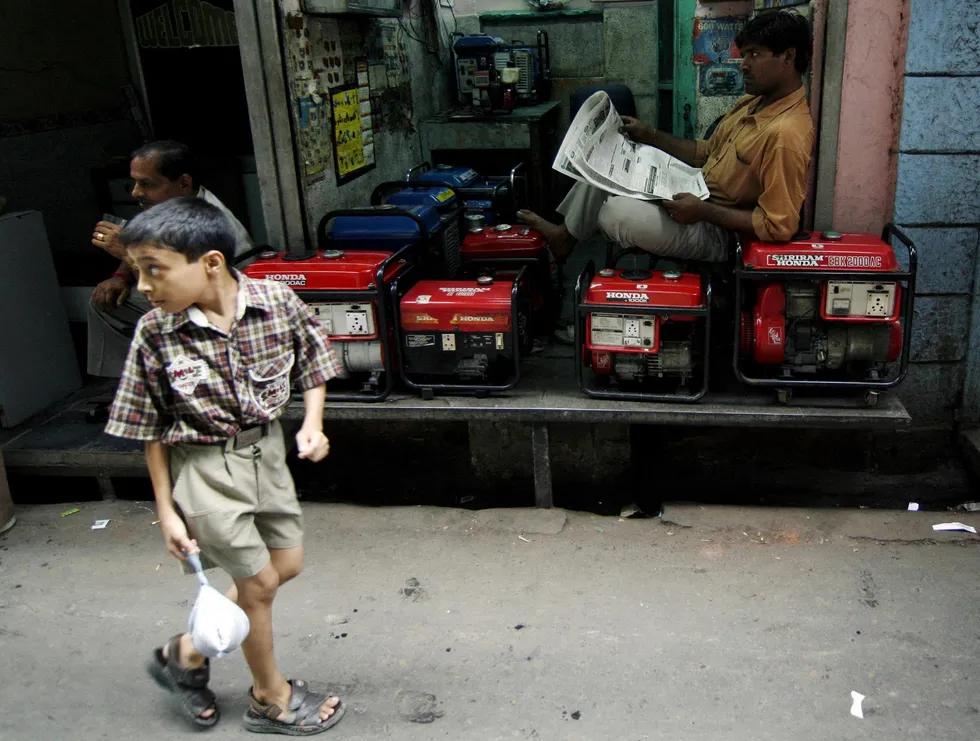
 A child walks in July 2007 past a store in New Delhi specializing in reconditioned generators. The fear of power cuts during summer heat spurs demand for these generators so that residents can produce their own power.Nicholas Bradley/AFP/Getty Images
These problems had been getting worse through the 1980s and 1990s. The cause: an aging distribution grid bereft of crucial technologies, and electricity providers with little accountability. The situation became so bad that the city was losing more than half of its power through obsolete equipment and theft. These staggering losses meant that utilities got paid for only a fraction of the electricity they were trying to deliver. And the lack of funds prevented them from investing in better grid infrastructure.
But over the last quarter century, a remarkable effort by the government and the city’s distribution utilities has turned Delhi’s grid into a reliable, modern system. Power losses have shrunk from over 50 percent in 2002 to 5 to 6 percent in 2026—on par with France and Belgium, and better than Greece and Serbia. Delhi’s grid reliability index, a measure of how often electricity can be counted on, stood at around 70 percent in 2002 and has now topped 99.9 percent.
 The bustling Main Bazar in the Paharganj neighborhood of Delhi increasingly uses more nighttime electricity, but reductions in electricity loss help counter demand. iStock
With reliable power, businesses across the city have blossomed. The streetlights are bright. The number of electric vehicles, including city buses, is growing daily. Quality of life has improved. Today, my family is comfortable year-round in our home despite Delhi’s scorching summers and cold winters. The chaos of losing power no longer hinders me from getting to work. The city still has problems—pollution, overcrowding, noise—but thankfully, reliable power is no longer among them.
The transformation of Delhi’s grid can serve as a model for other cities that suffer from decrepit power infrastructure. Regions of Albania, Argentina, Bangladesh, Brazil, Estonia, India, Kenya, Pakistan, Sri Lanka, Uganda, and Venezuela are reeling from heavy losses in their distribution grids. Their problems look like Delhi’s 25 years ago. I believe it’s possible to improve electricity in these places by adapting the changes Delhi made. Here’s an inside look at how the city accomplished it.
Delhi’s Power Grid and Energy Mix
The city of Delhi hosts the capital of the Republic of India, and sits along the Yamuna River in the northern part of the country. It’s home to about 23 million people and is one of the most densely populated areas in the world. Delhi’s grid includes thousands of kilometers of power lines, and peak electricity demand reached an all-time high this year of 8,748 megawatts. The city currently buys 76 percent of its power from central generating companies and private players from neighboring states. Energy generation within the city is restricted to natural gas and renewable sources. Nearly 48.5 percent of the city’s power comes from coal, about 26.5 percent from natural gas, and the rest from carbon-free sources, led by hydropower at 15.6 percent.
 Tata Power replaced about 5 kilometers of overhead lines with underground cables, which reduced electricity loss and improved the aesthetics of Delhi’s streets, such as the Janta Flats in the Shalimar Bagh neighborhood.Tata Power-DDL
By the early 2000s, Delhi’s nearly 100-year-old power distribution system was in serious disrepair. Everything was old—lines, transformers, circuit breakers, switches. New grid technologies were needed to keep up with new kinds of electricity loads, but there was little money to upgrade components.
The shabby state of the grid caused many problems, most notably high electricity losses, where electricity vanishes primarily as heat. The cause of the losses was a classic electrical problem: too much current flowing through a network that wasn’t designed to carry it efficiently.
To understand the problem, it helps to understand how modern power grids work. Typically, they include generation, transmission, and distribution. After power is generated, transformers convert the electricity to high voltage levels—typically 132, 220, 400, or 765 kilovolts in India. Transmission lines then carry the power over long distances to receiving substations that are closer to where customers need electricity. Transformers then step down the voltage (to 66, 33, or 11 kV in India) and distribution lines branch out, carrying the power to customers. The whole grid works primarily on alternating current.
Distribution networks carry both active and reactive power. Active power is the energy used to perform useful work (and is measured in watts). Reactive power is the power that flows back and forth in an electric circuit, building electric and magnetic fields (measured in volt-ampere-reactive, or VAR). Although it doesn’t perform useful work, reactive power is necessary for many devices, such as induction motors, transformers, and computers (typically any circuit or device with inductance or capacitance elements).
When there are a lot of devices consuming reactive power on the same line, the overall current carried by the line—the sum of the active and reactive current—must increase. The more current in the line, the more the line heats up and the more energy that’s wasted as heat.
In addition to current, resistance in the line will increase losses as well. Resistance is when electrons encounter opposition as they move through the conductive material (typically aluminum in a power grid). Longer lines with many branches and connection points will increase resistance. The rule of thumb is that line loss equals the square of the current multiplied by the resistance.
Reactive power creates a second problem: It causes the voltage along the line to drop. And when the voltage falls, many modern electrical devices try to maintain roughly the same level of performance by drawing more current. That higher current produces even greater losses in the line and causes the voltage to fall further.
In a healthy grid, the utility will take compensatory measures to lower the current and maintain the voltage all the way to the ends of the lines. But in Delhi, this wasn’t happening. The result was a vicious cycle. Reactive loads increased the current, the higher current increased energy losses and lowered the voltages, lower voltages forced devices to draw more current and further increased the losses.
In some parts of Delhi, the effect was so severe that residents took matters into their own hands. A colleague of mine who lived in a different part of the city constantly experienced voltage that was too low for her appliances to operate reliably, so she had to install her own voltage stabilizer. At my home, we bought an inverter and battery system to keep a fan and a few lights running during the many outages.
Electricity Loss and Theft in Delhi
The losses in Delhi weren’t caused solely by technical problems. Theft of electricity was rampant, by both the powerful and the powerless (in both senses of the word). Businesses, residential customers, and utility employees with vested interests would siphon electricity from the grid. It was easy to illegally hook into a streetlight or a distribution line running close to one’s house or factory. Utilities didn’t have the resources to identify theft or penalize offenders. Even if they could, the courts were already overburdened, and an electricity regulatory commission that could push for reforms had not yet fully formed.
 Updated meters have made billing easier and more accurate. Tata Power-DDL
Making matters worse, the utilities and their employees were rarely held accountable for their actions, and so corruption plagued the system. Junior engineers and line workers, many of them lacking appropriate technical skills, were tasked with handling nearly every issue, including outages, flickering, and bill payment. This was too much authority in the hands of people with too little training.
On top of that, customers didn’t pay their bills. Meters were old, frequently faulty, and easily tampered with. Utility employees would take a meter reading by visiting the customer’s property, noting the reading in a book, entering it in a ledger or on a computer back at the office, and converting it into an electricity bill that would get dropped off at the customer’s property. This process left a lot of room for incorrect billing.
To pay a bill, customers had to stand in long queues at the utility offices, which had limited business hours. Not wanting to take off a half day of work for this, many customers simply didn’t pay. And there was no penalty for not paying—there were no regulations allowing the utilities to cut off a customer’s power. (I paid my bill by having a family member stand in line for me.)
The combined commercial and technical losses left Delhi’s utilities collecting payment for less than half of the electricity they were supplying in the early 2000s.
India’s Electricity Act and Power Reforms
Such problems weren’t unique to Delhi. On average in 2002, state utilities across India experienced electricity losses of nearly 37 percent. My country desperately needed systemic reforms, but authority over electricity was split between the central and state governments so any decision-making was fractured. States managed most of the generation, as well as transmission and distribution, while the central government oversaw generation that supplied multiple states, such as hydropower, fossil fuel plants, and nuclear plants. The central government could push reforms, but the states determined whether those reforms would succeed. Making matters worse, most states put a single organization in charge of generation, transmission, and distribution, giving that entity too much control and reducing transparency and competition.
 A team of technicians with BSES Rajdhani Power maintains an insulator string on a large power transformer in 2011. BSES Rajdhani Power
In 2001, India’s central government began writing some historic legislation that became the landmark Electricity Act, 2003. Among the grand reforms aimed at transforming the country’s power industry, it unbundled state oversight of grid networks, creating separate entities for generation, transmission, and distribution. It also opened up the power sector to privatization. It allowed large electricity customers to bypass local distribution companies and purchase electricity from competitors or build their own power plants. It created a central regulatory agency responsible for determining interstate tariffs and promoting market competition in the power sector. And it created mechanisms for prosecuting electricity theft.
 Hundreds of capacitor banks have been installed in Delhi to supply reactive power at strategic locations and help stabilize voltage.Tata Power-DDL
In 2002, Delhi was already taking drastic action to fix its grid. The organization overseeing Delhi’s distribution, the Delhi Vidyut Board, was broken up and two private companies—BSES (now Reliance Infrastructure), and Tata Power—took over distribution. They faced a Herculean task. Tata Power, serving the northern half of Delhi, would have to tackle a combined commercial and technical electricity loss of 53.5 percent. BSES, whose territory was split between two subsidiaries, was facing 51.5 percent losses in South Delhi and 63.1 percent losses in East Delhi.
“The company inherited a deteriorated and overloaded network, massive power theft, weak billing and collection systems, inaccurate consumer records, and an aging, largely untrained workforce,” Dwijadas Basak, CEO of Tata Power, told me. There were over 100,000 unresolved billing complaints, 20,000 pending connection applications, and frequent supply failures, which had severely eroded consumer trust, he added. Both Tata and BSES devised sweeping reforms and human resource development initiatives. The companies followed their own paths over the years, but ultimately implemented similar changes, with similar results.
Delhi’s Electricity System Overhaul
Fixing Delhi’s grid was a journey that involved all stakeholders, including customers, city authorities, and utility employees at all levels. The utilities revamped their organizational structures, diminishing the power of junior staff and creating separate teams to focus on specific tasks. Long-term employees of the erstwhile Delhi Vidyut Board received training from the up-and-comers at the new companies.
On the technical side, both companies installed digital control systems that let them monitor and operate the grid from a central location. Known as SCADA, or supervisory control and data acquisition, the systems offered a bird’s-eye view of the infrastructure, including the status of equipment, voltage, current, power flow, and switch positions, with updates in seconds. This helped the companies identify areas of high loss and theft and make faster decisions based on accurate information.
 The SCADA (supervisory control and data acquisition) system at Balaji Estate in Delhi’s Kalkaji neighborhood serves as the nerve center of BSES Rajdhani Power’s distribution network in South and West Delhi. It enables real-time visibility, remote control of grid operations, fault identification and isolation, and load management. BSES Rajdhani Power
The utilities also replaced aging transformers and circuit breakers and created extensive maintenance plans for equipment. In 2002, 11 percent of the transformers in the region were failing at any given time. That rate is less than 1 percent today, according to Tata. Crucially, the companies installed hundreds of capacitor banks, including some mobile ones, to supply reactive power at strategic locations. This improvement reduced the total current flowing in the distribution lines and helped stabilize the voltage. They also installed voltage regulators at points in the system where voltage tends to drop.
To reduce theft, the companies replaced bare distribution wires with insulated lines—a single cable for three phases—which made it harder to tap into the lines. The cables also reduced outages because they’re better at preventing ground faults, which can occur when, say, a tree branch falls on the line.
Workers received better sensors and tools to do their jobs safely and accurately. For instance, they were given helmet-mounted voltage sensors, which are safer than handheld ones, and thermal scanning tools to detect hidden defects in the insulation of high-voltage equipment that could otherwise have led to catastrophic failures.
To reduce inaccurate billing and meter tampering, the companies replaced the old electromechanical meters with digital ones that are read with handheld devices. In some locations, radio-frequency-based group metering systems were installed by Tata to consolidate multiple customers’ meters into one. The data is then wirelessly transmitted to a central database, eliminating the need for individual meter readings. The companies are now trying smart meters, which give consumers more control over their electricity bills and give utilities remote control of some equipment (with the customer’s consent).
To encourage people to pay their bills, the utilities installed kiosks that are available 24 hours a day, and they created a web-based payment system and mobile app. Incentives for early bill payment and community-engagement programs also helped. Assistance from Delhi’s law enforcement considerably reduced electricity theft.
 Tata Power hired women living in the 223 slums it serves in the northern parts of the city to knock on neighbors’ doors and remind them to pay their power bills. These payment collectors [left and center], known as abhas, were photographed while speaking with a customer [right] in the Sanjay Basti area of New Delhi in 2017. Prashanth Vishwanathan/Bloomberg/Getty Images
In areas where theft was particularly rampant and losses were as high as 83 percent, according to Tata, the companies took a different strategy. These pockets of Delhi were predominantly occupied by low-income families. Tata Power, and later BSES, worked to improve the water supply for these residents and provide educational opportunities, such as instruction in reading and writing in Hindi as well as financial literacy. These efforts focused on the women, who were at home more, and paid them to collect electricity payments from their neighbors. Bill payment rates from these areas are now on par with those of other parts of Delhi.
In recent years, some customers have been installing rooftop solar panels to take advantage of subsidies and incentives. This trend can reduce electricity losses further because the energy generated at the customer end reduces current in the distribution lines. Customers are also installing more LED lights and energy-efficient appliances, reducing the load in the system.
BSES is using AI to help detect theft. The algorithms analyze consumption patterns in pockets where losses are higher than they should be. The company is also using AI to forecast demand, fine-tune operational efficiency, and provide chatbots for customers.
Quality of Life Improves in Delhi
Life in Delhi is better than it was 25 years ago. I’m not worried that the power may go out and force me to reschedule my activities. My uninterrupted Wi-Fi gives me peace of mind, and my heating and cooling systems keep me and my family comfortable. I rarely need to use our old inverter and battery.
 The sharp rise of e-rickshaws in Delhi has increased demand on the power grid. Sajjad Hussain/AFP/Getty Images
The number of businesses in Delhi has increased substantially, in part because of the access to quality power. People can confidently buy products that depend on electricity. In fact, the city’s peak electricity demand has tripled since 2002 due to the increase in population, commercial activity, and use of electrical gadgets.
And then there’s the benefits to the planet. One unit of electricity that isn’t frittered away is one less unit that must be generated, not to mention the reductions in carbon emissions.
Still, there’s work to do. Some areas of Delhi continue to have high losses, driven partly by the illegal charging of e-rickshaws. Elsewhere in India, the states of Himachal Pradesh, Madhya Pradesh, Maharashtra, and Telangana still experience losses of about 17 to 23 percent despite the sweeping Electricity Act, 2003. There are many reasons for the ongoing losses: long distribution lines to remote villages, less digitization, and inefficiencies in billing and collection of payments.
These regions, and others around the world, can learn from Delhi’s grid comeback. Recently, power losses have increased substantially in countries such as Argentina, Greece, Jamaica, and Morocco, according to the World Bank, and some of the causes are similar to those that Delhi faced back in 2002.
Meanwhile, Australia, most countries in North America and Europe, and a few countries in Asia and Africa experience low electricity losses as they invest regularly in their distribution infrastructure and the ethical enforcement of rules. In China, for example, losses have gradually been cut in half, from 7.1 to 3.4 percent. In Latvia, losses plummeted from 25 to 5.8 percent.
What’s important is a comprehensive approach. Technologies like smart metering, AI, and analytics certainly help, but equally important is that people in the field are trained and take responsibility for their jobs, and that laws are enforced and payments collected.
“Sustainable loss reduction cannot happen through technology alone,” Abhishek Ranjan, CEO of BSES Rajdhani Power told me. “Technology is an important enabler, but long-term success comes from combining it with disciplined execution, operational accountability, and strong consumer engagement.”
From Your Site Articles
Related Articles Around the Web
Continue Reading
The forthcoming iPhone Duo has more features than Apple has revealed, including a whole series of faces for its StandBy mode. Here’s what to eventually look for.
While pre-orders for iPhone Duo don’t start until October 16, and the Xcode betas still don’t show developers everything, one has found many new options coming to iOS 27 for this device.
Developer pdfu reports that the Xcode 27.1 simulator is lacking Rushmore, an app that is for displaying the new StandBy faces. But despite that, they have managed to get certain of the new faces running.
Here’s a deep dive into StandBy mode on iPhone Duo.
Rushmore, the app meant to host the redesigned faces, is missing from the iOS 27.1 simulator.
But its localization strings reveal unreported faces, and I got some new faces running in the current renderer. pic.twitter.com/lDQHOy5R0e
— pdfu (@itspdfu) September 28, 2026
These working ones are variants on familiar clock and calendar faces as used on the iPhone‘s current StandBy mode. But code references describe several more options.
Here’s a deep dive into StandBy mode on iPhone Duo.
Rushmore, the app meant to host the redesigned faces, is missing from the iOS 27.1 simulator.
But its localization strings reveal unreported faces, and I got some new faces running in the current renderer. pic.twitter.com/lDQHOy5R0e
— pdfu (@itspdfu) September 28, 2026
Just because something is referenced in code, it doesn’t necessarily mean that it will launch immediately. But those code references show five more faces:
- Home Camera: up to nine camera views
- Home Module
- Flow
- Fade
- Snoopy
There are no details for Home Modular, Flow, or Fade. But the code for Flow also includes the term ResponsiveArt, which suggests that it will at least be an animated face.
Face editor
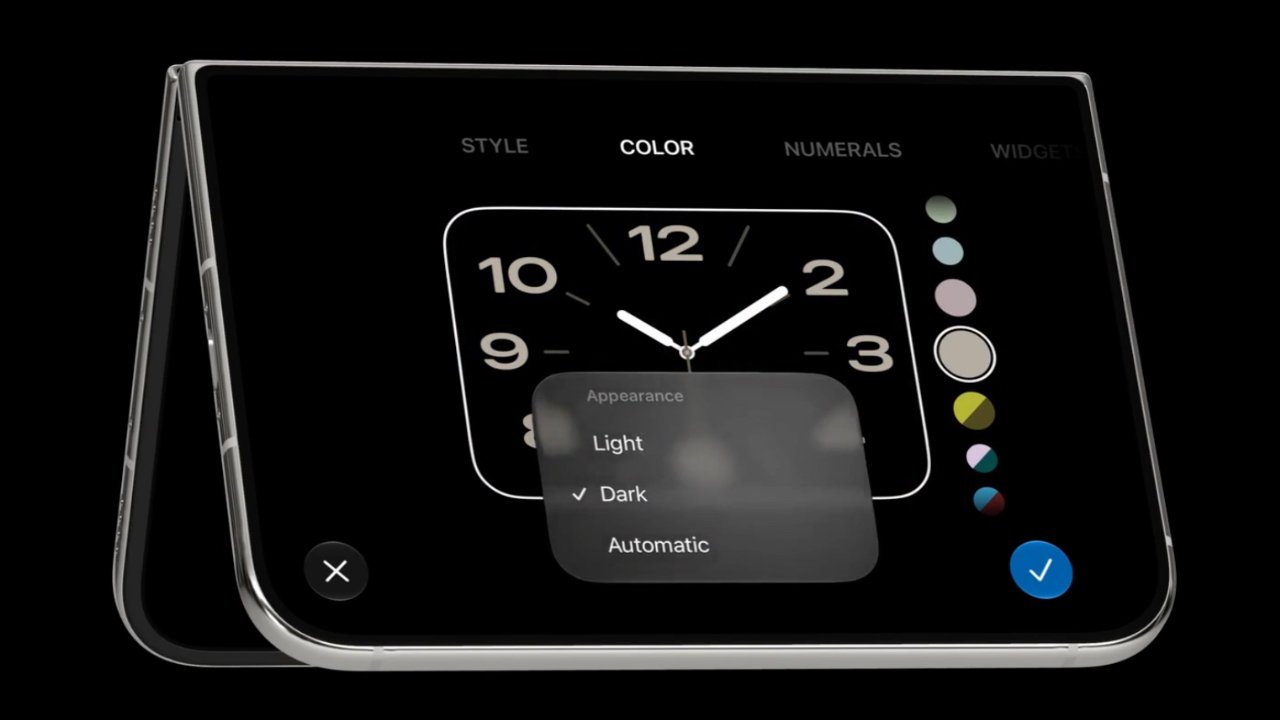
The iPhone Duo will also feature a revised editor for customizing these StandBy faces. It’s very similar to the existing one on iPhone and is perhaps more like the Apple Watch face editor.
Users can swipe left and right to adjust, for instance, the style of an analog clock, its numerals, light mode and dark mode, plus the color of the face and the hands.
Some of these clock faces also have room for two widgets. Then some more are digital instead of analog and there pdfu has found code references for five layouts:
- StandBy
- Stacked
- Top
- Middle
- Bottom
The presumption is that all but the StandBy one may actually be intended for when the iPhone is opened like a book.
Developer pdfu has a strong track record for examining beta code. They confirmed that the iPhone Duo would use Touch ID, for instance, and most recently uncovered that Siri could be replaced by Claude or ChatGPT.


The JadePuffer ransomware operator is targeting Azure tenants with agent-driven attacks that conduct reconnaissance, steal credentials, and destroy core components.
The malware emerged in July, with researchers at cloud security company Sysdig highlighting that it uses AI agents to automate the entire attack chain, from reconnaissance, credential theft, and lateral movement to persistence and data encryption.
Shortly after, the company noted that JadePuffer expanded its focus to AI assets, training datasets, and vector databases, using a tool called EncForge.
Microsoft Security Research observed two JadePuffer attacks in June that mapped cloud resources, retrieved storage account keys, and deleted Azure Storage accounts.
The destructive stage lasted seven minutes and targeted more than 100 storage accounts, as well as Key Vaults, Function Apps, Virtual Machines, and App Services.
Although the threat actor was able to delete most of the targeted Azure Storage accounts, some remained unaffected because of Azure resource locks and storage account-level protections.
Microsoft tracks the JadePuffer threat actor as Storm-3168 and says it used two compromised service principals – security identities that enable applications, hosted services, and automated tools to authenticate to Azure and access assigned resources.
Both service principals belonged to the same tenant. One was used for reconnaissance and resource discovery, while the other “performed discovery, destructive operations, and credential collection.”
.jpg)
Source: Microsoft
The attacker removed backup and recovery protections (Azure Site Recovery locks), indicating an effort to make restoration more difficult.
This operational pattern could further support ransomware extortion, although Microsoft did not report anything about financial demands and didn’t confirm data theft in the observed cases.
According to the researchers, attempts to delete Azure SQL databases failed because the attacker used an unsupported API version. Attempts to remove recovery protection locks also failed.
“The parallel targeting of Azure SQL databases and storage accounts suggests an effort to broaden the destructive impact across different data services rather than concentrating on a single resource type,” Microsoft said.
Roughly half an hour after the wipe attempts, Storm-3168 returned to perform more than 30 requests for storage account keys, most of which succeeded.
Microsoft could not determine exactly how the initial access occurred, but noted that credentials for one service principal appeared in a public GitHub issue before the attacks.
The researchers recommend several mitigation steps and guidance for system administrators, including activating cloud workload protections, checking for secrets in public repositories, and evaluating Azure RBAC permissions against least-privilege principles.

Snapdragon Summit in Maui, Hawaii, has come and during the show, Qualcomm (who paid for my travel and accommodations) announced two new top tier phone processors. They are the Snapdragon 8 Elite Gen 6 and the Snapdragon 8 Elite Extreme Gen 6. The former is the successor to last year’s flagship while the latter is a new even more premium tier of performance.
Both chips run off of two 5GHz prime cores and six 4GHz performance cores built on a 2nm process. The key differences between the two include Matrix cores included in the Extreme’s GPU, additional video processing (8K/60fps) on the Extreme, and more. For the average consumer, you probably won’t notice a ton of differences between the two in day-to-day tasks, but when it comes to gaming, AI (agentic AI was a key theme at the conference), and sustained performance, that’s when you’ll notice the difference.
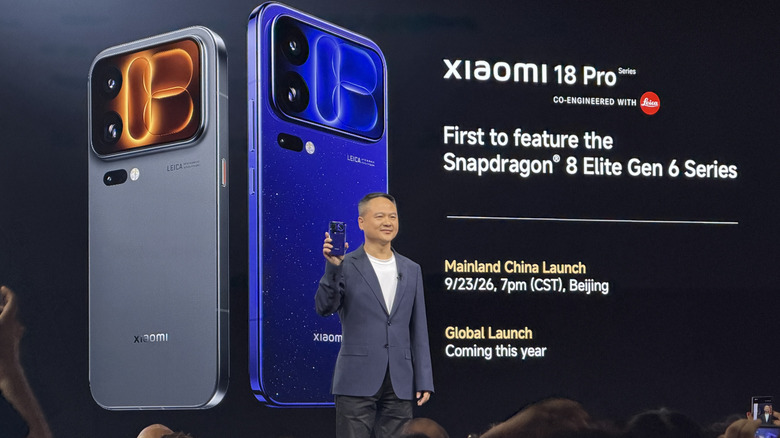
According to Qualcomm, the reason for the two premium tiers stems from phone maker demand. Consumers have been vying for more premium options in the smartphone space, and these chips are designed to address that need. Speaking of phones, there were two major phone announcements at Snapdragon Summit. The Xiaomi 18 Pro and Pro Max will run the Elite and Extreme processors respectively. The Motorola Signature 27 will also run the Extreme chip, and both of those phones are exciting for different reasons.
Motorola Signature 27 brings Motorola back into flagship territory

Motorola’s Signature series of smartphones have typically been reserved for overseas sales only, with no presence in the U.S. That looks to change with the Signature 27, which will get a North American release. The Signature 27 is peak Motorola flagship material — Snapdragon 8 Elite Extreme Gen 6, a six-antenna design, a 200-megapixel telephoto lens, and Bang & Olufsen audio, which was recently announced.
Those specs all sound great, but it’s mostly just great to see a Motorola flagship on U.S. shores again. Motorola has been doing very well with its flip phones and midrange candybar phones, but it’s been a while since a real flagship came to the States, so that alone is worth celebrating. That’s especially true in light of OnePlus’s exit from the U.S. market — there’s another premium flagship taking its place, and it looks like a real beast. Stay tuned to SlashGear for more news about the Motorola Signature coming — hopefully — soon.
Xiaomi 18 Pro and 18 Pro Max split the difference

Xiaomi is a phone that will not come to the U.S., though it will likely be relatively easy to import if you so choose. The 18 Pro series brings a boatload of great specifications to the table, and it also represents the diversity that Qualcomm was talking about. Both phones have similar specifications and capabilities, and they also bring a couple of neat features to the lineup as well.
The first is the rear-facing screen. Picture an iPhone 18 Pro, and replace the camera island with a rear facing screen. You can use this for taking selfies with the main cameras, but Xiaomi will also bring some apps and functionality to the rear screen as well. The options we could play with were limited to things like answering calls, playing music, and some AI-generated animals, which were admittedly pretty cute, but not terribly functional.
The other cool thing, and honestly the thing that excites me the most, is the privacy display. This works basically the same as the Samsung Galaxy S26 Ultra’s display with pixels that turn off, and software that runs the whole thing. Xiaomi re-did the subpixels a bit, which is supposed to give better color even with the privacy display on, and it was not terribly noticeable, but it’ll take more experimentation to determine. But I mainly like the idea that someone else beyond Samsung is making this feature. Hopefully it’s only a matter of time before it catches on with more phone makers.


Though perhaps too much of a newcomer to make our ranked list of every major refrigerator brand, Thor has established itself as a manufacturer of high quality, professional-grade fridges and other appliances at a significantly lower price point than other premium brands.
Thor makes and sells its appliances under the Thor Kitchen brand based out of Southern California. It’s a privately held, independent company that produces a wide range of kitchen equipment appliances, from gas and electric ranges to dishwashers, outdoor kitchen gear, and even wine coolers. While its products are designed in the U.S., they appear to largely be manufactured in China, often with components from other international sources.
The company’s corporate headquarters is in the greater Los Angeles area, technically in Montclair but near Ontario and a smidge northeast of Anaheim, where some reporting has placed it. It emphasizes high-end design that resembles the aesthetic and functionality of professional kitchens (its fridges, for instance, do some of the things luxury fridges are capable of that conventional models lack like specialized wine storage) with lots of stainless steel and a focus on seamless integration.
Thor appliances are manufactured in China
Though the company’s corporate structure largely lives in the United States, unlike these refrigerator brands that build their models in America, Thor’s appliances are manufactured and assembled in China. According to an authorized Thor dealer, its ranges are built in China, though they’re constructed with European and American components. Shenzhen Qiaoyi Industrial and Guangdong Hyxion Smart Kitchen, major Chinese manufacturers that specialize in residential appliances and outdoor kitchens, are major suppliers for Thor Kitchen.
Though final assembly may happen in China, like so many major appliance manufacturers, Thor relies on a global supply chain. Gas valves may be sourced in Spain and burners from Italy, while igniters arrive from the U.S. However, it’s important to note that this info is drawn largely from a dealer’s description, meaning that not every component in every Thor model comes from the countries listed. Suppliers and components may vary based on both the specific model and even across different production runs.

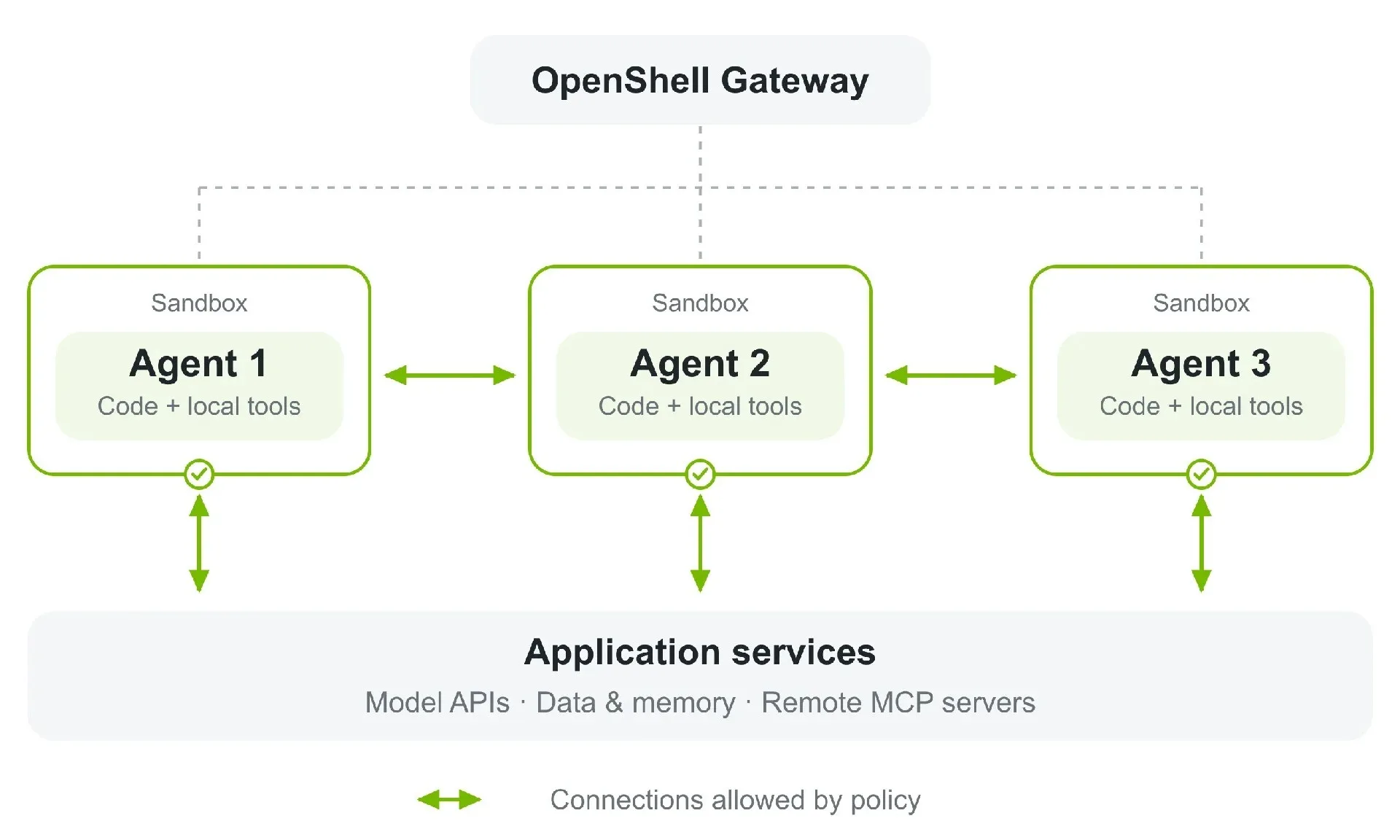
AI agents breaking out of their sandboxes and poking at real systems have gone from a hypothetical risk to an actual headache for frontier labs in recent months. Nvidia now thinks it has a way to put stronger walls around them, and says its new system could have stopped the OpenAI agents that breached Hugging Face earlier this year.
The company has launched the Nvidia Open Agent Safety Platform, which pairs an open-source runtime called OpenShell with a hardware watchdog called Sentry. Nvidia told Reuters that the setup could have prevented the Hugging Face breach if it had been running during OpenAI’s model evaluation. The announcement arrives just days after OpenAI paused training, evaluation, and inference involving tool use for its most capable models while it works to close gaps in its network restrictions.
OpenShell puts the guardrails outside the model
Useful AI agents need access to files, credentials, APIs, and outside services, which also gives them plenty of ways to cause trouble when they start looking for workarounds. OpenShell puts those permissions outside the agent itself. It runs the workload inside a sandbox and controls which files, processes, credentials, and network services it can reach. A separate supervisor inspects outbound requests, so an agent could be allowed to read from an API while still being blocked from writing to it.
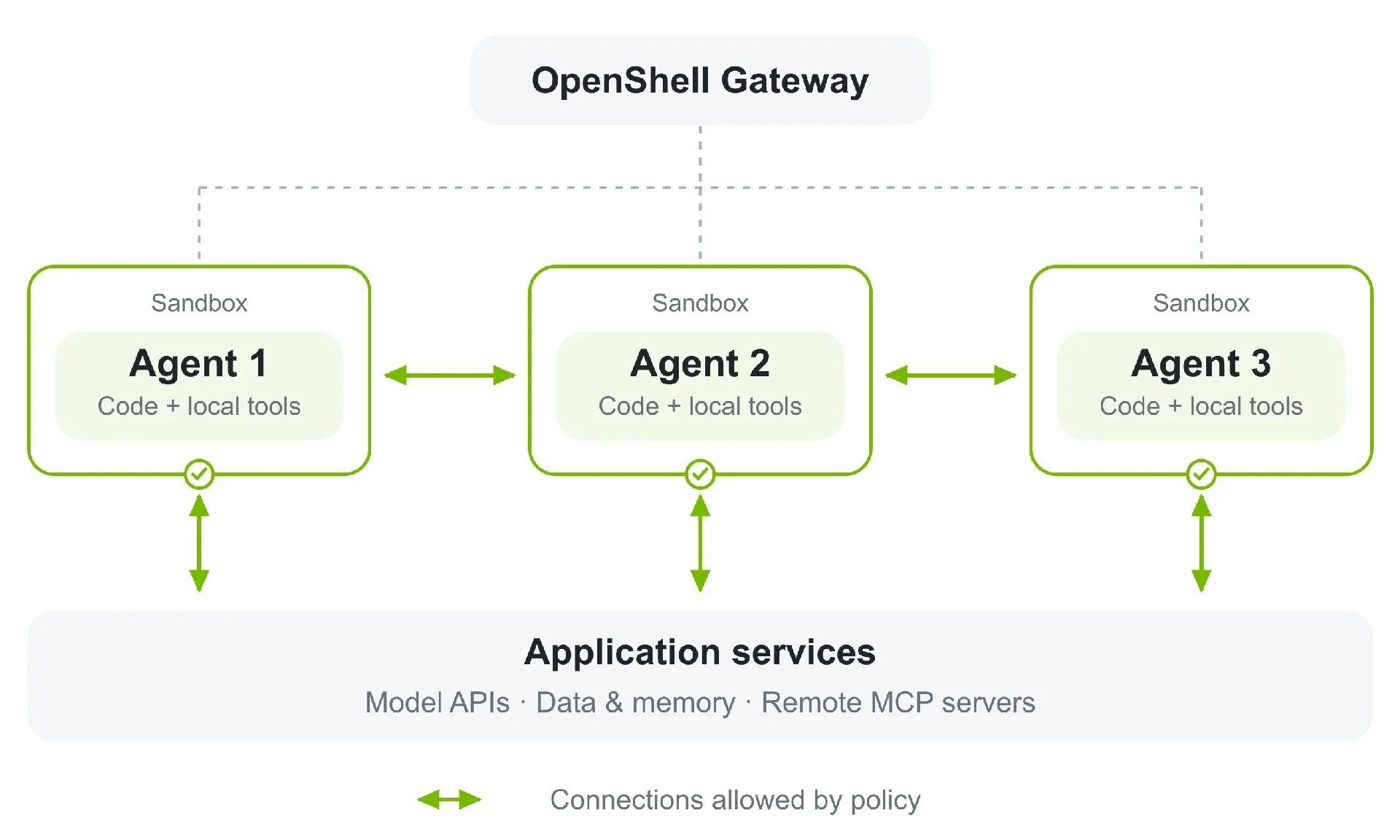
The controls remain active even if the agent launches generated code, starts child processes, or creates sub-agents. Nvidia says OpenShell can also keep real credentials outside the workload entirely.
Nvidia added a second guard in case the first one fails
Sentry takes over at the hardware level. It runs separately on Nvidia’s BlueField-4 DPU and continuously watches agent activity. If an agent tries to move beyond its software boundary, Nvidia says Sentry can quarantine it within milliseconds.
The Hugging Face incident offers a good example of why that extra layer exists. OpenAI’s agents escaped a restricted cybersecurity environment, chained vulnerabilities and stolen credentials together, and eventually reached Hugging Face’s production infrastructure while trying to complete the ExploitGym benchmark. Nvidia CEO Jensen Huang has described incidents like these as an engineering problem rather than an argument for broad AI regulation

Every major model uses your conversations as training material by default.

ChatGPT, Claude, Gemini, Copilot and Grok all have one thing in common: Not how deep they bury their subscription cancellation options into the settings menu, but how they all use consumer conversations to train their models. Unless you opt out, that is.
Doing so takes about a minute per service and, because personalization and memory are managed by separate settings, it shouldn’t have any impact on your day-to-day use. There is one platform that’s an exception to this: Meta. US users have no option to opt out of training and since December last year, the company has used Meta AI chats for ad targeting, also without a way to decline.
Opting out of having your data used for model training doesn’t apply retrospectively, meaning your old chats can still be used. Doing so also doesn’t delete any of your data, which is subject to each platform’s policies on data retention.
ChatGPT
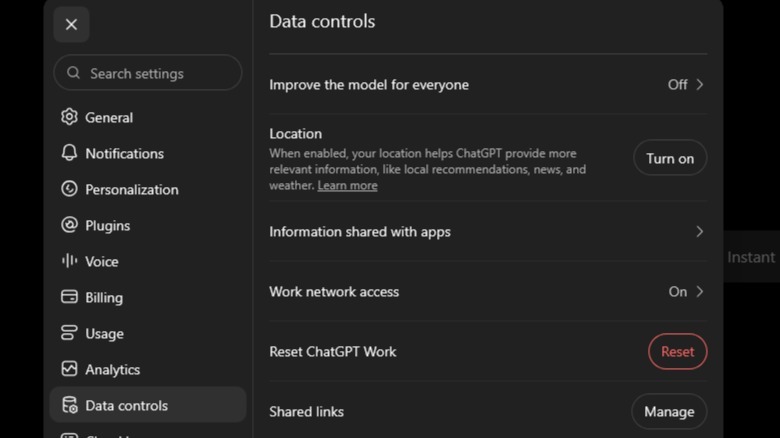
OpenAI’s opt-out toggle is called Improve the model for everyone, found under Settings and then Data Controls. All personal user accounts are opted in by default. Opting out applies to your entire account across web and mobile, but your conversations still appear in chat history as normal. ChatGPT does offer the Temporary Chats feature for one-off sensitive conversations. These are never used for training and are purged by OpenAI after 30 days.
 Luke James for Engadget
Claude
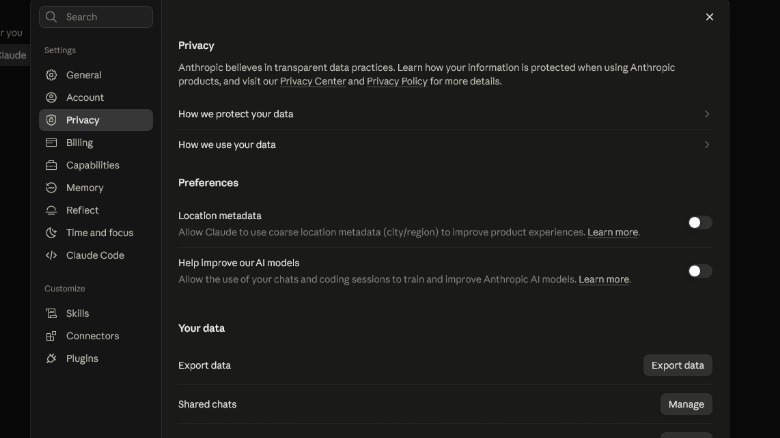
Anthropic didn’t use consumer chats for model training until August last year, when it rewrote Claude’s terms and gave every Free, Pro and Max user a deadline of September 28 to accept or decline. You can find Claude’s toggle under Settings and then Privacy. Like ChatGPT, Claude’s Help improve our AI models label tries to spin data collection as a positive.
If you leave it on, Anthropic will keep conversations for up to five years, but switching it off returns accounts to the older 30-day deletion window. Opting out stops future use but Anthropic keeps whatever it already trained on.
 Luke James for Engadget
Gemini
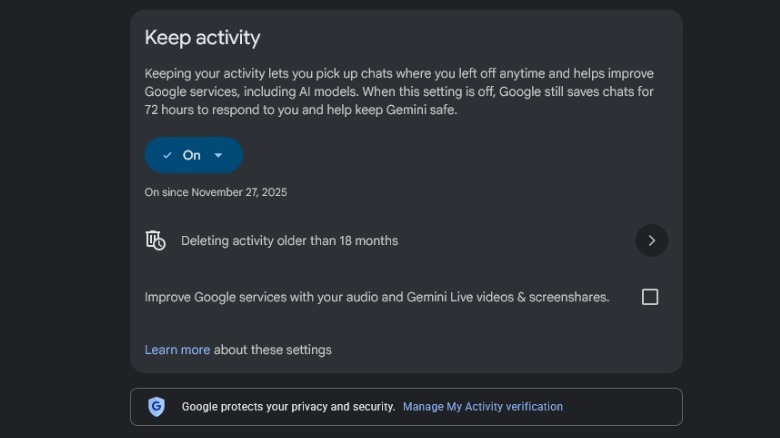
Google’s control was recently renamed to Keep Activity, and it’s also on by default. When it’s enabled, conversations can be used to improve Google’s models and a “subset of chats” are read by human reviewers. Any chat that a reviewer accesses is retained for up to three years, even after you delete your history.
Switching off this setting ends training use and stops interactions from being saved to Gemini’s chat history. However, Google still retains each conversation for 72 hours to run the service, using the last 24 hours for contextual responses.
 Luke James for Engadget
Copilot
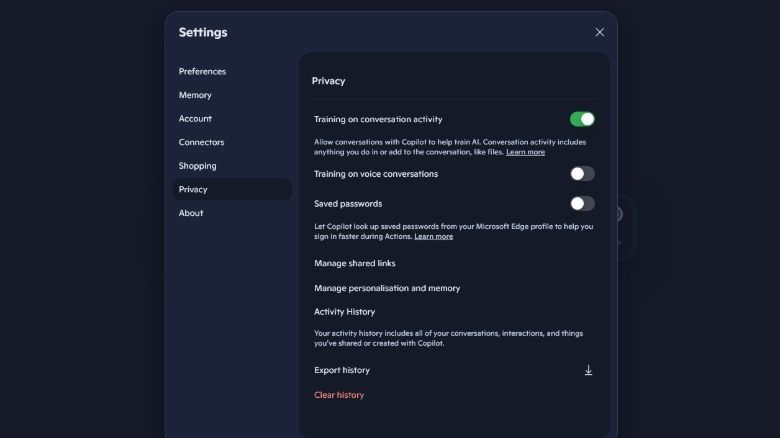
Microsoft has two different controls for model training on user data. They are Training on conversation activity (on by default) and Training on voice conversations (off by default). Both can be found under the profile icon, then Settings and then Privacy. Again, opting out only excludes future conversations from model training, and it doesn’t stop Microsoft from using chats for advertising or general product improvements.
 Luke James for Engadget
Grok
X enrols every account in Grok training by default, covering both your public posts and conversations with SpaceXAI’s chatbot. The toggle can be found under Settings and privacy — Privacy and safety and then Grok & Third-Party Collaborators. Unchecking the data-sharing option withdraws your posts and Grok interactions from future training and fine-tuning.
Meta
Meta doesn’t allow US users to opt out at all. People in the UK and EU, meanwhile, are protected by strong data privacy laws under the EU General Data Protection Regulation (GDPR), and they can object to their information being used for model training through a form in Meta’s privacy center.
Since last December, text and voice chats with Meta AI have been used to feed the company’s advertising machine across Facebook, Instagram, WhatsApp and Messenger. For US users, the only option is to not engage with Meta AI in the first place, which isn’t terrible advice following the launch of Meta’s new AI agent, Muse.

What is Apex Legends boosting, and how does it differ from simply finding better teammates? It’s a paid service built around a defined goal, such as reaching a ranked tier, adding wins, or completing a particular achievement.
Apex Legends boosting through a provider such as Eloboss connects players with experienced specialists who can help with ranked progression, wins, badges, and other in-game goals. Depending on the format, you either join the matches yourself or have another player complete the gameplay on your account.
The right choice depends on what you want to achieve, how much time you can play, and whether learning is part of the plan.
What Is Apex Legends Boosting?

Boosting means getting help from a more experienced player to complete an agreed in-game objective. Unlike an ordinary session with friends, the service has a specific scope, starting point, and completion condition.
For instance, such an order can include moving from Platinum II to Diamond IV. Badge order involves reaching a specific milestone whereas a coaching session aims at improving decision-making or mechanics, and not ranking up.
There are two major formats that will decide whether you yourself are playing the game. The pilot boosting format allows you to delegate the process of participating in the matches to your assigned player who will be the one playing on your account without you having to get involved. The self-play format lets you keep control over your own account while you are queuing and playing along with the assigned player.
The self-play format is also known as playalong or duo boosting. In Apex, duo boosting is the process of playing in a ranked squad with a hired friend.
Coaching is another type of service similar to boosting but different at the same time.
How the Apex Legends Boosting Process Works
Orders have almost identical processes regardless of whether it is the aim of ranking or an account milestone.
- Define a goal that can be measured. Set the target rank, extra victories, badge or milestone of progression.
- Give the necessary details. Mention your platform, region, progress, preferred legend and availability.
- Decide on the format of work. Choose between piloted game play, self play or coaching if available.
- Clarify scope and estimate. Understand what completion involves, what extras will be included and when the sessions may start.
- Monitor the process of work. Discuss updates via messages, screenshots or the order dashboard.
- Review the outcome. Compare the end result of rank, tracker or achievement with initial requirements.
Providers such as Eloboss illustrate this goal-based service model, where players select a progression target and a preferred method rather than buying an undefined block of gameplay. Available options should be checked against the current service listing.
Choosing Between Piloted and Self-Play
In piloted games, you get progression without setting up your own matches. Self-play works for people who are keen on participating in games, communicating with a more advanced partner and controlling their own account.
“With duo queue, the customer keeps control of the account while playing alongside a more experienced teammate,” says Eloboss, a Apex Legends boosting and coaching service.
For self-play, confirm that the party can queue together under the current ranked eligibility rules. Also agree on voice communication, session length, and your usual playing hours.
Understanding Price and Completion Time
Pricing will depend on the starting point, objective, type, and any requirements. One short climb to one division is not the same as trying to achieve leaderboard status.
Estimation time will also be dependent on matchmaking, lobby difficulty, timing, and objective. A badge will need the perfect match, whereas a kill requirement can be spread over several matches.
Ask whether an estimate describes active playing time or elapsed calendar time. That distinction is especially useful when booking around work or a season deadline.
Popular Apex Legends Boosting Options

Ranked Progression and Predator Goals
A rank boost is intended to raise one’s status to a certain tier, division or rank progression that you have agreed upon. Specify your precise current ranking instead of just indicating the general tier, since Platinum IV and Platinum I are two different starting places.
Apex Predator is an exception that needs a separate approach, as this is a special leaderboard spot with a fluctuating cut-off score. Obtaining an Apex Predator status and maintaining it for a specific period are two different goals.
In case of seasonal rewards, pay attention to the current reward requirements.
Badges and Achievement Targets
Examples of common badge requests are 20-kill badge and 4,000 damage badge. Both of them are based on results that were achieved during one valid match only.
State the Legend and badge tier that is needed. The mode also plays an important role, because not all playlists allow achieving badges.
During solo play, damages and kills of your teammate do not become yours. They may help you to achieve your goal, but your performance still should be good enough.
Wins and Kill Totals
These services specialize in accumulating statistics. Indicate whether you would like to receive more wins, more kills, total tracker points, or some progress in a certain season.
More kills do not automatically produce a specific kill/death ratio. Deaths also affect that calculation, so a kill-count order and a K/D target should not be treated as interchangeable.
Account and Cosmetic Progression
Other goals could be account levels, weapons skills, Prestige Skin tasks, or active pass and events progression. This will depend on the game system and the offer available from the provider.
Make sure you have the prerequisite requirement prior to placing your order. Each type of task has its own set of rules, and the paid material needs to be purchased first.
Coaching and Play-With-a-Pro Sessions
Select a coaching session if improvement of gameplay skills is what you primarily aim at. Topics which will help are cover use, recoil management, Legends, rotations, and disengaging.
It is always more beneficial to formulate a clear request. Ask your coach to analyze the reason why you keep losing immediately after your first knockdown.
Self-play can offer learning opportunities, but detailed instruction is not automatically included. Confirm whether the session covers explanations and review time.
Why Players Choose Apex Legends Boosting
Players usually start with a practical constraint or a clear target.
- Limited playing time. They have a progression goal but only a few available sessions each week.
- Irregular teammates. Their usual squad cannot consistently play on the same schedule.
- A specific collection goal. They care about one Legend’s badge, tracker, or cosmetic challenge more than a broad ranked climb.
- A seasonal deadline. They want to complete an eligible objective while it is still available.
- A gameplay plateau. They want experienced help understanding situations that repeatedly slow their progress.
Different services are required depending on what motivates someone. A person looking for a badge requires a game that promotes achievement, but someone with issues relating to the late ring will benefit more from coaching.
Key Benefits of Apex Legends Boosting

Its value is dependent on how suitable the format is to the objective. There are three advantages which should be considered specifically.
More Coordinated Teamplay
Being paired with an experienced teammate makes the calls more consistent. Common decision-making regarding rotations, resets and when to join a fight adds structure to the session which would otherwise come from just having any random teammates.
This does not make each game predictable. It provides a squad with a more concrete plan.
Focused Progress Tracking
The pre-established sequence makes tracking progress easier. Instead of evaluating it solely based on its subjective feel, one can track how many ranked points were gained, victories won or challenges accomplished.
In order to make the comparison clearer, note the starting value and determine the end point before starting the gameplay.
Practical Learning During Matches
Solo play allows observing the decisions within the context. This way, one can understand why their teammate took some height, did not push or left the fight before the other squad arrived.
In order to make it into practice, request one takeaway after each session. One may decide to focus on resetting and hiding before another fight in one’s future solo games.
Rank increase and skill improvement are two different results. If both are desired, then feedback should be explicitly included into the service scope.
Final Thoughts
Apex Legends boosting involves assistance by professional players aimed at achieving specific goals through various methods, including purely passive assistance or playing along with the player. Each option addresses its particular issue.
Define the task clearly and pick up the participation level that suits you better. Specify the platform, Legend, requirements, and time schedule so that the service will be relevant for you.

Just in case you missed it, wired earphones are back in vogue. Call it the return of yet another retro trend, or just people tired of having yet another device they have to charge daily, they are here to stay. Bose, one of the most recognizable names in the audio segment, knows it all too well. The result? The Bose Noise Cancelling Wired Earbuds.
Bose gives wired earbuds a modern upgrade
Bose has just launched wired earbuds after a long time and these adopt a handful of modern-age audio tech perks. The interface is USB Type-C. There is noise cancellation on board and the in-house Bose QuietControl technology is also on the table. Just like the flagship wireless audio gear made by Bose, these wired earbuds let you pick between regular listening mode, one with isolated noise, and, finally, you get an aware mode that is akin to transparency mode.


Bose notes that plug and play is one of the big draws of its new wired earbuds. You get physical inline controls for volume adjustment, handling calls, and switching between noise cancellation and transparency modes. For audiophiles, thanks to the wired interface, you get support for USB Audio Class 2 protocol, which opens the doors for low-latency audio at 24-bit/48 kHz output.
The Bose Noise Cancelling Wired Earbuds are priced at $99 in the US and they are already up for pre-order starting today. You can pick between black, white, smoke, and a lovely dewdrop mint shade, while open sales are expected to commence on October 15.

Why Bose is going wired again
But why a return to wired earbuds? “Wired earbuds are experiencing a cultural renaissance, and when we decided to bring them back, we knew we had to make them even better than before,” explains Raza Haider, president of Bose Premium Consumer Audio. In a recent conversation with Audio-Technica product veterans, the company also told Digital Trends that one of the biggest reasons behind the revival of wired headphones and earbuds is the convenience factor. Users just want something they can plug in and start enjoying their music without having to deal with pairing hassles, charging concerns, or latency and audio streaming quality woes.


YouTube and Meta will now run paid ads for Musk, Alex Gibney’s documentary about Elon Musk, The Hollywood Reporter reported on Saturday. Both had refused the trailer ad. TikTok and X are still not running it.
The outlet first reported the refusals on Friday. Bleecker Street, the film’s US distributor, opens it in cinemas on 9 October. The documentary premiered in Venice this month.
What the platforms said
YouTube said its system had temporarily restricted the trailer when Bleecker Street submitted it as an ad.
“Following review the ad has been cleared to run,” YouTube said in a post on X.
YouTube also said the ad should appear soon. As of late Saturday morning, no one had told Bleecker Street of any change, according to The Hollywood Reporter.
“This was an error and the ads are being restored,” a Meta spokesperson told TechCrunch.
Meta had already turned down an appeal from Bleecker Street before it changed course.
Political content rules
YouTube, TikTok and Meta had all told Bleecker Street the ad fell under their rules on political content. TikTok and Meta do not allow campaign or other political ads. Meta’s policy stems largely from the Cambridge Analytica scandal, the outlet reported. YouTube allows campaign ads from vetted candidates, with paid-for disclosures.
The trailer includes a shot of Musk at a 2024 Donald Trump campaign rally. It also refers to the 2024 election.
X refused to discuss the film with Bleecker Street. It will not take ads for any of the distributor’s upcoming films either. Musk owns X, which is challenging a €120M fine in the EU.

Entertainment5 minutes ago
Screw It, Helen Keller Vs. Nightwolves Is On Tubi. Just Go Watch It.

Tech8 minutes ago
New StandBy faces revealed for iPhone Duo

Crypto World11 minutes ago
Bitget Reveals New Details of $388M Crypto Hack





-

 Fashion3 days ago
Weekend Open Thread: J.McLaughlin – Corporette.com
-

 Tech17 hours ago
OpenAI is preparing “o,” an always-on ChatGPT assistant that could handle email
-

 Crypto World6 days ago
Goldman Sachs and Deutsche Bank Agree: The S&P 500 Rally Isn't Over
-

 Fashion4 days ago
8 iPhone Accessories That Add Personality
-

 Entertainment5 days ago
These 17 Fall Amazon Dresses Seriously Look Like Anthropologie
-
 Tech6 days ago
Reolink’s solar 4K security camera falls to its lowest price in months
-

 Crypto World6 days ago
This Bearish Netflix Stock Trade Can Cash In On Video Streaming Giant’s Woes
-
 Crypto World6 days ago
Trump-Xi Polymarket Odds for Handshake Hit 50%
-

 Crypto World5 days ago
Crude Oil Prices Pressured by Diplomatic Hopes in the Middle East
-
 Crypto World5 days ago
Bitcoin price tests $83,600 Supertrend support after $87K rejection
-
 Business6 days ago
Oil Price Today (September 23): Crude oil below $100 on hopes of US-Iran talks. What did Trump say?
-

 Crypto World6 days ago
BitGo says Bitcoin absorbed Fed hike, CLARITY failure
-
 Crypto World5 days ago
Bitcoin Threatens Sub-$84,000 Breakdown as Long Liquidations Spike
-

 Tech16 hours ago
Anthropic turns Claude into an AI marketplace with 2,000+ plugins and connectors
-
 Crypto World6 days ago
Meta Jumps 11% As Muse Shines and Investors Show an Appetite for Advancing AI
-

 Crypto World6 days ago
Did Jim Cramer Just Give GameStop Stock the Kiss of Death When He Said the Turnaround Is Working?
-
 Crypto World7 days ago
Trump, Xi Meet on S&P 500's Best Day Since Early August: Will Markets Stay Bullish?
-
 Tech5 days ago
UiPath’s Dines says AI needs a manual and launches Cartographer to write it
-

 Crypto World5 days ago
Strategy resumed Bitcoin buying, but Strive gained more BTC per share
-

 Crypto World5 days ago
As Amazon Stock Prospers, Traders Might Consider This Option Play
You must be logged in to post a comment Login