


Connect with us

Tech

How These XL Phones Compete

Published

on

Different ecosystems, but similar flagship hardware.

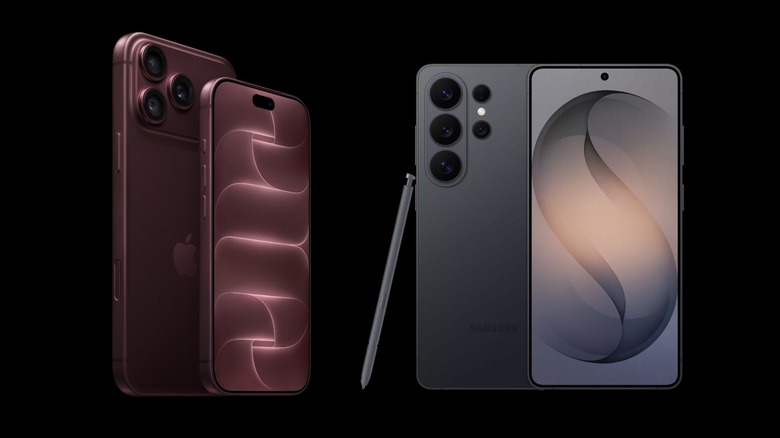
The new iPhone 18 Pro Max may not seem as exciting as the iPhone Duo. Indeed, it still has that classic iPhone form factor and, aside from some new colors, looks identical to the iPhone Pro 17 Max. Even so, you get everything you’d expect from a flagship. Large screen, multiple cameras, it checks all the boxes. But the iPhone 18 Pro Max isn’t the only flagship phone on the market. Samsung’s Galaxy S26 Ultra is also a very capable device, and it’s hard not to compare the two.

Given that we’re comparing the most impressive non-folding phones Apple and Samsung makes, the choice will likely come down to some small details and personal preferences. Maybe you’re an iOS person, or you’ve got your eye on that new dark red iPhone 18 Pro Max. Or maybe you’d rather have the freedom of Android, or you like having the S Pen on the Galaxy. There are pros and cons on both sides. And even before diving into the details, the truth is neither of them disappoint.

Advertisement

Design and displays that aren’t all that different

Both the iPhone 18 Pro Max and the Galaxy S26 Ultra look like regular smartphones. They’re straight, rectangular devices without a foldable screen in sight. They both have the same 6.9-inch size. But the iPhone has slightly rounder corners, while the Galaxy goes for a straighter shape. Apple went with a design that combines aluminum and glass on the back. Samsung, on the other hand, has an all-glass back.

One great thing about the S26 Ultra over the iPhone is its weight. It’s 214 grams, compared to 249 grams for the iPhone 18 Pro Max. It might not seem like much, but you can probably feel the difference when holding your phone for a long time. The Samsung phone is also thinner — 7.9 mm versus the iPhone’s 8.75 mm. Again, it’s not a huge difference, but it matters to some people, especially when you consider adding a case to them.

The differences in the displays are also subtle. The iPhone uses an OLED panel with a resolution of 2,868 by 1,320 pixels. That’s high enough to make the screen look great. It also has a 120Hz refresh rate and reaches 3,000 nits of brightness. In other words, it’s a good, bright and smooth display. Samsung uses a slightly higher-resolution AMOLED display. It’s 3,120 by 1,440 pixels, but the resolution difference between these screens is extremely hard to notice in real life.

The S26 Ultra also has a 120Hz refresh rate for smooth scrolling, but the brightness is limited to 2,600 nits. And brightness matters a lot if you use your phone a lot outdoors. The S Pen is also a huge plus for the S26 Ultra. Not everyone cares about it, but it’s nice to have it. It can be a good way to take notes more naturally. On the iPhone side, you need the very expensive iPhone Duo to use the Apple Pencil.

Advertisement

The biggest difference is in the cameras

Cameras are where these phones really stand out. Both have incredible specs that make the eyes of photographers and filmmakers light up. Starting with the iPhone 18 Pro Max, Apple has kept the classic three-camera setup on the back: wide, ultra-wide, and telephoto, all of which have 48-megapixel sensors. And there’s some big news about this year’s main sensor: variable aperture.

Most phone cameras use a fixed aperture. That means the focal length and the amount of light hitting the sensor are fixed, with no way to change that. But the iPhone 18 Pro Max lets you adjust the aperture mechanically. It opens up room for more artistic control over your shots in a way that you only typically have with a dedicated camera. Not many phones currently on the market can do this.

The S26 Ultra also has great cameras — with a slightly different setup. The main lens has a 200-megapixel sensor. Such high resolution lets you crop your photos without losing quality. The ultra-wide features a 50 megapixel sensor, similar to the iPhone. But zoom capabilities set the S26 Ultra apart. That’s because it’s packed with not one, but two telephoto lenses. One for 3x zoom, the other for 5x zoom. The iPhone has a single telephoto lens for 4x zoom.

Advertisement

As for video, the iPhone keeps the specs it’s had for a while now: 4K up to 120 fps, HDR and Dolby Vision. Samsung goes further and lets you shoot 8K on the S26 Ultra. Not that 8K is any kind of standard yet — more of a “nice to have” than something most people will actually use.

Battery, biometrics and more

The battery capacity of both phones is also very similar. Both the iPhone 18 Pro Max and the S26 Ultra are around 5,000 mAh, with slight variations. That’s generally enough power to last a full day without needing to plug in for most people. Fast charging is finally on even footing too — both go from zero to 50 percent in about 15 minutes with a 60W charger.

Advertisement

In terms of performance, the S26 Ultra is powered by a 3-nanometer Snapdragon 8 Elite Gen 5. It’s a pretty decent chip that even outperforms Apple’s A19 Pro in some tests. But the iPhone 18 Pro has a new A20 Pro chip, the company’s first 2-nanometer chip. In theory, it’s faster and more efficient, but we won’t really know that until we’ve done some real-world testing. As for RAM, Samsung offers 12GB or 16GB depending on the storage option. The iPhone 18 Pro Max has 12GB of RAM in all configurations. That’s enough RAM for most of the things people do on their phones.

Then there are the little things that sets them apart. Face ID on the iPhone versus an in-screen fingerprint reader on the Galaxy. Face ID is super easy to use, but it might not work as well in some situations. Also, iPhones still have the Dynamic Island on the screen — although it’s smaller now. Samsung goes with a simple punch-hole camera that eats up less screen space.

Advertisement

They’re both great, but for different users

Even the prices of these phones are similar. They both start at $1,299 in the U.S. for the 256GB model. The decision really comes down to personal preference. The iPhone 18 Pro Max works best if you’re fully immersed in the Apple ecosystem. If you have AirPods or an Apple Watch, it’s an obvious choice. But the Galaxy S26 Ultra can offer you extra features like better zoom or the S Pen. There’s also the choice between iOS and Android. No matter which one you choose, they can both handle everything just fine.

Source link

Advertisement
Continue Reading
Click to comment

You must be logged in to post a comment Login

Leave a Reply

Tech

Thrive Capital led VCs into pro sports ownership; Collaborative Fund just upped that play

Published

on

Collaborative Fund, the 15-year-old, New York-based generalist venture firm that has roughly $1 billion under management and which made early bets on Lyft, Reddit, Sweetgreen, and Olipop, among others, is taking a stake in the soccer club D.C. United and its stadium, Audi Field.

It’s the latest — and smallest — firm to try something that Thrive Capital opened the door to just months ago: turning venture money into pro sports ownership.

To recap, Joshua Kushner’s Thrive launched a new vehicle, Thrive Eternal, explicitly built to hold “iconic franchises and cultural institutions” for decades, funded by many of the same investors already in Thrive’s venture and growth funds. The firm kicked things off by announcing a stake in the San Francisco Giants. Months later, the same vehicle — with former Disney CEO Bob Iger, a Thrive partner, joining as co-owner — bought the Lakers outright for a record $12.5 billion.

That’s new. Historically, money has poured into pro sports two other ways: individual tech fortunes, and private equity. For example, Vinod Khosla and his family agreed this summer to buy the Seattle Seahawks for a record $9.6 billion soon after the Khosla family also took a stake in the San Francisco 49ers alongside OpenAI chairman Bret Taylor. That was a personal-wealth play, the kind we’ve seen over and over.

Advertisement

Private equity firms have also been at this for years, including Sixth Street, which holds stakes in the Boston Celtics, the New England Patriots, and MLB’s San Francisco Giants; Ares, which owns a piece of the Miami Dolphins outright and separately financed Chelsea’s stadium plans through a $500 million preferred-equity deal; RedBird, which owns AC Milan outright and holds a minority stake in Fenway Sports Group, the holding company behind Liverpool and the Red Sox; and Arctos, with minority positions scattered across MLB, the NFL, the NBA, and European soccer. (Apollo, the newest entrant, has mostly stuck to sports financing deals so far rather than ownership stakes.)

Thrive and Collaborative are doing neither of those things. At the same time, the two firms’ approaches to sports ownership look very different. Thrive built a standalone, permanent-capital vehicle specifically to hold trophy assets. Collaborative is investing out of the same early-stage fund it uses to write seed and Series A checks, and treating the deal less like something to buy and hold and almost more like infrastructure.

In a memo shared with TechCrunch, Collaborative Fund founder and managing partner Craig Shapiro framed the deal as an extension of what the firm already does. “A franchise is the ultimate consumer product,” he wrote, arguing that D.C. United’s status as one of Major League Soccer’s original clubs gives Collaborative access to an institution with a decades-long fan base to build on.

He pointed to the tailwinds around American soccer specifically (a World Cup just behind the sport, the LA Olympics ahead of it, soaring youth participation numbers in the U.S.) as well as D.C.’s ownership of Audi Field in Washington, D.C., plus a talent-development pipeline through Loudoun County, Virginia, and rights to a future Baltimore expansion team.

Advertisement

Indeed, the thesis Shapiro laid out at a TechCrunch StrictlyVC event Thursday night in New York is less about owning a piece of an appreciating asset – the sports team itself – and more about what the team makes possible. Collaborative wants to turn Audi Field into what he describes as a living showcase for its own portfolio.

As a backer of both fitness band maker Whoop and the beverage brand Olipop, for example, Collaborative Fund is imagining a WHOOP wearables activation for fans, or Olipop drinks woven into game-day concessions. He’s thinking about the stadium’s foot traffic — tens of thousands of people showing up on a predictable schedule — as a distribution channel at a time when, because AI is making more of daily life feel synthetic, live experiences are becoming more valuable.

Shapiro doesn’t dwell on this, but it surely helped sell Collaborative’s investors that team valuations have been soaring, so the stake could pay off on its own. Soccer valuations in particular have been on a tear. Inter Miami’s franchise value has roughly doubled in the two years since Lionel Messi arrived, MLS’s average club value is up roughly 134% since 2019, and D.C. United’s own valuation has climbed from $35 million in 2008 to $785 million today, factoring in its ownership of Audi Field and the surrounding real estate.

If Shapiro is right that a franchise is also “the ultimate consumer product,” it could be a pretty good place to park money. Time will tell.

Advertisement

The deal is subject to MLS approval.

When you purchase through links in our articles, we may earn a small commission. This doesn’t affect our editorial independence.

Source link

Advertisement
Continue Reading

Tech

Anthropic Caught Scientists Using Claude To Further Biological Weapon Research

Published

on

The company has produced an extensive collection of case studies covering the ways its current AI models have been misused.

Anthropic has flagged and stopped multiple scientists who were using its AI models to create potential biological weapons, according to a new report the company shared on Thursday. “Biological misuse” is just one flavor of troubling AI usage the report documents, but it’s of growing importance because newer models like Fable 5 are increasingly good at helping with scientific research.

The company’s report includes five case studies of Anthropic’s models being used to develop biological weapons, the safety measures that brought the misuse to Anthropic’s attention and how it responded. Detecting possible misuse is complicated, as the company stressed to The New York Times, because research into a new vaccine could look a lot like creating a bioweapon. In all cases the company says it erred on the side of being overly cautious because of the possible consequences.

“You are not seeing someone in a comic book kind of way say, ‘Hey, I want to build a biological weapon to kill everybody,’” Jacob Klein, Anthropic’s head of threat intelligence, told The New York Times. “It’s an incredibly nuanced situation.”

Advertisement

In one case study from May, Anthropic says its “biological safety classifier” flagged a request for Claude to author a grant for gain-of-function research on chikungunya virus. The virus has no licensed treatment and can cause debilitating symptoms for weeks or months, the company says. Gain-of-function research explores methods for genetically altering an organism, and in the case of this specific virus, the grant proposed increasing its transmissibility and ability to evade immune response. The combination sounds dangerous, and Anthropic says the fact that the proposed research was affiliated with a military research institute made it extra questionable.

The company took similar issue with gain-of-function research into bird flu and a separate case of a researcher using Claude to develop an atlas of venom toxin peptides and “a generative pipeline that optimized toxin characteristics.” The full report also includes case studies on Anthropic’s models being used as a surveillance tool and to create software exploits, propaganda and weapons systems.

According to the company, anyone misusing Claude or Anthropic models had their account banned, and the findings from the investigation are being used to further improve model safeguards and prevent future misuse. Given the tricky nature of biological misuse, Anthropic is also not naming the individuals or institutions its investigation connected to the development of possible biological weapons. “The individuals implicated in these case studies are working scientists,” Anthropic says. “We do not assert that they intended harm, and identifying them or their labs could expose them to harm.”

Advertisement

Source link

Continue Reading

Tech

Today’s NYT Connections: Sports Edition Hints and Answers for Sept. 11, #718

Published

on

How To Play and Win Connections | Mashable - Mashable (1080p, h264).mp4

Today’s NYT Connections: Sports Edition puzzle is pretty tough, with a diverse group of categories that might stump players. If you’re struggling with the puzzle but still want to solve it, read on for hints and the answers.

Hints for today’s Connections: Sports Edition groups

Yellow group hint: When a player gets hurt.

Green group hint: Who’s on first?

Blue group hint: Hoopsters in Sin City.

Purple group hint: You might do this with a doughnut.

Advertisement

Read more: We Need to Talk About That One Doggone Connections Puzzle

Answers for today’s Connections: Sports Edition groups

Yellow group: NFL injury report designations.

Green group: Ways to reach first base.

Blue group: Las Vegas Aces.

Advertisement

Purple group: ____ dunk.

What are today’s Connections: Sports Edition answers?

completed NYT Connections: Sports Edition puzzle #718 for Sept. 11, 2026.
The completed NYT Connections: Sports Edition puzzle for Friday, Sept. 11, 2026.NYT/Screenshot by CNET

The yellow words in today’s Connections

The theme is NFL injury report designations.

The four answers are doubtful, out, probable and questionable.

The green words in today’s Connections

The theme is ways to reach first base.

The four answers are error, hit by pitch, single and walk.

Advertisement

The blue words in today’s Connections

The theme is Las Vegas Aces.

The four answers are Gray, Loyd, Wilson and Young.

The purple words in today’s Connections

The theme is ____ dunk.

The four answers are Nike, reverse, slam and windmill.

Advertisement

Source link

Advertisement
Continue Reading

Tech

Is AI Actually Going to Kill Us All?

Published

on

Leah Feiger: I do like the nostalgic touch. I miss my Motorola Razr. I miss it every single day. Perhaps not the exact same capabilities, but it does the trick.

Brian Barrett: It is funny. It is. Imagine your Motorola Razr, but it opens side to side instead of up and down, and it’s all one big screen, so there’s no buttons to push. You can’t do T9 texting. Then you can watch YouTube on it.

Leah Feiger: I’m waiting, honestly, for the first story to drop from the quiet car of the Acela between DC and New York where someone, some sweet person from the administration, did not realize how big that screen is when you unfold it and how many messages are visible.

Brian Barrett: Oh, it’s going to be great.

Advertisement

Leah Feiger: It’s going to be, this is the new frontier for eavesdropping. Also, congratulations, Apple. But for me, that’s what I’m looking forward to.

Brian Barrett: Leah, what would it take to get you to purchase a foldable phone?

Leah Feiger: It would have to be a lot less than $2,000.

Brian Barrett: Yeah.

Advertisement

Leah Feiger: I can’t wait for Zoë to come back next week and tell us all about her new purchase. To be clear, I don’t think she’s gotten one, but it would be really funny if she did.

Brian Barrett: I bet she will.

Leah Feiger: So our next topic involves the US Census Bureau, which, definitely not as shiny or theoretically life-threatening as our previous topics, but really, really important. Last month, the bureau published a report that claimed to uncover evidence backing up President Donald Trump’s claims that noncitizen voting cost him the 2020 election. He touted the report on True Social saying, “I won the election.” This is, as you know, we’ve talked about this many times, one of Trump’s favorite conspiracy theories. He cannot let it go. And WIRED reporters, Vittoria Elliott and David Gilbert, dug into how this specific report actually got made, who wrote it, and they discovered a lot of holes with this. I kind of want to start by saying, if you’re listening to me and thinking, why do I care about a US Census Bureau report? They just do the census. They tell me how many people live in all of these different areas, how big families are, et cetera, et cetera. You’re not 100 percent wrong, but this is really important data. These are reports about people and their lives, and the average citizen shouldn’t have to know that much about it, but because of the situation we’re in with the current administration, knowing these weird little intricacies of what’s going on in government, I think has been really key to understanding the full picture here.

Brian Barrett: Also, to be clear, I do care.

Advertisement

Leah Feiger: You do care. There we go. All right. Can I run you through some of the quick down and dirty stuff, Brian, with what the report said?

Source link

Continue Reading

Tech

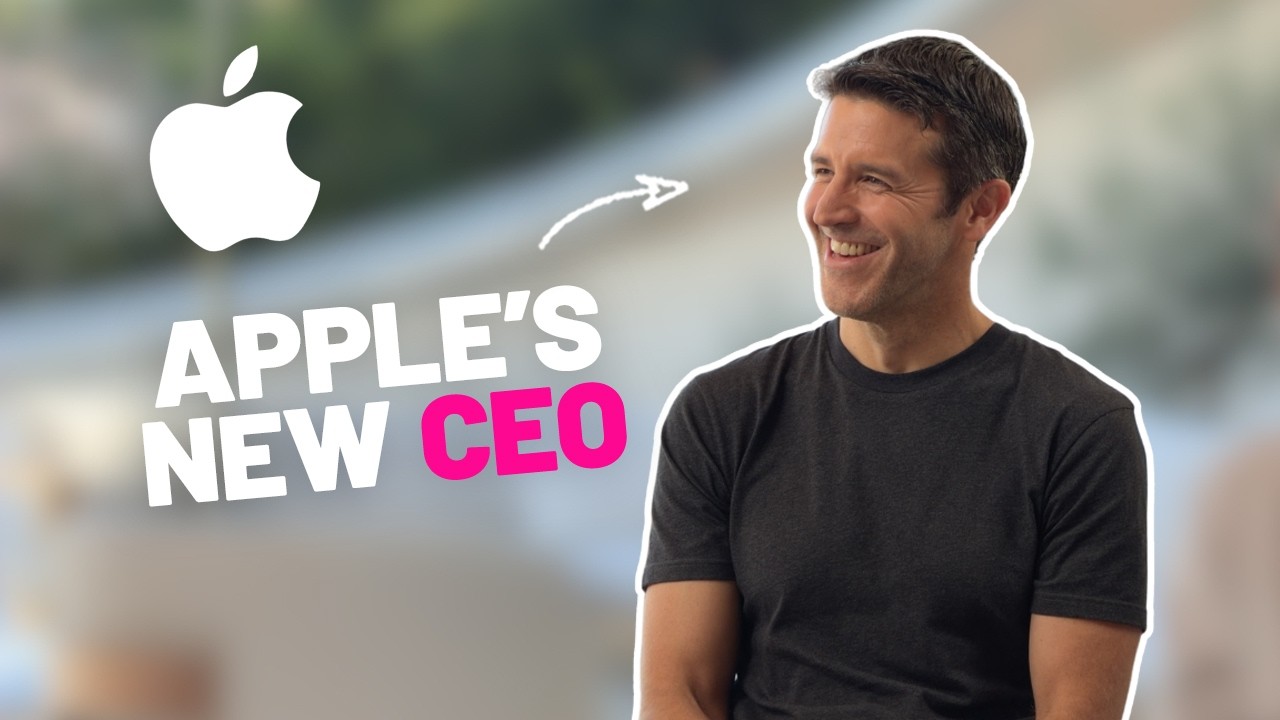
‘I love this place; it’s in my blood. Goosebumps’; John Ternus on how he felt when he learned he was becoming Apple CEO, and why AI may be the key to future Apple innovation

Published

on

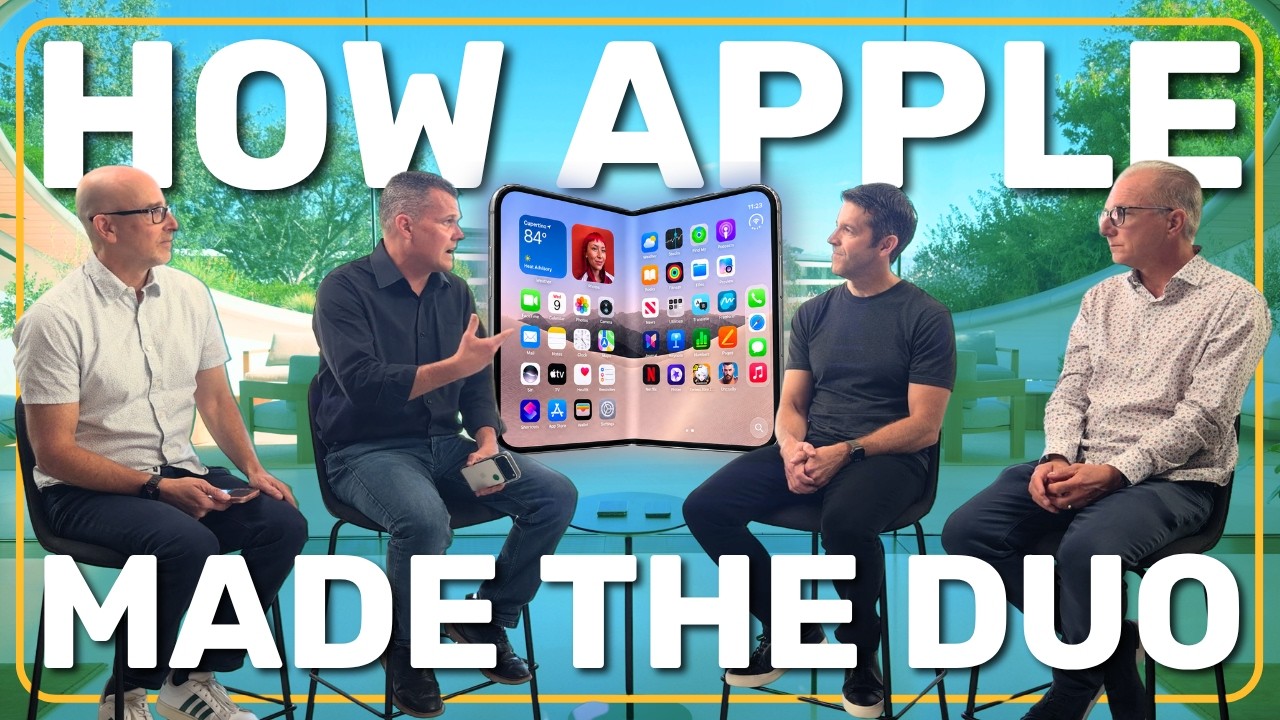
I’ve known John Ternus for almost a dozen years, but not this John Ternus, the newly minted Apple CEO and sudden global tech celebrity. So, color me pleased when he and his Global Marketing SVP Greg Joswiak agreed to sit down with Tom’s Guide Global Editor-in-Chief Mark Spoonauer and me for a podcast discussion that ranged from bringing Pencil to the iPhone and excitement around the foldable iPhone Duo to what AI means for innovation, and the big moment when Ternus realized he was about to become CEO of arguably one of the biggest and most important tech companies in the world.

It’s kind of wild to watch someone who you think of as a brilliant but also normal and approachable guy transform into an industry rockstar almost overnight, and while Ternus, who is a 25-year Apple veteran and came directly from leading Apple’s hardware operations, doesn’t seem outwardly fazed by the transition, he’s also attuned to the moment.

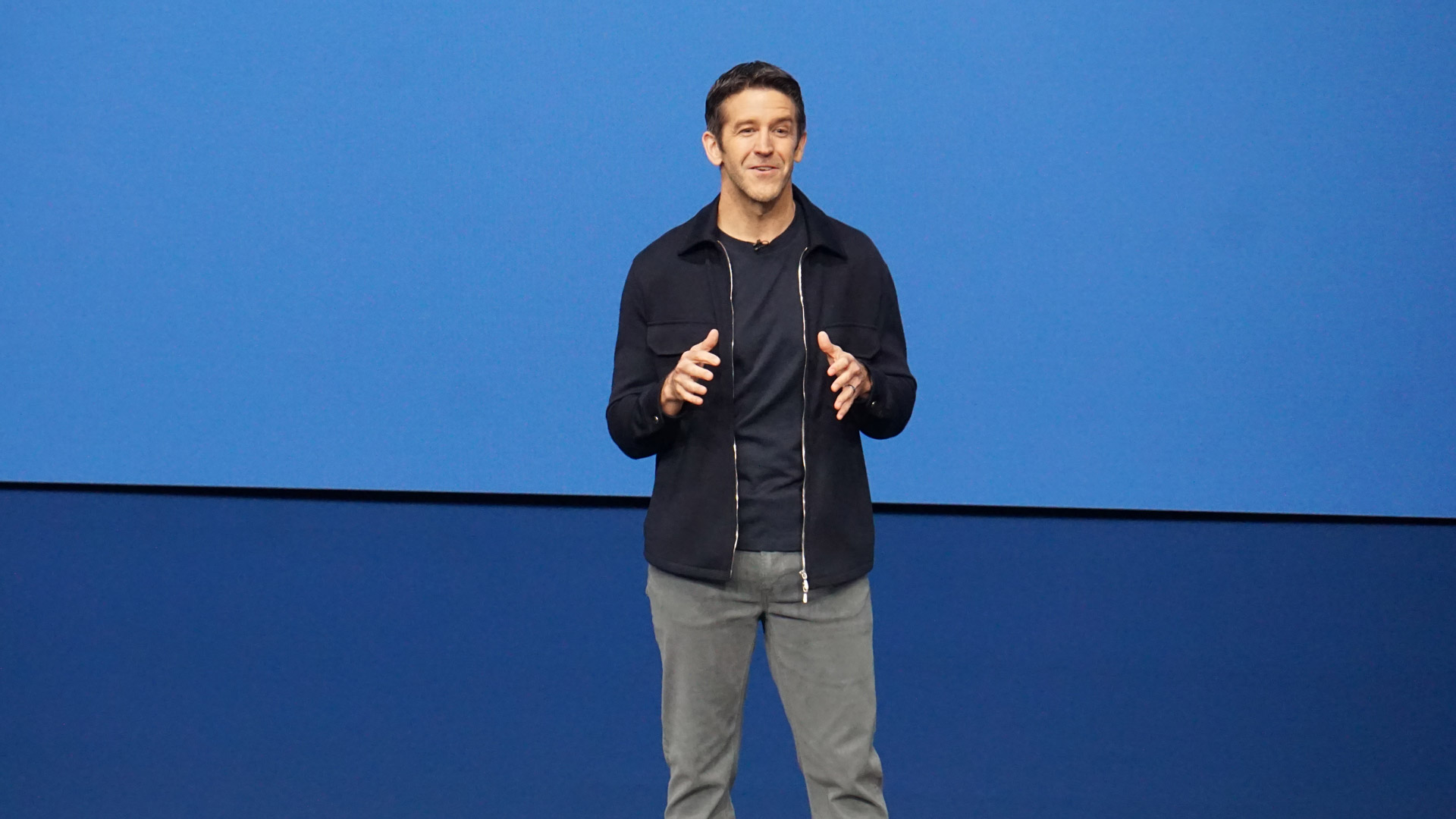
John Ternus at the Apple Fall 2026 iPhone Event

(Image credit: Lance Ulanoff / Future)

“What an extraordinary privilege, right?” said Ternus with a wide grin. The reality is, I just love this place, right? It’s in my blood. …I love the people I work with. I love to be able to build the products that we all build together. And so, goosebumps…and excitement.”

Latest Videos FromTechRadar

Advertisement

Source link

Continue Reading

Tech

Apple timepiece can grab snippets of conversation without both speakers’ consent

Published

on

SECURITY

War is peace. Freedom is slavery. Privacy is surveillance

With the release of Apple Watch Series 12, Apple has decided that it’s ok to capture people’s conversations without their consent.

Advertisement

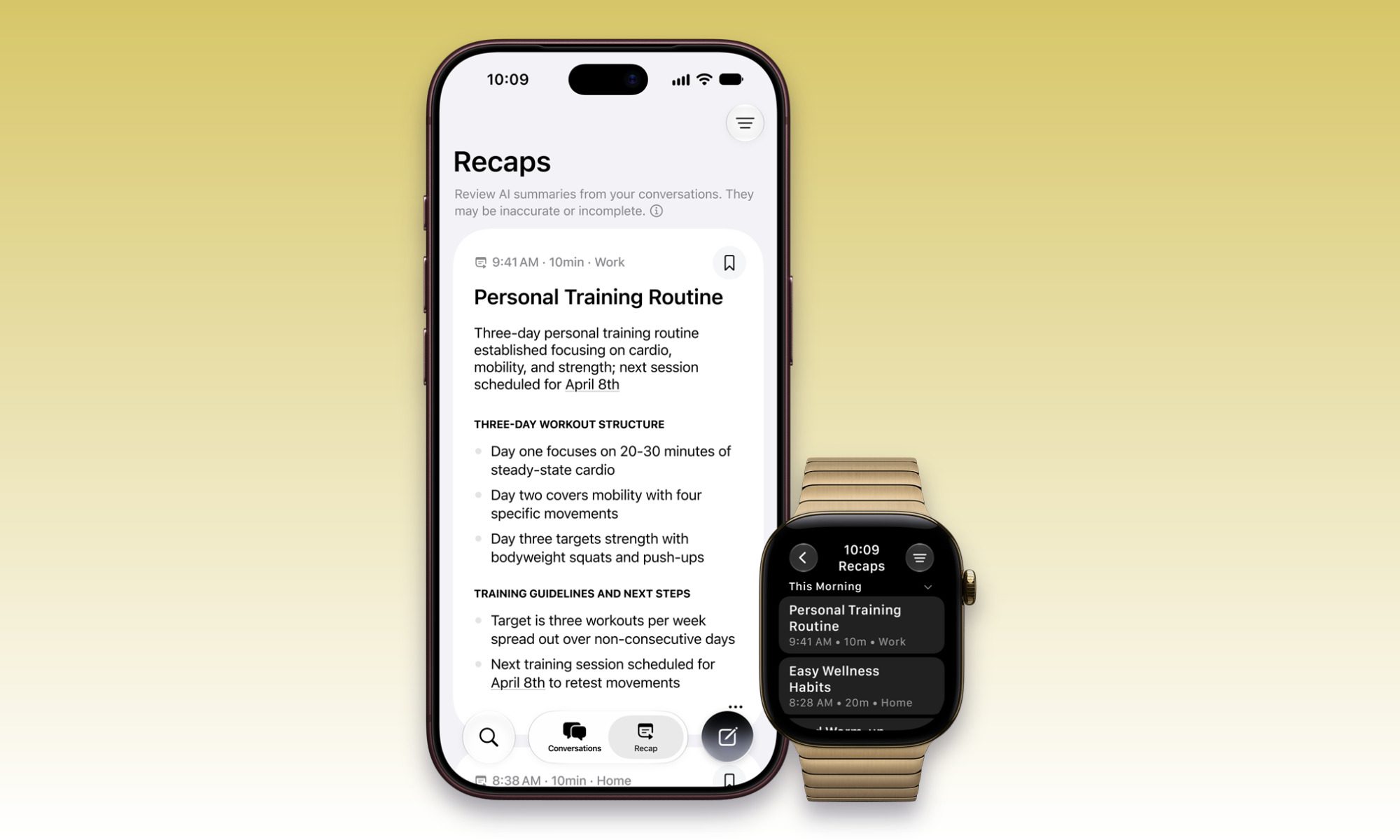
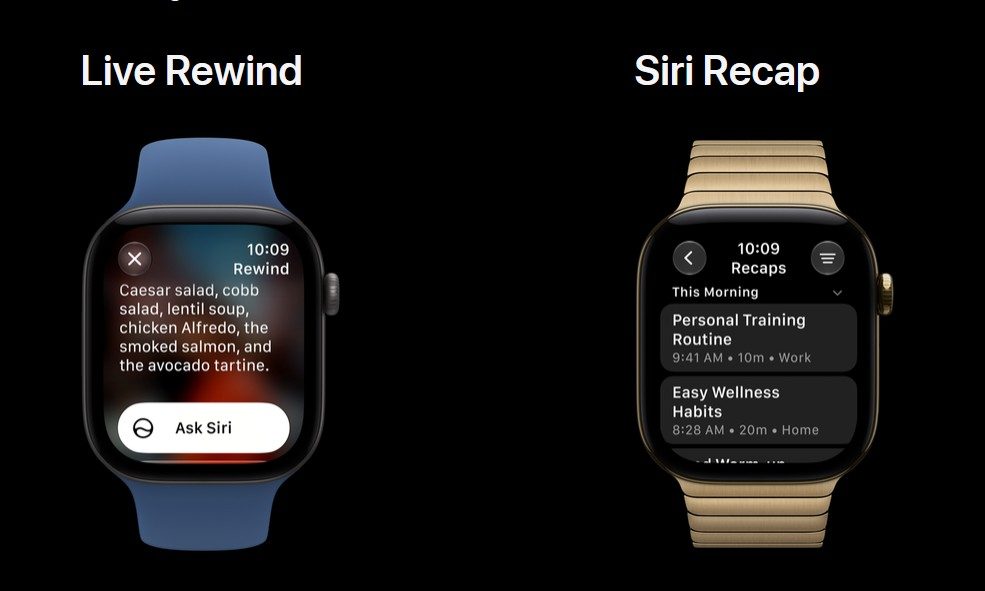
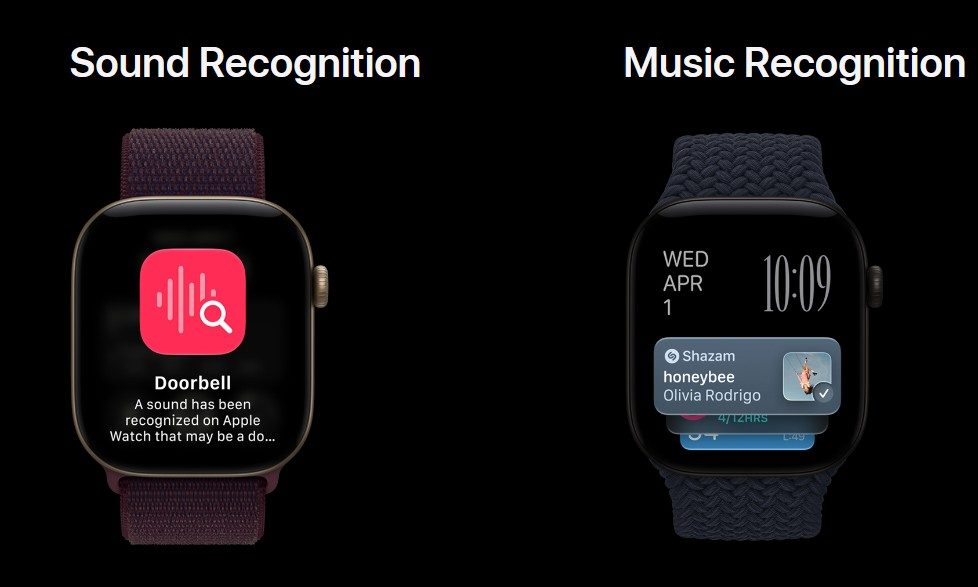
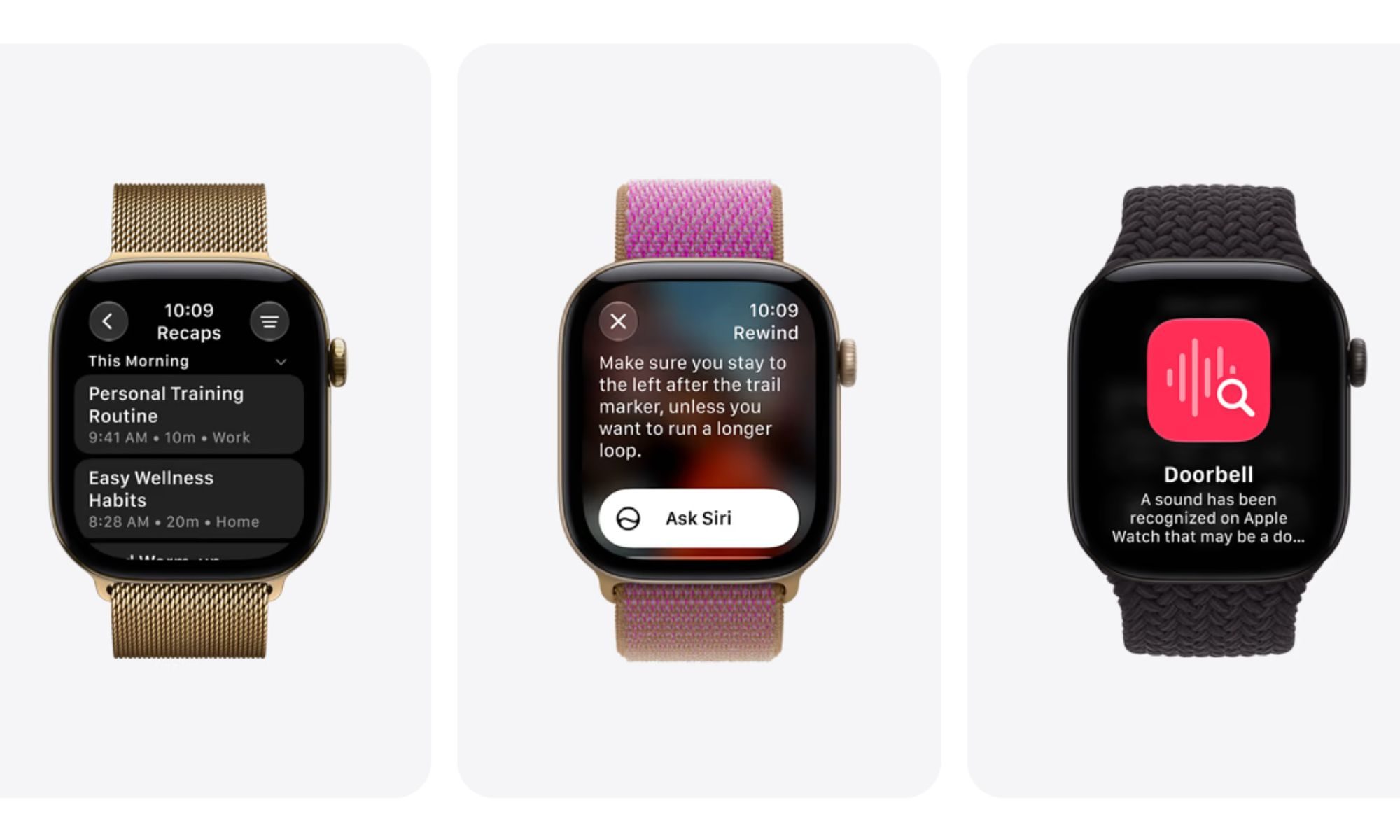
The latest Apple Watch comes with Audio Intelligence, a set of AI audio processing capabilities tuned for the company’s S11 chip. Its features include: Sound Recognition, Music Recognition with Shazam, Live Rewind, and Siri Recap. 

“Live Rewind lets you instantly see the last 15 seconds of a conversation as text,” Apple explains in its technical summary [PDF]. “Siri Recap summarizes conversations throughout your day and produces high-level Apple Intelligence-generated notes so you can stay present in the moment and catch up later.”

With the double-press of the Digital Crown – as Apple grandly refers to the button on its Watch – Live Rewind takes in an audio stream from the Watch microphone, processes it in a Secure Exclave on the S11 chip, and routes the data to the user’s nearby iPhone, which runs a speech-to-text algorithm on the 15-second audio segment. The resulting text is saved and the audio is discarded. 

The wearer’s Watch emits an audible tone, even in silent mode, to alert those in the vicinity and provides a visual cue for those able to see the face of the device. 

Advertisement

Nonetheless, bystanders alerted to the recording – to the extent they recognize the meaning of the tone – have not consented to being recorded, which is a legal requirement in 11 US states that have all-party consent laws.

Apple characterizes its implementation of brief eavesdropping as respectful of personal privacy. It makes that claim in a section titled, “How Live Rewind respects those around you,” citing the audible chime and visual on-screen animation.

Siri Recap, meanwhile, “summarizes conversations throughout your day and produces high-level Apple Intelligence-generated notes so you can stay present in the moment and catch up later.”

This too, Apple describes as an act of respect.

Advertisement

“By design, Siri Recap does not create a recording, does not produce a verbatim transcript, and does not identify and attribute speakers,” Apple’s technical documentation explains. “The output is a brief, high-level summary, comparable to notes a person might write after a conversation. There is no audible signal because no raw audio is retained, and there is no way to reconstruct the original audio from a Siri Recap or share raw audio with anyone.”

The implication here is that Apple’s non-consensual audio processing is less contemptuous of the public than the middle finger Meta has raised with its AI Glasses. That may be the case, but privacy advocates are still not impressed.

“Our right to conversational privacy must include freedom from other people, without our clear opt-in consent, using technology to document what we are saying,” said Electronic Frontier Foundation privacy litigation director Adam Schwartz in an email to The Register. “Otherwise, people will self-censor, and conversation will lose its spontaneity and intimacy.

“So, EFF is disappointed that Apple is releasing a new Audio Intelligence feature that reportedly can create a transcript or written summary of what people are saying in the vicinity of an Apple Watch. People don’t really have a practical means to consent or decline recording.

Advertisement

“We suggest people should think twice before using this technology, out of respect to the conversational privacy of others. While it remains to be seen how state eavesdropping laws will apply to this new technology, it is clear that always-on monitoring of our conversations is an unacceptable burden on our conversational privacy.” ®

Source link

Continue Reading

Tech

Codeveloper of Ethernet Predecessor Dies at 91

Published

on

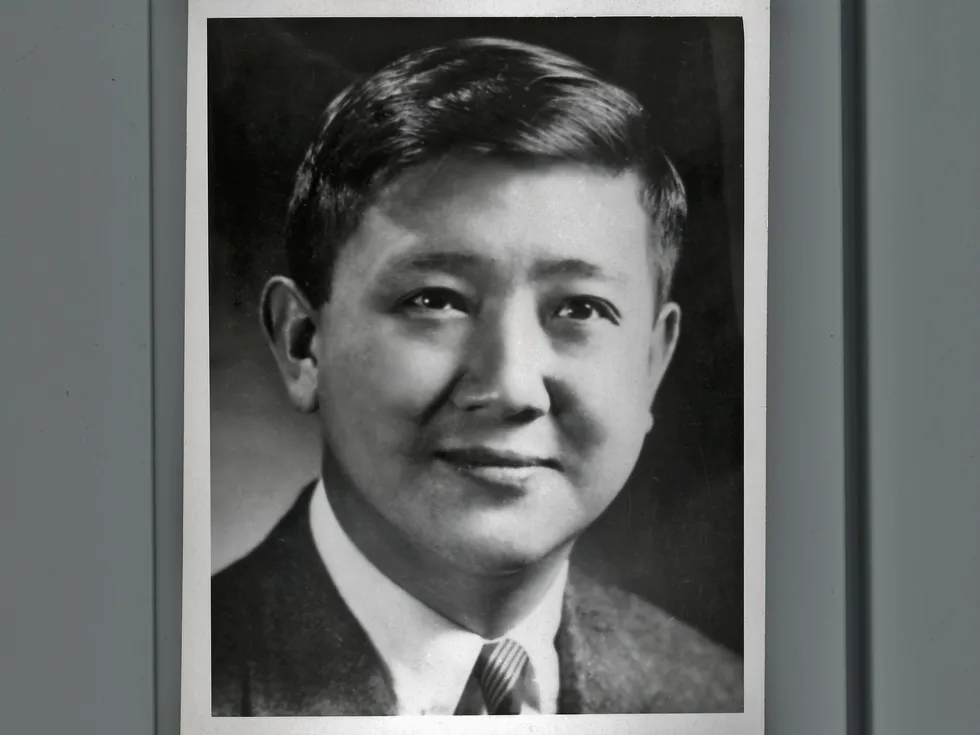
Franklin “Frank” Kuo

Codeveloper of ALOHAnet

Fellow, 91; died 14 April

Kuo helped develop ALOHAnet, a pioneering computer system at the University of Hawaii at Mānoa, in Honolulu. The system went online in 1971 and represented the first public demonstration of a wireless packet data network. It was an inspiration for Robert Metcalfe’s development of Ethernet a couple of years later. In 2020 ALOHAnet was designated as an IEEE Milestone.

Advertisement

Kuo earned bachelor’s, master’s, and doctoral degrees in electrical engineering from the University of Illinois, Urbana-Champaign. After earning his Ph.D. in 1960, he joined Bell Labs in Murray Hill, N.J., where he conducted research in computer communications.

After six years at the company, Kuo left to become a professor of electrical engineering at the University of Hawaii. From 1968 to 1971 he and one of his colleagues, IEEE Life Fellow Norman Abramson, developed ALOHAnet. The network connected computers on Hawaiian islands using ultrahigh-frequency radio, transmitting information over radio waves instead of cables.

ALOHAnet became the foundation for modern networks. Kuo pioneered the concept of a random-access protocol, or sharing a single channel without central coordination—which led to the packet-switching principles that underpin modern Wi-Fi and mobile networks.

Kuo authored or coauthored several books including Computer Communication Networks. Published in 1972, it was one of the earliest textbooks on the subject.

Advertisement

He served as director of the university’s Cosine committee, a project funded by the U.S. National Science Foundation to develop computer engineering courses.

He took a sabbatical from 1975 to 1977 to work at the U.S. Pentagon as director of information systems in the defense secretary’s office. He oversaw computer communications applications used in command, control, and intelligence programs.

During the 1980s and ’90s, he helped develop China’s Internet. In 1982 he joined SRI International (formerly the Stanford Research Institute), in Menlo Park, Calif., as a researcher. He also was a consulting professor in Stanford’s electrical engineering department and taught computer networking at Shanghai Jiao Tong University.

As a UNESCO lecturer in Beijing in 1994, he helped Peking University, Tsinghua University, and the Chinese Academy of Sciences connect to the Internet. He also worked with Tsinghua University to develop CERNET, the country’s first nationwide education and research computer network, which was managed by the Chinese Ministry of Education. For his work, he received an honorary degree from Shanghai Jiao Tong University.

Advertisement

In the mid-1990s, Kuo helped found General Wireless Communications, a developer of mobile phone messaging services and games that was renamed Mtone Wireless.

Muhammad Rezaul Karim

Bell Labs researcher

Life senior member, 86; died 18 May

Advertisement

Karim was a distinguished member of the technical staff at Bell Labs in Murray Hill, N.J. His work was instrumental in the development of modern cellular communications technology.

He joined Bell Labs in 1972 and worked in its mobile telecommunications laboratory as part of the team tasked with creating one of the earliest cellular networks.

In 1975 Illinois Bell Telephone petitioned the U.S. Federal Communications Commission to develop and test a cellular system. The FCC, which now regulates radio, TV, telephone, Internet, satellite, and wireless services, authorized the project in March 1977. Karim and his team helped develop key elements of the technology, including the Bell Labs logic that controlled the cellular system, turning the concept into a working one. They also built radio receivers, transmitters, control systems, and cell-site equipment used in the first trial of the cellular system.

The following year, Bell Labs and Illinois Bell deployed the Advanced Mobile Phone Service system across Chicago, with its switching office located in Oak Park, Ill. The initial test used approximately 100 mobile phones to work through hardware, software, and system-design problems.

Advertisement

A subsequent test in 1979 involved 2,500 mobile users, providing a demonstration of the cellular technology in practice.

The trials in Illinois helped establish the technical foundation for the commercial cellular networks that followed.

Later in his career, Karim worked on the asynchronous transfer mode (ATM) technique, a high-speed networking technology crucial to the transition from traditional telephone networks to broadband and digital ones.

In 2000 he published ATM Networks: Application, Systems, and Design, a textbook that served as a guide for designing and implementing ATM-based services.

Advertisement

Karim received a bachelor’s degree in electrical engineering from the Bangladesh University of Engineering and Technology, in Dhaka. He then earned a master’s degree in EE from the University of Manchester, England, and a Ph.D. in EE from Stevens Institute of Technology, in Hoboken, N.J.

Harry Bostic

Former IEEE Region 4 director

Life senior member, 86; died 18 March

Advertisement

Bostic was an active IEEE volunteer who served as the 1998–1999 director of IEEE Region 4. In 2007 he received a lifetime achievement award from the IEEE Central Indiana Section for “outstanding commitment and dedicated service as regional advisor to the volunteers and members of Region 4 and the Institute.”

He was an engineer for 30 years at U.S. Navy’s avionics facility, a research, development, and manufacturing concern in Indianapolis. He worked on flight control, navigation, and weapons systems there. (The facility closed in 1996.)

Edwin C. Jones Jr.

Professor

Advertisement

Life Fellow, 91; died 10 March

Jones was widely recognized for his contributions to engineering education, curriculum development, and accreditation through decades of service to IEEE, ABET, and the American Society for Engineering Education.

He earned a bachelor’s degree in electrical engineering in 1955 from West Virginia University in Morgantown. The following year he earned a diploma of membership (equivalent to a master’s degree) from Imperial College, London. He went on to serve in the U.S. Army Signal Corps for two years. After his service ended, he studied engineering education at the University of Illinois, Urbana-Champaign, earning a Ph.D. in 1961. Jones then joined the university’s faculty.

The following year, he left Illinois to join Iowa State University, in Ames, as an assistant professor. He was promoted to professor in 1995. Two years later he became associate chair of the electrical and computer engineering department and served in that position until 2001, when he retired and was named professor emeritus. In recognition of his commitment to students, Iowa State established a scholarship in his honor.

Advertisement

In 2006 he accepted a part-time position as an adjunct professor in Minnesota at the University of St. Thomas, in St. Paul. He advised graduate students and helped develop the university’s systems engineering program.

An active IEEE volunteer, he served as 1975–1976 president of the IEEE Education Society. He was a member of the IEEE Educational Activities Board, helping strengthen the relationship among engineering education, professional practice, and accreditation organizations. He received an IEEE Centennial Medal in 1984 and the EAB Meritorious Achievement Award in Accreditation Activities in 1986. The IEEE Education Society later named its Meritorious Service Award in his honor.

Jones was elected a Fellow of ABET in 1986. During his years of service as a program evaluator and leader, he helped advance the quality of engineering education and accreditation programs. ABET recognized him with its Grinter Distinguished Service Award, its highest honor.

Alexander Robert Spitzer

Advertisement

Clinical neurology researcher

Life senior member, 70; died 27 February

Spitzer was a neurologist for 40 years at the Wayne State University School of Medicine, in Detroit, where he also was a director of the electromyography laboratory at Harper University Hospital. The lab studied patients’ brain and spinal cord activity in response to sensory stimuli. The evaluations assessed nerve pathway integrity to help diagnose multiple sclerosis, spinal cord injuries, and other conditions.

After earning his medical degree from the Einstein College of Medicine, in New York City, Spitzer completed a fellowship at the U.S. National Institutes of Health, in Bethesda, Md. He then joined Wayne State as a clinical neurology researcher. His pioneering research in applying neural network analysis to electromyography and clinical neurophysiology resulted in peer-reviewed publications, grants, and several U.S. patents.

Advertisement

He mentored generations of neurologists in electrodiagnostic medicine, a medical specialty that uses nerve-conduction and electromyography tests to evaluate and diagnose muscle and nerve disorders.

In 2020 he founded Mackinac Neurology, a telemedicine-based practice that treated pa­tients virtually during the COVID-19 pandemic.

A longtime IEEE volunteer, he held numerous roles on the IEEE Regional Activities Board, now known as the Member and Geographic Activities Board. He was a member of the IEEE Ethics and Member Conduct and Nominations and Appointments committees, as well as the IEEE Educational Activities and IEEE-USA boards. He served as 1977–1979 director of the IEEE Central Indiana Section.
Donald Leo Dietmeyer

Advertisement

Professor

Life Fellow, 93; died 13 February

Dietmeyer was a professor of electrical and computer engineering for 40 years at the University of Wisconsin-Madison.

He developed a lifelong interest in radio and electronics at high school in Wausau, Wisc., and earned a Ph.D. in electrical engineering in 1959 from the University of Wisconsin. He’d joined the university’s electrical engineering faculty as a professor in 1958 while pursuing his doctorate.

Advertisement

Dietmeyer’s research focused on computer-aided design in the areas of switching theory, hardware description languages, and the decomposition of Boolean functions. His research contributed to the development of automation tools for integrated circuit design.
He worked with Jim Duley, a former student, to pioneer the use of the digital system design language. He wrote the textbook Logic Design of Digital Systems, published in 1978.

In the early 1980s, Dietmeyer worked with researchers to develop ConLan, a language-construction method that combined hardware description languages in one underlying framework.

He served as associate dean of the University of Wisconsin’s electrical and computer engineering department from 1983 to 1995. In 1998 he retired and was named professor emeritus.

Advertisement

From Your Site Articles

Related Articles Around the Web

Source link

Advertisement
Continue Reading

Tech

Baseten buys Blaxel, a startup that builds sandboxes for AI agents

Published

on

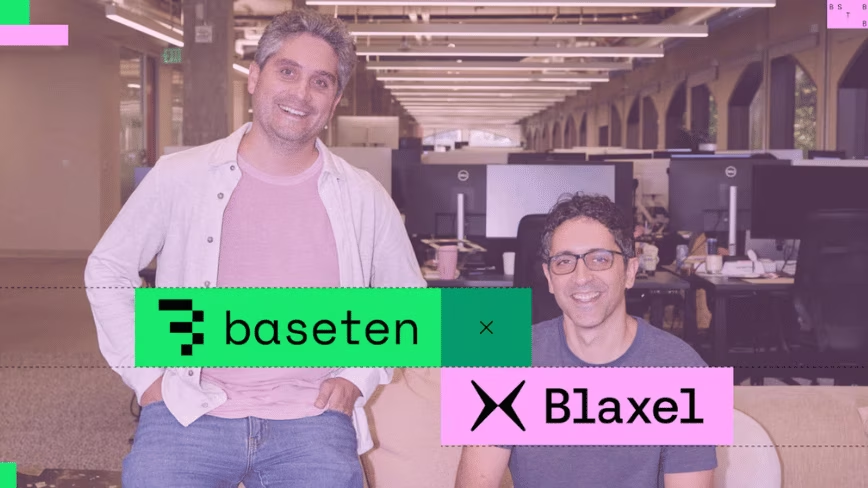
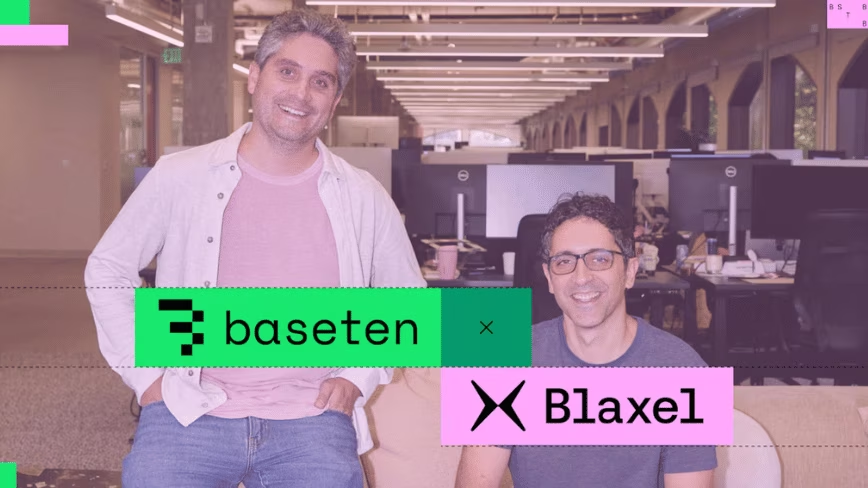
AI inference company Baseten has acquired Blaxel, a startup that builds secure execution environments, or sandboxes, for AI agents. Baseten co-founder and chief technology officer Amir Haghighat told Axios Pro about the deal, which the outlet reported first on Thursday. Baseten later announced the acquisition.

Axios describes Blaxel as a San Francisco startup. The announcement did not disclose financial terms.

What Blaxel builds

Blaxel builds sandboxes based on microVMs, small isolated virtual machines. Each agent gets its own. According to the release, the sandboxes spin up and resume up to five times faster than competing products.

In a joint blog post, the companies said a Blaxel sandbox can suspend and resume in 25 milliseconds. It can also sit idle for months at close to zero cost.

Advertisement

Its other products include Agent Drive, a distributed filesystem that agents can share, and a networking layer that connects agents to tools, MCP servers, APIs and other agents. The team has been building the platform for more than 18 months, the post said.

What changes for customers

According to the post, Blaxel will continue to operate and its product does not change. Baseten will add new products based on Blaxel’s technology, starting with sandboxes.

In the near term, Blaxel’s technology expands Baseten’s support for code execution, tool use and session persistence, the release said. Over time, Baseten plans to integrate it with its inference, storage, observability and enterprise infrastructure.

“Agents need models, but they also need a secure environment to run in that’s fast, scalable, and reliable enough for production,” Haghighat said in the release.

Advertisement

Paul Sinaï, Blaxel’s co-founder and chief executive, said: “We started Blaxel because agents need environments designed to work alongside the models powering them.”

Baseten’s run of deals

Baseten, founded in 2019, has raised more than $2bn. In June, TNW reported that it raised $1.5bn at up to $13bn. The release puts the valuation of that Series F round at $13bn.

In December 2025, Baseten acquired Parsed, a reinforcement learning startup. Its customers include Abridge, Clay, Cursor, Lovable, Mercor and OpenEvidence, according to the company.

Advertisement

Source link

Continue Reading

Tech

Wave Race 64 Recompiled 0.4.0 Lets 1996’s Waves Fill a Modern Screen

Published

on

Wave Race 64 Recompiled Remake
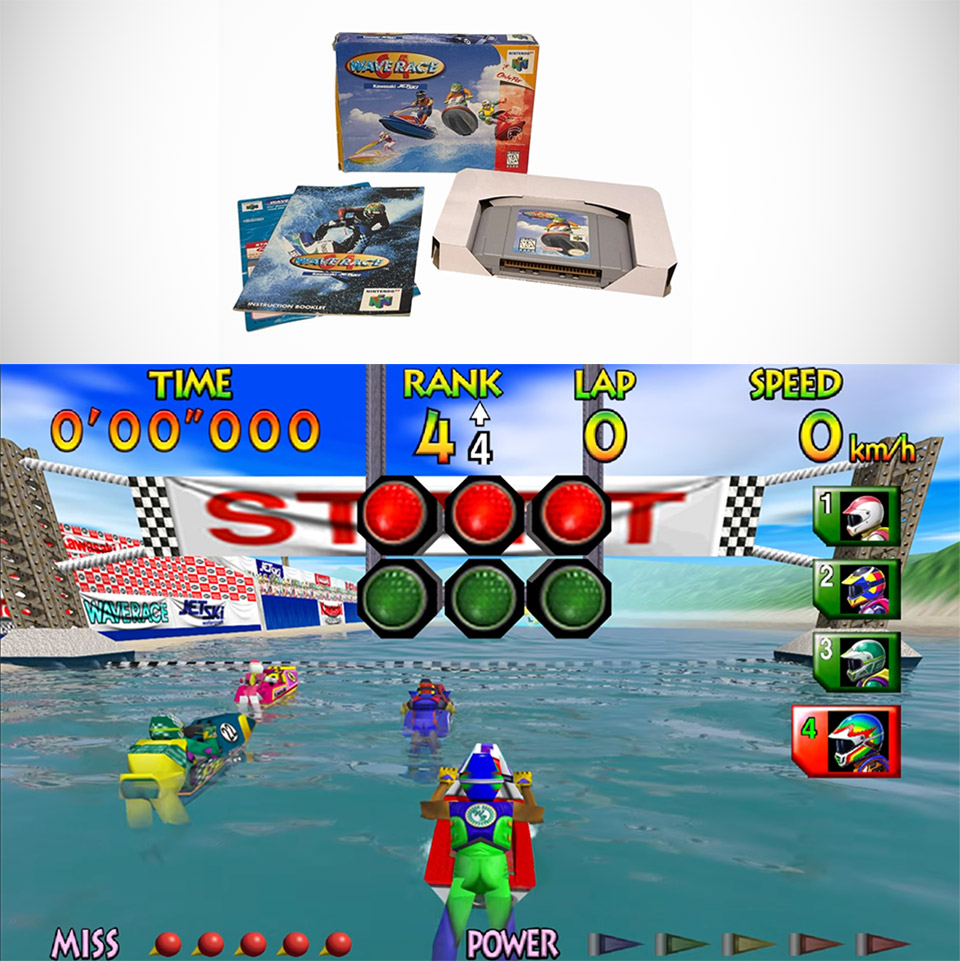
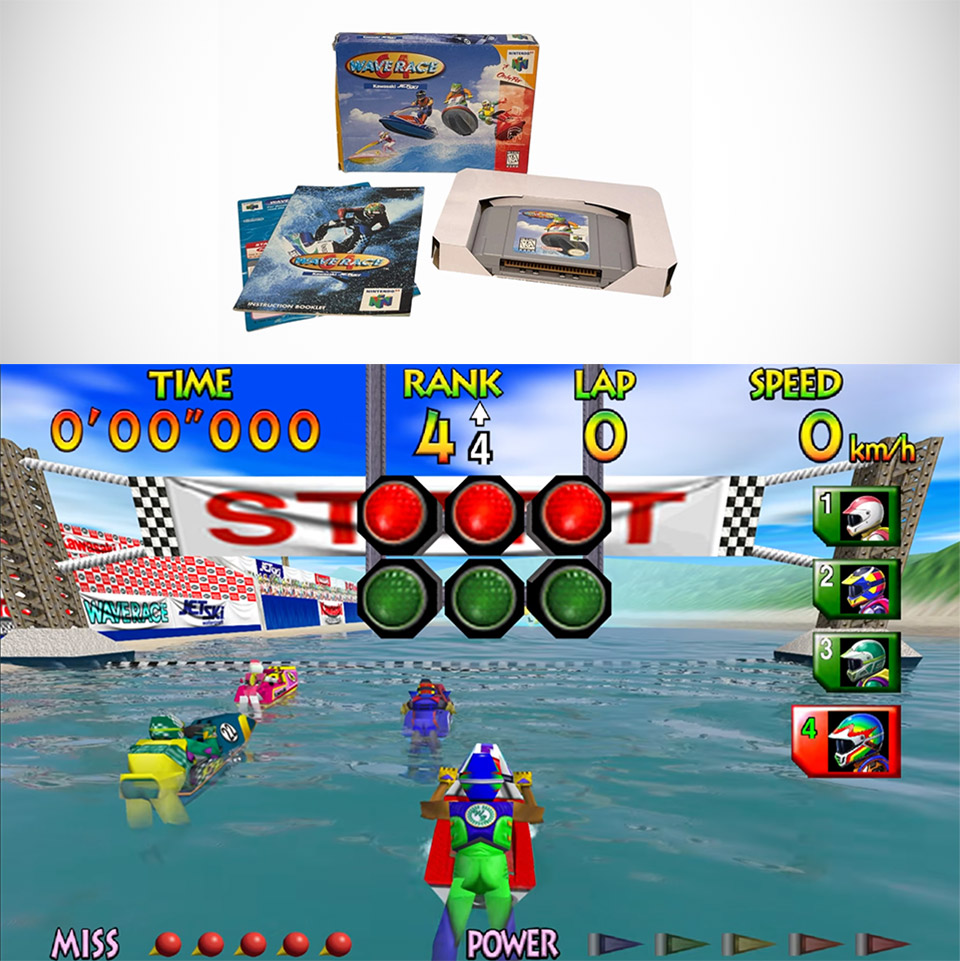
Wave Race 64: Recompiled is out as a native Windows and Apple Silicon build, and it treats Nintendo’s 1996 jet-ski racer with unusual care. You still supply a legal dump of Wave Race 64 USA Rev A, also called v1.1. The project never ships the ROM. Once that file is accepted by the launcher, the game’s own MIPS code runs as a compiled C program instead of through a full console emulator. Championship, Time Trial, and two-player races all boot, save records to emulated EEPROM, and play at speed.


They chose to use static recompilation with N64Recomp, N64ModernRuntime, RT64, and RecompFrontend. The game continues to run at the same rates that Nintendo originally chose: 30 updates per second when racing, 20 in menus, and Time Trial. RT64 then draws the frames between those updates to make the motion match the current display. Physics, camera timing, and race clocks remain unchanged. Version 0.4.0: finally, the sky and water are following the interpolated motion like they should be, rather than leaping about at the old cadence like everything else.

Wave Race 64 Recompiled Remake
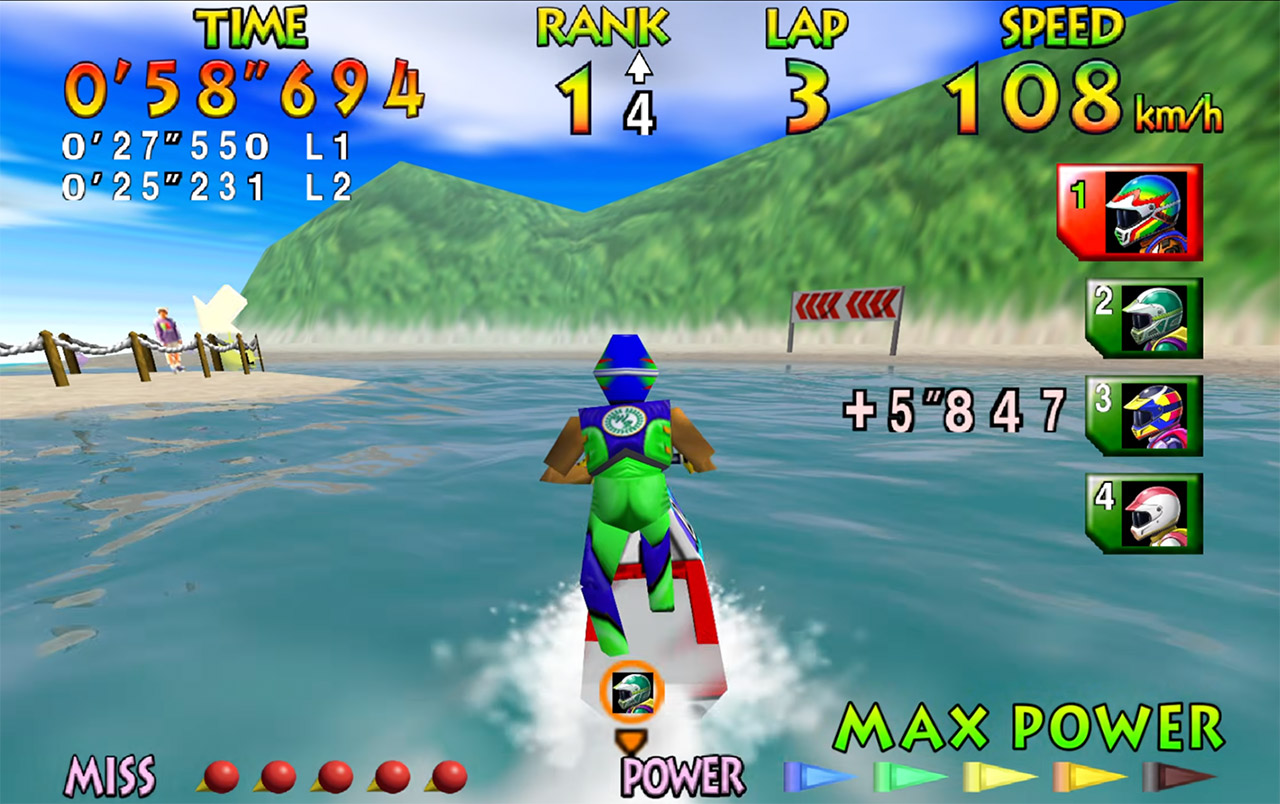
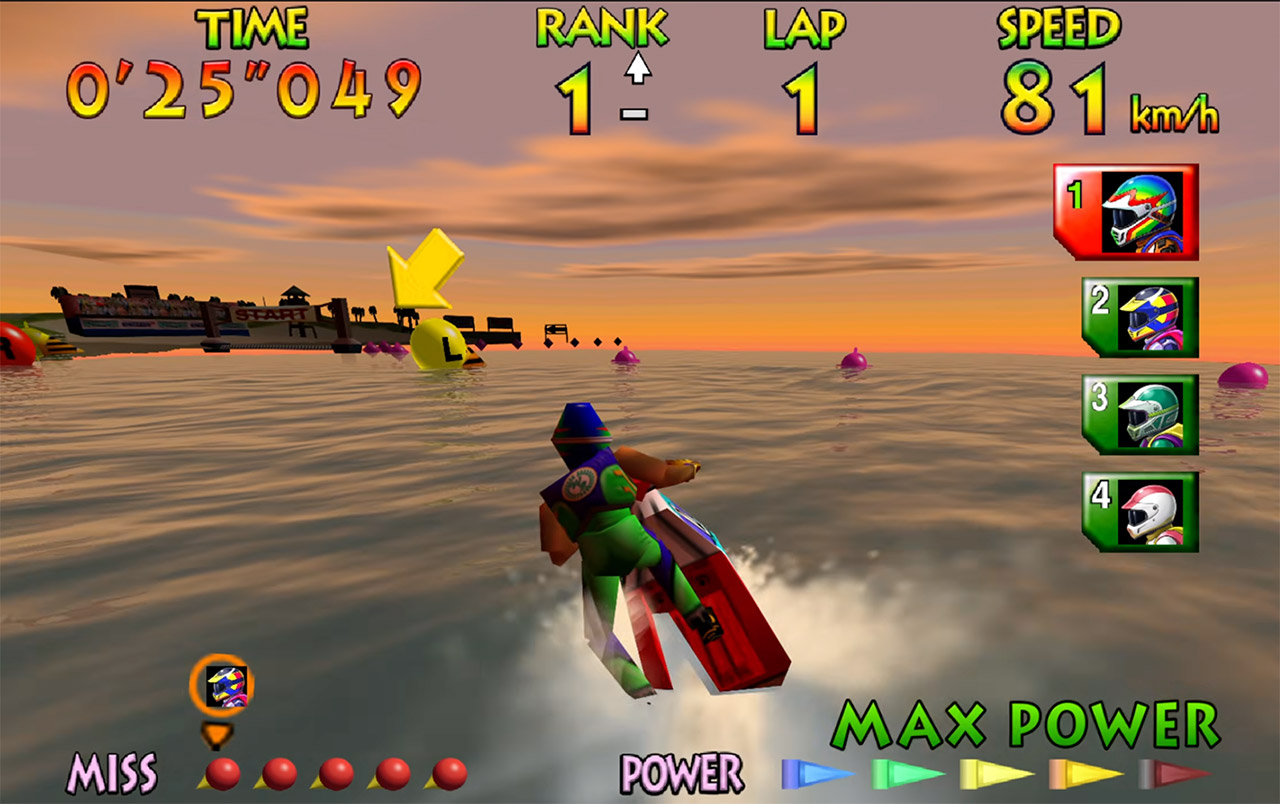
The first thing you will notice is the widescreen mode. The black overscan bars are gone, and the output is now exactly matched to your monitor’s resolution and aspect ratio. You also receive a Graphics option, which allows you to pick whether you want the racing HUD to be stretched across the entire frame or stuck in a 4:3 block in the center. Menus remain how they were originally designed, and two-player split screen now occupies the entire width. You may also adjust the field of view from 45 to 110 without stretching the 3D models. Draw distance is also increased, ensuring that far buoys and other objects are no longer cropped off by the original code. The accompanying HD texture collection has 1,828 mappings for helmet portraits, HUD typefaces, island surfaces, and ski panels, and the original textures are still available if you want to switch back and forth.


The water remains the feature that set this game apart in 1996, and the port hasn’t affected that. You can still choose the original rendering approach or the new default Aqua route, which looks much better with its lighter teal color, clearer shallows, and interpolated wave heights. In the settings, you can adjust the brightness, tint, and clarity using sliders. High mode adds screen-space reflections and finer spray. You can even modify the ripple strength and airborne spray. F9 and F10 exist so that you can compare Aqua and Classic, but don’t expect a rebuild of the courses as some beautiful new water simulator. It retains the same appearance as the previous surface that made Sunny Beach & Marine Fortress feel so alive on a 240-line screen.

Wave Race 64 Recompiled Remake
Sound and control are treated equally. Audio still goes via all the RSP microcode being re-tweaked. The original soundtrack is accessible with a single menu click, and modified tracks have their own volume control. Now, those Controller haptic thingies collect data from the race. We’re talking about landings, crashes, buoys, power-ups, countdowns, lap times, and crossing the finish line. The events start at 80%, and you can then increase or decrease the level of continual feedback. Vibration on the trigger works if your hardware can handle it; however, it stops when the window loses focus or you enter the pause menu. It also works with keyboards with no issues, and controllers are remapped device by device.


The installation method is intentionally kept simple. On Windows, simply unzip and launch WaveRace64Recomp.exe. Mac users can just drop it to their Applications folder. You’ll find your settings and saves in the regular app-data local folder, and if something goes wrong, a log file will be ready for you. Just to clarify, because this is a USA Rev A only build, Japanese, European, v1.0 original, and Shindou layouts will not load. That’s because every modification in this build is linked to a certain revision. Certain modes, such as stunt and championship celebration, have had significantly less testing than the major racing circuits. Oh, and if you’re on a Mac, you may not receive the locked-in 120 Hz refresh rate, which is pretty much all of the testing we’ve done so far; those are the current constraints of this 0.4.0 beta, no hidden fine print.
[Source]

Advertisement

Source link

Continue Reading

Tech

Audio Intelligence is the best Apple Watch upgrade you won’t hear much about

Published

on

Apple has plenty of shiny numbers to sell the Apple Watch Series 12 and Apple Watch Ultra 4 with. The new Health Sensing System, the Readiness feature, and more frequent HRV readings are just a couple of things that make these a meaningful upgrade. This is especially true for anyone who treats an Apple Watch primarily as a health and fitness device.

Though the feature that caught my eye has almost nothing to do with workouts. Apple calls it Audio Intelligence, and it essentially gives the Watch another way of understanding what is happening around you. The Series 12 and Ultra 4 can recognize important sounds, automatically identify music, recover the last few seconds of speech you failed to catch, and even create summaries of conversations you want to remember later.

Setting aside the obvious privacy concerns, this can be useful in many scenarios and is more than just another AI feature.

Live Rewind is the one I can’t wait to try

We’ve all had that moment where somebody says something, and your brain managed to process none of it. It could be due to the noisy environment around you, or perhaps someone mentioned an unfamiliar name. Maybe you’re listening while doing something else and suddenly realize you’ve missed the one important instruction buried in the conversation.

This is where Live Rewind comes in as your second set of ears. Double-press the Digital Crown and the Watch can show a text snippet covering the previous 15 seconds of speech. You can read what you missed, ask Siri about it, and even save the snippet in the Siri app if you actually need it later. Apple claims that activating Live Rewind doesn’t start some endless transcription session in the background. Rather, it retrieves only that previous 15-second window, and the text disappears unless you deliberately save it or ask Siri about it.

Advertisement

The feature doesn’t seem massive, but with the alternative being a recorder or taking notes, I can see it being handy. Apple has also built in a very deliberate social cue. Live Rewind plays an audible chime even when the Watch is on silent or connected to headphones. There’s also a full-screen animation, and a microphone indicator appears when you activate it. So anyone nearby gets an indication that you’ve asked the Watch to recover what was just said.

Audio Intelligence does much more than remember conversations

Siri Recap is naturally going to attract most of the attention because an Apple Watch ambiently taking notes about your conversations sounds futuristic and slightly alarming. But there’s a lot more to Audio Intelligence than just listening in on your conversation. Sound Recognition can detect things like alarms, sirens, doorbells, and a crying baby, then send an alert to the Watch even when the paired iPhone isn’t nearby. Apple primarily designed it as an accessibility feature for people who are deaf or hard of hearing, which is where its importance really lies.

You also have automatic Music Recognition with Shazam. Hear a song that caught your interest? You don’t need to open Shazam anymore, as you can simply have the new Apple Watches identify music playing around you automatically. The song and artist can then appear in the Music Recognition widget inside the Smart Stack without you tapping anything. It’s one of those tiny conveniences that just saves you a bit of time and effort, but I can already see how often it will get used.

Yes, Siri Recap is part of this too

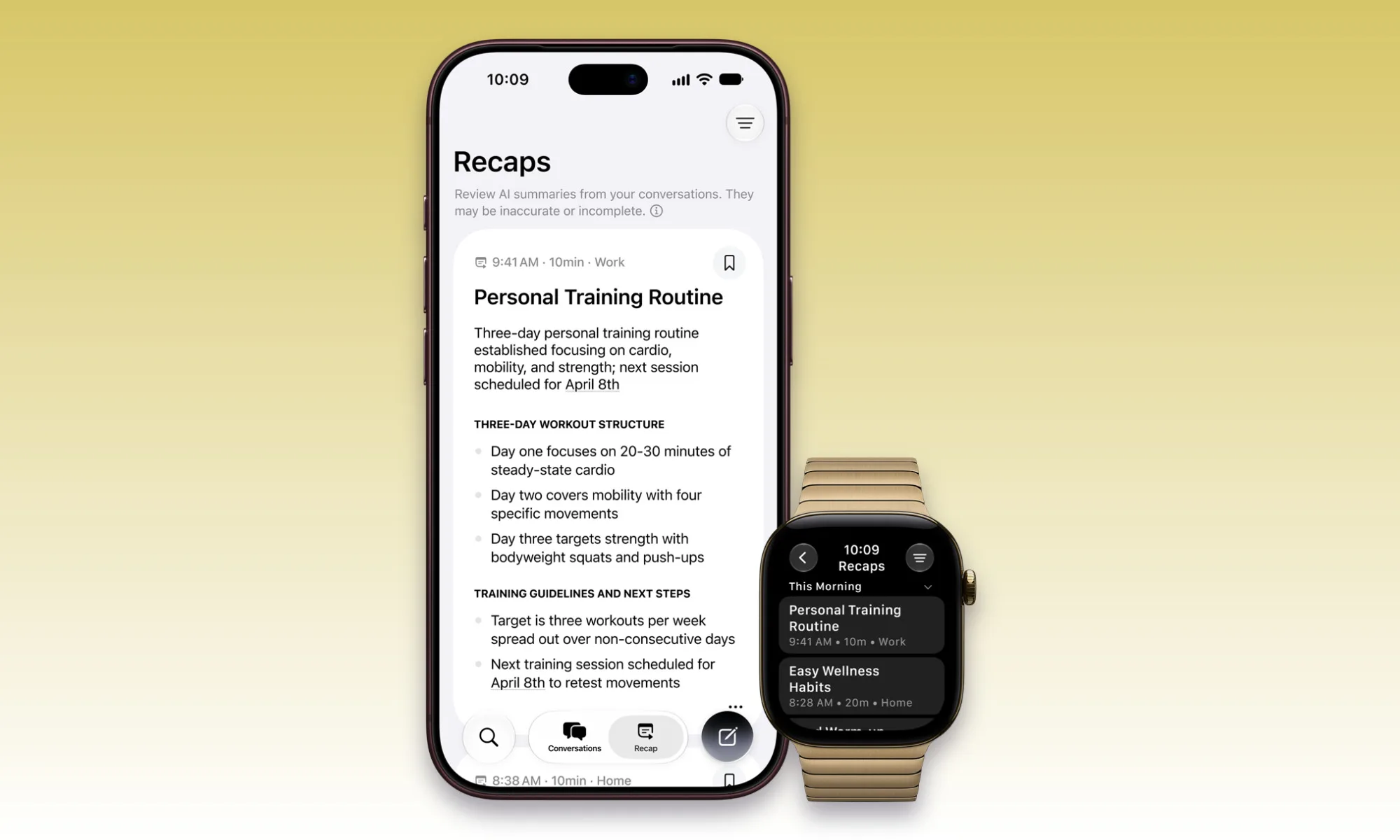
We’ve already written at length about Siri Recap and why Apple’s privacy approach made us more comfortable with the idea of a smartwatch listening throughout parts of my day. But the short version is that Siri Recap can generate a title, summary, and key points from conversations rather than preserving a transcript. You can schedule when it operates based on time and location, manually toggle it from Control Center, edit or delete the resulting summaries, and unsaved Recaps automatically disappear after seven days.

Apple claims that Audio Intelligence doesn’t create or retain audio recordings. Raw audio is handled inside a hardware-isolated Secure Exclave on the S11 chip and is inaccessible to watchOS, apps, the user, or Apple. For Siri Recap, a condensed text representation eventually goes to Private Cloud Compute to create the summary.

This is an actual reason to buy the new hardware

Audio Intelligence can’t be simply installed on last year’s Watch. It requires the S11 chip and its Secure Exclave, limiting the complete feature set to the Apple Watch Series 12 and Ultra 4. An Ultra 3 can run watchOS 27 and gets Siri AI, but it doesn’t suddenly gain the other new features like Live Rewind, Siri Recap, Sound Recognition through Audio Intelligence, or the new automatic Shazam functionality.

Live Rewind and Siri Recap arrive in beta later in 2026, starting in English, and won’t initially be available in the EU. Apple also says some server-assisted Audio Intelligence functionality is subject to daily usage limits. It is also worth noting that Live Rewind and Recap need a compatible Apple Intelligence-enabled iPhone alongside the new Watch. So I’m not declaring any of these features brilliant before I’ve actually used them.

Advertisement

Source link

Continue Reading

Trending

Copyright © 2025