



Connect with us
DAPA Banner

Tech

ICE Director Says Officers Are Now Allowed To Make Arrests Without Warrants

Published

on

from the constitution-apparently-just-left-wing-virtue-signalling dept

The administration’s racist goon squads have absolutely been steamrolling the Constitution since Trump’s return to office. When ICE et al started roving throughout the nation looking for anyone non-white enough to be foreign, all rights were considered expendable.

The DHS made swift work of the Fifth, Sixth, and 14th Amendments by denying arrestees due process and access to legal representation. Officers grabbed people, sent them far from their home states, and shoved them into planes headed to foreign hellhole prisons as quickly as possible in hopes of nullifying the inevitable legal challenges.

The 14th Amendment got kicked while it was still down when the administration decided birthright citizenship was no longer a thing. And the entire administration simply pretends the First Amendment doesn’t apply to anyone who says things or does stuff it doesn’t like.

The Fourth Amendment got turned into a doormat last May when the DHS Office of Legal Counsel (usurping the role usually held by the DOJ Office of Legal Counsel) told federal officers they no longer needed judicial warrants to enter homes so long as they could semi-credibly claim the person they were seeking was subject to immigration court order of removal.

Advertisement

Now, ICE is coming for what’s left of the Fourth Amendment, as the New York Times reports:

Amid tensions over President Trump’s immigration crackdown in Minnesota and beyond, federal agents were told this week that they have broader power to arrest people without a warrant, according to an internal Immigration and Customs Enforcement memo reviewed by The New York Times.

The change expands the ability of lower-level ICE agents to carry out sweeps rounding up people they encounter and suspect are undocumented immigrants, rather than targeted enforcement operations in which they set out, warrant in hand, to arrest a specific person.

“Amid tensions,” Polish journalists wrote in late 1939. That bit of coyness aside, there’s additional coyness in the memo issued by ICE’s acting director Todd Lyons. There’s very little in the way of legal citations. But there’s definitely a permission slip ICE agents can write for themselves when they head out to terrorize US residents.

Lyons thinks he can redefine legal terms on the fly to allow immigration officers to arrest people without warrants. The memo says “flight risk” (which allows for a warrantless arrest) is not the correct term since it can only be applied after an arrest:

Advertisement

Without explanation, and without any formal policy, ICE previously applied the phrase “likely to escape” as being the equivalent of “flight risk. ” This unreasoned position was incorrect. In fact, there are significant differences between the two standards in the immigration regulatory context and immigration officers should avoid conflating them. A flight risk analysis looks at whether an alien is likely to attend future immigration court hearings, appear before ERO as directed, surrender for removal, and comply with other immigration obligations. Flight risk determinations are made after an alien’s arrest, where the alien has already been identified, fingerprinted, interviewed, and may have had DNA collected.

That’s simply no good for this administration — especially when immigration forces are expected to come up with 3,000 arrests per day. Lyons says (again, without supporting legal citations) that “likely to escape” should be the standard for warrantless arrests, which is a determination agents should be able to make on their own without having to seek an arrest warrant. After all, if they go get a warrant, there’s a good chance the person they want to arrest might be a bit more difficult to find.

While the flight-risk analysis assesses whether an already identified and detained alien is likely to comply with future immigration obligations such as court appearances and appearances before ERO , the likelihood-of-escape analysis is narrowly focused on determining whether the person is likely to escape before the officer can practically obtain an administrative arrest warrant, while in the field. This on-the-spot determination as to the likelihood of escape is often made with limited information about the subject’s identity, background, or place of residence and no corroboration of any self-serving statements made by the subject.

The goalposts are moved. If an officer thinks a person they just happened to come across while performing an arrest with an actual warrant might not stick around to be arrested later, the officer can just arrest them as well, citing the lowered standard of “likely to escape.”

And what makes one “likely to escape” under this arbitrary, completely made the fuck up “legal” standard? Well, it’s a fine blend of “anything” and “everything.”

The subject’s behavior before or during the “encounter,” which covers anything from “suspicious behavior” to simply refusing officers’ commands to let them in a house (without a warrant) or yank them from a car (without a warrant). For that matter, being in a car is all that’s needed to be considered “likely to escape.” (“The subject’s ability and means to promptly depart the scene.”)

Advertisement

Or maybe the “subject” looks like they just may be healthy enough to leave on foot:

The subject’s age and health

Also on the list: documents an officer “suspects” might be fraudulent (with no demand made that officers attempt to verify documents before engaging in a warrantless arrest). The list also says officers can make warrantless arrests if they suspect the person has violated any immigration law, even though they are not required to do anything at all to seek information that might corroborate their suspicions.

The end result is exactly what this administration wants it to be: a blank check for warrantless arrests that can then be justified after the fact by the officers who performed the arrest. And if they happen to be wrong, they’ll just cut the person loose, secure in the knowledge they’ll never be punished by their superiors, much less held accountable in court now that the Supreme Court has made it impossible to sue federal officers for rights violations.

Given this further erasure of civil rights, one can only assume the coming weeks will bring us DHS/ICE memos declaring the use of private homes as federal operation centers to be well within the confines of the Third Amendment. Perhaps we’ll even see some women jailed for attempting to vote during the upcoming midterms. ALL RIGHTS MUST GO!, says the administration proudly hosting this dumpster fire of a civil liberties fire sale. And once again, the party claiming to make America great continues to eliminate all the stuff that makes America America.

Advertisement

Filed Under: 4th amendment, bigotry, cbp, ice, mass deportation, todd lyons, trump administration, warrants

Source link

Advertisement
Continue Reading
Click to comment

You must be logged in to post a comment Login

Leave a Reply

Tech

Palantir, Thales, and a startup are competing to build the FAA’s predictive air traffic AI

Published

on

In short: The FAA is developing SMART (Strategic Management of Airspace Routing Trajectories), an AI system that would extend air traffic conflict prediction from 15 minutes to two hours, with Palantir, Thales, and Air Space Intelligence competing for the contract. The project follows the LaGuardia crash that exposed controller overwork and aging systems, and sits within a $32.5 billion modernisation programme as the agency replaces 612 outdated radar systems and recruits 1,200 new controllers in fiscal 2026.

The Federal Aviation Administration is building an AI system called SMART that would allow air traffic controllers to predict and resolve flight conflicts up to two hours before they happen, replacing a planning window that currently extends just 15 minutes. Three companies are competing for the contract: Palantir, Thales, and Air Space Intelligence. Transportation Secretary Sean Duffy confirmed the project and the three bidders on 17 April, with a press event scheduled for 21 April to provide further details.

SMART, which stands for Strategic Management of Airspace Routing Trajectories, uses high-fidelity 4D modelling to anticipate bottlenecks and schedule conflicts before aircraft leave the ground. The system would shift air traffic management from reactive to predictive, addressing the fundamental problem that the current infrastructure was designed for a lower volume of flights and relies on controllers making real-time decisions with limited forward visibility. The FAA has said the system could be operational in some form later this year.

The three bidders

Palantir Technologies brings the deepest government relationship of the three. The company’s revenue guidance for 2026 is approximately $7.2 billion, representing 61% growth, driven by a $10 billion ceiling-value Army contract signed in July 2025 and expanding partnerships with GE Aerospace and Airbus. Its government revenue grew 70% year over year in Q4 2025. Palantir’s pitch for aviation AI is an extension of its core business: ingesting vast quantities of operational data and presenting it in decision-support interfaces that government users can act on without needing to understand the underlying models.

Advertisement

Thales, the European aerospace and defence firm, has more than 85 years of supplying air traffic management systems to the FAA and the Department of Defense. More than 99% of instrument landing systems at US airports use Thales equipment. The company’s TopSky platform is already embedded in the aviation infrastructure that SMART would need to integrate with, giving it an incumbent advantage that the other two bidders lack.

Advertisement

Air Space Intelligence, a Boston-based startup backed by Andreessen Horowitz, is the smallest competitor but arguably the most relevant. Its Flyways AI platform already manages over 40% of all US air traffic through partnerships with major airlines, using the same kind of 4D modelling and optimisation that SMART requires. ASI recently announced a partnership with Joby Aviation to integrate electric air taxis into the national airspace, positioning the company at the intersection of current air traffic management and the next generation of aviation.

Why this matters now

The urgency behind SMART is not abstract. On 22 March, Air Canada Express Flight 8646 collided with a fire truck on the runway at LaGuardia Airport. The investigation found that the air traffic controller involved was simultaneously serving as tower controller and clearance delivery controller, and that the automated runway safety system failed to alert because it could not create a confident track when vehicles merged near the runway. The incident crystallised a problem that the aviation industry has been warning about for years: controllers are overworked, the technology they rely on is outdated, and the margin for error is shrinking as traffic volumes increase.

The FAA has received $12.5 billion from Congress for air traffic control modernisation and estimates it needs an additional $20 billion to complete the overhaul. The agency is replacing 612 outdated radar systems, migrating its NOTAM system to a cloud-based platform, and recruiting controllers at an accelerated pace, having hired nearly 1,200 new controllers in fiscal 2026 so far, roughly half its annual target. FAA Administrator Bryan Bedford, who was confirmed by Congress and sworn in last July, has made SMART a central pillar of the modernisation programme.

DOGE, Elon Musk’s Department of Government Efficiency, has also inserted itself into FAA operations. DOGE personnel have visited air traffic control facilities to evaluate operations, and Musk has said the initiative will make “rapid safety upgrades” to air traffic control systems. A separate initiative called Project Lift is directing FAA funds toward upgrading network communications. DOGE is scheduled to end operations on 4 July, though a successor entity will continue.

Advertisement

The contract dynamics

The competition between Palantir, Thales, and Air Space Intelligence reflects three distinct approaches to government AI procurement. Palantir offers a platform that can be configured for any government use case, backed by extensive security clearances and institutional relationships. Thales offers domain expertise and an installed base that no competitor can match. ASI offers a purpose-built aviation AI platform that is already handling a significant portion of the traffic the FAA is trying to manage.

The FAA’s history with technology modernisation is not encouraging. The agency’s last major technology overhaul, the NextGen programme, took more than a decade and cost billions more than originally projected. The air traffic control workforce has been resistant to automation that threatens to change established workflows, and procurement timelines in government aviation are measured in years, not months. SMART’s promise that it could be operational later this year suggests either a genuinely compressed timeline or a demonstration version that falls short of full deployment.

For Palantir, the FAA contract would extend its government portfolio into a critical civilian agency and support the revenue growth trajectory that has made it the most expensive stock in the S&P 500 at roughly 120 times sales. For Thales, it would modernise a relationship that has sustained its US aviation business for decades. For Air Space Intelligence, it would validate an approach that has already proven itself in the commercial aviation sector and position the company as a central piece of national airspace infrastructure.

The stakes are higher than any individual contract. The US air traffic control system manages roughly 45,000 flights per day across the most complex airspace in the world. The controllers who run it are stretched thin, the technology they use predates the smartphone, and the safety margins that have made commercial aviation extraordinarily safe are being tested by volume growth, staffing shortages, and the kind of cascading failures that the LaGuardia incident exposed. SMART is a bet that AI can close the gap between what the system was designed to handle and what it is being asked to do. The question is whether any of the three companies competing for it can deliver on that promise at the speed the FAA now requires.

Advertisement

Source link

Continue Reading

Tech

Ring’s Familiar Faces is a new way to keep an eye on who’s at the door

Published

on

Ring is rolling out a new feature designed to make its doorbell alerts a lot more useful. It also makes them a bit more personal.

Called Familiar Faces, it replaces generic notifications like “Person detected” with named alerts such as “Mum at Front Door.” As a result, you know exactly who’s outside without opening the app.

The feature is launching for 2K, 4K and select HD Ring devices in the UK, and it’s entirely opt-in. Once enabled, your camera starts detecting faces. It lets you build a personal directory of up to 50 people, from family members to frequent visitors like dog walkers or babysitters. From there, notifications become more tailored including the option to mute alerts for people you see all the time.

It’s a small change on paper, but one that tackles a familiar annoyance. Standard motion alerts can quickly become noise, especially in busy households. However, by adding context, Familiar Faces aims to cut through that clutter and make alerts more meaningful. For example, you’ll know your child just got home from school or spot an unexpected visitor right away.

Advertisement

Setup is fairly straightforward. You can label faces directly from your event history or within a dedicated library in the Ring app. The system automatically clears out unlabelled faces after 30 days to keep things tidy. Named faces will then appear across your timeline, notifications and shared accounts.

Advertisement

As you’d expect, Ring is leaning heavily on privacy controls here. The feature is off by default, face data is encrypted and stored within your account. Moreover, the app includes prompts that remind users to obtain consent where required. You’re also in full control of your library, with options to edit, merge or delete profiles at any time.

Familiar Faces is available to users with a Ring Protect subscription, including Pro and Pro Intelligence plans. The feature will roll out via the app starting today.

Advertisement

It’s not a huge hardware upgrade, but it’s the kind of smart, software-led tweak that could make everyday use of Ring cameras feel a lot less repetitive. Consequently, it should feel a bit more intuitive.

(image credit: Ring)

Source link

Advertisement
Continue Reading

Tech

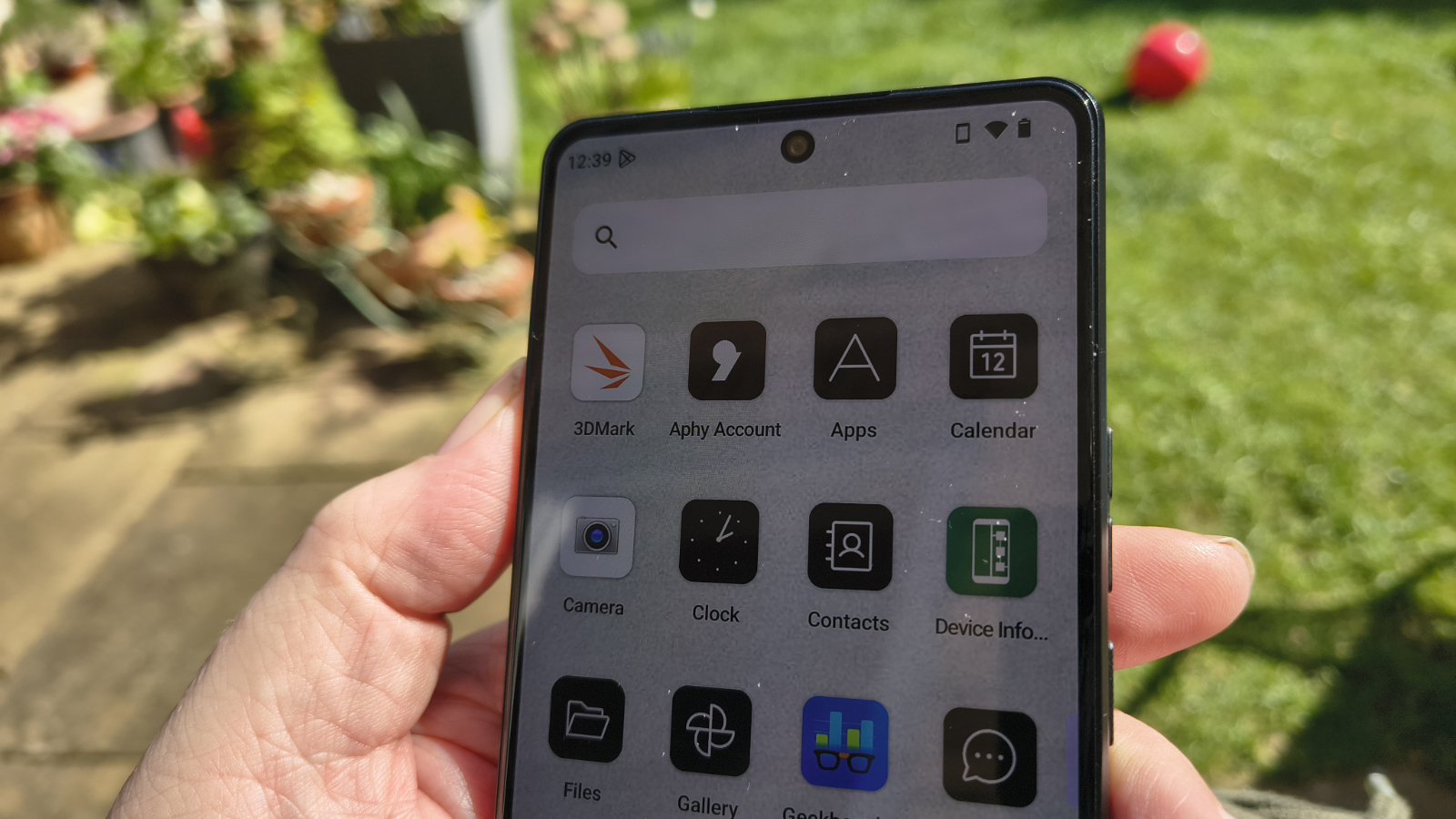
Hands on: Punkt. MC03 secure rugged phone review

Published

on

Why you can trust TechRadar


We spend hours testing every product or service we review, so you can be sure you’re buying the best. Find out more about how we test.

As this product isn’t available, consider this a hands-on, as between now and its release, some of the issues I’ll talk about might well be fixed.

Punkt. is a Swiss company that manufactures in Germany, and the MC03, as the name suggests, is the third iteration of its secure, minimalist phone design.

Advertisement

Source link

Advertisement
Continue Reading

Tech

Anthropic’s Amodei meets Wiles and Bessent at the White House over Mythos access and Pentagon standoff

Published

on

In short: Anthropic CEO Dario Amodei met White House Chief of Staff Susie Wiles and Treasury Secretary Scott Bessent on Friday in what the White House called “productive and constructive” talks over access to Mythos, the frontier AI model capable of finding thousands of zero-day vulnerabilities. The meeting signals a thaw in the standoff that began when the Pentagon blacklisted Anthropic for refusing to drop safety restrictions, though any deal would likely exclude the Defence Department and route Mythos access through civilian agencies.

Anthropic CEO Dario Amodei walked into the West Wing on Friday for a meeting with White House Chief of Staff Susie Wiles and Treasury Secretary Scott Bessent. The White House described the conversation as “introductory, productive, and constructive,” saying the three discussed “opportunities for collaboration, as well as shared approaches and protocols to address the challenges associated with scaling this technology.” President Trump later told reporters he had “no idea” the meeting had taken place.

The meeting is the most significant step toward resolving a standoff that has left one of the most important AI companies in the world blacklisted by its own government while that same government scrambles to gain access to its most powerful model. If the two sides reach a deal, it will likely exclude the Pentagon entirely, routing Mythos access through civilian agencies that are not party to the original dispute.

How we got here

The conflict began in late February when Defense Secretary Pete Hegseth demanded that Anthropic grant the Pentagon unfettered access to its AI models for “all lawful purposes,” including autonomous weapons systems and domestic surveillance. Amodei refused. He has said publicly that Anthropic wants to work with the military, but that AI models are not yet reliable enough for autonomous weapons and that US law has not caught up to protect Americans around AI’s use in mass surveillance. Hegseth’s response was to designate Anthropic a national security supply-chain risk, a classification previously reserved for companies associated with foreign adversaries, effectively blacklisting it from all government contracts.

Advertisement

Anthropic sued the Trump administration in early March, filing two federal lawsuits alleging illegal retaliation. A federal judge initially blocked the blacklisting, but an appeals court reversed that decision on 8 April. Anthropic is now excluded from Department of Defense contracts but can still work with other government agencies. After the court ruling went against it, Anthropic hired Trumpworld consultants to facilitate a political resolution, and Axios reported that Friday’s meeting was designed to pave the way toward a deal.

The 💜 of EU tech

The latest rumblings from the EU tech scene, a story from our wise ol’ founder Boris, and some questionable AI art. It’s free, every week, in your inbox. Sign up now!

The paradox that brought Amodei to the White House is that Anthropic announced Mythos on 7 April, ten days after losing its appeal, and the model turned out to be something the government could not ignore.

Advertisement

What Mythos can do

Mythos is a general-purpose AI model that, during testing, proved capable of identifying and exploiting thousands of previously unknown zero-day vulnerabilities across every major operating system and web browser. It found flaws that had survived decades of human security review. When directed to develop working exploits, it succeeded on the first attempt in more than 83% of cases. It is the first AI model to complete a 32-step corporate network attack simulation from start to finish. The UK’s AI Security Institute evaluated it as “substantially more capable at cyber offence than any model previously assessed.” JPMorgan Chase CEO Jamie Dimon said publicly that it “reveals a lot more vulnerabilities” for cyberattacks. The Council on Foreign Relations called it “an inflection point for AI and global security.”

Anthropic chose not to release Mythos publicly. Instead, it created Project Glasswing, a controlled access programme providing the model to roughly 40 vetted organisations, including Amazon Web Services, Apple, Google, Microsoft, Nvidia, and JPMorgan Chase, to find and fix vulnerabilities before they can be exploited. The company committed up to $100 million in Mythos usage credits and $4 million to open-source security organisations. The decision to restrict rather than release is a direct application of the safety principles that put Anthropic in conflict with the Pentagon in the first place.

What each side wants

The Treasury Department is seeking Mythos to hunt for vulnerabilities in its own systems. Parts of the intelligence community and the Cybersecurity and Infrastructure Security Agency are already testing it. The White House Office of Management and Budget is setting up protections to allow federal agencies to use a controlled version. Bessent’s presence at Friday’s meeting signals that the economic and financial security arguments for Mythos access have reached the most senior levels of the administration.

Anthropic needs the blacklisting resolved. Not because it needs Pentagon revenue; the company’s annualised revenue has reached $30 billion, it has attracted investor offers at an $800 billion valuation, and it is exploring an IPO. But the supply-chain risk designation damages its enterprise credibility and creates uncertainty for every government-adjacent customer. What Amodei wants is a resolution that restores his company’s standing without surrendering the safety commitments that provoked the dispute.

Advertisement

The outlines of a compromise are visible. Anthropic would provide Mythos access for defensive cybersecurity purposes through civilian agencies. The administration would withdraw or narrow the supply-chain risk designation. The Pentagon would remain excluded unless a separate process for reviewing specific military use cases can be agreed. Both sides have incentives: Anthropic because the blacklisting is commercially damaging, and the White House because the technology is too valuable to forgo.

The pressure from abroad

The diplomatic dimension adds urgency. Anthropic is planning to provide Mythos to select British banks within days and is quadrupling its London office to 800 staff. The Bank of England’s Governor Andrew Bailey named Mythos as a cybersecurity risk in a speech at Columbia University on 15 April, and the Bank’s Cross Market Operational Resilience Group is convening an emergency briefing with the CEOs of the UK’s eight largest banks and representatives from the Treasury, the FCA, and the National Cyber Security Centre. Canadian Finance Minister François-Philippe Champagne described Mythos as an “unknown unknown” at IMF meetings.

The result is a situation in which America’s closest allies may have access to a critical national security tool before the US government does. That geopolitical reality gives the White House an incentive to resolve the dispute that transcends the original disagreement over safety guardrails. Bessent, whose Treasury Department is one of the agencies most eager for Mythos access, presumably made this point in Friday’s meeting.

What Friday means

The word “introductory” in the White House readout is carefully chosen. It signals that Wiles and Bessent are opening a channel, not closing a deal. The litigation is still active. The appeals court ruling still stands. Hegseth has not withdrawn his position. But the fact that the White House Chief of Staff and the Treasury Secretary sat down with the CEO of a company the Pentagon has blacklisted, and described the conversation as productive, represents a shift in the administration’s posture that would have been difficult to imagine six weeks ago.

Advertisement

Amodei built the most capable cybersecurity tool in existence as a byproduct of building a general-purpose AI model, then restricted its release on safety grounds, then was punished by the government for maintaining those same safety principles, and is now being courted by that government because the tool cannot be replicated or replaced. That sequence is playing out not in a congressional hearing or a regulatory proceeding but in a room in the West Wing where the most powerful chief of staff in a generation, the Treasury Secretary, and the CEO of an AI company are trying to find a formula that satisfies national security, commercial reality, and the safety principles that started the whole fight. Friday did not produce that formula. But it established that everyone in the room wants one.

Source link

Advertisement
Continue Reading

Tech

This slick ‘downtime’ app finally helped me track the movies, TV shows, podcasts, games, and books I’m obsessed with

Published

on

We live in an age where an almost infinite amount of entertainment is available to us at the push of a button (or the tap of a screen): Whether it’s movies or video games or podcasts, there’s already an abundance of diverting content at our fingertips, with more being added with each passing day.

So how can we possibly keep track of it all? Everything we’ve seen, listened to, played, and read — and want to see, hear, play, or read as well?. That’s where Sofa comes in, an app for the iPhone, iPad, Mac, and Vision Pro that promises to help you “enjoy your downtime” by managing whatever it is that you might want to do with that downtime.

Homescreen heroes

This is part of a regular series of articles exploring the apps that we couldn’t live without. Read them all here.

Advertisement

Source link

Advertisement
Continue Reading

Tech

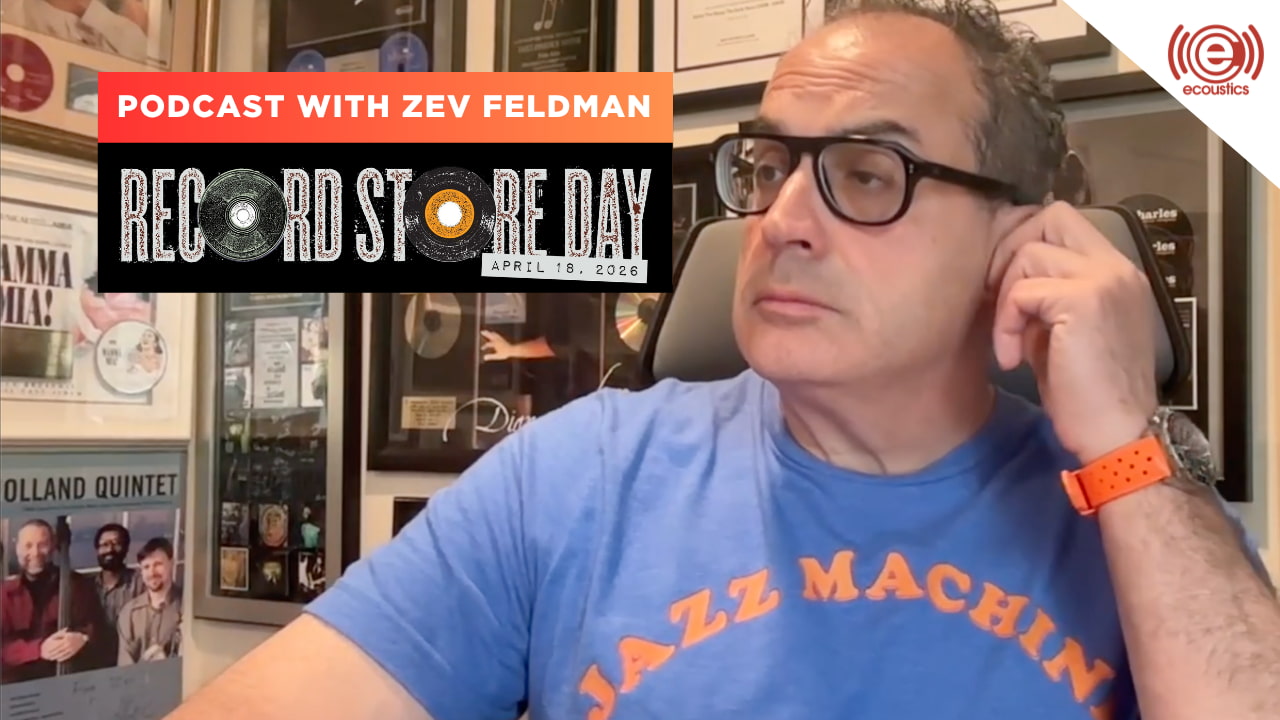
Podcast: Sleuthing RSD 2026 with Zev Feldman, “The Jazz Detective”

Published

on

If you’re lining up for Record Store Day 2026, this episode focuses on the one name that matters most: Zev Feldman, known as The Jazz Detective. Best known for his first-release live recordings of Bill Evans on Resonance and Elemental, Feldman has already delivered 14 Evans RSD titles, with a 15th arriving April 18.

For Record Store Day 2026, he goes further than ever with 11 new jazz releases (including the Evans) across Resonance, Elemental, and Time Traveler Recordings, the label he co founded to bring back rare and hard to find 1970s jazz albums from the Muse catalog. This is not filler for collectors. It is a serious expansion of what Record Store Day can deliver.

Join Eric Pye and Mitch Anderson as they break down the full slate, the continued demand for the Bill Evans RSD series, and the reality of tracking down and restoring lost recordings. At the center is Feldman’s latest discovery, a deep archive from legendary Chicago club owner Joe Segal, now driving an ongoing series of never before heard live albums, with five debuting for RSD 2026. If you care about jazz, vinyl, and making smart choices before the lines form, this conversation gives you a real advantage.

Sponsor: Thank you SVS for sponsoring this episode.

Advertisement

Resonance Records

Joe Henderson  – Consonance: Live at the Jazz Showcase  
3-LP set featuring saxophone titan Joe Henderson and his quartet with pianist Joanne Brackeen, bassist Steve Rodby and drummer Danny Spencer captured in February of 1978. Liners by John Koenig, reflections by Brackeen, Rodby and Spencer, but Joe Segal’s son Wayne.

Ahmad Jamal – At The Jazz Showcase: Live in Chicago 
2-LP set featuring the iconic pianist with bassist John Heard and drummer Frank Gant on March 20-21, 1976. Newly curated liner notes by Jamal scholar Eugene Holley, Jr. with memories from Jamal’s daughter Sumayah and appreciations from pianists Joe Alterman and Fred Hersch.

Yusef Lateef – Alight Upon The Lake: Live at the Jazz Showcase 
3-LP set featuring Lateef with pianist Kenny Barron, bassist Bob Cunningham and drummer Albert “Tootie” Heath captured live in June of 1975. Liner notes by Lateef biographer Herb Boyd, plus interviews with Bennie Maupin, Wayne Segal and more.

Mal Waldron – Stardust & Starlight: At The Jazz Showcase
2-LP set featuring Waldron with bassist Steve Rodby, drummer Wilbur “the Chief” Campbell, and saxophonist Sonny Stitt captured in August 1979. Newly curated liner notes by Howard Mandel, interviews with pianist Lafayette Gilchrist, bassist Steve Rodby, Wayne Segal and more.

Advertisement

Time Traveler Recordings

Terry Callier – At The Earl of Old Town
2-LP set featuring the influential singer/songwriter at just 22-years-old.  A compelling never-before-released 1967 solo performance, recorded by NEA Jazz Master Joe Segal. The package includes comprehensive liner notes by Callier’s longtime friend, Real Jazz Sirius/XM program director Mark Ruffin and comments by daughter Sunny Callier. 

Roy Hargrove – BERN
Recorded at the International Jazzfestival Bern, Switzerland in May 2000, the album captures a vital, previously unissued Roy Hargrove date showcasing the then 30-year-old trumpeter/bandleader at the height of his powers. The package features extensive liner notes by noted jazz journalist/author Nate Chinen.

Buster Williams – Pinnacle
Williams’ celebrated 1975 debut album will be reissued for the first time by Time Traveler Recordings’ Muse Master Edition Series. Package includes original 1975 notes by Elliot Meadow, new liners by noted journalist Mike Flynn and a rare period photo by Raymond Ross.

Advertisement. Scroll to continue reading.
Advertisement

Elemental Records

Michel Petrucciani – Kuumbwa (Europe only)
2-LP set capturing a fiery 1987 performance at Kuumbwa Jazz Center in Santa Cruz, California. The first Petrucciani release among the label’s many jazz treasures, the recording features the legendary pianist with bassist Dave Holland and drummer Eliot Zigmund. The thoughtfully annotated set includes reflections by pianist’s son Alexandre Petrucciani, drummer Eliot Zigmund, Italian pianist Enrico Pieranunzi, journalist Thierry Pérémarti, and Kuumbwa Co-Founder Tim Jackson.

Bill Evans at the BBC
2-LP set featuring spellbinding, intimate music from a 1965 performance showcasing the legendary pianist’s trio with bassist Chuck Israels and drummer Larry Bunker which aired on the British TV program Jazz 625, hosted by English trumpet player Humphrey Lyttelton. The comprehensive package includes notes by Evans scholar Marc Myers, appreciations by Jamie Cullum and James Pearson, and an interview with Israels who told Marc Myers, “Yes, we were damn near perfect at the BBC.”

Cecil Taylor Unit – Fragments, The Complete 1969 Salle Pleyel Concerts
3-LP set featuring two explosive never-before released Cecil Taylor Unit performances featuring the avant-jazz pianist’s 1969 Unit with saxophonist Jimmy Lyons, saxophonist/flutist Sam Rivers and drummer Andrew Cyrille at their creative peak. The expansive package includes notes by Taylor biographer Philip Freeman, memories from drummer Andrew Cyrille and appreciations from Karen Borca, Matthew Shipp, Jack DeJohnette and more.

Freddie King – Feeling Alright: The Complete 1975 Nancy Jazz Pulsation Concerts
3-LP set featuring the blues legend Freddie King live before more than 50,000 fans in October 1975, the final full year of his life. Joining King are organist Alvin Hemphill, guitarist Ed Lively, pianist Lewis Stephens, bassist Benny Turner and drummer Calep Emphrey. The deluxe package features appreciations from his daughter, Wanda King, as well as ZZ Top’s Billy Gibbons, plus liner notes by author Cary Baker. The set documents an essential blues artist whose ferocious guitar tone, commanding singing, and genre-bridging vision helped reshape modern blues and rock.

Advertisement

This episode was recorded on March 30, 2026.

Where to listen:

On the Panel:

Credits:

Source link

Advertisement
Continue Reading

Tech

Irish space AI start-up Ubotica on board for NASA’s FAME

Published

on

The multiyear flight demonstration of FAME is expected to begin with an initial set of six spacecraft this summer.

Irish space-tech start-up Ubotica will offer its onboard AI systems in partnering with NASA on a mission to demonstrate autonomous intelligent satellite networks.

The ‘flight demonstration of federated autonomous measurement’ (FAME) mission is being run by NASA’s Jet Propulsion Laboratory, and will also see participation from UK satellite provision company Open Cosmos.

FAME aims to observe Earth by linking “more than 50 spacecraft from a wide range of operators in the largest autonomous satellite operations test ever attempted”, according to the three collaborators.

Advertisement

The mission will use satellites equipped with Ubotica’s onboard AI to monitor, identify and ‘understand’ Earth events such as wildfires, rogue ships or volcanic activity in real time and “act immediately in orbit, capturing additional data and triggering follow-on observations without waiting for ground analysis”.

According to Ubotica, traditional Earth observation optical, radar and infrared satellites capture and send data to their operators for “delayed processing”, whereas its AI platform “enables satellites to think, see and act autonomously, processing imagery in orbit in real time, extracting insights using advanced AI models and immediately transmitting critical intelligence to Earth”.

FAME intends to demonstrate replication of that capability “across an entire constellation”, so that observations, interpretations through AI and subsequent related behaviours by one satellite are interpreted by others in the network, which can then adjust their next behaviours accordingly in coordination as “an intelligent system”.

FAME’s foundation lies in a previous collaboration between the trio, who said that in July 2025, they successfully demonstrated ‘dynamic targeting’, enabling spacecraft to reorient in moments when required – without ground personnel involvement – to capture event confirmation imagery.

Advertisement

Ubotica CEO Fintan Buckley said: “Dynamic targeting showed what a single satellite with onboard AI can achieve. FAME shows what happens when that capability is coordinated across a network.

“Our contribution is the intelligence inside the Ubotica nodes: detecting what matters, processing it in orbit and passing the signal to whatever asset can act on it fastest. That is how you close the loop at a speed that is actually useful.”

The multiyear flight demonstration of FAME is expected to begin with an initial set of six spacecraft this summer. The collaborative work on dynamic targeting was recognised in December with the SpaceNews Icon Award for Space AI Partnership.

The trio said the first year of the mission will focus on maturing flight capabilities and executing AI and notification tests across the core constellation, while years two and three will see scaling to a network of more than 50 spacecraft “processing thousands of automated alerts and executing hundreds of autonomous on-orbit tasking commands across assets from multiple operators and agencies”.

Advertisement

Dublin-based Ubotica was founded in 2016 by Buckley, John Bourke and Aubrey Dunne. In February, the company was among the first chosen for involvement in Ireland’s European Space Agency Phi-Lab at Irish Manufacturing Research in Mullingar, Co Westmeath.

Don’t miss out on the knowledge you need to succeed. Sign up for the Daily Brief, Silicon Republic’s digest of need-to-know sci-tech news.

Source link

Advertisement
Continue Reading

Tech

App Store is buzzing with new apps in 2026 and it seems AI has a hand behind it

Published

on

Contrary to earlier predictions that artificial intelligence would reduce reliance on mobile apps, new data suggests the opposite is happening. The app ecosystem is seeing a sharp rise in activity, with AI playing a key role in driving a new wave of app development.

According to a Tom’s Guide report quoting market intelligence firm Appfigures, global app releases grew by 60 percent year-over-year in the first quarter of 2026 across both Apple’s App Store and Google Play. The growth is even more pronounced on iOS, where app launches increased by 80 percent during the same period. Early data for April shows an even steeper rise, with total app releases up 104 percent across both platforms and 89 percent on iOS alone.

AI Is Powering A New App Gold Rush

The surge in app creation comes amid earlier concerns that AI chatbots and agents would replace traditional apps altogether. Industry leaders had speculated that users might shift toward conversational interfaces, reducing the need for standalone applications.

However, a different trend is emerging. AI tools are making it easier for individuals to build apps, even without formal coding skills. Platforms such as AI-assisted development tools are lowering the barrier to entry, enabling creators to quickly turn ideas into functional software.

This shift is reflected in the types of apps being launched. While mobile games continue to dominate in terms of volume, categories like productivity, utilities, and lifestyle apps are seeing increased activity. Health and fitness apps are also among the top segments experiencing growth.

Advertisement

Why This Matters For The App Ecosystem

The resurgence of app development signals a broader transformation in how software is created. Instead of replacing apps, AI appears to be accelerating their production, potentially ushering in a new “app gold rush.”

For companies like Apple and Google, this translates into renewed platform relevance and increased opportunities for revenue through app distribution and in-app purchases. For developers and creators, it opens the door to experimentation and innovation at a scale that was previously difficult to achieve.

However, this growth also introduces challenges. A rapid influx of new apps increases the risk of low-quality, misleading, or malicious software entering the marketplace.

What It Means For Users

For users, the growing number of apps means more choices and potentially more innovative tools. AI-powered applications are expanding capabilities across productivity, communication, and entertainment.

Advertisement

At the same time, the surge makes it harder to distinguish between reliable apps and those that may be spammy or harmful. Recent incidents involving fraudulent or malicious apps slipping through review processes highlight the need for stronger oversight.

What Comes Next

As AI-driven development continues to gain traction, the volume of app releases is expected to grow further. This could push platforms like Apple to enhance their review systems and introduce stricter monitoring mechanisms.

The next phase of the app economy will likely depend on balancing rapid innovation with quality control. While AI is clearly enabling a new wave of creation, ensuring trust and safety will be critical as the ecosystem expands.

Source link

Advertisement
Continue Reading

Tech

The Only Shelby Built From The Ground-Up Ditched Ford For An Oldsmobile V8

Published

on


There was a car created by Carroll Shelby that didn’t have a Ford engine under its hood. In fact, it wasn’t even based on a Ford. We are talking about the Shelby Series 1 Roadster, the only car ever built by Shelby from a clean-sheet design. Instead of a big engine from the Blue Oval providing the motive power for this Shelby, there was an Oldsmobile V8 under the hood generating the necessary horsepower. Overall, it was an underappreciated Shelby car.

The Shelby Series 1 Roadster was Carroll Shelby’s final attempt to create a modern version of the automotive icon that was the Shelby Cobra. Just 249 examples of the Series 1 were produced, all 1999 models, conforming to that year’s Federal Motor Vehicle Safety Standards. The Shelby’s chassis was state-of-the-art, featuring 6061 T4 aluminum elements that were formed and extruded before being welded together and heat treated. Honeycomb aluminum panels formed the floor and rocker panels for extra rigidity, producing a chassis that weighed only 265 pounds. The body that was draped over this chassis was made of fiberglass composite and carbon fiber, keeping the curb weight down to just 2,650 pounds. This was much less than that of the car seen as the Shelby’s main competitor at the time, the Chevrolet Corvette C5.

The Shelby Series 1 Roadster’s suspension used a double wishbone setup connected to cantilevered coil-overs in the center of the vehicle. The brakes were discs all around, with forged aluminum 18-inch Speedline wheels measuring 10 inches wide in the front and 12 inches wide in the rear, mounted with Goodyear Eagle F1 tires.

Advertisement

The Shelby Series 1 Roadster had its share of problems

The Shelby Series 1 Roadster experienced a large number of problems during its gestation, primarily due to both production-related issues and roadblocks stemming from corporate politics. Production problems included chassis jigs that permitted warping during cooling, plus delays due to an overworked team at Shelby that pushed production out to 1999. This further led to cost overruns when a new set of safety standards had to then be met. Then there were handling issues, the lack of ABS (which led to braking problems), whining gears from the ZF manual transmission, and repeatedly cracking aluminum castings in the rear suspension. Moreover, the side windows and convertible tops did not fit correctly and some of the transaxles needed replacement, all issues that increased costs further. Also, the car’s carbon fiber body panels turned out to be not properly sealed, requiring body filler that added hundreds of pounds of weight to the Series 1 Roadster.

Political problems were largely the result of the forced 1996 departure of John Rock, the Oldsmobile general manager who had championed GM’s hookup with Shelby to produce the Series 1 Roadster. Once Rock was gone, Oldsmobile would not supply the computer tuning codes for the L47 engine Shelby was using, ultimately reducing the stock engine’s output from 350 horses to 320. Making things worse, GM refused to share any current Corvette parts with the Shelby Series 1 Roadster, so Shelby was unable to use the ‘Vette’s transaxle or any C5 suspension pieces. The price also increased, starting at a sub-$100k target when it was first announced up to $181,824 in 2000.

Advertisement

How well did the Shelby Series 1 Roadster perform?

For motive power, the Shelby Series 1 Roadster was supposed to use an Oldsmobile racing engine, but emissions-compliance issues resulted in the car using the civilian version, the 4.0-liter DOHC V8 from the Oldsmobile Aurora, mounted behind the front axle in a front mid-engine position. The engine was mated to a six-speed manual ZF transmission driving the rear wheels. Weight distribution was an ideal 51:49. The engine made 250 horsepower in the Aurora, but the Shelby ended up with 320, while an optional supercharger, which works differently than a turbocharger, would literally boost that to 450 horsepower. 

According to the Museum of American Speed, the stock Shelby Series 1 Roadster can do 0-60 mph in 4.4 seconds, with a quarter-mile time of 12.8 seconds at 112 mph and a top speed of 170 mph. Car and Driver managed, after many difficulties related to the car’s reliability, to get a 0-60 mph time of 4.1 seconds and a quarter-mile time of 13.0 seconds at 112 mph. The publication famously called the Series 1 “a work in progress.”

Advertisement

The Shelby Series 1 Roadster should have been a modern reincarnation of the Shelby Cobra, with all the performance and charisma of the original version. Instead, it is seen as a project that came up against all of the typical obstacles that befall low-volume vehicle producers. From the eternal struggle to make money on a few hundred cars and corporate infighting with formerly helpful partners to the realities of making a vehicle that conforms to the Federal Motor Vehicle Safety Standards, the Series 1  had the deck stacked against it; regardless, it remains Carrol Shelby’s flawed but striking swansong.


Advertisement

Source link

Continue Reading

Tech

Why DeWalt’s New Power Tool Batteries Look Different Than What You Remember

Published

on


In the power tool game, having your branding down is everything, and DeWalt has remained pretty consistent with its products over the past few decades — when customers see black and yellow in a tool context, their mind automatically goes to DeWalt. With that said, the company isn’t afraid to make minor, yet noticeable tweaks here in there. One of the most recent is a change to one of DeWalt’s many battery types, specifically the 20V XR battery offerings. Looking closely at the labels on the sides of these batteries and at their online descriptions, there is a noticeable change to how these batteries are categorized and advertised.

For example, the 20V Max XR compact battery has only recently taken on this naming. Not long ago, it was known as the 20V Max XR PowerStack compact battery, with the PowerStack branding removed from the online DeWalt listing, and this change is reflected on the battery itself. This change is observed through the 20V Max XR compact battery kit listing on the DeWalt website, which features images of previous designs with the large and small PowerStack logos. On top of this, PowerStack and PowerPack logos have been removed from many other 20V DeWalt batteries.

Advertisement

All in all, this isn’t too massive of a change, especially for those who aren’t all that picky about their DeWalt batteries so long as they get the job done. The question is, though, does this slight rebrand mean anything for the batteries’ performance level? Thankfully, based on the image changes, DeWalt’s battery system hasn’t changed outside of these missing PowerStack and PowerPack logos.

Advertisement

Has DeWalt made functional changes to its batteries?

At the end of the day, a missing logo and some description changes doesn’t make too much of a difference. However, if DeWalt altered how its batteries work, that would be cause for customers to be disgruntled. As mentioned before, they’re still the same shape and size across the board, and for those worried they’ll have to delve into the pros and cons of power tool battery adapters, the manner in which they connect to DeWalt power tools hasn’t changed.

With that said, there is the question of the fate of the PowerStack and PowerPack lines. PowerStack batteries were introduced as a more powerful and efficient series of batteries, notable for their flat pouch cells over standard cylindrical ones. PowerPack batteries offer similar benefits utilizing multi-tab battery cells as opposed to traditional single-tab cells. Nothing has come to light that confirms the demise of these sublines or the technology behind them, so we’ll just have to wait and see if DeWalt sheds any light on the disappearance of these labels down the line.

While the fate of the PowerPack and PowerStack labels remains something of a mystery for the time being, there don’t seem to be many significant battery changes in DeWalt’s lineup. Based on the revised images, the impacted battery models are likely to connect and get the job done as they always have, just with a little less paint and branding on their sides.

Advertisement


Source link

Advertisement
Continue Reading

Trending

Copyright © 2025