Even though GPS makes it possible for us to easily navigate around the planet in almost any vehicle we’d like, whether that’s a passenger vehicle, airplane, or cargo ship, it’s not really suitable for applications that require sub-meter accuracy. For that, some specialized hardware is needed, and [GreatScott!] shows us how to do it using a small robot as a platform.
The key to extremely accurate GPS signals in this case is using a receiver that supports real-time kinematic positioning (RTK). This type of system relies on a base station with a known position communicating with local mobile receivers to increase the precision of those mobile receivers by comparing the phase angle of the received signals. Of course these modules are much more expensive than the average standard GPS receiver, but for this kind of accuracy there is always a cost.
After getting a baseline accuracy of around two meters with a standard GPS receiver, [GreatScott!] installs the RTK GPS mobile receiver on a tracked robotic platform and a base station on a fence post. With the RTK system running, the limiting factor in accuracy became the robot’s steering system, as its turning radius and steering algorithms weren’t up to the task of hitting centimeter-sized targets out of the box.
Advertisement
But, as a proof-of-concept, it goes to show how accurate GPS can be as long as the right hardware is used, and for practical applications is good enough to mow a lawn with a robot or even do some amateur land surveying.
Theory Professional arrived at InfoComm 2026 with two new loudspeaker products, but the SR-221.3 was the one that made it difficult to ignore the company’s booth. The extreme output, full range sound reinforcement loudspeaker is the latest addition to Theory Professional’s SR Series, designed for installations and portable applications that require serious scale, wide coverage, and the kind of dynamic headroom that makes most conventional commercial speakers sound rather polite.
Do not confuse Theory Professional with Theory Audio Design. The two brands share the same corporate umbrella and the engineering vision of founder Paul Hales, but they serve different masters. Theory Audio Design is focused on premium residential and custom installation systems, while Theory Professional takes that same emphasis on compact form factors, high output, advanced drivers, and refined voicing into commercial venues, hospitality spaces, houses of worship, entertainment installations, and live sound reinforcement.
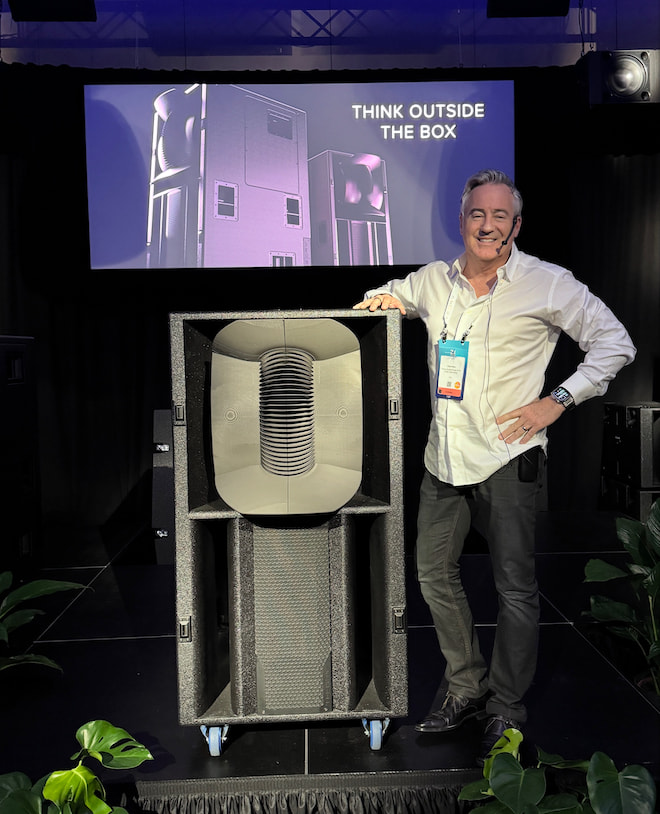
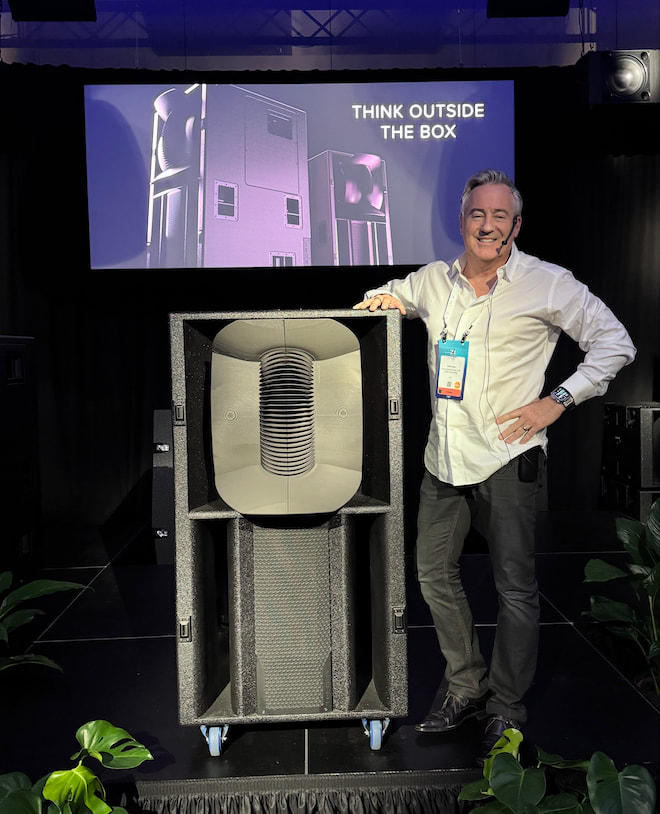
Paul Hales with Theory Professional SR-221.3 Loudspeaker at ISE 2026
First previewed at ISE 2026 in Barcelona, the SR-221.3 made its InfoComm debut as the flagship statement piece in that strategy. With dual 21 inch low frequency drivers, four 10 inch carbon fiber midrange drivers, and a 5 inch ring radiator compression driver, it is essentially Theory Professional’s argument that a single enclosure can deliver rock concert scale without requiring a small army of boxes and a spreadsheet to deploy them. For a deeper look at the SR-221.3 and the wider SR Series, refer to our report from ISE 2026.
At InfoComm 2026, Theory Professional also debuted the p9 Pendant Loudspeaker, a second new product shown alongside the SR-221.3.
Theory Professional p9 Pendant Loudspeaker: What We Know So Far
The p9 expands Theory Professional’s pendant loudspeaker lineup, building on the existing ic6 PENDANT. With this new model, Theory is targeting premium commercial spaces that require more output, wider bandwidth, and greater placement flexibility than a conventional compact pendant speaker can typically provide.
Advertisement
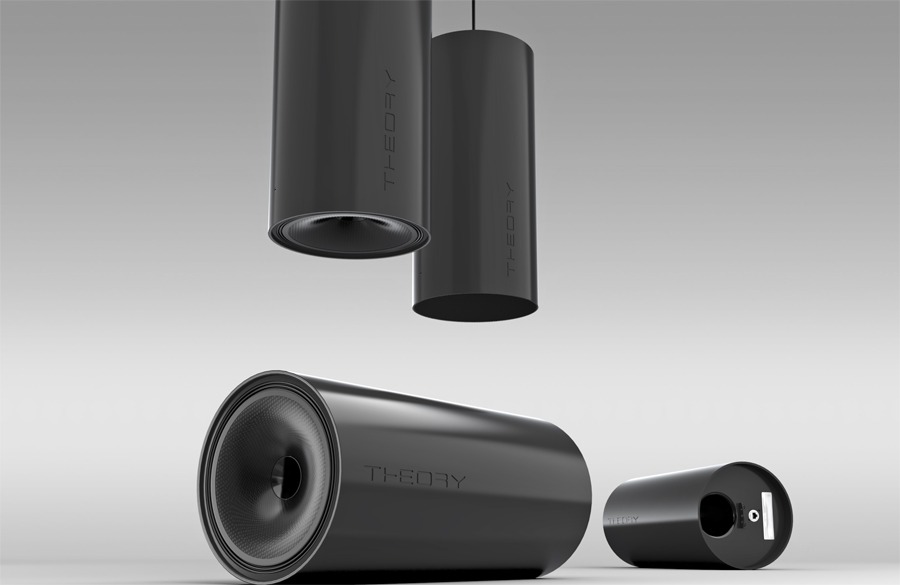
Theory Professional p9 Pendant Speakers
The p9 combines high output capability and dynamic range with a slender, design-conscious form factor. Inside its black anodized aluminum enclosure is a 9-inch driver system featuring Theory’s Theorem axi-symmetric waveguide and a carbon fiber sandwich low-frequency diaphragm. Theory specifies a frequency range of 45Hz to 20kHz, which means that many foreground music installations may not require a separate subwoofer.
The p9 is also designed to maintain 120-degree dispersion through the upper frequencies, creating broad and consistent coverage in spaces where listeners may be spread across a wide area. That could prove particularly useful in restaurants, hotels, retail environments, and other installations with lower ceilings, where fewer loudspeakers and broader coverage can simplify system design.
Its driver provides the radiating surface area of a 9-inch unit while fitting within an 8-inch chassis, helping Theory keep the overall enclosure compact. The bezel-free industrial design further minimizes its visual footprint, allowing the p9 to blend more naturally into hospitality, wellness, retail, and other architecturally sensitive environments.
Theory Professional positions the p9 as an answer to a growing mismatch in commercial AV: increasingly refined spaces are still too often fitted with loudspeakers that prioritize utility over both sound quality and appearance. The p9 is intended to give dealers, integrators, architects, and designers a more upscale pendant option without sacrificing output or coverage. It is expected to ship in Q4 2026 in passive 16-ohm/70V and PoE versions.
Advertisement
The Bottom Line
Under Paul Hales, Theory Professional continues to pursue a very specific corner of the market: compact loudspeakers that do not surrender dynamics, bandwidth, or intelligibility simply because the installation needs to look civilized.
The p9 is not aimed at projects that require the cheapest possible 70V pendant speaker. Its appeal is the attempt to combine wide 120-degree coverage, useful low-frequency extension, high output capability, and a compact, architecturally friendly enclosure in one product. For restaurants, hotels, retail spaces, spas, clubs, and premium residential or light-commercial projects with exposed ceilings, that could mean fewer speakers, less visual clutter, and potentially no subwoofer for foreground music systems.
Advertisement. Scroll to continue reading.
Theory has confirmed that the p9 and SR-221.3 will be shown and demonstrated at CEDIA Expo 2026 in Denver, giving the eCoustics team a chance to hear both products in person. That matters, because the specification sheet is promising, but the real question is whether the p9 can deliver the scale, tonal refinement, and broad coverage Theory is claiming without becoming another expensive pendant speaker that looks better than it sounds. We also expect CEDIA to bring clearer details regarding final specifications, availability, and pricing.
Advertisement
Price & Availability
The p9 will be available in Q4 2026 in both passive (16-ohms/70V) and PoE versions through Theory Professional commercial and residential partners.
Apple’s Certified Refurbished store has been a sanctuary for people who balk at the prices of new Apple products, but it provided little shelter from today’s increases across many of its lines. Reconditioned items are also more expensive.
Outgoing Apple CEO Tim Cook warned last week that price increases were coming due to the scarcity of memory components that are being reserved for building out AI infrastructure.
The stock of Apple’s refurbished store fluctuates wildly, but comparing a few current items as of June 25 with listings found at the Internet Archive’s Wayback Machine reveals price bumps of around 6% to 15%.
For example, a refurbished 15-inch MacBook Air M4 with 16GB of memory and 256GB of storage cost $929 on June 14, and now lists for $1,019, an increase of $90. It originally sold for $1,199.
A 14-inch MacBook Pro M5 with 16GB of memory and 512GB of storage was $1,359 on June 14, and now lists for $1,439, an $80 jump. Its original price was $1,599.
Kicking these prices up by less than $100 doesn’t seem like a big difference, except that these are machines with existing memory and processors — Apple likely isn’t sourcing new components. That said, there’s no visibility into what goes into each reconditioned product, so it’s possible these items did get new logic boards. But they could also have needed new screens or replacement cases.
Advertisement
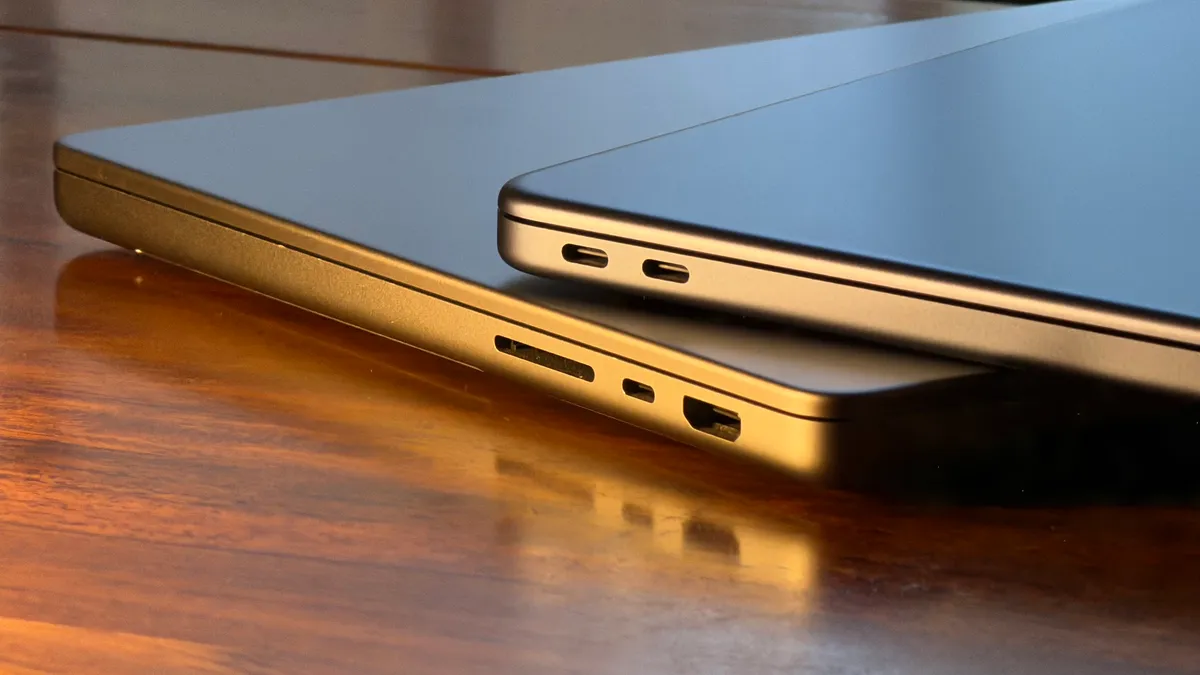
Apple’s Certified Refurbished store can garner great deals on reconditioned equipment, but it, too, is seeing price increases.
Apple/Screenshot by Jeff Carlson/CNET
Refurbished iMac models see a more substantial increase. A refurbished 24-inch iMac M4 with 16GB of memory and 256GB of storage was $1,099 on June 14 and now costs $1,269, a $170 difference.
Macs aren’t the only refurb products seeing higher costs. A 13-inch iPad Pro M4 (Wi-Fi model) with 256GB of storage sold for $1,019 on June 14 and is now $150 more expensive at $1,169.
Advertisement
The prices for new Apple TV and HomePod configurations also saw increases, but as of June 25, Apple did not list any refurbished inventory.
These are the costs for Apple’s own Certified Refurbished store. From a cursory look, it appears the price jumps haven’t migrated to other stores that sell refurbished Apple products, such as Best Buy. Those also include older models that can be great deals if you don’t need this year’s or even last year’s machine.
If you’re looking to buy one of the affected Apple products, Amazon’s Prime Day prices have not incorporated any of Apple’s new pricing so far.
An Apple representative didn’t immediately respond to a request for comment.
Earlier this week we noted how ABC has been asking its audience to give the Trump FCC an earful about its clumsy efforts to censor journalists, comedians, and daytime talk show hosts:
The ad only hints at the fact that FCC boss Brendan Carr has launched a fake “investigation” of ABC because The View hosted Texas Senate hopeful James Talarico last February. As we’ve explored repeatedly, Carr is pretending that this appearance violates a dated and irrelevant FCC “equal time rule,” despite the fact the show has had a formal exemption since 2002.
It’s all weird, performative bullshit designed to chill speech and punish ABC because President Trump is a thin-skinned autocrat. It’s also intended to send a message to all major media outlets that if they platform people openly critical of our dim kakistocracy, they’ll be inundated with endless costly legal headaches and bad “press” (read: lots of hostility aimed at them by right wing propaganda outlets).
Advertisement
Despite the ABC ad being relatively timid, it clearly upset the similarly-thin-skinned Carr, who took to Elon Musk’s right wing propaganda website to whine about it:
Again, The View was already exempt from this rule, for more than two decades. Even if it wasn’t, the rule hasn’t been enforced in 26 years because it’s a relic that doesn’t matter. It was crafted for an era where a TV appearance could make or break a political candidacy, requiring that a politician of the opposite party ideology get “equal time” on broadcast airwaves.
But broadcast is increasingly irrelevant, as is the rule, which you’ll notice Carr doesn’t enforce for right wing radio (because this is an ideological crusade by a weak zealot). This is also a giant loser of a case on First Amendment grounds. But it could be a particularly problematic case for Carr during discovery, given the indications that Carr covertly worked with right wing broadcasters to falsely make it look like ABC’s affiliate actively broke the law by not filling out some paperwork.
Carr knows all of this but his audience of bots and MAGA zealots over at ex-Twitter obviously don’t. They will simply see women daytime TV hosts and “news” in the same line of sight and immediately suffer embolisms of hate.
“Some may dislike certain — or even most — of the viewpoints expressed on ‘The View’ or similar shows,” ABC said in one recent filing. “Such dislike, however, cannot justify using regulatory processes to restrict those views.”
Advertisement
Carr doesn’t want this to ever see an actual courtroom. He just wants to intimidate corporate media giants, censor valid speech, and then bask in the adoration of the misinformed and deluded.
But it’s genuinely bad news for Carr and Trump that Disney Corporation is fighting back. If they can openly and legally demonstrate that Carr is a toothless extremist hack, other corporations are likely to be encouraged. And as Trump’s health and political power starts to buckle and fail, that sort of uncharacteristic corporate media courage could prove contagious.
A long time before Beowulf clusters wired up with commodity Ethernet hardware became a hobbyist thing and a running joke, the transputer took a swing at a very similar architecture. This used stand-alone computers that were networked together with other transputer systems, to achieve task-level parallelism. For some people like [Lance Harvie] this is the kind of hardware that he used during his university years for a project, with him not only still having that hardware, but also recently adding to this collection with a recent eBay purchase.
The transputer story is a fascinating one, forming a major part of the UK’s semiconductor industry during the 1980s, creating a strong legacy as the computer industry awkwardly tried to figure out what types of parallelism to target. Whereas the industry largely moved to instruction-level (superscalar) parallelism alongside tightly coupled task-level parallelism along with multiple CPU cores on a single die, one could consider today’s supercomputer clusters to be one example of the transputer legacy.
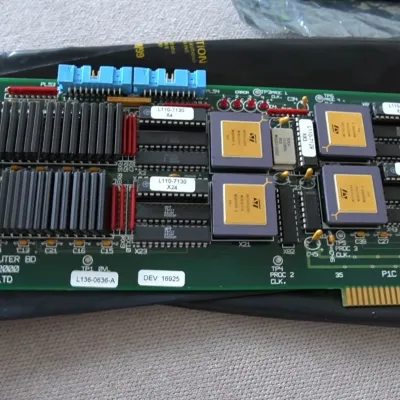
[Lance]’s university-era board features the T400, which he shows off while recalling programming it in the Occam language. He’s currently looking for an ISA-to-USB adapter to be able to use it again with a modern PC. While searching around, he came across an EBay listing for a four-processor board, containing four T425s. These are significantly more powerful and also can use external memory, unlike the T400.
This four-CPU board omits the external serial links, as it’s meant to be used in e.g. a scientific instrument as a stand-alone 4-unit transputer system, with all of the available four serial links per processor connected on the PCB. Even more interesting is that the processors on this board were manufactured in 1999 by ST, which was many years after transputers stopped being developed.
Advertisement
As [Lance] explains, this was due to the UK government pulling the plug on the transputer project, with the IP subsequently ending up at ST who kept producing the chips until 1999 at its Philippines plant.
In time, [Lance] hopes to power up all these boards and use them again in combination with a modern-day Linux-based computer. We’re definitely looking forward to seeing that happen.
Although you can definitely use any random MCU these days as your very own transputer module or link chip, with e.g. SPI making for an attractive alternative for the high-speed serial links, there’s always something to be said for using real, original hardware.
Screenshots from PaperTok-generated videos. (PaperTok.com Images)
Researchers have a new weapon against the scientifically inaccurate AI slop muddying public understanding of complex topics. A University of Washington team is helping scientists tell their own stories with a free tool that converts dense, jargon-heavy publications into short, accessible videos.
“There’s a lot of science communication happening in short form — primarily on TikTok, but also we’re seeing YouTube Shorts and Instagram Reels — these tidbits of science findings,” said Meziah Ruby Cristobal, a UW doctoral student in human centered design and engineering.
Cristobal and her colleagues built PaperTok hoping to use AI for good — to fight the technology’s irresponsible use elsewhere by non-scientists who misrepresent research.
The tool is simple. A researcher uploads a paper into PaperTok, which analyzes it to find attention-grabbing hooks and the most relevant takeaways for a general audience. The tool generates a script with an opening scene and narrative arc, producing a 45-second AI-narrated video. It closes with a reference to the paper, including the researchers’ names and the journal, to establish credibility.
Other tools can turn PDFs into videos, but Cristobal said PaperTok was intentionally designed to keep humans in the loop. It uses a multi-step process that requires approval at each phase, giving users the ability to edit the output down to individual words.
Advertisement
Cristobal presented research on PaperTok this spring in Barcelona at the Association for Computing Machinery’s Conference on Human Factors in Computing Systems. She co-led the study with fellow doctoral student Donghoon Shin; the senior author is UW professor Gary Hsieh.
Lead contributors on the University of Washington’s PaperTok study, from left: Gary Hsieh, UW professor in human centered design and engineering; and UW doctoral students Meziah Ruby Cristobal and Donghoon Shin. Cristobal presented the findings at the Association for Computing Machinery’s Conference on Human Factors in Computing Systems in Barcelona. (Photo courtesy of Cristobal)
A team of eight built PaperTok last summer, starting with interviews with science communicators and researchers before developing the tool and gathering user feedback.
“A lot of the researchers actually found huge value in seeing how the AI tries to visualize what they believe to be very abstract concepts,” Cristobal said. For many, it served as a brainstorming tool that highlighted new ways to communicate their findings.
There was critical feedback as well. Some users said the videos felt “too AI-ish,” pointing to issues like nonsense text. The UW team is continuing to refine PaperTok, including plans to let researchers incorporate charts and graphics from their papers into the videos.
PaperTok was built to translate research papers on human-computer interaction but has been tested on topics including physics, and it held up well. The team wants to expand its reach across research disciplines to create videos for social sciences and hard sciences alike.
Advertisement
The tool is free to use, but because video generation is computationally expensive, the company asks researchers to use a Gemini key so the cost is charged to their Google account.
Samsung just unveiled its newest budget phone, Galaxy A27 5G, starting at $349, which is $50 pricier than last year’s Galaxy A26, yet it actually takes a step back in a few areas that matter for everyday use.
What you actually get for the higher price
Samsung swapped the A26’s Exynos chip for a Snapdragon 6 Gen 3, which delivers a 10 to 20% speed boost, plus a GPU upgrade for smoother gaming and graphics work. The display still rocks a 6.7-inch Super AMOLED panel with a 120Hz refresh rate. It now has a punch hole camera cutout instead of last year’s teardrop notch, with slimmer bezels around the screen.
You get three memory configurations to choose from too, 6GB plus 128GB, 8GB plus 128GB, and 8GB plus 256GB. AI features get a small boost too, including multi-object recognition in Circle to Search, sharper Object Eraser results, and real-time translation in the Voice Recorder app across 22 languages. Samsung is sticking with six years of OS upgrades and security updates, just like before. However, most of this feels like a minor refresh rather than a real leap forward.
Galaxy A27 5G vs A26: what’s downgraded?
Samsung
The biggest letdown is IP ratings. Samsung Galaxy A26 was the first in its tier to score an IP67 rating, meaning it could survive a brief dunk, and Samsung loved bragging about that flagship-grade feature trickling down to a budget phone. Sadly, the A27 drops to IP64, which only shrugs off splashes and dust, not a dip in water.
Meanwhile, the cameras took a hit too. The ultrawide lens falls from 8MP to 5MP, and the selfie camera drops from 13MP to 12MP, though the 50MP main camera with OIS stays the same. Additionally, the phone is even slightly thicker now, going from 7.7mm to 7.8mm, which is a negligible difference, but a regression nonetheless.
Advertisement
If you are still looking forward to picking one up, the Galaxy A27 5G lands July 3 internationally and July 14 in the US. And if the price hike has you eyeing other options, here are four terrific Galaxy A37 alternatives worth checking out too.
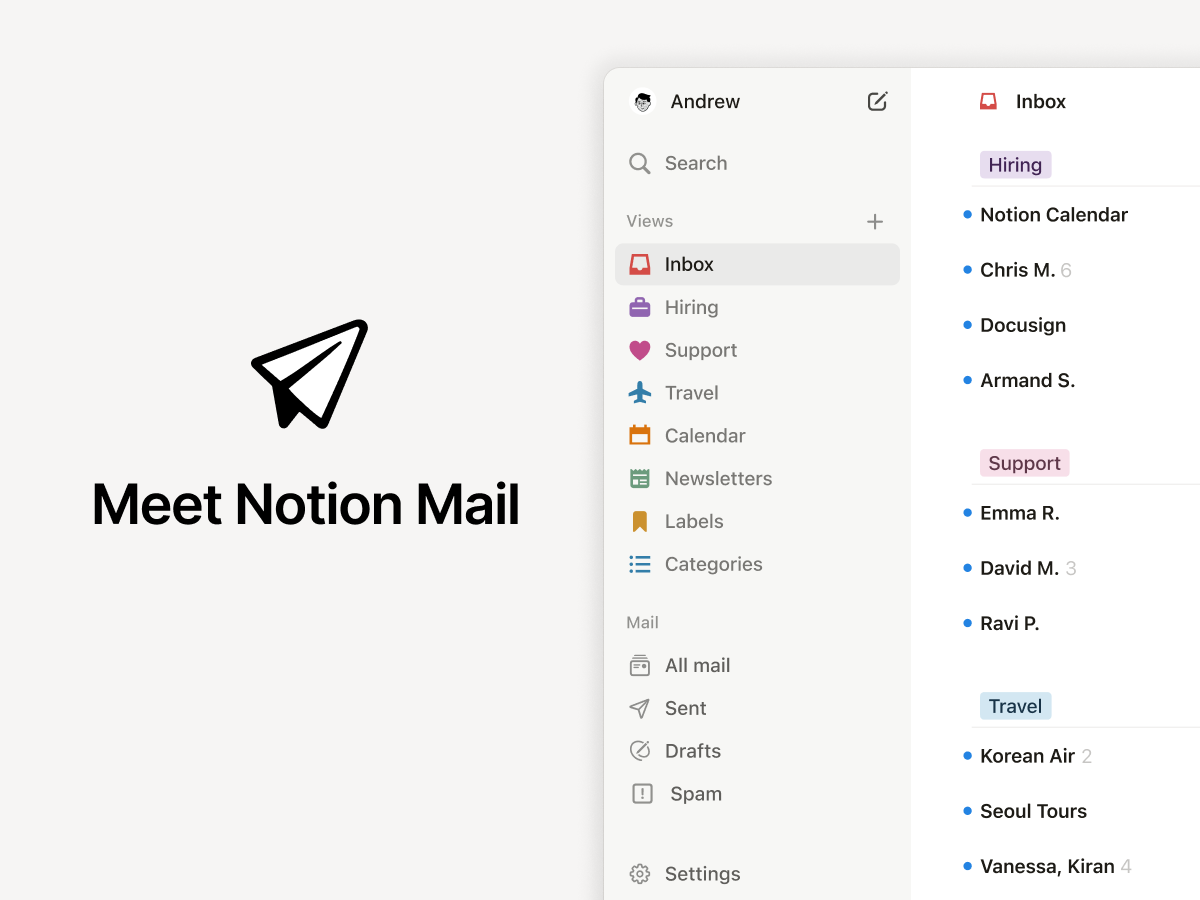
Productivity company Notion is shutting down its email product, Notion Mail, on September 22. The company said it is discontinuing its email inbox in favor of its AI agent offering. It noted that users were increasingly handing over reins of their email to the agents, and not opening their inbox at all.
“As Notion agents have gotten more capable, we’ve seen more users hand off email workflows to them. Today, more than half of Notion Mail users manage emails without ever opening their inbox. So, we’re going all in on using agents to run your inbox,” the company said in a post on X.
Notion Mail is connected with Gmail, meaning all emails in the inbox will stay intact. However, users will need to export drafts and scheduled emails if they want to keep them. The company said that users can export snippets and auto-label instructions and use them elsewhere and emphasized that Notion’s email-based agents will keep working post-Notion Mail shutdown.
Notion announced its email product in preview mode in 2024 after it acquired security-centric productivity startup Skiff. The company aimed to integrate email with Notion AI with features like auto-labeling, filtering, and handling scheduling for users. The company made the product available to users in April 2025 to better compete with the likes of Superhuman and Fyxer. Newer startups like AgentMail are in step with Notion’s thesis and are trying to build an email service specifically for agents.
There are lots of graphics libraries available for the ESP32, and lots of ways to program one to boot. Even still, most of us wouldn’t immediately think to CSS when it comes to embedded products — yet that’s now a thing on the Espressif platform, apparently.
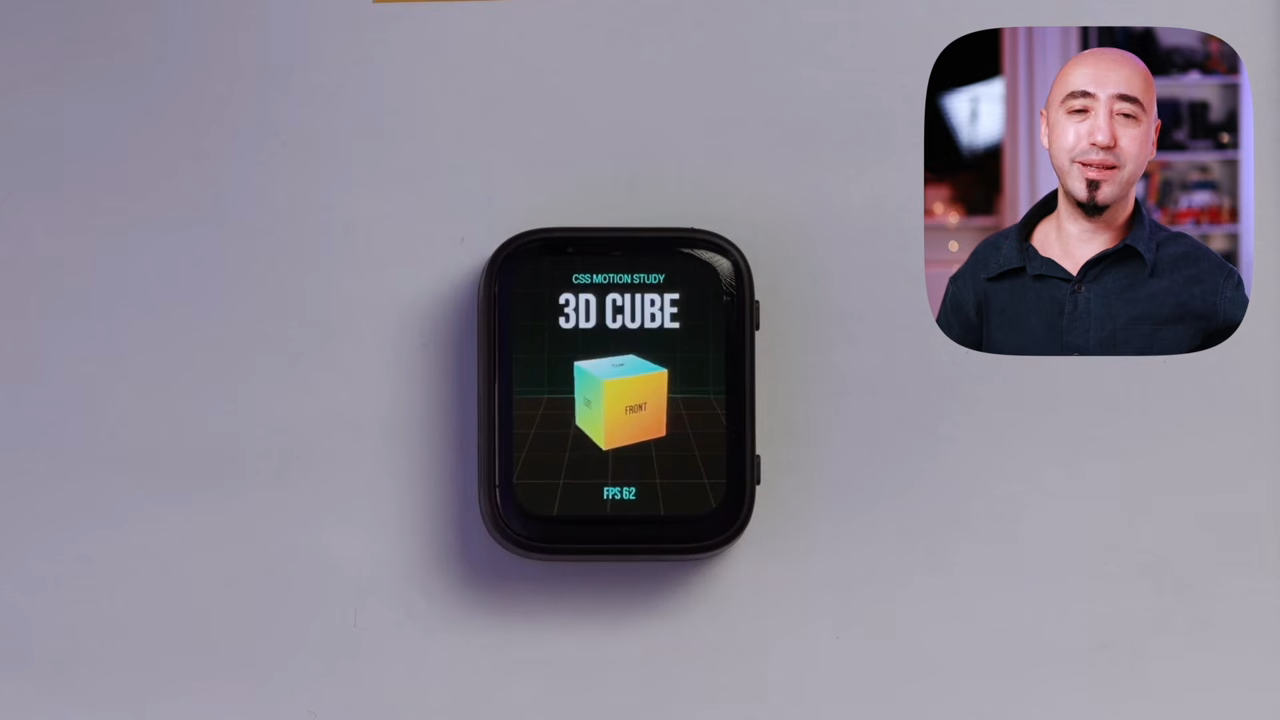
The Gea stack allows one to compose CSS and TypeScript code that is then turned into generated C++ code that compiles to native firmware. The team behind Gea have demoed this ability by running a 3D cube animation on an ESP32 at up to 60 FPS. This isn’t some ugly, low-res wireframe demo, either. It’s a full-color animation running on a 410×502 AMOLED screen. It’s very fluid, and can even handle transparency on the cube faces (albeit with a performance penalty).
It’s worth noting that this isn’t a full browser engine. As you might expect, some concessions had to be made to get it running on the ESP32. Namely, it doesn’t handle “:hover” states because it’s designed for touchscreen use, fonts are rasterized, and the UI tree is limited to just 512 nodes. Regardless, it shows that using CSS and TypeScript to develop for the ESP32 is entirely possible without some crazy loss of performance. If you want to build easy interfaces on an ESP32 while leaning on web dev experience, this could be very useful indeed.
Earlier today, Microsoft raised the price of its Xbox consoles by up to $150 in the US. Following the price hike, the asking price for the Xbox Series X 2TB edition has climbed all the way up to $800. The 1TB model now costs $650, while the Xbox Series S with 512 GB storage will now cost $400 in the US market.
What’s the game plan?
To retain gaming enthusiasts, Microsoft has introduced a new installment-based payment scheme for its consoles that is now live through its official storefronts. The Buy Now Pay Later system is currently available for the Xbox Series S and the Xbox Series X consoles — for both new and refurbished units.
Now that the price of Xbox has gone up by up to $150, Microsoft is introducing Buy Now, Pay Later option. “We’ve made it easier for players to use Buy Now, Pay Later options on eligible XBOX hardware purchases through Microsoft Stores, making it possible to break up your payment… pic.twitter.com/6PgLHsEumw
According to Microsoft’s website, the Buy Now, Pay Later system works in collaboration with PayPal and allows you to pay the full cost of a device in four installments (paid bi-weekly) with zero interest, or you can opt for monthly installments and pay them across installments.
Advertisement
If you opt to pay monthly for an Xbox console, you can break the installments across 24 months. There are no late fees or sign-up charges involved. “Flexible payment options help you pay how you want, at Microsoft Store,” says the company on its online storefront.
The caveat, and alternative
But in order to avail the buy now, pay later benefit on Microsoft Store, which is essentially an extension of the PayPal Pay Later system, your purchase must first be approved before you can decide the duration over which you want to pay the full cost of the Xbox console.
The situation with memory pricing is pretty grim. Earlier today, Apple raised Mac and iPad prices, after claiming the situation is unsustainable now. #Xbox is running into a similar wall. This is what the company has to say: “Unfortunately, console storage and memory prices… https://t.co/NERFunpNlv
In case your purchase is not approved by PayPal or you don’t have a PayPal account, you can head over to Amazon and purchase an eligible Xbox console via a financing scheme with zero interest, spread across 12 months.
Energy storage startup Base Power began selling its massive home battery systems to residents of Illinois yesterday, Canary Media reported. Crucially, it’ll be the startup’s first foray into the grid territory operated by PJM Interconnection, the largest U.S. grid operator by territory, and one that has particularly struggled to cope with an onslaught of new data centers.
Beyond Illinois, PJM’s territory includes Northern Virginia, one of the densest data center regions on the planet. That density, coupled with a paucity of new generating sources, has caused wholesale electricity prices in PJM to nearly double over the past year. The power crunch has gotten so bad that AEP, one of the region’s largest utilities, has threatened to leave the market.
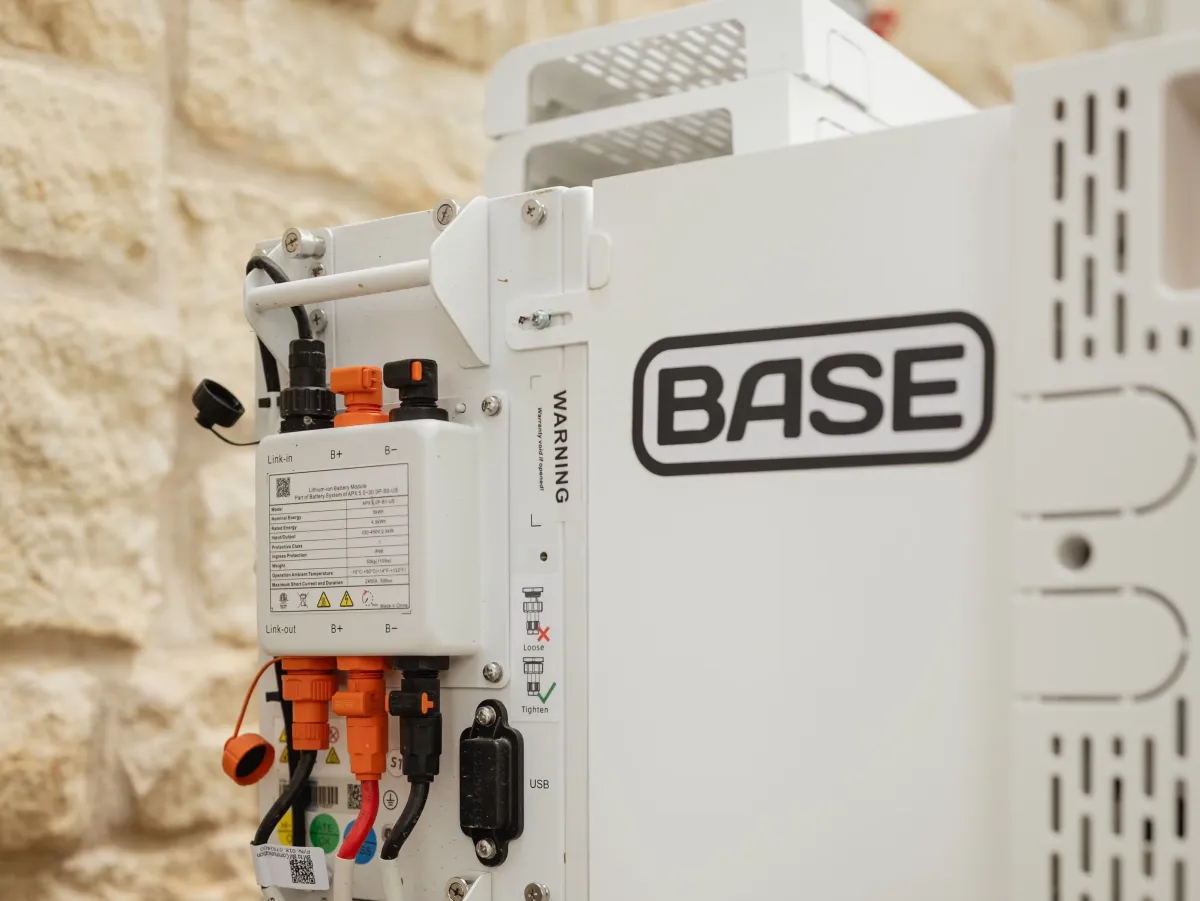
Base Power launched two years ago in Texas to build a virtual power plant centered around residential batteries. Base’s batteries, starting at 25 kilowatt-hours, are bigger than many of its competitor’s, and rather than sell the batteries, it requires customers to buy electricity from it. In Illinois, its rates are 25% below utility ComEd’s.
The startup’s timing has also been impeccable. Base is currently operating more than 500 megawatt-hours of battery storage in Texas, charging when electricity prices are cheap and dispatching them when the grid needs it most.
Advertisement
Its entry into the PJM grid comes at a time when the operator has come under scrutiny for bungling its handling of rising electricity demand. PJM had paused applications for new generating sources starting in 2022, only reopening the queue in April. Unlike Base, its timing couldn’t have been worse — electricity demand has skyrocketed in the last four years.
Base’s rollout has gathered pace since October, when it announced a $1 billion round led by Addition. That round followed closely on the heels of a $200 million round which Andreessen Horowitz, Lightspeed Venture partners, and Valor Equity Partners led in April 2025.
Historically, PJM has been slow to adopt new technologies like distributed energy storage, but Base’s residential focus helps it do an end-run around the sclerotic grid operator.
“We are deploying capacity behind the meter at the residential home, where an interconnection already exists, so we don’t wait in the interconnection queue,” Zach Dell, Base Power’s founder and CEO, told Canary Media.
Advertisement
When you purchase through links in our articles, we may earn a small commission. This doesn’t affect our editorial independence.

















































You must be logged in to post a comment Login