Connect with us
DAPA Banner
DAPA Coin
DAPA
COIN PAYMENT ASSET
PRIVACY · BLOCKDAG · HOMOMORPHIC ENCRYPTION · RUST
ElGamal Encrypted MINE DAPA
🚫 GENESIS SOLD OUT
DAPAPAY COMING

Sports

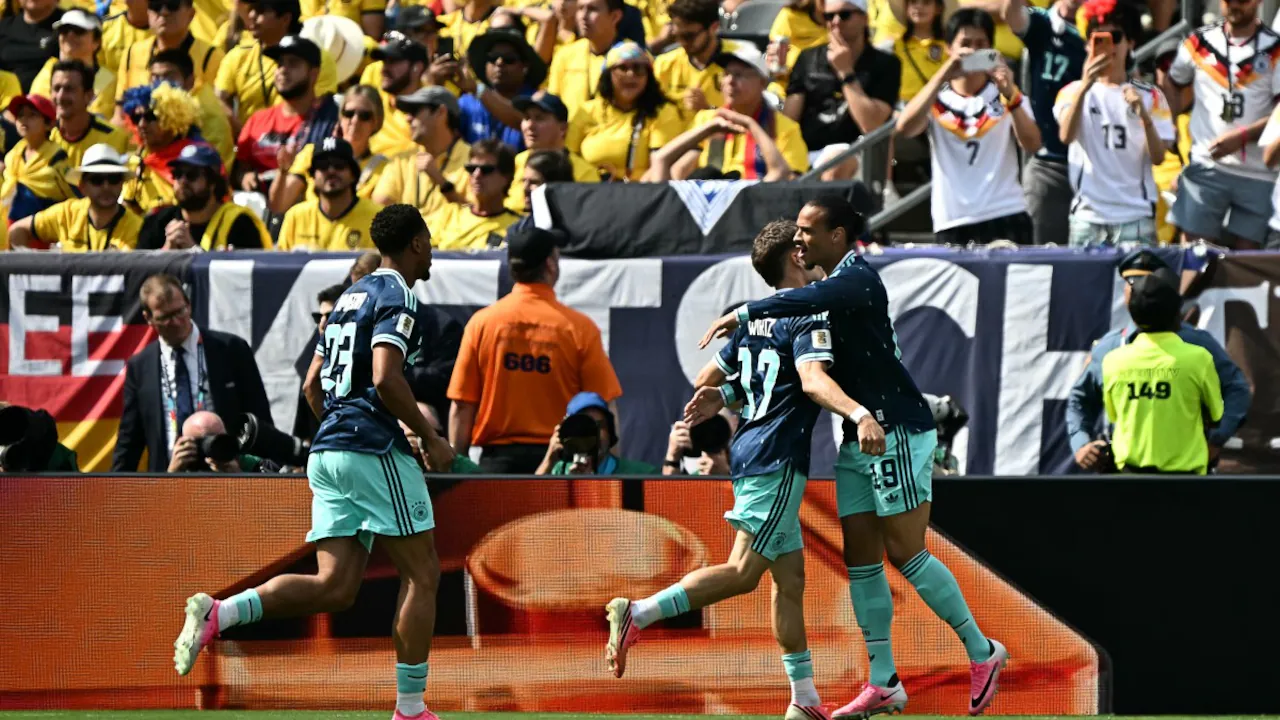
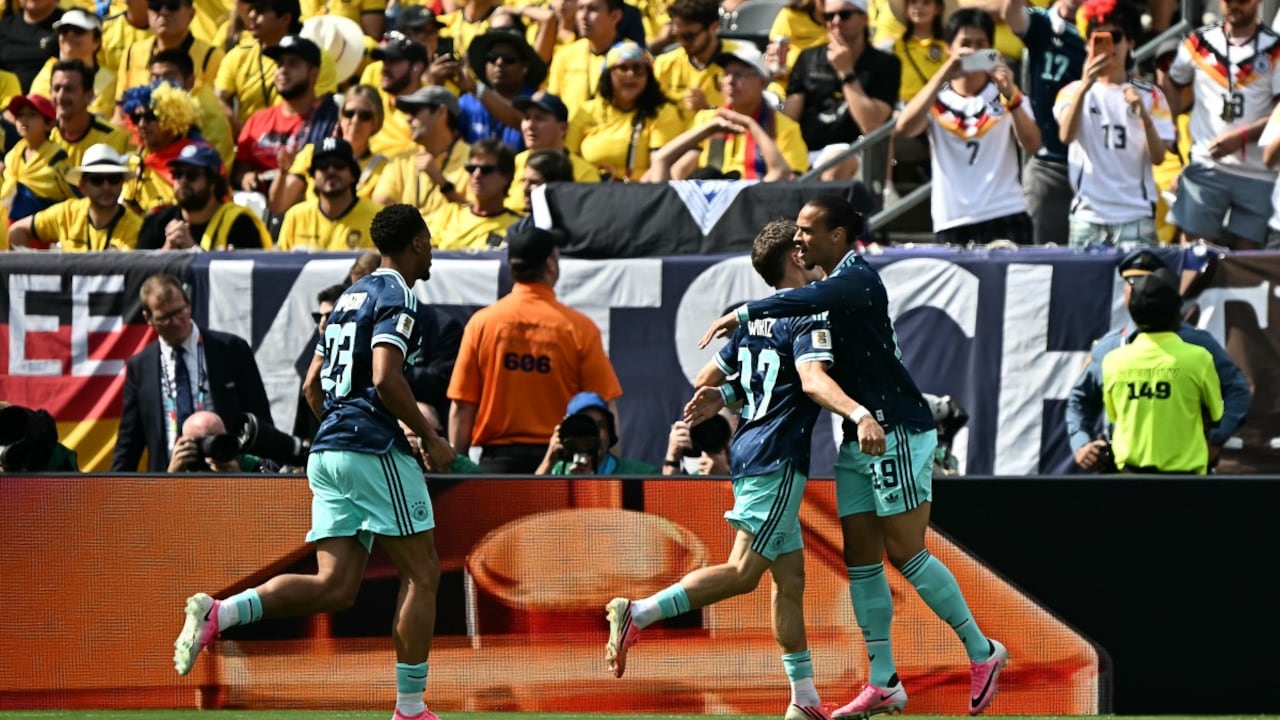
Germany vs Ecuador LIVE Score, GER vs ECU FIFA World Cup 2026 Match LIVE Updates: Ecuador Make It 1-1 After Germany's Opening Goal Causes Row

Published

on


Germany vs Ecuador LIVE Score, FIFA World Cup 2026 Match LIVE Updates: Germany are tied 1-1 against Ecuador in the first half of their FIFA World Cup 2026 Group E clash.

Source link

Continue Reading
Click to comment

You must be logged in to post a comment Login

Leave a Reply

Sports

Ryan Garcia names the current world champion Manny Pacquiao can beat to make history

Published

on

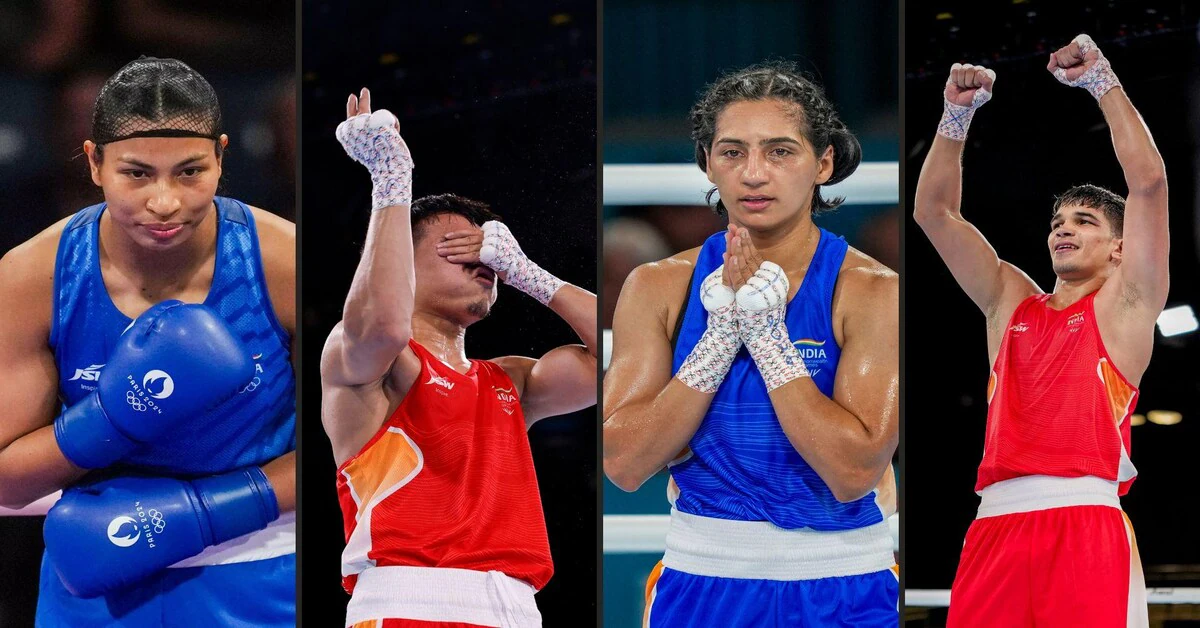
Manny Pacquiao still hopes to break his own record as the oldest welterweight world champion in boxing history and WBC titlist Ryan Garcia believes that the Filipino icon is capable of doing it if he chooses the right path.

Pacquiao currently holds the record as boxing’s most senior champion at 147lbs, having overthrown Keith Thurman in July 2019 as a 40-year-old and held the belt until two years later, when he suffered a defeat to Yordenis Ugas.

Last July, ‘Pac Man’ made his official return to the professional scene in an attempted challenge for Mario Barrios’ WBC world title, where victory would have seen him break that same record, but the veteran could only muster a draw.

Advertisement

Since then, Garcia has taken Barrios’ belt, whilst Pacquiao has been linked to a shock rematch with Floyd Mayweather. Recent developments suggest that the fight is in serious jeopardy due to an ongoing lawsuit against the American.

As a result, Pacquiao may now be seeking to get back on track with his goal of regaining a welterweight world title, and the division crowned a new world champion this week when Australia’s Liam Paro outpointed Lewis Crocker to get his hands on the IBF strap.

After witnessing that fight, Garcia took to social media to say that 47-year-old Pacquiao would be able to get the better of Paro.

“I believe if ‘Pac’ fights Paro he becomes world champion.”

Paro has also shared his interest in that fight, aiming to recreate Jeff Horn’s famous victory over Pacquiao, when the eight-division world champion last fought on Australian soil.

Source link

Advertisement
Continue Reading

Sports

Zlatan to Maldini: The greatest players who never scored at FIFA World Cup | FIFA World Cup 2026

Published

on


For most footballers, a FIFA World Cup goal becomes a defining moment. It is the image replayed for decades, the achievement that cements a place in football history. From Pelé and Diego Maradona to Lionel Messi and Kylian Mbappé, the sport’s greatest names are often remembered as much for their World Cup goals as for anything they achieved at club level.


Yet football history contains another fascinating category of legends, players who conquered domestic leagues, won Ballon d’Or awards, lifted European trophies and broke scoring records, but never managed to score at the World Cup.


Advertisement


Some were denied by circumstance. Others were defenders whose brilliance lay elsewhere. A few were elite attackers whose World Cup journeys never matched their club careers.


Zlatan Ibrahimović: The Most Surprising Name


Advertisement


Few omissions are more startling than Zlatan Ibrahimović.


The Swedish icon scored more than 500 senior career goals, won league titles in multiple countries and became one of the most recognizable footballers of his generation. Yet despite appearing at the 2002 and 2006 World Cups, he never found the net in 11 World Cup appearances.


Advertisement


For a player who scored spectacular goals almost everywhere he played, the World Cup remained one of the few stages where his scoring touch never arrived.


Ironically, Ibrahimović himself recently suggested the United States could win the 2026 World Cup, a reminder that even football’s biggest personalities can leave the sport’s grandest tournament with unfinished business.


Advertisement


Paolo Maldini: A World Cup Legend Without a Goal


If World Cup greatness was measured solely by goals, Paolo Maldini would seem an unlikely inclusion.


Advertisement


Yet the Italian defender remains one of the greatest World Cup performers in history.


Across four tournaments, Maldini accumulated 23 appearances and more than 2,200 minutes on the pitch. He reached the 1994 final, played a central role in Italy’s defensive success and became one of the most respected defenders football has ever seen.


Advertisement


But despite all those appearances, he never scored a World Cup goal.


His career serves as a reminder that some players leave a lasting World Cup legacy through leadership, defending and consistency rather than moments in front of goal. 


Frank Lampard and Football’s Cruelest Twist

Advertisement


Few players came closer to breaking their World Cup duck than Frank Lampard. The England midfielder remains one of the highest-scoring midfielders in football history and scored over 300 career goals. Yet at the World Cup, he never officially scored.


The most famous moment came during England’s Round of 16 clash against Germany in 2010. Lampard’s shot clearly crossed the goal line before bouncing out, but the goal was not awarded because goal-line technology had not yet been introduced.

Advertisement


The incident became one of the biggest refereeing controversies in World Cup history. Had technology existed then, Lampard’s name would likely not feature on this list.


Luís Figo: Ballon d’Or Winner, World Cup Non-Scorer

Advertisement


Luís Figo was one of the finest playmakers of his era. The Portuguese star won the Ballon d’Or in 2000, starred for both FC Barcelona and Real Madrid, and captained Portugal’s celebrated “Golden Generation.”


Yet across two World Cups in 2002 and 2006, Figo failed to score despite making 10 appearances.

Advertisement


Portugal reached the semi-finals in 2006, but their captain’s influence came through creativity and leadership rather than goals.


Pavel Nedvěd: Ballon d’Or Glory, World Cup Frustration

Advertisement


Another Ballon d’Or winner to miss out on a World Cup goal was Pavel Nedvěd. The Czech midfielder won football’s highest individual honour in 2003 after dazzling performances for Juventus FC.


However, his World Cup story was brief. The Czech Republic qualified for the 2006 tournament, but Nedvěd was unable to inspire a deep run and never scored on football’s biggest stage.

Advertisement


Sergio Ramos: Goals Everywhere Except the World Cup


For much of his career, Sergio Ramos seemed to score whenever Spain needed him. The defender scored crucial goals for both Spain and Real Madrid, becoming one of the most prolific centre-backs in football history.

Advertisement


Yet despite appearing at four World Cups – 2006, 2010, 2014 and 2018, Ramos never scored a World Cup goal. His greatest World Cup memory instead came from helping Spain win the 2010 tournament in South Africa.


Why World Cup Goals Still Matter?

Advertisement


Football remains a sport obsessed with moments. A single World Cup goal can immortalize a player forever. Yet the careers of Maldini, Figo, Lampard, Ramos, Nedvěd and Ibrahimović demonstrate that greatness is not always measured by what happens inside the penalty box. Some players build their legacies through leadership, creativity, defending or simply carrying their nations to the tournament itself.


Others, like Best and Weah, remind us that football’s biggest stage does not always welcome its biggest talents. Their World Cup goal tally may read zero. Their place in football history, however, remains unquestionable.

Advertisement

Source link

Continue Reading

Sports

Indian Cricket Team Breaks Silence On Vaibhav Sooryavanshi’s Potential Debut vs Ireland, Drops The ‘Unfair’ Word

Published

on


Will Vaibhav Sooryavanshi get his first India senior cap on Friday? That is the big question for all cricket lovers who will be closely following the India vs Ireland series. India face a problem aplenty at the top order; there are three players who were there in the T20 World Cup-winning team – Abhishek Sharma, Sanju Samson, and Ishan Kishan – who can play as openers. If Sooryavanshi has to be fitted in, a big name will have to be dropped.

Indian batting coach Sitanshu Kotak gave an open-ended answer on Sooryavanshi’s potential debut. However, he added that it would be unfair to drop the players who have been performing for India.

“There are so many talented players in India. My personal opinion is that those who are already performing should not be ignored. Obviously, new players will come; it will be healthy competition. Everybody who comes in should wait for their right time to play,” Kotak said in the pre-match press conference.

Advertisement

“So I don’t think that just to give him an opportunity, we should drop someone who has already been scoring runs. That also won’t be right. I think there is a very thin line between trying to give somebody an opportunity and you are being unfair to some other player,” said Kotak, according to PTI.

“The team will be decided in the evening, so let’s see. Regarding the debut, well, he will be treated in the same way as other players. Whenever the time comes, he will debut. It’s difficult to say that he will debut tomorrow or in the next match (Sunday). Kar sakta hai. Today evening we will have a meeting; the team will be decided there by Gautam Gambhir and Shreyas Iyer.”

Kotak described Sooryavanshi as an outstanding talent. “This is the first time he may be playing in the senior Indian team, but I have worked with him in the U-19 setup. Any player who has played in the U-19 or emerging team knows the culture of the senior team. He is an outstanding talent. Me and Gautam Gambhir have asked him to feel free. We have also told him to think this as his own team and say anything that he likes.

Iyer has come back into the T20 side as captain, having proved his leadership in the IPL. Kotak said someone like Iyer knows how to lead efficiently.

Advertisement

“It is not like that he is with the team for the first time. Even in this team, you will see that there will be 2-3-4 senior players who will be in the leadership group. No matter who the captain is, they keep helping each other. Shreyas has done a lot of captaincy in IPL, he has done it for Mumbai.

“So he has a lot of experience. In fact, when he became champion with Gautam in KKR, Shreyas was the captain. So it’s not like people are expecting something different from him or he is expecting something different.

“The thing that we always have is that we will keep the team first, we will do whatever is needed for the team. I think his speech in the huddle today was the same. That we will look after everyone,” added Kotak.


Featured Video Of The Day


Tushar Deshpande’s Brilliant Final Act Ensures Thrilling Win For RR Over Gujarat Titans

Advertisement

Topics mentioned in this article

Advertisement

Source link

Continue Reading

Sports

MLB CBA negotiations timeline: Where things stand as league proposes draft overhaul

Published

on

As the 2026 Major League Baseball season continues to unfold, something vitally important to the future of the sport quietly hums in the background: the ongoing negotiations over a new collective bargaining agreement.

The collective bargaining agreement, or CBA (or Basic Agreement, as it’s known in a formal sense), is the negotiated accord between players and clubs — i.e., the team owners and commissioner Rob Manfred, who represents their interests — that governs the working relationship between the two parties, typically for a period of five years. It covers things as mundane as players’ meal allowances and travel protocols and as vital as minimum salaries, the structure of free agency, revenue-sharing specifics, and roster sizes. Every CBA can be distilled down to a fight over money, or, more specifically, how the league’s revenues will be divided between players and team owners.

The first CBA covered the 1968 and 1969 seasons and was the first in professional sports history. That was the handiwork of Marvin Miller, the pioneering head of the Players Association (i.e., the players union) and belated Hall of Famer. It was Miller’s organizing skills, foresight, and training as a union economist that allowed him to make the Players Association a viable and effective labor organization. Every CBA negotiation from 1972 through 1994-95 resulted in some form and scale of labor stoppage, whether a players’ strike or an owner-implemented lockout. After the cancellation of the 1994 World Series because of the worst labor stoppage in the sport’s history, a long run of peace followed. That peace lasted until the prior CBA negotiations, which resulted in a 99-day lockout forced by team owners and delayed the start of the 2022 season.

Advertisement

MLB’s new CBA proposal would restrict free-agency contracts, raise minimum wage, but only with a salary cap

Dayn Perry

MLB's new CBA proposal would restrict free-agency contracts, raise minimum wage, but only with a salary cap
Advertisement

The current CBA negotiations have been underway for some time, and not surprisingly, the two sides remain far apart on several key issues. The biggest fight will be over the owners’ renewed desire to implement a salary cap, which the union continues to view as a non-starter. The push for a cap has less to do with the notions of competitive balance and more to do with the ownership’s internal belief that being the only non-salary-capped league among the major North American sports is harming franchise values. The cap, though, is but one of many pressing issues on which players and owners must find congruity.

Moving forward, the process will be uncertain and rife with posturing and pointed public comments from both sides. The hope, though, is that a new CBA will be agreed to before the middle of March 2027, at which point there’s a high risk of having the 2027 season delayed or even abbreviated. 

To keep you informed of the twists and turns along the way to a new CBA, we’ve provided a detailed timeline of negotiations. That timeline will illuminate the important and finer points of the talks and, along the way, explain the implications of the various proposals coming from each side. The hope, of course, is that all of it culminates in a timely agreement that permits a fully intact and on-time 2027 season.

Advertisement

Now let’s begin.

June 25, 2026: Limited free-agency contracts

More face-to-face negotiations take place, and MLB proposes more changes to the free-agency system, among other asks. MLB’s latest proposal includes the following, all of which depend upon the union’s acceptance of a payroll cap:

  • A maximum contract length of five years for players who switch teams and a maximum of 15% of the cap with 5% increases every year of the contract;
  • A maximum contract length of six years — and a max of 16% of the cap — for players who remain with their original team under a new “Cornerstone Player” provision;
  • Based on the league’s proposed cap figure for 2027, the maximum contract for a player switching teams is $202 million over five years and $265 million over six years for a player remaining with the same team;
  • An increase in the minimum salary from $780,000 to $1 million for players with at least two years of MLB service time;
  • An increase in the minimum salary to $900,000 for players with less than two years of MLB service time with the opportunity for a $100,000 bonus from the pre-arbitration bonus pool (already established);
  • The elimination of deferred contracts;
  • Acceptance of the union’s proposal to allow free agency after five years of MLB service time instead of six for players age 30 or older;
  • Acceptance of the union’s proposal to do away with the qualifying offer system for free agents.

MLB in a prior proposal called for a cap on team payrolls of $245.3 million starting in 2027 and a payroll floor of $171.2 million. The league issues a statement that reads in full: 

“The biggest issue baseball fans want solved to strengthen the game is fixing the payroll disparity that leaves too many fans without hope of their team competing for a World Series title. Every other major U.S. sport has tackled this problem, and every year more small market teams in those leagues have a chance to win. The salary cap and floor proposal levels the playing field, allowing us greater flexibility to address longstanding player priorities while sharing baseball revenue with the players 50/50.

“Today, in addition to proposing the largest ever increase in the minimum salary, earned by over half of MLB players, we accepted two landmark changes to free agency that have been in place for 50 years. We agreed to both the MLBPA’s proposal to provide earlier access to free agency, and their proposal to eliminate the qualifying offer system, a provision players view as a drag on free agency. We also proposed to eliminate deferred compensation and to create a new ‘Cornerstone Player’ provision similar to the NBA’s ‘Bird Rights’ to give every team a fair shot at retaining their fans’ favorite star players.

“We will continue working with the MLBPA during the bargaining process to improve the game for teams, players and fans.”

Advertisement

The MLBPA responds: 

“After making a series of proposals to reduce player compensation by billions of dollars, eliminate fundamental rights with a salary cap, and destroy the amateur entry process, Major League Baseball and team owners are now attempting to distract from the true impact their plan would have on baseball. These misleading offers are designed to look like ‘improvements’ but are of little or no value, given they are expressly conditioned on agreement to the league’s cap system which eliminates the free market, and ensures gains for one player only come at the expense of another.

“The league also introduced a litany of additional restrictions on player rights — limiting salaries, contract length, performance, award, and signing bonuses. While MLB claims to be acting in the interest of fans, their proposals thus far are entirely consistent with owners’ long-held goals: suppressing player salaries and maximizing club profits.

“Owners’ attempts to pit players against players are nothing new, but they’ve failed in the past and will fail again now, because PA members remain unified. We are committed to achieving a fair deal that protects the rights of all players, promotes competition, and leaves our game better for future generations.”

Lacking from the league’s latest proposal, at least on the public-facing side, is any revisiting of the recent changes to the draft and any mention of prior proposed changes to the league’s revenue-sharing system. 

Advertisement

June 18, 2026: MLB proposes sweeping draft changes

MLB and the MLBPA meet for face-to-face negotiations, and owners propose sweeping changes to the draft and also push for an international draft. As for the MLB Draft, formally known as the First-Year Player Draft, MLB pushes for the following changes:

  • A reduction from 20 rounds to 12 rounds;
  • A $200 million hard bonus system in which players are paid according to their draft position with no room to negotiate (teams have not spent $200 million or less in the draft since 2010);
  • High school players would no longer be eligible for the domestic amateur draft, and college players would be draft-eligible at age 20.

“Over the last several years, college baseball has undergone a remarkable transformation,” MLB says in a statement. “Expanded scholarships, NIL opportunities, revenue sharing and significant investments in facilities and player development have made college baseball an increasingly important pathway that is producing major league-ready talent at an accelerated rate. Today’s top programs provide players with resources, competition and national exposure that were unimaginable a decade ago. Our proposal is designed to build on that momentum to benefit the game at the college, minor-league and major-league levels. By creating a draft system centered around college-aged players and making most college players eligible one year earlier, more players will benefit from both a college education and an elite development environment while reaching professional baseball — and ultimately the major leagues — more quickly. We believe these changes will strengthen college baseball and deepen fans’ connection to the next generation of major league stars. We look forward to working with the MLBPA throughout the bargaining process to modernize the domestic amateur system in a way that benefits players, clubs, and fans.” 

As for the international draft, MLB proposed making players outside of the U.S., Puerto Rico, and Canada (who are already included in the standard draft) subject to a similar system. The international draft would, as with the proposed changes to the MLB Draft, come with a $200 million bonus cap. At present, international amateurs may sign with any team under the international free agent system, although teams do have hard budget caps each year.

The MLBPA also issues a statement in response to MLB’s proposals:

Today, MLB made another set of proposals that are flat out bad for baseball, ones that would cripple the next generation of players and damage the future of our game. They would, among other things:

Advertisement
  • Eliminate over a billion dollars in player compensation from the international and domestic system over the next five years, with a $400 million reduction from 2026 to 2027 alone.
  • Destroy fundamental player rights and remove talent from our sport by barring high school and junior college players (anyone under age 20) from the domestic draft.
  • Abolish an entire year of international signings by delaying the first draft until at least September of 2027 (and as late as March of 2028), denying young international players the ability to start their professional careers.

Players remain committed to bargaining in good faith and leaving baseball better than they found it — the league’s proposals fall woefully short.

June 5, 2026: Trump supports a cap

U.S. President Donald J. Trump publicly supports MLB’s efforts to implement a salary cap. “If you don’t have a salary cap, you don’t have a sport, because they can’t help themselves,” Trump says. “Football has a salary cap. They should have done it a long time ago.

“It’s shocking, frankly, that they didn’t put a cap on many years ago,” he said, possibly referencing the 1994-95 strike. “They had a chance to do a cap, but they blew it.”

June 3, 2026: Manfred talks luxury tax

Speaking to reporters following the owners’ quarterly meetings, Manfred addresses the luxury-tax system he and the owners seek to replace with a cap. “We have tried mightily over several rounds of bargaining to use a competitive balance (luxury) tax to address competitive concerns,” Manfred says. “And sometimes you’ve got to admit you failed.

“We made a proposal on one set of topics. At the outset of negotiations, I went and said myself, ‘We’re open to whatever ideas people have, but we need a realistic framework that addresses the fans’ concerns about competitive balance.’ You just can’t ignore that financial penalties have not gotten it done for us.”

Advertisement

June 1, 2026: MLBPA says cap is ‘institutionalized collusion’

In a call with reporters, MLBPA interim executive director Bruce Meyer addresses the owners’ proposals. “Using MLB’s definition of revenue and player share as set forth in their proposal and their presentation to us, player share under their proposal would go down,” Meyer says. “Player share for this season, 2026, is projected to be well over 50 percent, using, again MLB’s definitions of revenues and what counts against player share.

“Had MLB’s proposal been in place in 2026, players, we estimate, would lose over half a billion dollars.”

Meyer also refers to a salary cap as “a form of institutionalized collusion.”

“Our salary cap-and-floor proposal addresses our fans’ concerns by leveling the playing field while sharing baseball revenue with the players 50-50 like the other leagues,” MLB spokesperson Glen Caplin responded on behalf of the league. “Under our proposal, major-league players will receive more compensation in year one of the system than in 2026. We are ready to listen if the MLBPA wants to counter our proposal at the bargaining table.”

Advertisement

May 28, 2026: MLB’s first proposals

MLB and the owners publicly announce their first formal CBA proposal. Chiefly, they propose:

  • A salary cap, including benefits expenses, of $245.3 million for 2027;
  • A salary floor, also including benefits expenses, of $171.2 million for 2027;
  • A 50-50 revenue split between clubs and players;
  • The centralization and equal sharing of all local revenues.

Using competitive balance tax (CBT), or luxury tax, payrolls as a guide, since they include benefits expenses, nine teams at present would be above the proposed cap line, while 12 teams would be below the floor. However, as Craig Goldstein points out, the amount needed to get all these teams below or above the relevant payroll thresholds amounts to an $18.7 million loss in aggregate player salary overall. Another sticking point will be how league revenues are defined. Owners no doubt seek to carve out things like real estate developments surrounding ballparks and ownership stakes in regional sports. As well, MLB’s working definition of league revenues includes many expense deductions.

On another level, the fact that Manfred is able to persuade large-market, high-revenue clubs to agree to equal sharing of all local revenues is a notable development. However, such a concession by those large-market clubs may be contingent upon the implementation of a cap.

Another sticking point is that the league proposes an escrow system, as is used in the NBA and the NHL. This would mean a percentage of player salaries is withheld. If revenues fall short of projections, some of that money in escrow goes back to the league. If revenues are higher than projected, that excess is shared with the players. The MLBPA opposes the escrow system on the grounds that it undermines the notion of guaranteed player salaries. 

May 27, 2026: MLBPA’s first proposals

The MLBPA makes an opening suite of proposals to the league, including:

Advertisement
  • A “competitive integrity tax” levied against teams that don’t spend a minimum amount on player payroll.
  • An increase of the minimum salary from $780,000 to $1.5 million.
  • An increase of the bottom Competitive Balance Tax (more commonly known as the luxury tax) threshold from $244 million to $300 million.
  • Increased sharing of local-broadcast revenues among teams but less sharing of stadium game-day revenues (the latter to incentivize on-field success).
  • Tens of millions in extra revenue sharing to go to low-revenue teams that make the postseason or have a winning record.
  • Free agency after five or more years, rather than six, for players who are at least 30 years of age at the time.
  • Expanded draft lottery. 
  • Penalties for teams that neglect to spend revenue-sharing payments on team payroll.
  • Draft picks and other incentives for low-revenue clubs active in free agency. 
  • Elimination of the qualifying offer for outgoing free agents.
  • Increased compensation for lower-revenue teams losing players to free agency.

“Today, the MLBPA (Major League Baseball Players Association) presented a comprehensive set of economic proposals designed to advance the rights and benefits of players at all levels,” Meyer says in a statement released by the union. “Our goal is to preserve and improve baseball’s market system, rewarding competition on and off the field. Additionally, the players’ proposals provide increased revenue sharing initially guaranteeing every small market club a minimum of $240m in revenue every season. This enhanced revenue sharing includes added protections to ensure clubs prioritize winning over profiteering. Ultimately, our proposals are designed to build upon the incredible momentum and popularity of our sport world-wide.”

“We appreciate the union making a set of proposals and we look forward to continuing the bargaining process and working towards solving the competitive balance problem our fans are telling us needs to be addressed,” Caplin says in a statement. “We understand their proposals are designed to benefit players. Unfortunately, they do not address and in fact exacerbate the competitive balance problem our fans are telling us we must address. The MLBPA’s proposal would reduce the amount transferred to lower-revenue Clubs, weaken the Competitive Balance Tax, and lead to even more payroll disparity than exists today. For example, under the Union’s proposal, the Dodgers would pay less in luxury tax payments, giving them an additional $70 million to spend on payroll.”

May 12, 2026: Negotiations begin

Negotiations on a new CBA formally begin between teams and players. Among the key issues to be discussed will be the league’s desire for a salary cap, drastic changes to the revenue sharing system, league expansion, possible further playoff expansion, and an international draft.


Dec. 1, 2026

The 2022-26 Basic Agreement is set to expire at 11:59 p.m. ET, at which point owners are expected to lock out the players in the absence of a new agreement. 

Advertisement

Source link

Continue Reading

Sports

New aunt Brooke Henderson enjoys ‘heavenly’ start to Women’s PGA Championship

Published

on

Brooke Henderson had an extra-special reason to be excited about her opening round at the KPMG Women’s PGA Championship Thursday as her sister, Brittany, gave birth to a daughter Sahalee in the early morning hours. 

The name Sahalee means ‘high heavenly grounds’ and also represents the name of the golf course where Henderson won her first major — the first tournament the sisters won together as caddie and player. 

Sahalee was born just before 5 a.m. ET as Henderson was preparing to head to the golf course to begin the third major of the year on the LPGA Tour. 

“I’m just so happy for my sister and brother-in-law and the whole family. It’s such an exciting, wonderful time. And my sister and the baby are doing really well, healthy, and really excited to see her next week,” Henderson said. 

Advertisement

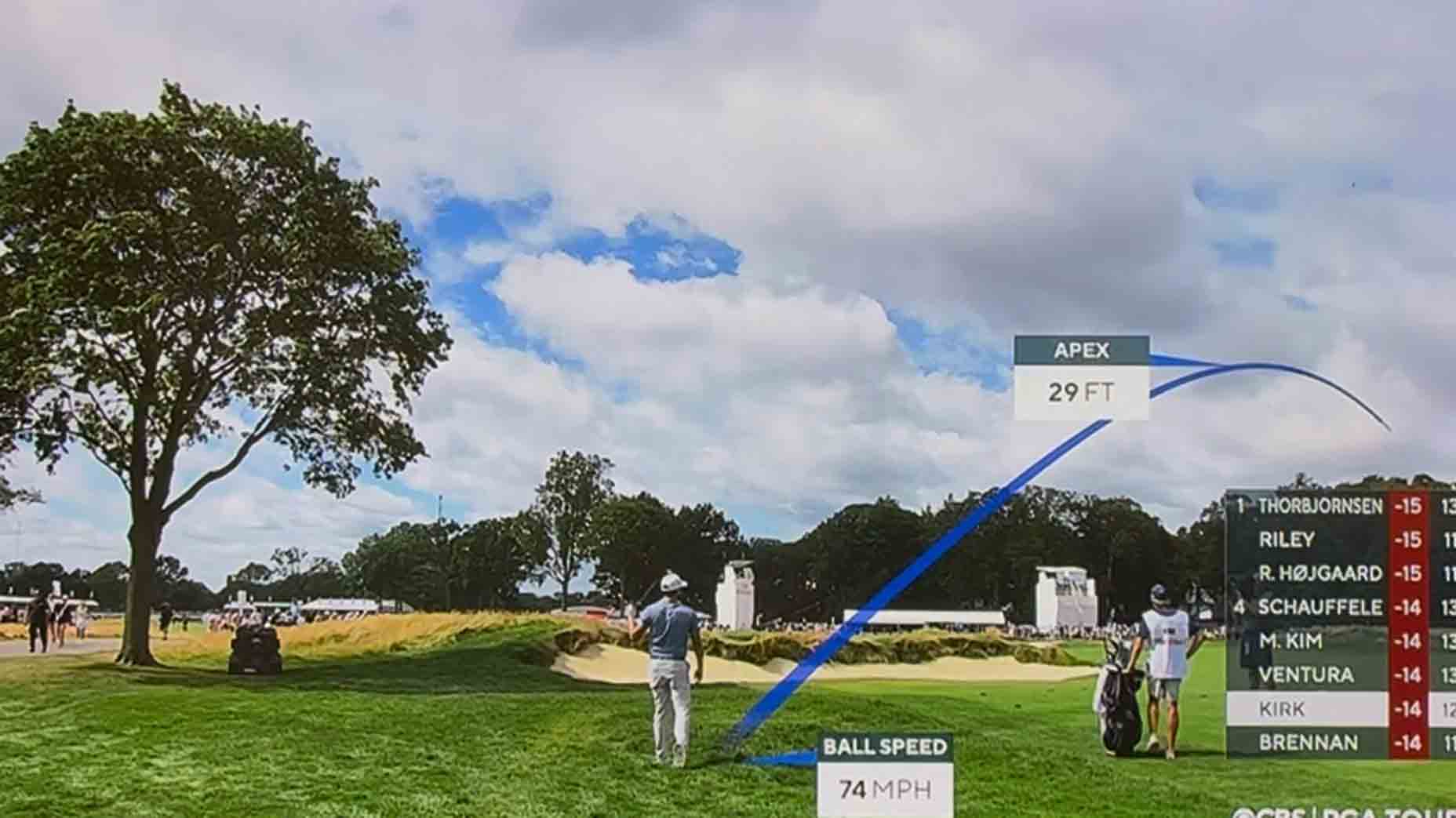
Henderson opened with a 3-under 69, putting together a solid comeback after sitting at 1 over for her first six holes, including missing a nine-footer for par on the par-3 4th. She rallied with four birdies in a nine-hole stretch and nearly had it going deeper — missing nine-, 12- and 15-foot birdie attempts on her final three holes of the day, respectively. 

Still, Henderson was awfully pleased with her opening round, which had been a pain point on the LPGA Tour for her this year. She sits 103rd in first-round scoring average, but her opener at the Women’s PGA Championship — the lone major at which she’s never missed the cut — sees her squarely in the mix. 

Ina Yoon shot a 9-under 63 and tied the lowest opening round in tournament history. 

“Felt like my ball striking was in a really good spot today so hit a lot of greens and gave myself a lot of good birdie looks, which is always really fun, especially at major championship and on a tough golf course,” Henderson said. “Really happy with the 3-under. Ina was on fire. I have some work to do to try to catch her, but I’m really happy with my round overall.”

Advertisement

Henderson has notched just one top-10 finish this season, at the first event of the year — the lone event that Brittany caddied for her before stepping away to concentrate on motherhood. But she has always had a run of success at this particular major and was buoyed by such good news Thursday morning that she converted it into good play. 

“What a way to start the week,” Henderson said. “Perfect start to get under par, hear my niece was born and doing very well, 10-year anniversary of when I won at Sahalee in 2016. Great day overall and hopefully carry that through the rest of the weekend.”

Source link

Advertisement
Continue Reading

Sports

5 biggest delinquents before the 2026 Austrian GP

Published

on

The F1 penalty points system was introduced by the FIA to help keep the driving standards in check. The sport didn’t have a standardized system in place prior to that, and the penalties would cause a lot of controversy. To add to this, there was a lack of consistency, which stemmed from the fact that no standardized method had been set up to determine what should and should not happen in case of a certain incident.

As a result, the F1 penalty points system was set up. As a part of this system, drivers are handed out penalty points on the basis of on-track transgressions that they commit. These could be anything from dangerous driving to causing a collision, or, for that matter, just simply speeding in the pit lane.

If a driver accrues 12 F1 penalty points, he gets banned for a race. Kevin Magnussen became the first driver to do so last season and was subsequently banned. As we get ready for the 2026 F1 Austrian GP, where do the drivers stand in terms of penalty points? Let’s take a look.

F1 Penalty Points: Who is close to a ban?

#1. Ollie Bearman

Penalty Points: 8

Ollie Bearman now has 8 F1 penalty points to his name.

  • One point: Change of direction while defending during the 2025 Abu Dhabi GP (expires on December 7, 2026).
  • One point: Causing a collision with Liam Lawson at the 2025 Brazilian GP sprint (expires on November 8, 2026).
  • Four points: Red Flag infringement in the pitlane during British GP (expires July 5, 2026)
  • Two points: Causing a collision with Carlos Sainz at the 2025 Italian GP (expires on September 7, 2026).

#2. Lance Stroll

Penalty Points: 5

Lance Stroll is currently at five F1 penalty points on his license.

  • One point: Change of direction while defending during the 2025 Abu Dhabi GP (expires on December 7, 2026).
  • Two points: Causing a collision with Esteban Ocon at the US GP sprint (expires on October 18, 2026)
  • Two points: Pushing another driver off track at the Canadian GP (expires on June 15, 2026)

#3. Kimi Antonelli

Penalty Points: 5

Kimi Antonelli had a disastrous incident with Charles Leclerc in Zandvoort and is now at 5 F1 penalty points.

  • Two points: Causing a collision with Charles Leclerc in the 2025 F1 Dutch GP (expires on August 31, 2026)
  • Two points: Causing a collision with Max Verstappen in the 2025 F1 Austrian GP (expires on June 29, 2026)
  • One point: Forcing another driver off the track at the 2025 F1 Italian GP (expires on September 7, 2026)

#4. Lewis Hamilton

Penalty Points: 3

The seven-time F1 champion was issued a penalty point for his incident with Franco Colapinto. He’s now at 3 points.

  • One point: Causing a collision with Franco Colapinto during the 2025 F1 Brazilian GP (expires on November 1, 2026)
  • Two points: for failing to slow down under yellow flags during a reconnaissance lap prior to the 2025 Dutch Grand Prix (expires on 31 August 2026)

#5. Alex Albon

Penalty Points: 3

Alex Albon has three F1 penalty points on his license.

  • One point: Causing a collision with Lewis Hamilton at the Las Vegas GP (expires on November 23, 2026)
  • Two points: Causing a collision with Franco Colapinto at the Azerbaijan GP (expires on September 21, 2026)