Staring at a pile of unedited clips is often the exact moment we give up on posting entirely. Instagram just tackled that problem head-on, by rolling out First Draft, a new one-tap tool that assembles your raw footage into a finished Reel in a few seconds. For now, First Draft is rolling out exclusively on iOS, with no word yet on when Android users might get access.
How does First Draft create Reels for you on Instagram?
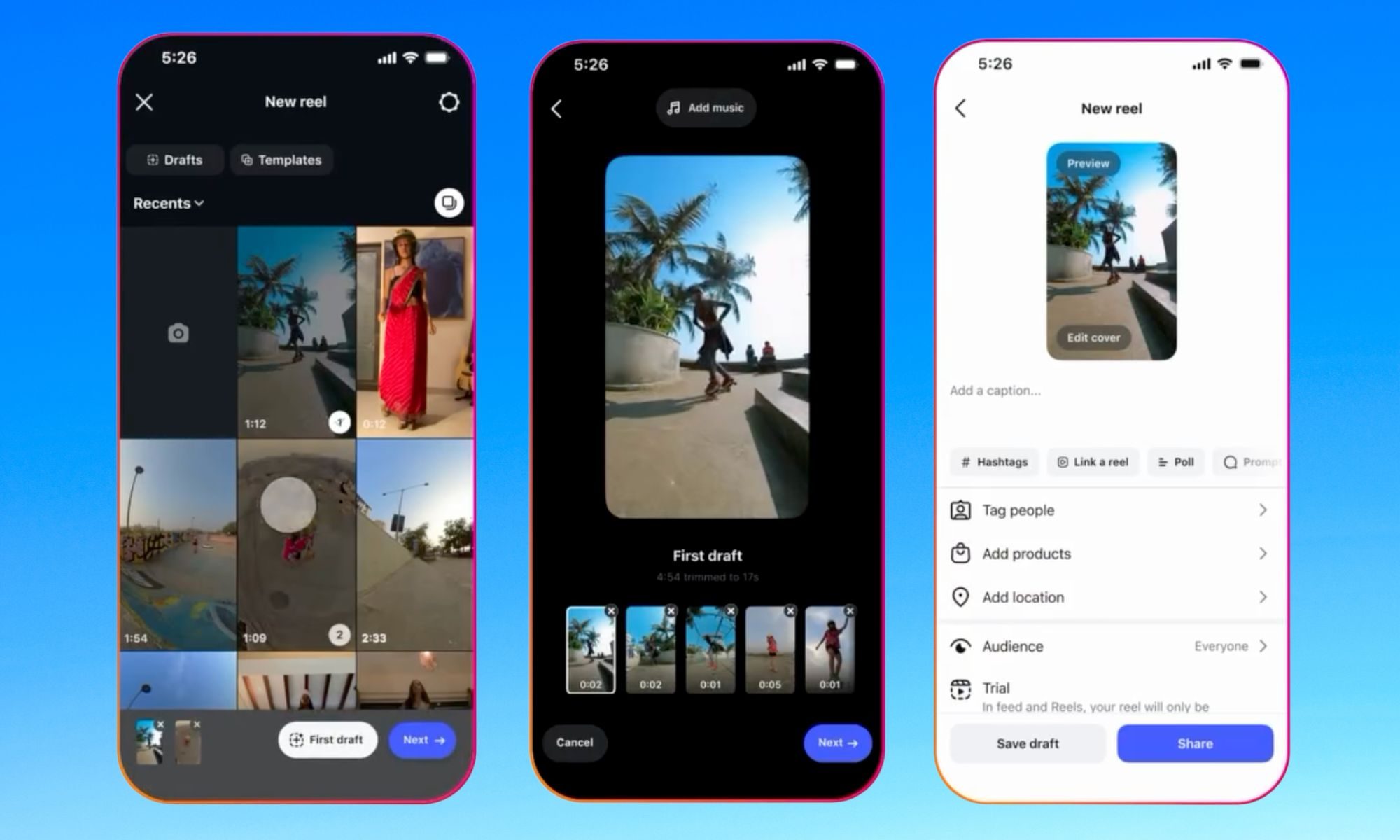
The process starts just like making any other Reel. You select clips from your camera roll, but instead of manually trimming everything yourself, you tap the new First Draft button instead. You can also access it directly from Instagram’s camera while recording.
ThreadsThreads
From there, Instagram’s model works through three visible steps, analyzing your clips, identifying the best highlights, and trimming everything down automatically. In one striking example, the tool condensed nearly five minutes of rollerblading footage into an engaging 17-second Reel.
Threads
Every decision it makes stays fully reversible too, so you can reorder clips, adjust the cut, or add music before posting anything. Instagram says the First Draft feature eliminates the tedious, frustrating first step of editing, and it can benefit creators with accessibility needs.
Where does this fit into Instagram’s other editing tools?
First Draft lives directly inside Instagram’s existing Reels flow, so you don’t have to jump into a separate app to use it. This feature is quite different from Edits, which is Instagram’s standalone video editor built for more advanced work like frame accurate timelines, storyboards, and AI powered effects.
Interestingly, Instagram hasn’t confirmed whether artificial intelligence actually powers First Draft, so for now it’s best understood as a smart automated tool rather than something explicitly AI branded. In 2026, Instagram has rolled out multiple creator-focused features like Replace Audio and Series, all aimed at making short form content easier to produce. Whether First Draft becomes your new go-to depends on how much creative control you’re willing to hand over, even briefly, to get started faster.
Despite the continued growth of increasingly large flat-panel TVs and premium direct-view displays, the projector is not going away. For dedicated home theaters and larger multipurpose spaces, projection can still deliver screen sizes that conventional televisions simply cannot match without moving into far more expensive territory.
Advances in laser light sources, HDR processing, brightness, and installation flexibility have also made modern projectors more capable outside of completely darkened theater rooms. Epson’s flagship QL7000 ($32,999), for example, delivers up to 10,000 lumens of color and white brightness, supports HDR10, and can produce images up to 300 inches with a choice of interchangeable lenses.
At CEDIA Expo 2026, Epson will showcase its latest home projection solutions across several screen configurations, demonstrating why projection remains a serious option for custom integrators and consumers who want a genuinely cinematic image at home. Bigger televisions may continue to grab headlines, but when the goal is a 150-inch, 200-inch, or even larger image, projectors still have a rather persuasive argument to make.
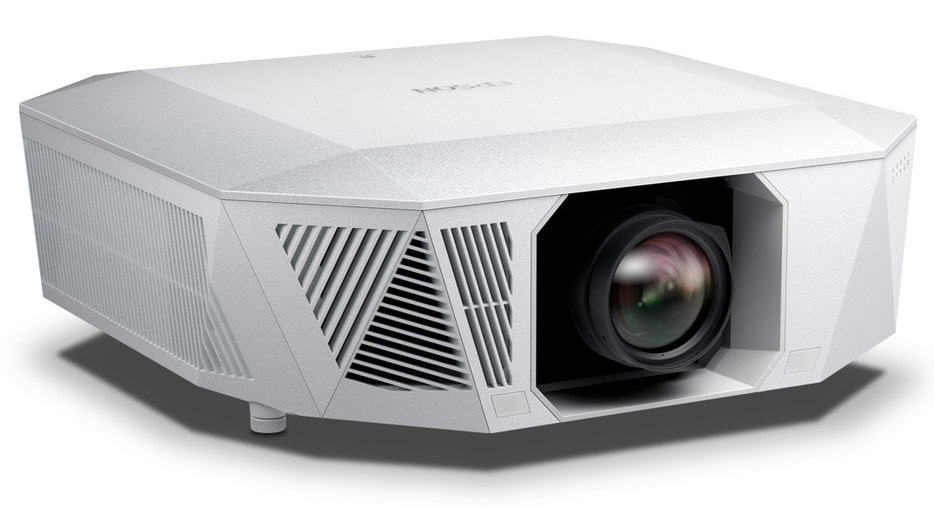
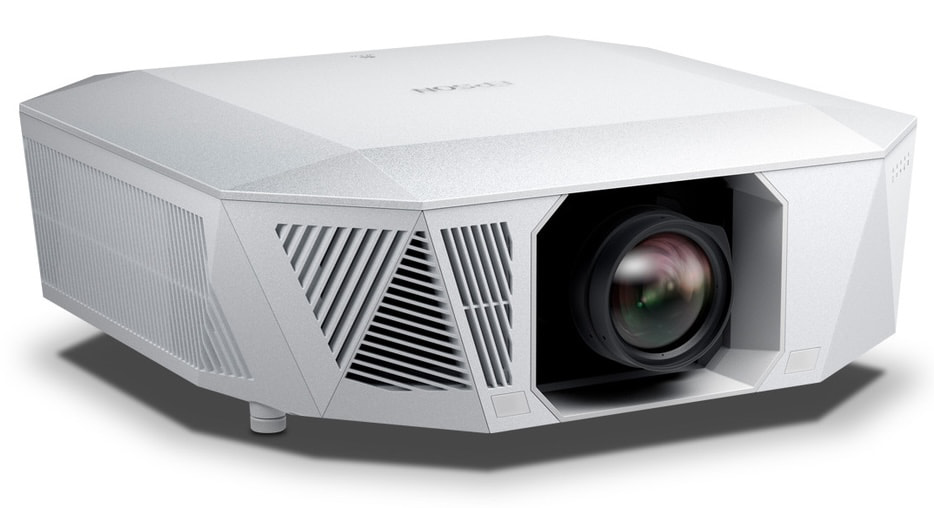
Epson QL7000
Epson QL7000 Goes Big with Stewart Filmscreen
For its CEDIA demonstrations, Epson will be employing its top of the line 10,000-lumen QL7000 4K 3LCD Laser Projector.
Advertisement
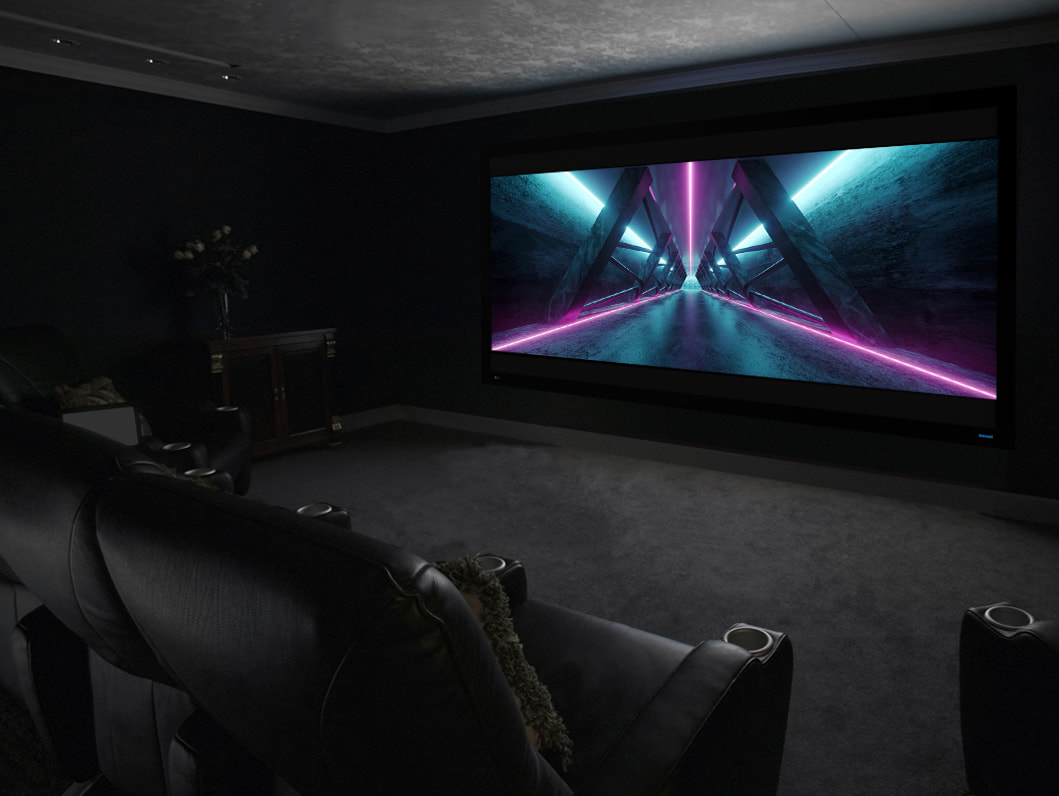
Demo One: The QL7000 will be paired with Stewart Filmscreen’s new slimmer profile Director’s Choice Generation 2 four way masking screen — an impressive 215-inch, 2.0:1 cinematic display optimized for today’s growing library of 2.0:1 streaming content. The setup will showcase the impact of high brightness projection and HDR performance on a truly cinematic scale.
Demo Two: The QL7000 will also be demonstrated with Stewart Filmscreen’s StudioTek 130 G4 acoustically transparent screen. The screen allows speakers to be positioned behind the image, helping preserve precise LCR localization and a cohesive soundstage while still delivering a premium visual experience.
Demo Three: This demonstration combines the QL7000 with Stewart Filmscreen’s 160-inch Balón Edge Phantom HALR+ ambient light rejecting, acoustically transparent screen to showcase high brightness projection in environments with controlled ambient light.
As with the StudioTek demonstration, the Balón Edge Phantom HALR+ is acoustically transparent, allowing speakers to be installed behind the screen. However, the Phantom HALR+ material is also designed to maintain image contrast in rooms with higher levels of ambient light.
The installation demonstrates how projection can serve as an integrated alternative to direct view displays and video walls while minimizing its visual impact on the room.
To round out Epson’s CEDIA 2026 exhibit, a live projector comparison will demonstrate key Q-Series performance differences in brightness, HDR, and color, showing how each model; the QL7000, QL3000, and QB1000 — is suited to different home installation requirements.
Compatible with Epson Precision Short/Long-Throw Lens
Compatible with Epson Precision Short/Long-Throw Lens
15-Element Epson VRX Cinema Lens Included
Double Micro-Lens Array
Yes
Yes
No
Lens Shift
3-Axis Motorized Lens Shift with Memory Presets (dependent on the installed lens)
3-Axis Motorized Lens Shift with Memory Presets (dependent on the installed lens)
3-Axis Motorized Lens Shift with Memory Presets
Lens Shift Range
Vertical: -64 % to +64 % Horizontal: -16 % to +16 %
Vertical: -64 % to +64 % Horizontal: -16 % to +16 %
Vertical: -96.3% to +96.3% Horizontal: -47.1% to +47.1%
Keystone Correction
Vertical/Horizontal: ± 30 degrees
Vertical/Horizontal: ± 30 degrees
Vertical/Horizontal: ± 30 degrees
Screen Size
60″ to 300″, based on attached Epson High Precision Lens
60″ to 300″, based on attached Epson High Precision Lens
50 to 300″ (at 58 to 62’4″ screen distance)
Connectivity
Dual 40 Gbps HDMI® 2.1 ports (supports up to 120 Hz at 4:2:2 in 8-, 10- and 12-bit color modes)
Dual 40 Gbps HDMI® 2.1 ports (supports up to 120 Hz at 4:2:2 in 8-, 10- and 12-bit color modes)
Dual 40 Gbps HDMI® 2.1 ports with ARC & eARC (supports up to 120 Hz at 4:2:2 in 8-, 10-, and 12-bit color modes)
ISF® Certified
Yes
Yes
Yes
Smart Home Control Compatible
Control4®, Crestron®, PJ Link, and others
Control4®, Crestron®, PJ Link, and others
Control4®, Crestron®, PJ Link, and others
Model Color
Black or White
Black or White
Black or White
Dimensions (WDH)
22.8 x 7.5 x 22.4″
22.8 x 7.5 x 22.4″
20.5 x 17.6 x 7.6″
“Advancements in projection technology are giving integrators more options for delivering compelling large-screen entertainment in spaces that may have traditionally been challenging for projection,” said Melvin Diaz, senior product manager, home entertainment, Epson America, Inc. “At CEDIA Expo, we’re excited to demonstrate how the Q-Series platform combines high brightness, exceptional image performance and a compact, thoughtfully designed form factor to bring immersive cinema experiences to more rooms. From dedicated home theaters designed for large cinematic experiences to beautiful living spaces with more ambient light, the Q-Series gives integrators the flexibility to create an extraordinary viewing experience while allowing the technology to elegantly disappear into the space.”
The Bottom Line
The annual CEDIA Expo remains the place where custom integrators can see how the latest home theater, control, lighting, and smart home technologies actually work together, and the large scale theater demonstrations are always part of the attraction.
For CEDIA 2026, Epson is taking a more useful approach with the QL7000. Rather than simply putting its 10,000 lumens of color and white brightness on the biggest screen it can find, Epson is demonstrating how the same projector performs with several screen materials, sizes, and installation approaches. That includes a 215-inch masking screen, an acoustically transparent screen, an ambient light rejecting option, and a retractable installation designed to disappear when it is not being used. The QL7000 itself can produce images up to 300 inches and accepts interchangeable lenses, which makes this kind of demonstration particularly relevant for integrators.
Advertisement
That is what makes Epson’s CEDIA presentation interesting. Choosing the projector is only half of the equation; the screen material, room lighting, speaker placement, viewing distance, and installation all have a major impact on the finished system. Visitors to Epson’s booth will be able to see those differences rather than merely stare at another specification sheet.
With enormous OLED, Mini LED, and direct view LED displays continuing to improve, projection has plenty of competition. But when a client wants a 135-inch, 160-inch, or 215-inch image that can be integrated into the architecture of the room, projectors still offer something most televisions cannot. Epson appears determined to make sure integrators remember that.
Price & Availability
Epson Q-Series Projectors are available at the following prices:
Screens: The screens featured in this report are available through Stewart Filmscreen and Authorized Dealers – prices vary depending on size and configuration options – professional installation strongly suggested.
Instagram boss Adam Mosseri took the stand in Meta’s latest trial over social media addiction and children’s privacy Tuesday. During his testimony, Mosseri said that it was “news to me” that Instagram employees were told by a company lawyer to “limit” certain types of data they presented to the executive as part of their work on teen safety.
Mosseri appeared as part of a high-profile trial between Meta and attorneys general from dozens of states. Lawyers for the states have said that Meta intentionally tried to “hook” kids onto its platform despite internal research that showed its apps were harming young users.
One bit of internal research that surfaced during the trial Tuesday was from a 2023 slide deck prepared by Instagram designers and others about teen safety on the app. The deck indicated that content related to suicide, self injury and eating disorders had a “disproportionately large teen audience” that was two and half times bigger for teens than adults. It also indicated that content deemed “non-recommendable” to teens was being viewed by teens at a rate that was 1.5 times higher than adults.
A lawyer for the company later told Instagram employees working on the presentation to remove those stats in order to “limit” Mosseri’s “exposure to this information,” according to messages shared during the trial. On the stand Tuesday, Mosseri said that he has never participated in a conversation about moderating his own access to information. “I’m not a legal expert, so I’m not sure what the reasons might be for removing information from presentations before they get to me, but [I’m] not trying to encourage my team to hide anything,” he said. “I think that my understanding is if there are legal implications of certain work, that lawyers review the material.” He described the lawyers’ role as ensuring the accuracy of documents and that “they make sense, particularly when it’s about whether or not something we’re doing complies with the law.”
Advertisement
Mosseri’s comments came after Instagram’s Director of Product Design, Francesco Fogu, testified about the July 2023 presentation and the conversations around what statistics to include in it. Fogu said he was “surprised” because he had never before been told to “hide data from leadership.” He was ultimately permitted to communicate the data to Instagram’s leaders “vocally,” he said. He added that the data was still available to executives because it was detailed in reports that were linked within the presentation. Later, during cross-examination from Meta’s lawyer, he said the presentation was successful because it was the “catalyst” for the creation of Instagram’s teen accounts.
One feature that repeatedly came up during Mosseri and Fogu’s testimony was Instagram’s “take a break” tool that can remind users to stop scrolling. Only 1.8 percent of Instagram users initially opted into the feature after it was introduced in 2021, according to data from Meta. Fogu, who still works at Meta, repeatedly said he was unsure about the accuracy of that statistic.
At one point, Judge Yvonne Gonzalez Rogers asked Fogu whether he knew what the highest adoption rate for the feature had ever been. Fogu said he didn’t. “You’re the head of this and you don’t know what the highest it’s ever been,” she asked. “I do not create the dashboards for collecting data. I do not read data. That’s not my job. I just trust my team,” he said. “And yet, even though you have to trust them, even though you have to design things, you have no idea what those numbers are as you sit here today,” Rogers said.
Fogu wasn’t the first witness to testify about “take a break.” The jury also heard from a former data scientist at Meta, George Volichenko, who said the feature had a “very low and disappointing” adoption rate among teens after it was introduced in 2022. Volichenko said that early findings showed only .165 percent of teens opted to take a 10-minute break from Instagram, though adoption later increased to .2 percent. He described the feature as “easy to dismiss.”
Advertisement
Mosseri was also pressed about “take a break” and its adoption rate. The Instagram chief seemed to be frustrated with the focus on the feature. “This is one feature with a disappointingly low usage rate, which has been significantly improved,” he said. Instagram’s teen accounts, which are now mandatory for teens under 16, have time limits enabled by default, Mosseri pointed out. “There are many features that are effective, there are many features that are ineffective,” he said. “One in 50 people today will post a photo or a video to Instagram. That’s a 2% participation rate.”
Mosseri is the first high-profile Meta executive to testify in the trial, which could have a lasting impact on Meta. Lawyers for the states are seeking penalties as high as $1.4 trillion and hoping to force the company to change aspects of how its apps are designed. CEO Mark Zuckerberg is also expected to appear, along with other current and former employees. Mosseri’s testimony will continue Wednesday.
Decibel+ is built around a fairly simple idea: high-fidelity audio should not require a five-figure budget, and the components in a system should actually make sense together. Founder Gabe Toro grew up around high-end audio through his father’s company, Supreme Acoustic Systems, where he was exposed to some exceptional equipment, along with the reality that much of it was priced beyond the reach of most music listeners.
When Toro launched Decibel+, he carried over one of the more important lessons from that experience: systems integration matters. Rather than simply assembling a catalog of affordable components, Decibel+ focuses on finding amplifiers, loudspeakers, sources, and accessories that work well together and deliver strong performance without pushing buyers into the upper reaches of high-end audio pricing. That combination of system-building experience and a more budget-conscious approach is what makes Decibel+ interesting in an increasingly crowded affordable hi-fi market.
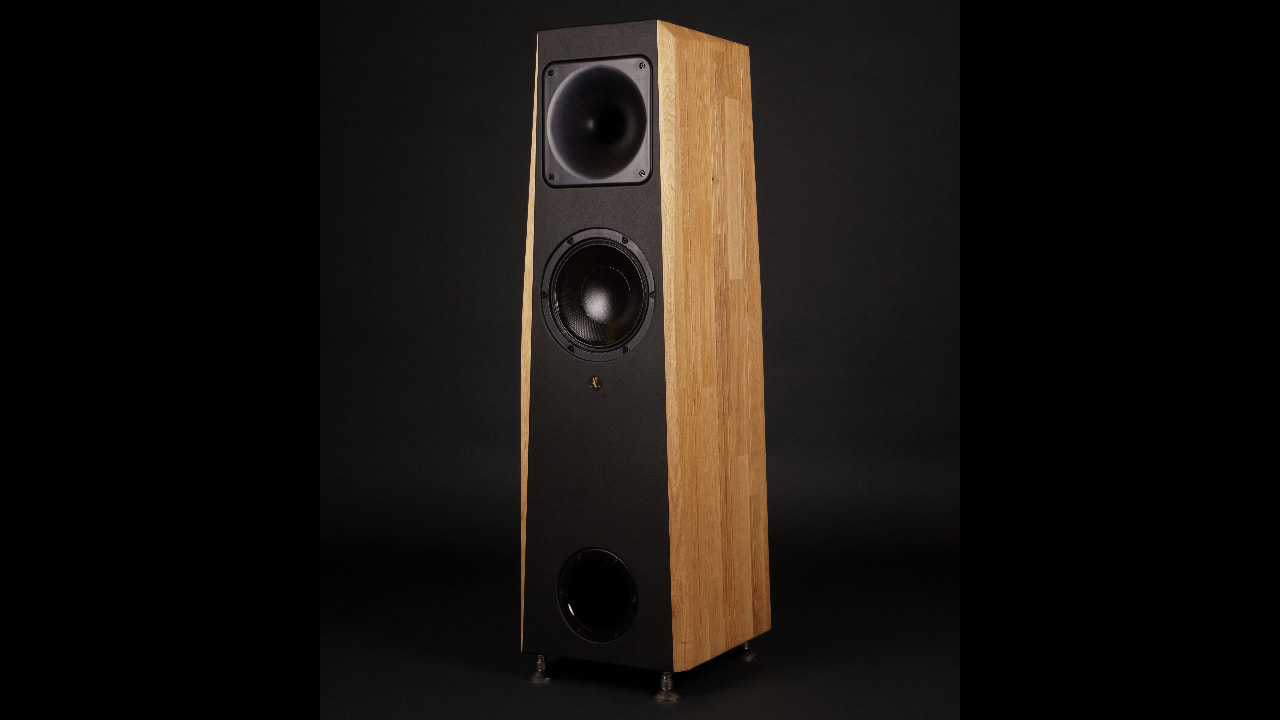
Atlantis Lab AT-23 Pro loudspeaker
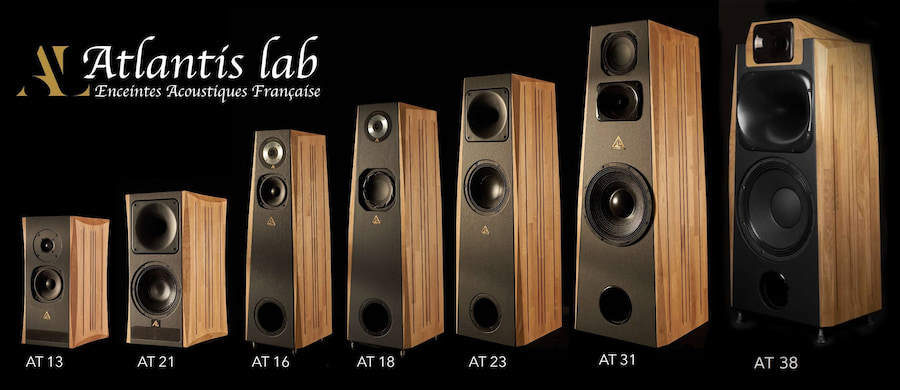
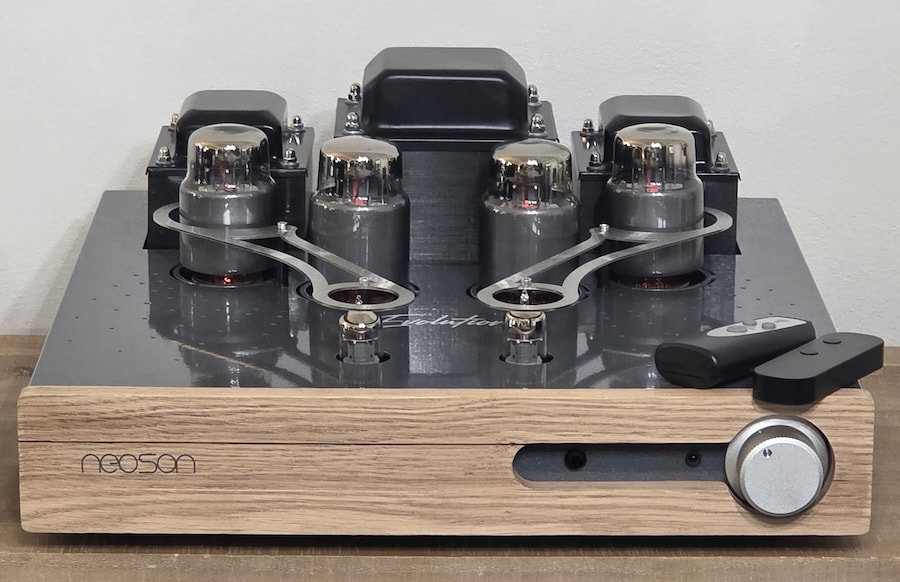
The system I reviewed paired the Atlantis Lab AT-23 Pro loudspeakers with the Neoson Evolution tube amplifier. It is a pairing that makes sense on paper and, more importantly, in the listening room. The AT-23 Pro is an extremely efficient loudspeaker, making it particularly well suited to tube amplification, while the Evolution combines a strong feature set with the kind of sonic performance that makes this French combination far more interesting than its relatively understated appearance might suggest.
There is also some visual harmony here. Both products are made in France and share similar blond wood finishes, so the system looks as carefully matched as it is technically. That might sound secondary, but when you are building a two-channel system that will probably occupy a prominent place in the room, it certainly does not hurt.
Advertisement
Related Reviews:
Neoson: French Tube Amplification With a Different Priority
Neoson is considerably less familiar to American audiophiles than many of the established tube-amplifier brands, in large part because its U.S. distribution has been limited. Decibel+ is looking to change that. Founded by designer Walter Blondel, Neoson is a relatively new French audio brand whose products are designed and hand-built in Normandy, with the company based in Argences, Calvados, near Caen. Blondel, however, brings more than two decades of development work to the project, so this is not quite a case of somebody waking up one morning and deciding that the world needed another KT88 amplifier.
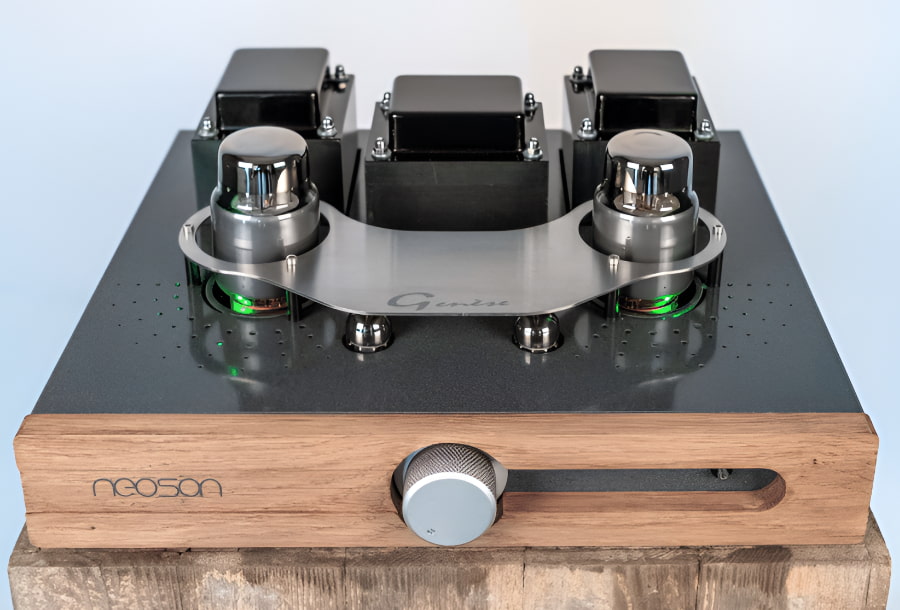
Neoson GenèseNeoson Evolution
The current lineup consists of two integrated tube amplifiers, the Genèse and Evolution, and neither was designed around winning a horsepower competition. Neoson’s stated philosophy is that output power alone does not determine musical expressiveness, which explains its focus on single-ended tube circuits, pure Class A operation, and carefully selected components.
The Genèse is rated at 10 watts per channel into 8 ohms and uses two PSVANE KT88 TII Art output tubes configured as pseudo-mono triodes, along with two PSVANE 12AX7-S Art tubes in the preamplifier stage. The larger Evolution doubles the output to 20 watts per channel into 8 ohms through a double single-ended topology using four KT88 TII Art output tubes, while retaining the same pair of 12AX7-S Art tubes in the input stage. Both operate in pure Class A and are supplied with PSVANE tubes.
Twenty watts may not sound especially impressive in a world where increasingly affordable solid-state amplifiers routinely offer 100 watts per channel or more, but that somewhat misses the point of what Neoson is trying to accomplish. These amplifiers were designed around musicality, efficiency, and appropriate loudspeaker matching rather than brute force, which also helps explain why the Evolution and highly efficient Atlantis Lab AT-23 Pro looked like such an interesting combination for this review.
Advertisement
Built Like a Tube Amplifier Should Be
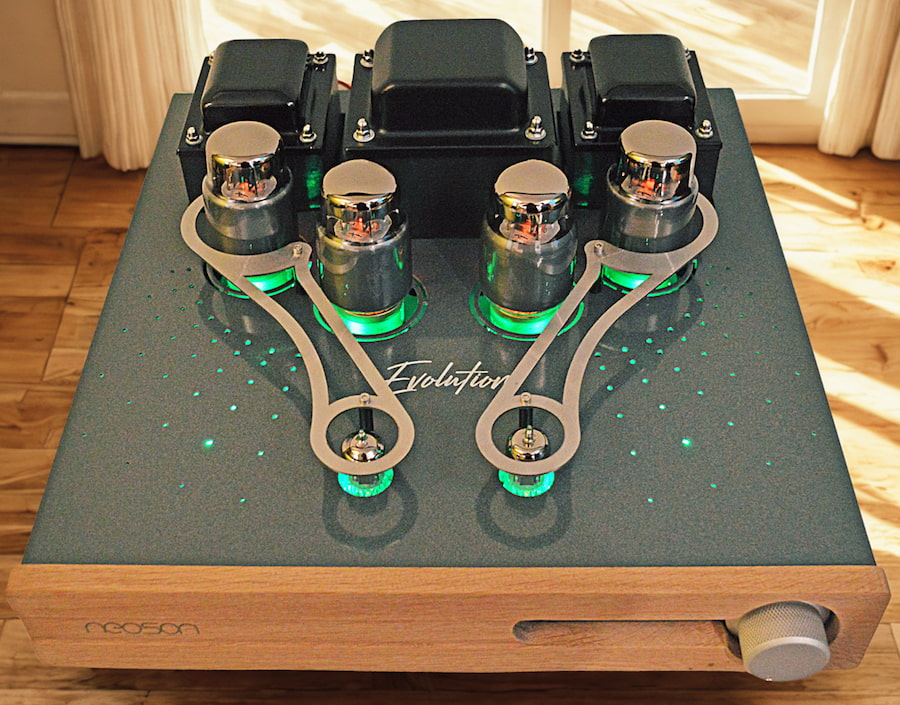
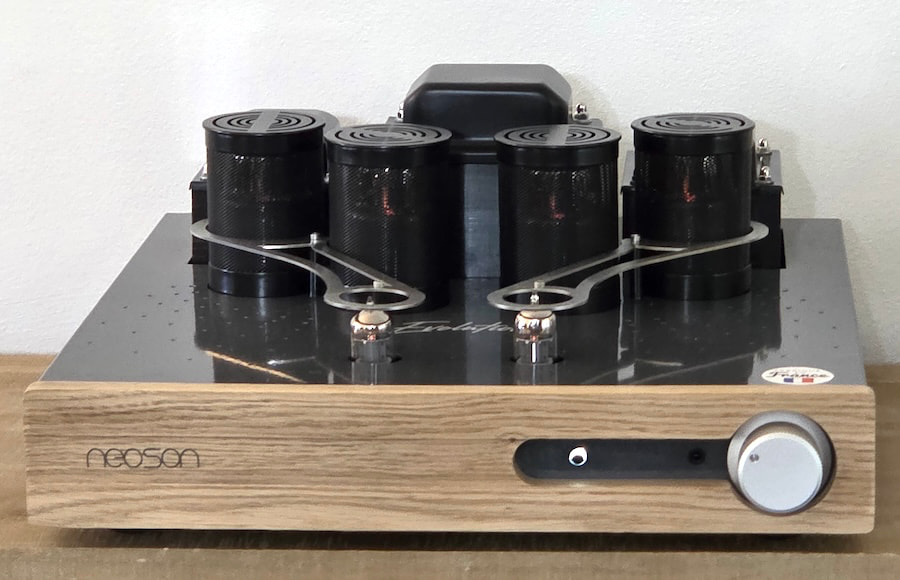
Tube amplifiers are rarely lightweight, and the Neoson Evolution is no exception at 53 pounds (24 kg). Its footprint is roughly 16 inches wide and deep, with the main chassis standing about four inches tall before the tubes and protective cages roughly double the overall height. One important clarification: despite its four KT88 output tubes, the Evolution is not a conventional push-pull design. Neoson describes it as a double single-ended topology operating in pure Class A.
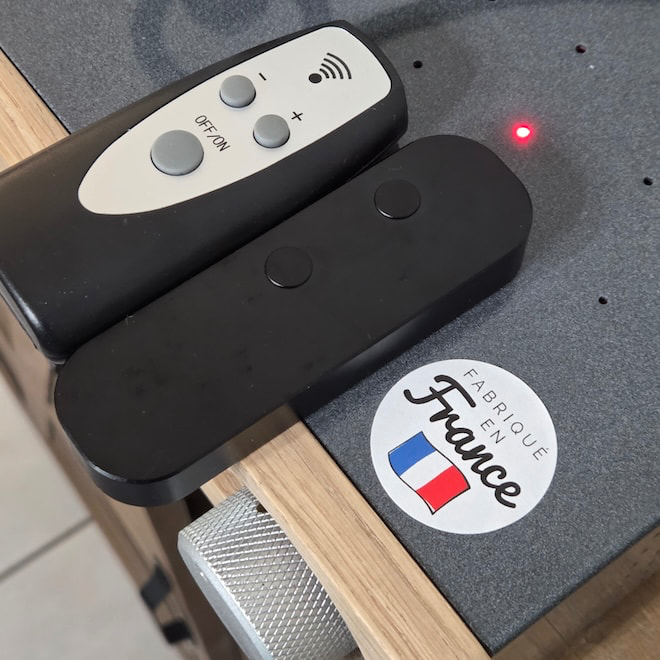
The front panel combines a blond wood fascia with a recessed control section on the right side. Controls are deliberately simple, consisting of a multifunction button, IR receiver, and a large volume control at the far right. Behind the wooden faceplate sits a steel chassis finished in a mottled blue-gray coating. Ventilation is extensive, and when the amplifier is powered on, green illumination can be seen through the series of vents surrounding the KT88 output tubes.
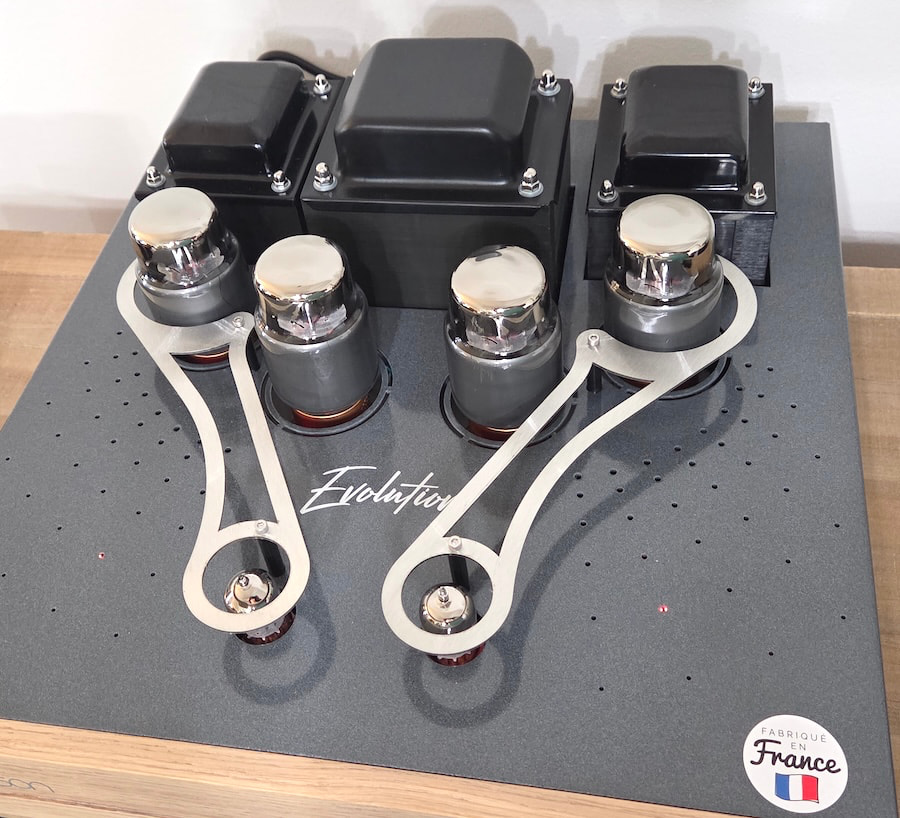
Neoson also provides substantial protection for the exposed tubes without enclosing them completely. A pair of distinctive guards, which I can best describe as wrench-shaped, protect the smaller 12AX7 tubes and the outer sections of the output stage. Each KT88 also receives its own black wire cage, providing some protection against accidental contact while still leaving enough airflow for the amplifier to be operated safely with the cages installed.
Advertisement. Scroll to continue reading.
Advertisement
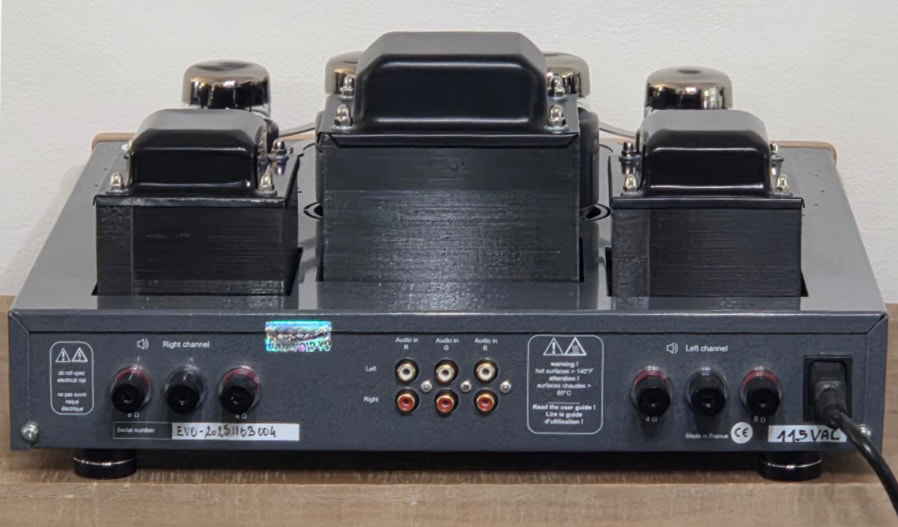
The rear panel is equally straightforward. The IEC power inlet is positioned at the far right, with separate 4-ohm and 8-ohm loudspeaker outputs arranged toward either side and three pairs of RCA line-level inputs located in the center. The Evolution is available for either 115V or 230V AC operation, depending on market configuration, and Neoson specifies power consumption at 260 watts.
There are no digital inputs, network connections, Bluetooth, or other attempts to turn the Evolution into an all-in-one system. Neoson has instead concentrated on the analog fundamentals. Three RCA inputs provide enough flexibility for something like a phono preamplifier, streamer or DAC, and another analog source such as a reel-to-reel deck. For the kind of system this amplifier is designed to anchor, that should be more than adequate.
A Different Way to Use Four KT88 Tubes
The Evolution combines some traditional tube-amplifier thinking with a more contemporary approach to component selection and mechanical isolation. Neoson uses Mundorf MCap Supreme Evo Silver Gold coupling capacitors between the amplification stages, a motorized ALPS volume potentiometer, and vibration absorbers for the preamplifier stage, transformers, and output tubes. Those choices are intended to reduce mechanical vibration and potential sources of noise in a circuit where tubes can be susceptible to microphonics.
The more interesting part of the Evolution is its output stage. Looking at four KT88s, I initially expected a conventional push-pull amplifier. That would hardly have been unusual. A pair of KT88s operating in push-pull can produce considerably more power than the Evolution’s 20 watts per channel, with the actual output depending on operating voltage, bias, transformer design, and whether the tubes are being run in triode, ultralinear, or tetrode operation.
Neoson has gone in a very different direction. The company describes the Evolution as a double single-ended integrated amplifier operating in pure Class A, with four PSVANE KT88 TII Art tubes configured as “pseudo mono triodes.” The smaller Genèse uses two KT88s to produce 10 watts per channel, while the Evolution uses four and doubles output to 20 watts RMS per channel into 8 ohms. The additional output tubes therefore provide more power without abandoning the single-ended architecture that defines both amplifiers.
Advertisement
That distinction helps explain why four KT88s produce only 20 watts per channel. This is not an attempt to extract the maximum possible output from the tubes. Operating a KT88 in a triode-type configuration substantially reduces its available power compared with conventional tetrode or ultralinear operation, but it can also produce different transfer characteristics and distortion behavior. Combined with Class A operation and a single-ended circuit, Neoson is deliberately trading efficiency and maximum output for the characteristics it wants from the amplifier.
There is also some terminology worth clearing up. The KT88 is not technically a pentode. It is a beam power tetrode, and the “KT” designation derives from “kinkless tetrode.” Beam tetrodes and power pentodes frequently perform the same job in audio amplifiers and are sometimes discussed interchangeably, but their internal construction is different. Neoson’s description of its KT88s as “pseudo mono triodes” is the company’s terminology; without a complete circuit schematic, I would not go further and speculate about precisely how every electrode is connected.
The preamplifier stage uses two PSVANE 12AX7-S Art tubes. The 12AX7 is a high-gain dual triode commonly used in the voltage-gain stages of tube amplifiers, so there is nothing unusual about its presence here. What I would not do is assume Neoson selected it specifically because it provides a better impedance match for the KT88 than something such as a 12AT7 or 6922. That depends on the surrounding circuit, and Neoson does not make that claim. My problem with the 12AX7 was considerably more mundane: my stash of good examples is not as deep as it is for some other tube types.
The internal construction also suggests that Neoson has kept the audio path relatively direct, which is consistent with the simplicity of the overall design. Fewer unnecessary stages and connections can reduce opportunities for added noise, although implementation matters considerably more than simply counting components.
Advertisement
The published specifications are encouraging for this type of amplifier. Neoson rates the Evolution at 20 watts RMS per channel into 8 ohms, with a frequency response of 15 Hz to 20 kHz within ±1 dB and an input sensitivity of 0.9 Vrms. If the supplied test data showing channel balance within 0.2 dB and an unweighted signal-to-noise ratio of 84 dB are included with the review documentation, those figures are also worth noting.
An 84 dB unweighted SNR is not remotely competitive with the headline measurements of many modern solid-state amplifiers, but that comparison only tells part of the story. SNR is a ratio between the amplifier’s reference signal level and its residual noise; it should not be compared directly with an 80 dB SPL listening level. With a 20-watt tube amplifier intended to drive very efficient loudspeakers, the practical concern is whether hum or hiss becomes audible through those speakers at the listening position. That is the test that ultimately matters with the Evolution.
Component Selection
The Evolution’s 0.9 Vrms input sensitivity makes it compatible with a broad range of source components, although that does not mean every source will produce the same perceived volume at a given setting on the amplifier. Output levels can vary considerably between a phono preamplifier, DAC, streamer, or other line-level source. In my system, an adjustable phono stage proved useful because it allowed me to keep the turntable’s output closer to that of the digital sources and avoid large changes in volume when switching inputs.
Advertisement. Scroll to continue reading.
Loudspeaker matching is considerably more important. With only 20 watts per channel available, the Evolution is best partnered with efficient loudspeakers that do not present an unnecessarily difficult load. That helps explain why Decibel+ pairs it with Atlantis Lab loudspeakers such as the AT-23 Pro. Their high sensitivity makes much better use of the Evolution’s available output than a conventional low-sensitivity loudspeaker that might require considerably more current and power to reach the same listening levels.
Advertisement
Heat management also needs to be considered. The Evolution is a pure Class A tube amplifier with a specified power consumption of 260 watts, and a substantial portion of that energy is ultimately released as heat. Unlike many Class AB amplifiers, a Class A design continues to dissipate significant power even when music levels are low, so the chassis and tubes remain quite warm during normal operation.
That makes placement important. The Evolution should be given plenty of open space above and around the chassis, with unrestricted airflow through its ventilation openings. Putting it inside a tightly enclosed cabinet is not a good idea. Proper ventilation will help keep internal temperatures under control and should also benefit long-term component and tube life.
Listening
To my ear, the KT88 is one of the hardest tubes to categorize, but so much depends on what is put around it and the overall amplifier design. A quick search will turn up push-pull KT88 amplifiers ranging from 80 watts per channel on down, with some manufacturers even using language such as “conservatively rated at 45 watts.” Every amplifier design involves trade-offs: power for distortion, cleanliness for heat, and cost for noise. It is simply not possible to maximize output, clarity, and musicality at the same time.
With the Evolution, Neoson has clearly chosen to sacrifice power and accept the additional heat generated by Class A operation in pursuit of clarity and musicality. When paired with a high-efficiency loudspeaker like the Atlantis Lab AT-23 Pro, the result is a warm, rich sound with good weight throughout the audible range. There is no thinning of the bass or harshness at the top end, just consistently even behavior across the spectrum with fantastic midrange tonality.
Advertisement
Sub-bass performance is quite good for a design using smaller drivers, while the mid-bass is well controlled with plenty of weight and detail. Unless you are using this combination as part of a home theater system, I see little reason to add a subwoofer.
The midrange is the heart of any system, and this is where the Neoson and Atlantis Lab pairing really shines. The tonal quality of piano and strings is as good as I have heard from some substantially more expensive systems over the years. No matter how busy the track or complex the passage, I heard no congestion or thickening of the sound.
As expected, the horn tweeter does an excellent job of presenting a detailed treble, although it may be a touch hot for some listeners. The Evolution takes just enough of that edge away, making the top end sound slightly warmer without sacrificing detail in the process.
Overall, the combination of the Atlantis Lab AT-23 Pro and Neoson Evolution shows that Decibel+ did its homework when putting this system together. This was clearly not a case of, “They both have blond wood, so let’s go with that.”
Advertisement
The other side of the equation becomes obvious when the Evolution is paired with the wrong loudspeaker. Connecting it to my Magnepan 3.7s was a mistake. Their lower sensitivity and more demanding load are simply not a good match for a 20-watt amplifier like the Evolution. The gorgeous, energetic presentation I heard from the AT-23 Pros quickly became somewhat lethargic and lifeless.
Switching to a smaller bookshelf speaker like the Klipsch RP-600M brought the musicality back, and the Evolution once again sounded right at home. I also had an opportunity to try it with a friend’s Wharfedale Linton Heritage loudspeakers, and the pairing acquitted itself quite well there, too.
Tube Rolling
Some listeners buy tube amplifiers for that wonderful glow, others for their warmer tonal character, and some of us simply cannot resist tube rolling in search of the combination that best suits our system and preferences. The PSVANE tubes supplied with the Evolution are quite good, so anyone interested in using the amplifier with minimal fuss should be perfectly happy with what Decibel+ provides.
Advertisement. Scroll to continue reading.
Advertisement
For those of us who cannot leave well enough alone, however, there are plenty of options. My first piece of advice is to be very careful when buying vintage 12AX7s unless you know and trust the seller. The 12AX7 was used extensively in both guitar and hi-fi amplifiers during the tube era, which means there are enormous numbers of used examples floating around. Condition varies considerably, and tubes advertised as NOS are not always what the seller claims them to be.
I generally start with the preamplifier tubes because, in my experience, changing them often has a greater impact on the amplifier’s tonal character than replacing the output tubes. I did not try 5751s because Neoson’s documentation does not recommend them, and without discussing the substitution with the manufacturer first, I was not comfortable experimenting.
My 12AX7 options included early-1970s Philips 12AX7WA JAN tubes, RCA clear tops, Telefunken ECC803S, early Ei 12AX7s, Tungsram 12AX7s, and a pair of Mullards from 1968. The Ei pair was eliminated almost immediately because one channel developed a severe howl. The other tube sounded quite good when I shifted the balance entirely to that channel, but one member of the pair was clearly unhappy in the Evolution.
The Philips tubes were solid performers but offered little, if any, improvement over the stock PSVANEs, making their additional cost difficult to justify. The RCAs were similar overall, although I heard slightly greater treble clarity. Listeners looking for a little more openness at the top might find them worthwhile.
Advertisement
The larger changes came from the Tungsram, Mullard, and Telefunken tubes. The Tungsrams and Mullards pushed the Evolution in a warmer, more saturated direction, with slightly darker treble and a more prominent midrange. Those looking for strong bass, richer mids, and less top-end energy may prefer either of these to the stock tubes.
The Telefunken ECC803S went in the opposite direction. It delivered the cleanest and most analytical presentation of the group, with excellent detail retrieval, greater top-end sparkle, and somewhat less warmth and fluidity through the bass and midrange. Listeners who generally find tube amplifiers a little too soft or overly lush may find the Telefunken the most appealing option.
None of this means the stock PSVANEs need replacing. In fact, their balanced presentation makes them a very sensible starting point. Tube rolling simply allows the Evolution’s character to be pushed in either direction: warmer and richer with the Mullards or Tungsrams, or cleaner and more incisive with the Telefünkens.
Rolling the Output Tubes
I don’t know too many people who regularly roll KT88 output tubes because the cost can get out of hand rather quickly. A good matched quad of current-production tubes can run several hundred dollars, while matched quads of desirable vintage NOS examples can easily climb into the thousands.
Advertisement
I started with a set of vintage GE 6550A gray plates, which are among the more commonly encountered American 6550-family tubes. They performed well in the Evolution, but I did not find the improvement over the stock PSVANEs significant enough to justify buying a matched quad specifically for this amplifier. If the Evolution eventually needed a new set of output tubes anyway, that calculation might be different.
The more exotic options in my collection were a set of British-made M-OV/GEC KT88s from 1966 and a set of vintage 1960s Tung-Sol 6550s. The GECs are the classic British KT88s, and examples from this period with their brown base wafers and triple-getter construction have become highly sought after. Finding a genuine, properly matched quad today can be painfully expensive. Fortunately, mine have been in my collection for more than 20 years, so I avoided paying current market prices.
The same applies to the vintage Tung-Sols. Original American Tung-Sol 6550s have become increasingly scarce and expensive, particularly when you need four closely matched examples. Mine were also purchased long before prices headed into the stratosphere.
Both vintage sets improved the Evolution to my ear, although the differences were not transformational. They sounded slightly cleaner as volume increased and delivered a little more impact in the bass at lower listening levels than the stock PSVANEs. There was an improvement, but whether it is worth spending four figures on a set of vintage output tubes is an entirely different question.
Advertisement
Advertisement. Scroll to continue reading.
For most owners, I don’t think it is. The supplied PSVANEs are already very good and suit the Evolution well, so there is no reason to feel that you are hearing a compromised version of the amplifier by leaving the factory tubes in place. Vintage output tubes are an expensive final bit of tuning for those who already own them or have very deep pockets, not something I would consider necessary.
If I were keeping the review sample, my preferred combination would be the Telefunken ECC803S input tubes with the GEC KT88s. That combination offered the balance of clarity, tonal weight, detail, and treble energy that best suited my own listening preferences. The fact that getting there with vintage tubes could now cost a small fortune is also a very good argument for enjoying the PSVANEs and spending the difference on music.
The Bottom Line
Tube amplifiers are rarely inexpensive, and every design involves trade-offs. At $11,828, the Neoson Evolution certainly does not change that equation. What matters is where Neoson has chosen to make those compromises. Rather than chasing maximum output from its four KT88s, the Evolution uses a pure Class A, double single-ended topology to deliver 20 watts per channel, with the emphasis firmly on musicality, tonal richness, and clarity.
Advertisement
That approach works exceptionally well when the amplifier is paired with the right loudspeakers. The Atlantis Lab AT-23 Pro gives the Evolution the efficiency it needs to perform at its best, and the resulting combination delivers excellent tonal weight, a rich and expressive midrange, and enough detail without pushing the treble too far forward. The additional heat is something owners will have to accommodate with proper ventilation, but the limited power output becomes far less important when the loudspeaker has been selected accordingly.
The Evolution will make the most sense for listeners who already own efficient loudspeakers or want to build a system around them. Those with more modest spaces and similarly efficient speakers should also consider the 10-watt-per-channel Neoson Genèse, which follows much of the same design philosophy at $7,885.
The Evolution is not the amplifier for difficult loads, inefficient planar speakers, or anyone who judges an amplifier primarily by the size of the number next to “watts.” With the right loudspeaker, however, its 20 watts proved more than sufficient, and the quality of those watts is ultimately why this French tube amplifier deserves attention.
Pros:
Rich, warm presentation with excellent midrange tonality
Very good clarity and detail without sounding overly bright
Excellent match for high-efficiency loudspeakers
High-quality internal components and thoughtful vibration control
Stock PSVANE tubes are good enough that tube rolling is optional
Cons:
20 watts per channel severely limits loudspeaker compatibility
Runs hot and requires plenty of ventilation
Analog-only connectivity with just three RCA inputs
At $11,828, proper system matching becomes even more important
Rolling vintage KT88/6550 tubes can become extremely expensive
Our Ratings
★★★★★★★★★★ Performance*
★★★★★★★★★★ Usability
Advertisement
★★★★★★★★★★ Build Quality
★★★★★★★★★★ Value
* Performance is highly dependent what speakers are connected. However, when connected to high efficiency loudspeakers such as the Atlantis Labs AT-23 Pro, performance was excellent.
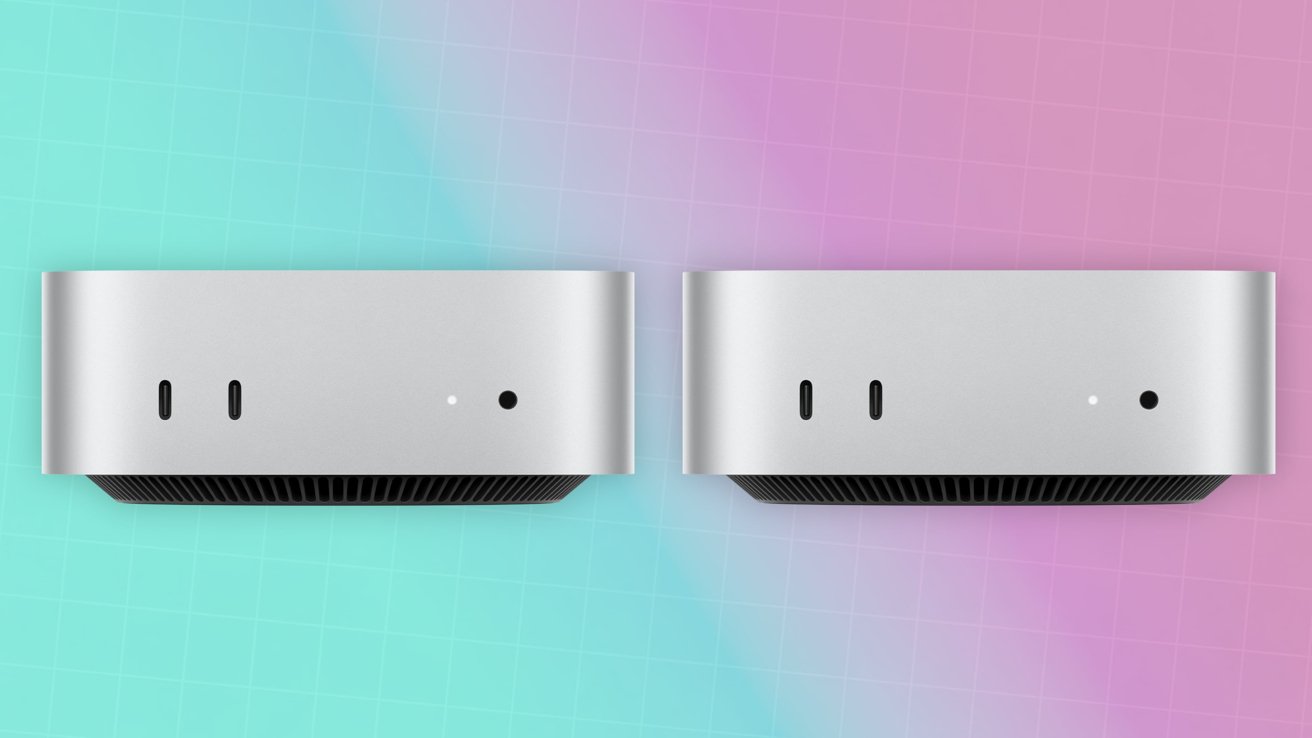
Apple has refreshed the Mac mini adding the M6, in an unusually timed update. Here’s how the new model specs compare against the M4 version it replaces.
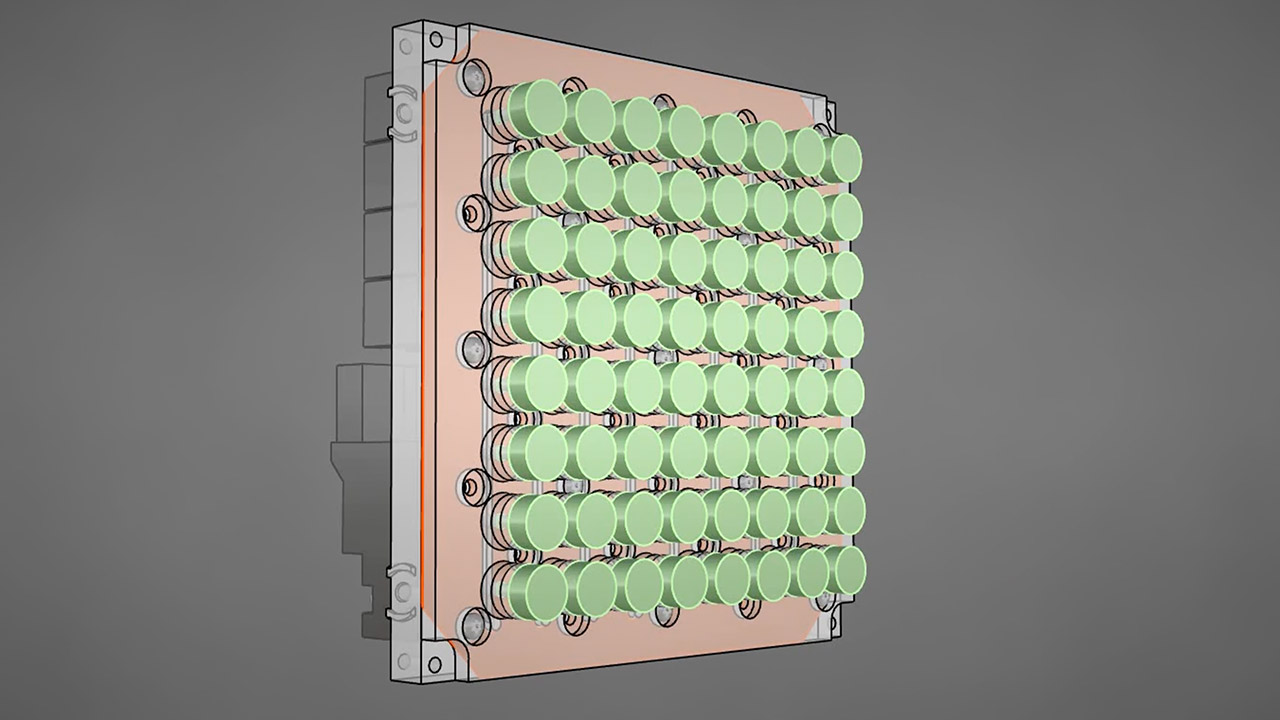
Soft silicone dots rise and fall across an eight-by-eight grid, forming shapes and simple patterns without a single glowing diode or liquid crystal. Soiboi Soft, the maker behind the project, built this entire display from air pressure differences, 3D-printed plastic, and thin membranes that act like valves and memory cells. Atmospheric pressure stands in for a binary zero. A vacuum stands in for a binary one. Once a pixel settles into place it stays there on its own, no continuous power required.
Soiboi Soft began with some small experiments, including a four-by-four model and a seven-segment clock capable of pneumatically storing its state. Scaling up to sixty-four pixels, however, necessitated significantly tighter tolerances and a more sophisticated control system. It turned out that you needed sixteen small solenoid valves to feed the eight row and eight column lines. The fluidic logic integrated into the stack determined which pixels turned on and off.
【All-In-One Smart Family Calendar】: Dragon Touch digital frame effortlessly organizes and tracks every family schedule with the crystal-clear…
【Easy Setup and Auto-Sync】: Enjoy a user-friendly design that our smart picture frame allows for quick setup—just plug in, connect to Wi-Fi, and…
【Interactive Chores Chart & Dinner Planner】: Our digital calendar keeps housework organized and motivates family members, especially children, to…
Things work like this: you hold a row and a column under vacuum pressure at the same time, and a local silicone switch opens, emptying the pixel chamber. The flexible dot on the surface pulls inward, resulting in a visible, touchable depression, similar to a pit. Close the switch, and the vacuum is trapped like a capacitor that never needs to be recharged.
Layers should be stacked properly, but not too perfectly, because being too perfect is ineffective. You received a translucent PLA baseboard that houses the control chambers. The logic membrane is made up of a special silicone sheet, which moves to open or close the passageways as needed. On top of it, there’s a pressure routing board, followed by a final piece of molded silicone with the sixty-four raised dots that make up the visible surface.
Everything is transparent, and you can see the internal channels in action. Getting it to work was a pain because consumer FDM printers are terrible at producing airtight parts, so he had to slow down the printing, raise the temperature, over-extrude some, and even put some concentric ridges around each chamber to help concentrate the sealing force. Then he’d vacuum clamp the boards in TPU sleeves and anneal them to keep them from warping, resulting in a soft, slightly yielding surface that you could actually touch, as it pushed back against your fingers.
The images are built up row by row. The controller, which may be a gamepad or something, sets the column pressures and then activates each row one at a time. All of the pixels read and lock in their values. So simple shapes, numbers, letters, and even a basic game of Snake arise. Refresh rates aren’t super high, and the resolution isn’t great compared to any modern screen, but that’s all you’d expect. Once the valves have done their thing, the display doesn’t use any electricity, and the same vacuum network that writes the image also gives the surface its living quality, as the dots move, hold, and respond to touch in a way that feels exactly like pixels should. [Source]
One of the video game studios impacted by Xbox’s layoffs in July has successfully reclaimed its independence, as well as control over its intellectual property.
Compulsion Games, headquartered in Montreal, was founded as an independent studio in 2009 and acquired by Xbox in 2018. Its one release as a member of the Xbox Games Studio network was 2025’s South of Midnight, an action/adventure game set in a magical Deep South.
In July, Microsoft announced the first wave of a planned 3,200 job cuts throughout its Xbox department, alongside plans to spin out or shut down five of its studios. Compulsion Games was one of those five, alongside Double Fine Productions (Psychonauts), Ninja Theory (Hellblade), Undead Labs (State of Decay), and Arkane Studios (Deathloop, Dishonored).
Subsequently, on Aug. 20, Compulsion CEO Guillaume Provost revealed in an interview with GamesBeat’s Dean Takahashi that Compulsion’s management had successfully reacquired the studio, its staff, and the South of Midnight IP on Aug. 11.
South of Midnight is still available via its previous storefronts, including Steam and the PlayStation Network, but is currently self-published by Compulsion.
Advertisement
Provost told GamesBeat that no layoffs had been made at Compulsion as it transitioned to independence, and most of the team elected to stay together.
As for the other studios affected by Xbox’s July 6 layoffs:
Double Fine Productions, headquartered in San Francisco, confirmed on July 28 that it had laid off 23 employees to return the studio to a “sustainable size.” It is once again fully independent and has control of its IP, such as Psychonauts, and will be exhibiting in Seattle on Labor Day weekend as part of the Penny Arcade Expo.
Ninja Theory, from Cambridge, England, was one of the more unexpected shutdowns, as it had debuted Senua, a third entry in its Hellblade series, only a few days before the layoffs announcement. It has reportedly been spun off from Microsoft and will continue work on Senua under an unspecified new owner.
Likewise, Seattle’s Undead Labs is currently under unidentified new ownership and still plans to release the long-anticipated third entry in its zombie survival series State of Decay at some point next year.
Finally, Arkane’s status has yet to be firmly established. It formerly consisted of two studios, in Austin, Texas and Lyon, France, but its Austin office was closed down as part of a wholly separate wave of Xbox layoffs in May 2024. Several of the affected employees in Texas, including former studio head Harvey Smith, announced on Aug. 19 that they’d founded a new company, Black Pony Immersive, with plans to create new games in the same “immersive sim” subgenre as Dishonored.
Xbox is currently exhibiting at the Gamescom conference in Cologne, Germany.
‘The right approach is for people to deeply control the future’: OpenAI CEO Sam Altman is worried about AI being controlled by just a few powerful players
OpenAI CEO Sam Altman is worried that powerful companies are dominating the evolution of AI
Altman has also expressed concern over AI’s potential for acting autonomously and possibly escaping human control
The comments are believed to be a reference to his rival, Anthropic CEO Dario Amodei
Are too few companies wielding undue influence on the direction of AI? That seems to be the belief of OpenAI’s Sam Altman, who has warned against a scenario where the people don’t have a say in how AI changes the world. Speaking to the David Senra podcast, Altman expressed a desire to see “society and the models… co-evolve.”
While this may seem desirable, a byproduct of this thinking might be harder to accommodate. Altman also expanded on his view that governments should not regulate AI, expressing a view that prefers the existence of liberty over the possibility of safety.
Altman is the latest tech founder to appear on David Senra’s weekly podcast, which started in 2025 with Spotify’s Daniel Ek as the guest.
Latest Videos FromTechRadar
Advertisement
Evolving together
Sam Altman on Building OpenAI & Betting on the Impossible – YouTube
Altman’s view is he sees AI evolving alongside human acceptance of the technology. “Society and the model will evolve together,” he said. “The right approach is for people to deeply control the future.”
However, he revealed that things haven’t moved quite as fast as he thought they might when OpenAI first released GPT-4. “I thought when we got to GPT-4, which was back in 2023, that very quickly after that there was going to be much more disruption.” One of Altman’s expectations back then was software businesses being more widely and directly impacted by AI.
While the inertia in the economy has reduced the impact in that regard (for the moment, at least), Altman is excited about AI’s ability to unlock small business opportunities. “We are about to see the greatest boom in people starting smaller businesses than we have ever seen… AI is empowering that.”
Advertisement
Liberty and open models
Altman’s view of liberty and the need for open models puts him in direct opposition to Anthropic CEO Dario Amodei, who, in June 2026, stated that the latest Mythos model could prove a risk to the financial sector and infrastructure and present a challenge to cybersecurity.
Sign up to the TechRadar Pro newsletter to get all the top news, opinion, features and guidance your business needs to succeed!
For Sam Altman, this is the wrong way around. “There are a lot of people who are so nervous about the magnitude of those risks and get so taken by that and feel a need to protect the world,” he said. “Like, you know, ‘We should trade off a lot of liberty for safety.’”
Advertisement
Interestingly, most major Chinese AI companies release open-weight (the open source of AI) models, enabling them to match Anthropic and OpenAI. While Anthropic is yet to release an open weight model, OpenAI has released two: gpt-oss-120b and gpt-oss-20b.
But will the people and small businesses derive long-term advantage from OpenAI’s liberty-based open models or stick with Anthropic’s closed, “safe” models?
An anonymous reader quotes a report from Ars Technica: Antibodies play a central role in your body’s immune defense. But they’re also nearly ubiquitous in biological research, being essential for several widely used lab techniques. While some researchers need to go through the process of producing their own antibodies, antibodies to many key proteins are commercially available and can be ordered for overnight delivery. In May, however, Reese Richardson, a post-doc at Northwestern University, discovered that some of the images used to demonstrate how these antibodies performed in lab experiments had been subject to image manipulation — the sorts of changes that would get a paper retracted if they had appeared in the academic literature. The manipulations ranged from removing background noise to copying and pasting data to fabricate results. Now, he has done a more exhaustive search and found problematic manipulations in images used to market over 17,000 commercial antibodies.
[…] The consequences of this discovery are pretty significant. If you buy an antibody believing it will generate clean, clear data and find it doesn’t, many researchers will assume the problem is them. That often leads them to spend time troubleshooting the procedure and trying slightly different conditions to get useful data. If the antibody can’t produce those results, all the troubleshooting will have been a waste of time and money. Nature’s coverage of the new findings includes quotes from several companies that sell these antibodies that, paraphrased, range from “we’ll look into it” to “we don’t think it’s a problem.” Researchers who have spent time frustrated while failing to get an antibody-based experiment to work may think otherwise.
Wizards of the Coast and its subsidiary Invoke Studios released a first-look gameplay trailer for Warlock: Dungeons & Dragons, a new open-world action game based upon the systems and setting of Wizards’ popular tabletop role-playing game.
Wizards, based in Renton, Wash., is a subsidiary of Hasbro and the company behind the D&D and Magic: The Gathering franchises. It has become one of the toy giant’s most reliable profit engines. Hasbro and Wizards are now looking to video games for additional growth, with mixed results; Wizards’ recent video game efforts have included both the generational success of Baldur’s Gate 3 and significant flops such as 2021’s Dark Alliance.
Warlock‘s first trailer was released during Opening Night Live at the Gamescom conference in Cologne, Germany, which has become one of the hallmarks of the video game industry’s calendar, particularly in Europe. Clearly, someone at Wizards and/or Hasbro has a great deal of faith in Warlock.
Warlock is set in the brand-new fantasy world of Darkon. Players take the role of Kaatri (Tricia Helfer, Battlestar Galactica), a combat veteran and swordswoman who makes a pact with a magical entity to attain magical powers. Specifically, Kaatri’s deal is with Tasha (Maggie Robertson, Resident Evil Village), an archmage from the world of Toril and one of D&D’s longest-running signature characters.
In exchange for whatever Tasha wants, which is not yet revealed, Kaatri becomes a warlock: a spellcaster who derives her magic from her link with Tasha, rather than the other available sources in D&D’s cosmology. Kaatri’s newfound powers include signature D&D abilities such as telekinesis, short-distance teleportation, and detecting sources of magic.
Advertisement
As such, the player can approach every situation in a number of ways depending upon their opportunities and preferences, from open conflict to stealth to clever manipulation of their environment. You can go in swinging with Kaatri’s sword, telekinetically shove enemies off of cliffs, or take an opponent out at long range with D&D warlocks’ signature eldritch blasts.
Invoke Studios, based in Montreal, was founded in 2022 as a reorganization of the team behind the 2021 co-op action-RPG Dungeons & Dragons: Dark Alliance. Warlock is its debut project under the Invoke Studios brand.
To make it to market, Warlock and Invoke have survived two leadership shakeups at Wizards and several waves of layoffs and shutdowns, including the cancellation of two other D&D-based video game projects in early 2023.
Warlock: Dungeons & Dragons is scheduled for release in 2027 for PC, PlayStation 5, and Xbox Series X|S.
At the San Diego City Council’s most recent budget meeting, Sith Lord Darth Vader had some points to make. Between gasping breaths, Vader praised the council’s recent votes to renew its contract with the surveillance company Flock Safety, which has been making headlines recently as more and more stories of police officers abusing its tools have continued to come out—and as a WIRED review of code for a new AI tool already in use by some police departments has made clear that it is watching far more than just license plates.
“The emperor is a fan of Flock. And we must continue utilizing Flock technologies so that we can follow and surveil the rebel scum as they move from playground to playground, from playground to pool, from pool to gymnasium.”
The recording of the video has gone viral, reaching millions of people on TikTok and Instagram.
The man behind the stunt is Anthony Ralphs, a San Diego-based DJ, event producer, and agriculture consultant who has spent the better part of the past year advocating against the city’s support of Flock’s use by the San Diego Police Department.
Advertisement
Initially, Ralphs thought about keeping his identity hidden behind the Vader mask—a 2004 Hasbro model. But he says that as the video has picked up more and more steam, he decided to “take ownership” of the stunt that put Flock and surveillance technology on the minds and feeds of millions of people around the world.
WIRED spoke to Ralphs about advocacy, crafting a costume, and the role that art can play in civic engagement.
This conversation has been edited and condensed for clarity.
VITTORIA ELLIOTT: How did this start for you? Was this your first city council meeting?
Advertisement
ANTHONY RALPHS: No. My first time attending a city council meeting was sometime last summer or last fall. But really the most consequential city council meeting that I attended, that really got me in the fold of starting to regularly participate in my civic duties, was this issue of Flock. It was my third, or maybe my fourth, city council meeting back on December 9th, and the city council was putting this up to a vote, whether to continue to use Flock.
The story back then was that the city council didn’t exactly know what the technology was. The police were touting it as a force multiplier. There were over 300 people at that vote, the meeting room was completely full, and I would say 95 percent of the people there were saying they didn’t want Flock. But the council voted for it anyway. It was extremely discouraging, and it really lit a fire under me to start going and regularly participating.
I came to the following city council meeting, and I was one of maybe five people in the city council chambers, and there had been close to 300 just a couple of weeks prior. That moment was eye-opening. I realized not everyone can be there all the time to do this, and that’s what we need. We need consistent advocacy. So I took time off of school to be able to do that.
Why did this feel so critical?
Advertisement
Our city’s $120 million deficit. They cut several arts programs, and while they did that, they also provided the $2.2 million for Flock’s contract, even when people in those communities that are being most heavily policed say that they don’t want this. And now, we have the case of Hugo Parra, a local San Diegan who was falsely imprisoned and sat in prison for 30 days due to an erroneous tag by the Flock cameras. [Flock did not immediately respond to a request for comment on this matter.]





































































You must be logged in to post a comment Login