Connect with us
DAPA Banner

Tech

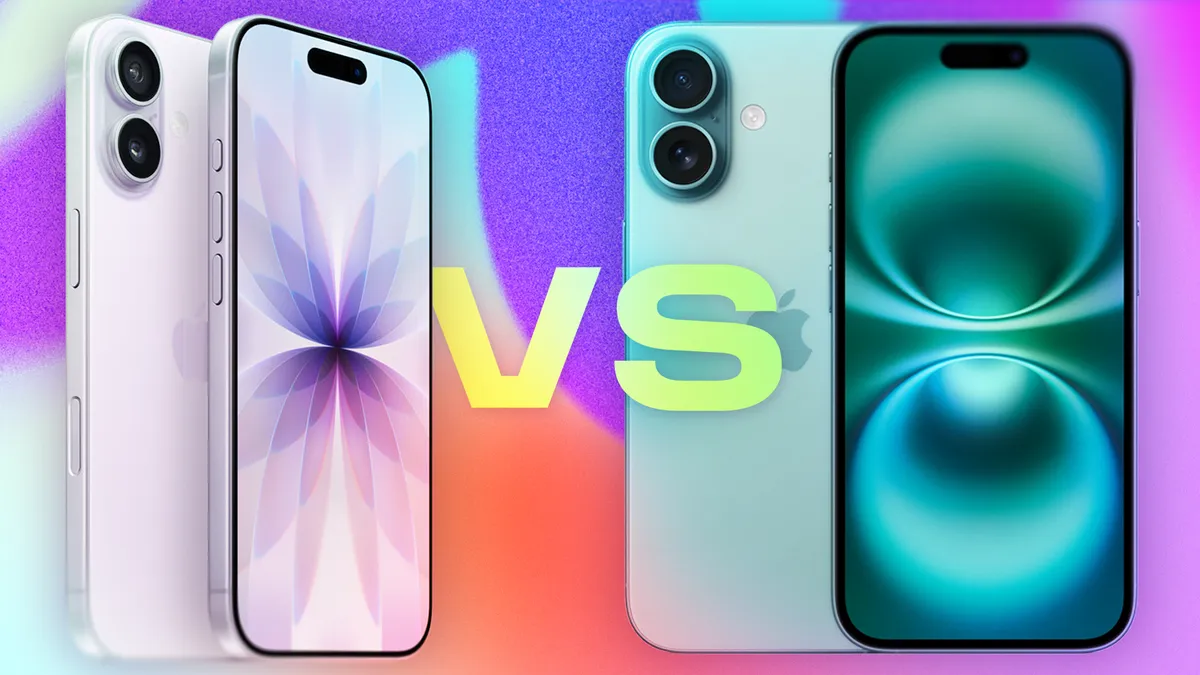
iPhone 17 vs. iPhone 16: Should You Upgrade?

Published

on

If you’re looking to buy a new iPhone, you may be wondering whether to get the iPhone 17 or score a discount on last year’s iPhone 16. To help with that decision, here’s a breakdown of how the two phones compare.

The iPhone 17 starts at $829 — or $799 with carrier activation — the same price as the iPhone 16 when it debuted. But there’s a key difference: The iPhone 17 starts with 256GB of storage, double the 128GB base on the iPhone 16. 

The iPhone 16 is now available at a $100 discount. So, is it worth saving some money or should you splurge on the newer phone?

Advertisement

Here’s what to know about each device, from the cameras to the displays to the batteries. (If you’re looking for a slightly more affordable option, check out the iPhone 17E.)

Watch this: iPhone Air Review: A Joy to Hold, at a Cost

Screen differences

Some of the biggest changes between the iPhone 16 and 17 have to do with the display.

Apple says it shrunk the borders around the screen on the iPhone 17, expanding the display from 6.1 inches on the iPhone 16 to 6.3 inches on the iPhone 17 without expanding its dimensions. The new Ceramic Shield 2 cover on the iPhone 17 offers three-times better scratch resistance, according to the company.

Advertisement

The baseline iPhone 17 gets a display with a 120Hz refresh rate, as opposed to the 60Hz display on the iPhone 16. That means the iPhone 17 finally supports an always-on display, so you can glance at the time, your notifications and Live Activities without waking the screen.

The iPhone 17 also gains an anti-reflective coating and a 3,000-nit peak brightness, compared to 2,000 nits on the iPhone 16. That should make it easier to see your phone in bright sunlight.

Camera differences

Both the iPhone 16 and 17 have a 48-megapixel wide-angle camera. But the iPhone 17 upgrades the ultra-wide camera from 12 megapixels to 48 megapixels.

The front-facing camera also gets an upgrade, going from 12 megapixels on the iPhone 16 to 18 megapixels on the iPhone 17. There’s a new Center Stage feature for the selfie camera that can automatically adjust from a portrait orientation to landscape to make sure everyone is in the shot. That means you don’t have to manually rotate your phone to its side anymore when there are more people to fit in the frame.

Advertisement

Both the iPhone 16 and 17 have a Camera Control button on the side to quickly launch the camera, snap some shots and use Apple’s Visual Intelligence tool to learn more about what’s around you.

Processor and RAM

The iPhone 17 packs an A19 chip, an upgrade from the A18 chip in the iPhone 16. One key difference is that the iPhone 17 starts at 256GB, while the iPhone 16 started at 128GB for the same $829 price when it debuted.

Both phones also support the Apple Intelligence suite of AI capabilities, which includes writing tools, image generators and notification summaries.

Battery life

Apple doesn’t share specific battery specs, but it does measure longevity via video playback hours. The iPhone 16 supports up to 22 hours of video playback, according to Apple, while the iPhone 17 bumps that up to 30 hours.

Advertisement

In CNET’s 45-minute endurance test, which includes streaming, scrolling through social media, joining a video call and playing games, the iPhone 17’s battery went from full to 98%. That’s just over the 97% the iPhone 16 scored last year.

And in a three-hour streaming test over Wi-Fi, which involves watching a YouTube video in full-screen mode at full brightness, the iPhone 17’s battery went from full to 89%. In comparison, the iPhone 16 dropped to 86%.

Anecdotally, the iPhone 17’s battery lasts over a day, even after taking photos, scrolling through social media, watching videos, texting, sending emails and more. The same can be said about the iPhone 16, so you likely won’t feel a huge difference between the two when it comes to day-to-day activities.

A new AI-powered Adaptive Power feature arriving with iOS 26 can help conserve the battery by making “small performance adjustments,” like “allowing some activities to take a little longer,” according to Apple.

Advertisement

The iPhone 17 arrives with the upcoming operating system onboard, but you’ll also be able to download iOS 26 on the iPhone 16, as well as some older iPhones, once it becomes available publicly. That should help to stretch your battery life on either device.

Color options and design

What’s on the inside may be most important, but people also care what their phone looks like. Like the iPhone 16, the iPhone 17 comes in a range of fun colors: black, white, mist blue, sage (a light green) and lavender.

For comparison, the iPhone 16 is available in black, white, pink, teal and ultramarine. Both phones have an aluminum frame. Check out the spec chart below for a breakdown of each phone.

Apple iPhone 17 vs. iPhone 16

Advertisement

Apple iPhone 17 Apple iPhone 16
Display size, tech, resolution, refresh rate 6.3-inch OLED; 2,622 x 1,206 pixel resolution; 1-120Hz variable refresh rate 6.1-inch OLED; 2,556 x 1,179 pixel resolution; 60Hz refresh rate
Pixel density 460ppi 460 ppi
Dimensions (inches) 5.89 x 2.81 x 0.31 in 5.81 x 2.82 x 0.31 in
Dimensions (millimeters) 149.6 x 71.5 x 7.95 mm 147.6 x 71.6 x 7.8 mm
Weight (grams, ounces) 177 g (6.24 oz) 170 g (6 oz.)
Mobile software iOS 26 iOS 18
Camera 48-megapixel (wide) 48-megapixel (ultrawide) 48-megapixel (wide), 12-megapixel (ultrawide)
Front-facing camera 18-megapixel 12-megapixel
Video capture 4K 4K
Processor Apple A19 Apple A18
RAM + storage RAM N/A + 256GB, 512GB RAM N/A + 128GB, 256GB, 512GB
Expandable storage None None (Face ID)
Battery Up to 30 hours video playback; up to 27 hours video playback (streamed). Fast charge up to 50% in 20 minutes using 40W adapter or higher via charging cable. Fast charge up to 50% in 30 minutes using 30W adapter or higher via MagSafe Charger. Up to 22 hours video playback; up to 18 hours video playback (streamed). 20W wired charging. MagSafe wireless charging up to 25W with 30W adapter or higher; Qi2 up to 15W
Fingerprint sensor None (Face ID) None (Face ID)
Connector USB-C USB-C
Headphone jack None None
Special features Apple N1 wireless networking chip (Wi-Fi 7 (802.11be) with 2×2 MIMO), Bluetooth 6, Thread. Action button. Camera Control button. Dynamic Island. Apple Intelligence. Visual Intelligence. Dual eSIM. 1 to 3000 nits brightness display range. IP68 resistance. Colors: black, white, mist blue, sage, lavender. Apple Intelligence, Action button, Camera Control button, Dynamic Island, 1 to 2,000 nits display brightness range, IP68 resistance. Colors: black, white, pink, teal, ultramarine.
US price starts at $829 (256GB) $829 (128GB)

Source link

Advertisement
Continue Reading
Click to comment

You must be logged in to post a comment Login

Leave a Reply

Tech

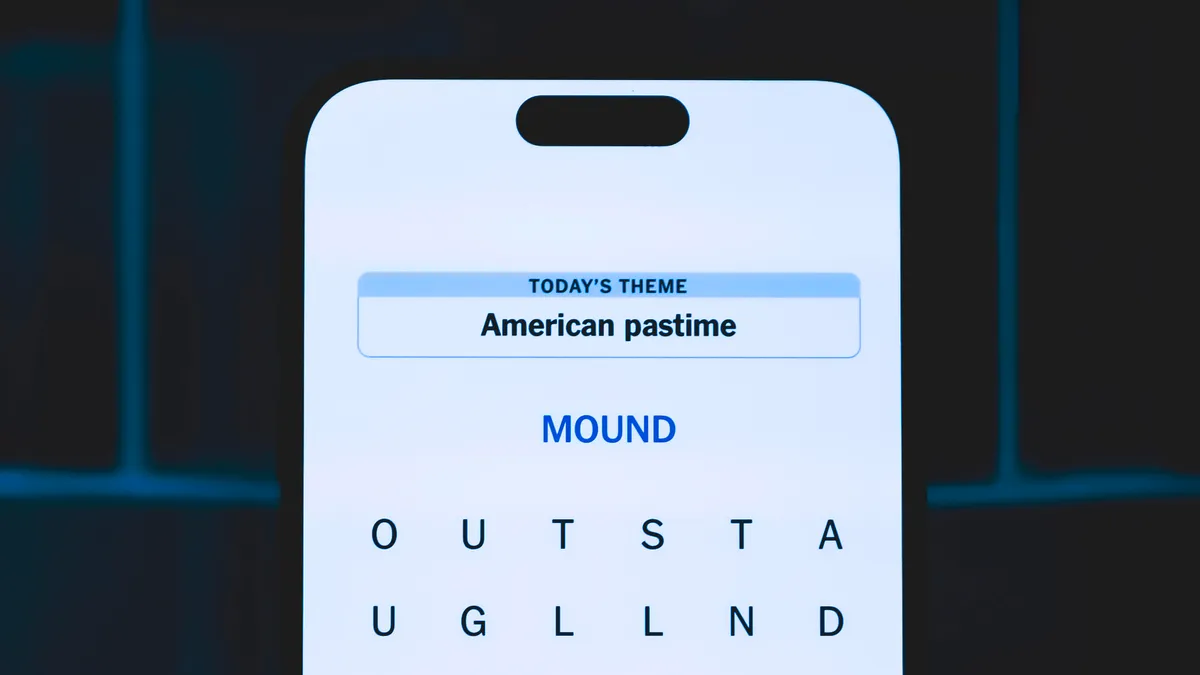
Today’s NYT Strands Hints, Answer and Help for April 18 #776

Published

on

Looking for the most recent Strands answer? Click here for our daily Strands hints, as well as our daily answers and hints for The New York Times Mini Crossword, Wordle, Connections and Connections: Sports Edition puzzles.


Today’s NYT Strands puzzle has a fun topic, but get ready to do some serious unscrambling of lengthy answers. If you need hints and answers, read on.

I go into depth about the rules for Strands in this story

Advertisement

If you’re looking for today’s Wordle, Connections and Mini Crossword answers, you can visit CNET’s NYT puzzle hints page.

Read more: NYT Connections Turns 1: These Are the 5 Toughest Puzzles So Far

Hint for today’s Strands puzzle

Today’s Strands theme is: Not too much.

Advertisement

If that doesn’t help you, here’s a clue: Is it on sale?

Clue words to unlock in-game hints

Your goal is to find hidden words that fit the puzzle’s theme. If you’re stuck, find any words you can. Every time you find three words of four letters or more, Strands will reveal one of the theme words. These are the words I used to get those hints but any words of four or more letters that you find will work:

  • VICE, VICES, SHEER, FOLD, FOLDER, FOLDERS, BALD, CHEAP, HEAP

Answers for today’s Strands puzzle

These are the answers that tie into the theme. The goal of the puzzle is to find them all, including the spangram, a theme word that reaches from one side of the puzzle to the other. When you have all of them (I originally thought there were always eight but learned that the number can vary), every letter on the board will be used. Here are the nonspangram answers:

  • SALE, BUDGET, BARGAIN, INEXPENSIVE, AFFORDABLE

Today’s Strands spangram

completed NYT Strands puzzle for April 18, 2026

The completed NYT Strands puzzle for April 18, 2026.

NYT/Screenshot by CNET

Today’s Strands spangram is ONTHECHEAP. To find it, start with the O that’s three letters to the right on the top row, and wind down.

Advertisement

Toughest Strands puzzles

Here are some of the Strands topics I’ve found to be the toughest.

#1: Dated slang. Maybe you didn’t even use this lingo when it was cool. Toughest word: PHAT.

#2: Thar she blows! I guess marine biologists might ace this one. Toughest word: BALEEN or RIGHT. 

#3: Off the hook. Again, it helps to know a lot about sea creatures. Sorry, Charlie. Toughest word: BIGEYE or SKIPJACK.

Advertisement

Source link

Continue Reading

Tech

Apple Watch chief posts loving farewell to Apple Park on his retirement

Published

on

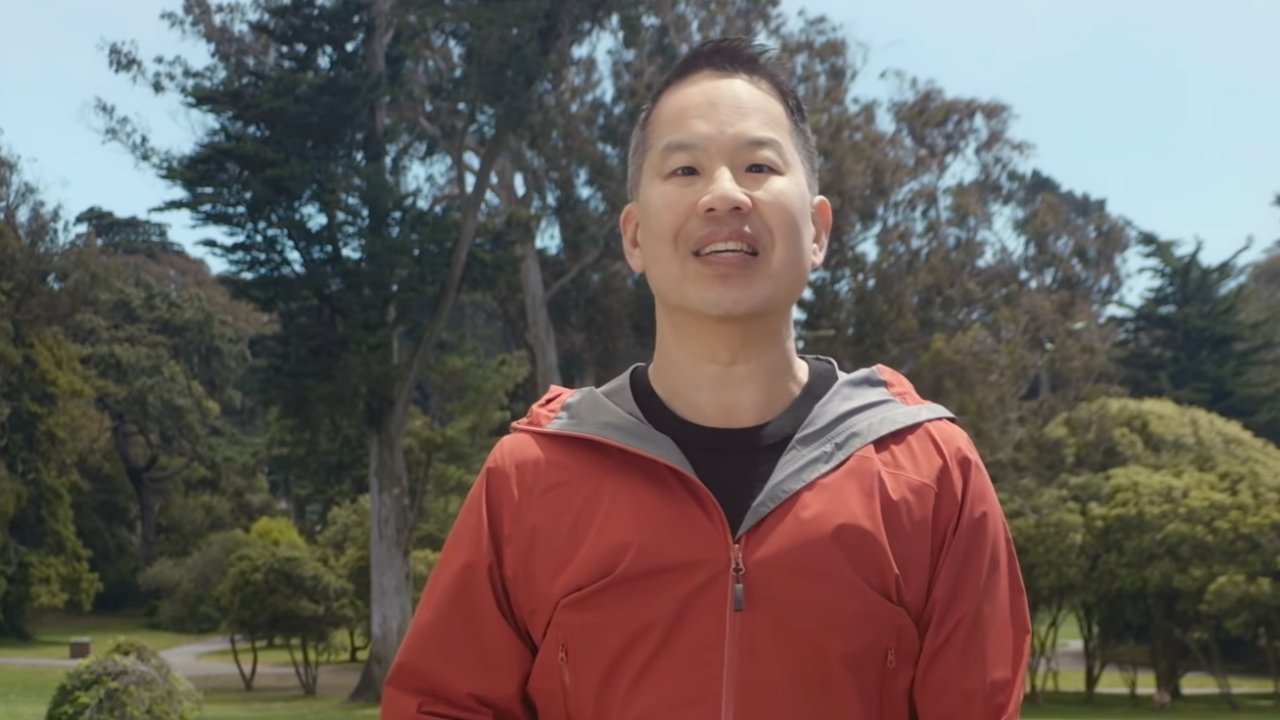
Stan Ng, known for presenting about the Apple Watch on Apple’s keynotes, has retired after 31 years at the company, and spent his last day ticking off bucket list items.

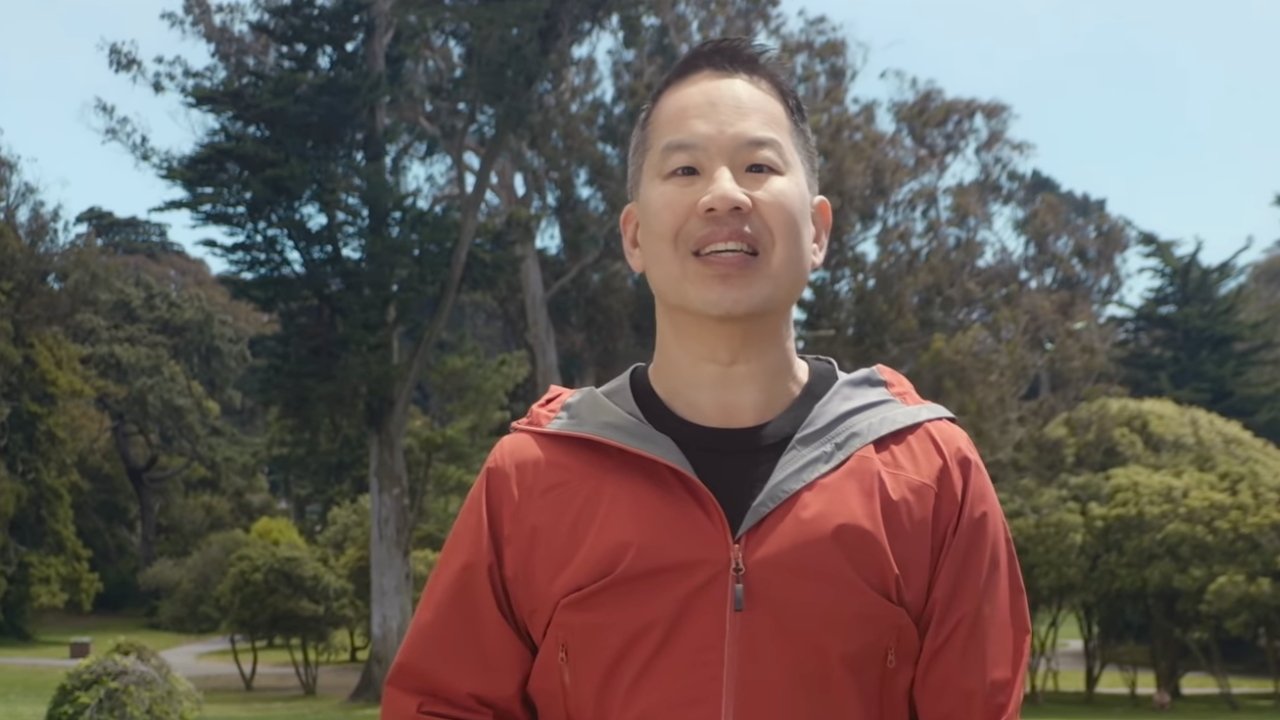
Man in an orange jacket standing in a sunny park, smiling, with tall trees and greenery in the background under a clear blue sky
Stan Ng in a video presentation for the Apple Watch Ultra – image credit: Apple

Stan Ng was Apple’s vice president, Apple Watch and Health Product Marketing, where he was involved with the whole design philosophy of the smart watch. But his three decades at the company extend back to the original iPod, and to before the return of Steve Jobs.
Now Ng has retired and in a post on LinkedIn, has described his final day at Apple Park working for the company. It includes watching the sunrise while listening to his original iPod, and then taking that iPod with him for a last workout in the gym.
Continue Reading on AppleInsider | Discuss on our Forums

Source link

Continue Reading

Tech

Former NSA director Keith Alexander stepping down from Amazon’s board

Published

on

Retired Gen. Keith Alexander. (Amazon Photo)

Keith Alexander, a retired four-star Army general and former director of the National Security Agency, is leaving Amazon’s board of directors after more than five years.

Alexander, 74, informed the company April 7 that he wouldn’t stand for re-election at its annual meeting next month, according to the company’s proxy statement

“We’re grateful to General Alexander for his service on our Board since 2020 and for the many contributions he’s made to our company, and we wish him every success in the future,” a spokesperson said in a statement, responding to GeekWire’s inquiry.

No reason was given for his departure. Amazon’s board, which has fluctuated by one or two directors over time, will consist of 11 people after his departure.

Alexander joined Amazon’s board in September 2020, when Jeff Bezos was still CEO and the company was navigating a massive surge in demand during the early days of the pandemic. He previously chaired the board’s Security Committee, which oversees Amazon’s cybersecurity policies, data protection compliance, and response to significant cyber incidents.

Advertisement

Alexander served as commander of U.S. Cyber Command and led the NSA from 2005 to 2014, a tenure that included the surveillance disclosures of former NSA contractor Edward Snowden.

After retiring from the military, Alexander founded IronNet, a cybersecurity company, serving as CEO and president from 2014 to July 2023 and as board chair until February 2024. 

With his departure, eleven members of the board are up for re-election.

  • Jeff Bezos, founder and executive chair
  • Andy Jassy, president and CEO
  • Edith W. Cooper, co-founder of Medley Living and former EVP of Goldman Sachs
  • Jamie S. Gorelick, lead independent director; senior counsel at WilmerHale
  • Daniel P. Huttenlocher, dean of MIT Schwarzman College of Computing
  • Andrew Y. Ng, managing general partner of AI Fund; founder of DeepLearning.AI
  • Indra K. Nooyi, former chair and CEO of PepsiCo
  • Jonathan J. Rubinstein, former co-CEO of Bridgewater Associates
  • Brad D. Smith, president of Marshall University; former CEO of Intuit
  • Patricia Q. Stonesifer, former president and CEO of Martha’s Table
  • Wendell P. Weeks, chairman, CEO, and president of Corning

Amazon’s annual shareholder meeting will be held virtually May 20.

Source link

Advertisement
Continue Reading

Tech

OpenAI to rival Google’s AlphaFold with new AI model for life sciences research

Published

on

The model is the first release in OpenAI’s Life Science model series.

OpenAI has announced plans to roll out an early version of GPT-Rosalind, its AI reasoning model designed to support research across biology, drug discovery and translational medicine. 

In a statement on Thursday (16 April), OpenAI explained that on average, it can take up 15 years to move from target discovery to regulatory approval for a new drug in the US, with progress impacted by the difficulty of the underlying science, as well as the complexity of the research workflows.

The organisation said: “Scientists must work across large volumes of literature, specialised databases, experimental data and evolving hypotheses in order to generate and evaluate new ideas. These workflows are often time-intensive, fragmented and difficult to scale.”

Advertisement

Named after Rosalind Franklin, a pioneering figure in the field of DNA, GPT‑Rosalind is now available as a research preview in ChatGPT, Codex and the API for qualified customers through OpenAI’s access programme such as Amgen, Moderna, the Allen Institute and Thermo Fisher Scientific.

GPT-Rosalind is the latest in a series of AI models focused on life sciences applications, with the space becoming increasingly competitive. Last year, France’s Sorbonne University and Qubit Pharmaceuticals announced the “world’s most powerful” AI model for molecular simulation in pharmaceutical chemistry, FeNNix-Biol.

At the time, the research team claimed that FeNNix-Biol’s capabilities are beyond that of Google DeepMind’s AlphaFold, the Nobel Prize-winning deep-learning machine designed to transform our understanding of the molecular biology that underpins health and disease.

OpenAI said: “This is the first release in our life sciences model series and we view it as the beginning of a long-term commitment to building AI that can accelerate scientific discovery in areas that matter deeply to society, from human health to broader biological research. 

Advertisement

“Over time, we expect these systems to become increasingly capable partners in discovery – helping scientists move faster from question to evidence, from evidence to insight and from insight to new treatments for patients.”

Don’t miss out on the knowledge you need to succeed. Sign up for the Daily Brief, Silicon Republic’s digest of need-to-know sci-tech news.

Source link

Advertisement
Continue Reading

Tech

The ‘Lonely Runner’ Problem Only Appears Simple

Published

on

The original version of this story appeared in Quanta Magazine.

Picture a bizarre training exercise: A group of runners starts jogging around a circular track, with each runner maintaining a unique, constant pace. Will every runner end up “lonely,” or relatively far from everyone else, at least once, no matter their speeds?

Mathematicians conjecture that the answer is yes.

The “lonely runner” problem might seem simple and inconsequential, but it crops up in many guises throughout math. It’s equivalent to questions in number theory, geometry, graph theory, and more—about when it’s possible to get a clear line of sight in a field of obstacles, or where billiard balls might move on a table, or how to organize a network. “It has so many facets. It touches so many different mathematical fields,” said Matthias Beck of San Francisco State University.

Advertisement

For just two or three runners, the conjecture’s proof is elementary. Mathematicians proved it for four runners in the 1970s, and by 2007, they’d gotten as far as seven. But for the past two decades, no one has been able to advance any further.

Then last year, Matthieu Rosenfeld, a mathematician at the Laboratory of Computer Science, Robotics, and Microelectronics of Montpellier, settled the conjecture for eight runners. And within a few weeks, a second-year undergraduate at the University of Oxford named Tanupat (Paul) Trakulthongchai built on Rosenfeld’s ideas to prove it for nine and 10 runners.

The sudden progress has renewed interest in the problem. “It’s really a quantum leap,” said Beck, who was not involved in the work. Adding just one runner makes the task of proving the conjecture “exponentially harder,” he said. “Going from seven runners to now 10 runners is amazing.”

The Starting Dash

At first, the lonely runner problem had nothing to do with running.

Advertisement

Instead, mathematicians were interested in a seemingly unrelated problem: how to use fractions to approximate irrational numbers such as pi, a task that has a vast number of applications. In the 1960s, a graduate student named Jörg M. Wills conjectured that a century-old method for doing so is optimal—that there’s no way to improve it.

In 1998, a group of mathematicians rewrote that conjecture in the language of running. Say N runners start from the same spot on a circular track that’s 1 unit in length, and each runs at a different constant speed. Wills’ conjecture is equivalent to saying that each runner will always end up lonely at some point, no matter what the other runners’ speeds are. More precisely, each runner will at some point find themselves at a distance of at least 1/N from any other runner.

When Wills saw the lonely runner paper, he emailed one of the authors, Luis Goddyn of Simon Fraser University, to congratulate him on “this wonderful and poetic name.” (Goddyn’s reply: “Oh, you are still alive.”)

Image may contain Dave Hunt Face Head Person Photography Portrait Book Indoors Library Publication and Adult

Jörg Wills made a conjecture in number theory that, decades later, would come to be known as the lonely runner problem.

Advertisement

Courtesy of Jörg Wills/Quanta Magazine

Mathematicians also showed that the lonely runner problem is equivalent to yet another question. Imagine an infinite sheet of graph paper. In the center of every grid, place a small square. Then start at one of the grid corners and draw a straight line. (The line can point in any direction other than perfectly vertical or horizontal.) How big can the smaller squares get before the line must hit one?

As versions of the lonely runner problem proliferated throughout mathematics, interest in the question grew. Mathematicians proved different cases of the conjecture using completely different techniques. Sometimes they relied on tools from number theory; at other times they turned to geometry or graph theory.

Source link

Advertisement
Continue Reading

Tech

Once close enough for an acquisition, Stripe and Airwallex are now going after each other

Published

on

Jack Zhang was 34 years old, three and a half years into running a startup, and sitting across from one of the most powerful investors in Silicon Valley. Michael Moritz of Sequoia had invited him to his home — a place with, Zhang recalls, a couple of floors and a view straight to the Golden Gate Bridge — to make the case for selling.

Stripe wanted to buy Airwallex for $1.2 billion. At the time, the Melbourne company had around $2 million in annualized revenue. The math was almost pretty irresistable: a revenue multiple somewhere near 600 times. Patrick Collison, Moritz argued, was a generational founder. The deal would “compound” into something extraordinary. Zhang listened. He walked around San Francisco for two weeks, restless, unable to think straight. At one point, he said yes.

Then he flew nearly 8,000 miles back home.

“I really went deep on what motivates me to build Airwallex,” he said early this week, speaking to this editor from overseas. “I was three and a half years into the business. The business was growing 100 times in 2018. And I only just sort of tasted what it [was like] to be an entrepreneur. And that’s what I’d been dreaming about.”

Advertisement

Two of his three co-founders had voted against the deal, which helped. But he says the clearest signal came from looking at the whiteboard back in his office. The vision was still there, unfinished: to build the financial infrastructure that lets any business operate anywhere in the world as if it were a local company.

That decision is looking increasingly prescient. Airwallex now claims more than $1.3 billion in annualized revenue and is growing at 85% year-over-year. It processes approaching $300 billion in annualized transaction volume. None of it has come easily — and Zhang argues that’s precisely the point.

It’s a conviction that runs a lot deeper than business strategy. Zhang grew up in Qingdao, a port city in northeastern China, and moved to Melbourne at 15 without his parents, barely speaking English, living with a host family. When his family’s finances collapsed, he took on four jobs to get through a computer science degree at the University of Melbourne, according to the Australian Financial Review — bartending, washing dishes, working graveyard shifts at a petrol station, picking lemons on a farm in the school holidays, which he has called the hardest job he ever had. He went on to spend years writing trading code in the front office of an Australian investment bank, a job that paid well and never felt “deeply fulfilling.”

Techcrunch event

Advertisement

San Francisco, CA
|
October 13-15, 2026

Before Airwallex, he started roughly 10 businesses: a magazine at age 14, a real estate development company, import-export operations running wine and olive oil from Australia to Asia, textiles going the other direction, a burger chain.

Advertisement

He was running a Melbourne coffee shop when the idea for Airwallex took shape. While trying to pay coffee bean suppliers in Brazil, Indonesia, and Guatemala, his co-founder Max Li kept watching payments disappear into correspondent banking systems — flagged and frozen by American intermediary banks enforcing OFAC sanctions rules, sometimes bouncing back weeks after they were sent. “That pushed me to really look at how correspondent banking works,” Zhang said, “how SWIFT works, and how we could build our own global money movement network.”

That’s still the idea, just scaled up considerably. Airwallex now holds close to 90 financial licenses across 50 markets. Zhang estimates Stripe has roughly half that number at best. Getting those licenses has been immensely time consuming — in Japan alone, the process took seven years. In some emerging markets, the company had to acquire shell companies whose licenses were no longer being issued by central banks, then rebuild the technology underneath them entirely.

“You can’t really vibe-code an integration with Mexico’s central bank,” Zhang said. “We have to have a secure room — you have to do a biometric scan just to walk in to access the central bank integration.”

The point of holding these licenses isn’t regulatory window dressing. In Japan, for instance, Stripe and Square can process payments, but they’re required to immediately transfer funds out to the merchant’s bank account. Airwallex, with its fund transfer operator license, can hold those funds inside its ecosystem. That means a customer can issue bank accounts, issue cards, and spend money without it ever leaving the platform.

Advertisement

The foreign exchange economics alone are substantial: a U.S. merchant settling transactions in Australian dollars avoids the 2% to 3% conversion fee that processors like Stripe typically charge to move money back into U.S. dollars — and can use those local balances to pay local vendors, run payroll, and cover digital marketing expenses, all at interbank rates.

“You don’t really operate like a U.S. company anymore,” Zhang said. “You operate like a company with entities around the world, but without needing to physically set up those entities.”

The slow build was intentional, and Zhang has a framework for it that he returns to often: the “path of maximum resistance.” Every license, every bank integration, every local payment rail that Airwallex painstakingly assembled created a layer that makes it harder to compete against. “It took us six and a half years to get to $100 million in annual recurring revenue,” Zhang said. “But after that, it took just over three years to get to a billion.”

The competitive logic, in his telling, comes down to something basic about what it means to own infrastructure versus riding someone else’s. If you don’t control the end-to-end payment workflow and something goes wrong, you can’t access the underlying data to explain it to your customer. You can’t extend new products cleanly on top of someone else’s stack. “Building on top of other infrastructure,” he said, “is simply not scalable.”

Advertisement

For most of its life, Airwallex and Stripe have mostly operated in different geographies, selling to different buyers. That’s changing. As Stripe pushes deeper into international markets, and Airwallex makes its first serious moves into the United States, the overlap is growing.

The buyer for Airwallex has historically been the CFO’s office in Australia and Southeast Asia, where the company is already well-established — finance directors, treasury teams — which puts it in a different sales motion than Stripe, whose customer acquisition has been driven largely by U.S. developers choosing a default starting point for a new company. More than 90% of Airwallex customers land first on a business account product, and payments and spend management follow from there. Over half are using multiple products, says Zhang.

Still, there are challenges that Zhang doesn’t try to downplay. The biggest may be that Stripe is Silicon Valley’s golden child, its privately held shares having minted millionaires across the tech industry. Another is the accompanying brand gap. Airwallex needs to embed itself in the thinking of engineers and developers — not just finance teams — so that founders reach for it instinctively. “Our brand is just not there yet,” he said. “That’s a harder competition to win.”

It’s a competition being watched closely from a variety of vantage points. Sequoia backed Airwallex early — though the deal was sourced through Sequoia Capital China, which has since spun out and rebranded as Hongshan — and remains one of the company’s largest shareholders. The investment firm Greenoaks Capital holds stakes in both companies, too. Zhang shrugged off any suggestion of awkwardness around those overlapping cap tables. The investors, he noted, are betting on a large market.

Advertisement

Still, it brings up the valuation question. Stripe was valued at $159 billion in a February tender offer — up 74% from a year earlier — after processing $1.9 trillion in total payment volume in 2025. Airwallex, assigned an $8 billion valuation in December, is valued at roughly a twentieth of that. But according to Zhang, Stripe’s payment volume is only about six times Airwallex’s, not 20 times. At 85% annual growth and projecting $2 billion in revenue within the next year, Airwallex is closing the revenue gap faster than the valuation gap would suggest.

Whether the market eventually notices is a different question — one that an IPO, which Zhang says is at least three to five years away, would force into the open.

In the meantime, Zhang says he’s focused on longer-horizon targets: a million customers by 2030, $20 billion in annual revenue, average revenue per customer growing from around $12,000 to $13,000 today to roughly $20,000. A suite of AI-powered autonomous finance products — agents that don’t just surface data but actually execute transactions — is rolling out now. The thesis is that a decade of financial data across the entire corporate finance stack, from revenue collection to treasury management to vendor payments and expenses, has created a training set that no competitor can replicate overnight, he suggests.

Now to see if all that hard work is enough to eat into Stripe’s market share. For now, the competition seems to be playing out at a distance. Zhang and Collison were never friends, but they were friendly while merger talks were ongoing years ago. Last year, Zhang and Collison were both at Greenoaks Capital’s annual gathering. They didn’t speak.

Advertisement

Source link

Continue Reading

Tech

Some Windows servers enter reboot loops after April patches

Published

on

Windows Server

Microsoft has confirmed that some Windows domain controllers are entering restart loops due to Local Security Authority Subsystem Service (LSASS) crashes after installing the April 2026 security updates.

The company also warned that Windows admins may encounter this issue when setting up new domain controllers, or even on existing ones, if the server processes authentication requests very early in the startup process.

“After installing the April 2026 Windows security update (KB5082063) and rebooting, non‑Global Catalog (non‑GC) domain controllers (DCs) in environments that use Privileged Access Management (PAM), might experience LSASS crashes during startup,” Microsoft said in a release health dashboard update.

Wiz

“As a result, affected DCs may restart repeatedly, preventing authentication and directory services from functioning, and potentially rendering the domain unavailable.”

This known issue only impacts organizations using Privileged Access Management (PAM) and is unlikely to affect personal devices that aren’t managed by an IT department. The list of affected platforms includes systems running Windows Server 2025, Windows Server 2022, Windows Server 23H2, Windows Server 2019, and Windows Server 2016.

Advertisement

While Microsoft is still working on a fix, it advised IT administrators to contact Microsoft Support for Business for mitigation measures that can be applied even after deploying the April 2026 update.

Microsoft has addressed multiple domain controller issues caused by security updates in recent years, most recently resolving Windows Server authentication problems in June 2025, which were caused by the April 2025 security updates.

Almost a year earlier, in May 2024, it fixed another known issue that triggered NTLM authentication failures and domain controller reboots after deploying the April 2024 Windows Server security updates.

In March 2024, it released emergency out-of-band (OOB) updates to fix Windows domain controller crashes after installing the March 2024 Windows Server security patches.

Advertisement

Microsoft is now also investigating a separate issue causing this month’s KB5082063 Windows security update to fail to install on some Windows Server 2025 systems.

​On Wednesday, it also warned admins that some Windows Server 2025 devices may also prompt users to enter a BitLocker key after deploying the KB5082063 update.

AI chained four zero-days into one exploit that bypassed both renderer and OS sandboxes. A wave of new exploits is coming.

At the Autonomous Validation Summit (May 12 & 14), see how autonomous, context-rich validation finds what’s exploitable, proves controls hold, and closes the remediation loop.

Source link

Advertisement
Continue Reading

Tech

Programming a Robotic Golf Club to Sink Shots on Impossible Mini-Golf Holes

Published

on

StuffMadeHere Robotic Golf Club Sink Shots
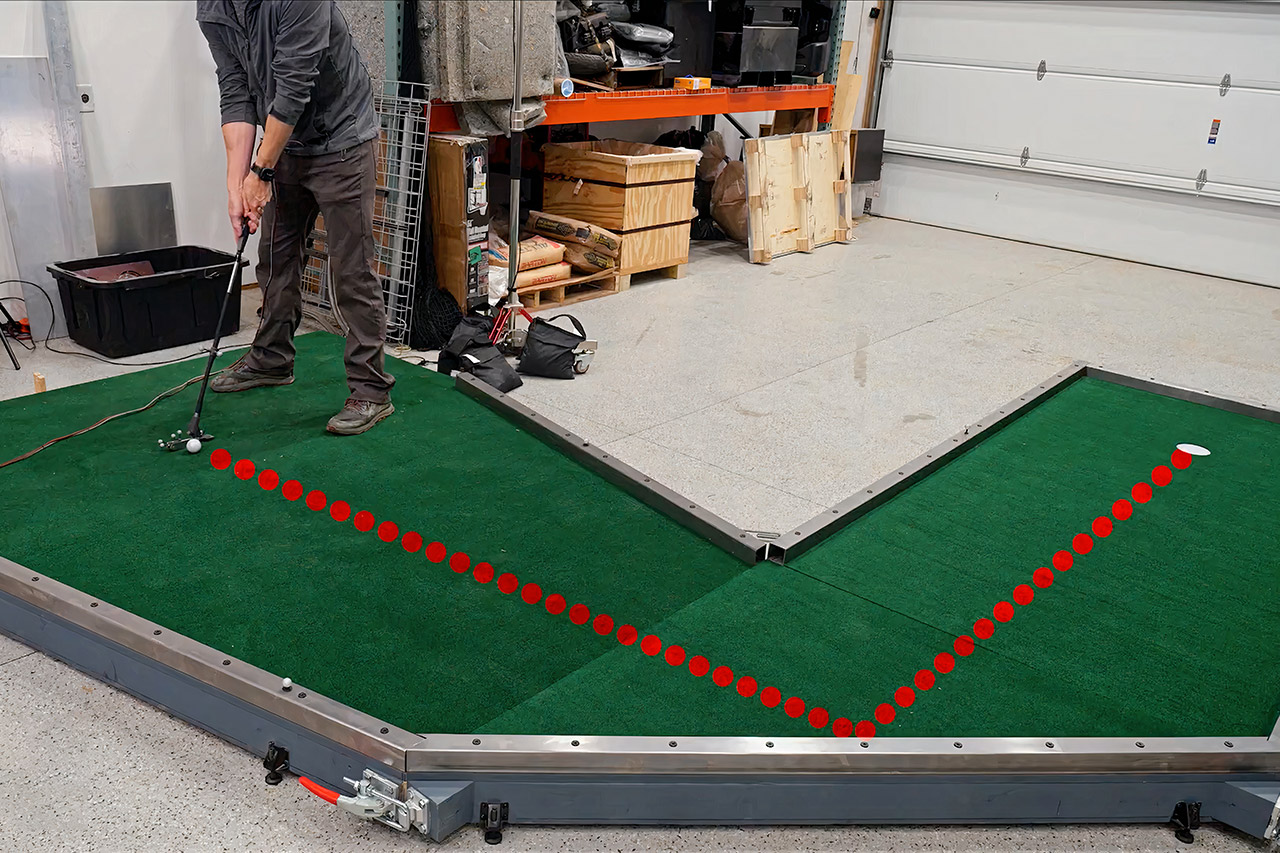
Shane Wighton of StuffMadeHere spent months poring over his robotic golf club’s algorithms, fine-tuning the improvement to truly understand ball physics. It now allows the thing to completely comprehend the complexities of ball movement and plot paths to overcome notoriously difficult mini golf holes designed to confound even the best players. The cameras installed around the course monitor the club, ball, and cup with laser-like precision at all times, feeding into the raw data that the system utilizes to make choices.


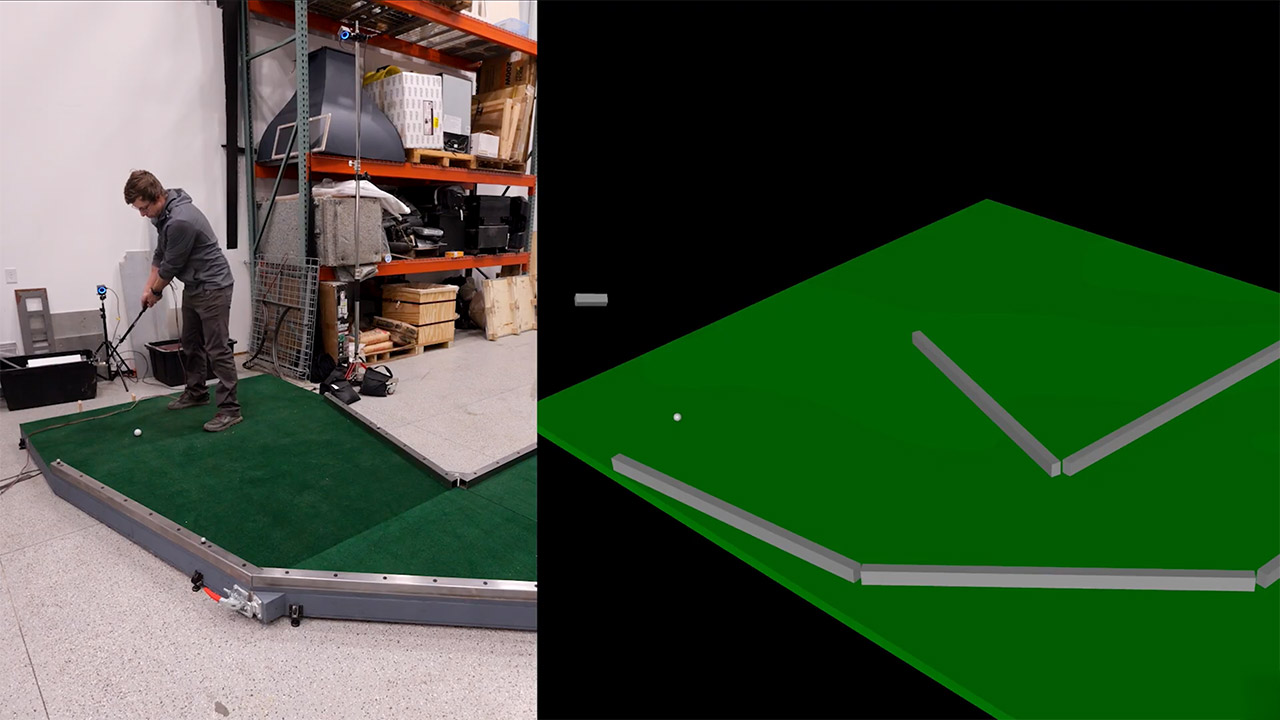
To complete the initial scan of each hole, someone must sit there and carefully drag a ball covered in reflective markings along each wall, ramp, and floor, while another person activates the optical sensor to only focus on the portions he actually needs. This keeps the captured geometry from becoming disorganized and full of errors. All scan data is then sent into a physics engine named MuJoCo. This program does forward simulations of the ball after impact, accounting for each bounce, skid, and roll that the ball makes, all of which is influenced by surface friction and bounciness levels.

StuffMadeHere Robotic Golf Club Sink Shots
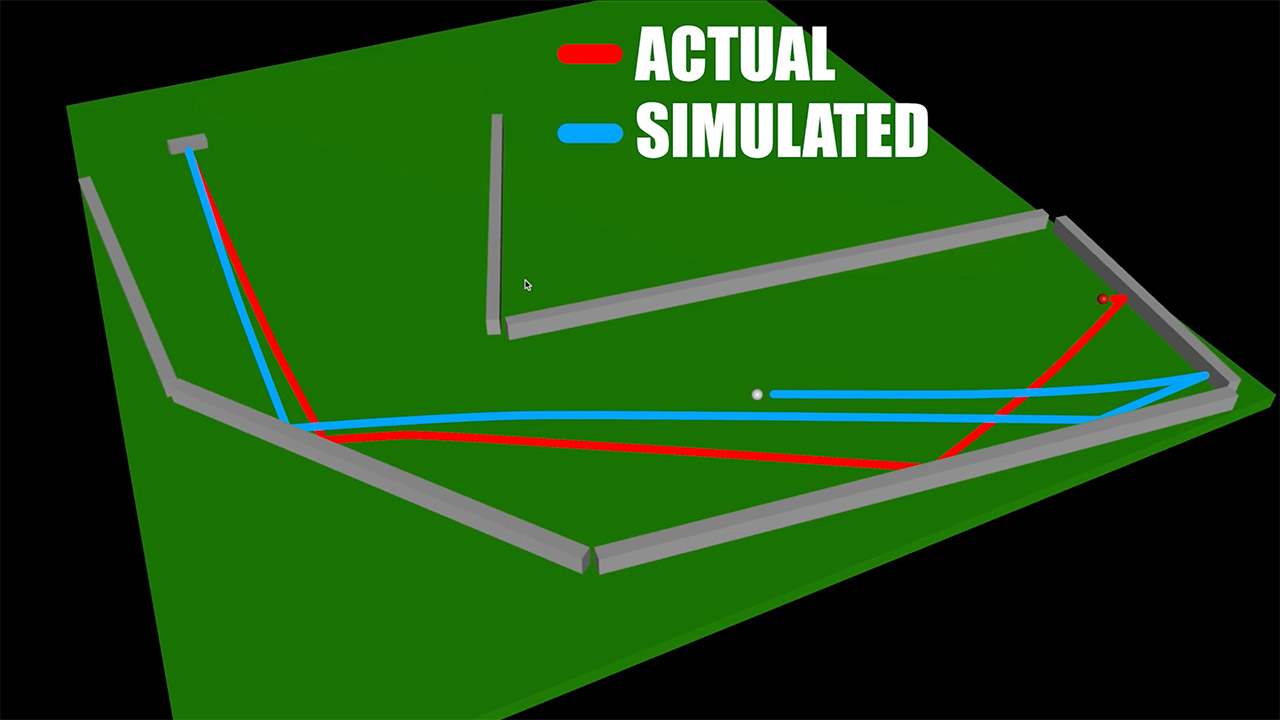
However, matching the simulation to reality has proven to be a challenge. To ensure accuracy, he conducted a series of repeated tests, using motion capture recordings of real balls as a benchmark. An automatic solution attempted to get the numbers correct, but Wighton had to go in and manually change things until the virtual bounces matched exactly what the cameras observed in the real world.

StuffMadeHere Robotic Golf Club Sink Shots
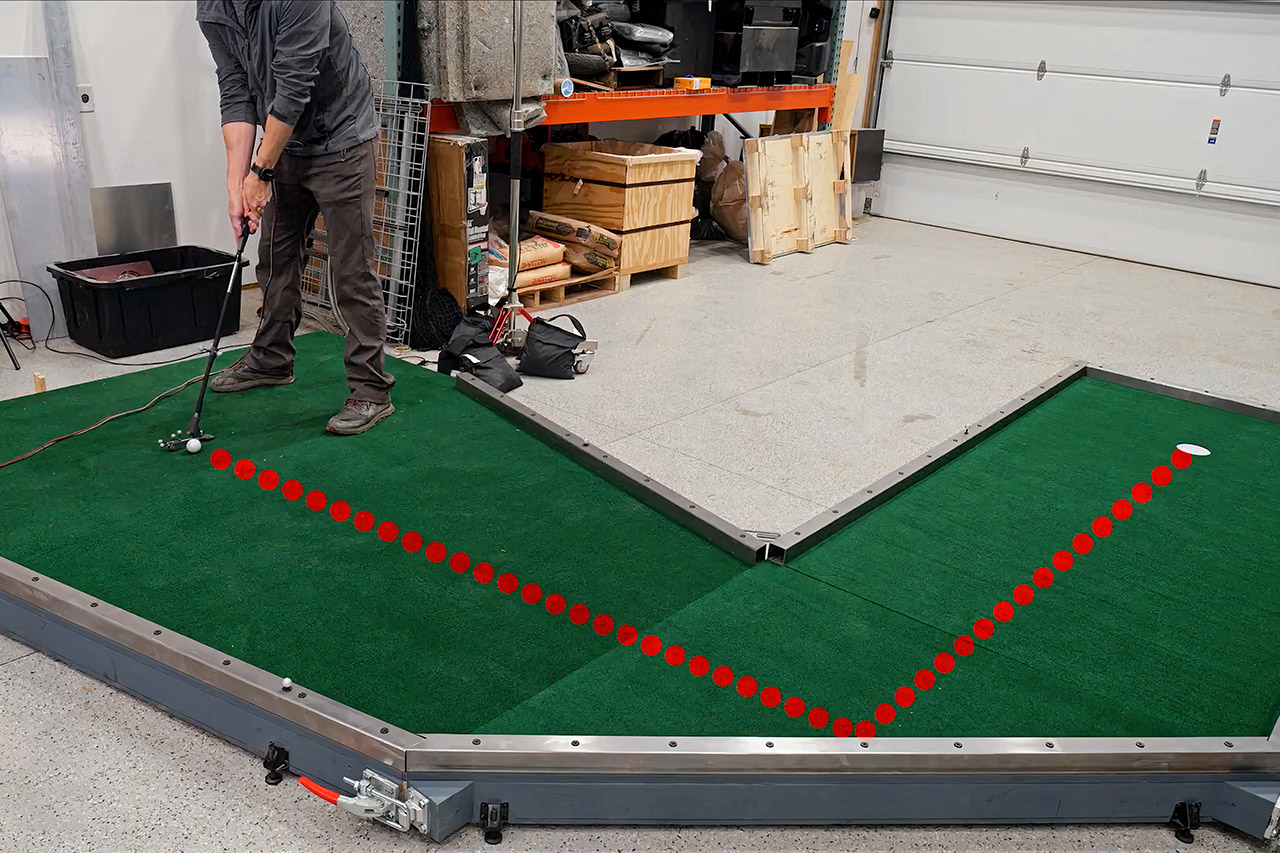
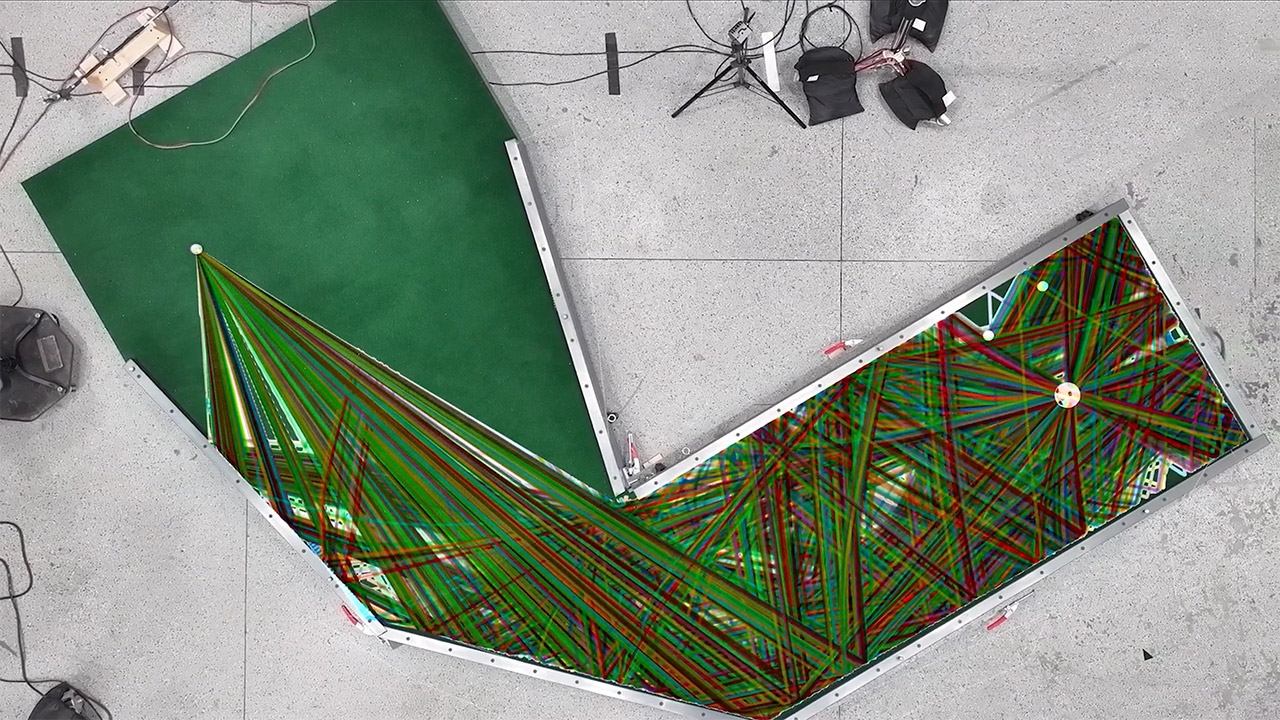
Speed became the next issue he had to address. As it stands, a full simulation would take too long to complete while a player swings the club, so Wighton ended up running thousands of possible club angles and swing speeds ahead of time, for every possible ball starting position, and then each successful sequence that ended up in the cup was added to a large database of stored sequences.

StuffMadeHere Robotic Golf Club Sink Shots
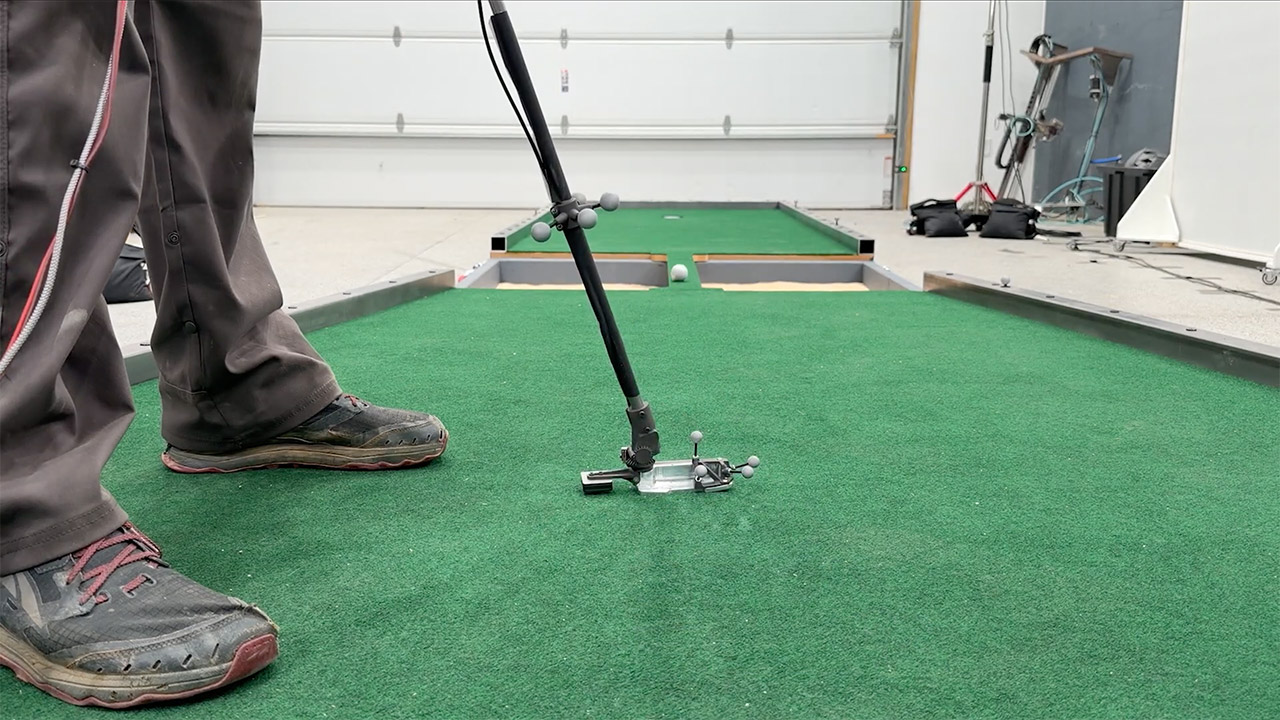
When a real person swings the club, the cameras record the motion from the moment they begin the backswing, and the program takes action. It instantly compares the observed path of the club to a database of stored sequences, selects the winning one, and sends a signal to the motor on the club shaft. The motor whips the club head round in less than a second to the exact angle required for that sequence, and because the club head can swivel around a vertical axis without digging into the ground, the adjustment is seamless even during a quick swing.

StuffMadeHere Robotic Golf Club Sink Shots
Bounces on the ball, however, provide a whole new level of complexity. Following a collision with a wall, the ball’s spin might cause it to fly off at an angle or curve. The simulation accounts for this by considering the whole contact dynamics, rather than simply treating it as mirror reflections. Wighton devised a grid of measured points to capture slight slopes and abnormalities on the ground surfaces he dealt with, as they were not always perfectly level. This means that the physics engine may treat the landscape precisely as it is, rather than assuming everything is smooth as silk.

StuffMadeHere Robotic Golf Club Sink Shots
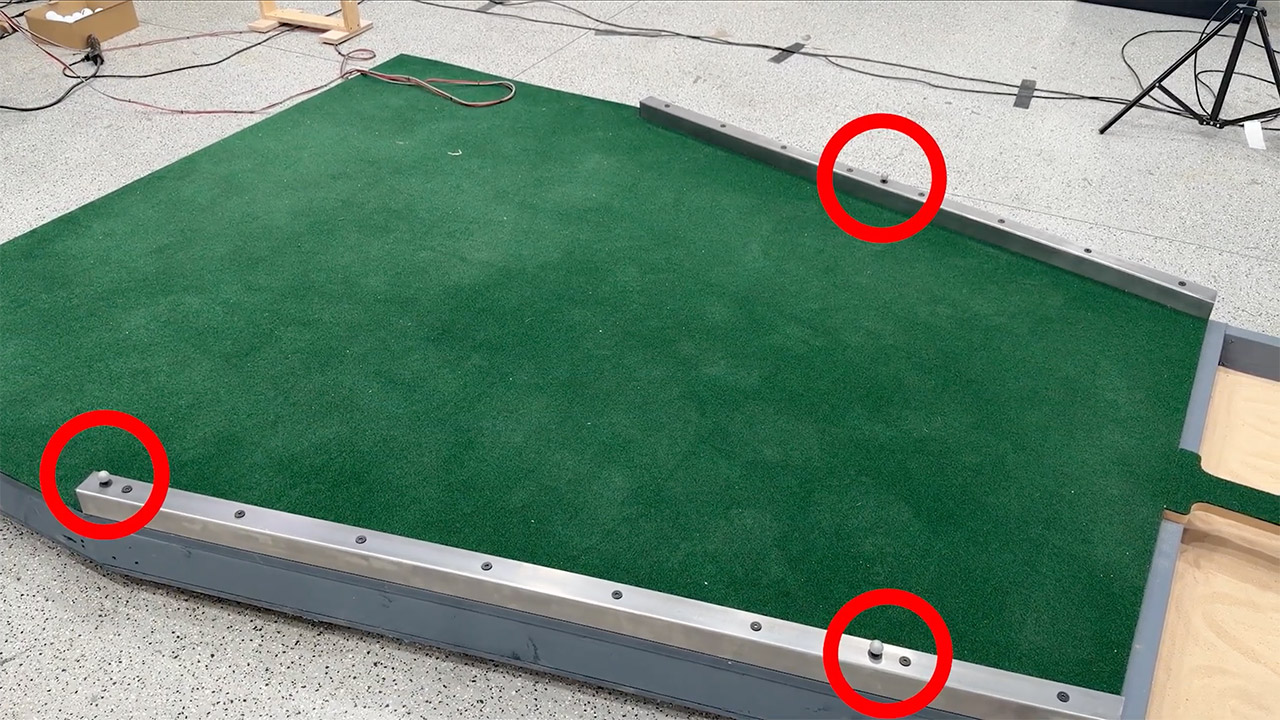
The heat from the lights and bodies in the room causes the camera tripods to expand somewhat, which would otherwise throw the camera’s precision off. To counteract this, he placed certain fixed reference markers in view, allowing the program to detect these little shifts and correct the entire coordinate system on the fly, ensuring that positions remain accurate even in difficult scenarios. Players simply push a button on the grip, swing the club as usual, and see the club head rotate in midair. The ball follows the predetermined course, soars past obstructions, and lands in the cup, even on holes that appear to be engineered to end your winning streak.

Source link

Advertisement
Continue Reading

Tech

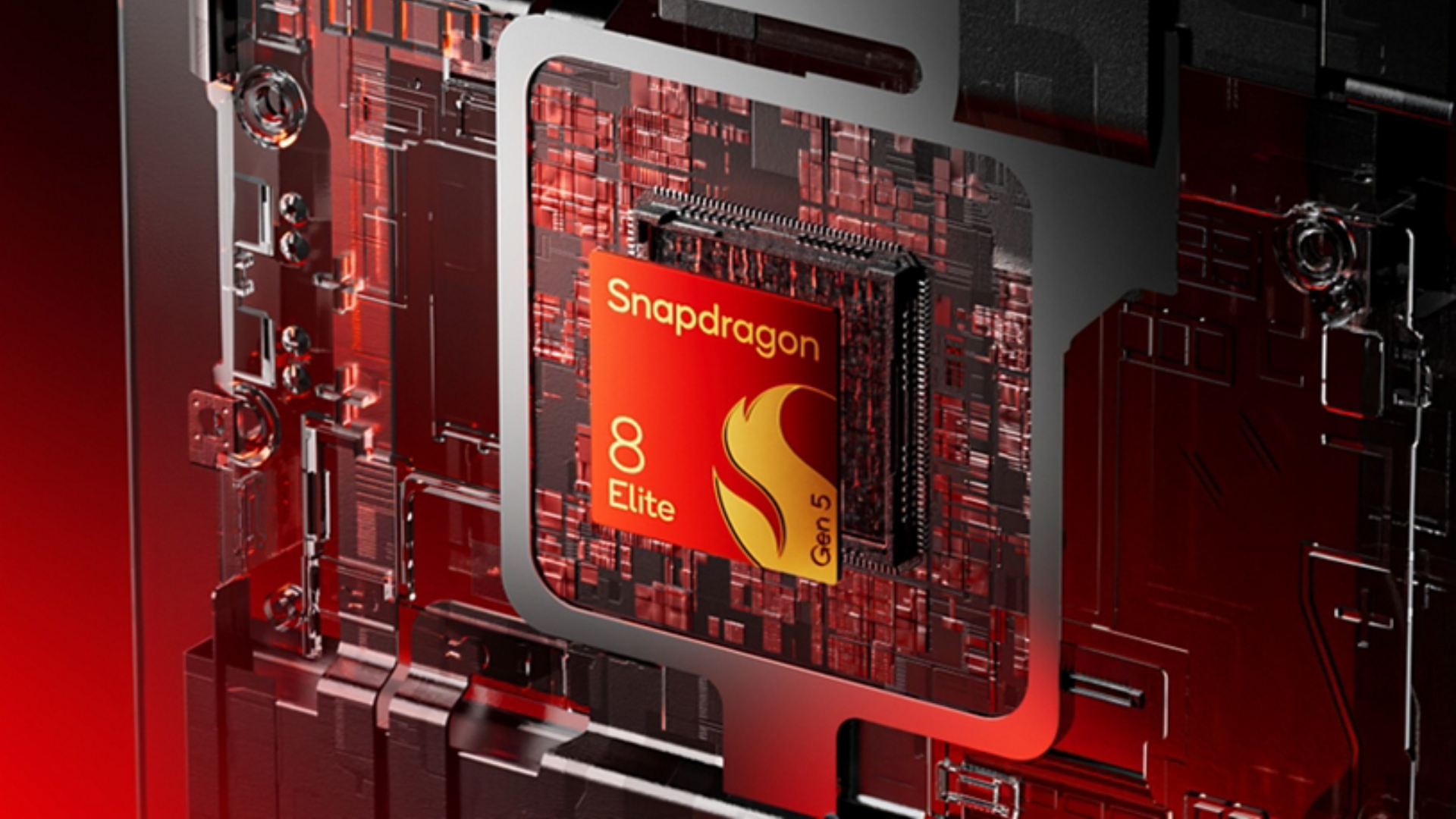
Snapdragon 8 Elite Gen 6 leak teases the future of the best Android phones

Published

on

Qualcomm’s next flagship chip is starting to take shape as early leaks suggest the standard Snapdragon 8 Elite Gen 6 might be far less of a compromise than expected.

According to regular tipster Digital Chat Station, Qualcomm is preparing both a standard and Pro version of the chipset. But based on the latest details, the gap between the two may not be as wide as in previous generations.

The biggest takeaway is that the standard model is tipped to use a new-generation Oryon CPU, which could be shared with the Pro variant. That’s a notable shift. It hints that both chips will be built on the same core architecture. They will not split performance tiers as aggressively. The main difference, at least so far, comes down to cache, with the standard chip said to feature 6MB of system-level cache. Meanwhile, the Pro model is expected to push higher.

On the graphics side, things get more interesting. The Snapdragon 8 Elite Gen 6 is rumoured to pack an Adreno 845 GPU with a six-slice architecture, alongside 12MB of dedicated graphics cache. That’s a step up from earlier Elite chips, which used fewer slices. Consequently, it could translate to better scaling performance and efficiency. This will depend on workload.

Advertisement

This sliced GPU design, first introduced with the original Snapdragon 8 Elite, essentially splits the GPU into multiple sections. Each with its own clock speeds and processing resources. In theory, that allows for more flexible performance tuning. This helps especially in demanding tasks like gaming.

Advertisement

Earlier leaks have also pointed to a 2nm TSMC manufacturing process, along with updated support for next-gen RAM and storage. However, those higher-end specs may still be reserved for the Pro version. That model is also expected to carry more graphics memory, reportedly around 18MB, further widening the gap for power users.

Even so, the standard Snapdragon 8 Elite Gen 6 is shaping up to be a serious flagship chip in its own right. If these leaks hold, it could offer most of the performance gains people actually care about. You may not need to stretch to the Pro tier to get the best phone.

Advertisement

Source link

Continue Reading

Tech

Plasma Arcs Replace Flames in a Battery-Powered Camping Stove

Published

on

DIY Homemade Plasma Stove
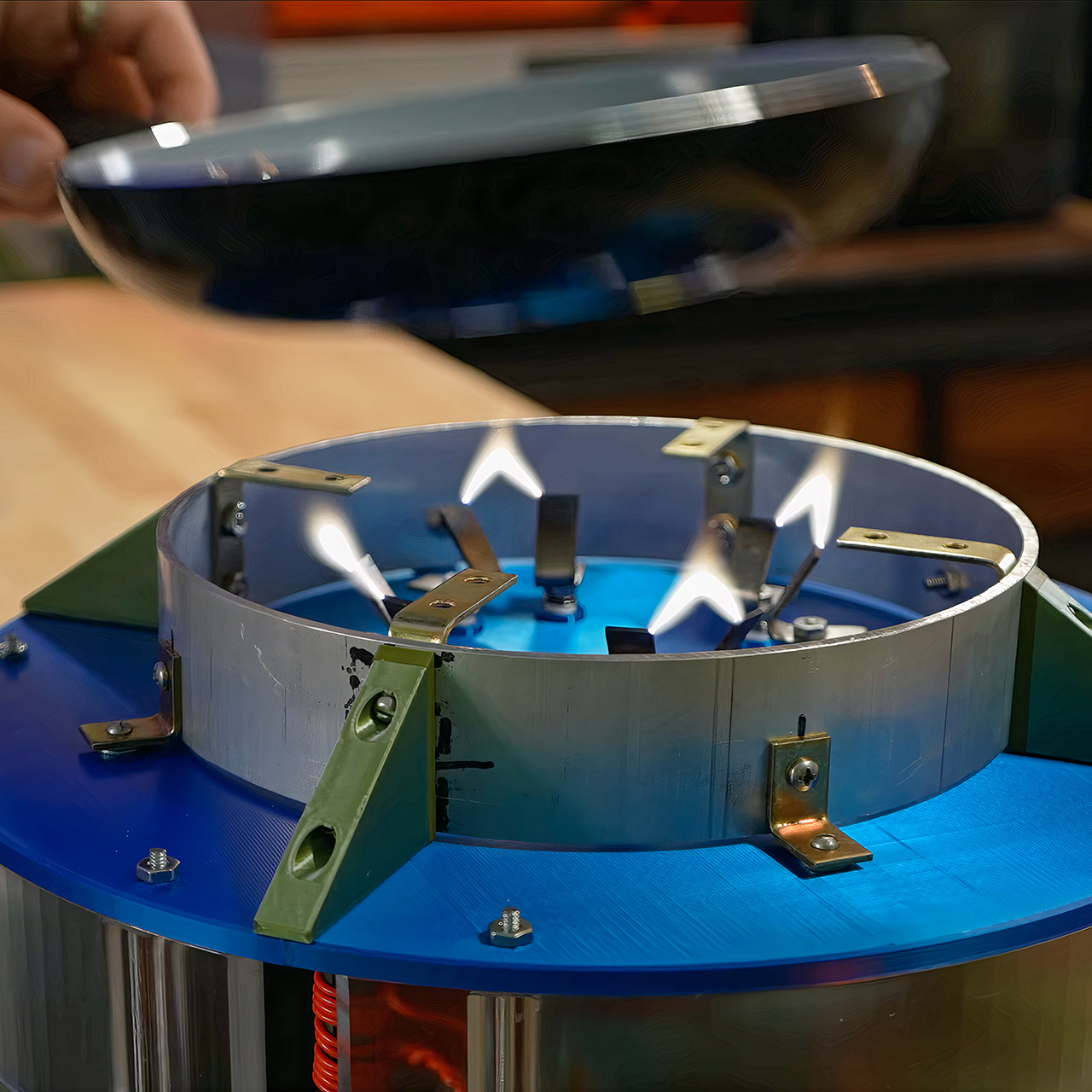
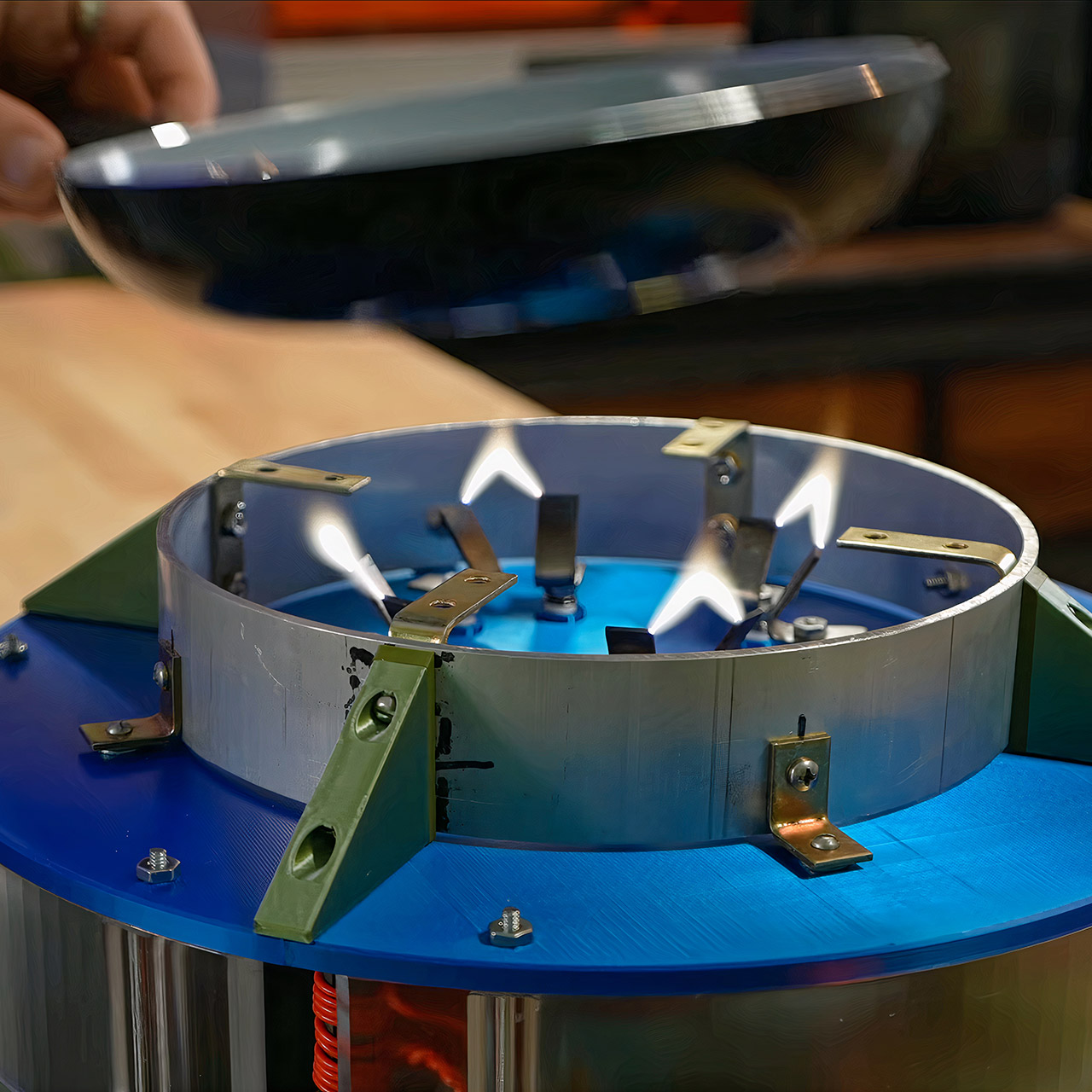
Jay from the Plasma Channel wanted to take cooking off the grid, eliminating gas and those pesky open flames in the process. He pulled off the trick by putting together a portable burner that generates plasma discharges using rechargeable batteries and blasts them directly into a metal pan. Result? Slap this thing down on a table or picnic blanket and you’ll have a sizzling hot meal in minutes, like scrambled eggs or crispy bacon.


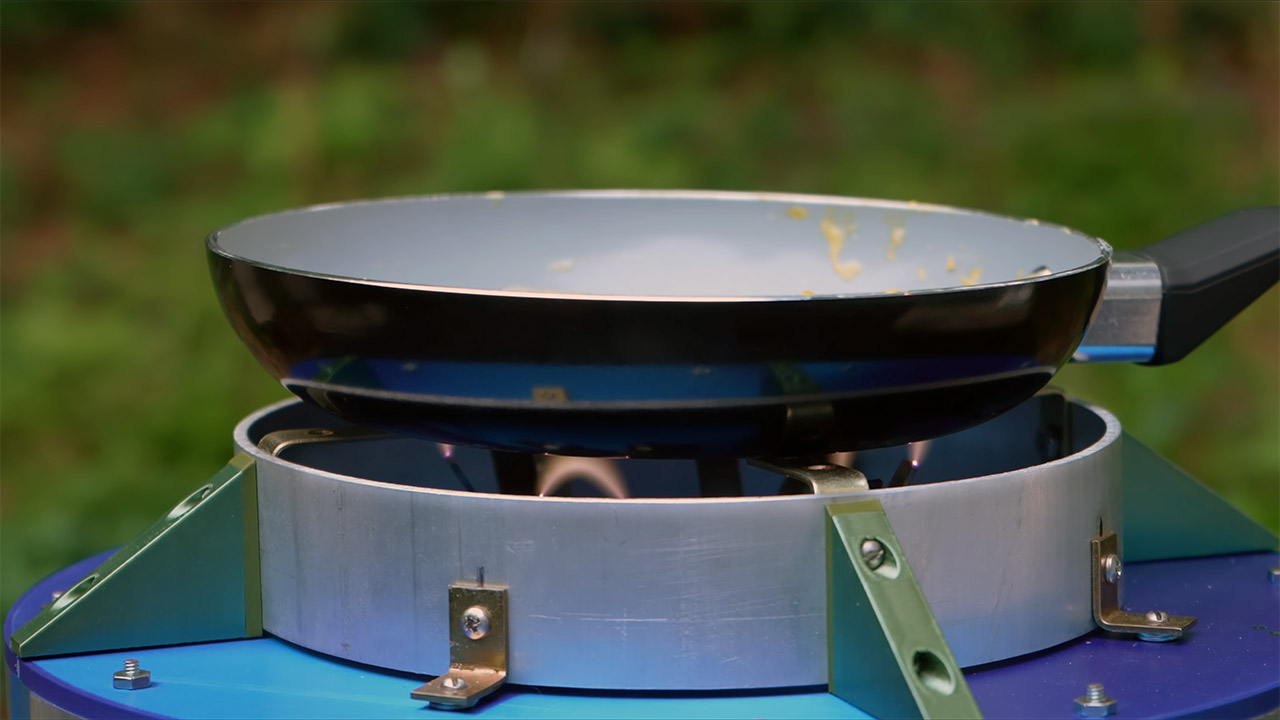
Jay’s plasma research resulted in a system of four distinct high-voltage sources arranged in a square formation. Each starts with a spark bouncing between electrodes that are only one centimeter apart. When the spark forms and is pushed up by the heat rising from it, it strikes the pan sitting on top, and voilà! Four of them functioning together means that the heat is uniformly distributed across the bottom of the pan. It’s a 600-watt beast that can cook two complete dinners on a single charge.


Fire-Maple “Fixed Star 1” Backpacking and Camping Stove System | Outdoor Propane Cooking Gear | Portable…
  • HIGHLY EFFICIENT – Our industry leading heat exchange technology minimizes wind impact and reduces boiling times by up to 30% compared to traditional…
  • COMPACT AND LIGHTWEIGHT – All accessories including stove, bowl and fuel canister fit into the 1 liter cook pot. THIS SET DOES NOT INCLUDE A FUEL…
  • INTEGRATED AND EASY TO USE SYSTEM – The 1 liter cooking pot and the stove are one integrated unit, the built in piezoelectric ignitor ignites the…

DIY Homemade Plasma Stove
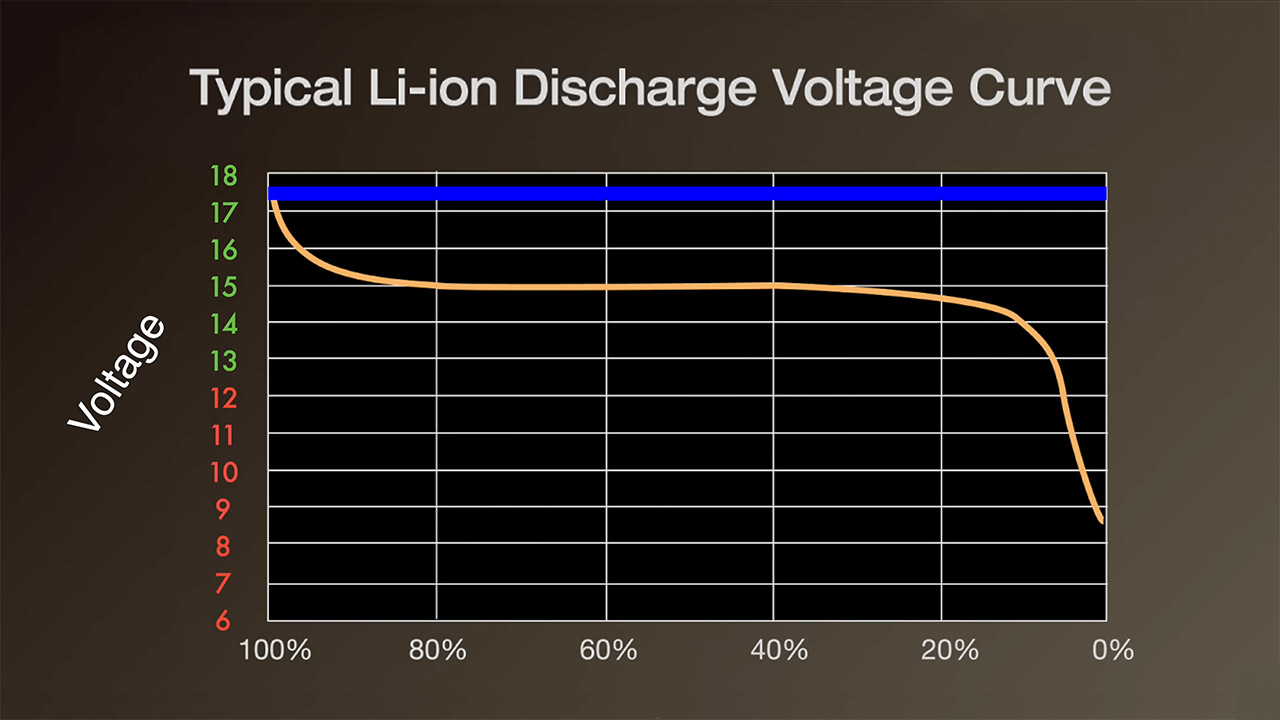
The batteries power everything, in this case two massive lithium-polymer packs with a total output of twenty amp-hours. That implies the stove does not require a wall outlet to operate. A cooling fan prevents the electronics from overheating during extended operation. The outside shell is held together with strong adhesive and 3D printed elements, and the translucent panels let you to watch the arcs burning while the stove is in action.

DIY Homemade Plasma Stove
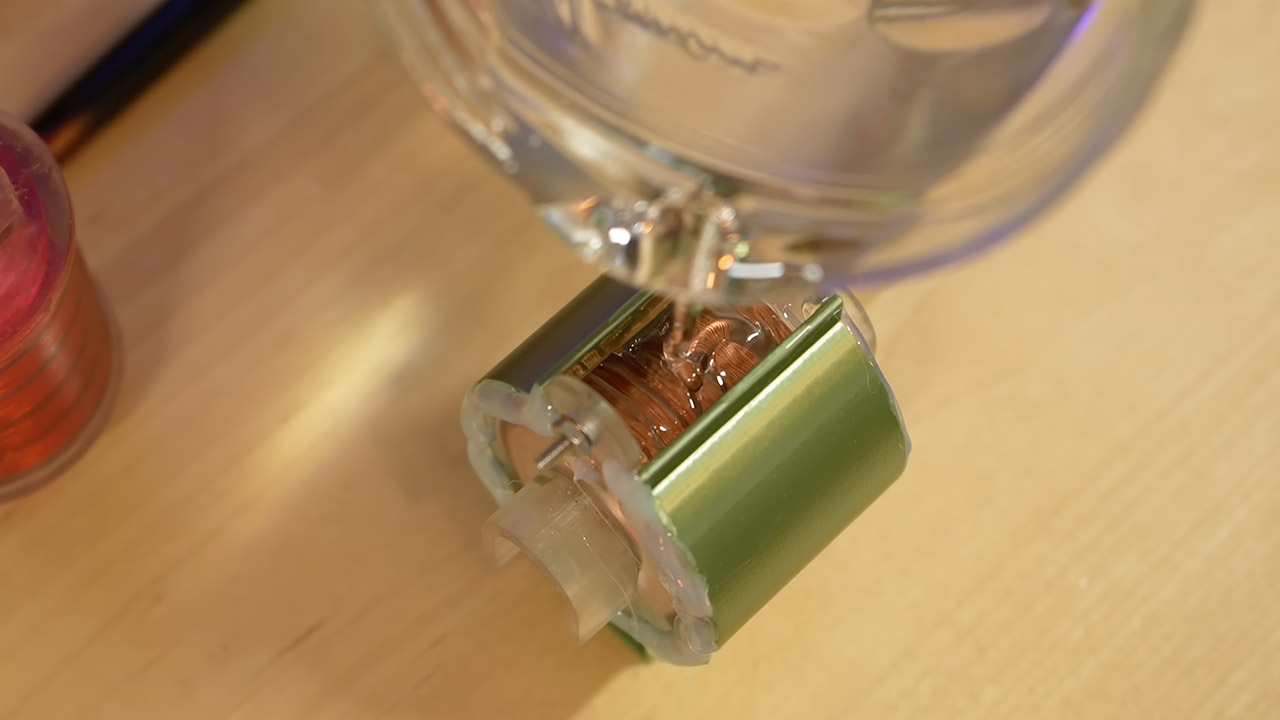
The custom coils, however, are the true core of the system. Jay created resin formers, coiled thousands of turns of thin wire on a machine, and then sealed it all up with more resin, making sure to remove all air bubbles. Trapped air would simply generate a rapid flashover, frying the coil. He upgraded the driver circuits to higher-quality capacitors and transistors because the off-the-shelf ones were failing under load.

DIY Homemade Plasma Stove
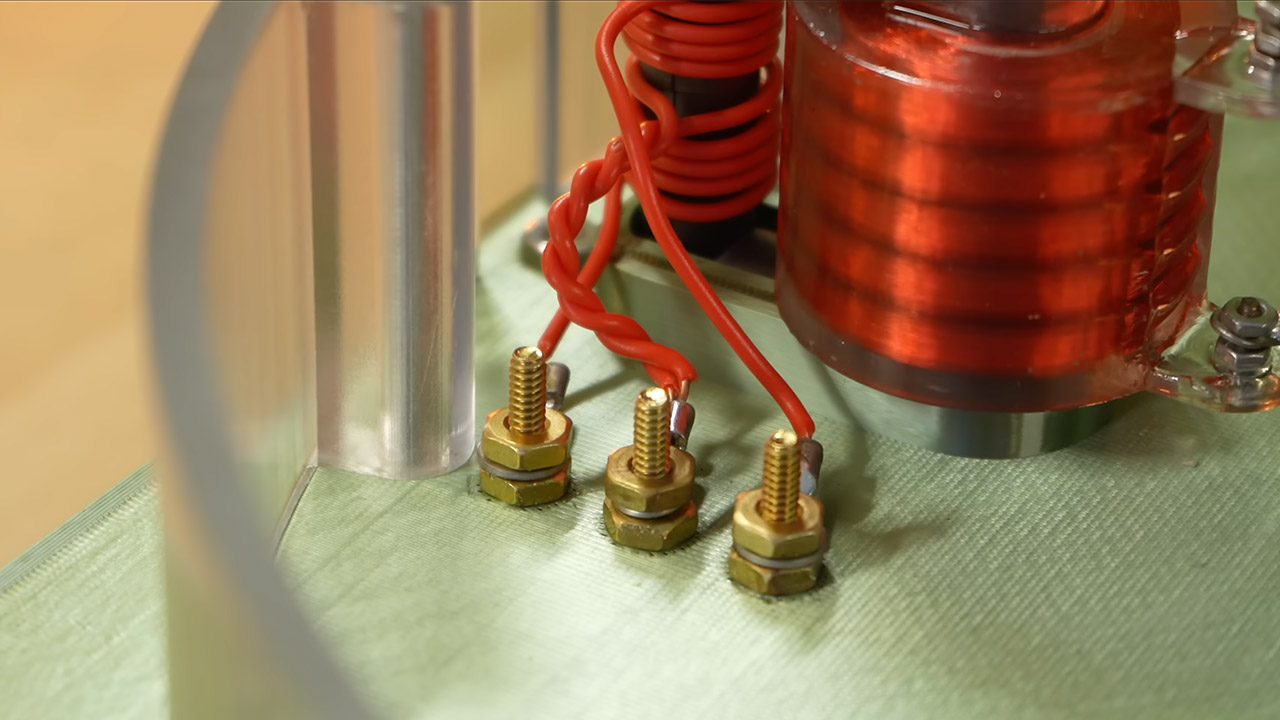
One of the initial issues was that the system kept burning up the circuit boards because all four drivers were attached to the same ground ring and were essentially battling each other. So Jay realized he needed to rewire each coil output to its own dedicated electrode pair; voila, no more electrical coupling and smooth sailing. Then there was the issue with the stainless steel bolts; at first, they were producing problems because the surface oxides were making poor connections and melting under current, but swapping to brass resolved that quickly.

DIY Homemade Plasma Stove
When you turn this device on, you hear a continuous hum from the drivers and fan, but when it’s at full power, the arcs produce a wilder, louder sound. The plasma channels are stretching and stabilizing. A thermal camera will show you the pan transitioning from cold to cooking temperature in about a minute. Water tests also proved that energy is being transferred: fifty milliliters of water being heated from seventy to one hundred seventy degrees in just over six minutes, even at reduced power. The plasma itself is a warm 6000 degrees Fahrenheit.
[Source]

Source link

Advertisement
Continue Reading

Trending

Copyright © 2025