Connect with us
DAPA Banner
DAPA Coin
DAPA
COIN PAYMENT ASSET
PRIVACY · BLOCKDAG · HOMOMORPHIC ENCRYPTION · RUST
ElGamal Encrypted MINE DAPA
🚫 GENESIS SOLD OUT
DAPAPAY COMING

Tech

Is The LG G5 TV Worth The Hefty Price Tag Compared To The C5?

Published

on


We may receive a commission on purchases made from links.

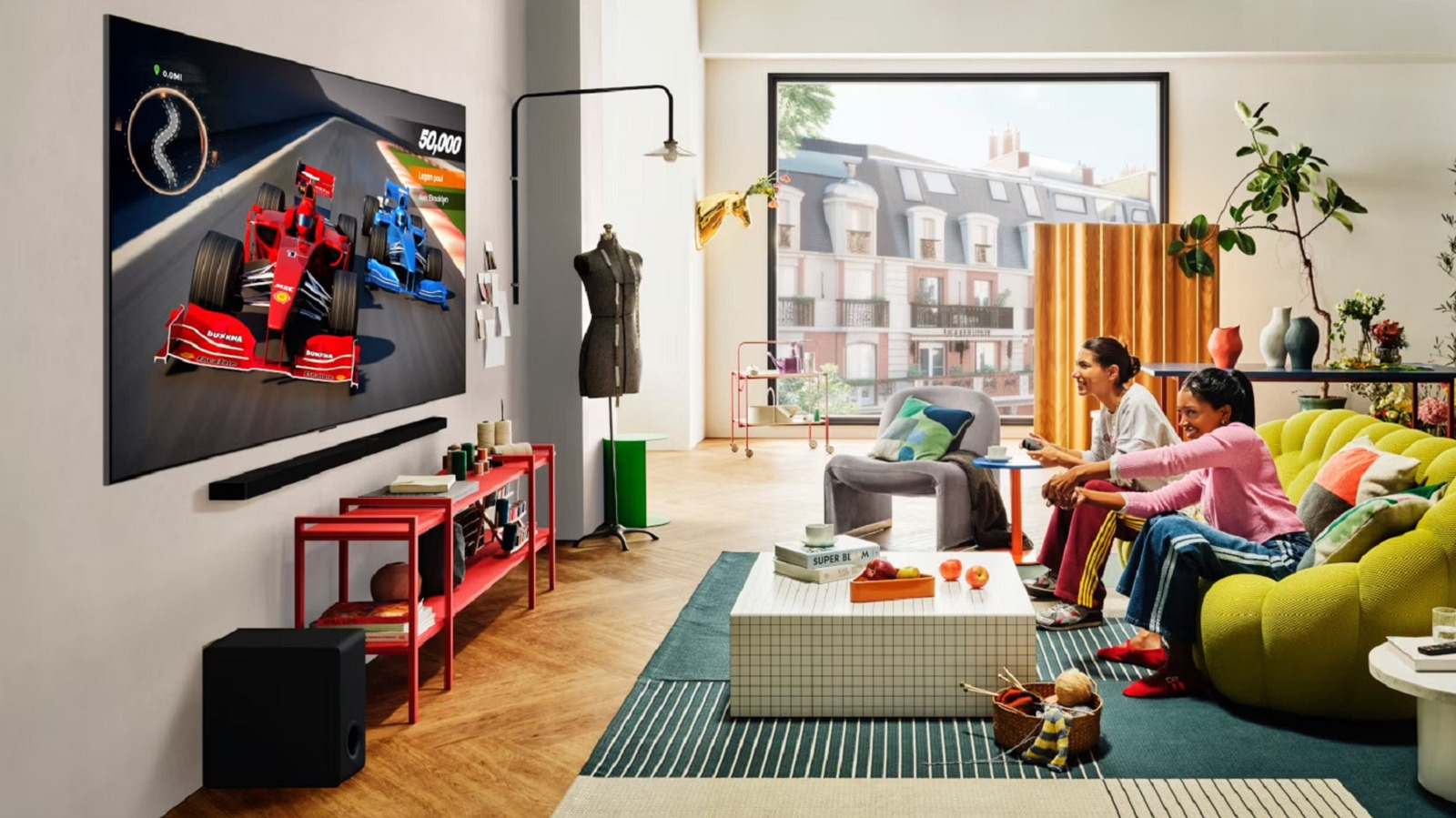
When you first look at them, the most noticeable difference between LG’s G5 and C5 smart TVs is easily their price tags. Depending on the size, the G5 can be up to 25% more expensive than a comparably sized C5. With such a large price gap, it’s easy to question whether the upgrade is worth it – and where exactly your money goes if you do invest in a G5.

Advertisement

The two TVs boast a gamut of similar features, alongside similarly glowing reviews and high ratings. What Hi-Fi? rated both TVs a full five stars, while Tom’s Guide surprisingly gave the C5 a half-star advantage over the more costly G5. They’re also both among Consumer Reports’ best-rated LG TVs. You can see a similar trend in user reviews, too, with each TV having an almost-five-star average on the LG website. Based on all of that, it’s easy to conclude that you probably don’t need to spend the extra hundreds (or thousands) of dollars on the G5, given the similar performance.

However, there is one substantial difference between the C5 and G5 that’s worth considering before you commit to the C5: how much brighter the G5 is. Stuff even called it the “best and brightest OLED TV” in a five-star review. That difference can translate to a significant upgrade in image quality and make it worth the price, depending on your room, budget, priorities, and preferences. Besides that, there are also several other differences between the sets, ranging from the number of audio channels to some minor panel traits.

Advertisement

Brightness creates contrasts between the G5 and C5

The G5 uses a fourth-generation LG Display OLED panel, which produces a remarkably bright appearance in SDR and HDR modes. As a result, many reviews and tests note just how bright the G5 is. Tom’s Guide put this to the test to find out exactly which one is brighter — and by how much — with some striking results. In a 10% window, the G5 put out 2,296 nits in HDR, compared to the C5’s 1,196 nits. The G5 has the upper hand in SDR too, although the difference isn’t as noticeable with 465 nits versus 335. For some, that difference will make the G5’s hefty cost worthwhile.

But what can a brighter screen do, really? It depends, but higher maximum brightness translates to more contrast, in turn improving picture quality by adding depth. So, the G5 can offer a much deeper image than the C5, courtesy of its much higher brightness. The G5’s high peaks, paired with features like Perfect Black, Brightness Booster Ultimate, and the fundamental strengths of OLED technology, make for sharp, high-contrast images. This advantage made the LG G5 one of the best TVs you could buy in 2025 and may be worth paying for, especially if you have a bright room, as brighter screens can offer a better experience than dimmer ones in well-lit rooms.

Advertisement

How else are the G5 and C5 different?

At first blush, the two TVs share a lot of similar features. They each offer native 120 Hz refresh rates, pixel dimming, Dolby Vision, and Filmmaker Mode, among a list of other overlapping features. The differences start to become noticeable when you check their processors. The C5 has the a9 AI Processor 4K Gen8, while the G5 has the faster a11 AI Processor 4K Gen2. A similar disparity is notable when you compare the built-in AI upscaler; the C5 has the a9 AI upscaler, while the G5 has LG’s a11. 

There’s also one minor difference when you compare the two TVs’ gaming-oriented specifications. Although they both offer variable refresh rates, the G5 maxes out at 165 Hz compared to the C5’s 144 Hz. Both, however, support AMD FreeSync, are G-Sync Compatible, and have HGIG support. The two TVs also have different speaker systems, which is something that may differentiate them for some users. The C5 offers a 2.2-channel system, while the G5 has 4.2 channels.

Advertisement

There’s one more noticeable difference between the G5 and C5 range: size. Although each range is available in overlapping sizes varying from 55 to 83 inches, there are some exceptions. The C5 is available in 42 and 44 inches, with the largest model coming in at 83 inches. Meanwhile, the G5 bottoms out at 55 inches, but it does run all the way up to a whopping 97 inches, should you have about eight feet of space you want to fill with a TV.


Advertisement

Source link

Continue Reading
Click to comment

You must be logged in to post a comment Login

Leave a Reply

Tech

This DIY Time Server Is More Accurate Than You Need

Published

on

You almost certainly don’t have an application for the sort of accurate timekeeping that’s made possible by this enhanced version of [Cristiano Monteiro]’s satellite-backed time server. By his own admission, the vast majority of users will be more than happy to have their system’s time synchronized by the traditional Network Time Protocol (NTP). But if you’re really chasing those last few microseconds, that’s where the Precision Time Protocol (PTP) comes in.

With NTP, you can get within 10 milliseconds or so of your upstream time source — but PTP is accurate down to nanoseconds. Unless you’re performing some kind of scientific research, running a robotic assembly line, or perhaps doing high-speed financial trading, there’s no reason for this level of accuracy. In fact, PTP is such a niche technology that until the release of the ESP32-P4, [Cristiano] couldn’t even find an affordable enough chip that supported it.

Hardware-level support for PTP is important as there’s no way to achieve this level of accuracy with software alone, the capability needs to be baked into the Ethernet controller. As you might expect, it takes a highly accurate time source to make the most of PTP, and that’s where the navigation-grade Global Navigation Satellite System (GNSS) receiver comes in. All told the cost of the build is unsurprisingly higher than that of its predecessor, but [Cristiano] says it’s still a couple zeros shy of what a commercial offering would run.

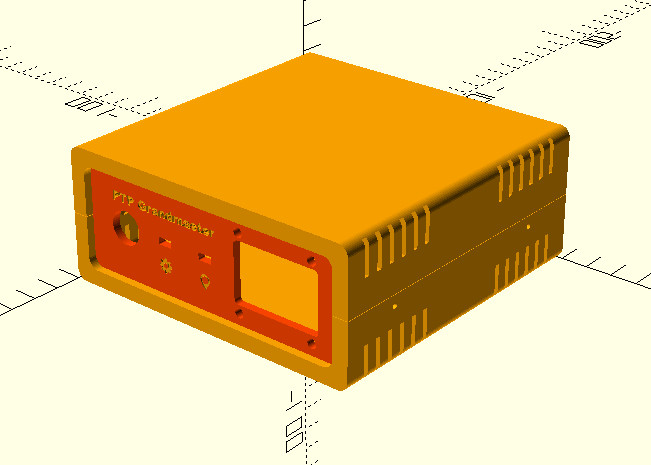
As with his original time server from 2021, [Cristiano] made sure this build was as friendly as possible for hackers and makers. We especially like the 3D printed case designed in OpenSCAD, and his insistence that the gadget have a front panel with blinking status LEDs. Again, the vast majority of us don’t need our clocks to be accurate down to the nanosecond…but it’s nice to know we have the option.

Advertisement

Source link

Advertisement
Continue Reading

Tech

Apple Loses Legal Fight Over Its App Store ‘Gatekeeper’ Status In Europe

Published

on

It means the company must keep allowing rival services to interoperate with all its app stores.

Apple has lost its court challenge against EU rules that designated it as a “gatekeeper,” according to a press release from the European court of justice. The decision means that Apple must continue to allow rivals to interoperate with its five app stores, as required by the bloc’s Digital Markets Act (DMA). The court also ruled that Apple’s challenges over an investigation of its iMessage service were “inadmissible.” 

Apple was fighting against the DMA on three fronts. The first was its requirement that rival hardware (like earbuds and smartwatches) work with the iPhone, which Apple claimed was a security risk. The company also objected to its designation as a “gatekeeper” under the DMA with its iOS, macOS, watchOS, iPadOS and tvOS app stores. Finally, Apple challenged the EU Commission’s probe into whether iMessage should have been deemed a covered service, despite an earlier decision that mostly let that service off the hook. 

As mentioned, the EU court slapped away the latter challenge, so the status quo stands there: Apple won’t need to make it work with other messaging services as before. However, the court upheld the EU’s decision ruling that all five stores should be treated as a single core platform service under the DMA. It also maintained that Apple must continue to allow rivals open access to its stores and not favor its own services to those of competitors. 

Advertisement

Apple disagreed with the decision but didn’t say yet if it would appeal. “We firmly believe the DMA’s mandate goes beyond what is lawful and proportionate, threatening to erode decades of privacy and security protections we’ve built and leaving our users vulnerable to new risks,” an Apple spokesperson said in a statement to multiple outlets. “We will continue advocating for the innovation and privacy our European customers deserve.”

Apple has railed against the DMA over the past years, recently blaming its rules for delaying indefinitely the launch of its Siri AI assistant in the EU. Apple CEO Tim Cook and European technology chief Henna Virkkunen recently held a call that an EU Commission spokesperson described as “constructive,” however. 

Apple still has two cases pending with EU courts. The first is a challenge to the EU Commission’s decision last year forcing Apple to open iOS to third-party developers, and the second is an appeal against the €500 million fine imposed in April last year for anti-steering violations.

Advertisement

Source link

Continue Reading

Tech

IEEE Honors Robotics Pioneer Toshio Fukuda

Published

on

Toshio Fukuda has been blazing trails for most of his career. He is considered to be one of the most prolific scholars in robotics, writing more than 2,000 research papers and authoring several books on the field. He’s an influential figure thanks to his pioneering work developing biomedical robotic systems, industrial robots, micro-nano robotics, mechatronics, and AI-driven automation.

Fukuda launched one of the first robotics conferences, the IEEE/RSJ International Conference on Intelligent Robots and Systems (IROS). It is still popular almost 40 years later.

Toshio Fukuda

Employer

Advertisement

Egypt-Japan University of Science and Technology, in Alexandria

Title

Professor and vice president of research

Member grade

Advertisement

Life Fellow

Alma maters

Waseda University, in Tokyo; University of Tokyo

An IEEE Life Fellow, he is a professor emeritus in the department of micro-nano systems engineering and a visiting professor at Nagoya University, in Japan, where he taught for nearly 25 years. Currently, he is a vice president of research at the Egypt-Japan University of Science and Technology, in Alexandria, Egypt.

Advertisement

Within IEEE, Fukuda has held top volunteer positions including the organization’s highest office: He served as IEEE president in 2020, becoming the first person of Asian descent to hold the role.

He’s a former program director of Japan’s Moonshot program, which by 2050 intends to develop advanced AI robots.

Born in Japan, Fukuda has been recognized by the country for his contributions to science with two of its highest awards: the Medal of Honor with a purple ribbon in 2015 and the Order of the Sacred Treasure in 2022.

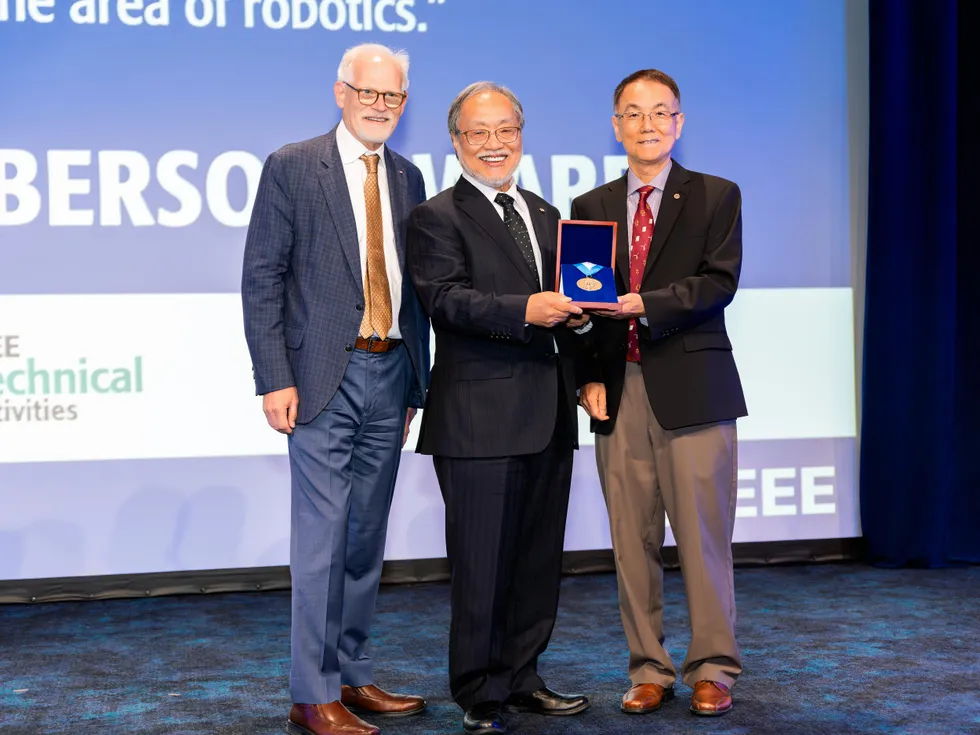
IEEE honored him with this year’s Richard M. Emberson Award for “distinguished service advancing the technical objectives of IEEE, especially in the area of robotics.” The IEEE Board-level award is sponsored by the IEEE Technical Activities Board. Fukuda received the award on 24 April at a ceremony in New York City.

Advertisement

As a former IEEE president who has served as a master of ceremonies at several of the organization’s major award events, Fukuda noted that he is more accustomed to bestowing awards than receiving them.

“It’s very interesting to be on the receiving end,” he says.

As a teenager, Fukuda spent his summer breaks teaching himself how to build things including transistor radios and steam engines.

“It was very nice to have a hands-on hobby and make these kinds of things myself,” he says. His experimentation led him to study engineering.

Advertisement

He earned a bachelor’s degree in engineering in 1971 from Waseda University, in Tokyo. He says one of his professors there—Ichiro Kato, regarded as the father of Japanese robotics research—was a good mentor who made a positive impact.

Fukuda’s research interests were robotics and mechatronics, a field that combines robotics, electronics, computer science, and control systems.

He went on to earn a master’s degree and a doctorate in science from the University of Tokyo, in 1971 and 1977. During those years, he also attended Yale, where he conducted research on advanced control theory in 1973.

He reflects fondly on his time at Yale: “It was a very nice environment and a kind of free-thinking atmosphere. It motivated me to study more.”

Advertisement

“IEEE doesn’t care who you are, what you do, what country you are from, or whether you are male or female. IEEE accepts people who have energy and passion.”

While at Yale, Fukuda served as an assistant to his advisor—which led him to consider a career in academia, he says, because he enjoyed the freedom that research work afforded him.

But he realized that such freedom comes with a price. University researchers are expected to raise the money that funds their work. He compares researchers to small-business owners who have to bring in money to keep their enterprise afloat.

That realization led him to select robotics as his field because he intended to develop technologies useful to industry, he says.

Advertisement

After earning his doctorate, he returned to Japan in 1977 to work as a research scientist at the government’s Mechanical Engineering Laboratory, later renamed the National Institute of Advanced Industrial Science and Technology, in Tsukuba.

“There was a lot of research going on at the lab, including practical robotics and theory,” he says.

He left Japan in 1979 to become a visiting research fellow at the University of Stuttgart, in Germany. During his year there, he studied systems, software problems, and related topics.

He returned to Japan and was hired as an associate professor of mechanical engineering at the Tokyo University of Science. He conducted research into practical uses for robots by visiting industrial plants. He decided to develop robots that inspect industrial equipment such as those used in assembly plants, oil refineries, and power stations—places that “can be hostile environments for humans,” he says.

Advertisement

His work drew interest from chemical, oil, and utility companies.

“I got a lot of money from them for this very practical application, which funded my research,” he says, laughing.

Developing popular robotic systems

Fukuda grew tired of making those robots, he says, so he switched to creating ones for scientific applications. He developed many techniques, but he probably is best known for his modular, cellular robotic systems (CEBOTs), which he introduced in 1985.

He has described how CEBOTs work in numerous papers published in the IEEE Xplore Digital Library.

Advertisement

The CEBOT system is composed of a number of autonomous robotic cells that stick together like interlocking Lego plastic bricks, he says.

Each cell is a fundamental modular unit that has a function. When a simple task is given, the system can analyze it and generate the structure of the cellular manipulator. The cells connect to and detach from each other through connection mechanisms and cooperate mutually, creating complex structures and configurations.

“You start developing from the component-wise to the cell-wise to a small functional unit—and then you come up with clusters that make bigger systems. We can make a society of robot beings like that,” he explained in his oral history published on the Engineering and Technology History Wiki. “It’s a distributed robotic system, a self-organized robotic system, and also an evolutionary robotic system.

“It’s also a fault-tolerant robot system because if something is wrong, you just remove those things and make a new one. You keep the system working. That’s a great thing.”

Advertisement

Today CEBOTs are used for a variety of tasks such as delivering medication in hospitals, assisting with planting crops, and transporting products in distribution centers. Check out IEEE Spectrum’s Robots Guide for news from the world of robotics.

In 1989 Fukuda joined Nagoya University as a professor of mechanical engineering and micro-nano systems engineering. During his 24-year career there, he was director of the university’s Center for Micro-Nano Mechatronics. He developed a long list of technologies at the university, including many for medical applications. He also conducted groundbreaking research into intelligent robotic systems and micro- and nano-robotics.

Another technology he is known for is brachiation robots, which he helped develop in 1988. He calls them monkey robots because they’re based on the pendulum-like movement of monkeys swinging from tree to tree. The gravity-based locomotion enables continuous movement.

Brachiation robots now are inspecting high-voltage transmission towers and bridges, searching damaged buildings for survivors, and performing maintenance on pipelines and cables.

Advertisement

Fukuda retired from the university in 2013 and was named professor emeritus.

He didn’t stay retired for long, though. He next held a teaching appointment at Meijo University, in Nagoya, until he left in 2022 to join the Egypt-Japan University.

A prominent volunteer

He joined IEEE in 1980 at the encouragement of one of his research advisors, Professor Fumio Harashima, now an IEEE Life Fellow. After attending conferences and reading the organization’s publications, Fukuda says, he looked forward to becoming more involved.

“I wanted to know how to organize a conference and how to edit a paper for one of its Transactions,” he says. “I wanted to know what was going on from inside the organization, not just the outside.”

Advertisement

In 1988 he was the founding chair and organizer of IROS, in Tokyo. The conference had 330 attendees that year, and was supported by Harashima. Today it is one of the largest and most prestigious conferences on the topic, attracting more than 9,000 people annually. Out of 120,000 conferences, it was the only conference in the Nature Index database for this year, Fukuda says.

In 1996 he and other members launched IEEE Transactions on Mechatronics.

He was the founding president of the IEEE Nanotechnology Council, which was established in 2002. He is considered a pioneer in nanotechnology research, particularly regarding how it relates to robotics.

Over the years, he has held numerous volunteer positions on IEEE editorial boards and committees.

Advertisement

He was the 1998–1999 president of the IEEE Robotics and Automation Society, becoming the first non-U.S. member to hold the title.

He was director of IEEE Division X (2001–2002 and 2017–2018), which covers intelligent systems, biological engineering, robotics, control systems, and photonic technologies. He served as the 2013–2014 director of IEEE Region 10 (Asia-Pacific).

As the 2020 IEEE president, Fukuda saw the organization through the early part of the COVID-19 pandemic. Because of travel restrictions, he realized IEEE should change how it offered its in-person services, specifically educational programs. He encouraged IEEE Educational Activities to develop an online learning platform. The IEEE Learning Network started with just three courses and now offers nearly 2,000 courses, webinars, and learning materials.

An award-winning member

The Emberson Award joins a slew of other recognitions Fukuda has received from IEEE. They include several from the IEEE Robotics and Automation Society: a 2004 Pioneer Award, a 2009 Saridis Leadership Award, and the 2011 Harashima Award for Innovative Technologies. He is also a recipient of the Board-level 2010 IEEE Robotics and Automation Technical Field Award.

Advertisement

He says he feels strongly that IEEE should be a diverse organization that is welcoming to all. As IEEE president, he led efforts to devise a diversity, equity, and inclusion program. Several policies, procedures, and bylaws were revised to give members a safe, inclusive place for discourse.

“It’s important for IEEE to make everyone feel comfortable,” he says. “DEI programs are important. All people should be equal. IEEE doesn’t care who you are, what you do, what country you are from, or whether you are male or female. IEEE accepts people who have energy and passion.

“It accepted me, from the Far East. That’s why I like it.”

You can learn more about Fukuda and his career from the oral history conducted by the IEEE History Center.

Advertisement

From Your Site Articles

Related Articles Around the Web

Source link

Advertisement
Continue Reading

Tech

5 Of The Best-Looking Ford Restomods Keeping Classics On The Road

Published

on


Few automakers can claim a history as rich, or as consequential, as Ford’s. Henry Ford didn’t invent the car. However, with the Model T’s debut in 1908, he redefined who could own one, turning cars from a rich man’s toy into a fixture of everyday American life. That founding spirit of accessibility never really left the brand. Decades later, Ford tapped into a different kind of hunger, not for practicality this time, but for excitement, with the launch of the 1964 Mustang.

It kicked off the muscle car era and gave Ford a lineup of vehicles that generations of enthusiasts still dream about today. Be that as it may, there’s a catch with cars this old: charm doesn’t always translate to usability. A Mustang from the muscle car glory days might turn heads at a cruise-in, but it wasn’t built with modern standards, reliability, or comfort in mind. Climate control, airbags, modern injection, and predictable handling are things most drivers won’t give up, even for a car they love.

That’s the gap restomodding fills. Instead of choosing between vintage character and modern usability, restomod builders rework these classics from the ground up, keeping the silhouette and soul of the original while swapping in the performance, safety, and tech of a modern platform. The result is a car that looks like it rolled off a 1960s lot but drives as if it belongs on today’s roads. Here are five of the best-looking Ford restomods keeping classics on the road.

Advertisement

1. Ford GT40 MKII 60th Anniversary by Superformance

The Ford GT40 is arguably the most coveted race car Ford ever made. Whether you watched Ford v Ferrari, follow the WEC and Le Mans religiously, or just love wedge-shaped cars going fast, the GT40 is as embedded in motorsport as the Big Mac is in fast food. But the GT40 is old now. Surviving originals trade for millions, and production numbers were tiny, meaning most enthusiasts will never get near the real thing, let alone own one.

Advertisement

That’s where Superformance comes in: a company that lets you buy a brand-new Ford GT40, ready for Le Mans. Working with Safir Engineering, the trademark holder for the GT40 name, only 66 examples exist, badged the Championship Season Series and built specifically to commemorate the 60 years since that 1966 sweep. Design-wise, the cars stay faithful to the original: an original-style steel monocoque frame, a hand-finished composite body with a pressed steel roof, a driver-side Gurney bubble, and the original right-hand-drive, sill-mounted shifter setup.

More than 65% of the chassis is made up of parts that bolt straight onto an original 1960s car, and each one picks up a chassis number in sequence from the last original GT40. The car starts at $295,000, and offers eight paint schemes, pulled from the liveries of Shelby American, Holman Moody, and Alan Mann Racing. If you go with a Shelby scheme, Carroll Shelby’s own signature gets etched onto the car alongside its serial number. This GT40 keeps the best parts of the original, while adding a 427 V8, modern air conditioning, push-button start, an aluminum radiator with dual electric fans, and an adjustable pedal box.

Advertisement

2. Ford Bronco by Gateway Bronco

For those who want to enjoy what many collectors consider the most desirable generation of the Bronco, you are looking at an average price of around $100,000, while the very-best examples can fetch almost a quarter of a million. However, if you want everything the first generation Bronco offers, but in a new package, the (starting price) $150,000 Gateway Bronco is likely your best bet. If you want the top-end Gateway LUXE Bronco, you are looking at upwards of $800,000.

As Top Gear said, “Gateway is to the Ford Bronco what Singer is to the Porsche 911,” and in the world of restomod cars, being compared to Singer is as high as it can get. This Bronco is based on the original first-gen chassis. The company strips the car down and then rebuilds it to match the customer’s specifications. The engine is the iconic 5-liter Coyote V8, meaning that your first-gen Bronco restomod is good for 460 horsepower and 420 lb-ft of torque.

Visually, the Gateway Bronco captures the very best parts of the first-generation Bronco. Whether it be retro-inspired decals, period-correct wheels and tires, or a two-door silhouette, all of this is paired with modern reliability, Porsche leather, LED lights, active suspension, four-wheel disc brakes, ESC, anti-lock brakes, and Ford’s modern-day 10-speed automatic. The company even offers a modern configurator that lets you tailor your first-gen Bronco restomod exactly to your liking.

Advertisement

3. Mustang GT500CR Carbon by Classic Recreations

The company Classic Recreations was a direct consequence of founder Jason Engel’s desire to build a “Gone in 60 Seconds”-inspired “Eleanor” Mustang. After selling the build at Barrett-Jackson for $141,000, he had orders for four more before he even made it back home from the show. The company’s latest creation — the GT500CR — takes the 1967-68 Mustang fastback and rebuilds it with aerospace-grade carbon fiber.

Advertisement

This drops the weight by about a few hundred pounds compared to the original car. Moreover, the GT500CR is a fully Shelby-licensed carbon-fiber GT500, and every car gets registered with a unique Shelby serial number in the Shelby Unified Registry. Design-wise, the GT500CR keeps the fastback’s classic proportions and silhouette instantly recognizable as a ’67-’68 Shelby, just rendered in exposed weave instead of painted steel. Power comes from a Ford Performance Gen IV Coyote 5.0-liter V8, paired with either a 10-speed automatic or a 6-speed manual transmission.

Modern upgrades run throughout: a Detroit Speed Quadralink rear suspension, Wilwood (steel) or Brembo (carbon ceramic) 14-inch six-piston brakes front and rear, a hand-built side-exit exhaust, and a cabin wrapped in handcrafted leather with a FOCAL audio system and Apple CarPlay/Android Auto built in. Pricing starts at $549,900, though recent reworked builds with output pushed as high as 900 hp have been priced well north of $700,000.

Advertisement

4. Ford Escort Mk1 RS by Boreham Motorworks

The Mk1 Ford Escort is an iconic rally car, and in 2026, it is being reborn with a classic look and modern capabilities. Boreham Motorworks isn’t calling this a restomod, and for good reason — the company built an entirely new car from scratch, with Ford’s official sign-off behind the project. Because it isn’t a straight restoration or a licensed continuation either, Boreham invented its own term for the category: the “continumod.” Fittingly, the company takes its name from Ford’s old motorsport skunkworks in Essex, the operation that turned the original Escort into a rally-stage weapon back in the day.

With the Boreham Mk1 RS, you still get the cool ducktail spoiler and the arches. Plus, the car now has a carbon fiber hood and bootlid. To match the 1968 Alan Mann Racing cars, the front axle has been pushed forward by about 30mm. Boreham skipped the usual electronic safety net entirely. Instead, you get a mechanical limited-slip differential that handles the job those systems would normally do.

Two engines are on offer. The entry option is a 1.8-liter twin-cam four-cylinder good for about 185 horsepower and 133 lb-ft of torque, while the optional TEN-K engine displaces 2.1 liters and spins all the way to a 10,000-rpm redline, producing 326 horsepower. Without fluids, the car is engineered to weigh under 2,000 pounds. Only 150 of these will ever be built, and buyers can order theirs in either right- or left-hand drive, with pricing starting at $400,000.

Advertisement

5. Ford F-100 by Velocity Restorations

Although Ford’s enthusiast market is famous for its Bronco, the Mustang, and the GT40, there is actually a very big market for old-school truck restomods, and within this market, the 1970s-inspired Ford F-100 restomod by Velocity Restorations is difficult to ignore. The company itself is not your typical small-scale garage shop, with nearly 500 vehicles already delivered (150 in 2024 alone), four assembly lines, a 135,000-square-foot facility, and more than 130 employees.

Advertisement

However, the F-100 marked new territory. It was Velocity’s first two-wheel-drive pickup build, after years of working exclusively on 4×4 trucks and SUVs. The Street Series rides closer to the ground than a stock F-100 ever did, and the staggered wheel setup — 19 inches up front, 20 inches in the rear — gives it a planted, aggressive stance that reads more like a muscle car than a work truck. Underneath, though, the changes go deeper than the sheet metal: Velocity swapped in a Roadster Shop chassis and Baer stopping power for the factory setup.

Once again, power comes from Ford’s 5.0-liter Coyote V8 — the engine that powers a ton of cool cars — good for 450 horsepower in Velocity’s standard tune and driving through the automaker’s own 10-speed automatic, though some Street Series builds have been tuned as high as 470 hp. Inside, modern comforts like Vintage Air conditioning, a Dakota Digital gauge cluster, and a Focal audio system with Bluetooth sit behind a wood-rimmed steering wheel. The Signature Series starts at $279,900, while the more aggressive Street Series starts around $339,900.

Advertisement

How we made the list

There are tons of amazing Ford restomods out there — the Mustang restomod market alone is deep enough to fill 20 slides by itself. To keep things fair and give the list some actual range, we capped it at one build per model. That’s why you’ll find the coolest GT40 restomod here, the coolest Escort, the coolest Mustang, the coolest Bronco, and the coolest pickup truck, rather than five different takes on the same car.

To make sure each pick actually earned its spot, we weighed how directly tied each build is to Ford’s own history and legacy, how period-correct the design stays to the original, the hype and reputation surrounding the builder, and the overall performance, looks, and allure of the finished car. A restomod that ignores what made the original special isn’t on this list, no matter how much horsepower it makes.

We also didn’t just take these companies at their word. To keep the specs, pricing, and history accurate, we cross-checked information against outlets like Top Gear, Hagerty, Gear Patrol, Motor1, Forbes, Carscoops, HiConsumption, and duPont REGISTRY, and pulled details directly from the manufacturers themselves wherever possible.

Advertisement


Source link

Advertisement
Continue Reading

Tech

Hot French startup ZML releases free product to speed inference across lots of AI chips

Published

on

The days of Nvidia’s unparalleled market dominance aren’t over, but challengers and choices are arising from all directions.

ZML, a hot French AI startup endorsed by Turing Award winner Yann LeCun, has released inference-performance software that allows a variety of open-source large language models to run on a variety of chips — including Nvidia’s, AMD’s, Google’s TPU, Apple Metal and Intel Arc.

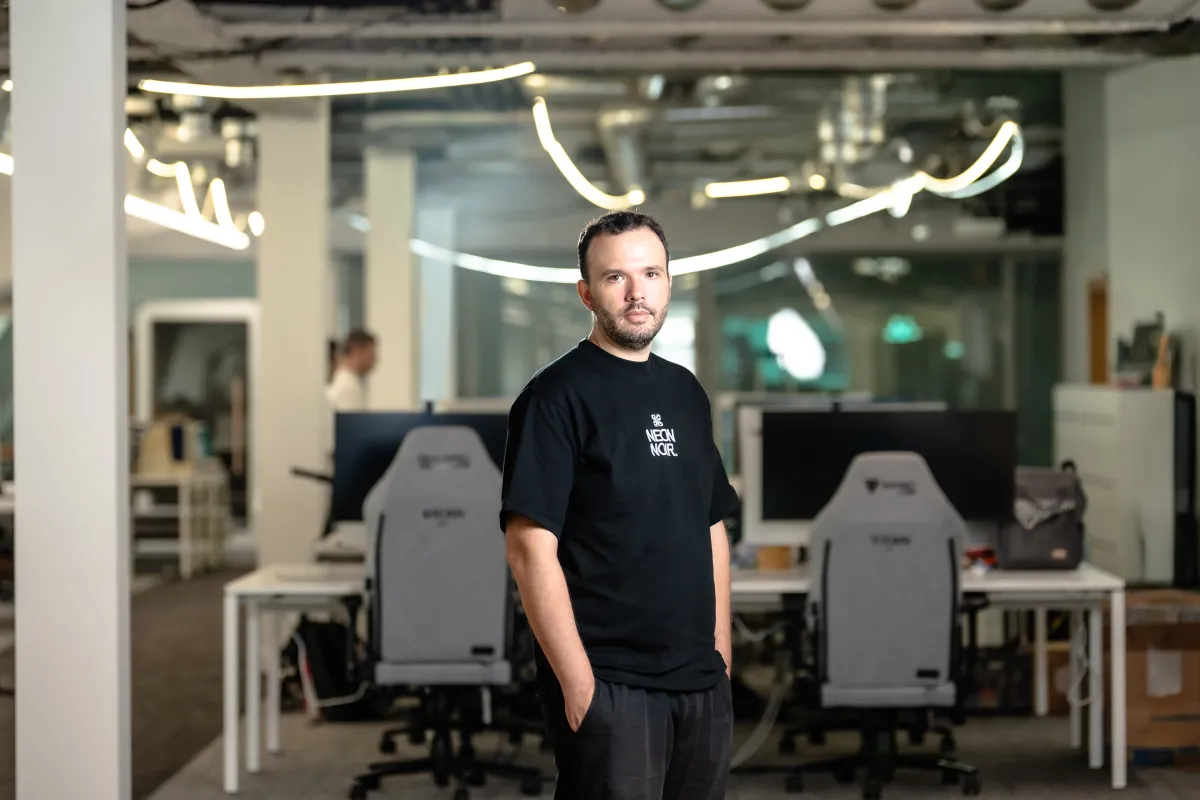
With ZML/LLMD, the newly launched LLM inference server, the company’s ambition is to break existing silos and make different chips available for AI use cases at their maximum available speed, and sometimes faster, ZML founder Steeve Morin told TechCrunch.

As AI becomes integrated into our work and everyday lives, optimizing inference — aka, the processing of prompts — has been outpacing model training in importance, but often feels patchy behind the scenes, with software and architecture barriers that lead to vendor lock-in, Morin said.

Advertisement

The promise of achieving peak performance across a variety of chips is a technological feat, but it could also be a market disruptor, amid mounting fears over AI-related costs.

ZML hopes to provide enterprises and clouds with the option to use a mix of chips, some of which might be less costly or consume less energy. “The idea is to give people back the power to create their own system and achieve real efficiency gains that allow [AI] to be disseminated,” Morin said.

Such a software assist may help novel AI chipmakers, many of which happen to be from Europe, Morin observed, citing Axelera, Fractile, Kalray, OLIX, Q.ANT, SiPearl, SpiNNcloud, and VSORA. But more than their region of origin, what matters to him is that ZML can work with them on “things that haven’t been done before anywhere in the world.”

That doesn’t mean Morin is bearish on Nvidia. He’s not, in part because of its existing supply. He told TechCrunch that ZML has a good relationship with the AI chip giant, which has been gearing up for the rise of inference.

Advertisement

Inference has been an area of such intense investment, that the trend has been hailed the “inference gold rush.” So ZML has competition such as Baseten, recently valued at $13 billion; Inferact, from the creators of open source project vLLM; as well as RadixArk, the commercial company behind SGLang.

Both vLLM and SGLang partially compete with LLMD, but Morin’s ambitions for ZML cover a broader spectrum. “We have reached the point where we are co-designing silicon,” he said. He further credited ZML’s lean team of 20 people as the reason why the Paris-based startup has been able to move fast, with more releases in the plans.

It also helped that this small team is well funded for its size. Thanks to his track record as VP of engineering of Zenly, which Snapchat acquired for nine figures in 2017, Morin raised $20 million from venture firms including Harry Stebbings’ 20VC, >commit, AALVC, Drysdale Ventures, Xavier Niel’s Kima Ventures, Kindred Capital, LocalGlobe, and Puzzle Ventures.

Unlike ZML’s first public project, the inference-focused ML framework released in 2024 and updated in March, ZML/LLMD is not open source. But it is launching as a free product with the goal of learning about usage. “I’d rather measure and [then generate revenue] where it is most effective without hindering my growth stupidly because I have been too greedy from the get-go,” Morin said.

Advertisement

It is too early to tell when ZML/LLMD might become a paid product, and what its adoption will look like. But the startup’s cap table confirms that other founders are paying attention, including Dagger and Docker founder Solomon Hykes, Clément Delangue and Julien Chaumond from Hugging Face, as well LeCun, now with AMI Labs. This also builds the case that Europe’s AI startups can now build from home. “I couldn’t do ZML anywhere but in Paris,” Morin said.

When you purchase through links in our articles, we may earn a small commission. This doesn’t affect our editorial independence.

Source link

Advertisement
Continue Reading

Tech

Tropicana Is Giving Homebuyers A Chance To Slash Costs In Half

Published

on

[This is a sponsored article written in collaboration with Tropicana Corporation Berhad.]

There was a time when buying a home was simply about finding the right location, enough space, and a practical layout. Today, expectations around homeownership have evolved.

Today’s home buyers want more than just a place to live. They’re looking for a home that complements the way they live, where leisure, convenience, and everyday experiences become part of homeownership. 

In tune with this shift, premium developers like Tropicana are going beyond traditional selling points like location and facilities. They’re pairing properties with lifestyle perks and exclusive benefits that actually mean something.

Advertisement

Enter the Tropicana Live+ Campaign, where signing for your dream home unlocks more than just a new address. 

In fact, you could even stand a chance to enjoy a 1-year Tropicana Golf & Country Resort membership and 50% Homeownership Savings off your property. But we’ll get to that part in a bit.

Lifestyle Is Becoming The New Luxury

The Tropicana Live+ Campaign runs across three seasons, each with its own theme and rewards. With Season 2: Live+ Prestige now underway, golf lovers and sports enthusiasts alike get to enjoy a deal that’s hard to pass up.  

Between 1 July and 30 September, you could win a 1-year golf membership at Tropicana Golf & Country Resort when purchasing a qualifying Tropicana property. 

We’re talking weekend tee times, access to one of Malaysia’s most established golf clubs and its clubhouse facilities, and yes, a pretty solid conversation starter at your next dinner party.

Advertisement

After all, premium homeownership isn’t just about owning a beautiful home; it’s about choosing the kind of life you want to come home to every day.

Your Pinterest Board, But Make It Real

No two buyers picture their dream home the same way. Some dream of cooler mountain mornings, while others want to wake up by the beach or stay close to the city’s buzz. 

Whatever your lifestyle looks like, Tropicana offers a range of developments designed to match it. 

If your ideal mornings involve cooler weather

At Breeze Hill Service Apartments, Tropicana Avalon, Genting Highlands becomes more than just a weekend getaway. Surrounded by lush greenery, your morning coffee comes with a view and crisp mountain air.

Advertisement

Just nearby, Mercure Living Genting Highlands, Tropicana Grandhill offers a similar escape. Tucked away from the city’s constant rush, it balances resort-style living with everyday practicality, especially suitable if you’d rather trade KL’s hustle and bustle for a cooler and calmer environment.

If you’d rather have the beach as your backyard

If coastal living is more your thing, Clarissa Serviced Suites at Tropicana Cenang places you just moments away from Langkawi’s famous beaches. Imagine mornings spent strolling along the beach or unwinding by the shore after a long day.

Homeowners get to enjoy one of Langkawi’s liveliest beach destinations without having to book a holiday every time you want an ocean getaway.

If you’re happiest when daily essentials are within easy reach

At SouthPlace 2 Shoppes & Residences at Tropicana Metropark, Subang Jaya, you’re surrounded by everyday essentials right below your home. 

Advertisement

Less time spent commuting means you can effortlessly squeeze in a late-night workout session at the gym, grab fresh premium groceries at the supermarket, or pick up wellness essentials at the nearby pharmacy—giving you true convenience without the rush. 

Meanwhile, Avisa Residences at Tropicana Alam, Puncak Alam offers a quieter pace of life without compromising on the essentials, with spacious homes and everyday conveniences that cater to families and working professionals alike.

If you see home as a long-term lifestyle investment

As Johor Bahru’s first Branded Residence managed by the prestigious Banyan Group, Skypark Kepler Branded Residences at Lido Waterfront Boulevard lets you wake up to sweeping waterfront views and international hospitality standards every day. 

Located just 5km from the RTS Link and CIQ Causeway, residents get cross-border connectivity alongside a stunning 2.5km coastal boardwalk right outside your door. Think breezy walks by the promenade and front-row seat to sunsets that don’t require a weekend road trip.

Advertisement

A little further inland, Fraser Heights Terrace Homes at Tropicana Uplands, Gelang Patah offers a quieter suburban setting for growing families and retirees alike. With more space to spread out, you could host barbecues every weekend or start those gardening projects you’ve always talked about.

If you’re looking for a commercial investment

For those on the hunt to also grow their business or diversify their investments, you could consider Varia Shop Offices, Tropicana Aman in Kota Kemuning, where business takes on a more grounded, community-driven rhythm.

Surrounded by a growing residential catchment, the development places your storefront right where neighbourhood activity and local conveniences converge.

If you prefer somewhere closer to the city, there is Edelweiss Shoppes, Tropicana Gardens in Kota Damansara. With established residential towers, retail components, and lifestyle hubs in the vicinity, it offers a more dynamic environment that’s connected to IOI Mall Damansara (formerly known as Tropicana Gardens Mall) and Surian IOI Mall Damansara MRT station via a link bridge. 

Advertisement

Oh, There’s Also 50% Homeownership Savings Off Your Property

The Season 2: Live+ Prestige rewards are available across 10 participating developments spanning the Klang Valley, Genting Highlands, Langkawi and Johor Bahru, including:

  • Varia Shop Offices, Tropicana Aman @ Kota Kemuning
  • Avisa Residences, Tropicana Alam @ Puncak Alam
  • Clarissa Serviced Suites, Tropicana Cenang @ Langkawi
  • SouthPlace Shoppes, Tropicana Metropark @ Subang Jaya
  • SouthPlace 2 Residence, Tropicana Metropark @ Subang Jaya
  • Edelweiss Shoppes, Tropicana Gardens @ Tropicana Indah
  • Breeze Hill Service Apartments, Tropicana Avalon @ Genting Highlands
  • Mercure Living Genting Highlands, Tropicana Grandhill at Tropicana WindCity
  • Skypark Kepler Branded Residences, Lido Waterfront Boulevard @ Johor Bahru
  • Fraser Heights Terrace Homes, Tropicana Uplands @ Johor Bahru

The 1-year golf membership isn’t the only reward up for grabs.

In addition to the seasonal prizes, buyers who purchase selected Tropicana properties will stand a chance to enjoy 50% Homeownership Savings through the campaign’s Grand Prize draw, running from 18 April to 31 December 2026. 

The Grand Prize applies to the following participating developments:

  • Avisa Residences, Tropicana Alam @ Puncak Alam
  • Clarissa Serviced Suites, Tropicana Cenang @ Langkawi
  • SouthPlace 2 Residence, Tropicana Metropark @ Subang Jaya
  • Breeze Hill Service Apartments, Tropicana Avalon @ Genting Highlands
  • Fraser Heights Terrace Homes, Tropicana Uplands @ Johor Bahru

That’s a chunk of capital freed up before you’ve even unpacked.

Every qualifying purchase comes with:

  • 100% legal fees borne by Tropicana.
  • Hassle-free furnishing solutions via The Makeover Guys and Signature Kitchen.
  • Flexible financing through Maybank MyDeco and an Easy Payment Scheme. 
  • Referral rewards of up to RM80,000.

Together, you’ll receive practical support that makes the whole process of buying and moving in feel a lot less like a headache.

Regardless of whether you are a first-time homeowner, a growing family seeking a larger space, or an investor searching for a strategic opportunity, this list of Tropicana developments offers a variety of options to suit your needs.

Advertisement

If you’re already planning to make your move, the Tropicana Live+ Campaign makes it even more rewarding.  It’s a chance to enjoy more than just a new address, but a lifestyle and rewards that begin from day one. For more details, visit the website HERE or call 03-7663 6888 to find out more. (T&Cs apply).

Source link

Advertisement
Continue Reading

Tech

Boox Go 6 Gen II review: specs, performance, cost

Published

on

The Boox Go 6 Gen II is designed to be the ultimate go-anywhere e-reader, but a sub-incremental spec bump may not merit a purchase.

Boox has refreshed its pint-sized pocket e-reader with a minor spec bump and a new design. Let’s see if the Boox Go 6 Gen II is worth picking up or not.

Boox Go 6 Gen II review: Read anywhere, anytime

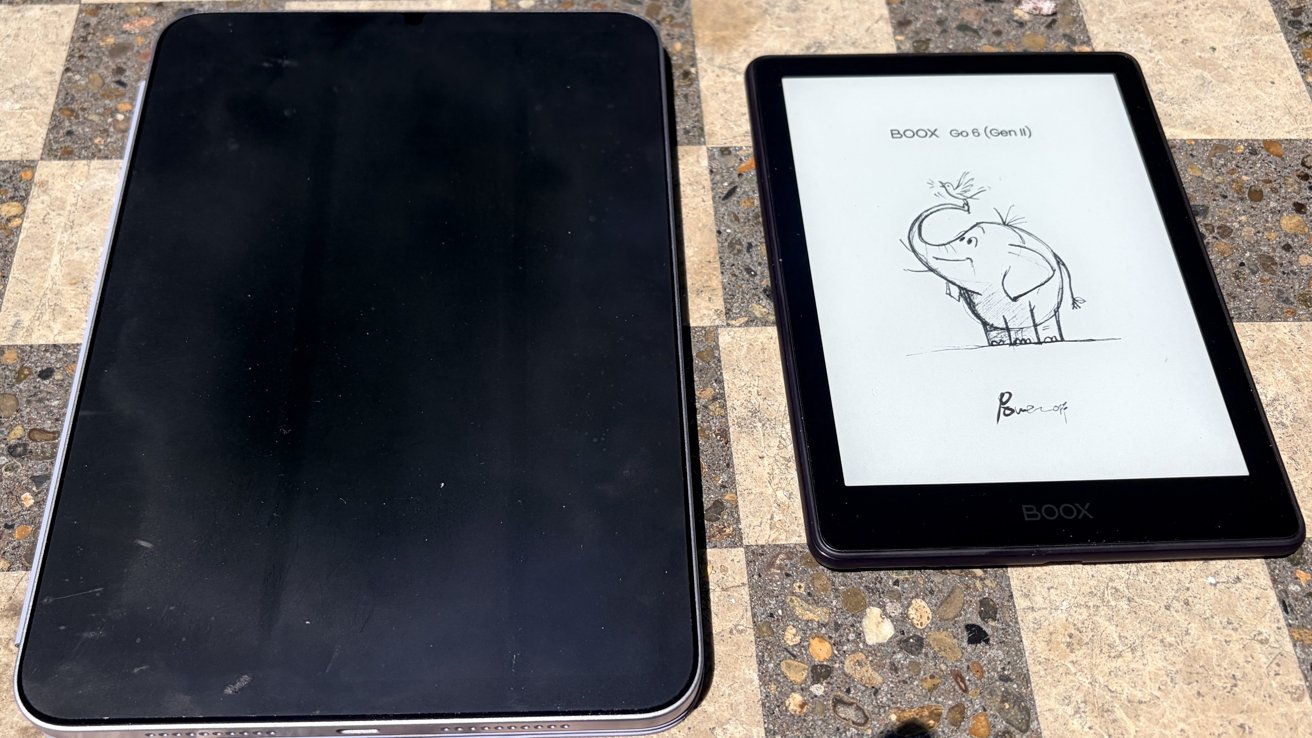
The original Go 6 is one of my favorites offered by Boox, because it tucks neatly into your hand the same way a paperback novel might. It’s even smaller than the iPad mini, which is my iPad of choice.

Its portable size makes it ideal to slip into a tech bag or a purse. As I said, it’s even smaller than the iPad mini. Hell, you could stash it in the pocket of your hoodie if you were so inclined.

Advertisement

Like most e-ink readers, the 1500mAh battery will last you for days, plural, before you even need to think about topping it up. I found that I got a week’s worth of before-bed reading before I instinctively plugged it in, but realistically I could have probably gotten another two nights before I would have really needed to.

Its front light makes it perfect for reading in bed without disturbing a partner or straining your eyes. I think this is the best use case for this device in general.

 An iPad mini next to the Go 6 Gen II

Boox Go 6 Gen II review: An iPad mini next to the Go 6 Gen II

I’ve been a big fan of Boox screen light for a while now, and I’m glad to see that it’s included by default on the Go 6 Gen II. Because I tend to read in bed, I often leave it on its warmest setting.

Advertisement

Boox Go 6 Gen II review: Lookin’ slick

This is the second notable Boox redesign I’ve seen since spending my time with the devices. The first was with Boox’s Palma, which I thought had a fantastic redesign.

The Go 6 redesign is a bit more subtle, but welcome just the same. The back has gotten a light texture upgrade, which gives it a more pleasing feel in the hand.

While I received the plum Go 6 for review, it also comes in two other colors: stone and shell. The plum is a deep, rich purple that appears black in most lighting; I am a huge fan of this colorway.

Boox Go 6 Gen II review: Under the hood

The Boox Go 6 Gen II features a black-and-white-only display. They may eventually release a color version, but at this point, this is the only option you’ve got.

Advertisement

It boasts a 1448×1072 (300 ppi) resolution, a 6″ HD ePaper screen, and an octacore processor. That’s the same as the last generation.

Up close shot of the e-reader screen displaying text from

Boox Go 6 Gen II review: The crisp, clean screen makes it easy to read in bright daylight.

It also features 32GB worth of storage, just as it did before. Storage is expandable via a Micro SD slot on the bottom of the device, which is appreciated.

The only notable spec bump, at least as far as I can tell, is an upgrade from 2GB to 3GB of RAM. Don’t get me wrong, a 50% increase in RAM is good, but I’m not sure that merits a re-release of the device.

Advertisement

We didn’t even get a new operating system. I am extremely disappointed to find that this little e-reader is running Android 11.

Android 11 came out in 2020 and received its final update in 2024. It’s now a fully unsupported operating system.

The biggest problem I see, personally, is that eventually, support for Android 11 is going to fall off.

Right now, for most apps require Android 10, though many can still run on Android 8. Apps that require more robust security features, such as banking and certain email apps, require Android 12.

Advertisement

Again, I really wish that this would have seen a jump. Even Android 13, which came out in 2022, would have been a better choice.

Boox Go 6 Gen II review: How it performs

For running a six-year-old operating system on 3 GB RAM, the Go 6 Gen II performs pretty well. I didn’t notice a huge downgrade compared to something like the Go 10.3 Gen II, which has Android 15 and 4GB of RAM.

If you’re primarily using it to read books on, and to be clear, that is what you should be using it for, it’s solid. I didn’t find that there was a lot of page lag, and even downloading new books wasn’t a slog.

Browsing the web was quick too, though pages that had a lot of moving elements were expectedly slower. I think this has less to do with the restrictions of the RAM and more to do with the restrictions of the screen.

Advertisement

Even third-party apps, like Amazon’s Kindle app, ran just fine. Considering this is an e-reader and not an iPad, I think that it handles the tasks its been given quite well.

Boox Go 6 Gen II review: It’s not an iPad

This section is less about this specific model and more about e-ink tablets in general.

One of the most annoying things that e-ink tablets have to contend with is the chorus of people in comment sections and Reddit threads reminding you that the tablet is not, in fact, an iPad.

It’s not trying to be an iPad. As I’ve said before, Boox makes no claims that it’s trying to replace your iPad.

Advertisement

It’s trying to replace your Kindle or Nook. That’s what all of these e-ink tablets are trying to do, whether they’re from Boox or ReMarkable or anywhere else.

You’re not going to give up an iPad for a Boox device. And odds are, if you’re reading this review, you already own an iPad.

Instead, imagine an e-reader that is capable enough to swap between reading your favorite novel and perusing longer-form documents at work. Maybe you’re a dork like me and enjoy spending Saturday mornings where you drink your cup of coffee while reading Wikipedia entries on geology on your patio in the sun.

The back of an e-reader device

Boox Go 6 Gen II review: The back of the Boox Go 6 has been redesigned with a ridged texture, and black has been replaced with a rich plum color

Advertisement

It’s nice. Again, I really like Boox products. I get to test them out quite frequently, and it never really feels like they’re competing for my affection against my iPad.

Boox Go 6 Gen II review: Still a downgrade in the stylus department

Like most of Boox’s offerings, the Go 6 Gen II is stylus-compatible. I did not receive a stylus this time around, but like its brethren, this e-reader uses the InkSense stylus, which I have extensive experience with.

I had written at length about the stylus situation in a previous Boox Go review. This time around, I’m not going to go into as much detail, but I will tell you why this is a problem.

Previously, Boox used a Wacom EMR stylus, which uses electromagnetic resonance to communicate pressure and position. The result was a quick, buttery-smooth writing experience.

Advertisement

Now, you get a capacitive touch stylus. Effectively, it works the exact same way your finger does.

It still has 4,096 levels of pressure and a solid response time. It is, however, a notable downgrade from an EMR stylus.

The screen is also small enough that I don’t think this would be a primary note-taking device anyway. Personally, I almost feel as though the stylus is unnecessary on a device this small, but to each their own.

Boox Go 6 Gen II review: In the end, it’s… fine.

It’s hard to get excited about this device, even though it’s probably one of the best form factors that Boox has released.

Advertisement

The redesign is nice, and I love the textured back. I think the device feels sturdy and holds up performance-wise.

Unfortunately, the choice to use Android 11, rather than Android 15, remains baffling. The other second-generation devices all made a leap forward, but Boox decided to leave the poor little Go 6 Gen II behind.

Overall, as far as Boox devices go, I don’t think the Go 6 Gen II is bringing enough to the table to warrant an upgrade. And if I were really pressed on it, I’m not entirely sure the Go 6 Gen II merits a purchase in the first place.

Boox Go 6 Gen II: pros

  • Perfect size for on-the-go reading
  • E-ink display
  • Textured back
  • E-ink stylus compatibility
  • Great battery life
  • Feels sturdy, well made
  • Plum is an upgrade over standard black

Boox Go 6 Gen II: cons

  • Runs Android 11
  • Very minor spec bump over previous generation
  • Cramped writing space
  • E-ink stylus is capacitive, not EMR

Rating: 2.5 out of 5

Where to buy

If you’d still like to purchase your own Boox Go 6 Gen II, you can pick one up from the Boox website for $199.99. If you’d like the InkSense Plus Stylus Bundle, you’ll need to pay $232.99.

The Boox Go 6 Gen II is also available from Best Buy for $199.99.

Advertisement

Source link

Continue Reading

Tech

Android’s background data habit is now written into Google Play’s fine print

Published

on

Android phones have always worked in the background. Google’s new Play terms make that quiet behavior much harder to ignore.

The updated Google Play Terms of Service take effect July 29, 2026, and spell out that system services on certified Android devices can use network connectivity, including cellular data, while the user isn’t actively using the phone. That includes moments when the screen is locked.

The timing adds weight. The revised terms follow Google’s $135 million settlement over allegations that Android devices sent cellular data to Google while idle without users knowing. Google isn’t saying every Android phone is secretly torching data plans, but it’s putting clearer language around behavior users usually notice only after something annoying happens.

Why Google is spelling this out now

The old assumption was simple. If a phone is locked and sitting on a table, most people expect it to be mostly still.

Advertisement

Google’s new wording makes that assumption harder to keep. System services include Google Play services, the Play Store, and Android operating system updates. These pieces can require network access to keep certified Android devices running properly.

Some of that activity can happen while the phone is idle. That helps explain why mobile data can move even when the user hasn’t opened an app or touched the screen.

What Android can still do quietly

The practical effect is clearer language with real consequences. A phone can keep handling system-level work through Google Play services, the Play Store, and Android updates in the background.

If that activity uses cellular data, the carrier bill still belongs to the user. That may be a shrug on unlimited plans, but it hits differently on prepaid service, roaming, or a tight monthly cap.

The terms don’t say every Android device will suddenly chew through data overnight, but they do confirm that background cellular data use is part of how these services can operate.

Advertisement

Where user control gets fuzzy

The update language is the more uncomfortable piece. Users may be able to manage some updates in Google Play settings, but certain updates can still happen if they fix a critical security issue, address a serious operability problem, or prevent abuse.

That tradeoff makes sense, and it’s still frustrating. Automatic updates protect people from real risks, but a bad rollout can change how a phone behaves after a reboot.

Anyone who has delayed updates after a broken release will recognize the tension. Android gives users plenty of switches, yet some system-level decisions still sit above those switches. If you’re on limited data or careful about updates, treat Android system services as active by default, not silent by default.

Source link

Advertisement
Continue Reading

Tech

ESP32 Keeps Tabs On Your Local Airspace

Published

on

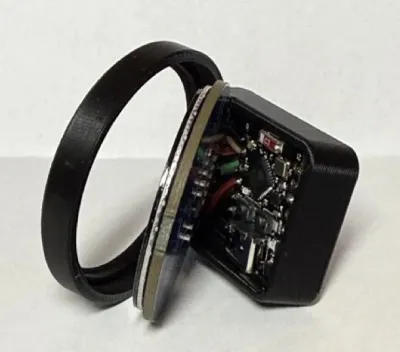
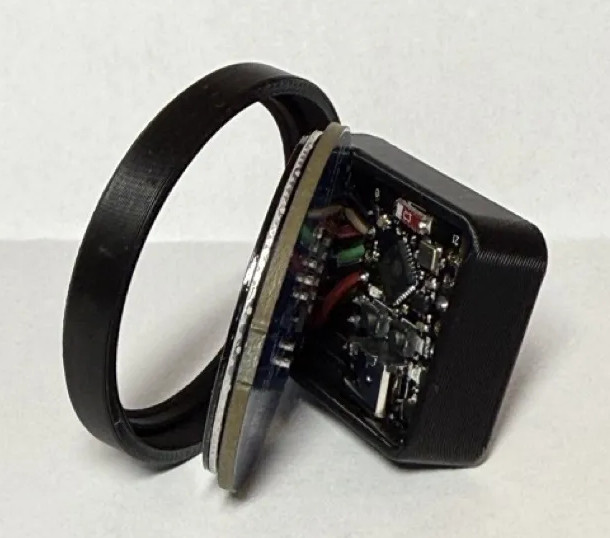
We know, we know. Despite being called ESP32-Plane-Radar, this project from [Mateusz Juszczyk] isn’t actually using radar. But thanks to the round LCD this desktop gadget does a fantastic job of recreating a classic radar display, and by pulling in Automatic Dependent Surveillance–Broadcast (ADS-B) data, the visuals even match nearby real-world aircraft.

Perhaps the best part of this project is just how easy it is for others to get in on the action. Although the presentation certainly looks professional — and expensive, if we’re being honest — there’s nothing particularly exotic going on here. Specifically, there’s ESP32-C3 Super Mini behind the scenes cranking through the ADS-B data and pushing it out to a circular GC9A01 display. A minimalistic 3D printed enclosure holds both components, and while it’s undeniably slick as-is, we can’t help but think there’s potential here for more elaborate designs.

As you probably guessed from the lack of a radio in the parts list, the code [Mateusz] provides doesn’t actually sniff ADS-B out of the air. It connects to the local network over WiFi, and then hits adsb.fi to pull in crowdsourced flight data. Since the device has to connect to the network anyway, the code also offers up a web-based configuration interface which puts a little more polish on what’s already an impressive presentation.

We used a round GC9A01 display on the Vectorscope back in 2023, so if anyone ports this over to their old Supercon badge we’d love to see it in action.

Advertisement

Thanks to [Mauricio] for the tip.

Source link

Advertisement
Continue Reading

Tech

‘This is painful’: one of my favorite budget audio brands is still building elite 5-driver earbuds with LDAC and hi-res iPhone streaming, but its engineering blog and Q&As are a refreshingly open look at audio design issues

Published

on


  • Soundpeats Nebula Aura were teased in January 2026
  • Since then, the brand has continued to run a blog about their development
  • Fans look willing to sell a kidney to try them

Thanks to its roster of solid affordable earbuds, Soundpeats is a brand I always keep an eye on. Between the Soundpeats H3 three-driver in-ears, Soundpeats Clip1 open earbuds and Soundpeats Cove Pro over-ears, I’m always interested in what they’ve got up their sleeves.

After being given a glimpse up said sleeves in January 2026, when the brand teased some five-driver earbuds, we’ve been learning more and more over time. Through 2026, Soundpeats has been running a blog dedicated to the development of the buds.

Source link

Continue Reading

Trending

Copyright © 2025