
























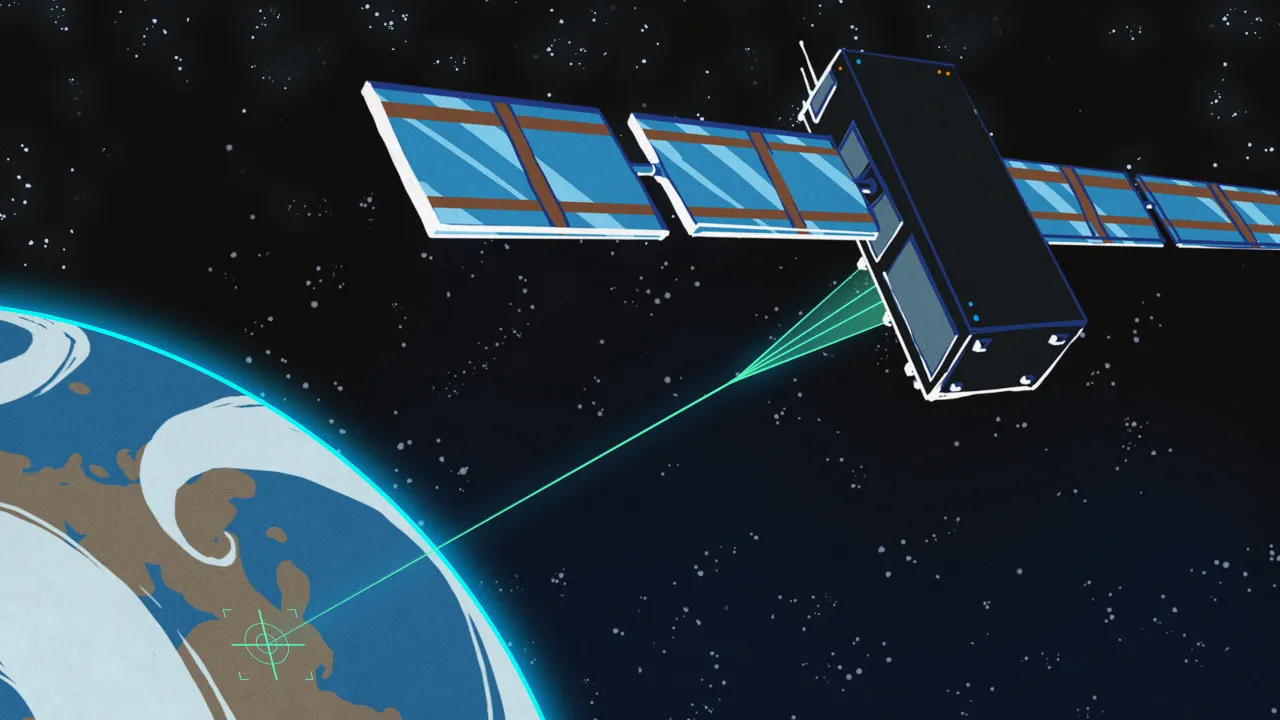
The Global Positioning System (GPS) was developed by the United States military in the 1970s, but it wasn’t long before civilians all over the planet started using it. By the early 2000s the technology was popping up in consumer devices such as mobile phones, and since then its become absolutely integral to our modern way of life.
But although support for GPS in our gadgets is nearly ubiquitous, it’s not the only option when it comes to figuring out where you are on the globe. As you might imagine, not everyone was thrilled with building their infrastructure around one of Uncle Sam’s pet projects, and so today there are several homegrown regional and global satellite navigation systems in operation.
As a follow-up to our recent dive into the ongoing GPS upgrades, let’s take a look at some of the other satellite positioning systems and who operates them.
GLONASS (Russia)
Given the tensions of the Cold War, it will probably come as little surprise to learn that the Soviet Union introduced their own satellite-based navigation system to compete with GPS. Development of the Global Navigation Satellite System (GLONASS) started a few years later than its Western counterpart, with the first satellites not reaching orbit until 1982, officially making it the second Global Navigation Satellite Systems (GNSS) ever developed.
GLONASS satellites orbit at a slightly lower altitude than GPS, 19,100 kilometers (11,900 miles) compared to 20,200 km (12,600 mi) of the American system, and at a greater inclination. This makes reception better at higher latitudes, which makes sense given the desired coverage area.
As designed the capabilities and overall accuracy of GLONASS were very similar to GPS, but the early satellites had a short operational lifespan of just three years. For global coverage GLONASS required 24 satellites in orbit, and maintaining coverage over Russia required 18. But after the fall of the USSR, launches of new satellites were put on pause and the constellation started suffering losses. By 2001, there were just seven operational GLONASS satellites.
President Vladimir Putin made the restoration of GLONASS a key priority in his administration, leading to resumed launches and development of the second and third generation satellites. Within a few years, commercial interest in GLONASS started to pick up, and the network regained global coverage in 2011. While the constellation has experienced a few setbacks over the last several years, spare and replacement satellites have been launched regularly, with the most recent entering orbit in September of 2025.
BeiDou (China)
Unlike the American and Russian systems, the first iteration of BeiDou was of a much smaller scale. Rather than a global system, the goal was to provide regional coverage for China and the surrounding countries with just four satellites placed in a geostationary orbit at an altitude of approximately 35,786 km (22,236 mi). From an observer in China, the satellites would appear to be motionless in the sky, ensuring reception anywhere in the country. Known retroactively as BeiDou-1, the system was operational from 2003 to 2012.

That year it was replaced with the far more ambitious BeiDou-2. The design called for a constellation of satellites in various orbits: 5 geostationary to provide backwards compatibility with BeiDou-1, 27 in medium Earth orbit similar to GPS/GLONASS, and 3 in an inclined geosynchronous orbit. The latter meaning that from the perspective of Earth, the satellite would appear to loiter overhead rather than remain in a fixed position.
BeiDou-1 was largely a research project and saw little use outside of the Chinese government. Conversely BeiDou-2 was designed for both government and civilian use from the start, with two distinct levels of service — civilian users could plot their position within a radius of 10 meters (32 feet), while the military reportedly enjoyed an accuracy of 10 cm (4 inches).
The coverage area of BeiDou-2 was expanded considerably to the south to include include Indonesia and Australia, but it still didn’t provide global service. Commercial use of the network started to pick up at this point, and by 2014 smartphones from Sony, Samsung, and Xiaomi included support for it.
It wasn’t until the introduction of BeiDou-3 in 2015 that the system could boast global coverage, with the system reaching full operational status in June of 2020.
Galileo (European Union)
While civilian use of GPS, GLONASS, and BeiDou was always part of the plan, all three systems were ultimately designed as tools of their respective governments. Conversely, when the European Union set out to develop Galileo in the early 2000s, the goal was to create a satellite navigation system operated by private companies and aimed at civilian users.
That first part of the plan fell apart fairly quickly, and by 2006 Galileo was nationalized and the European Space Agency was entrusted with its development and operation. The first operational satellite was put into orbit in October 2011, and limited functionality was available to the public by 2016. While Galileo was designed for civilian use, it does offer a High Accuracy Service (HAS) with an accuracy of 20 cm (8 inches) that was initially intended to be accessible only by paying customers. But eventually it was decided to make HAS available to compatible receivers free of charge. When combined with its interoperability with GPS and GLONASS, Galileo offers exceptional accuracy.
Galileo reached full operational status in 2024 with a constellation of 24 satellites. Starting in 2027, these will be joined by a dozen upgraded Galileo Second Generation (G2) satellites that feature more electric propulsion for more efficient orbital maneuvers, improved antennas, and inter-satellite data links.
QZSS (Japan)
Development of the Quasi-Zenith Satellite System (QZSS) started in 2002, with the goal of offering high-accuracy position services to users in and around Japan. But rather than operating independently, QZSS was designed to augment GPS with five additional satellites.
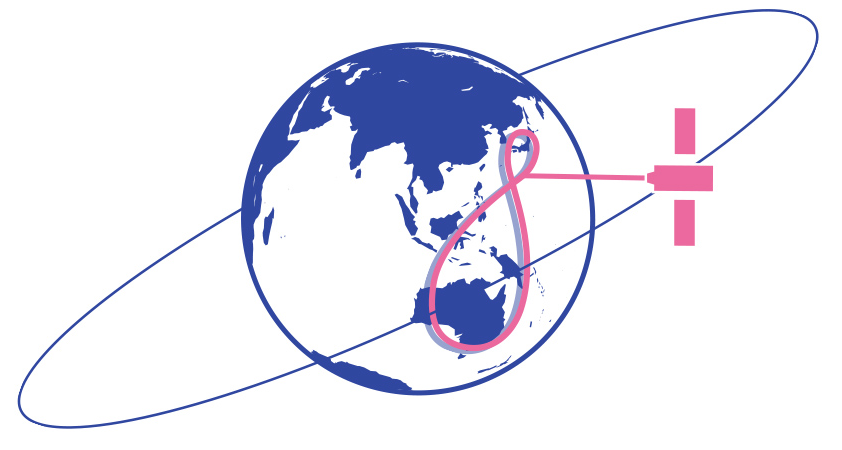
Two of the satellites are in a geostationary orbit similar to those used in China’s BeiDou-1 system, while the other three are in a geosynchronous orbit like those introduced with BeiDou-2. These orbits are intended to keep at least one satellite directly over Japan at all times to improve reception in urban areas. The system became fully operational in 2018.
In the near future, Japan plans on adding three more satellites to the QZSS constellation. This would give the system enough regional coverage to operate independently of GPS if necessary.
NavIC (India)
Navigation with Indian Constellation (NavIC), previously known as Indian Regional Navigation Satellite System (IRNSS), is an independent regional navigation system that covers India and the surrounding area using seven satellites.
Development of NavIC started in 2006, and the first satellite was launched in 2013. Like QZSS, the constellation is made up of satellites in both geostationary and geosynchronous orbits. Two levels of service are offered: the Standard Positioning Service for civilian use that offers an accuracy of 3 m (9.8 feet), and an encrypted Restricted Service intended for military and government applications that’s accurate to 2 m (6.7 ft)
One of the goals of NavIC was not only to launch and operate the system from within India, but to produce as much of the hardware domestically as possible. This includes the atomic clocks and microprocessors aboard each satellite as well as the receiver chips used in client devices. While India wanted to maintain ultimate control over NavIC for political reasons, it’s not an isolationist system — it is designed to be interoperable with other GNSS.
That last point is particularly important right now, as only three NavIC satellites are currently transmitting navigational data due to hardware issues. Those three satellites alone aren’t enough to plot an accurate position, so to compute their location receivers must pull in data from other systems such as GPS.
Better Together
Although having so many active satellite navigation systems may seem redundant, the fact that they all offer at least some level of interoperability with each other means that everyone with a multi-system receiver can benefit. Instead of being limited to the constellation of just one service, this cross compatibility lets a device pull in data from whatever satellites are overhead at the time.
Granted how much of an improvement this results in will be highly dependent on where you’re located on the globe, but no matter what, its always going to be better than being limited to just one system.







































You must be logged in to post a comment Login