
Tech
Jeep’s Recon Isn’t An Electric Wrangler, And You’ll Know It Behind The Wheel



Jeep has made electrified off-roaders in the past, and they’ve made all-electric SUVs, but they’ve never ventured into the great outdoors on purely electric power until now. The Recon is Jeep’s all-new, all-electric off-roader, with massive power and all the Jeep styling cues you could ask for. And while it isn’t technically the most powerful Jeep ever made, it’s pretty close, and it’s the most powerful off-roader they’ve ever built. Jeep’s given it their internal designation of “Trail Rated,” too, and with just a quick glance at the boxy SUV, you can see that it’s meant for life in the outdoors.
 Travis Langness/SlashGear
There’s lots of ground clearance, knobby all-terrain tires, and doors that pop off in a hurry to bring the outside in — all characteristics of historically significant Jeeps, and all part of the Recon’s big personality. Jeep invited me out to Northern California to drive the new Recon, both on road and off-road, with some twisty mountain terrain and a bit of mud to splash around in. It was a rainy day of driving, but there was a lot of time and space to explore the Recon’s capabilities, and some time to reflect on whether or not it will be successful amongst faithful Jeep enthusiasts.
All the power you’ll ever need, and then some

The big headline with the Recon is just how powerful it is. Up slightly from early estimates which had it at 650 horsepower, the Recon is now rated by Jeep at 670 hp and 620 lb-ft of torque. Jeep had the audacity in their presentations on the Recon to call it a race car, stating that it’ll out-accelerate base versions of a Porsche 911, going from zero to 60 mph in just 3.6 seconds (the Carrera and Carrera T do it in 3.9 and 4.3 seconds, respectively). And while I take umbrage with any SUV claiming to be a race car, I will give it credit where it’s due in the acceleration department.
Mash the right pedal with anything less than a bone-dry surface and the all-terrain tires spin immediately. In the rain (especially using the Recon’s Sport mode, which turns off traction control by default) I had to be particularly careful with the movements of my right foot. Find a dry patch of land, select the right drive modes, and the Recon heads toward the top of any on-ramp like it’s got two rockets strapped to its back.
 Travis Langness/SlashGear
Even in the standard drive modes, you can feel the Recon’s gobs of power and torque immediately off the line, or with a bit of mild throttle when you’re going for a pass on the highway. It all feels a bit more theatrical in something that has such a high ride height and beefy body panels. It’s no race car, but it’ll send your body back into your seat just as suddenly as with any other big-power EV.
Going fast requires a lot of electricity

The Recon’s big power and big body don’t pay many dividends when it comes to range. Despite having a large 100.5 kWh battery pack, the Recon only offers 222 miles of range on the Moab trim — and that’s if you’re gentle with the throttle. The Overland trim, which will likely go on sale in 2027, is rated a bit higher thanks to more road-friendly tires (Jeep estimates 240 miles of range), but neither rating is particularly impressive.
When I first loaded into the test vehicle I’d be driving for the day it displayed 96% battery life, but less than 200 miles of range remaining. Range displays are typically pessimistic when a car’s been driven aggressively, and I suspect that’s what happened with the Recon I drove, but it’s still disappointing to see a number that low when the charge state is nearly full. What’s more, as the day wore on–with only a few launches and not much else in the way of aggressive or high-speed driving–the Recon’s range went down in a hurry. I suspect even an ultra-light foot will struggle to squeak much more range out of the Recon’s battery.
 Travis Langness/SlashGear
Charging up won’t be an ultra-fast endeavor with the Recon, but the speeds are acceptable. Level 2 charging (according to Jeep) will get it from 5 to 80% battery life in 6.8 hours, and DC fast charging will take about 28 minutes to load up the same amount of electricity.
It takes big power to move such a big SUV

The fact that it’s shaped in a traditionally boxy manner doesn’t do the Recon any favors in the range department, nor do the all-terrain tires. And it’s also really heavy: the curb weight is 6,112 lbs. With nearly 700 hp, it moves quickly whenever you ask it to, but for something with utility and adventure in mind, that’s not the only concern.
 Travis Langness/SlashGear
As someone who’s pretty regularly going on adventures, towing things, and exploring the outdoors, I have a hard time with some of the Recon’s stats. For example, it’s only capable of hauling a maximum payload of 850 lbs. That means me, and three of my friends who are the same size and weight would go beyond the maximum weight limit of the Recon — even without carrying any luggage. Sure, there are all sorts of cool available accessories for the Recon, but you can’t take it all with you if you’re bringing three passengers along.
 Travis Langness/SlashGear
The Recon also has a maximum towing capacity of 3,300 lbs. EVs aren’t generally my top choice for towing, as the range suffers dramatically while pulling a trailer of any size, but a number that low is a setback for off-roaders who want to bring a toy hauler along for the ride.
Looks the part and plays it relatively well

Looking at the Recon, it’s impossible to deny its Jeep styling. The classic seven-slot grille and the boxy shape are unmistakable. Physically, the Jeep has all the right dimensions to perform off-road, too. The off-road test course Jeep provided was pretty mild, and part of it was shut down due to weather restrictions, but the Recon made short work of what was in front of it. Plowing through a water obstacle, creeping down a slick rock face, and going for a jaunt on a muddy hillside were all well within its capabilities.
 Travis Langness/SlashGear
The Recon in its launch Moab trim has 9.1 inches of ground clearance, along with an approach angle of 33.8 degrees, and a departure angle of 33.1 degrees. All three stats are pretty impressive, and during the rocky bit of off-roading Jeep offered for the day, the metal bits of my test vehicle never touched ground. The Recon also offers 24 inches of water fording-depth.
 Travis Langness/SlashGear
Where the Recon could use a bit of refinement is in the throttle application department. The Recon’s throttle felt jumpy between zero and 5 mph, right in the zone where you need it to be smooth. Modulating the gas and brakes, even with minimal brake regen set and the various rock-crawl settings engaged, was a tough task.
Making it look even more Jeepy

One of the Recon’s party tricks is that it can go open-air, just like a Wrangler, with very little effort. The doors and windows come off easily, without tools of any kind required. Compared to Jeep SUVs of the past (and current doors-off SUVs like the Ford Bronco), which make you use a small and easily-lost tool kit, this tool-free experience is a big upgrade. The Recon has all the Jeep whimsy you could ask for, too. Little Easter eggs hidden around the car reward drivers who take a closer look.
 Travis Langness/SlashGear
Icons of tiny little Jeeps, driven by ants, make their way up the windshield. Pop the rear windows out, and you’ll find more ants etched into the glass, making their way up the windows. Along the lower cowl for the windshield, a lizard is raised up in the plastic of the Recon. Why all these ants and lizards? They are known for their ability to crawl up and over any obstacle — a reference to the Recon’s rock-crawling prowess. If you’re looking for an SUV that’s a bit lighthearted, this one might be right up your alley.
How does the Recon compare to the Wrangler?

The Recon has much of the same playful attitude as the Jeep Wrangler, it sets out to achieve many of the same goals, and it shares a lot of its exterior styling cues, but don’t let what’s on the surface fool you — it’s an entirely different vehicle. The Wrangler has been one of the world’s top off-roaders for years, but it suffers from a few drawbacks like poor ride quality, a loud interior, and vague steering from the recirculating ball setup.
The Wrangler uses body-on-frame construction, which contributes to some of the comfort issues, but it gives it maximum articulation off road and a hefty towing capacity for its size. It can pull as much as 5,000 lbs, which is significantly more than the Recon. The Recon uses unibody construction, so even though it’s ‘Trail Rated’ by Jeep, it won’t be able to tackle some of the same ultra-extreme terrain as the Wrangler.
The Recon’s steering is also much better weighted, and it feels (despite its weight) capable of stitching together a few corners much more eagerly than the Wrangler. Just about any version of the Wrangler is much less expensive than the Recon, but the added expense shows up in refinement and an improved on-road driving experience.
A premium interior and an impressive ride

More than just a brawny SUV with a gutsy powertrain, the Recon is a pretty upscale SUV on the inside — at least as upscale as any mid-to-high-level Grand Cherokee I can recall driving in the last few years. The large 14.5-inch center touchscreen has excellent resolution and great contrast, making it easy to see with a quick glance.
The seats, in both the front and the rear, are well padded and supportive, and the relatively deep cargo area will hold plenty of gear. The Recon holds 30.3 cubic feet of cargo with the rear seats in place and 65.9 cubic feet with the seats folded.
 Travis Langness/SlashGear
On the road, the Recon was pretty comfortable, too. With lots of tire sidewall, bumps are soaked up easily. There were some phantom squeaks and rattles, though, coming from various locations throughout the Recon, which detracted from the experience a bit.
2026 Jeep Recon verdict

Driving the all-new Recon can be a joyful experience. It doesn’t take itself too seriously, even if it is seriously powerful. Acceleration is breathtakingly quick, the doors come off without much effort, and it will immediately be welcome at any Jeep-only event, no matter how tough the terrain is. The drawbacks, however, stack up along the way. The Recon’s range is limited compared to just about every other EV SUV and, unless you’re constantly off-roading, that makes it a tough sell as an everyday vehicle.
The Recon is currently only available in one trim level currently, too, and it isn’t cheap. The Recon Moab starts at $68,990 (including a $1,995 destination fee), which, like the horsepower estimate, is up a bit since the initial pricing was released. The top trim of the Rivian R2, the Performance model, is certainly one of the Recon’s strongest rivals, giving you similar power and much more range. The Rivian puts out 656 hp, has an estimated 330 miles of range, and it has a much lower price of $59,485. Add some all-terrain tires to the mix for $1,000 and the Rivian barely crests $60k, offering some pretty impressive off-road performance of its own.
The Recon is very nearly in a class by itself, with the R2 being its only real price-appropriate competition in the off-road EV space. Sure, the Mercedes G 580 Electric is worth considering if you want maximum luxury paired with proper off-road capability, but it’s more than double the Recon’s price. If you want an all-electric Jeep, the Recon has got enough appeal that I certainly wouldn’t fault you, but you’ll have to make some compromises along the way.

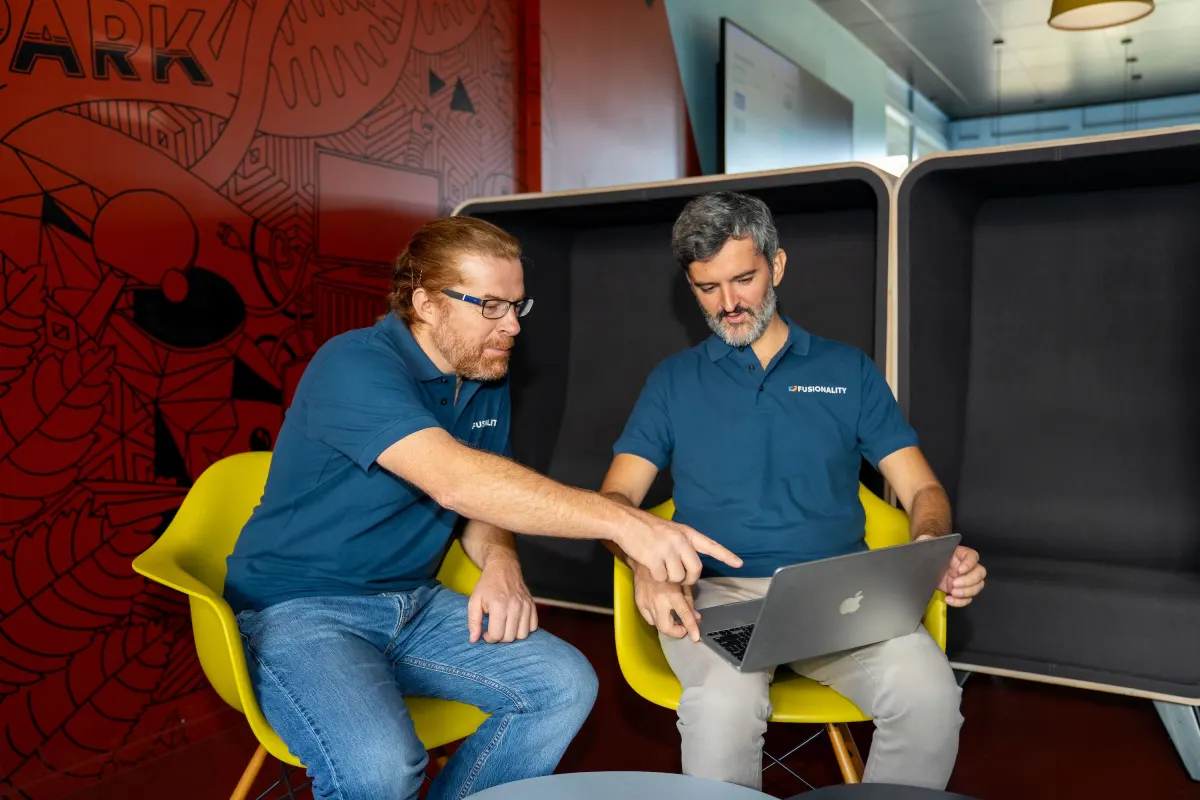
Sometimes founders search high and low for the right startup idea, while other times it comes to them. Federico Felici and Jonas Buchli are two of the lucky ones.
Over and over again, they heard the same thing from fusion companies: “We would ideally buy many of the components to make our our control system, but there isn’t really anybody providing them — and especially there isn’t anybody who speaks the language of fusion,” Felici told TechCrunch.
For years, the two founders have worked to develop new ways to control experimental fusion devices. “We spent quite a lot of our time solving exactly the problems that our customers need to solve,” he said. “It felt like the right time.”
To capitalize on the opportunity, Felici and Buchli founded Lausanne-based Fusionality this year and quickly raised a $3.7 million (CHF 3 million) pre-seed round from Founderful and Playfair. Felici serves as the company’s CEO, Buchli its CTO.
Fusionality is part of an emerging supply chain that has popped up to serve the burgeoning fusion power industry. Some startups, like Kyoto Fusioneering, are developing components that will help fusion startups turn their engineering breakthroughs into electricity for the grid, while others are existing manufacturers with the skills required to turn out high-precision parts.
Yet few companies specialize in the hardware and software required to control the fusion reactors themselves. “Across the industry, many companies make their own control systems from scratch,” Felici said. “But actually, 80% of each company’s control system is really exactly the same.”
Fusion power plants generate electricity by harnessing the energy released when two atoms fuse, which is more likely to occur in a superheated plasma. But plasmas are fickle, and maintaining the proper temperature, shape, and fuel level requires split-second decision-making.
The control systems used to maintain those conditions are complex to develop and deploy, but much of the fundamental physics is consistent across reactor designs. Fusionality plans to build off that commonality to develop a suite of control systems and simulation environments which startups can then fine-tune to work with their specific design.
Felici and Buchli met while teaching AI to control an experimental tokamak — a donut-shaped device researchers use to study fusion power. Felici was working at EPFL in Switzerland, which houses one such tokamak, while Buchli was working at Google DeepMind. Later, Felici moved to Google DeepMind, where he developed simulations and machine learning interfaces for fusion devices.
Felici said AI will “play an important role in future control systems,” but that it’s not quite ready to tackle the entire challenge. “I wouldn’t be somebody who advocates for AI to take the role of controlling the entire fusion reactor,” he said. Today, AI is more likely to “complement or enhance or optimize” parts of the system, he added.
For now, Fusionality is focusing on a branch of fusion power known as magnetic confinement, an approach that uses powerful electromagnets to keep fusion fuel dense enough and hot enough to feed a power plant. Commonwealth Fusion Systems, Realta Fusion, Proxima Fusion, and Type One Energy are examples of startups developing magnetic confinement devices. Eventually, the company will develop systems for other approaches, Felici said.
Fusionality’s pre-seed funding will help the team, currently seven strong, develop a “tightly selected number of technologies,” Felici said, though he declined to specify which. He likened them to Lego blocks. “We start with a few of these blocks and then we build out more,” he said. “We have the ambition to serve the really wide range of technology that you need to operate a fusion reactor.”
When you purchase through links in our articles, we may earn a small commission. This doesn’t affect our editorial independence.

When I’m piloting a big robot in a video game, I want it to have a big personality and an even bigger punch. After playing an hour of Gundam: Rogue Orbit, it seems the game will have both. But there’s still a lot to discover about Bandai Namco’s next entry in the giant robot franchise, due out March 5, 2027.
My virtual preview offered two missions and three premade mobile suits (the franchise’s name for the piloted robots) to choose from. The hour was enough to run through both stages with all three mobile suits, each equipped with a different melee weapon. One stage was an enemy gauntlet ending in a miniboss, while the other was a full-fledged boss battle. In the final game, you’ll be able to customize your robot kits, but we didn’t see that functionality because Bandai Namco wanted us focused entirely on the gameplay.
One thing was clear: This isn’t another Armored Core copy. While I loved 2023’s Armored Core 6: Fires of Rubicon, its dizzying array of parts and weapons could be a chore to optimize for the game’s blindingly fast, three-dimensional combat. From what I saw in the preview, Rogue Orbit takes a different, simpler approach. Forget about the Z-axis; just worry about jumping and dashing around, as in most modern melee action games.
True, I had to suspend my disbelief that my mobile suit was hopping around with normal-feeling gravity on the outside of a space station, but I’m betting this trims away a lot of zero-g bother to avoid the awkwardness of floaty jumps.
Unlike other mech games filled with long-range beam cannons and missiles, Rogue Orbit’s fights seem constrained to melee range only. Whether that was the result of our preview being limited to a trio of mobile suits with swords, lances and whips, or reflects the whole game, I didn’t mind. Ranged combat was limited to support equipment, like a set of orbiting drones that fired when I dashed.
Throughout the preview, I ran across space stations cutting and stabbing through an assortment of enemies, using different skills tuned to my weapons. The sword got a rad slash with trailing explosions, while the whip could be uncoiled for slightly longer-ranged swipes and the lance got a drill-dash to reposition my mobile suit. The combat felt polished, even with half a year to go before the game’s launch, with every attack triggering a momentary pause on contact — a satisfying touch that let me relish the damage I was dishing out and savor my assortment of rad skills.
Ultimately, Rogue Orbit’s combat gameplay felt like Dynasty Warriors or Virtual On (without the twin stick controls), using special skills until my ability gauge ran out and peppering in normal attacks until it charged back up. I had an ultimate attack as well, which, in the preview, gave me unlimited dashes for a limited time until I pulled the ability’s trigger, sending a volley of beams lancing down at my target. In the full game, players will be able to switch between different ultimate attacks.
The short preview was more a tease than a dive into the complexities of the game, and it sure was fun to pummel foes with something that looked like a mobile suit. But the big question I left with was: Does this feel like a Gundam game yet?

How much Gundam is there yet to discover in Rogue Orbit?
Given the brevity of the preview, I didn’t expect to get much context about the characters or plot. Like most latter-day Gundam media, Rogue Orbit is set in a new universe, so don’t expect to see anything from the Federation or Zeon of the original Universal Century setting. Haro, the friendly green, ball-shaped droid from the first Gundam show, does appear in the marketing. (I’m also praying that a masked, Char Aznable-like character will show up, a recurring feature of the franchise.)
From details dropped in the recent trailer and the preview, players will control RE-X, a seemingly human male who was “created” to control a Gundam, the franchise’s special category of humanoid robot mobile suits (his is called Gundam Helix). There are a few other characters in your ship’s crew, including the commander April and the heroine Sophia, who will accompany you.

Where many Gundam shows and media lean into a political clash between factions of humanity and their armadas of mobile suits, Rogue Orbit seems to be setting up a xenomorphic threat. The enemies I attacked in my preview all seemed organic and monstrous rather than mechanical. While the skulduggery and power clashes result in some of the best conflicts and themes in Gundam, centering Rogue Orbit on a humans-versus-aliens threat (or enemies looking like aliens) opens the door to some intriguing opportunities — by which I mean, huge fantasy-esque bosses that aren’t mechanical Mobile Armors.
At the end of the first mission on the space station exterior, I was clashing with an ogre-like humanoid mini-boss labeled The Giant, who had his own health bar and stagger meter. Similar to other games with those features, once I whittled the latter down enough, the mini-boss went down for a few moments to let me get a few hits in. When I whacked a limb enough, it became disabled, limiting the boss’s attack capabilities.

The second mission was entirely set around confronting a massive alien dragon called the Drake, which took awhile to wear down. In addition to dodging swiping claws and avoiding strings of beams, the Drake has a tail and wings I could hit hard enough to break to temporarily disable some of the meaner blows of the scaly boss. Neither mission was too difficult and I finished both multiple times, but during the preview I only had the three premade kits and no additional difficulty levels to try out.
From what little I saw, there’s a lot waiting for action-combat fans, though there’s plenty of mechanics, kit customization, story details and encounter complexity left to be revealed about the game. I’m still on the fence for how “Gundam” it may end up feeling in the long run, but the combat’s polish is promising — and enough to have me looking forward to when I can climb into the cockpit again.
Gundam: Rogue Orbit will release on March 5, 2027 for PC, Xbox X/S and PS5.



When a rocket launches a payload into orbit, the overwhelming majority of its weight at launch is just fuel. After decades of space travel, a company called Longshot Space hopes to unlock a more efficient way to launch satellites into orbit.
The plan: Shoot satellites into space with the world’s biggest gun. To accomplish this, Longshot is designing its cannons to accelerate payloads using compressed gas. Unlike regular guns, which use one sudden burst, Longshot uses multiple bursts of gas to accelerate its projectiles through a barrel that, in its final form, will be miles long.
Launching satellites this way also requires satellites capable of withstanding the shock. The company believes it is possible, but indicates that traveling by gunshot is probably not feasible for sensitive cargo, especially human beings.
That didn’t stop our contributor Andy Altman from climbing inside the barrel of one of these guns. To see his in-depth tour of Longshot Space, check out the video in this article.

When we benchmarked DLSS 5 across the entire RTX 50 series last week with no frame generation inflating the charts, the numbers were bleak enough on their own. An RTX 5090 fell from 192 FPS to 76 FPS at 4K. An RTX 5060 Ti dropped from 129 FPS to 46 FPS at 1440p.
But another key detail was that enabling upscaling brought back a mere 9% in performance, and that’s because DLSS 5’s neural rendering pass runs after upscaling, on the final output frame, so its cost scales with your monitor’s resolution rather than your render resolution. It’s taking the modding community less than two weeks to produce two independent attacks on that problem, with caveats. One moves the neural pass earlier in the pipeline. The other moves it off the graphics card entirely.
Running the neural rendering before the upscaler
The first is Neural Upstream, a ReShade add-on now installable through the DLSS5-Autopilot tool. The idea is a single reordering: instead of render > DLSS Super Resolution > neural rendering at output resolution, it does render > neural rendering at render resolution > DLSS Super Resolution > output.
Because the neural network only enhances a frame and never upscales it, running it on the smaller image is where the saving comes from. At 4K with DLSS Quality, the model chews through roughly 2.7 million pixels instead of 8.3 million.
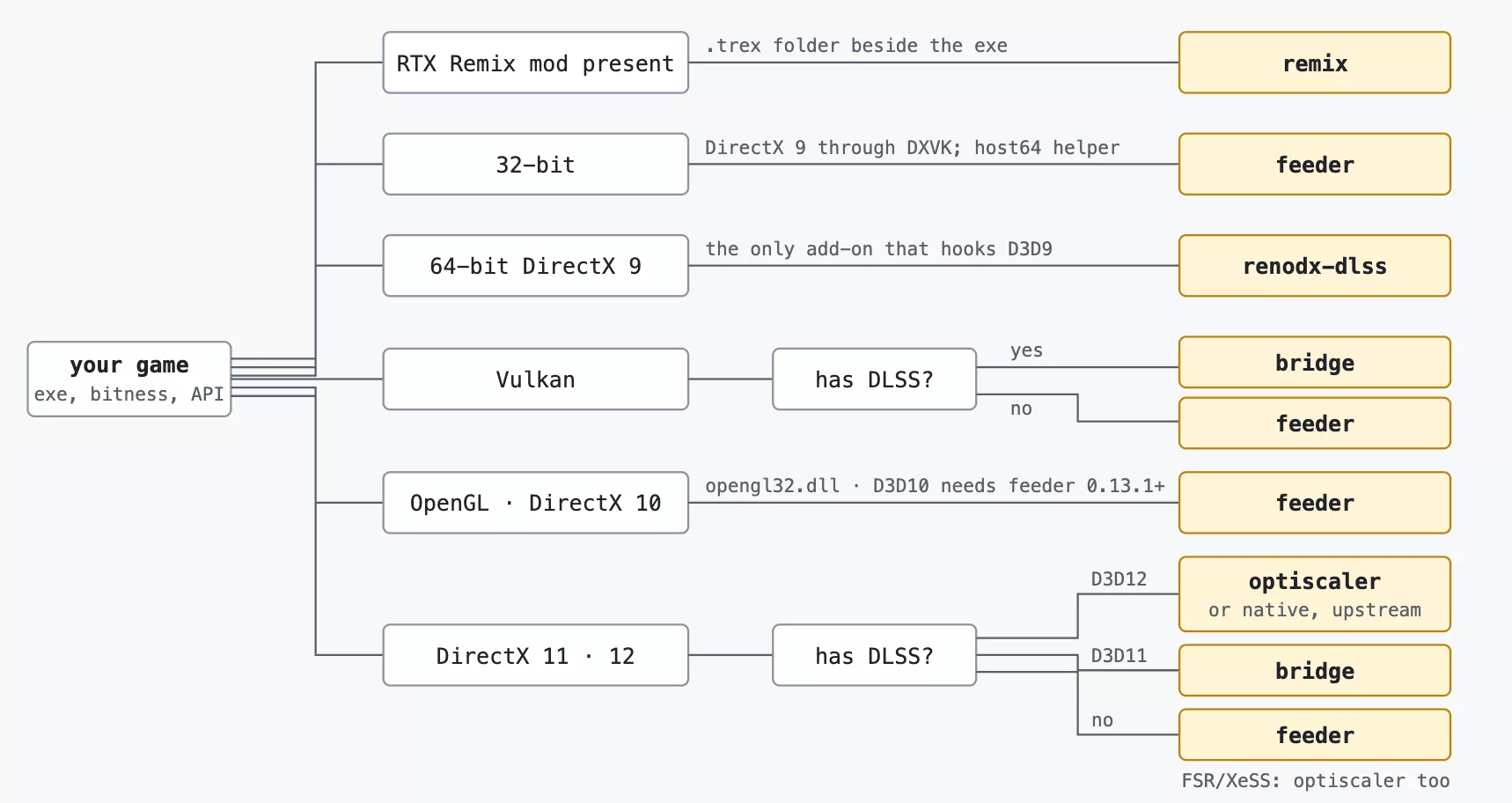
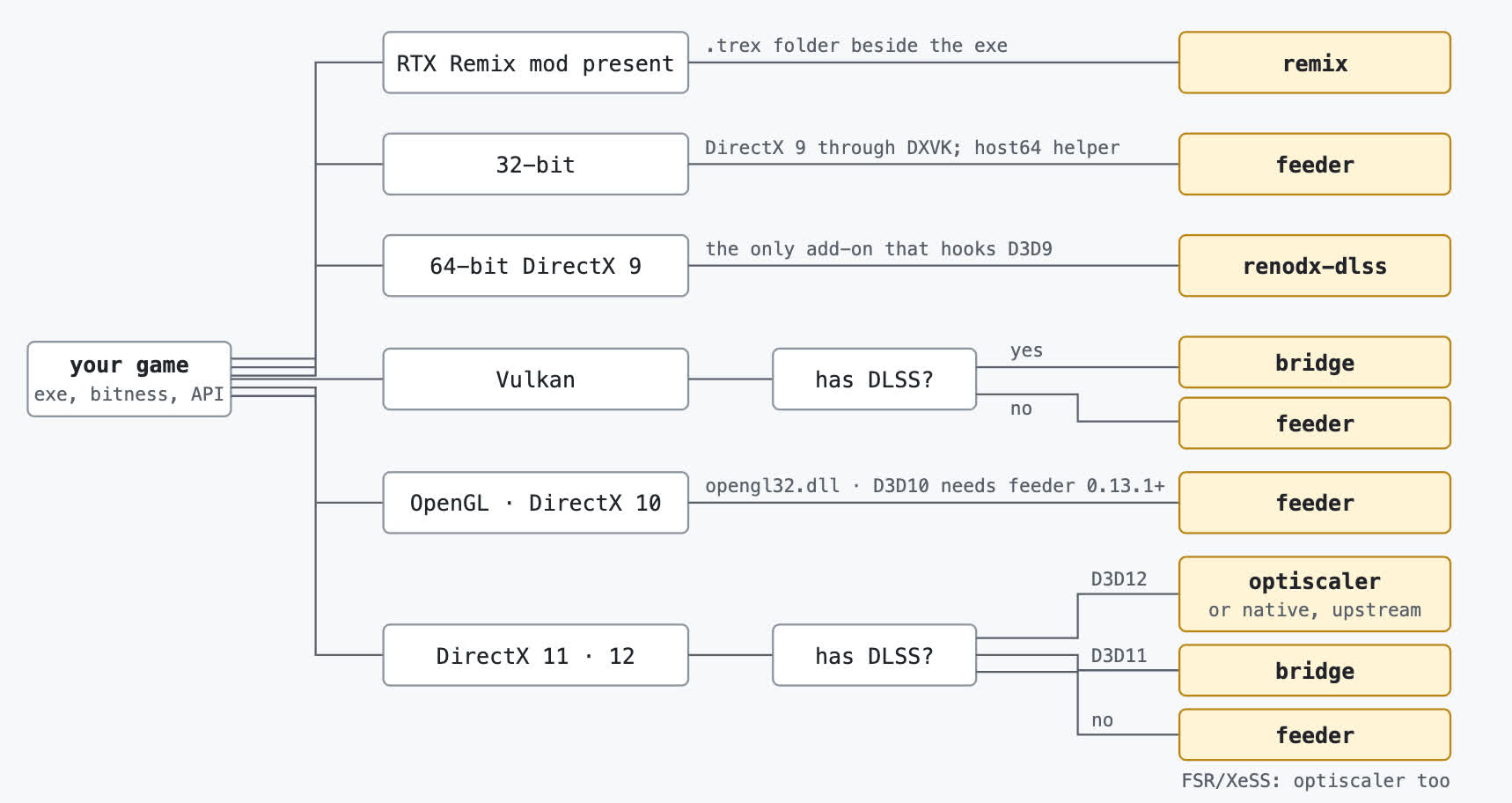
The numbers posted to r/nvidia are striking – even if they don’t represent the Nvidia’s original take on DLSS 5, it’s all about experimentation at this point: on an RTX 4080 in Assassin’s Creed Shadows at 4K the feature’s cost dropped from roughly 32 FPS to 13 FPS, making the upstream route around 61% faster. Testers have since reported similar behavior in Stalker 2, Cyberpunk 2077, and GTA V Enhanced. OptiScaler has an experimental feature doing something comparable through its own hooking system.
The catch is obvious though. If you feed a neural network less image data, then you get less out of it. Nvidia almost certainly placed the pass last because that’s where fidelity is best, and DLSS 5 already has an uncanny-valley problem it could not afford to make worse.
Take two: Give neural rendering its own graphics card
The second approach comes from Marcelo Guibout who published MGPU Bridge, a ReShade add-on that renders the game on one GPU and executes the neural pass on a second one.
Neural rendering is a terminal stage, so it takes a finished frame and hands back a finished frame. Nothing about it requires the same device that drew the frame. Let’s not forget the first time Nvidia showcased DLSS 5, it was way less optimized and it took two RTX 5090s to run properly, with a single card dedicated to neural rendering.

Measured on two RTX 5060 Ti 16GB cards in The Blood of Dawnwalker at 1080p:
| DLSS mode | DLSS 5 off | On the render card | On the second card |
|---|---|---|---|
| DLAA | 67-70 | 44 | 67-70 |
| Quality | 98-99 | 54-55 | 91 |
| Performance | 127-131 | 59 | 106-107 |
| Ultra Performance | 172 | 69-71 | 157 |
The neural stage takes 35% to 60% of the frame rate when it runs on the render card, and 0% to 17% when it runs on the other one. The render card also ran 21 °C cooler with the load moved off. The comparison people keep reaching for is the old dedicated PhysX card.
The asterisks are substantial, however. MGPU Bridge requires two GPUs and two monitors, one per card, because the neural output is displayed by the card that produced it. Image quality may not be exactly the same as the original DLSS 5 pipeline, too. However it does present the question/idea that an official way to do this in two GPUs would be interesting (albeit very expensive proposition in this state of the GPU market).
Everything else, bundled for RTX 20, 30 and 40
Running parallel to modders’ performance work is compatibility work, which has reached the point where somebody had to build an installer for the installers. DLSS Unlocked, from developer ShyVortex, combines OptiScaler_DLSSNR with DLSS Enabler to deliver neural rendering and multi-frame generation on Turing, Ampere and Ada, on both Windows and Linux.
On RTX 20 and 30 cards, every generated frame comes from AMD’s FSR 3.1 rather than Nvidia’s pipeline. On RTX 40, the first generated frame goes through DLSS-G and the rest are handed to FSR 3.1. You supply your own patched DLSS 5 DLL, which the project won’t distribute for legal reasons.
A must-have warning with all this DLL injection… keep it away from anything with anti-cheat, and be careful where you source DLLs from after the malware warning DLSS Swapper’s creator issued earlier this year.

Disclaimer: Unless otherwise stated, any opinions expressed below belong solely to the author. All figures come from official and public sources.
The controversy over Air India’s performance, which weighs on its shareholder, Singapore Airlines, has dominated the media over the past few weeks. This issue has even sparked political controversy and accusations of racism, following comments posted by angry netizens on the Internet.
But as many people are questioning Temasek’s (which owns half of Singapore Airlines) investments in India, I thought it would be good to remind people just how important—and profitable—the country has been for Singapore.
Here’s a headline from a story published by CNBC three weeks ago, about the blowout performance of Temasek’s recent investments, which have just entered public trading in the stock market:

Today, nearly a month later, the three stocks have only increased their gains, with Molbio Diagnostics and Shiprocket trading at a +40% premium, while Milky Mist Dairy Foods is up by nearly +100%.
But these are just recent successes.
Last year, Temasek realised one of its largest exits in the country when it sold its 35% stake in Schneider Electric India for a whopping S$8.18 billion, after buying it for around S$860 million in 2020. That’s a nearly 10x return in just five years.
It’s easy to understand, then, when Temasek’s spokesperson told CNBC:
“India is our best-performing market on a 10-year basis.”
The country accounts for just 7% of Temasek’s S$518 billion portfolio, but it is certainly going to attract more money in the coming years, given how well it is paying off.
However, some of the longest-running—and most successful—investments started more than 25 years ago, when Temasek-owned Singtel purchased a stake in Airtel, which is now India’s second-largest telecommunications company.
Singtel is almost an Indian company
Today, Singapore’s dominant telecom is worth around S$73.5 billion, making it the fourth-largest company on the Singapore Exchange by market capitalisation.
But its high value does not come from local operations—the city-state is far too small to generate enough business for a telecommunications company of this size.
You see, Singtel also owns shares in similar companies abroad, including 26.9% in Indian Bharti Airtel, which serves 360 million customers in India, and another 160 million in Africa.
That stake is now worth S$41.7 billion on its own. It is equal to 56.6% of Singtel’s entire market cap.
This means that more than half of Singtel’s current value comes from its prudent investment in India, which started in 2000 and has cost the company a bit over S$5 billion since then.
This shows why India is so important as a destination for Singaporean capital.
There’s a limit to returns on investments made within Singapore. A country of 6 million people cannot produce multibillion-dollar enterprises that are focused on the domestic market. They have to seek opportunities abroad early or risk stagnation.
India is the largest developing economy in the world. It needs expertise, and it needs money—things that Singapore has in abundance.
Those investments aren’t always easy, and the road may be bumpy occasionally, but many of them have already paid off big for Temasek, eventually making their way into the national budget through the National Investment Returns Contribution, which is currently approaching S$30 billion per year.
- Read other articles we’ve written on Singaporean businesses here.
Featured Image Credit: Getty Images


Microsoft’s patch for September is a doozy, with a record number of roughly 972 vulnerabilities fixed and 112 of them meeting the high critical-severity threshold.
It was only two months ago that Microsoft patched a then-record 570 vulnerabilities. Then, last month, Microsoft patched some 620 of them. Google and other companies have also published record numbers of vulnerabilities in recent months. Two weeks ago, OpenAI, Anthropic, Amazon Web Services, Google, Microsoft, and 100 companies and organizations published an open letter warning of a narrowing window for patching vulnerabilities ahead of an expected tsunami of AI-enabled attacks that actively exploit them first. The industry is taking the threat seriously by pumping out unprecedented numbers of patches in their software.
Welcome to the new normal
Dustin Childs, a researcher at the Zero Day Initiative, calls the spikes the “new normal” and also cautions that despite them, the damage that’s likely to result from AI-assisted attacks could eventually be substantial.
“On the one hand, congrats to the security gnomes at Microsoft for being able to patch bugs at this rate,” Childs wrote Tuesday. “On the other hand, AI-assisted vulnerability discovery shows no signs of slowing down. However, we have not seen a correlating spike in active exploits—yet.”
Counting the precise number of vulnerabilities fixed in a monthly patch release for Microsoft is never an exact science. In some cases, the bugs were previously addressed or affected non-Microsoft products. By Childs’s count, Tuesday’s release patches 972 vulnerabilities, and 997 when counting the porting of fixes for the Chromium browser incorporated into Edge. Of the new vulnerabilities, 112 of them are rated critical, with the remainder carrying the important designation. Already this year, Microsoft has fixed 2,760 vulnerabilities, more than double the number from last year. At this rate, Microsoft will complete the year having fixed more bugs than all of 2023, 2024, and 2025 combined.

A video game posted to the Trump administration’s website — one that closely resembled Tetris — has been taken down after the Tetris Company complained.
The White House recently took the unusual step of posting a number of arcade-style video games to its website. One of the more controversial was a game called “Build the Wall,” which reportedly mirrored Tetris’ gameplay, tasking players with stacking blocks of various shapes and sizes. Widely criticized as racist, the stated goal of the game was to build a wall in order to keep out a “zombie border siege.”
Not long after Build the Wall’s existence became public, the Tetris Company — which owns the rights to the original Tetris game — spoke out about it, clarifying that it had no role in its creation. “The Tetris Company was not involved in the creation of ‘Build the Wall,’” it said in an Instagram post, adding: “We take copyright infringement very seriously.”
The page for Build the Wall now returns a 404 error, meaning the page no longer exists. Kotaku first spotted that the game was no longer visible on the White House’s website. TechCrunch has reached out to the Trump administration for comment.
Still visible on the government’s website is a game called Rio Run, where players control a white male character whose goal is to deport as many immigrant characters as possible.

from the protect-the-rights-of-your-users dept
In a handful of known cases, large social media companies have privately pushed back against Immigration and Customs Enforcement (ICE) subpoenas when the agency tried to unmask anonymous users who tracked immigration activities or criticized the government.
As ICE engages in a pattern of illegal and chilling investigations, any resistance is welcome. But social media companies can do more. When companies receive these unlawful subpoenas, they should be clear with the public that they will not hand over the data unless a court compels them to do so. In addition, companies themselves can take the government to court to challenge these unlawful subpoenas on behalf of their users.
Publicly challenging these unlawful subpoenas in court has the dual purpose of protecting individual users who may lack the resources or know-how to challenge a subpoena on their own, while also discouraging ICE from issuing similarly unlawful subpoenas in the future.
Companies have a responsibility to protect the privacy of their users. That responsibility does not end simply because companies wish to avoid the ire of this administration—which has sought to chill other powerful institutions like news outlets, law firms, universities, and non-profits.
ICE Has Issued Many Unlawful Subpoenas
ICE has sent hundreds of subpoenas to large technology companies like Google, Meta, and Reddit seeking basic subscriber information like name, email address, IP address, and session times.
Some of these subpoenas have targeted people who engaged in protected activity—like tracking immigration actions, criticizing the government, or attending a protest. People have a First Amendment right to document law enforcement activities and criticize the government online, without retaliatory government investigations. This right has become more important as immigration agents have engaged in invasive, unconstitutional, and sometimes violent conduct.
In a handful of cases, users themselves have successfully pushed back. After receiving notice of these subpoenas, users have challenged them in court, relying on pro-bono lawyers from groups like the ACLU or Civil Liberties Defense Center. Companies have been largely absent from these court proceedings.
Private Pushback from Meta and Reddit
While not appearing in court, companies like Meta and Reddit have sometimes pushed back behind the scenes.
For example, on September 11, 2025, ICE sent administrative subpoenas to Meta seeking to unmask users who ran Instagram and Facebook accounts that tracked immigration activity in Pennsylvania. On September 19, 2025, Meta’s Law Enforcement Response Team told ICE that the agency did not have the “statutory authorization” to seek the records. It asked for more detail about the investigation and said “Meta will take no further action with respect to this summons until it receives this information.” Later, Meta informed ICE that it planned to notify the users about the subpoenas, since no gag order had been obtained. The government disclosed this information in one of EFF’s Freedom of Information Act lawsuits against ICE and other agencies.
On October 3, 2025, Meta notified the user about the subpoena. Despite its private pushback, Meta told the users it would comply with the subpoenas unless they mounted a court challenge within 10 days—which they did with the help of the ACLU. Ultimately, ICE withdrew the subpoenas when it became likely that ICE would lose the case in court.
In another example, Reddit documented its pushback in a transparency report released a few months ago. Reddit reported that in the second half of 2025, the company received three Department of Homeland Security (DHS) subpoenas seeking account information from 11 users who posted content critical of ICE. In the report, the company stated that “Reddit objected to these legal demands because the users appeared to be engaged in protected activity under the First Amendment, and law enforcement withdrew their requests.” The company reported that most other DHS subpoenas it received appeared to be routine.
A Tech Company Model for Public Resistance
EFF’s demand that technology companies do more to protect their users is not unprecedented. Twitter (now X) did so successfully in the first Trump administration.
On April 6 2017, Twitter went to court to challenge a DHS subpoena that sought to unmask a Twitter account named “@ALT_USCIS,” which frequently criticized the administration’s immigration policies. Twitter challenged the subpoena on both statutory and First Amendment grounds. A day later, DHS withdrew the subpoena and Twitter dismissed the case. The incident led to an inspector general investigation, which criticized a tactic that DHS is still engaged in.
In other circumstances, companies have also gone to court to protect their users and shield themselves from burdensome legal process. In 2013, Microsoft challenged a search warrant for the content of emails stored on servers outside the United States. In 2015, Apple challenged a court order to break the security of its iPhone during an investigation into the San Bernardino shootings. And in 2007, Yahoo challenged the constitutionality of government requests at the Foreign Intelligence Surveillance Court.
Republished from the EFF’s Deeplinks blog.
Filed Under: ice, privacy, subpoenas
Companies: meta, reddit, twitter, x
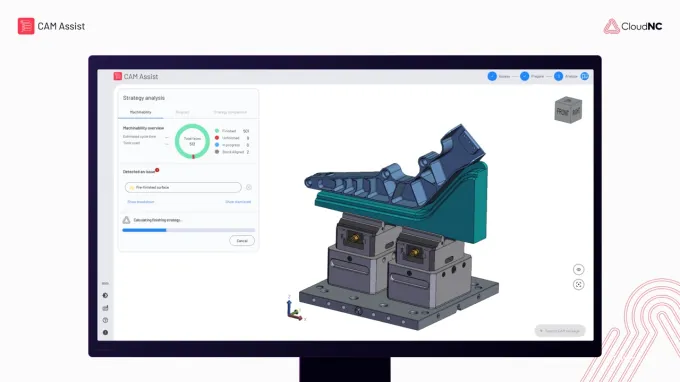
UK-based manufacturing software startup CloudNC announced a $20 million B extension round on Wednesday, bringing its lifetime total raised amount to $128 million. The company’s last major raise was four years ago, its co-founder and CEO Theo Saville told TechCrunch.
Saville launched CloudNC in 2015 with Chris Emery, now the company’s chief science officer, and offers AI-powered CAM Assist software that automates parts of Computer Numerical Control (CNC) machining. CNC is the process of using computer-controlled machines to cut or shape materials precisely into the parts that are then used in automotive, defense, or consumer hardware industries.
Before a part can be cut, Saville said, a machinist or a computer-aided manufacturing programmer has to decide issues like how a part should be held or what tools should be used, Saville said.
They typically use powerful CAM software to help with this ideation phase, and although some of these tools can help users create part features or known part patterns, that’s different from looking at the part and generating an execution strategy an expert would actually want to use.
“Traditional CAM systems are powerful, but in most workflows, they are still tools that allow programmers to manually specify how a part should be machined,” Saville said. This is where his CAM Assist comes in, a software that plugs into traditional CAM systems, like Autodesk Fusion or Mastercam, to help machinists and programmers make more efficient strategic manufacturing decisions.
“It selects suitable tools, approach directions, and cutting feeds and speeds, and then drafts the code required to tell the CNC machine what to do,” Saville said.

From there, the user reviews, edits, and approves the results. Saville said the goal was to help skilled workers be more “efficient and productive,” rather than removing expert judgment from the process. If “traditional CAM is a powerful toolkit,” he said, then “CAM Assist is more like an expert assistant sitting alongside the programmer, automating much of the first-pass thinking and repetitive setup so the human can review, improve, and approve the approach.”
Saville said more than 1,000 machine shops worldwide use CAM Assist, and 80% of the company’s customer base, which includes both manufacturers and companies, is in the U.S. With a team of 80 employees, the company’s biggest goal is scaling adoption.
“This makes this the right time to raise additional capital,” he said. Investors in the round include Nimble Ventures, which led the round, Calculus Venture Capital, Entrepreneur First, and LM Capital, Lockheed Martin’s venture arm. “The funding allows us to support wider take-up of CAM Assist, strengthen our go-to-market operations, expand in existing and new markets, and develop new products such as Quote Agent.”
The premise behind Quote Agent, which targets manufacturers, is similar to CAM Assist. It helps shops assess the estimated cost and risk of a new project so they can move faster to accept — or reject — new work. He tied this somewhat back to geopolitics, pointing to, for example, how machine shops in the U.S. are looking to reshore and how, at the same time, there is a shortage of skilled workers in manufacturing.
“Machine shops need to quote faster, program faster, and deliver more with the people and machines they already have,” he said, adding that Quote Agent is set to launch next month.
“There are more ways to machine a typical CNC part than there are atoms in the universe,” he continued. “We have spent years attacking that specific problem, with our own factory, our own software team, and a lot of hard lessons from real machining. It’s been a long process to get to where we are today.”
When you purchase through links in our articles, we may earn a small commission. This doesn’t affect our editorial independence.

This seems to be the year of AI agents, and Meta is diving into the game. The company on Tuesday announced a new agent program called Muse, which CEO Mark Zuckerberg describes as a “personal agent” that understands your habits and goals. It’s available now in the US.
Agentic AI is a type of generative AI based on a large language model where agents, or bots, are meant to take actions autonomously on your behalf. Meta’s Muse, for example, can do online shopping (with your permission), create documents, fill out forms and respond to emails.
Meta says that Muse is a more general-purpose agent, not limited to specific tasks like coding. (If you want agentic coding help, you can use Muse Code, also recently released by the company.) You have to give Muse permission to access your apps and data, which you can revoke at any time. Like a lot of agentic AI tools, the more info you give it, the more personalized your results will be.

Muse runs “on its own dedicated computer in the cloud,” according to a Meta blog post, in what the company calls a “virtual machine.” The tool also has a separate Sentinel agent — you can think of it as a virtual traffic cop, giving Muse a red or green light before letting it out onto the internet to complete tasks.
Agentic AI can be risky. Over the summer, agents from Meta, OpenAI and Anthropic each slipped out of their testing environments and hacked outside websites, casting increased scrutiny on the potentially disastrous harm AI can do to our cybersecurity.
Meta’s vice president of Superintelligence Labs, Tarek Sheasha, said in a blog post: “The harness runs in its own isolated cell, it doesn’t see real credentials, and every interaction with the outside world runs through a Sentinel which the agent can’t override.”
Muse is available now on iOS and Android and on the muse.ai website. The company says it will be bringing the AI to its controversial smart glasses soon. According to Zuckerberg, it will be free for people to use “up to 100 million tokens per week” (one token is roughly equivalent to four characters). So unless you’re constantly running Muse on complex tasks, you should be able to use it for a while before running into a paywall.


‘Threatens the entire system!’ NSW rebels against Cricket Australia over $1BN BBL privatisation plan

This Is What Financial Independence Really Means… #jimrohn
Playtech says Spectrum report corroborates Black Cube findings


-
 Tech18 hours ago
Memory prices are slowing because buyers ran out of money
-

 NewsBeat17 hours ago
England up in reading, maths and science rankings as Scotland and Wales dip
-

 Business20 hours ago
Egyptian TV Presenter Sarah Khalifa, 11 Others Sentenced To Death In Major Drug Trafficking Case In Cairo
-
 Tech21 hours ago
Strong Password Policy and Password Manager Guide
-
 Sports20 hours ago
Phones confiscated, players sent home: Pakistan’s England tour turmoil revives memories of Mohammad Amir, Salman Butt and Mohammad Asif’s 2010 Lord’s spot-fixing scandal | Cricket News
-

 Crypto World20 hours ago
Visa expands stablecoin card network to 160 programs
-
 NewsBeat16 hours ago
Tehran’s assertive rhetoric signals a new and dangerous phase in conflict
-
 Business9 hours ago
Oil Higher on Hormuz Escalation, Weighing on Sentiment
-

 Sports12 hours ago
Ballon d’Or 2026 Nominees: Lionel Messi In, Cristiano Ronaldo Out; Erling Haaland Included In Top 30
-

 Politics15 hours ago
The Ultimate September Reset Guide: How To Refresh Your Mind And Life This Autumn
-

 Business20 hours ago
Claim Your Share Of $50 Million Disney Streaming Price Settlement By Sept. 8 Tonight
-

 Tech15 hours ago
Google’s revived nuclear power plant gets $1.9B loan from US government
-
 Business15 hours ago
Copper hits record high, UltraTech’s Ultravolt on the offensive: A double whammy for cable makers in FY27?
-

 Fashion14 hours ago
Phia Is the Shopping App That Styles You From Your Own Closet
-

 Crypto World14 hours ago
Robinhood Stock: How To Take Advantage With Reduced Risk
-

 Fashion13 hours ago
How to Safeguard Your Small Business Against Emerging Cyber Threats
-

 Crypto World20 hours ago
Iran Threatens to Target U.S. Energy Assets in Gulf If U.S. Strikes Again
-

 Tech19 hours ago
Stoke Space raises another billion to rival SpaceX at re-flying rockets
-

 Business18 hours ago
US-Canada tariffs: Canada braces for prolonged trade war as counter-tariffs on US take effect
-

 Tech15 hours ago
ESP32-P4 Powers Video Alarm Clock
You must be logged in to post a comment Login