Security teams log 54% of successful attacks and alert on just 14%. The rest move through your environment unseen.
The Picus whitepaper shows how breach and attack simulation tests your SIEM and EDR rules so threats stop slipping by detection.





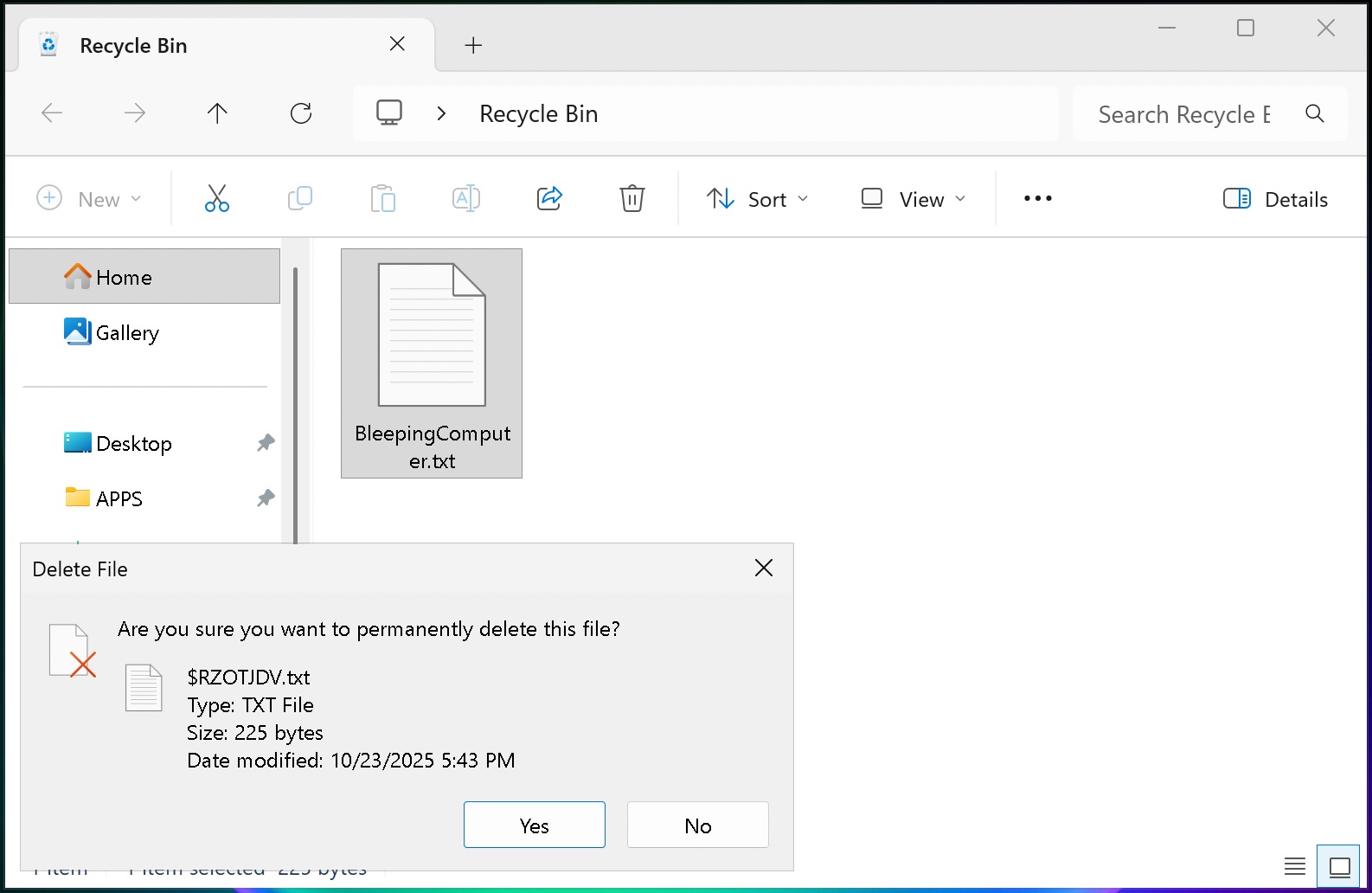
Microsoft has confirmed a confusing Windows bug that causes different filenames to appear in the confirmation dialog when deleting a file from the Recycle Bin.
“When permanently deleting a single item from the Recycle Bin, the confirmation dialog displays the internal Recycle Bin filename (for example, $Rxxxxx.ext) instead of the original filename,” the company explained in a Thursday update to the Windows release health dashboard.
“The Recycle Bin itself correctly displays the original filename, and restoring the item also restores it using the original filename.”

While Microsoft didn’t share how widespread this known issue is, it said that it affects all supported Windows releases across both client and server platforms after installing the June 2026 security updates.
The complete list of affected Windows versions includes:
Microsoft said that its engineers are working on a fix for this bug, which will ship to affected systems in a future Windows update.
However, while a fix is not yet generally available, Microsoft added that a temporary workaround is available for businesses that will reach out to its Business Support team.
“A workaround is available for affected devices. To apply this workaround in your organization and mitigate the issue, please contact Microsoft’s Support for business,” it noted.
Earlier this week, Microsoft confirmed another issue that blocks third-party apps from launching Word, Excel, PowerPoint, Access, and other Office applications (or from opening documents) on Windows systems after installing the June 2026 updates.
More recently, on Thursday, it also fixed a known issue that caused the June 2026 security updates to fail on Windows Server 2016 systems that didn’t have the May KB5087537 security update installed.

Security teams log 54% of successful attacks and alert on just 14%. The rest move through your environment unseen.
The Picus whitepaper shows how breach and attack simulation tests your SIEM and EDR rules so threats stop slipping by detection.

Millions of discarded smartphones are added to the global electronic waste stream every year despite retaining substantial computing capability.
Researchers from the University of California, San Diego, have now partnered with Google to investigate whether retired Pixel devices can be repurposed for practical computing workloads.
The project aims to reduce waste while easing some demand for new hardware used in smaller-scale data centers.
Google Research says retired mobile devices contribute to the embodied carbon associated with manufacturing and the broader environmental cost of consumer electronics.
Rather than allowing those devices to remain unused, the research team converted older Pixel smartphones into what it describes as a general-purpose computing platform.
The approach involves removing components unnecessary for computing workloads, including displays, batteries, cameras, speakers, and outer casings.
Only the motherboard remains because it contains the system-on-chip required for processing tasks and application execution.
The researchers then replace Android with a Linux-based operating system commonly used in data centers, allowing deployment of orchestration platforms such as Kubernetes.
This process removes software overhead associated with consumer devices while enabling management tools normally found in enterprise environments.
The researchers claim that phones released only three years ago still delivered stronger single-core benchmark performance than some server configurations.
They compared those devices against systems such as the Asus RS720A-E11, which can be configured with Nvidia H200 or Nvidia RTX Pro 6000 GPUs alongside two AMD EPYC processors.
Although those server platforms remain significantly more powerful overall, the results suggested that older mobile hardware still retains useful computing value.
Testing further indicated that between 25 and 50 retired smartphones could provide computing capability comparable to a single dual-socket server-class processor.
However, the key question is not whether old smartphones can outperform modern servers, but whether they can deliver useful computing capacity at a significantly lower cost.
The research revealed that a cluster containing 20 smartphones could support an application used by a class of more than 75 students.
Instead of relying on cloud infrastructure, institutions could operate applications locally using repurposed devices already available in storage or recycling programs.
The team plans to assemble a facility using approximately 2,000 smartphones capable of supporting around 100 classes simultaneously.
They argue that the approach could provide educational institutions with computing resources at a fraction of the cost of building traditional infrastructure.
Rising prices for memory and storage components have increased the expense of deploying new systems.
This makes alternative approaches more attractive for budget-constrained organizations.
This is not the first attempt to give older mobile devices a second life, as previous studies explored using phones for monitoring systems and other computing tasks.
Even NASA repurposed the Qualcomm 801 processor, originally introduced in 2014, for navigation functions associated with the Ingenuity Mars helicopter and the Perseverance mission.
The research team expects to launch the full platform later this year while evaluating how consumer-grade hardware withstands continuous operation in a data center environment.
Via Tom’s Hardware

Follow TechRadar on Google News and add us as a preferred source to get our expert news, reviews, and opinion in your feeds.
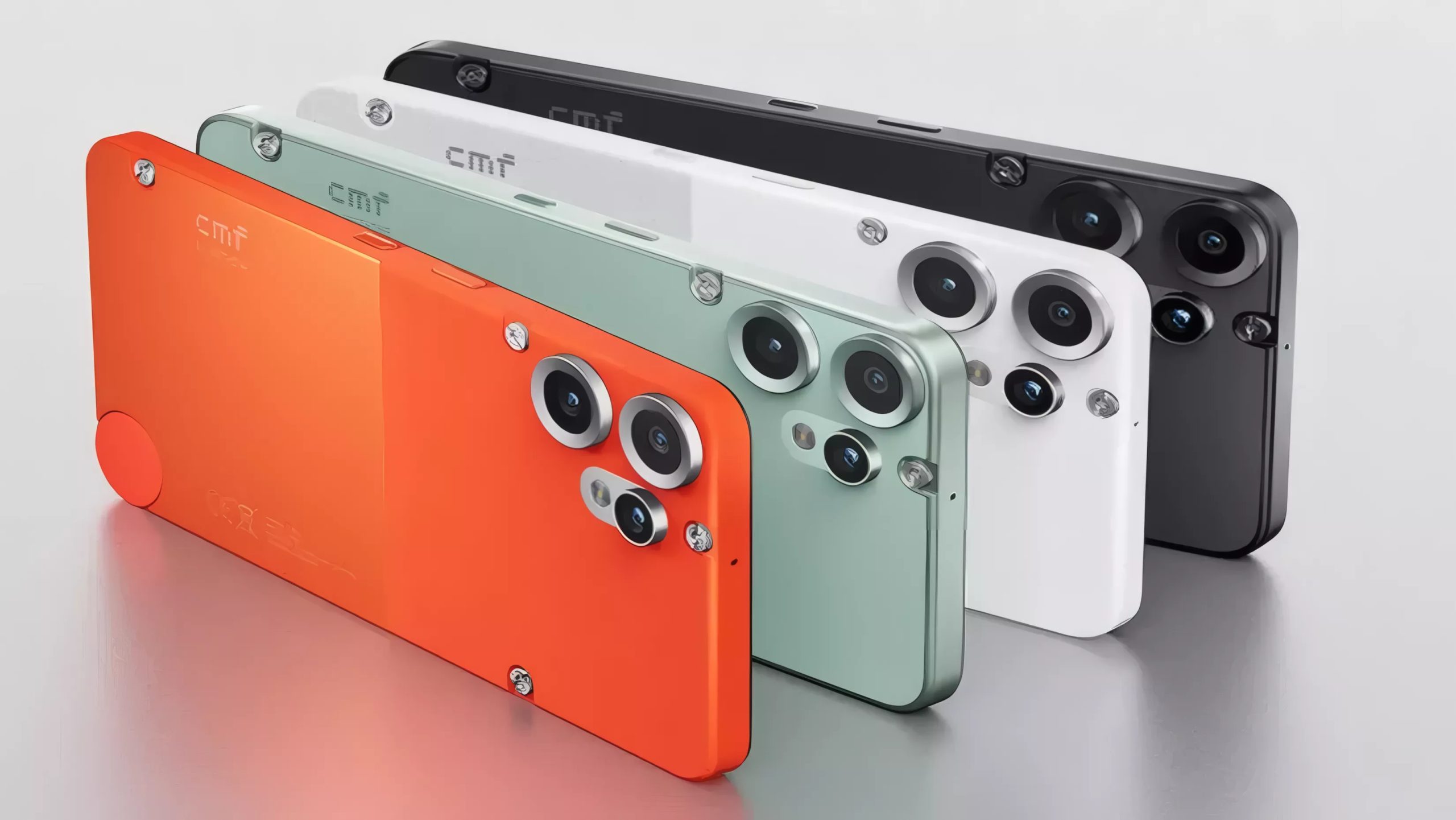
Ripple effect: The RAMpocalypse has claimed another victim. Nothing has confirmed that its next budget phone, a follow-up to the CMF Phone 2 Pro, will not launch this year. The company confirmed the cancellation is because of skyrocketing memory prices that are disrupting the tech industry in a way not seen since Covid.
Nothing co-founder Akis Evangelidis, the executive behind the CMF line, said the firm had been working on a successor to the CMF Phone 2 Pro, but current memory costs made the device impossible to release without undermining the point of the brand.
“We were working on a successor but with memory prices where they are right now, we can’t build a phone that feels like a genuine step forward at a price that makes sense for CMF. As a result, we’ve decided not to launch a new CMF phone this year,” Evangelidis wrote in an X post.
– Akis Evangelidis (@AkisEvangelidis) June 19, 2026
The decision doesn’t mean CMF phones are dead forever. Evangelidis added that CMF still has other products coming this year, including devices in entirely new categories, while Nothing’s smartphone launch plans are continuing.
CMF is Nothing’s budget-focused sub-brand. Android Authority notes that the CMF Phone 2 Pro launched in India at Rs. 18,999 (~$200) for the 8GB/128GB model and Rs. 20,999 (~$222) for the 8GB/256GB version, with the latter also reaching the US at $279. Evangelidis said that launching the same hardware today would push the price to around Rs. 30,000 to Rs. 35,000, or roughly $318 to $370.
Nothing CEO Carl Pei warned last week that the memory crisis is spreading quickly across the phone market. He said memory costs for the Phone (4a) doubled between development and launch, then doubled again afterward. He added that RAM is now more expensive than the processor or display and can account for more than half of a smartphone’s hardware bill.
“Phone prices are going up, and they’ll keep going up into next year. Since February, new phones have been launching up to $100 more expensive than their predecessors,” Pei wrote in an X post.
– Carl Pei (@getpeid) June 12, 2026
The CMF cancellation is another sign that RAMageddon continues affecting consumer products beyond PC components. Tim Cook recently confirmed that Apple price hikes are coming as iPhones could jump by $200 or more, MSI blamed memory and storage costs for its $1,800 Claw 8 EX AI+ handheld, and the wider memory crisis resurrecting DDR4 production and older GPUs. When will things get better? Not anytime soon, sadly, according to most estimations.

I quickly found that Siri AI’s bite-sized replies don’t drone on endlessly like many contemporary AI assistants, often sticking to a single paragraph. When I verbally asked for a nice beach hike route to see the sunrise near the Golden Gate Bridge, it succinctly recommended a popular trail in the Presidio neighborhood as well as an option in the Marin Headlands. Siri bolded key words in the text answer that appeared alongside the audible response for easy scanning. Since I wanted more info before heading out, I swiped down on the text answer to read additional details about each option.
Apple’s partnership with Google is a core driver behind this Siri overhaul. Google’s Gemini now helps power the voice assistant’s underlying model, Apple Intelligence. Siri’s output with this new model felt more attuned to what I was looking for, rather than just suggesting a couple of website links for me to dig through. When I asked generic questions, like “What should I do today,” Siri combed through my recent messages and highlighted recent plans I started discussing with friends but never finalized.
Another key aspect of Siri AI is hyper-personalization based on what you have on your device, whether that data is in your photos or messages. It also doesn’t keep you locked into Apple-only services; when I asked Siri to draft a text, the voice assistant confirmed if I wanted to send it through Apple’s Messages or Meta’s Messenger service.
This style of AI search requires Siri to index your phone, which means scanning and cataloging its data for easy reference. When I updated my iPhone to the developer beta for iOS 27, it took a little over a week for the device to fully index.
At WWDC 2026, Apple repeatedly referenced its privacy-preserving approach to Siri AI. As part of the company’s Private Cloud Compute, Apple claims it doesn’t store data from users and only pulls from it when you ask Siri a question. Similar to the previous version of Apple’s assistant, users who aren’t interested can turn off Siri AI in their settings.
I tested Siri AI on an iPhone 16 Pro Max, which will have many but not all of Siri AI’s features. Based on what’s been publicly released, only the iPhone Air, iPhone 17 Pro, and the iPhone 17 Max will have all the fixings, like more varied voice options. As for the rest of the lineup: Every iPhone 16 and iPhone 17 model will be able to run the new Siri, while only the iPhone 15 Pro and Pro Max will be compatible. Older models will not support this voice assistant.
Like any good tourist, I started my morning off with a visit to the Golden Gate Bridge, where there are plenty of nearby hiking trails to wander around and soak up the views. Since Siri AI is also integrated with the iPhone’s camera app, I decided to open it up and snap a quick photo of the foggy path ahead of me to see how Siri would respond.
I didn’t ask Siri any questions; I just showed it a snapshot of what I saw at the moment, and the AI tool responded with a short history of the Cypress Tree Tunnel located at Point Reyes National Seashore. Siri was right to clock the Monterey cypress trees. But the tunnel it referenced is an hour drive from where I was, potentially confusing for someone not familiar with the area.
Despite this apparent flub, the more I chatted with Siri while walking around, the more impressed I was at other functions, like helping uncover images from past adventures hidden among the thousands of photos in my camera roll.


Anthropic announced a potentially game-changing new feature for users of Claude Code on the Claude Team and Enterprise subscription plans: Artifacts.
This update turns a Claude Code session’s work into a live, interactive, and shareable, custom HTML webpage, allowing a Claude Code user to plug in live code, multiple data sources, and have it surface on an interactive URL that they can send to other teammates — be it a dashboard, an app design, or some other product meant for internal usage.
These teammates and the original user can watch the webpage it update in real-time as Claude Code goes about its work autonomously or under the user’s guidance, and as the connected data sources and codebases change.
While Anthropic first introduced Artifacts to its consumer web chatbot in the summer of 2024—where it evolved from a manual toggle feature to a generally available tool for publishing code snippets and games to the web—integrating this capability directly into the Claude Code command-line interface (CLI) and desktop app bridges the gap between deep, back-end engineering and the non-technical stakeholders who need to understand it.
At its core, Claude Code Artifacts acts as a dynamic translation layer. Built directly from the unbroken context of a user’s session, the agent uses the local repository codebase, connected monitoring tools, and conversational reasoning to spin up specialized web pages.
Engineers no longer need to wire up external data sources or stand up temporary infrastructure; the AI builds the UI from what already exists.
Crucially, these web pages are not static exports. As the AI works through a terminal session, the open webpage refreshes in-place, updating charts and text instantly at the exact same URL. Every update publishes a new version history, allowing teammates to roll back or track the agent’s progress securely on desktop or mobile.
Anthropic’s update comes more than two weeks after OpenAI released a massive update to its own Codex platform, introducing a strikingly similar enterprise hosting feature called “Sites”.
This tit-for-tat product cadence highlights a rapidly escalating battle over the enterprise workspace across functions and beyond developers themselves, though there are some important technical and philosophical distinctions worth pointing out for enterprises considering either.
As revealed in their respective developer documentation webpages, OpenAI is building a platform-as-a-service; Anthropic is building a stateless canvas.
OpenAI’s Sites is designed to generate durable, full-stack web applications. According to the platform’s documentation, Codex Sites hosts projects that output as Cloudflare Worker-compatible ES modules.
Crucially, Sites supports persistent backend infrastructure: agents can automatically wire up “D1” relational databases for structured data (like user progress or saved records) and “R2” object storage for file uploads. An OpenAI Site can support public sign-ins, integrate with external identity providers, and allows for highly specific access controls tailored to specific workspace groups.
It utilizes a two-stage publishing process—saving a reviewable candidate linked to a Git commit before officially deploying to production. In short, it is a production environment designed to replace functional internal SaaS tools.
Anthropic’s Claude Code Artifacts, by contrast, deliberately avoids the backend. The newly released documentation is blunt about its limitations: “An artifact is a capture of work, not an application”.
Each Artifact is a single, self-contained HTML page capped at a rendered size of 16 MiB. To guarantee organizational security, Claude wraps the published file in a strict Content Security Policy (CSP) that blocks all external network requests. T
his means the page cannot load external scripts, fonts, or stylesheets, and fetch, XHR, and WebSocket calls are completely blocked. All CSS and JavaScript must be inlined, and images must be embedded as data URIs. Artifacts cannot store form input, call an API at view time, or serve multiple routes.
This technical limitation is actually Anthropic’s deliberate philosophical position: While OpenAI wants to spin up persistent software portals for the whole company, Anthropic is keeping Claude Code firmly anchored in ephemeral, highly secure technical workflows. Claude Artifacts are not meant to be software; they are meant to replace whiteboard diagrams, manual bug walkthroughs, and status reports with secure, self-updating visual tools that never leak live data outside the corporate boundary.
Because these agents sit at the nexus of proprietary company data and live codebases, licensing and access controls are a primary concern.
Both Anthropic and OpenAI have opted for closed, proprietary licensing models for these new visual workspaces. For end users and developers, the distinction is critical. Unlike permissive open-source software (such as MIT or Apache 2.0) or strict copyleft licenses (like GPL)—which grant developers the legal freedom to inspect, modify, and self-host the underlying code—neither Claude Code Artifacts nor Codex Sites can be independently forked or hosted.
Enterprise clients do not maintain code-level ownership over Anthropic’s rendering engine or Codex’s integration nodes; both operate strictly within their respective creators’ managed infrastructures.
To make this vendor-managed approach palatable to enterprise compliance teams, both companies have heavily prioritized organizational security. Anthropic ensures every artifact is private to its author by default and strictly cannot be made public to the broader internet. When an engineer chooses to share a link, it is viewable exclusively by authenticated members of their specific organization. System administrators retain ultimate authority, managing access through org-level toggles, role-based scoping, and explicit retention policies, while maintaining oversight through a centralized compliance API.
OpenAI takes a similarly gated approach with Codex Sites, rolling the feature out primarily for ChatGPT Business and Enterprise workspaces. Like Anthropic, OpenAI relies on system administrators to manage deployment through centralized workspace settings, requiring an admin to explicitly enable Sites via role-based access control (RBAC) for Enterprise tiers.
However, because Codex Sites functions more like a hosted web application, its access controls are slightly more granular. When an engineer prepares to share a deployed URL, they can apply specific access modes: restricting the site to just themselves and workspace admins, opening it to all active users in the workspace, or limiting access to custom user groups.
Furthermore, to prevent sensitive data leaks, OpenAI provides a dedicated Sites panel to manage runtime environment variables and secrets securely, ensuring those keys do not have to be committed to local source files.
The introduction of visual, self-updating UI layers to command-line agents is fundamentally altering how developers view their own workflows. As AI handles the raw syntax and automates the reporting, the friction of communicating technical work to stakeholders is vanishing.
Boris Cherny, the Lead and creator of Claude Code, highlighted the sheer utility of the update in a post on X earlier today:
“I’ve been using Artifacts in Claude Code for everything: visual explanations of tricky code, system diagrams, quick previews of a few animation options, data analyses and dashboards I share with the team,” Cherny wrote. “They are a game changer for how I work with Claude. Can’t wait to hear what you think!”
This sentiment is practically demonstrated in Anthropic’s launch materials. In one scenario, an engineer prompts Claude Code to investigate user drop-offs since a previous software release.
In a matter of seconds, the agent executes an SQL read, builds an interactive drop-off funnel dashboard, and diagnoses that “Pro accounts stall at the export sheet”. The AI then proposes UI fixes, updates the live charts as the code is refactored, and generates a secure link that a manager can instantly open via mobile.
By turning the terminal into a live, collaborative canvas, Anthropic is proving that the most valuable output of an AI coding assistant isn’t just the code itself—it is the context, the reasoning, and the ability to share that work instantly.

Netherlands vs Sweden is a vital match in Group F at World Cup 2026. A battle between two European sides meeting for the first time in nearly nine years, if either side can pick up the win they’ll be in the box seat for automatic qualification for the knockout phase.
The Dutch arrive after an underwhelming 2-2 draw against Japan, a contest Ronald Koeman will feel his side should have won, having twice led. The Oranje boast plenty of firepower, with Crysencio Summerville in jet-heeled form and Donyell Malen superb since joining Roma in January, but will hope that captain Virgil van Dijk can corral a defense that includes Tottenham’s Micky van de Ven into a more compact display. The three-time runners-up conceded only four times in qualifying, after all.
Sweden, meanwhile, come into the match on the back of a dominant 5-1 win over Tunisia, with Yasin Ayari scoring twice and Alexander Isak bagging a confidence-boosting effort after an injury-plagued first season at Liverpool. Though subpar for much of qualifying, the Scandinavians have improved significantly since Graham Potter took over last October and the Englishman is to be credited with finding a way to dovetail Isak with lethal Arsenal forward Viktor Gyokeres.
They would probably take a point, with the Dutch needing to win, which makes this an even more intriguing contest.
So, read on as we show you exactly how to watch Netherlands vs Sweden for free from anywhere in the FIFA World Cup 2026.
Netherlands vs Sweden is available to watch for free in multiple countries, including the UK, Australia, Brazil, Belgium, Ireland, Netherlands, Switzerland and Turkey.
Abroad? Can’t access your free stream? Unblock your free World Cup stream with Norton VPN — more on that below.
It’s the World Cup, and if you’re traveling, you might discover your usual Netherlands vs Sweden stream is suddenly unavailable due to geo-restrictions.
Don’t worry, that’s exactly where a VPN can help. A virtual private network lets you connect to servers around the world so you can securely access your usual World Cup coverage as if you were back home.
We recommend Norton VPN. Here’s why:

US viewers can watch Netherlands vs Sweden on Fox.
Cord-cutters can access Fox through live TV services like YouTube TV (free trial), Hulu+Live TV, Sling (select markets), Fubo or DirecTV.
Those looking for a streaming service instead can watch Netherlands vs Sweden on Fox One (3-day free trial).
If you are looking for a stream in Spanish you can watch on Telemundo, which is available via Peacock.
Visiting the US from the UK? You can still watch your World Cup stream for free thanks to Norton VPN (try for 60 days).

UK customers are in luck as they can stream Netherlands vs Sweden for free on BBC iPlayer. Live coverage is also available on the BBC One TV channel.
You require a TV license and a valid UK postcode for an account (e.g. SE1 7PB).
Norton VPN can unlock your stream if you’re abroad today.

Netherlands vs Sweden will be shown for free in Australia on SBS On Demand.
The streaming platform has every game of the tournament for free, making it the perfect place for your World Cup viewing.
Traveling for work or on holiday? A VPN like Norton VPN can help unlock your free stream.

In Canada, TSN free-to-air channel CTV will be broadcasting Netherlands vs Sweden.
You can live stream via the TSN+ streaming platform, which costs CA$8 per month or CA$80 per year.
CTV will require TV provider login details for you to watch for free online. You can also pay to stream CTV on Crave. Prices start from CA$11.99.
Outside of Canada? Use Norton VPN whilst you’re traveling away from home to unlock your stream.
Netherlands vs Sweden kicks-off at 6pm BST / 1pm ET on Saturday, June 20. That’s 3am AEST on Sunday, June 21 in Australia.
Netherlands
Goalkeepers: Bart Verbruggen (Brighton), Mark Flekken (Bayer Leverkusen), Robin Roefs (Sunderland).
Defenders: Nathan Ake (Manchester City), Virgil van Dijk (Liverpool), Denzel Dumfries (Inter Milan), Lutsharel Geertruida (RB Leipzig), Jorrel Hato (Chelsea), Jan Paul van Hecke (Brighton & Hove Albion), Micky van de Ven (Tottenham Hotspur).
Midfielders: Ryan Gravenberch (Liverpool), Frenkie de Jong (Barcelona), Teun Koopmeiners (Juventus), Noah Lang (Galatasaray), Tijjani Reijnders (Manchester City), Marten de Roon (Atalanta), Guus Til (PSV), Quinten Timber (Marseille), Mats Wieffer (Brighton & Hove Albion).
Forwards: Brian Brobbey (Sunderland), Memphis Depay (Corinthians), Cody Gakpo (Liverpool), Justin Kluivert (Bournemouth), Donyell Malen (AS Roma), Crysencio Summerville (West Ham United), Wout Weghorst (Ajax)
Sweden
Goalkeepers: Kristoffer Nordfeldt (AIK), Viktor Johansson (Stoke City), Jacob Widell Zetterstrom (Derby County)
Defenders: Victor Lindelof (Aston Villa), Isak Hien (Atalanta), Gabriel Gudmundsson (Leeds United), Carl Starfelt (Celta Vigo), Herman Johansson (FC Dallas), Hjalmar Ekdal (Burnley), Daniel Svensson (Borussia Dortmund), Gustaf Lagerbielke (Braga), Eric Smith (FC St. Pauli), Elliot Stroud (Mjallby AIF)
Midfielders: Mattias Svanberg (VfL Wolfsburg), Jesper Karlstrom (Udinese), Yasin Ayari (Brighton & Hove Albion), Lucas Bergvall (Tottenham Hotspur), Besfort Zeneli (Union Saint-Gilloise)
Forwards: Alexander Isak (Liverpool), Viktor Gyokeres (Arsenal), Ken Sema (Pafos), Anthony Elanga (Newcastle United), Benjamin Nygren (Celtic), Alexander Bernhardsson (Holstein Kiel), Gustaf Nilsson (Club Brugge), Taha Ali (Malmo FF)
|
Position |
Team |
GD |
Points |
|---|---|---|---|
|
1 |
Sweden |
4 |
3 |
|
2 |
Japan |
0 |
1 |
|
3 |
Netherlands |
0 |
1 |
|
4 |
Tunisia |
-4 |
0 |
Of course, most broadcasters have streaming services that you can access through mobile apps or via your phone’s browser.
You can also stay up-to-date with all of the key World Cup moments on the official social media channels on X/Twitter (@FIFAWorldCup), Instagram (@FIFAWorldCup), TikTok (@FIFAWorldCup) and YouTube (@FIFA).
We test and review VPN services in the context of legal recreational uses. For example: 1. Accessing a service from another country (subject to the terms and conditions of that service). 2. Protecting your online security and strengthening your online privacy when abroad. We do not support or condone the illegal or malicious use of VPN services. Consuming pirated content that is paid-for is neither endorsed nor approved by Future Publishing.
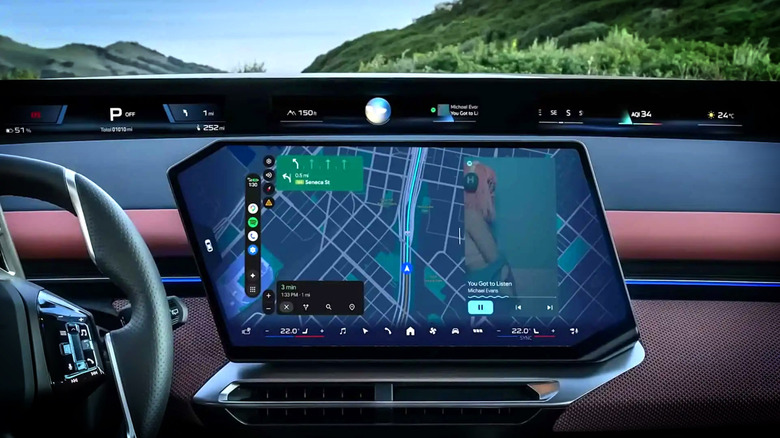
It’s down to subscriptions, data and new AI-driven infotainment systems.
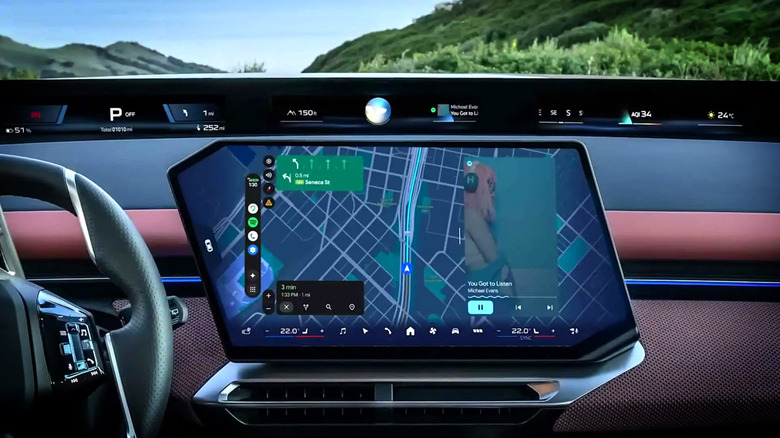
Since 2015, consumers and automakers have had a handshake agreement: we’ll buy their cars if they let us connect our smartphones to Android Auto or Apple CarPlay. For ten years or so, it has worked like a charm. We get seamless access to our music, maps and communication, while carmakers offload key infotainment system technology to Google or Apple.
Recently, though, that equation has changed. One of the world’s biggest automakers, General Motors, announced it was dropping Android Auto from its EVs, and plans to pull it from all of its vehicles in the near future. In its place, GM will offer its own conversational-based system that will employ Google’s Gemini AI.
Other manufacturers have never offered Android Auto to begin with, particularly Rivian and Tesla. And while the vast majority of 2026 car models still offer the tech, that could change soon for several reasons — and you may not like any of them.
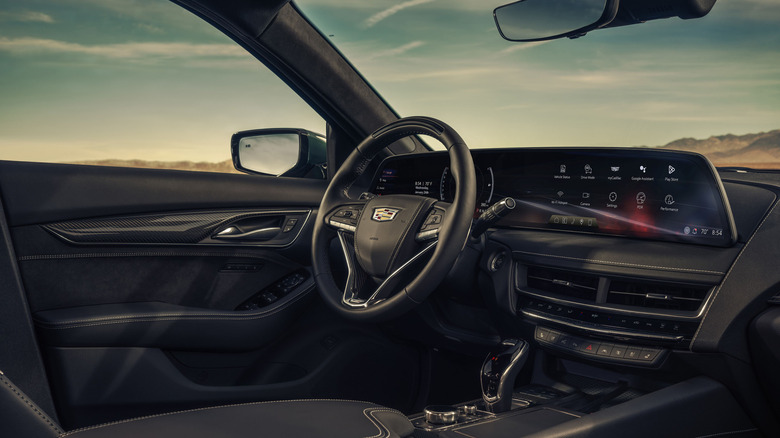
To understand how Android Auto came to dominate the dashboards of cars, a short history lesson is in order. Android Auto started out, much like CarPlay, as a simple projection system, letting you connect your phone and car via USB to get a driving-friendly version on the infotainment screen. Manufacturer adoption was not immediate. Toyota and Ford tried to create their own system and BMW even tried to charge users $80 a year for CarPlay (while not supporting Android Auto at all until 2020).
Car buyers wanted none of that. Rather, they loved the idea of plugging in their phones and having all their tunes, contacts and addresses available with no hassle or cost. Gradually, automakers began offering it as an option alongside their own in-house infotainment systems. Google made that as easy as possible by not charging for integration.
Google made a new play in 2017 with Android Automotive OS (AAOS), which debuted with the Polestar 2 in 2020. That supports Android Auto, but also provides an Android-based vehicle operating system that doesn’t require your phone’s processing power. This came at a good time, as traditional car manufacturers like Volkswagen discovered that developing an in-car OS wasn’t like building a transaxle. Many gave up and adopted AAOS for some or all of their models, starting with Volvo and a couple of Stellantis and GM brands.
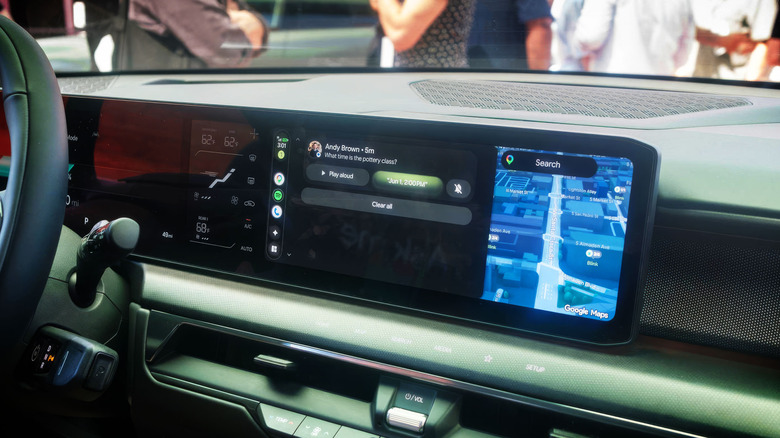
In exchange for the extra convenience, Google helps itself to a lot of the data you generate while driving. On top of the usual info collected, it also grabs GPS and mapping data it can use to help advertisers target you. Since we use our cars to go places and buy stuff, this info is obviously valuable.
None of this data goes to car manufacturers, though. Most aren’t looking to sell that data to advertisers — in fact, GM is actually forbidden for doing so after breaking California’s privacy laws and paying a $12.75 million fine. Rather, some like Rivian and GM say it deprives them of valuable data they could use to improve their vehicles and retain customers.
For instance, GM has claimed that it needs sat nav data to improve the EV charging experience. “With Android Auto or Apple CarPlay environments, the vehicle energy model or road segment data is sending energy usage and everything else associated with it to the phone, and it’s pretty difficult to off-board it from the phone,” GM’s infotainment manager told GM Authority in 2023. The company said its own system will allow for intelligent EV routing that takes into account charge state, range and charging station availability, plus integration with its Super Cruise driver assistant.
Since it will still use Google’s AAOS, GM claims that it will work like your phone for things like calls and streaming from contacts and apps. You’ll also be able to use built-in assistants like Siri and Google assistant using Bluetooth pass-through. All that will happen more smoothly as well, the company says, thanks to the responsive built-in hardware.
GM adds that its own infotainment system will deliver features “that go beyond what’s possible with just phone projection,” it told MotorTrend. It cited Dolby Atmos on Amazon Music as an example of that, calling that experience “impossible” with simple phone projection.
Rivian and Tesla are two companies that never adopted Android Auto in the first place, with both saying they want more control over the driver experience. Rivian, whose operating system is built on top of AAOS, also believes that phone mirroring systems aren’t necessary, given what’s possible with AI these days. “The possibilities now for such deep AI integration in the car make the entire CarPlay debate completely obsolete,” the company told The Verge last month.
There are caveats, though. GM has also acknowledged that there are “subscription revenue opportunities” available with by using its own infotainment systems. That’s what got BMW into trouble in the past, when it wanted to charge $18 per month for heated seats in select regions.
Built-in apps require the vehicle to have an active cellular connection, too, since your phone is no longer being used. Though GM’s latest vehicles ship with eight years of OnStar connected services, it’s not clear what will happen after that. Rivian offers its own premium data service, Rivian Connect+ that costs $150 per year. Tesla, which also eschews Android Auto in favor of its own system, also charges $150 per year for its Connect+ premium cellular data service. Then again, even manufacturers like Kia that fully support Android Auto end up putting features like remote locking behind trial subscriptions that eventually need to be paid for.
Car shoppers may prove to be the biggest hurdle. GM’s announcement that it’s eliminating Android Auto from its vehicles created blowback, with many of Engadget’s readers for instance saying they wouldn’t buy cars that don’t have it. There’s also a groundswell movement against subscription services of all kinds these days, and having to pay one in your car has chafed a lot of people.
Fortunately, Android Auto and CarPlay are still available in most vehicles. Traditional automakers have also shown that they’re uniquely bad at creating their own infotainment systems. So despite Android Auto disappearing from a few brands, plenty of others will continue to support the system, and it should keep on getting better and smarter.
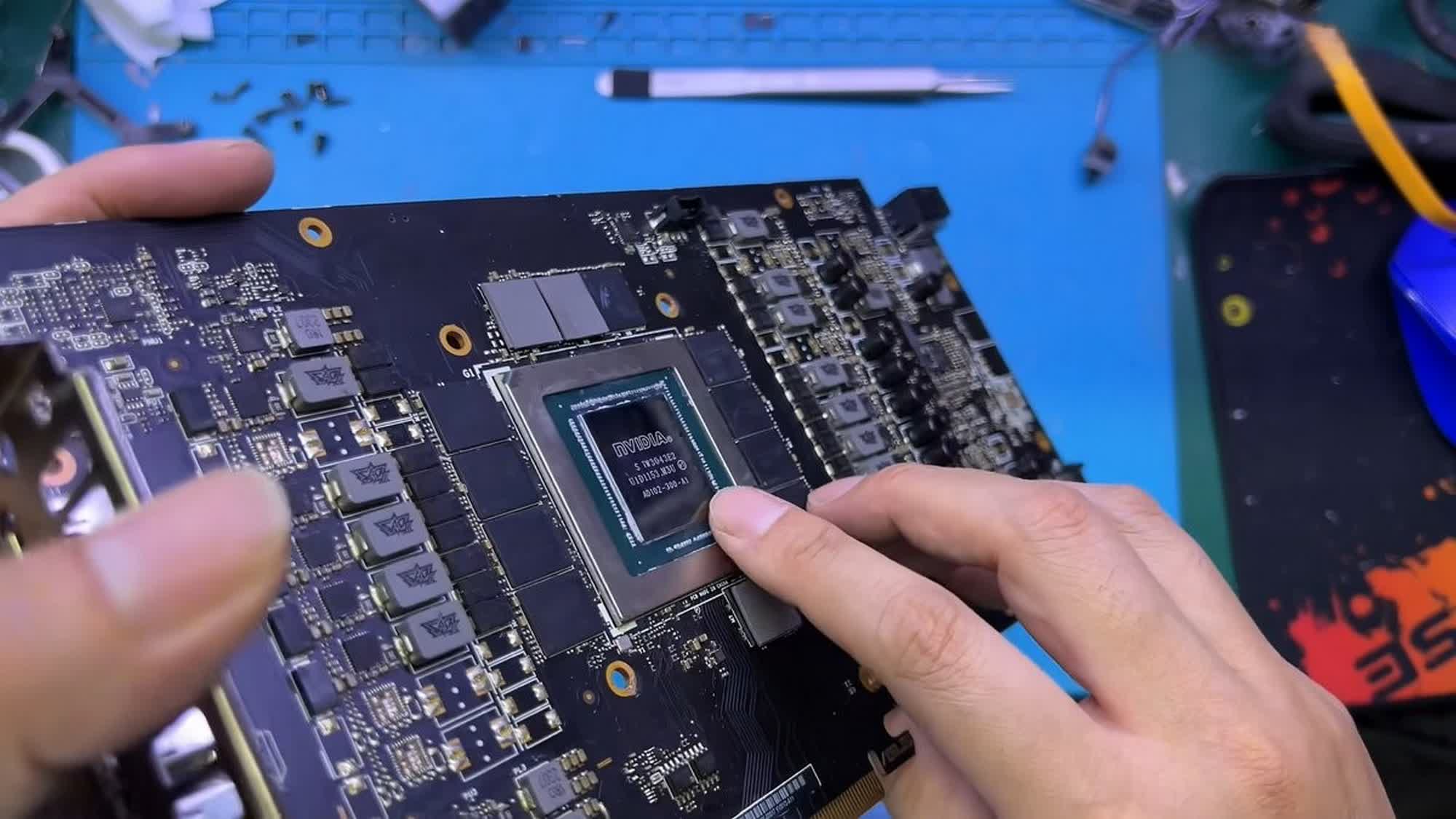
WTF?! With the AI boom driving GPU prices to record highs, scammers are capitalizing by flooding the market with counterfeit graphics cards. A new report from China suggests that fraudsters are now gluing fake plastic GPU shells onto PCBs and selling them as genuine RTX 4090 graphics cards to unsuspecting buyers.
In a video posted on the Chinese social media platform Bilibili, well-known PC hardware dealer Brother Zhang claimed that he was recently scammed into buying a counterfeit second-hand RTX 4090 for 1,500 yuan (around $221). According to Zhang, the card appeared to be a normal RTX 4090 at first glance, with the die markings reading “AD102-300-A1,” which refers to the actual GPU used in the 4090.
However, upon further investigation, he found that other markings on the die were inconsistent with original RTX GPUs, such as the font style, which did not match Nvidia’s official design. The die also had “TW 3043E2” engraved on it, suggesting it was manufactured in 2030 – an error Nvidia and its official board partners are unlikely to make.
Zhang immediately suspected that the card was not authentic, or at least that some components may have been swapped out before being sold. Once he disassembled the card for further inspection, his suspicions were confirmed: the GPU die was made of plastic rather than silicon. The memory dies were not real either.
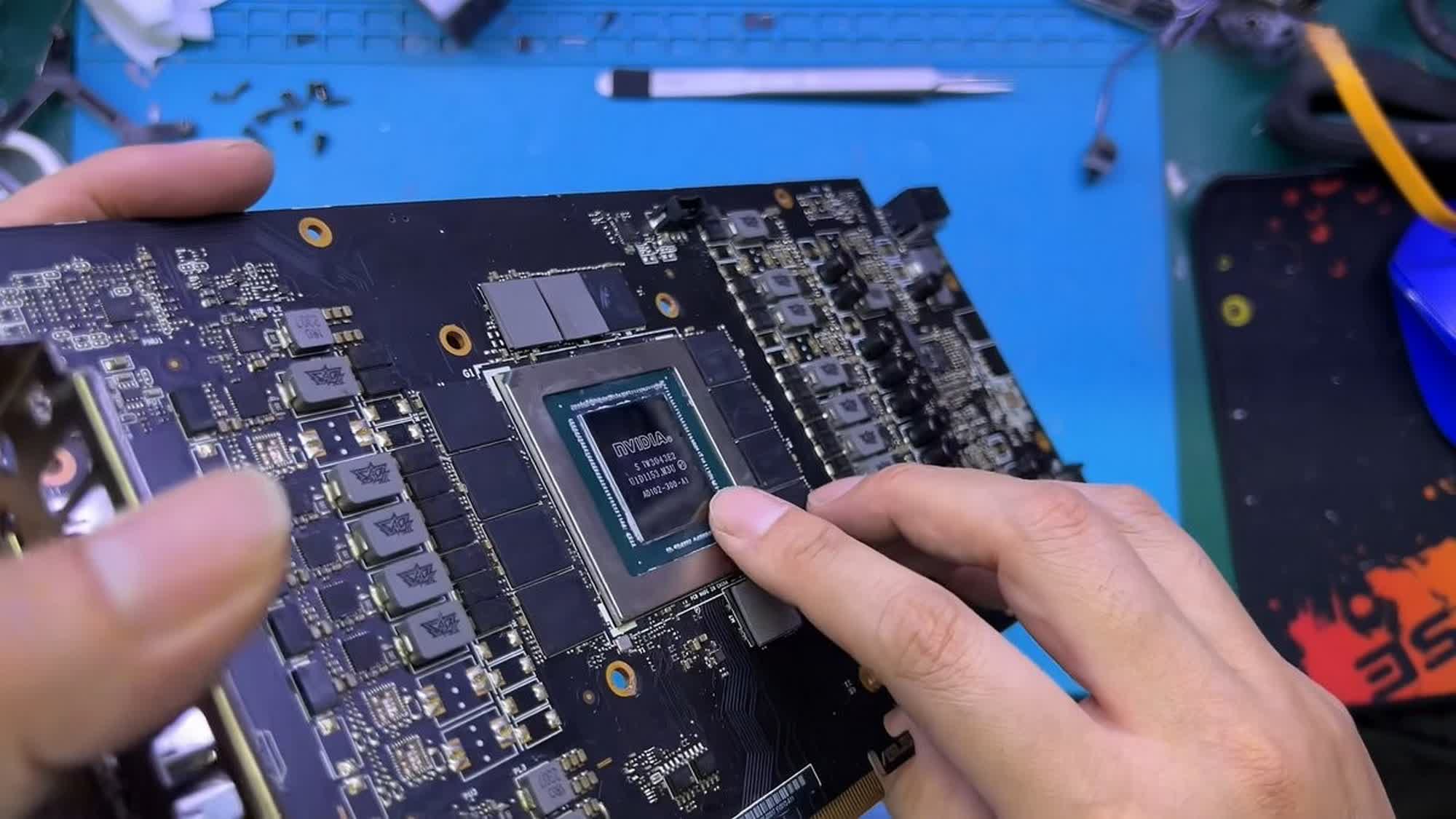
Zhang compared the fake RTX 4090 die with photographs of an original RTX 4090 board, confirming his suspicion that nearly every part of the card was counterfeit and had been glued onto the PCB to fill empty space. Other discrepancies included misplaced capacitors and a missing QR code that would have been etched onto the die had it been authentic.
It is worth noting that this is not the first time reports have surfaced of fake graphics cards being sold to unsuspecting buyers. Earlier this year, a repair shop owner came across a “near-perfect” fake RTX 4090 with laser-etched VRAM and a fake GPU core. Last year, a technician in China found that three out of four RTX 4090 cards he received for repair were fitted with RTX 3090 or RTX 3080 dies.

The first day of the BMPS Grand Finals here at the Jaipur Convention Center has just curtailed, and it was another exhilarating, action-packed scene we’ve all come to expect of BGMI action. Despite securing two chicken dinners, iQOO Reckoning Esports couldn’t hold on to the top spot, with Divine Gaming and Nebula Esports finishing first and second, respectively. Not every fan favorite had a day to remember. Teams like iQOO SouL and TAG barely managed to get going and now find themselves near the bottom of the standings. Here’s what the full standings looked like after day one of the BMPS Grand Finals.
| Rank | Team | WWCD | Finish Points | Position Points | Total Points |
|---|---|---|---|---|---|
| 1 | DIVINE | 2 | 54 | 31 | 85 |
| 2 | NBE | 1 | 36 | 17 | 53 |
| 3 | GENS | 0 | 35 | 17 | 52 |
| 4 | iQOOORGE | 2 | 20 | 27 | 47 |
| 5 | iQOO8BIT | 0 | 29 | 11 | 40 |
| 6 | iQOORNTX | 0 | 29 | 10 | 39 |
| 7 | VASISTA | 0 | 26 | 12 | 38 |
| 8 | iQOOxTT | 0 | 24 | 13 | 37 |
| 9 | 7GODS | 1 | 21 | 15 | 36 |
| 10 | GDR | 0 | 22 | 7 | 29 |
| 11 | iQOOxOG | 0 | 15 | 11 | 26 |
| 12 | iQOOSOUL | 0 | 20 | 5 | 25 |
| 13 | MYTH | 0 | 18 | 6 | 24 |
| 14 | TAG | 0 | 21 | 2 | 23 |
| 15 | VS | 0 | 15 | 7 | 22 |
| 16 | GODL | 0 | 19 | 1 | 20 |
Day 2 gets underway tomorrow, and if BMPS history is anything to go by, it’s often the day when teams begin mounting comebacks. We hope to see similar top-tier action and maybe a comeback from fan favorites like Soul. If you missed today’s games, check out our highlights of day 1.
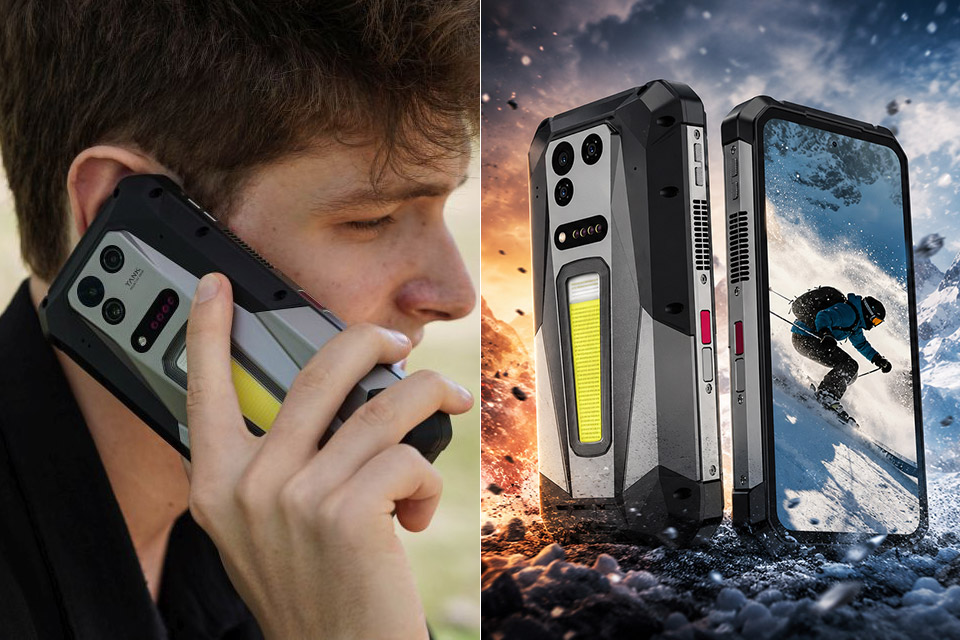
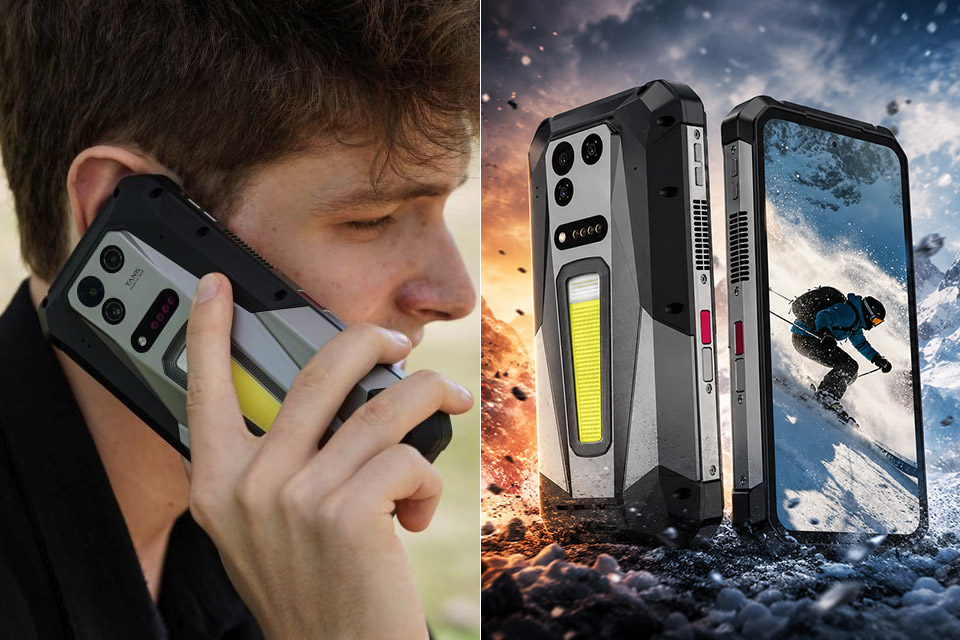
Few devices attempt to blend serious outdoor durability with features that feel borrowed from a living room setup. The 8849 Tank 5 does so without apology. This latest entry in the Tank series arrives as a thick, heavy slab of a phone that carries a built-in 2K DLP projector, a 17,600mAh battery, and flagship-grade internals while meeting strict IP68 and IP69K standards for dust and water resistance.
With a weight of 715 grams and a thickness of 33.8mm, the Tank 5 will immediately draw your notice as soon as it leaves your pocket or bag. It measures 33.8mm (1.39 in) thick, giving it a chunky feel, more like a compact portable radio than a typical smartphone. Two physical keys can be programmed to activate the flashlight at the touch of a button or provide rapid access to other essential features. The back features a 1200-lumen camping light with RGB warning functionality. It’s far brighter than a regular LED flash, making it ideal for signaling or lighting up your campground. On the side, a fingerprint sensor allows you to easily unlock the phone.
Sale

When it comes to power delivery, you get a big 17600mAh battery to keep things going. Early testers have reported getting several days out of a single charge, which must be reassuring. Of course, if it does run low, you can plug it in and get back up to speed in approximately 90 minutes using 120W cable charging. The phone may also double as a power bank for smaller gadgets, including reverse wired charging at 25W. Of course, you can continue to use the projector, but excessive use will shorten the life of your battery.
The MediaTek Dimensity 9400e, an octa-core chipset designed on a 4nm technology, delivers performance. It has a primary Cortex-X4 core running at 3.4GHz, as well as certain high-performance and efficiency cores and an Immortalis-G720 GPU. Early testing indicate that it can get AnTuTu scores of over 2.3 million, making it a flagship performer for gaming, multitasking, and demanding programs. Memory options include 18GB of LPDDR5X RAM and 512GB of UFS 4.0 internal memory, with the possibility to add up to 2TB of storage via microSD card. Wi-Fi 7, Bluetooth 5.4, NFC, dual Nano-SIM and eSIM support, as well as USB 3.1 and DisplayPort 1.4 for connected video to external screens, round out the connectivity options.
The phone’s front display is a 6.73-inch AMOLED with a resolution of 3200 by 1440, a refresh rate of 120Hz, and a peak brightness of up to 3000 nits. That high brightness, paired with the AMOLED contrast, makes a significant difference when working or exploring outdoors in direct sunshine, and the punch-hole camera cutout keeps the screen area relatively clear. The Tank 5 stands out from other rugged phones due to its rear-mounted 2K DLP projector with a brightness of 220 lumens. With 2048 by 1080 resolution, laser autofocus, and automated keystone correction, you can see a good-sized image on a nearby wall or portable screen even in low-light or gloomy settings. Ideal for movie nights on a camping trip or quick presentations wherever they are required.
The rear camera setup consists of a 50 megapixel primary sensor, a 50 megapixel telephoto lens, and a 50 megapixel night vision camera equipped with infrared LEDs, allowing you to capture usable images even in complete darkness. In contrast, a 32 megapixel front camera easily handles video calls and selfies. Now, the inclusion of night vision and a telephoto lens opens up new options for users like hikers and security professionals, as well as anyone who needs to see things from a distance or in poor light.
Prices begin at $899 during the initial pre-order period and rise to the regular price of $999 shortly after. What you get is a single configuration option with 18GB of RAM and 512GB of storage, all in black, with no additional options available. By the way, pre-orders commenced in mid-June 2026, and shipping should begin in early July through official channels and the occasional warehouse.
The company’s co-founder says it’s because of increasing memory prices.
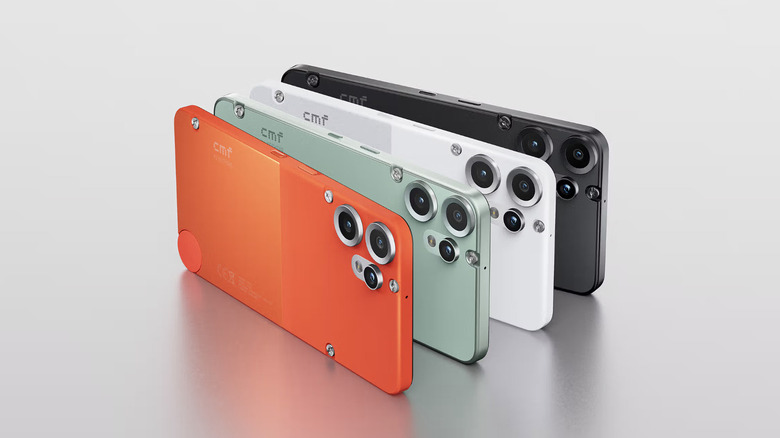
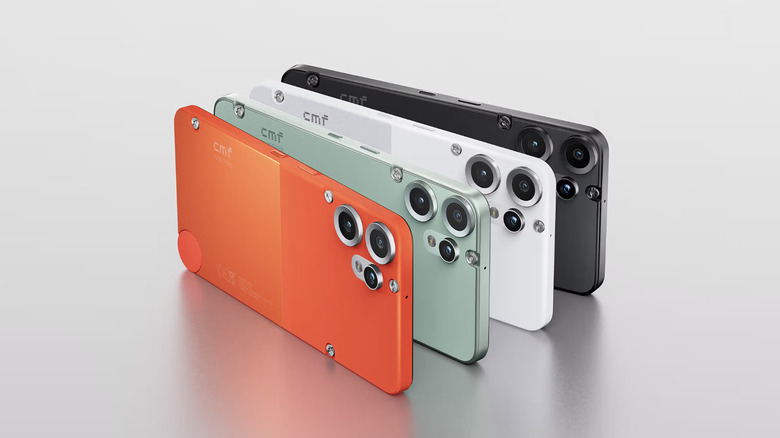
CMF, the budget brand owned by Nothing, will not be launching a follow-up to the Phone Pro 2 anytime soon. “A lot of you have been asking when the next CMF phone is coming and as always we’d rather be transparent,” Nothing co-founder Akis Evangelidis wrote in a post on X. He said that CMF was working on a successor to the Phone Pro 2, but because of current memory prices, the subsidiary can’t build a phone that “feels like a genuine step forward at a price that makes sense for CMF.” That’s why CMF decided not to launch a new phone this year.
RAM prices have skyrocketed over the past year due to supply shortages, caused by manufacturers redirecting their production to fulfill orders from massive AI buildouts. Both Apple and Samsung have already warned that price hikes are coming due to increasing RAM costs, while the IDC predicted that PC shipments could shrink by almost 10 percent this year due to higher prices.
Nothing’s CMF launched the Phone Pro 2 as it latest flagship device in April last year. It was the lightest and slimmest smartphone it has ever designed so far, and the brand suggested back then that the phone can last two days on a single charge. A few months after Phone Pro 2 was launched, Nothing spun off its CMF brand into an independent subsidiary headquartered in India, which is the company’s strongest market.
Even though it’s not going to release a new phone this year, Evangelidis says CMF will launch several new products, “as well as some entirely new categories.”




No Jackpot Winner as $257 Million Prize Rolls Over to $269 Million Monday Draw


Weekend Open Thread: Miami – Corporette.com

Zimbabwe Requires Crypto Businesses to Register Annually Under New FIU Regulations

Matt Damon’s Viral Sci-Fi Thriller Has Taken Over HBO Max


As AI companies race to go public, who else is along for the ride?


Anthropic staff to meet White House officials next week, Axios reports

what doctors are seeing in ebike crashes

Bitcoin could crash to $48,000, if this historical pattern is triggered


Deion Sanders Shares Powerful Post After Viral Advice To Deiondra

Warning of disruption as Cardiff Crossrail works to start

Tributes to former deputy head teacher at Cambridge school among death and funeral notices


“Israel’s” ban on ICRC visits ruled illegal, but Knesset moves to stop them permanently


Financial Accounting | Last Day Revision Strategy and Booster | CMA Inter – June 2026

Kate Middleton Glare Goes Viral After Kids Booed At Royal Event


Over 400 Arch Linux packages compromised to push rootkit, infostealer


XRP ETFs Outperform As Bitcoin And Ethereum Funds Extend Outflow Trend


Invesco Quality Income Fund Q1 2026 Commentary


Singer Oliver Tree dies aged 32 in helicopter crash in Brazil

Market Preview: SpaceX (SPCX) IPO Record, Federal Reserve Meeting, and Iran Nuclear Agreement


Dick Advocaat’s Curacao scores first-ever World Cup goal against Germany




You must be logged in to post a comment Login