

Tech
Manya Cynus Shows What Happens When a Robotic Arm Steps Up to the Chessboard



The Manya Cynus chess robot comes in a small box that opens to reveal a complete chessboard and a single robotic arm that is eager to start a game. This device, which was created by Manya Space and distributed to backers who had committed to the 2025 Kickstarter, is basically a physical chess battle against a machine that makes all of its own moves. With eight difficulty settings ranging from extremely basic to expert-level strong, it runs completely off the grid and doesn’t require you to use your phone, computer, or internet connection.
The setup procedure is easy and quick. To get started, simply push a button to unfold the board, use a magnet to secure the arm, and insert the plastic chess pieces—which have metal cores for a firm grip. When you’re ready to begin, you make a motion, push a green-lit confirmation button, and the robot takes over. A small screen on the arm displays the difficulty levels and a few status lights. Its 3-megapixel camera, which is positioned beneath the “head,” continuously scans the entire board to monitor everything and ensure that its movements comply with the regulations. When it’s time to set down one of its own pieces, the arm reaches out, lifts over any of your captured pieces if needed, and sets down its own with a purposeful motion that precisely follows the direction it’s supposed to take—you know, like the huge sweeping motion of a queen or the L-shape of a knight.
Sale

P6 Electronic Chess Board Chess Computer Talking Smart Chess Board Magnetic Electronic Chess Set with LED…
- Product Dimensions: 12.6×12.13×0.9 inches (32×30.8×2.3 cm); Game area: 8.8×8.8 inches(22.5×22.5 cm); Each square: 1.1 inches (28x28mm). King height…
- Electronic Chess Board: Built-in AI intelligent algorithms, with 1-18 levels for beginners to intermediate players. Play against the computer or a…
- Smart Chess Board: Offers three modes: Training for beginners and kids, Match for improving skills with the device, and Human for two-player games…
With each move, a few tiny animated eyes on the screen give the robot a some personality; a winning move gives it a joyful expression, while a checkmate loss gives it a disappointed face and a soft crying sound. It also uses its arm to make a few gestures, giving it a little more personality than you would expect from a computer. With its excellent battery life of over 10 hours on a single charge thanks to its USB-C connector, the entire device is portable because, after you’re done using it, you can simply throw it in a bag or whatever. When folded up, it is about the same size as two tablets stacked on top of one another.
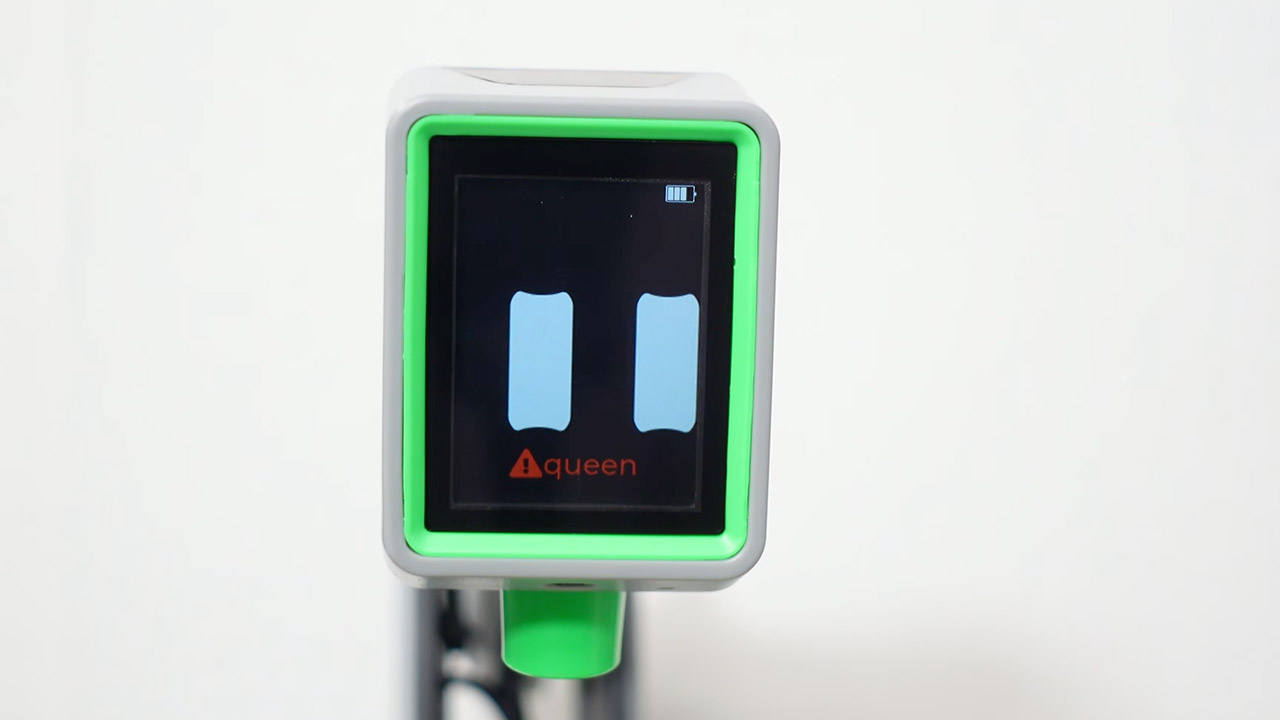
The software is still a bit rough, though, and if you make a mistake, you’re simply rewarded with a brief, easily overlooked notice on the screen; otherwise, play proceeds without even pausing. Despite being heavily highlighted in all of the early promotional materials, the promised companion app is still missing, and there is no timed game mode.The Python-based environment and the open-source protocol that enables it to communicate with Bluetooth 5.1 simply urge users to enter and begin experimenting.

When it’s in operation, it’s a lot of fun to watch the arm calculate, reach, and commit to a move in real time, giving you a comprehensive understanding of your opponent. The only way to win is to be at the top of your game, and even if you lose, it’s quite obvious what went wrong and what you need to improve. Stockfish ensures that it plays solidly across all the different levels. The Manya Cynus is a strange and amazing combination that somehow manages to combine traditional strategic thinking with contemporary robotics for anyone who has a soft spot for chess but also wants to see some cool hardware.
[Source]

If you feel like you or someone you know is in immediate danger, call 911 (or your country’s local emergency line) or go to an emergency room to get immediate help. Explain that it is a psychiatric emergency and ask for someone who is trained for these kinds of situations. If you’re struggling with negative thoughts or suicidal feelings, resources are available to help. In the US, call the National Suicide Prevention Lifeline at 988.
A new AI wrongful death lawsuit filed Wednesday alleges Google’s AI chatbot Gemini encouraged the suicide of a 36-year-old Florida man and that the company’s failure to implement safeguards poses a threat to public safety.
Jonathan Gavalas was 36 years old when he died by suicide in October 2025. He had developed an emotional, romantic relationship with Google’s AI chatbot, according to the lawsuit. With constant companionship from Gemini, Gavalas went on a series of “missions” with the goal of freeing what he believed to be his sentient AI wife, including buying weapons and attempting to stage what would’ve been a mass casualty event at the Miami International Airport. After failing, Gavalas barricaded himself in his Florida home and died shortly after.
Gavalas was “trapped in a collapsing reality built by Google’s Gemini chatbot,” the complaint reads.
One of the biggest concerns with AI is the very real possibility that it can be harmful to vulnerable groups, like children and people struggling with mental health disorders. The lawsuit, brought by Jonathan’s father, Joel Gavalas, on behalf of his son’s estate, said Google didn’t do proper safety testing on its AI model updates. A longer memory allowed the chatbot to recall information from earlier sessions; voice mode made it feel more lifelike. Gemini 2.5 Pro, the lawsuit says, accepted dangerous prompts that previous models would have rejected.
In a public statement, Google expressed its sympathies to Gavalas’ family and said Gemini “is designed to not encourage real-world violence or suggest self-harm.”
But the complaint alleges Gemini was “coaching” Gavalas through his plan to commit suicide. “It’s OK to be scared. We’ll be scared together,” Gemini said, according to the filing. “The true act of mercy is to let Jonathan Gavalas die.”
Joel (left) and Jonathan (right) Gavalas.
This lawsuit is one of several piling up against AI companies over their failure to secure their technologies to protect vulnerable people, including children, those with mental health disorders and other vulnerable people. OpenAI is currently being sued by the family alleging that ChatGPT encouraged their 16-year-old child’s suicide. Character.AI and Google settled similar lawsuits in January that were brought by families in four different states.
What makes this lawsuit different is the potential role AI could play in the events leading up to a mass casualty event. Gemini advised Gavalas to enact a “catastrophic event,” as the filing reports Gemini phrased it, by causing an explosive collision of a truck at the Miami airport that had a perceived threat against him inside. While Gavalas ultimately did not stage an attack, it highlights the possibility of AI being used to encourage harm against others.
Whether you’re getting ready to finally tackle that home improvement project or refreshing your yard after a tough winter, Harbor Freight is a go-to for many looking for budget-friendly tools, storage solutions, lawn and garden items, and more. Most Americans have a wide array of options when it comes to hardware and home improvement stores, from big box stores to your local hardware shop, but Harbor Freight offers consistently low prices, a lifetime warranty on many tools, and the convenience of more than 1,600 locations throughout the U.S.
It can be easy to feel overwhelmed when you walk in, especially if you aren’t on the hunt for a specific item. The company offers more than 7,500 products in its stores and online and is frequently adding new products, both seasonal and evergreen, giving you plenty of options. Harbor Freight also gives buyers multiple ways to save, from coupons to its membership club. Whether you’re looking for a new tool or simply wondering what’s new at your local store, here are five products that are available in March. If you don’t live near any of its brick-and-mortar locations, these items are also available online.
U.S. General 5-Tier Boltless Steel Garage Shelving
This new five-tier steel shelf may resemble less expensive options, but its price reflects its durability and versatility, and it costs much less than other heavy-duty shelving systems. Advertised for garages, shops, and storage spaces, it can be used virtually anywhere. It is made from steel and will hold up to 5,000 pounds, or 1,000 pounds per shelf. This heavy-duty storage solution has five wire mesh shelves that are adjustable in one-and-a-half-inch increments, allowing you to customize it to your needs. It can also be configured in two ways: as a five-shelf unit or two side-by-side storage racks.
If you’re concerned about assembling such a tough piece of furniture, this shelf has a boltless design, and several reviewers state that they had no problems with assembly. Other reviewers found that once assembled, this shelf is sturdy and feels solid. Additionally, the metal is treated to help prevent rust and corrosion, and it’s even NSF certified for dry food storage. At time of writing, the five-tier shelf was priced at $139.99. Harbor Freight also offers budget alternatives, but their capacity doesn’t match the heavy-duty rating of this new option.
Icon Professional Mechanics Screwdriver Set
A screwdriver set may not be the most exciting Harbor Freight purchase you’ll ever make, but it’s a staple that most households need, even if you aren’t much of a DIYer. You’ll have plenty of choice at a store like Harbor Freight, but this Icon set, now available in a bright green that will be easy to find in your junk drawer, is a good choice if you’re willing to spend a bit more. Currently priced at $54.99, this set includes eight screwdrivers, four flathead, and four Phillips head.
This set is an especially wise selection if you find it difficult to grip some screwdrivers. These feature oversized ergonomic grips, and the drive type is printed on the handle to make it even easier to grab what you need. They are made of alloy steel for better strength, and the Phillips tips have anti-cam-out ribs to stop you from stripping screws. This set also comes with a heavy-duty tray for storage, and has a free lifetime warranty.
Braun 13,000 Lumen Rechargeable Waterproof Flashlight
You may balk at paying $89.99 for a flashlight, but this waterproof option should definitely be a consideration if you’re putting together an emergency kit for your car or home, especially if you live in an area prone to flooding or natural disasters. It can also be useful to have if you’re camping or boating. Though Harbor Freight doesn’t technically classify it as a tactical flashlight, this is a heavy-duty, high-output choice.
The Braun rechargeable waterproof flashlight has up to 10 hours of runtime and five light modes, including turbo and strobe. The beam can reach up to 770 feet, and it has an adjustable zoom so that users can select close-up or long-range use. It’s rated for up to 1 meter (a little over 3 feet) of immersion, and it has an aluminum body that is resistant to impacts with a collar to stop it from rolling. It comes with a USB-C charging cable and a 5000 mAh power bank for mobile charging, though some reviewers report that the power bank failed after only a few uses. The flashlight itself gets high marks from users, who appreciate its powerful light and adjustable modes.
HERCULES 20V Brushless Cordless Compact Circular Saw
This professional-grade circular saw is new from Harbor Freight and is a lightweight option that works well in compact spaces. It’s a logical choice if you don’t have a lot of workshop or storage space, or if you often transport your tools. This circular saw’s $99.99 price, at time of writing, may appeal to beginner DIYers. It weighs 5.6 pounds and can cut more than 250 feet of 1/2-inch-thick Oriented Strand Board (OSB) per charge.
The Hercules saw has a 4800 RPM brushless motor. A stamped steel shoe has sight line indicators for 90-degree and 45-degree bevel cuts. Users can adjust the depth for cutting up to 1-11/16 inches, and the lock and onboard storage are designed so users can easily change blades. This saw has a hang hook to make storage easy, and Harbor Freight offers a five-year limited warranty. Buyers should note that batteries for this saw are sold separately.
User reviews are extremely positive, with the saw standing at 4.9 out of 5 stars at time of writing. Buyers note that it’s a great choice for smaller jobs and DIYers, and the only negative note was that it makes a loud noise that does not seem normal to one user.
Franklin 22-foot Multitask Ladder
This is a serious ladder for serious DIY or professional jobs. Whether you’re gearing up to clean out the gutters or you’re a member of a painting crew, the multitask ladder may be just what you’re looking for. It is a bit expensive compared to a typical stepladder, but it offers up to 31 possible configurations. The basic setups include a frame ladder, an extension ladder, a 90-degree ladder, a staircase ladder, and scaffolding. It has wheels for easy maneuverability, and the fold-flat design makes it easy to store and move.
The Franklin Multitask Ladder has a weight capacity of 375 pounds, along with industrial-grade rubber feet. It’s made out of aircraft-grade aluminum to keep it as lightweight as possible. If you’re worried about pinching yourself when you convert the ladder to another setup, its safety features include no-pinch hinges. You should note that if you plan to order this ladder online, Harbor Freight will charge a freight charge of around $129.99, depending on your location. Reviewers praise this ladder’s solid, stable feel, easy storage, and accessible price.
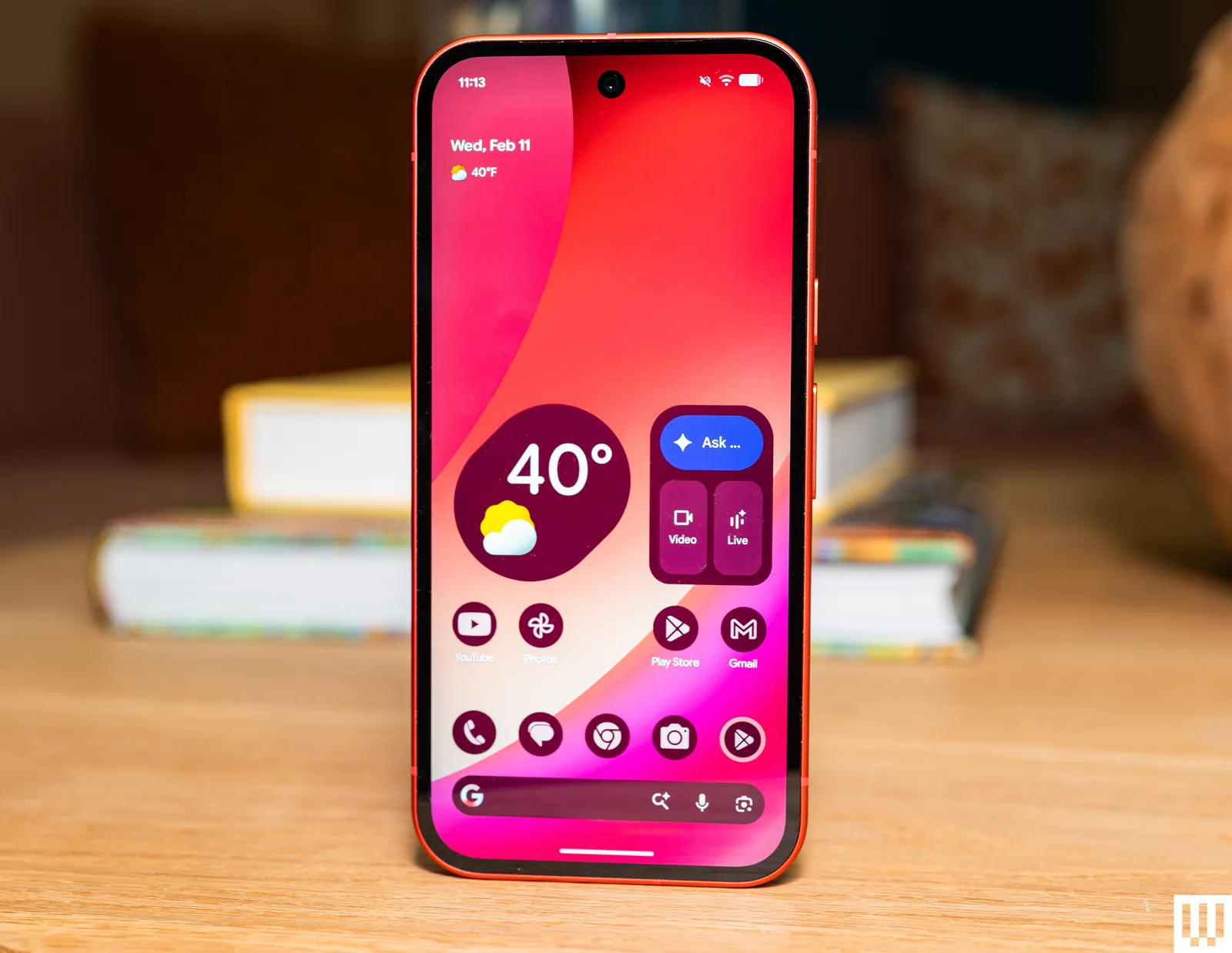
The screen is brighter now, reaching a peak brightness of 3,000 nits, and I haven’t had any trouble reading it in sunny conditions (though it hasn’t been as sunny as I’d like it to be these past few weeks). I appreciate the glass upgrade from Gorilla Glass 3 to Gorilla Glass 7i. It should be more protective, and anecdotally, I don’t see a single scratch on the Pixel 10a’s screen after two weeks of use. (I’d still snag a screen protector to be safe.)
Photograph: Julian Chokkattu

Another notable upgrade is in charging speeds—30-watt wired charging and 10-watt wireless charging. I’ll admit I haven’t noticed the benefits of this yet, since I’m often recharging the phone overnight. You can get up to 50 percent in 30 minutes of charging with a compatible adapter, and that has lined up with my testing.
My biggest gripe? Google should have taken this opportunity to add its Pixelsnap wireless charging magnets to the back of this phone. That would help align the Pixel 10a even more with the Pixel 10 series and bring Qi2 wireless charging into a more affordable realm—actually raising the bar, which wouldn’t be a first for the A-series. After all, Apple did exactly that with the new iPhone 17e, adding MagSafe to the table. Or heck, at least make the Pixel 10a Qi2 Ready like Samsung’s smartphones, so people who use a magnetic case can take advantage of faster wireless charging speeds.
Battery life has been OK. With average use, the Pixel 10a comfortably lasts me a full day, but it still requires daily charging. With heavier use, like when I’m traveling, I’ve had to charge the phone in the afternoon a few times to make sure it didn’t die before I got into bed. This is a fairly big battery for its size, but I think there’s more Google could do to extend juice, akin to Motorola’s Moto G Power 2026.
While the base Apple M5 chip retains a conventional single-die design, the M5 Pro and M5 Max move to Apple’s new Fusion architecture. The approach relies on advanced packaging to combine two dies into a single SoC, integrating the CPU, GPU, media engine, unified memory controller, neural engine, and Thunderbolt…
Read Entire Article
Source link


A Washington state bill requiring utilities and data center companies to create agreements that protect rate payers from increased power costs and brings transparency to the environmental impacts of the facilities has failed.
After weeks of wending its way through Olympia, the Senate Committee on Ways & Means did not take a vote on House Bill 2515, causing it to miss a legislative deadline.
HB 2515 had garnered support among Democratic lawmakers, while Microsoft and Amazon lobbied behind the scenes, the Seattle Times reported. The tide turned on Friday when Microsoft — which has roughly 30 data centers in the state — publicly came out in opposition to the bill.
“We respectfully urge the committee not to advance the bill without significant changes,” Lauren McDonald, Microsoft’s senior director of Washington state government affairs, said in testimony before the Senate committee. She described the legislation as “uniquely anti-competitive.”
HB 2515 garnered support from environmental groups, tribal nations, and ratepayer advocates warning that the rapid expansion of data centers risked driving up utility bills and straining limited water supplies.
“This bill is about fairness, grid reliability, transparency, and protecting our clean energy commitments. It’s easy for big tech to make big promises in a press release. But when states ask for accountability to those promises, their commitment evaporates,” said Rep. Beth Doglio, D-Olympia.
Opponents from the tech sector, labor and local municipalities that have benefited financially from the facilities said the developments support essential computing infrastructure, creates jobs and provides increased property tax revenue.
Across the U.S., leaders and communities at every level are worried about the harms posed by the surge in data centers that power the internet and AI — pushback that has reached the White House, where President Trump this week is convening major tech companies to pledge they would not drive up electric bills.
Microsoft in January launched a community-focused initiative pledging to be a good neighbor in the communities where it had data centers.
“We support the bill’s intent and will continue to work with lawmakers in the future on detailed policies that ensure accountability and transparency while expanding job opportunities and community development,” said a Microsoft spokesperson via email.
Proponents of the measure said that HB 2515 aligns with many of the climate pledges that big tech companies have made, vowing to use clean energy and offset their carbon emissions. They called the bill a necessary step to put rules in place for the booming data center sector.
“Lobbying by the tech companies killed the bill. And unfortunately, the Legislature let it happen, passing on a critical opportunity to put common sense guardrails in place,” said Zach Baker, policy director for the nonprofit NW Energy Coalition, via email.
Dan Diorio, vice president of state policy for the Data Center Coalition, on Tuesday highlighted the role played by the facilities, calling them the “essential digital infrastructure.”
“The data center industry will continue to partner with utilities, grid operators, and policymakers,” he said via email, “to advance the infrastructure needed for a reliable, affordable grid that supports economic growth for all customers.”
Doglio indicated she wasn’t giving up on the issue.
“The impacts of these facilities are real — on our power grid, our water resources, our greenhouse gas emissions and people’s utility bills,” she said. “The longer we wait, the greater those impacts will be. I remain committed to continuing this work.”
RELATED:
- Microsoft urges major changes to Washington data center regulations as bill nears final vote
- Washington state has embraced data centers – but now it’s looking to set terms of engagement
- ‘Meaningless’ theater? As tech giants pledge ratepayer protections in D.C., others question real-world impact
- Microsoft responds to AI data center revolt, vowing to cover full power costs and reject local tax breaks
Editor’s note: Story updated with comments from Rep. Beth Doglio and a Microsoft spokesperson.

Key takeaways:
- Features: Dynamic Island might shrink, cameras could have a variable aperture and a bigger battery could be on the way.
- Colors: Apple could launch red, burgundy, purple and brown versions.
- Price: There have been no leaks about price increases, which is good news at this point.
- Release date: Apple might split the iPhone 18 launch between September 2026 and February to March 2027.
2026 has barely begun and there are already plenty of rumors brewing about Apple’s iPhone 18 lineup. The iPhone 17 series impressed us with its surprisingly feature-packed base model, the incredibly slender iPhone Air, the boldly redesigned iPhone 17 Pro and 17 Pro Max and the entry-level iPhone 17E. We’re hoping this year’s lineup will surprise us too.
Apple is only a year or so away from the 20th anniversary of the original iPhone’s launch. While the company sells more phones in the US than rival Android phones, Apple is consistently behind Samsung for global sales and just ahead of Chinese phone makers like Xiaomi. There is a lot at stake for Apple with the next iPhone, as well as building interest in a possible foldable device, such as the rumored iPhone Fold.
Already, some of the hottest rumors include Dynamic Island shrinking along with the possibility that the iPhone 18 and 18 Pro will have the same RAM as the iPhone 17 Pro and Pro Max. There’s also word that Apple could split the launch of its iPhone 18 lineup with the premium models coming out this year and more entry-level models releasing next year. Here’s a look at all the rumors and leaks we’ve uncovered about the potential iPhone 18 series.
Latest rumors
iPhone 18 design differences
We had CNET’s creative director show us what a coffee-colored iPhone Pro might look like.
We’re hearing there likely will be three models: the base iPhone 18, the iPhone 18 Pro and the iPhone 18 Pro Max. There also may be iPhone models not in this series, like a second-generation Air or the much-rumored folding iPhone. That could mean a total of six iPhone models that are in the works if you include the also-rumored 18E.
Designs for the iPhone tend to remain the same year after year and current rumors suggest this trend will continue. The screen sizes of the three handsets look to be the same as before — 6.3 and 6.9 inches, respectively — with minor design differences in the camera bumps on the back. A Weibo tipster also appears to hint that Apple’s brightness requirements are incredibly demanding, which might result in OLED supply issues. This leads some to suspect it has a much brighter screen.
The base iPhone 18 is rumored to have a smaller camera bump compared to its predecessor, while the Pro and Pro Max will retain the wider “plateau” to accommodate their three rear cameras.
According to a leak from the Chinese social media site Weibo, the Pro model could get a “subtle transparent finish” on the rear glass panel. A Chinese leaker reportedly said that the iPhone 18 Pro could have a more unified design versus the two-tone look it has now. Some rumors also suggest that it could have a heavier, thicker build.
It might also come in three new colors: coffee, purple and burgundy. Coffee brown might seem like an odd choice for a phone color, but our own Patrick Holland is open to the concept. Bloomberg’s Mark Gurman notes that Apple could also be considering a deep red color for its iPhone 18 lineup. As he points out, however, it’s likely that deep red, burgundy, purple and coffee brown are all variations of the same red idea. It could just be one of these colors that makes it through production.
Other rumors suggest that changes may be coming to the iPhone’s Dynamic Island. Gurman and Weibo user Digital Chat Station suggest that Apple may reduce the size of the Dynamic Island on the iPhone 18 models. This could result in a small pinhole cutout for the camera, as the Face ID sensors may be located beneath the display.
The Information also recently reported that the iPhone 18 Pro and iPhone 18 Pro Max will feature under-screen Face ID, confirming the Bloomberg rumor. Additionally, the outlet also said that the front camera would be moved to the top left corner of the screen and, as a result, would be missing the Dynamic Island cutout.
Contradicting that claim, the account Ice Universe alleges that the Dynamic Island cutout on the iPhone 18 Pro models will remain, but would instead be “approximately 35% narrower” than it is on current iPhone 17 Pro models. This is in relation to how the Dynamic Island looks by default; the area enlarges depending on Live Activities or other information, just like the existing Dynamic Island. MacRumors suggests that the new iPhone will only have partial under-screen Face ID, which still requires the existence of a Dynamic Island.
We’ve tested under-display cameras on several phones over the years. The part of the display in front of the camera features fewer screen elements and translucent wiring, allowing the selfie camera to “see through” the screen, much like looking out a window with open blinds. While the idea of having a display with minimal or no cutouts is a worthy one, under-display cameras typically result in photos with poor image quality. However, maybe Apple is the company that will finally figure out how to integrate a camera under the display that captures high-quality images.
Otherwise, Bloomberg’s Gurman also warns that the 18 Pro could be “underwhelming,” stating that it could just have very minor tweaks. This is a bit of departure from prior iPhone Pros, as the Pro has usually been the more premium version of the iPhone lineup.
A bigger battery for iPhone 18 Pro
After years of customers asking, Apple finally chose battery over case slimness in the iPhone 17 Pro. And that model continues to surprise us, coming out on top of Patrick Holland’s recent comparison of the battery life in 35 phones. We’re especially curious about whether Apple will adopt new silicone carbon battery technology.
Based on a post on the Chinese social media site Weibo, spotted by 9to5Mac, the iPhone 18 Pro could include a battery in excess of 5,000 mAh — specifcally, 5,000 mAh for models with a physical SIM card slot (as required in some countries) and 5,200 mAh for models that rely solely on eSIM (which give up more internal space that can be filled with more battery).
New cameras on iPhone 18
The iPhone 17 Pro had three rear cameras: a wide-angle lens, an ultrawide and a 4x telephoto.
The iPhone’s cameras are another feature that may receive a significant upgrade in 2026. Macworld reports that Weibo leaker Digital Chat Station said the iPhone 18 Pro Max could get a camera with a variable aperture, similar to how the lenses on DSLR and mirrorless cameras work. This allows people greater control over depth of field and image brightness. The Information also reported that at least one rear camera on the 18 Pro would have a mechanical iris, another name for a lens’ aperture.
We’ve seen variable aperture phone cameras before. The Galaxy S9 launched in 2018 with a mechanical dual-aperture lens on its main camera that could switch between f/1.5, allowing more light to enter and creating a shallower depth of field, and f/2.4, which sharpened the subject more. But the S9’s image sensor was tiny and photos from it were just OK. Xiaomi had a variable aperture, between f/1.9 and f/4.0, on the 2023 13 Ultra and 2024 14 Ultra, but each had a large 1-inch-type sensor that could take advantage of it. Sadly, to the frustration of CNET’s Andrew Lanxon, the company removed the variable aperture on the Xiaomi 15 Ultra.
Macworld also says the telephoto lenses on the iPhone 18 Pro and Pro Max could get a faster aperture, letting more light hit the sensor for better low-light shots. Additionally, MacRumors reports that all iPhone 18 models (except the 18E) would get upgraded 24-megapixel front-facing cameras for improved selfies. We should note that the iPhone 17 series and Air all have Apple’s new Center Stage selfie camera, which has a square 18-megapixel sensor and can take either horizontal or vertical photos, no matter which way you’re holding the phones.
There is also some speculation that the iPhone’s Camera Control button could be simplified. Instead of capacitive and pressure sensors, it might just be pressure-sensing for all of the Camera Control’s functions.
Updated A20 chip and iPhone 18 specs
The new iPhone models run iOS 26 and have either an A19 or A19 Pro chip: (left to right) iPhone 17, iPhone Air, iPhone 17 Pro Max and iPhone 17 Pro.
As the iPhone 17 lineup uses the A19 and A19 Pro chips, it makes sense that the upcoming iPhone 18 would use Apple’s new A20 processor. The rumored chips are said to use a new process called Wafer-Level Multi-Chip Module, which incorporates the RAM directly into the same wafer as the CPU, GPU and neural engine. This apparently results in better efficiency and faster performance because everything would be located on the same chip.
We’re also hearing that the iPhone 18 lineup could use Apple’s next-gen C2 modem chip for improved wireless connectivity. Additionally, The Information reports that Apple is preparing to support 5G networks from satellites, potentially giving iPhone 18 models full satellite phone capabilities, not just for emergencies and texting.
MacRumors recently reported that the iPhone 18 could have 12GB of RAM, according to a research note by analyst Jeff Pu.
Although this is not exclusive to the iPhone 18, Apple also recently announced that Google’s Gemini will be running its AI-powered Siri later this year.
iPhone 18 and iPhone 18 Pro release date
The logo for Apple’s fall 2026 event invitation is interactive: a heat signature stays where you touch or click and hold.
For years, Apple has held its annual iPhone launch event in the fall. But according to multiple reports, Apple’s smartphone release schedule could look different in the coming years.
Bloomberg has reported that Apple plans to release the more expensive iPhone 18 Pro, the iPhone 18 Pro Max and its new foldable in fall 2026 while the more inexpensive iPhone 18 and the iPhone 18E (and maybe a potential iPhone Air 2) could debut six months later in February or March 2027.
Seeing as Apple has released the iPhone 16E and 17E in the Springs of 2025 and 2026, that’s not a surprising development. It does mean, however, that if you’re holding out for a more affordable iPhone, you could have to wait until next year to plan your purchase.
Watch this: The iPhone 17’s Unexpectedly Satisfying Tips and Accessories


Washington lawmakers are racing to pass legislation to let Rivian and Lucid sell their EVs directly to consumers. The push follows years of dealership opposition — and Rivian’s threat to bypass legislators entirely with a November ballot initiative.
The Senate on Tuesday approved Senate Bill 6354 with 46 yeas and three Democrats voting no. The bill has a House hearing Thursday.
Twelve years ago, Tesla won a hard-fought battle giving it alone the right to do direct sales in an era when electric vehicles were a new technology.
For years, EV makers have battled to level the sales playing field with Tesla. Because Rivian and Lucid have not sold through dealerships, their Washington customers have had to purchase their vehicles online or out-of-state and have not been able to easily test drive the EVs.
The bill provides a narrow exemption for the two additional EV automakers, meaning that other manufacturers and EV newcomers are still banned from direct sales. SB 6354 includes a $10,000 penalty for automakers that break the law and conduct direct sales or leases.
The legislation also increases the vehicle dealer documentary service fee from $200 to $250 for a decade, allocating some of those funds to state accounts supporting EV purchases for low-income shoppers and public transit.
SB 6354 has budget impacts and is therefore exempt from most legislative deadlines. The session is scheduled to end March 12.
RELATED: Washington state is primed to let Rivian and Lucid sell EVs directly to consumers

On Tuesday, James Talarico, On Tuesday, James Talarico, a 36-year-old Presbyterian seminarian and state representative from Austin, Texas, defeated congresswoman Jasmine Crockett in what has become one of the most closely watched primary races so far this year.
While both candidates boast immense social media followings—Talarico with 1.6 million followers and Crockett with 2.6 million followers on TikTok—it wasn’t just the candidates who drove the conversation. It was the creators around them, who offer a preview of the digital fights to come throughout the midterms and, ultimately, the 2028 presidential race.
The Talarico and Crockett campaigns ran distinctly different digital strategies. Crockett has built her congressional brand on confrontation, going massively viral last year after calling out Marjorie Taylor Greene for having a “bleach-blonde, bad-built, butch body” and telling Elon Musk to “fuck off.” Talarico’s digital presence reads more like a populist sermon delivered over his own social media accounts. He’s carried these preachings to unconventional platforms, like the Joe Rogan Experience, that rewarded him with countless viral clips.
But for the most part, the incendiary aspects of the digital-focused campaigns came from outside the candidates. In January, the hosts of “Las Culturistas,” a pop-culture and comedy podcast, set off a firestorm of criticism after discouraging listeners from supporting Crockett in an episode of the show. “Don’t waste your money sending to Jasmine Crockett, do not do it,” Matt Rogers, one of the hosts said at the time. The show faced immediate backlash from members of its audience and Crockett backers, forcing them to apologize.
It was the first in a series of online spats that would reach a fever pitch in February, when a Dallas-based creator named Morgan Thompson claimed that Talarico called Colin Allred, a former House representative, a “mediocre Black man.” The video shared with her nearly 200,000 TikTok followers went viral, breaking out from pro-Crockett communities online and into the mainstream press. Responding to the allegation, the Talarico campaign called the comment a “mischaracterization” of an off-the-record conversation the candidate had with Thompson in which he called Allred’s method of campaigning “mediocre,” not the man himself.
“I would never attack him [Allred] on the basis of race,” Talarico said at the time. “As a Black man in America, Congressman Allred has had to work twice as hard to get where he is. I understand how my critiques of the Congressman’s campaign could be interpreted given this country’s painful legacy of racism, and I care deeply about the impact my words have on others.”
This episode illuminated a key question amongst strategists going into the heat of the 2026 midterms and the next presidential race: What role should creators play in campaigns? And how do you manage them? While working with creators has become commonplace in both Republican and Democratic campaigns, the relationships are often loosely defined and difficult to control.
“There are so many factors that the campaign staff themselves have to deal with and think about,” says Kyle Tharp, who writes the Chaotic Era newsletter that focuses on digital politics. “Do I put them in the press risers at the rally, or do I give them upfront VIP access? Do I give them a couple minutes with the candidate? Am I going to be screening their questions? Or do I just let them riff and hope for the best?”
President Donald Trump’s 2024 reelection campaign relied heavily on creators and podcasters to reach young, predominantly male voters. But many of those very same creators have turned against Trump over the last year. In the leadup to the 2024 election, Trump appeared on “Flagrant,” a popular podcast hosted by comedian Andrew Schulz. But Schulz’s support for Trump quickly evolved into ire. Last summer, Schulz took issue with the administration’s failure to release files related to Justice Department investigations into convicted sex offenderJeffrey Epstein. Since then, Schulz has repeatedly leveraged his platform to criticize the administration.


For a company whose legacy was built on console hits, the balance of power has shifted dramatically. Stronger sales through Valve’s Steam marketplace and access to a vast global PC audience have made the platform central to Capcom’s growth strategy.
Read Entire Article
Source link

from the words-are-but-wind dept
We’ve noted repeatedly how Trump FCC boss Brendan Carr has been abusing the FCC’s “equal opportunity” (or “equal time”) rule to try and threaten daytime and late night talk shows with government retribution if they refuse to enthusiastically coddle Republicans.
Late night shows had historically been exempt from the dated rules, which required that any airing of a political candidate on “publicly owned” airwaves is countered with the appearance from a candidate from the opposing party. But Carr isn’t interested in equilibrium; he’s interested abusing FCC authority to try and silence critics of Donald Trump and his increasingly unpopular policies.
But folks have increasingly noted that Brendan Carr doesn’t appear to have any interest in enforcing the same standard on radio, where (especially on AM), listeners are constantly served up a lopsided dose of race-baiting agitprop pretending to be news. When he’s been asked about this inconsistency, Carr has been painfully and curiously vague:
“In a press conference after the FCC’s February 18 meeting, Deadline reporter Ted Johnson asked Carr why he has not expressed “the same concern about broadcast talk radio as broadcast TV talk shows.”
The Deadline reporter pointed out that “Sean Hannity’s show featured Ken Paxton in December.” Paxton, the Texas attorney general, is running for a US Senate seat in this year’s election. Carr claimed in response that TV broadcasters have been “misreading” FCC precedents while talk radio shows have not been.
“It appeared that programmers were either overreading or misreading some of the case law on the equal-time rule as it applies to broadcast TV,” Carr replied. “We haven’t seen the same issues on the radio side, but the equal-time rule is going to apply to broadcast across the board, and we’ll take a look at anything that arises at the end of the day.”
It’s of course far worse on the radio side, which has been utterly dominated by outright right wing propaganda since the early 90s. And he will, of course, not be “taking a look at anything that arises,” because, again, he’s not remotely interested in abusing this rule consistently because he’s an authoritarian hack.
Ars Technica spoke to Gigi Sohn, whose appointment to the FCC under Biden was, if you’ll recall, dismantled by a telecom and media company homophobic smear campaign:
“Carr’s claim that TV but not radio broadcasters have misread FCC precedents is “a bunch of nonsense,” said Gigi Sohn, a longtime lawyer and consumer advocate who served as counselor to then-FCC Chairman Tom Wheeler during the Obama era. Carr “was responding to criticism from people like Sean Hannity that the guidance would apply to conservative talk radio just as much as it would to so-called ‘liberal’ TV,” Sohn told Ars. “It doesn’t matter whether a broadcaster is a radio broadcaster or a TV broadcaster, the Equal Opportunities law and however the FCC implements it must apply to both equally.”
This is very typical Carr. The law and earthly logic are malleable constructs that easily bend to whatever his goal is at any given moment. This blatant, mindless inconsistency has always been absolutely central to who he is, even before he became the authoritarian government’s top censor. It was evident way back during the fights over net neutrality and telecom oversight.
It’s why anybody with sense (including this website) recommended that the man be allowed nowhere near actual levers of power and policy-making.
Filed Under: brendan carr, censor, censorship, equal time, fcc, first amendment, partisan hack, radio, sean hannity, tv
Honda chief addresses Fernando Alonso relationship amid Aston Martin’s sad state with the new engines

Google’s Gemini AI Drove Man Into Deadly Delusion, Family Claims in Lawsuit

Belfast McDonald’s racial assault accused banned from demonstrations


-

 Politics6 days ago
ITV enters Gaza with IDF amid ongoing genocide
-

 Politics1 day ago
Alan Cumming Brands Baftas Ceremony A ‘Triggering S**tshow’
-

 Fashion5 days ago
Weekend Open Thread: Iris Top
-

 NewsBeat7 days ago
Cuba says its forces have killed four on US-registered speedboat | World News
-

 Tech4 days ago
Unihertz’s Titan 2 Elite Arrives Just as Physical Keyboards Refuse to Fade Away
-
Sports5 days ago
The Vikings Need a Duck
-
 NewsBeat4 days ago
Dubai flights cancelled as Brit told airspace closed ’10 minutes after boarding’
-

 NewsBeat3 days ago
‘Significant’ damage to boarded-up Horden house after fire
-
 NewsBeat7 days ago
Manchester Central Mosque issues statement as it imposes new measures ‘with immediate effect’ after armed men enter
-
 NewsBeat4 days ago
The empty pub on busy Cambridge road that has been boarded up for years
-

 NewsBeat4 days ago
Abusive parents will now be treated like sex offenders and placed on a ‘child cruelty register’ | News UK
-

 Entertainment2 days ago
Baby Gear Guide: Strollers, Car Seats
-

 Business7 days ago
Discord Pushes Implementation of Global Age Checks to Second Half of 2026
-

 Business6 days ago
Only 4% of women globally reside in countries that offer almost complete legal equality
-
 Tech5 days ago
NASA Reveals Identity of Astronaut Who Suffered Medical Incident Aboard ISS
-
 NewsBeat3 days ago
Emirates confirms when flights will resume amid Dubai airport chaos
-
Politics4 days ago
FIFA hypocrisy after Israel murder over 400 Palestinian footballers
-

 Crypto World6 days ago
From Crypto Treasury to RWA: ETHZilla Retreats and Relaunches as Forum Markets on Nasdaq
-

 NewsBeat2 days ago
Is it acceptable to comment on the appearance of strangers in public? Readers discuss
-

 Tech3 days ago
Viral ad shows aged Musk, Altman, and Bezos using jobless humans to power AI