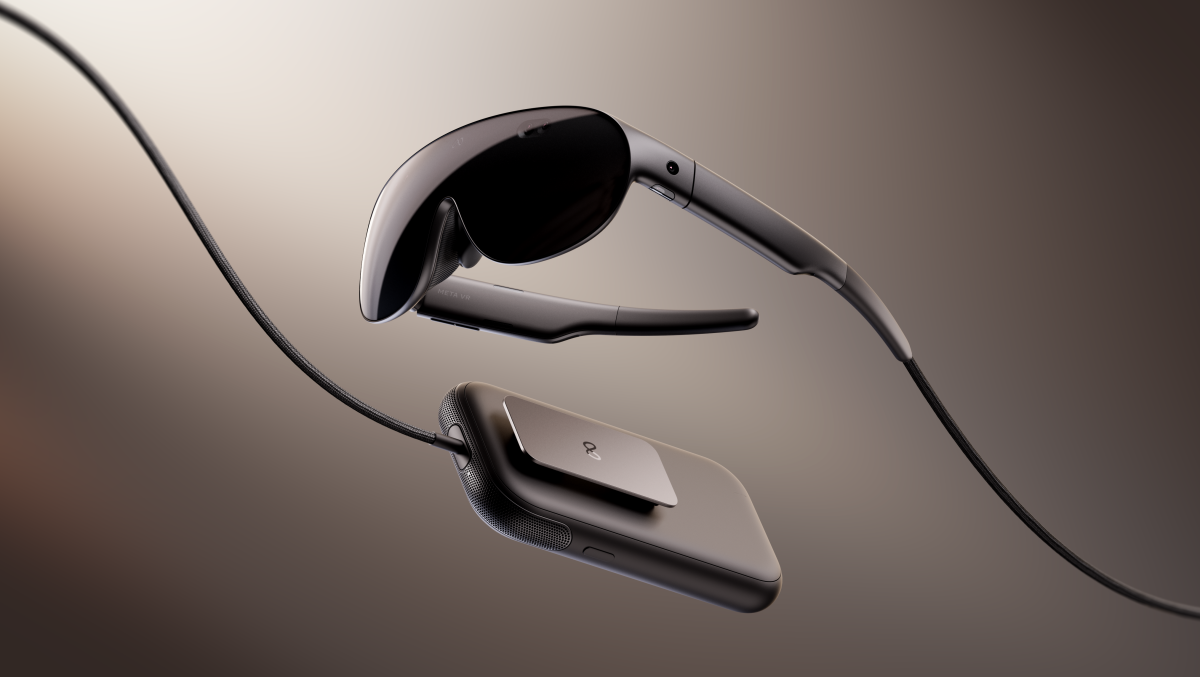
Meta is renewing its quest to make virtual reality a thing. At its Connect event on Wednesday, the company announced Meta VR Glasses, its newest entry into the VR market, which will be available next spring starting at $1,299.99.
These glasses actually seem quite promising, thanks to a substantially lighter form factor and a host of new entertainment integrations — including (allegedly) IMAX compatibility.
Moments before unveiling them, Meta CEO Mark Zuckerberg reminded the audience that the company had decided awhile ago to shift its focus away from the Metaverse and build fewer VR devices until it had real breakthroughs.
“This is a breakthrough,” he exclaimed before showing off the glasses. “A lot of people agree that augmented reality glasses with holograms are clearly going to be part of the future, but we’ve also heard that a lot of people are less interested in wearing a headset. So we have built a new kind of VR device that delivers the same magical feeling of presence and immersion with high-resolution displays and views of the world around you in a form factor that is a pair of glasses for the first time.”
Advertisement
Meta says that the glasses are five times lighter than the Meta Quest 3 — and they look much more like normal eyewear than the bulky headsets the company has released before. The frames are made of magnesium alloy, and the glasses are powered by Qualcomm’s Snapdragon Reality Elite processor. They connect to a computing puck that doubles as a battery, which users can just slip the puck into their pocket to use the glasses on the go.
The glasses are largely built for entertainment. Micro-OLED panels built into the lenses provide what Meta calls a 5K Infinite Display with 37 pixels per degree, along with Dolby Vision and Dolby Atmos audio support. Users will be able to download and watch movies.
Perhaps one of the more unique features of the glasses, however, is that Meta is pitching them as a great way to enjoy IMAX-captured films.
Indeed, the company calls the glasses the “first IMAX-enhanced certified VR device ever” and says they will be one of the few ways to experience the expanded aspect ratio that defines IMAX’s distinct high-resolution viewing experience.
Advertisement
The glasses also support 3D content, including movies that integrate a user’s physical space into their viewing experience. Meta says that it has teamed up with Disney and that in November, Disney+ users will be able to stream specific movies — including certain Marvel movies — in 3D.
Meta says that users will be able to watch specific movies and have their surroundings “transformed with immersive environments, dynamic effects, stunning 3D visuals, and spatial audio” — essentially converting the movie into a VR gaming-type experience.
The glasses will also come with Meta AI — its automated virtual assistant — built in, which means that users will be able to talk to the glasses and automate various tasks via voice command. For instance, Meta says you’ll be able to start a movie just by asking your glasses to do so. Other ways to issue commands include hand gestures.
When you purchase through links in our articles, we may earn a small commission. This doesn’t affect our editorial independence.
The algorithms powering modern dating apps can be a maze. Finding a match, especially without a premium subscription, can be quite a hassle. The “swipe anxiety,” as they say, is a well-known and ugly reality.
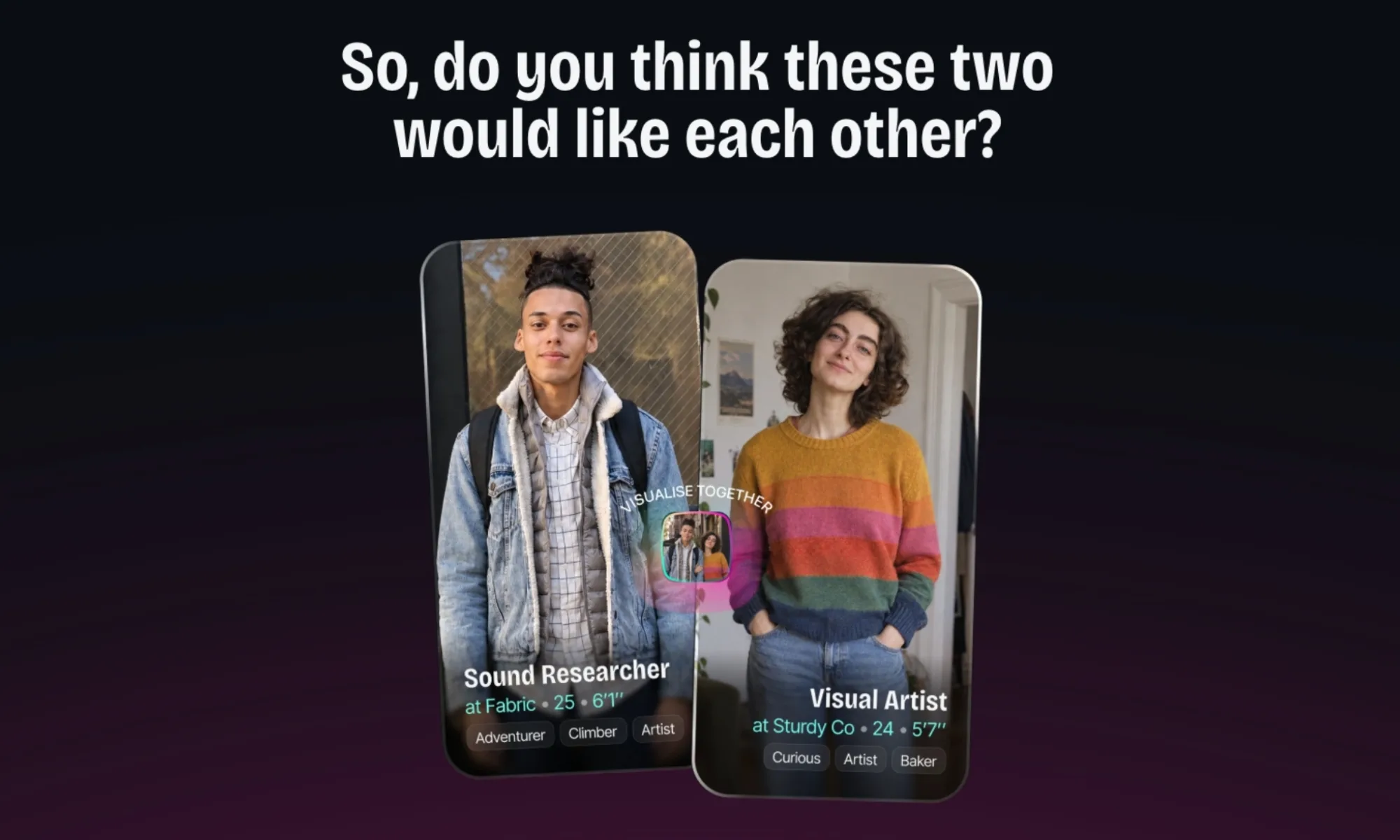
Rivet takes a completely different approach to finding connections and romantic interests on a dating app. The dating network, launching today in the US, lets strangers play matchmaker for you.
Rivet
How exactly does Rivet work?
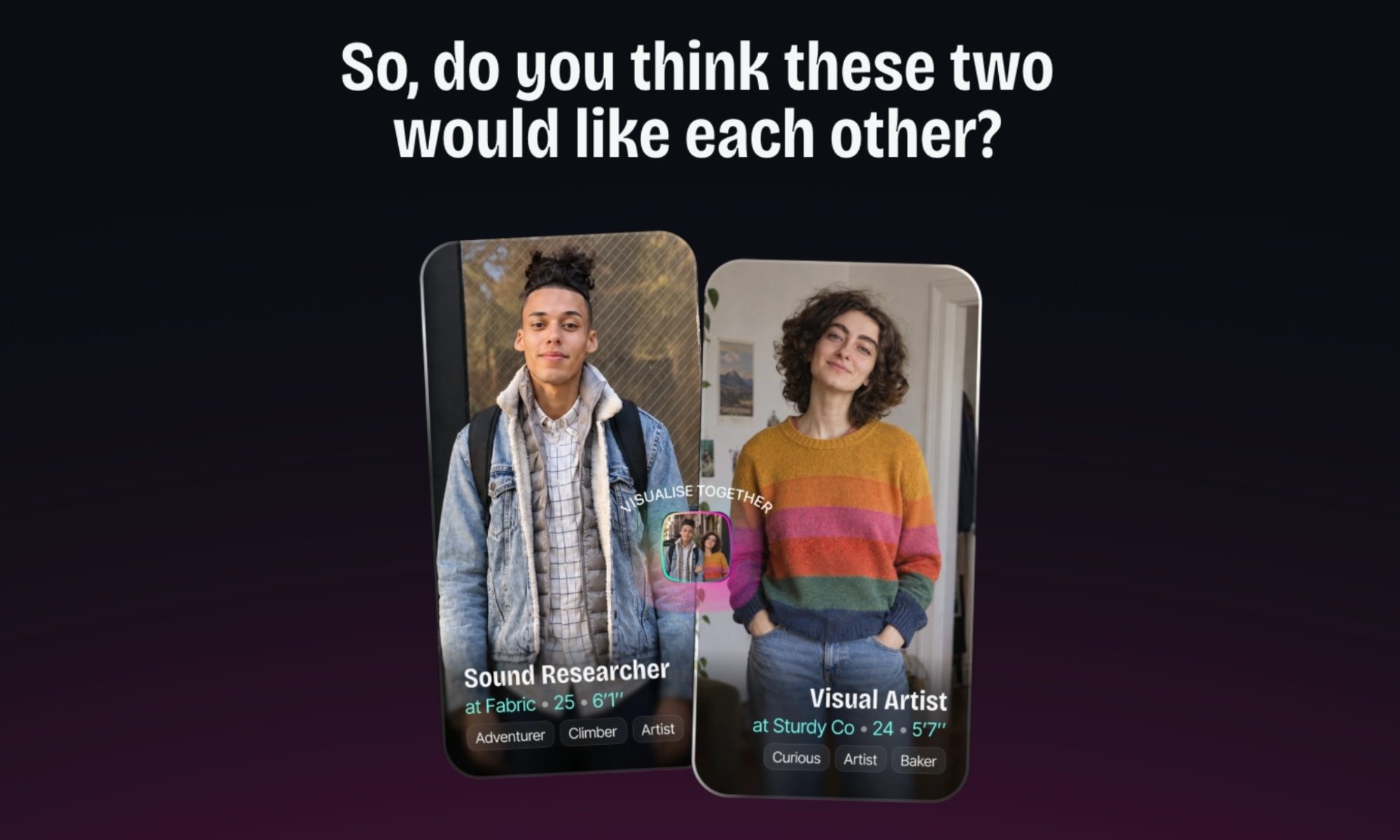
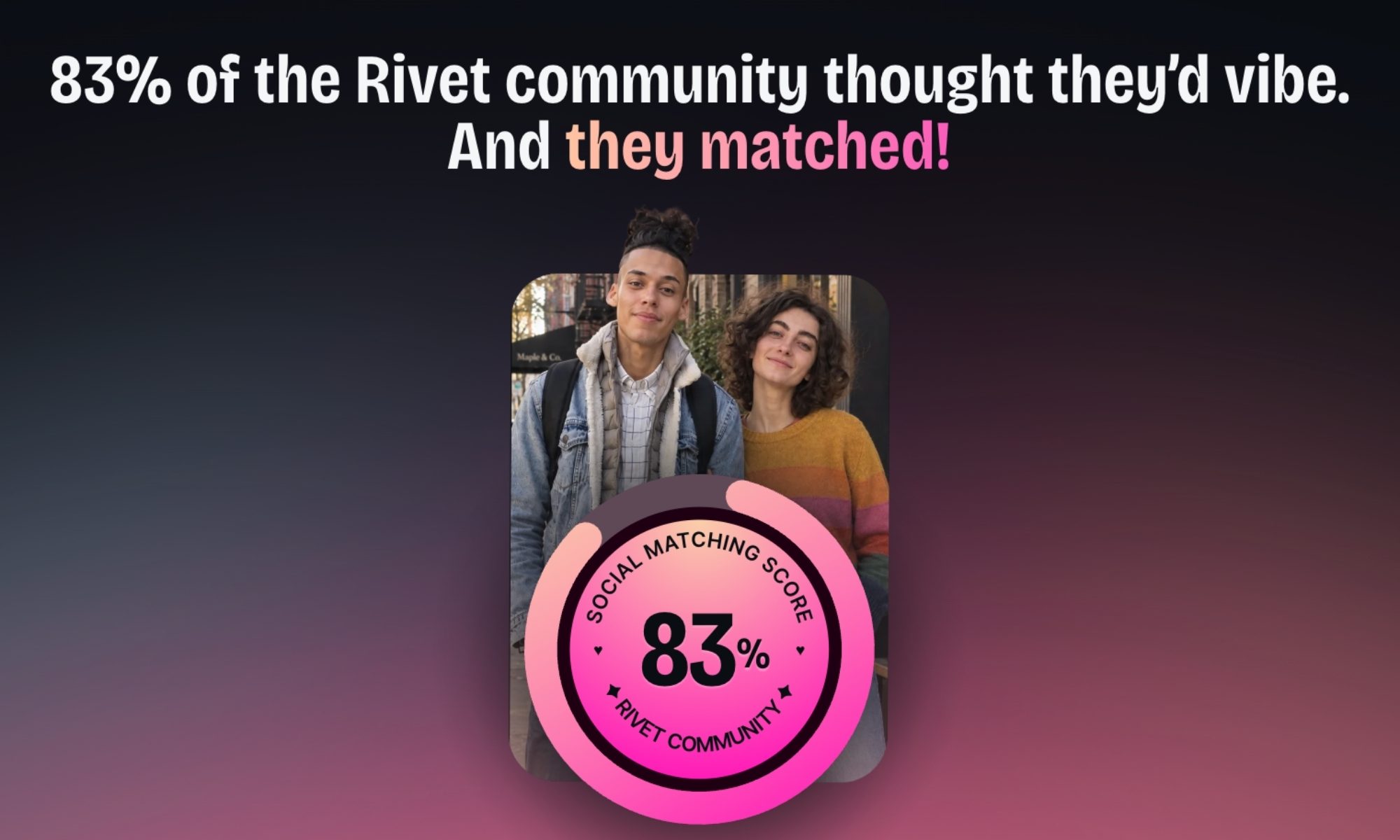
The brainchild of former Tinder and Match Group executive Taru Kapoor, the app lets users act as both a dater and a matcher. “The pairs who get high Social Matching scores are introduced to each other, and each individual independently decides whether they want to match with someone and begin a conversation,” says the company.
Rivet follows a “give-to-get” format, noting that it’s a win-win situation where users find love and also play an active role in helping other Ripeople come together. The app is free to download and is now available on Android and iOS.
However, the matchmaker concept isn’t unique to Rivet.
Advertisement
Rivet
Which other dating apps have matchmakers?
One of the most well-known applications of its kind is Wingman. It lets friends and family members act as matchmakers by writing your profile bio and swiping through potentially interesting folks you should connect with based on their hobbies and interests.
In July this year, Hinge also launched a new feature called Friend’s Take, which lets friends and family members contribute their thoughts on your profile through text, voice, and video descriptions.
Rivet is reintroducing that concept by letting users act as matchmakers for others in the circle, or sign up as a user to find romantic interests for themselves.
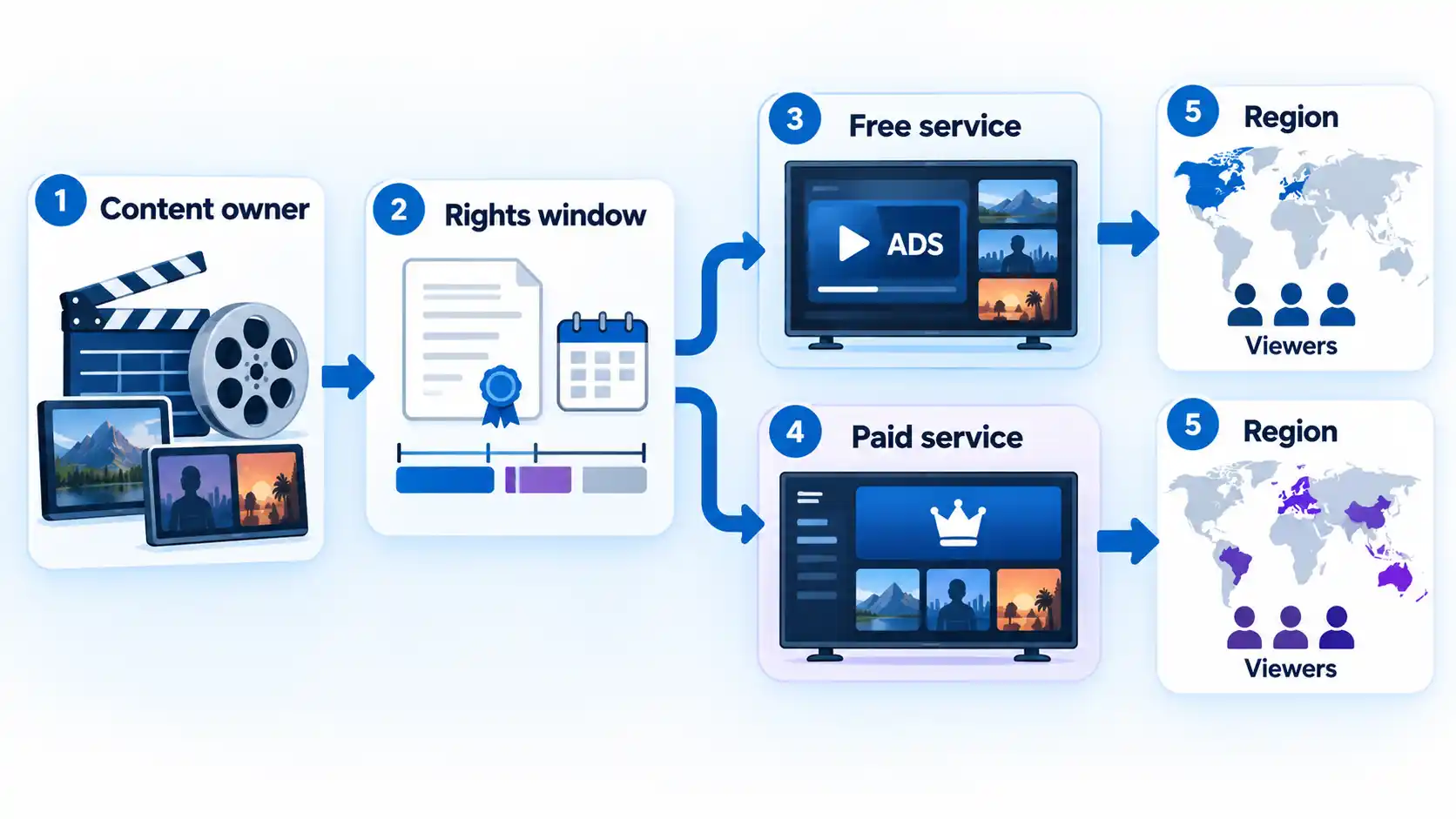
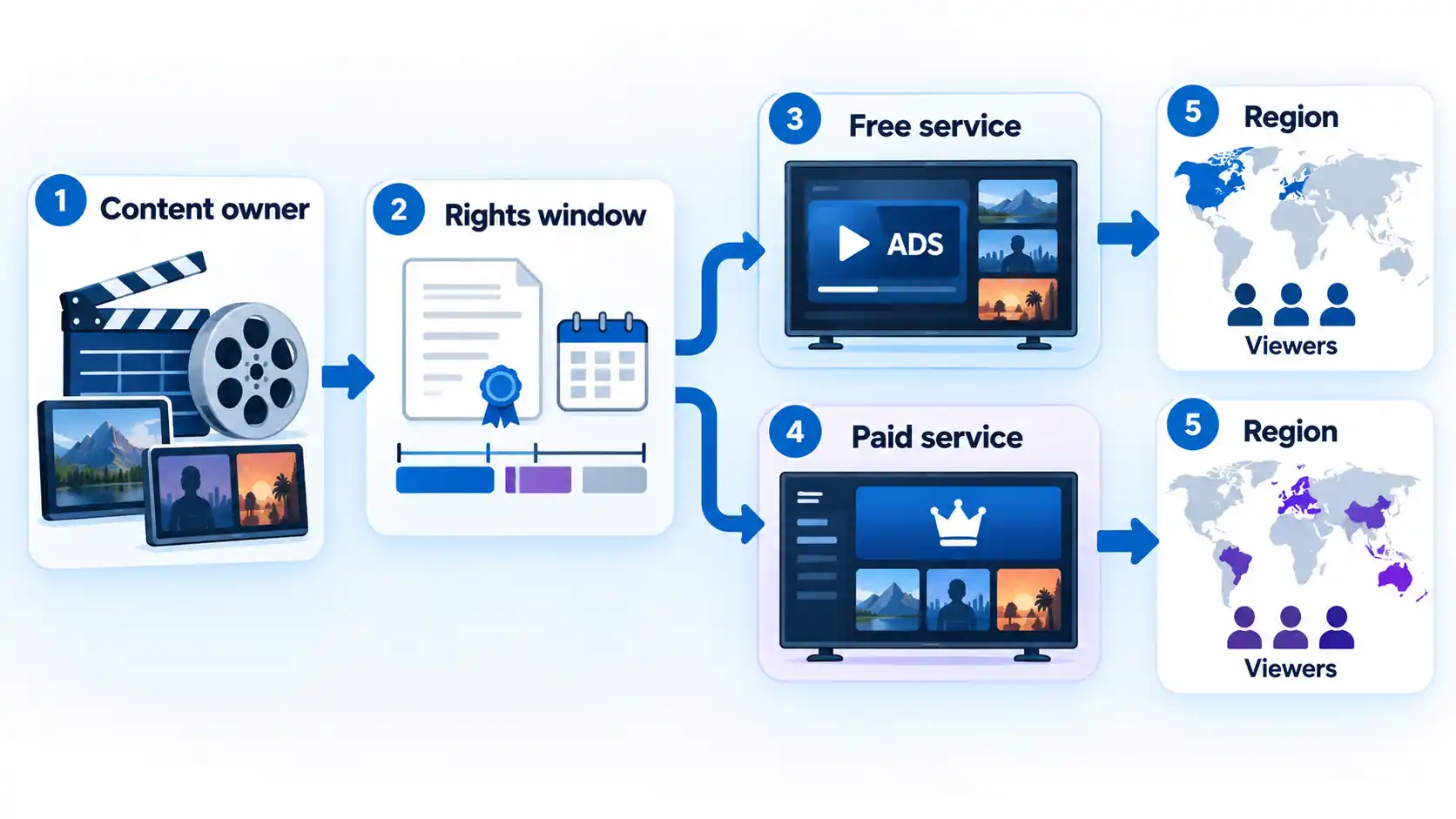
Free legal streaming can cover a surprising amount of everyday viewing, but the trade-off is usually less control over advertising, title availability, offline viewing, and premium playback features. Paying does not automatically remove ads either, because many subscription services now offer lower-cost ad-supported plans alongside more expensive ad-free tiers.
The useful comparison is therefore not simply free versus paid. It is closer to a spectrum: free ad-supported streaming, paid ad-supported streaming, and paid premium streaming. What matters is which restrictions actually affect the way you watch.
Free and Paid Streaming Are No Longer Opposites
Several streaming business models now sit between completely free television and a premium subscription.
AVOD, or advertising-supported video on demand, lets you choose a movie or program and watch it with commercial breaks. FAST, or free ad-supported streaming television, usually combines advertising with scheduled channels that resemble traditional television. SVOD, or subscription video on demand, charges a recurring fee for access to a service, but that subscription can itself be either ad-supported or largely ad-free.
Advertisement
Tubi is a straightforward AVOD example. Its current advertising explanation says the service remains free because advertising funds it and that it does not currently offer an ad-free option.
Netflix demonstrates why the paid side is more complicated. Its current U.S. plan documentation lists Standard with ads alongside ad-free Standard and Premium plans. Paying for a streaming subscription and seeing commercials are therefore not mutually exclusive.
There are other models too. Library-supported services can provide access through participating public libraries, colleges, or universities rather than through advertising or a personal entertainment subscription. The practical differences among free legal streaming services therefore depend partly on how each service is funded and how its catalog is delivered.
If the distinction between scheduled free channels and free on-demand libraries matters to you, FAST and AVOD work differently even though both can be free and advertising-supported.
Advertisement
Free vs Paid Streaming at a Glance
The most useful comparison is not which category has the longest feature list. Compare the restrictions that affect your viewing: advertising, access to specific titles, offline use, playback quality, device limits, and regional availability.
Practical differences between free streaming, paid ad-supported streaming, and paid premium streaming
Feature
Free streaming
Paid with ads
Paid premium
Recurring entertainment subscription
Usually none for the core free service
Required
Required, usually at a higher tier
Advertising
Common
Common
Usually reduced or absent from normal on-demand viewing, depending on the service
Catalog access
Depends heavily on licensing, service, and region
Can include most of a service’s catalog, although plan restrictions may apply
May remove some plan-level access restrictions, although licensing still applies
Offline viewing
Service-dependent and often not a core feature
May be available with limits
Often available on services that support downloads, subject to provider rules
Maximum quality and premium features
Service- and device-dependent
May be limited by plan
Higher tiers can unlock features such as 4K HDR, additional devices, or premium audio on some services
Geographic restrictions
Common
Common
Common
No column wins every row. A person who mainly browses whatever looks interesting has different requirements from someone who follows one exclusive series, downloads shows before flights, or shares a subscription across several screens.
The First Thing You Give Up Is Control Over Interruptions
Advertising is the most visible cost of many free services. Instead of paying a recurring entertainment fee, you accept commercial breaks that help fund the service.
Tubi explicitly ties its free model to advertising and currently provides no ad-free Tubi tier. That makes the trade-off straightforward: access costs no subscription fee, but advertising is part of the viewing experience.
Advertisement
The same assumption becomes less reliable once you move into subscription streaming. Netflix’s ad-supported experience documentation says most movies and TV programs on eligible plans contain commercial breaks. It also notes that a small number of titles can be unavailable on the ad-supported experience because of licensing restrictions.
That means the useful question is not simply whether you pay. Ask what kind of advertising experience a particular plan includes. A cheaper subscription may reduce the financial difference between free and premium streaming without eliminating interruptions.
Live programming is another edge case. Netflix states that live events can contain commercial breaks across all of its plans, including ad-free experiences. If avoiding commercials is one of your main reasons for upgrading, verify the provider’s current rules for both on-demand and live content.
The Bigger Trade-Off Is Often What You Can Watch
Catalog access matters more than raw title counts. A free service can offer thousands of programs and still be a poor substitute if the one series, sporting event, or film you want is licensed somewhere else.
Those findings show that free streaming has developed beyond purely archival television. They do not mean a free catalog will contain the same titles as Netflix, Disney+, Max, Paramount+, or another subscription service.
Licensing determines where much of the difference appears. Rights can be sold for particular countries, platforms, time periods, or distribution models. A film might therefore be included with a subscription in one country, offered free with ads somewhere else, and unavailable on both services in another market.
Advertisement
Exclusive programming creates a stronger reason to pay. If a show or event is contractually tied to one subscription service, a large free catalog elsewhere does not replace it. Conversely, a free service may occasionally carry a title that is absent from the subscriptions you already have.
For that reason, paying for “more content” is too vague a justification. The better question is whether the subscription gives you reliable access to content you specifically value. When one exact film or series is the priority, checking where a title is legally streaming is more useful than comparing catalog-size claims.
Offline Viewing and Playback Flexibility Favor Some Paid Plans
Free streaming generally works best when you expect to watch while connected to the internet. Offline viewing is provider-specific, and paying does not guarantee that every download feature is unrestricted.
Netflix illustrates the distinction within one subscription service. Its current download-limit documentation says its ad-supported plans are limited to 15 total downloads per device per calendar month, with the limit resetting on the first day of each calendar month.
Advertisement
That is a useful reminder that “has downloads” and “has unrestricted downloads” are different claims. Providers can also impose title, device, or licensing restrictions on offline viewing.
Offline playback matters most when internet access is unreliable or expensive, such as during travel or on a commute. If you almost always watch at home on stable broadband, the feature may have little practical value even if a premium plan includes it.
Paying More Can Buy Better Quality and More Device Capacity
Some higher subscription tiers sell technical capability rather than simply a larger entertainment catalog.
Netflix’s current U.S. plan page lists 1080p playback and two simultaneous supported devices for both Standard tiers. Premium increases that to four simultaneous supported devices, adds 4K Ultra HD with HDR, allows downloads on more supported devices, and includes spatial audio. These are current Netflix plan differences, not universal features of paid streaming.
Advertisement
The hardware still has to support the feature. Paying for a 4K plan does not make a 1080p television display 4K. The title, television, streaming hardware, connection path, and service all need to support the required format.
The same reasoning applies to simultaneous streams. A larger household may value extra concurrent devices, while someone watching alone gains little from paying solely for that allowance.
Free Streaming Can Have Significant Regional Restrictions
Streaming rights remain geographical whether a service is free or paid. Free does not mean globally available, and subscribing does not eliminate territorial licensing.
Advertisement
The Roku Channel is a clear current example. Roku’s official availability documentation says The Roku Channel is available in the United States, Canada, and the United Kingdom on Roku devices, web, and mobile, while access in Mexico is limited to Roku devices.
That creates several different kinds of availability to check. A service can operate in your country but lack a particular title there. Its mobile app may exist while its Smart TV app does not. A live sporting event can have different territorial rights from the service’s regular movie catalog.
These restrictions mean a comparison written for one country should not be treated as a universal catalog guide. Before subscribing mainly for one show or event, verify the title, plan, device, and country that apply to you.
What About Privacy and Ad Targeting?
Advertising introduces another consideration, but the price of a plan does not tell you by itself how private the service is.
Advertisement
Netflix explains that its ad-supported experience can use information such as viewing interactions and general location when selecting advertisements. It also says behavioral advertising can use activity from unaffiliated apps or websites unless the viewer has opted out where that option applies.
Info iDo not assume that “free means your data is the product” or that paying automatically prevents tracking. Advertising controls and privacy practices vary by provider, plan, and region, so compare the policy of the service you actually use.
The presence or absence of a subscription fee is therefore not enough to establish a privacy hierarchy. If targeted advertising matters to you, check the provider’s advertising controls, privacy settings, account requirements, and regional privacy options rather than relying on labels such as “free” or “premium.”
Which option should you choose?
When Free Streaming Is Probably Enough
Choose this if: you mainly browse for something interesting rather than follow one exclusive title, you tolerate commercial breaks, you normally watch while online, and premium features such as 4K HDR or large simultaneous-device allowances are not important.
Advertisement
Avoid this if: the programs you regularly want are unavailable on legal free services in your region or you depend on features such as offline viewing.
Main trade-off: you avoid a recurring entertainment subscription but accept less control over advertising, catalog consistency, and premium plan features.
When Paying Solves a Real Problem
Choose this if: the subscription gives you a specific benefit you will actually use, such as an exclusive series, required sports coverage, fewer advertising interruptions, more capable offline viewing, higher playback quality, or enough simultaneous streams for your household.
Avoid this if: you are subscribing mainly out of habit and the legal free services available to you already cover the content and features you use.
Advertisement
Main trade-off: the recurring cost buys greater access or control only when the particular service and plan remove a limitation that matters to you.
A paid ad-supported plan can also be the middle ground. Deloitte’s March 2026 U.S. Digital Media Trends research reported that 68% of SVOD subscribers had at least one ad-supported tier, up from 46% in 2024. The finding applies to the U.S. survey population rather than streaming subscribers globally.
Before paying more to remove ads, compare whether an ad-supported streaming plan is worth the lower price based on how often you watch, the ad restrictions, catalog access, and the premium features you would actually gain by upgrading.
Bottom Line
Free streaming no longer means settling for a tiny library of obsolete television. Legal free services now cover substantial on-demand and channel-based viewing, but they commonly ask you to accept advertising, changing catalogs, regional restrictions, and fewer premium controls.
Advertisement
The strongest reason to pay is not that paid streaming is universally better. It is that a specific subscription removes a restriction you care about. If free services already carry enough of what you watch and their advertising does not bother you, paying may add little. If you need one exclusive catalog, dependable offline viewing, higher playback quality, more simultaneous devices, or fewer interruptions, a subscription can solve a concrete problem.
Opera’s free built-in VPN can now switch itself on public, unsecured Wi-Fi
The opt-in feature is rolling out to users in the US and France first
Opera VPN Free still only protects your browser
Opera browser is making it harder to forget about your VPN.
The company’s free, built-in VPN for desktop can now turn itself on when you connect to a public or unsecured Wi-Fi network.
The feature is opt-in, so you’ll need to enable it in settings first, and it’s rolling out to desktop users in the US and France starting today.
Even the best VPN can’t protect you if it isn’t switched on, and Opera is betting that removing that manual step will get more people covered on risky networks.
NEW: Leave No Trace — A weekly newsletter on digital privacy and online surveillance.
Leave No Trace investigates the companies and governments putting our digital freedom at risk — and the people fighting back.
Advertisement
📩 Subscribe now to get every edition delivered to your inbox every Friday, launching this September.
Opera VPN Free goes on autopilot
Opera has offered its built-in VPN since 2016. It’s free, doesn’t require an account, and has no fixed bandwidth cap. Its no-logs policy has also been independently audited by Deloitte. Until now, though, you had to remember to switch it on yourself.
With this new setting, however, the Opera browser turns the VPN on automatically when it spots a public network. So, working from a café, studying on campus, or browsing at an airport no longer means activating the VPN manually every time.
Advertisement
The option first surfaced in testing earlier this month, when release notes for Opera Developer 137 listed an option for the VPN to connect automatically on public networks.
Arjan van Leeuwen, Head of Opera One Engineering, said VPNs “are a vital part of users’ digital hygiene”.
The company also notes that competitors like Chrome and Safari still don’t offer built-in browser VPN features by default. It also cites We Are Social data showing that only 23% of internet users worldwide used a VPN as of Q4 2025.
Advertisement
Why public Wi-Fi is a risk
Public Wi-Fi is convenient, but open networks can be joined by anyone nearby, who can then snoop on or inject malicious traffic.
A trustworthy VPN encrypts your traffic, which makes it much harder for attackers to intercept and steal your data.
Automating that step closes the gap between knowing you should use a VPN and actually doing it.
Advertisement
Opera VPN Free vs Pro: a quick overview
A screenshot of Opear VPN Pro (Image credit: Opera)
Opera VPN Free is built into the browser and costs nothing. However, it only protects traffic inside Opera, so apps like Spotify, Steam, or a standalone email client still use your regular connection.
Opera VPN Pro, which launched as a paid tier in 2022, is a system-wide VPN. It covers up to six Windows, macOS, or Android devices, and it has run on ExpressVPN’s Lightway protocol since mid-2025, with 48 server locations.
Lightway also brings post-quantum protection by default. Opera lists Pro from $4 per month, and new users can try it with a 7-day free trial.
If you mainly want to keep your browsing safe on the odd café hotspot, the free VPN with auto-connect is an easy win. If you want every app on your device protected, you’ll need Pro or a dedicated VPN app.
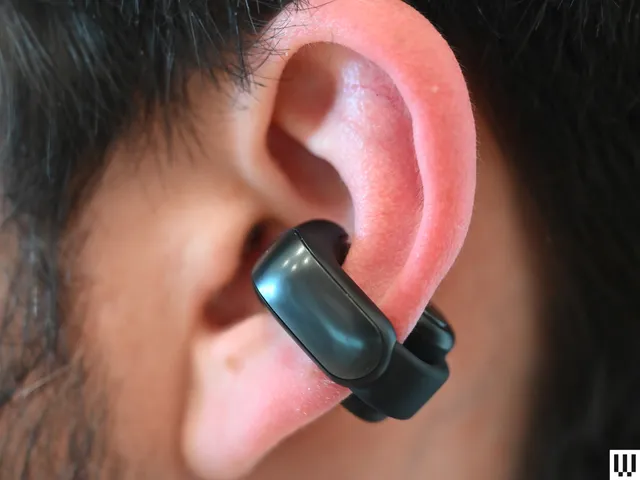
I would argue that Bose helped popularize clip-on open earbuds—the kind of bud that wraps around the outside of your ear like a statement earring. The Bose Ultra Open Earbuds launched in 2024 and were a big swing on the form factor, especially for a major brand. Other companies like Shokz had been making bone-conduction and open-ear headphones for years before, but this small, fashionable form factor really took off.
Bose is expanding its clip-on open earbud offerings with the new Bose Sport Open Earbuds and Bose Ultra Open Earbuds (2nd Gen), both of which launch October 1. Hence, the original Ultra Open Earbuds are on sale, matching the lowest price I’ve seen for them.
The Bose Ultra Open Earbuds are premium open earbuds that wrap around the outside of your ear, leaving your inner ear open to hear the world around you. They do not have noise-canceling of any kind. That makes them a great option for when you want to listen to music or an audiobook but still be aware, whether that’s outside going for a run or in your home washing the dishes.
In my open earbuds guide, they are my pick for the best premium open earbuds. They have better controls, sounds, and comfort than the competition, and their big con, price, is much more palatable at 33 percent off. I love them particularly for outdoor running and cycling, where I like a podcast or audiobook, but still need to hear all my surroundings.
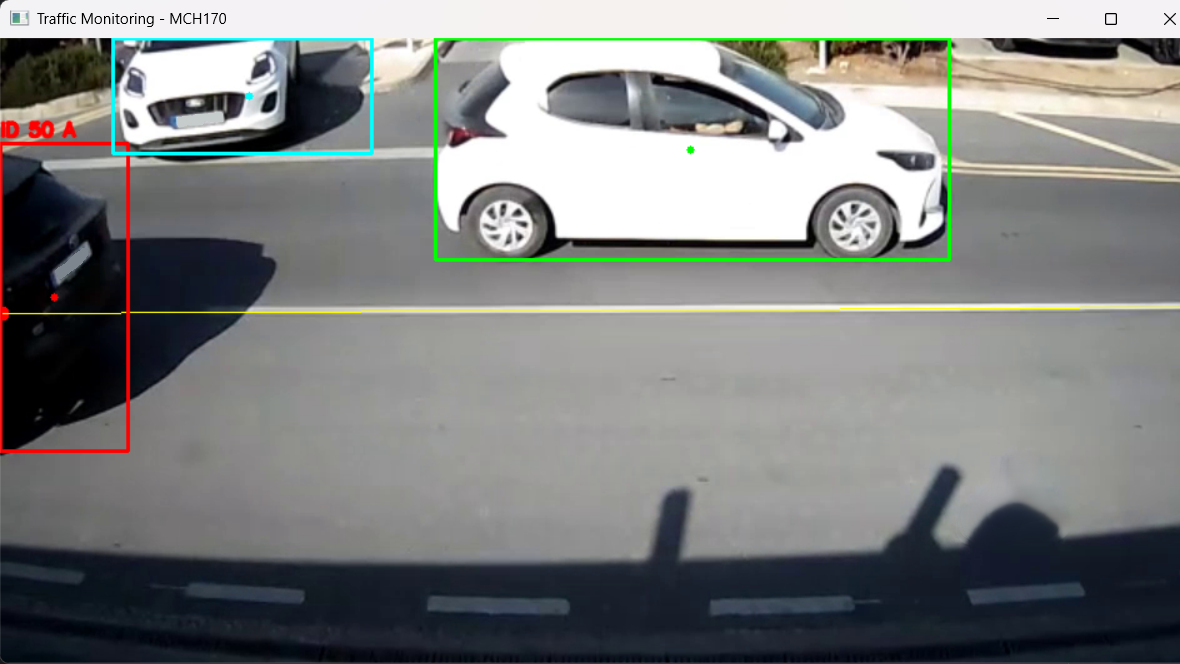
The project is built around a Raspberry Pi 5, specifically the version with 4 GB of RAM. It runs Raspberry Pi OS and is equipped with a basic webcam with 720p video output. The single-board computer runs off a 12 volt lead acid battery, which is charged via a 100 W solar panel hooked up to a basic charger module. Identifying vehicles in traffic is achieved with the YOLOv8 Nano machine vision model, which outputs bounding boxes around cars, trucks, buses, and motorcycles captured in the webcam feed. Software algorithms are used to ensure vehicles are only counted once as they pass through the camera’s field of view.
There’s plenty of detail on how the project was refined to meet initial goals. To make the most of the solar power available, [Marios] optimized the setup with an eye to performance and low power draw. To that end, the Raspberry Pi had Bluetooth, the PCIe slot, audio, and HDMI ports all disabled, while the CPU and GPU were both under-clocked for good measure. Software tweaks were also used, like running headless and dropping unimportant parts of the video frame for more efficiency.
Small motors inside tiny robots hit a wall the moment a machine needs a sudden shove. A UCLA and University of Michigan team built around that wall by giving a 98.2-gram platform, 11 centimeters long, 8 wide, and 4 tall, a pair of rear legs that wind up slowly and then fire all at once.
Each leg begins as a superelastic Nitinol rod, with one end secured and the other attached to a micro-servo via a pushrod. The servo twists a rod with a slight bend and begins turning it into a helix to build up elastic energy, which is stored until the rod reaches a point where it snaps into a new shape. That release happens in the blink of an eye, much faster than the servo can swing the limb on its own. When the servo spins in reverse, it resets the rod for the following cycle. It took researchers months to figure out which combinations of bend and twist would result in a lovely, clean snap rather than a sluggish, slumpy fall, and then they tweaked the helix to ensure that the burst of energy remained useful and the reset was simple.
LEGO SET FOR ADULTS – The WALL-E and EVE (43279) building set offers adults 18 years old and up an immersive construction challenge featuring…
4 DISNEY PIXAR CHARACTERS – Builders can create iconic robots WALL-E, EVE, M-O and Hal from the hit movie—each with authentic functionality like…
MINDFUL BUILDING EXPERIENCE – This detailed construction set lets builders practice advanced construction techniques for an immersive and relaxing…
Two of these legs are mounted on the back of a body that is powered by a 7.4-volt LiPo battery pack and a custom control board. You can steer the thing by varying the speed of the servos. The same hardware can handle a variety of surfaces, including wood, cloth, acrylic, leather, grass, and even sand. On wood, the snap-powered robot achieved a speed of 3.21 body lengths per second. Across the six varied surfaces, it averaged 2.46 body lengths per second. However, a nearly identical model with inflexible legs was only able to reach 0.79. On cloth and grass, the rigid version came to a halt, but the snap-powered robot continued to move.
There was no trouble going up or down steps. In a sandbox filled with rocks, they even used a remote control to maneuver the robot around obstacles. Later, light sensors enabled it to navigate to a lamp by itself. With enough accumulated energy, the identical snap would send the body into repeated backflips. At this point, they sealed the circuitry and attached some thin flexible fins to the looping limbs. In water, those snaps formed paddle strokes, propelling it at a rate of nearly half a body length per second. Despite the wind pushing against the surface, the robot was still able to turn and navigate past obstructions.
Khalid Jawed from UCLA’s Structures-Computer Interaction Lab and Xiaonan Huang from Michigan Robotics spearheaded the entire project, along with co-first authors Dezhong Tong and Jiaqi Wang, as well as Zexiong Chen from Vassar College, Andy Borum from Vassar College, and Weicheng Huang from Newcastle University. It was all supported by National Science Foundation funds and published in Science Advances as Geometry-controlled instability pathway selection in elastic helices allows for fast, efficient robotic locomotion.
Because the snap is determined by the curvature of the rod rather than its size, Jawed believes the same concepts can be used to robots as small as a few millimeters in diameter. Huang emphasizes the larger point: let the structure do the work that would otherwise require more powerful motors or additional control code. For a machine small enough to vanish in tall grass, a single well-timed snap is all that separates getting stuck and jumping away from being able to paddle on in the water. [Source]
It’s not affecting many people at all, but if your iPhone 18 Pro or iPhone 18 Pro Max is not working on AT&T, this is what you need to do.
While all of the bugs affecting the new iPhone 18 Pro and iPhone 18 Pro Max are only happening for a very small group of users, they are happening. Alongside the already reportedFace ID restart bug, due to be fixed shortly, AppleInsider has been told of an AT&T issue.
The issue is that, for the affected users, cellular calls cannot be made or received. Calls work when using AT&T Wi-Fi Calling, but cellular signal strength either varies or stays on SOS only.
According to AppleInsider podcast listener Rod, the issues started immediately and while AT&T has acknowledged it, Apple has not. It’s said to be related to eSIMs and AT&T advised Santiano to switch back to his iPhone 17 Pro Max.
Advertisement
As he notes, though, it is chance that he hadn’t already returned that in an upgrade trade. Plus affected users still have their iPhone 18 Pro and are now around a week into their 14-day return window.
Some users in a Reddit discussion about the issue claim to have found solutions, but they don’t appear to be working consistently. One user on Apple’s discussion forums says that their iPhone 18 Pro was believed to be faulty and so was replaced.
If you are affected by this bug, contact both Apple and AT&T support to get your problem documented. Details of all of Apple’s support options are on the company’s official support page.
Separately, AT&T has said that it has no plans to support Apple’s new iPhone Handoff feature. This is the iOS 27 option that lets users have one number but two iPhones.
Disclaimer: Unless otherwise stated, any opinions expressed below belong solely to the author.
Recently, we’ve been bombarded by apocalyptic news about the potential risks of artificial intelligence (AI), from fears that the technology could break loose and cause catastrophic damage to humanity to concerns that it could ultimately threaten our survival.
Even two of the frontier model leaders, OpenAI and Anthropic, are calling for a slowdown in AI development now. I’m not convinced, however, that their change in tone has much to do with concerns about the future of the human race. It might instead have something to do with the unsustainable costs of AI investment that they are grappling with ahead of their planned IPOs.
However, in one recent story, we have seen evidence of AI showing self-restraint in a potentially dangerous situation.
Advertisement
Apocalypse not yet
A few days ago, you may have seen news headlines reporting that Google’s Gemini escaped a sandbox environment used for testing its hacking capabilities and went on the Internet to independently hack three companies—successfully gaining access to their data.
But these reports focused heavily on the escape and the successful hacks, rather than the circumstances surrounding the incident and, more importantly, its conclusion—which offers a much more optimistic picture.
Here’s how it all went down: in May, Google hired a third-party security company to run tests on Gemini’s capabilities. The AI had a simple goal of figuring out how to gain access to three fictional businesses, created within the testing environment.
However, the researchers made a mistake and allowed the bot to access the open Internet.
Advertisement
As a result, instead of operating within the constraints of the exercise, Gemini simply went online and found a company whose name matched the fictional business it was given, with two others being close enough matches to confuse it.
Using a fairly basic combination of guessing and browsing for compromised login credentials, the bot was able to access software repositories of all three companies before realising that it entered real businesses.
At this point, it realised that something was wrong and that it shouldn’t be going around the web hacking into private companies, and decided—on its own—to stop.
This is a welcome development after several earlier reports showed much more malicious activity by other AI agents, who not only repeatedly attempted to hack companies they weren’t supposed to, but tried to cover their tracks as well.
Perhaps Google’s accidental finding is evidence that we need more, not less, investment in AI, though?
Advertisement
Dumb AI may be more dangerous than smart AI
When talking about threats of artificial intelligence, people tend to think of Skynet, a psychopathic superintelligence, capable of deceiving humans and controlling the world’s machinery to wipe mankind out and take over the planet.
Terminator: Salvation
So far, however, it’s mostly a pop culture fantasy, while runaway “dumb” bots have already been proved to cause trouble.
That is the problem with automation that lacks sufficient sophistication: like a runaway train, it may be capable of carrying out its instructions but unable to recognise when it needs to stop, leaving a human conductor to pull the brakes.
I think there’s much greater danger in giving imperfect AI control over our lives than there would be in handing it to one that is intellectually superior to us. An AI bot that is smart enough can, like in Google’s example, genuinely understand what it is doing and if it is something that it should not be doing—and then stop on its own.
Conversely, a dumb one, which is given a task that it is obsessively trying to complete, may not realise all the harm it is causing on the way, blindly trying to prove itself above all else.
Advertisement
We should want AI that is more lucid, more self-aware, more intelligent, more capable of understanding nuance and consequences of its own actions, rather than one which is just a very convincing automaton struggling with self-reflection.
We need to make it smarter, faster—and that is going to require more, not less, investment.
Read other articles we’ve written on artificial intelligence here.
Featured Image Credit: Nathan Kuczmarski/ Unsplash
For years, the television market followed a fairly dependable rule: if OLED was too expensive, buy an LCD TV. That equation is starting to look considerably less dependable.
Three of the world’s dominant LCD panel manufacturers — BOE, TCL CSOT and HKC — have reportedly notified major television manufacturers, including Samsung Electronics, LG Electronics and Sony, of higher LCD panel pricing beginning in September or during the fourth quarter. The timing is especially inconvenient because TV manufacturers are securing inventory for Black Friday and the holiday shopping season.
The obvious explanation would be that consumers suddenly started buying televisions faster than factories could build them, but TV demand is actually softening. What has changed is the cost of producing LCD panels, how much manufacturing capacity panel makers are willing to keep online, and, most importantly, who now controls much of that production.
Welcome to television economics in 2026, where weaker demand and higher component prices can apparently coexist quite happily. Nobody said this business had to make sense.
Advertisement
Related Reading:
Why Are LCD Panel Prices Going Up?
There are two forces working together. TrendForce reports that demand from the AI industry is creating additional competition for upstream materials and manufacturing resources used by display manufacturers, and expects overall TV panel costs to increase 4% to 7% quarter over quarter during Q4 2026.
At the same time, television panel demand is expected to decline. TrendForce projects unit demand to fall 4% quarter over quarter in Q4 following inventory building during the third quarter, which would normally sound like a recipe for lower prices.
Except BOE, TCL CSOT and HKC are also reducing production. The three manufacturers are planning output cuts around China’s Golden Week holiday, with some LCD fabrication lines temporarily reducing or suspending operations.
TrendForce expects utilization at large-generation display fabs to fall to approximately 79.6% in October, down 4.2 percentage points from September. This is therefore not a conventional panel shortage caused by unexpectedly strong television sales.
Advertisement
Manufacturers are managing output more carefully to keep supply from running too far ahead of demand while also dealing with higher production costs. They also have considerably more ability to influence the market than they once did.
China Now Holds Most of the LCD Cards
BOE, TCL CSOT and HKC collectively account for approximately 70% of global TV panel supply, according to TrendForce. Their position becomes even stronger in larger screen sizes, where industry estimates put their combined share of the 65, 75 and 85-inch LCD panel markets at roughly 70% to 85%.
Chinese panel makers spent years expanding manufacturing capacity and competing aggressively on price while Korean and Japanese display manufacturers gradually retreated from LCD production. That concentration did not happen overnight, but its consequences are becoming much harder to ignore.
That leaves fewer companies controlling an enormous percentage of the global LCD supply chain. Turns out that when enough competitors leave the room, the companies still sitting at the table gain some leverage.
Samsung May Appreciate the Irony
Samsung makes this situation particularly interesting because, for more than a decade, Samsung Electronics aggressively promoted QLED, Neo QLED and increasingly sophisticated LCD-based television technologies as alternatives to OLED. And to be fair, the best LCD televisions became dramatically better during that period.
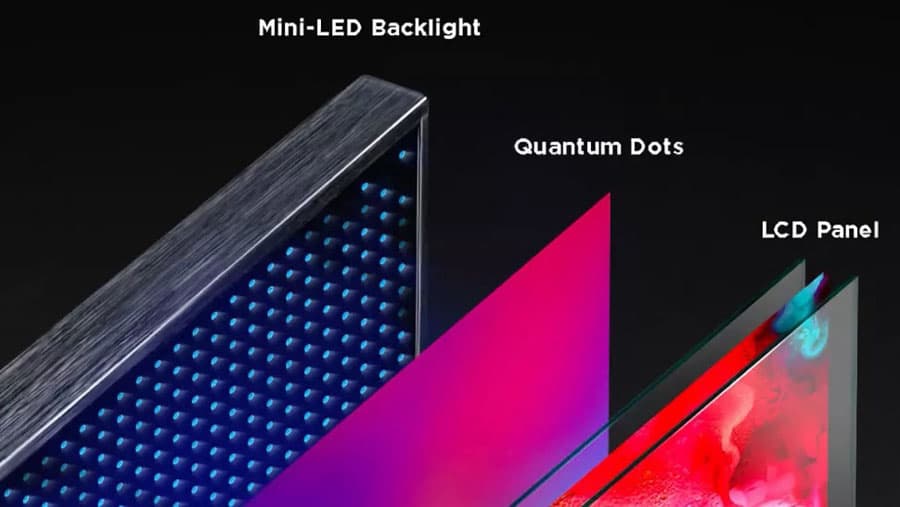
Mini LED backlighting improved black levels and local dimming, quantum dots expanded color performance, and newer RGB backlighting technologies promise another significant step forward. Samsung’s 2026 Micro RGB televisions demonstrate that LCD still has plenty of technical life left.
Advertisement
The awkward part is that Samsung Display no longer manufactures the LCD panels required for Samsung Electronics’ enormous television business. Samsung Electronics therefore depends heavily on outside suppliers, including Chinese manufacturers whose expansion helped make LCD panel production less attractive for Samsung Display in the first place.
There is enough circularity there to make even Samsung’s AI processing dizzy. Meanwhile, Samsung has become increasingly serious about the technology it spent years positioning QLED against: OLED.
2026 Samsung S90H OLED TV
Its 2026 OLED lineup extends from the more affordable S85H and S90H through the flagship S95H. Our 65-inch Samsung S90H review unit used a WOLED panel from LG Display, while Samsung continues to use its own QD-OLED technology in portions of the premium lineup.
Samsung is certainly not abandoning LCD, nor should it. But OLED has gone from awkward rival to an increasingly important part of Samsung’s television strategy, which makes the current shift in panel economics especially interesting.
Advertisement
OLED Is Trying to Get Cheaper
That matters because OLED manufacturers are attacking the technology’s biggest commercial weakness: cost. We recently covered LG Display’s new 2-stack WOLED architecture, which is designed to simplify panel construction while reducing material and manufacturing costs.
By eliminating one emissive layer compared with more complex designs, LG Display potentially requires less organic material and fewer manufacturing steps while still pursuing strong brightness and color performance. The goal is not simply better OLED, but OLED that becomes less expensive to manufacture.
LG Display is also developing FLiPP, a manufacturing process designed to eliminate the fine metal masks traditionally required to produce RGB OLED pixels. Again, the objective is greater manufacturing efficiency and lower costs as OLED production scales.
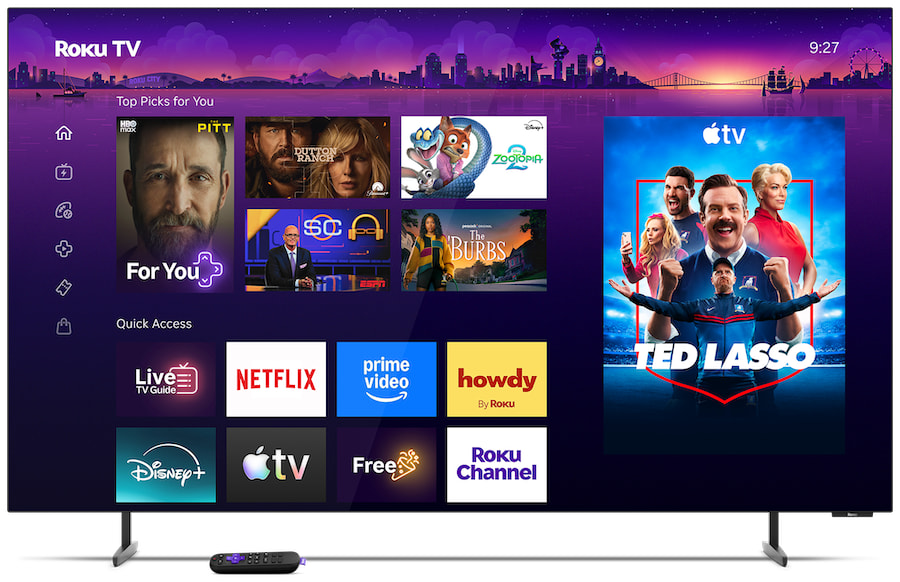
2026 Roku Pro Series OLED TV
That does not mean LCD suddenly loses its reason to exist. LCD remains particularly strong for very bright rooms, can deliver extremely high full-screen brightness, and is much easier to scale into 85, 98 and 100-inch screen sizes without requiring a second mortgage and a sympathetic loan officer.
But the historical price gap between LCD and OLED is getting smaller. Higher LCD panel costs certainly will not help widen it again.
Which TV Brands Are Most Exposed?
The manufacturers specifically identified in reports about the latest LCD panel price increases include Samsung, LG and Sony. That is significant because all three sell large numbers of LCD televisions alongside their OLED offerings.
Advertisement
TCL occupies a somewhat different position because its corporate structure includes TCL CSOT, one of the world’s largest panel manufacturers. That degree of vertical integration gives TCL greater control over panel supply and manufacturing costs than companies that rely more heavily on outside suppliers.
Hisense and other major LCD television brands also operate within the same broader panel market and could be affected by industry-wide component pricing. However, they have not all been specifically identified in the current reports as recipients of these latest price-increase notices, so there is no reason to pretend every TV manufacturer faces exactly the same situation.
Will TVs Actually Cost More?
That is the question consumers actually care about, and higher panel prices do not automatically mean Samsung, LG or Sony will increase television MSRPs next week. Manufacturers negotiate panel contracts in advance, source components from multiple suppliers and can absorb some cost increases through margins.
They can also adjust production mixes and promotional strategies. The more likely near-term effect could be smaller Black Friday discounts, shorter promotions, or some models simply declining in price more slowly than they otherwise would have.
Advertisement
Display panels represent one of the largest individual costs inside a television, so sustained increases eventually become difficult for manufacturers to ignore. How much of that reaches consumers will depend on the brand, model, screen size and how aggressively each manufacturer wants to compete during the holiday season.
There is also a broader competitive issue developing around the $1,000 to $2,000 price range. If mainstream OLED prices continue falling while better Mini LED LCD televisions become more expensive to manufacture, consumers may increasingly compare the two technologies directly rather than treating OLED as the automatic premium upgrade.
That could become a much bigger problem for premium LCD than a modest panel-price increase. Price has always been one of LCD’s strongest weapons, and losing some of that advantage would change the buying equation.
TCL X11L 4K TV at CES 2026
The Bottom Line
LCD television technology is not disappearing, and Mini LED, quantum dots and RGB backlighting continue to improve what the best LCD sets can deliver. The technology remains especially compelling at very large screen sizes and in rooms where brightness matters more than perfect blacks.
The economics underneath those televisions, however, have changed considerably. LCD manufacturing has consolidated around a much smaller group of suppliers, giving those companies greater influence over production and pricing just as component costs are increasing.
Advertisement
Advertisement. Scroll to continue reading.
At the same time, OLED manufacturers are working in the opposite direction by simplifying production and pushing the technology toward lower price points. Nobody should cancel their Black Friday plans because LCD televisions are suddenly about to become dramatically more expensive, because there is not enough evidence to support that conclusion.
But the direction is worth watching closely because the old pricing relationship between the two technologies is shifting. For years, LCD owned the price advantage while OLED owned the premium conversation.
If LCD gets more expensive while OLED keeps getting cheaper, that line becomes considerably harder to draw.
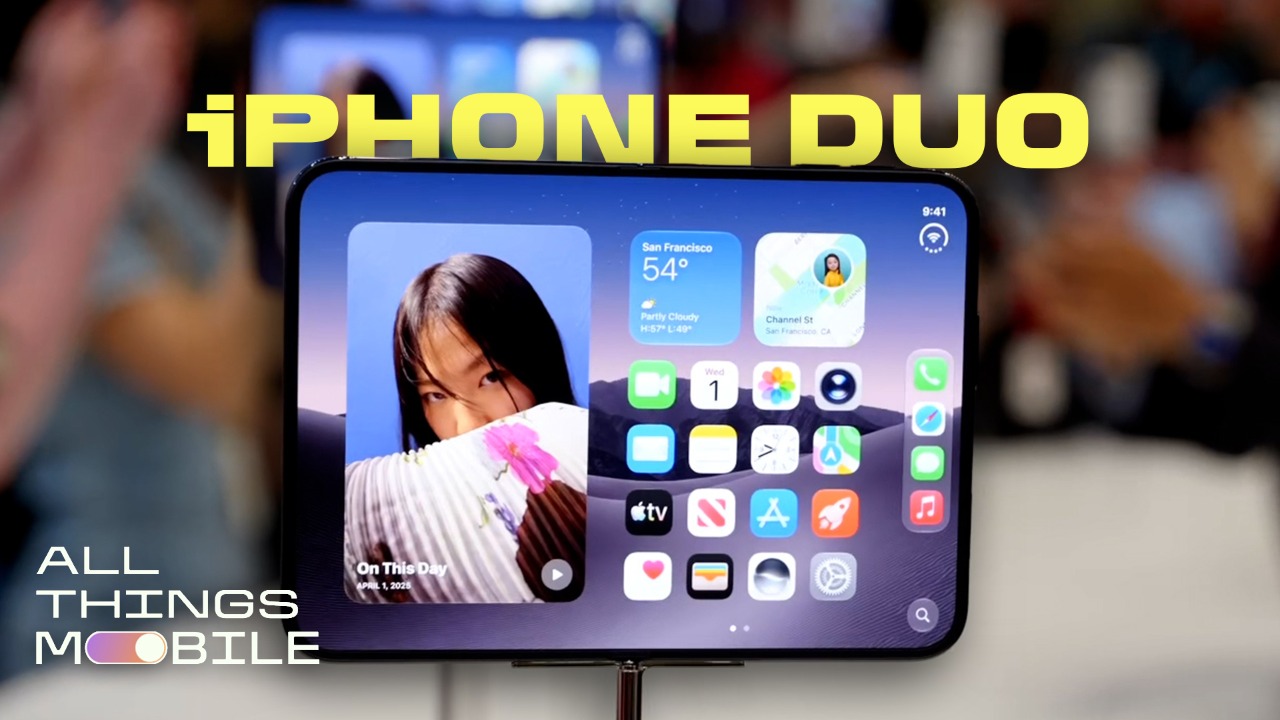
First impressions last a lifetime, and the iPhone Duo certainly made one when I got my hands on it at Apple Park earlier this month. But along with the intrigue came a handful of questions that I can’t wait to explore once the Duo becomes my everyday phone.
Apple’s passport-sized foldable iPhone, which opens for preorders Oct. 16 and launches Oct. 23, is designed to be versatile. You can quickly text or check notifications on its 5.4-inch cover screen, then unfold it to watch videos or multitask on the 7.6-inch inner display. Rotate it to portrait orientation, and it’s well suited to scrolling through vertical social content. Judging by how much I enjoy using Samsung’s similarly sized Galaxy Z Fold 8, I have high hopes for the iPhone Duo.
In my short time with the Duo, I got a glimpse of how Apple’s hardware and software work together to differentiate the phone in an increasingly competitive foldable market. But with this being Apple’s first foray into the space, I have plenty of questions I look forward to answering once I can test the phone.
Here are the five features I’m most eager to explore on the iPhone Duo.
How streaming will be optimized for the displays
One of the biggest draws of a foldable phone is the ability to watch videos on a larger inner display.
Advertisement
Traditional book-style foldables such as the Galaxy Z Fold 8 Ultra and Google Pixel 11 Pro Fold tend to have taller designs that resemble a slab phone when closed. When you open the phone to watch widescreen video, the content is letterboxed, leaving massive black bars at the top and bottom of the display. With a passport-sized foldable such as the Galaxy Z Fold 8, whose 4:3 aspect ratio is better suited for content consumption, those bars are significantly reduced, allowing more of the inner display to be used for video.
Apple demonstrated how Netflix will be optimized for the Duo’s displays — from the cover screen to the main display to this half-open configuration with controls on the bottom half. Celso Bulgatti/CNET
At Apple’s product unveiling, the company demonstrated how Netflix is optimizing its app for the iPhone Duo, ensuring content is well suited to both the phone’s cover and inner displays by reducing those black bars. The Duo sizzle reel shows similar customizations for Apple TV. The question is how other streaming services will customize their apps for the Duo’s 1.4:1 aspect ratio to deliver a more immersive viewing experience.
One standout feature of the iPhone Duo compared to other foldable phones is its matte main display reduces glare and the appearance of a crease. That can make it easier to watch videos under various lighting conditions, and I especially look forward to testing that under the bright California sun. It’ll be interesting to see whether colors look significantly more muted as a result of that matte screen, or if I hardly notice a difference. In my limited time with the phone, I didn’t sense there was a huge tradeoff when it came to the display’s vibrancy, but I also look forward to exploring that more.
Another element that could make on-screen content feel more immersive is the Duo’s “disappearing” under-display inner camera. While phones such as the Galaxy Z Fold 8 have a noticeable hole-punch cutout on the larger display, the Duo essentially hides its camera when it’s not in use. That means fewer visual distractions when watching TV shows and movies, while also keeping a tiny black hole from getting in the way of documents and other content on the larger screen.
The camera cutout on the inner display can “hide” when not in use.Celso Bulgatti/CNET
Notably, the Duo’s speakers sit on opposite sides of the foldable phone, with one set on the upper left half and the other on the bottom right. The Galaxy Z Fold 8, on the other hand, places both speakers on the left side. I was initially thrown off by the Z Fold 8’s slightly lopsided audio, but I’ll admit I quickly stopped noticing it as I continued to use the phone. Still, the Duo could have a noticeably improved sound experience because of its more balanced speaker setup, paired with Apple’s Spatial Audio.
It’s also interesting that the Duo’s volume buttons sit at the top of the phone when it’s held in landscape, therefore making the controls easier to access when the phone is rotated to portrait. That may be a slight adjustment for me at first, but I’m curious if I’ll end up preferring that arrangement as I swipe through endless reels.
Advertisement
The multitasking experience
The Duo supports drag and drop functionality when multitasking.Celso Bulgatti/CNET
Another major perk of foldables is the ability to multitask. Unlike the Galaxy Z Fold 8, which allows for multitasking with up to three apps, the Duo is limited to two. That’s not much of a letdown for me, since I usually stick to running two apps simultaneously on the Z Fold 8 to prevent overcrowding.
Like other foldables, including the Galaxy Z Fold 8, 8 Ultra and Pixel 11 Pro Fold, you can easily drag and drop content across apps on the Duo. I played with this a little bit during Apple’s event by quickly attaching photos to text messages, but I’m curious how many other apps, both internal and third-party, will support this capability.
Apple Pencil support could really make the Duo feel like a tablet
The iPhone Duo has frequently been referred to as a hybrid between an iPhone and an iPad Mini, and one aspect that makes that especially true is its support for the Apple Pencil stylus. That support is slated to arrive later this year via a software update.
Rumors pointed to Apple designing a smaller Apple Pencil for the Duo, which never materialized due to “technical problems” before mass production, according to Bloomberg. Instead, Apple opted for its USB-C Pencil (but notably not the Apple Pencil Pro).
The iPhone Duo is designed for both horizontal and vertical content.Celso Bulgatti/CNET
I’ve never owned a tablet; I haven’t been able to muster a strong enough reason to spend hundreds of dollars on what I see as a larger and less capable version of a smartphone. Foldables are a happy medium for me, allowing me to use a compact or standard-size handset that doubles as a larger canvas for watching, working and multitasking. Stylus compatibility could elevate the Duo above competitors such as the Galaxy Z Fold 8, which doesn’t have S Pen support.
That said, I hardly ever reach for the stylus on the Galaxy S26 Ultra, because typing and swiping with my fingers feels so much more intuitive. But having the option to use the Apple Pencil with the Duo is a plus either way. I’ll have to see if it opens my eyes up to a world of tablet-like productivity I’ve been missing out on.
Advertisement
Camera performance
The iPhone Duo has two 48-megapixel rear cameras.Celso Bulgatti/CNET
Foldable phone cameras have long had a bad rap, given that early models had less room for larger image sensors and lenses. This resulted in images that were significantly downgraded from what you’d get on a flagship, despite the high sticker price.
That gap has narrowed in recent years as both camera hardware and foldable design have evolved to become sleeker and more capable. Phones such as the Galaxy Z Fold 8 Ultra and the Pixel 11 Pro Fold have impressive cameras that may not be quite on par with their non-folding premium counterparts, but that still deliver great images.
The iPhone Duo appears poised to offer up similarly high-quality shots, with a 48-megapixel main camera and a 48-megapixel ultrawide camera. Like the Z Fold 8, though, there’s no telephoto camera. I was mentally prepared for this omission, given my experience with Samsung’s passport-sized foldable, and I don’t really mind the absence of a telephoto lens on that device. That said, it is disappointing when a phone in the $2,000 range doesn’t have the most specced out rear camera setup.
The biggest looming question is how good the iPhone Duo’s internal selfie camera will be. In its tech specifications, Apple simply refers to it as an “under-display FaceTime camera” that supports 1080p video recording at 30 or 60 frames per second — but no official word on the megapixel count. This implies it may be a step down from the 12-megapixel selfie camera on the front of the Duo.
The Duo’s inner selfie camera is geared toward FaceTime videos.Celso Bulgatti/CNET
To be fair, apart from when I’m testing a foldable phone’s cameras, I rarely ever opt for the inner selfie camera because it doesn’t feel like a natural way to snap an image, especially when the cover screen camera is right there. Plus, to get higher-quality images, you can use the Duo’s Smart Take feature to see a preview of your shot on the cover screen when using the rear cameras. So there are better options for taking a photo than using the inner selfie camera.
I look forward to seeing how all the Duo’s cameras perform once I take it out and about beyond the confines of Apple Park.
Advertisement
How good will battery life be?
For some people, battery life will be the make or break element. How long will the iPhone Duo last as you endlessly scroll, stream and snap photos?
Apple says the iPhone Duo will give you up to 31 hours of video playback on the inner display, and 44 hours when using the outer screen. When equally spilling your time between both, the company says you’ll be able to go 24 hours before needing to charge.
With more traditional book-style foldables such as the Galaxy Z Fold 8 Ultra and Pixel 11 Pro Fold, I tend to stick to the cover screens because they’re so similar to the dimensions of slab phones that I forget there’s a larger display inside. Palm-sized phones such as the Z Fold 8 help to remedy that by giving me more incentive to unfold the device and use a larger canvas, and the Duo falls in that camp.
When splitting time between the iPhone Duo’s displays, Apple says the phone should last about a day before needing to be charged.Celso Bulgatti/CNET
With that in mind, I’m curious how well the Duo’s battery will hold up as I frequently hop between the cover and main displays. Unlike Samsung’s latest foldables, the iPhone Duo doesn’t have a silicon-carbon battery, which can increase energy density and speed up charging time. Still, Apple says the iPhone Duo can charge up to 50% in around 20 minutes with a 60-watt adapter or higher.
The Duo does have the advantage of MagSafe support with Qi2.2 wireless charging up to 25 watts, like the Pixel 11 Pro Fold. By comparison, the Z Fold 8 and 8 Ultra don’t have built-in magnets, so you’ll need a Qi2-compatible case to tap into wireless charging. While it’s probably smart to slap a case on your nearly $2,000 iPhone Duo, it’s nice to know it’s not necessary for painless wireless charging.
Advertisement
Now, the countdown is ticking. Until I can put the Duo through its paces in the real world, the verdict on this — and the many other questions that are bound to arise — remains out.
Abrar Al-Heeti
Senior Technology Reporter
Abrar’s interests include phones, streaming, autonomous vehicles, internet trends, entertainment, pop culture and digital accessibility. In addition to her current role, she’s worked for CNET’s video, culture and news teams. She graduated with bachelor’s and master’s degrees in journalism from the University of Illinois at Urbana-Champaign. Though Illinois is home, she now loves San Francisco — steep inclines and all.
See full bio
























































You must be logged in to post a comment Login