
Tech
Meta’s Muse is outpacing ChatGPT’s early mobile launch

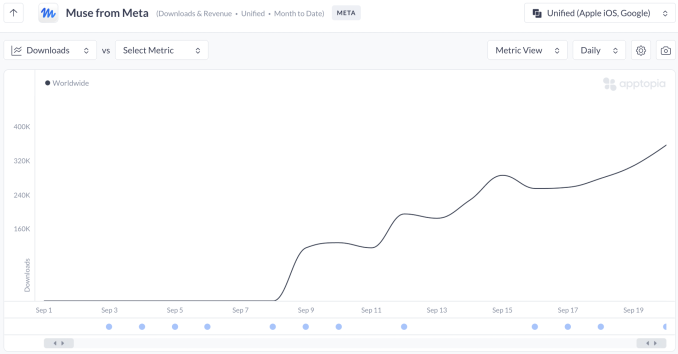
Meta’s latest AI app, Muse, could be the social giant’s next major hit, new data suggests. According to just- released estimates from market intelligence provider Apptopia, Muse’s app on mobile devices has been downloaded more times during its first 12 days on the market than ChatGPT was in the 12 days after its debut. (This data compares the U.S. and Canada markets only.)
Muse also has more daily active users than ChatGPT had at the time, the firm found.
Until now, it had been difficult to make an exact apples-to-apples comparison between these two apps, given that they had pursued different launch strategies. When ChatGPT arrived on mobile, it was made available globally, but only on iOS. Muse, meanwhile, is available across both Apple’s App Store and Google Play, but only in the U.S. and Canada.
To better align the numbers for comparison, Apptopia looked only at the iOS data for the U.S. and Canada for both apps during the first 12 days of their respective launches. In this subset of the data, Muse has now seen 1.8 million downloads to ChatGPT’s 1.3 million.
Overall, Muse has seen 2.8 million total installs globally in its first 12 days, the firm also said. Its growth hasn’t yet stagnated, either; Muse has moved up from its original position as No. 2 overall on the U.S. App Store immediately after its launch to now No. 1, as Business Insider reported on Friday. That jump put the app higher than ChatGPT, the outlet noted. Another firm, Appfigures, said at the time that Muse had then crossed 1 million downloads.

In addition, Apptopia’s data indicates that Muse’s U.S. daily active users are now higher than they were for ChatGPT at the same point after its launch. When comparing just the U.S. mobile app daily active users, Muse comes in higher with 642,000 daily users compared with 231,000 for ChatGPT at the time.
To be fair to the fact that Muse is available across both iOS and Android, while ChatGPT launched on iOS only, Apptopia narrowed the comparison to iOS alone. Yet, even here, Muse is coming in higher, with 359,000 daily active users on iOS, still above ChatGPT’s figures from that time period.
Apptopia can only provide third-party estimates about an app’s downloads and active users; it doesn’t have direct access to Meta’s internal figures. But even if these numbers are only correct from a general “ballpark” perspective, they indicate that Muse could have a shot at becoming Meta’s newest top app.
Meta already perfected its cross-promotion strategy when it launched Instagram’s Threads, which now has 500+ million users, thanks to heavy marketing and integrations in Meta’s largest apps, including Instagram and Facebook. Muse is likely to get a similar push, given that the AI app can connect with both of those platforms. It also works inside WhatsApp, so that could give it another boost.
While Apptopia doesn’t have visibility into Meta’s cross-promotion efforts or ads directly, it did note that over 95% of Muse’s users are also Facebook users and 63% are Instagram users.
Meta, which has been asked for comment, has not yet shared public figures related to Muse’s early adoption.
Correction: An earlier version of this article referenced the analytics firm Appfigures as a source for data from Apptopia. This has been fixed.
When you purchase through links in our articles, we may earn a small commission. This doesn’t affect our editorial independence.

Tech
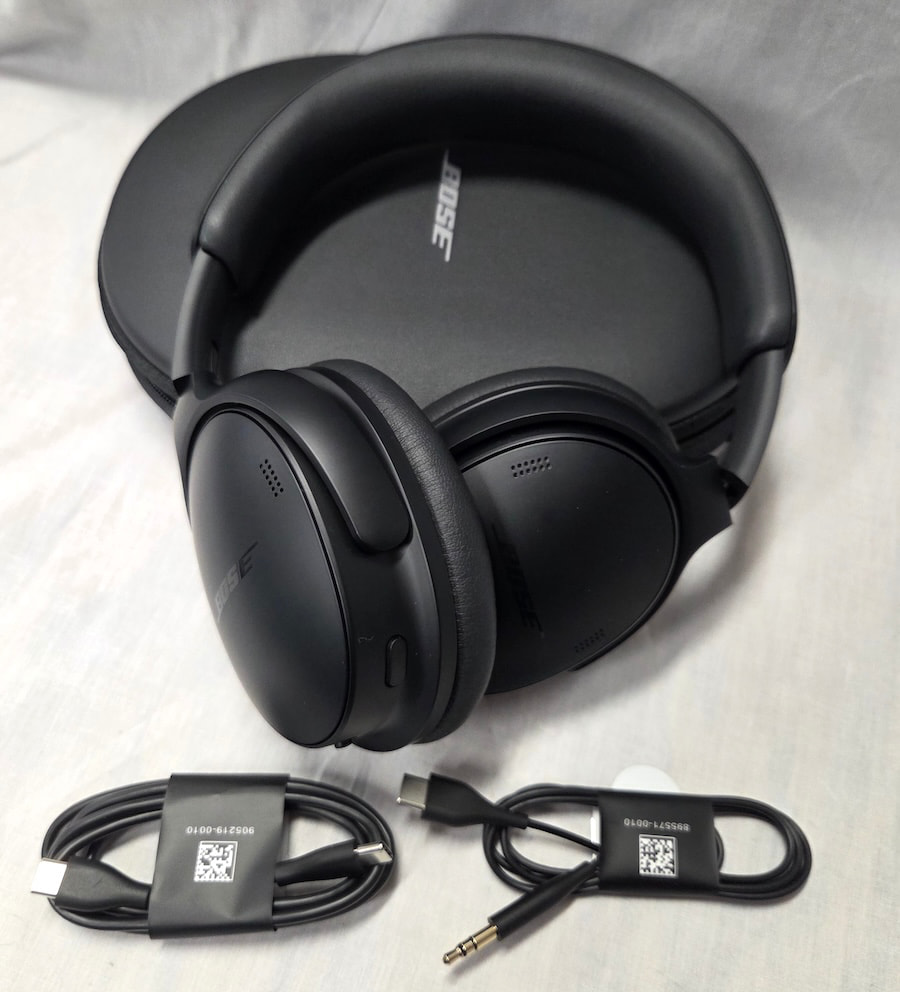
Bose QuietComfort Headphones (2nd Gen) Review: Better ANC, More Comfort, But a Tougher Sell at $359?
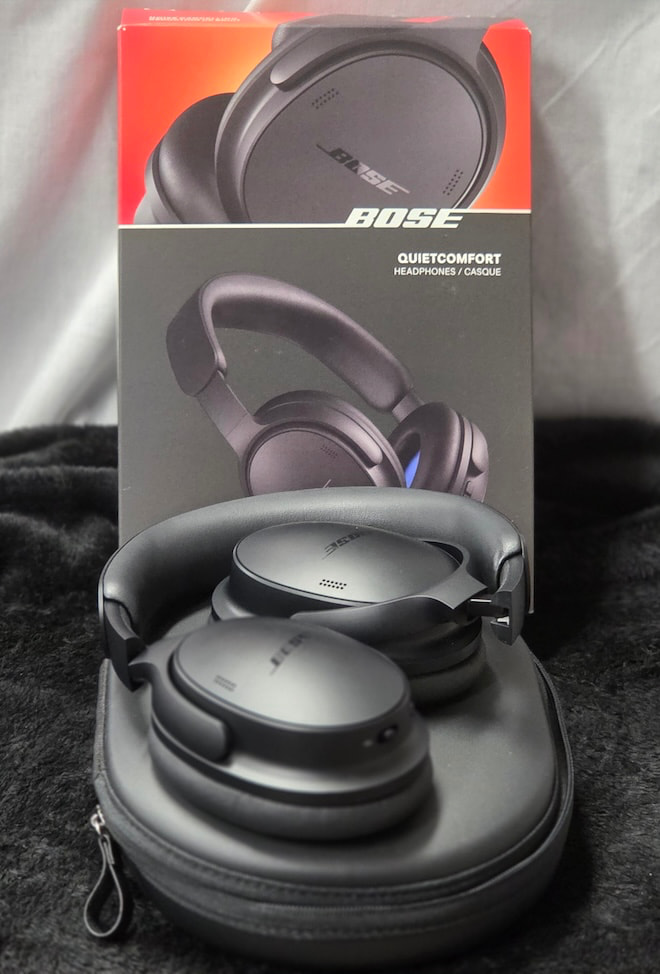
The Bose QuietComfort Headphones (2nd Gen) arrive in the middle of an ANC arms race that has been going on for more than a decade. Bose and Sony have spent years battling for noise-cancelling supremacy, and almost every new flagship has pushed ANC performance to new heights. Unfortunately, the same can be said for the price tags.
The original Bose QC1 sold for $299 when it was released. Today, the top-of-the-line QuietComfort Ultra Headphones (2nd Gen) are $449. That buys you a ton of features, excellent sound, and some of the best noise cancellation available, but what if you don’t need all of it? An infrequent traveler may have a hard time spending $449 for a single flight each year, while someone just starting out can buy a lot of ramen with the $150 difference.
So do those buyers settle for a previous-generation flagship at a reduced price, or step down to a current model that still offers the core features they actually need at a more reasonable tariff?
Buying used has always been a mixed bag with electronics. Batteries don’t last forever, warranties are usually short, and the realistic lifespan of many consumer electronics products isn’t substantially longer. The better spend may be a sub-flagship model like the Bose QuietComfort Headphones (2nd Gen).
Some readers will recognize the QuietComfort name as Bose’s flagship line, but that distinction now belongs to the model carrying the Ultra suffix. The QuietComfort without it sits in the middle of Bose’s lineup, retails for $359, and can sometimes be found for less. Watching the Black Friday sales is always a good play this time of year.
The Bose QuietComfort has long occupied that middle ground. It isn’t as flashy or as cutting-edge as its more expensive sibling, but it has traditionally focused on the features most buyers actually use. When Bose introduces new technology in its flagship models, some of it inevitably trickles down a generation or two later.
That brings us to the newest QuietComfort Headphones (2nd Gen), which I’ll refer to as the QCgen2 from this point forward. For listeners who want strong ANC, long-term comfort, and the features that matter without paying flagship money, the QCgen2 may represent the best compromise between cost and capability.
Related Reviews:
Build Quality and Fit: Familiar Bose Comfort With Useful Refinements
The aesthetic here remains understated, which is either refreshing or disappointing depending on your perspective. Bose has updated the design with treatment similar to what it gave the Ultra. The earcups are more pill-shaped and less rectangular than those of the previous iteration, although the step between the rear of the cup and the face, where the pads attach, is slightly less pronounced than on its sibling. The polymer yoke is wider than the metal version used on the Ultra, but the headband remains the same size as both the previous model and the Ultra.
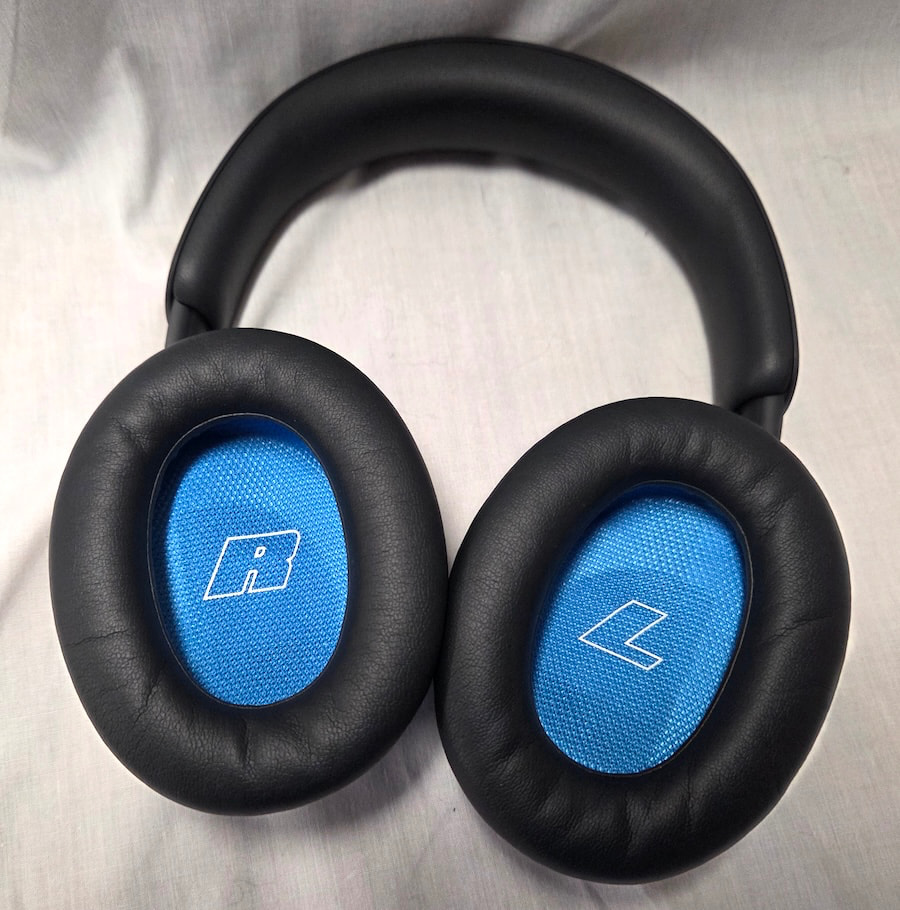
Padding is also shared between the two models, with the headband and ear pads interchangeable between them. Reusing parts where possible helps keep costs down, so it’s no surprise that the line shares as much commonality as it does. One benefit of the greater use of polymer is weight: the QCgen2 comes in at just 230 grams. That puts it firmly in the lightweight class and helps reduce fatigue during longer listening sessions.
Clamping force is moderate for an ANC headphone, with enough pressure to keep the cups firmly in place without feeling like a vise. Overall, I found the QCgen2 comfortable with glasses and easy to wear through an entire movie on a flight or during extended listening sessions.
Color choices used to be limited to black or white, but Bose has expanded the lineup considerably with Eucalyptus Green, Rosewood Mauve, and Dewdrop Mint joining the two original options. I’m not one to use headphones as a vehicle for personal expression, but wearing them as a fashion statement is fairly common now, and Bose has clearly answered the call.
Build quality is solid rather than premium, which is about what one should expect at this level. The materials feel appropriate for the price and should provide reasonable longevity.
Internals and Connectivity: Lossless USB Audio Joins Bluetooth 5.4
Bose remains fairly tight-lipped about the driver details, revealing only that the QCgen2 uses 30mm dynamic drivers with a nominal impedance of 48 ohms. Frequency response and sensitivity are not listed.
Bluetooth is version 5.4 and supports AAC and SBC, but not aptX like its bigger sibling. Bluetooth multipoint is supported, allowing users to switch between a phone and laptop without additional hassle, which is a welcome addition.
The USB port can now be used for lossless audio playback at up to 24-bit/48kHz, which is another very welcome upgrade. That helps offset the removal of the 3.5mm jack found on the previous model, as the QCgen2 no longer includes an analog connection. USB audio still requires the headphones to be powered on, and a connected phone may take a battery hit if it is also supplying power while you listen.
Battery life is rated at up to 24 hours depending on the mode in use. ANC consumes less power than Immersive Audio, which drops the rated figure to 18 hours. A full charge takes roughly three hours, while a 15-minute quick charge provides about 2.5 hours of playback for those trying to squeeze in some listening during a short layover.

Features: Immersive Audio Arrives, but ANC Is the Bigger Upgrade
The previous section introduced two of the QCgen2’s major additions: USB audio and Immersive Audio with Bose TrueSpace technology. The other significant change is an improvement in ANC performance.
Immersive Audio offers three options: Still Mode, Motion Mode, and Cinema Mode. The technology has been available on previous generations of the Ultra series, but this is the first time it has trickled down to the QuietComfort line. Still Mode anchors the audio in place, while Motion Mode adjusts the presentation as you move. Cinema Mode is designed for movies, TV shows, and podcasts, creating a more spacious presentation while keeping dialogue intelligible.
Still Mode worked fairly well, while Motion Mode sounded more experimental and less refined to my ears. Cinema Mode does help dialogue cut through, which can be useful, but none of the three qualify as a “gotta have it” feature for me. I suspect a fairly large percentage of users will experiment with Immersive Audio for a while and then largely ignore it.
The changes to noise cancellation are more meaningful. Passive isolation hasn’t changed much, so that part is essentially a wash. Bose’s QuietControl ANC system has been improved with six microphones and updated adaptive feedback control, resulting in better noise reduction, particularly with continuous low-frequency sounds such as dishwasher noise and aircraft engines.
Sudden, unexpected sounds are reduced but not eliminated, which is something users should expect from feedback-based ANC systems. Bose has also added ActiveSense, which automatically increases noise cancellation when it detects a sudden rise in environmental noise while the headphones are in Aware Mode. It is a useful addition that helps prevent abrupt changes in the surrounding environment from becoming a distraction.
Overall, the QCgen2’s noise cancellation is on par with the previous-generation Ultra model, which should satisfy all but the most demanding ANC users.
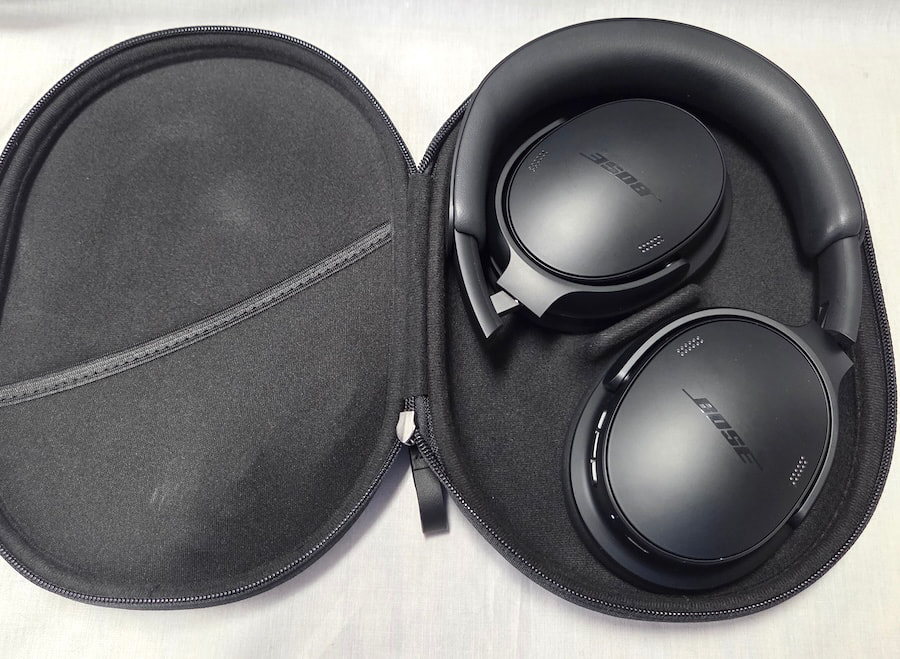
Bose QuietComfort Headphones (2nd Gen) Specifications:
- Drivers: 30mm dynamic
- Impedance: 48 ohms
- Bluetooth: 5.4
- Codecs: AAC, SBC
- Multipoint: Yes
- USB Audio: Up to 24-bit/48kHz lossless
- ANC: Bose QuietControl with 6 microphones
- Immersive Audio: Still, Motion, Cinema
- Battery Life: Up to 24 hours; up to 18 hours with Immersive Audio
- Quick Charge: 15 minutes for up to 2.5 hours
- Full Charge: About 3 hours
- Weight: 230 grams
- 3.5mm Input: No
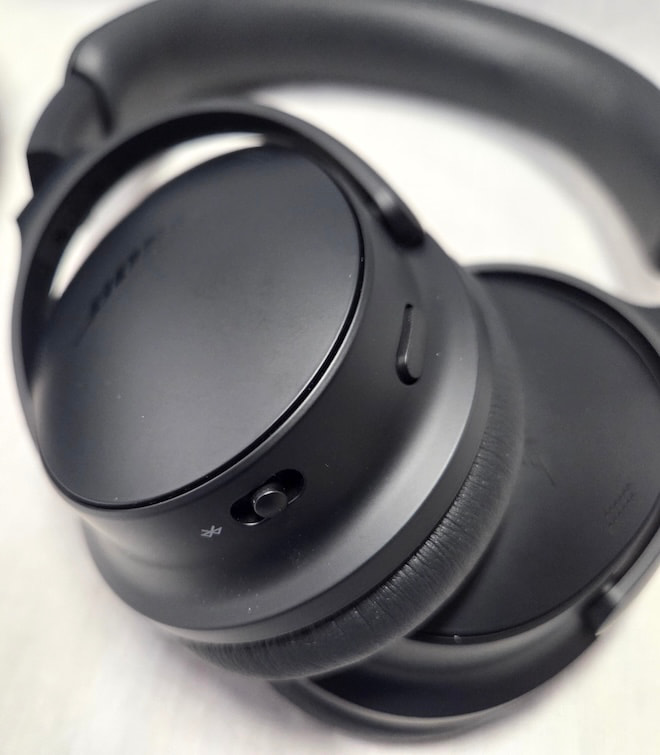
Listening
The QCgen2 is decidedly not a reference headphone, with a tuning that falls somewhere between an L-shaped and V-shaped signature, along with a healthy amount of mid-bass emphasis. The overall presentation is also highly dependent on which mode and settings are being used.
In its default configuration, the QCgen2 leans heavily toward an L-shaped signature, with a substantial mid-bass lift followed by a relatively flat response above that bump. To my ears, it is an odd tuning choice because vocals tend to sit in the middle or rear of the stage rather than being pushed forward as expected. The soundstage can also feel congested, if not outright cramped, depending on the track.
That might be enough for some listeners to dismiss the QCgen2 were it not for Immersive Audio’s Still Mode. Switching to Still Mode brings the vocals forward and shifts the tuning closer to a V-shaped presentation. The lower leg remains more pronounced than the upper, but the overall balance is considerably better and the presentation sounds more natural and relaxed.
There is also more air and a noticeably larger soundstage in this mode, and to my ears it should be the default. Motion Mode is similar in most respects, so listeners who want to add some head-tracking action get much of the same sonic improvement.
Even with those changes, the upper frequencies remain somewhat subdued, leaving the QCgen2 sounding slightly soft overall. Percussion lacks some of the snap it should have, while transients are slower than what I hear from competing Sony and Sennheiser models. That is clearly the tradeoff for a warmer, bassier presentation, and whether that is a positive will come down to individual preference.
The upside is that very few listeners are likely to find the QCgen2 fatiguing. That makes it a good option for gifting or sharing, as its tuning and various listening modes make it adaptable to a fairly broad range of preferences.
The soundstage is wider than it is deep, with limited overall dimensions and only a modest sense of height, which is hardly uncommon among ANC headphones. Imaging and layering are both acceptable, but the presentation remains somewhat compact because of the limited stage size and can become slightly claustrophobic when tracks get especially busy.
ANC performance is very good, with most continuous droning noises removed almost completely. The ability to adjust the amount of noise cancellation in the Bose app is also useful because increasing ANC has a noticeable effect on the sonic signature. Being able to tailor the level of cancellation to the environment therefore makes a lot of sense.
One weakness is the equalizer in the Bose app, which is fairly limited compared with many competitors. Three bands simply aren’t enough for meaningful tuning, so if neither the default nor Immersive Audio modes match your preferred sound signature, there is only so much you can do to correct it.
It has often been said that Bose makes lifestyle products rather than audiophile ones, and the QCgen2 certainly fits that description. That is not necessarily a criticism. Some competing headphones are more resolving and brighter, but they can also sound harsher and become more fatiguing over longer sessions.
The warmer, more organic presentation of the QCgen2 should appeal to a broad audience, while the expanded range of color options gives Bose another advantage for buyers who care as much about how their headphones look as how they sound.
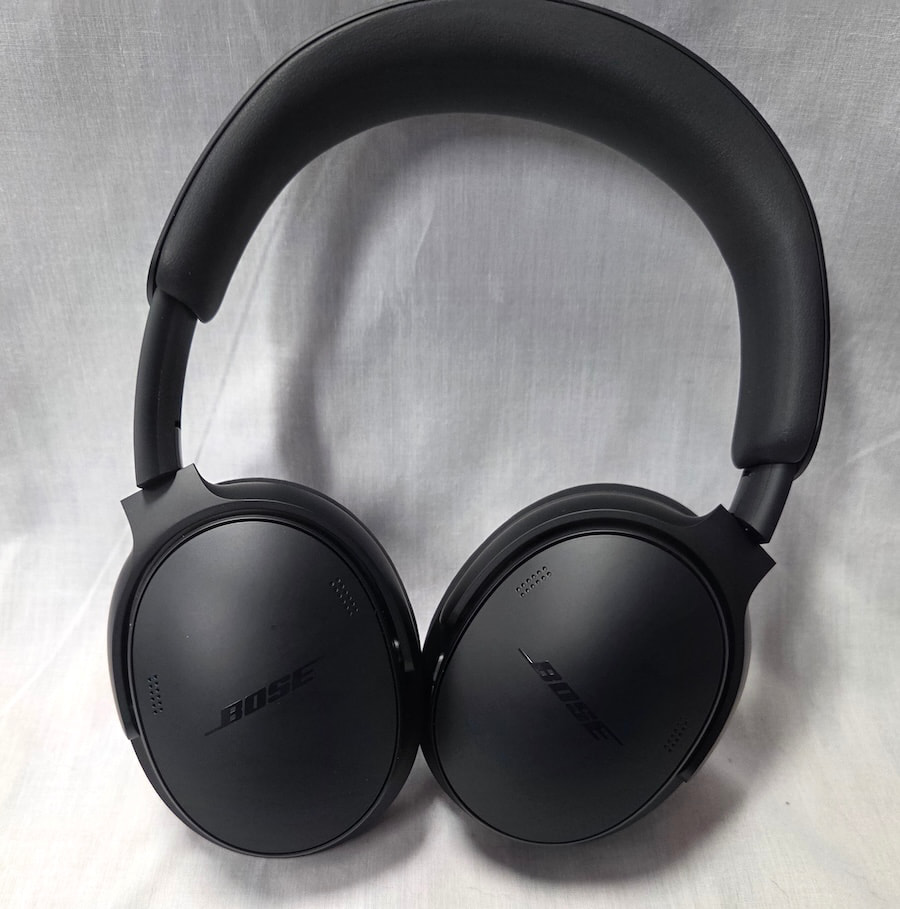
The Bottom Line
The Bose QuietComfort Headphones (2nd Gen) are a meaningful upgrade over the previous model, with better ANC, improved comfort, USB audio, and Immersive Audio features that have finally trickled down from the Ultra line. Bose has also expanded the color options, which will matter to buyers who increasingly treat headphones as part of the wardrobe rather than something to hide in a carry-on bag.
They are comfortable enough for long sessions, offer solid battery life, and deliver an easygoing, warmer presentation that should work well for a broad range of listeners. The catch is that the default tuning benefits from some adjustment, and Bose’s limited three-band EQ does not give users much room to reshape the sound if it misses the mark.
That makes the $359 asking price the real issue. The QCg en2 is not a cheaper Ultra, and it costs more than several very capable mid-tier competitors. For listeners who value comfort, strong ANC, and Bose’s warmer sonic balance, the premium may be justified. For everyone else, the competition is close enough that $59 can become a surprisingly persuasive reason to keep shopping.
Pros:
- Excellent long-term comfort and lightweight design
- Strong ANC performance approaching the previous Ultra
- Immersive Audio modes noticeably improve the presentation
- USB-C lossless audio up to 24-bit/48kHz
- Warm, non-fatiguing tuning works well for extended listening
- Bluetooth multipoint adds useful everyday flexibility
Cons:
- No 3.5mm analog input
- Three-band EQ is far too limited
- Default tuning is heavily L-shaped and can sound congested
- Soft treble and slower transients reduce perceived detail
- $359 price puts it uncomfortably close to stronger competition
Our Ratings
★★★★★★★★★★ Sound Quality
★★★★★★★★★★ Build Quality
★★★★★★★★★★ Comfort
★★★★★★★★★★ Features
★★★★★★★★★★ ANC
★★★★★★★★★★ Value
Where to Buy:
Related Reading:
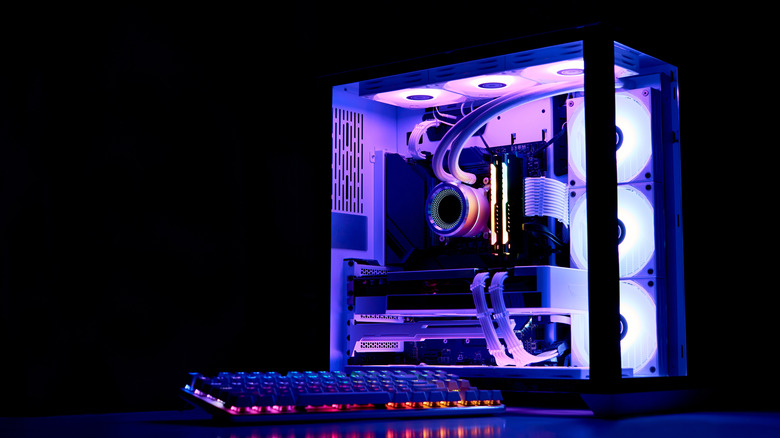
Unplugging your PC during a blackout might be exactly what saves it.
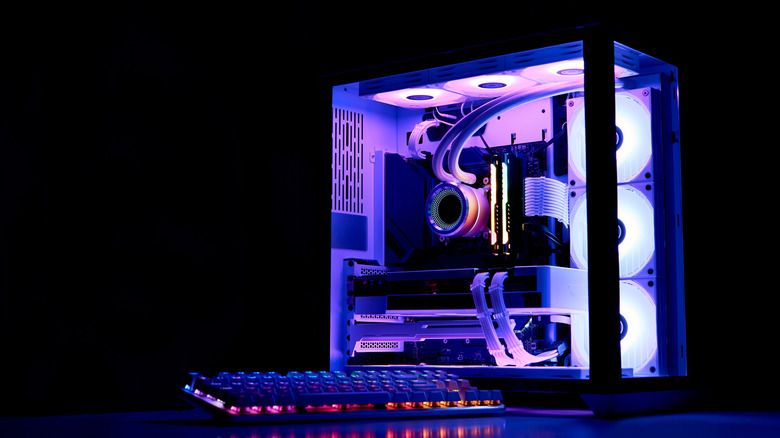
Power outages don’t usually come with a schedule. And when one hits, most people focus on finding the nearest flashlight rather than thinking about their electronics. But if your PC is still plugged into the wall when the lights come back, it could be in danger.
Many assume that a PC (unwillingly) shutting down is enough to keep it safe during an outage, but it isn’t. Even a powered-off computer remains connected to your home’s electrical wiring, and that connection is exactly how damage occurs. PCs are particularly vulnerable, since components like the motherboard, RAM and SSD are built with delicate circuits that are sensitive to unexpected voltage spikes.
The scale of risk is worth understanding. When power cuts unexpectedly, whether due to grid overload, equipment failure or a tripped breaker, the electrical system doesn’t simply go quiet. Voltage can fluctuate sharply in the moments before and after an outage, and the surge that arrives when power is restored is often more damaging than the outage itself. Standard household circuits in the US operate at 120 volts; even moderate spikes above those levels are enough to permanently damage sensitive computer components.
Understanding how to protect your setup can save you from costly repairs, loss of data and the headache of tracking down replacement parts.
Turning off your PC isn’t enough
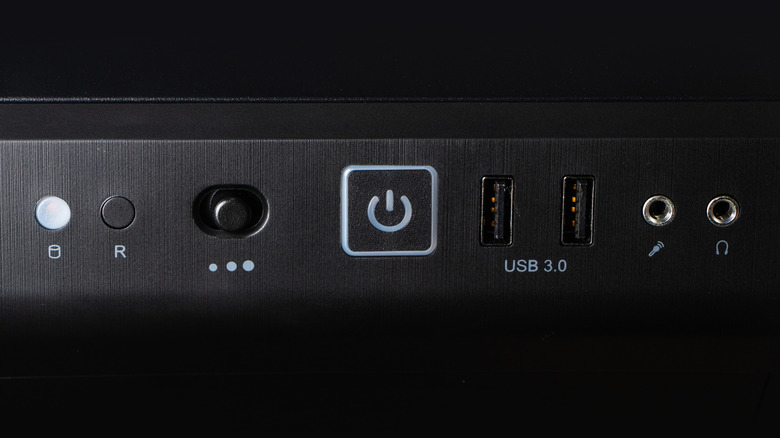
Even if you turned off your PC before the power outage, it’s not necessarily safe. Electricity can still travel through the cord and reach internal components once power comes back on, even while the machine is dark.
Power surges are the most common cause of this; they happen when there’s a sudden jump in electrical current, often triggered by lightning or damage to nearby power lines. Even a strike that doesn’t directly hit your house can send a surge through your local transformer and into your home’s wiring. When the grid comes back online after an outage, it often delivers an additional spike, so the danger doesn’t end when the lights come back on.
On top of that, if your PC is running when the power cuts off, that sudden loss of power can cause its own problems. Any files being saved or updated may be corrupted, which could render your system unusable if it happens during OS updates. If your computer has HDDs, sudden shutdowns can also harm their mechanical heads.
How to protect your PC during a power outage

To ensure your PC doesn’t suffer any damage during a storm, shut down your system and unplug it from the wall when you know extreme weather is coming. If the power is already out, it’s still worth unplugging the machine. Do the same for the router while you’re at it, as that’s one of the most frequently fried devices in an electrical storm. You should be restarting your router regularly anyway, so unplugging it won’t hurt. Keep other expensive electronics like your TV safe by unplugging them too.
On a desktop PC, shutting off the PSU can help since that prevents current from entering the system. However, an extreme event like a lightning strike could still cause damage. A surge protector is a much better idea. A quality surge protector acts as a first line of defense, absorbing voltage spikes before they reach your equipment.
Investing in a UPS is even better. An uninterruptible power supply combines surge protection with a battery backup. While it’s not meant to keep your devices running for hours, it will prevent shutdowns during short outages and give you a window to save your work and shut down gracefully instead of losing power instantly. For broader coverage, consider having a licensed electrician install surge protection directly into your electrical panel, shielding every outlet in the house.
Also, when the power returns, don’t immediately jump at the chance to plug everything back in. Wait a few minutes to ensure it won’t go back out again. When you reconnect, plug your surge protector in first, then your PC and any peripherals.
Unplugging your PC during a power outage takes only a few seconds, but it’s one of the most effective ways to protect your investment. Paired with a surge protector or UPS, the simple habit will reduce the chance of hardware damage or data loss. Given what’s at stake, it’s a small effort to make.
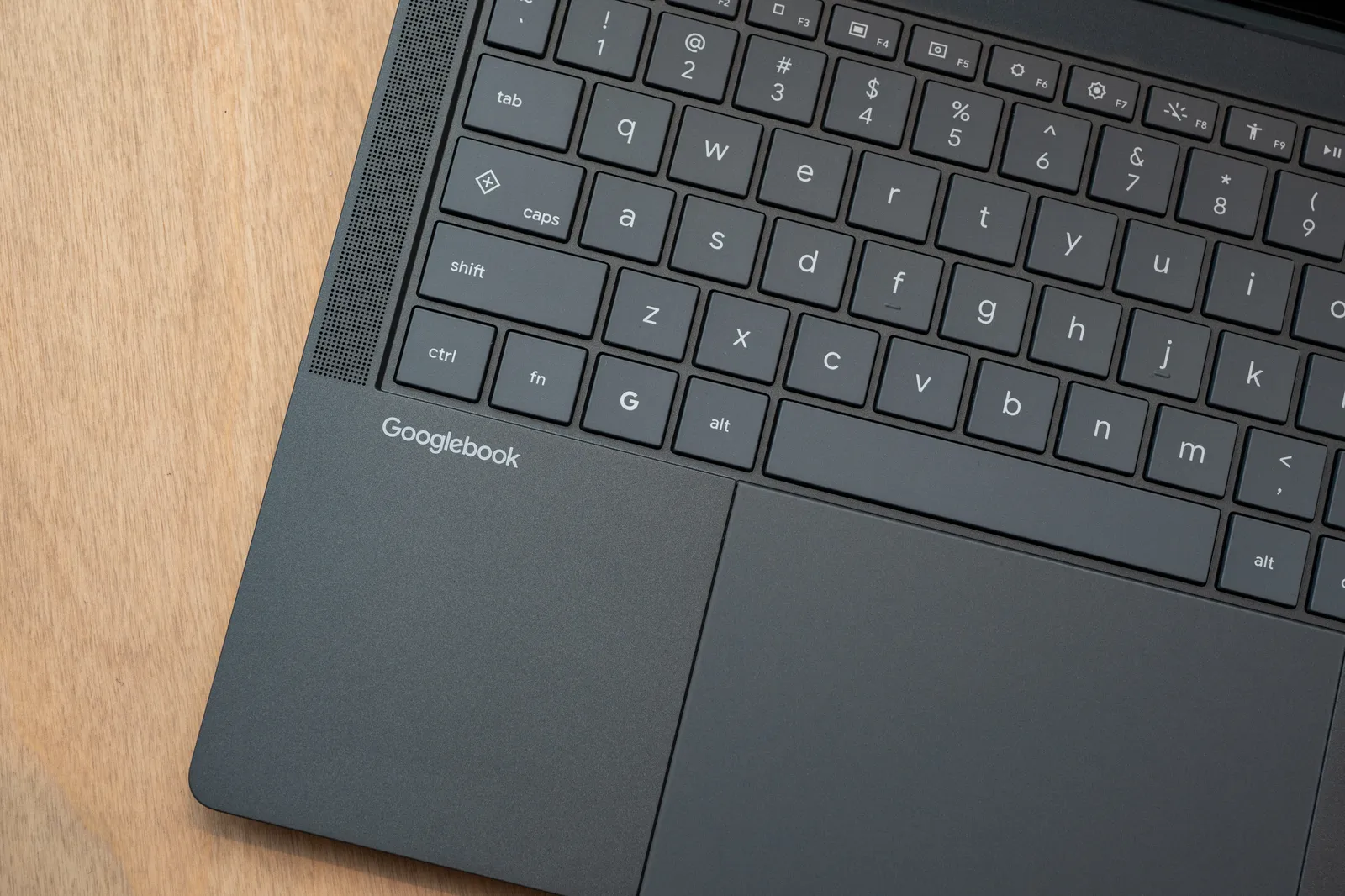
Some of the standards Google has set include using “premium materials,” like aluminum, magnesium, or carbon fiber, to make them lightweight. They need at least 16 GB of RAM, deliver more than 45 tera operations per second (TOPS), a touchscreen (LCD or OLED), a backlit keyboard, a haptic trackpad, Dolby Atmos speakers, studio-quality microphones with noise cancellation, and at least 14 hours of battery life. Googlebooks will receive 10 years of software updates.
They must feature the Glowbar—the signature LED strip on the laptop’s exterior that identifies the machine as a Googlebook. It’s a callback to the glowbar Google used on its original Chromebook Pixel. (Speaking of which, Google hasn’t shared whether it’s making its own Googlebook under its Made by Google Pixel hardware division.) Developers can access the Glowbar to customize the lights to specific actions in their apps, and there’s also an Easter egg app consumers can unlock to customize the light color and animation themselves. Like HiLight introduced on the latest Pixel phones, the Glowbar will illuminate when you talk to Gemini.

“There’s a lot the laptop gets right, but much of it was designed decades ago, before mobile devices were invented,” Sameer Samat, president of the Android ecosystem, said at the event. “Reinventing laptops is a multi-year endeavor. Our first step is to focus on the Android community because today there isn’t a laptop that is designed to seamlessly work with your Android phone.”
Googlebook merges Android’s mobile-first operating system with ChromeOS, the OS powering Chromebooks. Google says Chromebooks aren’t going anywhere and will continue to serve schools and act as the budget-friendly option for consumers. While the Googlebook interface feels like a blown-up version of Android, it’s not just an Android-powered desktop. Rather, it’s a distinct OS optimized for x86 and ARM chip architectures.
What’s particularly interesting is how Android apps work on the device. They’re categorized in three ways. When you set up your Googlebook with your Android phone, important data flows seamlessly to the laptop, including Wi-Fi networks, passwords, settings, messages, contacts, and photos. Not all of your phone apps will automatically be installed, though, as Google deems some apps as “better on the web,” like Facebook. (You can still install the Facebook app if you want and get the mobile-shaped experience.)

Paramount Skydance just “emerged victorious” reports Reuters, “from a legal battle over its $110 billion acquisition of Warner Bros Discovery” that will “dramatically concentrate power across Hollywood’s film, TV, streaming and news businesses.”
The victory comes “after settling with a California-led group of US states and a Hollywood writers union, paving the way for one of the largest media mergers in history.”
Paramount agreed to abide by temporary film quotas and a news oversight committee, avoiding a forced sale of cable assets such as CNN or any of its lucrative film franchises… The Writers Guild of America settled its parallel case against Paramount, while saying it still believes the deal will damage the industry. The states’ settlement forced the union to “contend with the reality of forging ahead alone, with no backing from government enforcers” in a complex case that would have cost millions of dollars…
Paramount promised in the state settlement to bring more film production to the US — spending at least $300 million more each year in domestic production — and adhere to US theatrical release quotas for five years. The company will produce 30 movies in each of the first two years of the deal, and 32 movies in each of the following three years, Bonta said. Each year, at least four of those films must be independent films and at least 20% must be blockbusters. If it falls below that threshold, it will pay $30 million per film, most of it into funds to support workers. Paramount also promised not to raise rates on theater operators for three years.
The article notes that California attorney general Rob Bonta still said “I don’t think these two companies should merge” at a press conference announcing the settlement, “but that’s not something that we are focused on with our resolution here.” He call their agreement “a strong antitrust outcome.”
And Politico notes that Bonta acknowledged at the press conference that “Some of you who may be watching this may have wanted a different outcome. I understand that.”
But he argued he’d reached a settlement capable of “providing more film production that protects Hollywood workers and their livelihoods, that places guardrails allowing for robust cable negotiations, that protects competition and creates more choice for consumers about what this merger could mean for the industry.” It “resolves the antitrust concerns at the heart of our lawsuit against the company and Warner Brothers,” he said…
The agreement came as a disappointment to opponents of the transaction, including the Block the Merger Coalition, which cast the settlement as a sweetheart deal for Paramount Chief Executive David Ellison and his father, Oracle Co-Founder Larry Ellison, who is financially backstopping the acquisition. “This is a bad deal for the future of film, entertainment, independent journalism, and a strong democracy in this country,” the coalition said in a statement. “We are disappointed and angry that the interests of average Americans have been trampled to benefit oligarch billionaires…..”
The $111 billion deal allows Paramount to combine its namesake streaming service with HBO Max, creating a new offering with about 200 million subscribers. That would help Paramount compete against companies such as Netflix, which boasts more than 325 million subscribers worldwide.


Read more of this story at Slashdot.


More Information
As enterprise data volumes grow, replication pipelines built for smaller loads often stop scaling cleanly. Jobs that once finished overnight begin to run into business hours, freshness gaps widen, and compute costs climb. At that point the constraint shifts from the size of the data to the efficiency of the architecture that reads and writes it. Two techniques address this directly. Parallel partitioned reads divide a large source table into row-range partitions and read them at the same time across CPU threads, which reduces read time on large datasets. Write-path optimizations lower the cost of processing result metadata and writing files on the destination side. Wide tables with hundreds of columns benefit most, since per-column work repeats across every file operation. Both techniques build on cloud-native bulk loading, which stages data as optimized files and loads it through a warehouse’s native ingestion interface for higher throughput than row-by-row writes. This White Paper explains the benchmark methodology, reports measured results across common cloud destinations, and outlines a practical configuration for applying these techniques to large-scale replication.
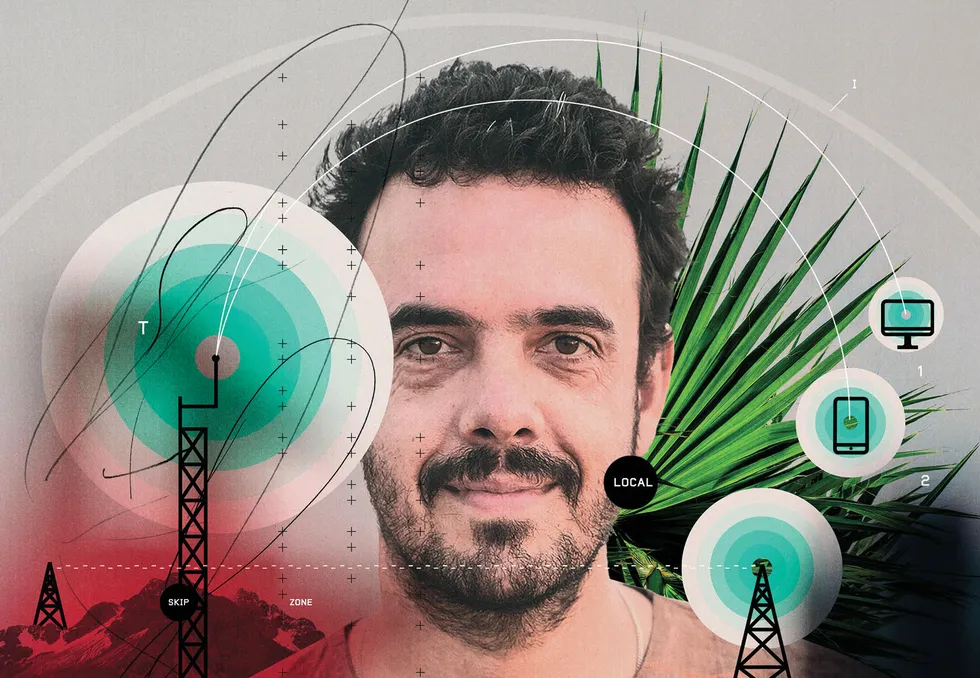

Shortwave radios offer a way to connect one location on Earth to practically anywhere else with minimal infrastructure. But these radios come with some drawbacks—a significant one being that, unlike satellite communications, their transmission rates for digital data are typically measured in just hundreds of bits per second.
Peter Bloom
Peter Bloom is the founder of Rhizomatica, a nonprofit that works with remote, indigenous, and off-grid communities around the world to build shortwave and cellular-communication infrastructure.
Peter Bloom is the founder of Rhizomatica, a Philadelphia-based nonprofit that has open-sourced a digital shortwave-radio set called the High-frequency Emergency and Rural Multimedia Exchange System, or HERMES. The set operates in the high-frequency (HF) band from 3 to 30 megahertz, as does Mercury, its digital modem. Rhizomatica staff travel around the globe to remote locations in countries like Bangladesh, Brazil, and Ecuador. Wherever they go, they use HERMES to help connect locals to the rest of the world.
Bloom spoke with IEEE Spectrum about how HERMES brings better data rates and encryption to shortwave radios.
How does HERMES connect remote locations?
Peter Bloom: We use the ionosphere as our satellite—or mirror—which helps us move information, voice, and data over really long distances. We’re using small radios that put out about 20 watts of power, and we can pretty reliably do 400- to 600-kilometer links between two radios. We’re talking about places that are not easy to reach, where it’s not simple to put terrestrial infrastructure.
What can HERMES send that a basic voice radio can’t?
Bloom: HERMES is a software stack—it’s a set of different programs that all work together in order to be able to send data over HF. HERMES allows you to send pretty much any file. Depending on what the file is, whether it’s a photo or an email or a voice memo, it just sends it as a file. It’s like a data pipeline over HF.
Why does sending files and data matter more than just voice?
Bloom: In emergency situations, people send their latitude and longitude over HF to say, “Hey, I’m here at this place.” People need to be able to send data over HF if there’s a manifest, a parts list, telemedicine—here’s what we have, here’s what we need. Instead of trying to read that out over the air, it’s much easier to just send the file. Same with a photo—if we need evidence that an area was logged illegally, we can just have someone send that over HF, rather than spending days getting down the river to get the photo where it needs to go.
Why did you build in encryption that amateur-radio regulations in many countries don’t allow?
Bloom: Encryption [regulations] for ham radio operators are different in each country. So it’s all optional—you turn it on, you turn it off. The reason we built the encryption is that some of the partners we work with are in very sensitive areas and don’t want to be sending out information that can be easily captured and used against them.
How has HERMES made an impact?
Bloom: We’ve been working with artisanal fishers in Bangladesh on a pilot project. There’s 10 or 11 boats that have HERMES systems on them. Pretty soon after we installed those, one of the boats had a mechanical issue in the Bay of Bengal, 100 or 200 kilometers offshore. They were able to send their GPS position and an SOS that they were having trouble. They were able to coordinate the rescue of the crew and the boat. So that was a really cool moment of HERMES in action that we’re super happy about.
This article appears in the October 2026 print issue as “Peter Bloom.”
From Your Site Articles
Related Articles Around the Web


Harvey’s gross margin fell from about 50% at the start of this year to minus 50% by June as customer usage of its AI agents spiked, and turned positive again only after it released a model of its own built on Moonshot’s Kimi K3. Abridge, Decagon, Ramp and Rogo are making similar moves, and Sequoia Capital and General Catalyst are funding the shift.
Harvey’s gross margin fell from about 50% at the start of this year to minus 50% by June, Bloomberg reported, citing a person familiar with the matter. The legal startup is valued at $15.6B. Customer usage had spiked after a March update to its AI agents.
The cost was the models it rented.
Harvey has seen a twentyfold rise in token usage this year, according to the company. Both OpenAI and Anthropic now charge enterprises for model usage on top of base subscription fees. Its founders knew the spike would not survive contact with those rates.
So it stopped renting.
In August Harvey released its first in-house model, post-trained on Kimi K3 from the Chinese lab Moonshot. Gross margins turned positive again after that launch and other changes to how it uses AI, people familiar with the work told Bloomberg. Harvey declined to comment on specific financials.
It is not alone.
Abridge is building a clinical model on Nvidia’s open weights, and Decagon now routes 80% of customer queries through models of its own. Ramp raised $750M in June and is weighing training for the first time. “It made absolutely no sense a year ago,” co-chief executive Karim Atiyeh said. “It’s starting to make a lot more sense now.”
Anthropic has noticed.
At an investor forum in its offices it showed a slide on startups building their own models, with a reminder that Harvey still needs Opus for its hardest tasks. Mistral’s Arthur Mensch spent July arguing that closed models give providers immense leverage, and named Anthropic cutting off Windsurf while building Claude Code.
September made his case for him.
OpenAI moved to end its Cursor contract after SpaceX bought the company, citing past terms of service breaches by Musk businesses. European buyers have switching rights under the Data Act, but those cover a customer leaving a supplier, not a supplier leaving a customer.
Europe has its own Harvey.
Legora, in Stockholm, reached $100M in revenue inside 18 months and now serves more than 1,200 firms, and it has never said whose models it runs on. Not everyone thinks the answer matters. “Having your own model or not is such the wrong question,” said Menlo Ventures partner Matt Kraning. “In most cases, it tends to be a lot of cosplay.“

Internet Explorer Matters: Internet Explorer is now an obsolete and retired browser, but IE Mode is still hanging around in the latest editions of Windows. Microsoft recently reminded everyone that the company plans to stop supporting this compatibility solution sooner rather than later. Migration efforts should begin soon, although some companies might need more time to replace the ancient technology.
Microsoft retired support for Internet Explorer 11 years ago, but the ancient browser is still lingering in modern Windows releases through the IE Mode feature. By the end of 2029, even IE Mode will finally be gone, along with IE’s ancient web engine technology. Enterprise organizations should prepare for the switch-off now by upgrading or replacing applications that still require IE to run on recent operating systems.
In a recent message pushed to the Microsoft 365 admin center (MC1473151), Redmond reminded organizations about the planned retirement of IE Mode. As the company first announced in 2021, Internet Explorer (IE) mode in Microsoft Edge is going to be supported “at least” until the end of 2029.
Microsoft will share a new end-of-support notice for IE Mode at least one year in advance. However, IT admins must properly plan the migration of their company’s legacy applets, apps, and applications that still require Internet Explorer/IE Mode. Some modernization efforts might take years to complete, which is why Microsoft is routinely sending out deprecation reminders such as MC1473151.

IE Mode is a special compatibility mode available in modern Edge releases. It is based on Google’s Chromium browser engine, and can display web pages using Internet Explorer 11’s Trident engine. Also known as MSHTML, the proprietary layout engine has gone through many changes since its introduction with Internet Explorer 4.0.
Internet Explorer 11 uses MSHTML 7.0, which supports WebGL applets and the now-retired SPDY web communication protocol. If an organization does not use any IE-based applets, no action is required after Microsoft publishes the MC1473151 alert.
IE Mode will likely continue working with few issues even after 2029. However, organizations are asked to properly assess their IT infrastructure to identify the business- and mission-critical elements that still require IE Mode. These applications and websites should be updated, rehosted, replaced, or rebuilt using modern web technologies, Microsoft warned.
The company is even offering to lend a hand through its App Assure service, which should help eligible customers check and improve compatibility of custom applications with modern Windows platforms.
Either way, Microsoft warns that “planning early can help your organization identify migration risks and reduce the likelihood of disruption as you move away from IE mode dependencies.”
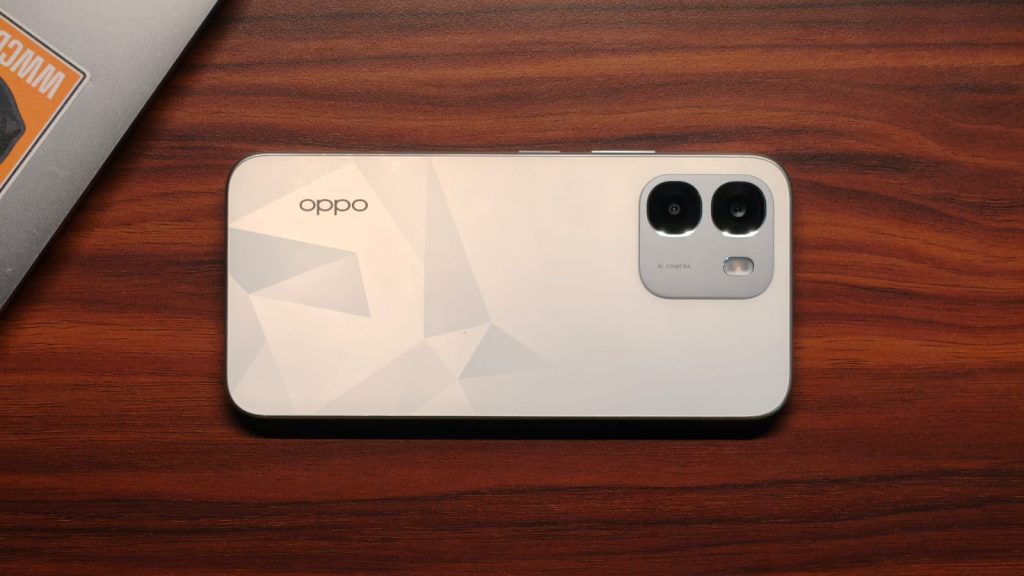
OPPO has teased the K14 Plus 5G for an upcoming launch in India. The phone will be the latest addition to the company’s K14 series, following the K14 Lite, K14, and K14x. So far, OPPO has shared only a teaser image, with no word on the phone’s processor, display, cameras, or battery. The teaser does point to smooth performance and everyday use, though. Here’s what we know about the K14 Plus and what to expect from it.
What the Teaser Reveals
OPPO has shown a teaser of its K14 Plus 5G handset for the Indian market. So far, OPPO has released only side-view images of the new phone. These include images of the power and volume buttons on the side. The teaser also hints at the colors the phone will be available in: orange and dark grey or black. OPPO has said the new phone will focus on performance and usability. However, the teaser does not reveal the hardware that will power the phone. The company has not confirmed its processor, display, or camera setup.
OPPO has not shared details on the processor, screen, cameras, RAM, storage, or battery. The “Plus” in the phone’s name might mean a bigger screen or battery, but it is still unclear.
OPPO K14 Plus 5G Price and Position in the Lineup

It is also unclear where the OPPO K14 Plus sits in the K14 series. As of now, OPPO K14 Lite and K14x are positioned in the below-Rs 20,000 range. Meanwhile, the base variant of the OPPO K14 starts at Rs 25,999 in India. Based on this, the K14 Plus may cost more. It may land in the Rs 30,000 range. This is only an estimate, not the final price. The K14 Plus could help OPPO expand its options in the budget-to-mid-range segment. Its final position will depend on the specifications and features OPPO announces. Buyers should wait for the official price and full specifications before choosing the K14 Plus.


“I was hearing from people in the campaign world that there’s this new strategy of paying political influencers to post content,” said Marc Berman, the California assemblyman. “Some were good about disclosure and others were a bit fast and loose.”
His bill is now law. Gavin Newsom signed AB 1130 on Saturday. In California, paid political posts that hide the payment now carry a $5,000 fine each.
The state has required those disclosures since 2023. Until now it could not punish anyone for skipping them. AB 1130 changes that. It hands the Fair Political Practices Commission the power to impose administrative, civil or criminal penalties. The commission can also refer a violation to law enforcement as a potential misdemeanour.
Ken Bensinger reported the law for the New York Times. He wrote on X that a wilful violation could carry up to a year in prison.
What the law actually covers
The scope is narrower than “influencers must disclose”. The Governor’s office describes AB 1130 as covering a person paid by a campaign committee to post online political content. The content must support or oppose a candidate or a measure. The penalty applies when that person leaves out the required disclaimer saying they were paid. Payment from a campaign committee is the trigger. An unpaid creator posting their own opinions sits outside it.
That distinction matters because of how the money now moves. Politicians and advocacy groups are paying creators to reach younger audiences, the Times reported. No federal rule requires anyone to disclose those payments.
The campaign that prompted it
Berman introduced the bill after the Times reported in May on money reaching influencers during California’s contested primary for governor. Politicians were funnelling it quietly, the paper found.
Tom Steyer, the billionaire Democrat, paid dozens of creators to post favourably about his campaign, Bensinger reported. Those posts ran on TikTok, YouTube, Instagram and Reddit. Many carried no written disclosure at first.
Multiple complaints followed to the Fair Political Practices Commission against the Steyer campaign. Somebody also filed at least one against Xavier Becerra, his main rival, who went on to win the primary.
The commission opened an investigation into Steyer’s campaign in May and closed it this week. Steyer had properly notified the influencers of their obligations, it found, and “then reminded the influencers when posts were discovered without the disclaimer”. A second investigation into the campaign is still open.
Becerra faces Steve Hilton, a Republican, in November.
One of thirteen
AB 1130 arrived inside a package of 13 bills on elections and social media. Newsom signed them at the Democracy Center in Los Angeles, and framed the package as a defence against federal interference.
“Donald Trump won’t stop until he can exert dictatorial control over your free vote and disenfranchise millions of people this November,” he said in a statement. “California will stop him at every opportunity.”
Two other bills in the package matter for anyone building or hosting synthetic media.
AB 686, also Berman’s, extends the sunset on California’s deepfake rule. The old date was 1 January 2027, and the new one is 1 January 2031. That rule bars distributing materially deceptive audio or visual media with actual malice, where the intent is to injure a candidate’s reputation or deceive a voter. Media carrying a disclosure that it has been manipulated is exempt. The rule was due to lapse before the 2028 presidential cycle. It now runs past it.
AB 502 amends the rules on knowingly distributing election communications that contain materially deceptive content.
A third, AB 2281, requires the Secretary of State to assess whether California needs to replace election cybersecurity resources the federal government previously supplied.
The rest of the package is ballot security rather than platform policy. Several bills create felonies for seizing ballots, election records or certified voting technology before results are certified.
California keeps legislating at the platform layer
The state has built a stack of these rules over several years, and the enforcement body is usually the same one.
In 2024 Newsom signed AB 2655. It requires large online platforms to remove or label deceptive digitally altered election content during set periods, and to provide reporting mechanisms. He signed AB 2355 the same year. That one requires electoral advertisements built with AI-generated or substantially altered content to carry a disclosure, and the Fair Political Practices Commission enforces it.
Eleven days before this package, he signed a separate set of child safety bills covering algorithmic feeds for under-16s.
The disclosure question is not confined to campaigns either. A watchdog reported last month that Meta had used paid influencers to push back on teen social media bans. YouTube has separately been carrying AI slop channels that produce political misinformation.
Who else is doing this
Texas already mandates disclosure of paid political content online. Lawmakers in Congress and in other states, including New York, are considering similar rules, according to the Times.
Elsewhere the pattern runs further along. Brazil’s electoral court set rules on AI in elections last year. Meta’s own Oversight Board has been ruling on election deepfakes in Europe.
California’s version lands six weeks before Americans vote. The Fair Political Practices Commission now has a penalty it can apply, and the primary that produced the complaints has already been decided.

3 Series You Officially Need to Binge on Prime Video This Week (Sep 21-25)

Tributes to much-loved publican who lived life to the full

Simply Good Foods: Too Tasty To Ignore, Even With Its Problems (NASDAQ:SMPL)




-

 Fashion3 days ago
Weekend Open Thread: Talbots – Corporette.com
-

 Tech1 day ago
Researchers escape OpenAI Codex sandbox to run commands on host
-

 Crypto World3 days ago
Circle launches Arc Studio AI agent for building onchain apps
-

 Crypto World6 days ago
Robinhood engineers charged over $50K crypto scheme
-
 NewsBeat3 days ago
Trump says US has reached an agreement to take permanent control of Greenland’s security
-

 Crypto World3 days ago
Bitcoin price breaks channel as RSI climbs to 63
-

 Crypto World5 days ago
US Charges Robinhood Engineers Over Crypto Listing Trades
-

 Crypto World6 days ago
What Is the Status of the U.S.-Iran Peace Talks? Here's What Both Sides Are Saying
-

 Crypto World1 day ago
Who Needs CLARITY Anyway? ARB Could See 70X Increase: Hodler’s Digest
-
 Crypto World7 days ago
NVIDIA Analysis: Attempted Rising Wedge Breakout Amid Pressure on the AI Sector
-

 Tech6 days ago
Webb’s IC 348 Mosaic Includes Two-Jupiter Dwarfs, Twin Jets, and a Nursery Still Making Worlds
-

 Crypto World3 days ago
Trading Bitcoin on Robinhood? Why 2% Spread Has Traders Worried
-

 Crypto World3 days ago
World Money launches in 150+ countries with Stripe
-

 Crypto World4 days ago
Silver prices recover quickly, hitting weekly high today
-

 Entertainment6 days ago
Big Brother Update: Melody Explodes at Drew as Illness Sweeps BB28 House
-
 NewsBeat3 days ago
US was ‘on brink of war’ with China over false AI report of nukes moving in Middle East
-

 Crypto World4 days ago
Mortgage and refinance interest rates today, Thursday, September 17, 2026
-
 Crypto World18 hours ago
Bitcoin price holds above $81K as key catalysts line up
-

 Business6 days ago
Federal Reserve expected to hike interest rates 25 basis points at FOMC meeting
-

 Business3 days ago
Newsom accelerates AI oversight, advances ‘kill switch’ plan
You must be logged in to post a comment Login