
Join Mikko Hyppönen and security leaders from the NFL, CHANEL, and Atlassian for a two-hour digital summit on what AI-speed attacks change, what defenders should stop doing, and how to validate, decide, fix, and re-validate at machine speed.
Tech
Microsoft pauses KB5002907 update after Office license deactivations



Microsoft has paused the rollout of the KB5002907 Microsoft 365 update after users report that it deactivated, or in some cases completely removed, perpetual Office 2016 and Office 2019 installations.
KB5002907, titled “Optional update for out-of-date Microsoft 365 Apps installations,” was released to help users update Microsoft 365 Apps installations that are more than 90 days out of date.
“This optional update is available only for Windows PCs with Microsoft 365 Apps installations that are more than 90 days out of date and use Current Channel or Monthly Enterprise Channel,” explains the KB5002907 release notes.
“Installing the update can help the apps resume updating and move to a current build for the device’s assigned update channel.”
Microsoft says KB5002907 is an optional update offered through Windows Update and does not install automatically.
Shortly after the update was released, BleepingComputer was told by Christian Van Hautte, who runs an MSP in Belgium, that several of his customers suddenly found their perpetual Office installations showing as an “Unlicensed Product.”
Van Hautte told BleepingComputer that five unrelated customers contacted his company within approximately ten minutes on September 24, with dozens of PCs affected across the organizations.
“The affected installations are all Office 2016 and Office 2019 Home & Business (perpetual/one-time purchase licenses),” Van Hautte told BleepingComputer.
“The common factor is KB5002907, an update released around September 23 and described as targeting ‘outdated Microsoft 365 Apps installations’ — but it is clearly also landing on perpetual (non-subscription) Office installs and breaking their license state.”
Van Hautte said re-entering the original Office product key restored activation on affected systems.
Furthermore, Van Hautte warned that even though the update is listed as optional, it installed automatically on his customers’ devices.
However, he later discovered that KB5002907 appears to remove and reinstall, or migrate the existing Office installation as part of its update process.
Van Hautte says that on systems with Office components of different architectures, such as a 32-bit Office 2016 or 2019 installation alongside a 64-bit Microsoft Access Runtime, the reinstall can fail because Microsoft Office setup does not allow mixing 32-bit and 64-bit Office products.
In those cases, he says the existing Office suite is removed but is not successfully reinstalled, leaving the device without Office.
Microsoft has not confirmed that mixed-bitness installations cause this behavior.
Reports from other administrators and users began appearing online at approximately the same time.
One Reddit user reported that multiple Office 2019 installations suddenly became deactivated and said entering the product keys again restored activation on at least some devices.
The user later updated the post to say the problem was not limited to Office 2019 and that some systems required signing into a Microsoft account and selecting the license rather than just entering the key.
In another report, an administrator said several unrelated customers contacted them after Office had been completely uninstalled.
“My Office 2019 and dad’s Office 2016 installs both got nuked overnight… both are 100% legit keys purchased long ago,” another user replied.
Similar reports appeared in the Microsoft forums, where multiple people reported similar issues after installing the update.
Microsoft pauses Microsoft 365 KB5002907 update
After BleepingComputer contacted Microsoft about the reports, the company confirmed that it had paused the update while investigating the issue.
“We are aware of these reports and have paused the update while we investigate. Additional customer guidance will be communicated via appropriate channels,” a Microsoft spokesperson told BleepingComputer.
Microsoft also updated the KB5002907 support bulletin to acknowledge the problems.
“Microsoft is investigating reports of unexpected results on some devices running Office 2016 or Office 2019 after this update is installed,” the company now says.
“To prevent additional devices from being affected, we have paused the rollout of this update.”
Microsoft confirms that affected Office installations can suffer from two different problems.
In some cases, Office may appear unlicensed, and Microsoft recommends that customers reactivate their purchased product.
In what Microsoft describes as “rare cases,” Office may be removed entirely. Microsoft instructs those users to download and reinstall their purchased copy of Office 2016 or Office 2019.


Continue Reading
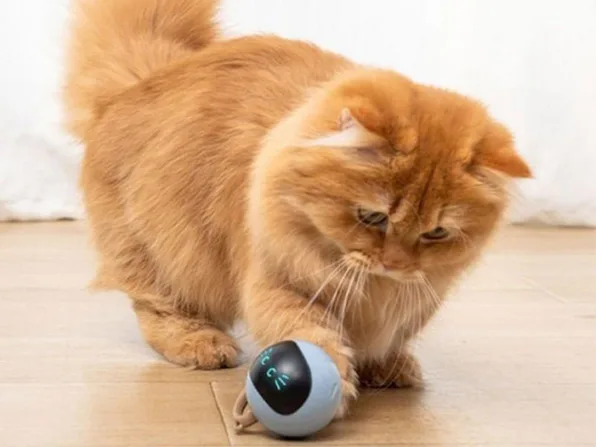
from the good-deals-on-cool-stuff dept
This Smart & Interactive Self-Rotating Cat Toy Ball is a USB-rechargeable toy featuring 360-degree rolling movements, obstacle avoidance, and changing LED lights to help keep cats entertained. It’s built out of scratch-resistant and bite-resistant materials, the ball is tough enough to withstand rough play from high-energy kittens and adult cats alike. It’s on sale for $20.

Note: The Techdirt Deals Store is powered and curated by StackSocial. A portion of all sales from Techdirt Deals helps support Techdirt. The products featured do not reflect endorsements by our editorial team.
Filed Under: daily deal
Tech
EXCLUSIVE: James Gray opens up about Paper Tiger and reveals how Adam Driver and Miles Teller brought it to life

The New York Film Festival kicked off the first day of its 64th edition with a screening of writer-director James Gray’s outstanding new crime drama, Paper Tiger. Set in 1986 Queens, the film stars Adam Driver and Miles Teller as brothers Gary and Irwin Pearl, who pursue a get-rich-quick scheme that involves cleaning up the Gowanus Canal. But after a terrible misunderstanding, Irwin, his wife Hester (Scarlett Johansson), and their children find themselves targeted and tormented by the Russian mafia, threatening to tear the two brothers apart.
Paper Tiger made its world premiere back in May at the 2026 Cannes Film Festival, which nominated Gray for its highest honor, the Palme D’Or award, for the second time in his career. Since its debut, the film also received an 83% “Fresh” rating from critics on Rotten Tomatoes, ranking it highly alongside some of Gray’s other acclaimed films, including The Immigrant, Ad Astra, The Lost City of Z, Armageddon Time. Neon will distribute Paper Tiger in select theaters this November after its festival tour.
At its NYFF premiere on September 25, Digital Trends joined audiences and press in hearing Gray, Driver, and Teller discuss their experience making Paper Tiger in a post film Q&A, moderated by NYFF programmer Rachel Rosen. In this panel, Gray broke down his filmmaking style and his personal inspirations for the movie’s emotional story. He also revealed how he got such acclaimed performances out of both Driver and Teller and how he approached recreating 1980s New York in this throwback crime thriller.
This transcript has been edited for length and clarity.
Rosen: I’m wondering if you remember if there’s an originating idea [for Paper Tiger]? Is it a mood? Is it a particular personal story? Is it a theme? And then how the film develops from there?

Gray: I, frankly, as corny as this sounds, I started out saying I wanted to make a movie about love and how difficult it was to love somebody. And I don’t mean obviously in a romantic way only, although that’s part of it. But how things in life get in the way of our relationships with each other.
So it sort of started with that notion. And then to rip off stuff from my own past, somebody said to me once, [they] said, “Oh, instead of therapy, you make films,” which I like a lot. I think that’s a sign of victory, because that means that I put myself as disgusting as I am into the work.
I feel like that’s my job. Now it’s your job to like it or hate it…but it’s my job to show you, warts and all, who I am, I think. So it started really there, that impulse.
Rosen: You were remarkably consistent in interviews through the years, downplaying your talent for working with actors. So let’s dig into that a little bit. Your films have these remarkable performances. Can you parse out?

Gray: If you get great actors, you let them do what they do. That is maybe not as easy as I thought it was. I don’t actually do much with these guys. They’re great.
I don’t say. “I have my vision.” You can say the line exactly as I wrote it, which I think is catastrophic. You have to be open to what the actor will bring. And you want the actor to do something you didn’t expect…So when I get to set, I don’t have a preconceived notion of the way the scene should be played.
I have been to sets where I see directors and I watch them watch the actor and I’ll see them point. And I’m always disturbed by that because they’re seeing the actor say the line either as they should or not…The actor must play the reality in the moment. And I think if I had any skill at all, it would be good enough to let them do that rather than sit on them.
Rosen: Let’s do that.

Driver: He articulated it pretty well, which I think is rare, especially if you’ve written and to not have ownership over it, and atmosphere of the set always comes from the top-down. Whoever’s in charge, who’s leading it, they kind of set the precedent for how the crew is working on it and how focused the actors are on it.
And he sets up all the things that he just said he really does embody on set. He creates an atmosphere where you can’t make a mistake. And if we do it, he’s made sure that we have enough time in the schedule. If we don’t, do it right or if there’s another option, will we have time to to do it?
Teller: And James wouldn’t be afraid to, if a scene wasn’t necessarily working, he would say, “It’s not your guys’ fault. It’s the writers.” Just James, of course.(laughs) And then he would sit and tinker with it a little bit. But I mean, we certainly weren’t. We didn’t have a ton of set ups every day, which is the least amount of setups I think I’ve ever had on a film.
Yeah. James is very available. And there’s elements of this story that are autobiographical in James’s words. And, yeah, he’s just a really lovely, articulate person who really doesn’t love movies as much as anyone that I’ve ever met him.
Driver: And you do just want someone who’s a great audience member, who’s watching, who’s watching the monitor and is seeing everything. And when you feel as an actor that someone isn’t, then you start to do that job also, and it kind of takes you out of the scene.
And if you trust a majority of these choices are about taste and already going into it before, we give it a shot of excitement because of his films or the choices that he’s made with such an attention to detail about costume, what the lenses are, how we’re shooting it, where we’re shooting, already going into it. We’re just paying attention, which again, seems obvious, but, it’s all about taste. And that’s the end of that sentence. Period.
Rosen: And that leads into my next question, which is about period, because I think recent [time] periods can be more complex than shooting something in 1850. And I’m wondering if all of you can talk about that, in terms of language, were there things you thought about beforehand about being authentic to 1986?

Gray: I see no difference between 1986 and 1820 anymore. Have you been to the Gowanus Canal recently? When we were scouting, somebody said, “Well, are you going to do the actual Gowanus Canal?” And I said, “Yeah.” And then I got there and it looks nothing like it did in 1986. People dress nothing like that.
And the hair with these perms…and it’s funny because I think people are almost out of the language of period and recent period, like my mother had that hairstyle and it does look ridiculous. But it’s accurate to what it was. And the only thing we did do was limit the shoulder pads, because in costume, what people actually wore in 1986…these shoulder pad things, we forget they looked like they were about to play Joe Namath.
The shoulder padding out here was risible. So the furthest we went was the hair. You have to try to get the details right, but you actually have to actually not do as much as there was because then it would look like parody. So, we try to be as accurate as we can, but it is all in the end, an abstraction because the movie is like a dream state.
It’s not a documentary. And people looking for that kind of accuracy. I find that to be, if I may be candid, I find it to be kind of a little bit of dunderheaded, because it’s really missing the point of what…a work of art is supposed to communicate anyway. So, you just try to get it as accurate as you can and leave detail uncovered, knowing that you’re going to miss something.
Rosen: Can you talk a little bit about how you developed the visual style of the film, but also the auditory style of the film, both of which I think were quite remarkable.

Gray: Thank you…I don’t think it’s right to just impose a style on a movie generally, or to start there anyway. I mean, you’re always imposing a style, but you’re not starting with a style. To me, it has to be connected to the material. And I’ve always idolized filmmakers who are…just trying to do what’s right for the piece.
And so I don’t try to impose some massively ornate visual style on a movie. And I’ve found that that’s extremely hard to do. Like just creating a scene, which looks like it’s traditional or classical, is really hard, at least for me.
So what I wanted to do was to do something that looked on a set period, but looked like it was a bit of a throwback in that way. One of the decisions we made, which caused a little bit of a headache, but it was great, was to use only tungsten lights and so the film is shot on 35 millimeter film…It has a magic that is totally beyond what a DCP can give you, and it’s almost like we forget it, you know? So I’m glad that they were able to do it.
So sound, for me, is very, very important. I always go over budget, on only one thing on every movie. I’m always on time…but the I’m always over on the movies because the mix is so important. It’s stuff that works unconsciously that nobody is ever aware of.
There’s such weird stuff on the track of this movie. There’s this thing in the car scene…with one of the Russian guys [rooting] over to the glove compartment. And he opens the glove compartment, and on it we put a slaughtered pig sound. So it’s that kind of thing that you you always want to try to come up with, to use a pretentious term, an objective correlative for the emotion of the moment.
Paper Tiger arrives in theaters on November 13.


The collaboration aims to advance agricultural resilience and crop-based carbon removal using AI technologies.
Oxford spin-out Wild Bioscience (Wild Bio) and technology company Oracle have announced a collaboration that will see both groups advance agricultural resilience and crop-based carbon removal using AI. As part of the partnership, Wild Bio intends to utilise Oracle cloud and IoT tech in support of its field research.
Established in 2021 by Dr Ross Hendron and Irish man Prof Steve Kelly, Wild Bio specialises in crop genetics by researching genetic solutions that developed through evolution to improve crops in the past, and then using these discoveries to design simple fixes for modern crops.
The start-up uses AI to tackle two major challenges in agriculture: maintaining crop productivity as environmental stress increases and developing crop varieties that can remove more carbon dioxide from the atmosphere.
Wild Bio will use Oracle’s technology to capture field data, bring it together in an integrated cloud environment and use AI to analyse the resulting datasets and inform future research.
Oracle’s technology will be used to analyse real-time data from field trials by studying soil moisture, plant performance and environmental conditions, building an auditable, field-level measurement system for how much carbon the studied crops are actually taking in. This will then inform and power Wild Bio’s own research.
The organisations are of the opinion that AI has the ability to learn from millions of years of plant evolution and identify traits that can improve how crops perform.
Commenting on the partnership, Clay Magouyrk, the CEO of Oracle said: “AI is creating new opportunities to solve problems that once seemed out of reach. Wild Bio is a powerful example of how combining AI with deep scientific expertise can turn new ideas into practical solutions with the potential to improve lives around the world.”
“The world cannot solve climate change and food security as separate problems,” said Kelly, the chief scientific officer for Wild Bio.
Kelly added: “We need crops that can perform better under increasing pressure while also helping address atmospheric CO2. This collaboration enables us to build the capabilities we need to measure how our crops perform in the field.”
The collaboration will also support Oracle’s broader sustainability strategy, including its commitment to achieve net-zero emissions by 2050, according to the tech giant.
In late July, Wild Bioscience acquired wheat breeding business F1 Seed for an undisclosed amount. In acquiring the organisation, Wild Bio said it was aiming to become a fully integrated, end-to-end UK seed company, forming a single business capable of designing, breeding and delivering new wheat varieties for growers.
Last year, the company raised $60m in a Series A funding round led by the Ellison Institute of Technology, a research institute founded by Larry Ellison – better known to most as the co-founder and chair of Oracle.
Don’t miss out on the knowledge you need to succeed. Sign up for the Daily Brief, Silicon Republic’s digest of need-to-know sci-tech news.
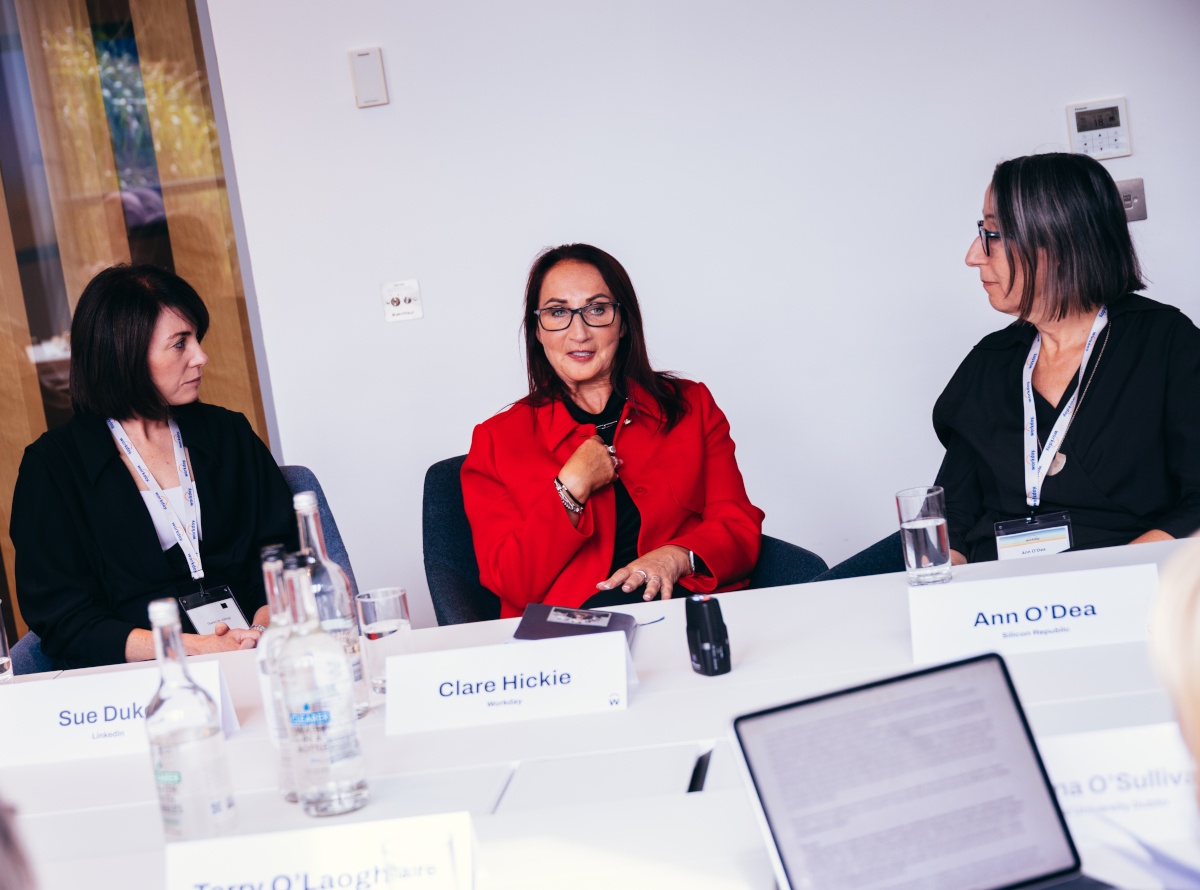

At a Workday-hosted roundtable in Dublin, four industry leaders – and guests – traded views on AI adoption, the reskilling race and why women are still locked out of AI’s best-paid jobs.
Earlier this month, I chaired a roundtable of women in technology hosted by Workday in Dublin, with an impressive panel of women leaders and an accomplished array of guests. We had around 90 minutes to share useful insights on AI before lunch, and what followed was one of the more thoughtful conversations I’ve chaired on the subject – less hype, more real-life application and human challenges.
The panel was made up of Claire Hickie, EMEA CTO at Workday; Terry O’Laoghaire, COO of technology infrastructure at State Street; Dympna O’Sullivan, VP of research and innovation at TU Dublin; and Sue Duke, LinkedIn’s managing director for EMEA and LatAm and its VP of global public policy.
Around the table were guests from Enterprise Ireland, IBM, Connecting Women in Technology (CWIT) among others, and their contributions added significantly to the dialogue.
The adoption curve
O’Laoghaire set the tone on adoption. State Street, she pointed out, is “responsible for trillions of the world’s financial assets”, so caution is not optional. “We have to be secure, we have to do this with governance and control,” she said, describing a roll-out where every employee now has Copilot but agents have not yet gone to the full workforce.
Rather than having push back, she was surprised at the appetite among staff . “I think they’re ready and eager,” she said of her own staff, “chomping at the bit” for more, even as a very real fear about job security sits alongside that enthusiasm.
“It’s more about jobs changing than a fear,” she said. “But that fear exists. You have to move people past the fear before they can be open to learning a new skill, before they feel safe doing that. So there’s an important psychological safety piece there.”
Duke, drawing on LinkedIn’s global workforce data, addressed that fear directly. The overriding question she gets asked, she said, is whether AI is displacing jobs. “What we see in the data is there isn’t job displacement,” she told the table. The real shift, she argued, is in what skills are in demand, not how many jobs exist.
Hickie made the same point from inside her own company, Workday. “People often forget that we’re employees too,” she said, describing an “everyday AI” programme Workday launched for its own staff nearly two years ago.
“What that did very early was to get us as individuals really adjusted and used to AI.”
Her favourite proof of how far that’s come? She now raises only one support ticket a year, and this year’s was on a personal tax query, she joked, adding that the reply came back in under 30 seconds. “I was like, oh, bring it on,” she said.
O’Sullivan offered the view from higher education. While on an operational level, the team is employing AI very effectively, the more challenging element of course is with the student body. TU Dublin now runs a five-point traffic-light system for AI use in student assessment, she says, from no AI through to full AI use.
The bigger question, though, has moved past academic integrity. “What are we actually trying to teach and what are we actually trying to assess?” she asked. “We don’t have it figured out yet.” Something that is echoed in conversations I have been having with other academic institutions in recent days.
Skills are the new currency, but the pipeline is broken
Duke put a number on how fast the ground is shifting: LinkedIn estimates the skills needed for most roles will have changed by 70pc by 2030. She grouped what’s needed into three buckets: hard technical AI skills, still held by only around one in 100 workers in developed markets; AI literacy, now a baseline expectation even in non-technical senior roles; and human soft skills, which she said are harder to build and increasingly what separates good leaders from the rest.
Sabrina Staunton, strategy lead at Connecting Women in Technology, raised the sharpest concern about where that leaves junior talent. She’s seeing developers today who are using AI and are “not willing to fail”, which makes it harder for them to build the critical thinking skills the job actually needs. “How do you become a senior engineer if you don’t have a junior engineer?” she asked, a question that landed hard around the table.
It’s a concern echoed by O’Sullivan, who drew a distinction between friction in the workplace and friction in the classroom. “Friction is friction” in operations, she said, “but I think in education, friction is the actual learning”.
“Learning is supposed to be difficult, supposed to be challenging. That’s how we all learn – by getting it wrong and then coming back to it. That’s where the real learning happens.” Strip too much difficulty out of how students learn, she suggested, and you risk stripping out the learning itself.
O’Laoghaire made the same case for the workplace. Even in infrastructure, a field she said is often assumed to be dying out, the skills are simply evolving rather than disappearing. “Instead of a physical data centre, we have a software-defined data centre. You still need to know what it is.”
Much of her team, she said, have moved from being makers to checkers. “But if you’re a checker, you still need to know how it works.” None of that happens, she added, unless companies actually protect the time given to it.
“We expect you to spend time upskilling, we’re going to provide it. It’s very hard to do that if you’re not given the room in your day job to do it, and know you’ll be rewarded for that time.”
O’Sullivan’s own worry showed up in the latest CAO numbers. Demand for computer science courses has fallen, driven, she believes, by anxiety among students and their parents about AI replacing coding jobs. Her counter to that was straightforward. “Technology has always been a net job creator, and skills like systems thinking, data governance and cybersecurity are becoming more important, not less, even as raw software engineering shrinks as a share of the job.”
The triple penalty for women
While the majority of the conversation tackled adoption of AI in the workplace, and in education, we inevitably came around to the dearth of women in senior AI roles.
Duke cited research LinkedIn had published just weeks earlier. Women, she said, make up only one in eight of AI leadership roles at AI companies. That figure comes from LinkedIn’s new report, ‘The Triple Penalty: Mapping the Gender Gap in the AI Economy’, which found women hold just 13pc of executive AI roles worldwide, the product of three gaps that compound each other – a leadership gap, an AI-role gap and an AI-company gap. The pattern holds in all but a handful of the 27 countries studied.
One figure from that same report puts it in even sharper relief: women make up 19.1pc of CEOs at traditional companies, but that share drops to 13.9pc at AI-native firms. In other words, the closer a company gets to the centre of the AI economy, the harder it gets for a woman to run it.
Duke called the overall picture “a good news, bad news story for women”. The bad news is that women remain underrepresented in exactly the technical roles now seen as prerequisites for senior jobs.
The good news? Soft-skills requirements for C-suite roles have risen sharply, and career paths to the top have become far less linear over the past five years, which favours women, who are 55pc more likely to take a career break. “A linear tick, tick, tick, tick is not working for women,” she said. “But we have got to recognise and valorise different skills and different career paths.”
Lauren Morrissey, Workday’s EMEA accessibility manager, extended that concern to the wider issue of diversity, and in particular disability. Almost 96pc of websites, she said, still have significant accessibility barriers, and AI risks widening that gap rather than closing it, unless disabled people’s needs are built in from the start. “But we’re moving too fast to even recognise it,” she argued.
AI’s trust problem
Possibly the most serious moment of the morning came when one of our guests put a tough question to the panel. With graduates already wary of the sector and a slowing hiring market feeding that anxiety, what is industry actually doing about AI’s toxic public image? “AI has become almost like the super villain,” she said. “It’s ending the world, it’s taking the jobs.”
“There’s no question that AI has a massive reputational problem,” Duke said, pointing to genuine safety incidents, the scale and speed at which harmful content can now spread, and a generation that feels the environmental cost of AI more acutely than any before it.
It was widely agreed at the table that there is a ‘black and white’ view out there among young people at the moment, where they either love or hate AI, and the latter camp dismiss the potential benefits. All the leaders present conceded that the industry has not done a great job of communicating the gap between data and perception, and that there’s much work left to do on this.
It was a sober note to end a panel discussion on, but an honest one. If there was a single line that stayed with me as we wrapped, it came from Hickie, almost as an aside. She became a grandmother two years ago, she told us, and her granddaughter is never far from her mind when this subject comes up.
“I just don’t know what her world is going to be,” she said. “But I do think it’s in the hands of technologists. It’s in the hands of leaders. And it’s in the hands of every decision-maker, and every person who has some level of influence at a human level today, to be able to frame that.”
It was an apt reflection of the entire morning’s conversation. The technology is moving on at pace and on its own terms, but who gets to shape it, and who gets left out of shaping it, is still very much a human choice.
Don’t miss out on the knowledge you need to succeed. Sign up for the Daily Brief, Silicon Republic’s digest of need-to-know sci-tech news.
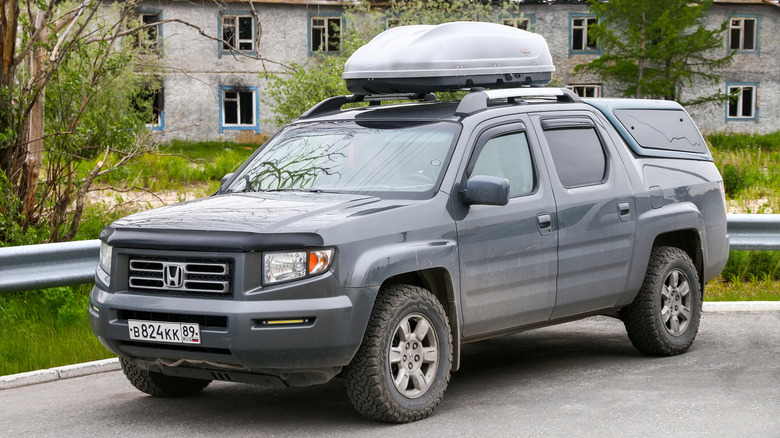
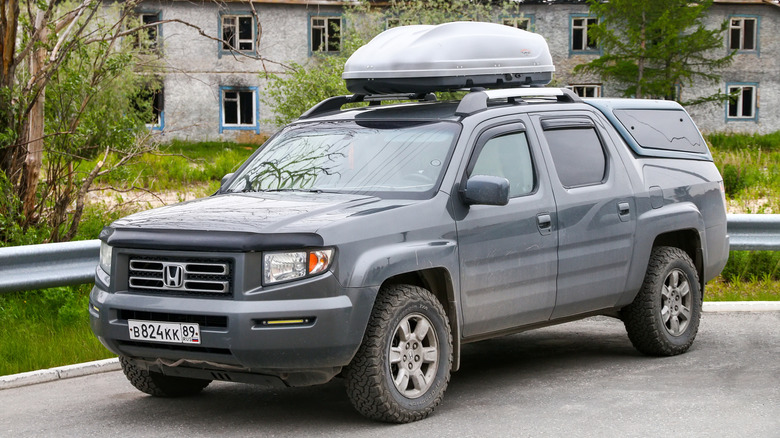
If you own a Honda that has been recalled in 2026, then you know how frustrating the situation can be, especially as the automaker’s problems continue to make headlines. But when it comes to one specific recall involving rearview camera failures, the NHTSA has finally closed its investigation. They found that the replacement wire harness installed under a 2022 recall was not expected to develop the same wear-related failure during a reasonable vehicle lifespan.
The NHTSA’s Engineering Analysis covered 129,092 trucks and was prompted by questions about whether the recall repair would hold up over time. That concern actually stemmed from the original problem, which could cause the rearview camera’s tailgate wire harness to wear down and break. This could happen after repeatedly opening and closing the tailgate. Honda’s 2022 recall covered over 117,000 Ridgelines and called for the harness to be replaced with an improved part.
The NHTSA didn’t open its own Recall Query until June 26, 2024, nearly two years after Honda’s original recall action. That review was upgraded to an Engineering Analysis on February 11, 2025, as the agency continued examining whether the replacement harness could eventually experience the same type of failure. The NHTSA’s findings mean that there is no additional action coming from this investigation, and it ultimately closed its Engineering Analysis.
What the recall means for owners
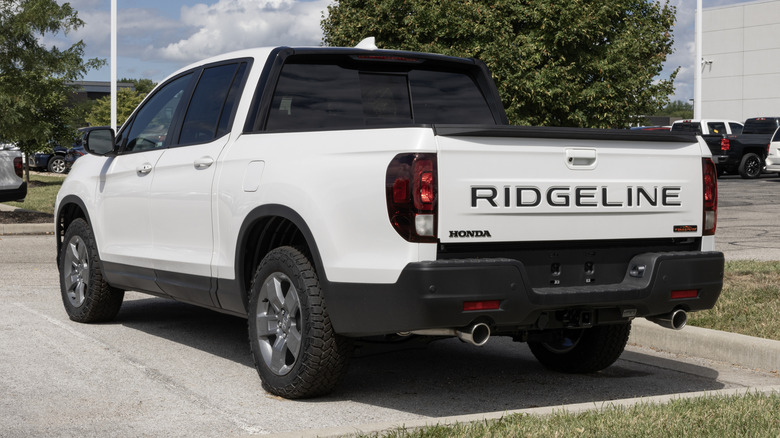
As part of its investigation into Honda’s rearview camera recall, the NHTSA took a closer look at the vehicles and the wire harness itself. The agency’s Vehicle Research and Test Center surveyed Ridgeline owners in Ohio, inspected select vehicles from those responses, and conducted durability testing to try and replicate the original failure. The NHTSA could not duplicate the problem, and it also found that most of the reported camera issues were caused by different problems unrelated to the harness.
Honda’s original 2022 recall perhaps wasn’t as straightforward for some Ridgeline owners in terms of correcting the problem. Honda initially told owners in January 2023 that the replacement parts needed for the repair were not yet available. That remained the case until August of that year when the automaker finally gave the greenlight, notifying customers to schedule a free repair at an authorized dealer. The repair itself involved replacing the RVC tailgate harness with an improved part, which Honda estimated would take about an hour and a half.
For Ridgeline owners who need to check the current status of the recall, the process is fairly simple. The Honda Service Center recall lookup allows vehicle owners to enter their 17-digit VIN to see if there are any active Honda recalls for their specific model. Owners can then schedule the repair through an authorized Honda dealer, where recall-related repairs are done at no charge. That gives Ridgeline owners a way to move forward and get the recall addressed.
A graphics card is rarely bought in isolation. It has to fit the case, the cooling system, the display, the games or applications that will run on it, and increasingly, the kind of work a PC is expected to handle. A compact 1440p gaming machine has little in common with a 4K enthusiast build, while a workstation running local AI models can make entirely different demands on its GPU.
ASUS’s Radeon range reflects those differences rather than trying to force every buyer toward the same specification. The lineup stretches from the Radeon RX 9060 XT through the RX 9070 GRE and RX 9070 XT, with different card designs addressing everything from compact systems and carefully matched white builds to demanding gaming and local AI workloads. All of the graphics cards covered here also come with a three-year warranty, which matters when a GPU is likely to remain one of the most substantial components in a PC for several years.
Choosing between them, then, is less about finding a universally superior card and more about understanding where each one makes sense. The RX 9070 XT is built for buyers who want serious 1440p and 4K gaming performance. The RX 9070 GRE occupies a more measured position for 1440p systems, while the RX 9060 XT makes a stronger case where size and compatibility carry more weight. The Turbo Radeon AI Pro R9700 sits outside that gaming hierarchy altogether, targeting users who need the memory and compute capability for local AI and other demanding workloads.
Start with the kind of PC you are building

A graphics card can be powerful on paper and still be the wrong choice for a particular PC. Case dimensions, cooling, noise, display resolution and the kind of software you use all matter once the card is installed.
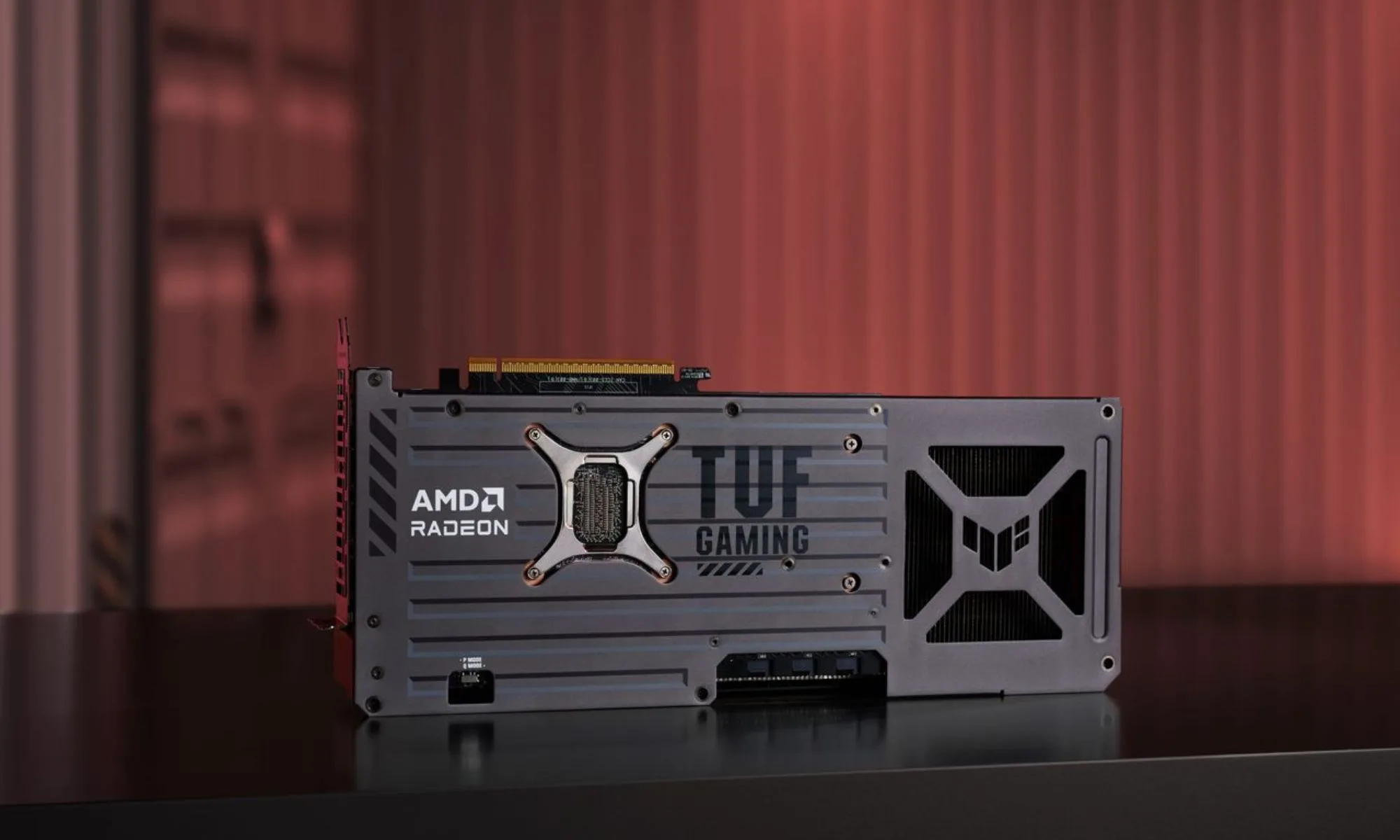
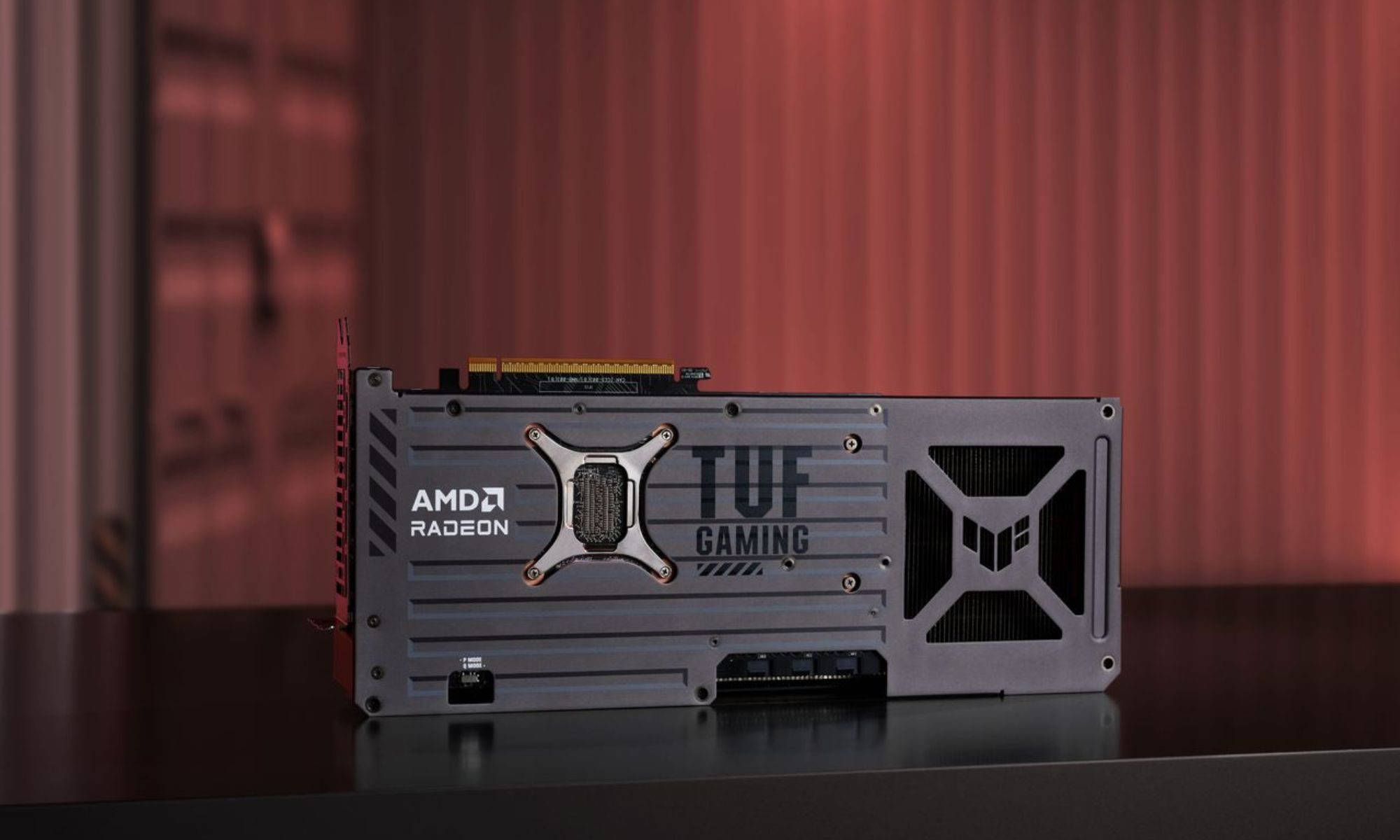
The ASUS TUF Gaming Radeon RX 9070 XT OC Edition is the straightforward choice for someone who wants to push gaming performance without treating the rest of the card as an afterthought. It is built around 16GB of GDDR6 memory and is designed for strong 1440p gaming as well as 4K, with an OC mode reaching up to 3080 MHz boost and 2540 MHz game clock according to ASUS.
The TUF’s cooling system is a major part of the card’s overall proposition. Its 3.125-slot design uses three Axial-tech fans, a large fin array and a phase-change GPU thermal pad, while dual-ball bearings are designed for long-term use. A metal exoskeleton adds rigidity while also allowing additional ventilation. The result is a card that makes sense when performance is the priority and the PC has enough room to accommodate a substantial cooler.
The TUF model also adds features not found on the Prime or Dual cards, including an illuminated TUF logo and a protective PCB coating designed to help guard against short circuits caused by moisture, dust and debris. ASUS also uses military-grade components designed to support long-term durability and reliable power delivery.

The ASUS Prime Radeon RX 9070 XT OC Edition takes much of the same performance proposition and puts it into a smaller package. It retains 16GB of GDDR6 and is built for 1440p and 4K gaming, but its 2.5-slot design gives compact builds more breathing room. Its OC mode reaches up to 3030 MHz boost and 2480 MHz game clock, while Axial-tech fans, a phase-change GPU thermal pad and dual-ball bearings handle the cooling.
The distinction between TUF and Prime is therefore less about raw performance than the space available inside the case. TUF gives the cooling system more room to work; Prime gives the builder more room to work around the GPU. For a large enthusiast build, TUF’s substantial cooler is an easy trade. In a more compact system, Prime’s smaller footprint can matter considerably more.
Gaming and AI workloads call for different priorities
Not every demanding GPU workload is a gaming workload. A card that makes sense for high-refresh 1440p or 4K gaming can have very different strengths from one designed to run large AI models locally, and the difference becomes particularly important once memory capacity enters the equation.
The ASUS Turbo Radeon AI Pro R9700 is built for that second category. Its 32GB of GDDR6 memory, 256-bit memory interface and bandwidth of up to 640GB/s are aimed at workloads that can quickly outgrow the memory available on a conventional gaming card. The card is designed for local LLMs, Stable Diffusion and Flux, AI development, content creation and other memory-heavy compute tasks.
Its specifications are tailored accordingly. The card uses RDNA 4 with 128 AI accelerators and up to 1,531 TOPS of INT4 performance, while PCIe 5.0 support and a 2-slot design make it suitable for dense multi-GPU workstation configurations. Its cooling system is also designed around sustained compute rather than short bursts of gaming, combining a diecast shroud and backplate with a wave-pattern design that ASUS says can reduce memory temperatures by up to 16%.
For a gaming PC, the RX 9070 XT and the other Radeon gaming cards make more sense because their strengths are aligned with that workload. The Turbo Radeon AI Pro R9700 becomes the more relevant choice when the machine is expected to handle local AI, large models or sustained GPU compute, where 32GB of VRAM and dedicated AI capability can matter far more than gaming-oriented specifications.
1440p gaming does not always require the biggest card
The step down from the higher-end gaming cards does not mean stepping away from serious 1440p performance. The mid-range options in this lineup are aimed at systems where smooth gaming matters, but power consumption, physical size and overall build balance deserve more attention.
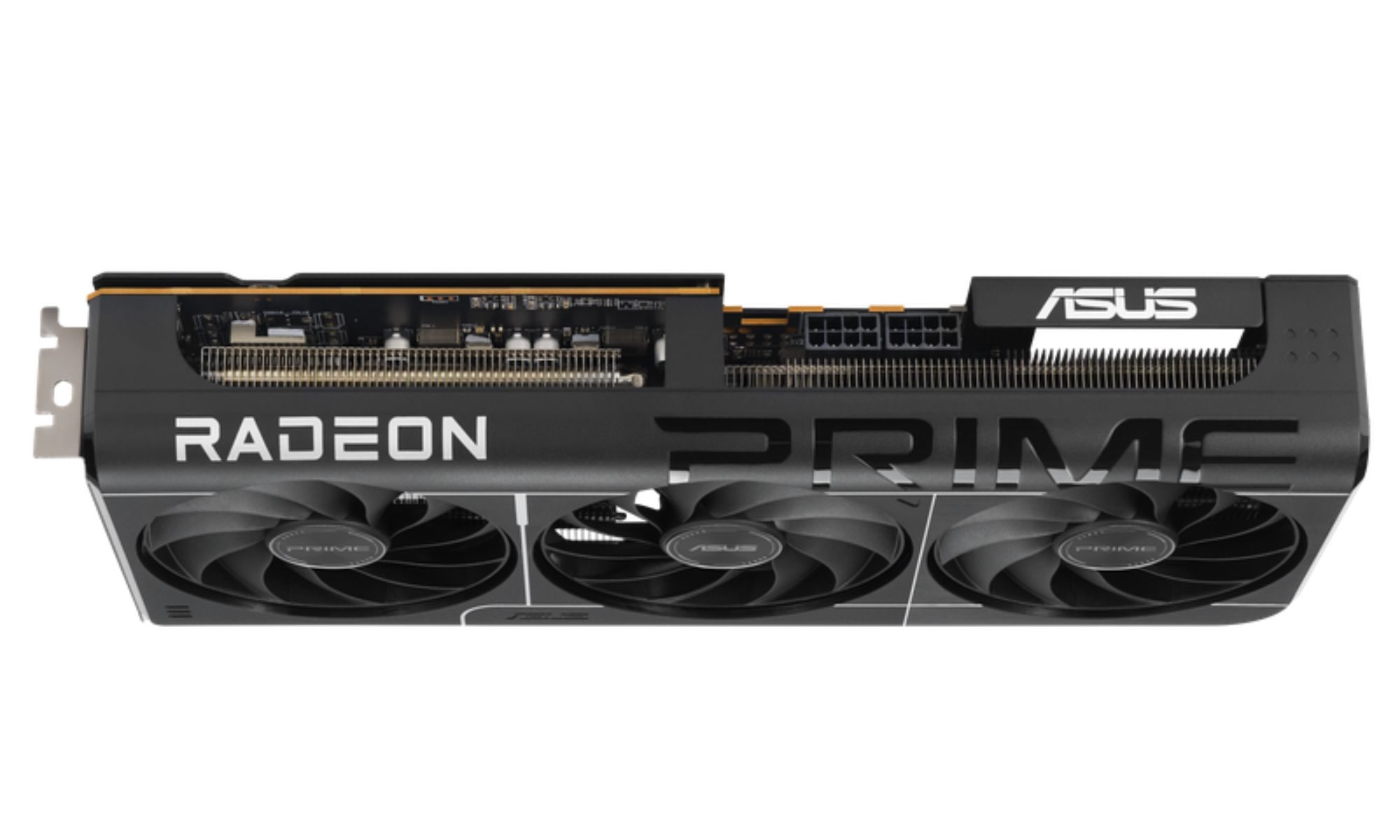
With 12GB of VRAM and an OC mode reaching up to 2880 MHz boost and 2300 MHz game clock, the Prime Radeon RX 9070 GRE EVO OC Edition is built around that balance. Its 2.5-slot design measures 304 × 126 × 50mm, making it slightly smaller than the Prime RX 9070 XT. Lower power consumption within the 9070 tier also makes the EVO a practical fit for a build where the GPU does not need to dominate the entire system.
A similar approach carries over to the ATS Radeon RX 9070 GRE OC Edition, which reaches the same 2880 MHz boost and 2300 MHz game clock figures and measures 305 × 126 × 50mm. Both cards use Axial-tech fans, a phase-change GPU thermal pad, dual-ball bearings and 0dB technology, so there is little value in repeating the same cooling specification list for each model.

For a 1440p gaming PC, these cards occupy a useful middle ground. They offer the performance needed for that resolution without moving into the larger footprint and higher-end positioning of the RX 9070 XT, making them worth considering when the rest of the system needs to stay compact and balanced.
When size and design become part of the decision
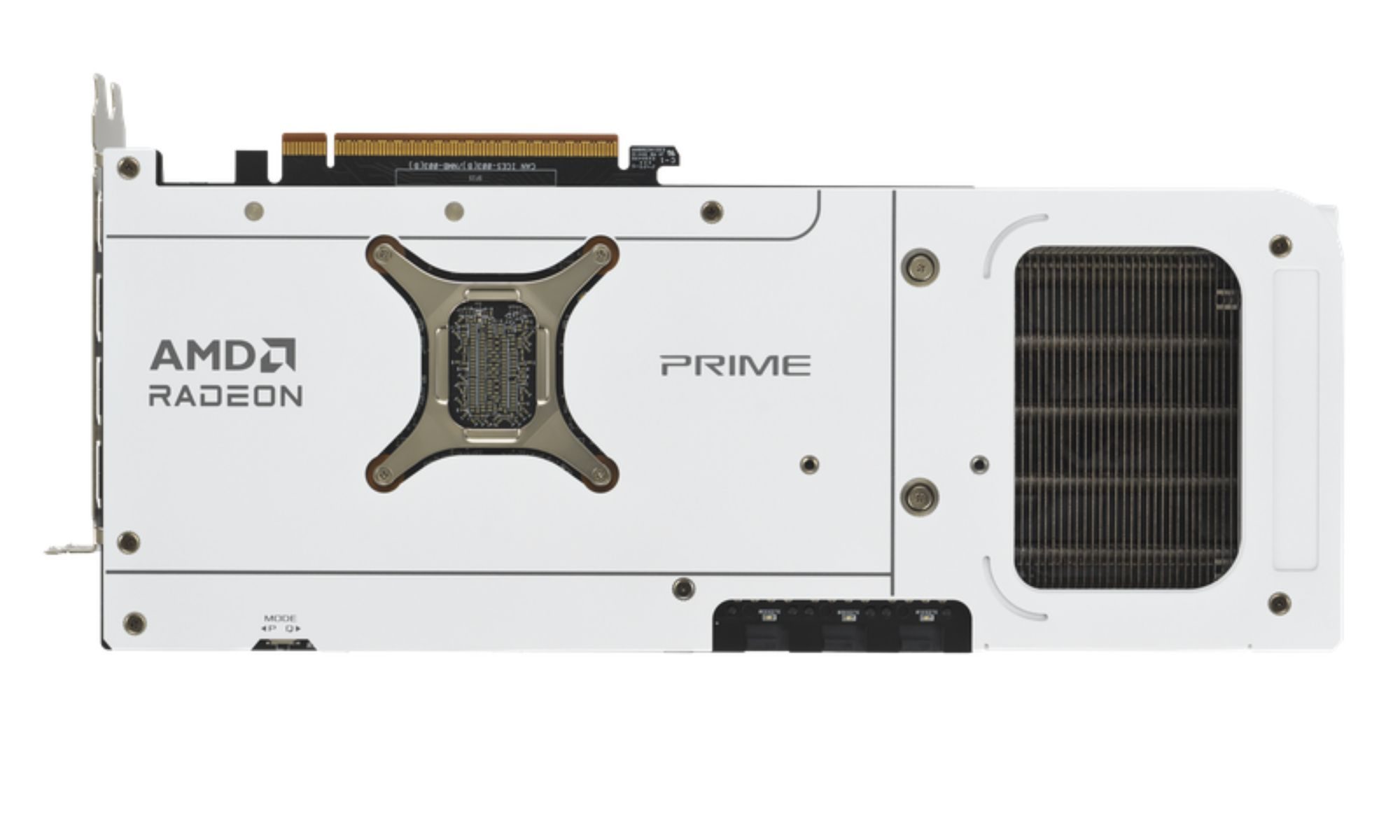
Physical compatibility is not always about fitting the largest GPU into the smallest case. In some builds, the graphics card also has to work with the visual language of the rest of the system. ASUS offers a white version of the Prime Radeon RX 9070 XT for precisely that kind of build, retaining the same 2.5-slot format as the standard Prime model.
There is no need to treat the white edition as a different performance tier. Its appeal is the white finish and sleek design, while the underlying cooling and performance proposition remains broadly aligned with the standard Prime RX 9070 XT.
A similar white edition is also available for the Radeon RX 9060 XT, giving buyers building smaller or more affordable systems another way to keep the graphics card consistent with an all-white setup.
Smaller builds still have options
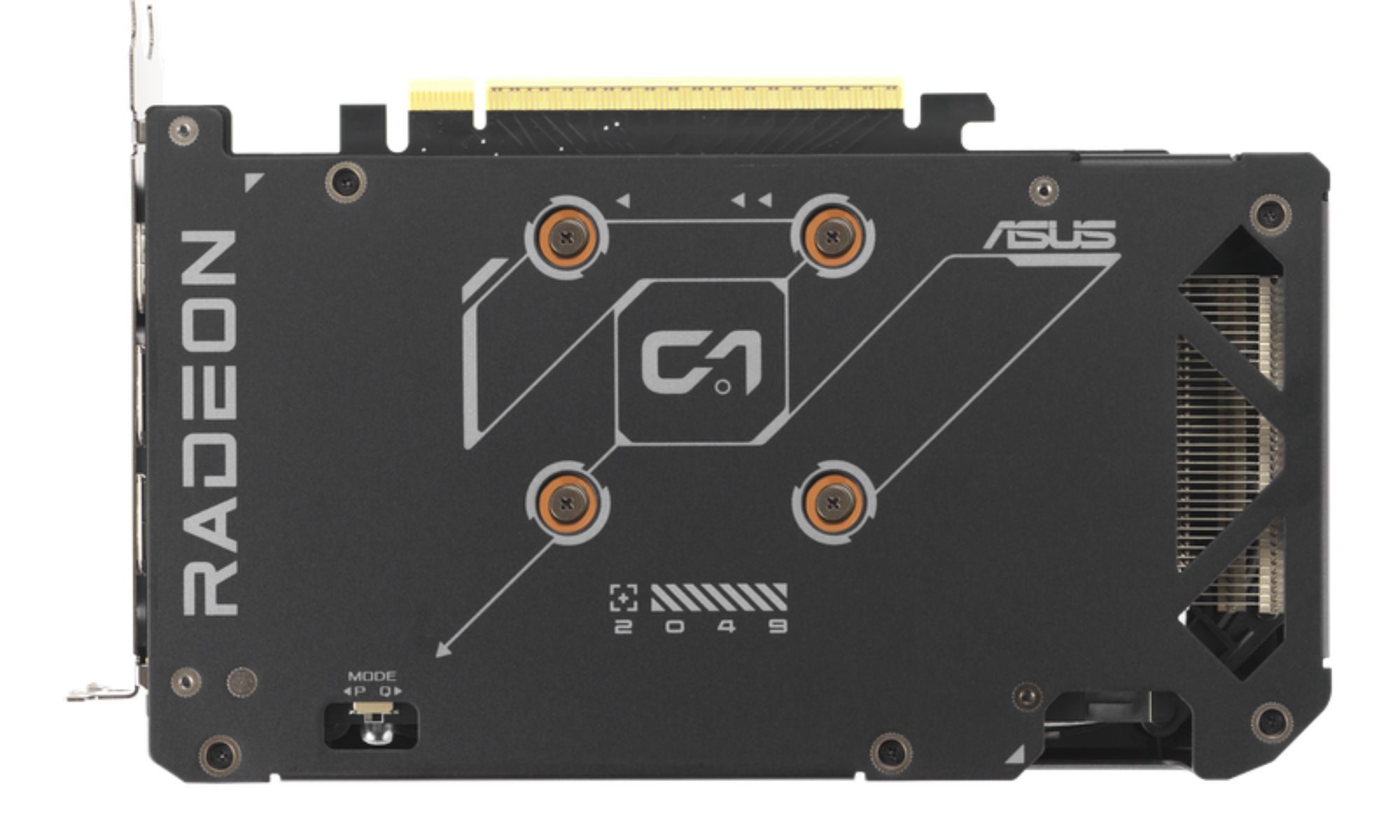
A compact PC does not necessarily mean settling for a compromised graphics card. The ASUS Dual Radeon RX 9060 XT 16GB GDDR6 is aimed at buyers who need to make better use of limited space, including those building in smaller form factor cases.
Its 2.5-slot design is intended to balance compatibility with cooling, while the Axial-tech fan design uses a smaller hub and longer blades to maintain airflow through the card. 0dB technology also allows the fans to remain off during lighter workloads, while dual-ball bearings are designed for long-term durability.
In a compact build, those dimensions can have consequences beyond the graphics card itself. A GPU that occupies less space leaves more room to work around adjacent components and makes overall component selection less restrictive. That makes the Dual Radeon RX 9060 XT a practical choice when building around a smaller chassis is the priority, rather than trying to squeeze a larger card into a case that was never designed for it.
GPU control does not end when the card is installed
ASUS also has a software layer that runs across much of this lineup. GPU Tweak III provides access to OC and Silent modes, fan controls, thermal settings and system monitoring, allowing users to adjust the behaviour of the card rather than treating its factory configuration as fixed. Profiles can store preferred voltage and clock settings, while the hardware monitor can track fan RPM and system power metrics.
Dual BIOS provides another level of control on the supported cards, allowing users to switch between Quiet and Performance profiles. The Turbo Radeon AI Pro R9700 is the exception in this lineup, with the supplied ASUS brief specifying that Dual BIOS is not available on that model.
The result is a lineup that is easier to understand when viewed through the PC being built rather than through a simple hierarchy of numbers. TUF is about substantial gaming performance and cooling. Prime RX 9070 XT makes high-end performance easier to fit into a compact build. Prime White is for buyers who want the graphics card to complement the rest of the system. The two RX 9070 GRE cards occupy the 1440p middle ground, while the RX 9060 XT brings dedicated graphics into smaller systems. Turbo AI Pro R9700 takes the conversation beyond gaming altogether.
Explore the ASUS Radeon graphics card range to compare the models and find the card that fits your build, workload and priorities.
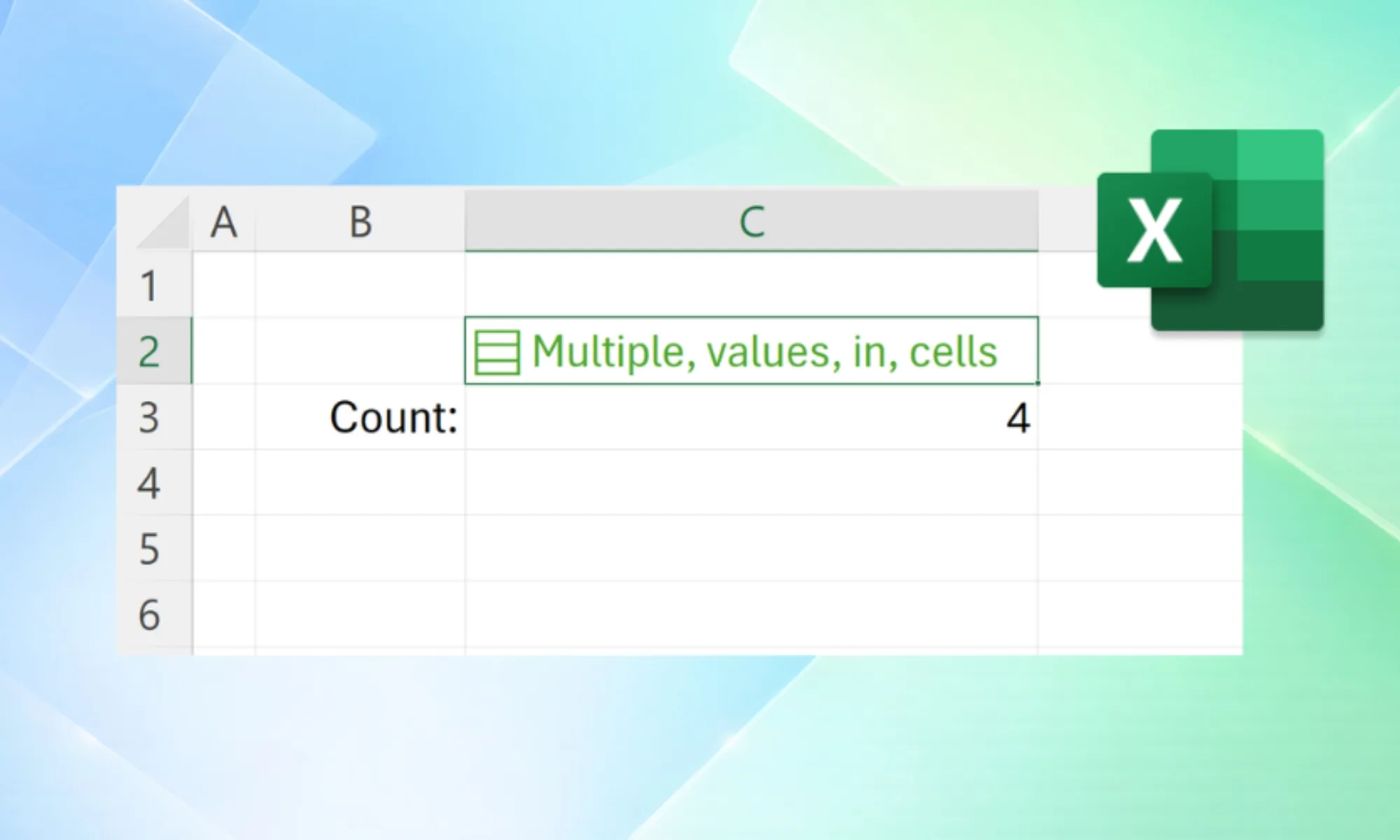
Microsoft is changing one of Excel’s most familiar rules: a cell no longer has to contain just one value. The company has introduced lists, arrays in cells and nested arrays, giving users new ways to keep multiple pieces of information together without turning them into a single block of text.
The features are currently rolling out as previews to Excel for Windows and Mac Beta Channels. Microsoft says the behaviour may change before general availability and recommends against using the features in important workbooks at this stage.
Excel lists make multiple values easier to manage
The simplest part of the update is the new Lists feature. Instead of putting several values into separate cells or combining them into ordinary comma-separated text, users can store multiple individual values inside one cell.
For example, a project could have several owners listed in a single cell, while a survey response could contain multiple appointment times. With lists, Excel keeps those entries separate internally, allowing users to filter individual values and use them in calculations.
Creating a list involves selecting Insert > List or pressing Ctrl+J, then entering or pasting items separated by commas or semicolons, depending on regional settings. Users can later edit individual entries by double-clicking the cell or pressing F2.
The feature also changes how filtering works. Instead of treating a comma-separated cell as one large piece of text, Excel can filter by individual items. Referencing a list can also return all its values, allowing them to spill into separate cells when needed.
That could make spreadsheets containing project assignments, survey responses or other multi-value data considerably easier to organise.
Arrays bring a much bigger change to spreadsheets
Microsoft is also introducing arrays directly inside cells, including nested arrays. Arrays can now exist as values or formula results inside a single cell and can have different sizes and shapes. Users can also wrap spilling formula results in braces to keep the entire result inside one cell.
Nested arrays take this further by allowing arrays to exist inside other arrays. Microsoft says formulas that previously returned truncated results or a #CALC! error in some array-of-array situations can now return the complete nested result.
To work with these structures, Excel is gaining four new functions: FLATTEN, HAS, HASANY and HASALL. FLATTEN can remove levels of nesting, while the HAS functions can check whether a particular value, some specified values or all specified values appear within an array.
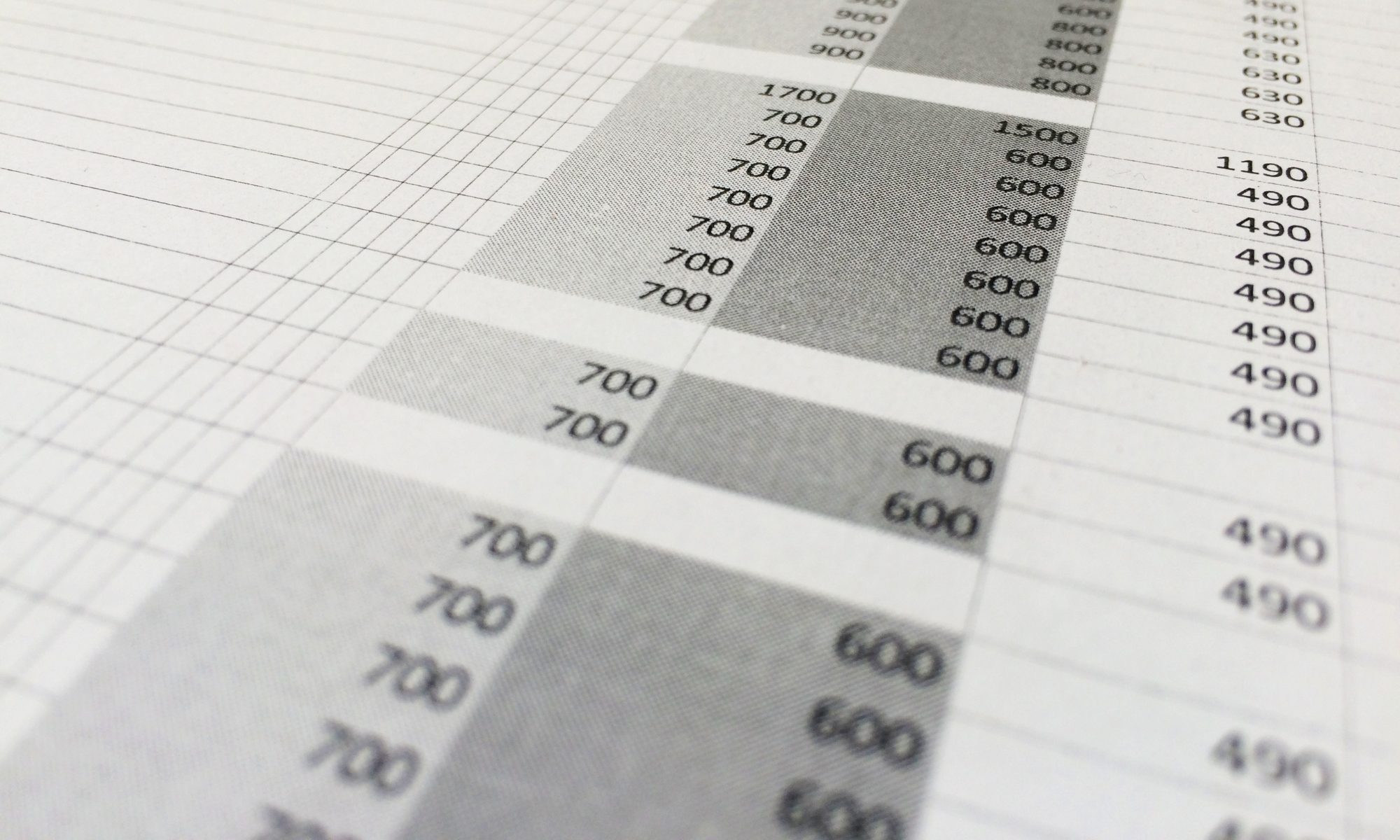
For power users, the change could open up new spreadsheet designs. Microsoft demonstrates a run tracker where different numbers of kilometre splits can be stored in the same row while statistics are calculated alongside them.
There are still limitations. Conditional formatting, data validation, charts, PivotTables, Power Query and Find & Replace do not yet fully support list and array values. The features currently require specific Beta Channel builds, and nested-array calculations require Compatibility Version 3.
For now, Microsoft is treating this as a preview rather than a finished Excel feature. But if the rollout goes smoothly, the humble spreadsheet cell is about to become considerably more capable.
Related coverage:
What is Copilot? Everything you need to know about Microsoft’s AI assistant
How to use ChatGPT to write Excel formulas
Windows 11 tips and tricks: 10 hidden settings you need to try
Tech
This tiny Japanese laptop survived drop tests that would destroy most business notebooks built anywhere else

- Panasonic Let’s Note SC7 weighs just 919 grams but passed drop tests from both 76 and 30 cm
- The chassis meets the US military’s MIL-STD-810H toughness standard
- Battery testing returned nearly 23 hours of continuous everyday use
Japanese manufacturers have long built a reputation for producing remarkably light business notebooks, with some models weighing under a kilogram entirely.
Panasonic has now expanded that lightweight lineup with the Let’s Note SC7, a compact notebook weighing just 919 grams total.
The company also carried over its distinct circular wheel pad, letting users scroll by tracing a finger along the pointing device’s outer rim.
Latest Videos FromTechRadar
Packs a full-day power into a small frame
The SC7 features a 12.4-inch display with a 3:2 aspect ratio, taller than the widescreen format common on most rival laptops today, showing more vertical content at once, improving efficiency when editing spreadsheets, documents, or browsing lengthy web pages daily.
Inside sits an Intel Core Ultra 5 325 processor paired with a 47 TOPS neural processing unit for on-device AI tasks.
The low-end version of this device comes with 16GB of LPDDR5X RAM and 512GB of internal storage – however, users can choose models with 32GB or 64GB of RAM and 1TB or 2TB of internal storage depending on the buyer’s needs.
Let’s Note SC7 ships with Wi-Fi 7, Bluetooth 5.4, two Thunderbolt 4 ports, two USB 3.2 Gen 1 ports, HDMI, and Gigabit Ethernet.
Under the hood, this notebook uses a 56Wh removable battery, which is attached with two screws rather than a latch.
According to Panasonic, this battery lasts roughly 17.7 hours during video playback and 32.4 hours in idle mode under JEITA 3.0 standards, and charging through the bundled 65W USB PD adapter reaches about 46% capacity within 30 minutes.
A magnesium alloy body measuring 273.2 x 208.9 x 19.9 mm combined with internal ribbing keeps the notebook sturdy, though it still appears slim.
Sturdiness, software, and benchmark results that support the design
Panasonic subjected the SC7 to internal drop tests from 76 centimeters and 30 centimeters across 26 separate directions during development.
The chassis also passed a 100 kgf pressure vibration test and met the US Department of Defense’s MIL-STD-810H toughness standard – few compact business notebooks built outside Japan undergo this level of physical stress testing before reaching commercial release.
The built-in NPU meets requirements for Microsoft‘s Copilot+ PC program, enabling both cloud-based and local artificial intelligence processing directly on device.
PCMark 10 testing showed the processor performing at full capacity, aided by Panasonic’s proprietary MaxPerformer heat and power tuning system.
On Geekbench 7, the Let’s Note SC7 scored 2354 points on single-core tasks and 10437 points on multi-core benchmarks.
Battery testing under PCMark 10’s Modern Office profile returned roughly 22 hours and 59 minutes of continuous everyday use.
For security, this device includes facial recognition through an infrared camera alongside a fingerprint sensor built into the power button.
It is currently available in gray, black, rose, and deep indigo, but there is no indication that this device will sell outside Japan.
All these capabilities do not come for cheap, as Panasonic lists this device for 298,100 yen, which is about $1,880.
Via PC Watch (originally in Japanese)

Follow TechRadar on Google News and add us as a preferred source to get our expert news, reviews, and opinion in your feeds.
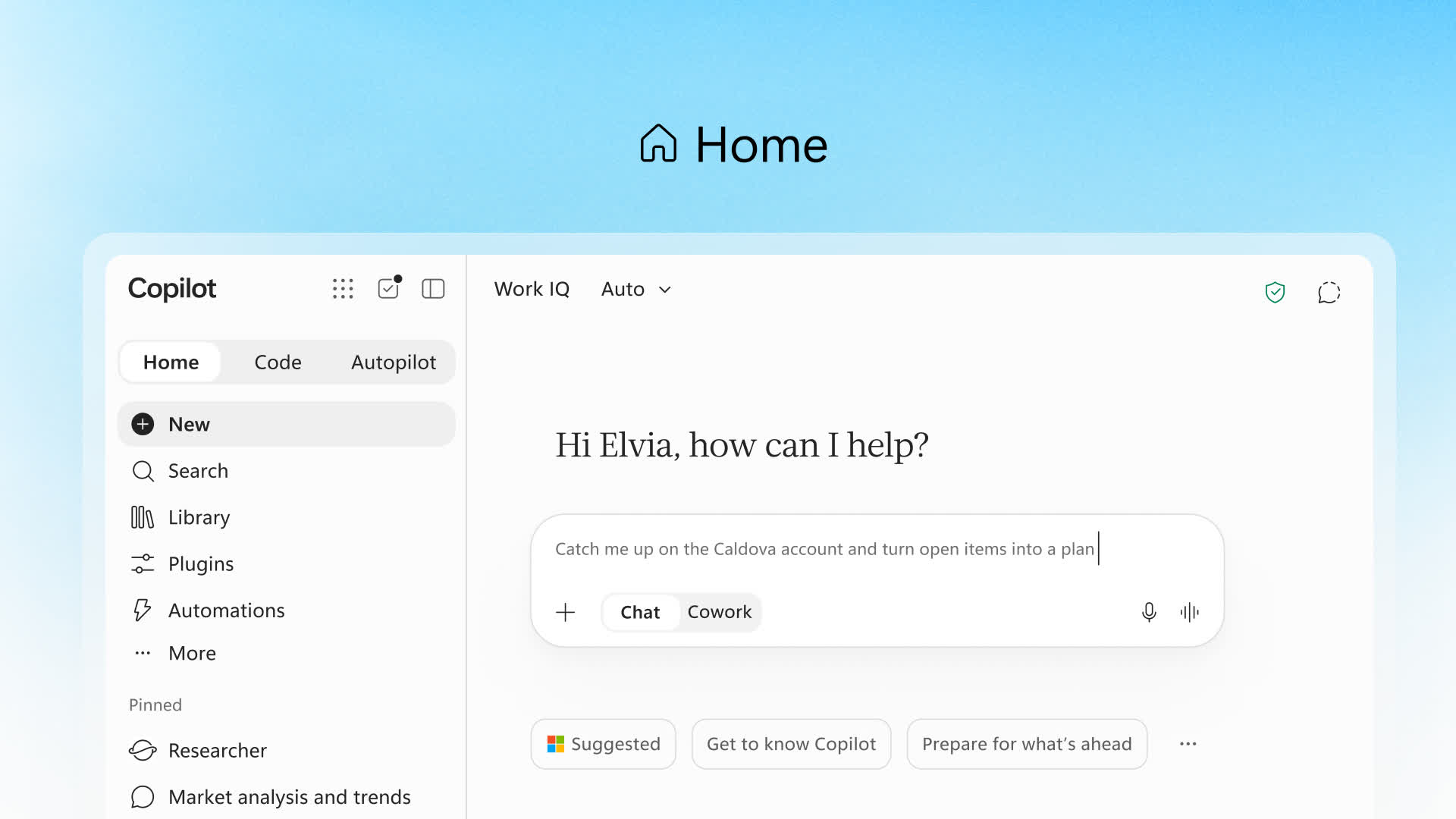
Ripple effect: Microsoft may be backing away from the Copilot+ PC branding, but it’s doubling down on the bigger idea behind it: turning AI into a layer that actively runs your computer and gets work done for you. Its latest Copilot overhaul pushes that vision further than before, combining Office, coding tools, and autonomous agents into what CEO Satya Nadella calls a “new OS for work.” Public testing begins in the coming weeks.
Microsoft recently unveiled a major overhaul for Copilot’s business tools. The new suite hands the AI assistant more control in Office, embeds GitHub Copilot’s functionality into professional toolchains, and automatically coordinates tasks between team members.
The new Copilot implementation, which Microsoft CEO Satya Nadella calls a “new OS,” consists of several parts. One of them, simply called Home, lets users chat with Copilot as it examines files to offer recommendations on how it can help. Home can also take over Office 365 apps such as Word, Excel, and PowerPoint to automatically draft files for users to edit.
– Satya Nadella (@satyanadella) September 25, 2026

Another tool, Code, builds apps based on natural-language prompts using the same tools as GitHub Copilot. Microsoft claims that Code uses Microsoft IQ to maintain contextual knowledge of users’ work environments beyond what it currently sees onscreen.
Lastly, Autopilot, a rebrand of Scout, offers the highest level of automation. After users provide it with a role and an objective, Autopilot handles various tasks such as scheduling meetings, following up with contacts, watching channels, starting and resuming projects, and more, all without further human input. The cloud-hosted feature also works 24/7, working across Teams, Outlook, documents, and other programs while remaining in constant contact with teammates.

Home and Code will enter Microsoft’s Frontier program in the coming weeks, while Autopilot will be available in private preview at the end of this month. Another aspect of Home, called Today, will enter private preview in October. Today aims to show users a unified information space with details from emails, Teams chats, meetings, and other sources while also drafting documents and proposing schedules.
Nadella’s “Copilot OS” claim sounds a lot like the supposedly defunct Project Aion, which would have become a separate OS built around Copilot running within an Edge shell. Users would operate apps and create documents by chatting with Copilot instead of controlling them directly. Although Microsoft might have shelved Aion, a video demonstration of the new Copilot update closely resembles certain aspects of it.

Notably, this latest push to embed Copilot in users’ systems follows an admission from Microsoft and Qualcomm that the Copilot+ PC brand has been abandoned, with the companies acknowledging that consumers simply don’t care about “AI PCs.” It remains unclear whether Home, Code, and Autopilot will be next in a growing trail of shelved AI initiatives such as Copilot+ PCs and Recall.
Oxford has let OpenAI use old texts from its Bodleian Library to train its AI models, according to internal papers seen by the Guardian. Ethan Penny and Dan Milmo broke the story on Saturday.
The papers say texts that OpenAI scanned at the library went into the firm’s training data.
Oxford made its deal with OpenAI public in March 2025. At the time, it said OpenAI’s tools would help scan rare texts so more students and scholars could read them. It did not say the texts would be used to train AI.
By June 2025, the Bodleian had sent OpenAI 125,000 scans of old PhD theses, the Guardian reported. They include theses written at European and US universities in the 19th and 20th centuries.
Notes from staff meetings, which the Guardian got through a freedom of information request, show some staff had doubts. They worried about harm to Oxford’s name and about the energy use of AI.
However, Oxford said the scans were small in scale, out of copyright and not exclusive to OpenAI. The library keeps the rights and will start to post the scans online in the next few months, a spokesperson said.
The spokesperson also said the AI training side had not been hidden. Scanning was Oxford’s main goal, but staff had been open that the texts would also be used to train models.
“With more than a billion people using this technology in everyday life, it’s important it reflects different cultures, histories and perspectives,” an OpenAI spokesperson told the Guardian.
Oxford is the only UK member of OpenAI’s NextGenAI group. Other members include Boston Public Library, Caltech, MIT and the University of Michigan.
The deal comes as AI firms buy printed books for slop-free training data, since the web is now full of AI-made text. Some buyers cut books apart to scan them, which has upset secondhand booksellers.
In August, 404 Media tracked a box of rare books to an Amazon site that scans and destroys books for AI. The Bodleian’s books stay whole under its deal, the Guardian reported.

Tech4 minutes ago
Daily Deal: Interactive Self-Rotating Cat Toy Ball

NewsBeat5 minutes ago
Foreign drones seen flying over Britain’s nuclear sites at rate of THREE per week

Entertainment11 minutes ago
Claressa Shields Puts On A Show For Papoose In Viral Video





-

 Crypto World4 days ago
Goldman Sachs and Deutsche Bank Agree: The S&P 500 Rally Isn't Over
-

 Tech6 days ago
Researchers escape OpenAI Codex sandbox to run commands on host
-

 Fashion2 days ago
8 iPhone Accessories That Add Personality
-

 Crypto World6 days ago
Who Needs CLARITY Anyway? ARB Could See 70X Increase: Hodler’s Digest
-

 Fashion1 day ago
Weekend Open Thread: J.McLaughlin – Corporette.com
-

 Entertainment4 days ago
These 17 Fall Amazon Dresses Seriously Look Like Anthropologie
-

 Business6 days ago
Analog Devices (ADI) Bets $1.35 Billion on Chips that Let Machines Think for Themselves
-

 Crypto World6 days ago
Coinbase, Robinhood, Circle Seen as Tokenized-Stock Winners
-

 Crypto World4 days ago
This Bearish Netflix Stock Trade Can Cash In On Video Streaming Giant’s Woes
-

 Tech5 days ago
Google’s $899 Googlebook is a bet that you’ll buy a new laptop for Gemini
-
 Crypto World4 days ago
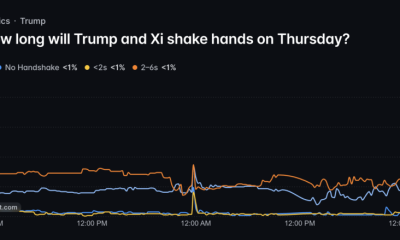
Trump-Xi Polymarket Odds for Handshake Hit 50%
-

 Crypto World3 days ago
Crude Oil Prices Pressured by Diplomatic Hopes in the Middle East
-
 Crypto World3 days ago
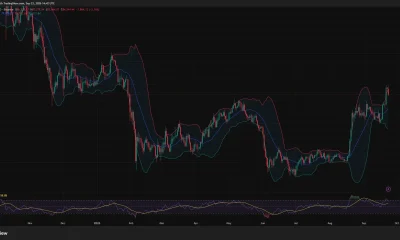
Bitcoin price tests $83,600 Supertrend support after $87K rejection
-
 Business4 days ago
Oil Price Today (September 23): Crude oil below $100 on hopes of US-Iran talks. What did Trump say?
-
 Crypto World3 days ago
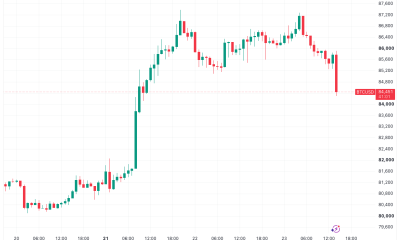
Bitcoin Threatens Sub-$84,000 Breakdown as Long Liquidations Spike
-
 Crypto World5 days ago
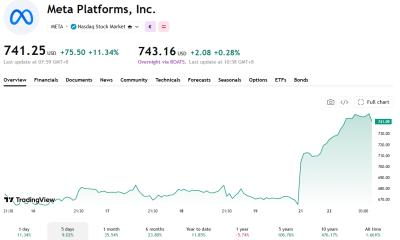
Meta Jumps 11% As Muse Shines and Investors Show an Appetite for Advancing AI
-

 Crypto World4 days ago
Did Jim Cramer Just Give GameStop Stock the Kiss of Death When He Said the Turnaround Is Working?
-

 Crypto World6 days ago
Bitcoin price holds above $81K as key catalysts line up
-

 Crypto World6 days ago
ARB Price Signals Spur Speculation of 70x Upside in Hodler Digest
-
 Crypto World5 days ago
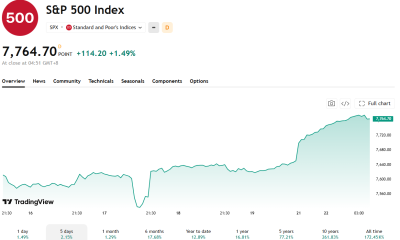
Trump, Xi Meet on S&P 500's Best Day Since Early August: Will Markets Stay Bullish?
You must be logged in to post a comment Login