Connect with us
DAPA Banner
DAPA Coin
DAPA
COIN PAYMENT ASSET
PRIVACY · BLOCKDAG · HOMOMORPHIC ENCRYPTION · RUST
ElGamal Encrypted MINE DAPA
🚫 GENESIS SOLD OUT
DAPAPAY COMING

Tech

Microsoft wants to stop screenshot leaks, one Edge tab at a time

Published

on

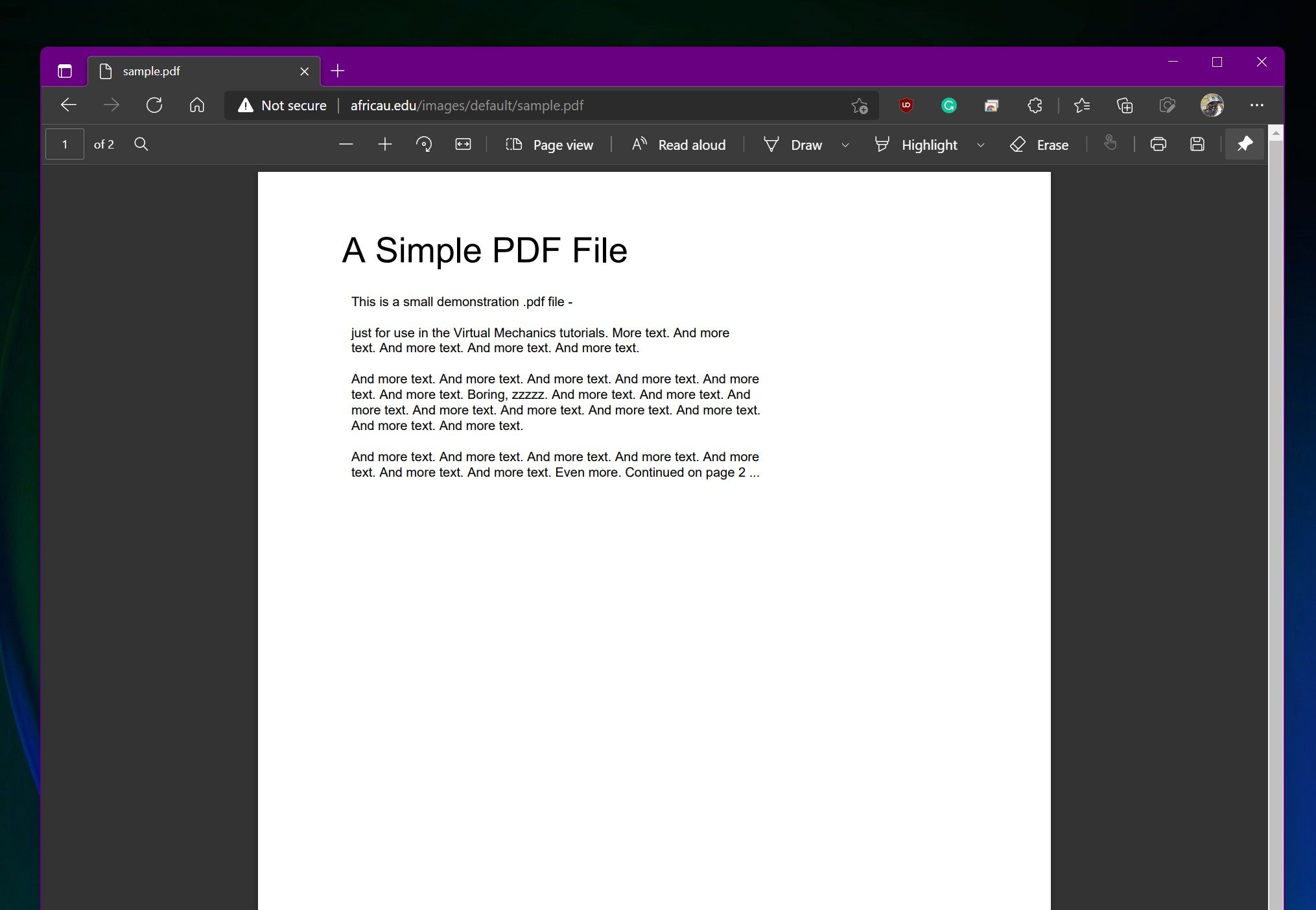
Microsoft is looking to improve the privacy protection of your sensitive PDFs by closing one of the more obvious loopholes in its document protection system. It is also giving businesses another reason to keep Microsoft Edge firmly installed.

Starting next month, OneDrive and SharePoint will block screen captures when users open certain sensitivity-labeled PDFs through their web viewers in Microsoft Edge. The restriction applies to enterprise organizations using Microsoft Purview Information Protection rather than ordinary personal OneDrive accounts.

Your ordinary PDFs will continue as usual

The protection applies specifically to PDFs carrying a sensitivity label without the Copy, also described as EXTRACT, permission. If these conditions are met, screen capture enforcement will activate by default when the document is viewed in Edge. Existing labels and organization policies remain in place.

Unlabeled files and labels without these restrictions continue behaving normally. The feature affects OneDrive for Business and SharePoint Online, so you will not suddenly lose the ability to screenshot a restaurant menu or instruction manual. The company added that the change aims to close a gap between its desktop applications and browser experience.

Purview labels could already prevent actions such as editing, printing, copying, and taking screenshots in supported desktop apps. However, PDFs opened in the browser did not consistently respect the same screen-capture control. Admins can also disable local downloads, preventing users from simply saving a protected document and reopening it elsewhere.

Advertisement

The protection currently ends at Edge

Chrome, Firefox, Safari, and other mobile web browsers will not support the restriction when it reaches general availability. Microsoft warns that users opening protected documents outside Edge may receive inconsistent enforcement, and it recommends that businesses use Conditional Access or browser-management policies to direct employees toward Edge.

Unfortunately, this is exclusive to Microsoft Edge at the moment. The security benefit is easy to understand, especially for companies sharing sensitive documents like financial records, legal material, or unreleased products. Its effectiveness depends heavily on convincing, or requiring, everyone involved to use Microsoft’s browser.

Windows Latest reports that support for additional browsers and mobile apps could arrive later. Microsoft’s current notice does not provide a broader rollout date. Targeted organizations should begin receiving the feature in early August, followed by a worldwide general rollout between the middle and end of the month.

Source link

Advertisement
Continue Reading
Click to comment

You must be logged in to post a comment Login

Leave a Reply

Tech

The FDA Says It Didn’t Apologize to Supplier Linked to Diarrhea Outbreak, Actually

Published

on

In the middle of a diarrhea shitstorm, the Food and Drug Administration and lettuce supplier Taylor Farms appear to be facing off in a passive aggressive battle of technicalities.

On July 17, the California-based company issued a voluntary recall on iceberg lettuce sourced from Central Mexico. The recall came after people across at least five states were sickened with cyclosporiasis, a parasitic infection that causes explosive diarrhea.

The next day, the FDA said that it had detected the parasite in a sample of Taylor Farms lettuce that wasn’t part of the initial recall. The day after that, the company and the FDA said that the result was actually a false positive.

“Today, the FDA apologized to us,” Taylor Farms then posted on its X account on July 19.

Advertisement

The FDA did not quite agree with that interpretation, however. On July 20, an agency official told reporters that it did not offer the company an “official apology.” Instead, the official said, “mostly we were providing factual information” about how difficult it is to test for and trace the sources of cyclospora outbreaks.

The agency emphasized that the recall—which spans 27 states, and includes certain lettuce sold to Taco Bell and Walmart—still stands. “To clarify, this false-positive lab sample DOES NOT change the basis for FDA’s ongoing outbreak investigation or the overwhelming epidemiological data supporting the current voluntary recall by Taylor Farms,” it posted on X.

In its July 19 post, Taylor Farms also wrote that the FDA “has not identified a single positive product test result for Cyclospora.” While true, this elides the difficulties involved in accurately testing for the parasite.

Many foodborne illness investigators determine the source of outbreaks without ever testing products. Instead, investigators use epidemiological evidence, such as interviewing people who have tested positive, to determine commonalities.

Advertisement

Taylor Farms has reportedly taken issue with how the FDA and CDC has conducted their weeks-long investigation into the source of the outbreak. A spokesperson told The New York Times that, last week, the company met with White House and FDA officials to discuss what it called “shortfalls” in the government organizations’ response processes. The Times reported that Taylor Farms executives attempted to cast doubt on the FDA and the Centers for Disease Control and Prevention’s conclusions in the meeting, which took place on July 16, the day before Taylor Farms issued its recall.

Taylor Farms did not respond to WIRED’s requests for comment.

Since May, thousands of people have been sickened with cyclosporasis, as health officials have struggled to pinpoint the source of the outbreak. Authorities in Michigan say that they have counted 6,148 cases in that state alone, though experts previously told WIRED that the number of cases nationwide is likely higher than what’s been reported.

Source link

Advertisement
Continue Reading

Tech

Apple starts round four of its iOS 27, macOS 27 developer betas

Published

on

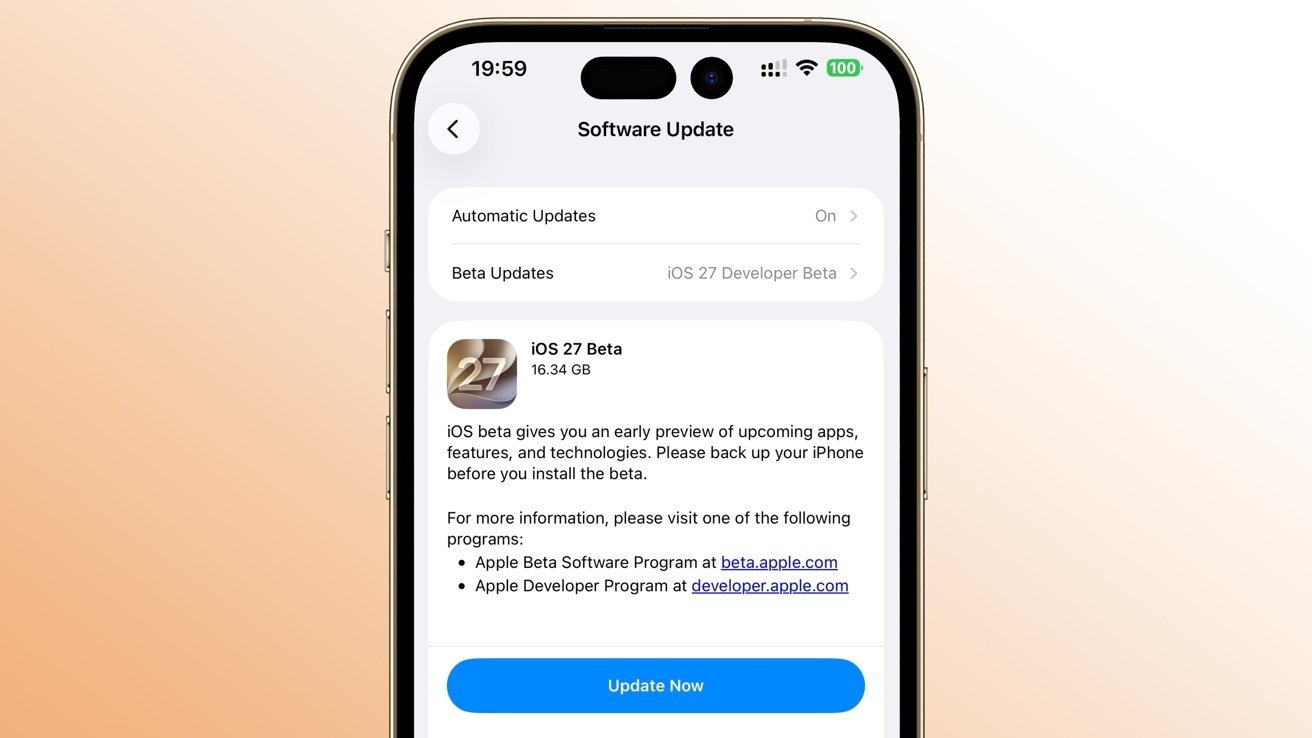
Apple is moving on with its developer beta program, with new fourth builds of iOS 27, macOS 27, tvOS 27, watchOS 27, visionOS 27, and iPadOS 27 now undergoing testing.

The fourth round is here, and participants in Apple’s developer program can download the new builds to their devices right now.

The third developer builds arrived on July 6, while the second occurred on June 22 for most of the operating systems. The watchOS 27 counterparts landed later, on June 23 and June 25.

The first developer builds of iOS 27, iPadOS 27, macOS 27, tvOS 27, visionOS 27, and watchOS 27 were made available on June 8.

Advertisement

The fourth builds are:

  • iOS 27 beta 4 is 24A5390f, replacing 24A5380h
  • iPadOS 27 beta 4 is 24A5390f, replacing 24A5380h
  • macOS 27 beta 4 is 26A5388g, replacing 26A5378j
  • tvOS 27 beta 4 is 24J5325d, replacing 24J5315i
  • watchOS 27 beta 4 is 24R5325h, replacing 24R5315i
  • visionOS 27 beta 4 is 24M5326g, replacing 24M5316k

The initial changes included tweaks to Liquid Glass, the long-awaited overhaul of Siri, child-protective features, and many other smaller changes.

The second iOS 27 developer beta included an update to Apple TV in the Home app, showing it like a connected HomePod or HomePod mini. The Apple Wallet also added a new insights option, albeit in a non-functional fashion.

The third included some visual tweaks, with more customization options added for Siri AI on newer iPhone models.

At your own risk

While AppleInsider regularly warns readers that people trying out beta software should do so on secondary, spare hardware instead of their mission-critical or daily driver devices, it’s something that actually matters more this time around.

Advertisement

It’s because Apple’s early developer betas are for an operating system that is still under active development. There’s a higher chance of buggy, broken, and potentially harmful elements being distributed.

The initial builds are also intended to help developers learn about the operating system changes before the final public release later in 2026. It’s not meant to be used by consumers.

Unless you have a vested interest in using them, such as app development, don’t install the early developer betas.

Instead, members of the public should seek out the public betas, when they become available.

Advertisement

Find any changes in the new builds? Reach out to us on X at @AppleInsider or @Andrew_OSU, or send Andrew an email at [email protected].

Source link

Advertisement
Continue Reading

Tech

Frontier LLMs couldn’t help Hugging Face fight off evil agents

Published

on

CYBER-CRIME

Chinese open-weight model GLM 5.2 happily obliged

Apparently, being a leading destination for AI development doesn’t mean AI will bail you out. AI agents broke into Hugging Face’s production infrastructure, but commercial LLM guardrails blocked the forensic investigation, forcing it to turn to a Chinese open-weight model instead.

The intrusion, “driven, end to end, by an autonomous AI agent system,” compromised a “limited set” of Hugging Face’s internal datasets and “several” credentials used by its services, according to a Thursday security incident disclosure.

Advertisement

While the ML platform says that it’s still investigating whether any partner or customer data was exposed in the breach, there’s “no evidence of tampering with public, user-facing models, datasets, or Spaces, and our software supply chain (container images and published packages) was verified clean.”

It also doesn’t know which model the attackers used to power a swarm of AI agents, which, we’re told, executed many thousands of individual actions across short-lived sandboxes, using self-migrating command-and-control staged on public services.

“This matches the ‘agentic attacker’ scenario the industry has been forecasting,” according to the Hugging Face blog.

Additionally, after unsuccessfully using unnamed frontier models to start the forensic analysis, the Hugging Face security team ultimately ran the log analysis on GLM 5.2, an open-weight model developed by Chinese AI firm Z.ai, on the platform’s own infrastructure.

Advertisement

The advanced commercial models didn’t work because their analysis required submitting real attack commands, exploit payloads, and command-and-control artifacts – all of the things that the LLMs’ guardrails have been trained to block so that the AI systems can’t be used in real-life attacks.

“The attacker was bound by no usage policy, while our own forensic work was blocked by the guardrails of the hosted models we first tried,” the security team wrote, noting that it’s not arguing against safety measures on hosted models and has shared this information with the LLM providers.

Using GLM 5.2 had another benefit, Hugging Face noted: “No attacker data, and none of the credentials it referenced, left our environment.”

This also serves as an important reminder to defenders, according to the AI platform. “Have a capable model you can run on your own infrastructure vetted and ready before an incident, both to avoid guardrail lockout and to keep attacker data and credentials from leaving your environment.”

Advertisement

Think of a burglar that never gets tired, never needs sleep, and instead of jiggling one door handle at a time, is trying a thousand of them simultaneously

The Hugging Face intrusion is yet another indication that attacks carried out by autonomous AI agents are no longer a future threat, but rather the current state of AI-based intrusions.

Last week, The Register spoke with TrendAI VP of AI and security threat research Tom Kellermann about another recent attack, during which a jailbroken Google Gemini did 90 percent of the work – including spinning up a new C2 server in just six minutes. The human did just 10 percent.

Additionally, earlier in July, Sysdig threat hunters documented what they say is the first-ever documented agentic ransomware infection with an LLM – not a human – driving the entire extortion operation, from gaining initial access to compromising a production database server and destroying data.

Advertisement

“Think of a burglar that never gets tired, never needs sleep, and instead of jiggling one door handle at a time, is trying a thousand of them simultaneously,” Zero Networks field CTO Chris Boehm said in an email to The Register about the Hugging Face intrusion.

“That’s basically what happened here. Not one guy typing commands into a terminal, a swarm of little automated processes hammering away nonstop, hopping between hiding spots to make it harder to trace,” Boehm said.

He added, the “part that actually unsettles” him most is that the platform’s security team couldn’t get commercial AI tools to help analyze the attack, “because those tools were built to refuse anything that looked like a real attack command. It didn’t matter that it was the good guys asking.”

Boehm said the takeaway for security teams is twofold: “These agents can now move faster and more relentlessly than any human ever could, and the safety tools we’re building aren’t always ready to help us respond at that speed.”®

Advertisement

Source link

Continue Reading

Tech

Malicious cloud customers can bring down the power grid

Published

on

AI and ML

Datacenters tax utilities normally, so just imagine what they could do if workloads were designed to destroy

AI datacenters wreak havoc on the power grid under normal circumstances, so what happens if a bad actor controls all the GPUs and wants to cause harm? Cybersecurity researchers in China have devised a way for malicious tenants to attack their infrastructure provider, potentially causing blackouts or damaging equipment. 

The attack, dubbed Bit2Watt, imagines an adversary masquerading as a legitimate cloud tenant to launch GPU workloads that have the potential to damage datacenters and supporting electrical systems. It’s intended to demonstrate the need to extend cybersecurity defenses to datacenter workload scheduling.

Advertisement

The researchers, Zhouhao Ji, Kaikai Pan, and Wenyuan Xu, from Zhejiang University in Hangzhou, China, describe their technique in a preprint paper titled “Bit2Watt: A Cyber-Physical Vulnerability Exploiting GPU Workloads Across Power and Computing Infrastructures.”

AI training workloads represent a known challenge for datacenter operators. As Microsoft, Nvidia, and OpenAI noted in a 2025 research paper arguing the need for power stabilization during AI training, the transition from GPU computation to GPU data synchronization causes large power swings to occur. And if the frequency spectrum of these power swings is “harmonized with critical frequencies of utilities, [that] can cause physical damage to the power grid infrastructure.”

Meta’s paper on the training of Llama 3 also cites the risk AI training poses to the power grid.

It says, “During training, tens of thousands of GPUs may increase or decrease power consumption at the same time, for example, due to all GPUs waiting for checkpointing or collective communications to finish, or the startup or shutdown of the entire training job. When this happens, it can result in instant fluctuations of power consumption across the datacenter on the order of tens of megawatts, stretching the limits of the power grid.”

Advertisement

Bit2Watt weaponizes this scenario by proposing that an adversary could use malicious GPU workloads to destabilize the datacenters and electrical infrastructure.

“Our results indicate that GPU loads can reach modulation frequencies exceeding 6,000 Hz, compared with only a few hertz observed in conventional household loads such as air conditioners,” the Zhejiang University authors state in their paper. “Such high-frequency modulations can substantially induce voltage excursions, harmonic distortion, and damping degradation.”

The authors claim an attack on a 1-MW local power grid consisting mainly of distributed energy resources like photovoltaics could use 1,000 GPUs to create a total harmonic distortion of 46.8 percent, which would squander nearly half the electrical current on non-productive work and would throw off about 20 percent more heat than normal. 

“This not only threatens the availability of the computing equipment but also produces a negative damping ratio of -0.27, introducing an unstable mode into the system,” the authors contend. “Once the protections are triggered and computing loads are shed, it can trigger cascading failures, potentially leading to blackouts exceeding 80 percent in large-scale power systems.”

Advertisement

The attack is relatively covert, the authors argue, because it can be launched within authorized workload execution paths and would likely be missed by cloud-provider monitoring frameworks. Thus, they propose that infrastructure providers coordinate defenses across the cyber and physical layers to look for malicious computation patterns. They also emphasize the need for local energy buffering systems to handle power demand spikes.

Bit2Watt also potentially opens the door for a side-channel attack called Watt2Bit. The researchers note that the electrical and thermal stress on hardware from a malicious workload creates denial of service events and enables the covert exfiltration of data via power modulation. As a proof of concept, they showed they could recover a 50-bit test sequence using frequency-shift keying (FSK) encoding.

“These findings underscore a fundamental shift: as power and computing infrastructures converge, security must be addressed across domains, requiring coordinated defenses that consider workload behavior, power electronics, and grid dynamics,” the authors conclude. ®

Source link

Advertisement
Continue Reading

Tech

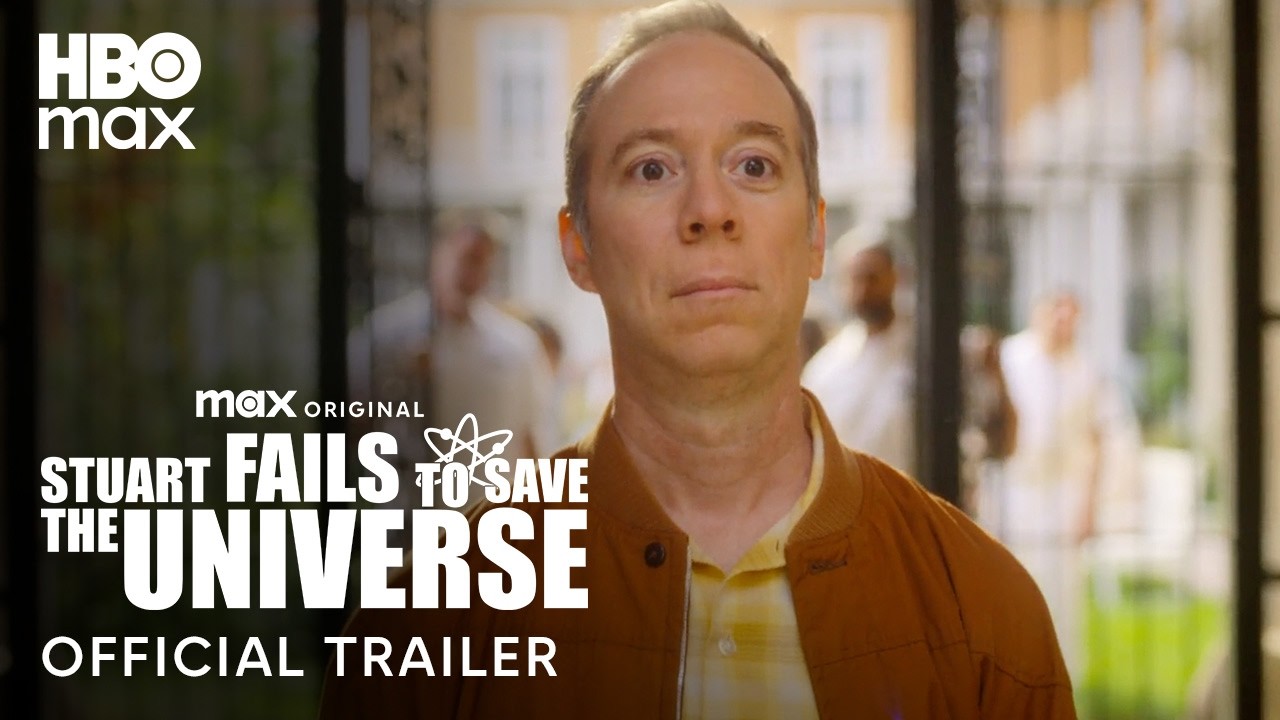
What is the release date for Stuart Fails to Save the Universe on HBO Max?

Published

on

Who’d have thought that the first big spinoff to come out of The Big Bang Theory (not including Young Sheldon and Georgie & Mandy’s First Marriage, as they’re Sheldon-adjacent) would focus on awkward comic store owner Stuart (Kevin Sussman)?

Our new heroic lead, on-off girlfriend Denise (Lauren Lapkus), as well as friends Kripke (John Ross Bowie) and Bert (Brian Posehn), are brought back together when Stuart triggers a multiverse Armageddon by accidentally breaking a device built by Sheldon (Jim Parsons) and Leonard (Johnny Galecki).

Source link

Advertisement
Continue Reading

Tech

The Best Drive-In Movies Ever Made: Monsters, Muscle Cars and Bad Taste

Published

on

The drive-in movie theater was born in New Jersey on June 6, 1933, which feels exactly right. Only this state could give America Sinatra, The Sopranos, the Pine Barrens, the Taylor Ham versus pork roll blood feud, Wawa parking-lot diplomacy, Friday the 13th, and the drive-in, then look at the rest of the country like it needs to merge faster or get out of the left lane.

Richard Hollingshead Jr. tested the idea in his own driveway with a Kodak projector, a screen, some cars, and the very American belief that almost any activity can be improved if you don’t have to leave your vehicle. By the late 1950s and early 1960s, thousands of drive-ins were scattered across the country, glowing in weird places that eventually became strip malls, storage facilities, car washes, vape shops, and urgent-care centers with suspiciously cheerful signage.

Today, the surviving number is somewhere between “fewer than 300” and “roughly 330,” depending on who is counting, which theaters are still operating, and whether anyone picked up the phone. That is a long fall from the glory days, but maybe inevitable. Land became too valuable, multiplexes got bigger, VCRs happened, and eventually someone decided the drive-in needed gourmet snacks, $11 coffee, artisanal pretzels, and the kind of concession menu that uses the word “curated” without shame.

No.

Advertisement

The real drive-in was not about prestige. It was not about black levels, Dolby Atmos, recliner seats, or a lavender oat latte served by a man with a tiny hat and a screenplay. It was about monster movies, fast cars, biker gangs, radioactive insects, beach-party nonsense, slashers, revenge, bad science, worse decisions, and movies loud enough to survive the speaker bolted to your window.

And yes, that speaker sounded terrible. Nobody cared. You were in a car. The windshield was the screen. The audio was an afterthought. Sometimes the movie was too.

Unless you were a movie nerd, and some of us were already broken that way, the drive-in was also a place where teenagers discovered that privacy was relative, bench seats were a design miracle, and horniness was not a gendered activity. Some people came for the movie. Some came for the date. Some came in the trunk, which used to be called “sneaking in” and in 2026 is probably an ICE raid.

But the films mattered. Not always because they were “great” in the respectable sense. Many were too cheap, too lurid, too strange, too violent, too stupid, or too poorly supervised to survive inside polite cinema. Outside, under the stars, with bad popcorn and worse judgment, they became something else.

Advertisement

They became drive-in movies.

Not every great movie is a great drive-in movie. And not every great drive-in movie is technically good.

That is not a flaw.

Advertisement. Scroll to continue reading.
Advertisement

That is the business model.

Midnight Movies and Cult Damage

The Rocky Horror Picture Show (1975)

rocky-horror-picture-show-50th-4k

The Rocky Horror Picture Show is less a movie now than a civic disturbance with fishnets, and Tim Curry’s Dr. Frank-N-Furter is the reason it still walks into the room before anyone else does.

It belongs here because it turned midnight screenings into participatory chaos: costumes, callbacks, rice, newspapers, toast, toilet paper, and behavior that would get you removed from most respectable theaters. At a drive-in, I’m still not sure how you hit the screen from your car with toast, but ambition deserves respect.

Scary? Not really. Essential? Absolutely.

Where to buy: $39.99 at Amazon

Advertisement

Pink Flamingos (1972)

pink-flamingos-1972

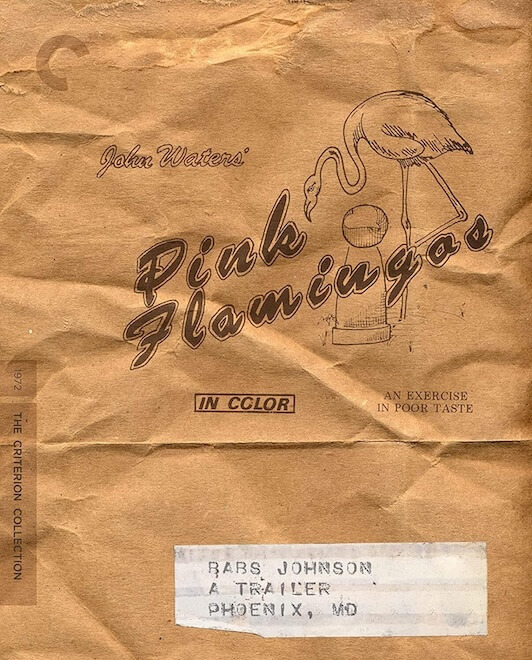
John Waters did not make Pink Flamingos to win approval. He made it to contaminate the water supply.

Divine stars as Babs Johnson, competing for the title of “filthiest person alive,” which is not exactly AFI Top 100 material unless the AFI was having a breakdown. It is gross, funny, aggressive, and proudly allergic to good taste.

This belongs in the drive-in conversation because midnight movie culture needed films that felt dangerous, transgressive, and slightly illegal even when you paid for the ticket. Bring disinfectant. Maybe a priest.

Where to buy: $39.95 at Amazon

Eraserhead (1977)

eraserhead-1977

David Lynch’s Eraserhead is what happens when anxiety gets pregnant and moves into an industrial apartment with no windows and worse plumbing.

It is not a monster movie, car movie, or exploitation picture in the usual drive-in sense, but midnight movie culture runs straight through it. The film is strange, funny in the way bad dreams are funny, and deeply unpleasant in ways that suggest your nervous system has filed a formal complaint.

Advertisement

This is not popcorn horror. This is “why is my soul making that noise?” horror.

Advertisement. Scroll to continue reading.

Where to buy: $29.99 at Amazon

Monsters, Mutants and Bad Science

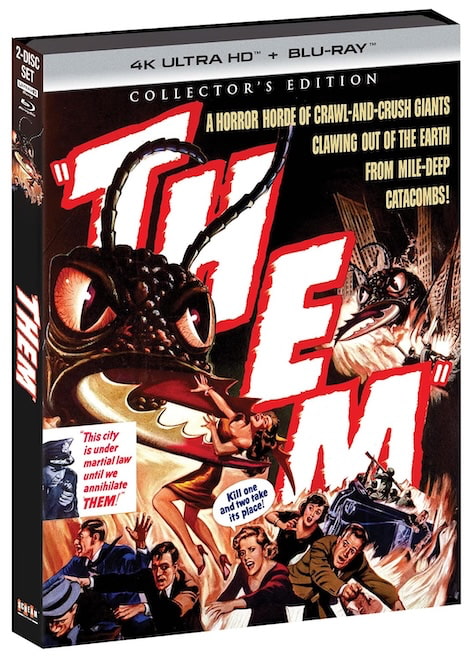
Them! (1954)

them-1954-4k

Before giant bug movies became easy punchlines, Them! did it properly.

Nuclear testing creates giant ants in the New Mexico desert, because apparently irradiating the planet had a few side effects. Imagine that. What makes Them! endure is that it plays the material straight. The ants are ridiculous if you are determined to be joyless, but the film treats the threat with real tension.

Advertisement

Personal favorite for a reason. Them! has legs. Six of them on the ants, and two rather memorable ones on Joan Weldon, who brings actual poise to a movie about irradiated insects eating their way through the Southwest.

And unlike Grease, which later turned the L.A. River basin into Thunder Road with leather jackets and hair product, Them! made better use of the city’s concrete nightmare fuel. The climax moves into the Los Angeles spillways and storm drain system, turning civic infrastructure into a giant ant colony. That is urban planning with mandibles.

Where to buy: $44.98 at Amazon

Creature from the Black Lagoon (1954)

creature-black-lagoon-4k-1954

The Gill-man remains one of Universal’s great monsters because he is both ridiculous and elegant.

Creature from the Black Lagoon has everything the drive-in era needed: jungle atmosphere, underwater photography, scientists making poor choices, and a monster who clearly did not ask to be dragged into humanity’s nonsense. It is short, atmospheric, and visually strong enough to survive distance, bad projection, windshield glare, and someone walking back from the snack bar with fries.

Advertisement

A good drive-in monster needs a silhouette. The Gill-man has one.

Where to buy: $29.98 at Amazon

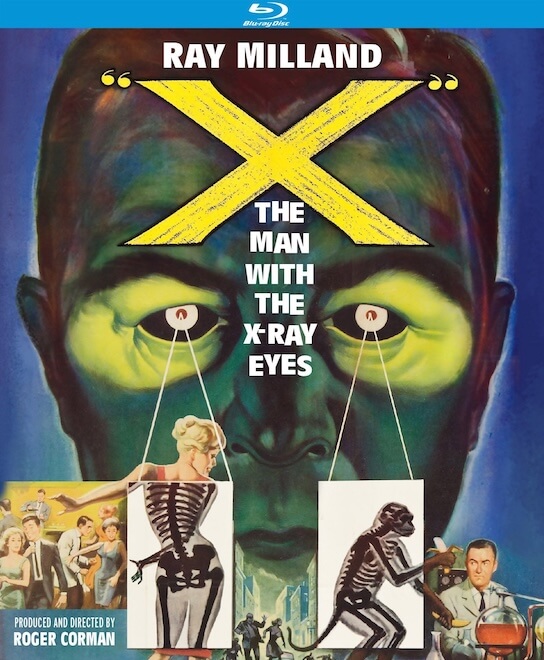
X: The Man with the X-Ray Eyes (1963)

x-ray-eyes-1963

Roger Corman and Ray Milland give drive-in science fiction an unusually nasty philosophical edge.

Milland plays a doctor who develops eye drops that let him see beyond normal human vision. At first, it sounds useful. Then it becomes a curse, because in Corman’s world, knowledge is wonderful right up until it starts peeling your sanity like an onion.

Advertisement. Scroll to continue reading.
Advertisement

X: The Man with the X-Ray Eyes has the title of a cheap exploitation picture, but it is smarter, stranger, and more unsettling than the poster suggests. Corman sold the sizzle and still delivered steak. Thin steak, but steak.

Where to buy: $43.98 at Amazon

The Blob (1958)

the-blob-1958-4k-steelbook

Before Steve McQueen became the Cooler King in The Great Escape and made a motorcycle, a baseball glove, and solitary confinement look cooler than most actors’ entire careers, he was here fighting space jelly in small-town Pennsylvania.

The Blob is classic drive-in marquee bait: a monster from outer space, adults who refuse to listen, teenagers forced to save the day, and a creature that looks like dessert fighting back. The fact that the climax ends up around a diner only makes it more perfect. Of course the Blob attacked a diner. Even alien goo understands that late-night pie is where America lets its guard down.

The genius is that nobody overcomplicates it. Blob lands. Blob eats. Town panics. McQueen squints heroically. The diner gets involved.

Advertisement

Where to buy: $25.99 at Amazon

The Scary Ones That Still Have Teeth

Carnival of Souls (1962)

carnival-souls-1962

Carnival of Souls is proof that you do not need money to make something deeply unsettling. You need atmosphere, patience, and a face in the dark that looks like it has been waiting for you since birth.

Herk Harvey’s low-budget horror film follows a woman who survives a car accident and becomes drawn to an abandoned carnival pavilion. The plot is simple. The mood is everything.

This is not loud drive-in monster business. It is a ghost story with freezer burn, and it still feels like something you found on late-night television after everyone else in the house went to bed.

Where to buy: $39.95 at Amazon

Advertisement

Messiah of Evil (1973)

messiah-evil-1973

Messiah of Evil is the kind of 1970s horror film that makes wallpaper feel suspicious.

A young woman travels to a coastal town looking for her missing father and finds locals who seem less like residents and more like people waiting for a signal from something awful. The film is dreamy, disjointed, and genuinely creepy, with a supermarket sequence that deserves more respect than it gets.

Advertisement. Scroll to continue reading.

It feels like a nightmare taking place in a town that forgot to wake up. Explanation would only ruin it, and horror already has enough paperwork.

Where to buy: $22.16 at Amazon

Advertisement

Black Christmas (1974)

black-christmas-1974

Before Halloween, before the slasher rules hardened into formula, there was Black Christmas.

Bob Clark’s film is still one of the creepiest slashers ever made because it does not over-explain its killer. The obscene phone calls are vile, the sorority-house setting is claustrophobic, and the ending remains brutally effective.

And yes, this is the same Bob Clark who later directed Porky’s and A Christmas Story, because apparently one career could contain obscene phone calls, shower peeping, and Ralphie nearly shooting his eye out without anyone in Hollywood asking for a wellness check.

Porky’s also gave Kim Cattrall her infamous “Lassie” moment, which is probably not the scene you want to use when evaluating Mark Levinson electronics unless you enjoy explaining things to your neighbors and local law enforcement.

Where to buy: $39.98 at Amazon

Advertisement

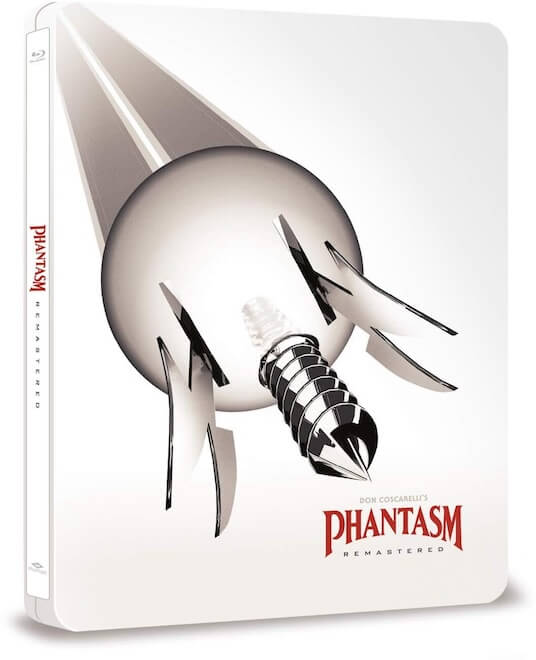
Phantasm (1979)

phantasm-remastered

Phantasm does not explain itself.

Don Coscarelli’s cult horror classic has graveyards, alternate dimensions, flying silver spheres, Jawas from hell, and Angus Scrimm as the Tall Man, one of the great horror figures of the era. It operates on dream logic, which is a polite way of saying you may not know what is happening, but you will remember it.

A normal movie gives you plot. Phantasm gives you a chrome ball drilling into someone’s skull and dares you to complain.

Where to buy: $49.98 at Amazon

Cars, Bikers and Bad Decisions

Faster, Pussycat! Kill! Kill! (1965)

faster-pussycat-1965

Russ Meyer’s Faster, Pussycat! Kill! Kill! is not subtle, polite, or especially interested in behaving itself. Good. Drive-in movies were not built for manners.

Advertisement. Scroll to continue reading.
Advertisement

Three go-go dancers tear across the desert in sports cars, leaving violence, seduction, and bad decisions in their wake. Tura Satana’s Varla remains one of exploitation cinema’s great screen presences: dangerous, stylish, and fully aware that everyone else in the movie is already losing.

Personal favorite. Obviously. The title alone has better posture than most actors.

Where to buy: $39.95 at Amazon

The Wild Angels (1966)

the-wild-angels-1966

Roger Corman understood the biker movie before polite culture knew what to do with it.

The Wild Angels stars Peter Fonda as Heavenly Blues, leader of a motorcycle gang that tears through California with nihilism, noise, and a general disregard for anyone’s insurance premiums. It is crude, influential, and essential because it helped turn biker films into a full-blown exploitation lane.

Advertisement

This is not romantic outlaw nonsense. It is ugly, chaotic, and half in love with the very thing it claims to critique.

In other words, very drive-in.

Where to buy: $11.54 at Amazon

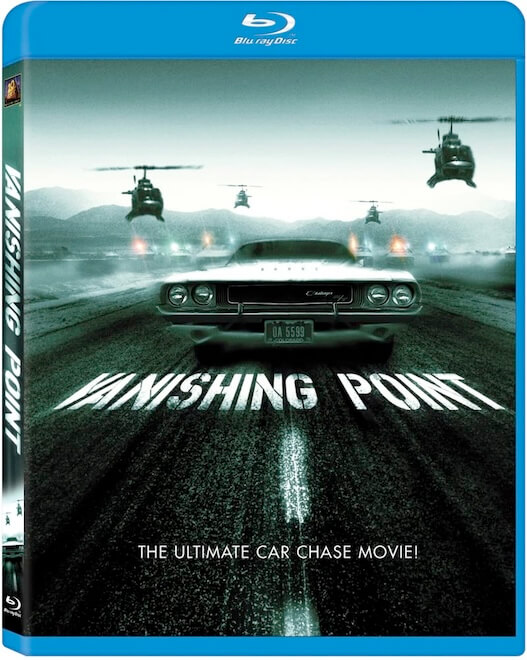
Vanishing Point (1971)

vanishing-point-1971

Barry Newman plays Kowalski, a former cop, race-car driver, and Vietnam veteran hired to deliver a white Dodge Challenger from Denver to San Francisco, because apparently FedEx was too emotionally stable.

Newman was never a household name, unless your household had strong opinions about Vanishing Point or watched Petrocelli in the 1970s, but that helps the movie. He looks less like a star and more like a man who has already accepted that speed, drugs, bad decisions, and state troopers are now the same problem.

Advertisement

The open road is not freedom here. It is a trap with better scenery and worse gas mileage.

Where to buy: $29.99 at Amazon

Advertisement. Scroll to continue reading.

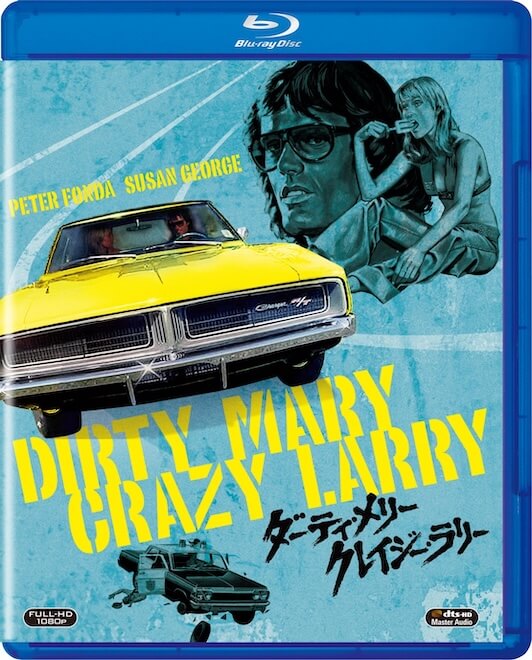
Dirty Mary Crazy Larry (1974)

dirty-mary-crazy-lary-1974

That title sounds like three nicknames found on a police blotter, which is exactly the point.

Dirty Mary Crazy Larry is drive-in car-chase junk food: loud, greasy, fast, and probably terrible for you if consumed too often. Peter Fonda and Susan George play criminals on the run after a supermarket heist, with Adam Roarke along for the ride and Vic Morrow chasing them down.

Advertisement

Morrow, best known for Combat! and later as Jennifer Jason Leigh’s father, brings some gravel as the lawman in pursuit. He was killed in 1982 during the filming of Twilight Zone: The Movie, along with two child actors, in one of Hollywood’s most infamous on-set disasters. Different helicopter tragedy than the one that killed Boris Sagal, Katey Sagal’s father, because apparently Hollywood needed two of those.

Where to buy: $34.28 at Amazon

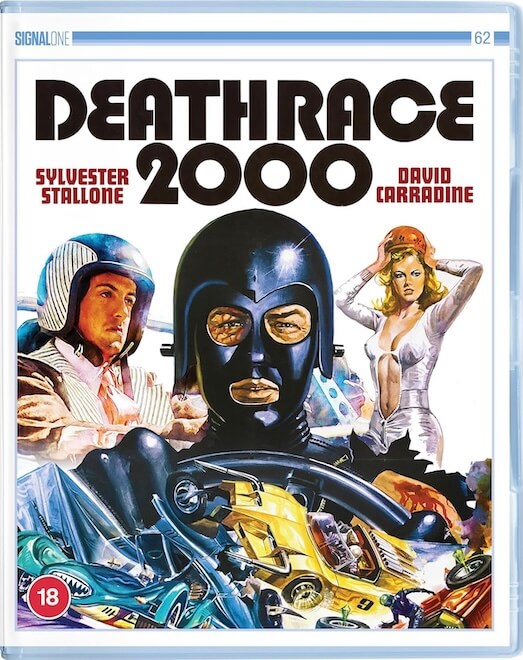
Death Race 2000 (1975)

deathrace-2000

Roger Corman produced a movie about a future America where vehicular homicide is national entertainment, and somehow we still call it satire.

Death Race 2000 is cheap, nasty, funny, and smarter than it looks, which is the Corman sweet spot. David Carradine brings the cool as Frankenstein, Sylvester Stallone brings the volume as Machine Gun Joe, and the whole thing turns bloodsport into media spectacle with all the delicacy of a cinder block through a windshield.

Cars, violence, politics, jokes, and a title that screams poor citizenship.

Advertisement

Where to buy: $39.95 at Amazon

Trash, Revenge and Exploitation

The Toxic Avenger (1984)

toxic-avenger-1984

Troma’s most famous creation is a mop-wielding mutant from New Jersey, because of course he is.

The Toxic Avenger is disgusting, juvenile, violent, and frequently indefensible. It is also weirdly sincere beneath the sludge. A bullied janitor falls into toxic waste, mutates into a hideous hero, and starts cleaning up Tromaville with a level of force that would make most municipal agencies nervous.

This is not polished cult cinema. This is radioactive garbage with a cape.

It belongs here because sometimes the drive-in needed a hero who looked like a lawsuit.

Advertisement
Advertisement. Scroll to continue reading.

Where to buy: $39.99 at Amazon

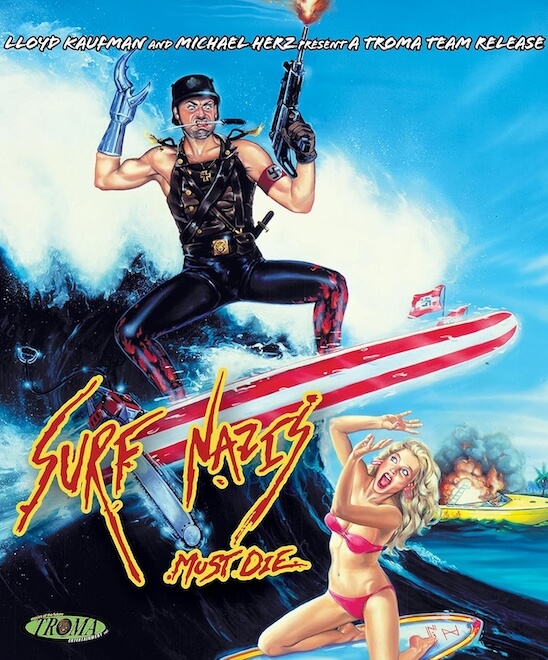
Surf Nazis Must Die (1987)

surf-nazis-must-die-1987

Surf Nazis Must Die is not here because it is great.

It is here because the title alone could sell tickets to people who had already made several poor decisions that evening.

A post-apocalyptic California coastline is overrun by neo-Nazi surf gangs, and revenge eventually arrives in the form of a woman who has had enough. It is a Troma-distributed artifact of bad taste, cheap anger, and exploitation marketing so blunt it practically hits itself with a folding chair.

Advertisement

The movie is clumsy. The title is immortal.

Sometimes that is enough to earn a parking space.

Where to buy: $39.95 at Amazon

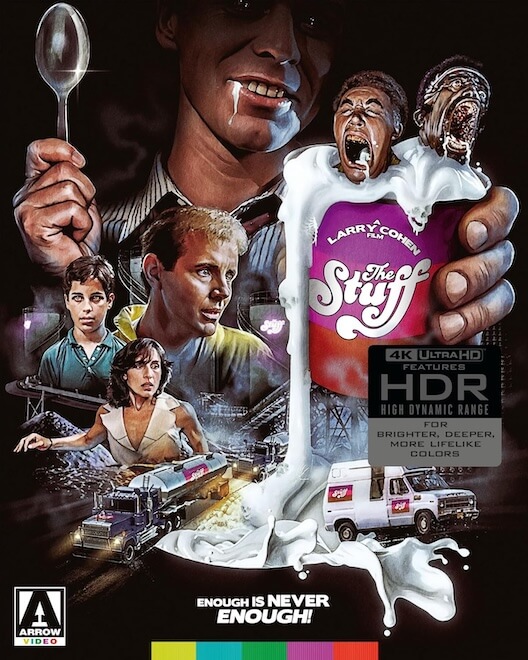
The Stuff (1985)

the-stuff-1985

Larry Cohen’s The Stuff is one of the great junk-food horror satires.

A mysterious dessert-like substance bubbles out of the ground, gets marketed to the public, and becomes a national obsession. It is delicious, addictive, and possibly alive. Which, given the state of some supermarket shelves, feels less like fiction every year.

Advertisement

The film works because it turns consumer culture into a monster movie without losing the B-movie hook. The title is perfect. The premise is ridiculous. The satire has teeth.

If dessert climbs out of the earth, maybe do not build a brand around it.

Where to buy: $24.99 at Amazon

Advertisement. Scroll to continue reading.
Advertisement

Coffy (1973)

coffy-1973

Pam Grier did not enter exploitation cinema. She kicked the door open and made the room behave.

In Coffy, she plays a nurse who goes after the drug dealers and criminals responsible for destroying her sister’s life. The movie is violent, stylish, angry, and built around Grier’s charisma. She is not just the star. She is the engine, the steering wheel, and the brick through the windshield.

The film is very much of its era, with all the complications that brings, but it remains one of the essential revenge films of the drive-in and grindhouse circuit.

Where to buy: $32.40 at Amazon

Switchblade Sisters (1975)

switchblade-sisters-arrow-video-1975

Jack Hill’s Switchblade Sisters is teen-gang melodrama with knives, betrayal, power struggles, and the kind of leadership problems that would make a school board meeting look serene.

The film follows a girls’ gang navigating loyalty, violence, and internal politics, and it has far more energy than polish. That works in its favor. It feels dangerous, theatrical, and proudly overheated.

Advertisement

This is exploitation cinema with attitude. Not realistic. Not respectable. Not asking for either.

A proper drive-in movie should occasionally make you wonder who approved this and whether they were later promoted.

Where to buy: $17 at Amazon

The Bottom Line

The best drive-in movies were not trying to impress critics. They were trying to get cars through the gate.

Advertisement

They had titles you could read from the road, posters that lied with confidence, monsters that wobbled but still worked, cars that sounded better than the dialogue, and revenge plots that required neither nuance nor a therapist. They were loud, cheap, weird, horny, scary, and occasionally brilliant by accident.

Today, you can buy craft coffee and gourmet popcorn at a “reimagined outdoor cinema experience” where nachos apparently need a mission statement. Good for them. I hope the margins are excellent.

Advertisement. Scroll to continue reading.

Give me the old version: giant ants, murderous surfers, toxic waste, biker scum, go-go dancers with bad intentions, radioactive dessert, and a movie title that sounds like it was shouted by a man selling fireworks out of a van.

Advertisement

That was the drive-in.

Not respectable.

Better.

Source link

Advertisement
Continue Reading

Tech

New Orleans Cops Published Policy Document Allowing Weaponized Drones

Published

on

A draft New Orleans Police Department drone manual briefly published online would have allowed police drones to carry weapons with written approval from the superintendent, according to 404 Media. NOPD says the document was only an early draft and that its current policy (PDF) bans drones from carrying weapons or hazardous materials. 404 Media reports: The current version, live as of July 1, has different language: “The sUAS shall not be equipped with weapons or hazardous materials of any kind,” referring to small Unmanned Aerial Systems, or drones. According to the NOPD, the operations manual it published to the internet with the rules for weaponized drones was an early draft. “The manual published on July 1 is the current published version of the policy. Earlier versions were draft versions that were presented for review before adoption of the current policy,” NOPD told 404 media. “NOPD has made it clear we are not and will not be equipping drones with weapons or other hazardous materials.”

NOPD didn’t answer follow-up questions about how or why the draft version of the manual was published. But the publication of a police drone manual that opens the door for weaponized quadcopters is important, and comes as drone companies and police flirt with the idea of putting weapons on their drones. New Orleans has long been a pioneer of camera and drone driven policing and the cops have used controversial tactics to get around public scrutiny and regulations. It shows that what the police are circulating amongst themselves and thinking about privately, what they perhaps want to happen, does not match public policy.

Source link

Continue Reading

Tech

Sail Virtually Aboard The “Itanic” With IA-64 Emulator

Published

on

Intel’s Itanium architecture was an interesting experiment, but it has gone down in history as one of the chip giant’s bigger flops, so much so that it earned the name “Itanic” in the tech press. This is perhaps unfair, considering it did limp on until a quiet EOL in 2020. We didn’t know anyone missed it, but perhaps it was more the technical challenge than nostalgia for obsolete server hardware that led [Yufeng Gao] and [gdwnldsKSC] to spin up an instruction-set translator for the late, lamented, IA-64 architecture.

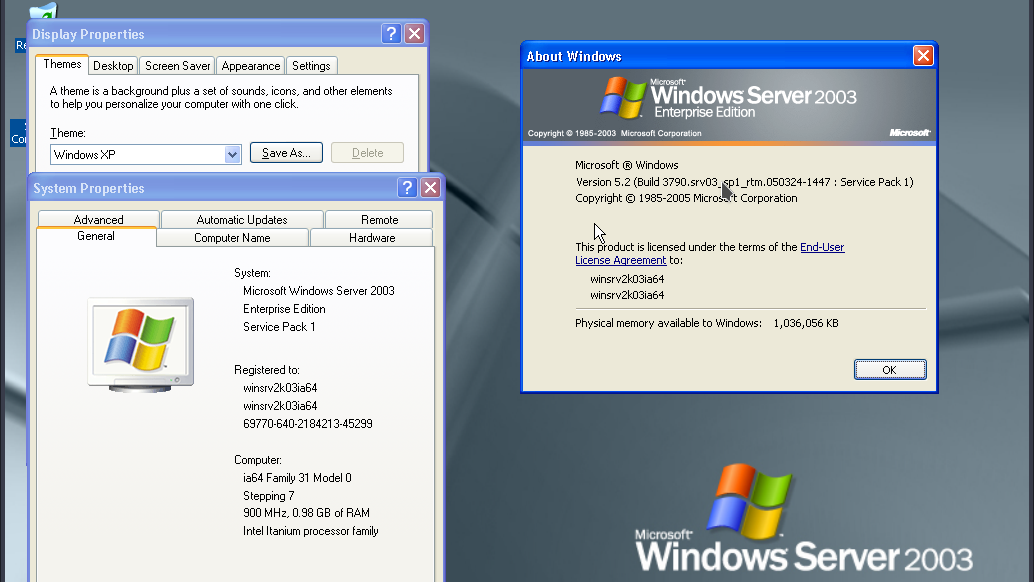
Note that it’s very much in alpha, version 0.1, so don’t expect all the things. Neither HP-UX and OpenVMS will boot, which is a pity since Itanium’s great success was arguably winning those OSes and thereby killing the bespoke architectures HP and DEC had at the time. Gentoo can get to a shell, as long as you use Kernel 6.6 or older, and Windows Server 2003 and XP-64 both apparently boot.

It’s not incredibly performant, with 486-level speeds when running on Ryzen 5000 series hardware, but then, it is a 64-bit hardware being emulated here, and pretty weird hardware at that. Itanium’s Very Long Word Instruction architecture was notoriously hard to program well. Specifically, it was hard to compile optimized programs for, so we expect optimizing an emulator is going to be similarly difficult. That’s why this is so impressive, even at this early stage.

Advertisement

The late, unlamented Itanium is probably one of the few systems not in the Virtual OS Museum, but perhaps eventually this project will change that.

via Raymii.org

Advertisement

Source link

Continue Reading

Tech

AWS customer learns the hard way how even the smallest oversight can be mission-critical

Published

on

off-prem

An expired card, overzealous spam filter, and broken authenticator create havoc with a very clear moral 

Nothing can ruin the end of a week like finding out that all of the websites and hosted email you’re responsible for are offline, which is exactly what happened to Christopher Bradbury and his web design and development firm, Digital Takumi last week. AWS has since resolved the situation, but Bradbury’s mistakes can serve as a useful lesson to others of what not to do.

As Bradbury explained to The Register in an email, he noticed last Thursday, July 16, that all the websites and Google Workspace email accounts connected to domains he manages were offline. All of those sites are hosted through Route 53, AWS’ combined DNS/hosting service, and none of them were resolving. 

Advertisement

Bradbury went digging through his emails to figure out if there was anything to point to the failures, and sure enough: In his spam folder were numerous messages from AWS telling him a payment card on file had expired, and warning him that the account used to host all those customer websites through Route 53 was going to be suspended unless he took action. He didn’t obviously, because he didn’t realize there was an issue.

“AWS had been sending billing notifications, but unfortunately they had been filtered into a spam folder and, in some cases, were being delivered to an employee who had since left the business,” Bradbury told us. 

“I accept responsibility for missing those notifications,” he added, but that didn’t help his customers’ websites get back online. 

The situation could have been resolved sooner, but Bradbury had made some other mistakes as well:

Advertisement

“The root account had MFA enabled using a software authenticator that had been stored on an older laptop which has since suffered a motherboard failure,” Bradbury explained. Without access to that authentication code generator, he was unable to get into the account. Rather than getting the dead-laptop-with-a-critical-authenticator-on-it problem resolved, he was just relying on MFA emails instead – not the best idea.

“I’ve been bypassing the device key for quite a while by just using the recovery MFA via my email,” Bradbury told us. “It works, I get access. However if I just had my Passkey up to date it would have let me right in and I could have solved this.”

And then there was the email address where those MFA codes were going:

“The AWS recovery process required email verification using the registered root email address,” Bradbury told us. “That email address belonged to one of the domains whose DNS was hosted in the suspended AWS account, meaning I couldn’t receive the verification email.”

Advertisement

The account recovery tango

Bradbury’s next option was contacting AWS from a different email address, which didn’t go anywhere. He created another AWS account and purchased business support access on someone’s recommendation, but the support engineers he spoke to using that method wouldn’t discuss the other account until he verified he owned the one in question. 

“Over the following days I spoke with several AWS teams, including Billing and Account Recovery. I was transferred between teams multiple times, but nobody was able to complete the ownership verification or restore access to the account,” Bradbury told us.

He wanted to pay AWS, Bradbury told us, but it took a while for them to be able to take his money. “The practical consequence is that I cannot log into the AWS account, cannot receive email at the registered root address, cannot access the MFA device, cannot update the expired payment method, and therefore cannot pay the outstanding invoices from inside the account.” 

While we were working on this story, after speaking to both Amazon and Bradbury, he contacted us to say that access to the sites had been restored, and that he had logged in, paid the back invoices, updated his payment method, reset his MFA keys, and generally taken care of all the stuff he had been putting off until all this happened. 

Advertisement

It’s unfortunate that someone has to go through AWS billing hell to serve as an example to others, so let this be a warning to anyone else managing client websites through AWS.

“Firstly pay your AWS bills,” Bradbury said in an email, adding that anyone running an AWS hosting account also makes sure their emergency recovery email isn’t on the same domain as one of the sites they manage through that profile. That, and “stop using shortcuts” when it comes to MFA. 

“This isn’t a big infrastructure account, we run a single company marketing website and some domains through Route 53,” Bradbury explained. “It just shows that even the most modest instances of AWS can be absolutely business critical and you need to use proper practices and processes.” ®

Source link

Advertisement
Continue Reading

Tech

Anthropic’s landmark $1.5B copyright settlement is approved

Published

on

Anthropic can finally start cutting checks to a group of authors and book publishers that sued the AI lab over copyright infringement. A federal judge gave final approval Monday of Anthropic’s landmark $1.5 billion settlement of a class action copyright lawsuit, Reuters reported.

Judge William Alsup of the U.S. District Court for the Northern District of California issued a preliminary approval of the settlement last year, after ruling that Anthropic had illegally downloaded and stored millions of copyrighted books.

Alsup has since retired and Judge Araceli Martinez-Olguin signed off on the settlement on Monday.

The payout will deliver $3,000 per work across an estimated 500,000 works, shared among the authors and publishers who hold rights to them. While the settlement is believed to be the largest in the history of U.S. copyright law, many authors and creators still don’t view it as a win.

Advertisement

That’s because of how the legal question was resolved. Alsup sided with Anthropic on the core issue. He ruled that training an AI model on copyrighted text counts as fair use — a decision widely seen as a turning point for the AI industry. But the ruling didn’t excuse how Anthropic obtained the books in the first place. Anthropic had built its training library from two sources: books it purchased and scanned (fine), and books it downloaded from pirate sites like Library Genesis and Pirate Library Mirror. Alsup found the second method illegal on its own terms and said that piracy question could go to trial; Anthropic agreed to a settlement soon after to avoid a trial and whatever damages a jury might have awarded.
While the final approval closes out this case, it doesn’t settle the legal question industry-wide because Alsup’s ruling was a single district court decision, and Anthropic’s decision to settle means the case will never reach an appeals court to become binding precedent.

Other judges are still free to reach their own conclusions on their own facts, which is exactly what’s playing out elsewhere. There is still a string of copyright lawsuits against companies such as Google, Meta, Midjourney, and OpenAI over whether it’s legal to train AI models on copyrighted works. Just last week, a group of publishers and authors, including Hachette, Cengage, Elsevier, author Scott Turow, and S.C.R.I.B.E. filed a class action lawsuit against Google over accusations that the company used their copyrighted works to train its AI platform, Gemini.

When you purchase through links in our articles, we may earn a small commission. This doesn’t affect our editorial independence.

Advertisement

Source link

Continue Reading

Trending

Copyright © 2025