TL;DR
Developers say .NET’s three-year LTS support is too short, with half of deployed versions running unsupported and Java offering five years or more.




Developers say .NET’s three-year LTS support is too short, with half of deployed versions running unsupported and Java offering five years or more.
A developer has reopened a long-standing complaint about Microsoft’s support policy for its .NET development platform, arguing in a new GitHub issue that the three-year window for long-term support releases is too short for enterprise upgrade cycles. The current release model gives even-numbered versions three years of free support and odd-numbered versions 18 months. The legacy .NET Framework, which is tied to Windows and supported for much longer, is increasingly abandoned by the broader ecosystem.
The core problem, as described in the issue opened earlier this month, is that when a new LTS release arrives, two of the three years on the previous one have already elapsed. That leaves enterprises roughly one year to complete the upgrade, a timeline that is fast even for well-resourced teams. The developer also noted that potential customers are reluctant to adopt software that is already approaching its end-of-life date.
Another developer commenting on the issue said telemetry showed about 50 percent of deployed versions of their software were running on versions Microsoft no longer supports. They added that they try to use the legacy .NET Framework wherever possible because its support is tied to the Windows lifecycle, but that is getting harder as libraries and frameworks drop support for it.

The 💜 of EU tech
The latest rumblings from the EU tech scene, a story from our wise ol’ founder Boris, and some questionable AI art. It’s free, every week, in your inbox. Sign up now!
The complaint is not new. A similar issue in 2023 drew a response from Microsoft program manager Richard Lander, who said the company chose its support windows to balance stable deployment time with the team’s ability to innovate. He said Microsoft had discussed longer support periods and paid extended support but opted to continue with only the free plan.
Microsoft’s free support window is shorter than what some competing platforms offer. Oracle provides five years of premier support for Java LTS releases plus additional extended support, and Python receives five years of security fixes for every release. The gap has become a recurring source of friction for enterprises that build on .NET but operate on upgrade cycles that do not match Microsoft’s annual release cadence.
The tension was visible again in March, when a Microsoft engineer proposed dropping legacy .NET Framework support from a database library. A developer responded that the legacy framework and its compatibility layer are currently the only .NET targets with support timelines that work for enterprise deployments. The proposal was closed as not planned, an acknowledgment that the older platform’s longer support lifecycle still matters to a significant part of the user base.
The underlying question is whether Microsoft’s push to restructure around speed and AI can coexist with enterprise demands for longer platform stability guarantees. The complaint surfaced weeks after the company’s Build developer conference, where it pushed AI deeper into its developer tools but did not address the support-lifecycle gap. The GitHub issue remains open.

Looking for the most recent Mini Crossword answer? Click here for today’s Mini Crossword hints, as well as our daily answers and hints for The New York Times Wordle, Strands, Connections and Connections: Sports Edition puzzles.
Need some help with today’s Mini Crossword? I thought 5-Across was actually an interesting fact, and one I didn’t know. Read on for all the answers. And if you could use some hints and guidance for daily solving, check out our Mini Crossword tips.
If you’re looking for today’s Wordle, Connections, Connections: Sports Edition and Strands answers, you can visit CNET’s NYT puzzle hints page.
Read more: Tips and Tricks for Solving The New York Times Mini Crossword
Let’s get to those Mini Crossword clues and answers.
The completed NYT Mini Crossword puzzle for June 30, 2026.
1A clue: Big party
Answer: BASH
5A clue: Pricey variety of beef that translates to “Japanese cow”
Answer: WAGYU
6A clue: Unwelcome sound at 7 a.m., perhaps
Answer: ALARM
7A clue: Really make excited
Answer: REVUP
8A clue: Get ready (for)
Answer: PREP
1D clue: Farm machine that bundles hay
Answer: BALER
2D clue: Plant used to make mezcal
Answer: AGAVE
3D clue: Pancake topper
Answer: SYRUP
4D clue: Prominent feature of a camel
Answer: HUMP
5D clue: Bend out of shape, as wood
Answer: WARP
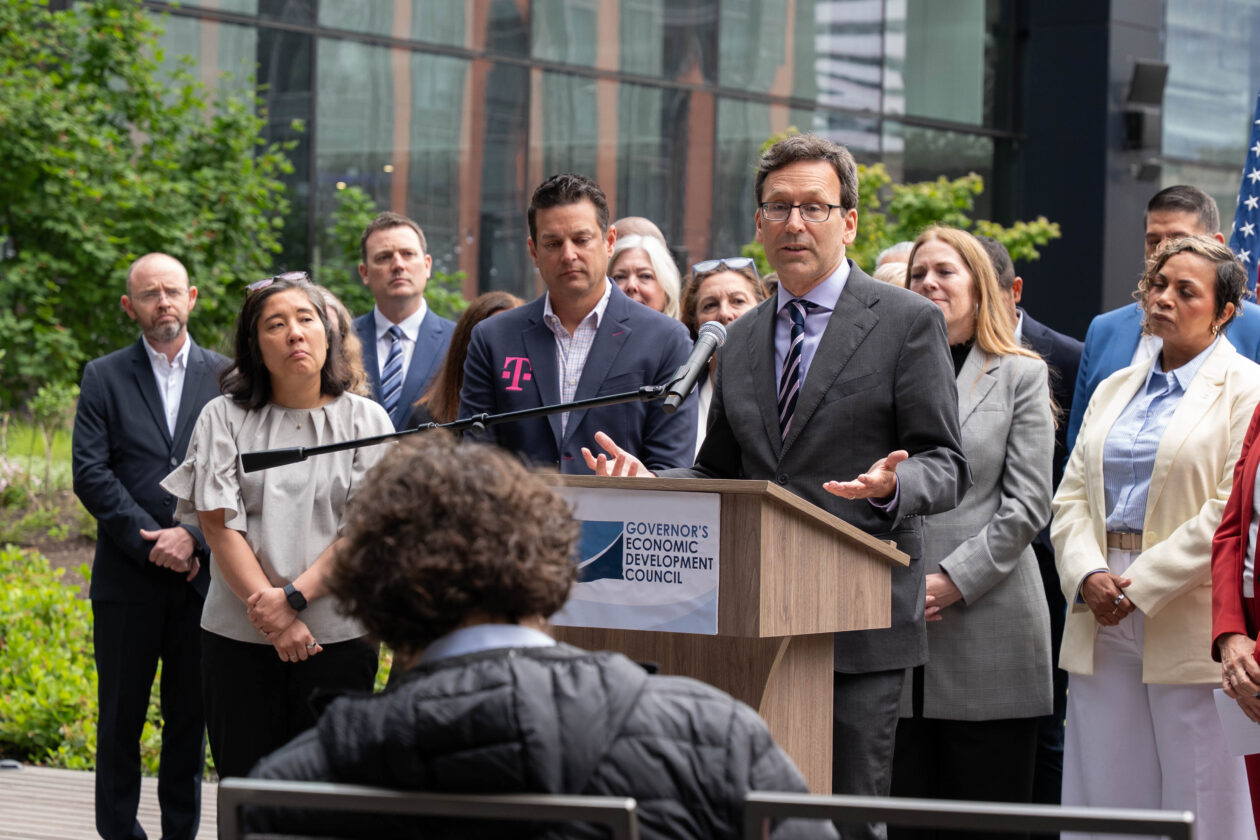

Gov. Bob Ferguson last week recruited top executives from Microsoft, Amazon, T-Mobile, Boeing and other major employers to help shape Washington state’s economic strategy, launching a new advisory council as concerns mount that the state is becoming less competitive for business.
The 26-member Governor’s Economic Development Council is the first such governor-led economic advisory body in roughly two decades, reviving an approach last used under former Gov. Christine Gregoire in 2006. The group includes leaders from technology, aerospace, organized labor, higher education, tribal governments, ports and economic development organizations who will advise the governor on policies aimed at strengthening Washington’s economy. (See full list below).
One missing ingredient: No members from Washington’s venture capital or startup ecosystem are on the council, even though they are often considered the bench strength of a growing economy.
The announcement comes as executives, startup founders and business organizations have increasingly warned that higher taxes, rising costs, permitting delays and an uncertain regulatory environment are making Washington a more difficult place to build and grow companies. Ferguson recently signed the so-called “millionaires tax” — a proposed 9.9% tax applied to taxable, personal annual income that exceeds $1 million.
Some of the region’s wealthiest and most prominent entrepreneurs — including Zillow and Expedia co-founder Rich Barton; Amazon founder Jeff Bezos and former Starbucks CEO Howard Schultz — have publicly announced moves out of Washington state in recent years.
Starbucks also recently announced a major expansion in Nashville, and Montana Gov. Greg Gianforte of earlier this month announced that Sedro Wooley, Wash.-based Janicki Industries chose Great Falls for the site of an $800 million manufacturing center expected to create 1,000 jobs.
“Washington is our home, and that is not changing,” said John Janicki, president of Janicki Industries, in a press release. “Our footprint in Washington has continued to grow but is slowing due to ever-increasing regulations and lack of business understanding at an executive and legislative level.”
Meanwhile, a recent survey from the Association of Washington Business found that 24% of businesses are considering a relocation out of the state, up from 17 percent in the prior quarter.
Washington’s economic climate was also one of the reasons why GeekWire recently traveled to Cleveland, where we explored how the Midwestern city was positioning itself for a changing economy, and the lessons that Washington could learn from it.
“We cannot take our strength for granted,” Ferguson said in announcing the council. “I’m launching a historic convening of top leaders from around Washington state to help guide the next chapter of economic prosperity for our state.”
The council will help develop Washington’s long-term economic strategy, identify opportunities to create family-wage jobs, evaluate the state’s competitiveness against other states and global markets, recommend ways to attract new employers and review regulatory barriers that may be slowing economic growth. The group will meet quarterly and submit recommendations to the governor.
The council’s creation comes after months of growing unease within Washington’s technology and business community.
GeekWire has reported extensively on criticism surrounding this year’s tax package, which raised business taxes on many employers and expanded the sales tax to additional services, including advertising. Business groups warned the measures could discourage investment and expansion in Washington, while lawmakers argued the revenue was necessary to close a multibillion-dollar budget gap and preserve essential public services.
The broader economic backdrop remains mixed. Washington continues to rank among the nation’s strongest state economies and remains home to global leaders in artificial intelligence, cloud computing, aerospace and life sciences. At the same time, employers are navigating higher borrowing costs, federal policy uncertainty, trade tensions and intensifying competition from states aggressively courting new investment.
As one example, Ohio Gov. Mike DeWine recently encouraged people and businesses from places like Washington to consider Ohio.
“Come work in Ohio,” DeWine noted after a question from GeekWire about advice he’d provide to Washington. “You will not find a better place, better people, quality of life. Cost of living is low compared to the two coasts.”
In the press release announcing Janicki Industries’ Montana expansion, Gianforte was a bit more blunt.
“The Treasure State is proud to attract job creators like Janicki that choose to expand from high-tax, high-regulation blue states to take advantage of our unmatched quality of life, lower taxes, and strong workforce,” he said. “I look forward to seeing the impact of this significant investment.”
Ferguson has sought to make economic development a central priority during his first year in office. His administration has highlighted efforts to speed permitting across state agencies, increase housing production and invest in sectors including quantum computing, advanced manufacturing and clean energy.
However, some have argued that the governor’s efforts come a bit too late, and are only be instituted in response to criticism. Gov. Ferguson shot back at that contention in the press conference last week, saying he doesn’t worry about critics and he’s interested in “solving problems.”
“I didn’t wake up last week and think about forming this council,” he said. “To be clear, as I mentioned in my talking points, this was an effort we really started last year and was an outgrowth of having conversations with many of the folks behind me and many other people across the state.”
Whether the new council ultimately leads to meaningful policy changes remains to be seen. But its creation sends a signal that Ferguson intends to place economic competitiveness — and closer engagement with Washington’s business community — near the center of his administration.
Amazon Chief Global Affairs and Legal Officer David Zapolsky, a member of the newly created council, called the formation of the group an “important step.”
“When the public and private sectors align around shared goals, communities benefit,” he said.
Governor’s Economic Development Council members:


Swift has watched the sky since 2004, catching some of the universe’s biggest explosions. Now it is sinking, and time is short. NASA is paying Katalyst Space Technologies about $30mn to save it, the Associated Press reported. Liftoff could come as early as Tuesday.
The plan sounds simple and is anything but. Reach a satellite nobody designed for capture, grab it, and lift it higher.
Every satellite in low orbit fights a slow drag from the thin air up there. The Sun makes it worse. Intense solar activity has puffed up the atmosphere, and the extra drag now pulls Swift down faster than NASA expected.
The telescope now orbits at about 360km. Left alone, it would drop below 300km by October, past the point where a rescue could still work. After that comes re-entry and a fiery end for a working observatory. NASA has already switched off Swift’s instruments to slow the fall, and science observations stopped in February.
That would be a real loss. Swift ranks among the fastest eyes on the sky, swinging within minutes onto gamma-ray bursts, the brief, violent flares that mark dying stars and colliding neutron stars. “If we let Swift reenter, we would lose that telescope,” NASA science chief Nicky Fox told the AP. “We don’t currently have the budget to build another one to replace that.”
Katalyst’s answer is Link, an autonomous spacecraft about the size of a small fridge with a 12-metre solar wingspan. It carries three arms, each tipped with two pinching grippers. It rides up on an air-launched Pegasus rocket, dropped from a plane over the Marshall Islands in the Pacific.
From there it has to chase down its target. NASA expects Link to take about a month to reach the 1.4-tonne observatory and grab it, then a further couple of months to raise the orbit from roughly 360km to about 600km. If it works, Swift could be back at work by September.
The catch is the hard part. Swift has no docking port and no grip points, because nobody designed it for servicing. Astronauts once fixed Hubble by hand, but that took the space shuttle and a crew. This time a robot works alone.
The speed of it is striking. NASA signed the contract only last September with two instructions: hurry, and do not make things worse. Nine months later, Katalyst is ready to fly.
It is also a first for the US. China nudged a dead satellite into a higher graveyard orbit in 2022, but catching a working telescope that was never built to be caught is a harder job. “No one thought it was going to be possible,” said Shawn Domagal-Goldman, NASA’s astrophysics director.
That matters far beyond Swift. A young industry wants to service, refuel and move satellites in orbit rather than let them die. A real rescue, on a real deadline, is the proof such firms have been waiting for.
The maths is part of the appeal. Thirty million dollars is a fraction of the cost of building and launching a fresh space telescope. If a tug can add years to a healthy instrument, the case for saving hardware over scrapping it gets stronger.
Hubble could be next. Katalyst says a bigger robot, due to fly next year, could reach satellites far higher up and give the ageing Hubble its own boost around 2028. Further out, the firm imagines fleets of orbital robots fixing, fuelling and even building in space.
There is a tidier future hiding in this too. Today most spacecraft simply fall and burn when they reach the end of their lives. A working tug fleet could lift the valuable ones, deorbit the dead ones on purpose, and start to clear the junk crowding low orbit.
For now, all of that rests on one launch and one delicate grab. NASA and Katalyst will know within months whether Swift keeps watching the cosmos or becomes a cautionary tale. The countdown has already started.

Ford executives said they’ve hired 350 veteran engineers — some of them former employees — after AI and automated systems failed to deliver the desired quality, reports TechCrunch:
Bloomberg reports the company’s chief operating officer Kumar Galhotra told journalists that Ford had been “relying more and more on automated quality systems” with disappointing results. So the company “brought back technical specialists,” and those specialists “hunt for failure points before a part ever reaches the plant floor.”
Charles Poon, Ford’s vice president of vehicle hardware engineering, added, “Mistakenly we thought that by just introducing artificial intelligence and ingesting the design requirements that we had, that that would produce a high-quality product.”
The article points out that Ford is using the rehired gray beard engineers to train younger staff — and, to reprogram its AI tools.

Rockstar Games has confirmed several new combat features for GTA 6, making the game’s weapon system more detailed than ever before. Official trailers and promotional material have already revealed more than 30 weapons across different categories, including pistols, assault rifles, shotguns, sniper rifles, launchers, melee weapons, and throwables. This guide covers all the GTA 6 weapons revealed so far and highlights the new gameplay features that make combat more immersive.

Handguns play an important role in GTA 6, offering a balance of speed, accuracy, and convenience. Rockstar has already showcased multiple sidearms through official trailers and screenshots, including both pistols and revolvers. Here’s a complete list of the confirmed handguns in GTA 6.
Handgun
Real-World Inspiration
Notable Customization
Girardi ES9
Beretta 92FS
Extended magazine, suppressor, flashlight, weapon tints
Heavy Pistol
M1911 platform
Barrel upgrades, custom grips, weapon skins
Klose K17
Glock series
Suppressor, extended magazine, optic sight
Hawk and Little Morgan Revolver
Classic revolver
Ultimate Edition exclusive bonus
Mustang .357 Revolver
Colt Python
Custom barrel finish, custom grip
Nipper .38 Revolver
Compact revolver
Paint finishes
Standard Pistol
Taurus PT92 / Beretta 92 series
Supports various weapon attachments
GTA 6 includes powerful shotguns for close-quarters combat. These weapons are useful during indoor fights and high-action missions. Rockstar has already showcased two shotguns in official trailers and screenshots. Below are the confirmed shotgun weapons in GTA 6.
Shotgun
Real-World Inspiration
Notable Customization
Double-Barreled Shotgun
Classic double-barreled shotgun
Wood finish, engraved receiver
Pump Action Shotgun
Pump-action shotgun
Extended tube magazine, flashlight, stock upgrades

Assault rifles are among the most versatile weapons in GTA 6. They perform well in both close- and long-range combat. Rockstar has confirmed several rifles through trailers and screenshots. Here’s every confirmed assault rifle in the game.
Assault Rifle
Real-World Inspiration
Notable Customization
Assault Rifle (AK-47)
AK-pattern rifle
Suppressor, extended magazine, drum magazine, custom finishes
Carbine Rifle
AR-15 / HK416
Optics, foregrips, stocks, suppressor
Carbine Rifle Mk II
AR-15 variant
Heavy barrel, scopes
Service Carbine
M16A1 / M16A2
Tactical attachments
GTA 6 includes several SMGs and machine guns for intense firefights. These weapons are useful during missions, chases, and vehicle combat. Rockstar has already showcased multiple models in official trailers and screenshots. Below are all the confirmed weapons.
SMG / Machine Gun
Real-World Inspiration
Notable Customization
Heckler & Koch SMG (MP5)
HK MP5
Scope, suppressor, foregrip
Compact SMG
Scorpion Mini SMG
Suppressor, extended magazine
Micro SMG
Mini Uzi
Drum magazine, weapon skins
Combat MG (Heavy MG)
M249 SAW
Box magazine, optics, barrel upgrades

Players who prefer long-range combat will find several sniper rifles in GTA 6. These weapons are designed for precision and serious damage. Official gameplay footage has showcased multiple sniper rifle models. Here’s every confirmed sniper rifle revealed so far.
Sniper Rifle
Real-World Inspiration
Notable Customization
Bolt Action Sniper
Remington 700
Heavy barrel, bipod, camouflage skins
Assault Sniper (L129A1)
L129A1
Variable zoom scope, suppressor
Ruger-inspired Rifle
Ruger 10/22
Lightweight attachments
Launchers deliver the most serious explosive damage in GTA 6. They are the best choice for destroying vehicles and heavily armored targets. Players can also use them during large-scale combat. Below are all the confirmed launchers in GTA 6.
| Launcher | Real-World Inspiration | Notable Customization |
|---|---|---|
| Grenade Launcher | Milkor MGL | Alternative ammunition types |
| RPG (Rocket Launcher) | RPG-7 | Cosmetic finishes |
Not every combat situation requires a gun in GTA 6. Throwables give players another way to attack enemies or create an opening. Each weapon has its own strengths and uses. Below are all the confirmed throwable weapons in GTA 6.
Thrown Weapon
Primary Use
Fire Bottle
Fire damage
Flashbang
Crowd control
Golf Ball
Improvised weapon
Grenade
Explosive damage
Molotov
Area denial
Smoke Grenade
Smoke cover
Speargun
Underwater combat

Melee weapons remain an important part of combat in GTA 6. They offer a quiet and reliable way to deal with nearby enemies. Different weapons suit different combat styles. Here’s every confirmed melee weapon revealed so far.
GTA 6 includes more than just guns and melee weapons. Players can use different equipment to complete missions in creative ways. These items add more flexibility to gameplay. Here’s the complete list of confirmed equipment.

Apple’s largest memory suppliers are being sued in California, with consumers and small businesses alleging Samsung Electronics, SK hynix and Micron coordinated DRAM production cuts that drove up memory prices.
Apple isn’t accused of wrongdoing in the lawsuit. Samsung, SK hynix and Micron supply memory used across Apple’s hardware lineup, putting the dispute much closer to customers than it might first appear.
The company has already raised prices on several Mac, iPad and other products after saying higher RAM and storage costs had become too expensive to absorb. Court filings argue coordinated DRAM production cuts contributed to those higher costs, though the plaintiffs still have to prove that claim.
Court filings argue the shift reduced supplies of mainstream DRAM, including DDR3 and DDR4, and drove prices higher across the market. The allegations haven’t been proven, and Micron denied the claims and said it will defend itself, according to Investor’s Business Daily.
The complaint centers on DRAM, the working memory used in computers, smartphones, tablets, servers and many other electronic devices. Samsung, SK hynix and Micron dominate the global DRAM market, giving them enormous influence over memory supply.
Counterpoint Research said Samsung held a 38% share of global DRAM revenue during the first quarter of 2026, followed by SK hynix at 29% and Micron at 22%. Plaintiffs argue that concentration is central to the lawsuit because a competitive commodity market would normally encourage at least one supplier to expand production as prices rise.
Instead, the complaint alleges Samsung, SK hynix and Micron shifted manufacturing capacity toward HBM, which commands much higher prices from AI companies. Companies are free to pursue more profitable products, and that business decision isn’t illegal by itself.
The lawsuit ultimately turns on whether Samsung, SK hynix and Micron coordinated those production decisions or reached the same conclusion independently. Antitrust law prohibits agreements among competitors, not similar business decisions driven by the same economic incentives.
Apple has spent months navigating the same memory market pressures described in the lawsuit. Industry analysts have widely attributed rising RAM and storage prices to AI demand, and the company cited higher component costs when it raised prices on some hardware.
 Industry analysts have widely attributed rising RAM and storage prices to AI demand
Plaintiffs argue coordinated supply restrictions offer a competing explanation for those higher memory costs. The companies maintain they independently responded to the same market conditions.
Court-ordered discovery could become the most important stage of the case if the lawsuit survives early legal challenges. Emails, production plans and other internal records could show whether Samsung, SK hynix and Micron coordinated production decisions or acted independently.
The lawsuit arrives against the backdrop of earlier DRAM antitrust cases. Samsung and Hynix pleaded guilty in the 2000s to participating in a DRAM price-fixing conspiracy investigated by the U.S. Department of Justice.
Samsung agreed to pay a $300 million criminal fine in 2005, and Hynix agreed to pay a $185 million criminal fine that same year. Several executives also received prison sentences for participating in that conspiracy.
The earlier convictions don’t establish that Samsung, SK hynix or Micron violated antitrust law in this case. The earlier cases do show the DRAM industry has faced similar allegations before, adding context as the current lawsuit moves through the courts.

A new Supreme Court ruling will require police to have probable cause before using sweeping geofence warrants that rely on people’s personal location data to find criminals.
Police subpoena Apple, Google, and other tech companies for precious user location data using so-called “geofence warrants,” which can serve as a dragnet to catch a single criminal while implicating many others. The Supreme Court says this method is no longer an option without probable cause.
According to SCOTUSblog, breaking down the ruling, a geofence warrant meets the criteria of a “search” as defined by the Fourth Amendment. Simply put, this means that anyone included in a warrant must be there with a reason.
In short, dragnet-style searches with no suspects identified by other evidence will no longer be an option except in very specific circumstances.
That isn’t to say user location data is off-limits for law enforcement. A subpoena to Apple or Google with an individual’s identity that is reasonably suspected of a crime with evidence gathered from other sources remains legal and viable.
There’s also the option of using geofence warrants when tracking a group of criminals or trying to find associates of a known criminal. Of course, warrants will need to be provided on a case-by-case basis.
Previously, law enforcement would simply ask for the location data of everyone that was within an area for a select period of time even when a suspect wasn’t known. If you happened to be passing by, you could be implicated for no reason other than being there with a smartphone.
The Supreme Court has ruled 6-3 that this violates the Fourth Amendment.
Justice Elena Kagan wrote that “an individual has a reasonable expectation of privacy in records about his cell phone’s location, and police intrude on that constitutionally protected interest when they demand the information — even though for only a limited time, and from a third-party tech company.” In other words, suspects will have to be identified using other means.
According to Harvard Law Review, Google was served with more than 11,500 warrants across 2020 for sweeping geofence searches. With this ruling, that number will now be zero without cause for every individual affected by the search.
The reason the Supreme Court shared this ruling today is due to a case from 2019 involving a bank robbery. A man escaped with nearly $200,000 and the police had zero suspects. The “zero suspects” bit is key to the ruling.
A geofence warrant was sent to Google, and the company provided 19 accounts that were within 150 meters of the bank robbery spanning that hour. Law enforcement narrowed it down to 9 accounts and requested location information for 2 hours surrounding the robbery.
The results were narrowed to three individuals — one was a man named Okello Chatrie. The location data led police to a residence with nearly $100,000, a gun, and demand notes.
The individual was arrested and pled guilty. However, Chatrie still argued that his Fourth Amendment rights were violated. After two escalating appeals on opposite sides of the issue, the case was pushed up to the Supreme Court.
With Monday’s ruling, Chatrie’s case isn’t over. It is being passed back down to the Circuit Court to determine if the police had reason to access the location data.
Regardless of that outcome, know that your location data is protected by a constitutional right. Police will need more than “wrong place, wrong time” tactics to find suspects in the future.
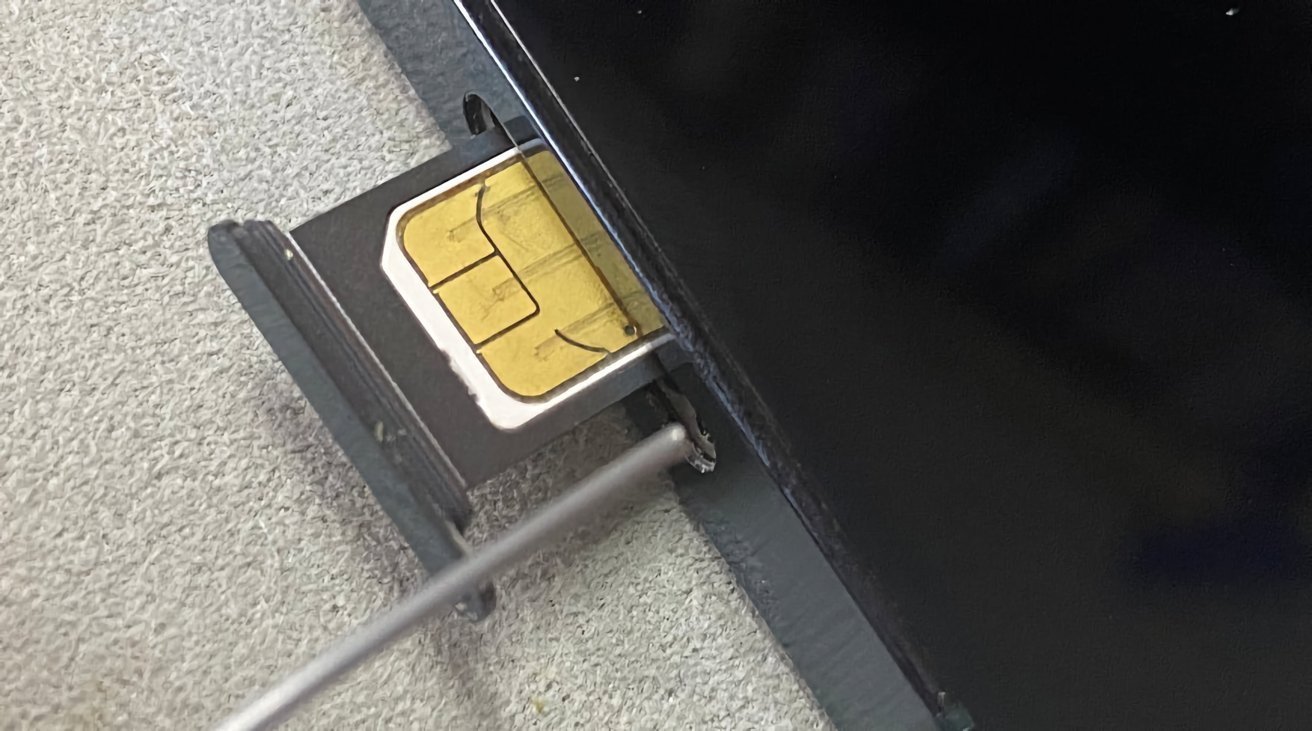
Apple is contesting a ruling that would force it to pay Optis $502 million for LTE patent infringement, but the UK Supreme Court has yet to reach a verdict.
The legal battle between Apple and Optis goes back to February 2019, and there’s still no end in sight all these years later. Apple was accused of infringing upon Optis’ LTE patents, which ultimately led to lawsuits in both the United Kingdom and the United States.
The latter case resulted in Apple’s victory, as it avoided paying Optis $300M in damages in February 2026. The outcome of the UK lawsuit, however, isn’t quite as clear-cut.
As spotted by 9to5mac and reported by The Financial Times, Apple now wants the UK Supreme Court to overturn a 2023 Court of Appeal ruling that would force it to pay Optis $502 million.
Initially, Apple was only supposed to pay $56 million, as decided by the High Court in London. Later, the Court of Appeal increased that amount to $502 million by using Optis’ deal with Google as a baseline and adding royalties dating back to 2013.
Apple, however, claims the increase was “arbitrary” and that the Court of Appeal “erred in law.” The outcome of the UK lawsuit remains to be seen, but the case could drag on for years to come.
Back in 2020, the UK Supreme Court ruled that UK courts can set the payment rate for patents worldwide, even though the court can only consider the infringement of UK patents. This was good news for Optis, as it was free to seek more damages from Apple.
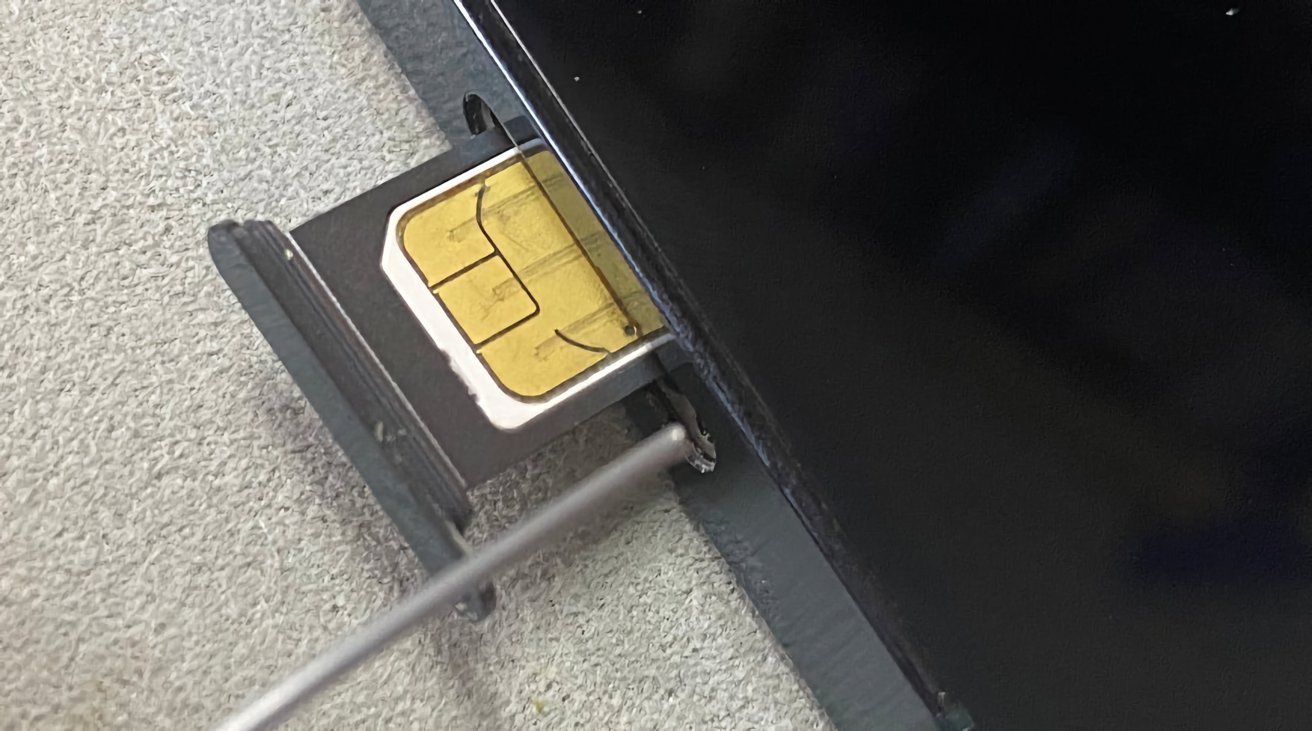
Optis claims that Apple violated its patents on LTE technology.
In July 2021, Optis wanted to force Apple into paying $7 billion in damages, along with a global royalty rate. Apple called the fee “commercially unacceptable” and threatened to leave the UK market if it was forced to pay such a high amount.
Later, in March 2022, the London High Court declared that Apple infringed two 4G patents held by Optis, which it described as “standard essential patents.”
Apple tried to argue that none of the patents were essential, and said it hadn’t committed any infringement. Still, its appeal was ultimately denied in July 2023.
Instead of the $7B sought by Optis, the London High Court said Apple had to pay only $56.43 million. However, Optis filed an appeal, which was ultimately successful. A $502 million fine was imposed by the UK Court of Appeal in May 2025.
This amount represents a lump sum covering 2013 to 2027, and was supposed to serve as a global license to use Optis LTE patents in the iPhone, Apple Watch, and other devices.
“[We are] pleased the UK Court of Appeal has recognized and corrected a clearly flawed prior ruling,” an Optis spokesperson told AppleInsider at the time, “and has made meaningful progress toward affirming the true value of our patents to Apple devices.”
Now, however, it’s up to the UK Supreme Court to decide just how much Apple will have to pay.

AI-related job loss fears grow each time another company announces a round of layoffs. Through May of 2026, companies announced that close to 90,000 job cuts were tied to AI, and, by some accounts, up to 15% of U.S. jobs are projected to be eliminated by AI over the next five years. Promises from the tech industry that AI will also create new jobs does little to ease fears, especially for the generation wondering if anyone will be hiring when they graduate.
A recent report from Ramp and Revelio Labs, which track enterprise AI spend and workforce records from nearly 22,000 companies, respectively, complicates that gloomy narrative.
The report found that companies spending heavily on AI are growing headcount faster, even in the entry-level roles that many fear are doomed. According to the report, “high-intensity adopters” — firms that spend on average $30 per employee per month on AI in the first three months — saw headcount increase 10.2%.
Headcount also rose across functions, including engineering, sales, administration, customer service, finance, marketing, and scientist roles. The strongest job growth among high-intensity adopters was in the information sector, which includes software, internet, media, and tech-adjacent firms.
Despite these positive signals, the data isn’t as rosy as it seems. It skews heavily towards tech-forward, knowledge-work firms — ones that might have VC-backing and are growing fast anyway, making it difficult to say whether AI is contributing to the hiring or just showing up at companies that are expanding anyway.
“This paper does not show that AI universally creates jobs,” the paper’s authors admit, “but it does counter claims that AI will lead to broad job losses.”
It also counters claims that AI is killing all junior jobs. Recent research from Goldman Sachs found that AI has already erased about 16,000 net jobs per month over the past year, with Gen Z and entry level workers taking the brunt of the burden. But in tech-forward firms, the report finds that entry-level headcount actually rose by 12%.
So what can we take away from this? Perhaps that AI isn’t always a tool for labor substitution, but that it can be a tool for firm-expansion instead.
“For software and technology firms, AI can make core output cheaper or faster to produce: writing code, debugging, building internal tools, producing technical documentation, and supporting product development,” the report reads. “Lower production costs in these workflows can raise the return to expanding the whole firm, not just the engineering team.”
But companies that buy subscriptions and run pilots, yet did not go on to make sustained investments, don’t tend to see any gains in headcount, per the report.
That sets up the potential for a widening gap between firms that have the resources — like capital, technical staff, founder networks, and management bandwidth — to turn AI adoption into actual business gains and those that are stuck experimenting with subscriptions. In other words, this report suggests that firms that already have the resources are the ones who will see the largest gains.
The paper’s authors speculate such a divide may continue to grow, saying: “Firms without those channels may fall behind.”
When you purchase through links in our articles, we may earn a small commission. This doesn’t affect our editorial independence.

America’s Bureau of Alcohol, Tobacco, Firearms and Explosives has “canceled its contract for a surveillance tool that enables warrantless tracking of mobile devices,” reports the Associated Press.
They note the move comes “after lawmakers, a prosecutor and a judge raised concerns about the legality of the tool in criminal investigations.”
ATF, the federal agency responsible for enforcing the nation’s gun laws, told The Associated Press that it discontinued what it called a “pilot” program using a tool called Webloc after Rep. Michael Cloud, a Republican from Texas, and Sen. Ron Wyden, a Democrat from Oregon, expressed reservations about the agency’s use of bulk commercial location data. Webloc, which is made by a vendor called Penlink, sources data from consumer apps and advertising networks, which collect the location of mobile devices from consumers who download apps or browse the web…
The U.S. Supreme Court ruled in 2018 that police needed a warrant to obtain historic movement data from cellphone companies on a criminal suspect. But it has never addressed the growing practice of commercially acquired data.
Other users of Webloc include the U.S. military and U.S. Immigration and Customs Enforcement but also local law enforcement agencies such as police in places like Elk Grove, Calif. and Durham, N.C. The technology has also expanded around the world, with the national police in El Salvador and Hungarian intelligence agencies as customers, according to a report from earlier this year from Citizen Lab, a group of researchers at the University of Toronto who investigate digital threats to civil society.
The article notes that other U.S. law enforcement agencies continue to buy commercial geolocation data, “including the FBI and the Department of Homeland Security.”



Two goals and an assist by sheer aura: Cristiano Ronaldo just entered the World Cup chat


Weekend Open Thread: Staud – Corporette.com


The House | Manchesterism won’t survive the painful trade-offs unless it gets citizens on board


Potential 2028er World Cup attendee leaderboard


MAJOR BITCOIN & MARKET UPDATE!!!! (MUST WATCH ASAP!!!)


Asia stock markets slide as tech shares slump


A Look At A Gaggle Of Transputer Boards


Securitize Wraps Roubini's SEC-Registered ETF as Dubai VARA Digital Security
Bitcoin (BTC) Dips Below $62K, Ethereum (ETH) Plunges 6% Daily: Market Watch

Dell (DELL) Shares Tumble Over 5% Following Analyst Downgrade to Hold


Coinbase, Circle Deepen Crypto Stock Losses Despite Resilient S&P 500
Entergy settles forward sale agreements, raises $672 million in cash proceeds


Kraken's xStocks Opens Bending Spoons IPO Registration to EEA Retail


FIH Pro League: India defeat Pakistan 7-1, register biggest win of campaign | Other Sports News


Bluekit phishing kit adopts browser-in-the-middle for login theft


Bitcoin Sparks $600M Hourly Liquidations With $65,000 Set To Become Resistance


Russian hackers now target Signal backup recovery keys

Hyperliquid Named on Singapore MAS Investor Alert Register


RTX holders must register wallets before token distribution begins


Ripple and SBI launch RLUSD in Japan after JFSA approval



You must be logged in to post a comment Login