
















Information, it seems, flows at the speed of media. In the old days, information traveled with people on ships or horses, so if, say, a battle was won or lost, it could be months or even years before anyone back home knew what happened. While books and movable type let people store information, they still moved at the speed people moved. Before the telegraph, there were attempts to use things like semaphores to speed the flow of information, but those were generally limited to line-of-sight operations. Carrier pigeons were handy, but don’t really move much faster than people.
The telegraph helped, but people didn’t have telegraph stations in their homes. At least not ordinary people. But radio was different. It didn’t take long for every home to have a radio, and while the means of broadcasting remained in the hands of a few, the message could go everywhere virtually instantly. This meant news could go from one side of the globe to the other in seconds. It also meant rumors, fads, and what we might think of today as memes could, too.
You might think that things “going viral” is a modern problem, but, in reality, media sensations have always been with us. All that changes is the number of them and their speed.
One of the earliest viral media sensations dealt with William Floyd Collins, an unfortunate man who was exploring caves during the Kentucky Cave Wars.
Background
Mammoth Cave in Kentucky had become a major tourist attraction. The accessible entrance to the cave was located on land owned by the Croghan family. The massive cave system had been made famous in the 19th century, and with the construction of a lock and dam nearby in 1906, Mammoth Cave became accessible to ordinary tourists.
However, the cave wasn’t completely under the Croghan land. There were also other caves that may or may not have been connected with Mammoth Cave. This led to fierce competition. The Croghan family suppressed information about exactly what land was over the cave. Meanwhile, other cave “owners” would intercept people heading for the cave, tell them that Mammoth Cave was closed, and “helpfully” direct them to another location.
By the 1920s, George Morrison blasted new entrances to the cave on non-Croghan land. There was fierce interest in finding new entrances to the cave or nearby caves to capture tourist money.
Back to Floyd
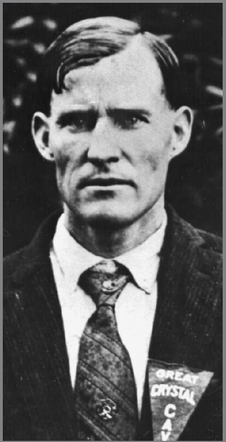
Floyd Collins found an entrance into what would become known as the “Great Crystal Cave” in 1917 and opened it to tourists in 1918. Unfortunately, the cave was hard to access, so it didn’t make much money.
Floyd had started entering caves in 1893 at the age of six. He discovered his first cave in 1910. But Great Crystal Cave was too far off the main road. He entered into a deal with three farmers who owned land closer to the main highway. If Floyd could find a suitable cave or, even better, an entrance to Mammoth Cave, he’d partner with them and create a mutually profitable tourist attraction.
Floyd found a hole in what would become known as Sand Cave. Some of the passages he had to move through were as tight as 9 inches, which, of course, would not be suitable for tourists, but they opened, apparently, into a large grotto. He was determined to expand the entrance to make the cave commercially viable.
In January of 1925, he was working in the cave when his gas lamp started to dim. He tried to leave, but while trying to move through a small passage, he knocked over his light, leaving him in total darkness.
In the dark, he put his foot against a seemingly stable wall and caused a shift that pinned his leg with a rock weighing nearly 30 pounds. He was also buried in gravel. At this point, he was 150 feet from the hole to the surface.
The Media
The next day, people noticed Floyd was missing, but no one would dare to follow him through the narrow passages. His younger brother finally got close enough to determine what happened. He was able to give Floyd food and water as plans for a rescue developed.
After four days in the cave, several people tried to pull Floyd out using a rope and a harness, but they only wound up injuring him. Meanwhile, the media had taken interest in the case, and the publicity drew hundreds of tourists and amateur spelunkers. Campfires and, possibly, the electric light that had been placed to give Floyd some light and warmth, melted ice inside the cave, creating puddles of water around the trapped man.
Two days after the failed rescue attempt, rain and the melting ice caused the cave passage to collapse, and the rescue team determined it was too dangerous to dig it back out after making an attempt to do so. They decided to dig straight down to reach Floyd.
Digging
Unfortunately, the cave drew air in so they decided they could not use mechanical diggers without risking suffocating Floyd. That meant humans would have to dig the 55-foot shaft to reach the victim. The initial estimate that 75 volunteers could dig the shaft in 30 hours proved optimistic, as conditions worsened and the hole grew deeper.
Someone disconnected the wires from the light bulb and connected them to an audio amplifier to detect signs of life from the victim. They believed the repetitive crackling noise meant he was breathing.
The light bulb went open on February 11th, twelve days after the incident started. Five days later, they reached his body. He had died and had been dead for several days.
You can find a well-done documentary from Remix Films in the video below. For a movie inspired by the event, check out the Billy Wilder film Ace in the Hole (1951) starring Kirk Douglas.
Viral
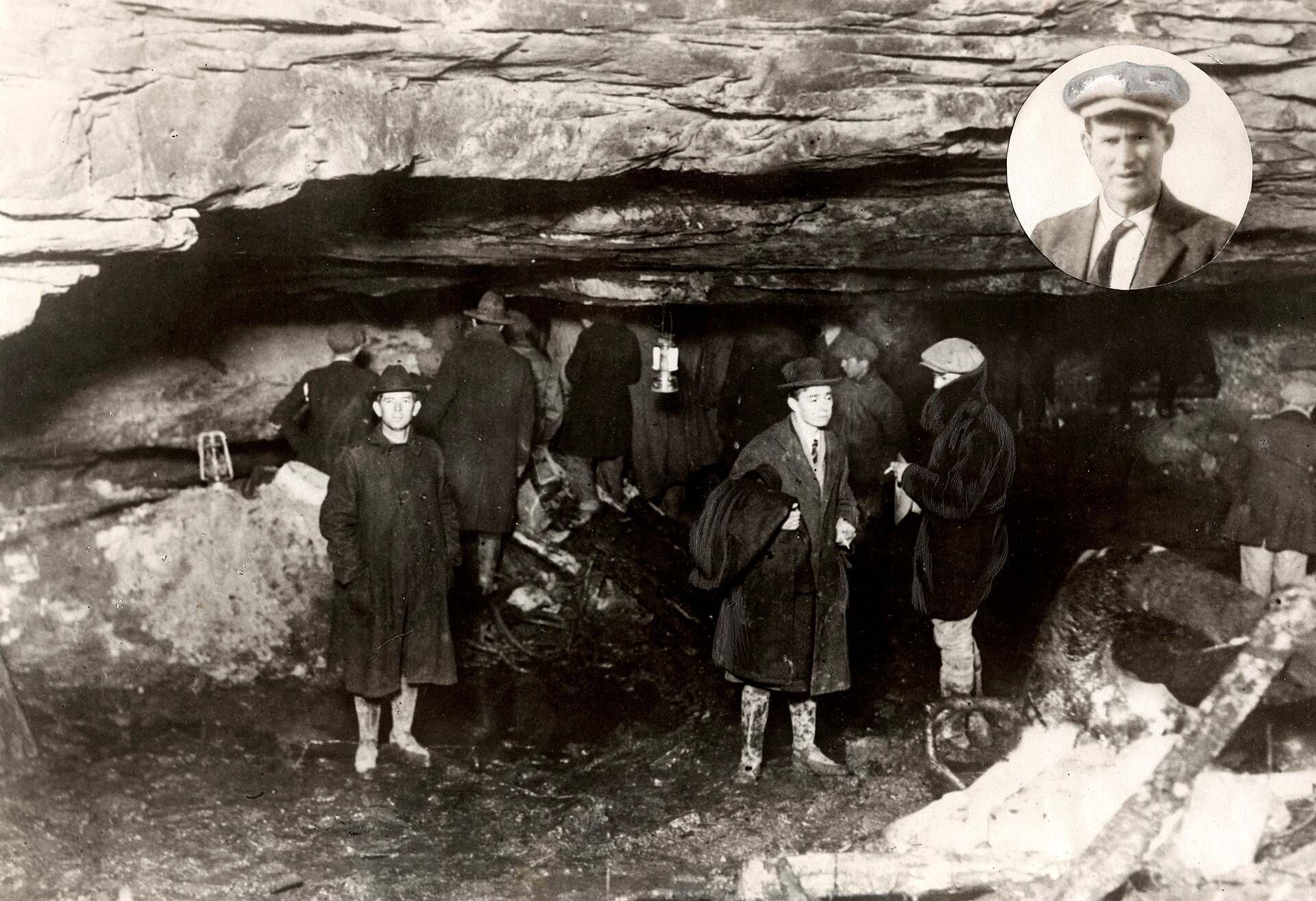
A newspaper reporter, William Miller, was on the scene and, being a small man, was able to actually help remove gravel from Floyd before the cave-in. His interview with the man from inside the cave won a Pulitzer Prize.
There was a time when this would have been only a sensational local story, but by the modern year of 1925, reports “went out on the wire” by telegraph and were picked up by newspapers worldwide. The nearest telegraph station was miles away, so two ham radio operators (9BRK and 9CHG) provided a link between the site, the newspaper, and the authorities.
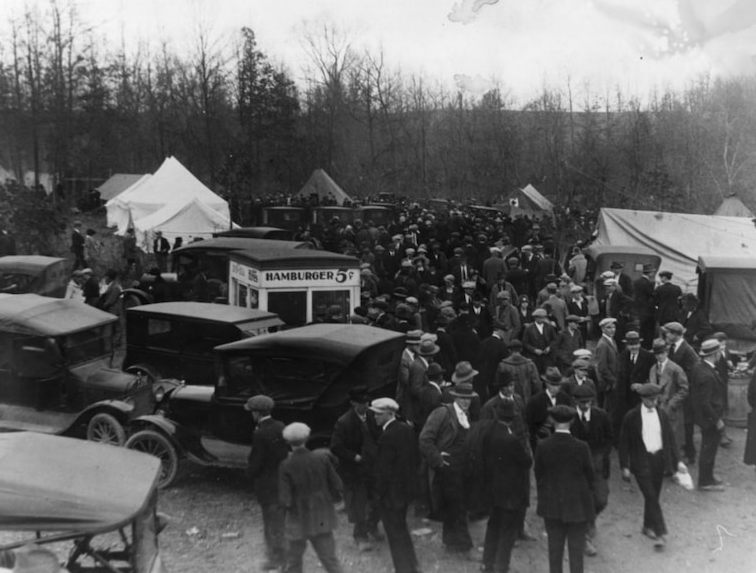
The first broadcast radio station, KDKA, was only five years old, but stations provided news bulletins detailing the progress. Thanks to the media, crowds were reported to number in the tens of thousands. Eventually, the National Guard arrived to help control the crowds.
Vendors popped up to sell hamburgers and memorabilia like a macabre circus. As you can see in the video below, memorabilia about the event and Floyd Collins can be worth a pretty penny to collectors.
The whole thing became one of the three largest media events between World War I and World War II. The other two were Lindbergh’s transatlantic flight (1927) and the kidnapping of Lindbergh’s baby (1932). Oddly, Lindbergh was an acquaintance of Floyd’s and also flew news photos from the scene (although, reportedly, to the wrong newspaper).
While it wasn’t quite as big an event, Canada’s 1936 Moose River Gold Mine collapse was a similar situation and also received worldwide media attention. It has the distinction of being the first 24-hour radio coverage of a breaking news story in Canada.
Today
These days, sensational news stories pop up everywhere. It seems as if they hardly get started when they are displaced by another one. But we submit that “going viral” isn’t a modern phenomenon. Only the speed at which it happens. Even an 1835 newspaper was able to spur a viral hoax.
Featured image: “Mammoth Cave Saltpeter Mine” by [Bpluke01]











































You must be logged in to post a comment Login